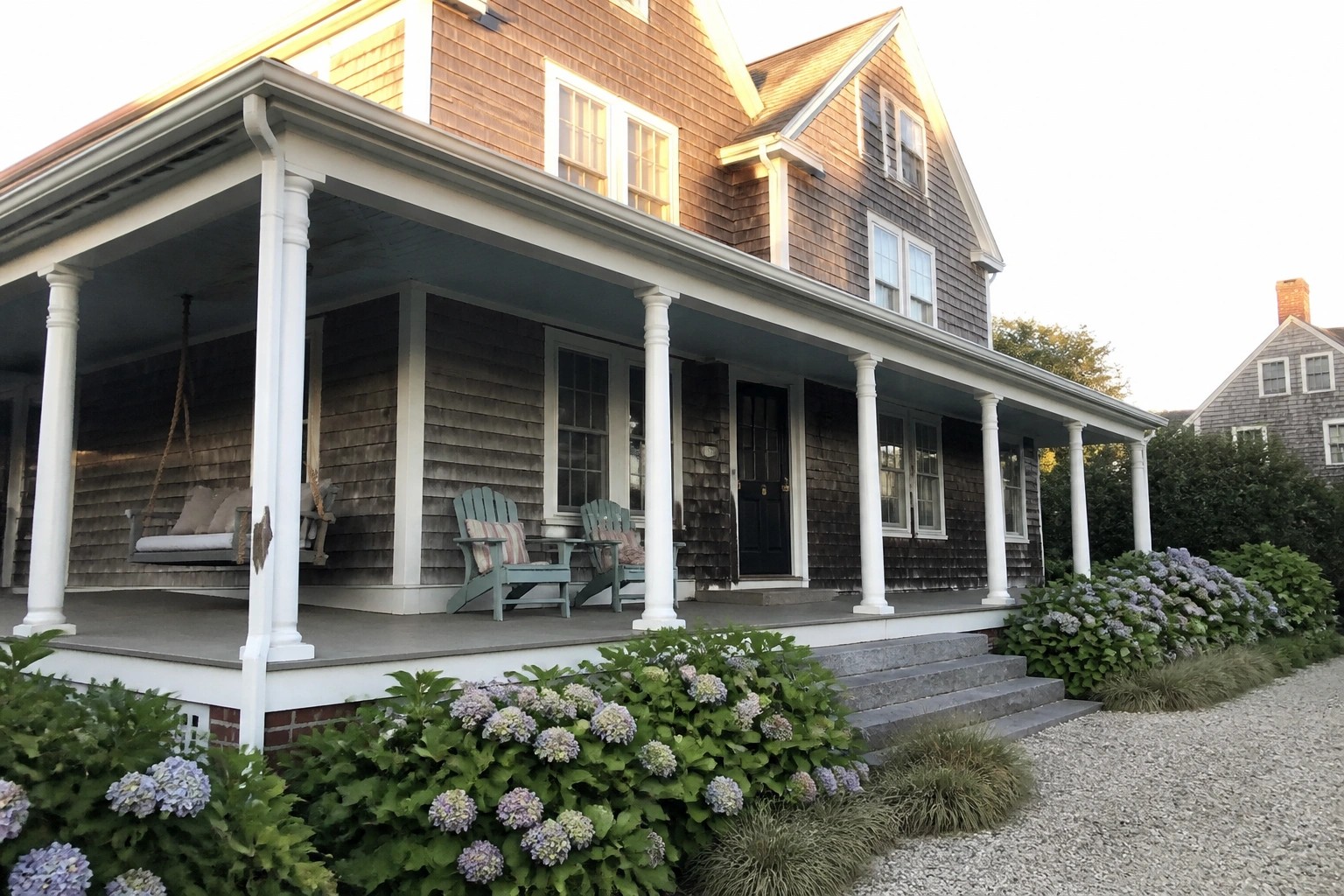
I have always noticed how a wraparound porch shapes the way a coastal house meets the ground and frames its views from the road.
The strongest examples use siding and roofing materials that hold up to weather while keeping the lines simple and connected all the way around.
Roof pitch and post placement matter more than people expect because they decide whether the porch looks built in or tacked on.
I check those details first on any older home I pass.
When the proportions work the whole exterior feels settled rather than showy.
Mixing Seating Options on a Wraparound Porch
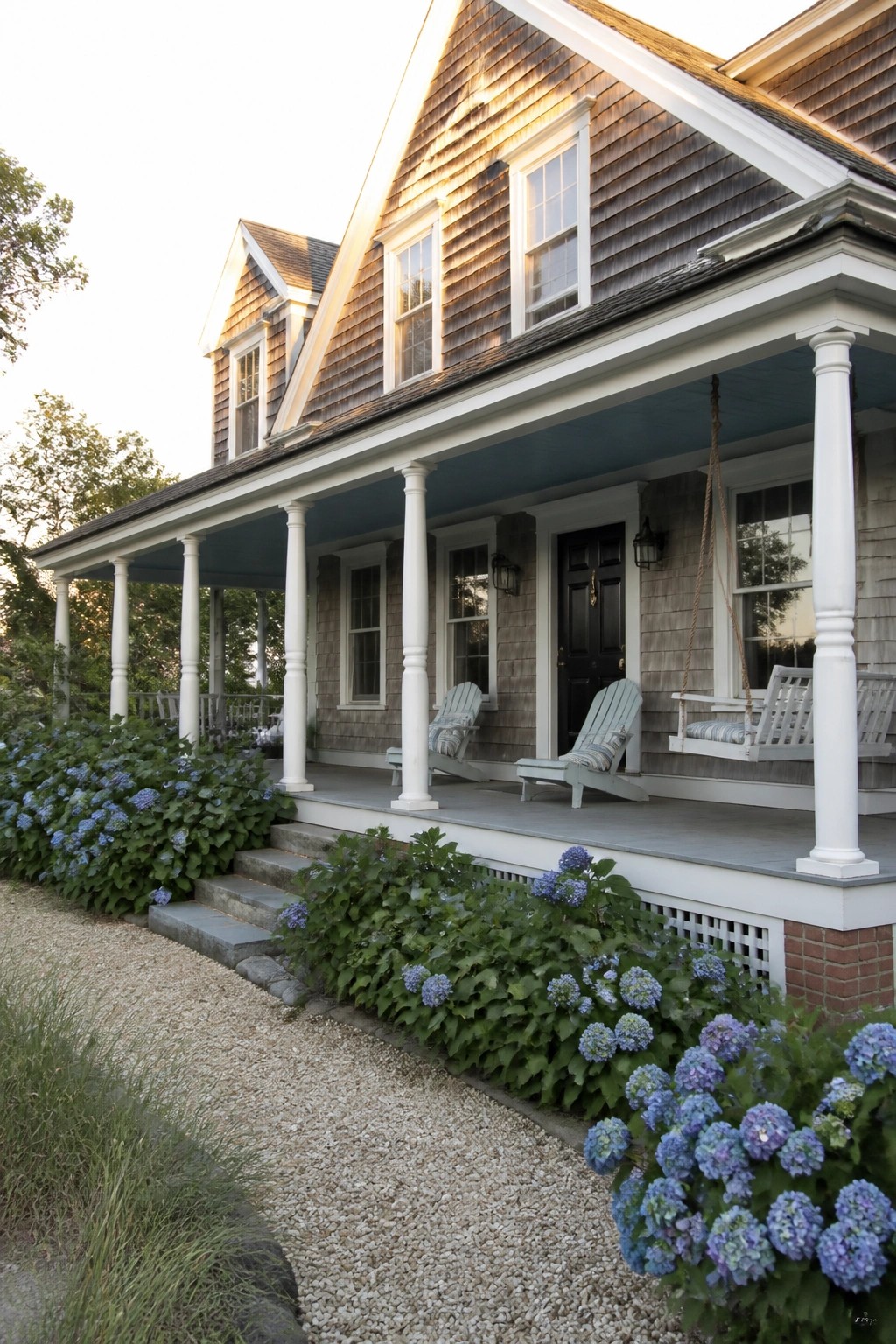
A wraparound porch works best when it offers more than one place to sit. Placing a swing at one end and a pair of chairs farther along lets people choose sun or shade without crowding the same spot.
This setup suits older coastal homes where the porch already runs along two or more sides. Keep the pieces simple and weatherproof so the space stays useful through changing weather and different group sizes.
Wraparound Porches That Run the Length
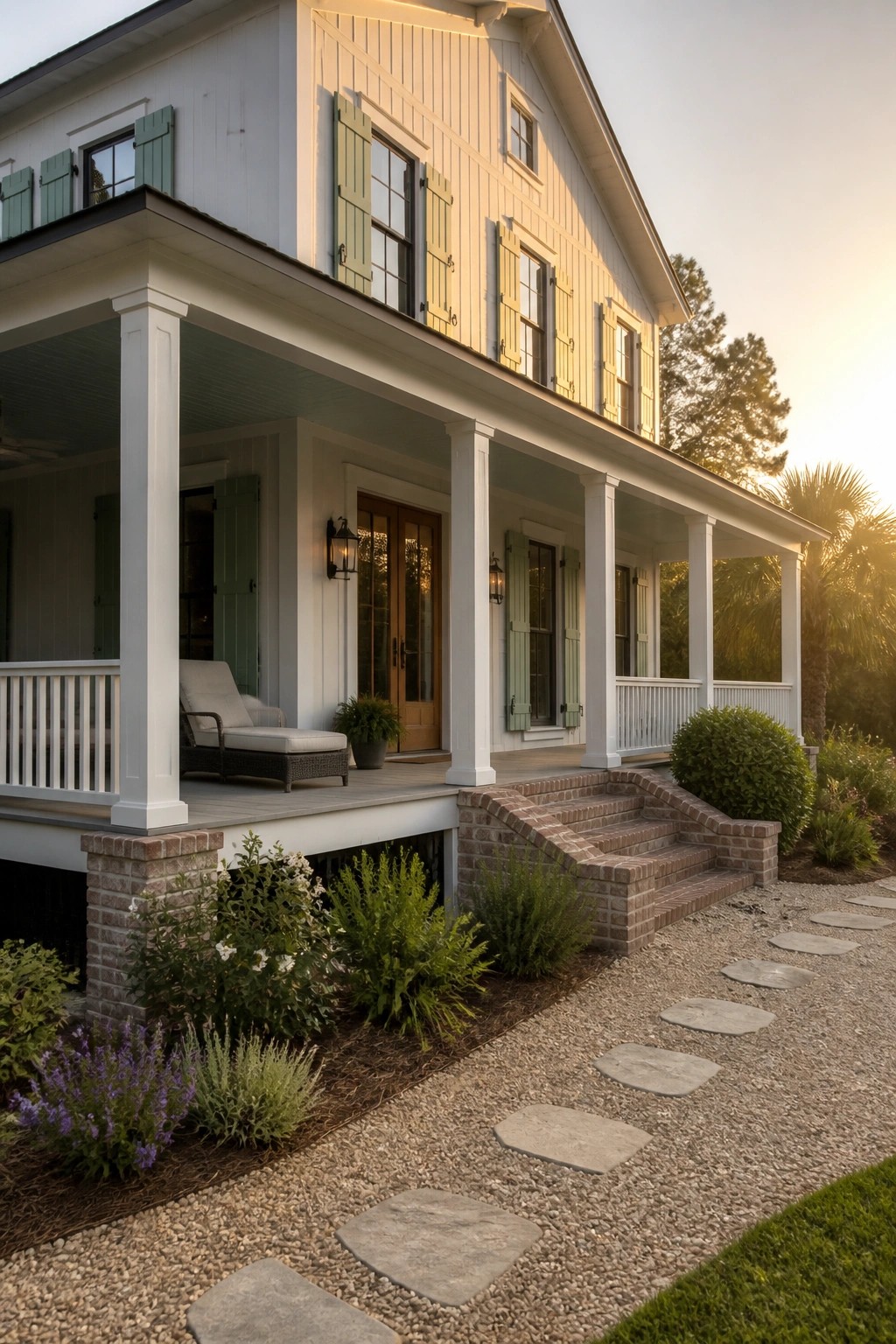
A wraparound porch gives the front of the house more purpose. It turns what could be a plain facade into a space people actually use, and it softens the look of the whole structure by adding depth and shade right where you need it most.
This works well on two-story homes that sit back from the road. Keep the columns plain and evenly spaced, and let the porch floor sit a step or two above grade so the entry feels welcoming without needing extra railings or decoration.
Wraparound Porches That Add Usable Space
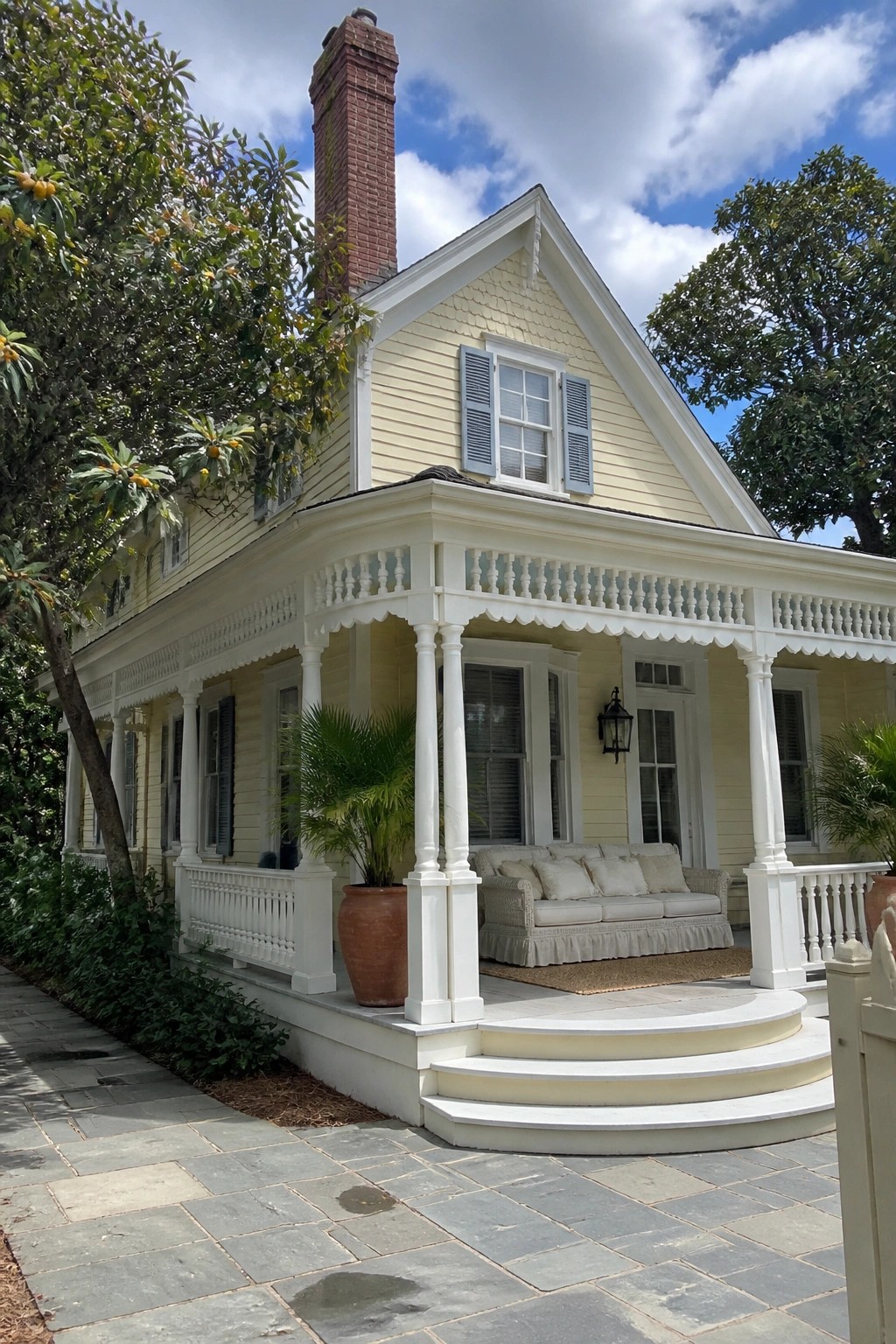
A wraparound porch gives a house more outdoor room without needing a big yard. It turns the side of the home into an extension of the living space, which works especially well in coastal settings where people want to spend time outside.
This layout suits older homes with simple siding and gabled roofs. The porch can hold seating on two sides at once, so you get morning shade on one end and afternoon shade on the other. Just make sure the railing and columns stay light in color so the whole thing does not feel heavy.
Wraparound Porches That Follow the House
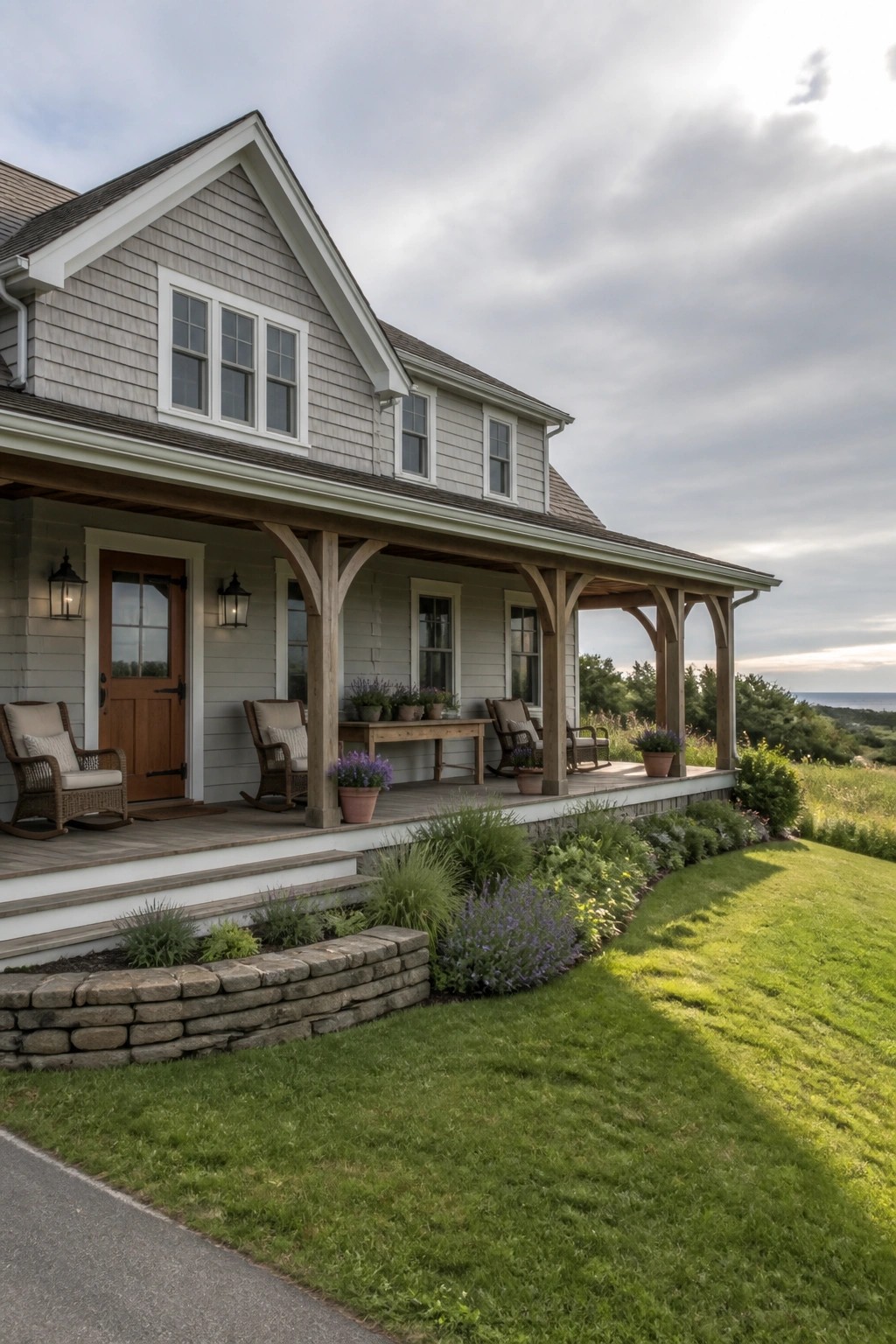
A wraparound porch works well on coastal homes because it stretches the usable space along more than one side. It gives the facade a longer, lower line that feels settled rather than tall and boxy, and it creates several natural spots for chairs or a table without crowding one area.
This layout suits homes that already have a few roof gables or a corner to turn. Keep the posts and beam work simple and in the same wood tone as any other trim so the porch reads as part of the original structure instead of an afterthought.
Connecting Seating Areas With a Wraparound Porch
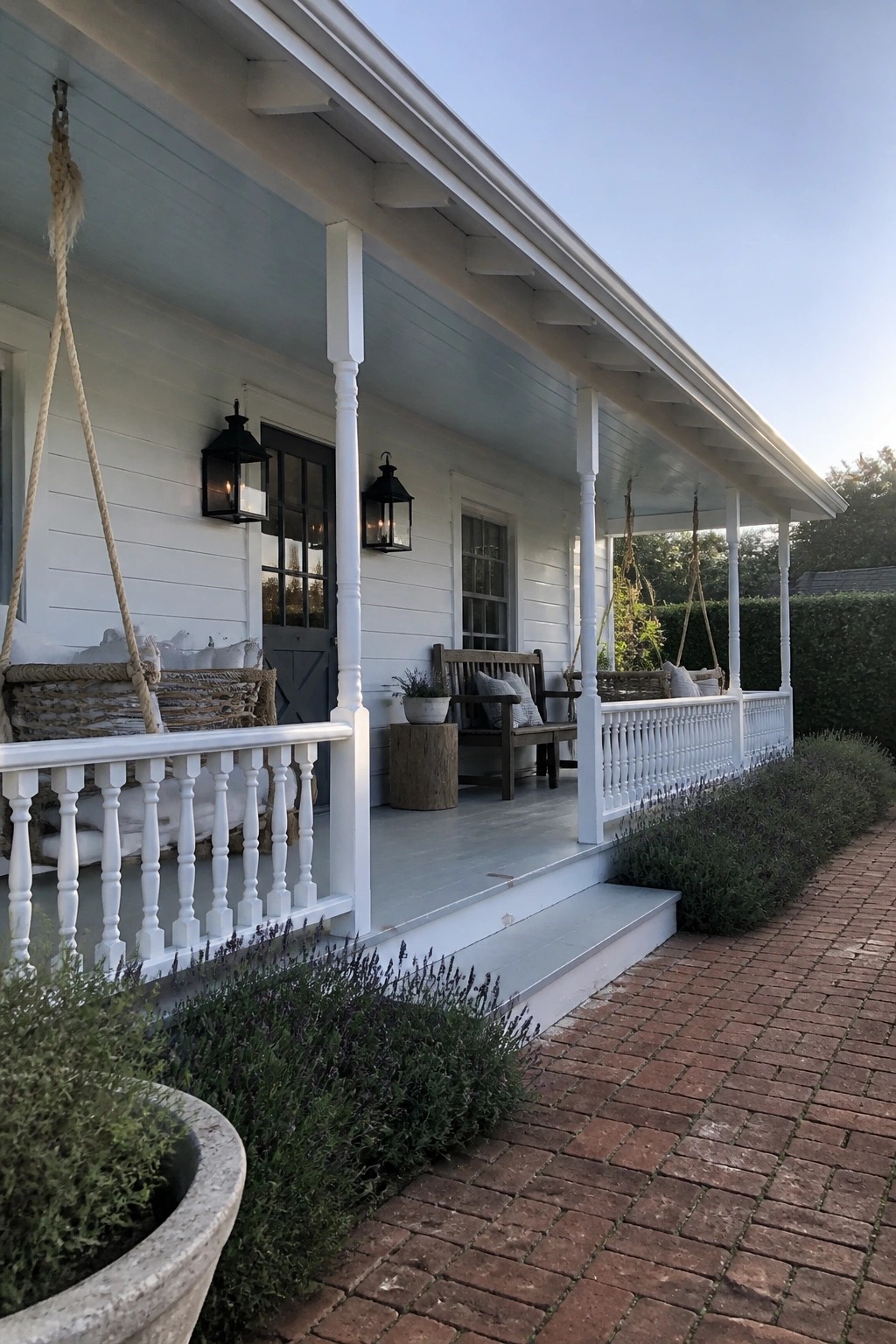
A wraparound porch works well when it gives you more than one place to sit without making the space feel chopped up. In this example the long run of railing lets a hanging chair sit near one end while a bench stays closer to the door, so the whole stretch stays usable instead of turning into one big empty walkway.
This setup suits coastal homes that already have a simple roofline and white trim. Keep the railings and posts painted the same color as the house so the porch reads as part of the structure instead of an add-on. Just watch the spacing between seats so people can still walk through without stepping over furniture.
Wraparound Porches That Extend Daily Living
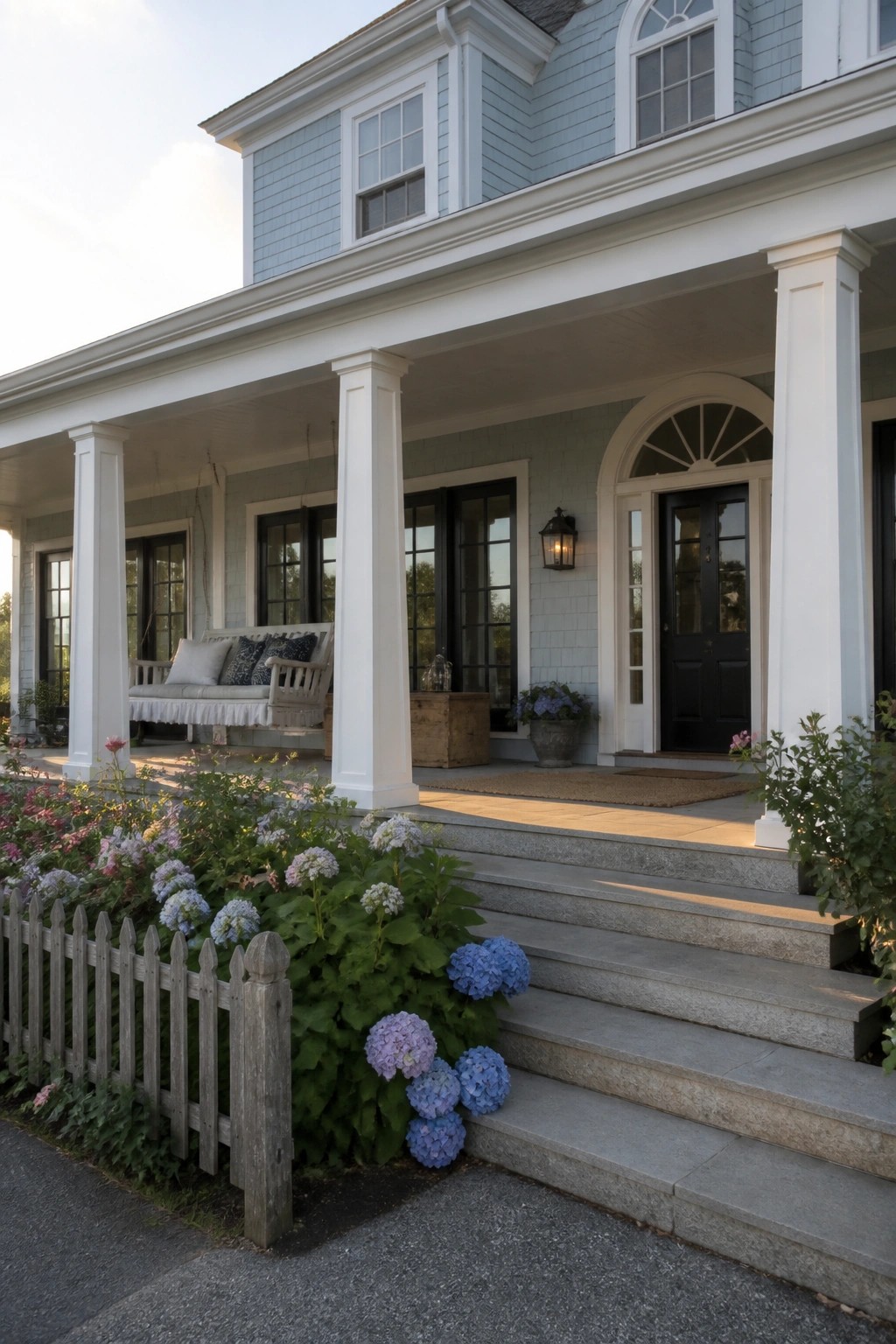
A wraparound porch gives a coastal home extra room to sit outside without needing a big backyard. The open layout lets people move from one side to the other and still stay connected to the front of the house.
This approach works best on homes that already have decent frontage and some garden space along the foundation. Keep the structure simple with white columns and let low plantings soften the edge near the steps.
Stone Bases for Porch Columns
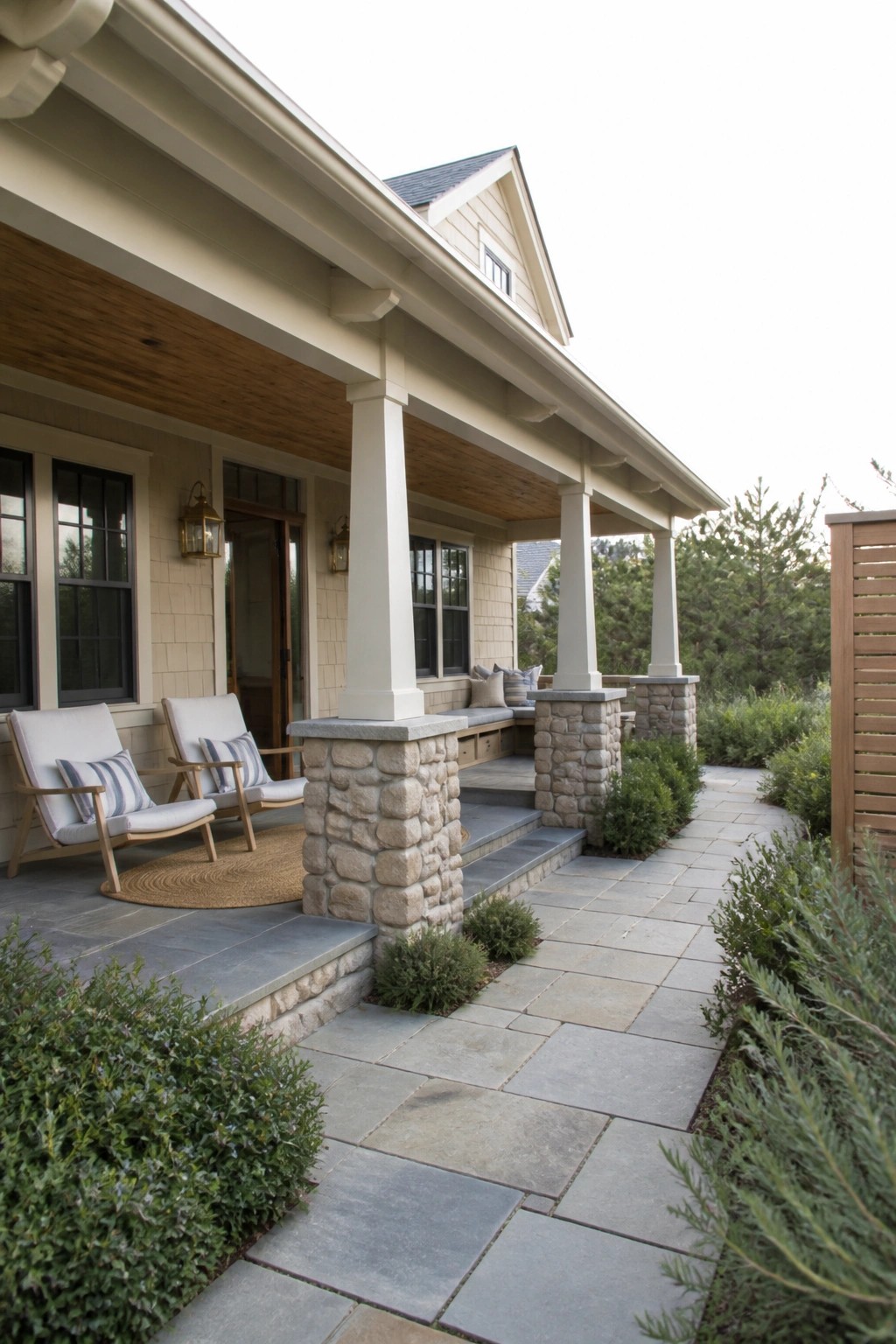
Stone at the base of porch columns gives the whole structure a more solid, grounded look. It keeps the porch from feeling too light or temporary, especially on a wraparound design where the columns run along a longer stretch.
This detail works best on homes with some elevation or open landscaping around them. Keep the plantings low near the base so the stone stays visible and the transition to the yard stays simple.
Fire Pits on the Porch
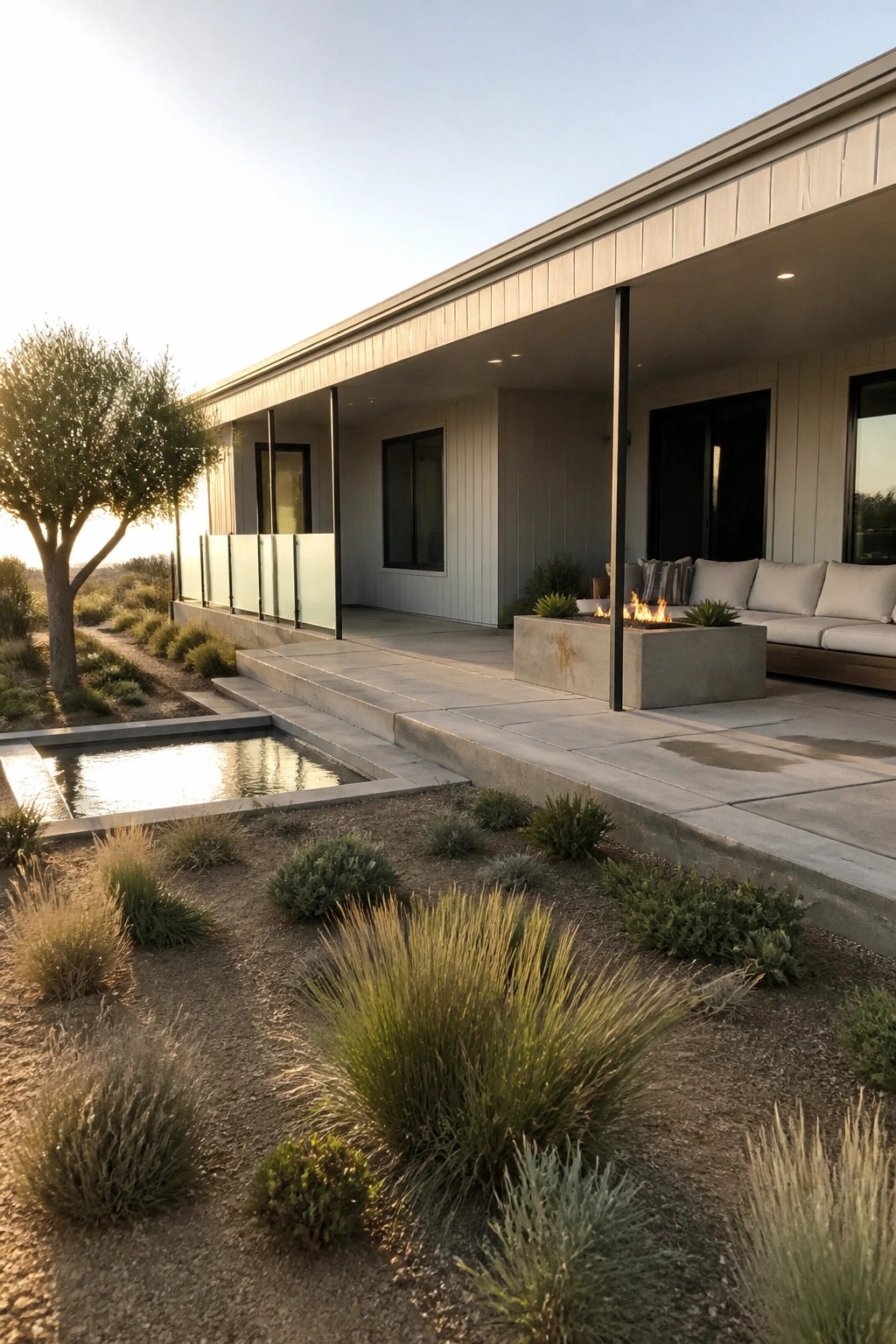
One way to make a porch feel more like an actual living space is to place a fire pit right in the seating area. It turns the covered space into a spot people want to use after the sun goes down, without needing to move everything indoors.
This works best on larger porches where you can keep the seating grouped around the fire. Just check that the floor material can handle the heat and leave enough room for people to walk around the chairs comfortably.
Hanging Swings on a Wraparound Porch
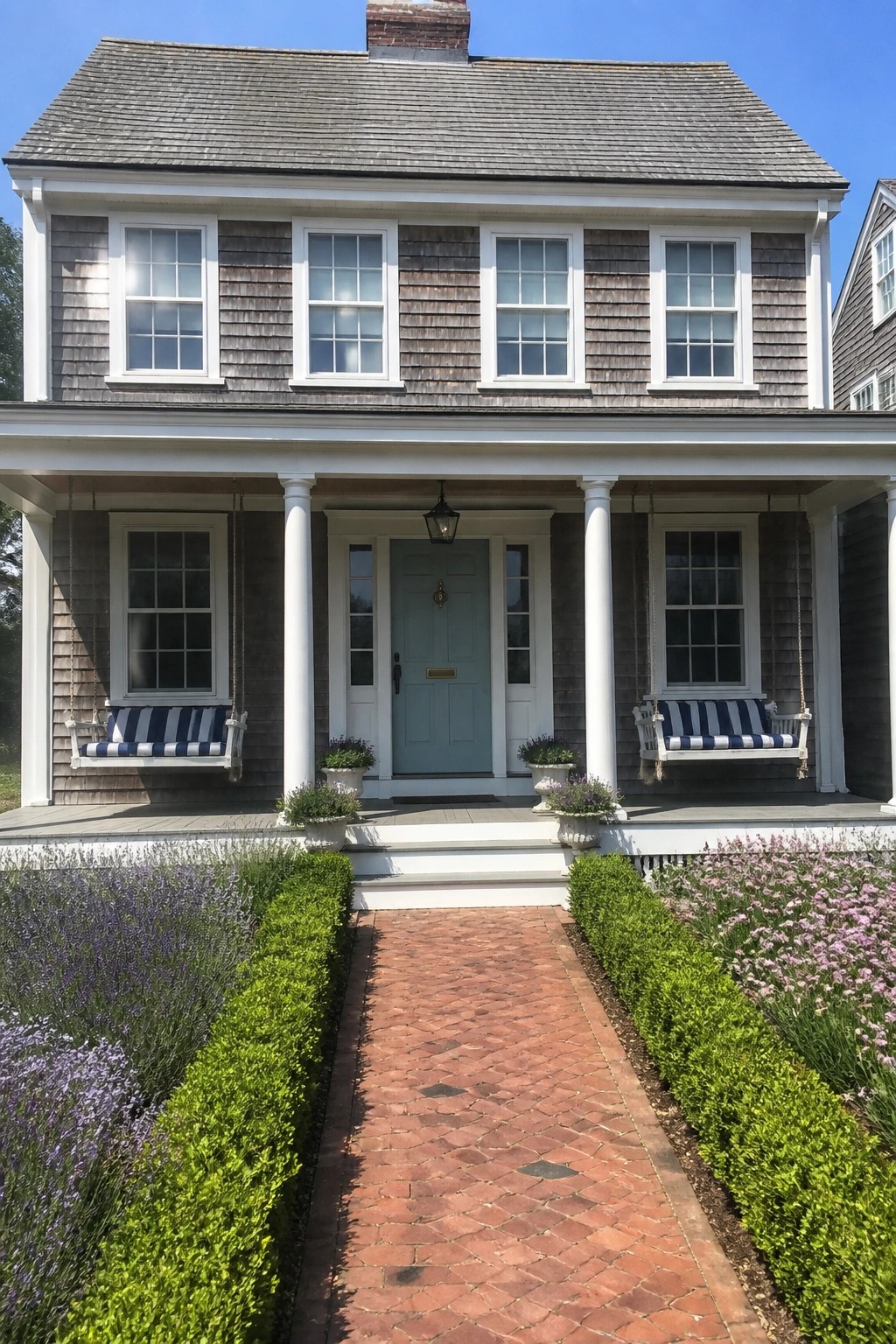
Hanging swings give a wraparound porch a simple way to feel more usable without adding much furniture. They work especially well on classic coastal homes because they keep the space open while still offering a place to sit.
Place them along the outer edge so they do not block the walkway to the door. This setup suits homes with wood siding and white trim, since the swings add movement without crowding the architecture.
Porches With Steps That Reach the Yard
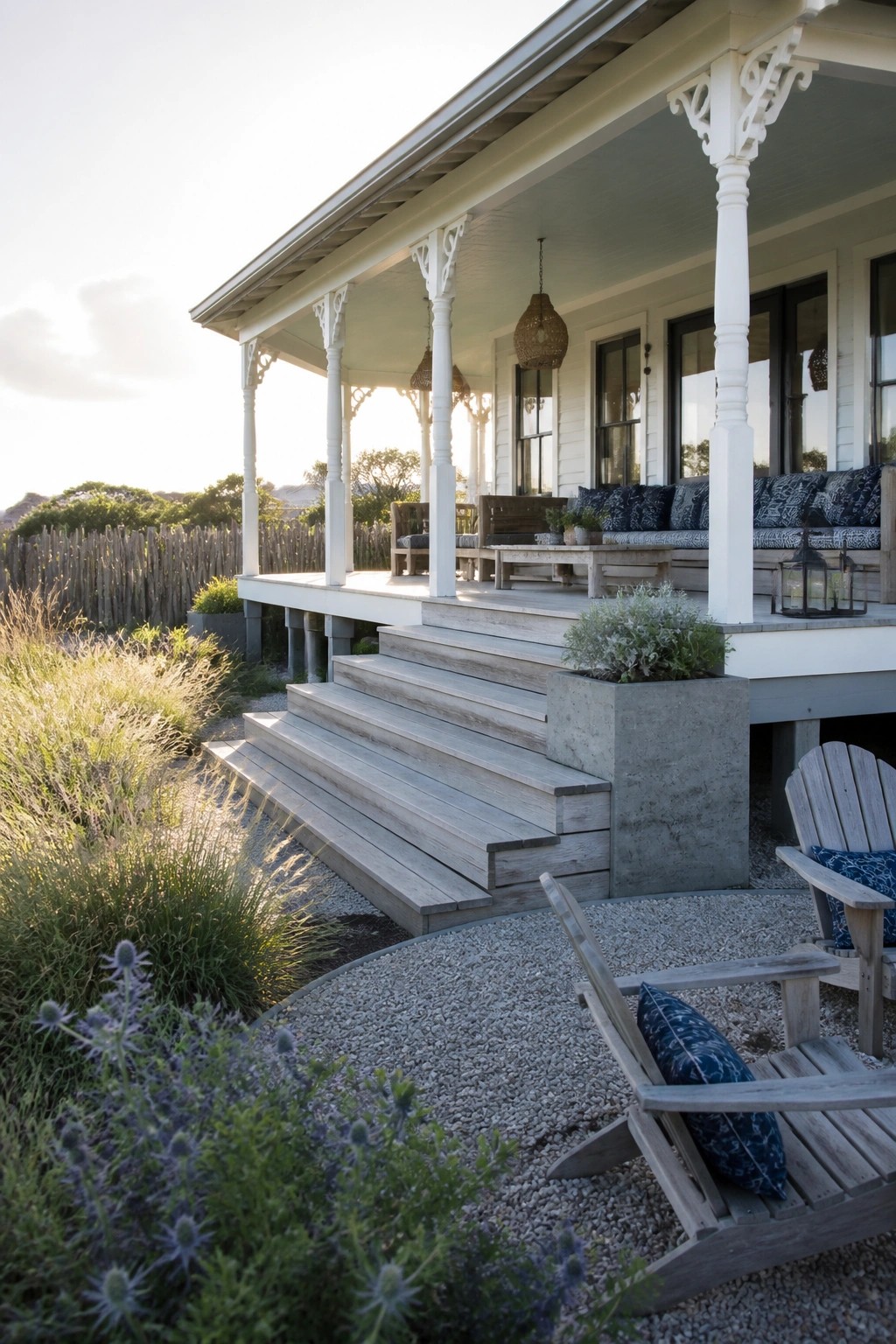
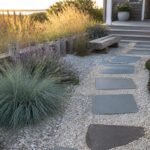
A wraparound porch feels more useful when wide steps lead straight down to a simple gravel area. This layout turns the porch into the main seating spot while giving you extra room below for a couple of chairs without crowding the deck itself.
It suits coastal homes that sit on fairly flat ground with some open space around them. Keep the steps the same wood tone as the porch floor and let low plants soften the edges so the whole thing reads as one relaxed outdoor zone.
Wraparound Porches That Run Along the Side

A wraparound porch works well when it follows the house line instead of stopping at the front door. The arches and heavy wood beams give steady shade while keeping the walk open, so the side of the house feels just as usable as the front.
This setup suits homes that have a path or garden running beside them. It keeps the entry connected to the rest of the yard without adding a separate structure, and the simple materials hold up in coastal weather.
Built-In Seating On The Porch
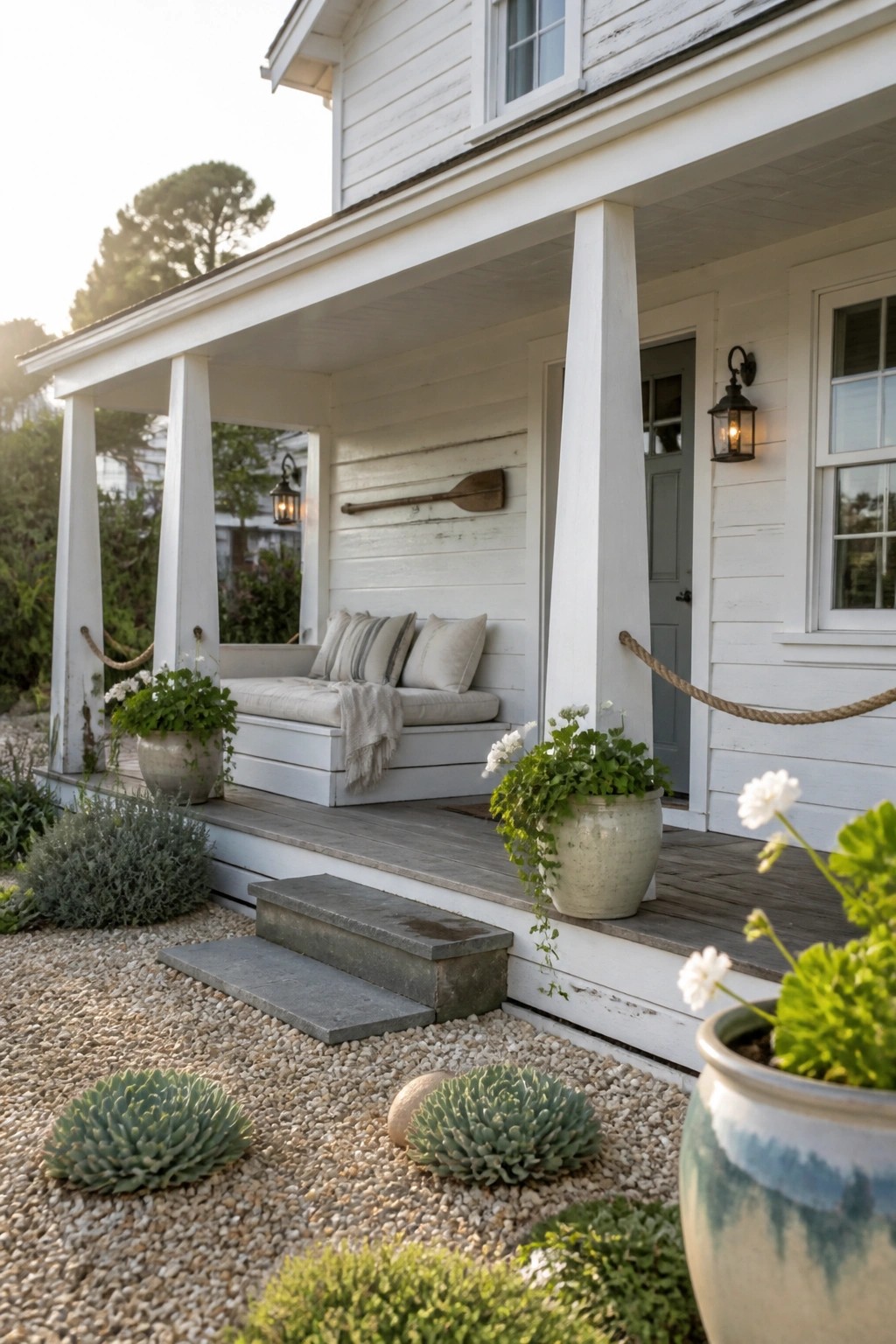
Many coastal homes use built-in bench seating along the porch wall. It turns the space into a ready spot to sit without adding extra chairs or tables that can crowd the area.
This works well on wraparound porches because it keeps the layout clean and makes use of the existing structure. A few cushions are usually all that is needed to make it comfortable for daily use.
Wraparound Porches That Follow the House Shape
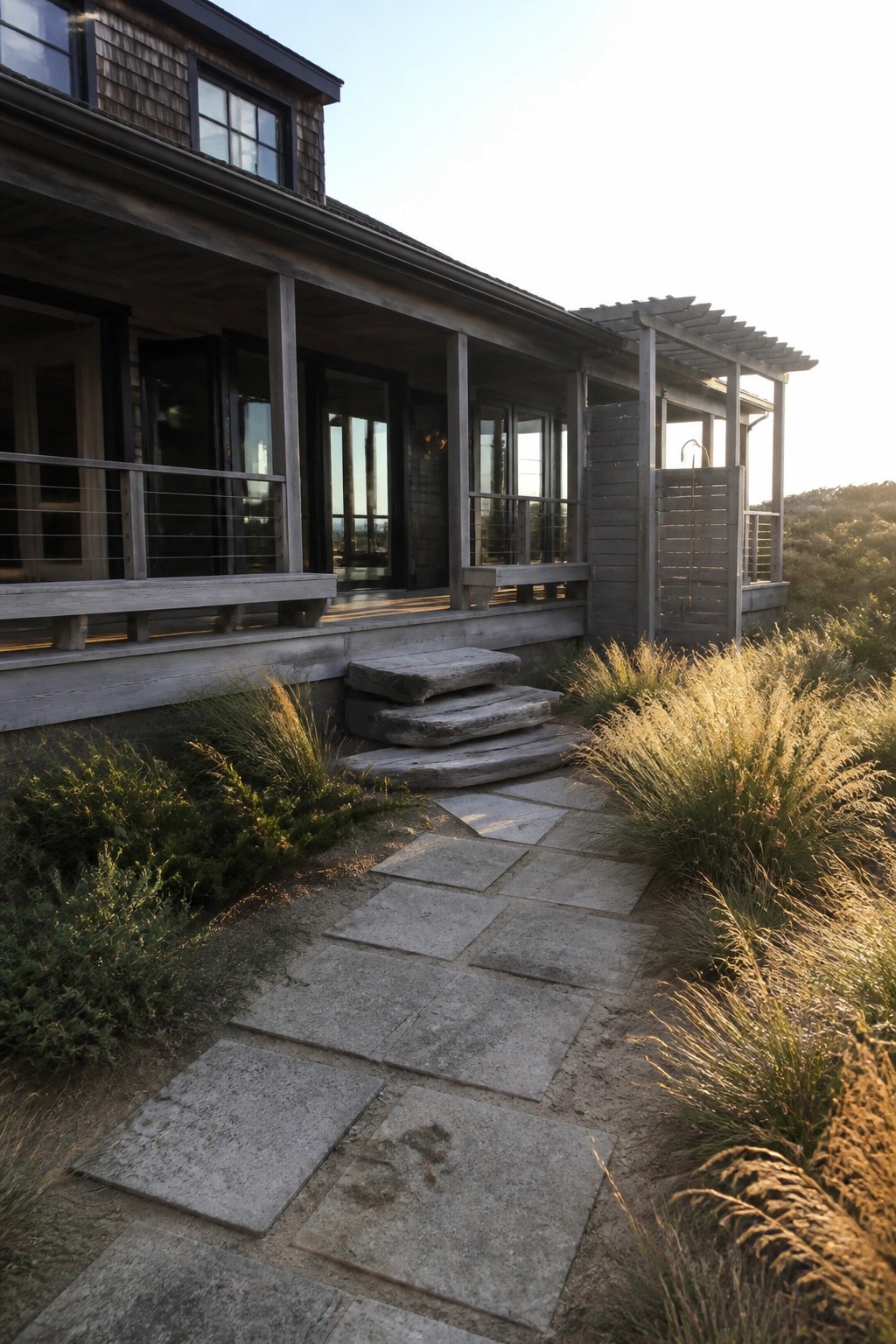
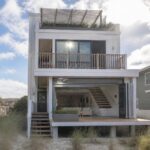
A wraparound porch gives a coastal home extra living space that feels connected rather than tacked on. It lets you move around the outside without going back inside, and the simple wood construction holds up well near salt air and wind.
This layout works best on houses that sit on slightly raised ground with views on more than one side. Keep the railings low and open so they do not cut off the light or the sight lines to the water or dunes.
Wraparound Porches That Add Usable Outdoor Space
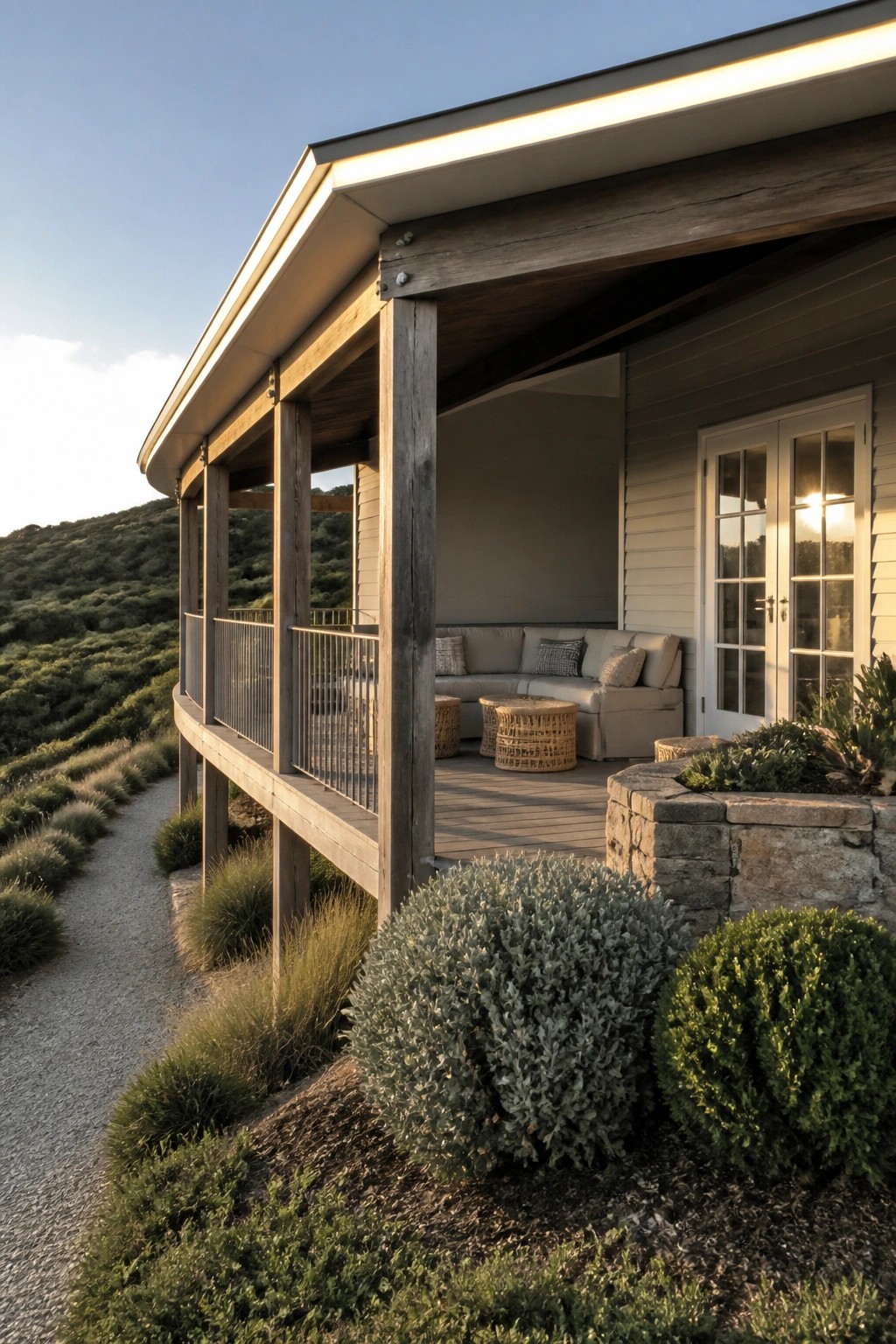
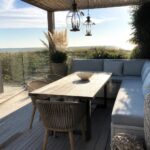
A wraparound porch works well when you want more room to sit outside without building a whole new structure. The wide deck here gives enough space for a full sofa setup plus extra seating, so the area feels like an actual room rather than just a walkway.
This layout suits homes near the coast or on slopes where the view changes as you move around the porch. Keep the furniture low and simple so it does not block the railing or the sightlines, and choose materials that can handle sun and salt air.
Wraparound Porches That Add Usable Outdoor Space
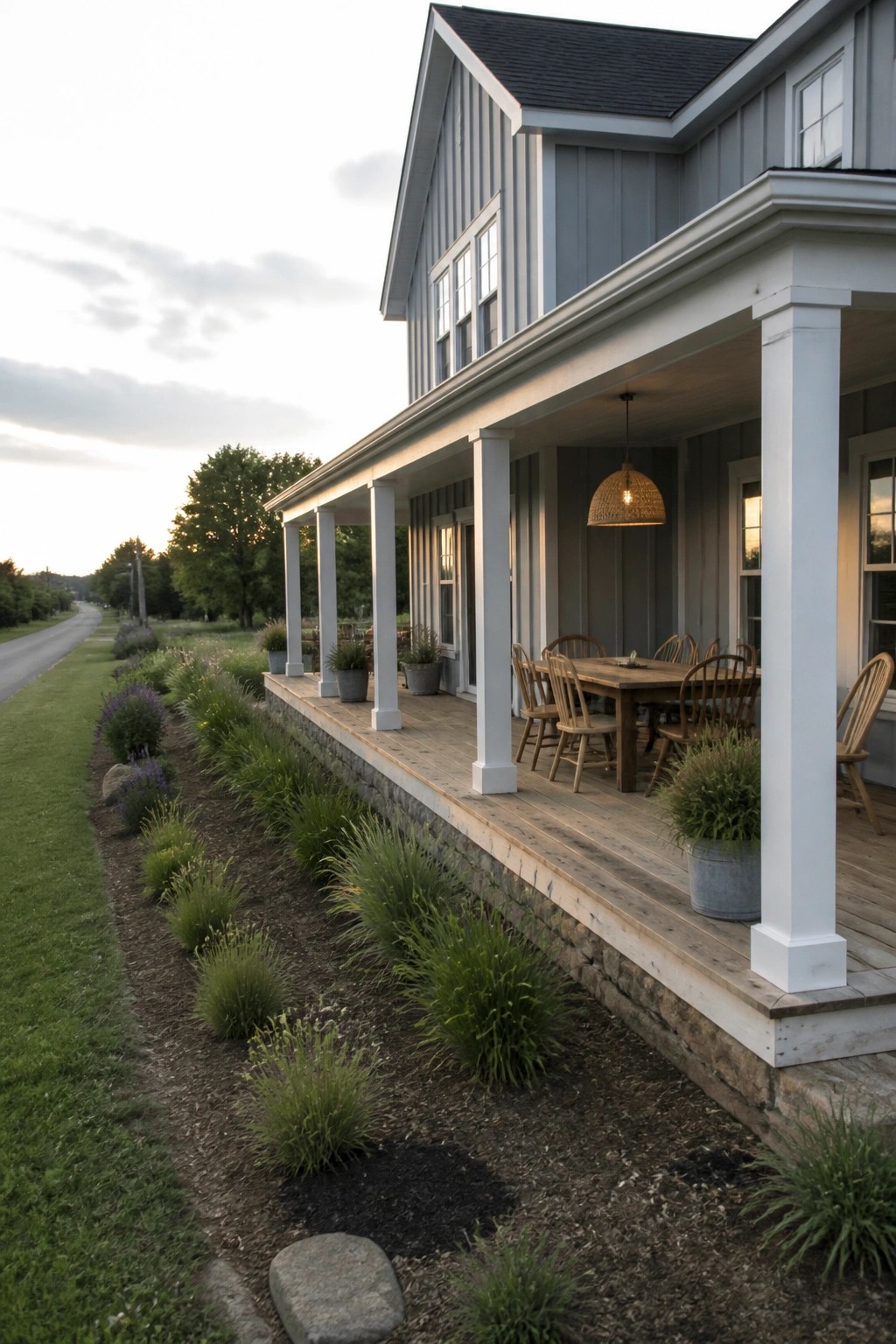
A wraparound porch gives you outdoor room on two sides of the house at once. This one runs along the front and turns the corner, so the dining table and chairs sit right outside the main windows without feeling tucked away.
It suits homes with straightforward rooflines because the porch roof can match the slope and keep the lines clean. Stick to simple white posts and natural wood decking so the porch feels like part of the house rather than something added on later.
Wraparound Porches That Extend Daily Use
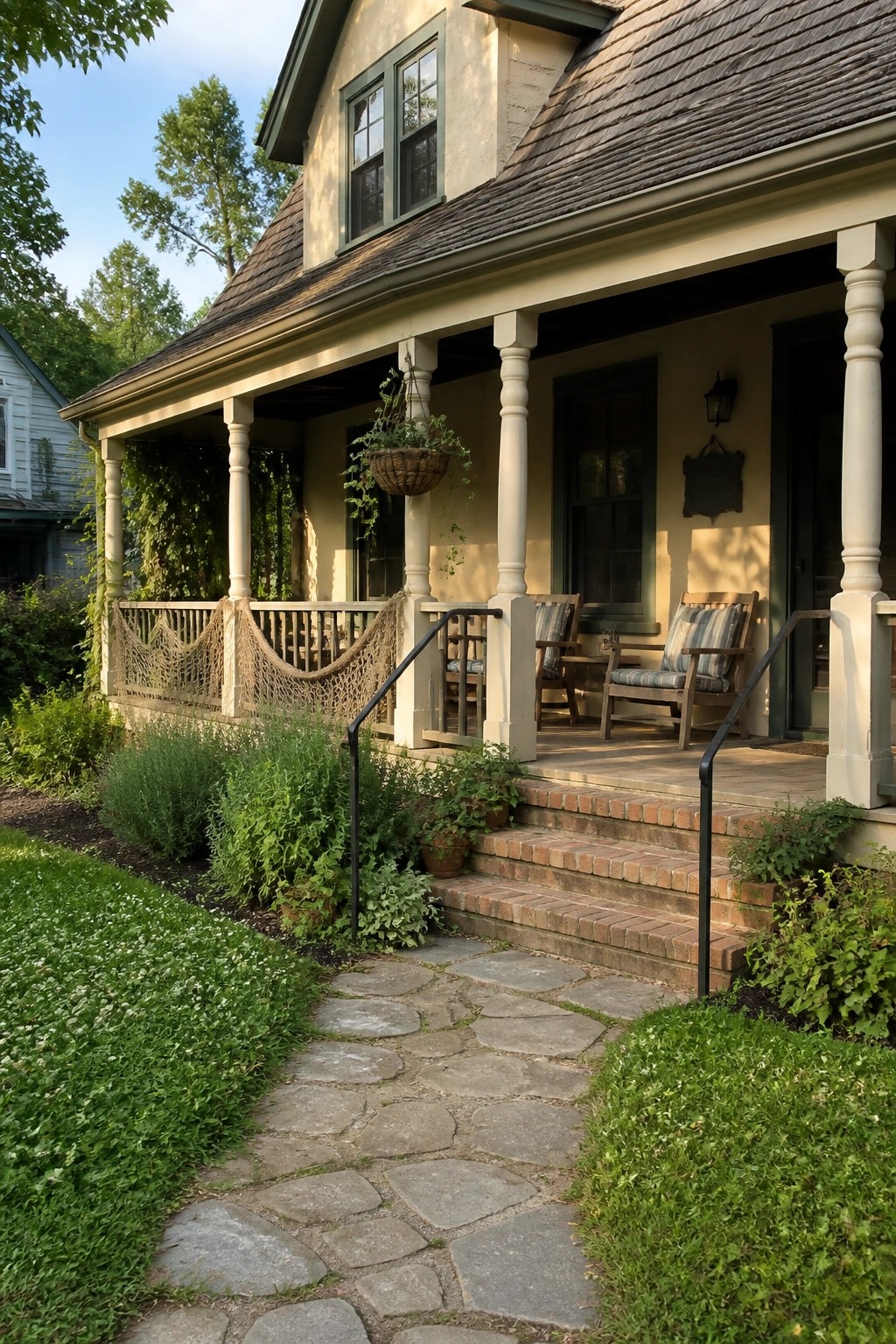
A wraparound porch turns the front of a house into real living space instead of just a pass-through area. It gives you room to sit outside in different spots depending on the time of day or the weather, and it helps the whole house feel more connected to the yard.
This setup works well on homes that have a decent amount of frontage and a simple roofline. Stick with basic columns and a straightforward railing so the porch stays easy to keep up and does not fight with the rest of the exterior.
Wraparound Porches With White Trim
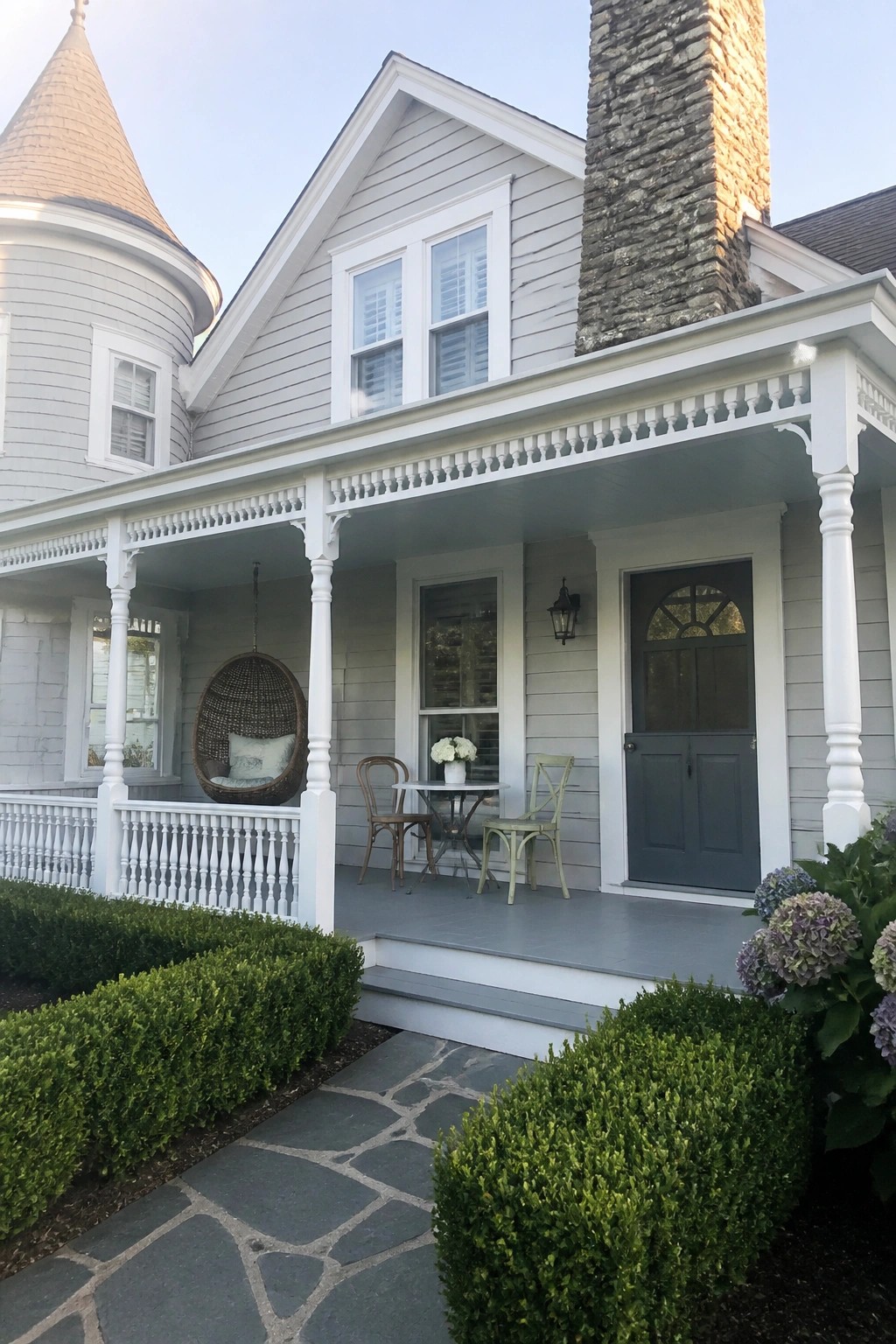
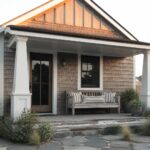
A wraparound porch gives a house that classic coastal look by extending seating and shade around more than one side. The white columns and railings stand out against the gray siding and help the whole front feel open and balanced.
This works well on homes with room to wrap the structure without crowding windows or doors. Keep the railing height and column style the same all the way around so it reads as one clean feature instead of separate pieces.
Rocking Chairs on the Porch
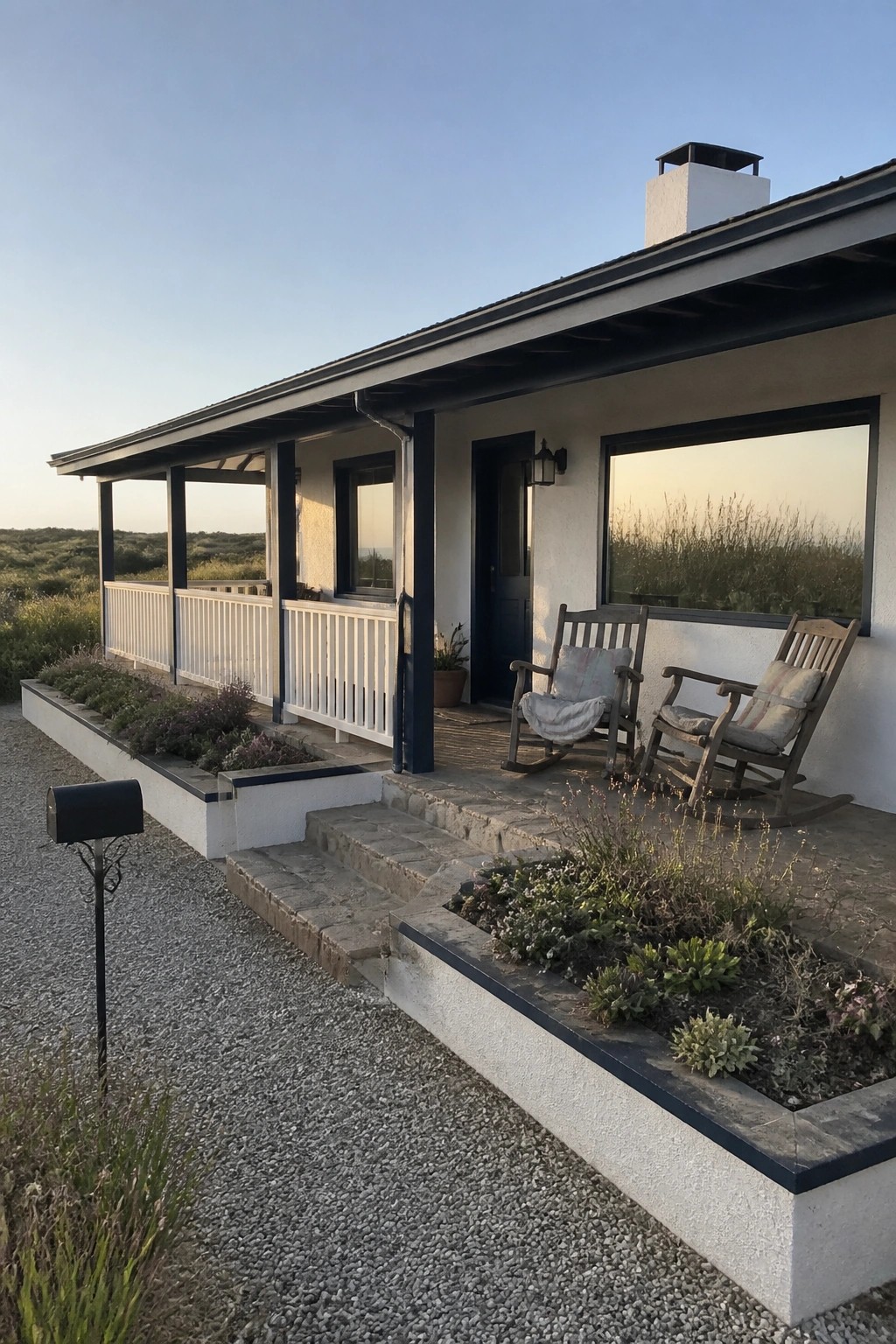
A pair of wooden rocking chairs gives a porch an easy, lived-in feel without much effort. They work especially well on a long coastal porch because they take up little space and still create a clear spot to sit and look out.
They suit homes that already have a simple railing and open roofline. Just keep the rest of the porch clear so the chairs stay the main feature rather than competing with tables or extra furniture.
Frequently Asked Questions
Q: How do I stop sand from blowing onto a wraparound porch every time the wind picks up? A: Place a low hedge or row of tall grasses along the outer edge to break the gusts. Sweep the floor daily with a stiff broom and keep a mat at each door. This setup cuts down on grit without blocking your ocean views.
Q: What seating actually lasts on a porch that faces salt air and sun all day? A: Choose teak or cedar pieces and treat them once a season with a light oil. Skip cushions unless they have quick-dry foam and removable covers you can hose off. Two rockers and a small bench are usually enough to keep the space open and comfortable.
Q: Can I screen in part of the porch without making the whole house look closed off? A: Screen just the back section where you eat or read and leave the front rails open. Use dark mesh so it blends with the shadows under the roof. You still get the wraparound feel while keeping bugs out of your main sitting area.