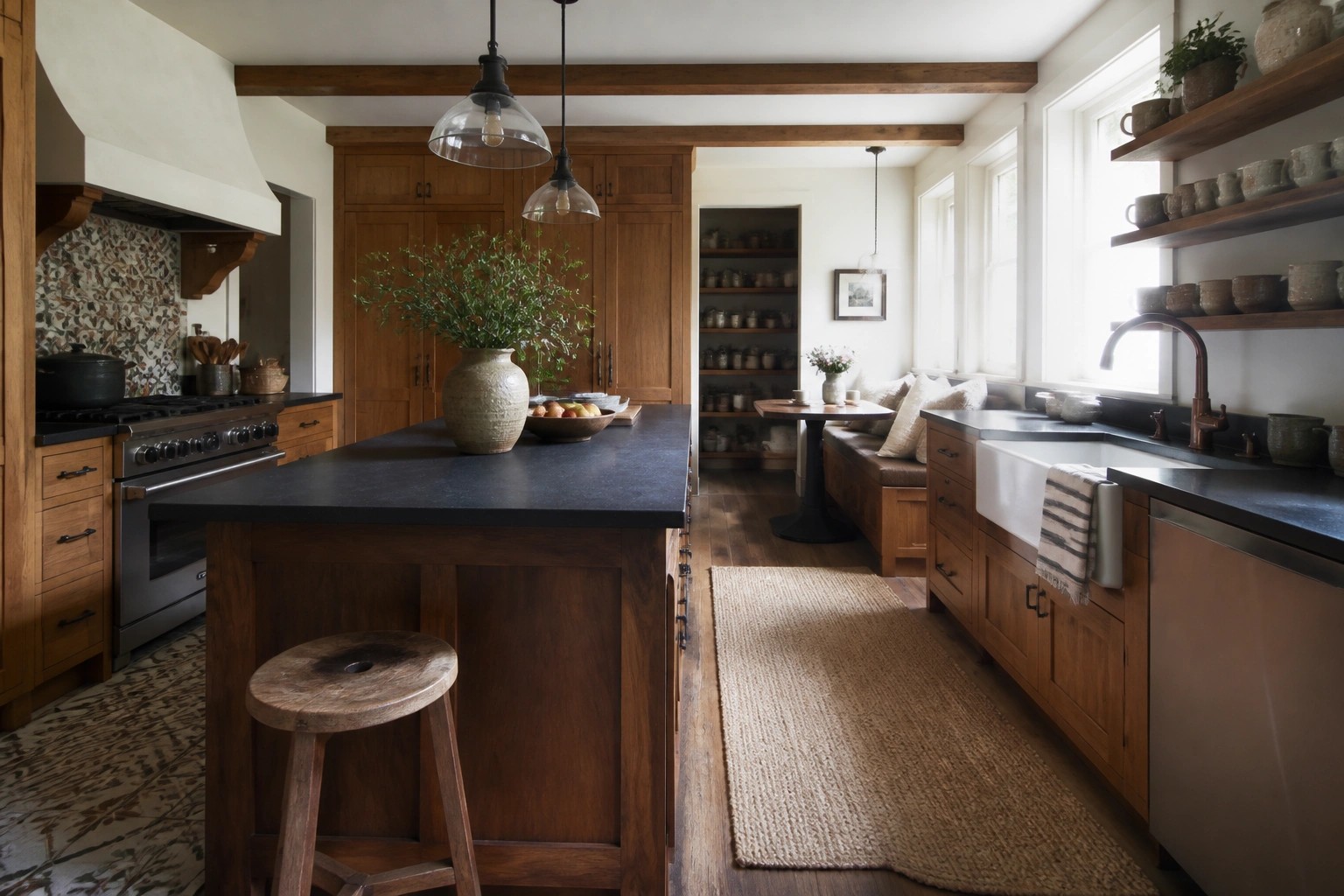
Kitchens centered on natural wood tend to feel more settled once you start using them every day rather than just looking at the plans.
I have seen how handmade details often matter most around the sink and prep areas where hands actually touch the surfaces.
The grain and texture of the wood can soften the hard edges of appliances in a way that makes the room easier to spend time in.
Craftsman kitchens work best when the materials support both the cooking workflow and the occasional gathering without needing constant tidying.
One choice I would test first is pairing a simple wood backsplash with open shelving to see how it changes the light during regular use.
Open Shelving For Collected Pottery
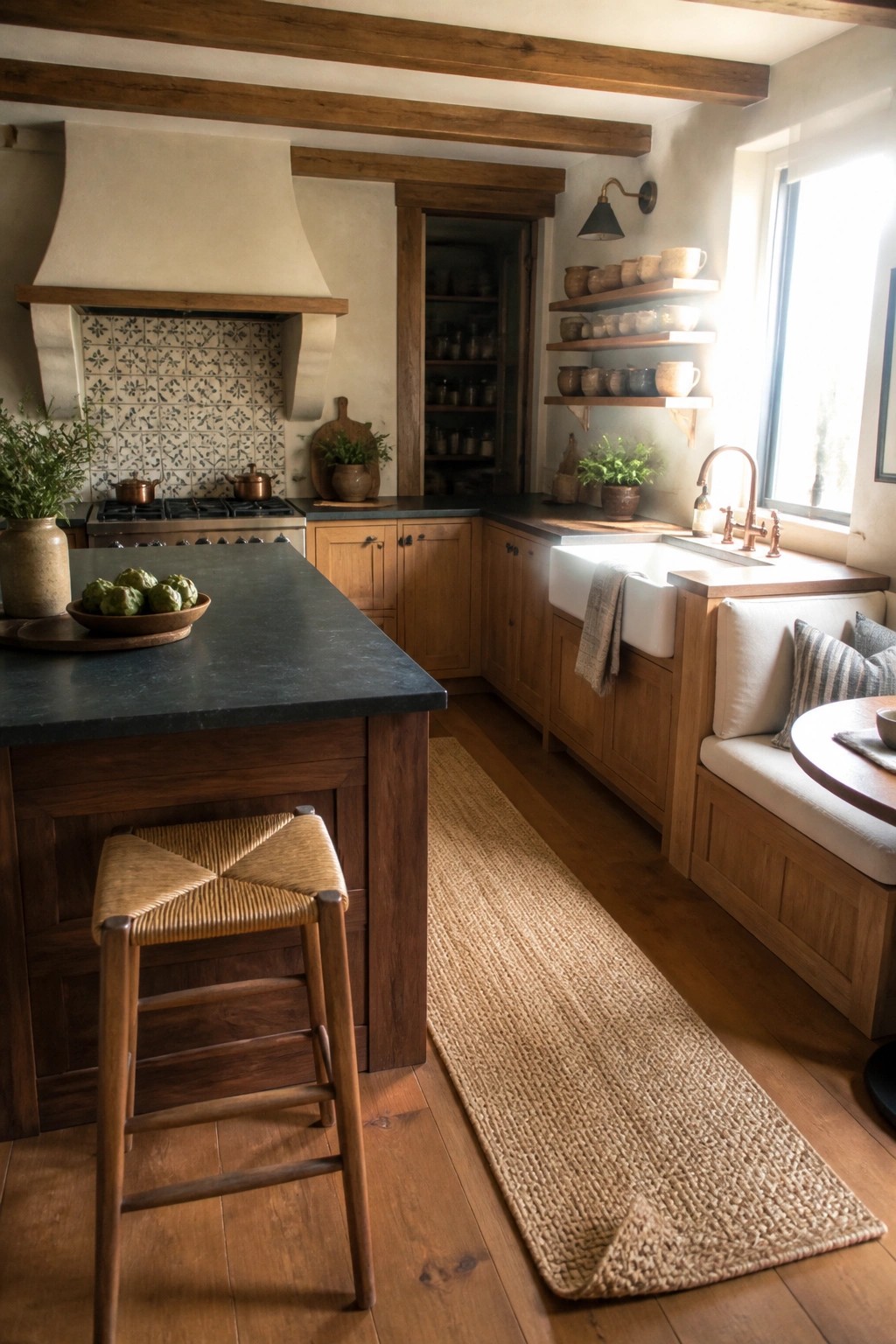
Open shelving works well in craftsman kitchens because it turns everyday dishes into part of the room instead of hiding them away. The wood shelves here sit above the sink and hold rows of bowls and cups that look gathered over time rather than bought all at once.
This approach suits homes where people cook often and want things within reach. Keep the pieces in similar tones so the shelves feel calm, and leave a little space between groups so nothing looks crowded.
Hang Pots on a Wall Rail
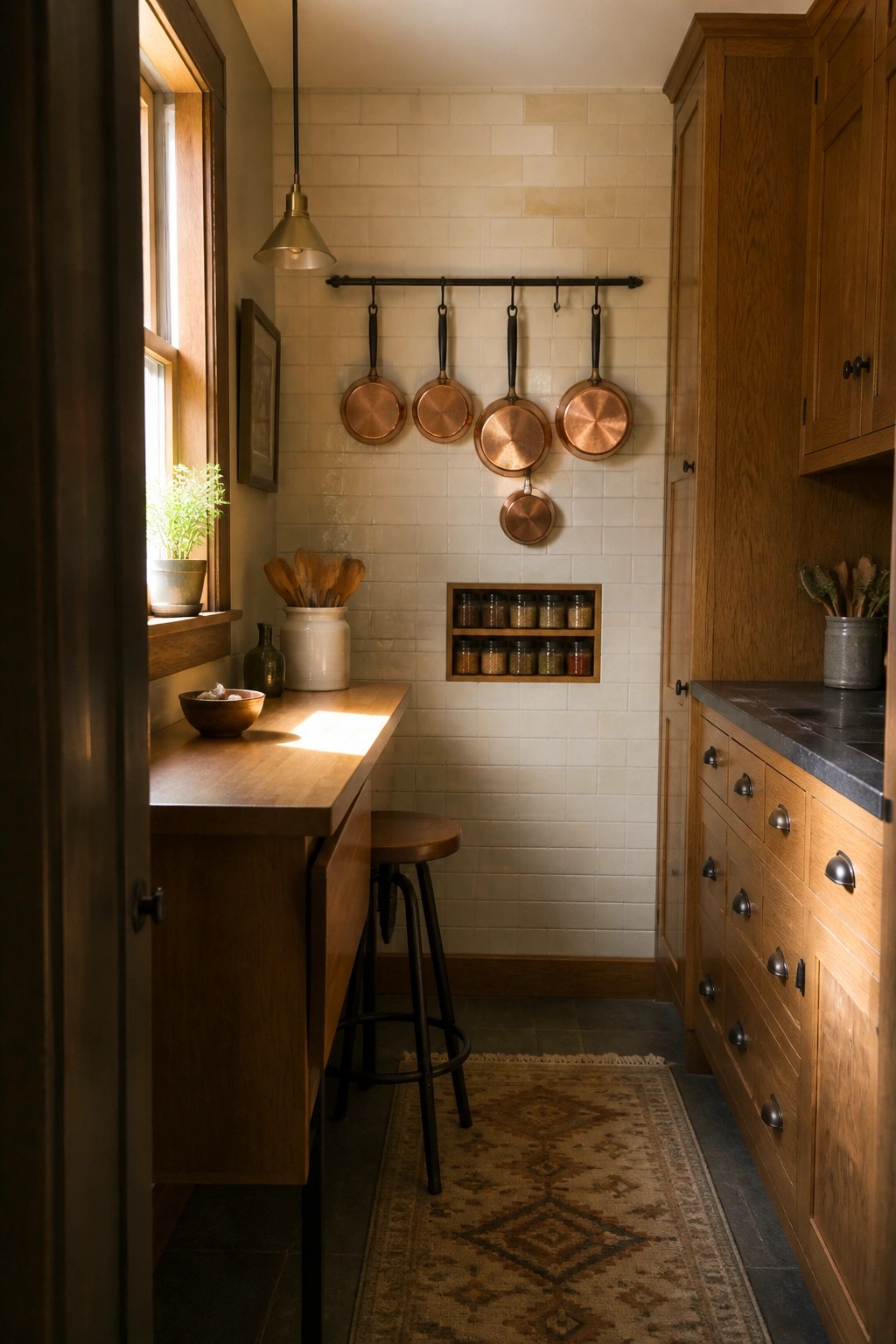
A wall rail gives you a place to keep pots and pans within reach without crowding the counters or cabinets. In a smaller kitchen it opens up storage while letting the cookware itself add some warmth and texture to the room. Natural wood cabinets and counters help the whole setup feel grounded rather than cluttered.
This works best in a Craftsman-style kitchen where you already have wood tones and simple details. Keep the rail at a height that is easy to reach and choose pans that you actually use often so the display stays practical. Avoid overloading the rail or hanging anything too heavy.
Let Natural Wood Carry The Warmth
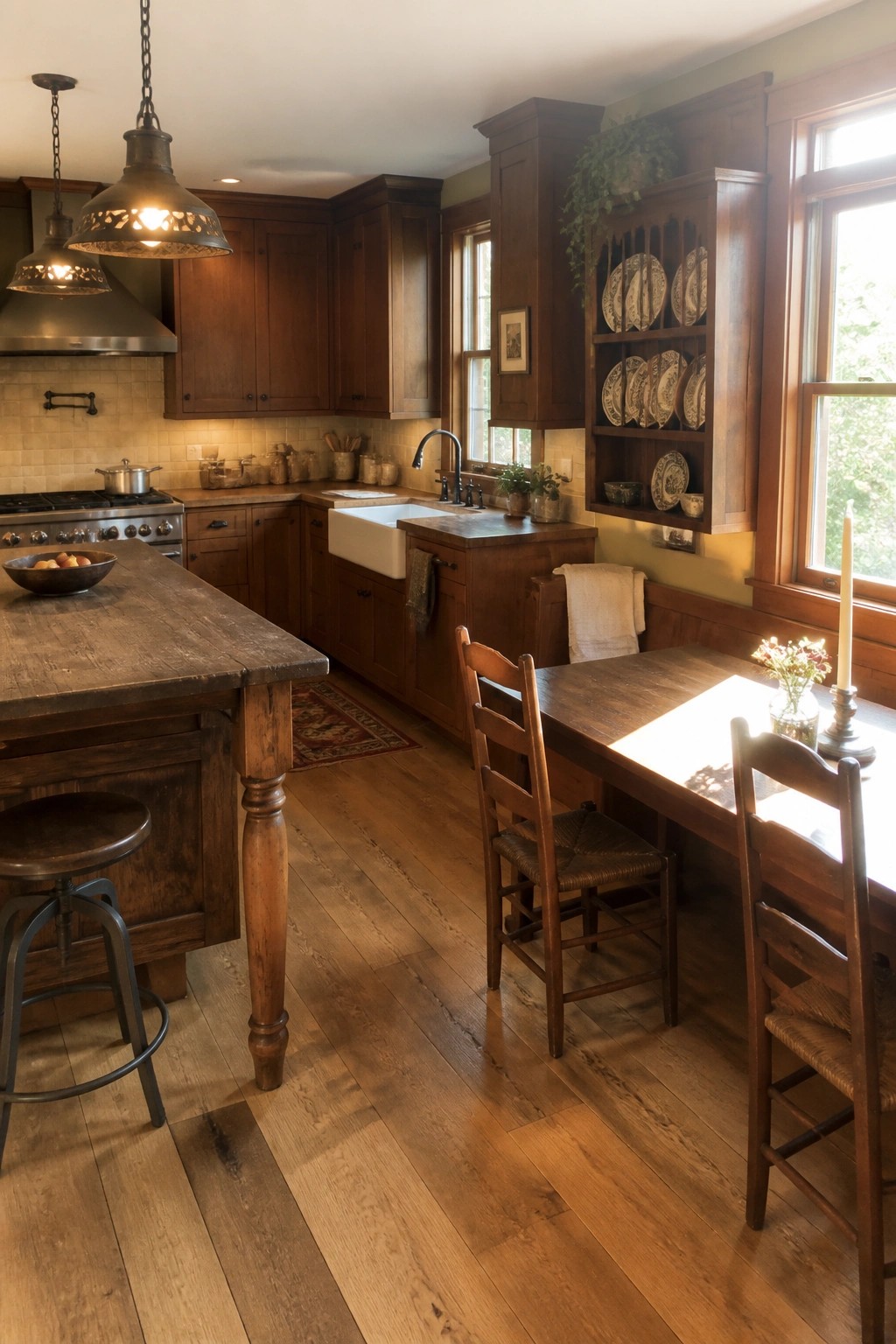
Natural wood gives a Craftsman kitchen its real sense of warmth. When the cabinets, island, open shelves, and dining table all share similar tones, the room feels connected and lived in without any extra effort.
This works best in homes that already lean traditional. Match the wood on the main surfaces and keep hardware simple so the grain does the work. It suits older houses or new builds that want the same grounded look.
Add a Window Seat for Seating and Storage

A window seat built into the cabinetry works well in narrow kitchens where every inch counts. It gives you a place to sit without crowding the walkway and hides extra storage underneath the cushion. The wood top ties into the floor for a warmer look that fits the rest of the room.
This setup suits older homes or smaller layouts where you want function without adding freestanding furniture. Keep the shelves above simple so the seat stays the main feature, and choose a cushion in a durable fabric that can handle daily use.
A Substantial Wood Island For Everyday Use
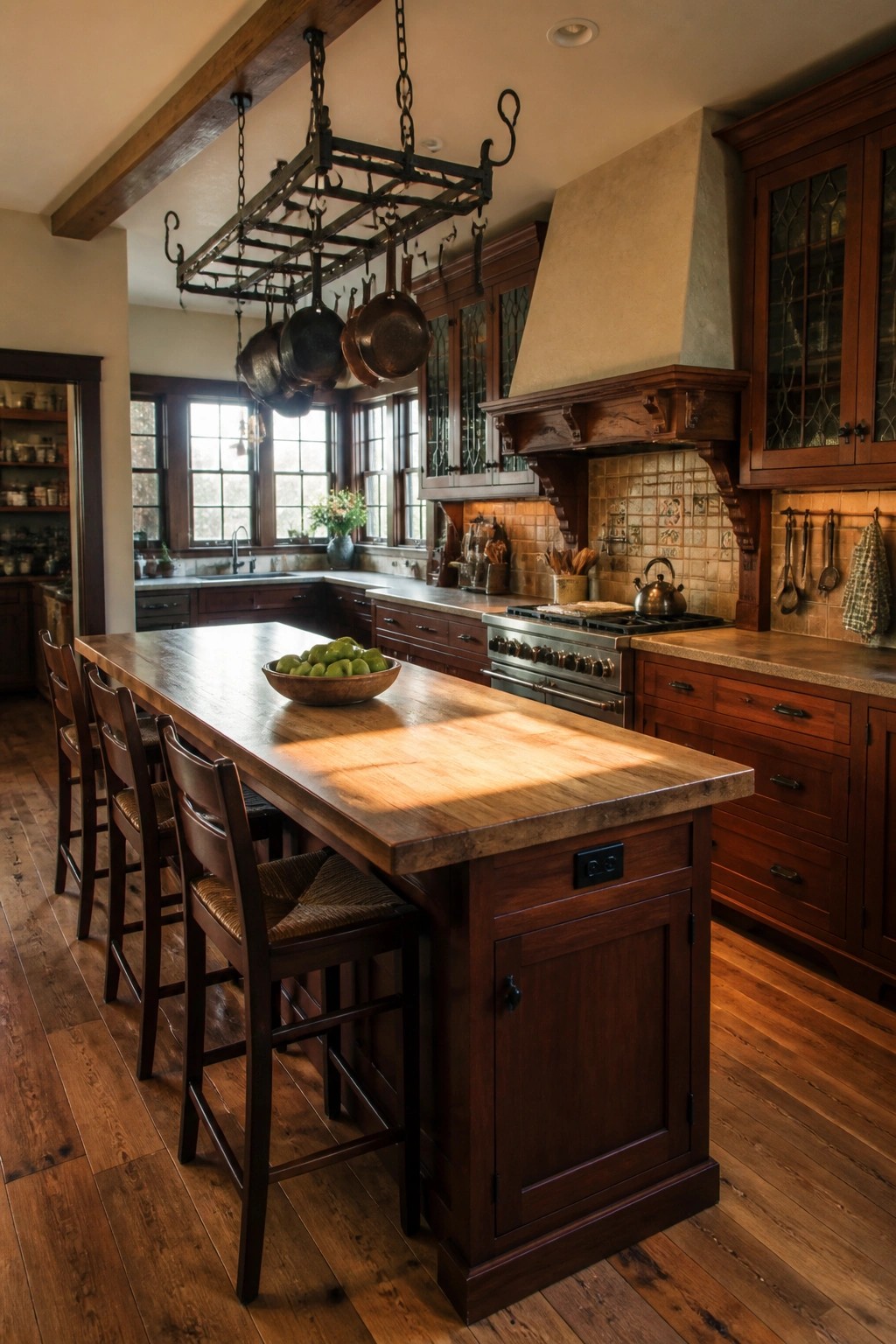
A large wood island brings real function to a Craftsman kitchen because it handles both prep work and casual meals without needing extra furniture. The solid top and simple build keep the room feeling grounded and practical rather than overly styled.
Set the island toward the center with a few stools along one side so people can sit and talk while cooking happens. This layout suits homes that already have wood floors and cabinets since the matching tones help everything feel connected.
Built-In Benches Add Warmth and Storage
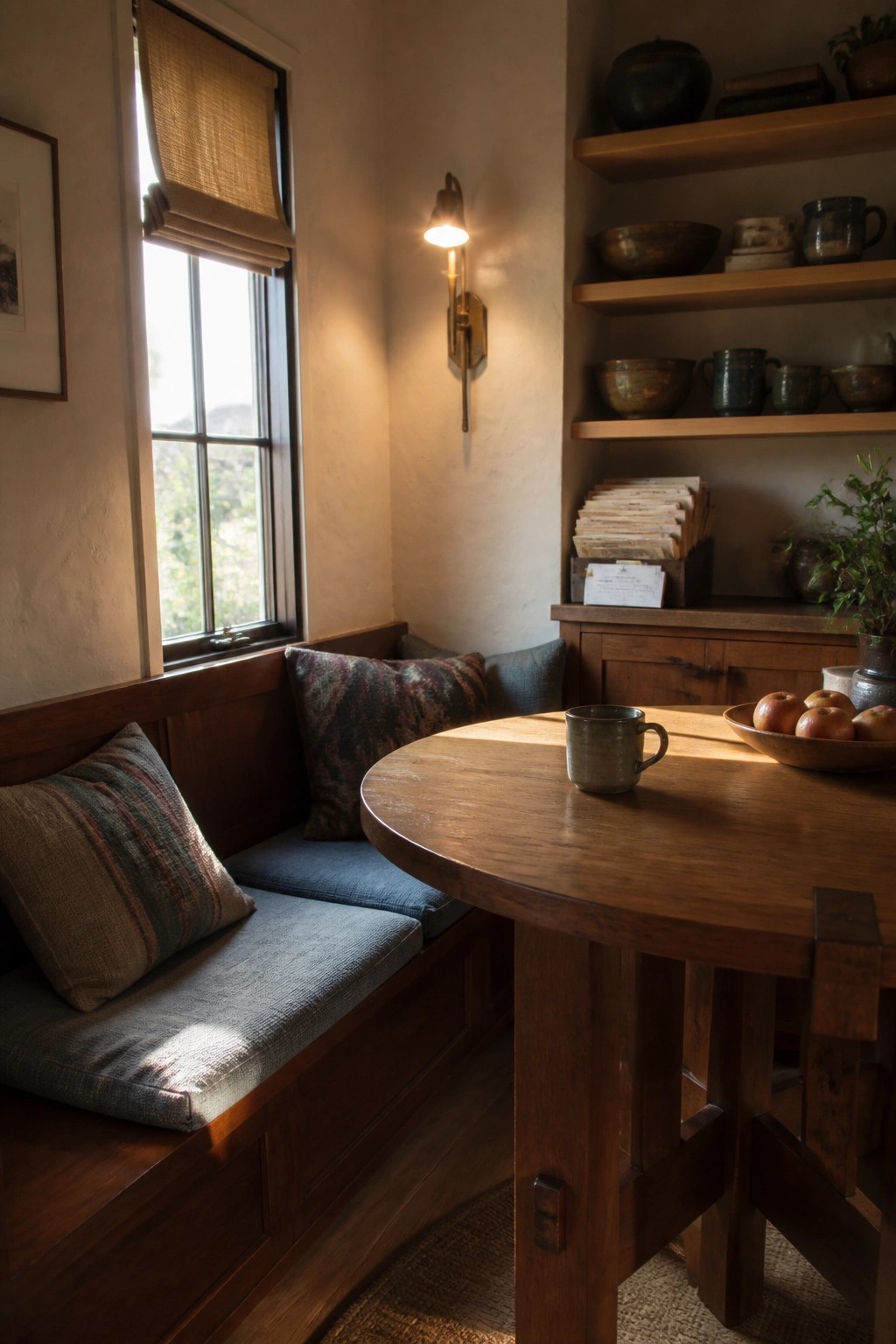
Built-in seating made from natural wood gives a kitchen corner real function without crowding the room. It turns leftover wall space into a place to sit and eat while keeping the look simple and tied to the rest of the woodwork.
Place one under a window with a few cushions on top and use the space below for extra storage. This works best in craftsman homes that already have wood trim and open shelves for pottery or everyday dishes.
Natural Wood Built-Ins For Kitchen Storage

Natural wood cabinetry and drawers bring a steady, practical feel to a kitchen without trying too hard. The long row of drawers under the counter gives easy access to tools and supplies while keeping the space from looking cluttered or cold.
This setup works well in craftsman homes or any kitchen that needs real storage along one wall. It pairs best with open shelves above for things used daily, and the wood tones help tie everything together even when you add a few handmade pieces like copper cups or ceramic jars.
Wood Built-Ins For Kitchen Storage
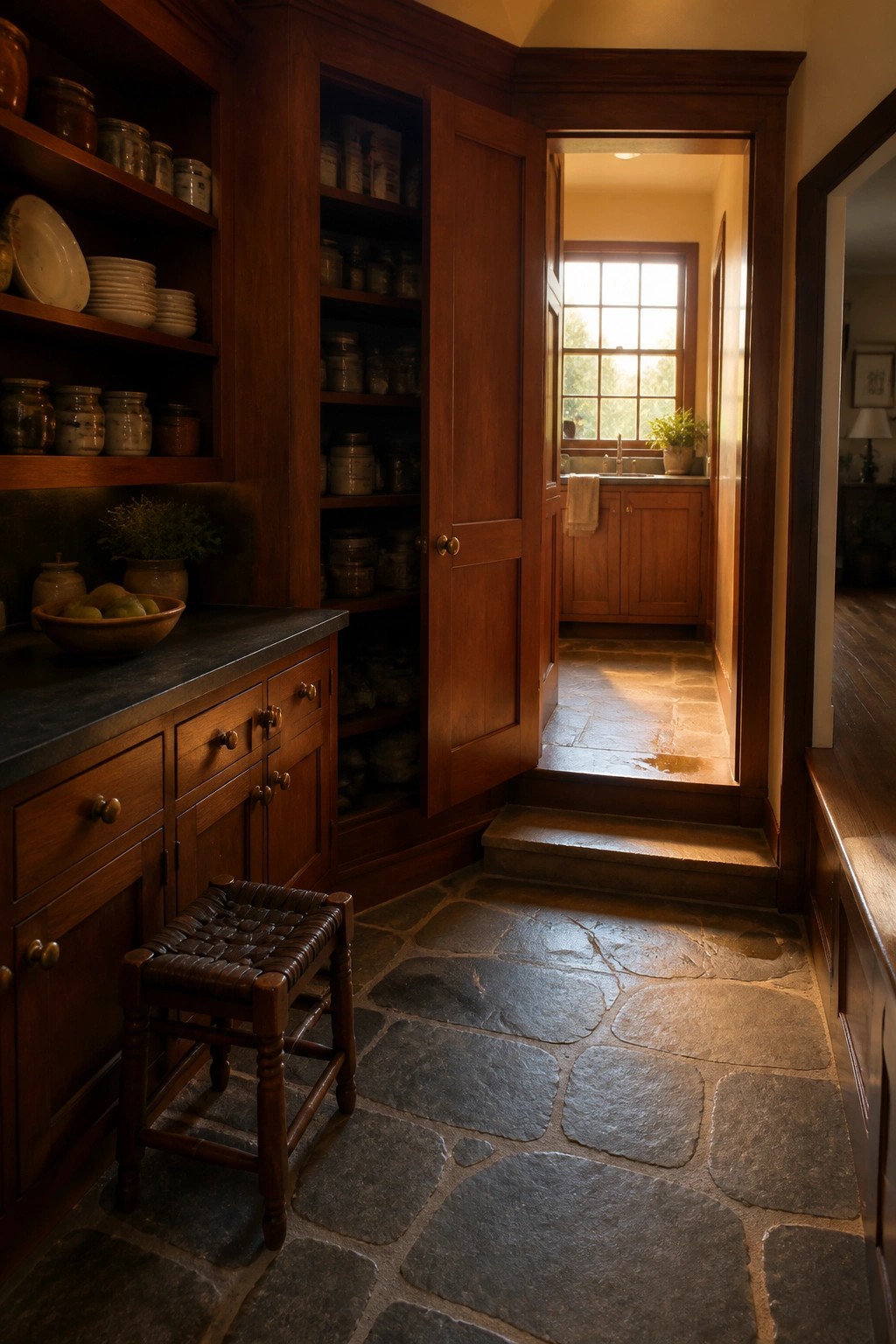
Natural wood cabinetry with open shelves gives a kitchen plenty of room for everyday items while keeping the feel simple and practical. The shelves let you reach what you need without opening doors, and the wood itself adds warmth that fits right into craftsman homes.
This setup works best in a pantry area or along a back wall where traffic is steady. Keep the shelves for things you use often and close the lower cabinets for less used items so the space stays tidy without extra effort.
Mixing Stained Wood With Painted Cabinets
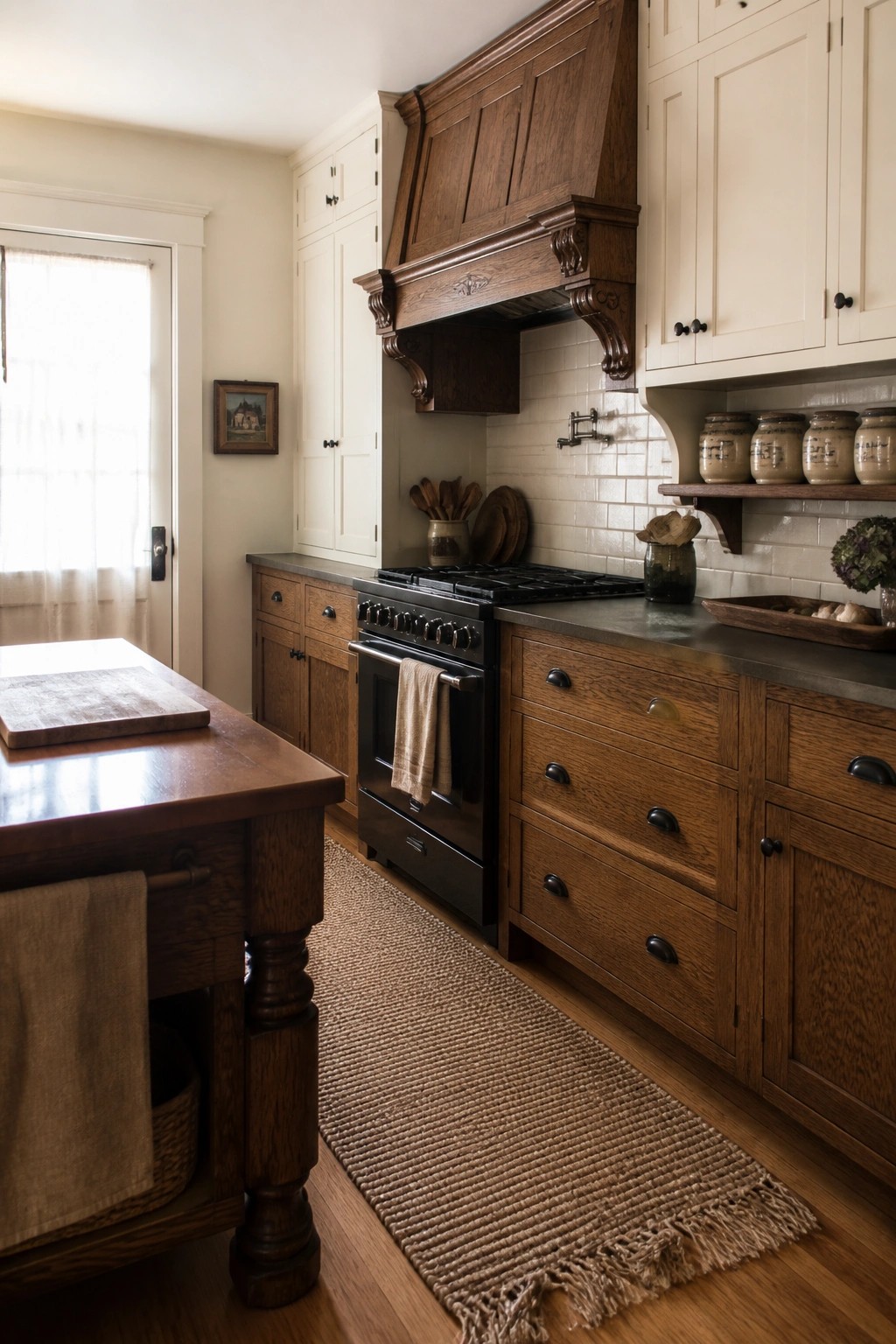
A lot of Craftsman kitchens feel warmer when the lower cabinets and island stay in natural wood while the upper cabinets get painted a soft cream or off-white. This split keeps the room from feeling too heavy and still shows off the grain and tone of the wood where it matters most.
It works especially well in smaller or medium kitchens that need some light on the upper walls. Try it when your room already has a strong wood focal point like a range hood or a big island, and keep the hardware simple so the two finishes do not compete.
Mixing Open Shelves With Wood Cabinets

Open shelves next to closed wood cabinets give a kitchen a lighter feel while still offering plenty of hidden storage. The wood ties everything together and lets you keep everyday items within reach instead of tucked behind doors.
This works best in craftsman kitchens where you want to show a few handmade pieces without filling every surface. Place the shelves above the main work area and limit what goes on them so the space stays useful rather than cluttered.
Natural Wood Cabinets and Island Create Cohesion

Many kitchens feel scattered when too many materials compete for attention. Sticking with natural wood for the main cabinets and the island helps keep the space grounded and easy to live in day to day. The consistent tone and grain make the room feel warmer without extra effort.
This choice works especially well in Craftsman-style homes that already have wood trim or beams. It suits smaller or open kitchens where you want storage and seating to blend rather than stand out. Just watch the finish so the wood does not get too dark in rooms with limited natural light.
Natural Wood Cabinetry For Everyday Warmth

Light wood cabinetry gives a craftsman kitchen its steady warmth without making the room feel heavy. The pale oak tone on the cabinets and island works well with the gray countertops and keeps the space open even when there is plenty of wood.
This approach suits homes that already have simple trim and built-ins. It pairs best with matte black hardware and a few open shelves so the wood can show off its grain without needing extra decoration.
Copper Sink With Wood Countertops

A copper sink stands out in a wood kitchen because it adds color and texture that feels natural rather than added on. The material picks up the tones in the wood and gives the whole space a warmer, more lived-in quality.
This choice works best in Craftsman or older homes where the cabinetry and counters already lean toward natural finishes. Keep the rest of the surfaces simple so the sink becomes the main point of interest without competing with other details.
Open Shelving With Pegboard Storage

Open wooden shelves combined with a pegboard wall make it simple to reach what you need while keeping the kitchen feeling warm and useful. The wood brings in natural texture that pairs well with brick, and the pegboard turns everyday tools into part of the display instead of hiding them in drawers.
This approach works best in a Craftsman kitchen or pantry where you want storage that stays practical without feeling closed off. It suits homes that already lean on wood tones and handmade details, though it helps to limit how many loose items sit out so the space stays easy to keep tidy.
Natural Wood Countertops With Painted Cabinets
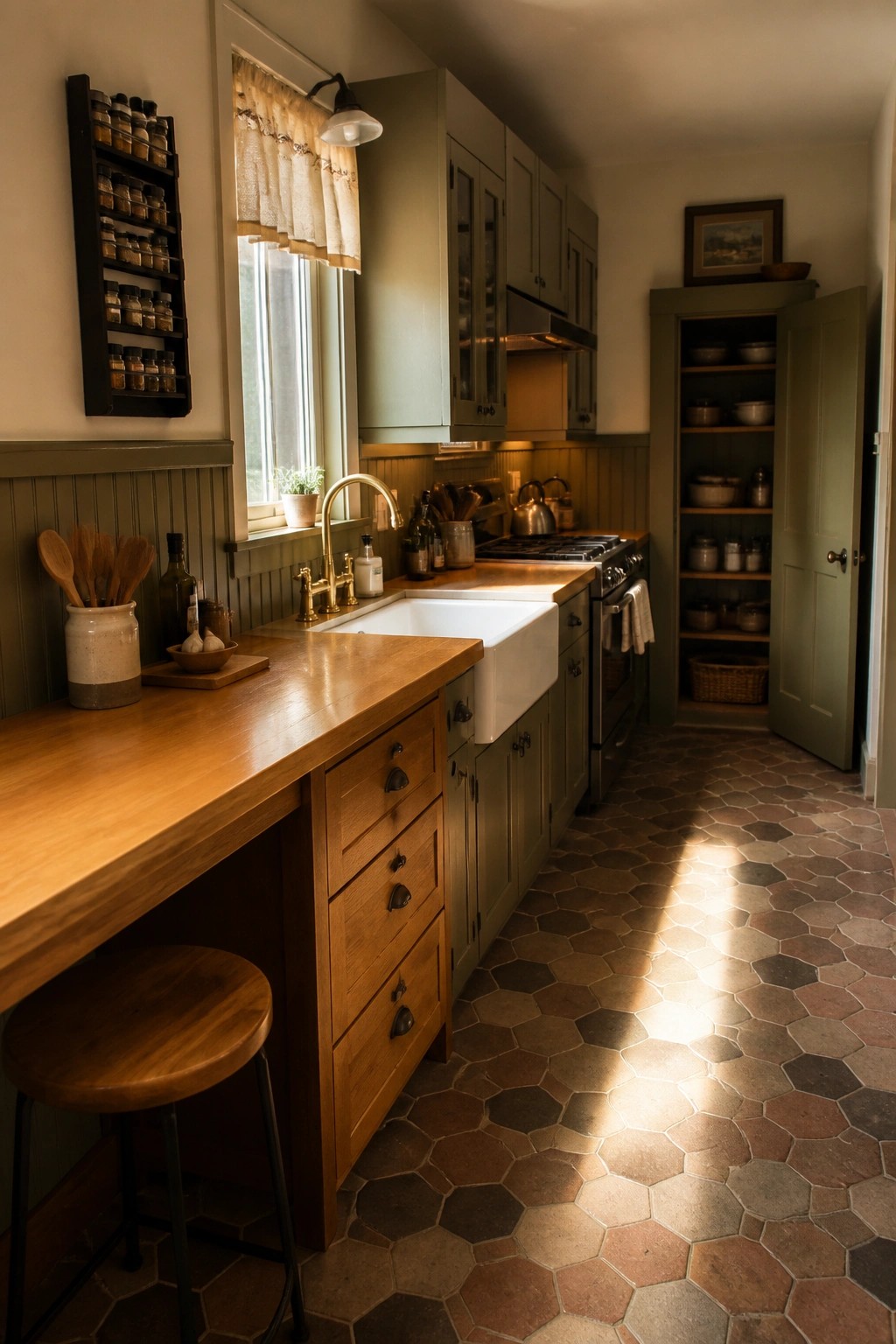
Natural wood countertops stand out in a kitchen with painted cabinets because they add warmth without competing for attention. The wood surface feels practical for daily use and brings in a handmade quality that painted cabinets alone can lack.
This approach works best in Craftsman-style homes or any kitchen that already has wood trim or flooring. It suits spaces where you want a large prep area and some seating without needing a separate island. Keep the wood finish simple so it ages well with regular use.
Built-In Seating Along the Windows
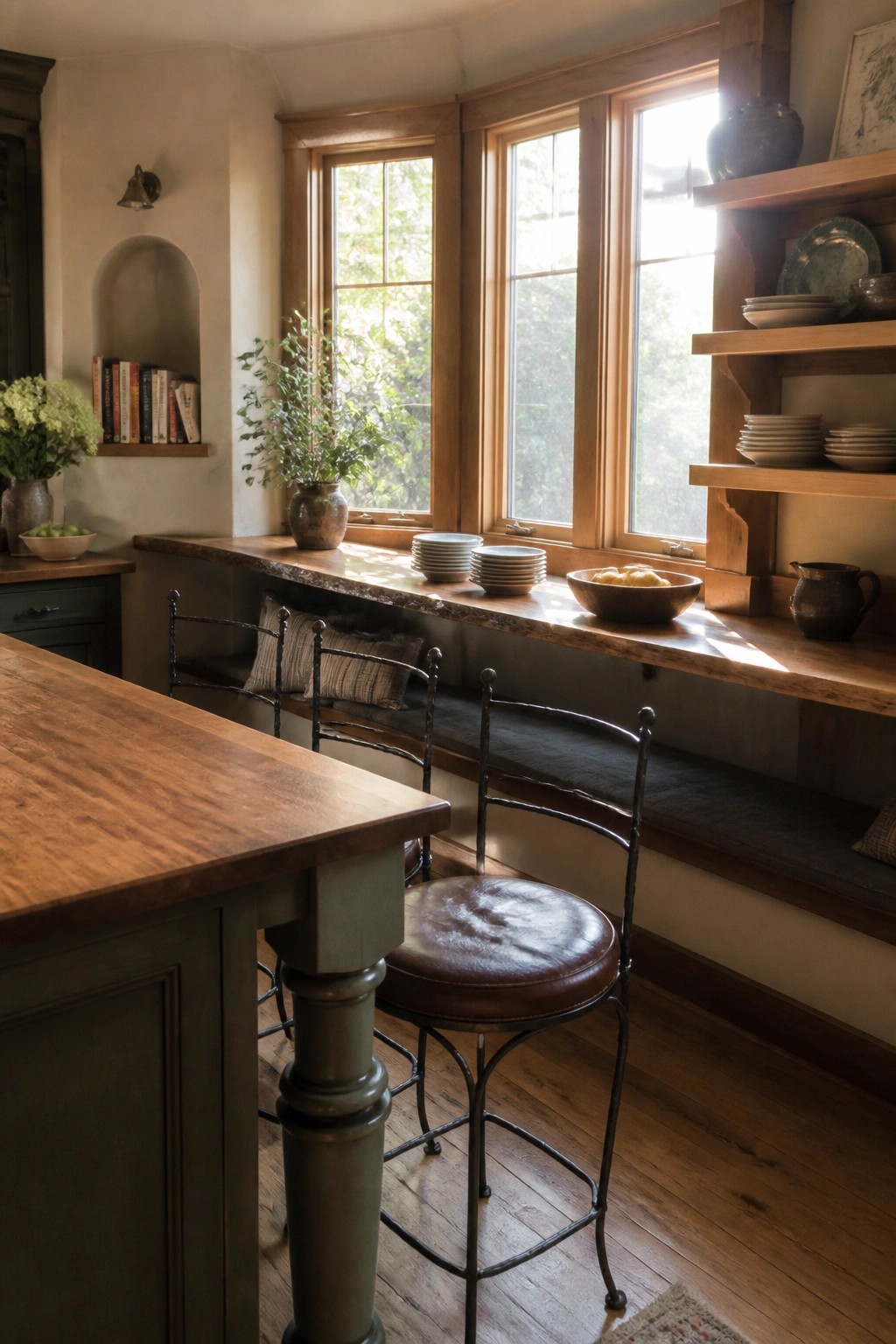
A built-in bench under the windows turns an empty wall into a place people actually use. It keeps the kitchen feeling open while adding a spot for quick meals or extra seating when guests come over.
This works best in rooms with steady natural light and enough depth for the bench to sit comfortably. Keep the cushion simple and let the wood counter run the full length so the whole area feels like one piece rather than separate furniture.
Built-In Pantry Cabinets With Open Shelves
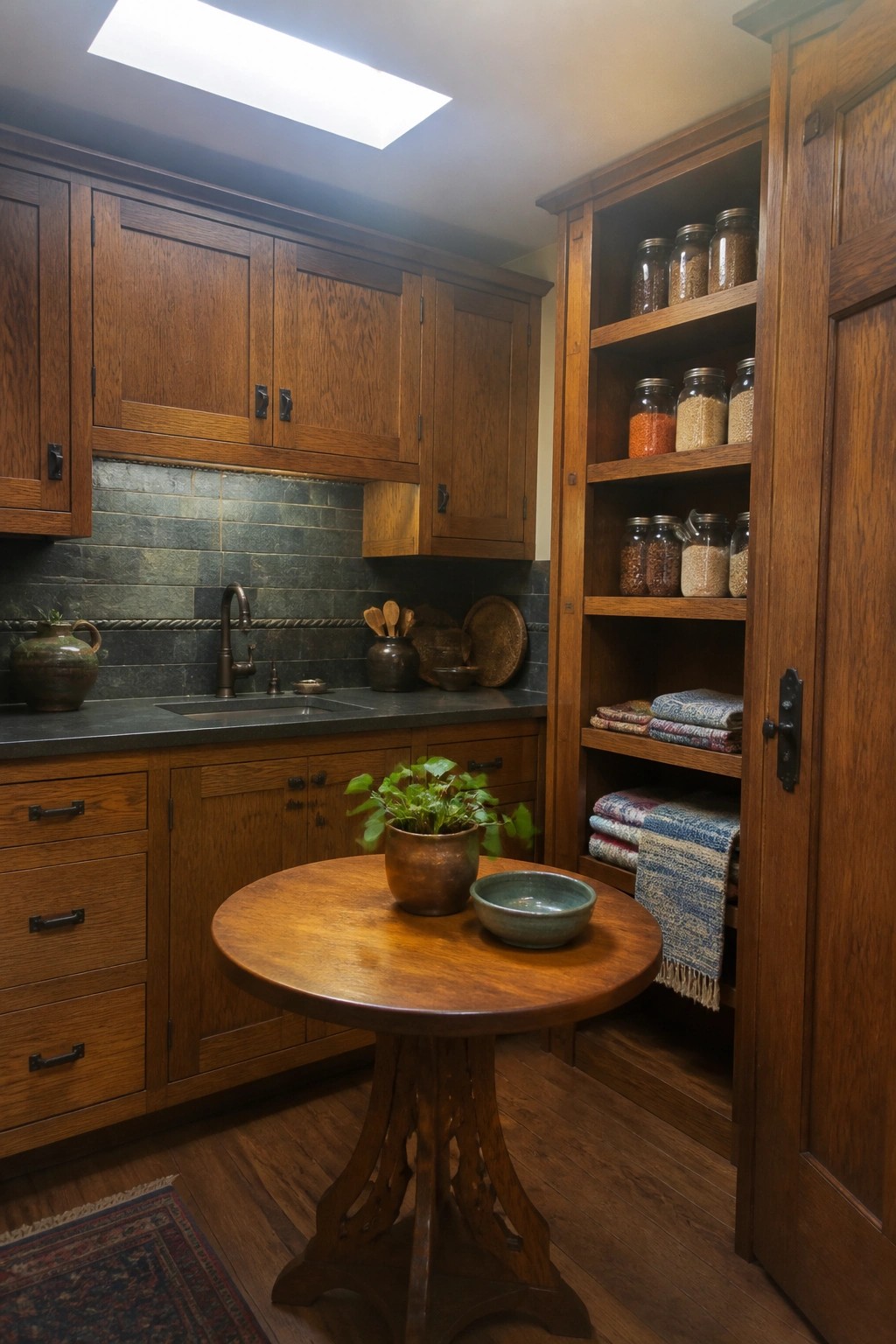
A tall built-in pantry cabinet gives a Craftsman kitchen extra storage without needing a separate room. The mix of open shelves and closed doors keeps the space practical while letting everyday items stay within reach.
This works best in homes that already lean on natural wood and simple details. Place it near the main counters so jars and linens are easy to grab, and keep the shelves from getting too crowded so the wood tones still show through.
Natural Wood Island Tops
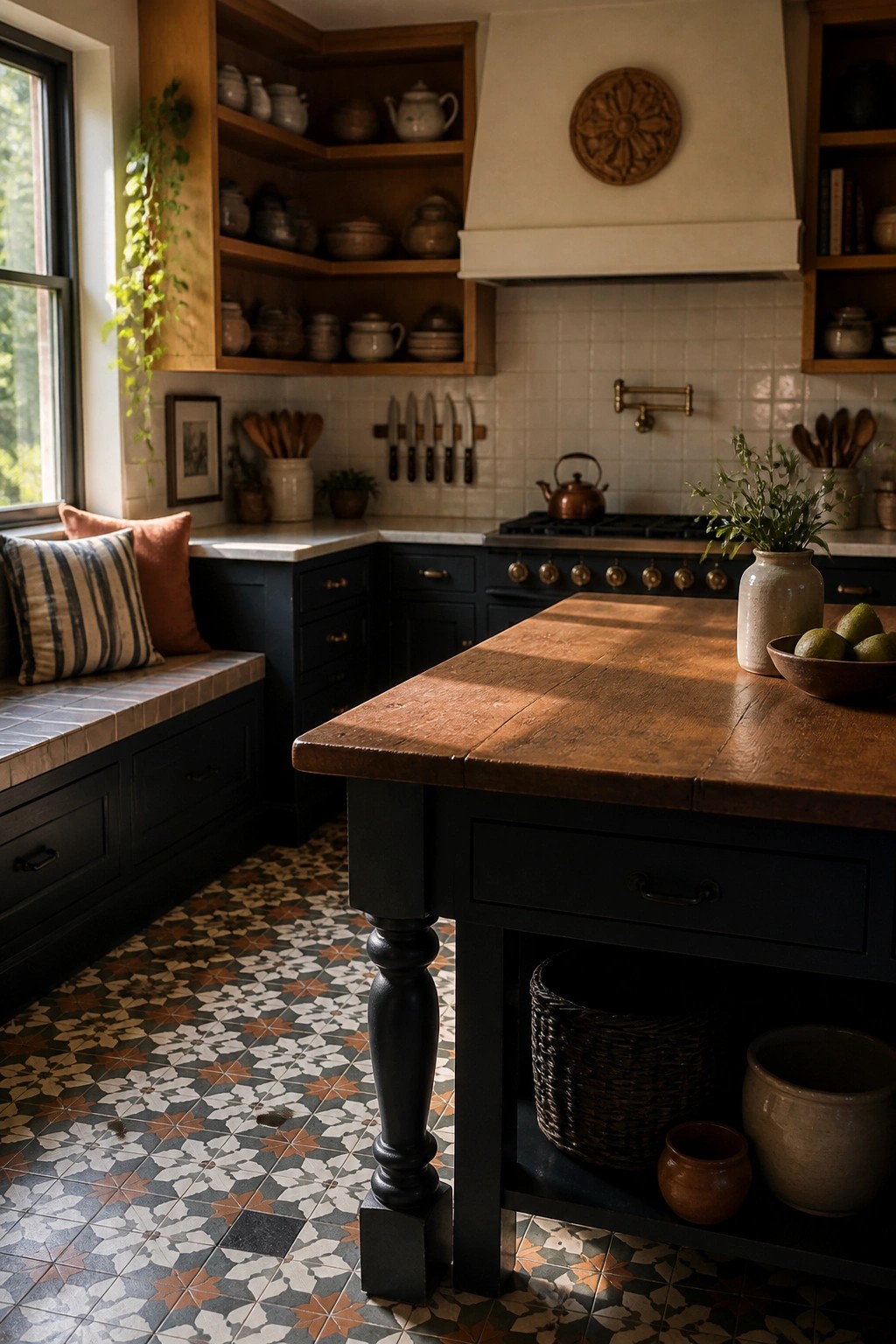
Many Craftsman kitchens keep cabinets painted but bring in a wood island top for contrast. The grain and color add warmth that painted surfaces alone cannot give, and the island becomes the natural gathering spot.
This works best in smaller or medium kitchens where the island can sit in good light. Choose a thick slab with visible texture and keep the legs simple so the wood does the talking. Avoid matching the wood too closely to any open shelving, or the effect gets lost.
Rolling Ladders Turn High Shelving Practical

A rolling ladder gives you real access to upper open shelves instead of leaving them as display only. In a kitchen full of natural wood, it keeps everything reachable while adding that extra layer of built-in character without extra cabinets.
This setup works well in homes with tall ceilings and a mix of closed lower storage and open upper areas. Keep the hardware simple and the wood tones consistent so the ladder feels like part of the original build rather than an afterthought.
Frequently Asked Questions
Q: What kind of handmade details hold up best near the sink? A: Choose a thick wooden cutting board or a simple turned bowl from a local maker. These pieces take daily use without fuss if you wipe them dry right away. They add warmth while staying practical in a wet spot.
Q: How do I mix wood tones without the kitchen feeling busy? A: Pick one main wood like oak for bigger surfaces and bring in a second tone only on open shelves or a small island top. Keep the grain patterns similar so the eye moves easily across the room. This approach keeps things layered yet calm.
Q: Can these ideas work if my kitchen leans more modern already? A: Add just one or two wood elements like a live edge counter or peg rail to soften the lines. The natural material pairs well with clean shapes and brings in that Craftsman feel without a full overhaul. Start small and see how it settles.