I have always paid close attention to how the planting around a Craftsman home can either highlight its low pitched roof and wide eaves or compete with them.
Over time I learned that the best layouts use layered shrubs and ground covers to create a sense of depth without blocking the natural lines of the structure.
Balance matters more than most people expect.
I usually start by testing one or two plant groupings near the front entry to see how they settle in over a season.
Watching the way certain edging choices soften the transition from lawn to foundation makes me want to try similar adjustments in my own space.
Curved Stone Paths That Feel Natural
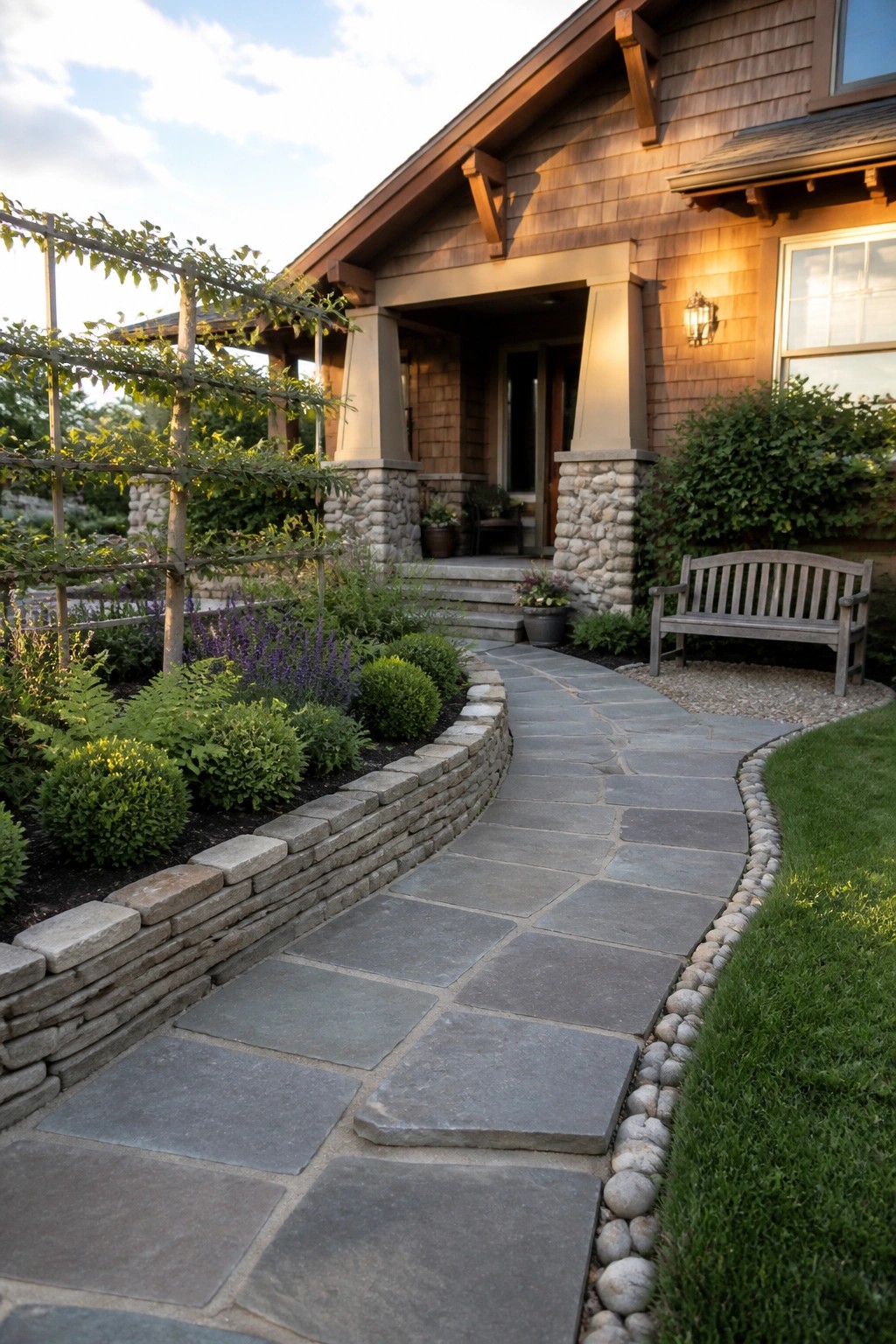
A curved path keeps the front yard from looking too rigid and lets the plants lead the way instead of fighting a straight line. It works especially well with Craftsman homes because the gentle bend mirrors the low, grounded shape of the rooflines and porch.
Use the same local stone for both the path and the low edging so the beds stay contained without extra borders. This layout suits homes where the grade changes a little or where you already have established shrubs that need room to spread.
Stone Seating Walls Around A Fire Pit
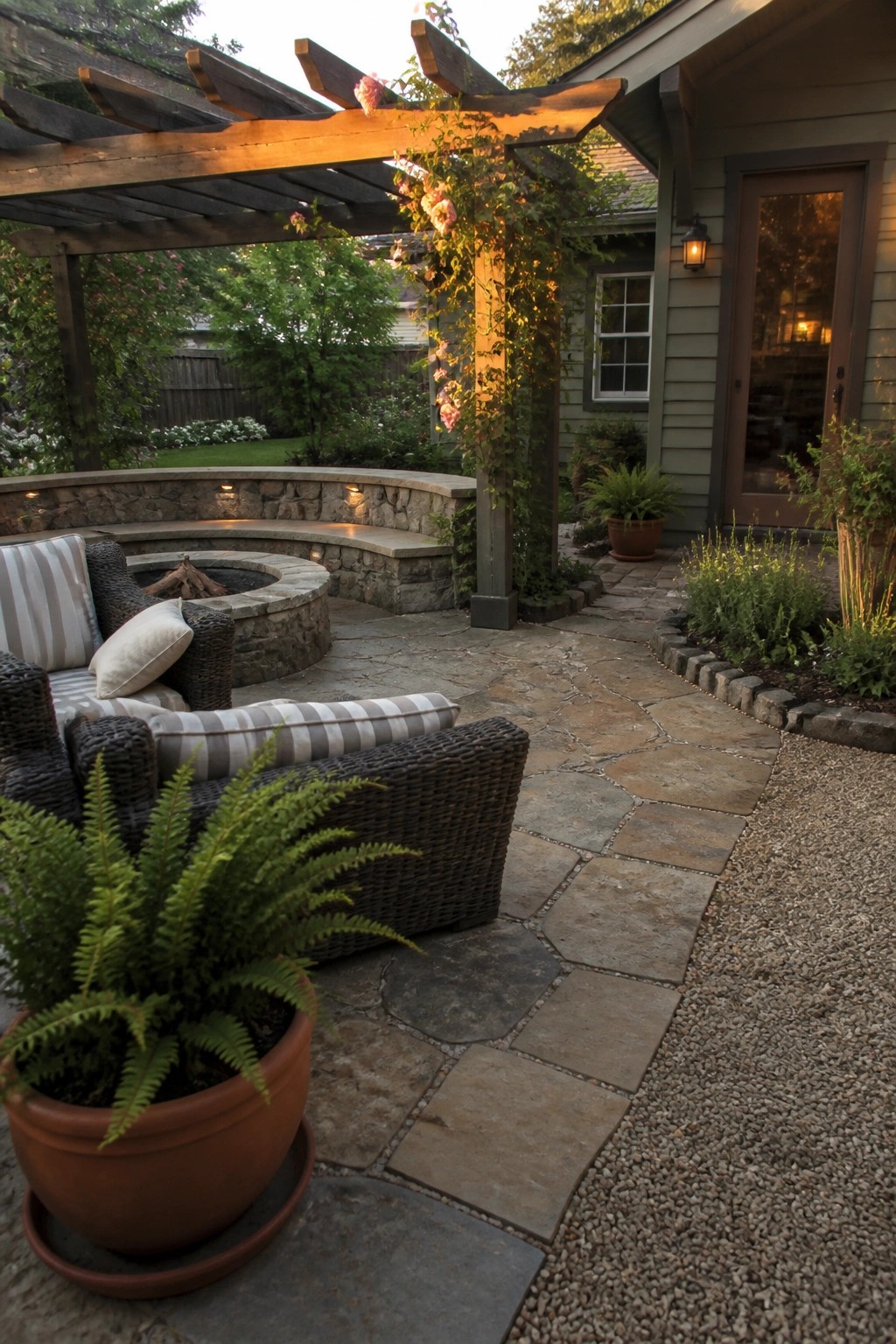
A curved stone bench that wraps around a fire pit gives the backyard a solid, grounded spot for gathering without needing a lot of extra furniture. The low wall doubles as seating and keeps the area feeling contained while still open to the rest of the yard.
This setup works well on craftsman homes where the natural stone ties into the house materials. Keep the curve gentle so it feels welcoming, and make sure the bench height stays comfortable for sitting. Add a simple pergola overhead if you want a bit of shade and structure.
Add a Pond to Anchor the Plantings

A small rectangular pond gives the garden a quiet center that feels grounded rather than busy. The stone border keeps the shape clean while the surrounding layers of shrubs and flowers soften the edges and tie everything back to the house.
This works best on homes with simple, strong lines where you want the landscape to feel like an extension of the architecture. Place the pond where it can reflect sky or nearby structures, then build the planting beds around it in graduated heights so nothing looks scattered.
Terracing Slopes With Stone Retaining Walls

Stone retaining walls help turn a steep yard into usable levels without making it feel overly built up. They hold the soil in place and create planting beds that follow the natural grade of the land.
This works best on Craftsman homes where the rough stone can echo the foundation and siding materials. Keep the walls modest in height and let low plants drape over the edges so the structure stays in the background.
Use a Stone Path to Blend House and Garden

A simple stone path does a lot of quiet work along the side of a house. It gives people a clear way to walk while letting the plants soften the edge where the building meets the ground. The irregular shapes keep the look relaxed instead of formal.
This approach works best on Craftsman homes where the goal is to make the structure feel settled into the landscape. Keep the plants low and layered right next to the path so the stones stay visible but never feel stark.
Natural Stone Paths for Garden Flow

A stone path adds real structure to a garden without making it feel rigid. The irregular shapes and slight curve let the walkway follow the land and plants instead of cutting through them in a straight line.
This approach suits Craftsman homes because the rough stone pairs well with wood and simple plantings. Keep the path width comfortable for two people and let vines grow over an arbor at one end to mark the transition into the main garden area.
Layered Plantings in Front Beds

Layered plantings work well in front of Craftsman homes because they add depth without hiding the lines of the house. The mix of low ground covers, mid-height shrubs, and taller grasses creates a gradual rise that leads the eye toward the porch while keeping the foundation visible.
This approach suits homes with similar roof overhangs and porch columns. Keep the beds fairly narrow near the walkway and let the plants vary in texture rather than color so the architecture stays the main focus. Stone edging helps hold the shape and prevents grass from creeping in.
Raised Planter Beds Along the Patio

Raised stone planter beds give a patio a finished look without making it feel boxed in. They create a clear edge between the hard surface and the planting, which helps the whole space feel more grounded and connected to the house.
Place them along the longest wall or the back of the seating area so the plants stay out of the main walkway. Stick to a few repeating shrubs and let a couple spill over the edge. This setup works especially well on Craftsman homes where the stone can echo the foundation materials.
Stone Pillars Frame the Entry

Stone pillars at the start of a path give the whole approach a settled look. They echo the materials already on the house and turn a simple walkway into something that feels connected to the structure instead of just added on later.
Keep the pillars low and pair them with the same stone or a close match to what shows on the porch or foundation. Use them to mark the transition from the street to the house and let the planting stay low and full around the base. This works best on homes that already show some stone or masonry and keeps the entry clear without extra height or ornament.
Linear Pools That Follow the House
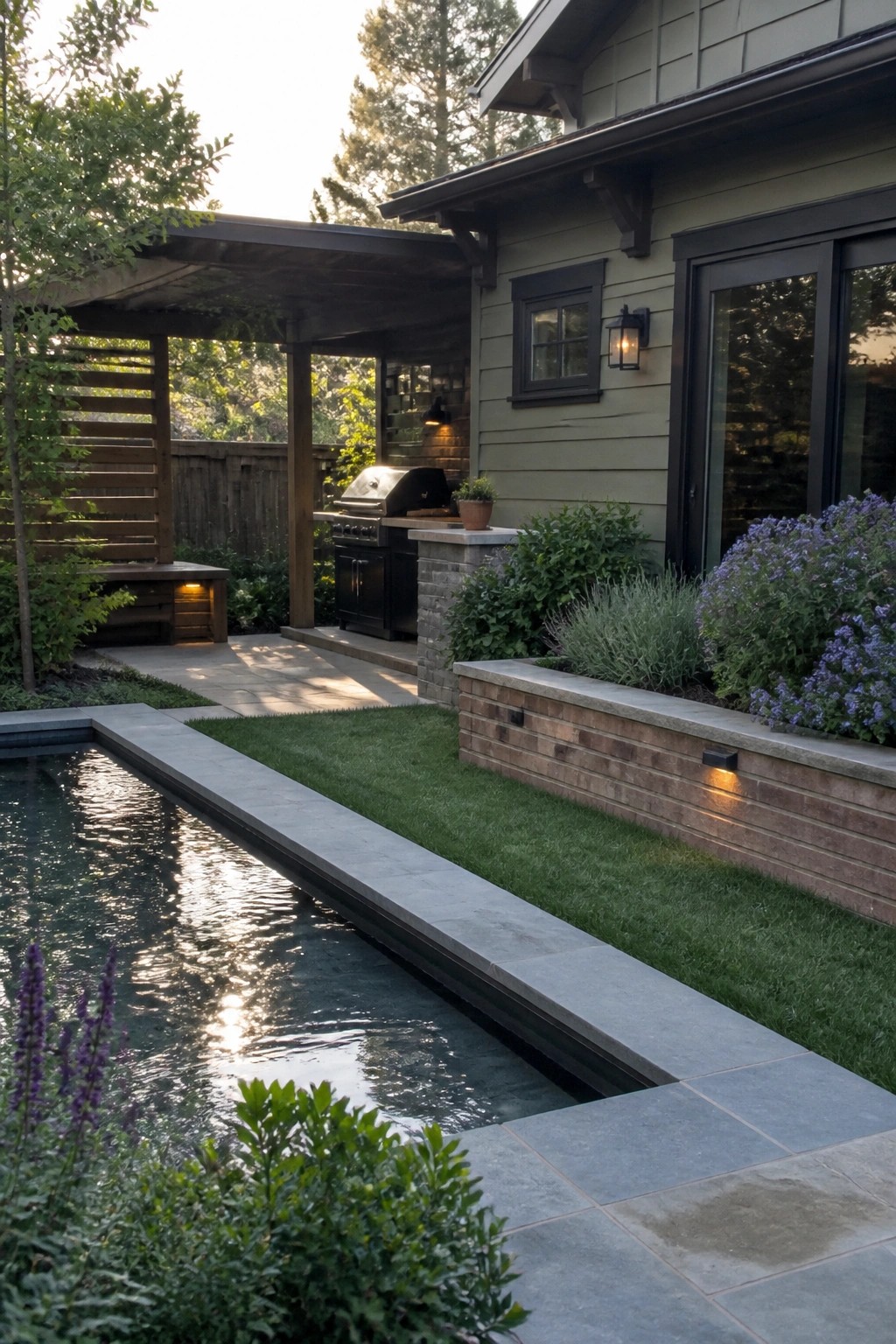
A long narrow pool set right beside the lawn gives the whole side yard a clean, steady line that matches the straight edges of a Craftsman home. The stone coping keeps the water contained without adding extra fuss, and the narrow width leaves plenty of room for grass and planting beds on either side.
This layout works best on homes with a clear horizontal run along one side of the yard. Keep the pool proportions modest so it feels like part of the landscape instead of the main event, and use simple edging materials that already appear on the house or hardscape.
Raised Wooden Beds For Defined Garden Areas

Raised wooden beds give a garden a tidy structure that fits right in with Craftsman homes. They keep the planting contained and make the whole space feel more intentional without needing fancy details.
These beds work best in narrow side yards or along paths where you want clear edges and easy access. Cedar or similar wood holds up well and blends naturally with the house as it weathers.
Use A Stone Path For Natural Flow

A stone path made from irregular slabs set in gravel works well because it feels relaxed and blends right into the planting instead of cutting a hard line. It lets the garden feel connected without looking too planned, which suits Craftsman homes that already lean on natural materials and simple details.
This kind of path works best in side yards or smaller back gardens where you want to lead people past beds without crowding them. Keep the stones uneven in size and let low plants spill over the edges a little so the whole thing stays soft.
Stone Walls That Terrace A Sloped Yard

Stone retaining walls turn a hillside into a series of usable planting levels instead of leaving the yard as one steep drop. They give the garden clear structure while echoing the solid materials already used on the house itself.
This layout works best on Craftsman homes that sit above or below street level. Keep the walls low, use the same stone tone as the foundation, and fill the beds with simple ground cover and a few small trees so the whole slope feels connected rather than chopped up.
Layer Plantings Along the Entry Steps

Layered beds make the front steps feel more settled into the yard. The mix of rounded shrubs and taller flowering plants softens the stone edges while still letting the wood and stone of the house show through. This approach keeps the entry welcoming without adding clutter.
It works best on homes with wide steps or a raised porch where the beds can follow the same line. Keep the tallest plants toward the back and lower ones near the walk so the path stays clear. Stick to two or three plant heights and repeat a few colors so the beds look intentional rather than busy.
Use Raised Beds To Frame An Outdoor Patio

Raised beds work well when you want the garden to feel like part of the living space rather than something separate. Placing them right at the edge of a stone patio gives the area clear boundaries while still letting plants sit close to where people sit and cook. The wood boxes add height and texture without needing a lot of extra planting space.
This setup suits Craftsman homes that already use natural materials like brick and wood. Keep the beds at a comfortable height for reaching plants and choose simple timber that matches any pergola or decking already on the house. Avoid crowding the beds with too many different plants or the whole area can start to feel busy.
Stepping Stone Paths Blend Into the Lawn
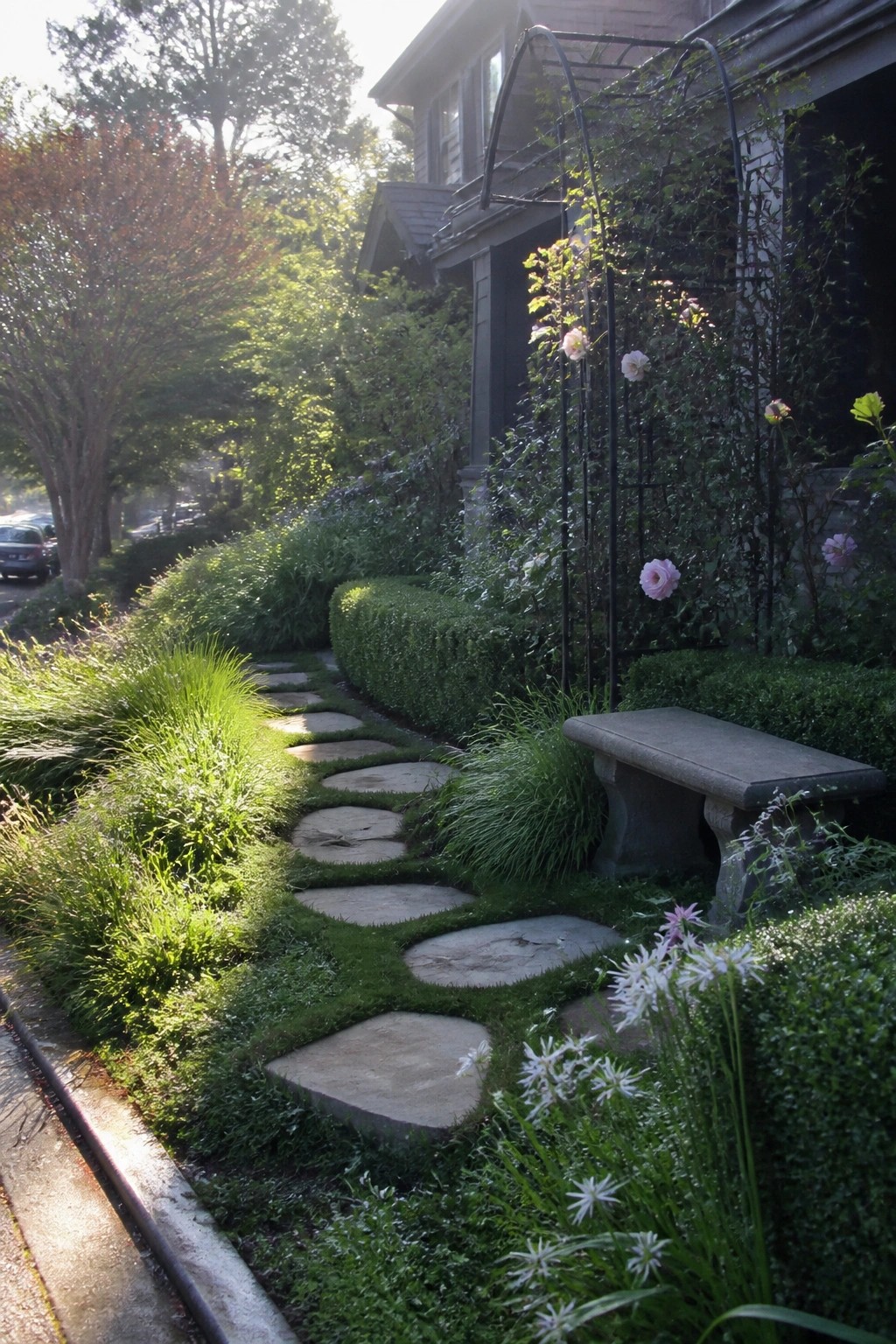
A row of stepping stones set into the grass gives the front yard an easy, unforced feel. The path curves gently instead of cutting a straight line, so the beds on either side can stay full and soft without looking chopped up.
This layout works best on homes with a modest setback from the street. Keep the stones large enough to walk on comfortably and space them to match a normal stride. Avoid perfect symmetry and let the surrounding plants spill over the edges a little.
Stone Benches That Wrap Around a Fire Pit
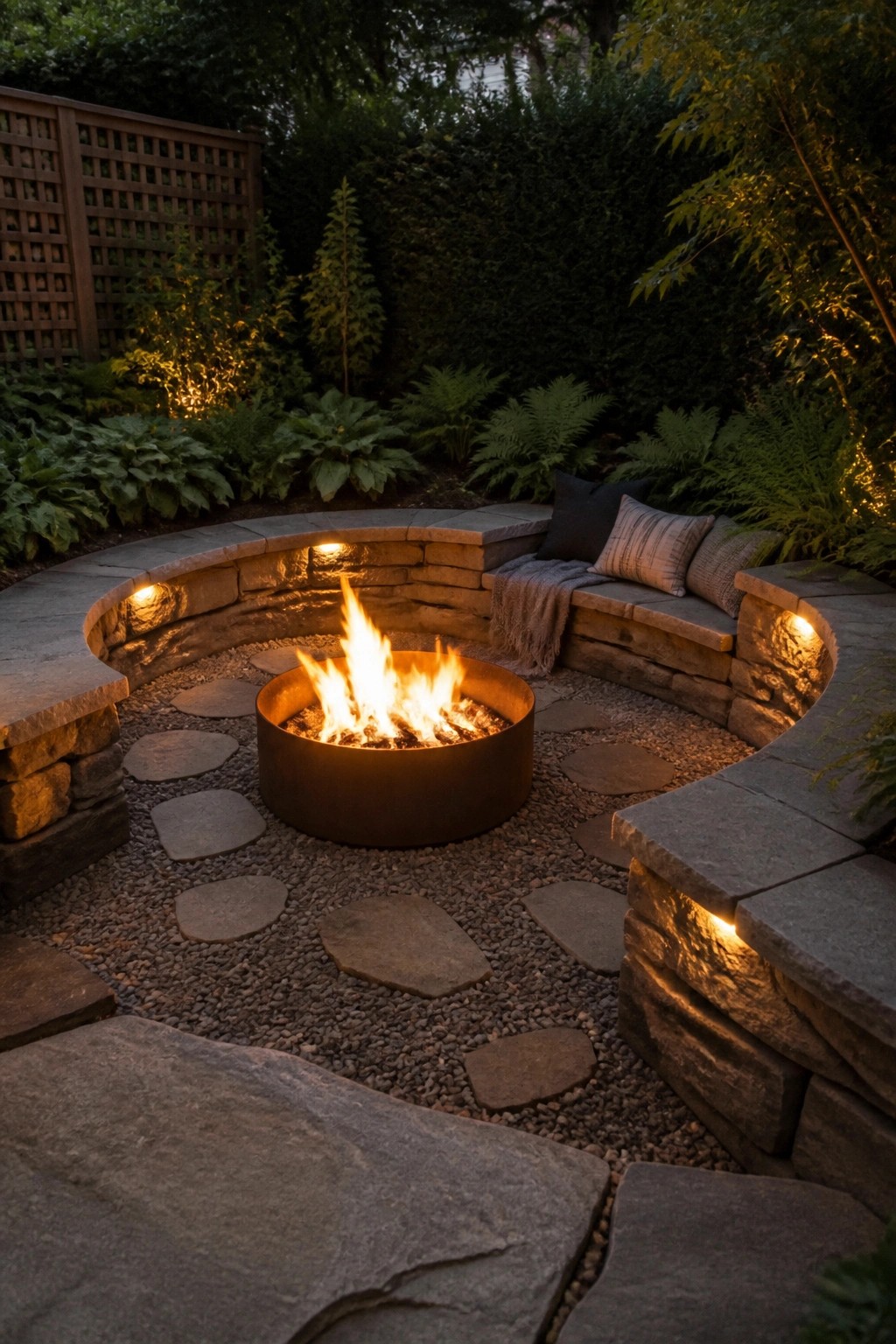
A low stone bench built in a gentle curve gives the fire pit a settled look that feels like it belongs in the yard. It also provides plenty of places to sit without needing extra chairs.
This works best when the bench is set into a gravel base with a few stepping stones leading in. It suits Craftsman homes because the natural materials match the simple lines of the architecture, and the plants around the edges help soften the hard edges.
Frequently Asked Questions
Q: How do I pick plants that match my Craftsman home without spending a fortune?
A: Start with native shrubs that already grow well in your area. They blend right into the natural lines of the house and need less fussing over time. Add a few evergreen anchors near the corners first so the rest fills in around them.
Q: What if the soil in my yard stays heavy and wet most of the year?
A: Choose ferns or sedges that handle moisture without extra drainage work. Plant them in clusters along the base of the porch where the house already creates some shade. This keeps the beds looking full instead of fighting the conditions.
Q: How do I add a simple path that feels like it belongs with the rest of the yard?
A: Lay stepping stones made from the same rock as your foundation in a straight run toward the door. Space them just far enough for a normal stride and let low ground cover creep between them. The path then guides visitors without pulling attention from the house itself.
Q: Do I need to water everything every day once the beds are planted?
A: Water deeply twice a week for the first season so roots reach down on their own. After that most of these plants manage fine with normal rainfall.