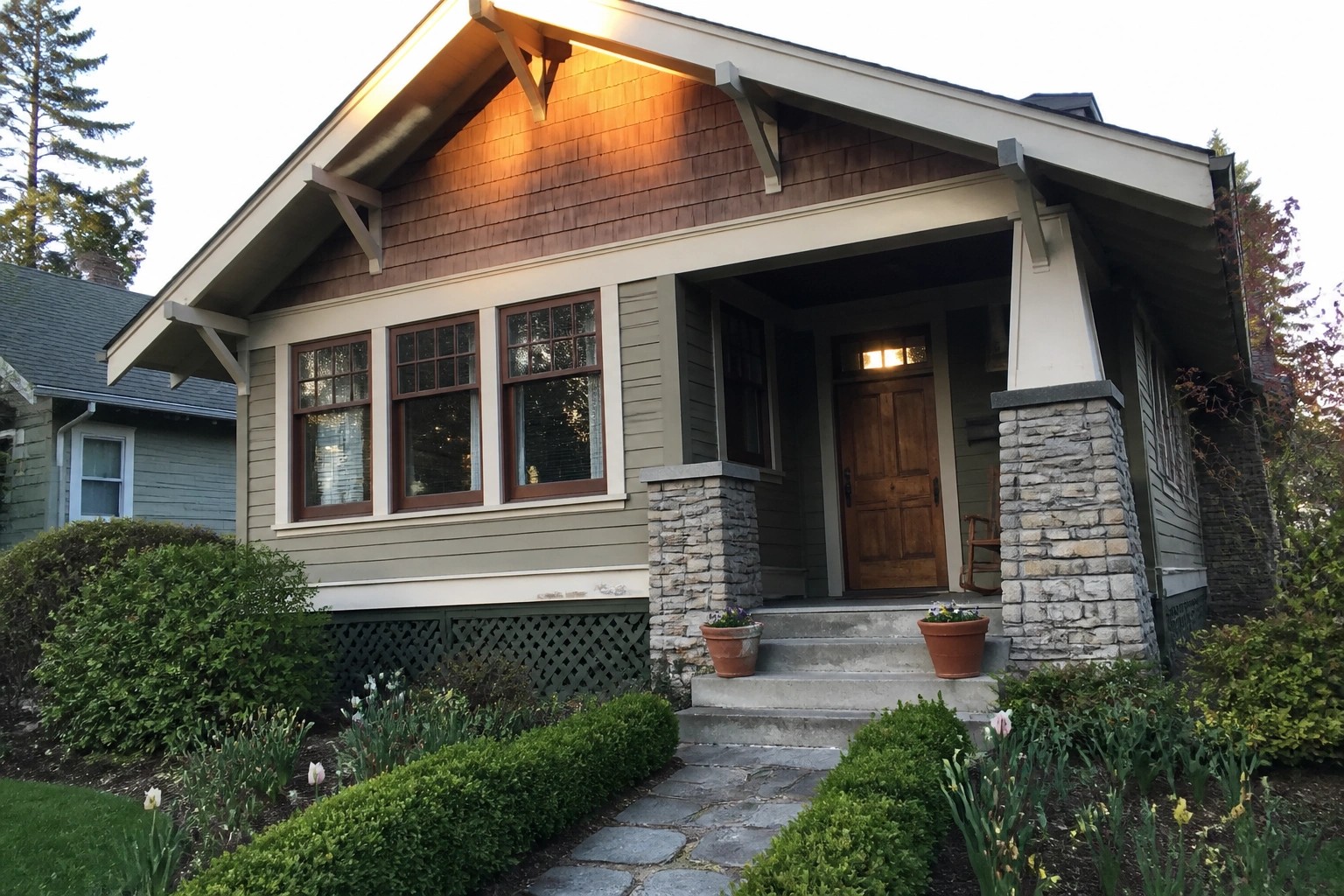
I have always paid attention to how windows shape the front of a house when I walk through neighborhoods.
The right choice can tie together the roofline and siding in ways that feel balanced and intentional.
Some styles just sit better on certain facades than others.
Replacing old windows taught me that details like divided lights and wood trim make a bigger difference than I expected at first.
Trying a Craftsman approach on my own place showed me which proportions actually hold up once you see them every day.
Using Groups of Matching Windows
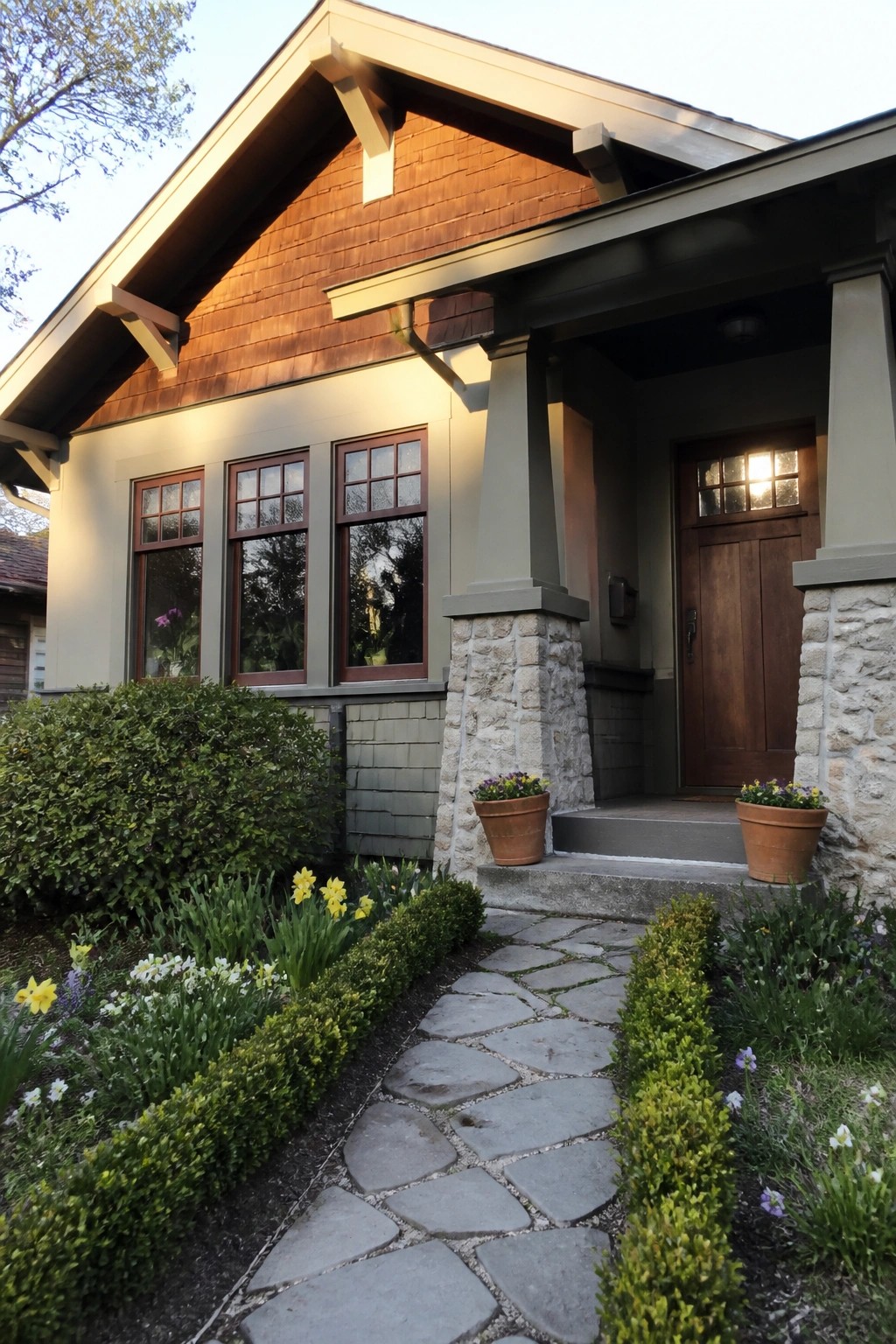
Craftsman homes often place several identical windows together on one wall. This creates a steady rhythm that makes the facade feel more balanced and intentional.
The approach works well on homes with straightforward siding or shingle exteriors. Match the frame style and spacing so the group reads as one strong element rather than scattered openings.
Window Boxes Below Craftsman Windows
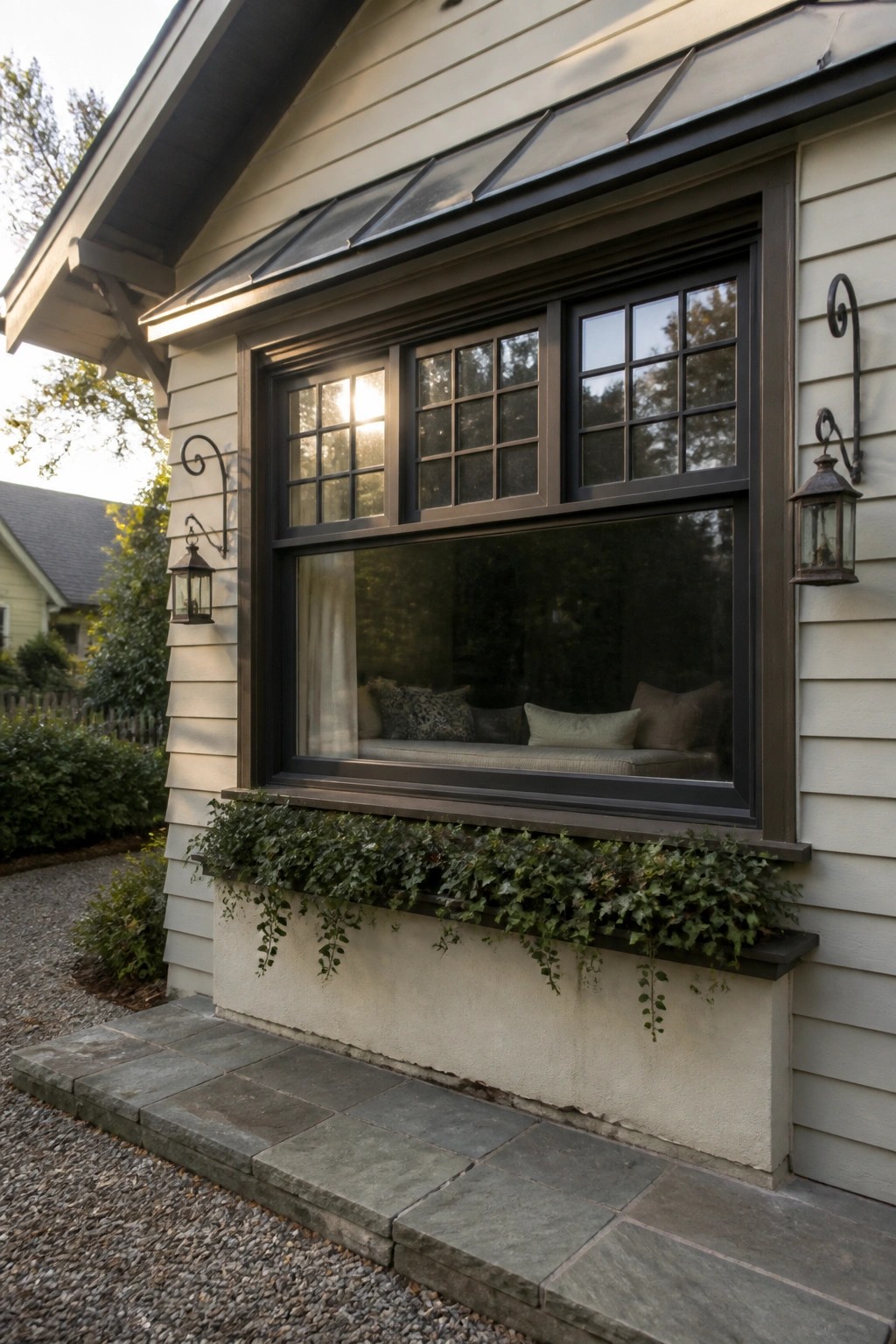
A window box gives a Craftsman window more presence on the outside of the house. It turns the lower edge into a planted ledge instead of leaving the siding to meet the ground in a plain line, and it works especially well with the grid pattern above.
This approach suits homes with horizontal siding and a solid base under the window. Keep the box width close to the window and choose trailing plants that stay neat rather than bushy, so the focus stays on the window itself.
Grouping Craftsman Windows For Better Balance
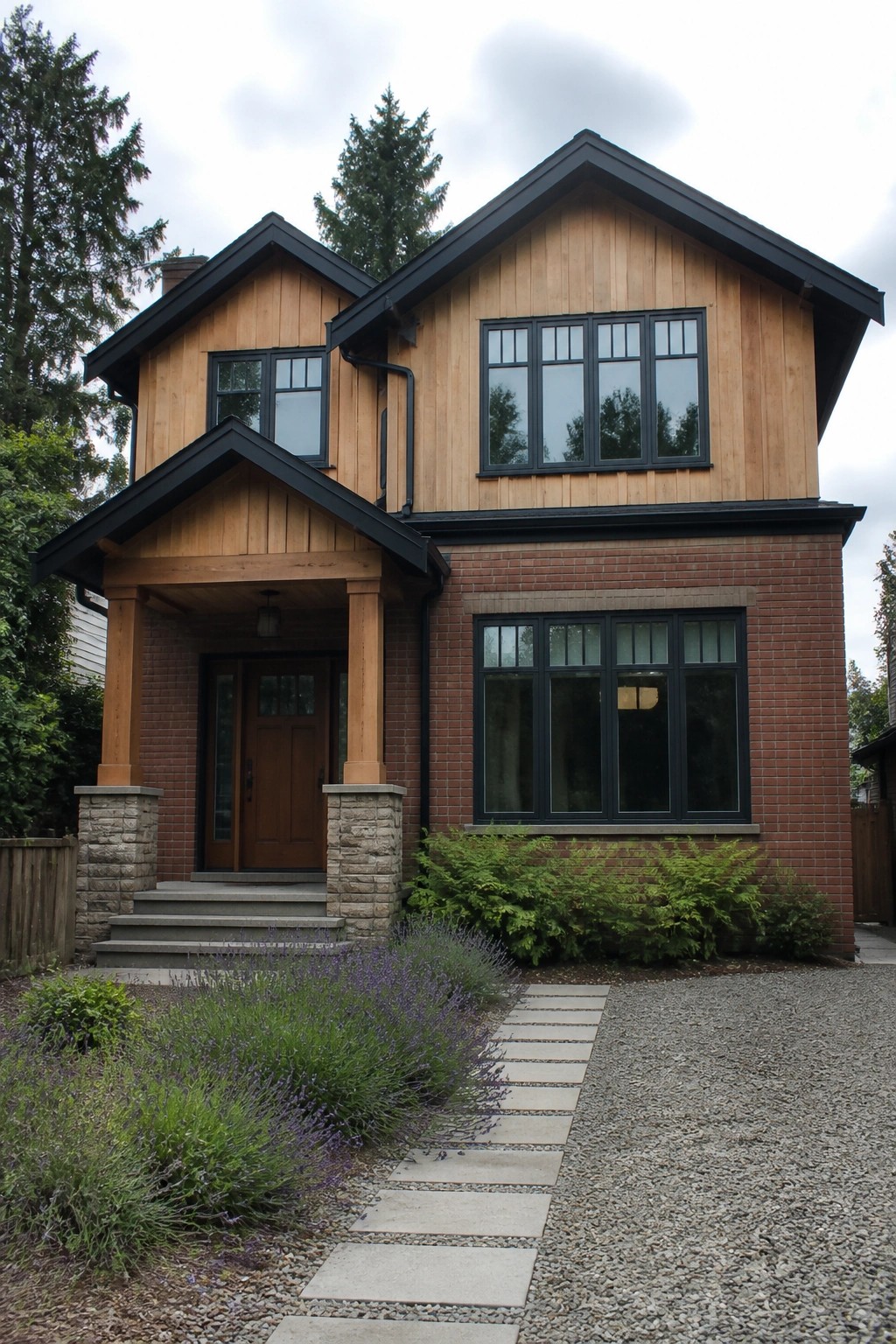
Craftsman homes often gain a lot from placing several tall windows side by side instead of scattering smaller ones. The grouped panes create a steady rhythm across the front and help the upper story feel connected to the lower level without extra trim or decoration.
This approach works best on houses that already mix brick and wood siding. Keep the frames dark so the glass stands out, and match the number of panes across both floors so the whole facade reads as one clean shape.
Soft Green Paint on Craftsman Windows
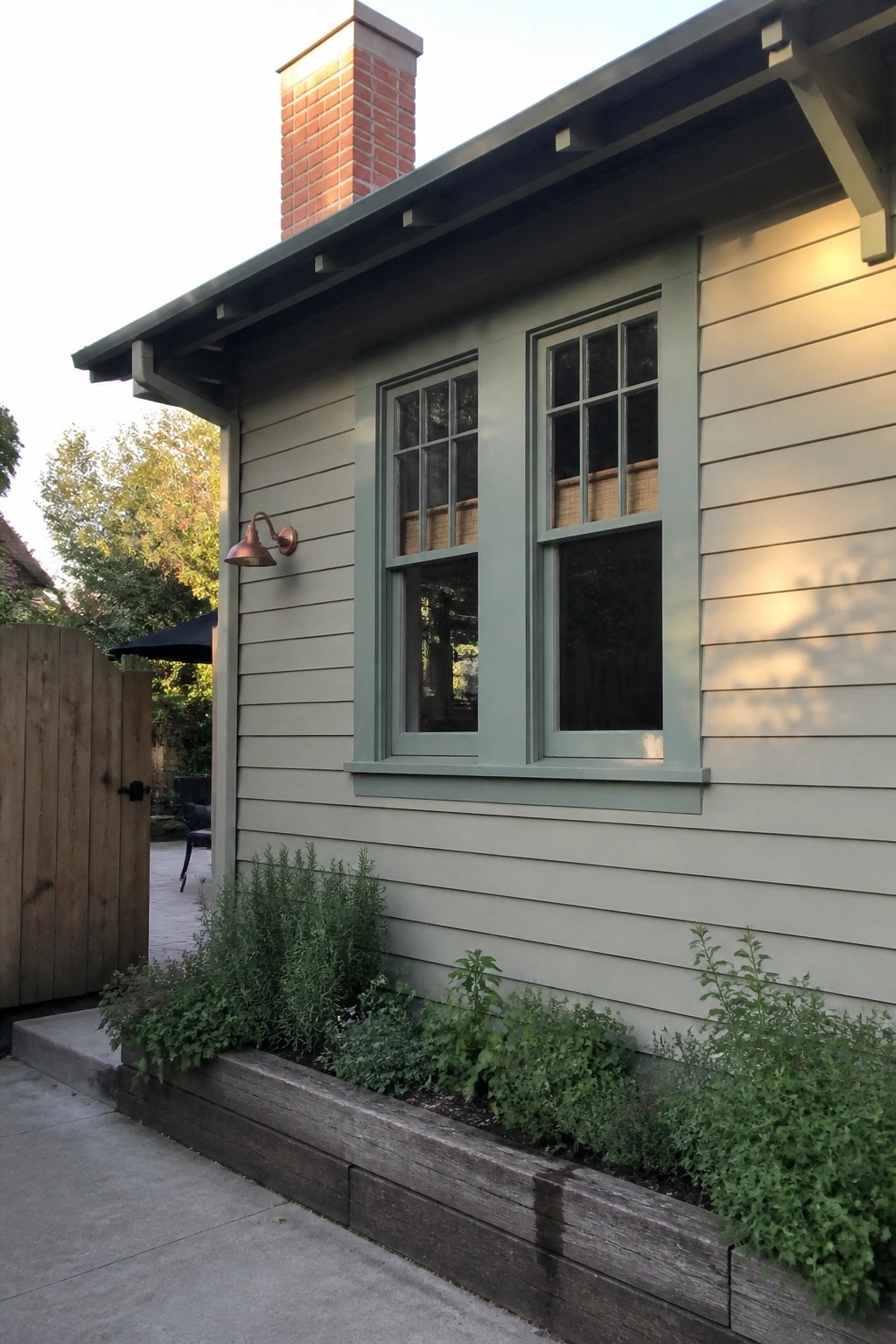
Many older homes gain a quiet sense of character when the window frames and muntins are painted a soft green instead of white. The color blends with the siding while still letting the grid patterns stand out, so the windows feel like a deliberate part of the design rather than an afterthought.
This works best on Craftsman or similar homes where the siding is already a muted tone. Pick a green that sits a step or two darker than the main wall color, and keep the same shade on the trim and eaves for a pulled-together look. Test the paint on a board first, since greens shift a lot depending on the light.
Group Matching Windows Across the Upper Story
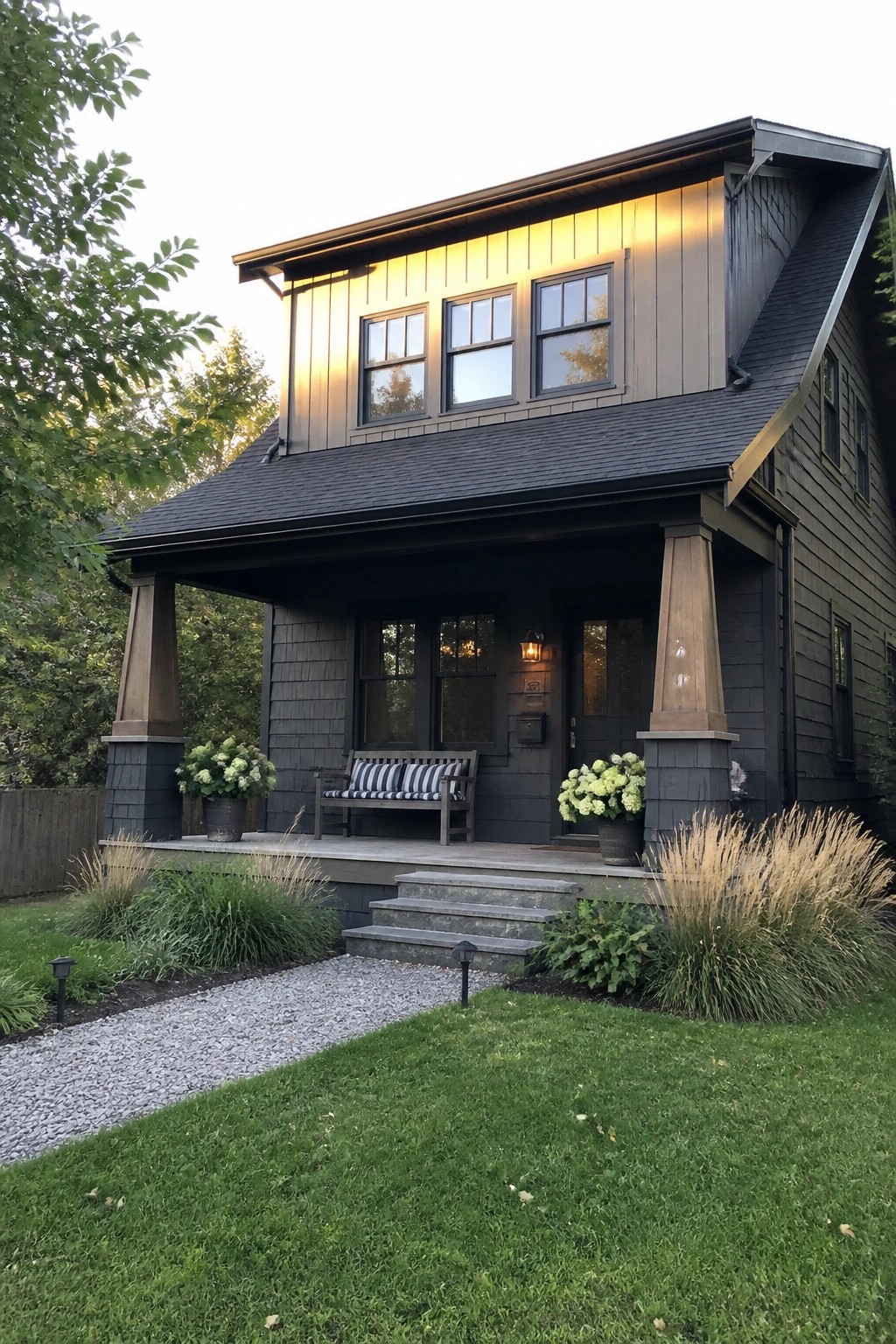
Placing several windows of the same size side by side on the second floor gives a Craftsman house a steady rhythm without making the facade feel busy. The dark frames stand out against the siding and help break up the roofline in a simple way that still feels intentional.
This approach works best on homes with a gable or similar roof shape where you want extra light upstairs but do not want one large opening. Keep the spacing even and match the trim to the rest of the windows on the house so the group reads as one clean design move rather than separate pieces.
Multi-Pane Windows On The Porch
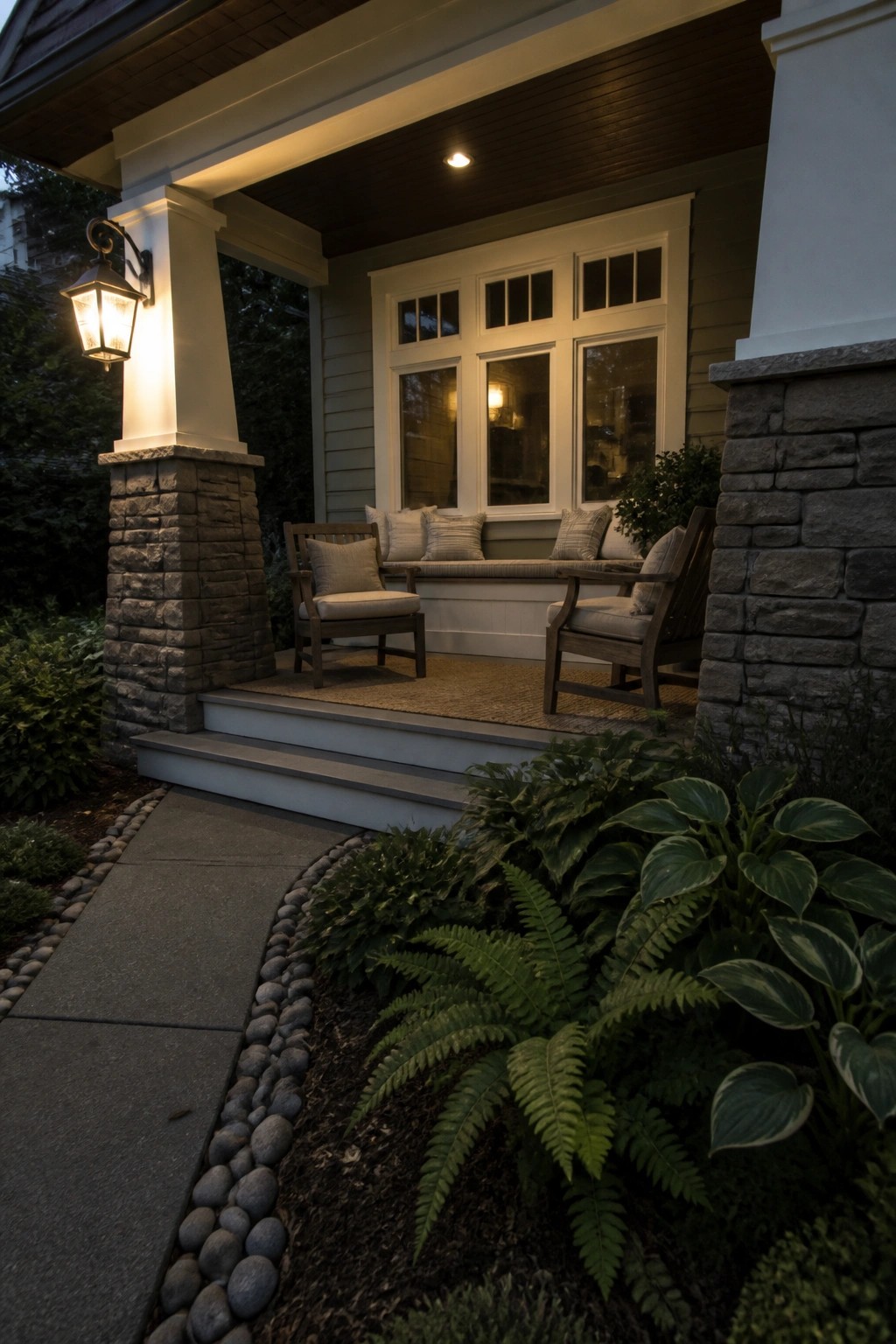
A multi-pane window like this one gives the porch a settled, traditional look without any extra trim or decoration. The grid of smaller lights breaks up the glass and helps the house feel more grounded and Craftsman in style. It also lets light reach deeper into the room behind it while keeping the exterior balanced.
This works best on homes with a clear porch roof and simple columns. Keep the window centered over the seating area and match the pane size to the scale of the posts and steps so nothing looks oversized or crowded.
Bay Windows with Flower Boxes
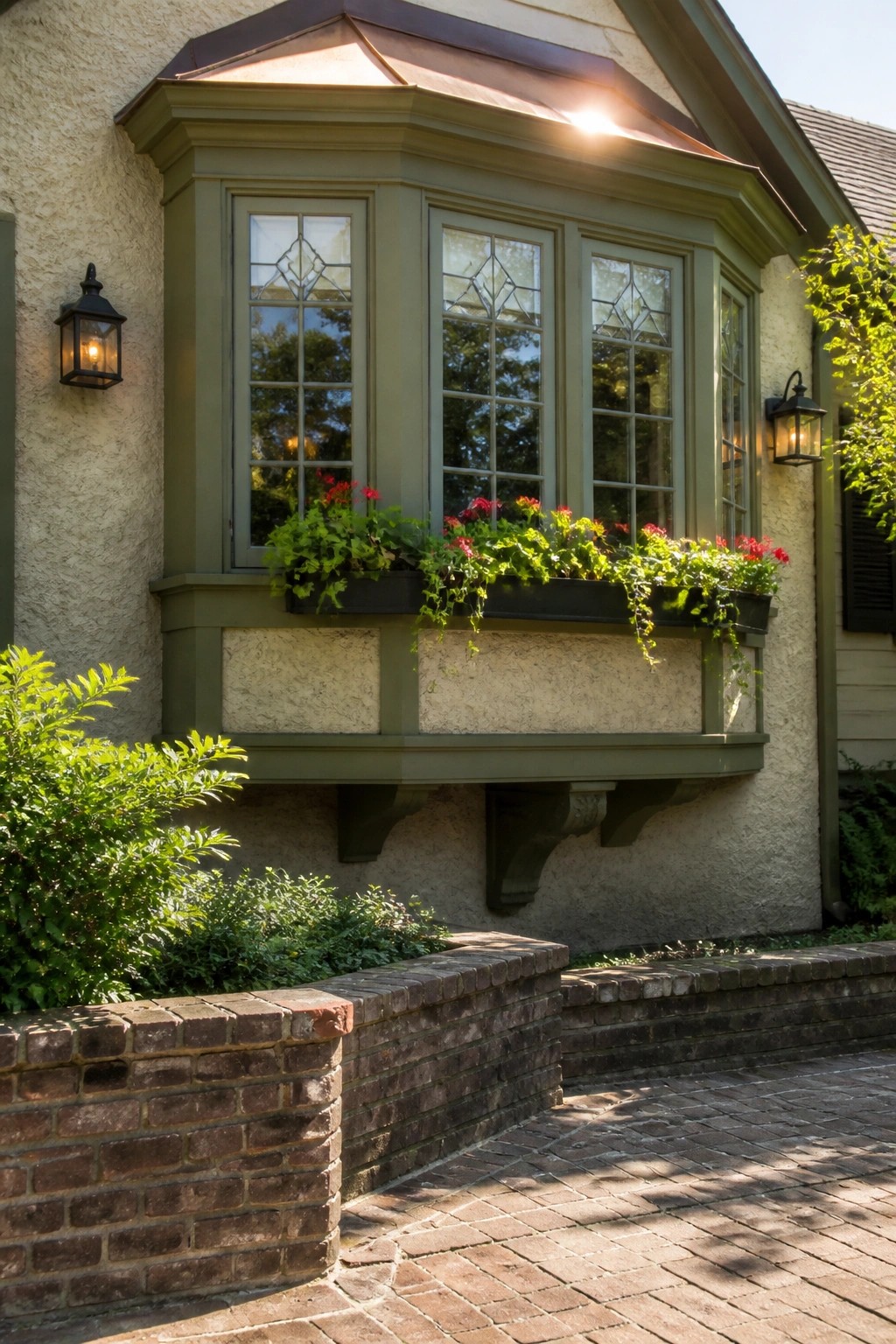
A bay window gains extra character when you add flower boxes right along the base. The boxes pull the planting up to eye level and make the whole projection feel more finished and intentional.
This approach suits Craftsman homes that already use trim and brackets to highlight windows. Keep the boxes narrow so they do not overwhelm the glass, and choose plants that trail a little to soften the edge without blocking light.
Grid Windows In Dark Frames
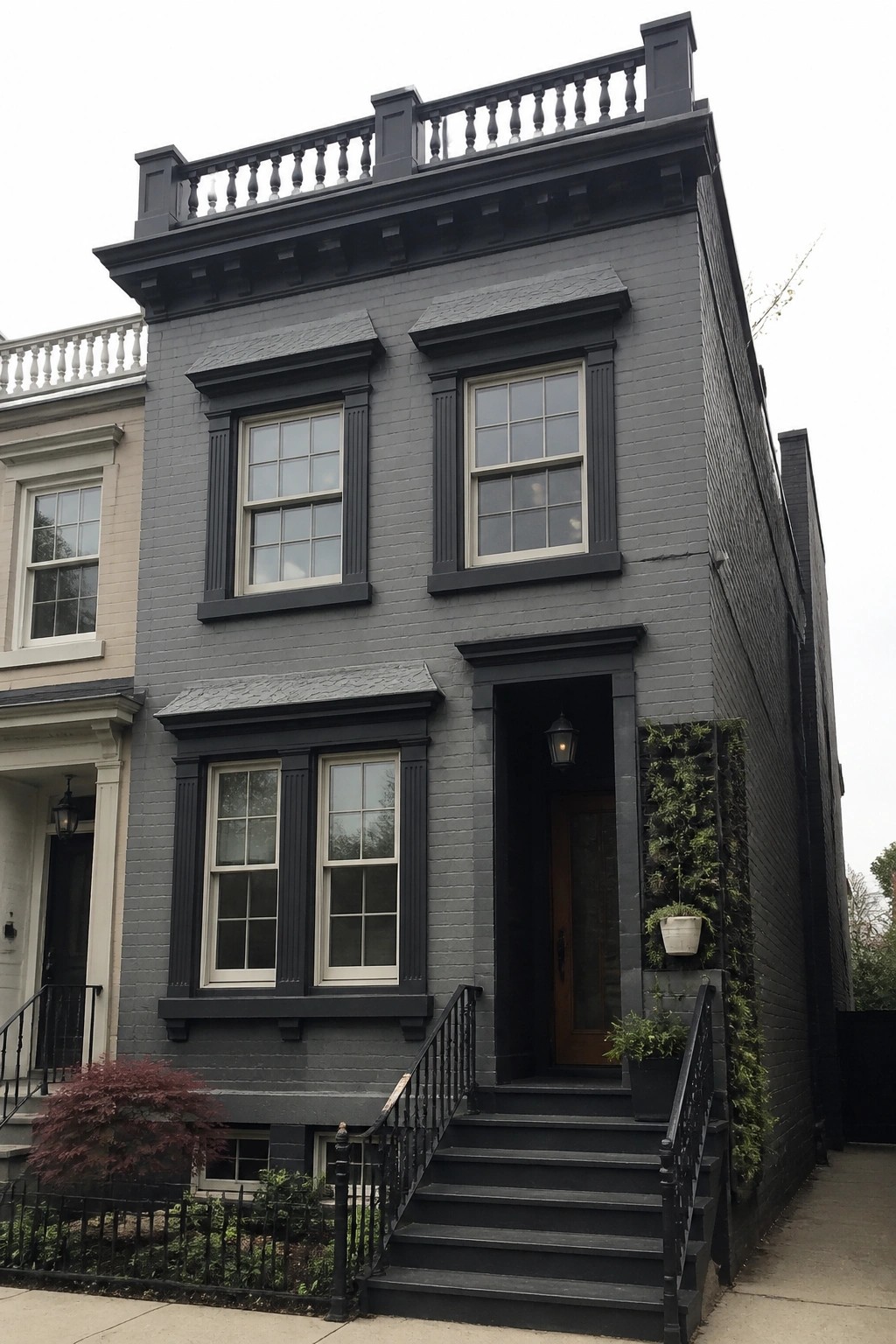
Grid windows with dark frames give a house exterior more structure and presence. They break up a plain wall surface and create a steady rhythm that feels balanced rather than busy.
This approach suits painted brick or wood siding homes where the windows need to carry the visual weight. Keep the frame color consistent with the door trim and other details so the look stays simple and tied together.
Craftsman Windows Facing the Patio
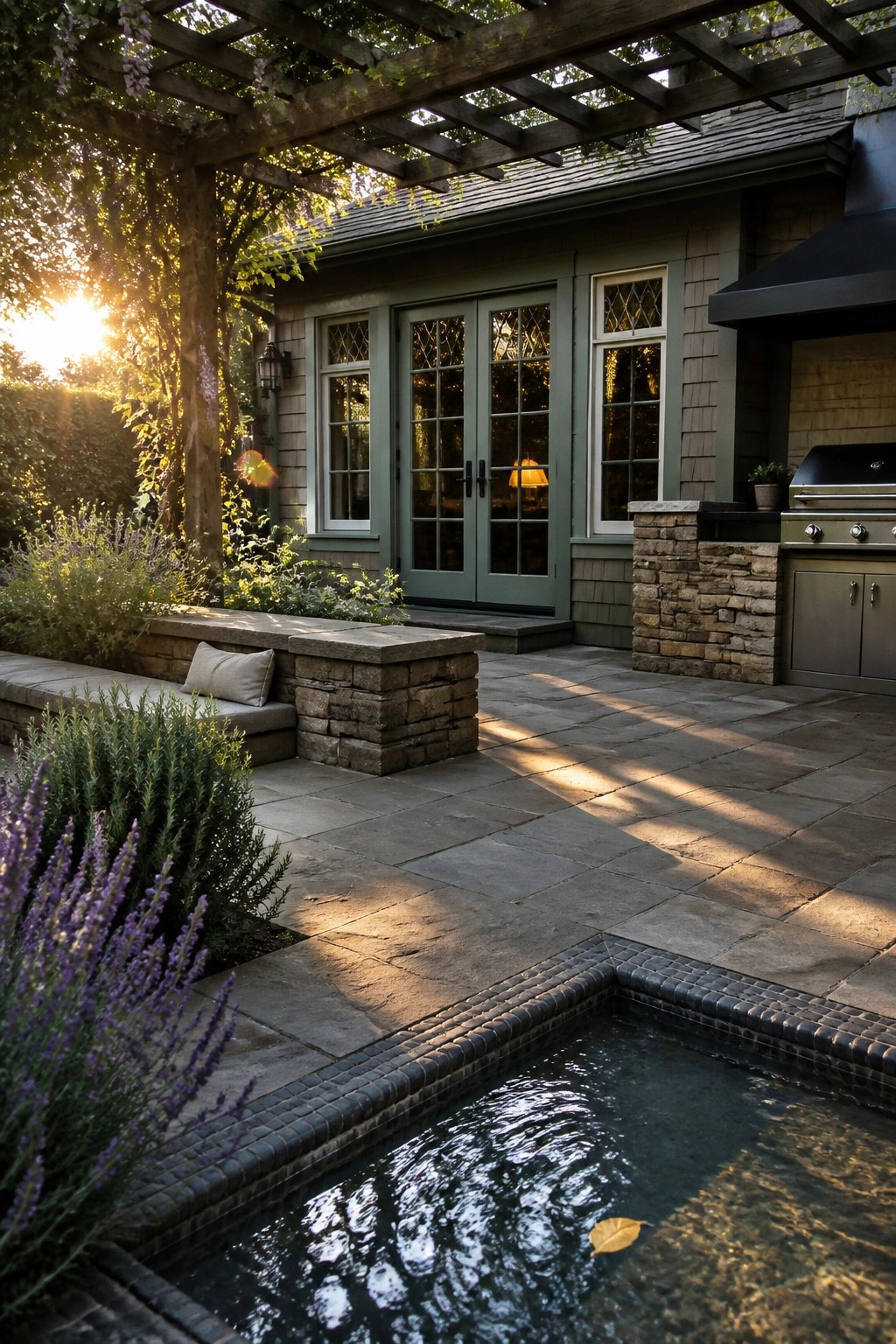
These divided lite windows and doors give the back of the house a solid Craftsman look that holds up well next to the stone patio. The grid pattern adds just enough detail to keep the wall from feeling plain while still letting plenty of light through to the seating area.
They work best on homes where the patio gets regular use. Keep the trim color consistent with the rest of the exterior so the windows feel like part of the original structure instead of an add on.
Bay Windows With Divided Lights
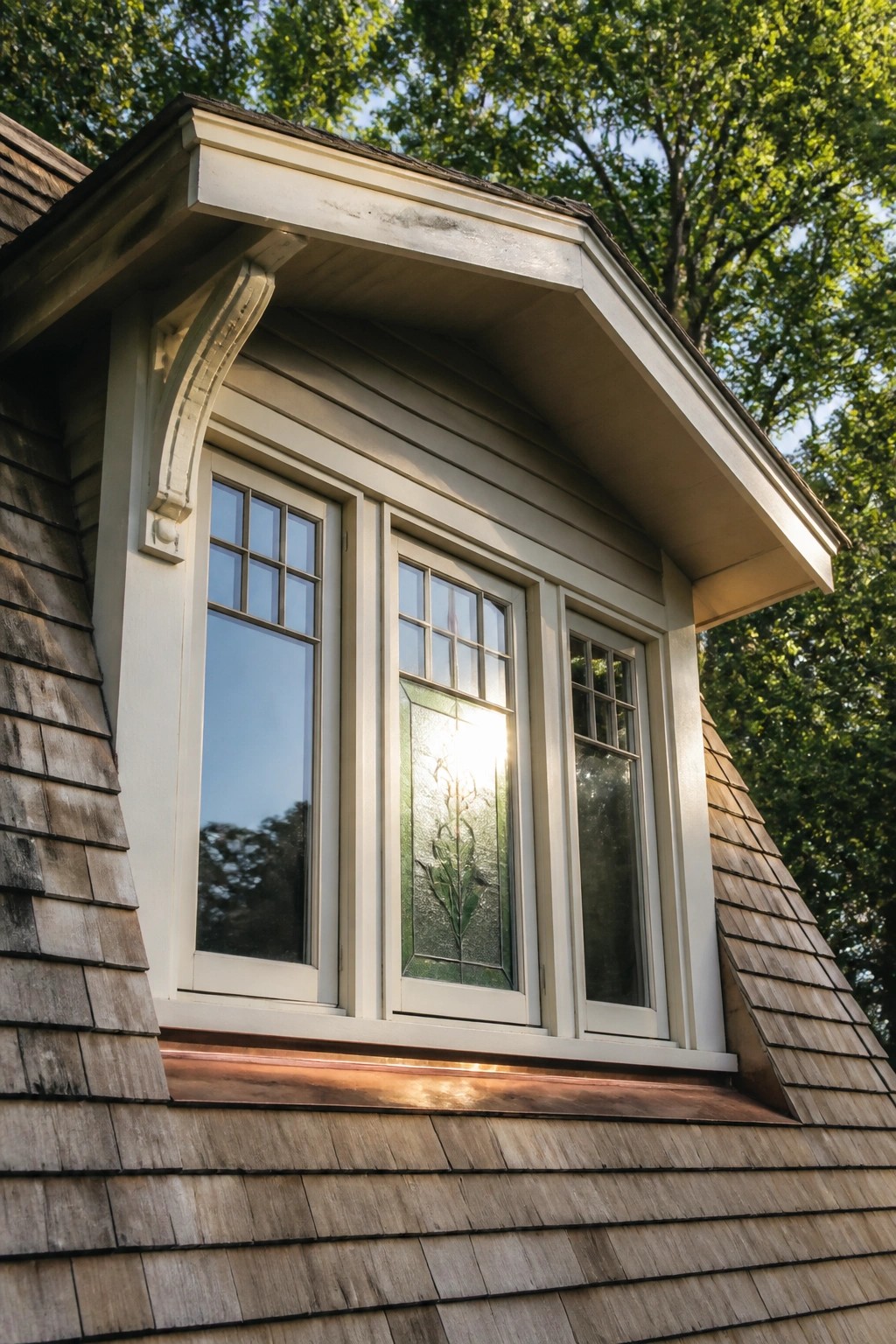
One simple way to add character on a Craftsman home is to group windows into a small bay. The projection breaks up a flat wall, brings in more light, and gives the exterior a bit more weight without needing extra trim or details.
A central panel with leaded glass can serve as the quiet focal point. This works best on homes with wood shingles and wide eaves, and it stays effective on both new builds and remodels as long as the window sizes stay balanced with the rest of the facade.
Grouped Divided Light Windows
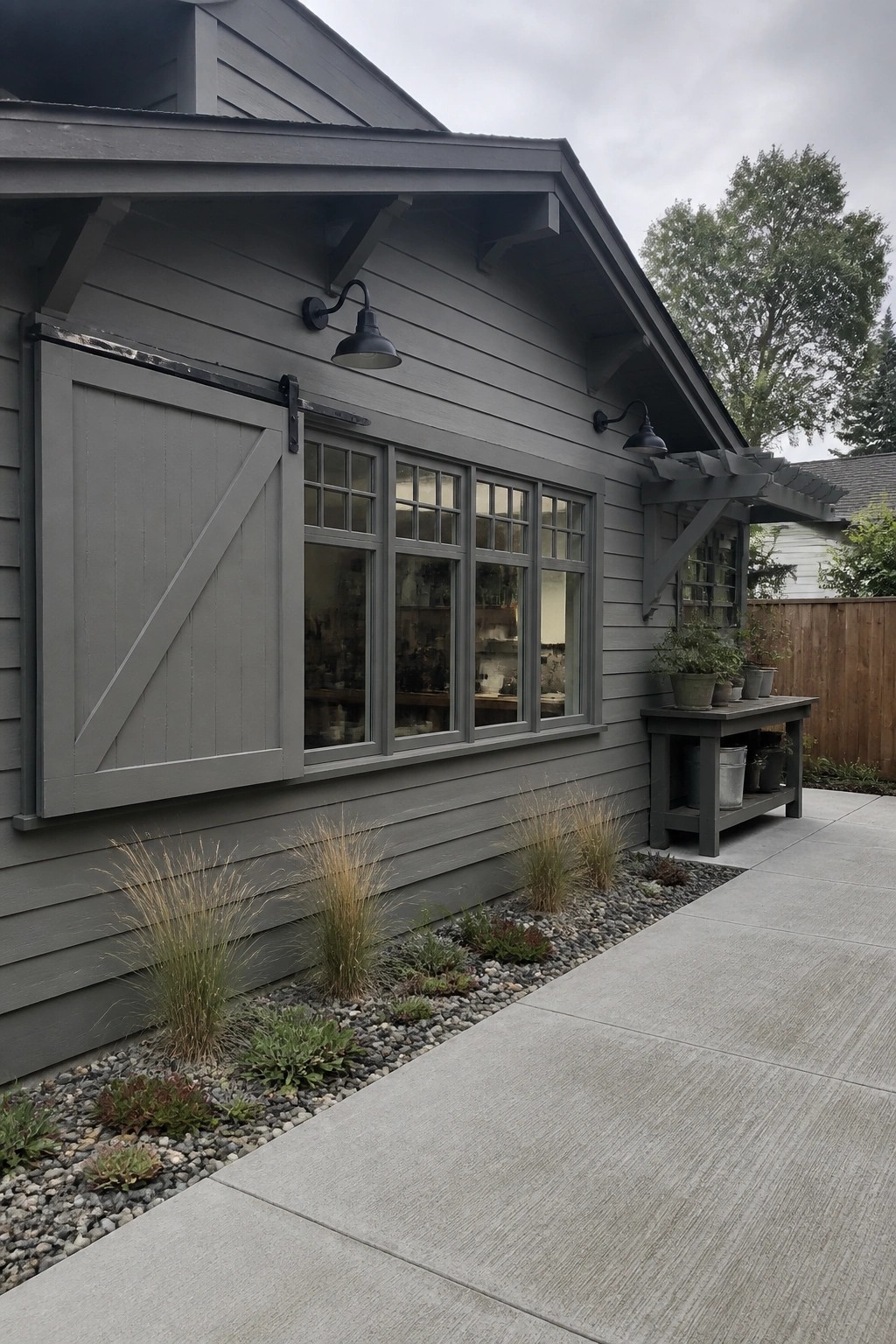
These windows stand out because they sit in a long row with the classic grid pattern that breaks up the gray siding. The look feels balanced and adds real character without needing extra trim or decoration.
This works best on Craftsman homes or similar styles where you want the exterior to feel traditional but not heavy. Place them along a side wall that gets good light and pair them with simple doors so the grids become the main feature.
Curved Bay Windows With Leaded Glass
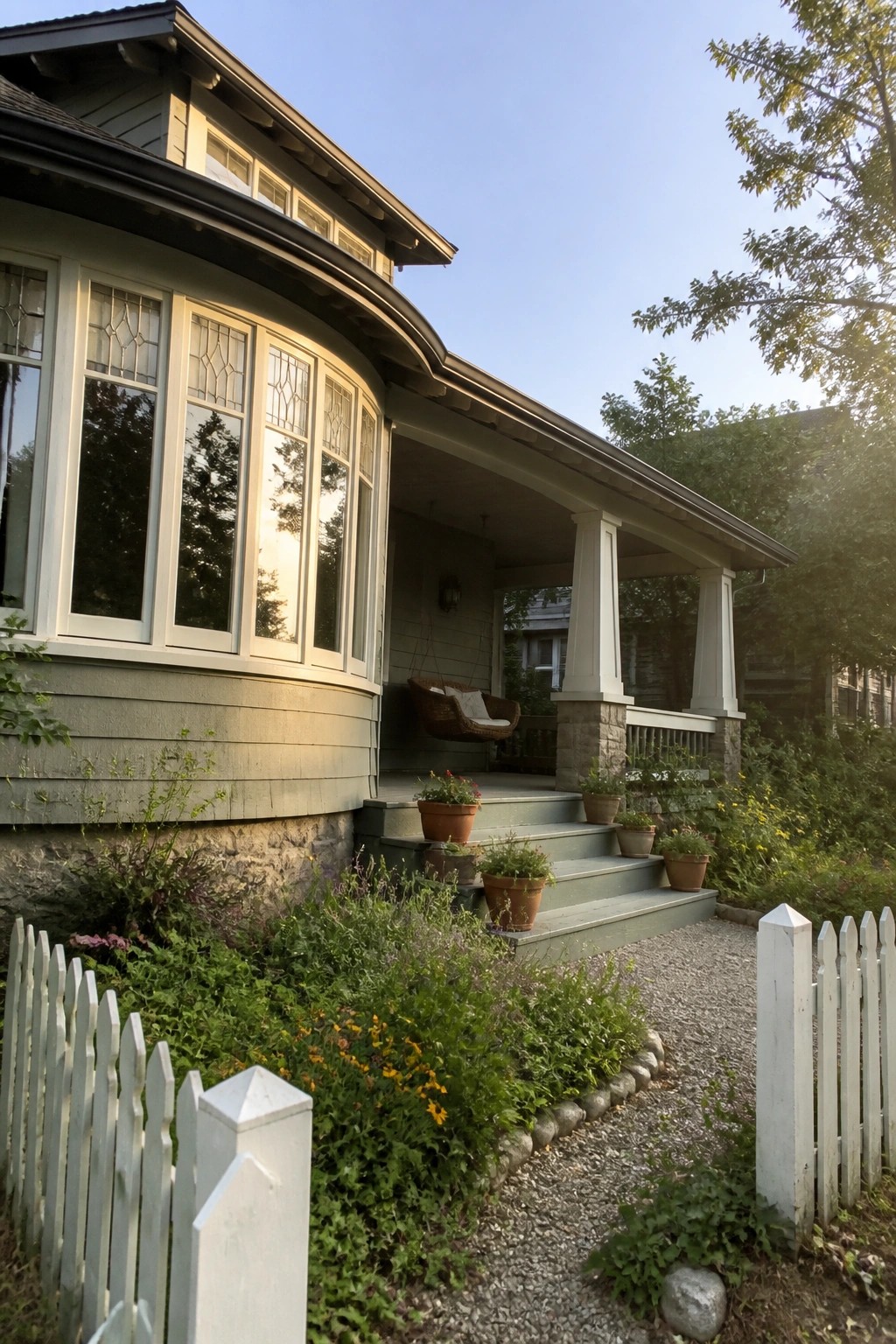
A rounded bay window gives a Craftsman house more shape than a flat opening would. The curve softens the wall and lets the divided panes catch light from different angles throughout the day.
This detail works best on homes where the window can sit slightly forward from the main wall. Keep the scale modest so it feels like part of the original structure rather than an added feature.
Use Multi-Pane Windows to Strengthen the Facade
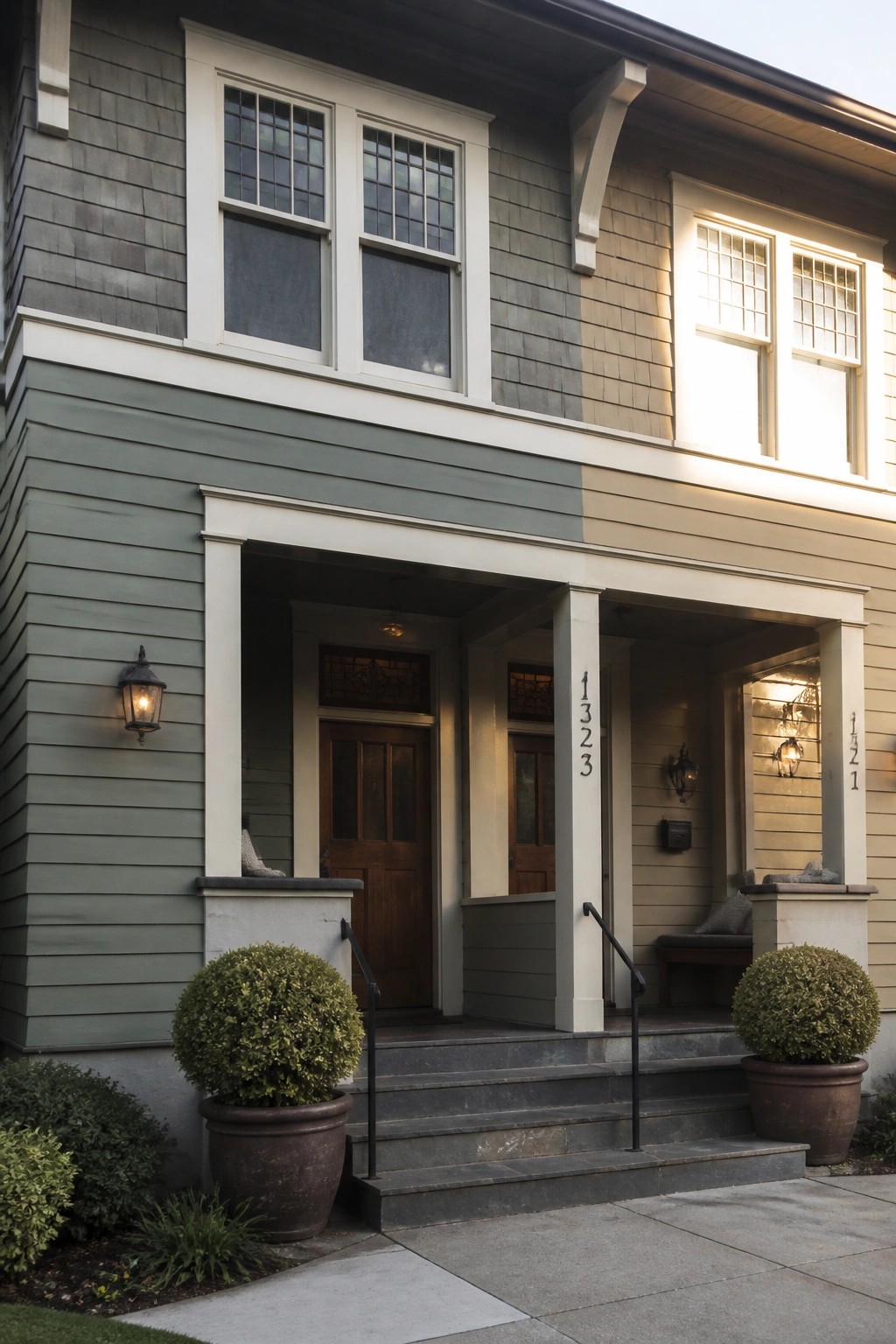
Multi-pane windows give a Craftsman house its main character without much extra work. They break up the wall surface and create a steady rhythm that makes the whole front feel pulled together.
These windows suit homes with simple rooflines and covered entries. Keep the pattern consistent across the main floor and upper level so the look stays balanced rather than busy.
Banded Windows With Divided Lights
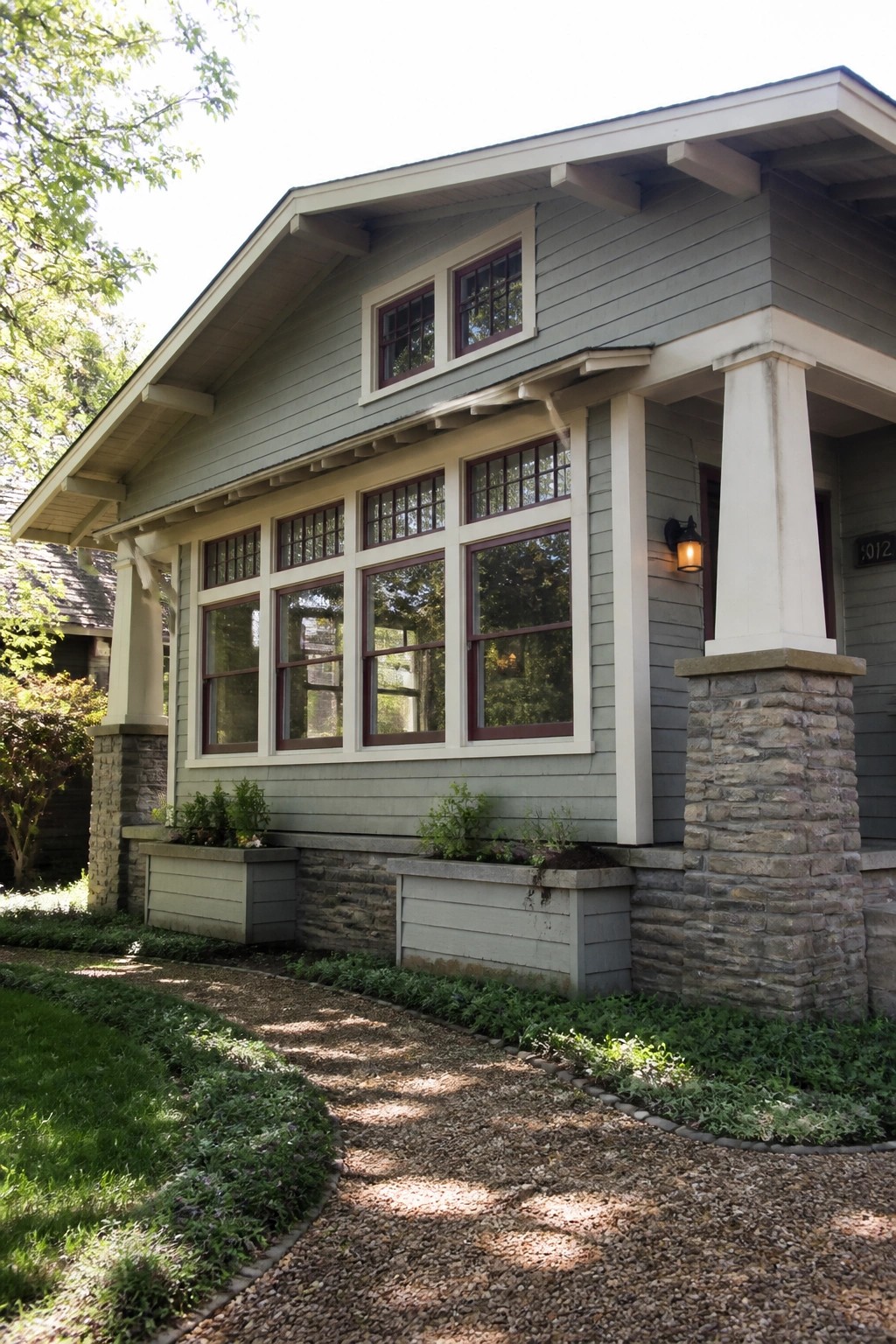
Craftsman homes often use a long row of windows grouped together to create a strong horizontal line across the front. The divided lights break up the large glass area and give the siding more texture and rhythm without extra ornament.
This layout works best on single-story houses or the main floor of a larger home where you want to keep the proportions low and balanced. Match the window frames to the trim color and keep surrounding details simple so the band of windows stays the main focal point.
Leaded Glass Windows Add Quiet Detail
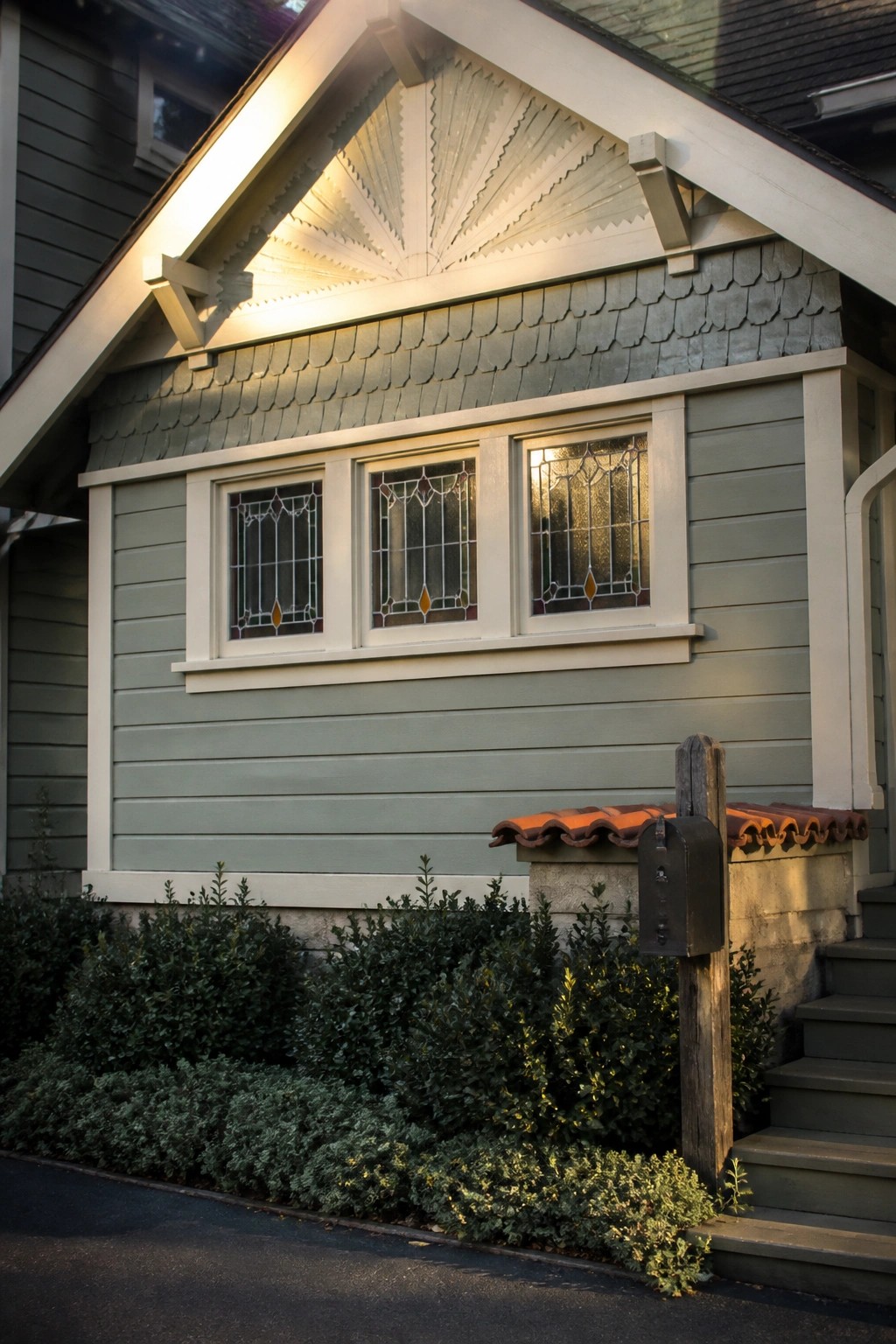
Leaded glass windows give a Craftsman house a bit more visual interest without adding extra trim or ornament. The small panes and colored accents catch light in a way that plain glass does not, and they suit the straightforward lines of this style.
They work best on homes from the early 1900s or on new builds that follow the same proportions. Keep the pattern simple and the colors muted so the windows feel like part of the original design rather than an added feature.
Divided Light Windows On The Side Wall
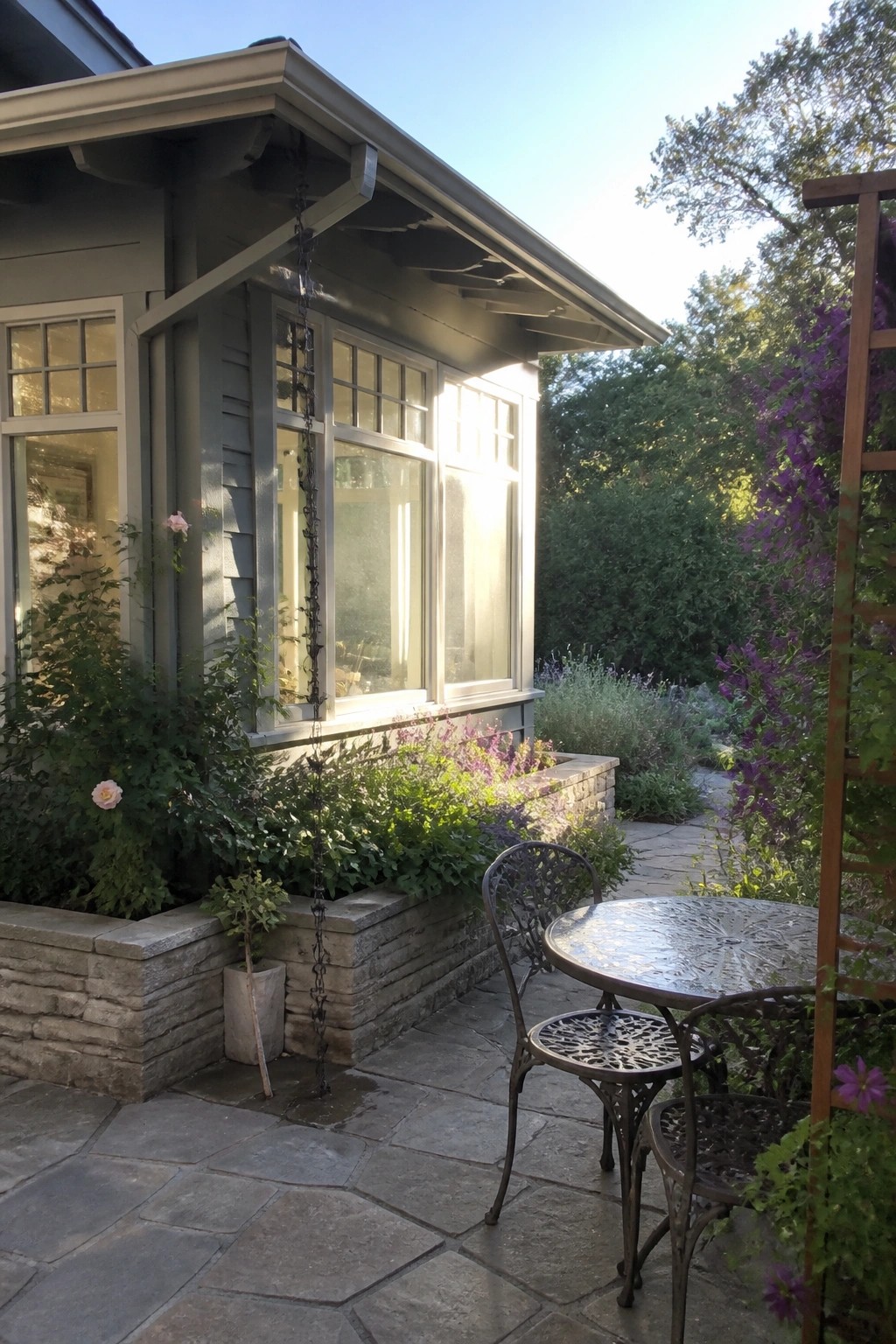
These windows stand out because the grids break up the glass into smaller sections. That simple change gives the whole side of the house more shape and a clear Craftsman look without needing extra trim or decoration.
They work best on homes where the side or corner faces a patio or path. Keep the panes in a consistent pattern and let the windows sit a little forward from the wall so the light hits the grids during the day.
Frequently Asked Questions
Q: What size windows work best for that classic Craftsman look?
A: Measure your openings carefully first. Go for proportions that match the style, like wider sashes on the bottom. This keeps the balance right without overpowering the wall.
Q: Do these windows need special paint or finishes?
A: Pick a matte or low-sheen paint to avoid a glossy modern feel. Stick to colors that echo the wood tones in your trim. It helps them blend naturally into the architecture.
Q: Can I add Craftsman windows to a house that isn’t originally that style?
A: Yes they can update the look if you match the details like divided lights. Focus on the front facade first for the biggest impact.