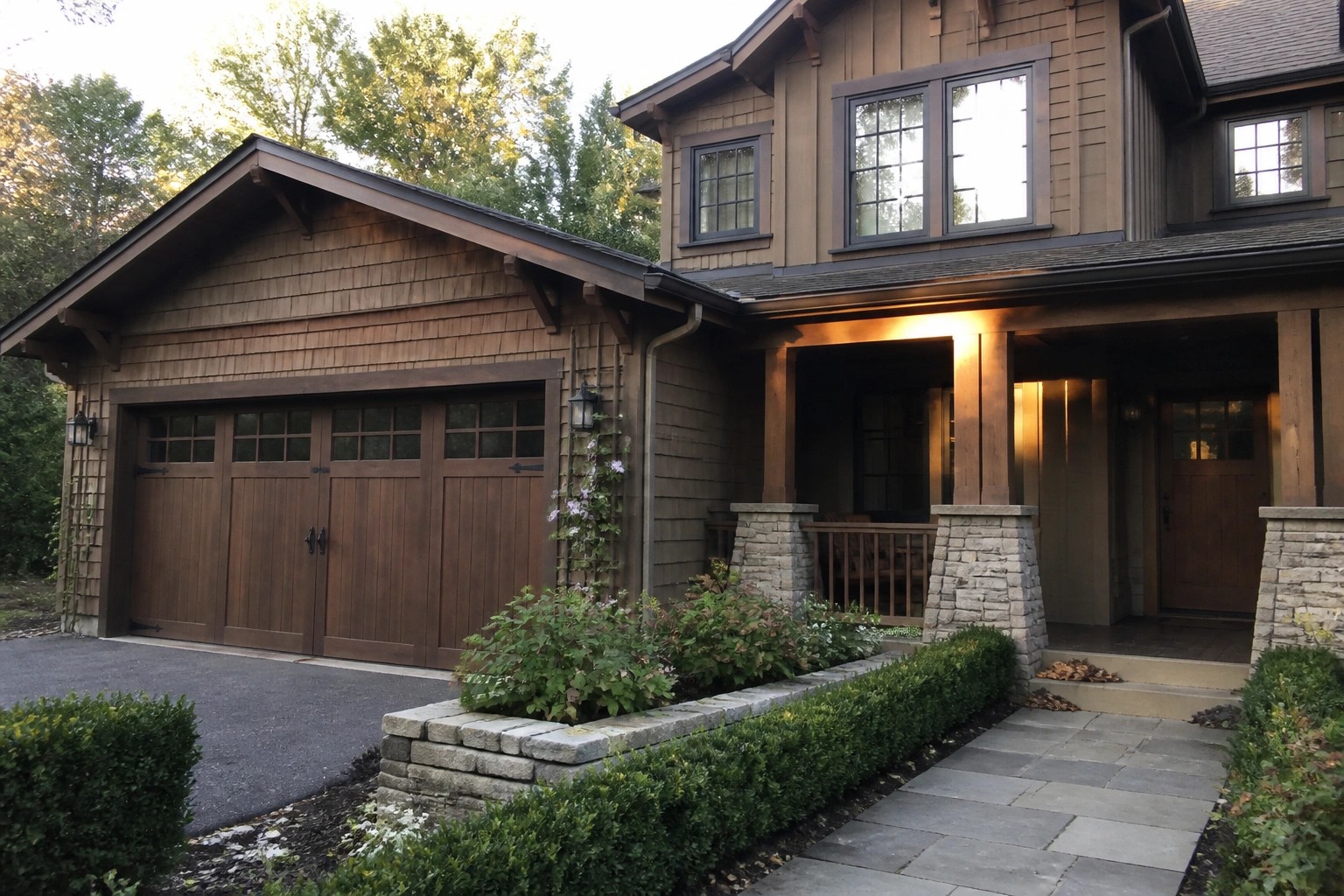
I’ve noticed that Craftsman homes often stand or fall on how the garage sits within the front elevation rather than fighting it.
When the roof pitch and siding carry across without a break, the whole house reads as one piece instead of two separate volumes.
Details like this tend to matter more than the overall size.
In houses where the garage doors sit back a little and pick up the same trim details as the main entry, the facade feels settled even on smaller lots.
I would probably try that setback approach first if I were working on a similar house because it changes how the whole front looks from the street.
Blending The Garage Into The Main Design
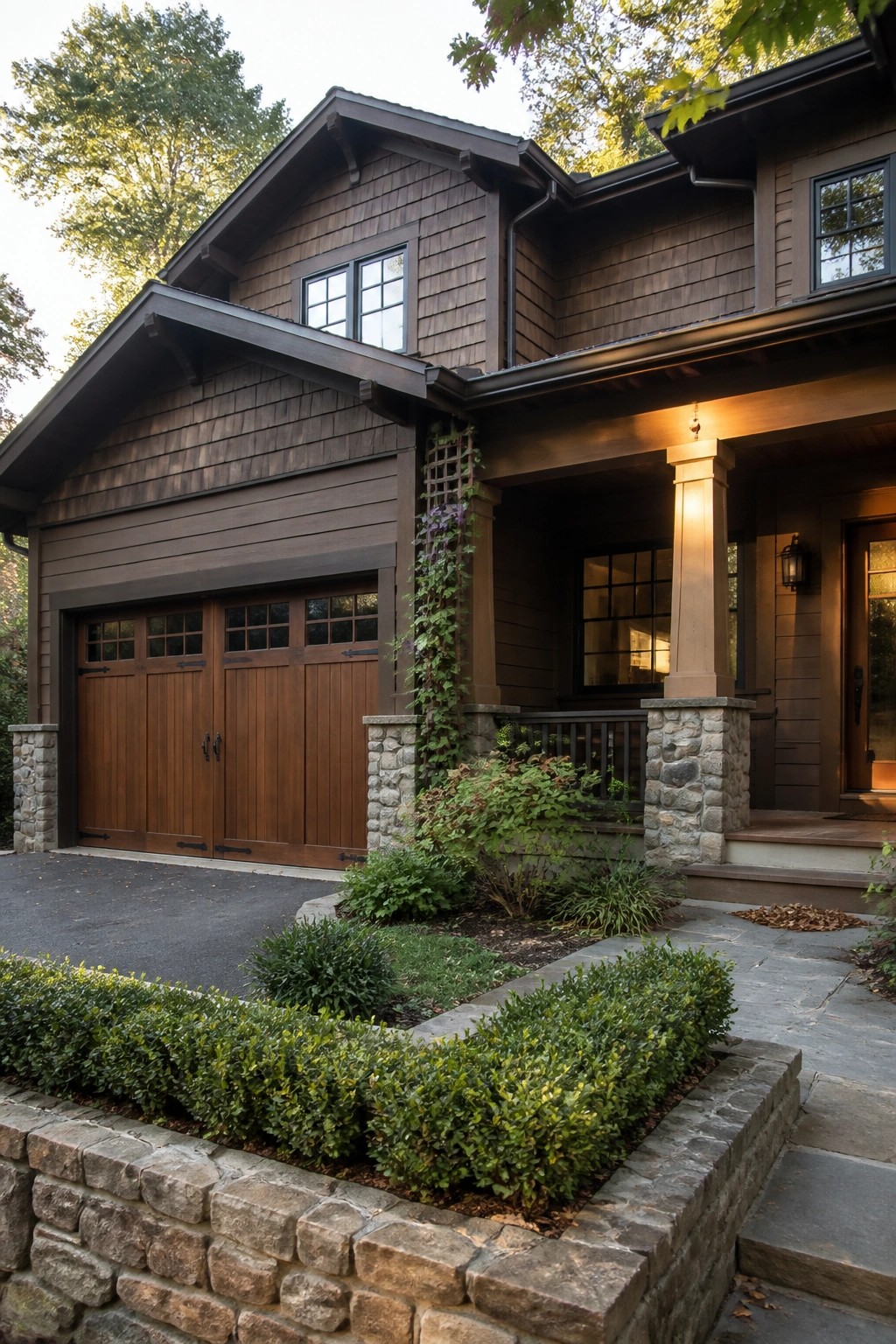
One way to keep a Craftsman house looking balanced is to treat the garage as part of the overall structure instead of an add-on. Matching the wood siding, trim details, and even the stone bases helps the doors sit comfortably with the rest of the front.
This approach works best on homes where the garage sits forward or takes up a large section of the facade. Stick with the same stain or paint on the doors, repeat any bracket details above them, and carry the foundation material across both sides so nothing feels separate.
An Arbor That Links the Garage to the House

One simple way to keep a garage from feeling like an afterthought is to connect it to the main house with an arbor or pergola. The structure gives the eye something to follow and pulls the two parts together instead of leaving the garage standing on its own.
This approach works best on homes where the garage sits forward or off to one side. Use the same wood tones as the house trim and let a few vines grow over the top so the whole thing feels like part of the original build. Just keep the posts and beams in scale with the rest of the facade so they do not overpower it.
Matching the Garage Door to the Siding
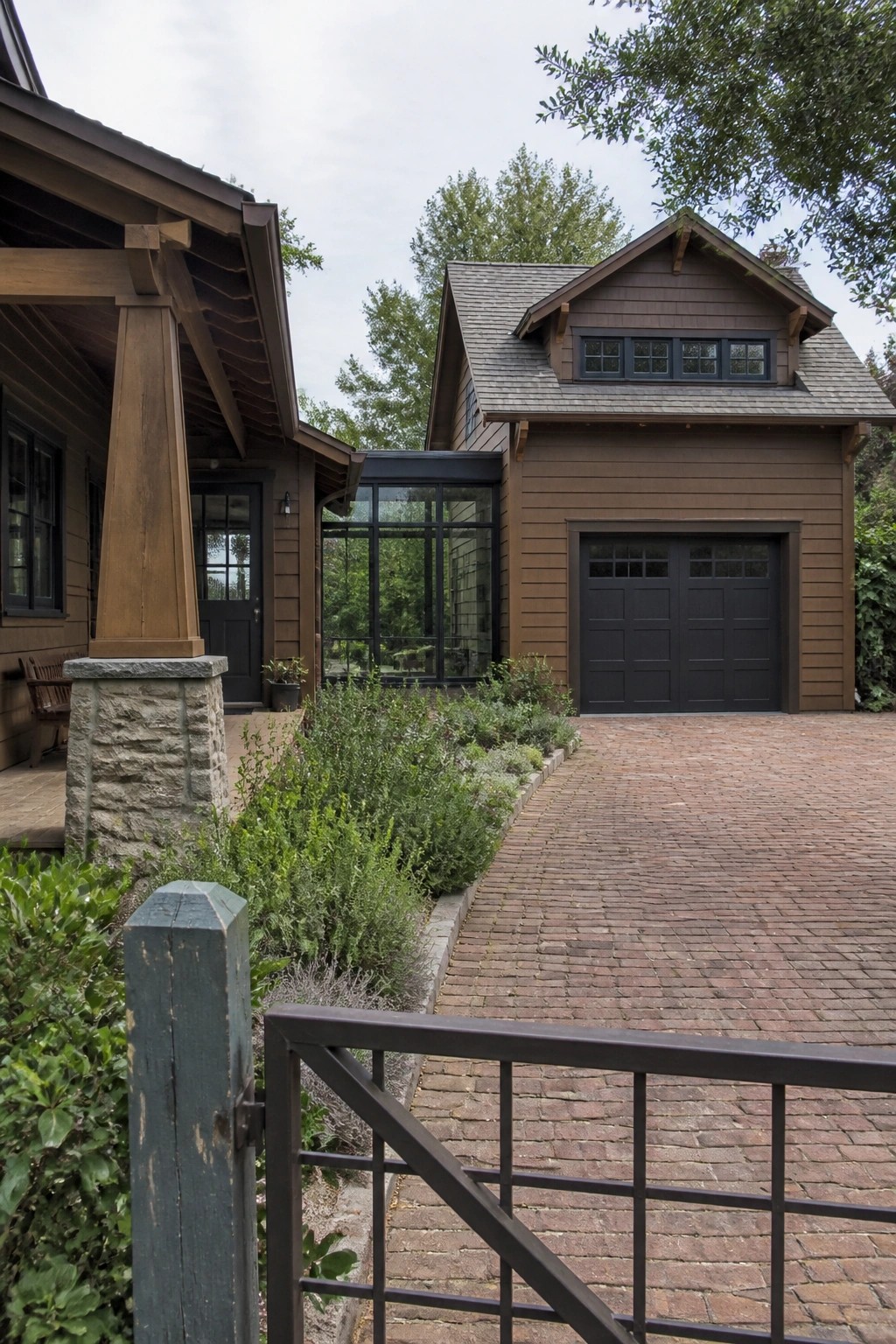
One simple way to keep a garage from breaking up the look of a house is to paint the door the same color as the siding. In this case the dark door sits right into the brown walls so the whole side of the house reads as one shape instead of two separate parts.
This works best on homes that already use a limited color palette and fairly plain door panels. Just make sure the trim around the door stays a touch lighter or darker so it still looks like an opening and not a blank wall.
Matching the Garage to the House
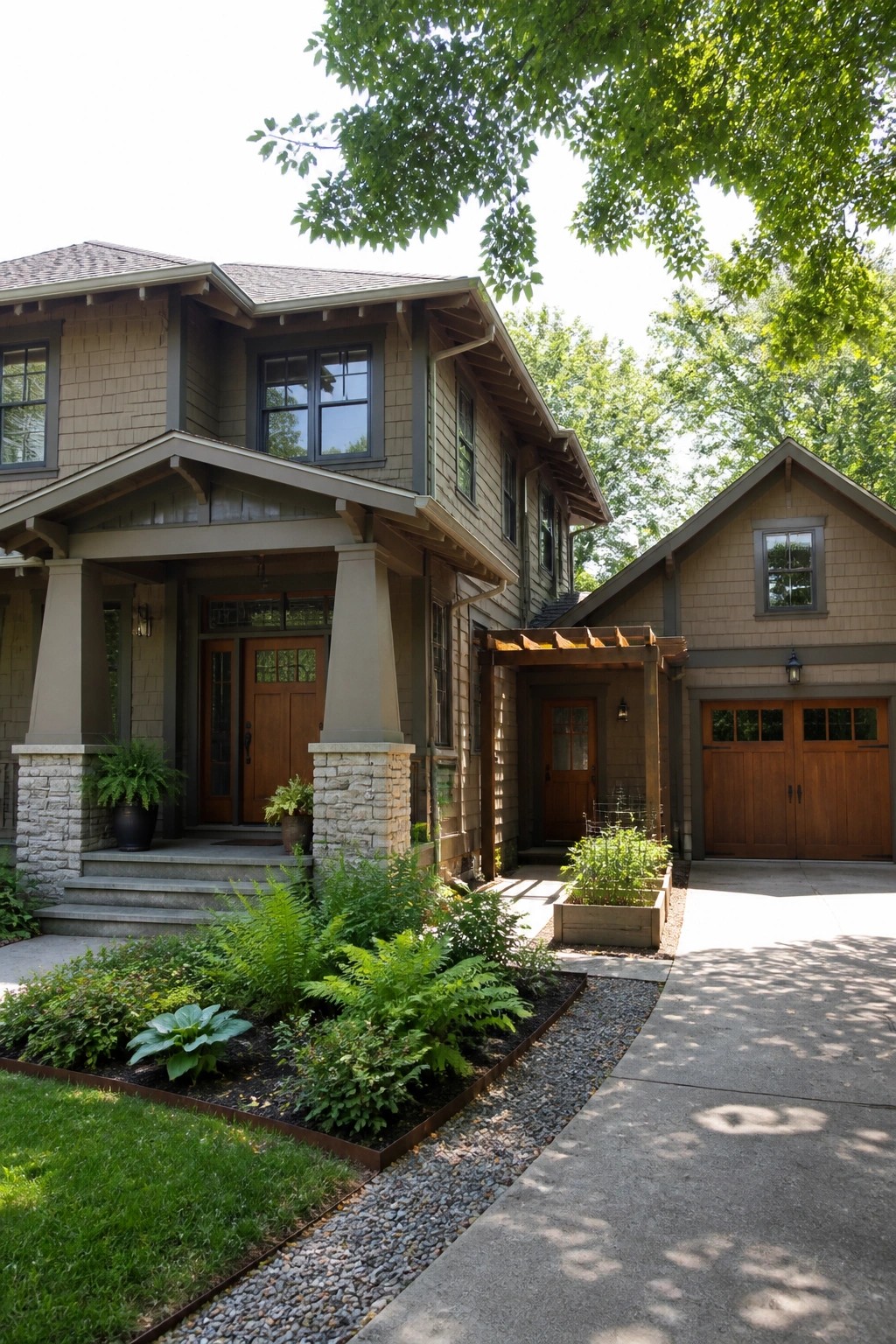
One simple way to keep a garage from looking stuck on is to use the same siding, trim, and wood tones across the whole front. When the garage doors match the entry doors and the roofline continues without a break, the whole facade feels more balanced.
This approach works best on Craftsman homes where the materials already have a lot of texture. Line up the window heights if you can and keep the overhangs consistent so the garage reads as part of the main structure instead of a separate piece.
Coordinating Garage Color With The Rest Of The House
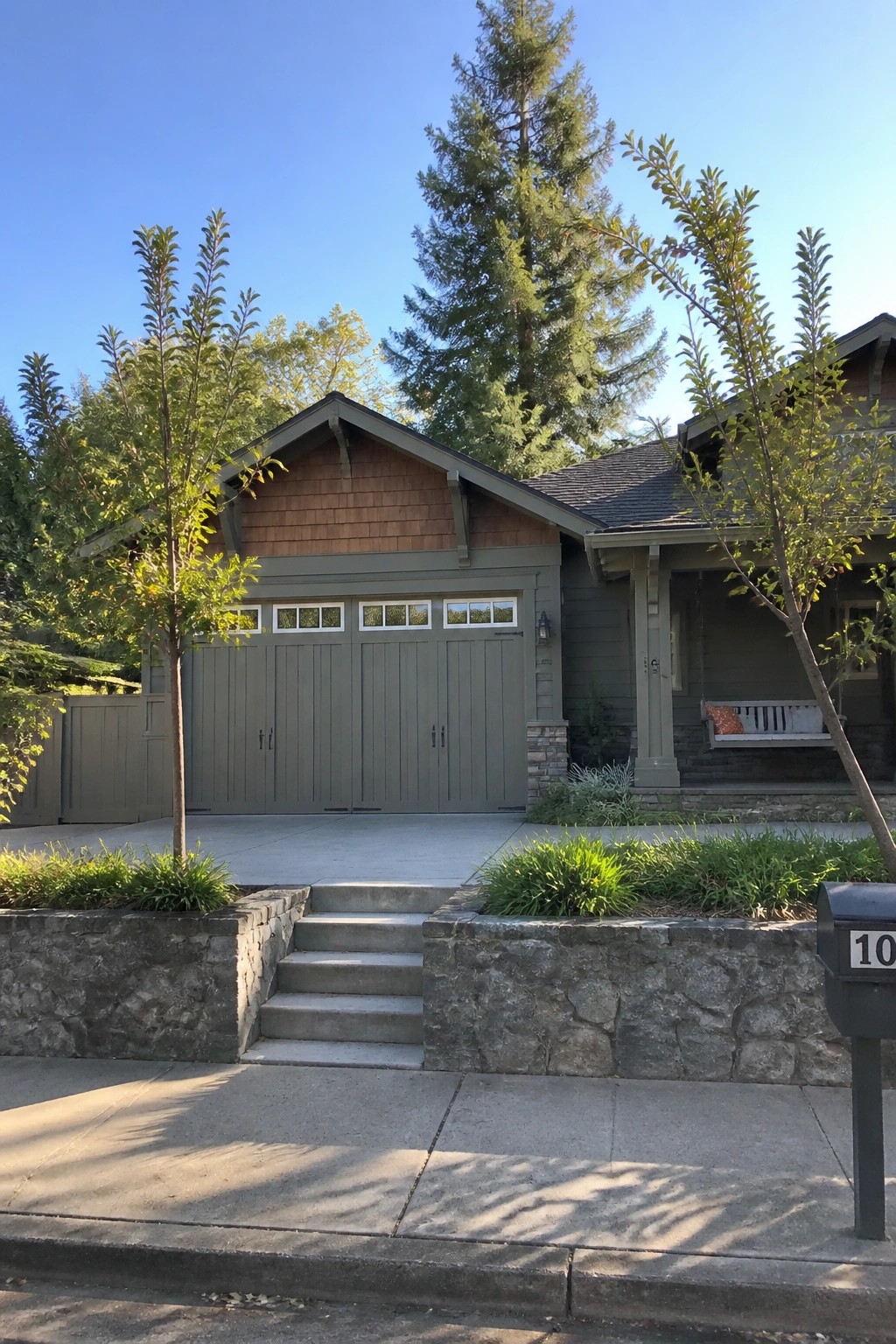
One simple way to keep a Craftsman home looking balanced is to paint the garage doors the same color as the siding. This avoids the common problem where the garage becomes the main thing you notice from the street.
It works best on homes where the garage sits right on the front facade. Stick with the exact house color rather than a close match, and keep any trim details minimal so the doors blend in instead of standing out.
Blending the Garage Into the Facade
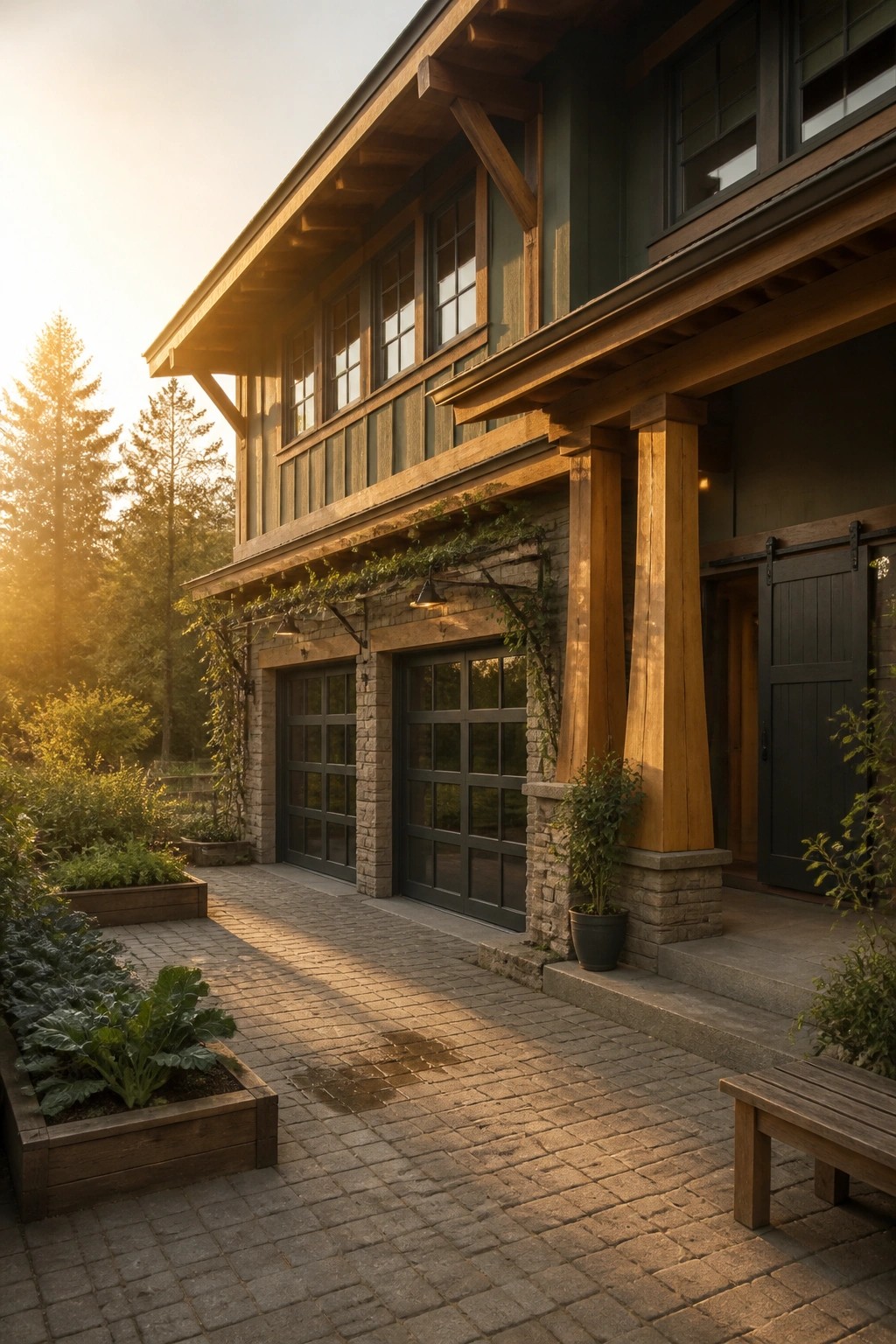
One way to keep a Craftsman home looking balanced is to pull the garage doors into the same material language as the rest of the house. Stone bases, heavy timber posts, and matching wood trim make the doors feel like they belong rather than sitting off to the side as an afterthought.
This works best on homes where the garage sits under the main roofline. Match the door color and hardware to the entry door and use the same siding or stone wrap so the whole front reads as one piece. It keeps the scale from getting away from you on wider lots.
Matching Garage Doors to the House Siding
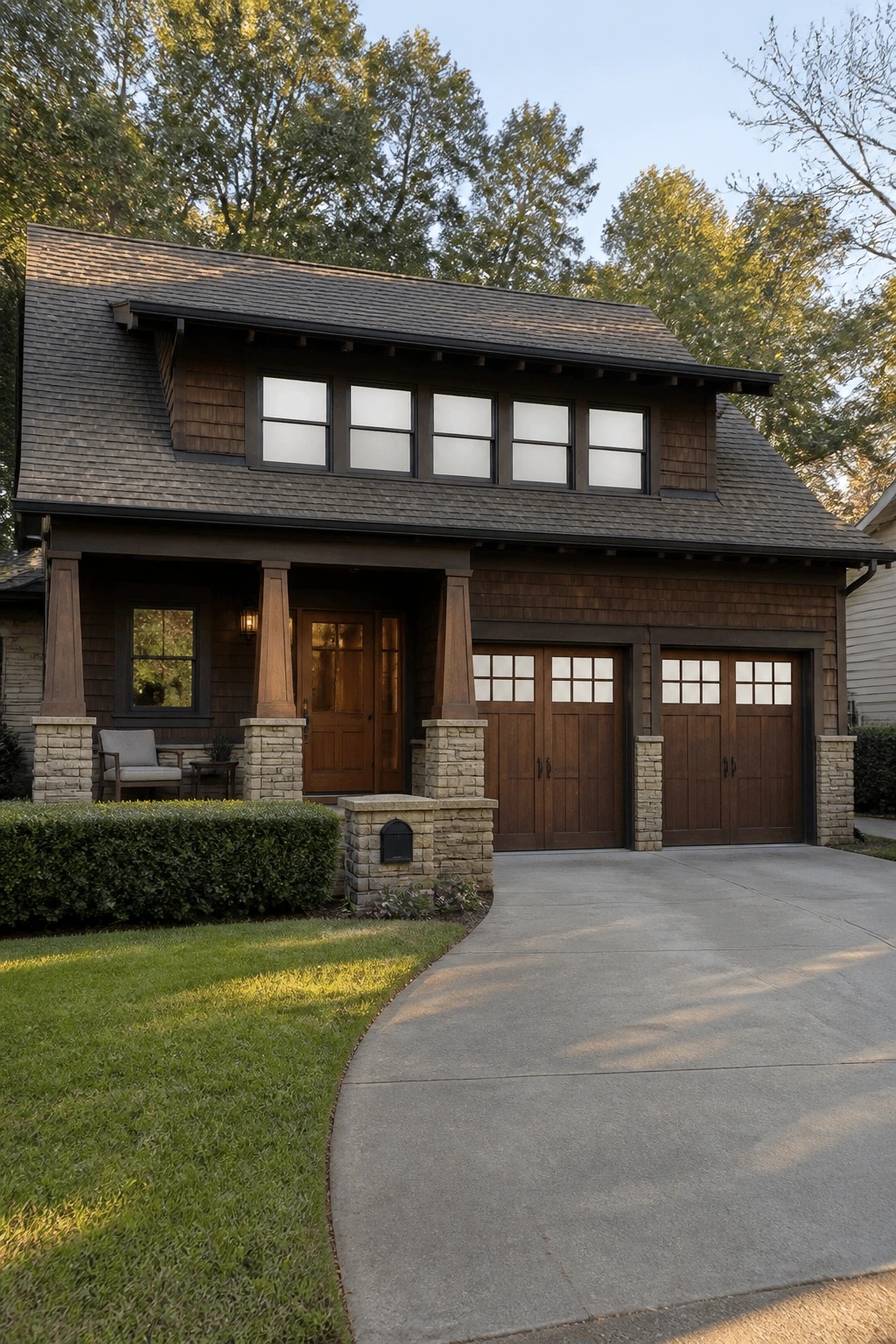
Many Craftsman homes end up with a garage that feels stuck on at the last minute. Using the same dark wood siding and panel style on the doors helps the whole front read as one connected design instead of separate parts.
This works best on homes where the garage sits close to the main entry. Keep the hardware simple and let the material match do the rest. Stone bases on the columns add just enough contrast without breaking the flow.
Matching Garage Doors to the House Materials
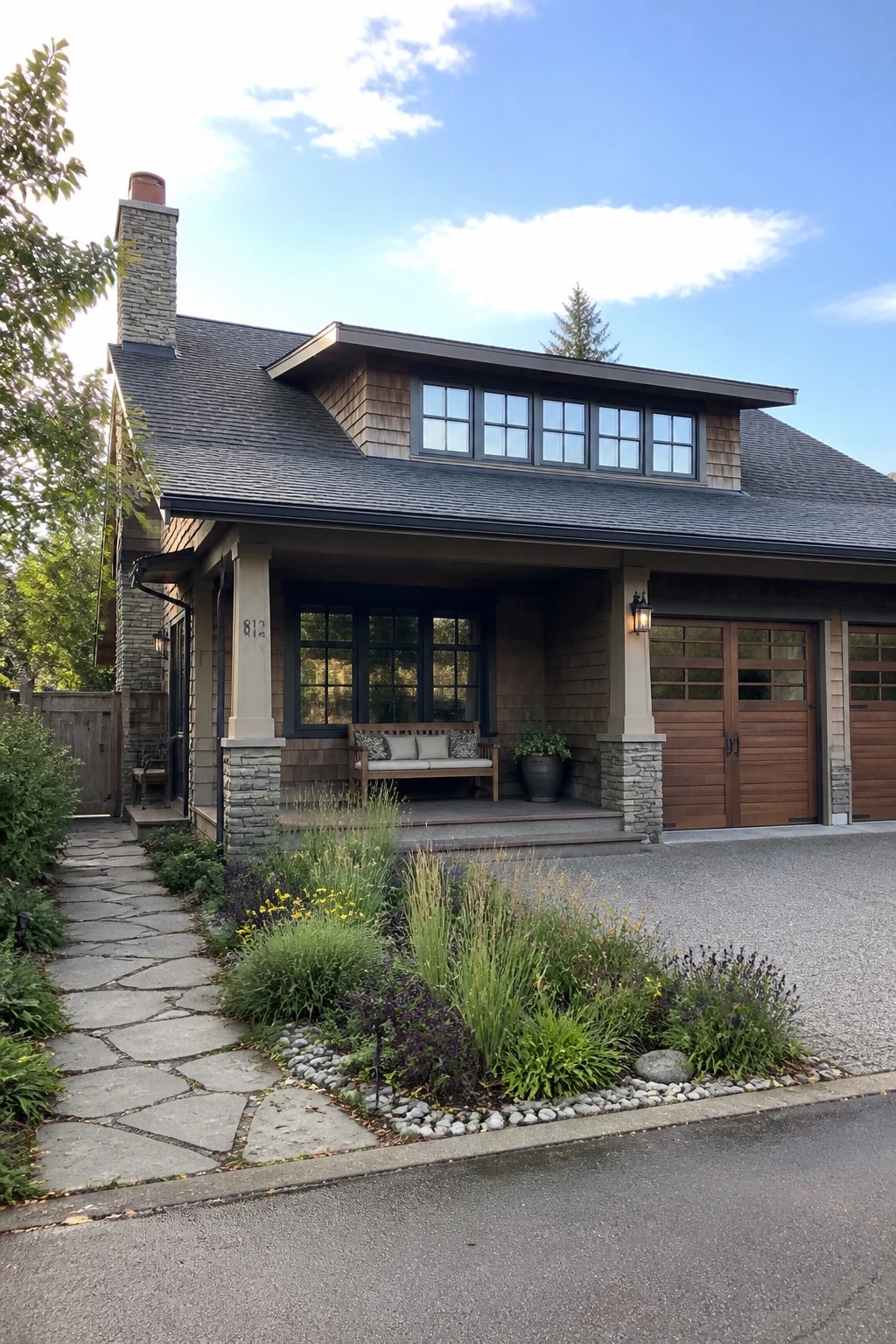
One way to keep a garage from feeling like an afterthought is to use the same wood siding and trim on the doors that appears elsewhere on the house. When the doors match the overall material and color, the whole front reads as one connected design instead of separate pieces.
This approach works best on Craftsman homes where the garage sits close to the entry. Keep the door panels straightforward and line them up with nearby windows or siding breaks so the scale stays balanced.
Blending the Garage Doors with the Home’s Colors
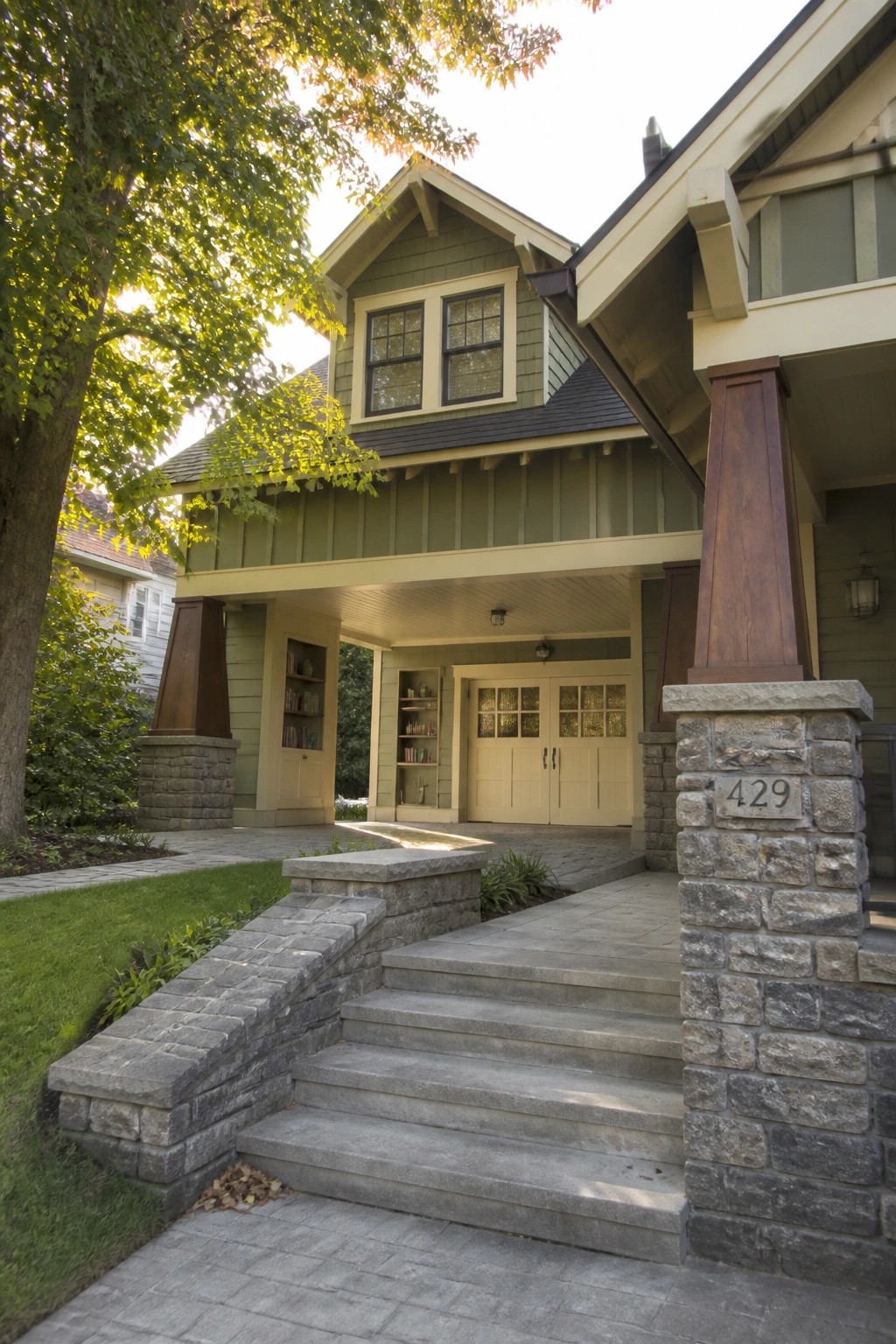
One of the simplest ways to keep a Craftsman home looking balanced is to paint the garage doors the same color as the trim. This small choice stops the doors from standing out as a separate block on the front of the house. The light cream finish here lines up with the porch ceiling and window frames, so the whole facade feels connected.
This approach works well on any home where the garage faces the street. Use the same paint on the doors and trim, and add small built-in shelves beside the opening if space allows. It keeps the front from feeling split between living space and parking.
Blending the Garage into the Facade
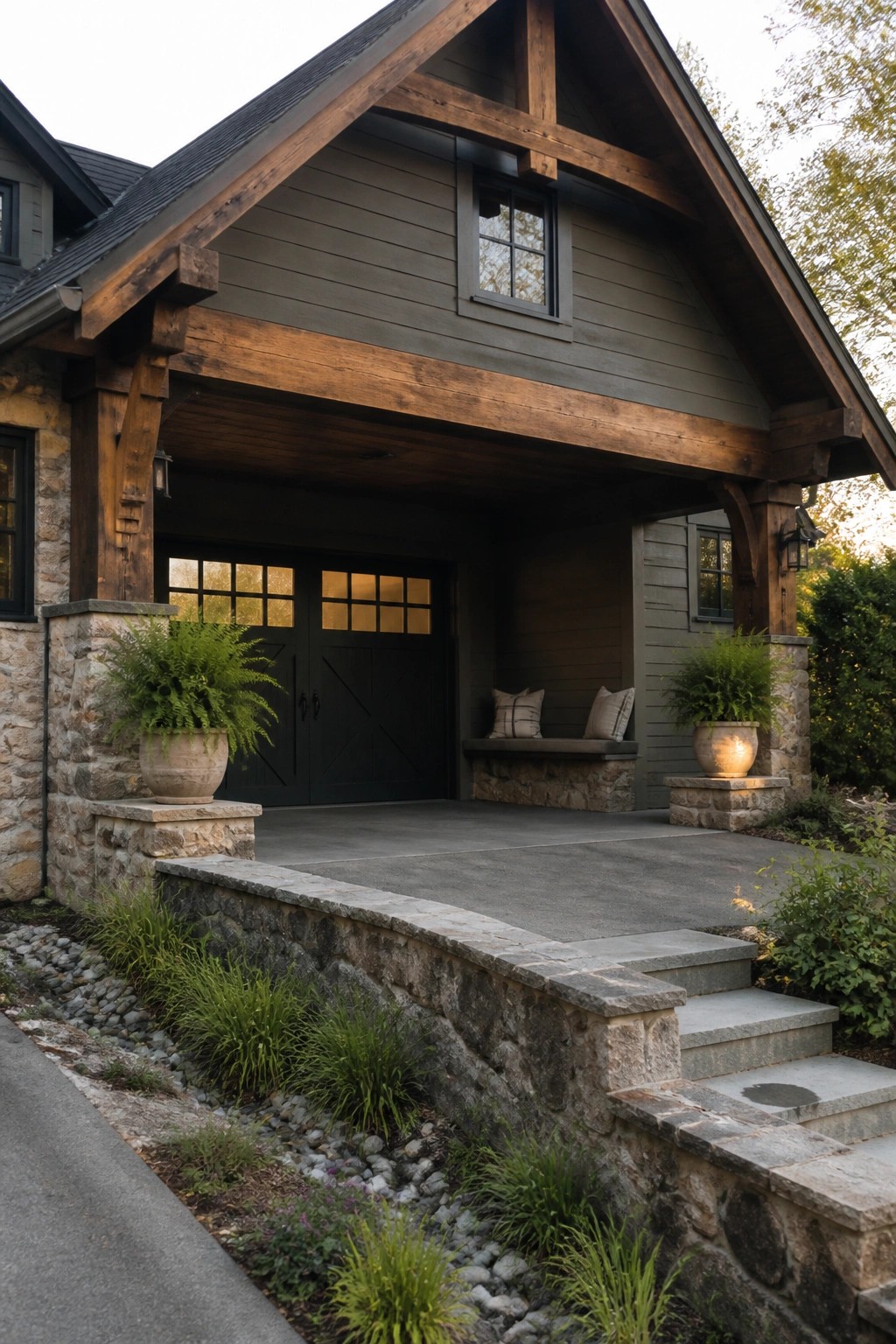
Craftsman homes often look better when the garage doors match the rest of the house instead of standing out as an afterthought. Using the same window grids, dark paint, and wood trim on the doors helps the whole front read as one piece rather than a house with a separate garage attached.
This approach works best on homes where the garage sits right at the front. It keeps the street view balanced and avoids the common problem of a wide empty door breaking up the architecture. Stick with simple details that echo the windows and siding already on the house.
Blending The Garage With Matching Materials
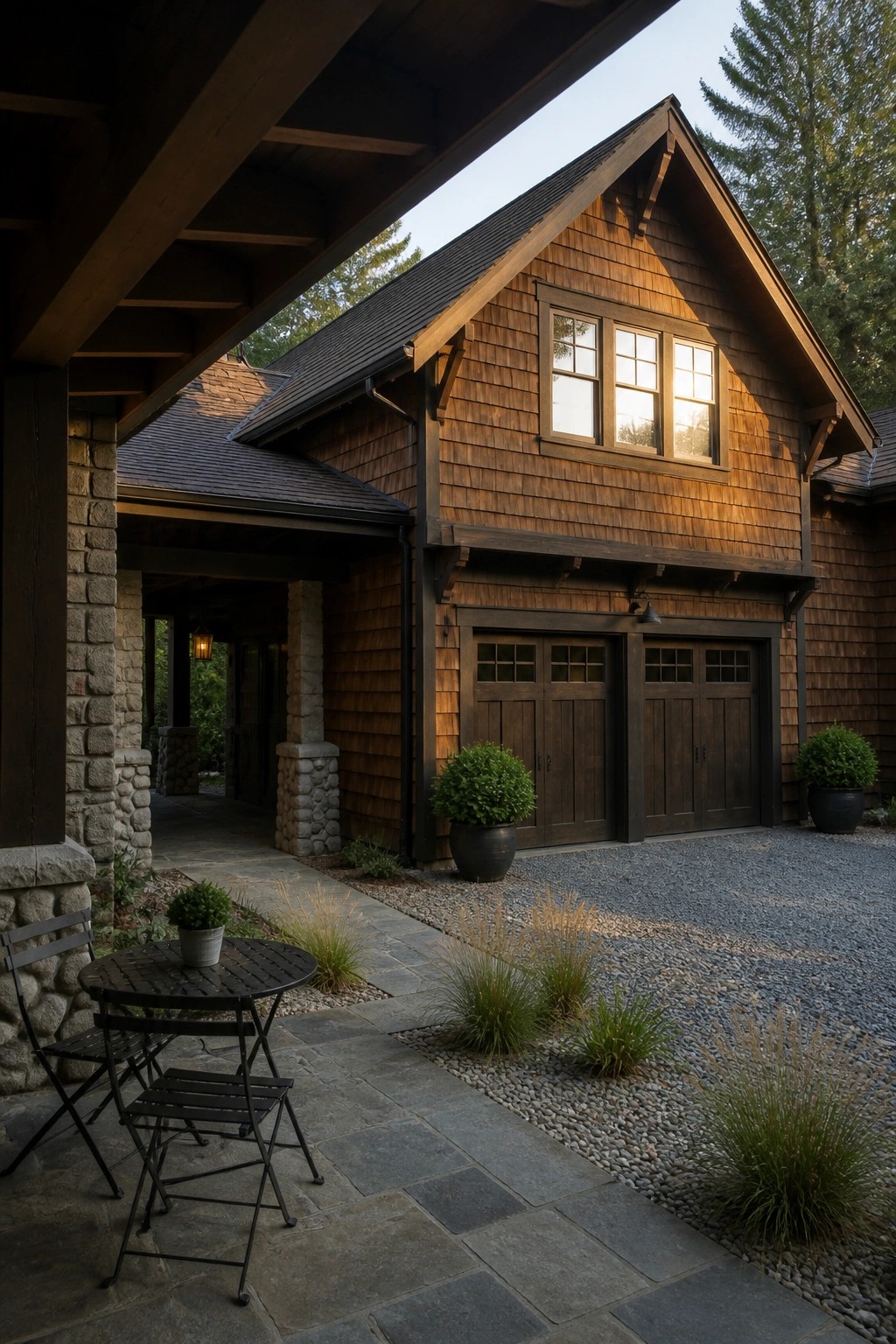
One simple way to keep a garage from looking like an afterthought is to run the same wood siding and trim straight across the doors. The dark finish on the doors lines up with the house trim, so the whole front stays calm instead of splitting into house and garage.
This works especially well on Craftsman homes that already have strong horizontal lines and deep overhangs. Keep the doors set back a bit and use the same stain as the trim so the eye moves across the facade without stopping.
Matching Garage Doors To The Siding Color
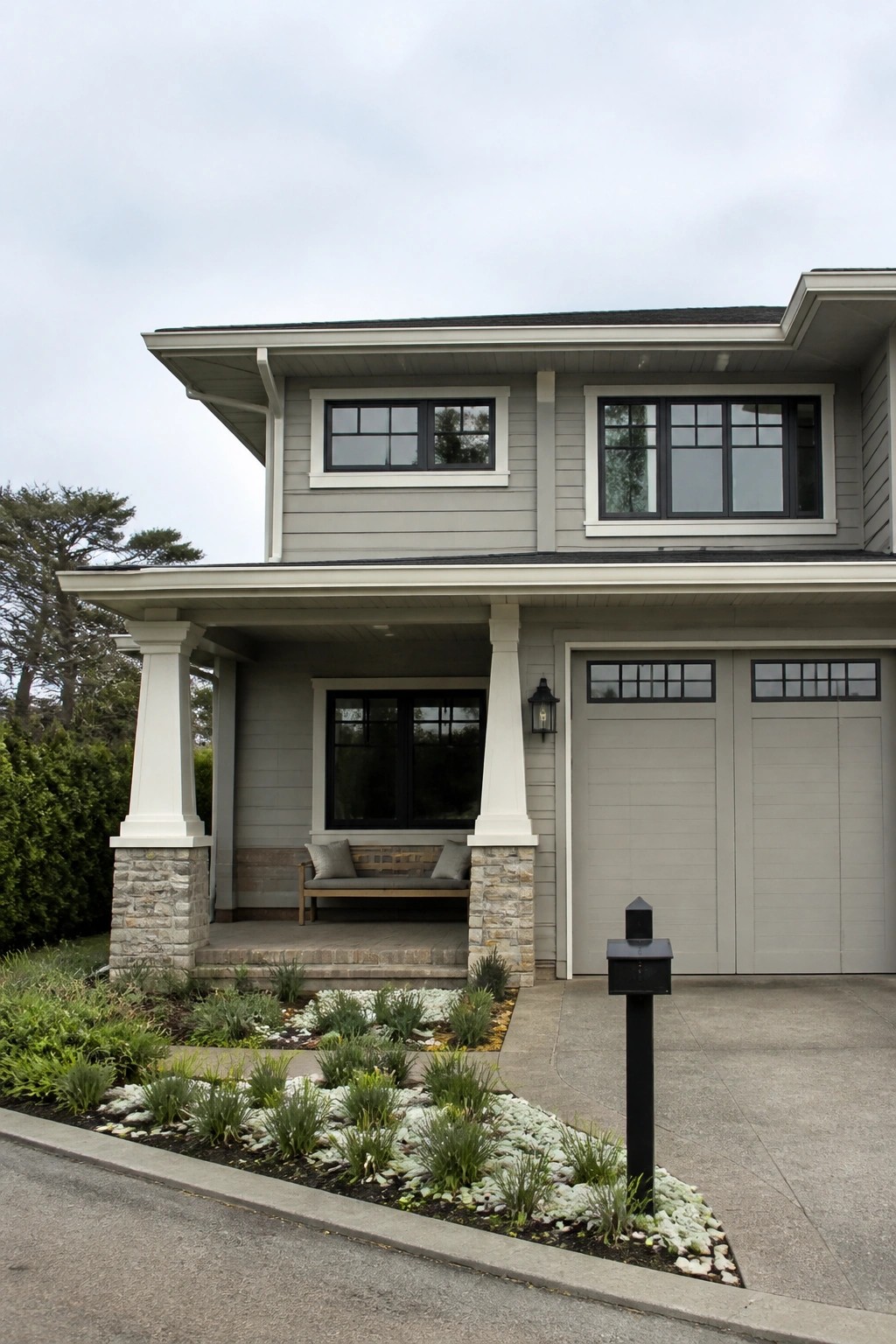
Many Craftsman homes look cleaner when the garage doors are painted the same color as the siding. It keeps the front from feeling split between living space and car storage, so the whole facade reads as one steady shape instead of a house with a big box stuck on the side.
This works especially well on homes with a wide garage bay. Use the same paint finish as the siding and keep any trim simple so the doors sit back visually. The approach suits neighborhoods that want a tidy street view without hiding the garage completely.
Matching The Garage To The House Materials
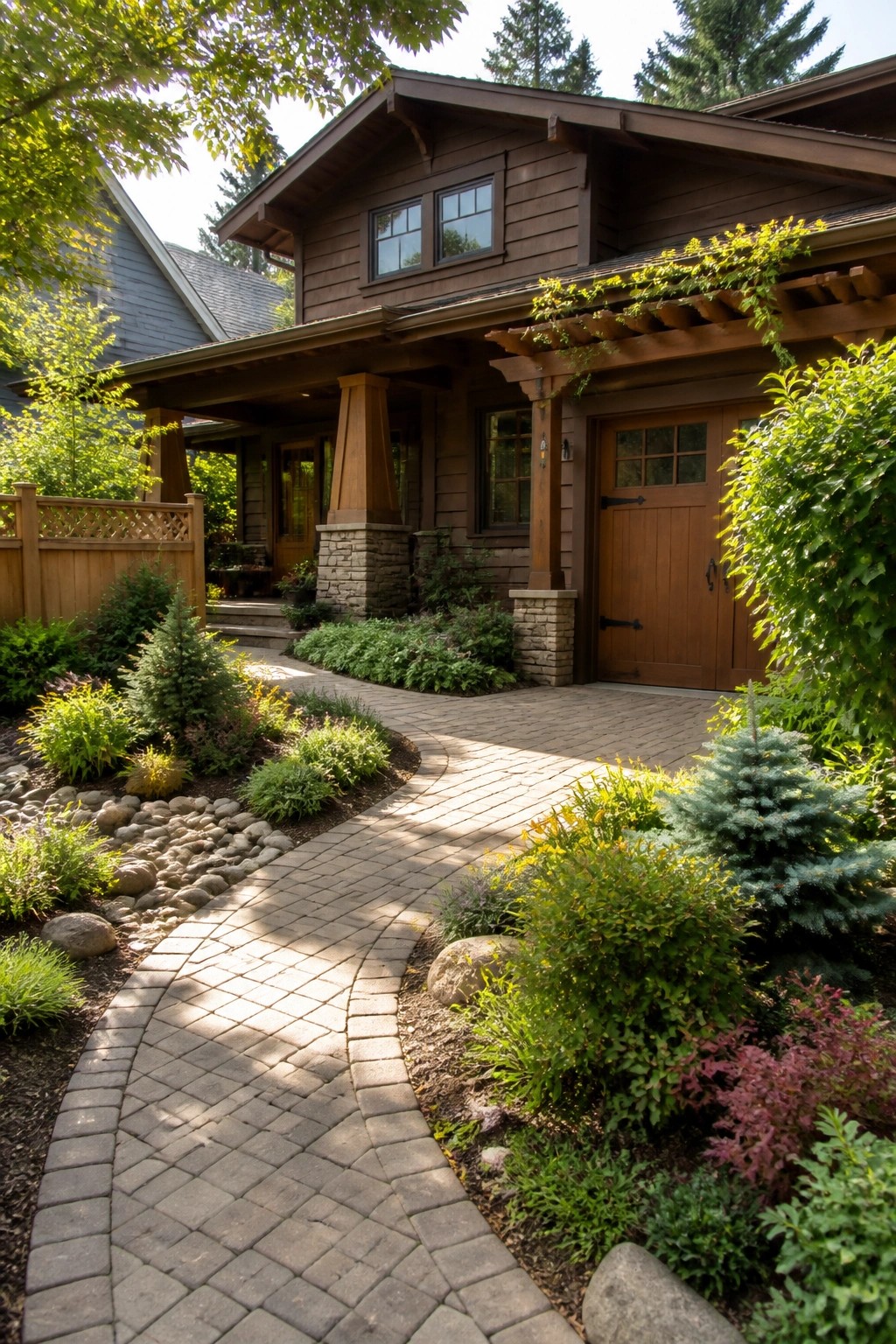
One simple way to keep a garage from taking over the front of a home is to use the same wood tones on the door that already appear on the siding and trim. This keeps the whole facade feeling connected instead of split into house and garage sections.
It works best on homes that already rely on natural materials and straightforward lines. The key is to avoid contrasting colors or heavy ornament on the door so it sits quietly in the overall design.
Frequently Asked Questions
Q: How can I match my garage doors to the house without a full rebuild? A: Start by using the same siding and trim details on the garage as the main house walls. Extend the roofline slightly to create an overhang that softens the door edges. This pulls the whole front together in a natural way.
Q: What if my driveway sits lower than the house foundation? A: Grade the approach gently so the garage floor lines up with the living space. Add a low retaining wall clad in the same stone or brick to hide the drop. The result keeps the Craftsman flow intact from the street.
Q: Will hiding the garage doors cut down on natural light inside? A: It often does if you cover side windows. Install a row of small skylights over the garage instead. Several homes in the article use this approach and still feel bright.
Q: How do I make sure the doors still open easily after matching the exterior? A: Choose doors with minimal trim that won’t catch on new siding. Check the clearance around the frame before you finish the install.