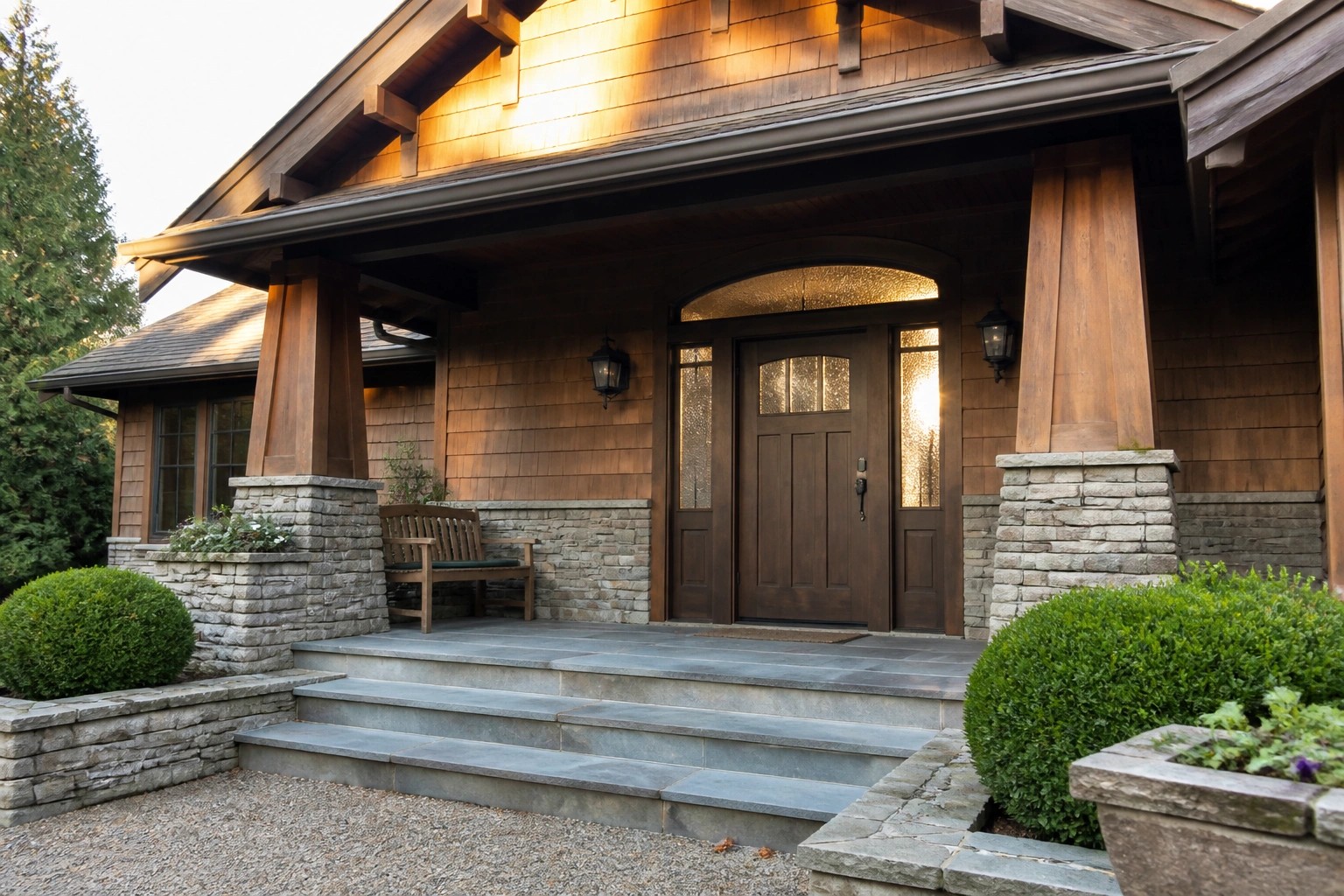
I have always noticed that the front entry of a Craftsman house tends to draw the eye first because of how the roofline frames everything.
Adding natural stone around the door or along the base can change how solid and welcoming the whole front feels from the street.
Some designs work better once you see them built than they do in sketches.
The way the stone is laid and how it connects to the siding makes a bigger difference than most people expect at first.
I keep a few photos of entries that handled the transition well so I can refer back when thinking about changes to my own home.
Stone Piers at the Entry
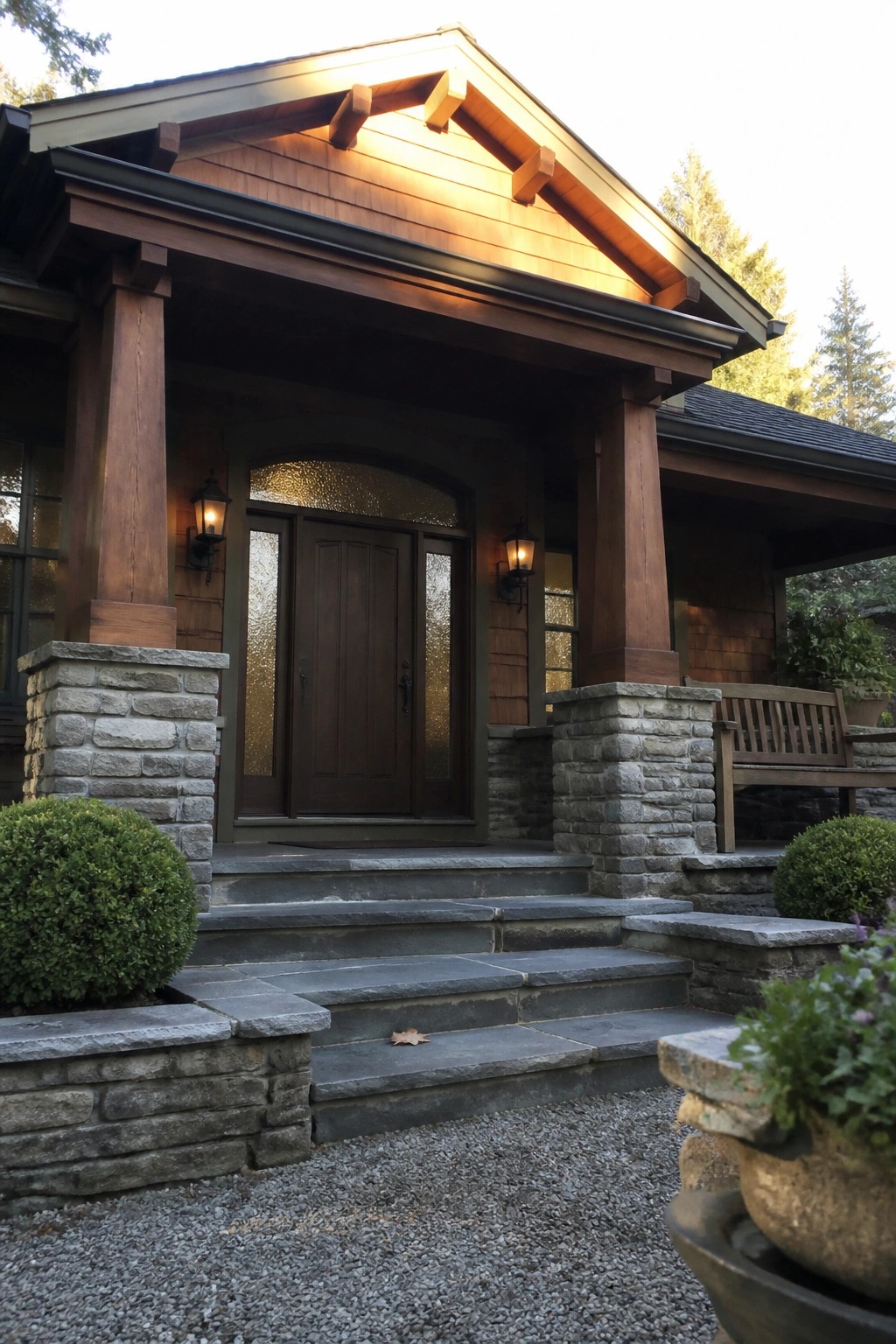
Many Craftsman homes look more settled when the front entry rests on stone piers instead of wood alone. The stone gives the porch a heavier base that matches the solid feel of the style and helps the steps and door feel less floating.
This works best on homes where the stone can echo the color of the walkway or foundation. Keep the upper posts in wood so the stone reads as support rather than decoration, and make sure the piers are wide enough to carry the roof without looking thin.
Stone Accents on the Entry Columns
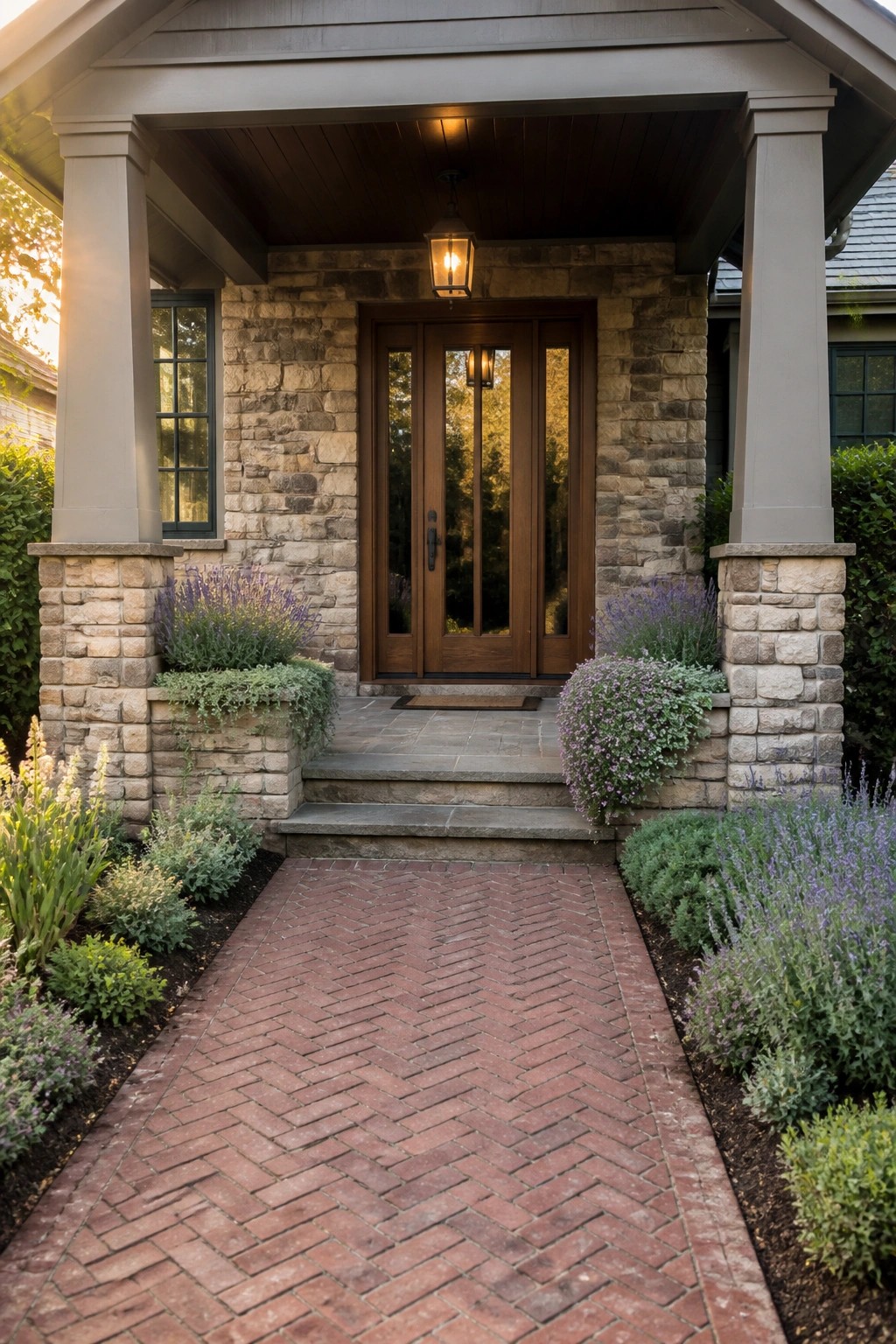
Natural stone on the lower half of porch columns gives an entry a sturdy base that feels right for Craftsman homes. The stone adds weight and texture that balances the wood siding and trim above it.
This works best when the stone color stays close to the path or steps so everything reads as one material family. Use it on homes where the door already has some presence, and keep the upper columns simple so the stone does not compete.
Natural Stone Paths for Craftsman Entries
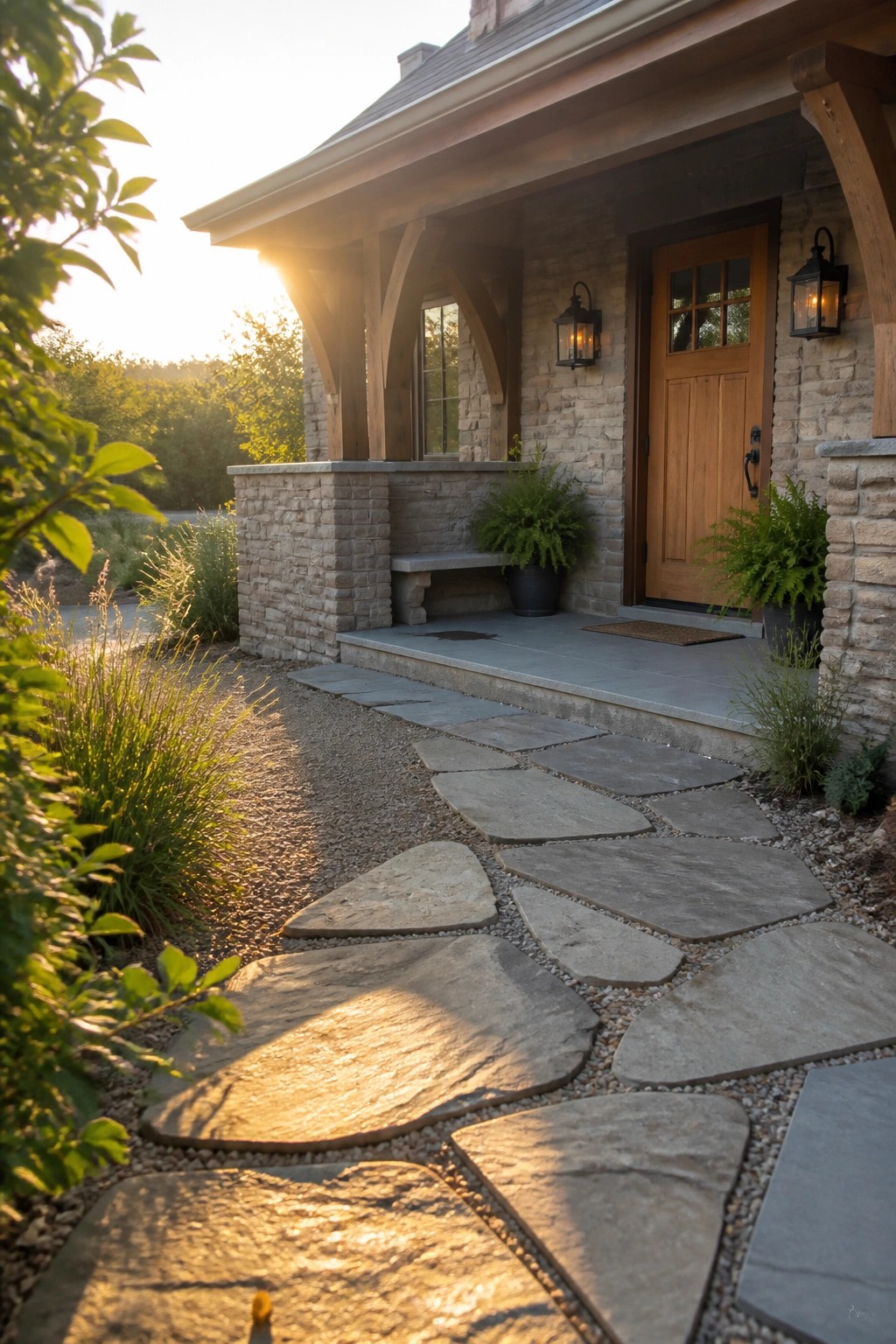
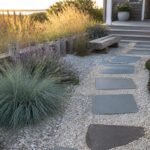
A simple stone path made of irregular pavers adds a quiet, grounded feel to the front of a Craftsman home. It helps the entry feel more connected to the ground and gives visitors a clear, welcoming route from the yard without looking overly finished.
This approach works well on homes that already use stone on the porch or foundation. Match the paver color to the existing stone and keep the path wide enough for two people to walk side by side.
Natural Stone Steps for the Entry

Many Craftsman homes gain a lot from stone steps that feel built into the ground rather than added on later. The material gives the approach real weight and makes the whole entry feel more permanent and settled.
This detail works best when the stone matches the foundation or porch base so everything reads as one piece. Keep the rest of the entry simple, with wood doors and trim, and the stone will do the main job of making the front feel welcoming without extra decoration.
Stone Pillars for the Entry Pergola

Stone pillars give a Craftsman entry real weight without looking heavy. They anchor the pergola and tie the whole front together in a way that feels solid and lasting.
Use them on homes that already have some wood siding or shake details. Keep the stone natural and irregular, and let the wood pergola sit right on top so the two materials play off each other.
Stone Bases on Porch Columns
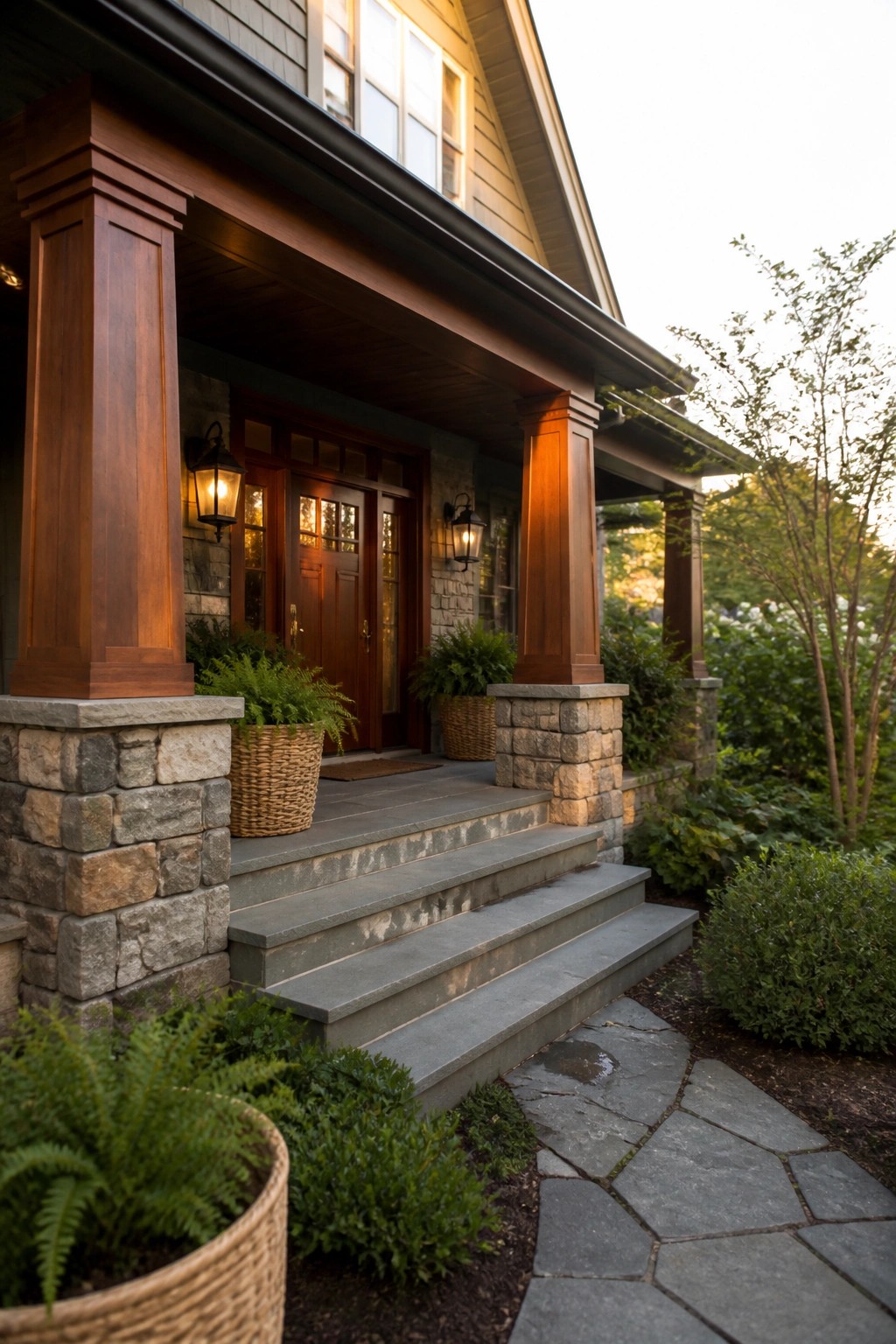
Many Craftsman homes gain a sturdier look when the porch columns rest on short stone bases. The change adds weight at the bottom and helps the whole entry feel more settled into the ground.
This works best on homes that already use stone on the foundation or other accents. Match the stone type and keep the bases low so the wood above still shows off the original column shape.
Stone Arches Over Front Entries
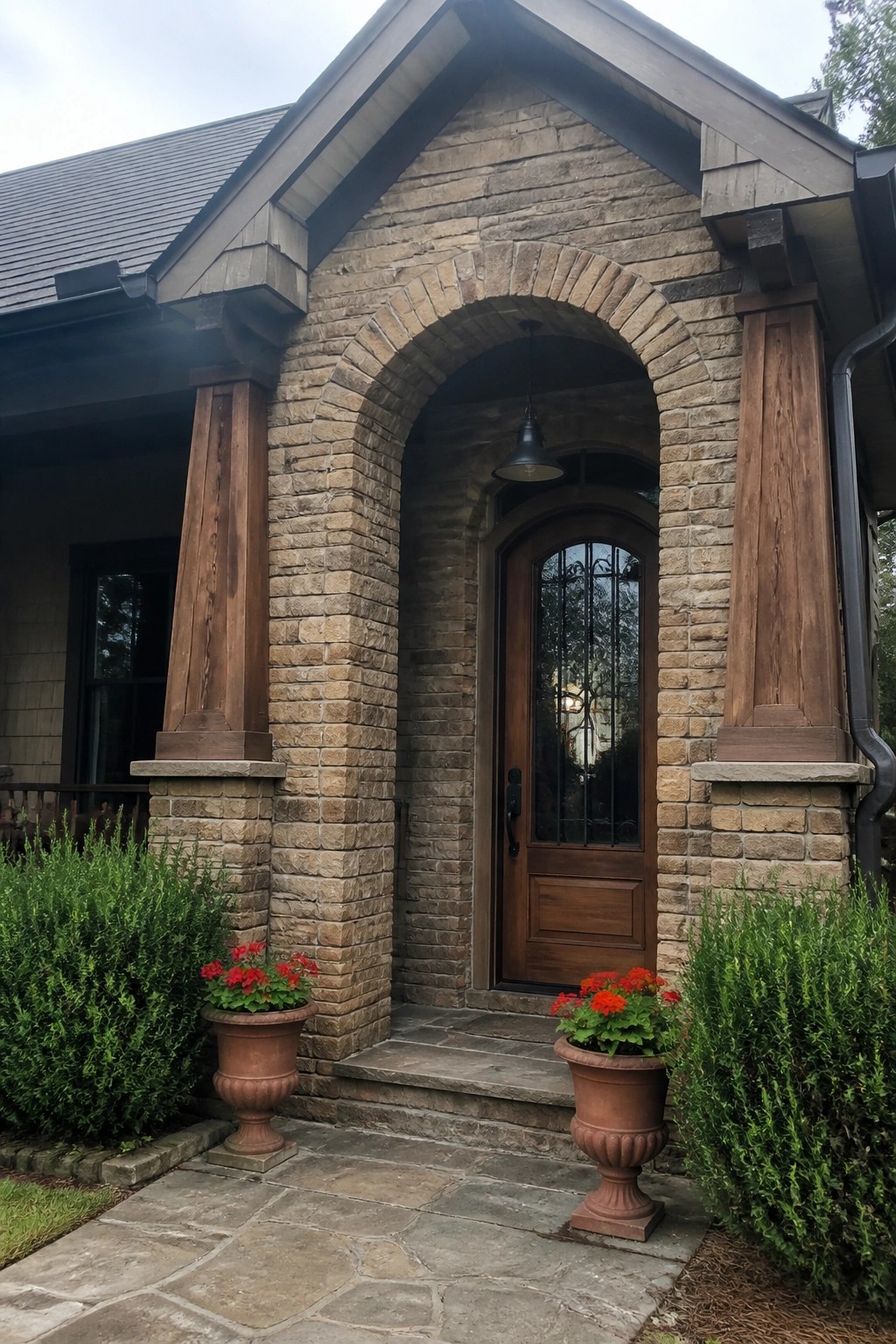
A stone arch around the door gives a Craftsman entry real weight without extra decoration. It frames the opening, adds texture, and makes the whole front feel more grounded right away.
This detail works best on homes that already use wood and stone together. Keep the arch simple, match the stone color to the foundation, and let the door and trim stay straightforward so the arch stands out on its own.
Stone Bases On Porch Columns
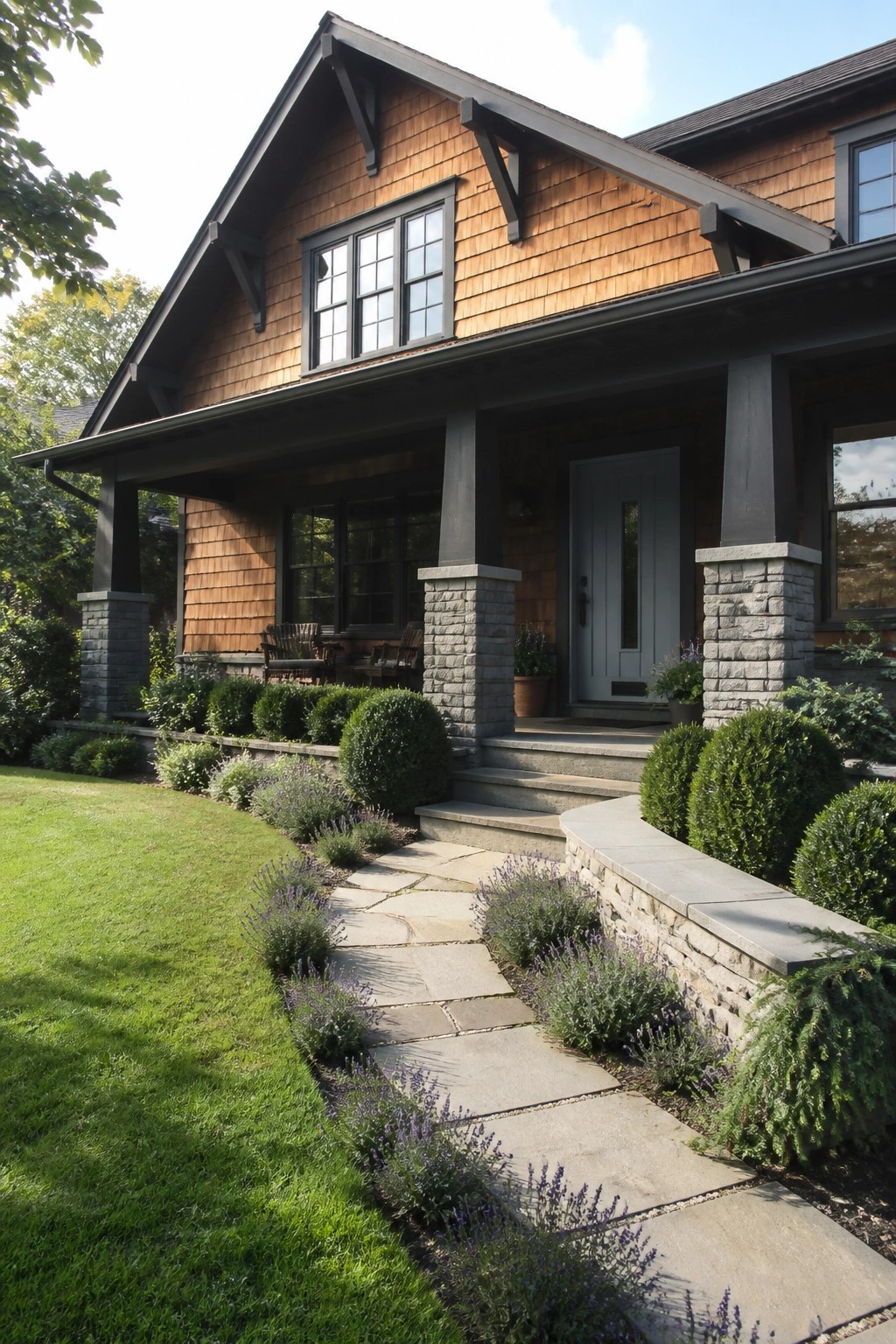
Stone at the base of porch columns gives a Craftsman entry real weight without overpowering the rest of the house. It anchors the roof overhang and makes the front feel more solid and settled into the yard.
This approach works best on homes with wood siding and simple trim. Keep the stone height consistent on both sides of the steps so the entry stays balanced and easy to approach.
Add a Built-In Bench to Your Stone Entry Wall
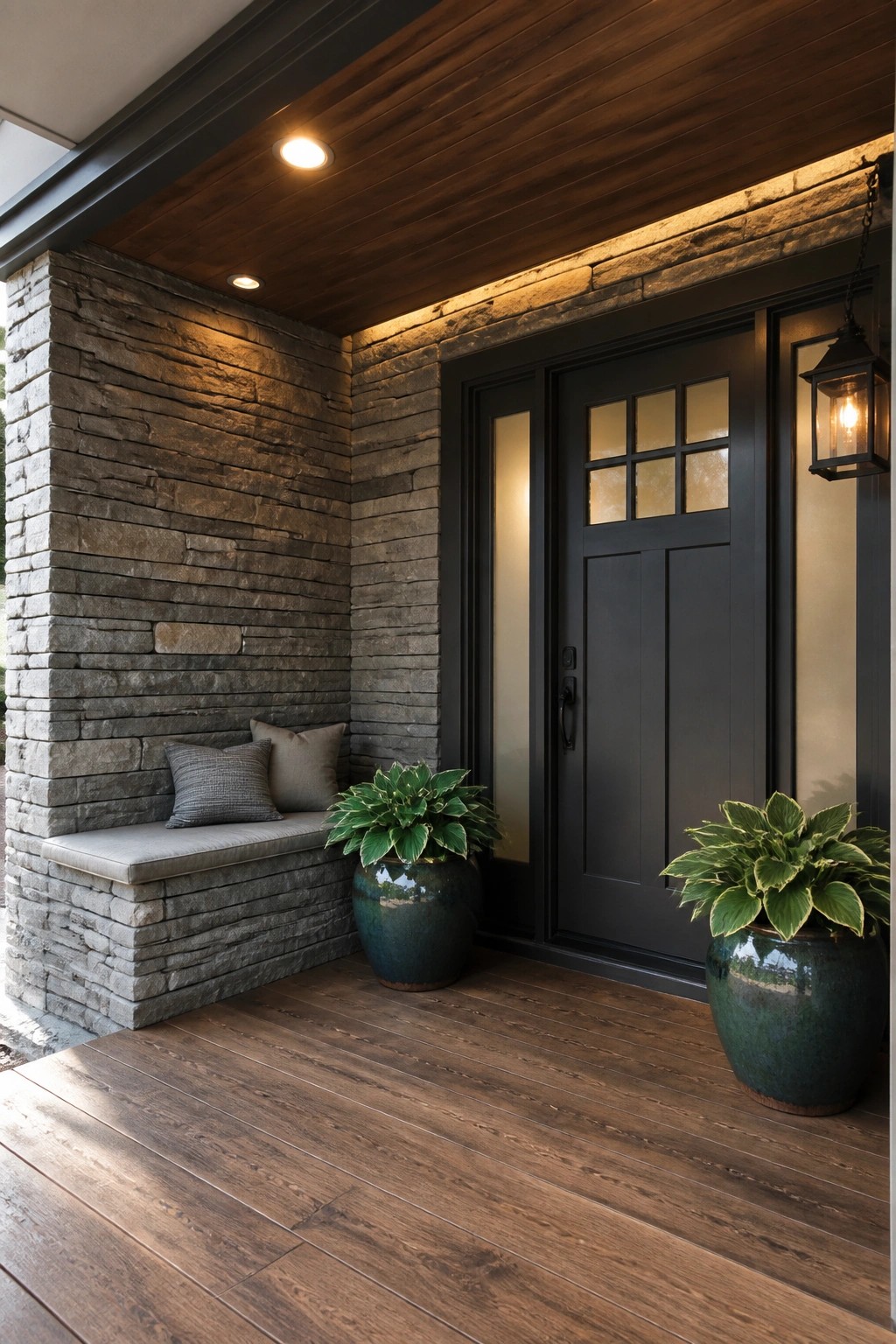
A built-in bench tucked into a stone wall gives the front entry a practical spot to sit without crowding the walkway. It turns a plain corner into something useful, especially on Craftsman homes where the stone already adds texture and weight to the facade.
This works best when the bench sits low and follows the line of the wall so it feels like part of the structure. Keep the cushion simple and add just one or two pillows. The stone should match the rest of the house so the whole entry reads as one clean design move.
Stone Bases for Porch Columns
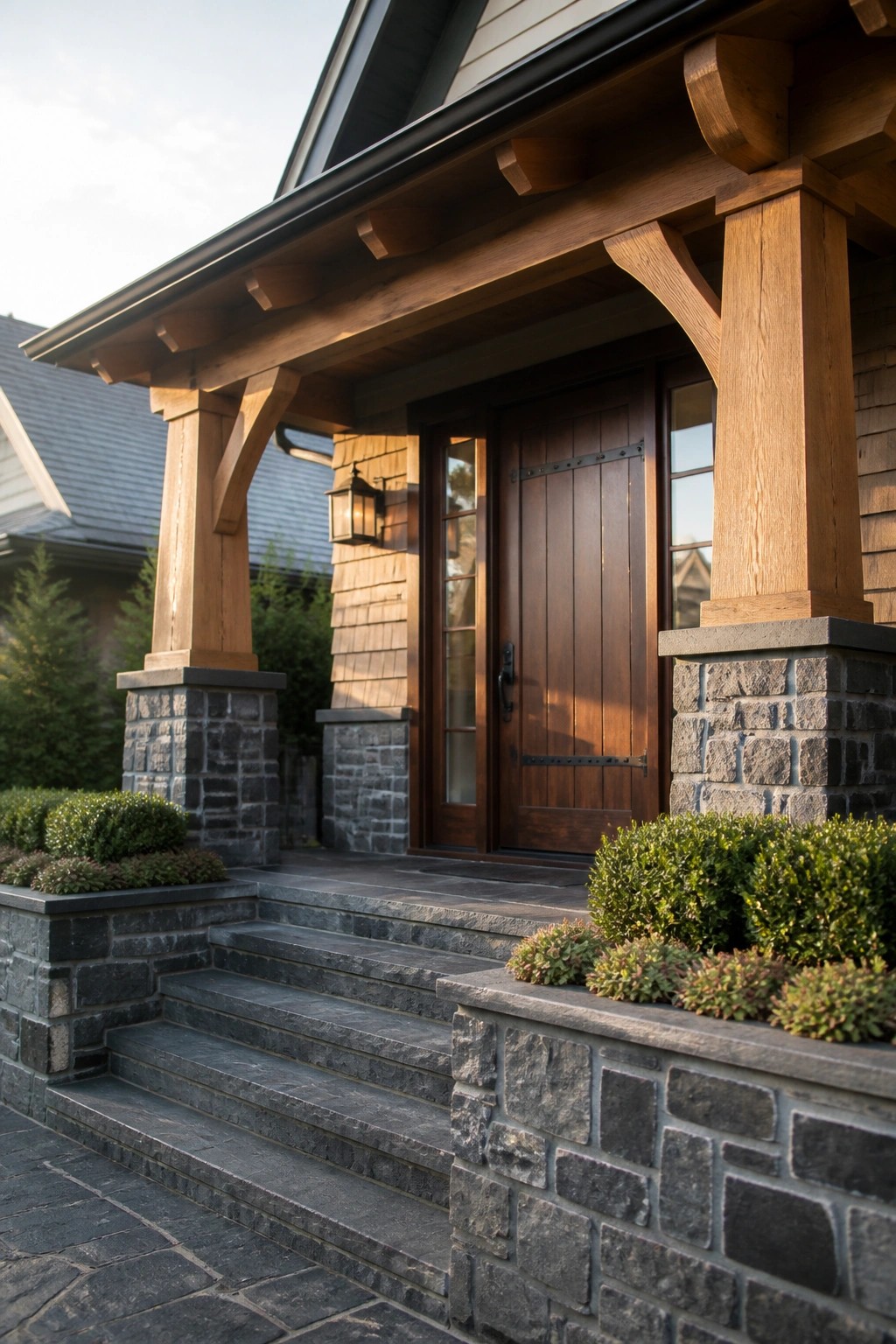
Many Craftsman homes gain a sturdier look when the porch columns sit on low stone bases instead of landing straight on the deck. The stone adds weight at ground level and protects the wood from moisture while keeping the overall style simple and traditional.
This detail works best on homes that already use natural stone elsewhere, such as steps or low walls. Match the stone type and color to those existing elements so the entry feels like one continuous choice rather than separate pieces added later.
Stone Pillars Anchor the Entry
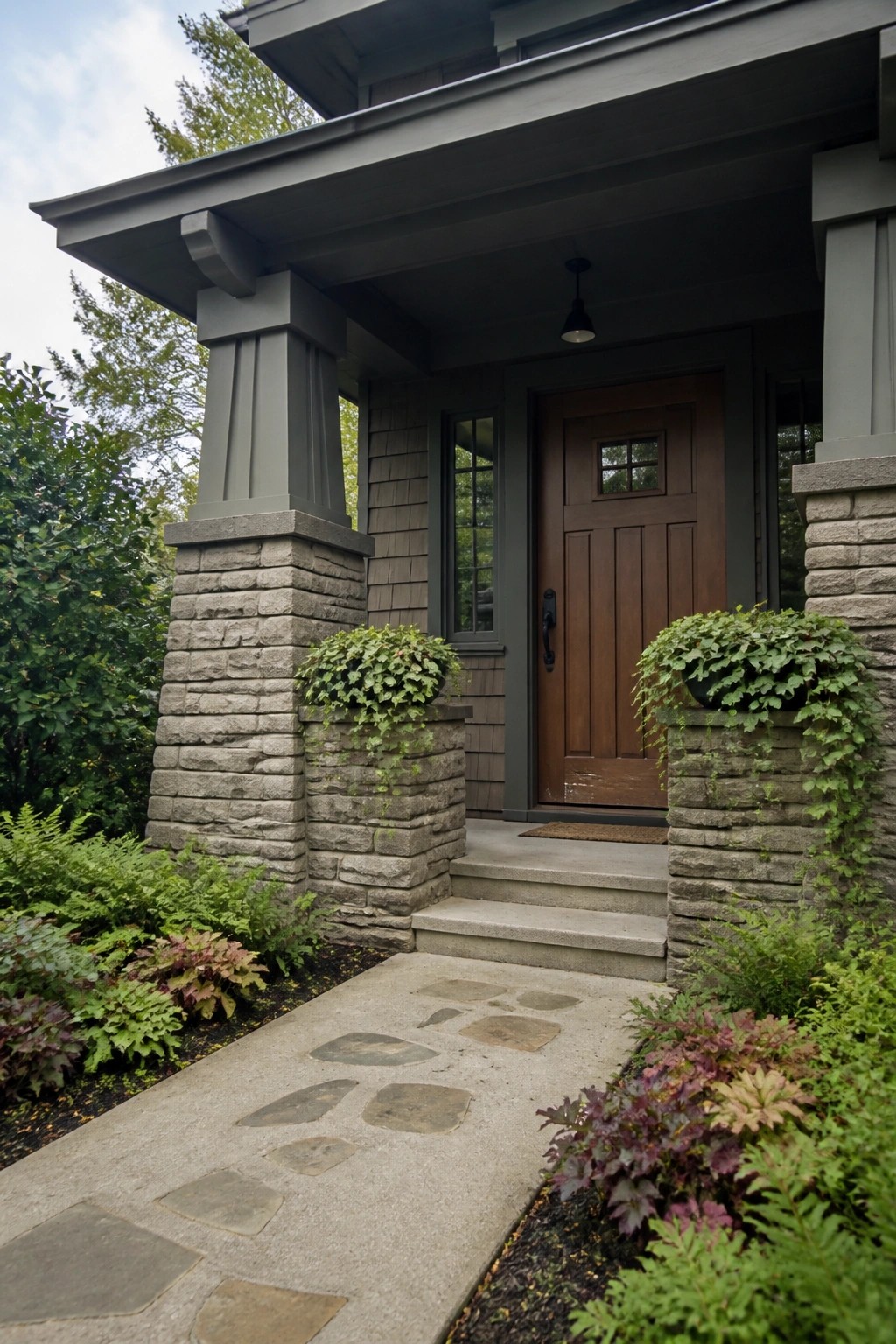
Stone pillars give a Craftsman front entry a solid base that feels permanent and welcoming. They frame the steps and door without needing much else, and the natural texture pairs well with wood siding and trim.
Place matching pillars at the outer edges of the porch or on either side of the steps so they line up with the roof overhang. This setup works best on homes that already have some stone elsewhere on the foundation or in the landscape, since it keeps the materials consistent and avoids a scattered look.
Stone Bases for Porch Columns
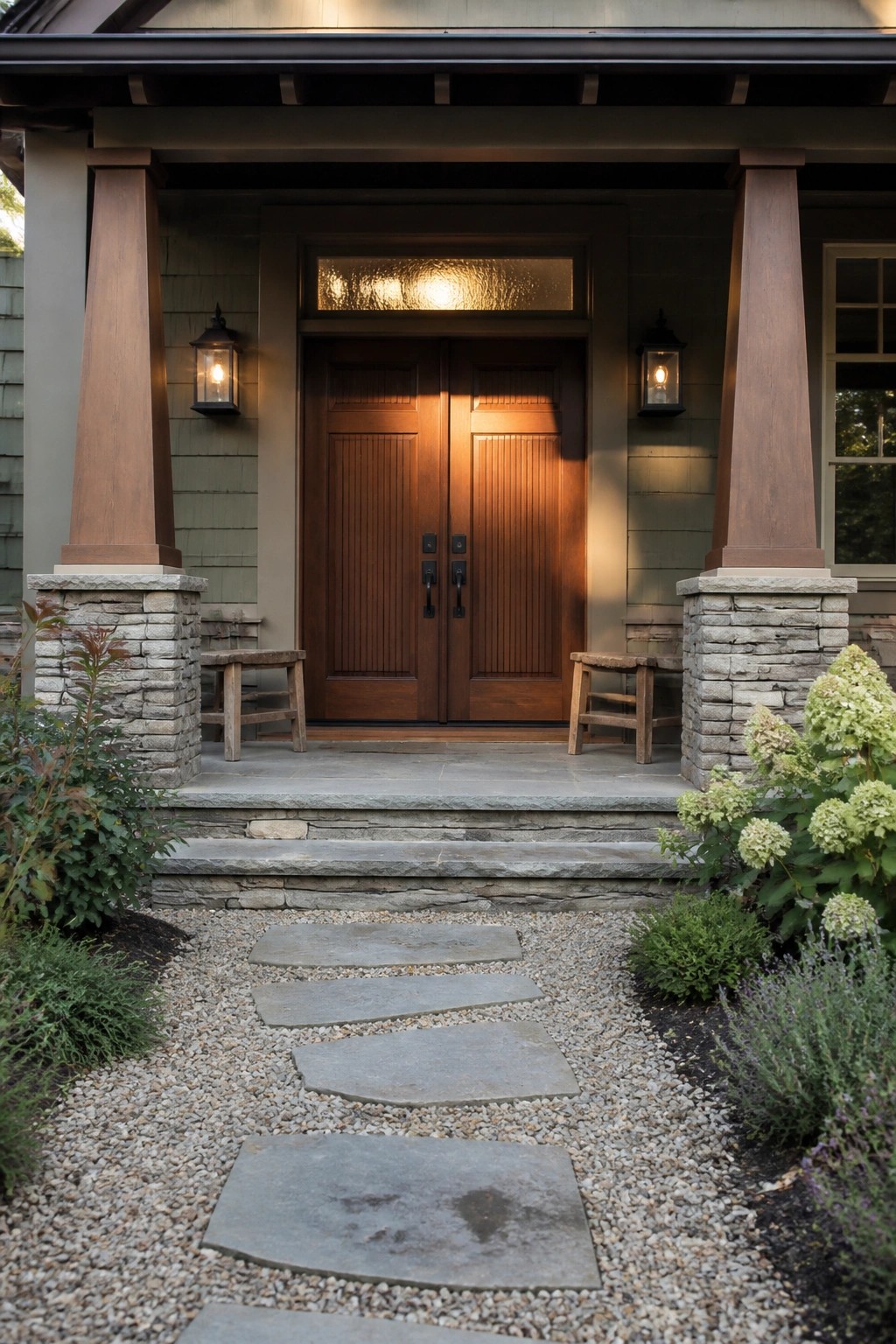
Many Craftsman homes gain a sturdier look when the porch columns rest on low stone bases instead of running straight to the ground. The stone adds weight and texture that feels right for the style without needing extra trim or details.
This approach works best on homes with wood siding and straightforward entries. Keep the stone fairly rough and limit the height so the bases support the columns without taking over the whole porch.
Stone Piers for the Porch Columns

Natural stone piers give a Craftsman entry real weight and help the porch feel settled into the ground. Stacking the stone under the wooden posts creates a simple contrast that keeps the whole front from looking too light or flat.
This approach works best on homes that already have wood siding and exposed beams. Keep the stone colors fairly neutral so they blend with any existing walkways or retaining walls around the yard.
Stone Bases on Entry Columns

Stone bases under the porch columns give the whole front a steadier look. The stone adds weight at the bottom so the wood above feels lighter, and it helps the entry sit better with the rest of the house. On Craftsman homes this mix keeps things simple while still showing the structure.
Try keeping the stone about two feet high so it does not overpower the wood. It works especially well when the same stone shows up again in a low planter or step facing. Just make sure the stone texture stays rough rather than polished.
Stone Bases on Porch Columns
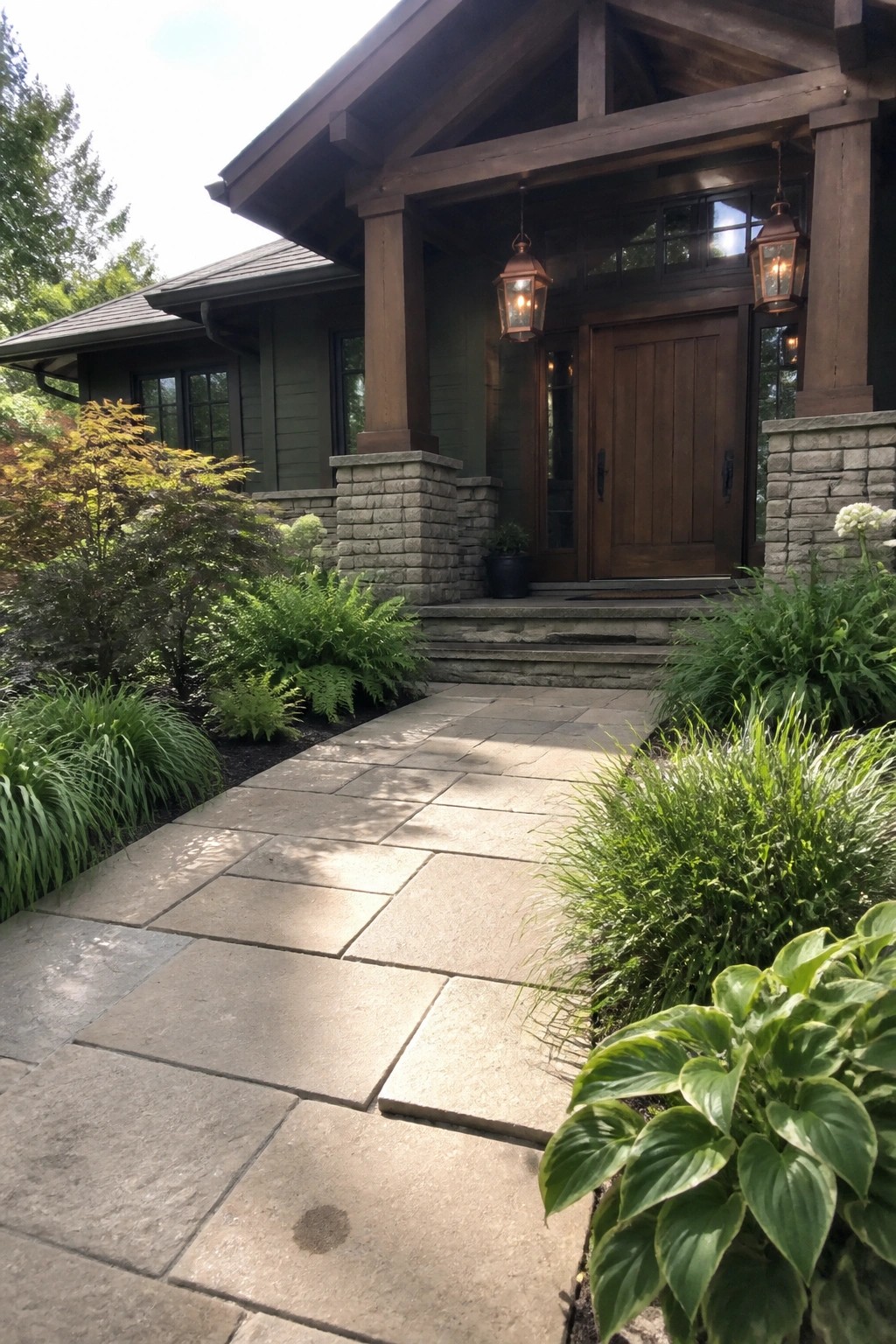
Many Craftsman homes gain a sturdier look when the porch columns rest on short stone bases instead of running all the way to the ground. The stone adds weight at the bottom and keeps the wood from feeling too light against the foundation.
This works best on homes with simple siding colors like the green shown here. Match the stone to the steps or walkway so the materials feel connected rather than added on later.
Stone Pillars at the Front Entry

Stone pillars give a Craftsman entry a grounded look that feels solid without being heavy. They work because the rough texture pairs naturally with wood siding and trim, and they help the door stand out without extra decoration.
This setup works best on homes that already have some stone elsewhere on the foundation or chimney. Keep the pillars fairly simple in shape and match their tone to the wood so the entry stays balanced rather than busy.
Stone Bases For Porch Columns
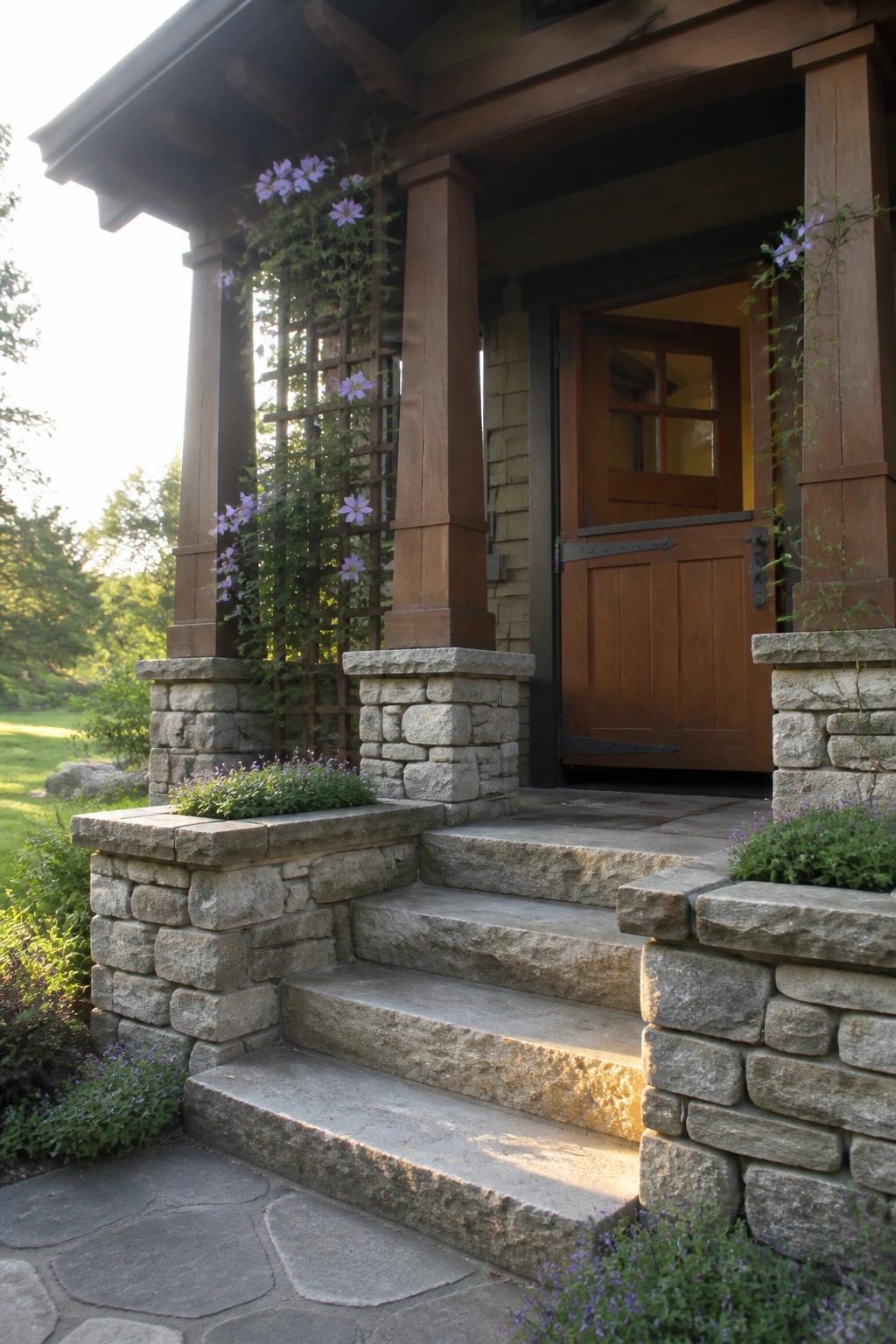
Natural stone gives the wooden columns a solid starting point at the entry. It adds weight and texture that keeps the porch from feeling too light, especially on a Craftsman home where the wood siding already carries a lot of detail.
This works best when the stone stays simple and matches any other stone used on the foundation. Let the wood columns sit directly on top without extra trim, and keep the steps in the same material so everything reads as one steady base.
Stone Accents on the Entry Walls
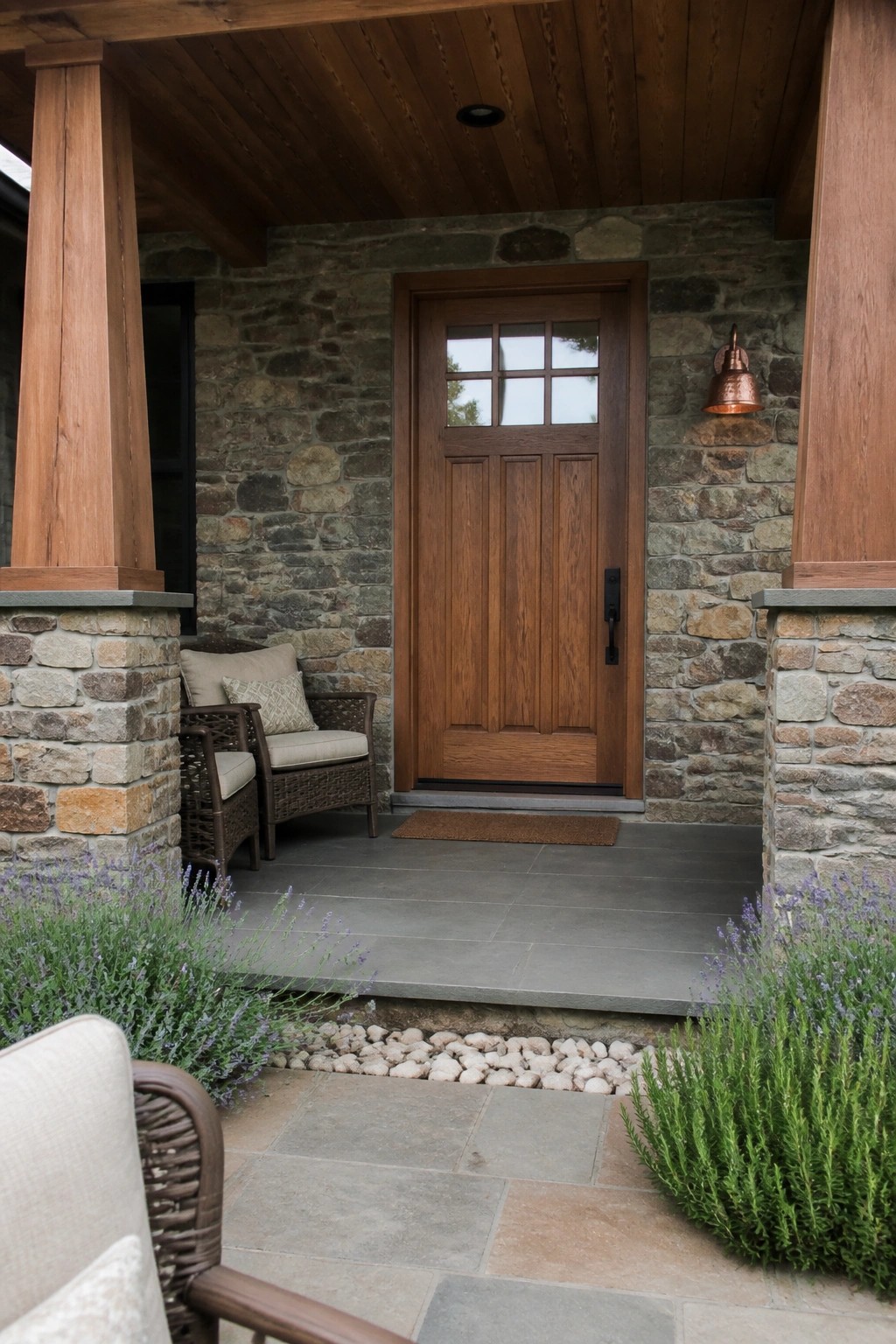
Natural stone works well on the sides of a Craftsman entry because it adds texture without taking over the wood details. The stone gives the porch a solid base that makes the whole front feel more settled and permanent.
This approach suits homes with simple rooflines and wood trim. Keep the stone in smaller sections on the columns and lower walls rather than covering large areas. It pairs best with warm wood tones and a straightforward door so the materials stay balanced.
Stone Bases for Porch Columns
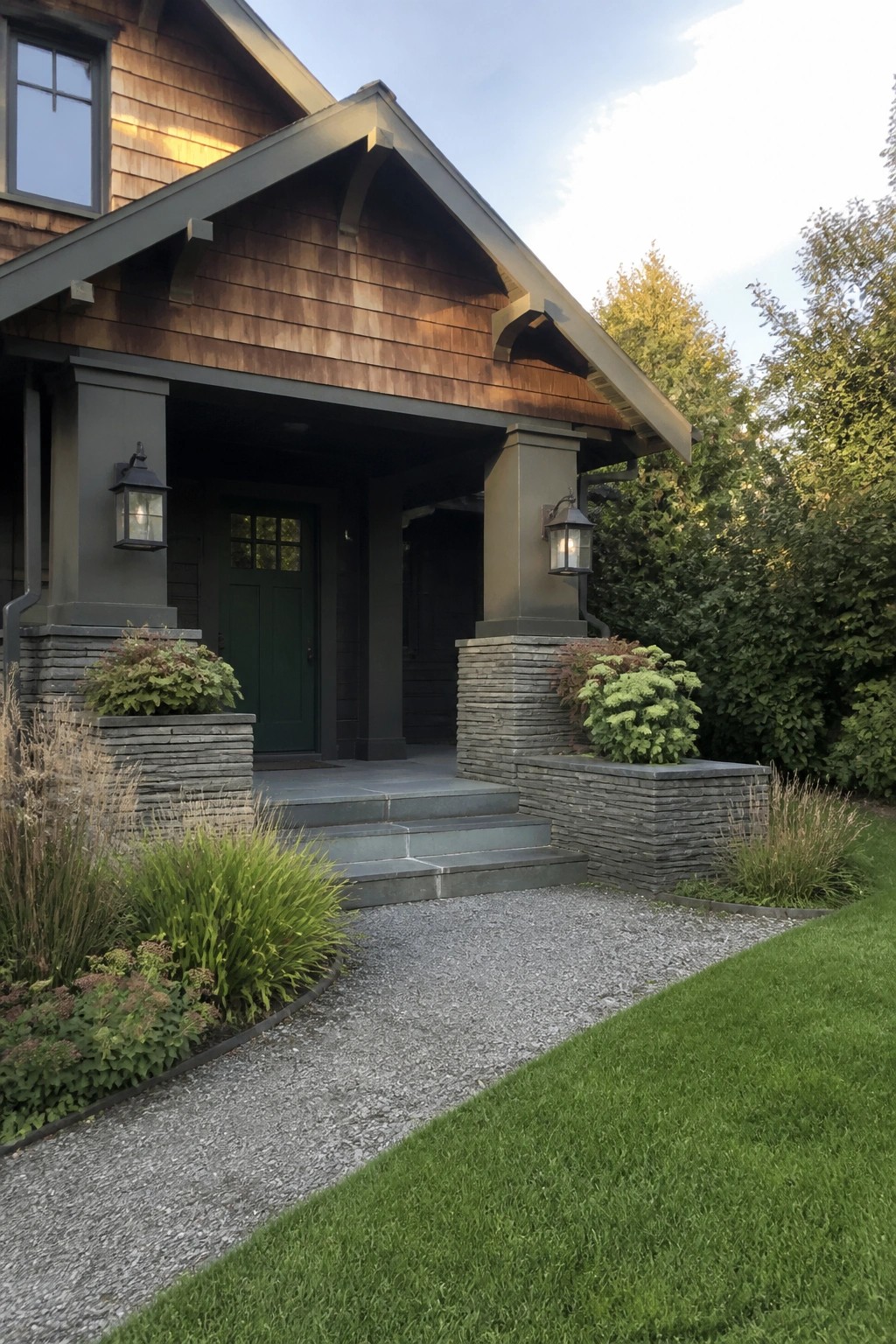
Many Craftsman homes look better when the porch columns sit on solid stone bases. The stone gives weight to the entry and keeps the whole front from feeling too light or tall.
Use the same stone for low walls or planters on either side of the steps. This approach suits homes with wood siding and works best when the stone stays low and simple rather than trying to cover the full column.
Stone Bases on Porch Posts
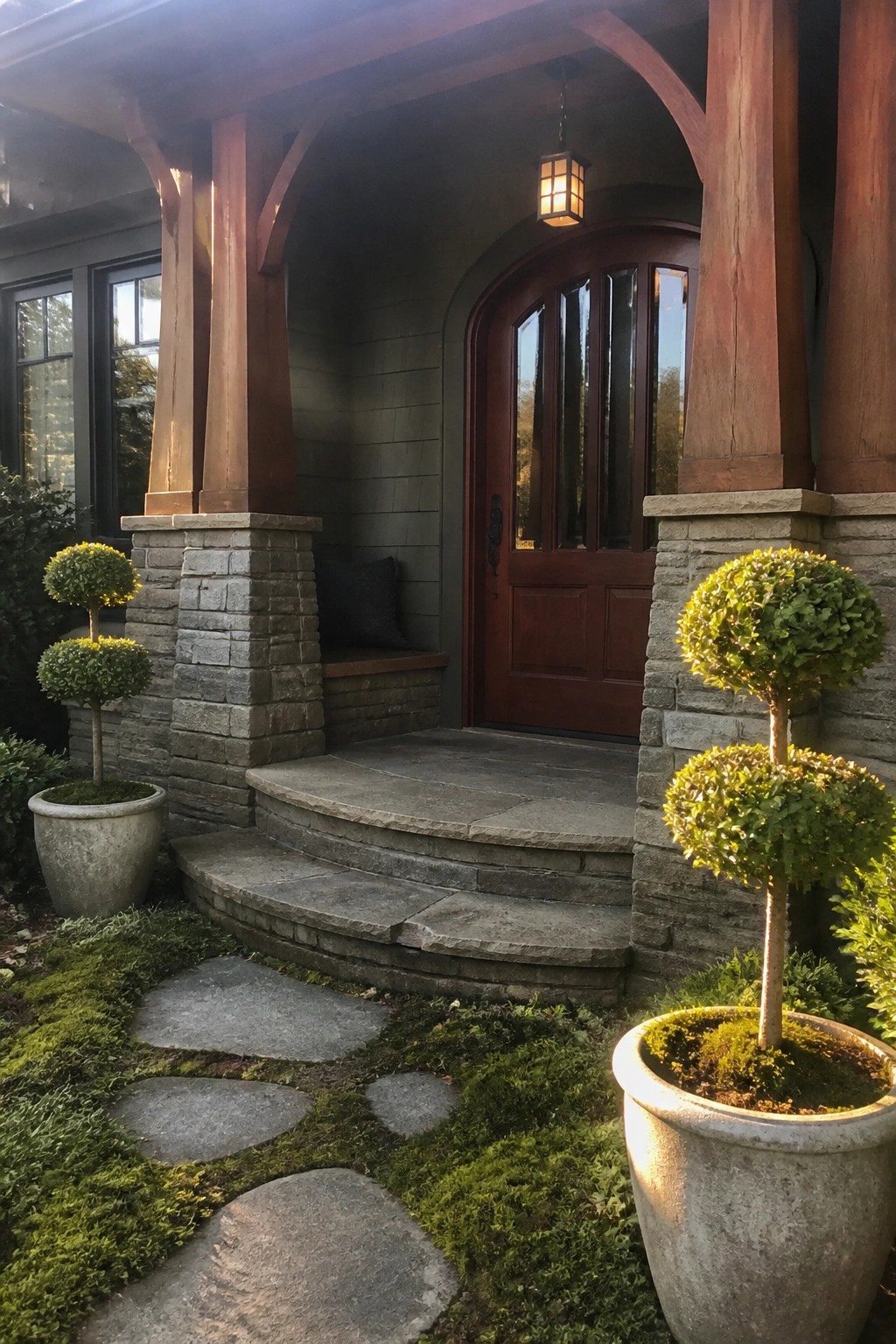
Stone bases under the porch posts give the whole entry a settled, sturdy feel that suits Craftsman homes. The contrast between the rough stone and the wood above makes the structure look more grounded without adding extra trim or decoration.
This works well on homes where the porch sits a step or two above grade. Match the height of the stone to the first step or any low wall nearby so the materials read as one continuous base.
Stone Bases For The Entry Steps
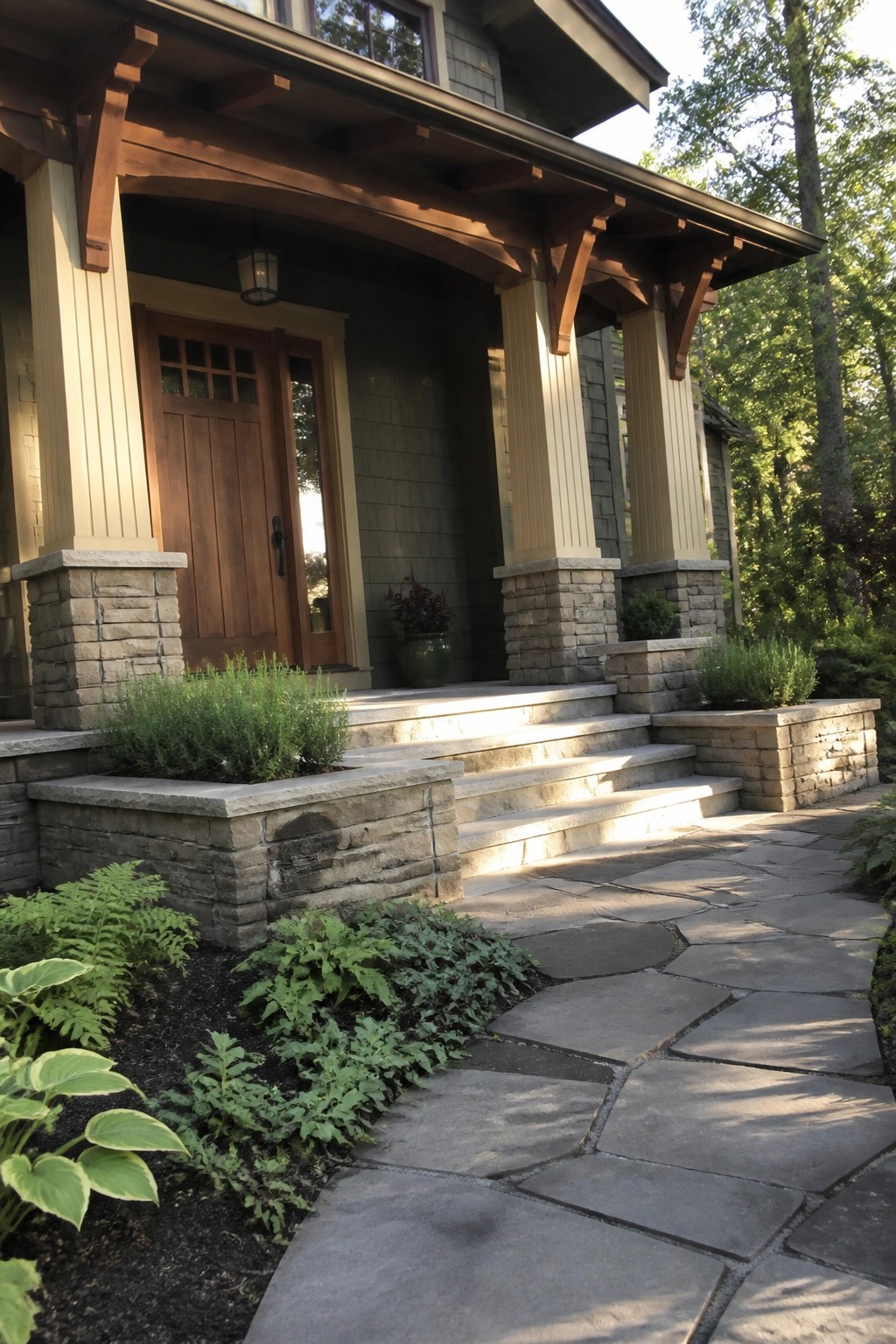
Natural stone gives the front steps and porch base a solid feel that suits Craftsman homes. It anchors the wood columns and siding while handling the transition from path to door without looking added on later.
Use the same stone on the step risers and any low retaining walls beside the walk. This works best on homes with gentle slopes or raised foundations where you want the entry to tie into nearby planting beds. Keep the stone color simple so it does not compete with the wood tones above.
Stone Pillars at the Entry
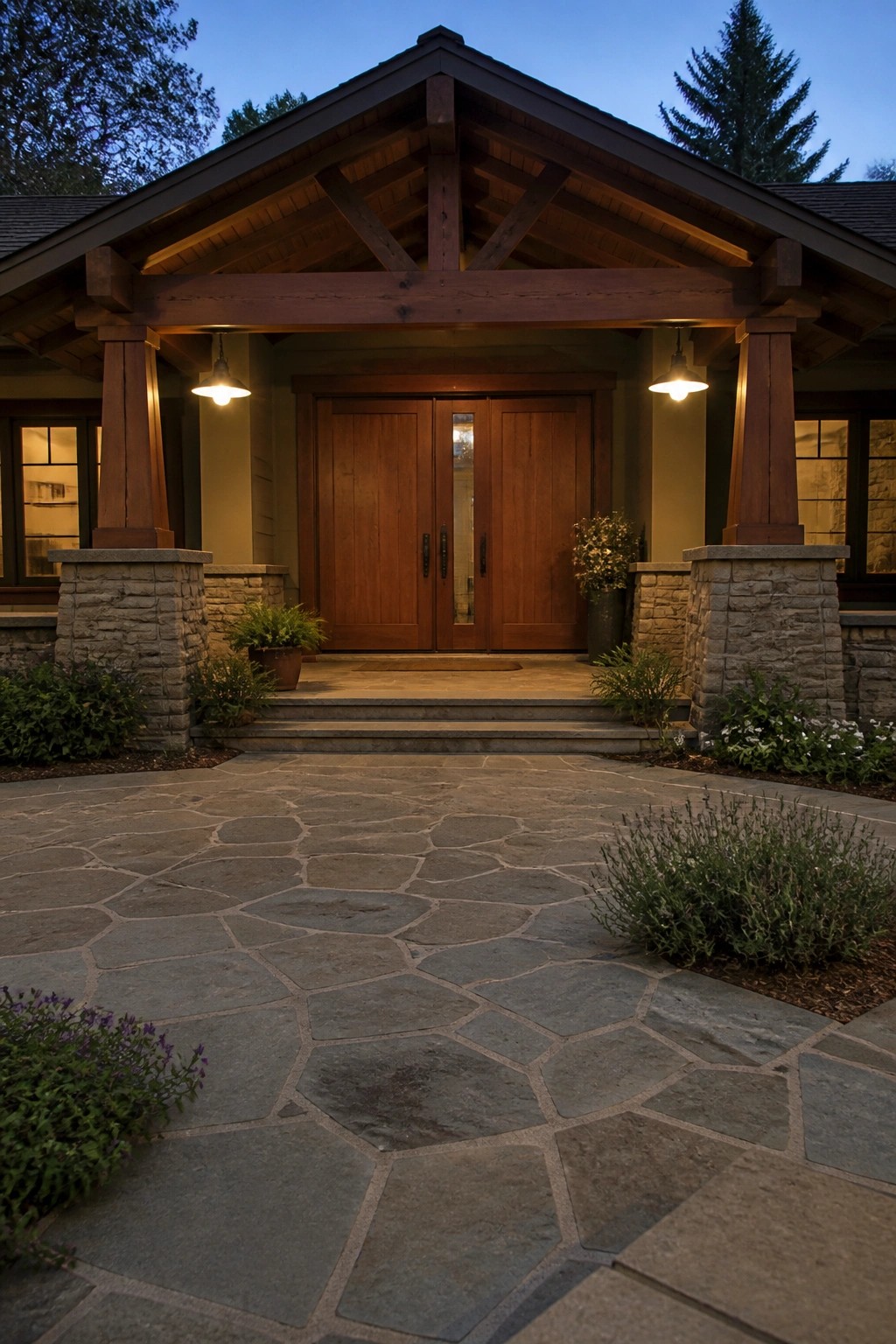
Craftsman homes often look best when the entry has some real weight to it. Stone pillars under the porch posts give that solid base and help the whole front feel more grounded without extra trim or decoration.
This works especially well on homes with wood siding and a deep overhang. Keep the stone in a natural color range and let the wood beams and doors stay simple so the pillars do the main job of holding the look together.
Stone Bases for Porch Columns

Natural stone makes a good base for porch columns on Craftsman homes. It gives the entry a solid look that pairs well with wood siding and keeps the whole front from feeling too light.
This works best on homes where the porch sits a step or two above the yard. Use the stone only on the lower section so the columns still read as tall, and match the color to any other stone already on the property.
Stone Steps With Matching Column Bases
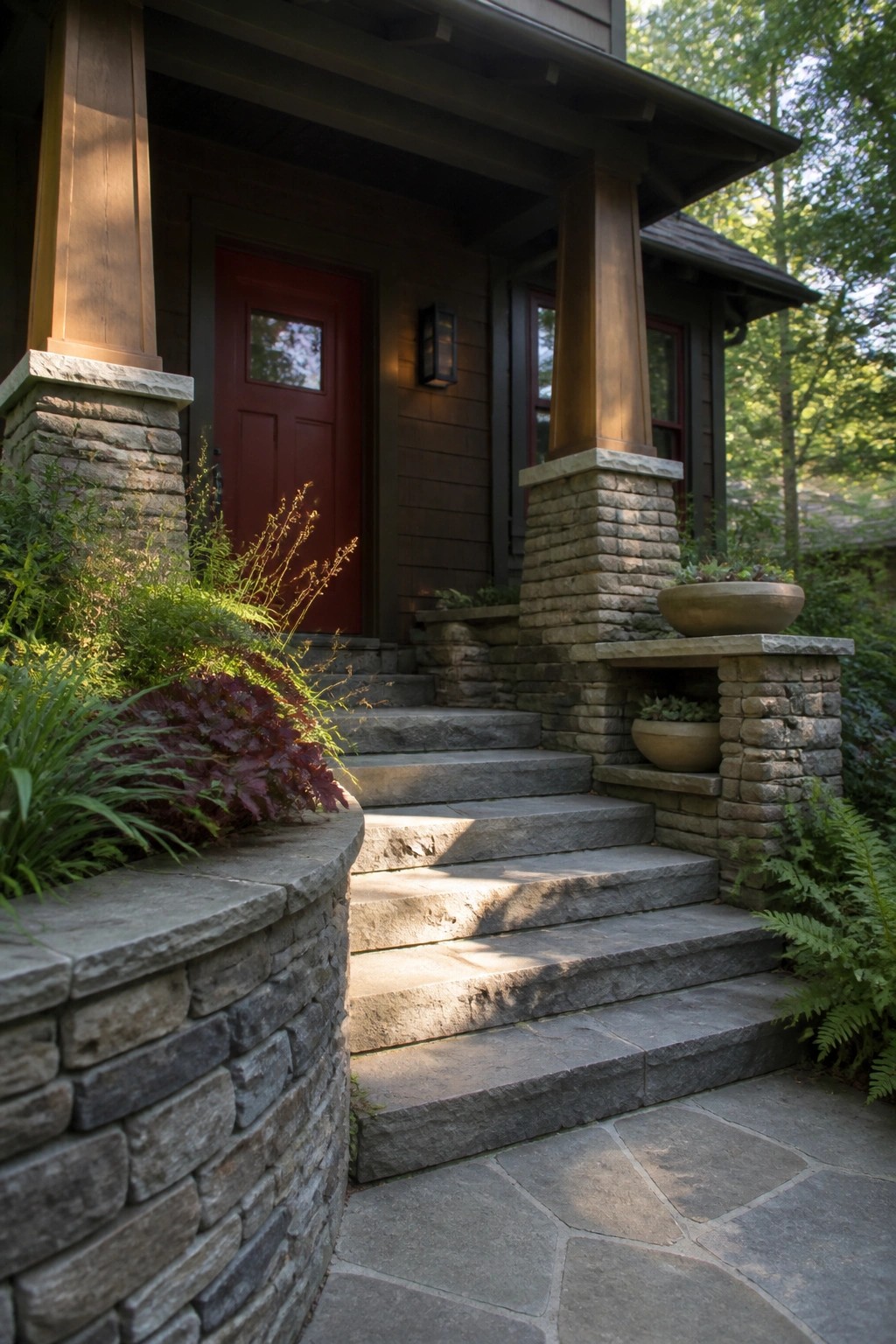
Natural stone steps paired with stone bases on the porch columns give a Craftsman entry real weight and presence. The material feels permanent, holds up well outdoors, and creates a clear path from the walkway up to the door without needing extra trim or railings.
This approach works best on homes with wood siding and a simple roofline, where the stone can contrast with the darker paint and still look like it belongs. Keep the stone the same type throughout the steps and column bases so the whole entry reads as one built element rather than separate pieces added on later.
Frequently Asked Questions
Q: What if the stone gets dirty from foot traffic right at the door?
A: Sweep it regularly with a soft brush to avoid scratches. A quick rinse with water every few weeks keeps the surface looking fresh. Skip harsh cleaners that could wear down the natural finish.
Q: Can I add stone accents myself if I’m not a pro builder?
A: Yes start small with a border along the steps. Mix your own mortar in small batches so you can work at your own pace. This way the entry feels custom without calling in a crew.
Q: How do I choose lighting that highlights the stone without feeling harsh?
A: Place a low wattage fixture to cast soft shadows across the texture. It brings out the stone’s depth in the evening while keeping the welcome warm.