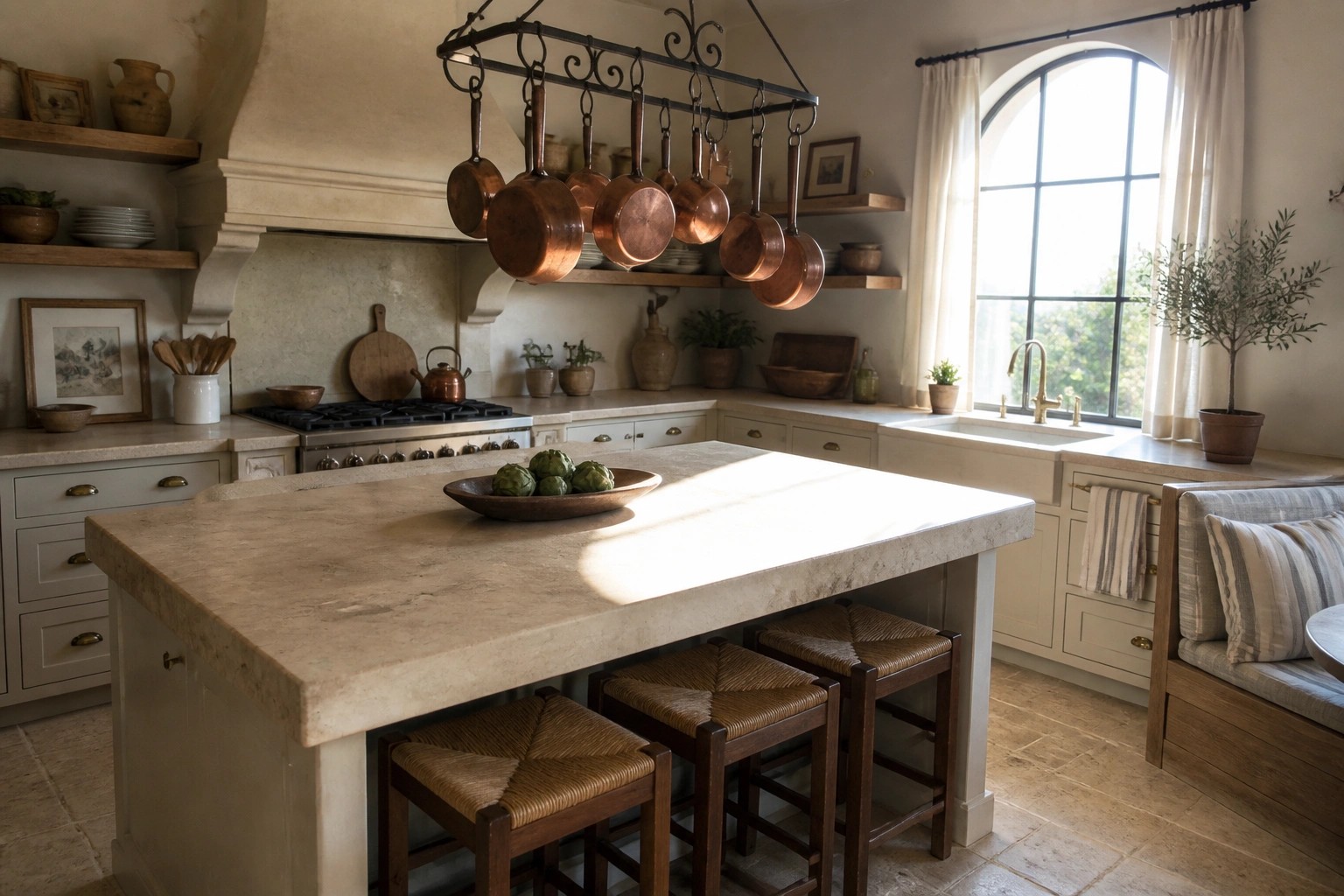
In a Tuscan kitchen the choice of stone surfaces shapes how the whole room feels when you spend time cooking and gathering there.
Travertine brings a natural variation that softens the look of counters and floors without making the space feel cold.
Maintenance matters more than it seems at first.
I always check how the stone is finished before deciding if it will suit a busy household.
Looking at these kitchens helps me see which details translate well when adapting the style for everyday use.
A Travertine Island as the Kitchen Anchor

A large travertine island gives a Tuscan kitchen real weight. The thick stone surface feels permanent and ties the room together without extra trim or detail.
This approach works best in homes that already use stone on the floor or range hood. Keep the rest of the cabinetry simple so the island stays the main focus.
Travertine Surfaces In A Wood Kitchen

Travertine gives kitchens a soft, natural surface that works especially well with dark wood cabinetry. The light tone of the stone helps balance heavier wood tones and keeps the room from feeling too closed in.
This approach suits older homes or any space aiming for a Tuscan look. Use it on counters and the range hood area, then seal the stone well so it holds up to daily use.
Round Travertine Islands For Everyday Use

A round travertine island works well because it creates a central spot for prep and casual meals without blocking the flow of the room. The stone stays cool underfoot in warm weather and develops a nice patina over time, which fits the relaxed Tuscan look.
This layout suits kitchens with enough open space around the edges. Keep the stools simple and wooden, and let the island surface do most of the work rather than adding too many other stone elements nearby.
Travertine On Floors And Backsplashes

Travertine works well in a Tuscan kitchen because it handles daily wear while keeping the look simple and grounded. Many people like pairing it with warmer wood tones so the stone does not feel too cool or stark on its own.
This approach suits older homes or new builds that aim for a classic feel without heavy ornament. It helps if the room already has wood cabinetry or a stone sink, since the travertine then ties the surfaces together rather than competing with them.
Travertine Surfaces With Painted Cabinets

Travertine gives a kitchen that solid, lived-in base without looking too polished. The light stone works especially well against soft green cabinets because it keeps the whole space feeling warm and grounded rather than stark.
This approach suits older homes or any kitchen where you want the surfaces to handle daily use and still look better with age. Keep the cabinet color muted so the travertine can do the work of adding texture and depth.
Travertine Islands In Tuscan Kitchens

A large travertine island gives a Tuscan kitchen a sturdy work surface that also serves as the main gathering spot. The stone feels at home with the warm plaster walls and heavy wood beams that define this style.
It suits homes that already use stone for fireplaces or counters. Place simple wooden stools around the island so the space works for both cooking and casual meals without needing extra furniture.
Travertine Surfaces In The Kitchen

Travertine brings a natural texture that fits right into a Tuscan kitchen. It works especially well when used for both counters and backsplashes, creating one continuous surface that feels warm and grounded next to softer green cabinets.
This setup suits homes that already lean traditional or rustic. Stick with a honed finish so the stone stays practical for daily cooking and gains character as it ages.
Travertine Islands For Everyday Cooking

Travertine holds up well as an island surface because it offers a thick, solid work area that can take daily use without showing every mark right away. The natural stone also helps tie the whole room together when other surfaces like wood counters or stone hoods are already in place.
This approach works best in homes that want a Tuscan feel without turning the kitchen into something too precious. Keep the island wide enough for seating on one side and leave the rest clear for prep work so it stays useful rather than just decorative.
Travertine Countertops And Flooring

Travertine works well in a Tuscan kitchen because it gives a single, steady material across the main surfaces. The same stone on the counters and floor keeps the room feeling grounded without extra pattern or contrast.
It suits homes that already lean toward warm neutrals and simple cabinet finishes. Seal the stone well and it handles daily kitchen use without showing wear too quickly.
Travertine Countertops With Wood Cabinetry

Travertine countertops bring a soft, natural tone that pairs nicely with dark wood cabinetry in a Tuscan kitchen. The light stone helps keep the room from feeling too heavy while still matching the rustic character of the wood and tile.
This combination works well in older homes or new builds that lean traditional. It holds up to regular use and develops a gentle patina over time, especially when the rest of the kitchen already has wood tones and simple hardware.
Built-In Bench Seating For Everyday Use

A built-in bench along one wall turns the kitchen into a place where people actually want to sit and stay. It works especially well in Tuscan kitchens because it adds seating without crowding the floor and pairs naturally with the stone surfaces and simple cabinetry.
Place the bench under a window so daylight reaches the table area. Keep the cushions plain or lightly patterned so they do not compete with the travertine counters and open shelves.
Large Stone Islands In Tuscan Kitchens
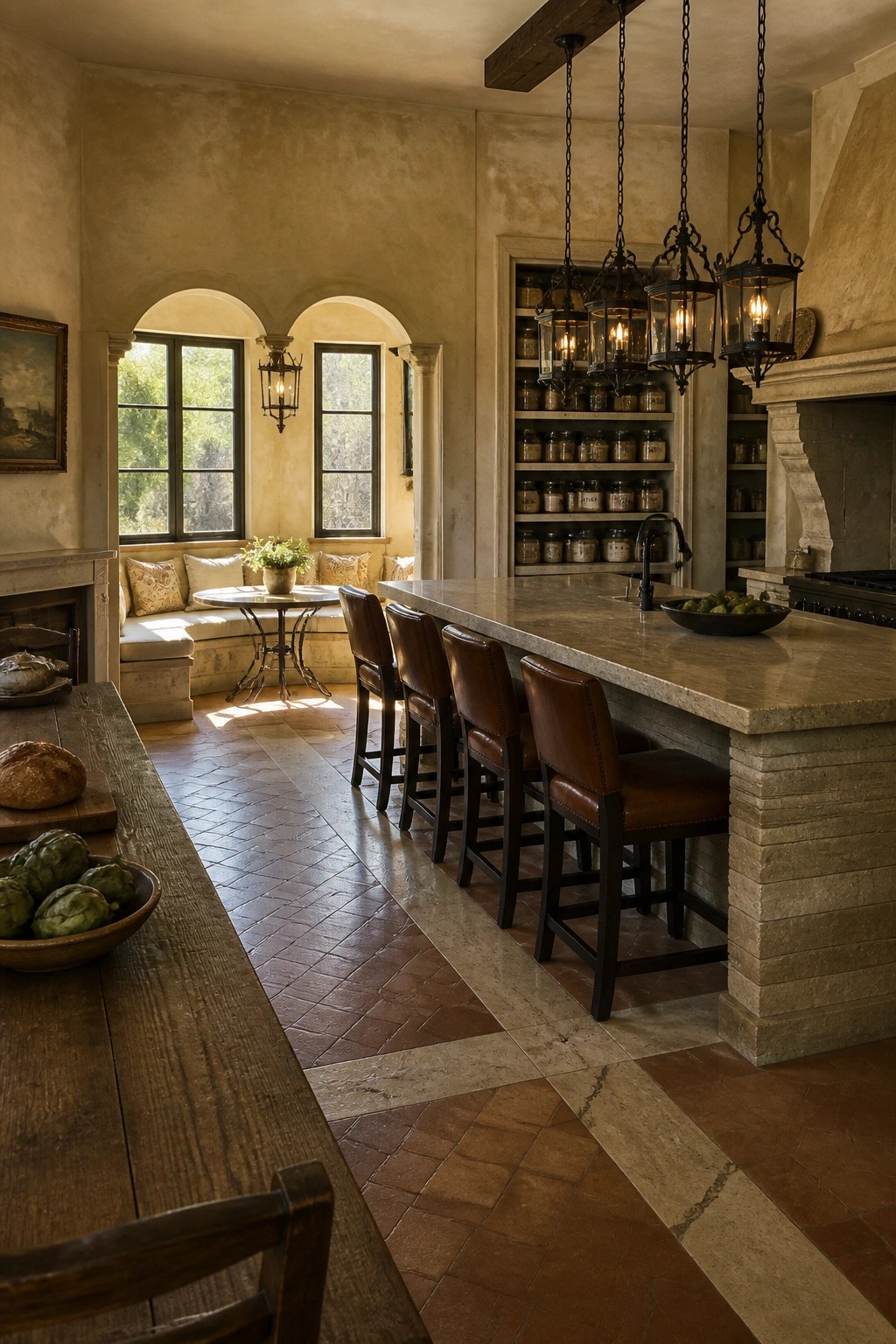
A large stone island gives a Tuscan kitchen a practical center that handles both cooking and casual meals. The material adds texture and weight that fits the style without extra decoration.
It works well in bigger rooms where people move around often. Keep the surrounding finishes simple so the island stays the main focus.
Travertine Kitchen Islands
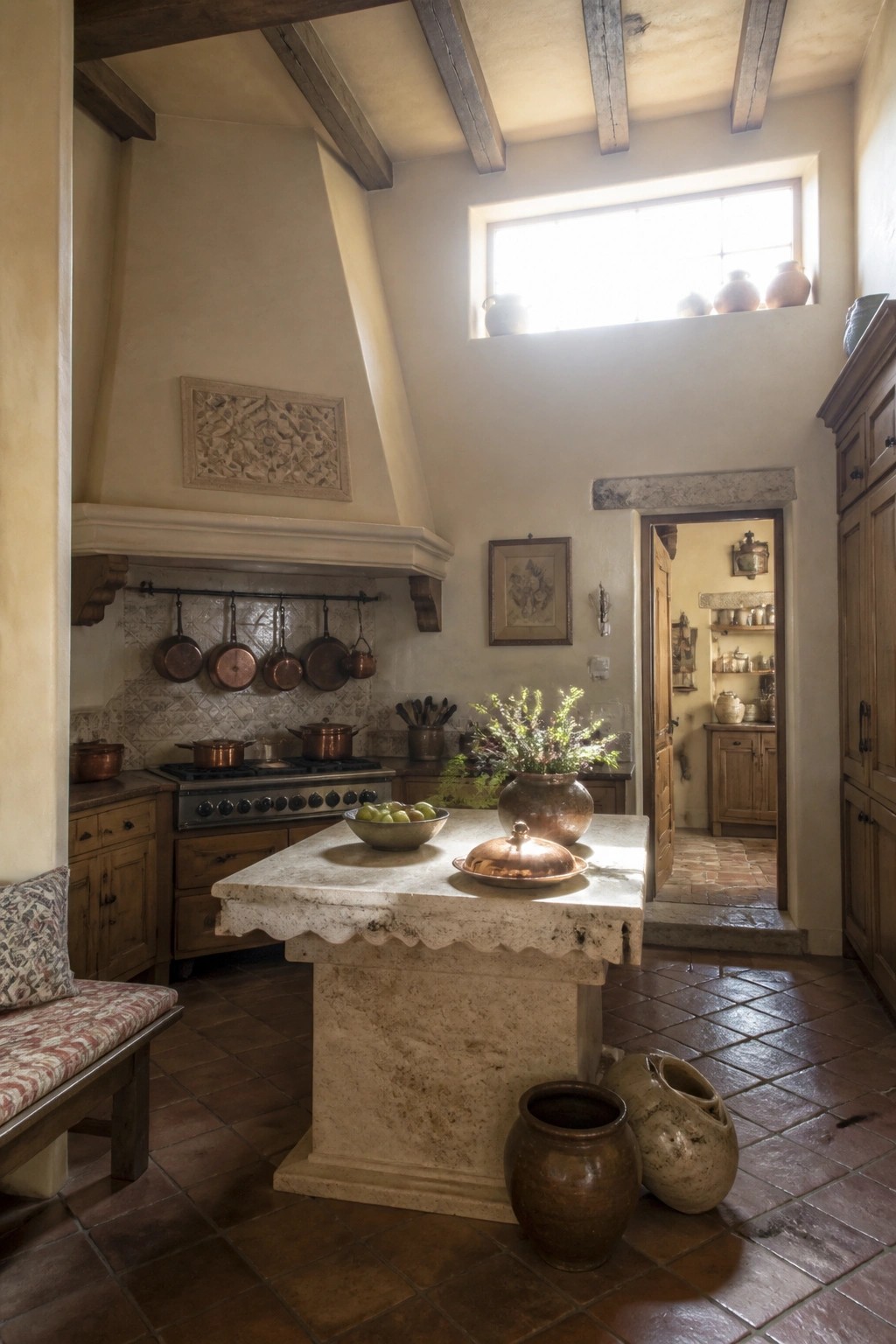
A large travertine island gives a Tuscan kitchen a solid work area that also serves as the main gathering spot. The material holds up well to daily use and pairs naturally with copper, wood, and tile.
It works best in rooms that already have warm tones and simple cabinetry. Keep the island size in proportion to the space so movement around it stays easy.
Open Shelving Built Into Travertine Counters
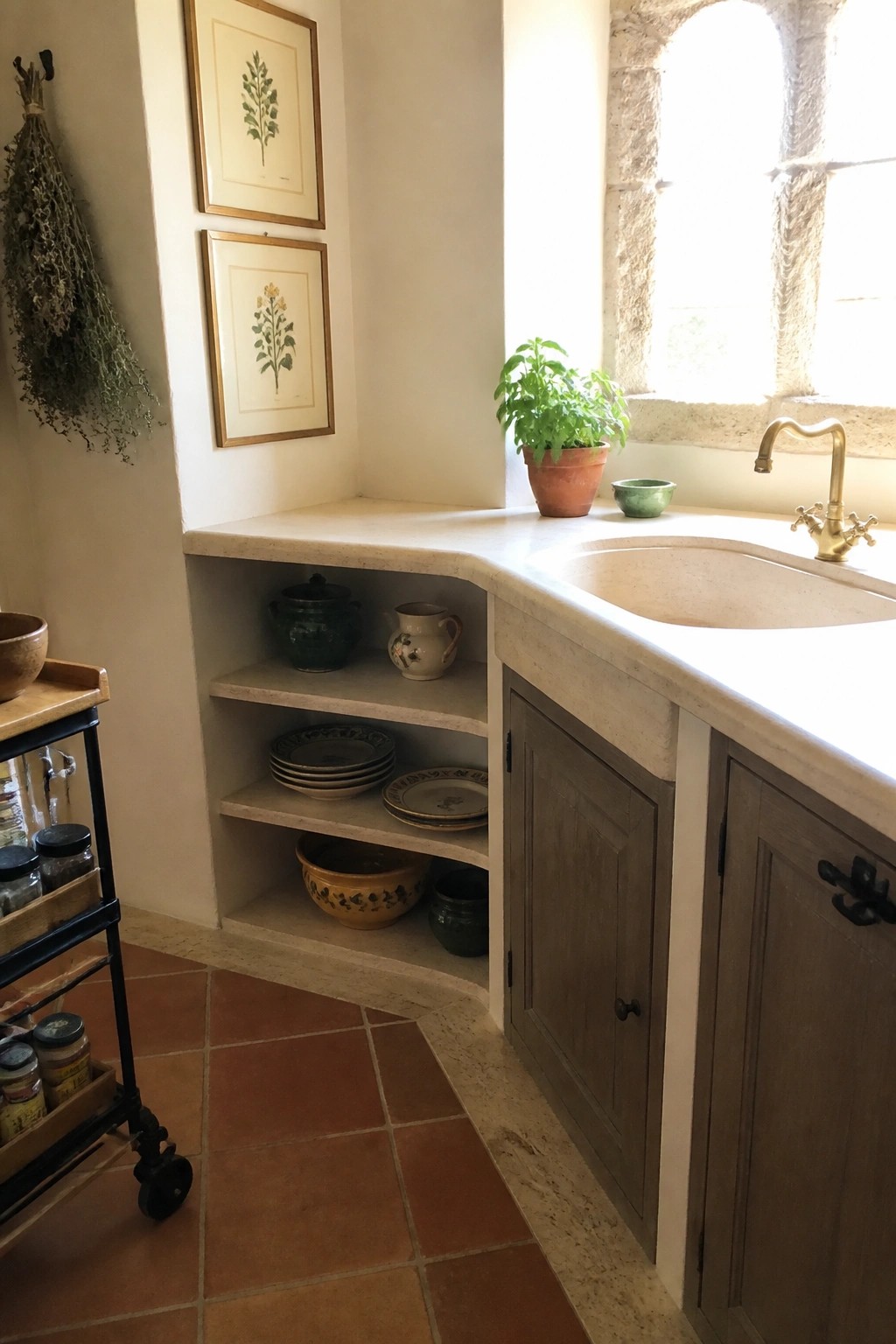
Open shelving set into the travertine surface gives you a simple way to reach plates and bowls without opening doors. The same stone that forms the counter continues down to create the shelves, so everything stays consistent and easy to clean.
This setup works best in a compact Tuscan kitchen where you want quick access to everyday items. Keep only what you use often on the shelves and store the rest behind the wood doors below so the space stays tidy.
Travertine That Runs From The Island To The Floor

Travertine shows up here on both the big island and the floor tiles, and that single choice keeps the whole kitchen feeling pulled together without extra effort. The stone handles daily use and still looks right in a space that opens straight out to the garden.
It works best in kitchens that already lean classic or Mediterranean, where you want surfaces that age well instead of needing constant updates. Just seal it well and accept that it will pick up some character over time.
Travertine Countertops With Dark Cabinets

Travertine countertops bring a soft, natural tone that balances deeper cabinet colors in a Tuscan kitchen. The light stone surface keeps the space from feeling too heavy while still letting the cabinet color do its job.
This approach works best in homes that already lean toward warm floors and simple materials. It holds up well to daily use and gives the kitchen a practical base without needing a lot of extra detail.
Travertine Islands In Tuscan Kitchens
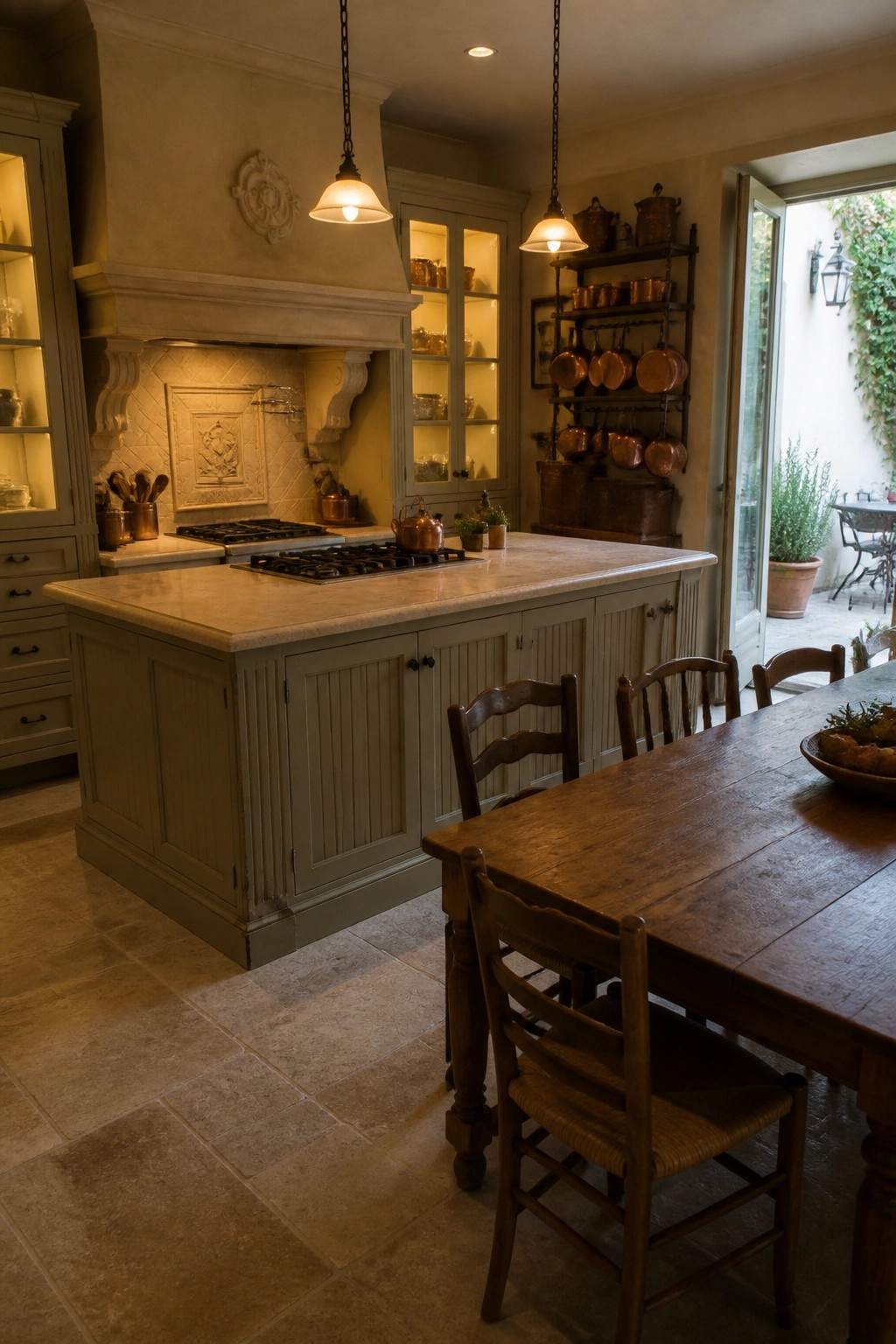
A big travertine island gives the kitchen a steady central surface that handles both cooking and daily use. The light stone stands out against the softer cabinet color and helps keep the whole space from feeling too heavy.
This setup works best in larger rooms where people move around the island often. It suits homes that already lean toward simple Mediterranean or Tuscan details and pairs well with open shelving and basic wood furniture.
Travertine Surfaces in Tuscan Kitchens

Travertine brings a soft, natural tone to a kitchen that fits the Tuscan style without looking too formal. The counters here show how the stone handles daily use while still pairing cleanly with wood cabinets and brass hardware.
It works best in homes that already lean toward warm neutrals and simple storage. Keep the rest of the room light so the stone does not feel heavy, and choose a honed finish rather than polished if you want less maintenance.
Frequently Asked Questions
Q: How do I keep travertine counters clean when I cook every day? A: Wipe up spills fast with a damp cloth and a bit of pH neutral soap. Skip anything acidic like vinegar or lemon juice since it eats into the surface over time. Reapply a sealer once a year and the stone stays protected without much fuss.
Q: Does travertine feel too cold underfoot for a kitchen floor? A: It can run cool at first but pairs well with underfloor heating if you want that extra warmth. Many Tuscan setups add thick rugs near the sink and stove to soften the feel while keeping the natural look.
Q: What surfaces mix best with travertine if I want to add some color? A: Go with warm wood tones or soft terracotta tiles for contrast. These choices echo the classic Tuscan vibe without fighting the stone’s earthy tones.