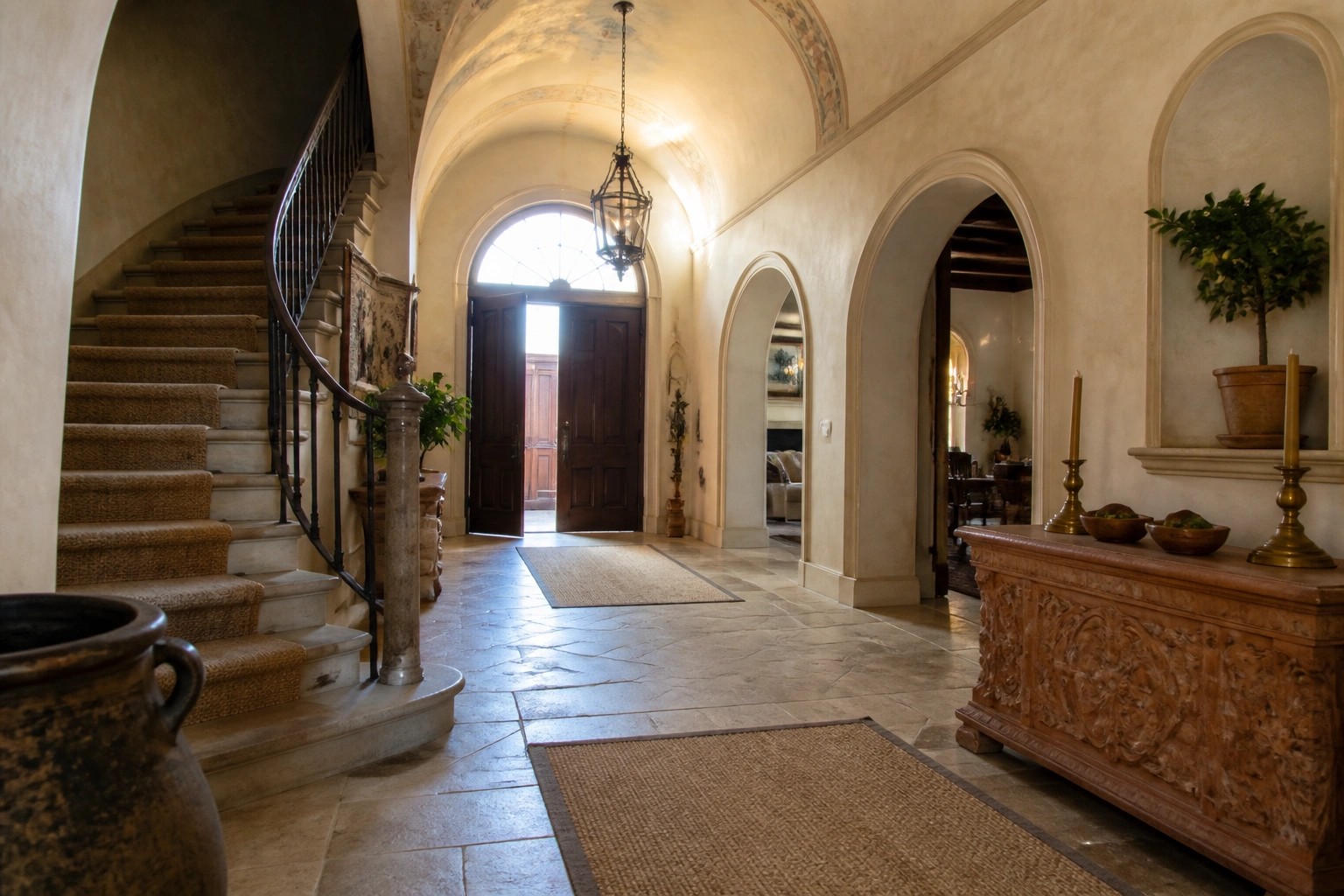
Walking through homes with those signature arches, I notice how they quietly guide the way light moves from one area to the next and help larger spaces feel more organized without needing extra walls.
In real Tuscan style rooms the arches often sit at key transition points, so the layout ends up feeling intentional rather than open and vague.
Arches change everything.
I keep thinking about which of these setups I would try first if I had the ceiling height to work with, because the balance between the curve and the room scale seems to decide whether the whole space lands comfortably.
Over time I have seen that when the arch details match the flooring and the window placements, the room holds together even when the furniture changes with the seasons.
Arches That Create Flow Between Spaces
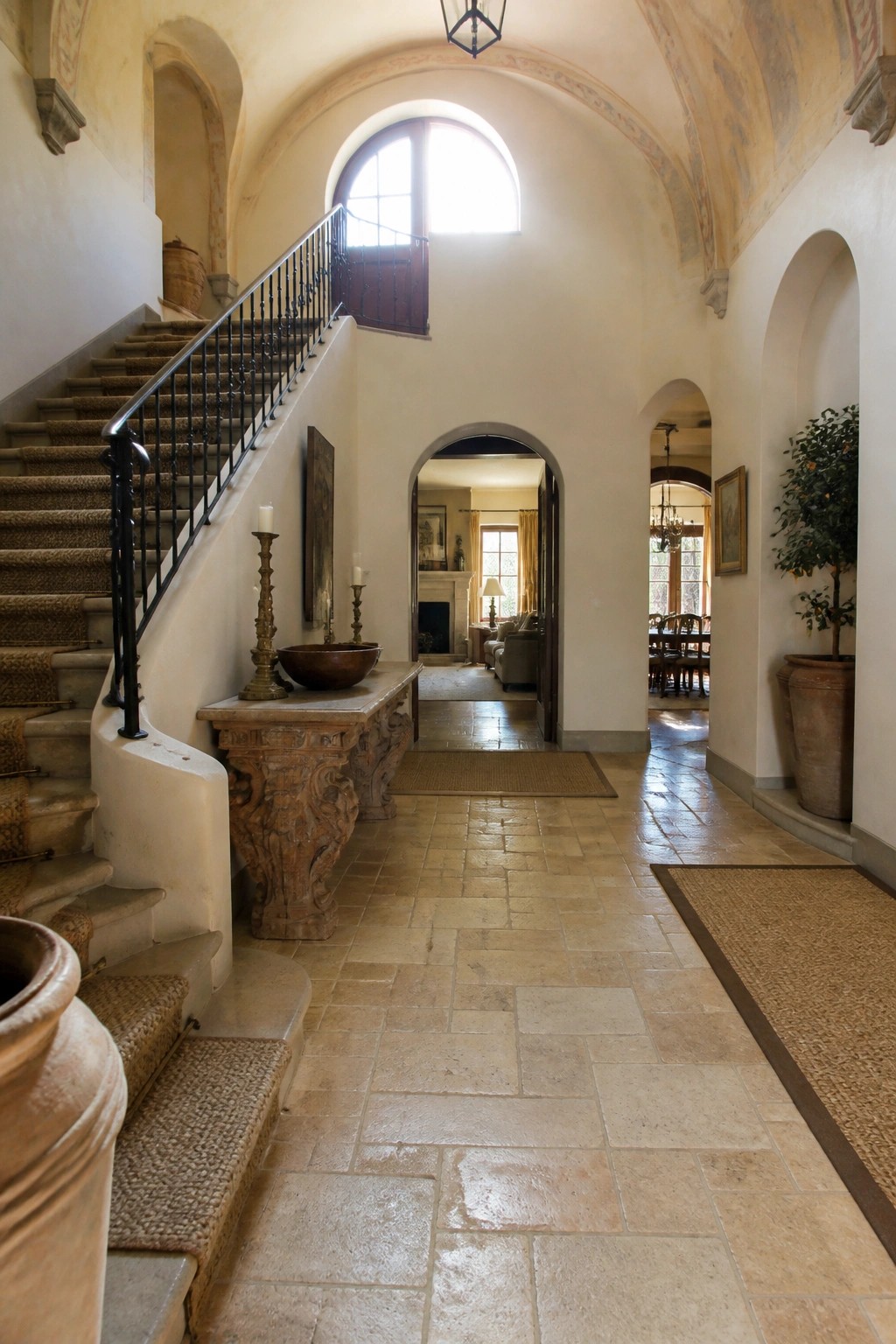
Arches help rooms feel connected while still keeping each area distinct. The repeated curves draw the eye forward and make a long hallway feel more open and welcoming instead of just a straight path from one door to the next.
This approach works best in homes with some width to the walls so the arches can sit comfortably. Start with the main circulation areas and let the shape lead into living spaces rather than trying to force it into every doorway. Keep the trim and wall colors simple so the curves do the work.
Arched Niches Hold Built-In Shelving

Arches can turn plain wall space into recessed spots that feel built for a reason. In this room they frame the bookshelves on either side of the fireplace, which keeps the whole wall organized and gives the seating area a clear focal point without extra furniture.
This approach works best in larger living rooms that already have some height and traditional details. It adds storage for books and decorative pieces while keeping the floor clear, and it pairs especially well with stone fireplaces and warm wood tones in Tuscan-style homes.
Long Wooden Tables For Everyday Meals

A long wooden table fits well in rooms that have open arches and steady natural light. It turns the space into one where people can sit together without crowding, and the simple wood grain keeps the focus on the room itself rather than on fancy details.
This works best in homes that already have high ceilings and open floor plans. Use benches on one side to make seating flexible, and keep the rest of the room light so the table does not feel heavy.
Defining Spaces With Kitchen Arches

A large arch creates a natural boundary around the kitchen without closing it off from the rest of the house. This keeps the cooking area feeling open and connected while still giving it its own clear presence in the layout.
It works especially well in homes with bigger floor plans where you want the kitchen to stay part of the main living space. Keep the arch simple and let the materials inside, like the island and floor, do the rest of the work.
Arches That Frame The Bed

Many Tuscan bedrooms place the bed inside a large arched alcove so the shape itself does the work of defining the space. The curve adds weight and calm without extra furniture or bold color. It turns an ordinary bed into the clear center of the room while still leaving the rest of the space open.
This move fits best in homes with thicker walls or higher ceilings where an arch can be built in without crowding the room. It works especially well when the rest of the furnishings stay simple so the shape stays the main feature. Avoid filling the alcove with too many small pieces or the effect gets lost.
Arched Showers in the Bathroom
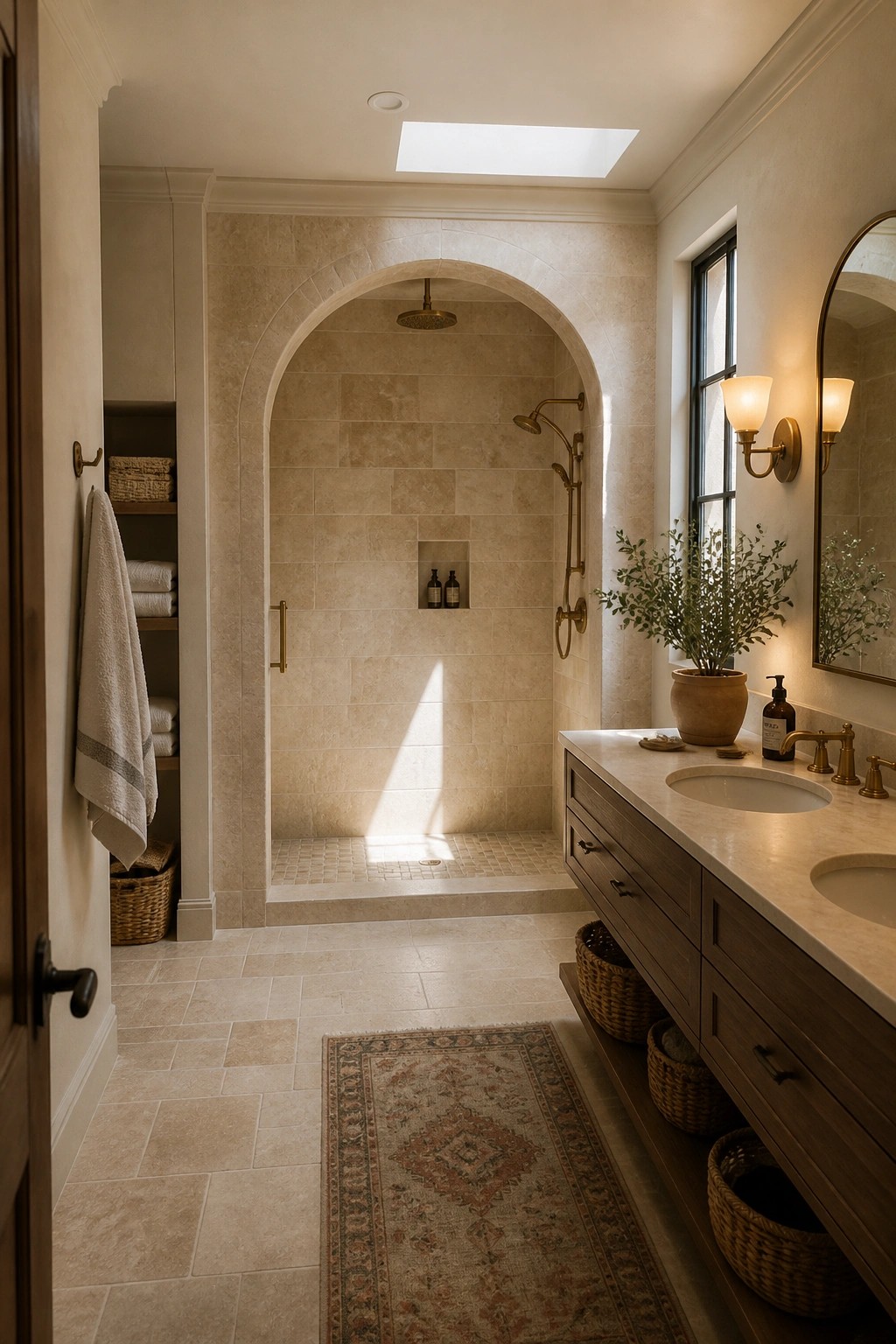
An arched opening around the shower turns the wet zone into a clear, separate space without closing it off with a door. The curve softens the look of all the tile and gives the room a bit more shape than a plain rectangular stall would.
This works best in larger bathrooms where the arch can sit on its own without crowding the rest of the layout. Keep the tile consistent inside and out so the arch reads as part of the wall rather than an afterthought, and make sure the ceiling height can support the full curve.
Arched Alcoves For Built-In Shelving
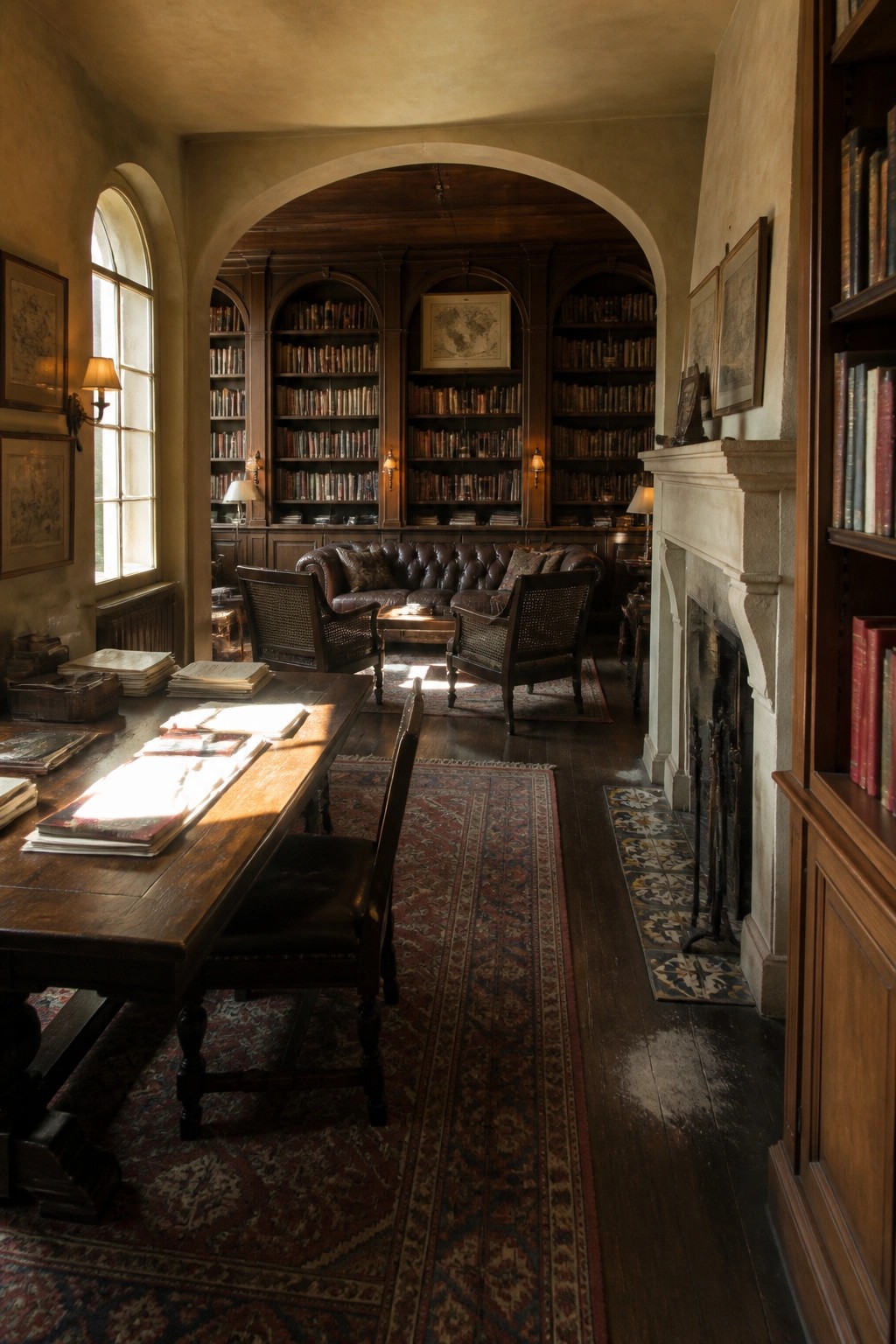
Arches can turn plain wall space into useful storage without making a room feel crowded. In a library, recessed shelves inside each arch keep books visible but contained, and the shape itself adds quiet structure to the layout. The result feels orderly even when the shelves are full.
This approach suits larger rooms where you want the books to be the main feature rather than extra furniture. It works best with deep enough alcoves so nothing sticks out into the walkway, and it pairs well with darker wood tones that match the surrounding trim. Keep the rest of the furniture low so the arches stay the focus.
Positioning a Desk by an Arched Window
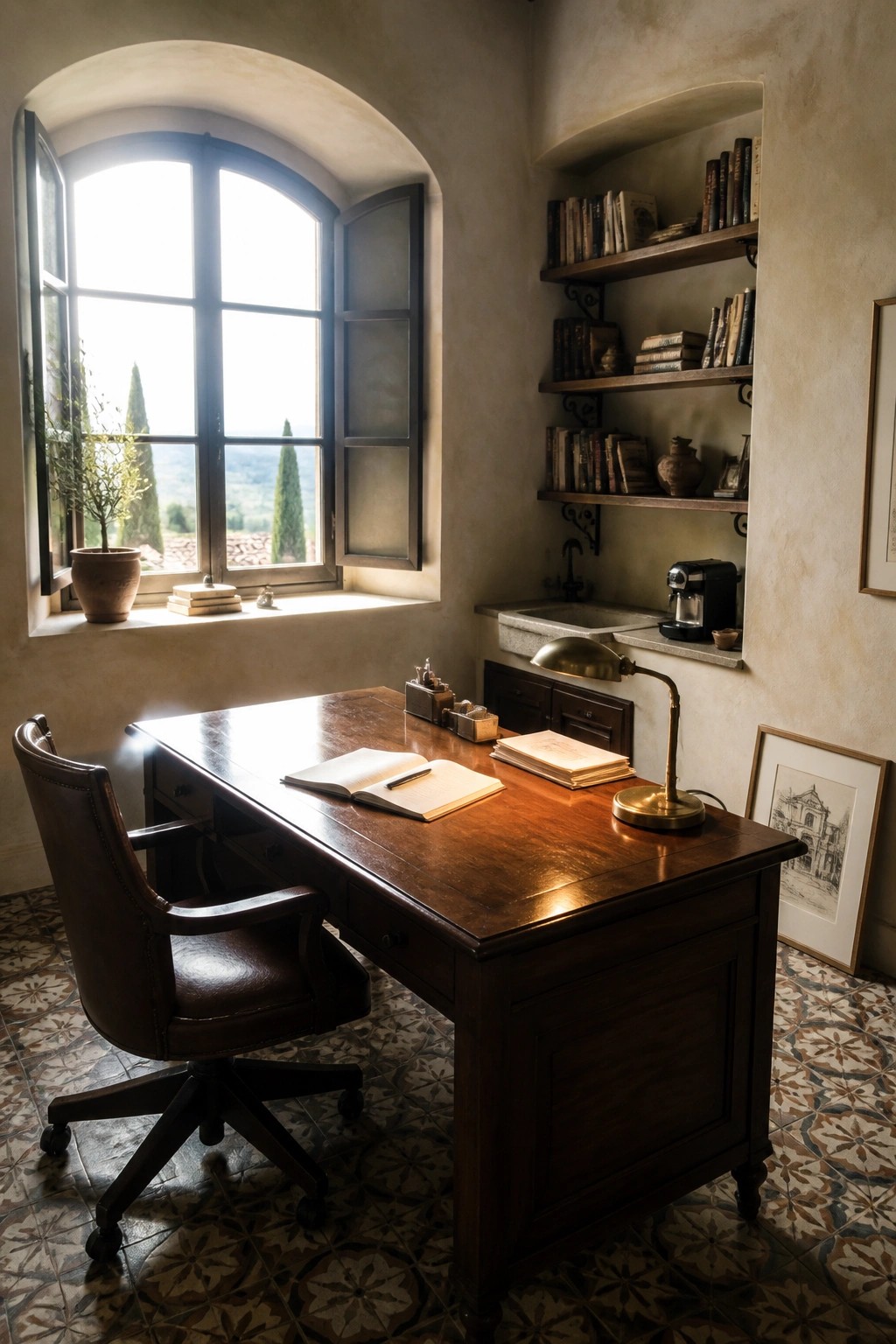
Many people like setting up a desk right by a large arched window. The light comes in from the side and the view keeps the space from feeling boxed in during long hours at work.
This works best in homes with thick walls and classic window details. Leave enough room around the desk so the shutters can open and close without trouble.
Built-In Shelves In Arched Alcoves
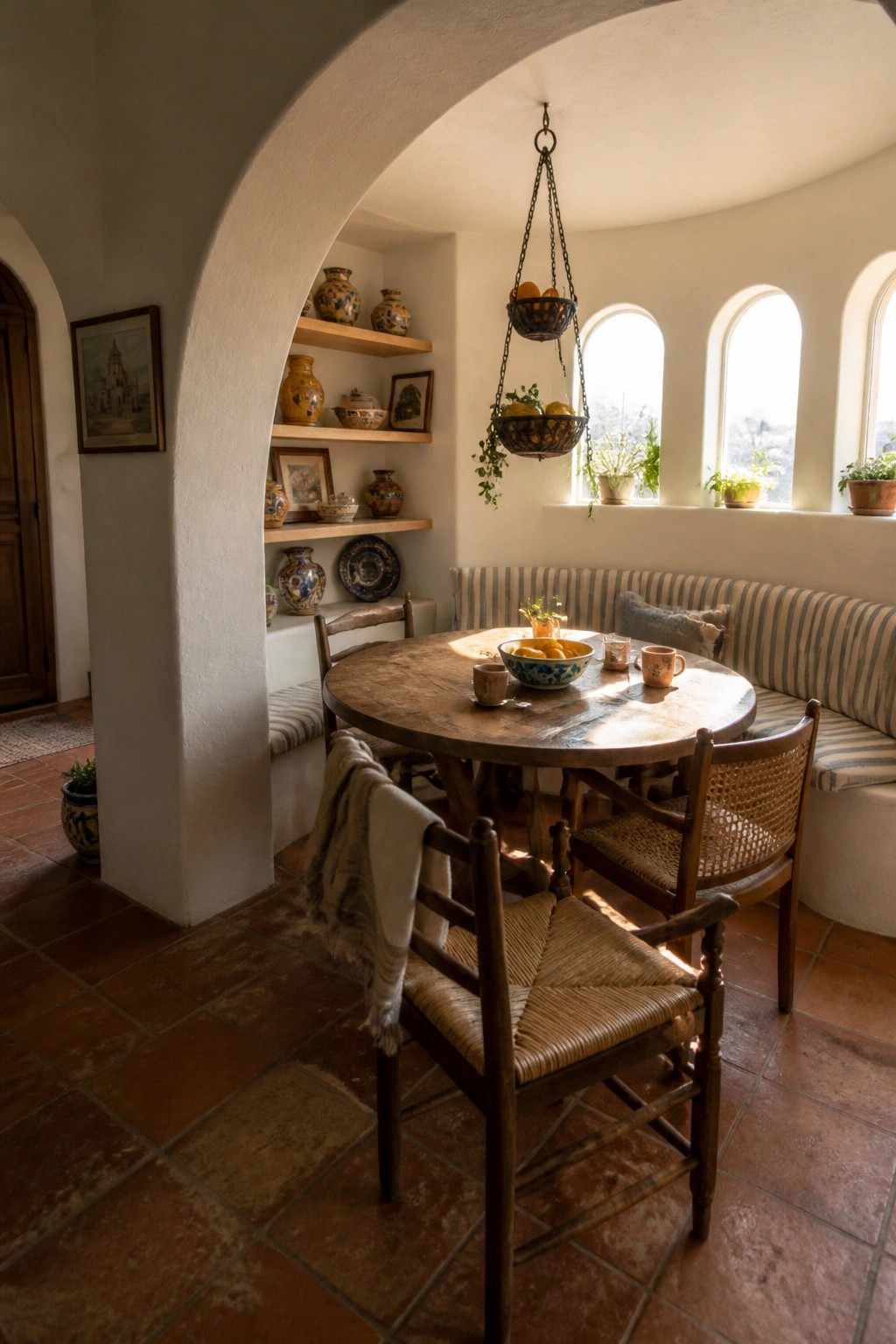
Arches can shape useful alcoves that hold shelves and seating without crowding the room. This approach keeps storage visible but contained, and it gives the dining area a settled, lived-in feel that suits older homes.
It works best in spaces where you already have thick walls or curved openings to work with. Keep the items on the shelves fairly simple so the structure itself stays the main feature, and match the bench cushion fabric to nearby curtains or rugs for a quiet connection.
Arches That Frame Cozy Seating Spots

A grand arch can turn an open room into a quieter corner without adding walls. It gives the seating area its own boundary while still letting light and conversation flow through.
This approach works well in homes with thick plaster walls and simple wood ceilings. Keep the furniture low and the lighting warm so the space inside the arch feels pulled together on its own.
Arched Built-Ins for Everyday Storage
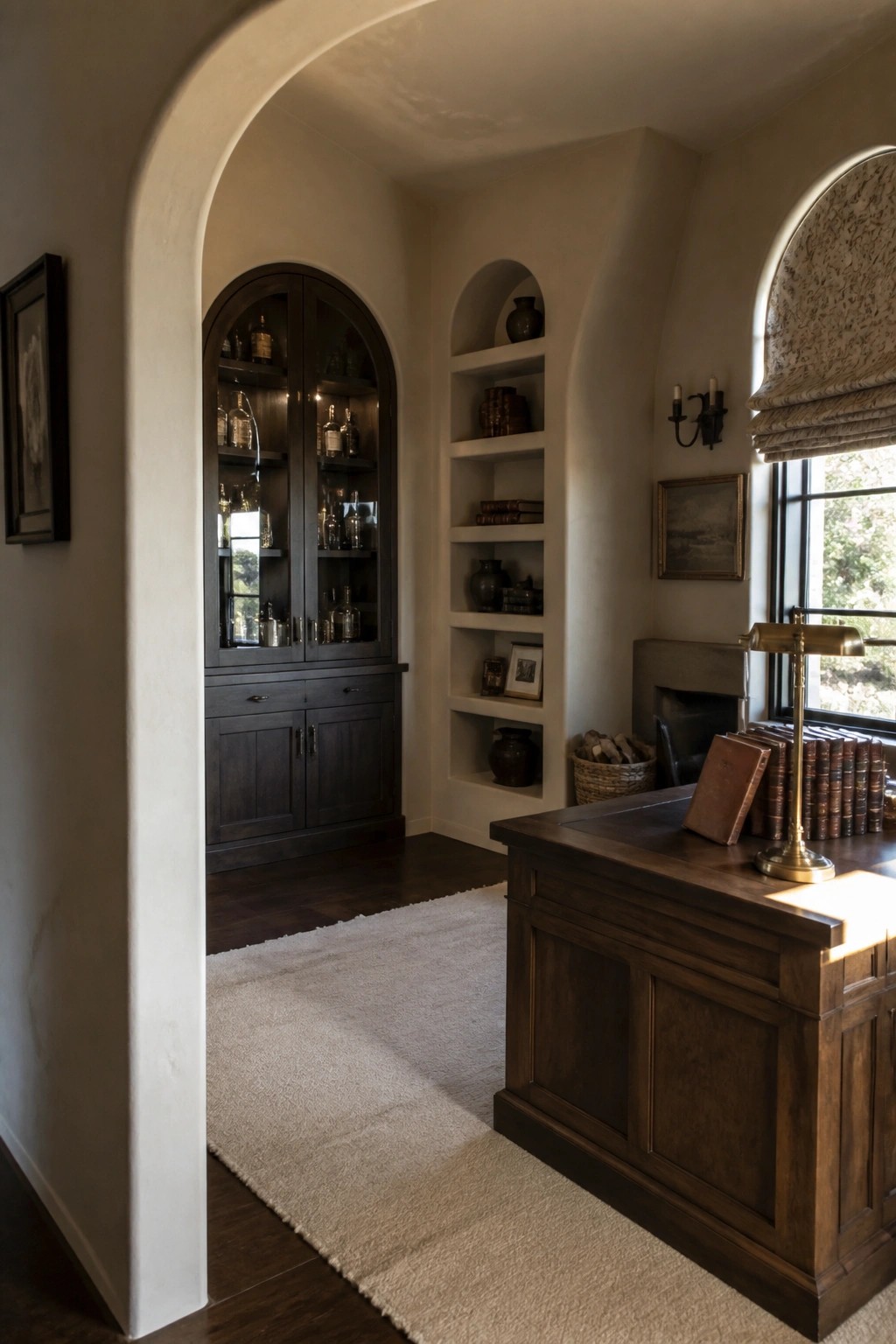
Many Tuscan-style homes use arched cabinetry and wall niches to add storage that feels built into the room rather than added later. The dark wood doors and open shelves keep things organized without taking up floor space or making the room feel boxed in.
This works well in studies, libraries, or living areas where you want a quiet, orderly look. It suits homes with thicker walls and pairs best with simple furniture so the arches stay the main feature.
Arches That Add Soft Shape To Bedroom Walls
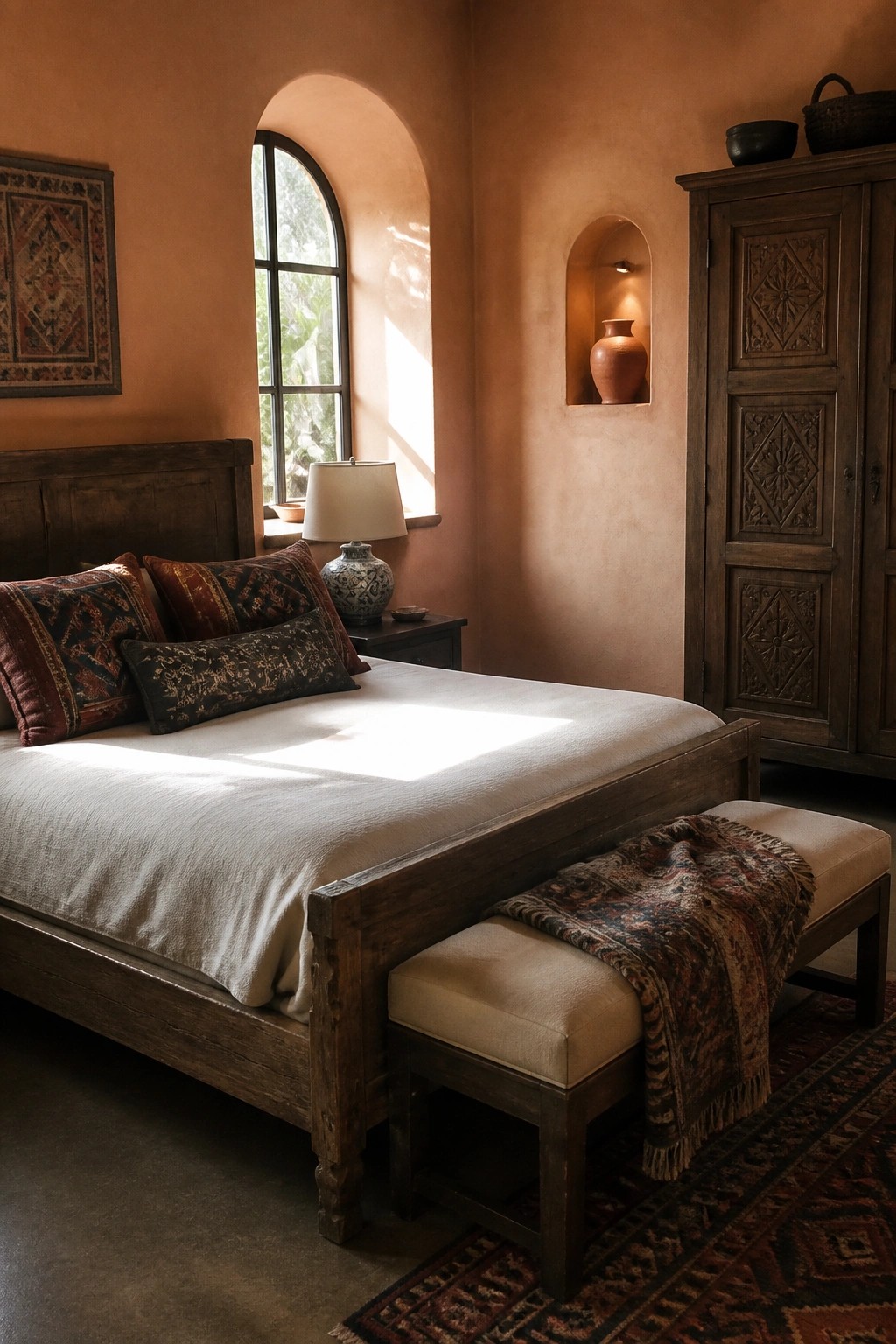
Arched windows and niches give a bedroom a gentle structure that feels natural and easy to live with. They break up flat walls without adding clutter, and they let light fall in a softer way that suits the warm tones common in Tuscan interiors.
This detail works best in rooms with some wall depth so the curves read clearly. Keep the niche simple with one or two objects and let the shape do the work rather than filling it with too many things.
Arched Wine Storage That Works as Architecture
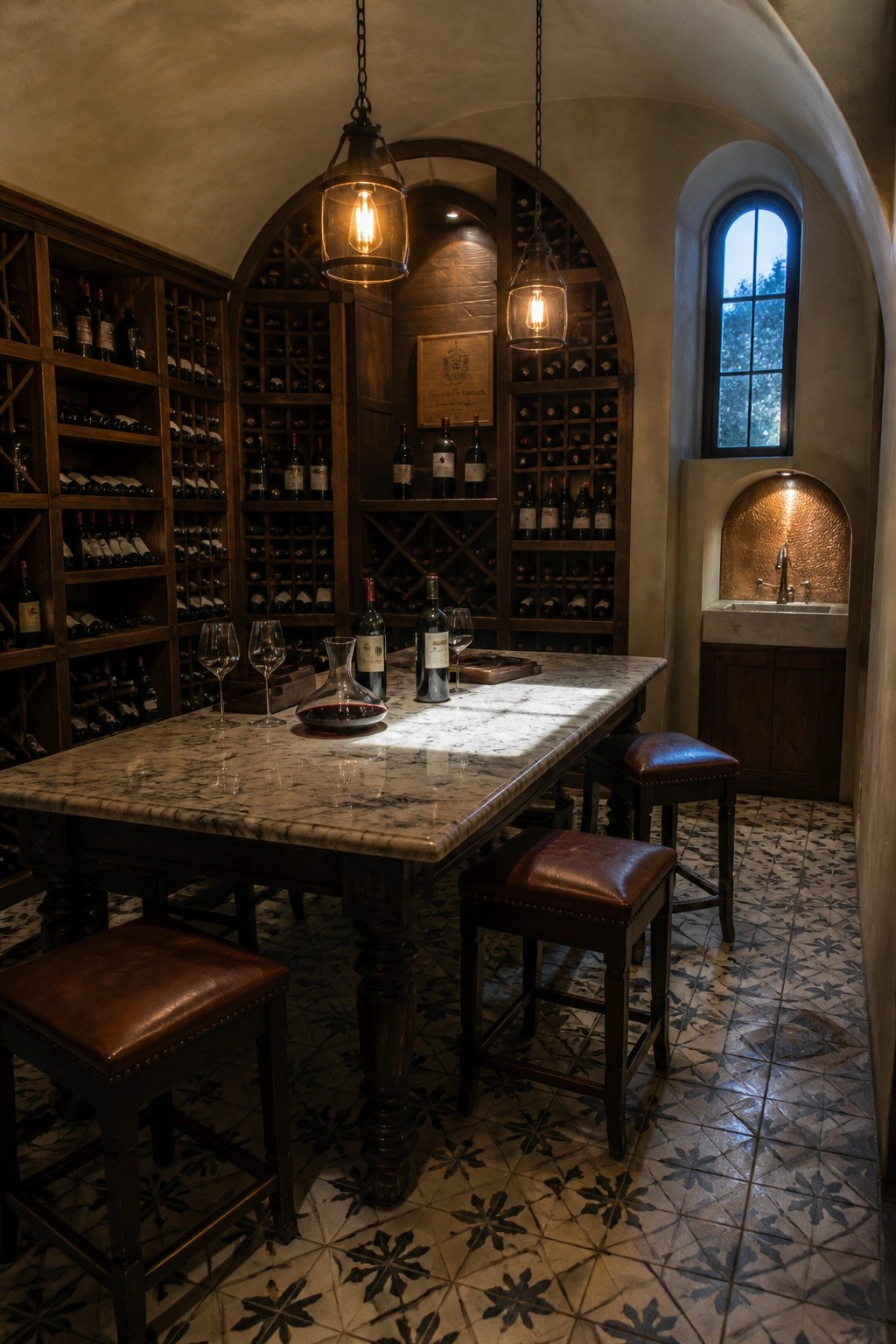
Arches give wine storage a more finished look by turning open racks into built-in features. In this setup the wooden racks sit inside the arched openings so the whole wall feels like part of the room instead of just shelves added later. The result is a cellar that feels ordered and permanent rather than crowded.
This approach works best in homes that already have some architectural detail or in new builds where you can plan the arches from the start. Keep the table and seating simple so the arches stay the main focus, and make sure the depth of the racks matches the curve of the arch so nothing sticks out awkwardly.
Arches That Frame Utility Spaces

An arched doorway can turn a basic laundry area into something that feels more connected to the rest of the house. It creates a clear boundary without closing the space off completely, which works especially well in homes that lean toward Tuscan or Mediterranean styles where arches appear throughout.
This approach suits older homes or new builds that already use similar details elsewhere. Keep the cabinetry simple and the appliances tucked behind doors so the arch stays the main feature rather than competing with clutter.
Arched Alcoves Around Bathroom Vanities

An arched alcove gives a vanity its own quiet space without needing extra walls or doors. The curve softens the look of the room and makes the sink area feel more intentional and tucked away.
This setup works best in bathrooms that already lean toward Mediterranean or Tuscan styles. Keep the materials simple so the arch stays the main feature, and make sure the depth is enough to hold the counter without crowding the walkway.
Arches That Shape A Hallway
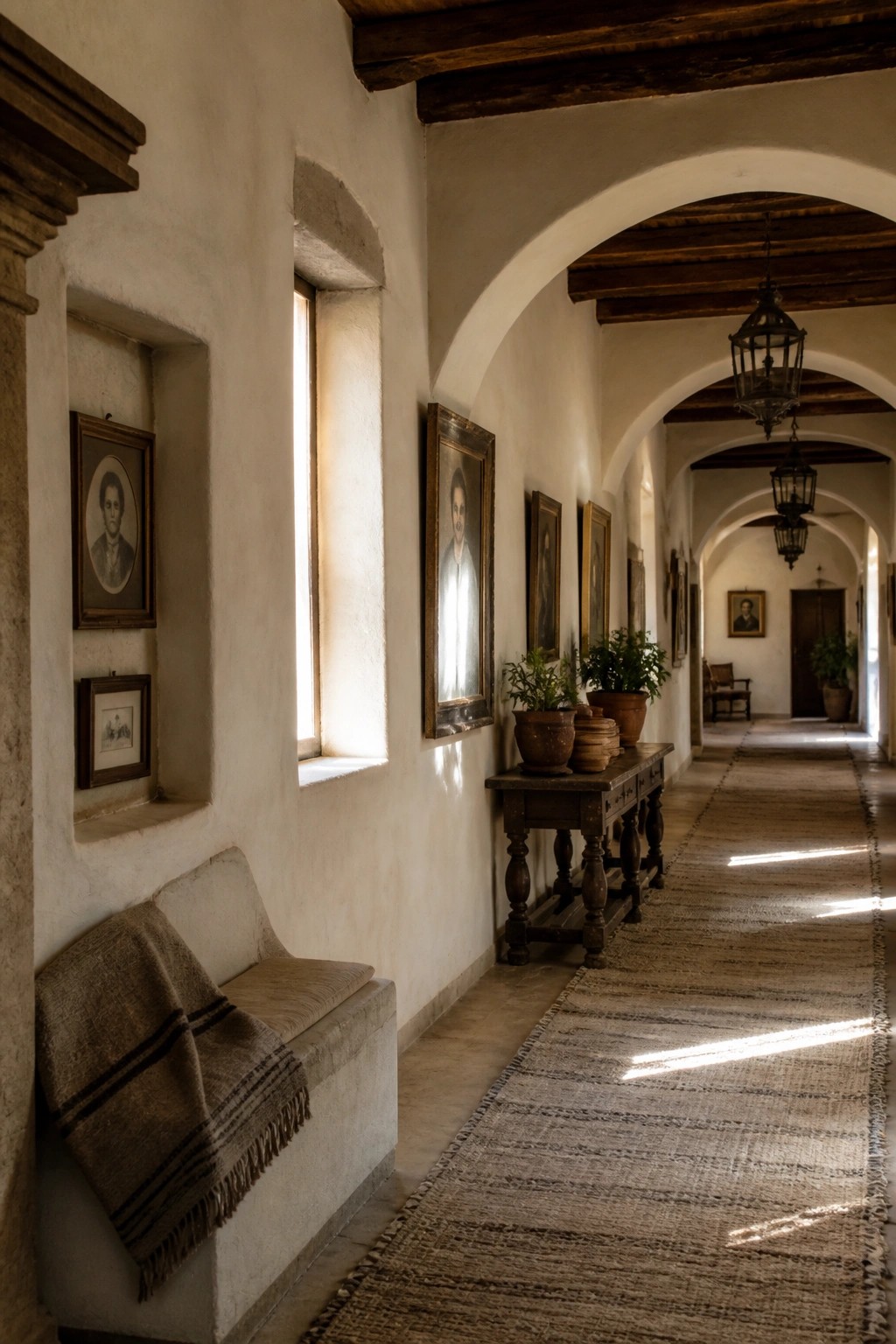
Arches turn a plain hallway into something that feels more open and connected. The repeated curves break up the length without adding walls, and they let light from side windows move along the floor in a way that straight openings do not.
This works best in homes that already have some age or want a softer traditional look. Keep the finish simple, add a long runner for comfort underfoot, and place one small bench or table along the wall so the space stays usable instead of just a walkway.
A Table Placed By The Window
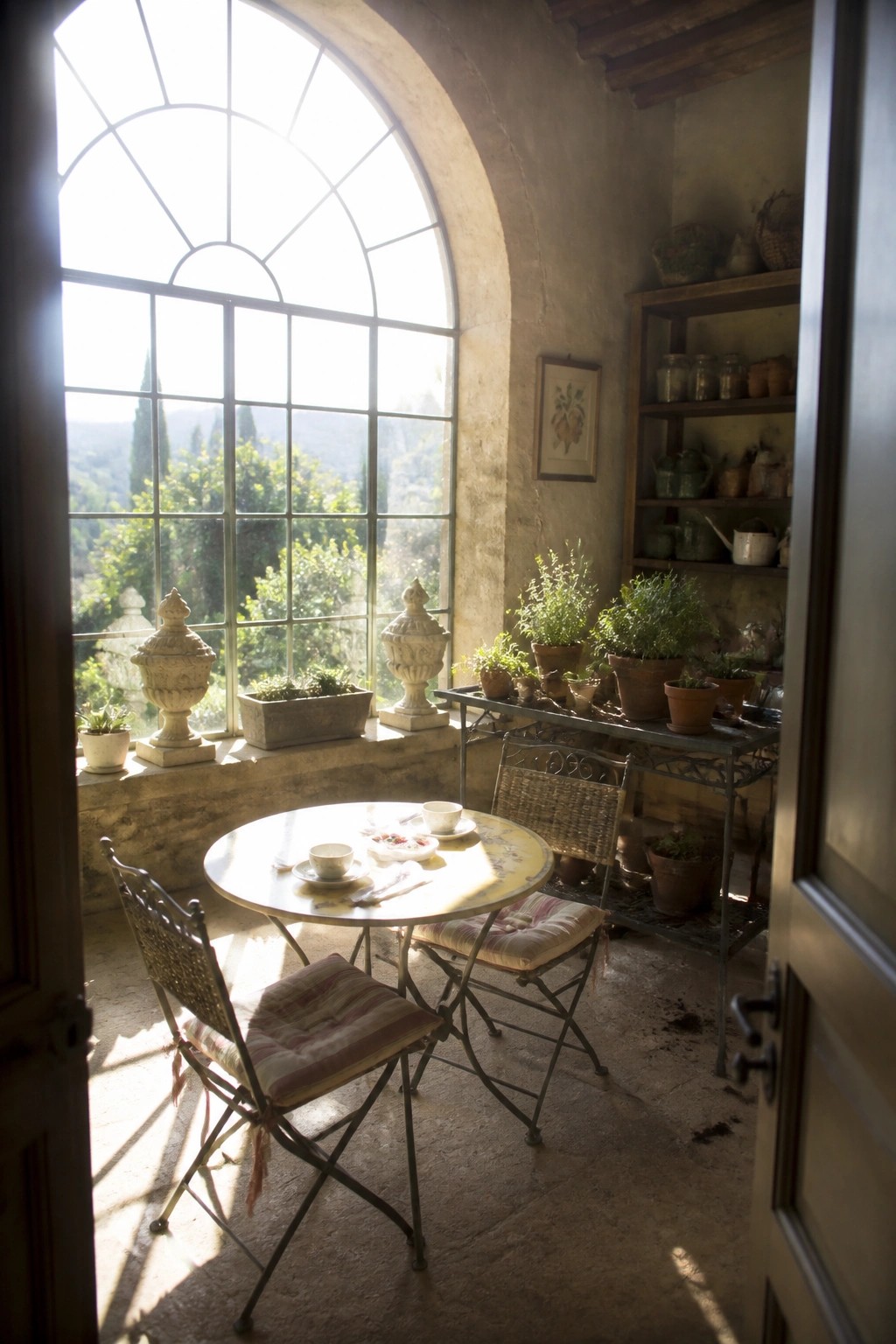
Putting a small round table right in front of a large window works well when you want a quiet spot for coffee or a light meal. The light comes straight in and the view becomes part of the room without any extra effort.
This setup suits older homes or any space that already has a big window. Keep the table small so it does not block the light, and use simple chairs that can be moved easily if needed.
Arched Niches For Built-In Storage

Arched niches turn ordinary closet shelving into something that feels more finished and intentional. The curves help break up the wall space so hanging clothes and drawers sit in their own defined spots instead of running in one long line.
This setup works best in homes that already use arches elsewhere because the shape carries through and keeps the whole interior feeling consistent. It also makes daily use easier since everything stays visible and within reach without extra doors getting in the way.
Bars Placed Under Arched Openings
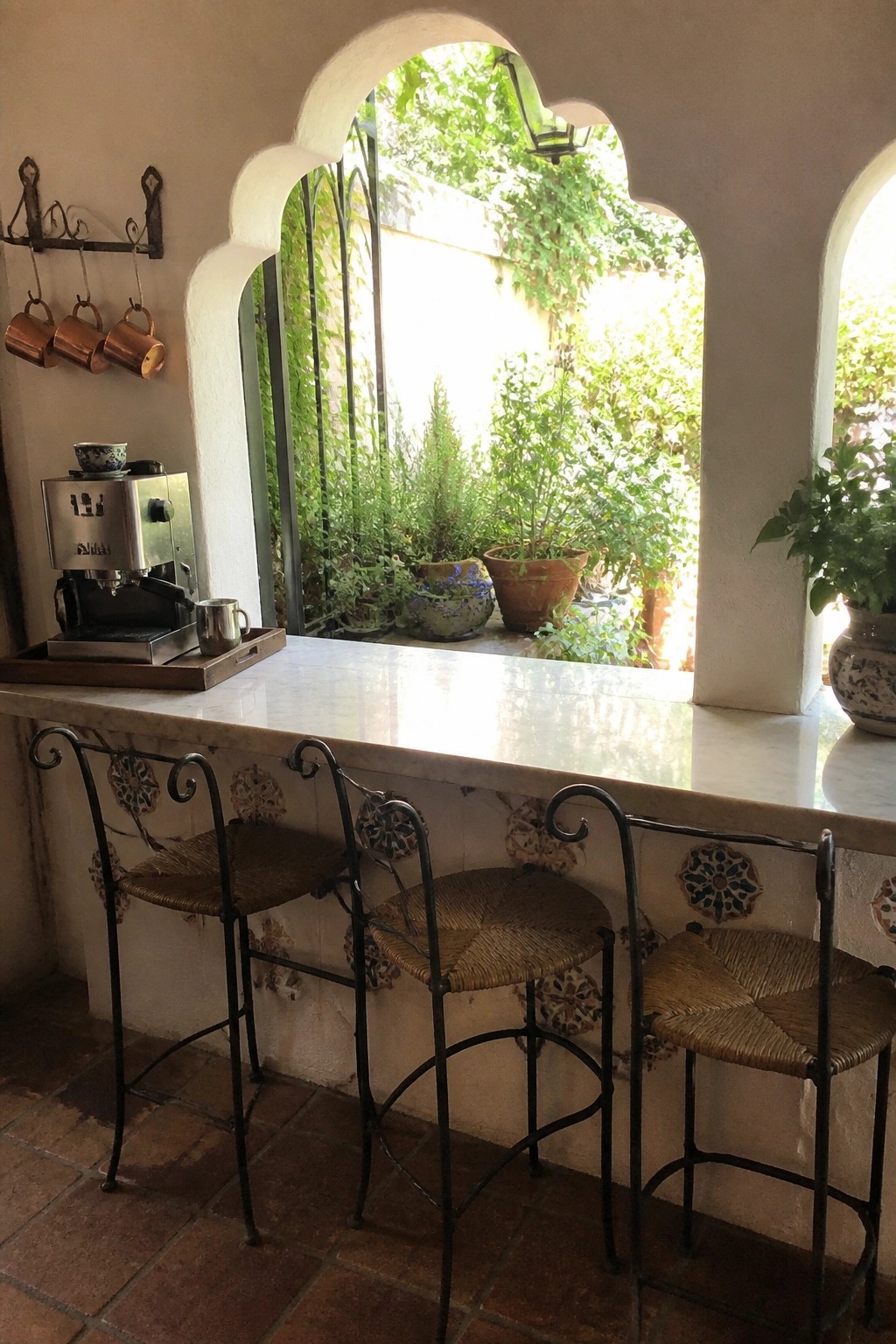
Placing a bar counter right under a large arched opening brings more light into the space and creates an easy link to the garden. The arch acts as a natural frame, so the area feels connected to the outdoors without needing extra doors or windows.
This layout suits homes that already have strong architectural lines and works best when the counter stays fairly narrow. Add a few simple stools and keep the surface clear so the view through the arch remains the main feature.
Arches That Shape a Nursery
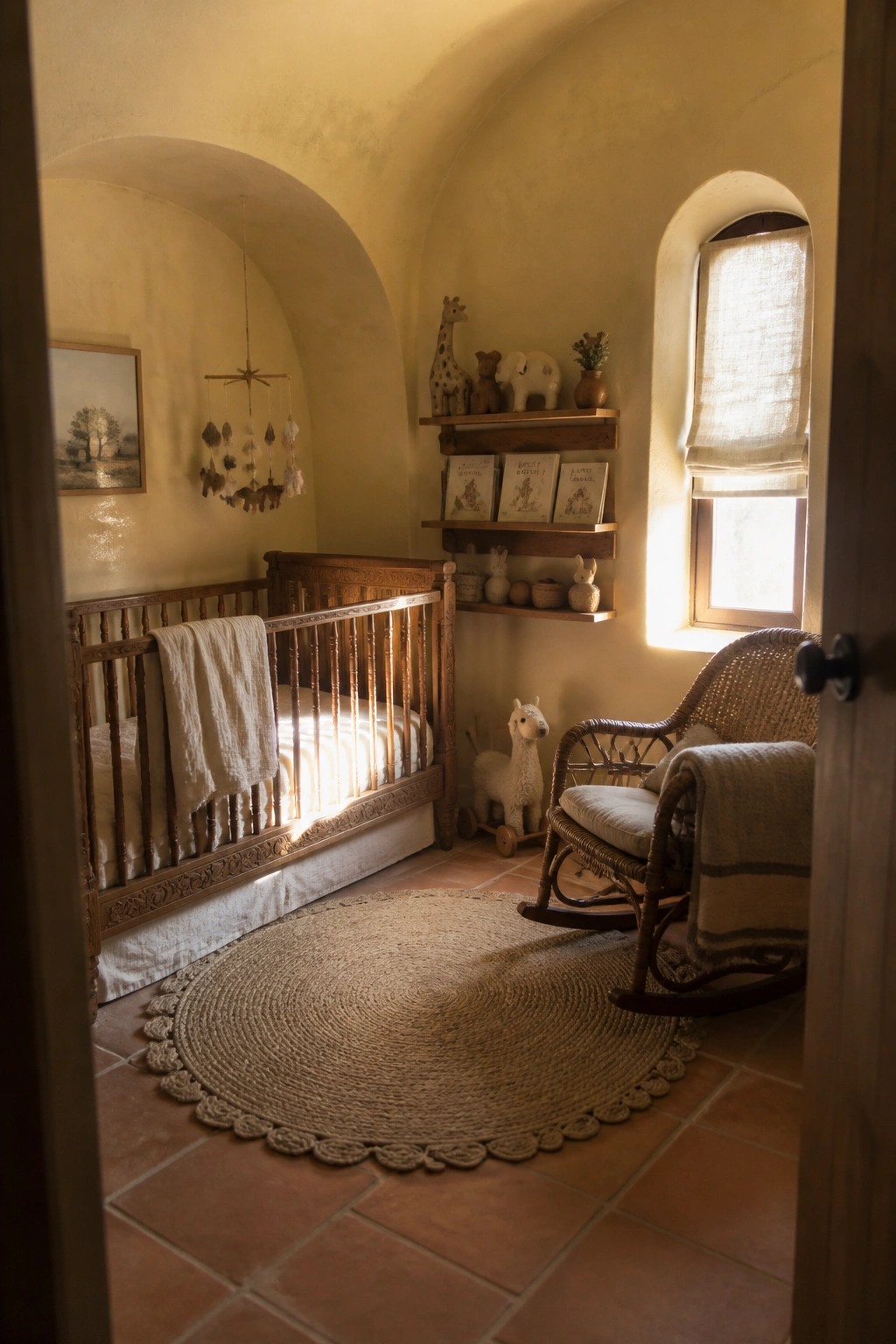
Arches give a room structure without needing extra walls or dividers. In this space the curved openings around the crib and along the side wall create natural spots for the bed and shelves while keeping the whole area feeling open and calm.
They suit homes with thicker walls or plaster finishes that already lean Tuscan. Place the main pieces of furniture inside the arches so the architecture itself sets the zones, then keep the rest of the room simple with just a rug and a chair.
Built-In Arches For Music Storage

Arched niches work well for storing sheet music and books right beside a piano. They turn an empty wall into useful space without adding extra furniture or cluttering the floor.
This setup suits older homes with thick walls where the recess already exists. Keep the shelves at a comfortable height for reaching scores and add a floor lamp nearby so the area stays practical for daily use.
Frequently Asked Questions
Q: How can I add grand arches to my home if a full build feels out of reach? A: Frame an existing doorway with lightweight wood or plaster to create that curve. Match the finish to nearby stone or stucco walls so the shape stands out on its own. The change draws the eye without touching the structure.
Q: What seating fits best under these arches in a main room? A: Place a low sofa or bench right in the opening so the arch frames it like a picture. Keep side tables simple and wooden to echo the Tuscan warmth. Tall chairs tend to crowd the space and break the line of sight.
Q: How do I handle window treatments around the arches? A: Hang curtains from rods mounted above the curve so the fabric falls straight down the sides. This leaves the arch shape clear and lets light move through freely. Skip heavy valances that hide the top.