When I step into a bathroom the shower area usually draws my eye first since it sets how the whole space feels day after day.
Travertine works well in Tuscan rooms because its natural texture keeps the surfaces from feeling cold or slippery underfoot.
I would test a sample panel in my own shower before ordering the full amount.
Simple details like a built in ledge or the right grout color often make the difference between a room that functions smoothly and one that starts to look tired after a few months.
Thinking about how the shower meets the rest of the layout helps avoid the usual problem of wasted corners or awkward door swings.
Terracotta Floors With Travertine Showers

Terracotta tiles on the floor give a travertine shower a grounded, warmer look that feels more lived in. The earthy color and slight texture of the tiles keep the light stone from feeling too cool or stark, especially in a bathroom that gets plenty of natural light.
This pairing works best in rooms with some scale, where the floor can be seen from several angles. Stick with simple shapes like hexagons and let the tiles run right up to the shower threshold so the materials read as one continuous surface. Dark wood cabinetry helps balance the lighter tones without competing.
Arched Openings For Travertine Showers

An arched entry makes a travertine shower feel like a separate zone even in a small bathroom. The curve softens the look of the stone while giving the shower real presence without extra trim or heavy framing.
This works best in homes that already lean warm and simple. Keep the rest of the room quiet so the arch and the stone do the work, and make sure the curve lines up with the height of the shower walls so it does not look tacked on.
Balancing Travertine With Dark Wood Vanities
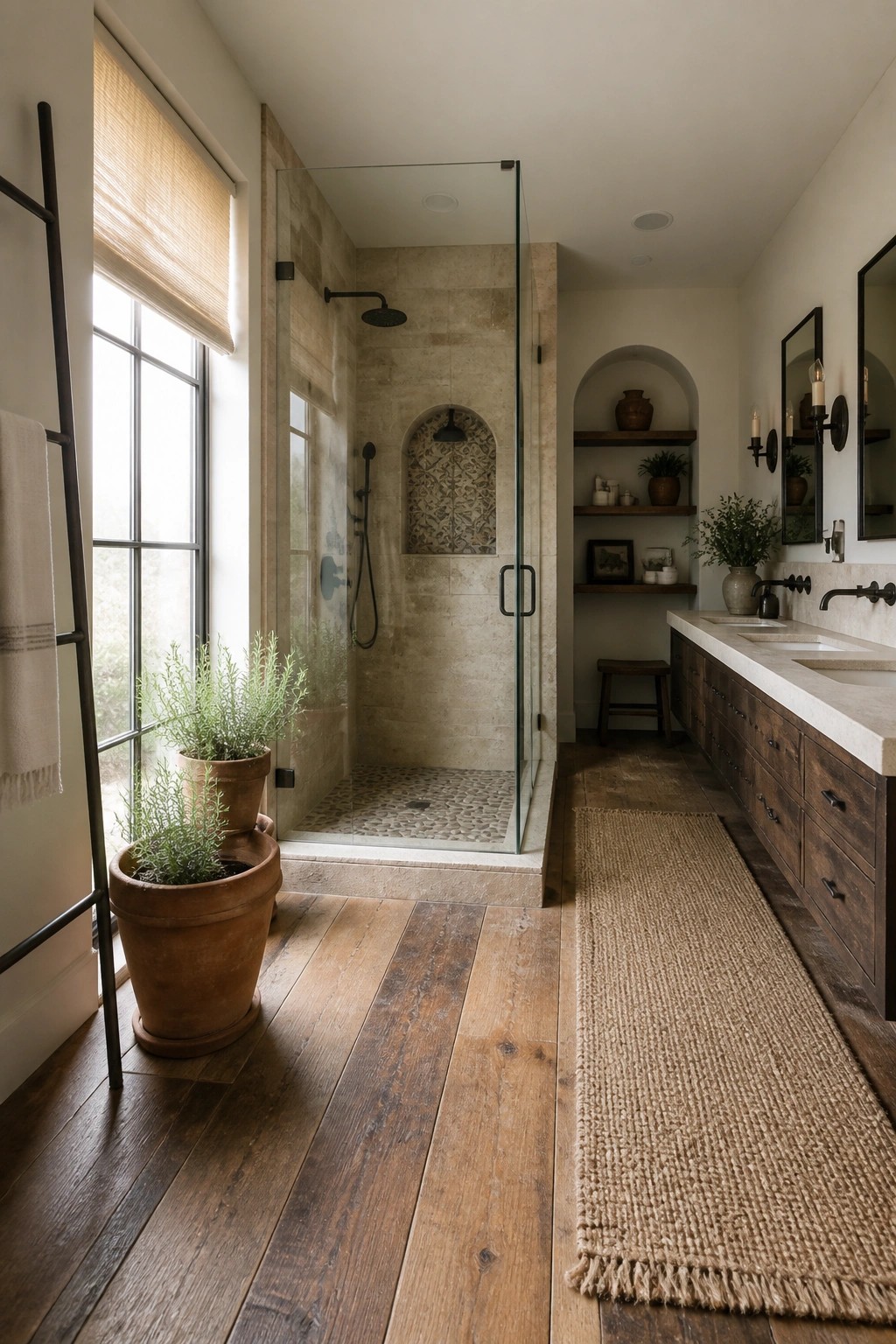
A travertine shower can look clean but a little cool on its own. Pairing it with a dark wood vanity brings warmth and keeps the whole room grounded, which is exactly what most Tuscan bathrooms need.
This works best in spaces that already have wood floors or beams. Keep the vanity simple with basic hardware, then add one or two woven pieces like a jute rug so the wood does not feel too heavy against the stone.
Travertine Showers With Warm Floors
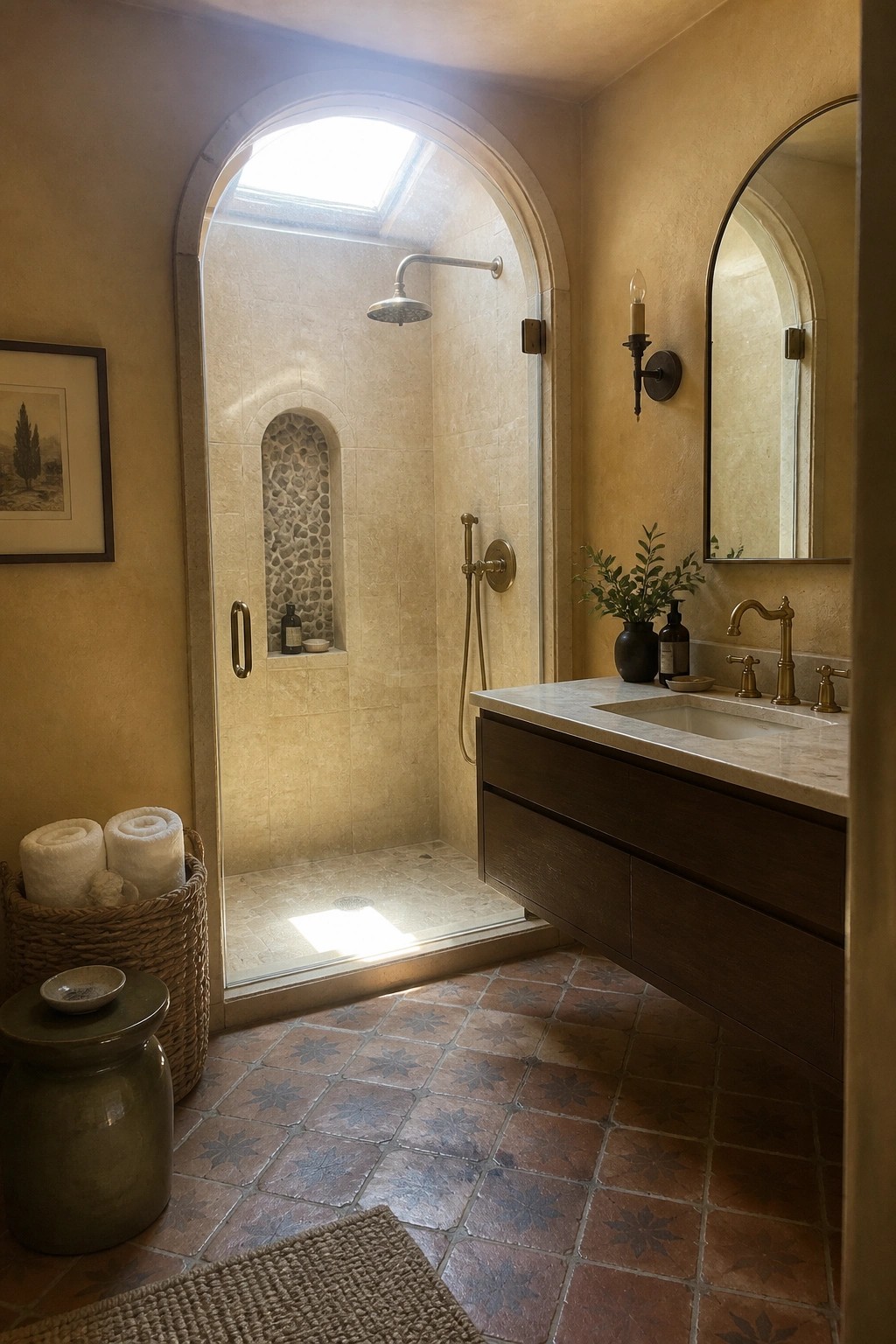
Travertine works well as the main material in a shower because it brings a soft, natural tone that stays comfortable underfoot and on the walls. The light color also helps the space feel open even when the shower takes up a good portion of the room. Many people like how it pairs with darker or patterned floors without fighting for attention.
This approach suits homes that already lean toward earth tones and simple fixtures. It works best when the floor stays a step or two darker, such as with terracotta tiles, so the shower still reads as the main feature. Keep the rest of the finishes fairly plain so the stone can do the work.
Built-In Benches In Travertine Showers

A bench made from the same travertine as the shower walls keeps the space feeling simple and connected. It adds a place to sit without bringing in another material that might break up the look.
This works best in bathrooms that already use travertine heavily. The bench gives you a spot for practical use while the stone stays consistent from floor to wall to seat.
Travertine Showers That Feel Naturally Warm

Travertine works well in a bathroom because it brings in a soft, earthy tone that feels calm rather than cold. The large tiles on the shower walls give a quiet background that pairs easily with other natural materials like wood and stone.
This approach suits homes that lean toward a simple Tuscan look. Keep the rest of the room fairly plain so the shower stays the main material focus, and use darker cabinetry to add a bit of weight against the lighter tile.
Building A Travertine Shower Around A Central Medallion

A large medallion tile set into the back wall of a travertine shower gives the whole space a clear center without adding much extra material. It works especially well in smaller or simpler bathrooms because the single strong pattern keeps the eye from wandering across plain walls.
This approach suits homes that already lean into warm stone and earthy tones. Keep the surrounding travertine fairly plain so the medallion stays the main feature, and make sure the floor color stays in the same family so the shower feels connected to the rest of the room.
Recessed Niches in Travertine Showers

A recessed niche built into the shower wall gives you a practical spot for bottles and soap while keeping surfaces clear. It also lets you add a little pattern without covering the whole shower in busy tile.
This idea works well in smaller bathrooms where space is tight. Line the niche with a contrasting tile if you want some detail, but keep the rest of the travertine simple so the look stays balanced.
Floating Vanities Keep the Floor Open

A floating vanity works well in a travertine bathroom because it leaves the floor visible underneath. This keeps the space from feeling crowded even when the vanity runs long and holds several drawers.
It suits rooms that already have large floor tiles and a walk-in shower. Just make sure the vanity depth leaves enough walking room and that the under lighting stays warm so it does not compete with the natural stone tones.
Built-In Niches For Bathroom Storage

Many bathrooms with travertine showers benefit from adding a few recessed niches in the surrounding walls. These spots give a place for plants or small items without needing shelves or extra furniture that can crowd the room.
They suit older style homes where walls are thick enough to cut into. Keep the openings shallow and line them with the same plaster finish so they blend in and stay easy to clean.
Open Shower Layouts With A Low Divider

One approach that works well in Tuscan bathrooms is leaving the shower area more open instead of closing it behind a full door or curtain. A short wall gives just enough separation while letting the travertine continue across the space and keeping the whole room connected.
This setup suits bathrooms that have enough length to spread out. It also makes the shower feel like part of the main area rather than a separate zone, which helps the natural stone and warm wood tones flow together without feeling boxed in.
Travertine Showers With Warm Wood Vanities

A travertine shower works best when the rest of the room has some weight to it. The deep red vanity here gives the space that balance, keeping the light stone from feeling too pale or cold on its own.
This approach suits smaller bathrooms that still need to feel grounded. Stick with simple hardware and a few woven or natural accents so the wood and stone stay the main focus.
A Recessed Arched Shower In Travertine

The arched opening gives the shower its own clear space while keeping the rest of the bathroom open and simple. Travertine on the walls and floor ties everything together without extra trim or patterns.
This setup works best in bathrooms that already use stone and warm tones. The small recessed shelf holds a few bottles without taking up floor space, and the arch adds just enough shape to keep the room from feeling plain.
Travertine Showers Pair Well with Terracotta Floors

Travertine showers bring a soft, light tone to a bathroom, but they can feel a bit cool on their own. Pairing them with terracotta floor tiles adds the warmth and texture that Tuscan style needs to feel complete.
This works best in smaller baths where you want the shower to stay the main focus without the whole room turning too pale. Keep the vanity and trim in darker wood so the floor can do the grounding work without extra pattern.
Terracotta Floors With Travertine Showers

Many bathrooms feel more grounded when the floor is done in terracotta instead of matching the shower stone. The warm red tones pick up the light from above and keep the travertine from looking too pale or cold on its own.
This mix works best in rooms that already have some age or texture to the walls. It suits homes with Mediterranean leanings and gives the shower a clear base without extra trim or pattern. Just make sure the terracotta is sealed well since it sits right in the splash zone.
Open Shelving Under the Vanity
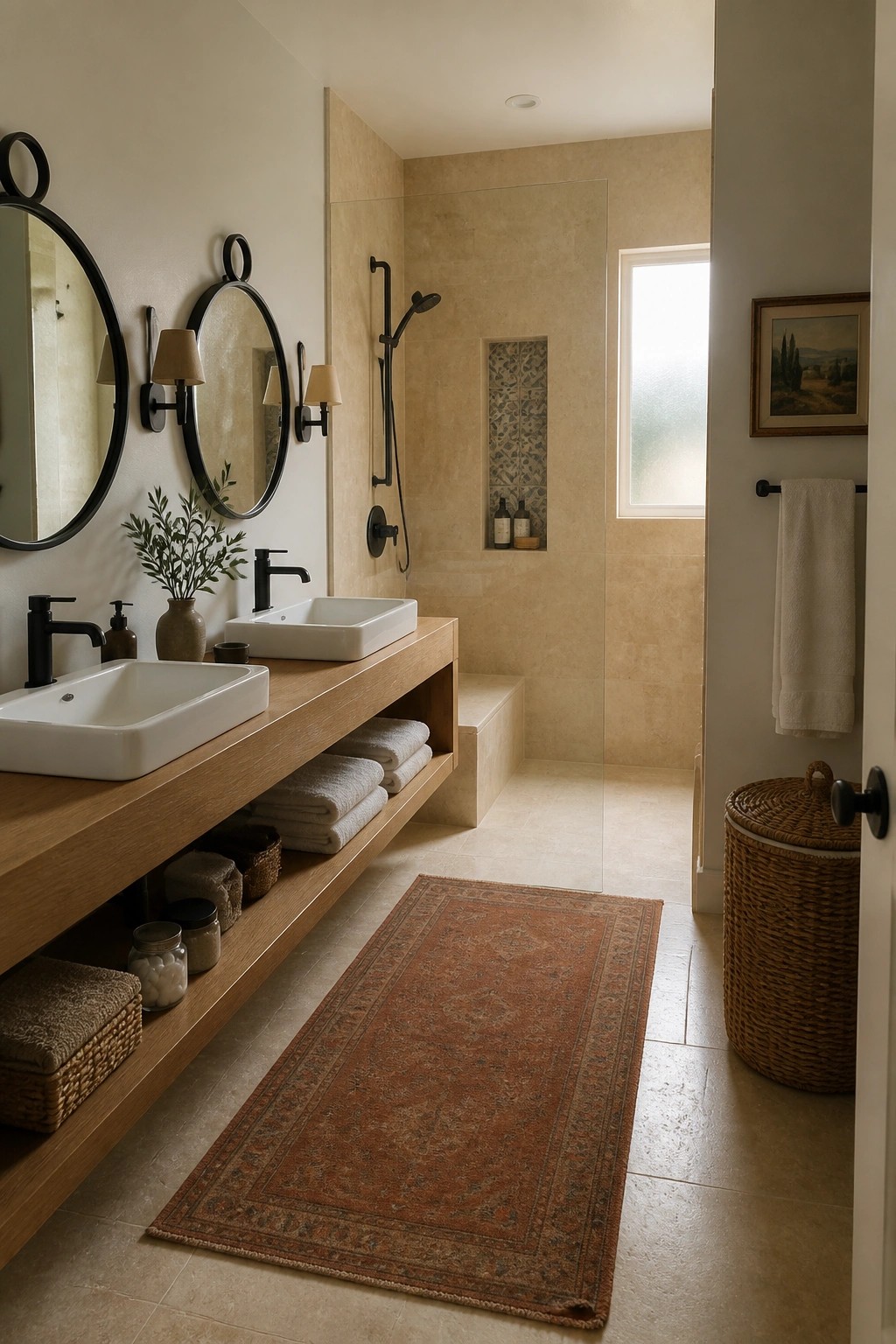
Open shelving under a floating vanity gives you storage without boxing in the room. Towels stay within reach, and the whole area feels lighter because nothing sits on the floor.
This works best next to a travertine shower, where the wood adds a bit of warmth that the stone needs. It suits bathrooms that get regular use and do not want to hide everything away. Just avoid overloading the shelves so the space stays calm.
Try A Floating Wood Vanity

A floating wood vanity keeps the floor open in a bathroom built around a travertine shower. The simple cabinet adds storage and a bit of rustic texture without crowding the space or pulling attention away from the shower itself.
This choice works well in smaller rooms where you still need a place for towels and toiletries. Pick a wood tone that sits close to the warm shades in the travertine so the two materials feel like they belong together.
Raised Travertine Shower Platforms
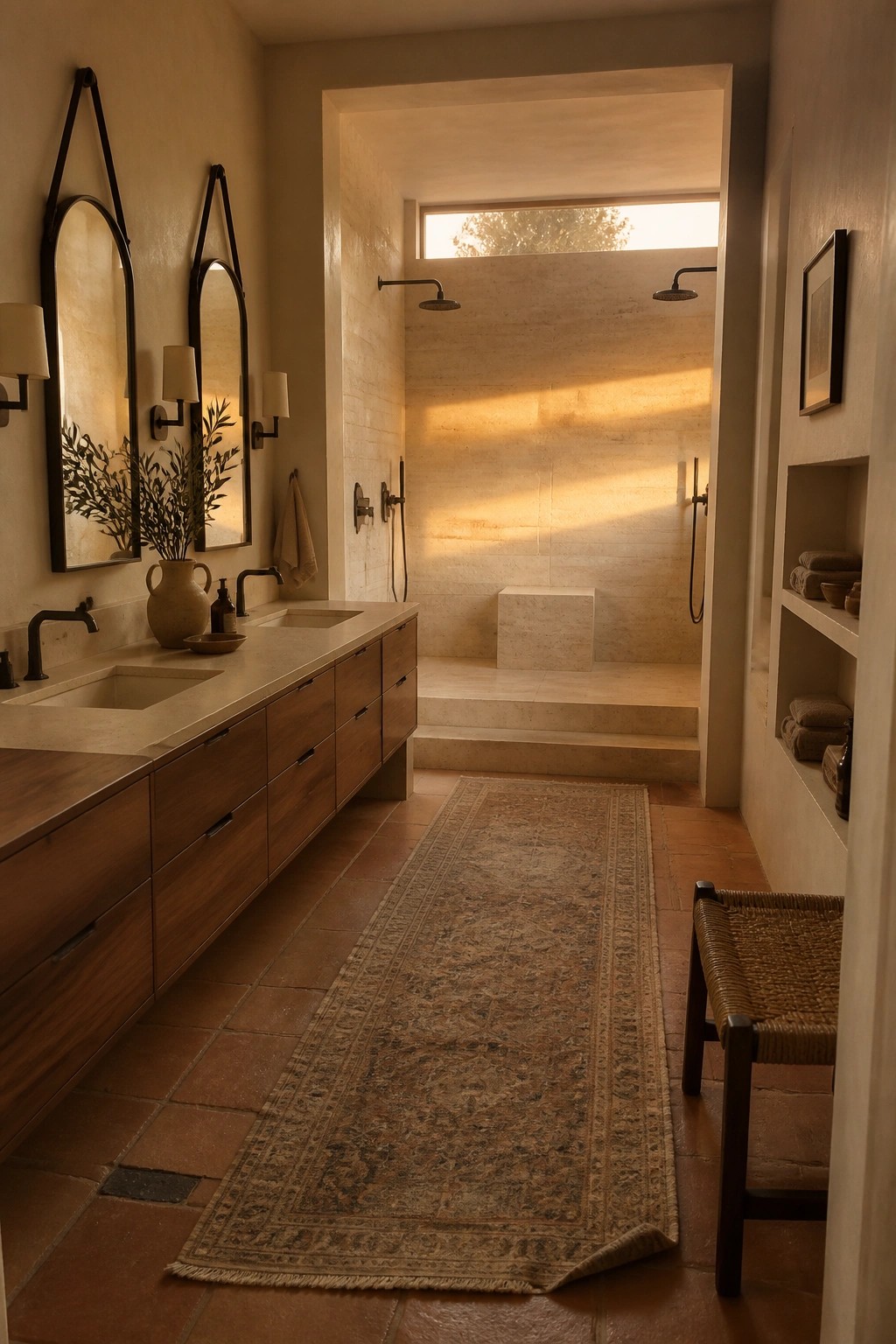
Raising the shower on a low platform gives the travertine a stronger presence in the room. The steps create a natural boundary that keeps the wet area separate without needing extra walls or doors.
This layout works best in medium to large bathrooms where there is room to step up without crowding the rest of the space. It pairs well with terracotta floors and simple wood vanities, but the platform height should stay low so the steps remain comfortable to use every day.
Arched Travertine Showers Create a Clear Focal Point

An arched opening lined with travertine makes the shower the main feature in the room. The stone feels solid and warm at the same time, and the curve softens the look without adding extra trim or detail. Many people like this because it gives the bathroom a simple structure that still feels finished.
This approach works best in spaces that already have warm flooring like terracotta or similar tile. Keep the rest of the room fairly plain so the shower stays the center of attention. It suits homes with a Mediterranean or older character where you want the materials to carry most of the interest.
Build a Bench Into the Travertine Shower

A bench inside the shower gives you a spot to sit while washing or to rest a foot when needed. In travertine it feels like a natural part of the space instead of something added later.
This works best in showers that have enough depth to keep the bench out of the main spray. Match the bench height to the first or second tile row so it stays comfortable and easy to clean. It suits bathrooms that get daily use and need a simple, practical detail rather than extra fixtures.
Frequently Asked Questions
Q: How do I protect travertine from water damage in the shower? A: Seal the stone every year or two with a penetrating sealer made for natural stone. Test a small area first so you know how it takes the product. This stops moisture from soaking in and leaving marks.
Q: What walls work best around a travertine shower for that Tuscan style? A: Try plaster or textured paint in soft beige or warm tan shades. These tones sit nicely next to the stone and keep the whole space feeling grounded. Wood accents on a vanity or shelf add a bit more warmth without going overboard.
Q: What’s the easiest way to clean a travertine shower daily? A: Wipe the surface with a soft cloth and mild soap after you finish. Skip anything with acid since it can dull the stone. A plain water rinse handles most days just fine.
Q: Can travertine showers handle hard water areas? A: Squeegee the walls right after each shower to cut down on buildup. A neutral stone cleaner removes any leftover spots without scratching or etching.