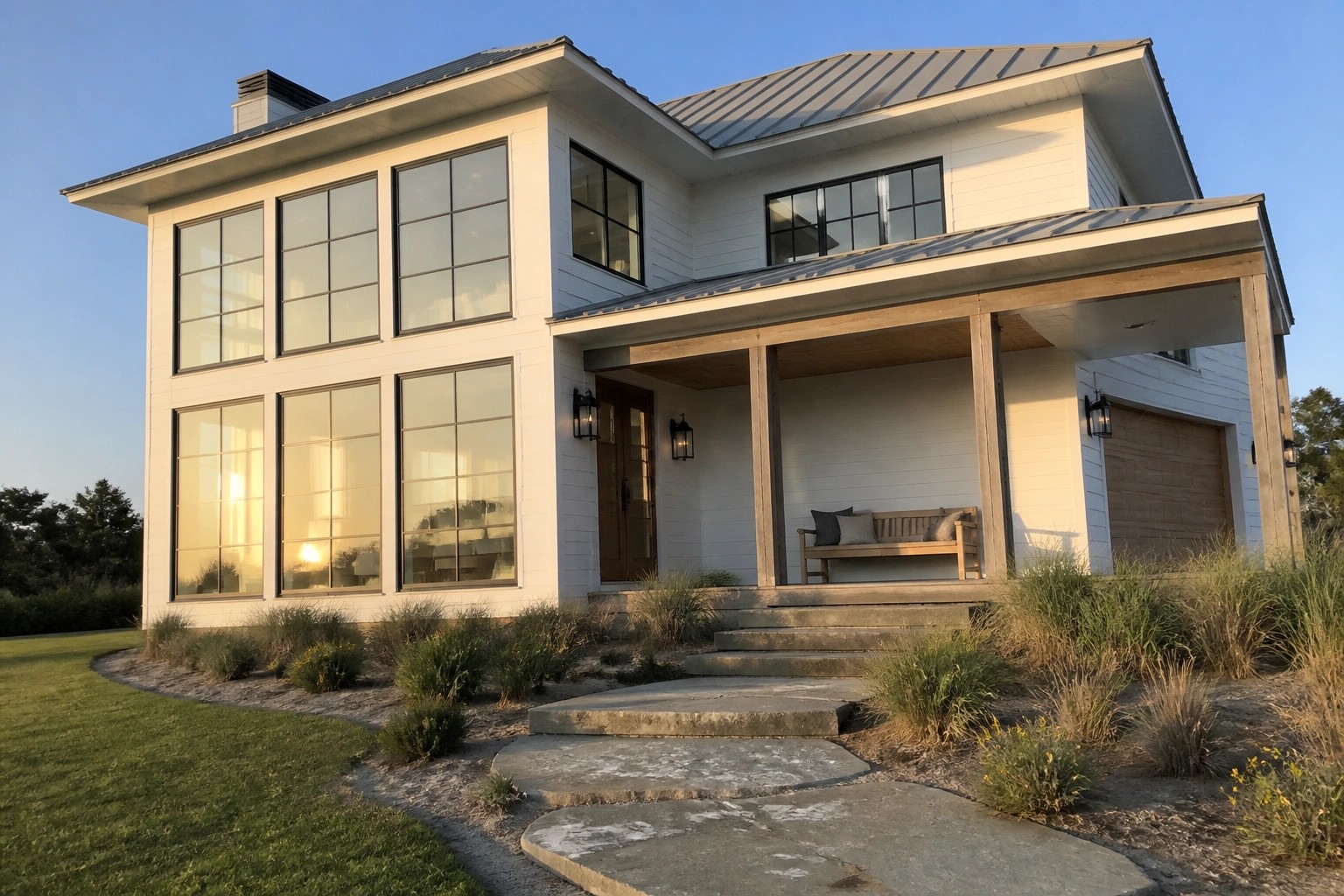
I notice right away how oversized windows change the balance of a coastal exterior because they open up the facade without needing much extra decoration.
Choosing the right materials around those windows matters more than people expect since wood tones or white cladding can either soften or sharpen the look from the street.
I would check the scale in person first before copying any of these setups because photos often hide how the proportions feel at eye level.
Roof overhangs and simple entries help keep the whole front grounded even when the glass takes up so much space.
Small details like window frames and siding direction then pull the design together in ways that last beyond the first glance.
Oversized Windows For Coastal Exteriors
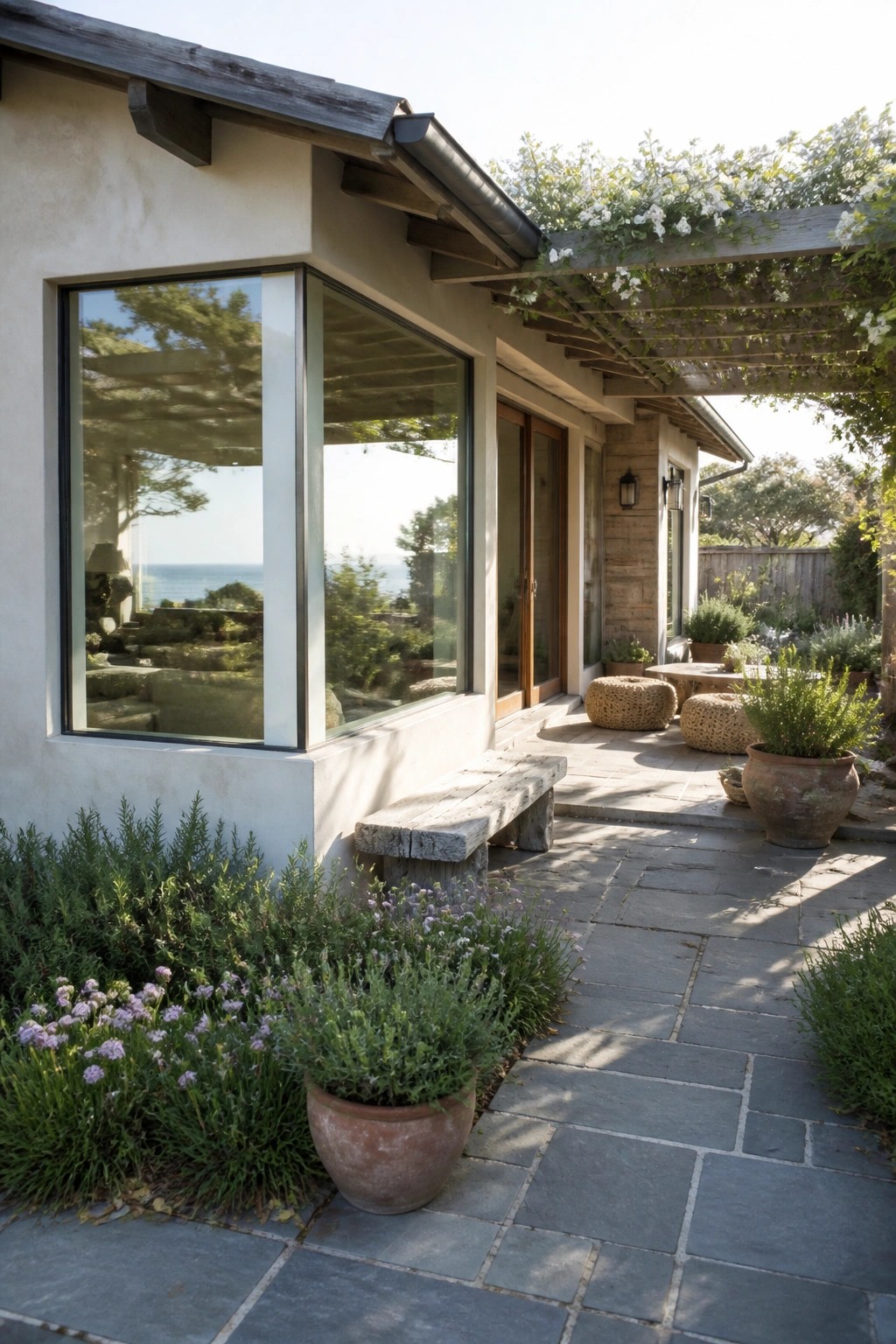
Large windows can change how a house sits on the coast. They pull in the view and make the exterior feel lighter instead of closed off. On homes like this one, the glass stretches wide enough to show the ocean and trees without needing extra decoration.
This works best on houses that already face open water or a garden. Keep the frames simple so the glass stays the main feature. Avoid placing too many small windows next to them or the clean look gets lost.
Tall Arched Windows for Coastal Homes

Tall arched windows give a coastal house an open and airy look that works especially well near the water. They pull in the view and light without extra decoration, which keeps the whole exterior feeling simple and calm.
They suit homes that sit right on a slope or bluff where the ocean is the main feature. Keep the surrounding materials quiet, like stone bases and clean stucco, so the windows stay the focus instead of competing with too many details.
Oversized Windows on a Small Coastal Home
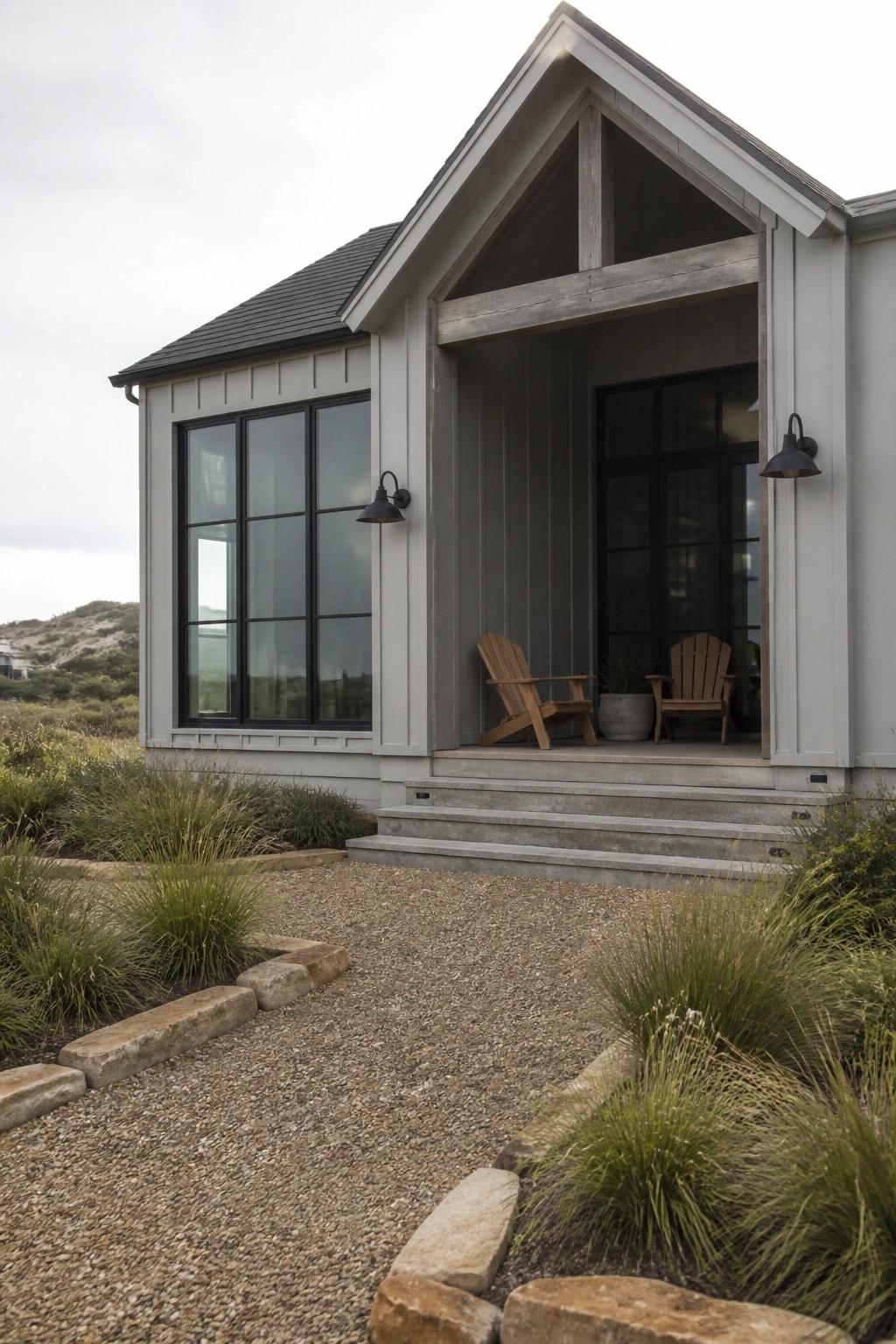
Large windows can change how a compact house reads from the outside. They bring in light, open the facade, and keep the scale from feeling closed in, especially on homes near the coast where the view matters.
They work best when the rest of the exterior stays simple. Dark frames help them stand out without extra trim, and they pair well with a covered entry so the house does not feel too exposed.
Oversized Glass Doors That Extend Living Outdoors

Large sliding glass doors make an outdoor patio feel like a natural extension of the house rather than a separate space. They bring in plenty of light and let the indoor rooms connect directly to the seating area right outside.
This setup works best on homes where the main living space sits close to the pool or deck. Keep the patio furniture low and simple so the view through the doors stays open and the whole area feels bigger.
Oversized Windows on Brick Exteriors

Oversized windows work especially well when the rest of the facade stays simple. The tall black frames here stand out against the light brick and give the front a bright, open look without extra trim or decoration.
This approach suits homes near the coast where light matters most. Keep the materials quiet so the windows can do the main job, and make sure the sizes fit the wall space rather than crowding it.
Wide Sliding Doors That Extend The Living Area

Large sliding doors like these turn a deck into usable extra space instead of something that feels separate. The opening lets furniture and people move between the two areas without a hard break, which works well when the weather stays mild and the view is worth keeping in sight.
This setup suits homes where the deck sits right off the main living room. Keep the door track clear and choose furniture that can handle both sun and indoor use so the spaces feel connected rather than staged.
Oversized Windows on Dark Wood Exteriors
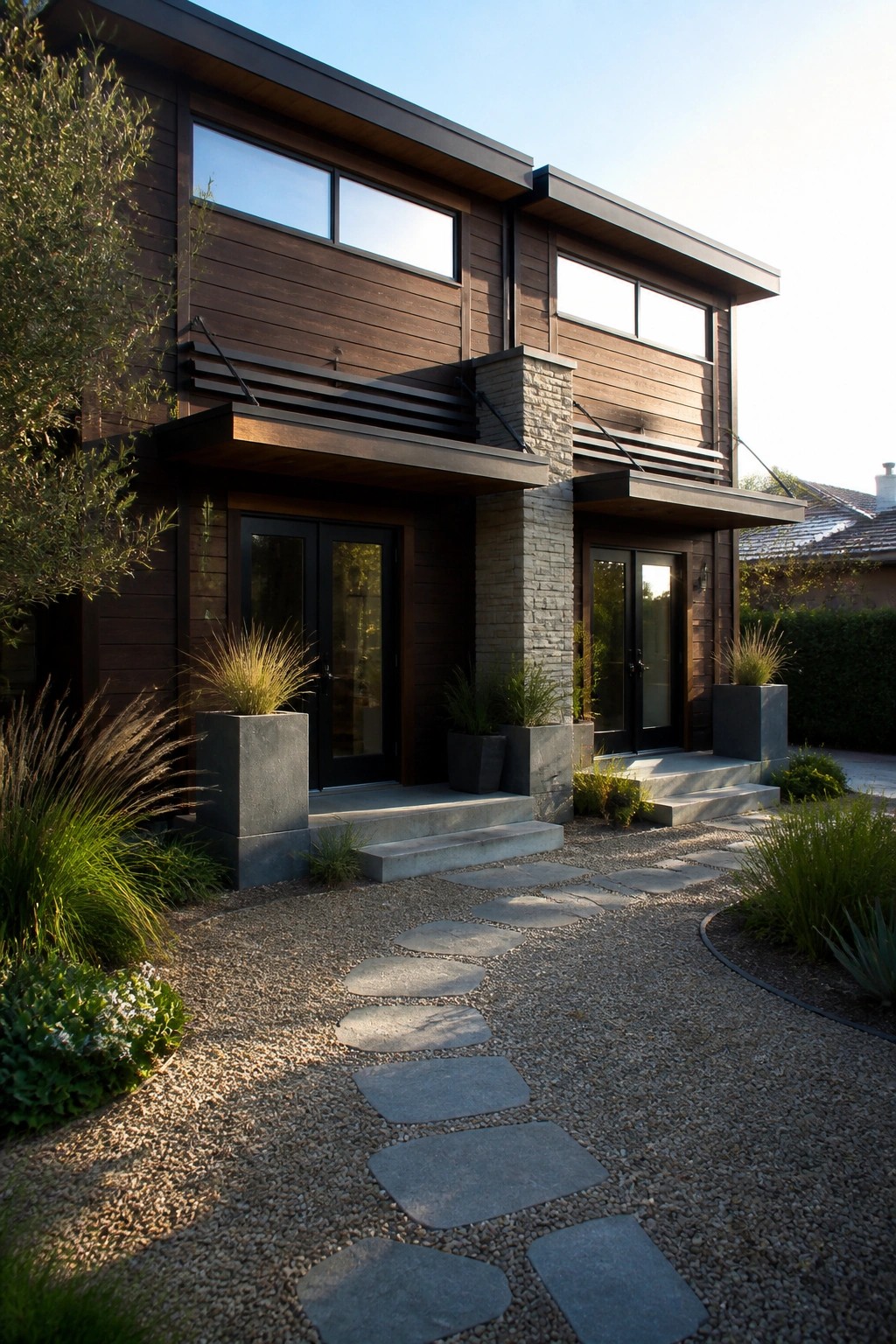
Large windows work especially well on modern homes with dark siding. They bring in light and keep the exterior from feeling closed off, which fits coastal settings where people want to connect with the outdoors.
This approach suits wood-clad homes best when the windows are grouped in simple horizontal bands and kept to clean black frames. It helps balance the weight of the dark material without adding extra trim or details that can clutter the look.
Oversized Windows on Small Structures
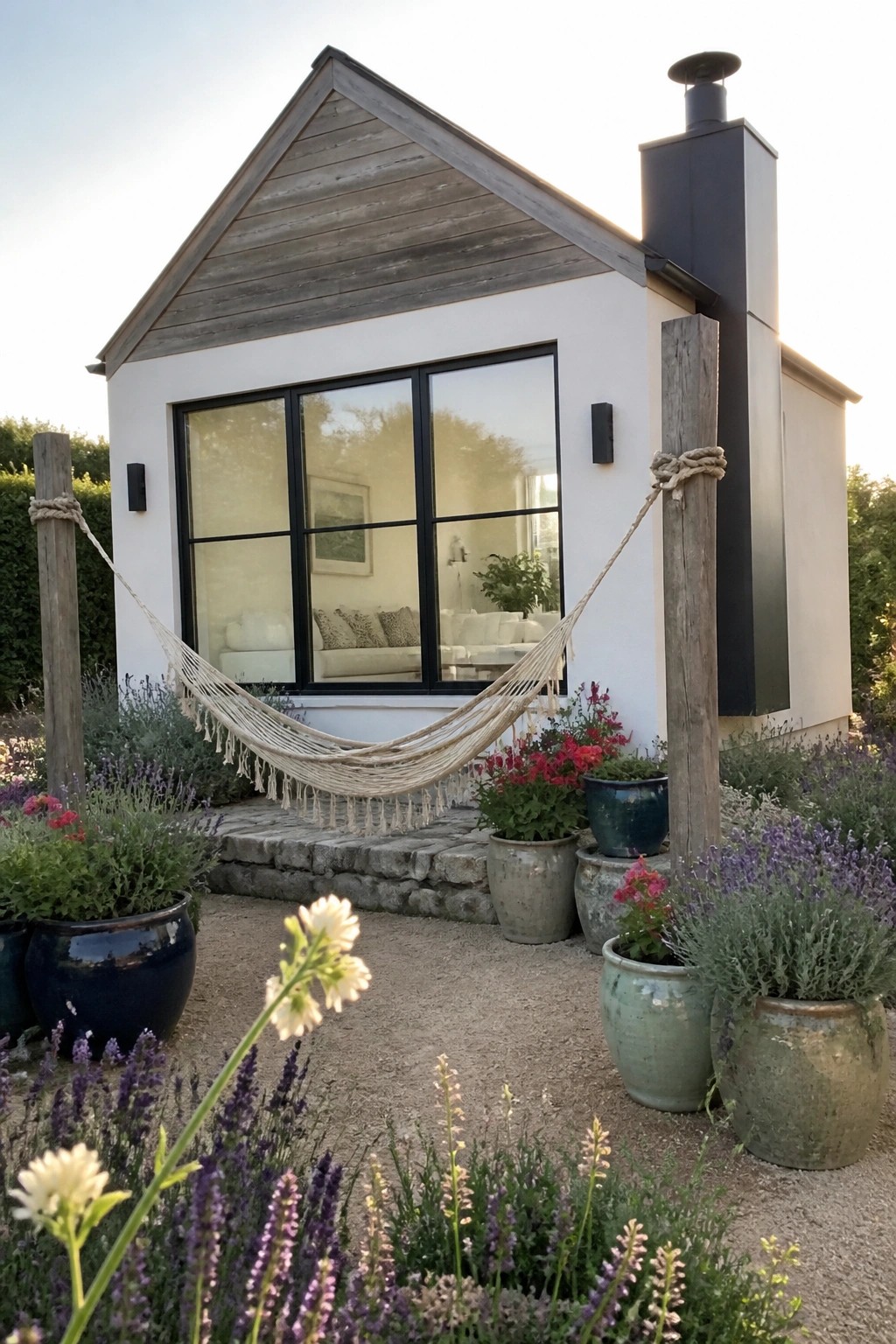
Large windows can make even a compact building feel much more open. In this case the black frames stretch across most of the front wall, letting the interior read as part of the garden rather than a closed box. The simple white siding and gable roof keep the look clean so the windows stay the main feature.
This approach works well on guest houses, studios, or backyard offices where you want light and a sense of space without adding square footage. Keep the surrounding planting low and use the same window style on the opposite wall if possible so the view runs straight through.
Using a Wood Door to Balance Oversized Windows

A solid wood door can give weight to a front that is mostly glass. In coastal homes the big windows do most of the work for light and views, so the door needs to feel simple and sturdy rather than compete with them.
A natural wood tone works well against light siding and dark window frames. Keep the hardware minimal and let the door sit slightly forward so it reads as the main point of entry without extra trim or decoration. This approach suits low, single-story homes that already lean on large glass.
Fire Pit in the Center of the Patio
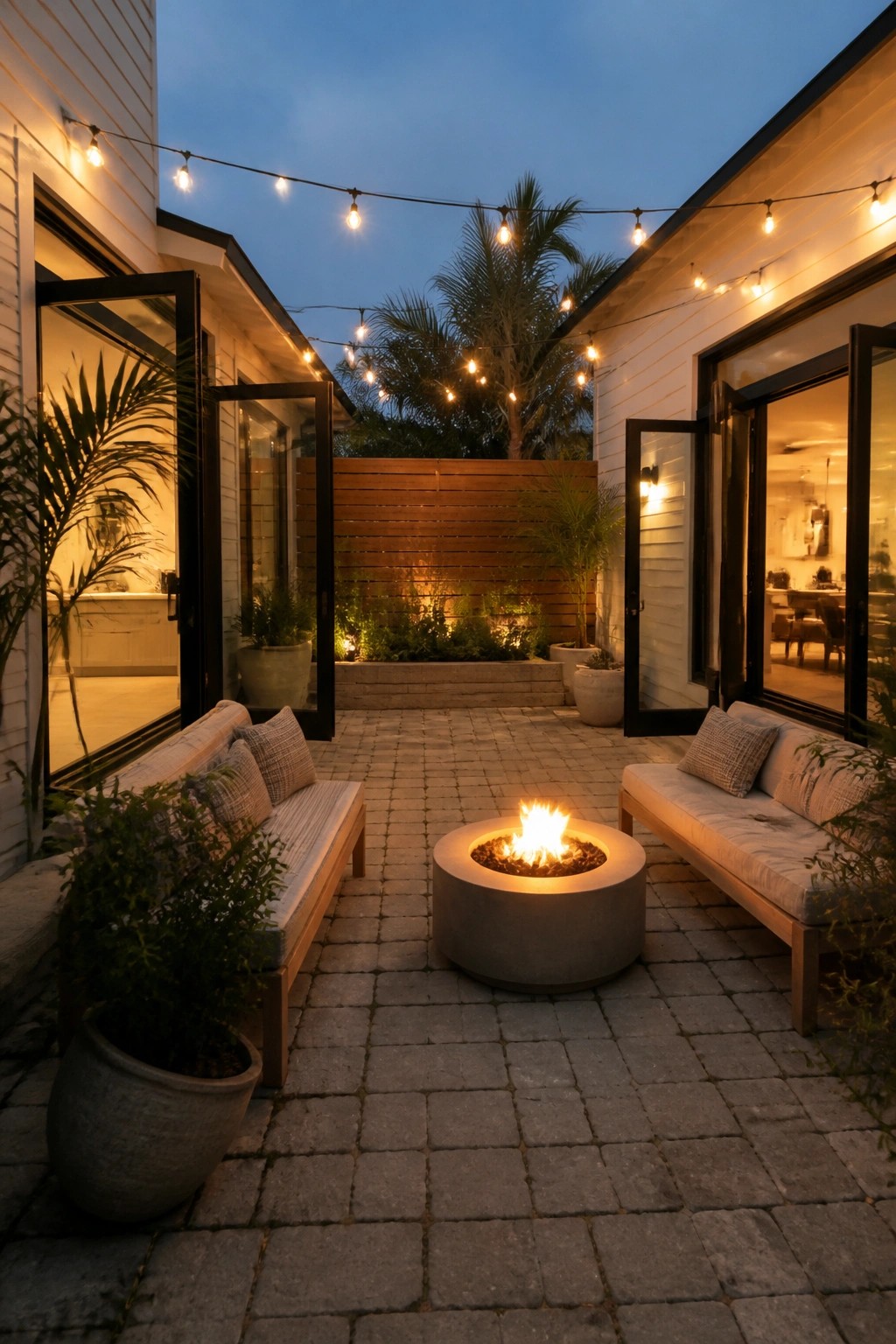
Placing a fire pit right in the middle of a patio gives the whole space a clear purpose. It pulls seating around it so people naturally gather and stay longer once the sun goes down.
This works best on smaller or medium courtyards where you want the area to feel used at night. Keep the benches low and face them toward the pit, and make sure the doors from the house open wide so the indoor and outdoor rooms connect without effort.
Oversized Windows That Frame the View
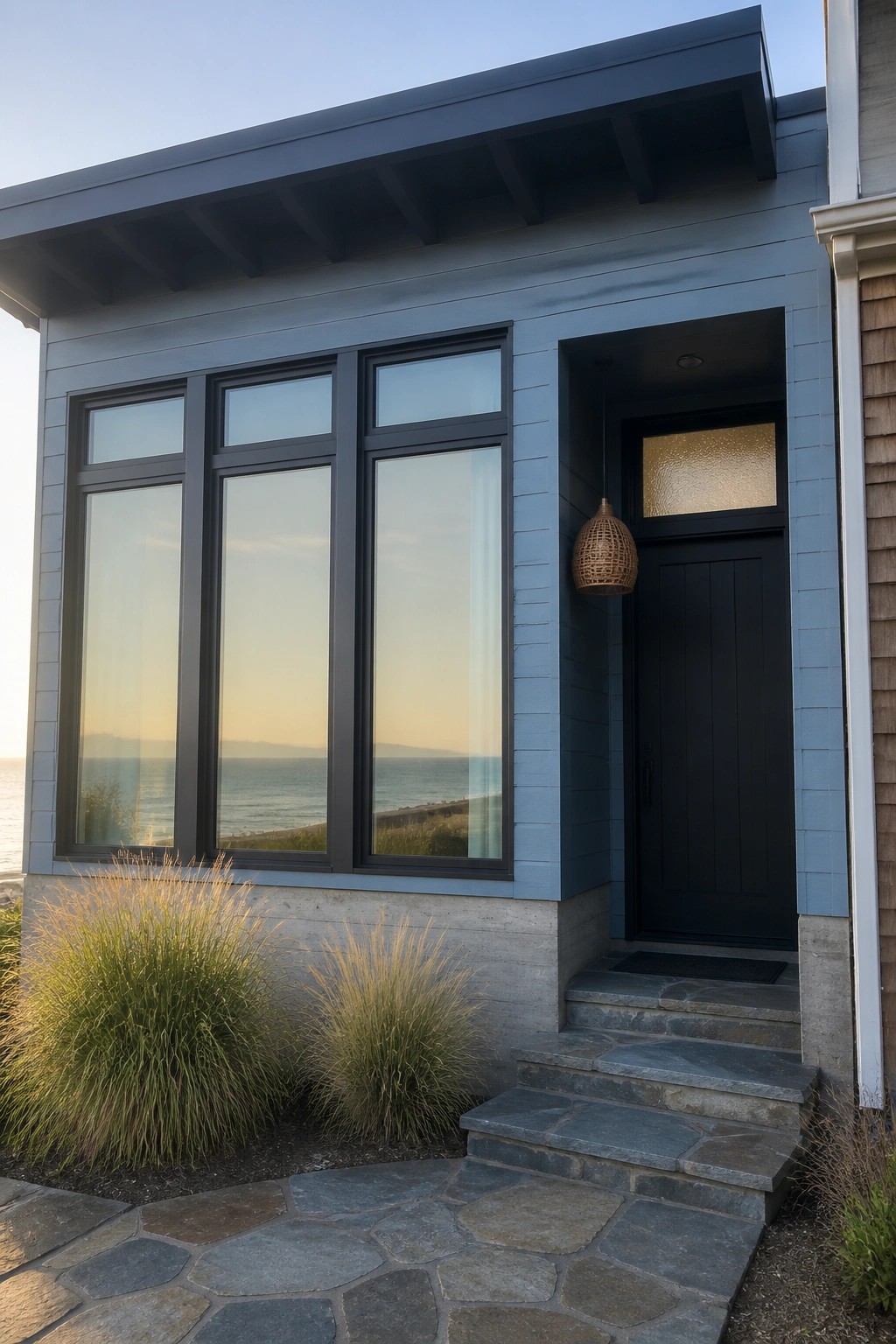
Large windows like these turn the exterior into something more than just siding and a door. They pull the ocean right up to the house and make the whole facade feel open without adding much else. On a coastal home this size, that kind of window placement does most of the visual work.
They suit homes that sit close to the water and want a clean, modern look. Keep the trim dark and the rest of the materials simple so the glass stays the main feature. Just check that the interior layout actually uses the view, or the windows can end up feeling like wasted space.
Oversized Windows That Capture Coastal Views

Large windows work especially well on homes that sit right above the water. They pull in the view and the light so the house feels more open without any extra effort.
This approach suits simple modern houses on sloped lots. Keep the deck in natural wood and let the windows run long so the indoor and outdoor spaces read as one.
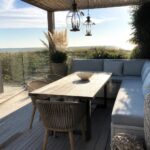
Stone Tables Anchor Outdoor Dining Areas

A heavy stone dining table gives an outdoor space real presence without needing much else around it. It stands up to sun, rain, and daily use while keeping the area looking simple and solid. The light color also helps reflect heat, which makes the seating more comfortable during warmer months.
This approach works best on patios that connect directly to the house through large windows. Pair the table with lighter woven chairs so the whole setup does not feel too heavy. Just leave enough room around the edges for people to move easily when the table is fully set.
Using A Pergola To Create A Defined Outdoor Space
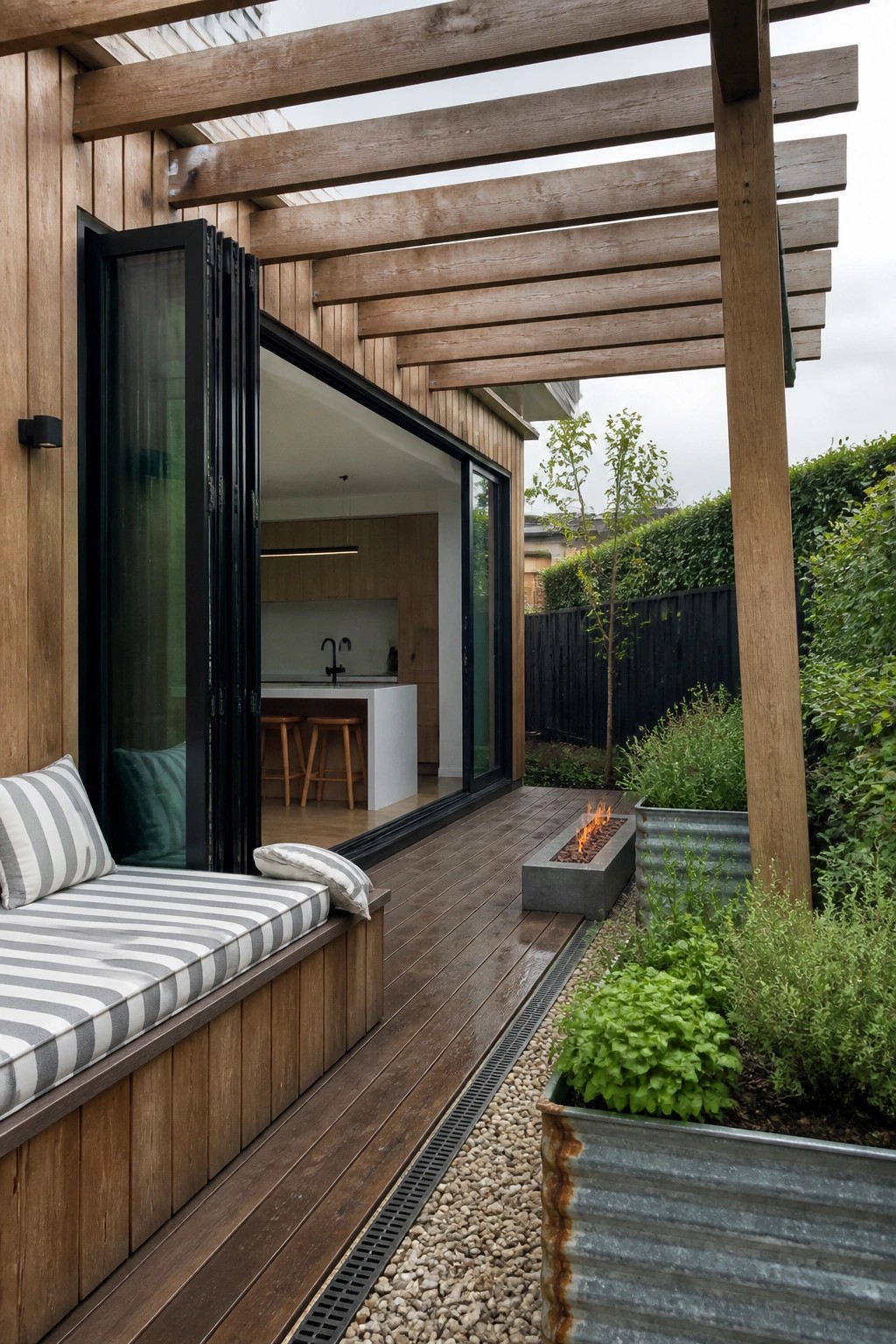
A pergola overhead helps turn a basic deck into a more usable outdoor area by giving it some structure and partial shade. It keeps the space from feeling completely open while still letting in plenty of light and air.
This approach suits homes where the kitchen sits right off the deck. Add simple seating and a low fire feature underneath so the area works for meals or quiet evenings without needing much extra furniture.
Using Oversized Windows On A Brick Facade

Large windows like these give a coastal house an open, airy feel right from the outside. They pull the view forward and keep the rest of the facade from feeling heavy or closed off.
This approach works well on homes near the water where the view is the main draw. Stick to simple materials around the windows so they stay the focus without extra trim or decoration getting in the way.
Oversized Windows That Open The House To The Pool

A long run of glass along the side of the house pulls the pool and garden right up to the interior. In coastal homes this works well because it turns the view into part of the daily living space without needing extra rooms or structures.
Keep the frames thin and dark so the glass reads as one clean surface. Place the windows where the main living areas sit, and add a simple overhang to handle sun and rain. This layout suits flat sites with open yards more than tight urban lots.
Oversized Windows on Modern Exteriors

Many modern homes place one large window right along the front to pull in more daylight and give the facade a lighter look. This choice works well on coastal houses because it keeps the exterior simple while still connecting the inside to the street and trees beyond.
Put the window near the main door so the two balance each other. It suits homes with flat panels and minimal trim, but check that the glass is rated for wind if you live near the coast.
Oversized Windows on Coastal Exteriors
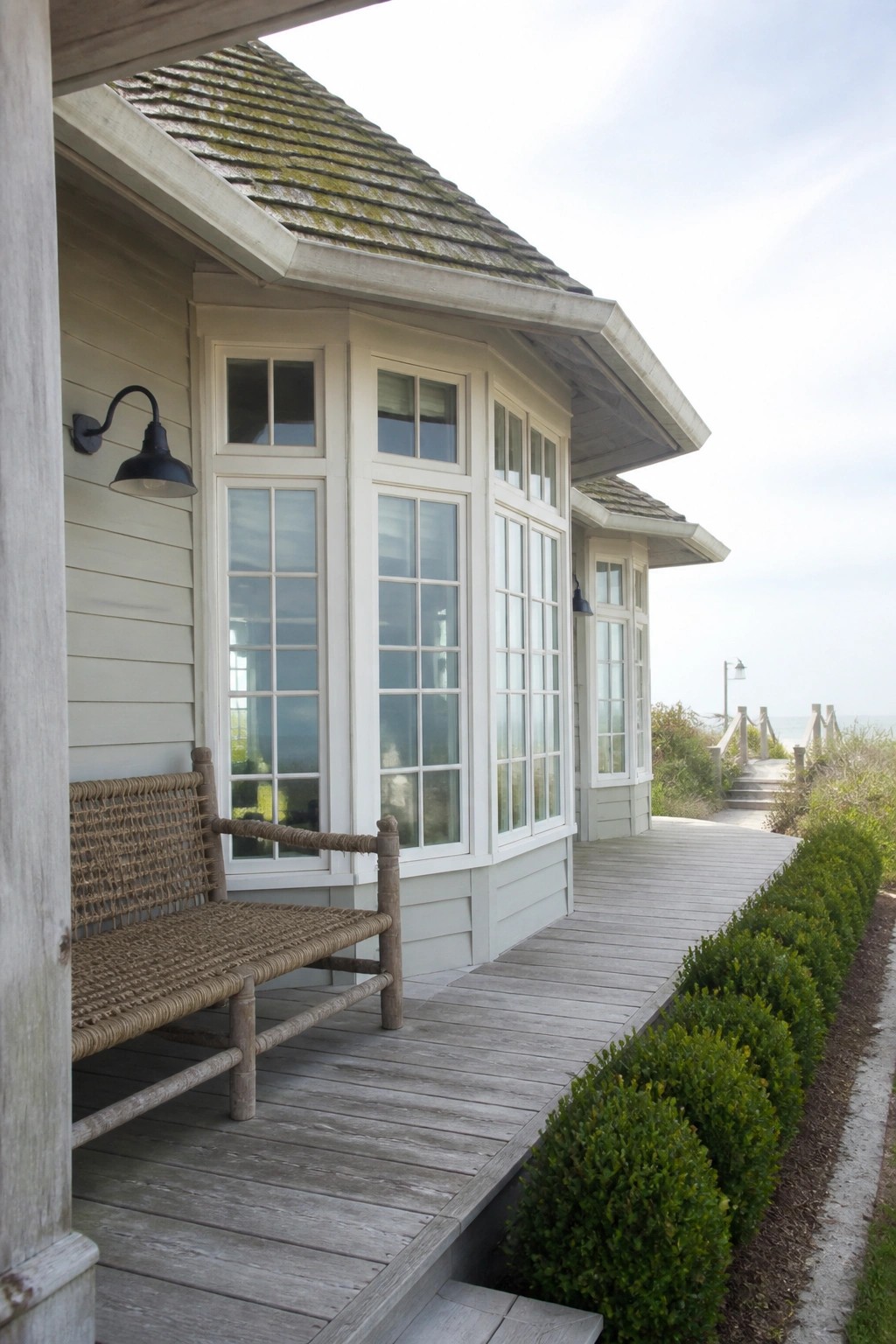
Large windows placed along the side of a house can open up the whole exterior. They pull in light and give a direct view of the water or landscape, which works especially well on homes that sit close to the shore.
This approach suits simple wood siding and low rooflines. Keep the window frames in a soft tone so they blend with the rest of the facade instead of standing out too much.
Mixing Dark Siding With Stone
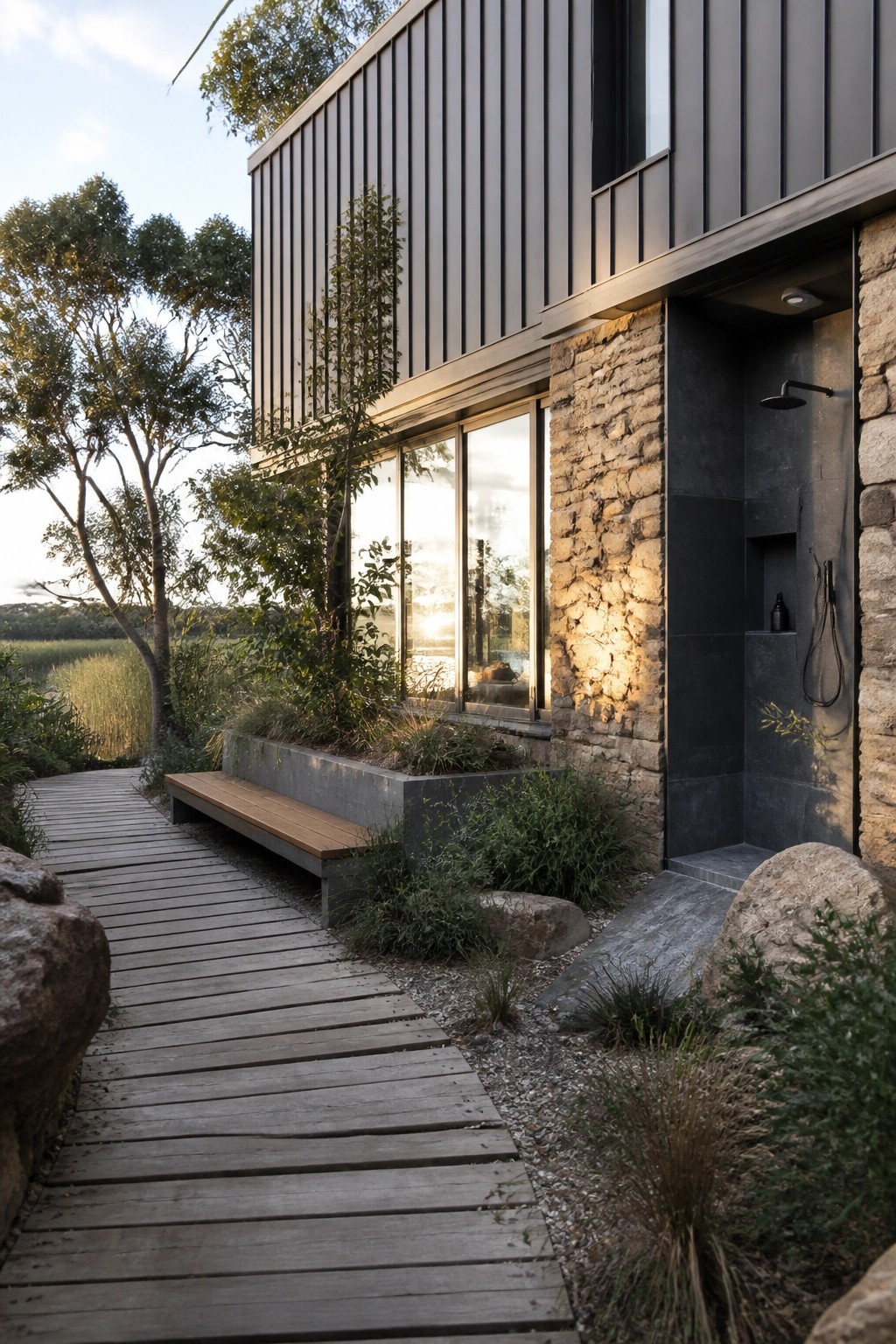
A simple mix of dark vertical siding and rough stone keeps a modern coastal house from feeling too flat or industrial. The stone adds weight and texture right where the large windows sit, so the glass does not look like it is just floating on the wall.
This approach works best on homes that need some visual break along a long facade. Keep the stone sections focused around windows or the entry, and let the dark siding run the rest of the way. It holds up well near the coast without looking overly polished.
Deck Seating With Built In Lighting

Built-in seating along a deck edge gives you a place to sit without crowding the space with extra chairs. It works especially well on coastal homes where you want to keep the view open and the materials simple.
The strip of warm light tucked under the bench edge helps at night for both safety and mood. This kind of detail suits homes that see regular outdoor use and need lighting that stays low and steady rather than bright and obvious.
Small Seating In A Narrow Side Yard
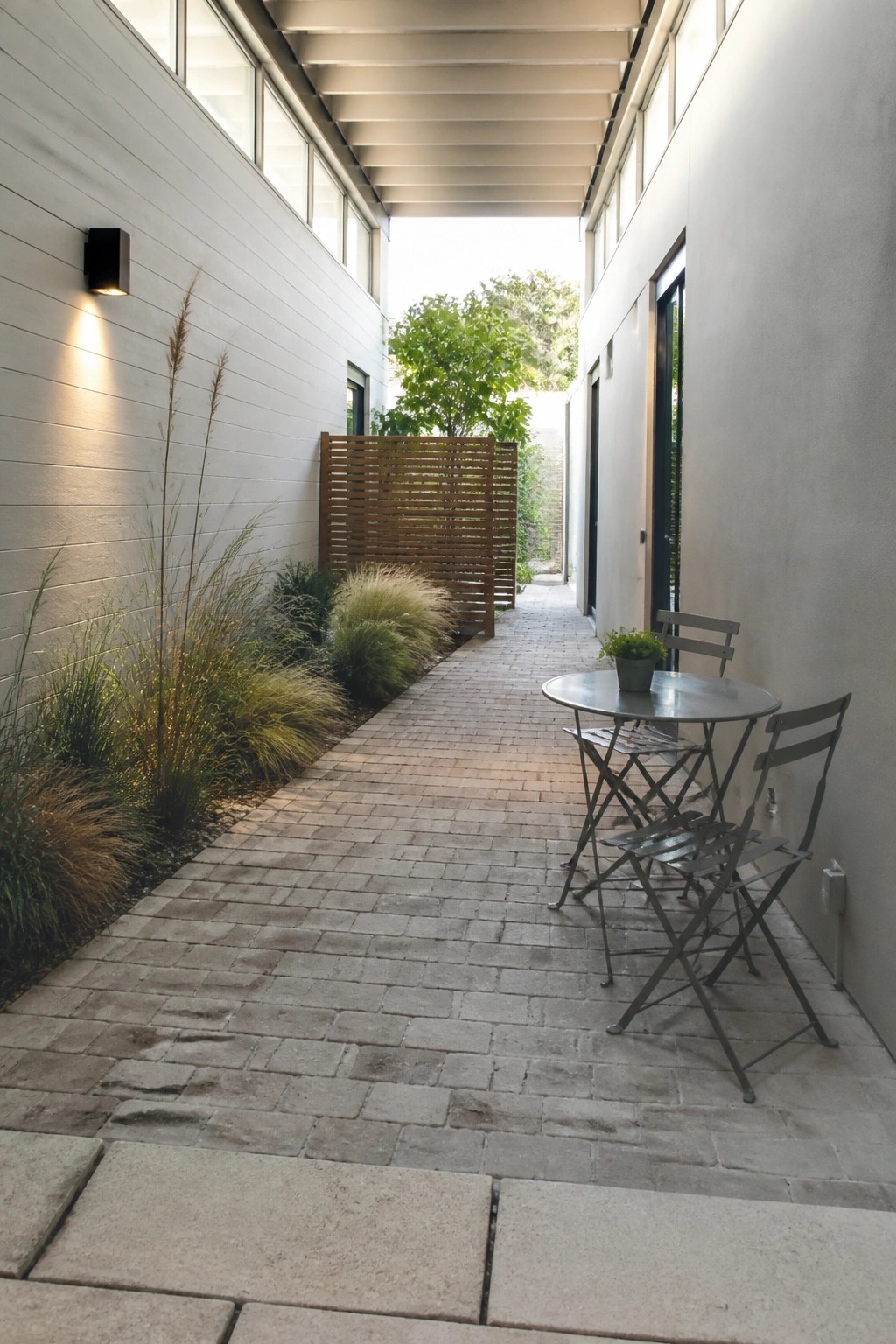
Narrow side yards often get ignored because they feel too tight for anything useful. A small table and a couple of chairs can turn that leftover space into a quiet spot for morning coffee or an evening drink without needing a full patio.
This setup works best on homes with long side passages where you still want outdoor seating but do not have wide open ground. Lightweight folding furniture keeps the path clear when needed, and a few taller plants along the edge help the space feel more settled.
Oversized Windows on the Garage
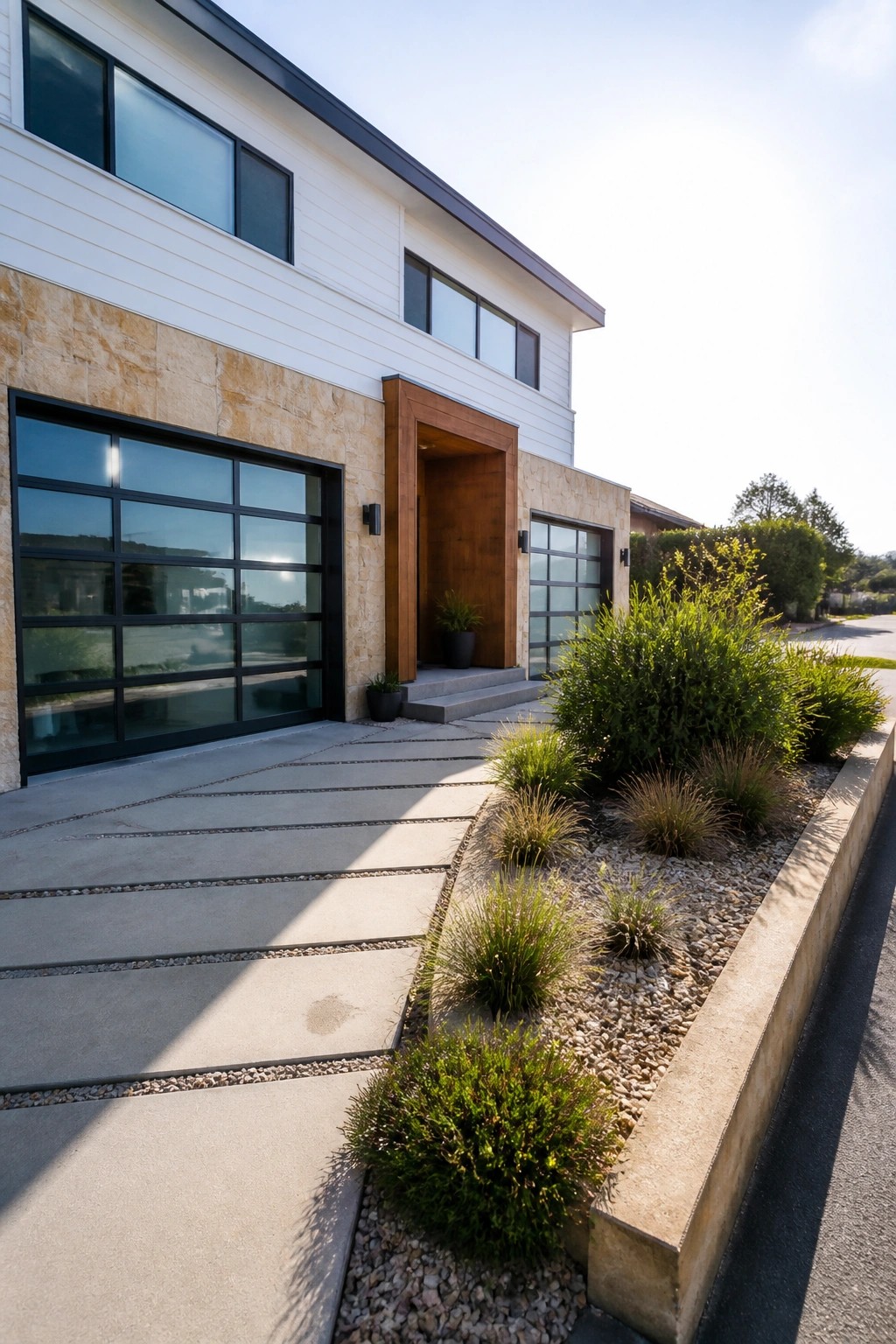
Many modern coastal homes use oversized windows on the garage to pull in light and keep the front from feeling closed off. The black frames give the glass panels a clean look that pairs well with lighter siding and stone.
This approach works best on homes with straightforward rooflines. It suits newer builds where you want the facade to feel open without adding extra trim or details. Just watch the scale so the windows do not overpower the entry.
Oversized Windows That Swing Open
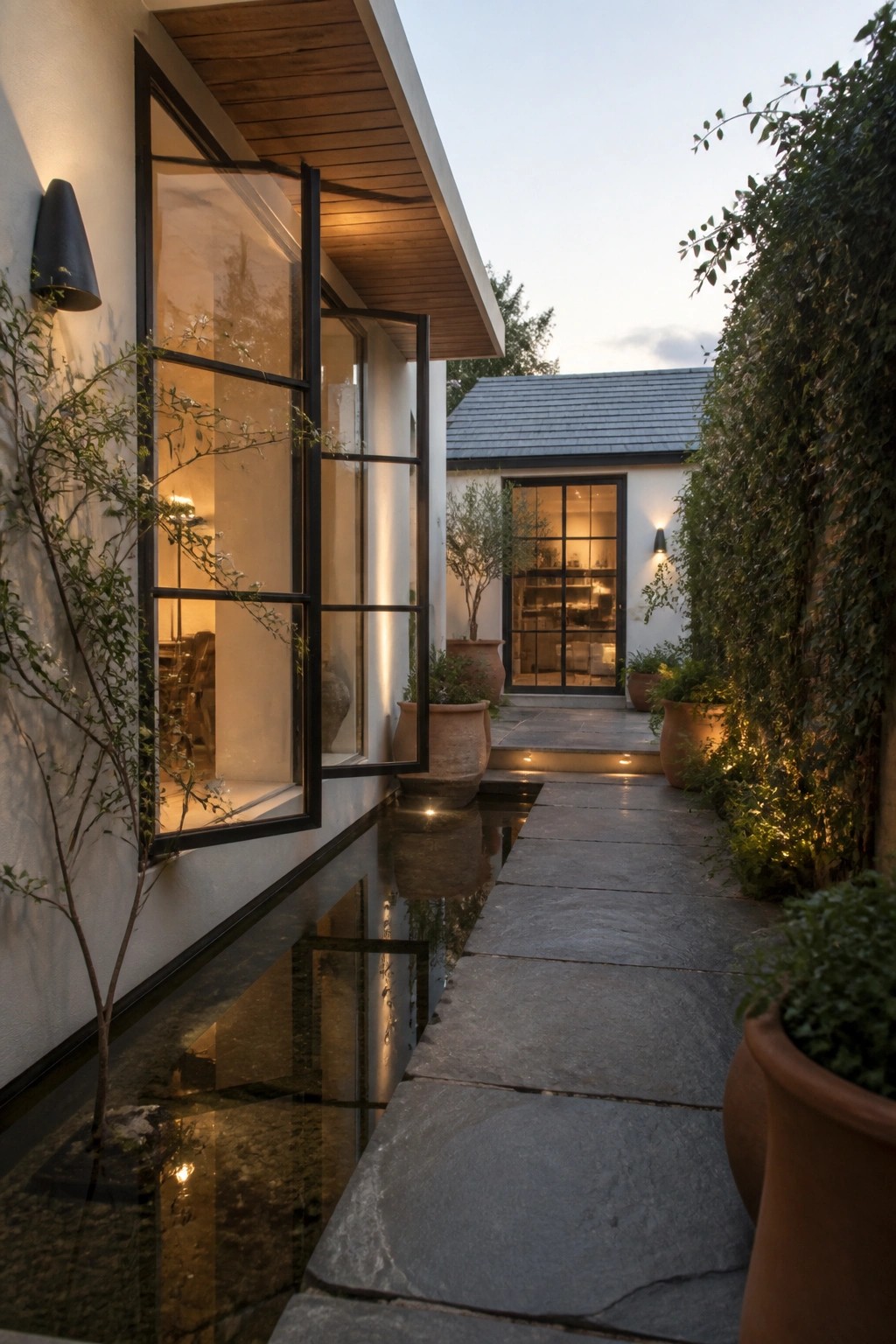
Large operable windows make a house feel more open without needing a whole wall of glass. In this setup the tall black frames fold back to let the indoor space meet the narrow water channel and path right outside.
This works best on homes where you want light and air but still need some enclosure. Use them along a side or rear elevation where the garden path runs close to the wall. Sturdy frames and good seals matter more than anything else if the house sits near the coast.
Frequently Asked Questions
Q: How do you clean oversized windows on a coastal home without it becoming a chore?
A: Grab a good squeegee and some mild soap. Work from the top down on a cloudy day so the glass does not streak. Doing this every few months keeps the view clear.
Q: Do oversized windows make the house too hot in summer?
A: They can if you skip the right glass. Pick low-e coatings to block the heat while letting light in.
Q: Will strong coastal winds damage big windows?
A: Modern frames handle wind well when installed properly. Go for tempered or laminated glass made for high-wind zones. Check local codes before you buy.