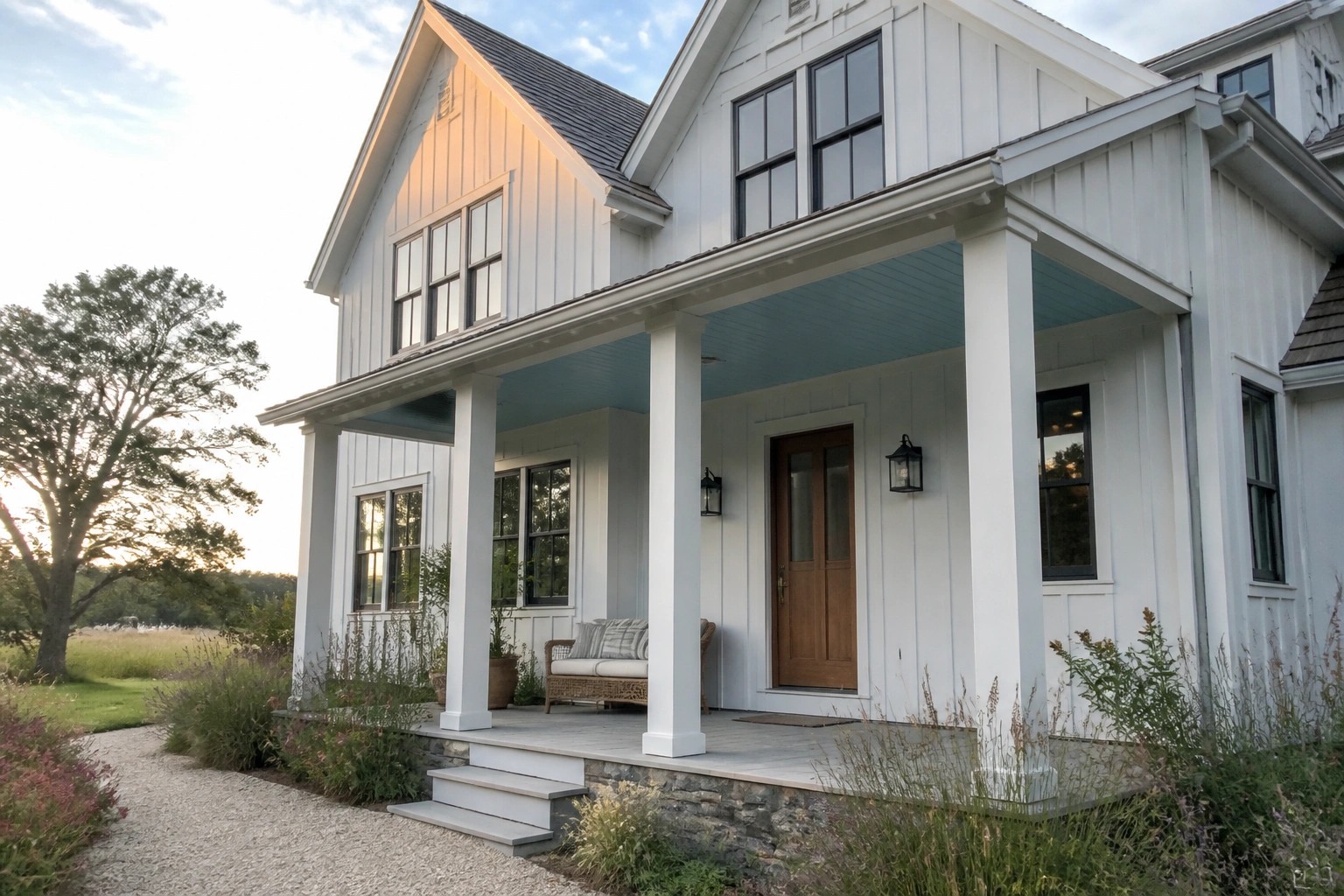
Coastal farmhouses often catch the eye first through their rooflines rather than the windows or siding below.
Gabled shapes give these homes a steadier look against open skies and shifting weather.
I have found that some gable details only reveal their real value once you stand right in front of the house.
Roof pitch matters most.
The right overhang can pull the whole facade together without extra trim.
Gabled Roofs That Shape the Facade
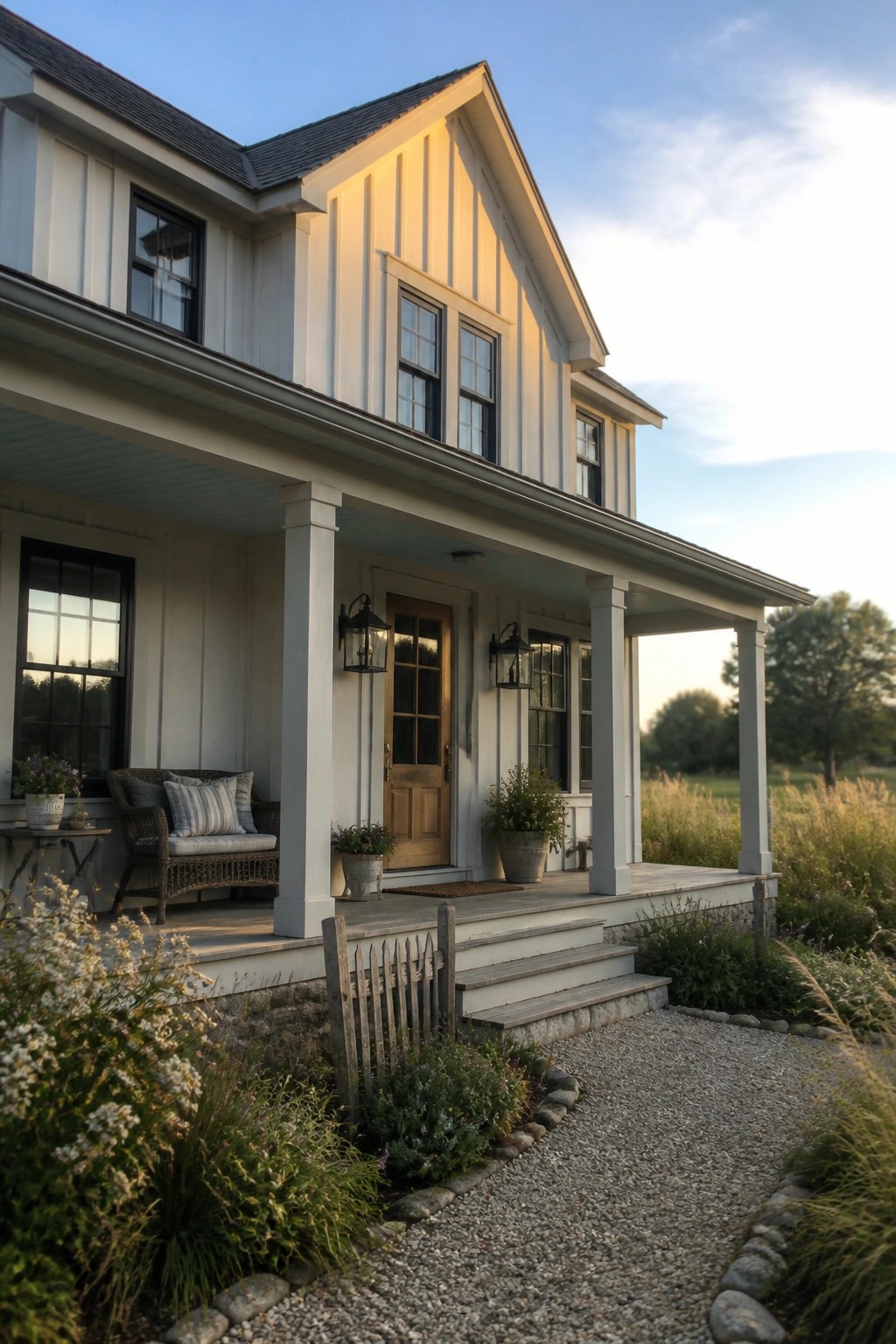
A front gable gives the house its main outline and keeps the whole look simple and balanced. The steep pitch and vertical boards in the gable add height without extra trim or decoration, which suits a coastal farmhouse that needs to feel open to the surrounding land.
This approach works best on homes set back from the road with room for a porch below. Keep the siding light, the windows evenly spaced, and the entry door centered so the roofline stays the focus. Avoid adding too many details under the gable or the clean shape can get lost.
Gabled Roofs That Shape the House
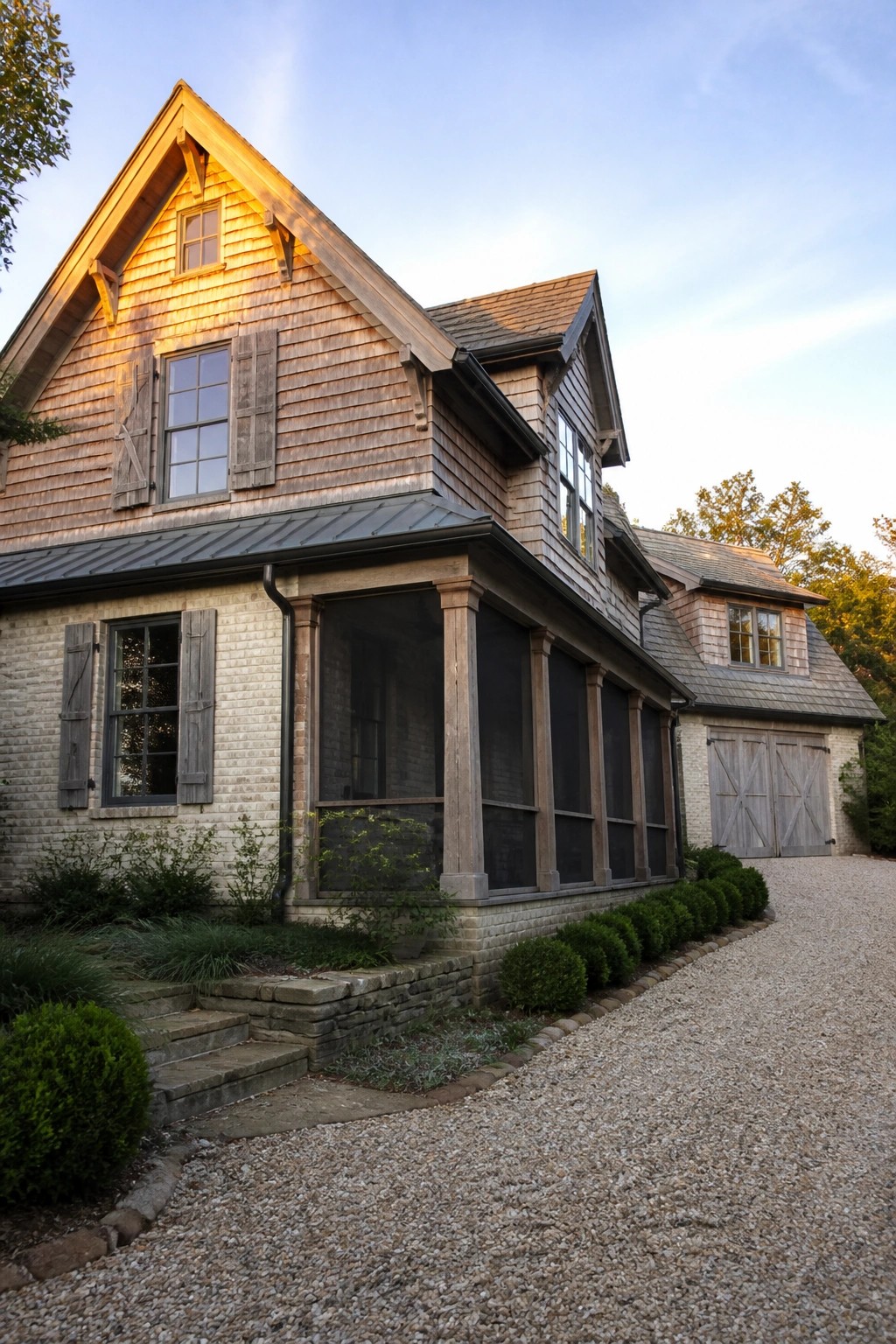
Steep gabled roofs give this style its main character. They create height and a clear silhouette that reads as farmhouse without feeling heavy, especially when paired with wood shingles that weather naturally over time.
This works best on homes where you want the roof to do the visual work from the street. Keep the gables clean and let the siding and trim stay simple so the rooflines stay the focus.
Gabled Roofs That Center the Entry
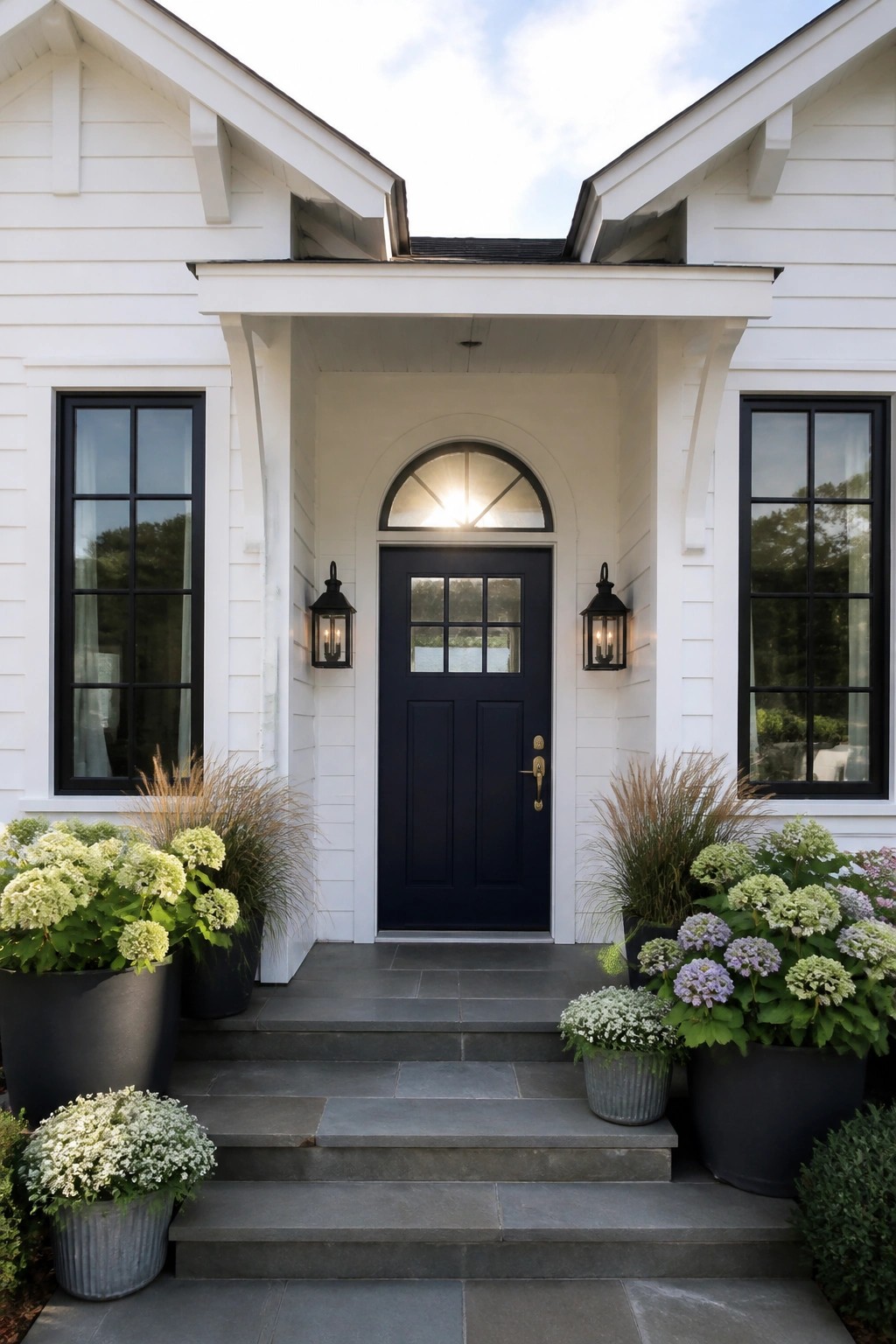
Gabled roofs give a coastal farmhouse its basic shape and help pull the whole front together. In this case the two gables sit on either side of the door, so the eye lands right in the middle instead of wandering across a flat wall.
This approach works best on homes that already have a clear center point. Keep the siding simple, use a dark door for contrast, and let the roofline do the rest. Too many extra details can flatten the effect.
Gabled Roofs Shape a Simple Coastal Farmhouse Look

Gabled roofs give this house its clear shape and help it feel grounded without extra trim or detail. The main gables sit over the living areas while a smaller one covers the porch, which keeps the whole front from looking flat or boxy.
This roof approach works best on homes that need a bit of height and rhythm along the street. It suits coastal or rural lots where you want the architecture to stand out through form rather than color or decoration.
Multiple Gables Over a Wide Porch
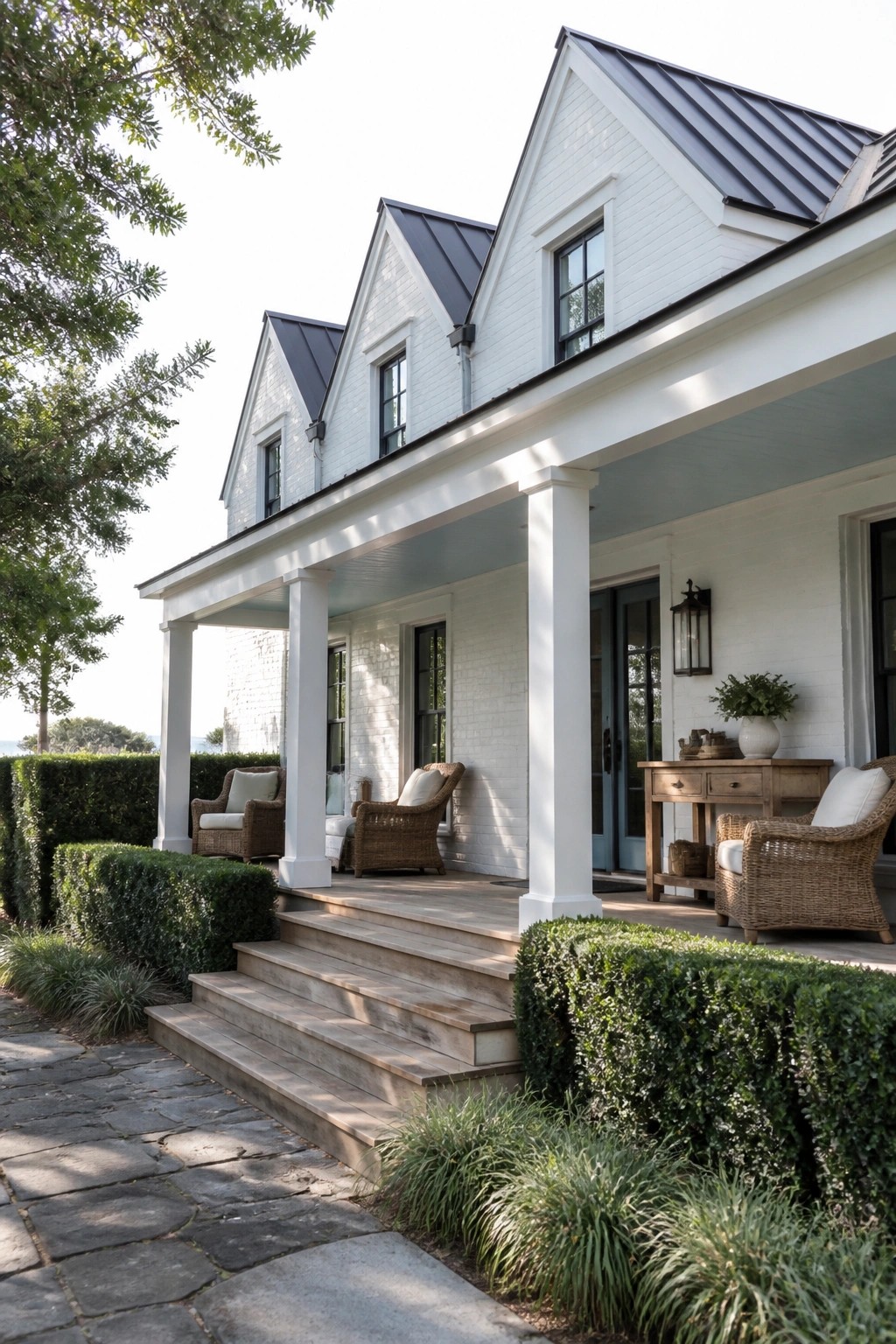
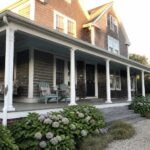
A row of gables along the roof gives a farmhouse more shape without adding extra trim or details. The different heights break up the front and keep the whole house from looking flat, even when the siding stays simple and white.
This layout works best on homes that already have a long porch, since the gables can sit right above the columns and create natural shade. It suits coastal spots where you want some covered space outside but still need the roof to shed rain and handle wind.
Gables Shape the Roofline

Gables work well on farmhouses because they break up a wide roof and stop it from feeling flat or heavy. On this house the peaks run along the front and give the whole structure more height and rhythm without needing extra stories.
This move suits coastal homes that want a classic look but still feel open and light. Pair the gables with simple white siding and dark windows so the roof shape stays the main feature instead of getting lost in too much detail.
Gabled Roofs That Shape The Facade
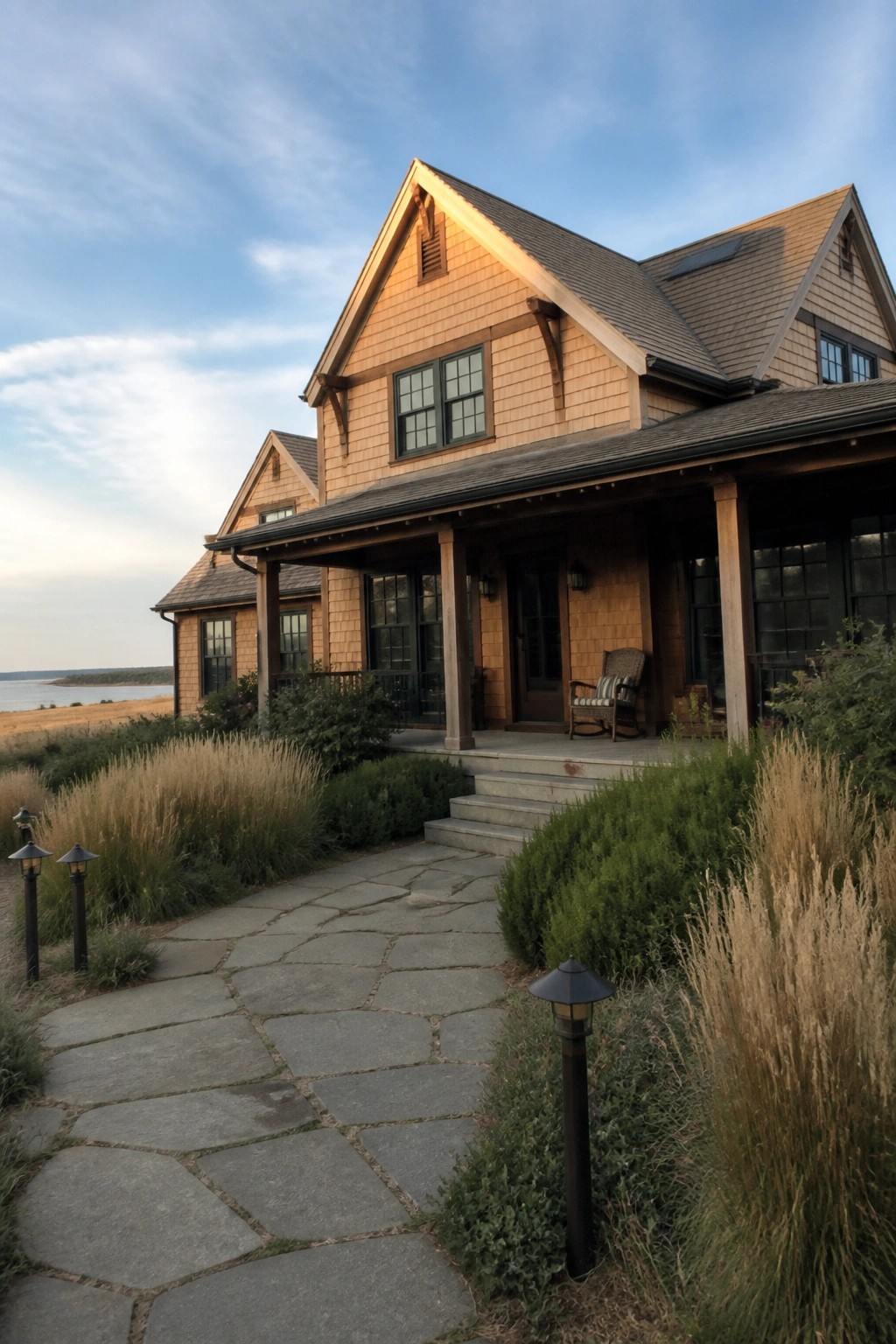
Gabled roofs do a lot of the work on homes like this one. They break up the mass of the building, add height where it feels right, and give the whole place that familiar coastal farmhouse outline without needing extra trim or decoration.
This approach works best on houses that sit on open lots or near water, where the roofline can be seen from a distance. Stick with wood shingles and keep the gables fairly simple so the shape stays clean rather than busy.
Gabled Roofs Shape the Whole Look
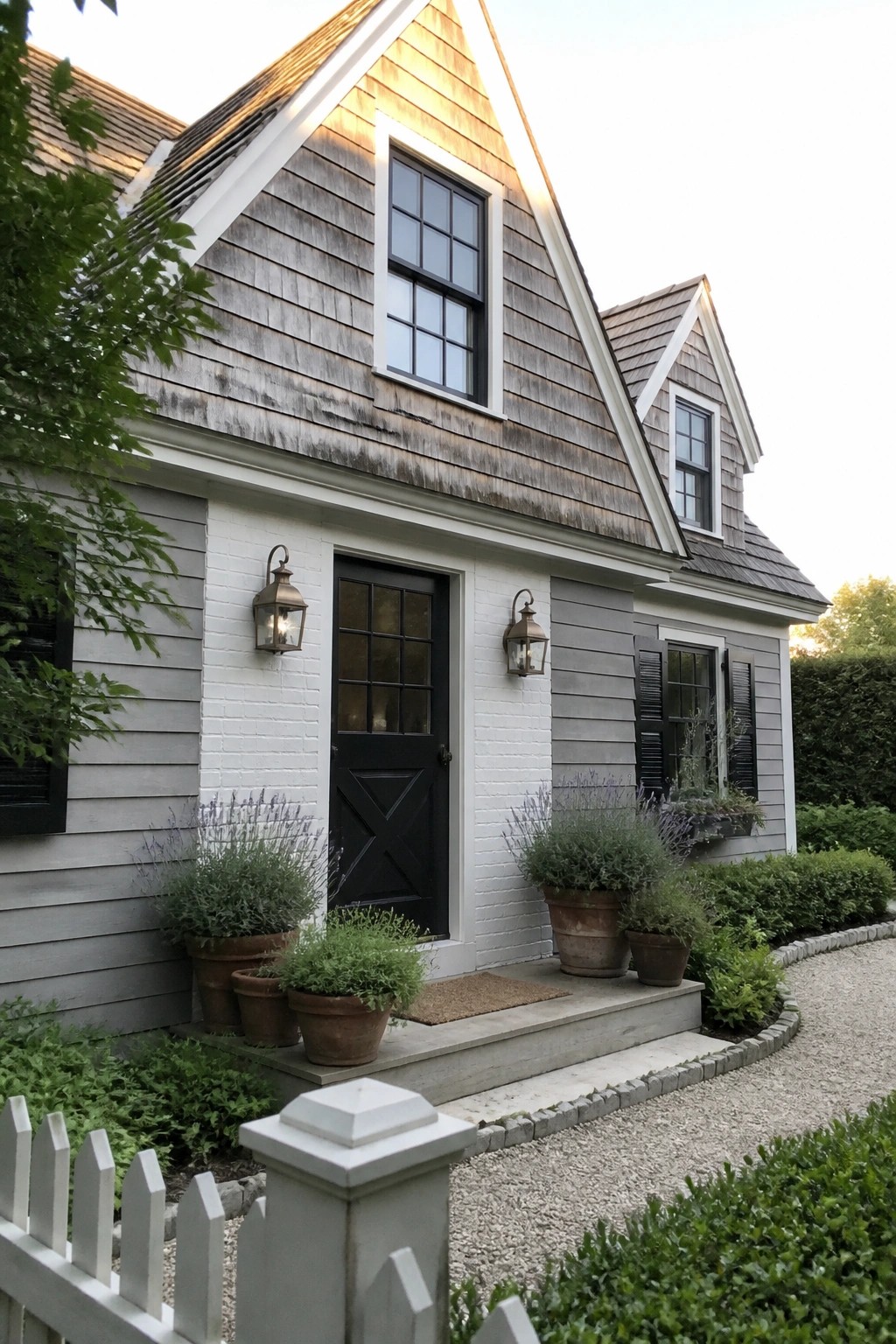
Gabled roofs give coastal farmhouses their main character, especially when the pitches vary in size and placement. The overlapping sections break up the roofline and keep the house from feeling flat or boxy even on a modest scale.
This works best on homes with straightforward footprints where you want the roof to carry the style. Stick to simple materials like weathered shingles and pair them with clean trim so the gables stay the focus instead of competing with too many other details.
Gabled Roofs That Shape the Exterior
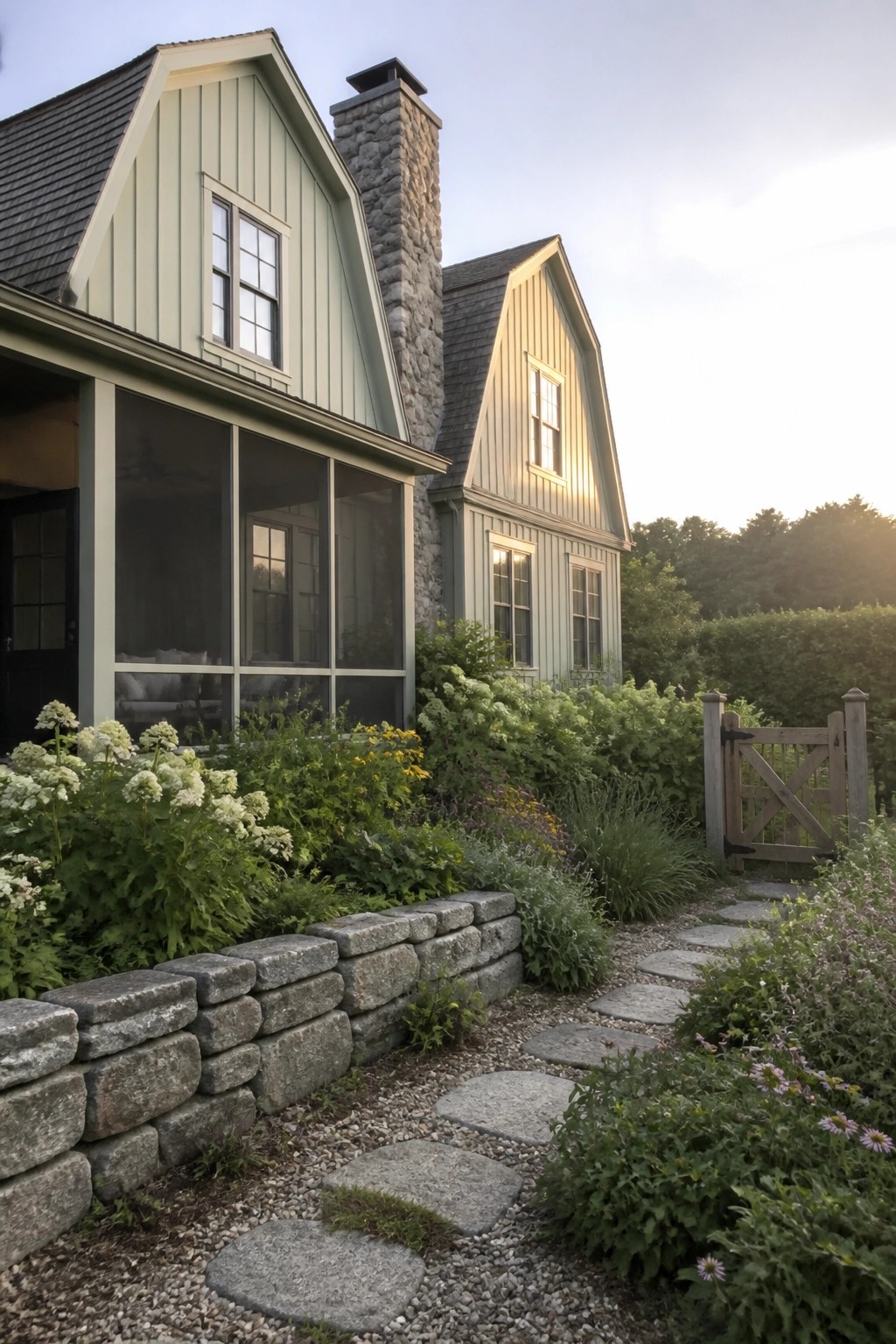
Steep gables give this house its clear farmhouse shape. They stand out against the simple siding and help the home feel grounded even with the garden right up against the walls.
This works best on homes where you want a traditional look without extra trim or decoration. Keep the roof pitch consistent and let the gables handle the character while the landscaping stays low and natural.
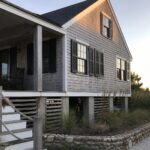
Gables That Shelter the Front Porch
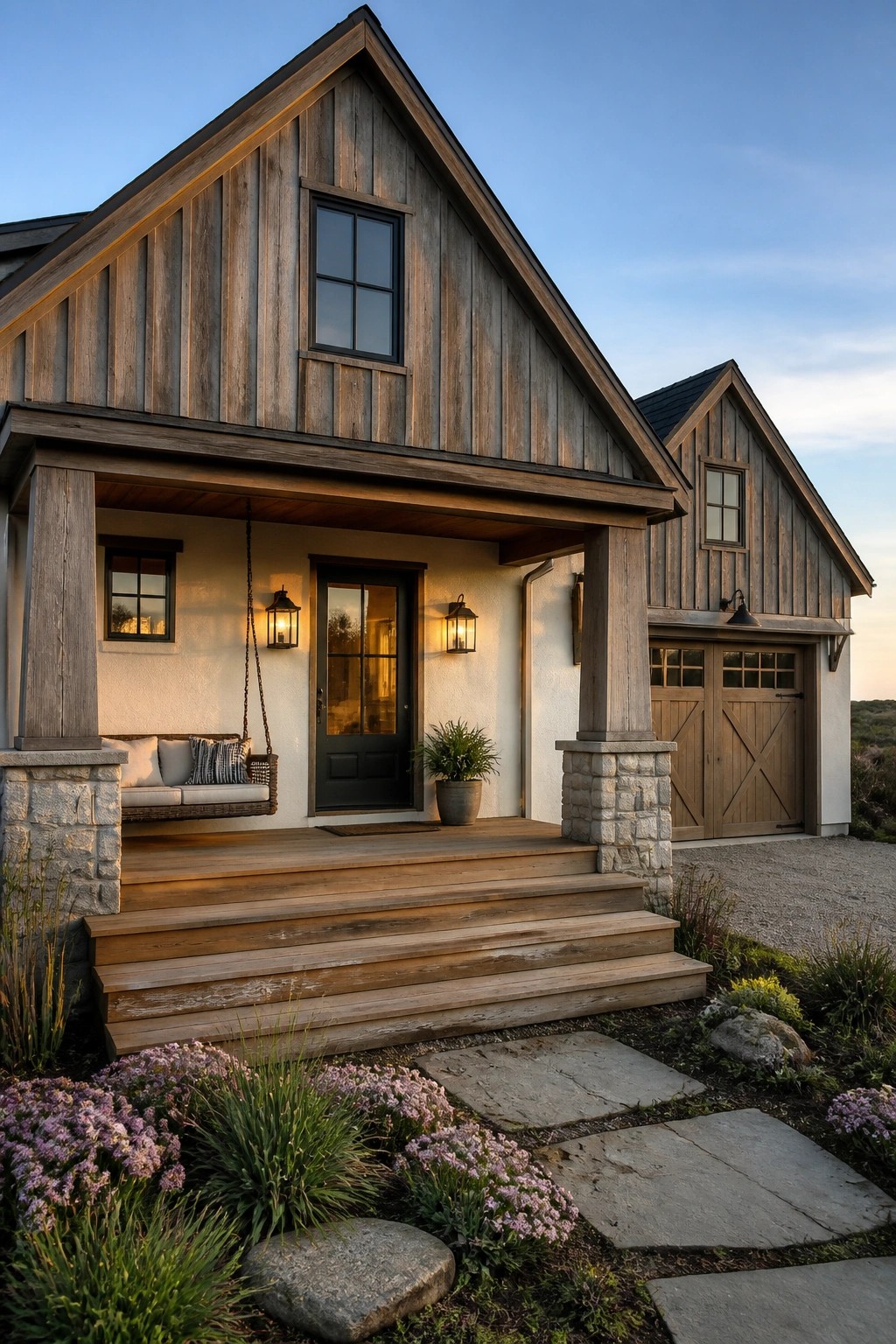
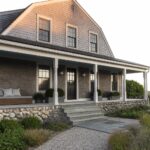
A steep gable roof over the entry gives the house a clear shape and creates useful cover at the same time. It keeps the porch usable in changing weather and gives the front a simple, settled look that fits the coastal farmhouse style.
This works best on homes with straightforward siding and a modest footprint. Keep the wood tones warm and add stone only at the base of the posts so the roof stays the main feature.
Gabled Roofs Shape the Coastal Farmhouse Look
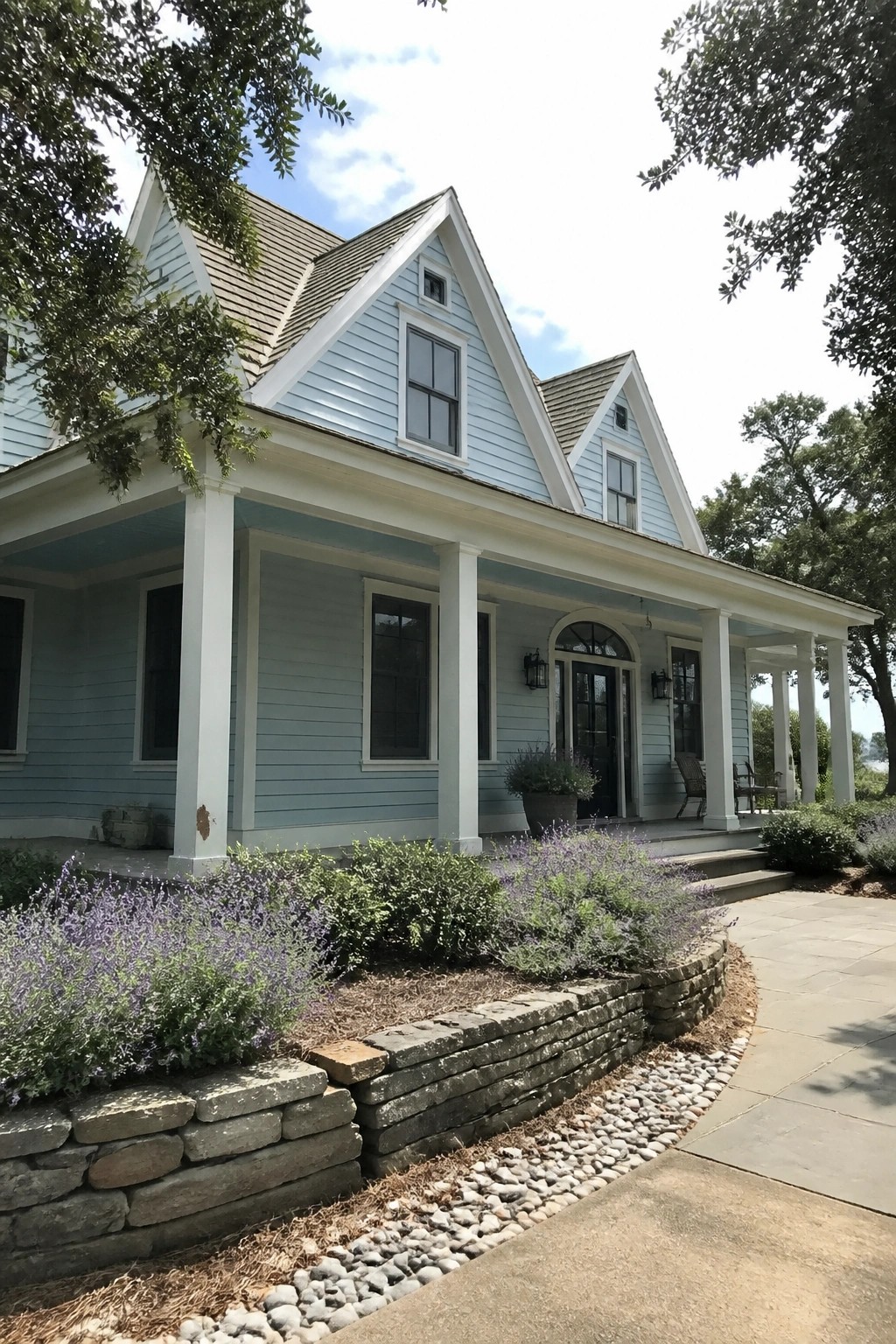
Multiple gables along the roofline give this house its main character. They break up the mass of the structure and keep the exterior from feeling flat or boxy, which is exactly what makes the style feel both farmhouse and coastal at once.
This works best on homes with a simple color palette and clean trim. Stick to two tones at most, let the roof do the talking, and keep the front fairly open so the gables read clearly from the street.
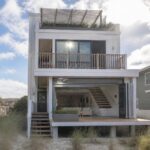
Varying Gable Heights on the Facade

One simple way to add interest to a coastal farmhouse is to step the gables at different heights instead of keeping them all the same. The mix of peaks, along with a small cupola, gives the roofline more shape while the rest of the house stays fairly plain.
This works best on homes that already use straightforward materials like wood shingles and metal roofing. It keeps the look balanced and helps the house feel settled rather than flat, especially when the front sits close to the driveway or road.
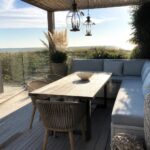
Using a Pergola for Outdoor Dining

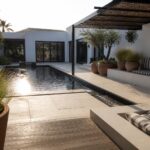
A pergola gives a patio just enough cover to make meals outside feel practical instead of occasional. The open wood structure blocks harsh sun while still keeping the space bright and connected to the yard.
This setup works best on homes where the back or side wall can support the beams. A long table with mixed seating, like loose chairs on one side and a built-in bench along the house, keeps things flexible for different group sizes. Stick to simple materials so the pergola blends with the rest of the exterior rather than competing with it.
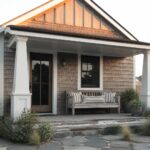
Gabled Roofs That Shelter the Entry
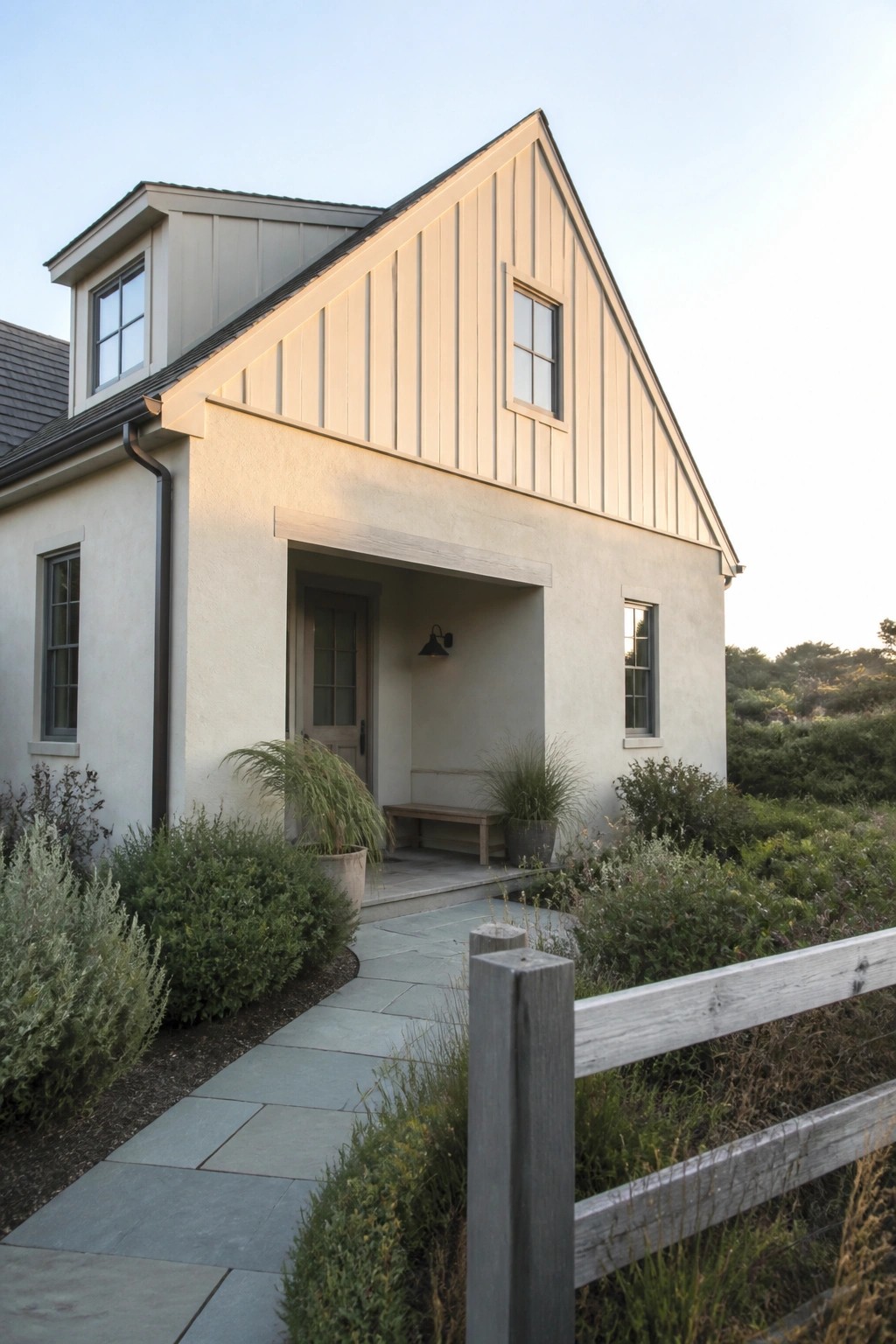
A gabled roof can do more than just top the house. When it extends out far enough, it creates a natural recess at the front door that gives real cover from wind and rain without needing a separate porch structure.
This works especially well on coastal farmhouses where the goal is simple lines and low maintenance. The key is keeping the entry depth modest so it feels tucked in rather than closed off, and pairing it with a bench or two so the space gets used instead of just looking pretty.
Gabled Porches Frame the Entry
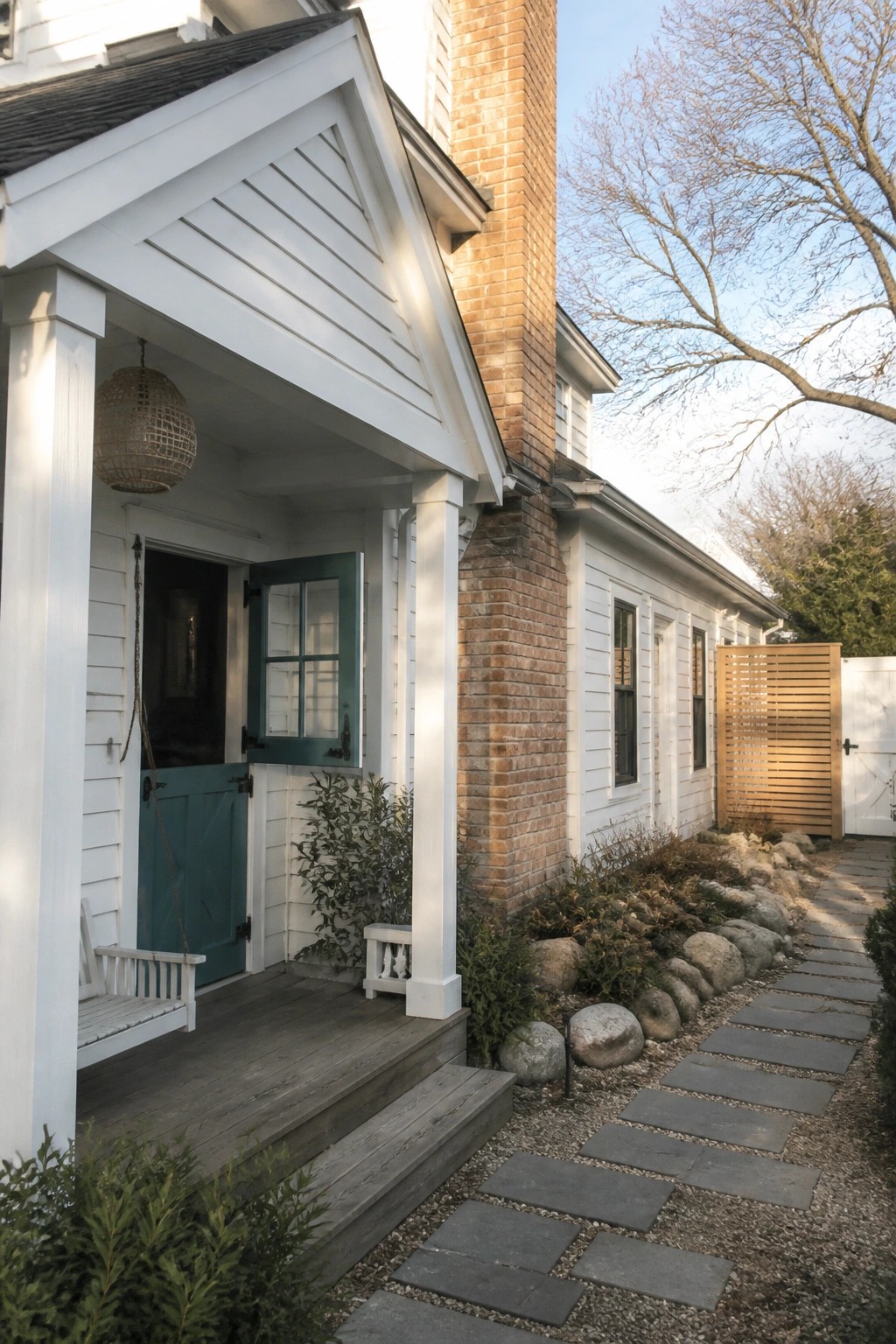
A gabled roof over the front porch gives the house a clear shape that feels balanced and welcoming. It repeats the main roofline in a smaller way, which helps the entry stand out without needing extra trim or decoration. The white siding keeps the look light while the roof angle adds just enough character.
This works best on homes that already have a simple roof form. Paint the door a soft color to draw the eye, and keep any nearby plantings low so the gable stays visible from the street. It suits older houses or new builds that aim for a clean farmhouse feel.
Gabled Roofs That Shape the Exterior
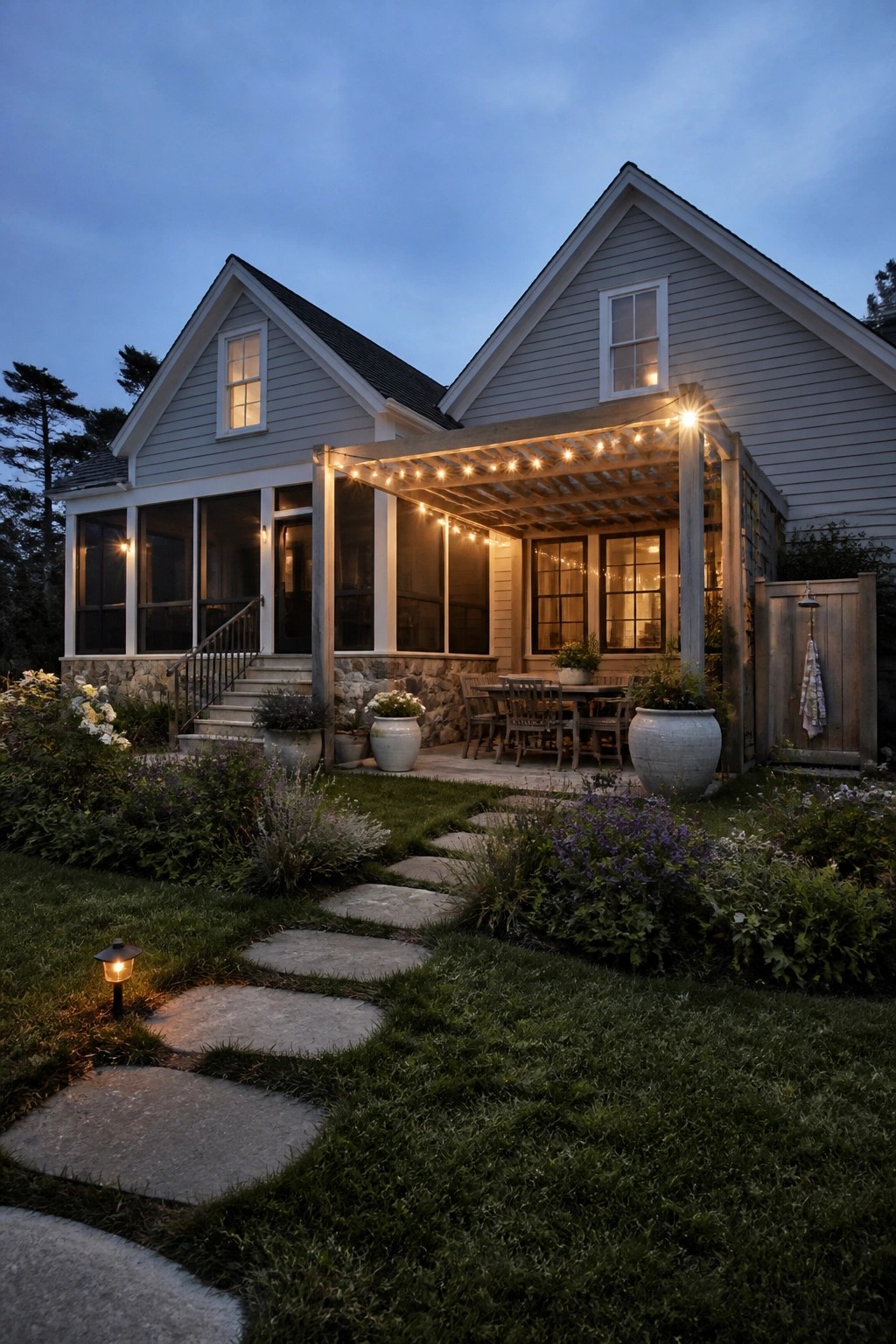
Gabled roofs stand out here because they give the house a clear, balanced profile without extra trim or details. The two main peaks create height and break up the mass of the siding, which helps the whole place feel more like a classic farmhouse than a plain box.
This approach suits homes with a simple rectangular layout and works especially well in coastal settings where you want something sturdy but not heavy. Keep the siding light and limit the number of rooflines so the gables remain the main feature.
Gabled Roofs Shape a Welcoming Farmhouse Exterior

Gabled roofs stand out on this style of home because they break up the roofline into simple peaks that feel familiar and balanced. The look works well with white siding and a straightforward porch because the roof itself does most of the work to give the house its character.
This approach suits coastal or country homes where you want curb appeal without extra trim or ornament. Keep the gables in proportion to the width of the house so the front stays easy to read from the street.
Gabled Roofs That Shape the Exterior
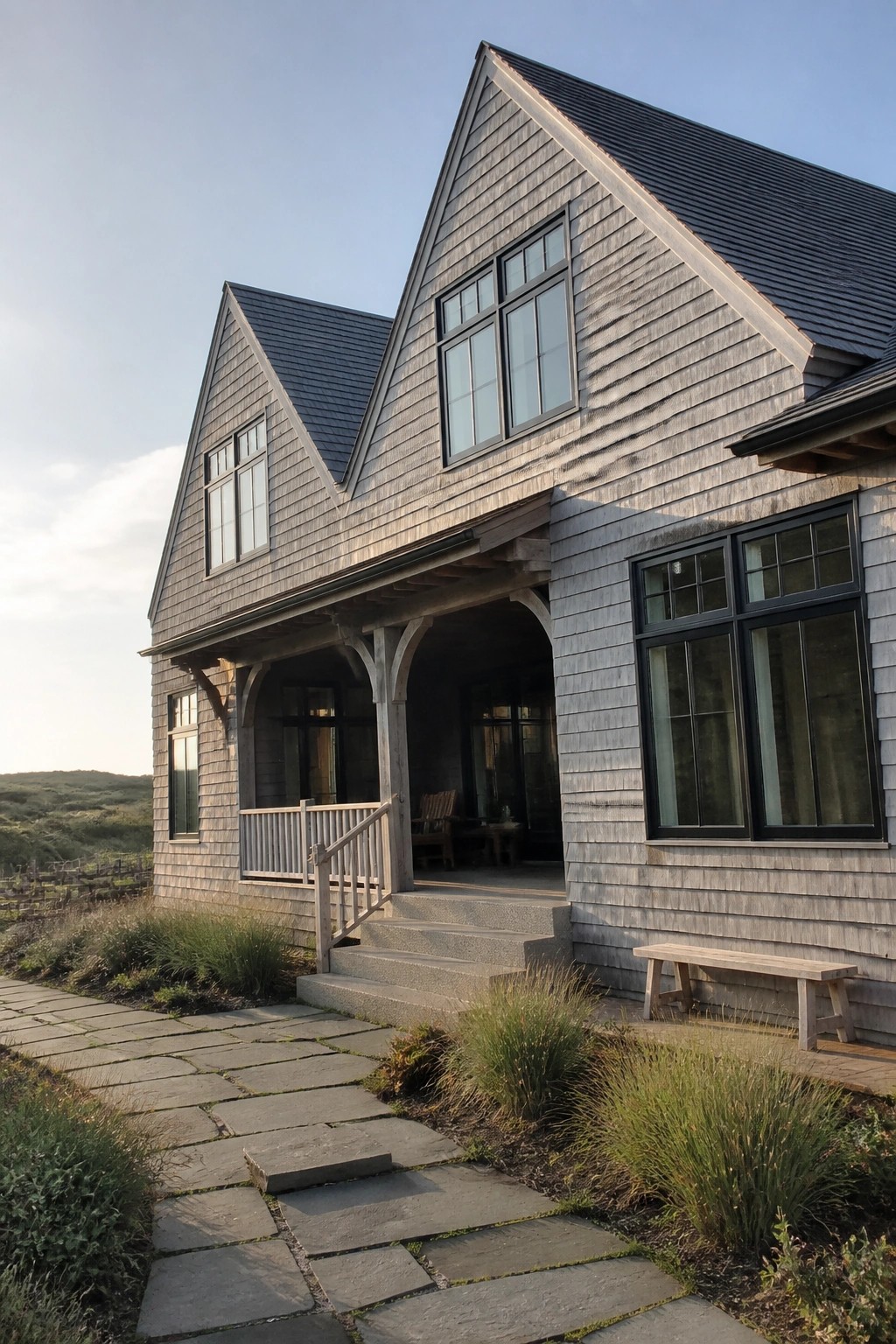
Gabled roofs stand out here because they give the house height and presence without needing extra trim or decoration. The steep pitches and overlapping forms create a simple rhythm that feels both familiar and fresh at the same time.
This approach works especially well on coastal sites where strong rooflines help the house hold its own against open views. Keep the siding and window frames quiet so the gables remain the main feature, and make sure each gable is sized to match the width of the wall below it.
Gabled Roofs That Give the Home Its Shape
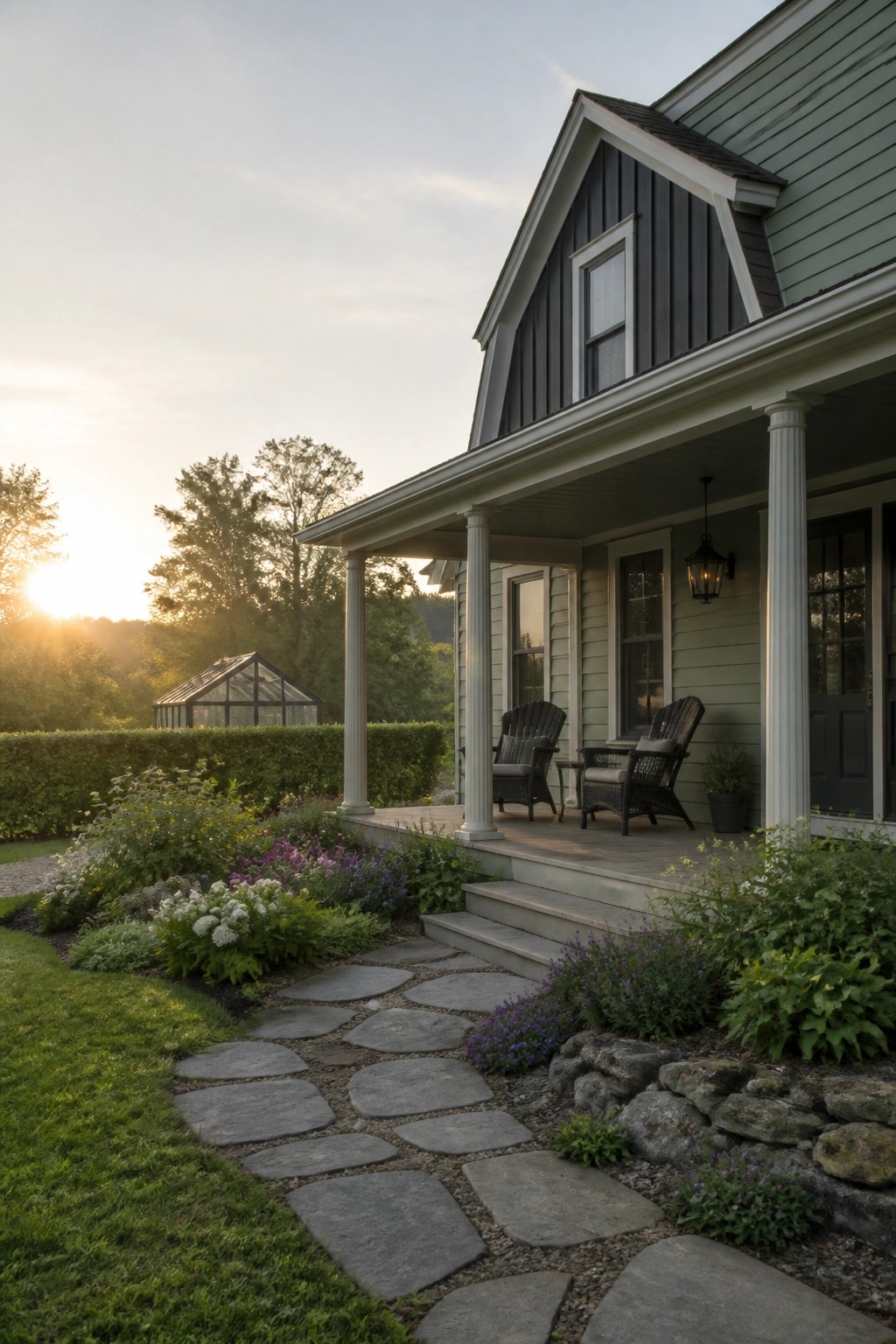
A gabled roof stands out because it gives the whole house a simple, clear form. The steep pitch and dark shingles create contrast against the lighter siding, which makes the structure feel grounded without extra trim or detail.
This approach works well on coastal farmhouses where the roof needs to handle weather and still look welcoming. Keep the lines clean and let the gable do the main work, then add a porch underneath for everyday use.
Frequently Asked Questions
Q: What siding choices help a gabled roof look at home by the water?
A: Go with weathered wood or fiber cement planks in soft gray or white. These materials shrug off salt air and pair naturally with the roof peaks. Add board and batten accents on the gable ends for extra farmhouse texture.
Q: How do I keep a coastal porch from fighting the gabled roof above it?
A: Keep the porch roof shallow and let the main gables rise clean above it. Use simple posts and skip heavy trim so the lines stay light. This setup lets breezes move through while the roof still grabs attention from the road.
Q: Do gabled roofs need special care in high wind areas?
A: Check the overhangs first and make sure they stay under two feet. Secure the edges with hurricane clips during any roof work. That one step stops most lifting problems without changing the look you want.