Living in a coastal area makes me pay extra attention to how large windows shape the daily feel of a room.
The glass needs to frame the view without letting in too much glare or heat during the day.
I have seen homes where the windows work beautifully from inside but the exterior looks flat once the sun hits the facade.
One idea I would test is using deeper overhangs to keep the light controlled.
It changes how the whole house sits on the lot.
Dark Wood Siding on the Exterior
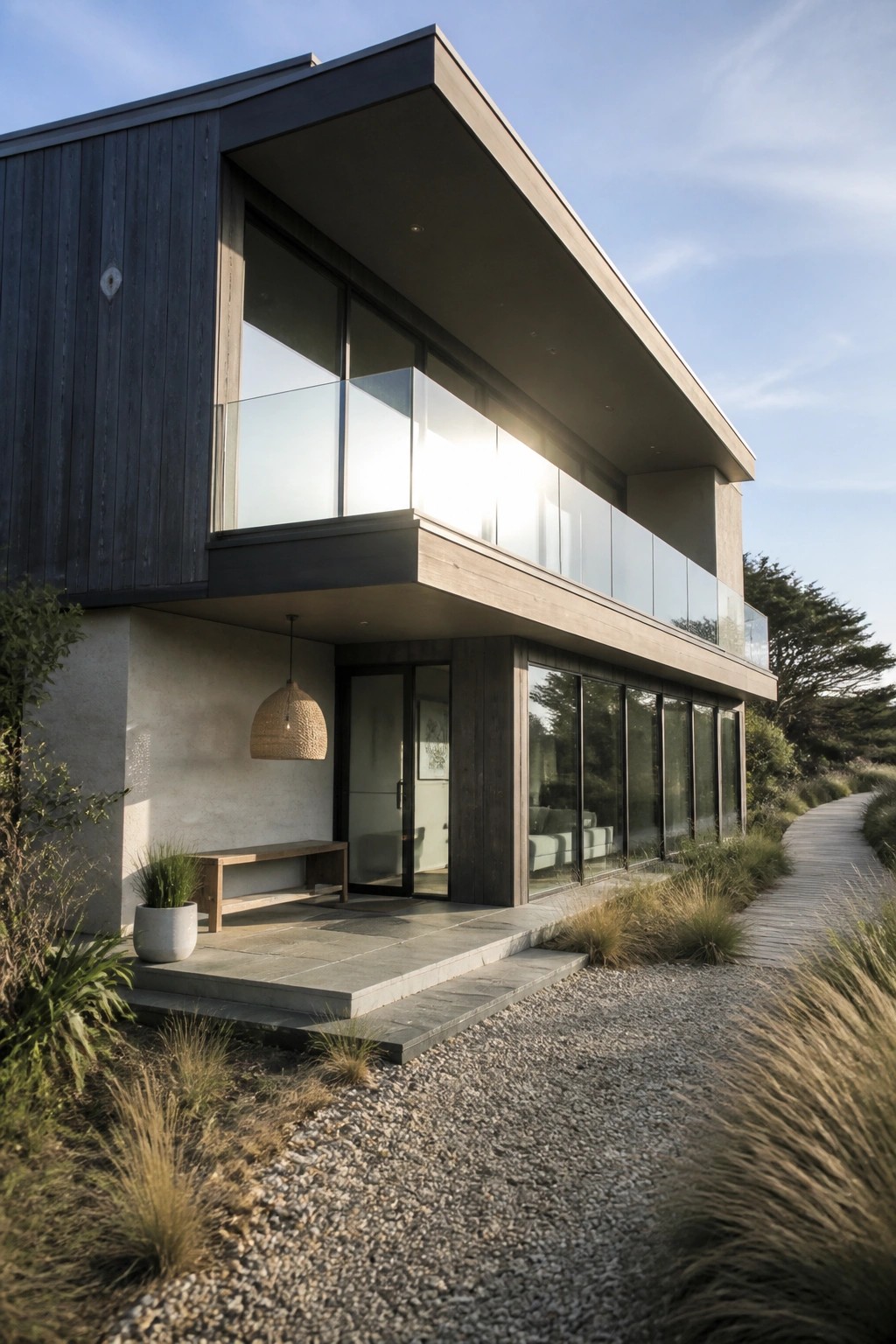
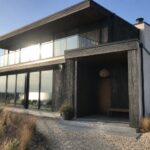
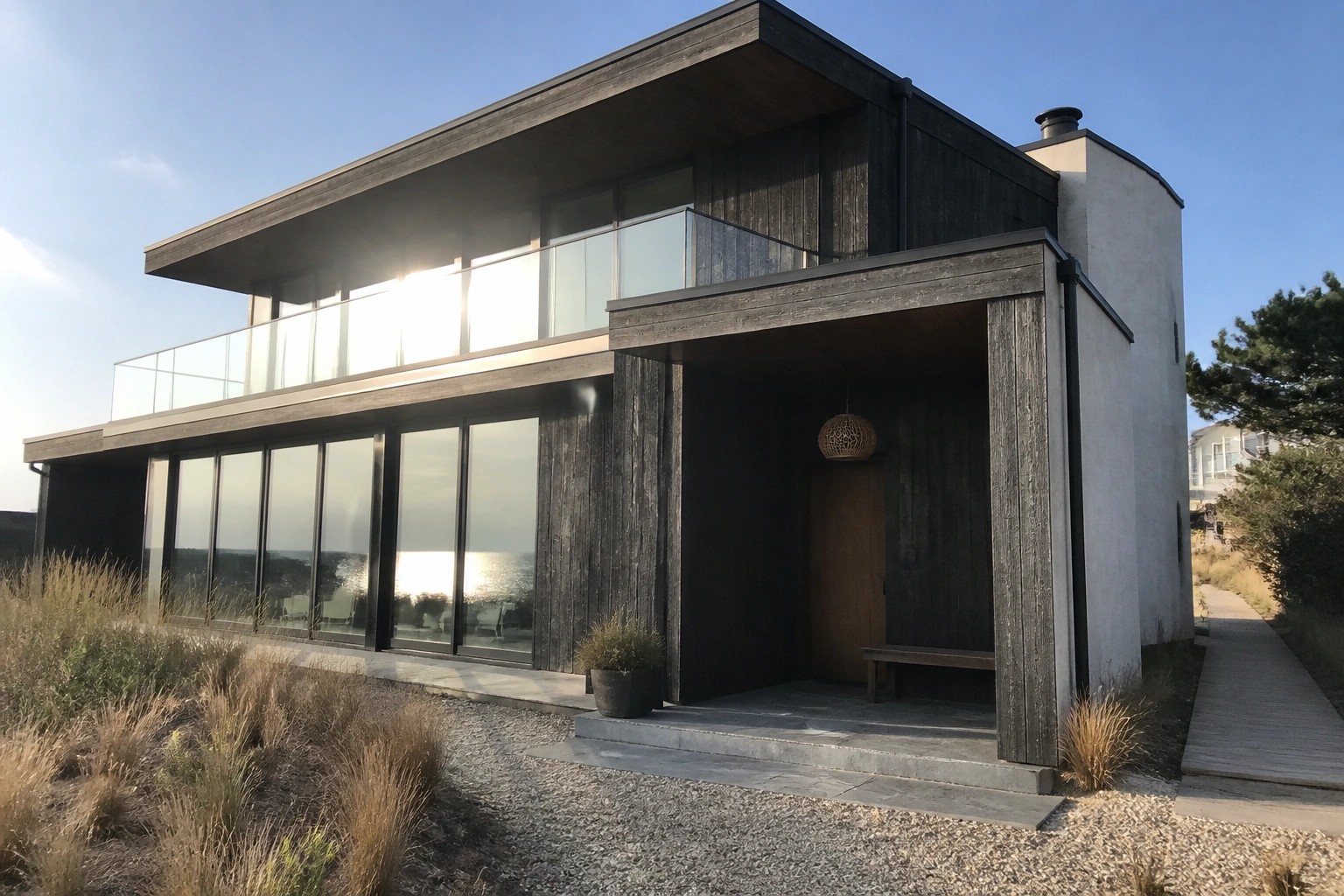
Many coastal homes use dark wood siding because it gives the facade weight and presence without needing extra trim or decoration. The vertical grain adds texture that holds up well against the bright light and open views common near the water.
This approach works best on homes where you want the structure to feel solid yet still open through large windows. It suits simple rectangular shapes and pairs easily with lighter concrete bases or gravel landscaping. Keep the siding matte so it does not compete with the glass reflections.
Cantilevered Decks That Reach Over The Edge
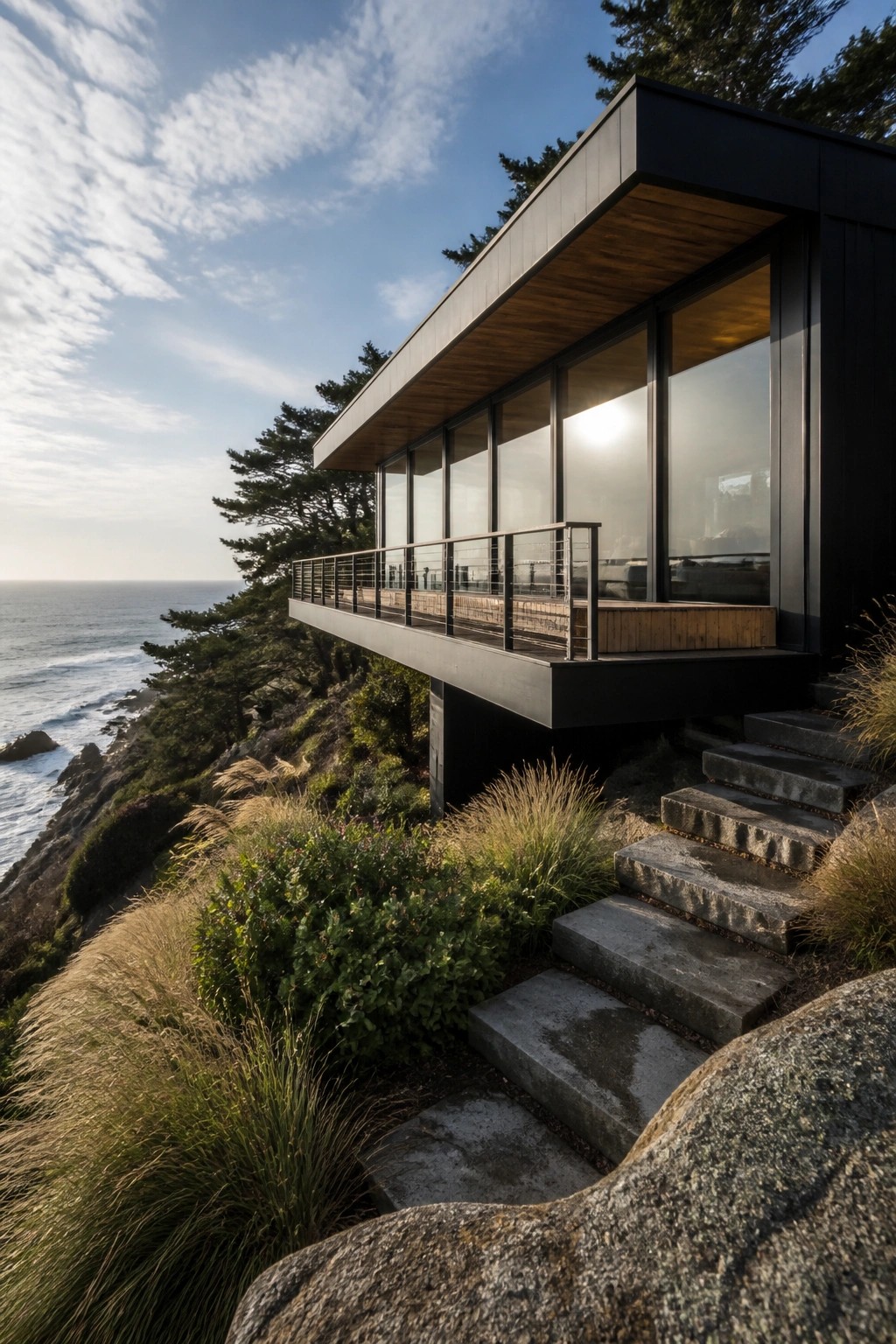
A cantilever lets the deck extend past the main walls so the house can sit closer to the view without extra posts in the way. In this case the dark frame and wide glass keep the focus on the water and sky rather than on the structure itself.
This move suits steep coastal lots where the land drops away quickly. Use it when you want the indoor space to feel like it continues straight out to the horizon, but check local codes for wind and soil before you plan the supports.
Tall Glass Doors Along the Side
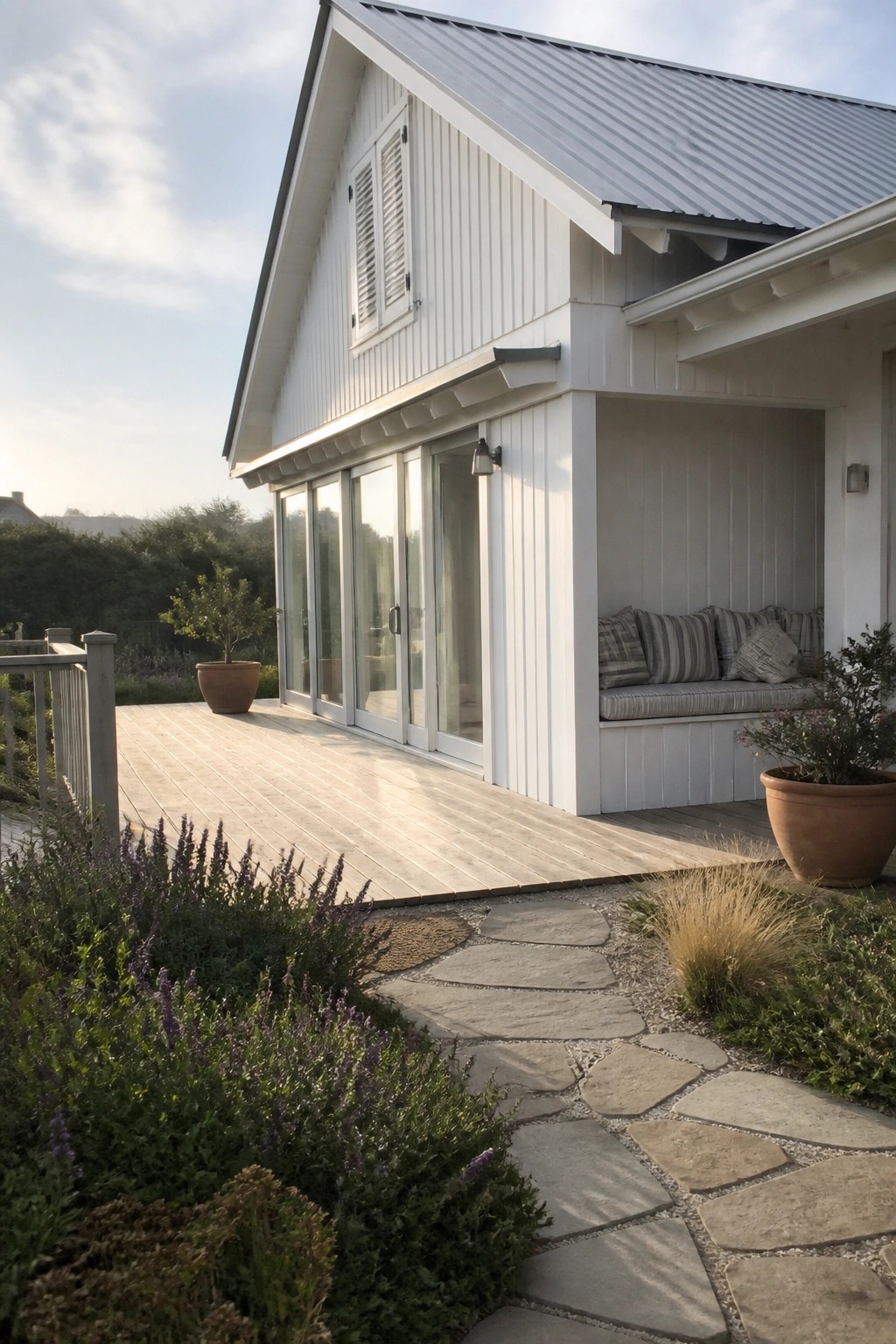
Many coastal homes use a row of tall glass doors to keep the exterior simple while still letting plenty of light inside. The vertical siding helps the wall stay clean, and the doors sit right at deck level so the house feels connected to the outdoor space without extra trim or fuss.
This works well on homes that face a garden or water view. Keep the surrounding planting low so the doors stay the main feature, and choose a light siding color if you want the glass to stand out more than the structure itself.
Vertical Wood Screens on Modern Homes
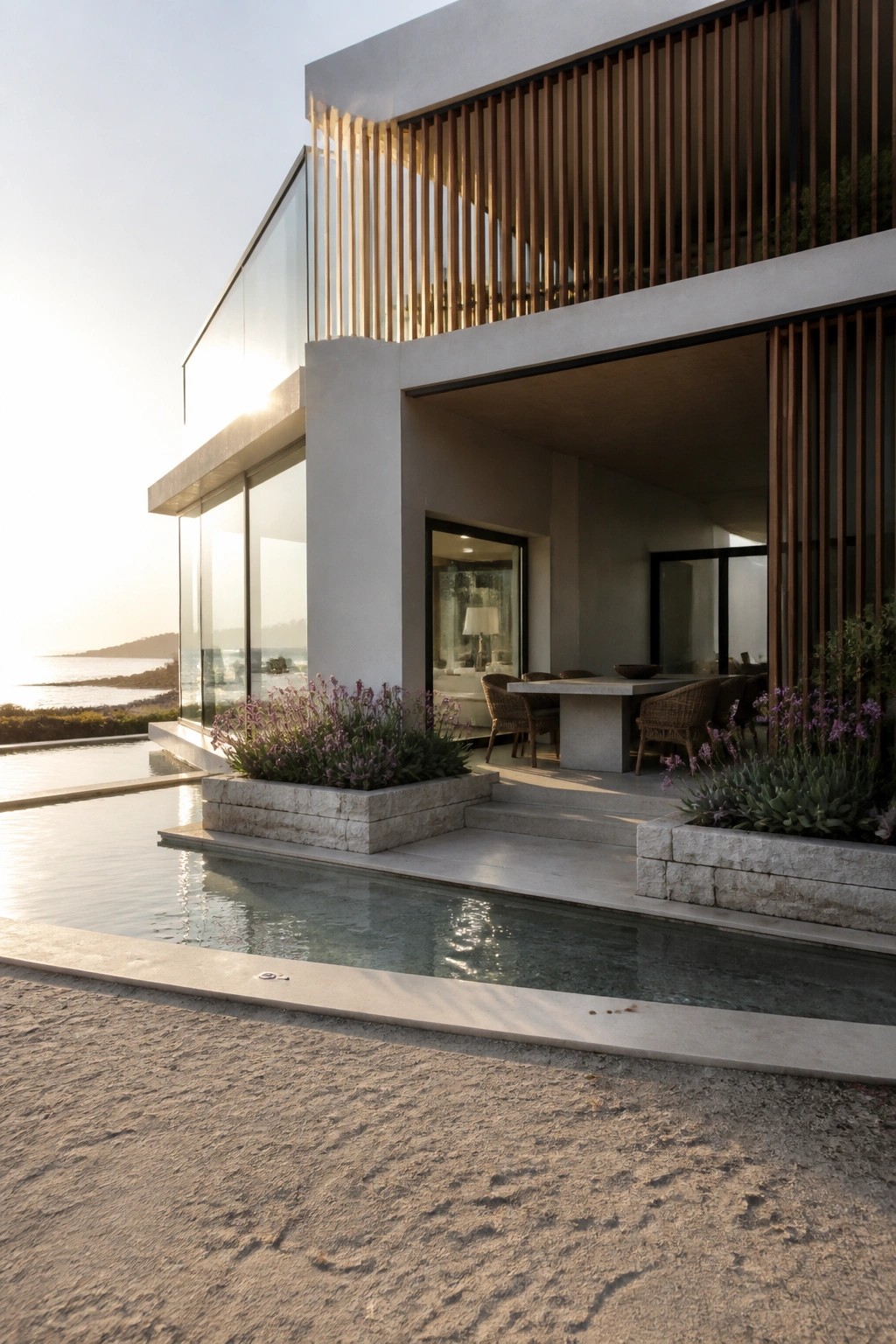
Vertical wood screens work well on coastal homes because they break up large concrete surfaces and add some texture next to all that glass. They let light through while giving a bit of privacy and shade, which helps the house feel more settled against the open view.
This approach suits clean contemporary builds where you want the windows to stay the main feature without the whole facade looking too stark. Try keeping the wood tone natural so it warms up the concrete and stone without competing with the water or sky.
Letting the Entry Door Add Warmth
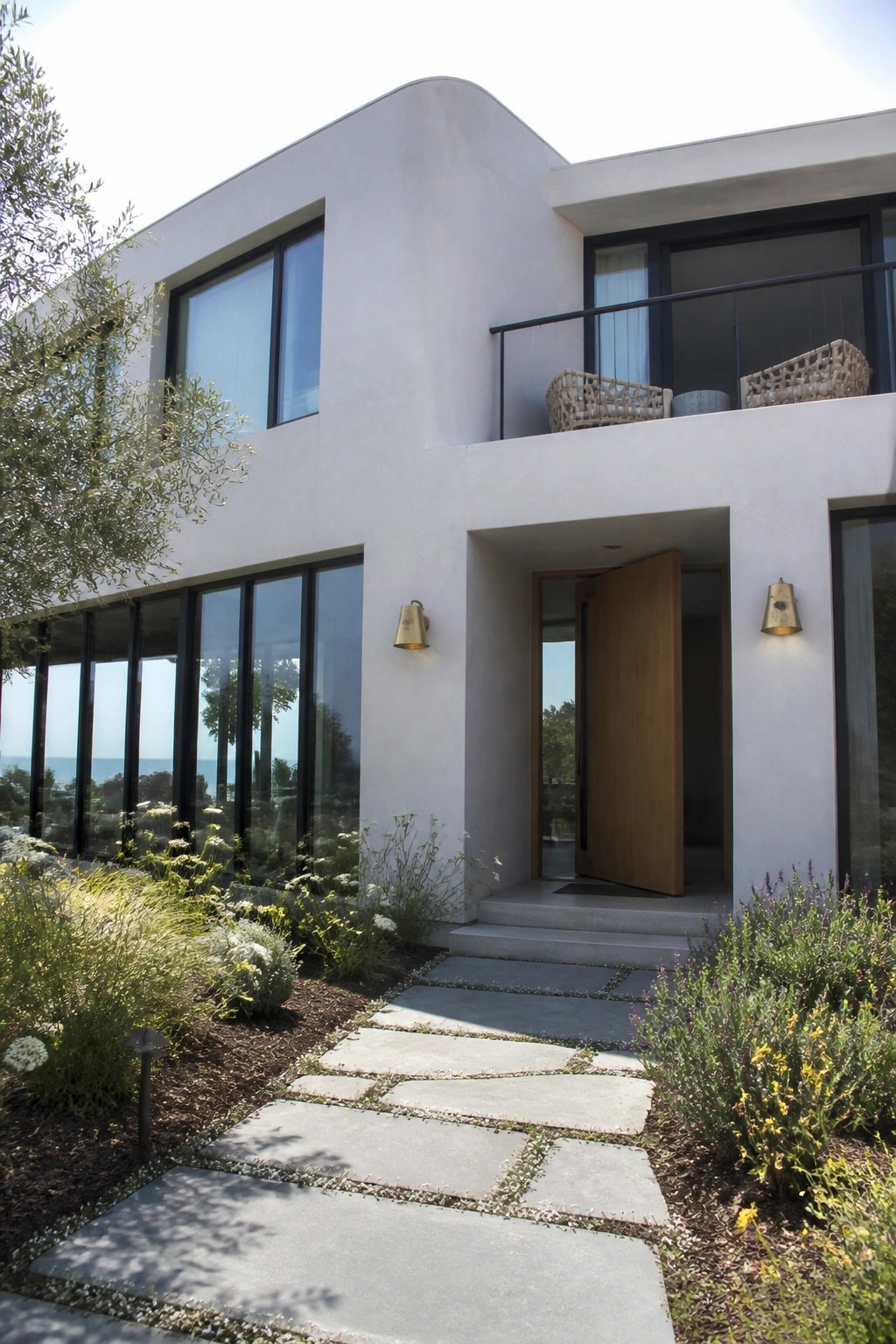
A simple wood door can soften a clean modern exterior without much extra effort. On this house the natural tone of the wood stands out against the white walls and gives the entrance a grounded feel that matches the coastal setting.
This approach works best on homes with flat facades and large windows. Keep the path direct and the surrounding plantings low so the door remains the clear focal point rather than competing with other details.
Keeping Exteriors Light With Dark Accents
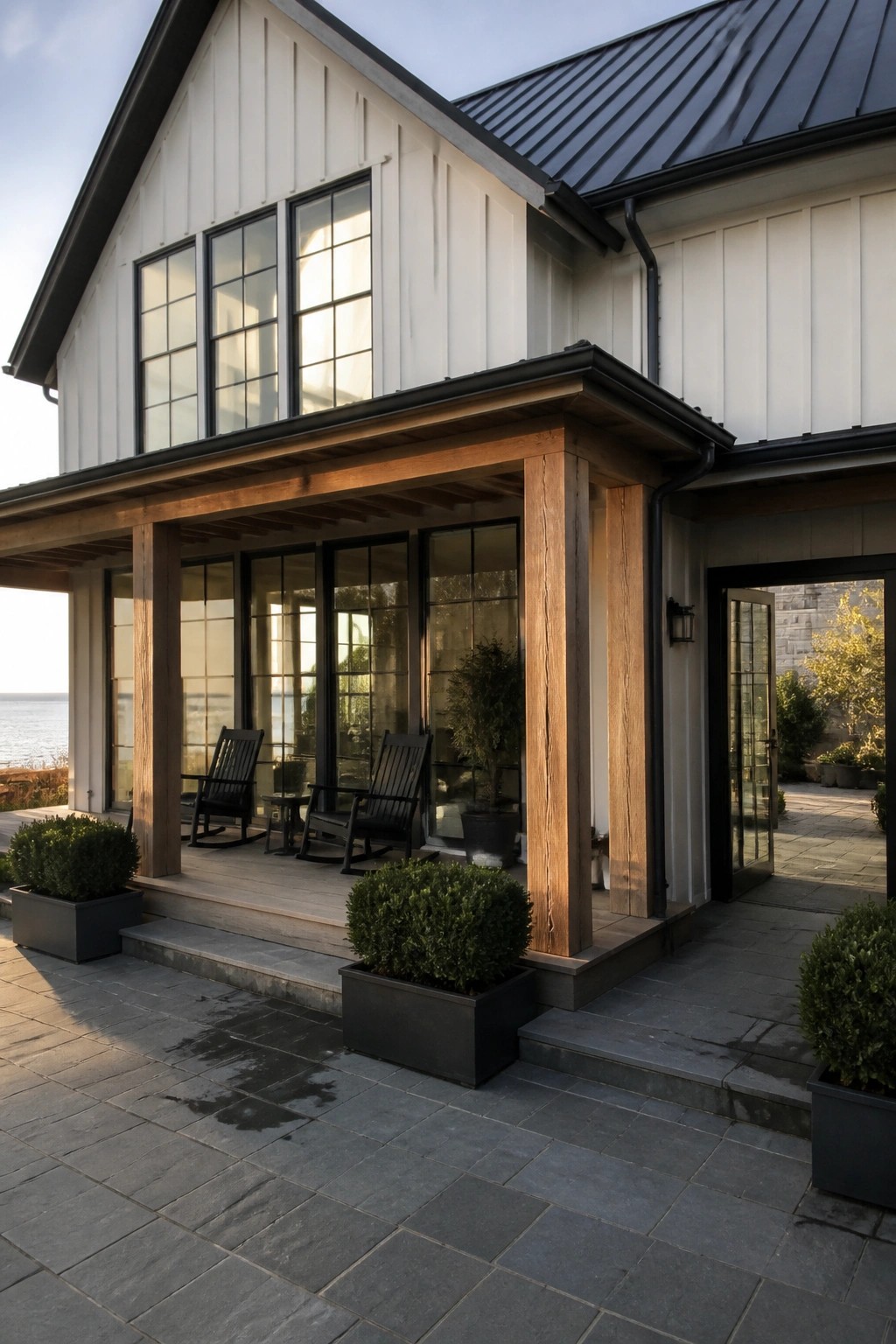
Many coastal homes stay bright and simple by using white siding as the main surface. Adding a dark metal roof and black window frames gives just enough contrast without making the house feel heavy or closed in.
This approach works especially well on homes that get strong sun and water views. The dark roof helps the shape stand out from a distance, while the white siding keeps everything feeling open and tied to the surroundings. Stick with matte finishes on the dark parts so the look stays relaxed rather than too sharp.
Wrapping Deck Seating Around a Fire Pit
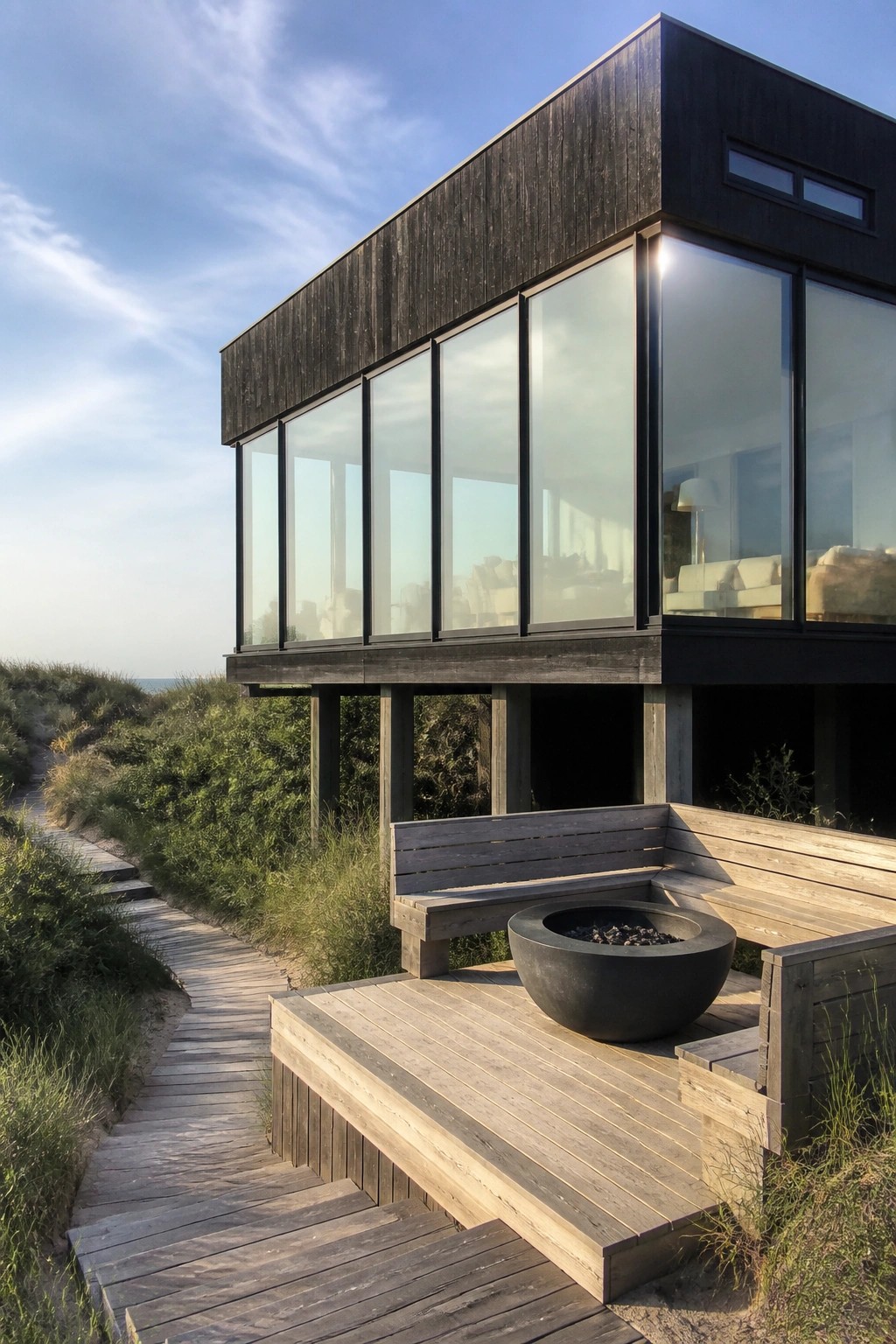
A round fire pit set into a wooden deck works well when you surround it with built-in benches. The seating keeps people close to the heat without needing extra furniture that might blow around near the coast. It also turns the deck into a clear gathering spot instead of just an empty platform.
This setup suits homes that already sit up on posts or stilts, since the extra height gives the fire pit a bit of shelter from wind. Keep the benches low and the pit centered so the whole area feels balanced and easy to walk around. Avoid overcrowding the rest of the deck with too many other pieces.
Large Glass Doors That Extend The Patio
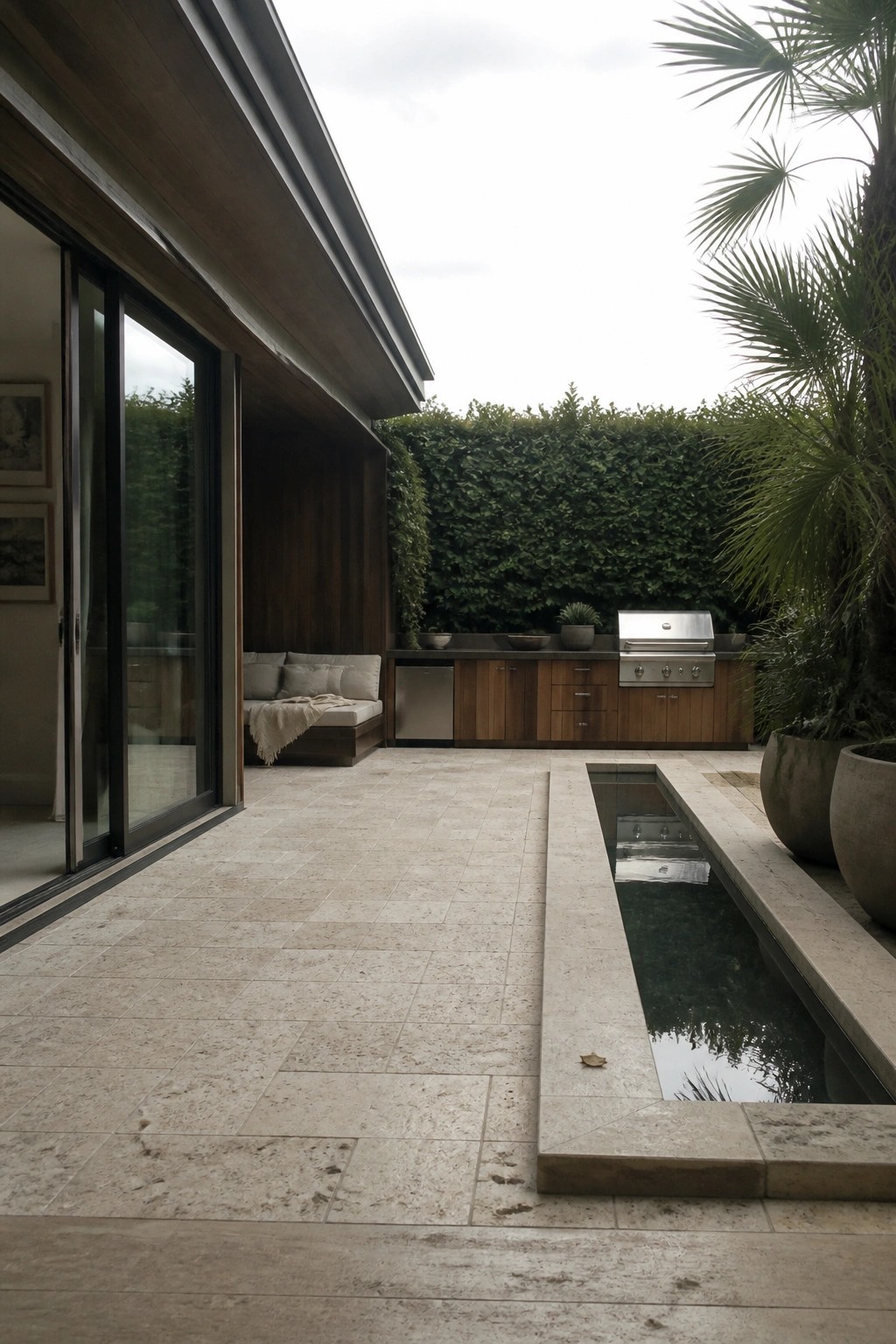
Large sliding doors make the patio feel like a true extension of the house rather than a separate space. They let light pour in and remove the usual wall between inside and out, which works especially well when the outdoor area includes seating and cooking zones.
Place the doors right next to an outdoor kitchen so meals can move easily from prep to table. This setup suits coastal homes that get steady use of the yard and keeps the patio feeling connected without extra walls or hallways.
Large Windows on the Upper Level
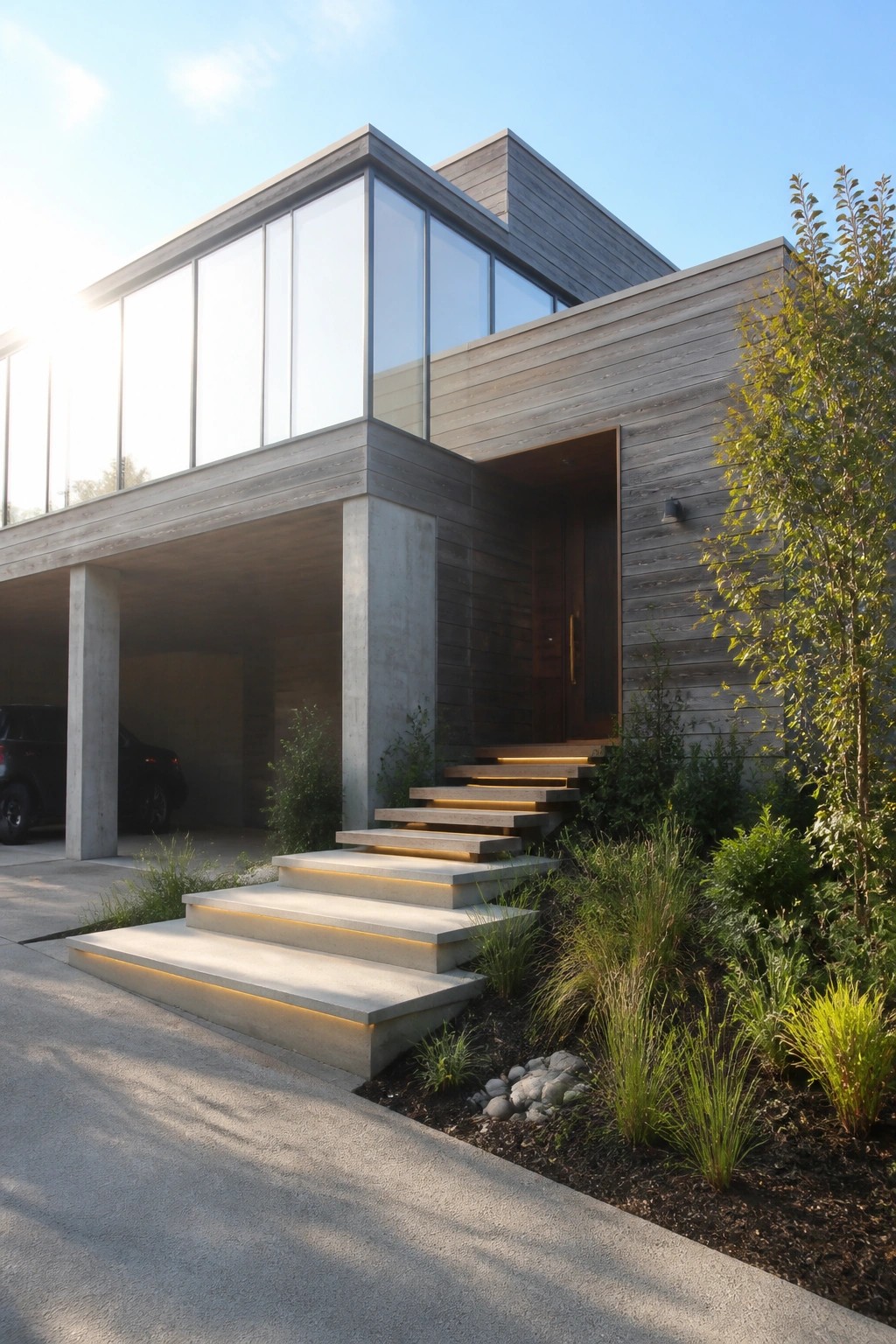
Many homes benefit from pushing big glass up high instead of spreading it across the whole facade. The upper windows let light pour into the main living areas while the lower level stays more solid and grounded with concrete and wood.
This setup works especially well on sloped lots or homes with covered parking below. It keeps the entry sequence clear and welcoming without turning the whole front into one big glass wall. Just make sure the window frames are dark and simple so they do not compete with the siding.
Positioning the Pool Next to Outdoor Seating
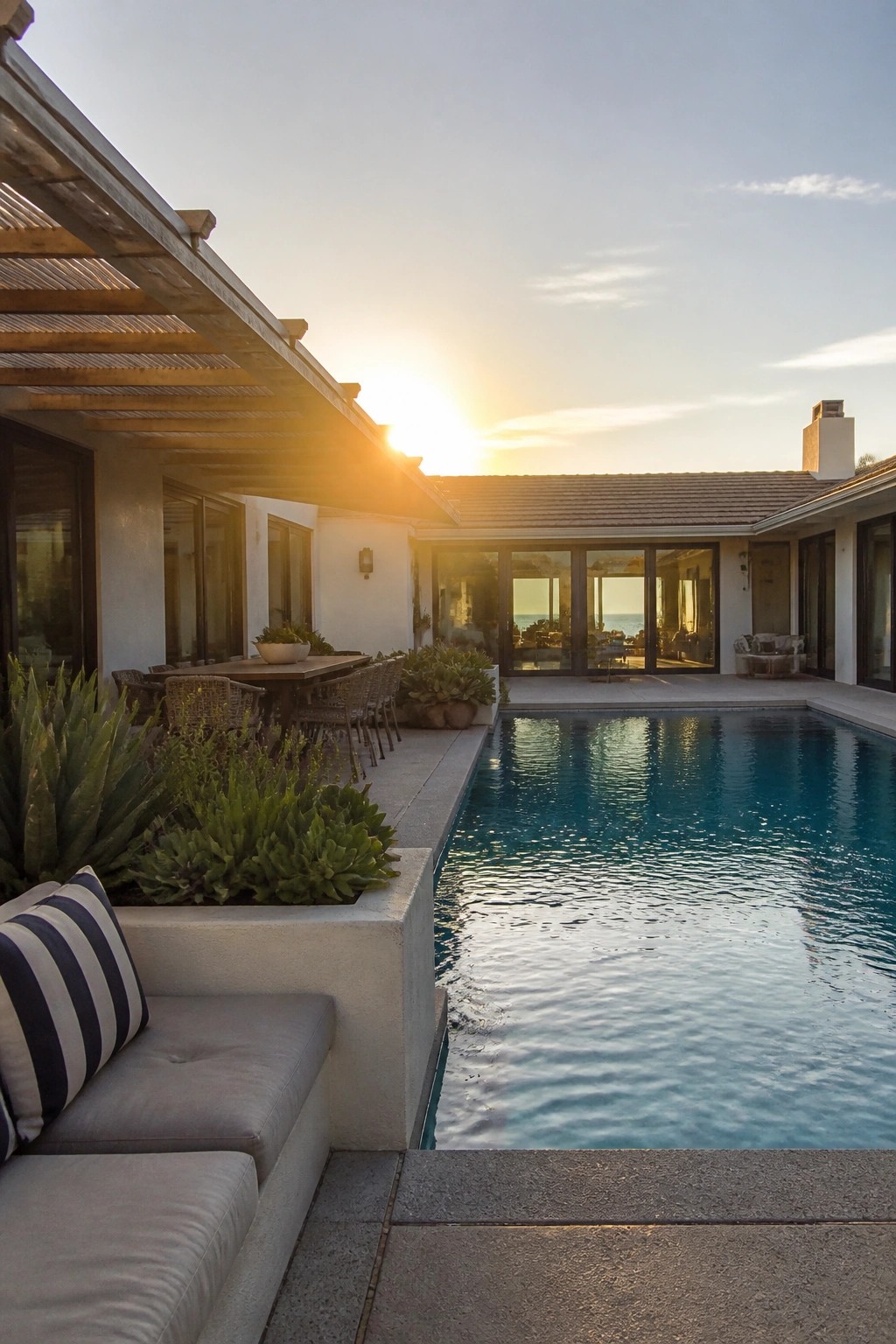
Placing the pool right alongside the main seating areas makes the whole backyard feel like one connected space. You can sit on the sofa or at the table and still be part of the water without needing to walk far or cross separate zones. This layout works especially well when the pool runs the full length of the house so the edge stays in constant view.
It suits homes in mild climates where people spend a lot of time outside. Keep the pool depth shallow near the seating if kids or guests will be moving back and forth often, and use simple edging like the low wall shown here to mark the boundary without adding visual clutter.
Tall Windows on Narrow Coastal Homes
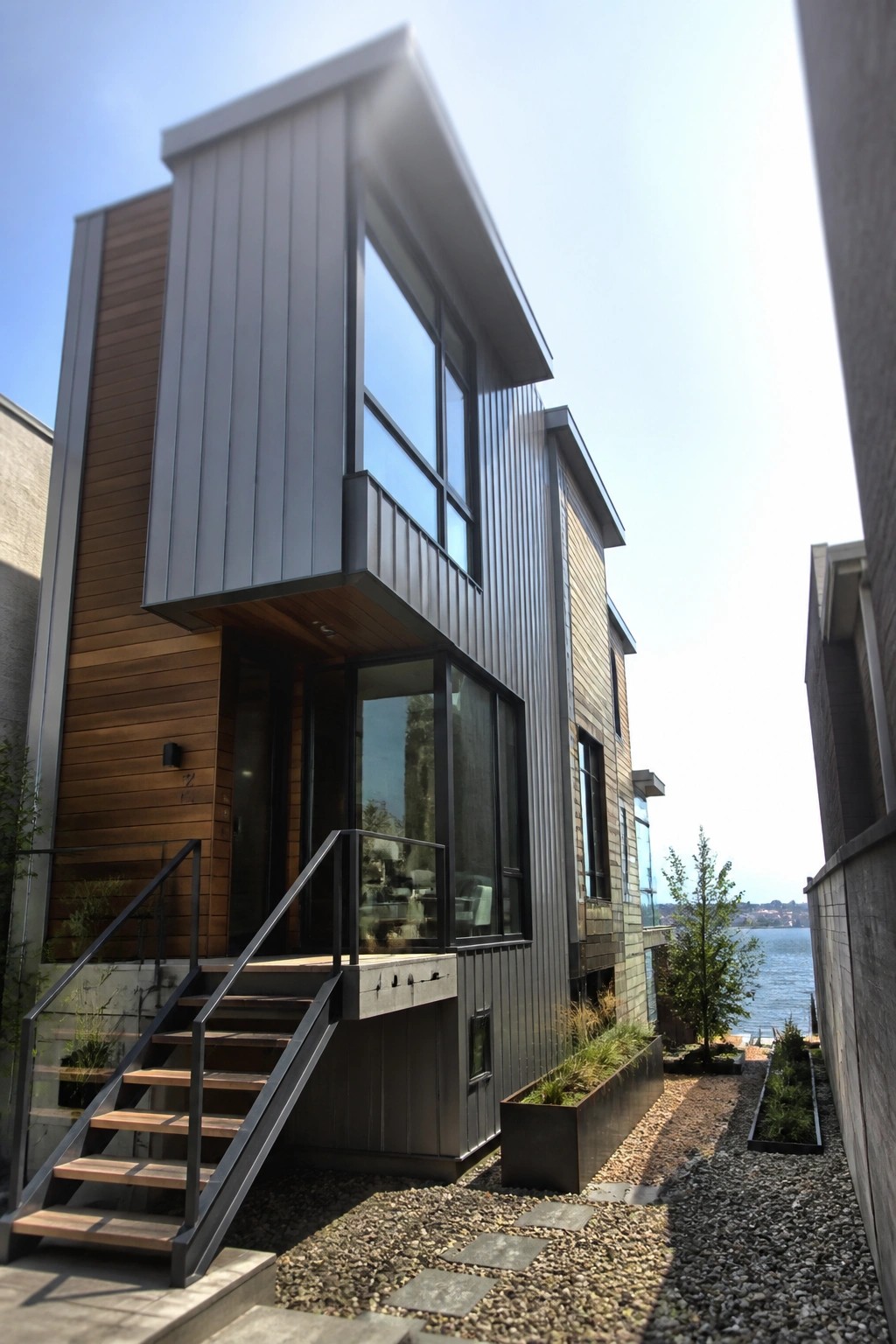
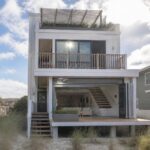
Many coastal homes sit on tight lots where width is limited but height is available. Tall windows help pull in light and views without needing extra space on the sides.
This works well when the frames stay dark and simple so the glass stands out against wood and metal siding. It suits homes near the water where the main goal is to connect the inside to the scenery.
Decks That Step Down To The Beach
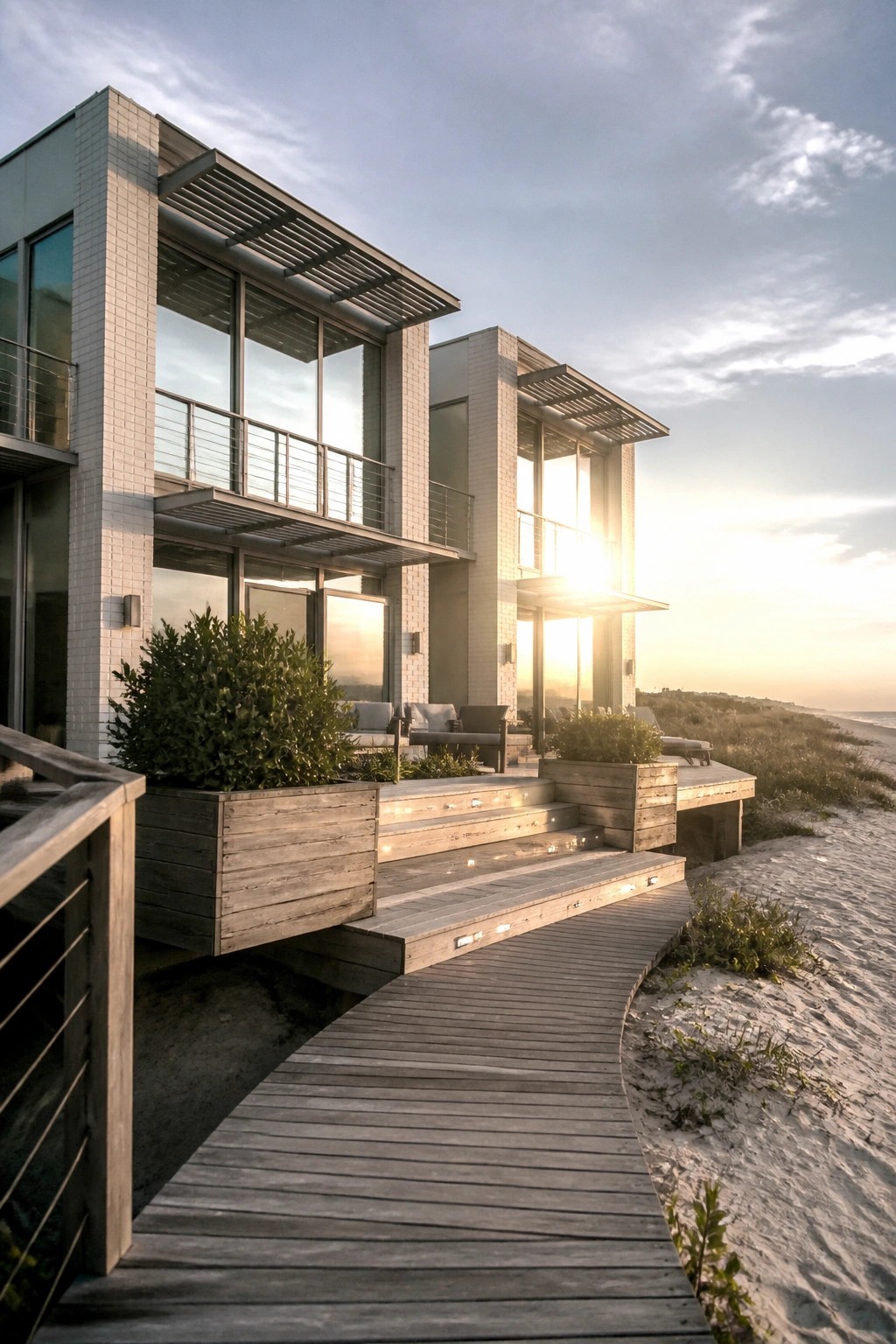
A deck that drops down in stages can make a beach house feel more connected to the water. The wood planks and built-in planters create a simple path that moves from the house out toward the sand without needing extra railings or walls.
This layout suits homes that already have large windows because the deck gives people a reason to step outside right away. Keep the steps wide and add low lighting so the path stays easy to use at night without drawing attention away from the view.
A Continuous Run of Floor to Ceiling Windows
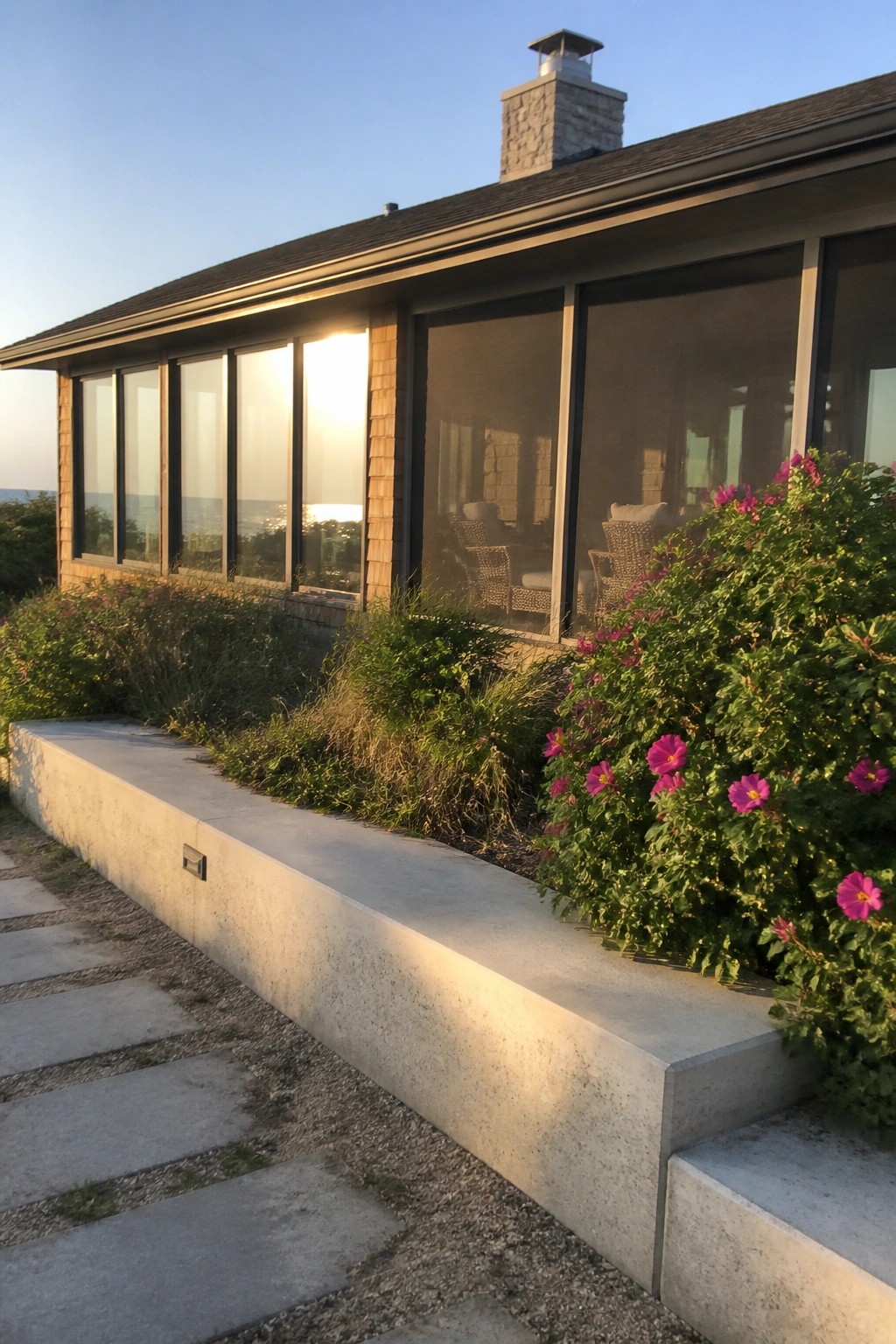
Running windows from floor to ceiling across the whole front keeps the house low and lets the view do most of the work. It also stops the wall from feeling solid or closed off, which matters on a site that looks out over water.
This approach works best on homes that sit close to the landscape. Keep the planting low and simple along the base so nothing blocks the glass, and the windows stay the main feature.
Vertical Wood Accents On Coastal Facades
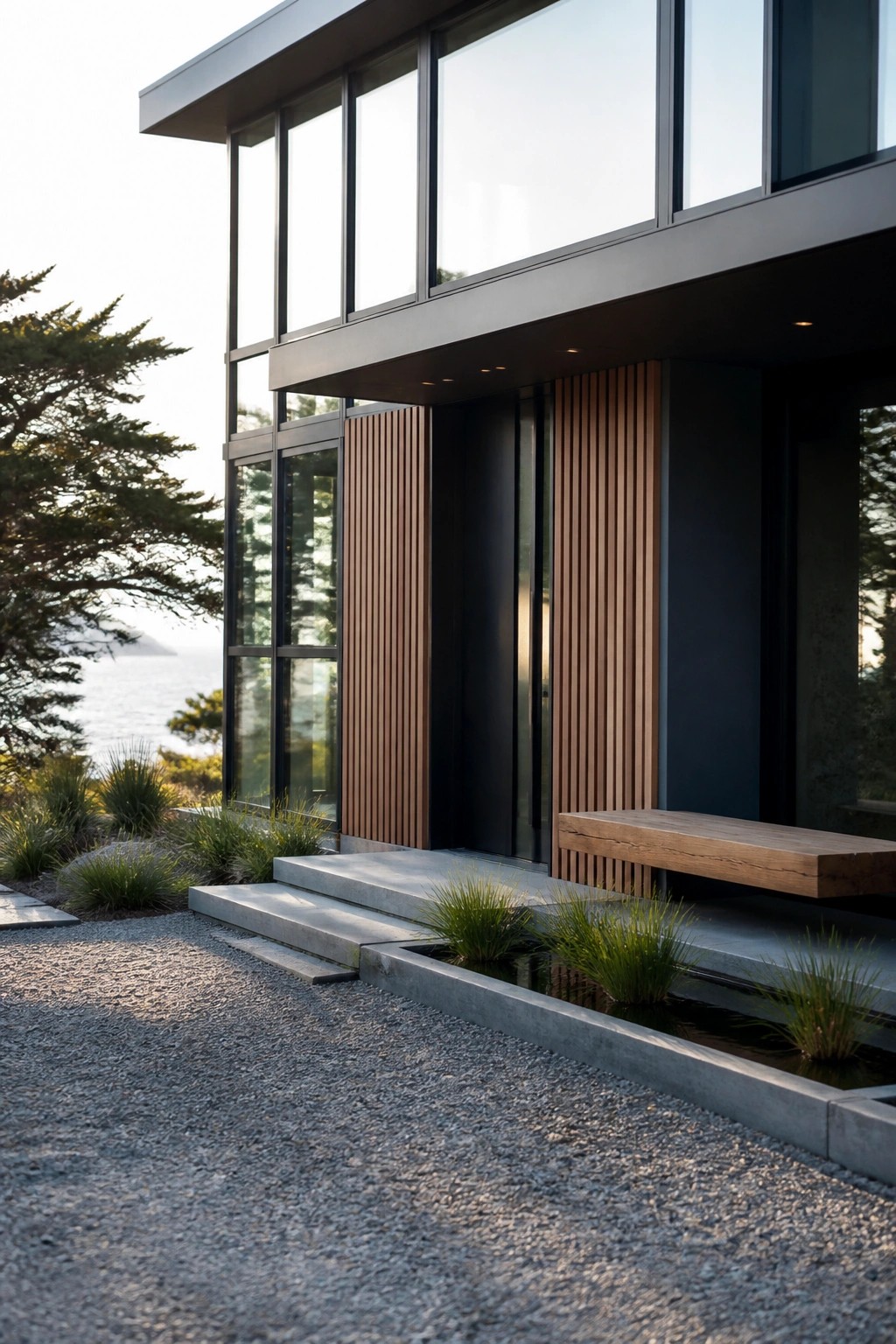
Vertical wood slats add a simple layer of texture to a sleek modern exterior. They break up the glass without making the whole front feel heavy or busy.
This approach suits homes that already lean contemporary and need a little warmth to connect with the landscape. Use it on one or two sections rather than the entire facade so the contrast stays sharp.
Floor-to-Ceiling Windows Across the Main Facade
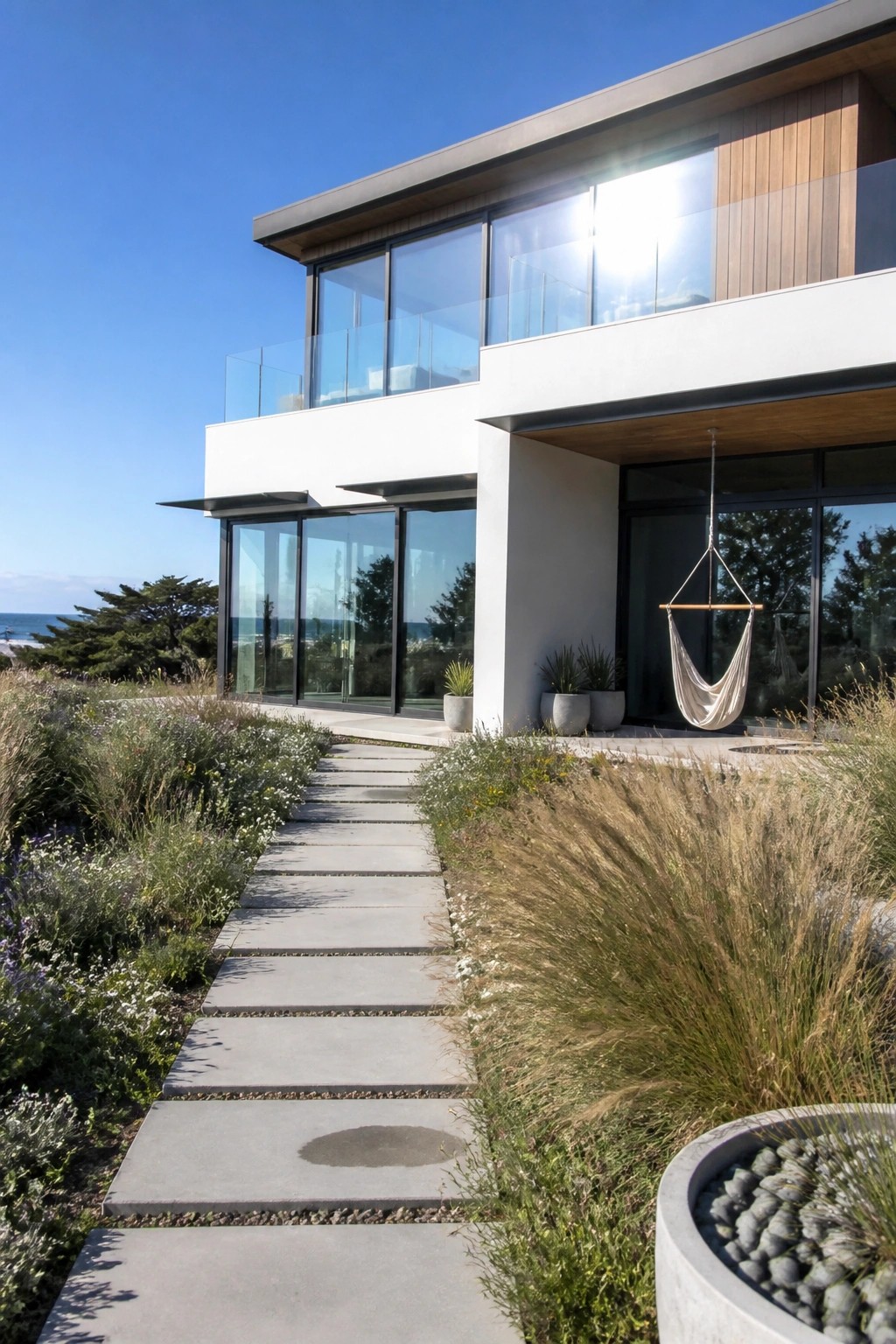
Many coastal homes gain a lot from running tall glass panels straight across the front. This move keeps the structure light and lets the rooms behind feel tied to the water and sky without extra barriers.
It suits homes that sit on open lots where the view is the main draw. Pair the glass with a few wood accents to keep the look grounded rather than stark.
Outdoor Fire Pits With Built-In Seating
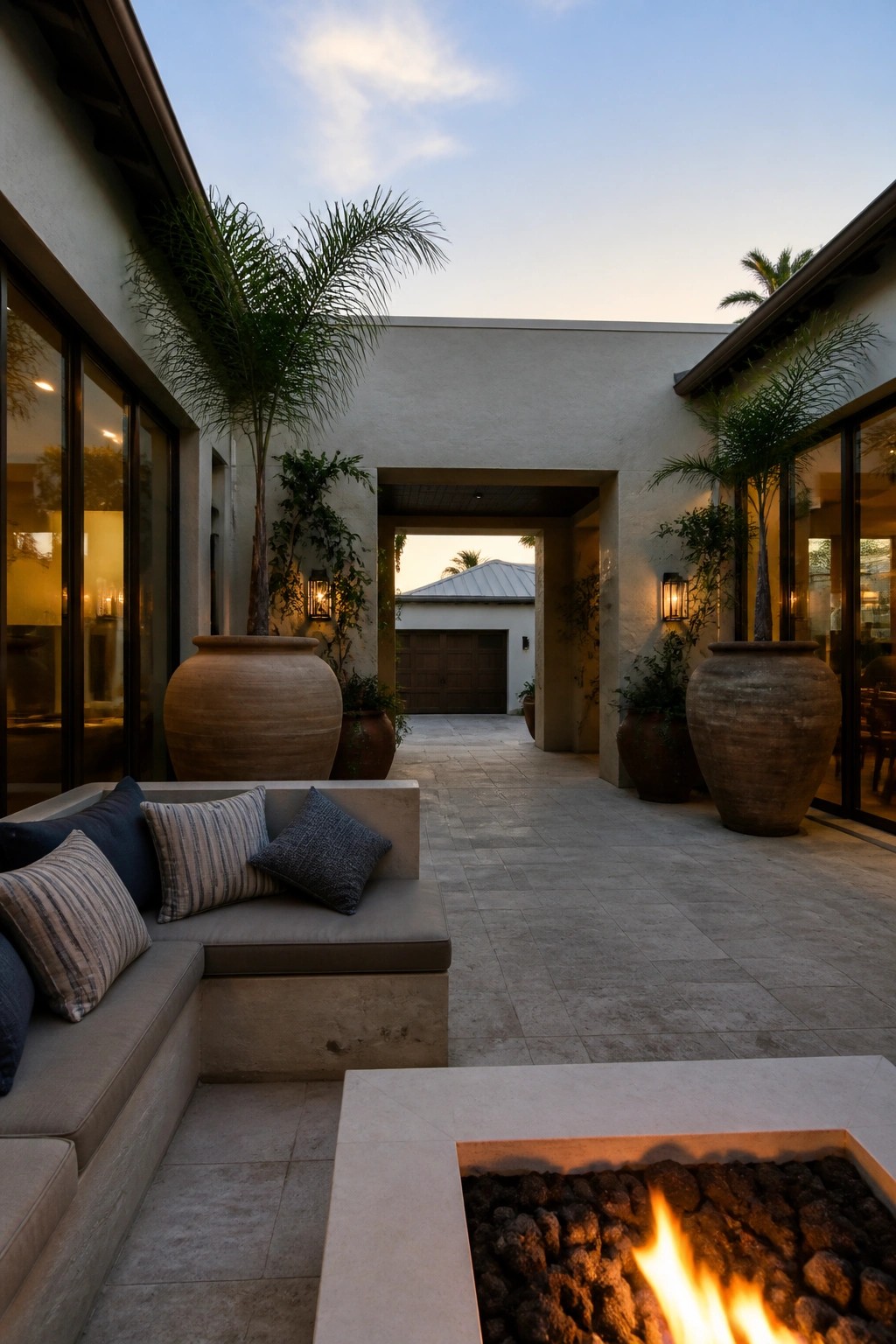
Many people add a fire pit to an outdoor space but keep the seating movable. Built-in benches around the pit make the area feel more finished and ready to use without rearranging cushions every time.
This approach works well in a courtyard or enclosed patio where the house walls already provide some structure. It pairs nicely with large glass doors so the indoor rooms open right onto the seating without a hard break between inside and out.
Tall Windows on Dark Facades
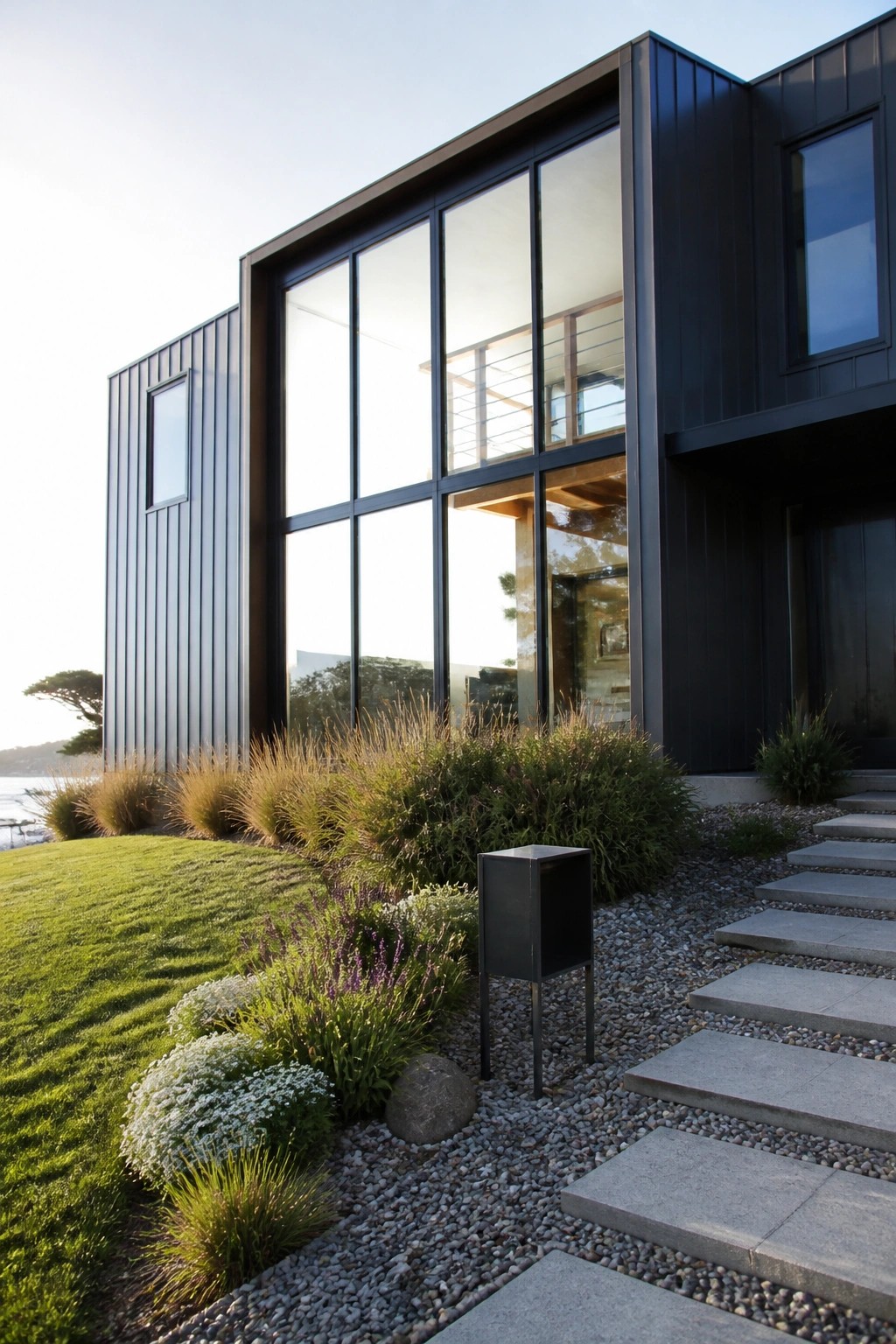
Dark siding makes a house feel solid and grounded, but it can also turn the whole exterior heavy if there is not enough light coming through. Full height windows cut right through that weight and let the coastal light do the work instead. The result feels balanced without needing extra trim or bright paint colors to compensate.
This approach works best on homes that already sit low to the ground or face open views. Keep the glass in simple grids so the dark frame stays clean, and let the windows run close to the roofline. Just watch the orientation. South or west facing glass may need some shade cloth or deep overhangs so the inside does not overheat in summer.
Outdoor Dining Right by the Pool
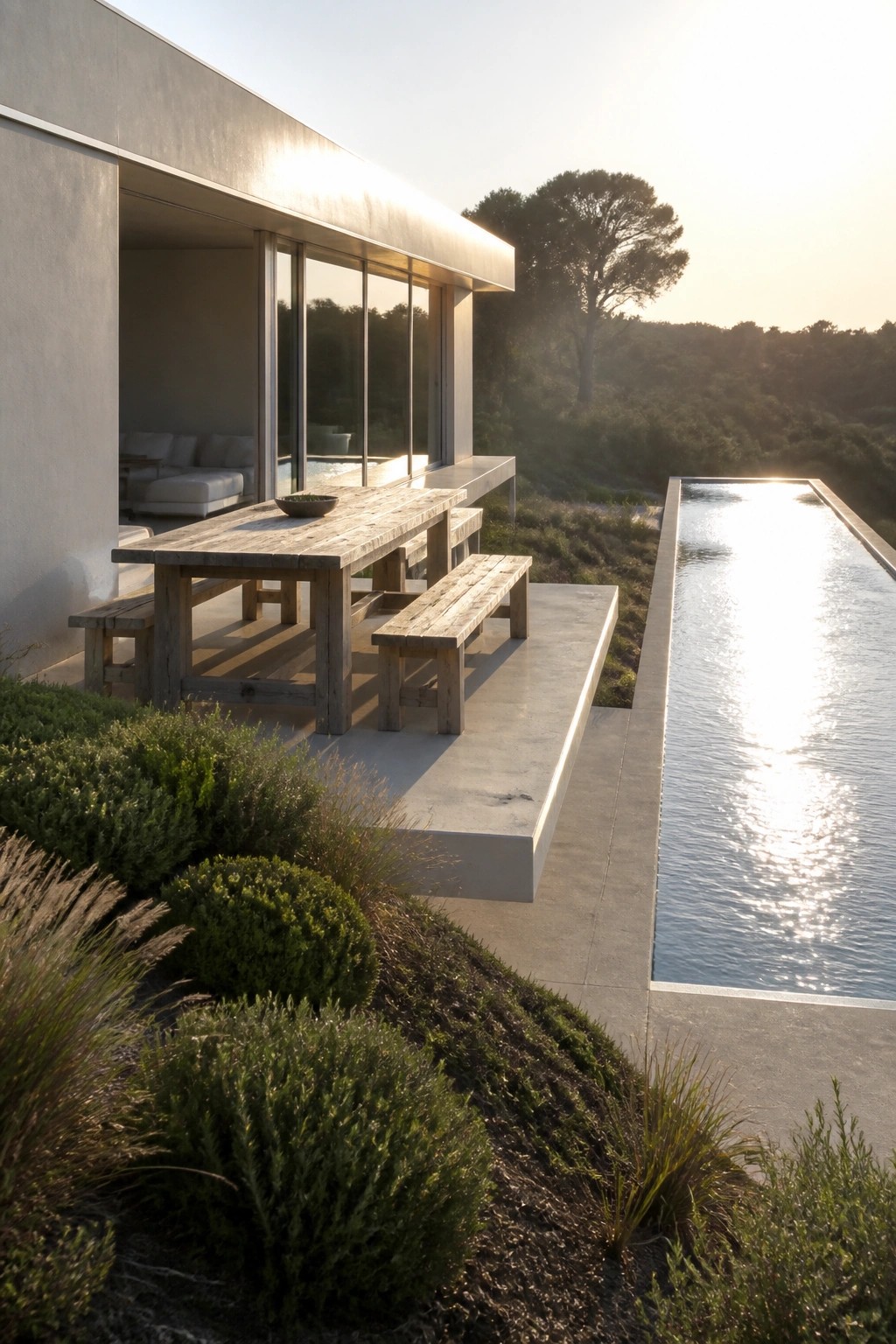
A long wooden table placed on a low concrete platform next to the pool turns the edge of the water into a usable dining area. This setup keeps meals simple and connected to the outdoors without extra structures or railings in the way.
It suits homes that already have a strong view and a flat pool deck. Stick with basic benches and untreated wood so the table does not compete with the water or the surrounding landscape.
Mixing White Brick With Tall Windows
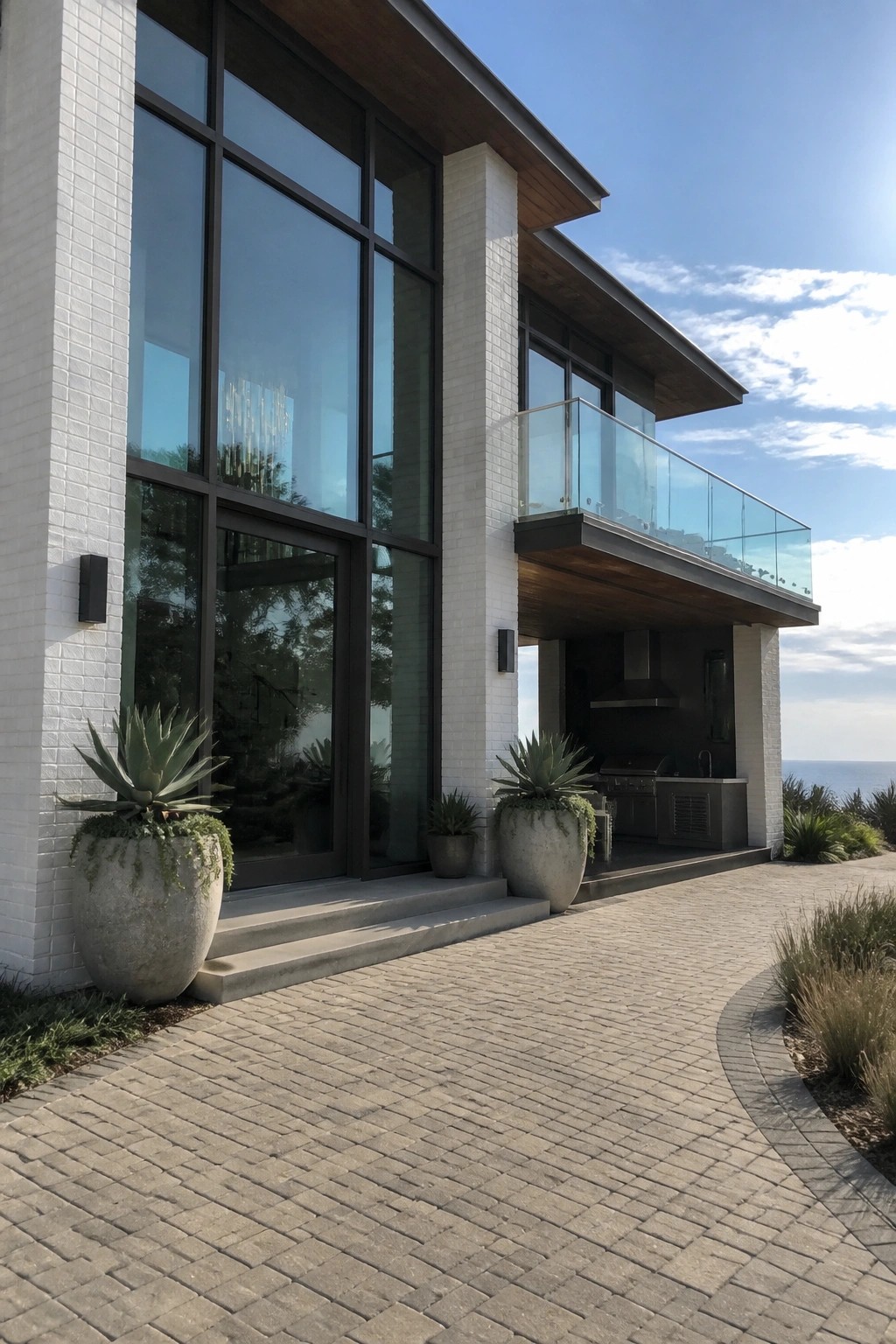
White brick paired with tall dark-framed windows gives a coastal house a clean look that still feels grounded. The contrast keeps the facade from appearing too flat while letting plenty of light inside.
This works well on homes near the water where you want the exterior to feel open and simple. It suits contemporary styles that need to handle bright sun and ocean views without extra trim or heavy detailing.
Open the Back Wall With Wide Sliding Doors
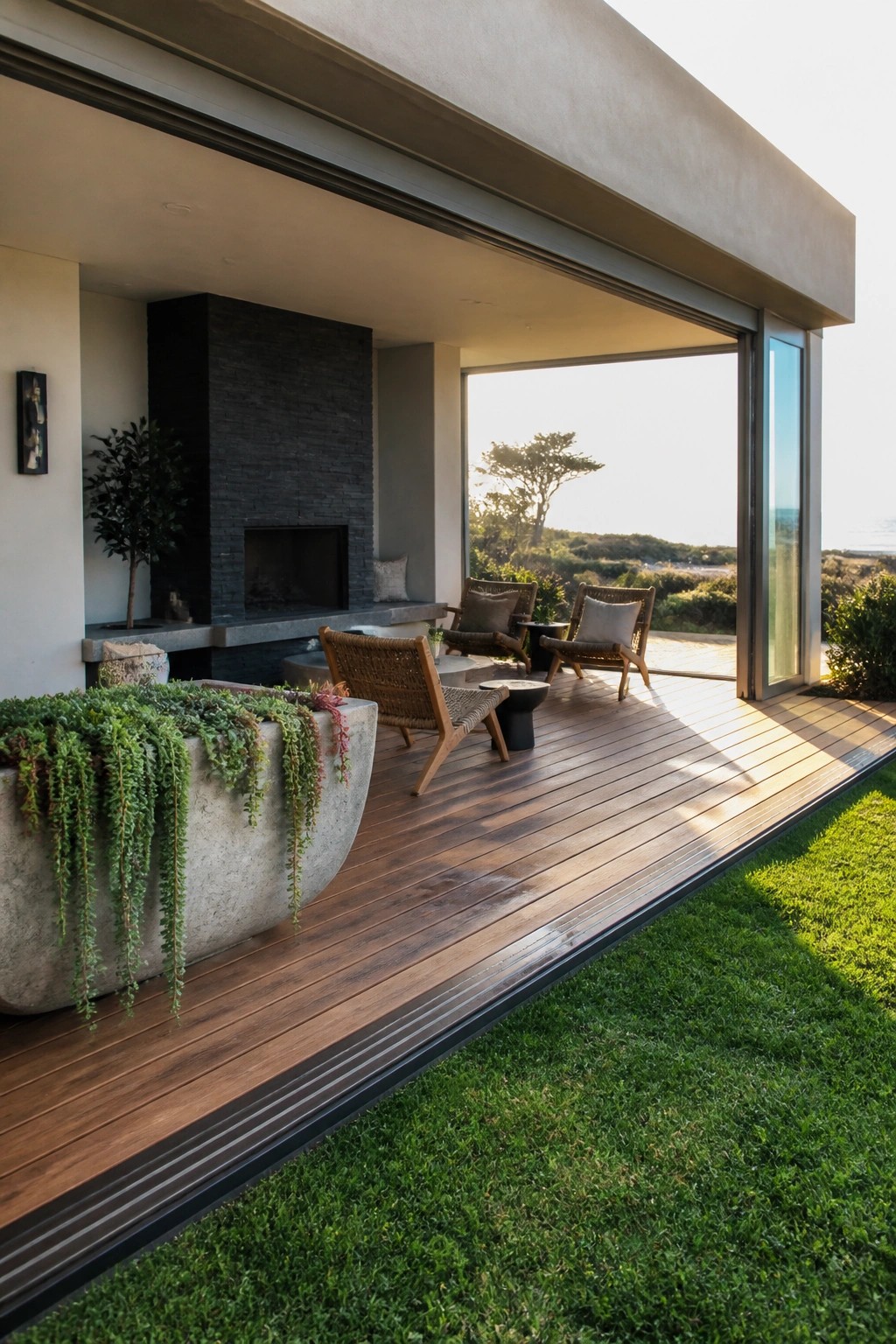
Large sliding doors can turn a deck into an extra room instead of a separate space. When the doors sit fully open, the wooden deck surface continues the floor plane from inside, so seating and movement feel natural across both areas. The result is a living zone that works for morning coffee or evening use without extra walls or steps in the way.
This approach suits homes where the main living areas sit close to the yard and the climate allows several months of outdoor time. Keep the deck material simple and level with the interior floor, and place the main seating right at the opening so people move between the two sides without thinking about it. Avoid narrow doors or tall thresholds that break the connection.
Vertical Slats Over Tall Windows
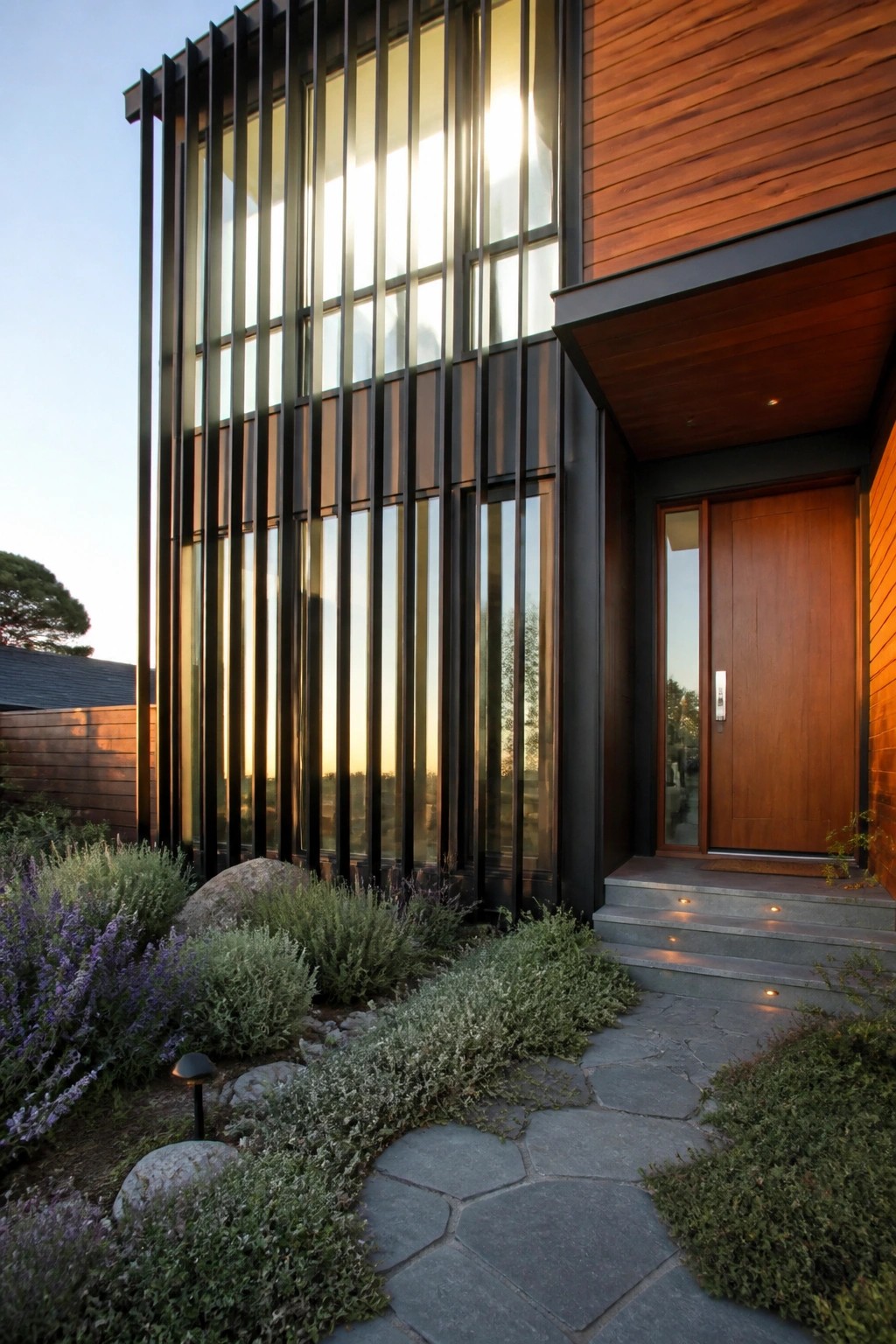
Vertical slats in front of floor-to-ceiling windows give a house a cleaner look while cutting down on harsh glare. They break up the glass without blocking the view, which works especially well on coastal homes where the light can get intense during the day. The dark frames also add some weight so the windows do not feel too open or exposed.
This approach suits homes that want a modern edge but still need a bit of practical shading. It works best on two-story facades where the height of the glass needs something to tie it together. Keep the slats spaced evenly and match the frame color to the trim for a simple, consistent result.
Perforated Metal Screens on the Facade
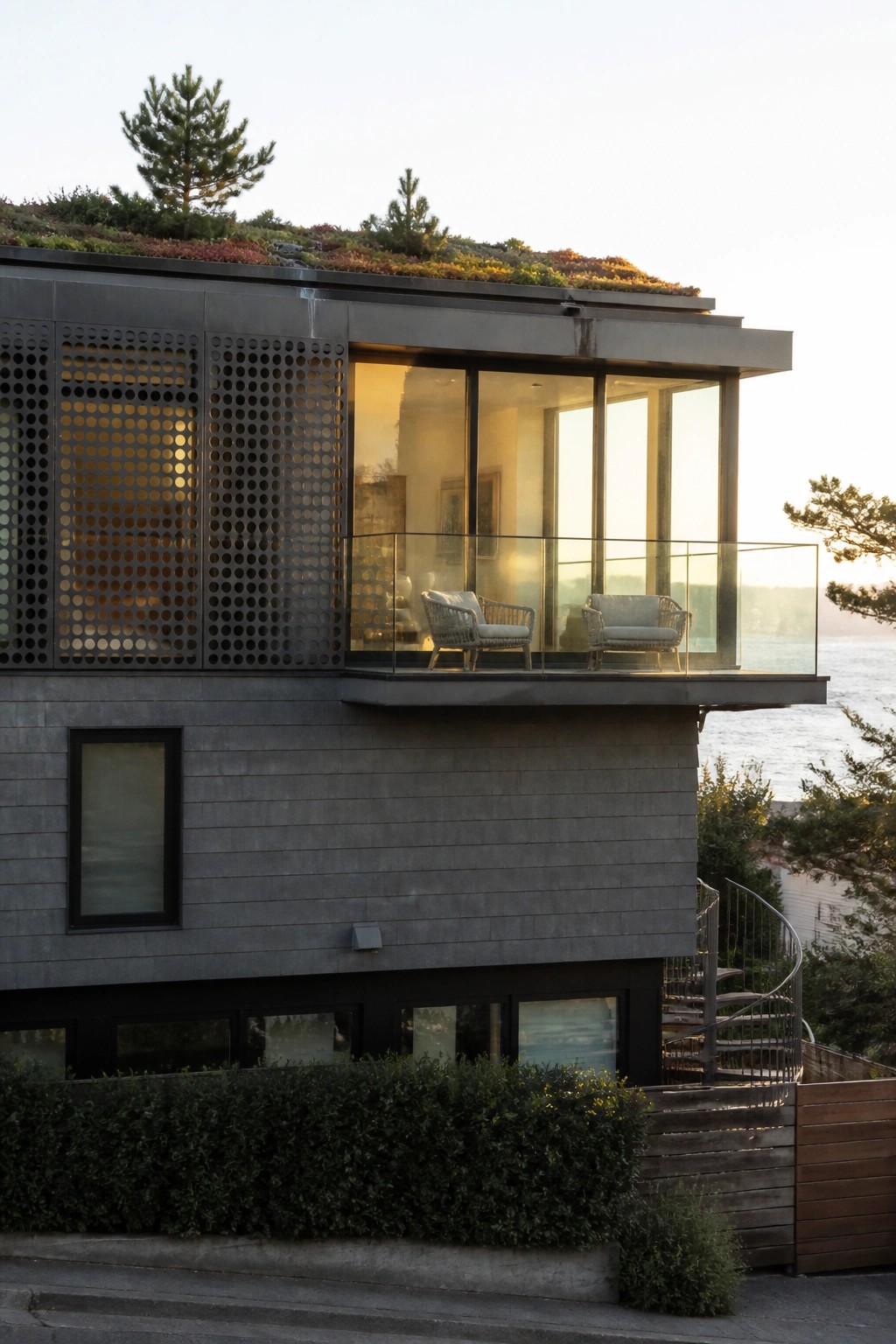
Perforated metal panels give a house some texture without hiding the windows. They let light through in patterns while adding a layer of interest to the solid parts of the wall.
This approach works best on contemporary homes with big glass sections already in place. Keep the pattern open enough that the panels do not block light or make the exterior feel heavy.
Frequently Asked Questions
Q: How do you deal with glare from all that glass when the sun hits the water? A: Sheer roller shades pulled partway down cut the worst of it while keeping the view open. Position seating away from the direct angle of the sun. That simple shift makes the room usable during peak hours.
Q: What happens to privacy with windows that run floor to ceiling? A: Tall potted plants or a low bench inside create a quick screen without closing off the space. Outside, a row of grasses blocks the line of sight from the beach path. Most owners find they only need it on one or two sides.
Q: Do the frames hold up when salt spray hits them every day? A: A quick rinse with a hose every couple of weeks stops buildup. Pick powder-coated aluminum from the start so you avoid constant touch-ups. It stays looking new without much extra work.