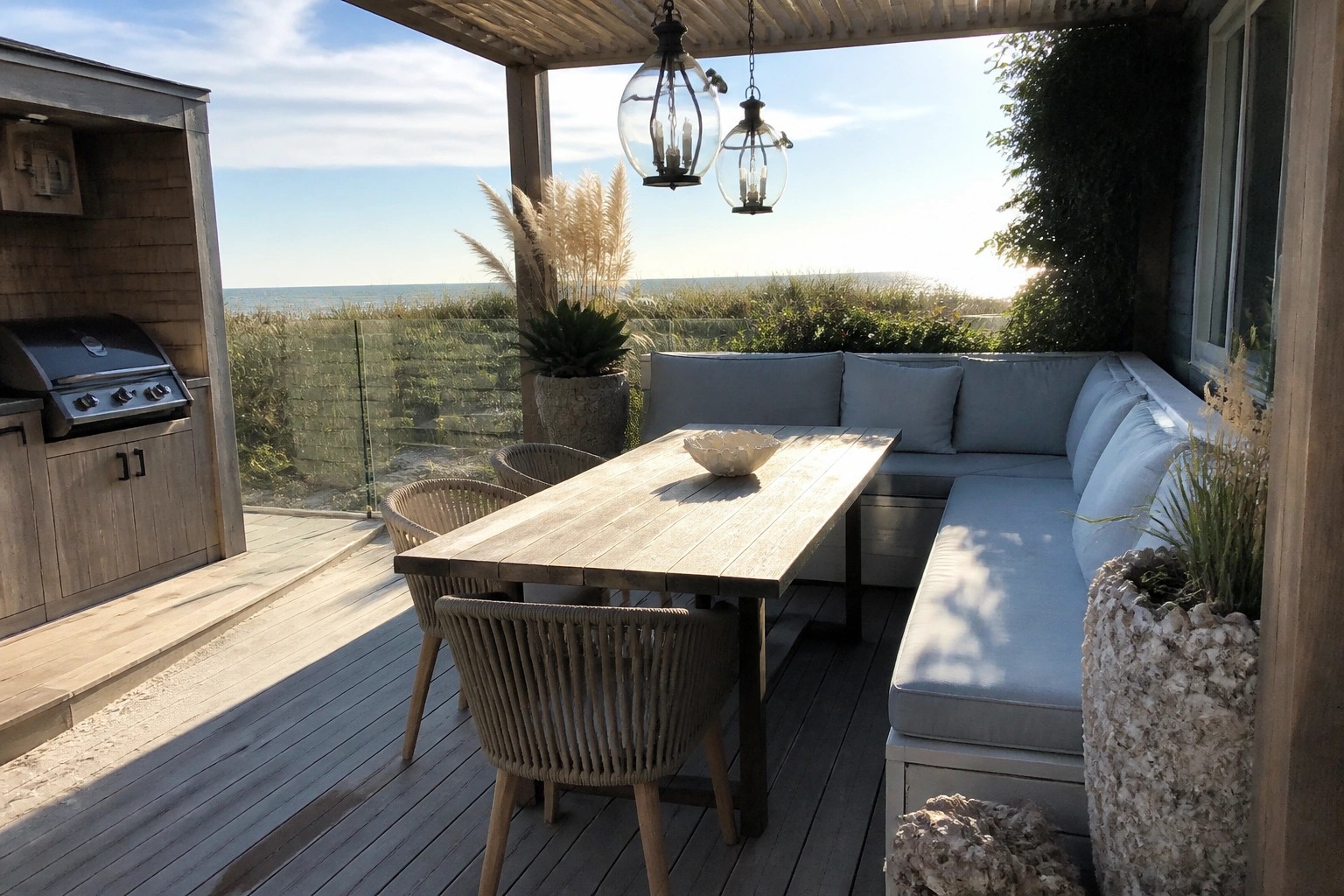
Over the years I have learned that outdoor dining on a deck really comes down to how the space flows when people are moving around with plates and drinks.
Coastal locations bring extra factors like salt air and changing breezes that can turn a nice setup into something less practical if the furniture is not anchored properly.
Usability beats looks every time.
I often think about how the table placement affects the view and whether guests can still talk comfortably without straining over the railing.
A few of these ideas seem worth trying out on my own deck to see what actually holds up during a full season of meals outside.
Long Tables Work Well for Deck Dining
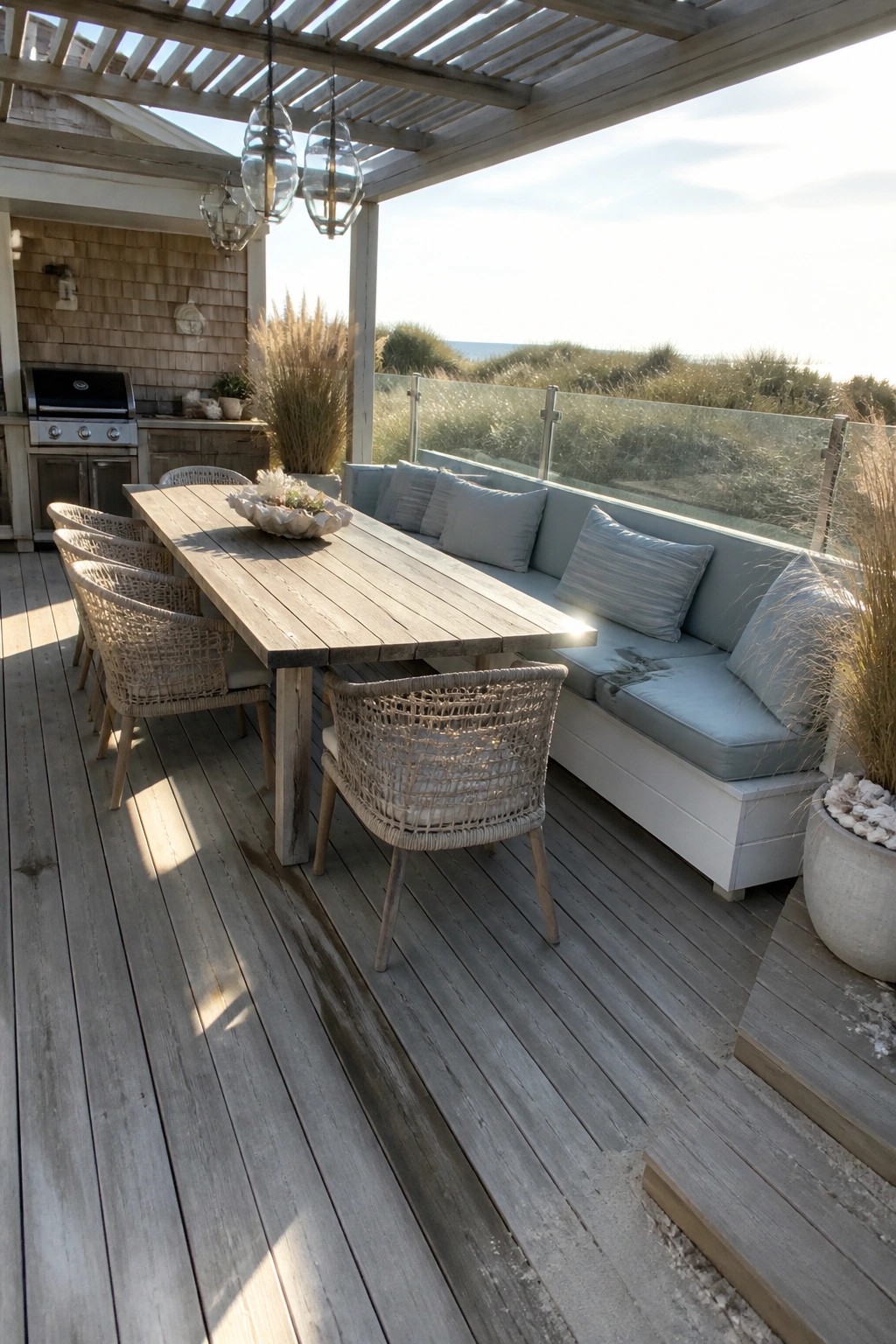
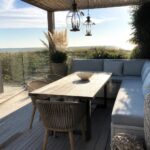
A long wooden table gives the deck a clear spot for meals without taking over the whole space. It pairs easily with a mix of chairs on one side and a bench along the other so people can sit comfortably in different ways.
This layout suits coastal homes where outdoor meals happen often. Keep the table simple and let the seating stay light so the area still feels open when you are not using it.
Hang A Shade Sail Over Deck Dining
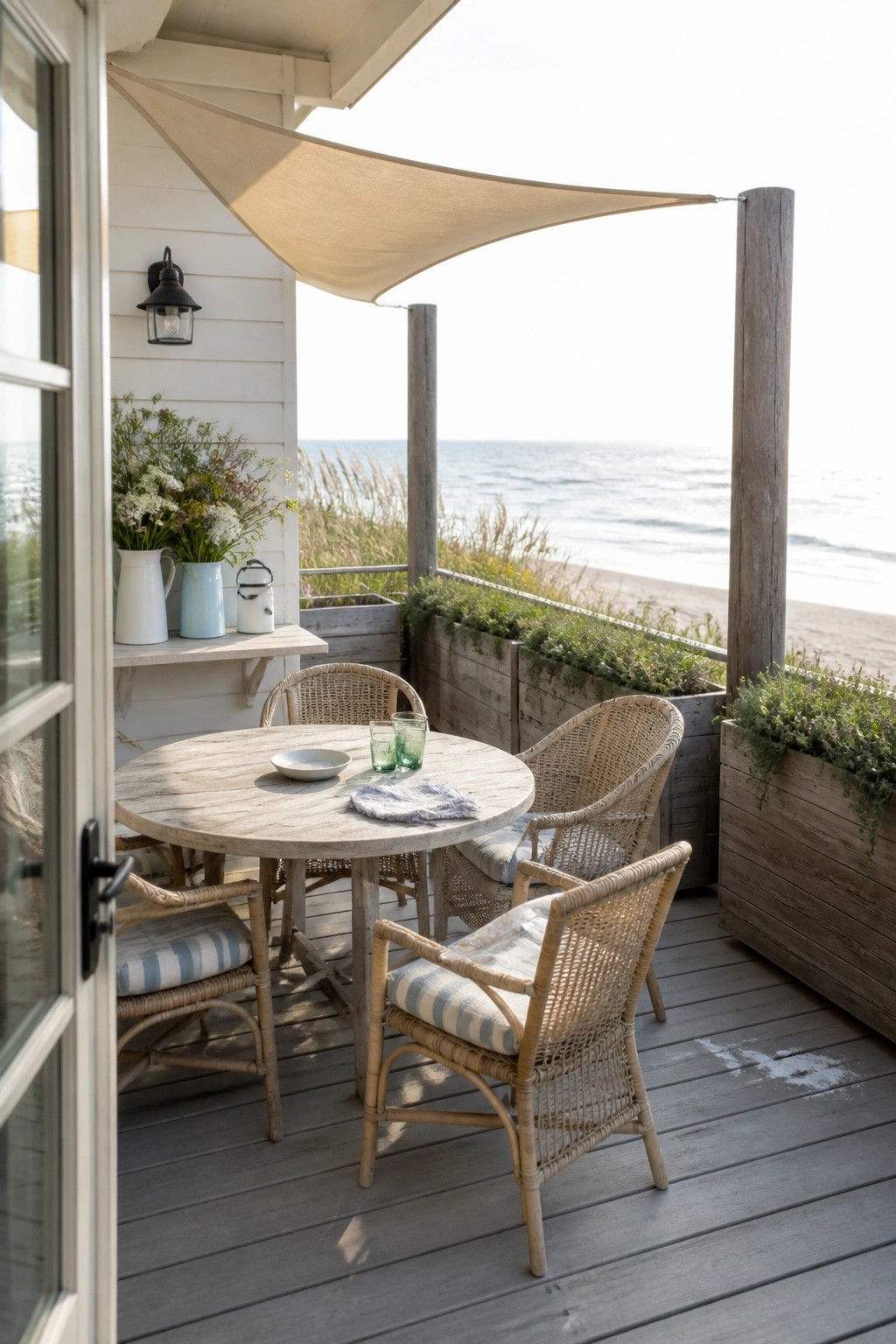
A shade sail gives an outdoor dining area real protection from the sun without making it feel closed in. The fabric stretches across the space above the table, cutting glare and heat while still letting breezes through. On a coastal deck this keeps meals comfortable even in the middle of the day.
It works best on decks that face open water where afternoon sun can be intense. Secure the corners to sturdy posts or the house wall so the sail stays taut in wind, and pick a light color that does not darken the space too much.
Mixing Chairs And Benches Around A Long Table
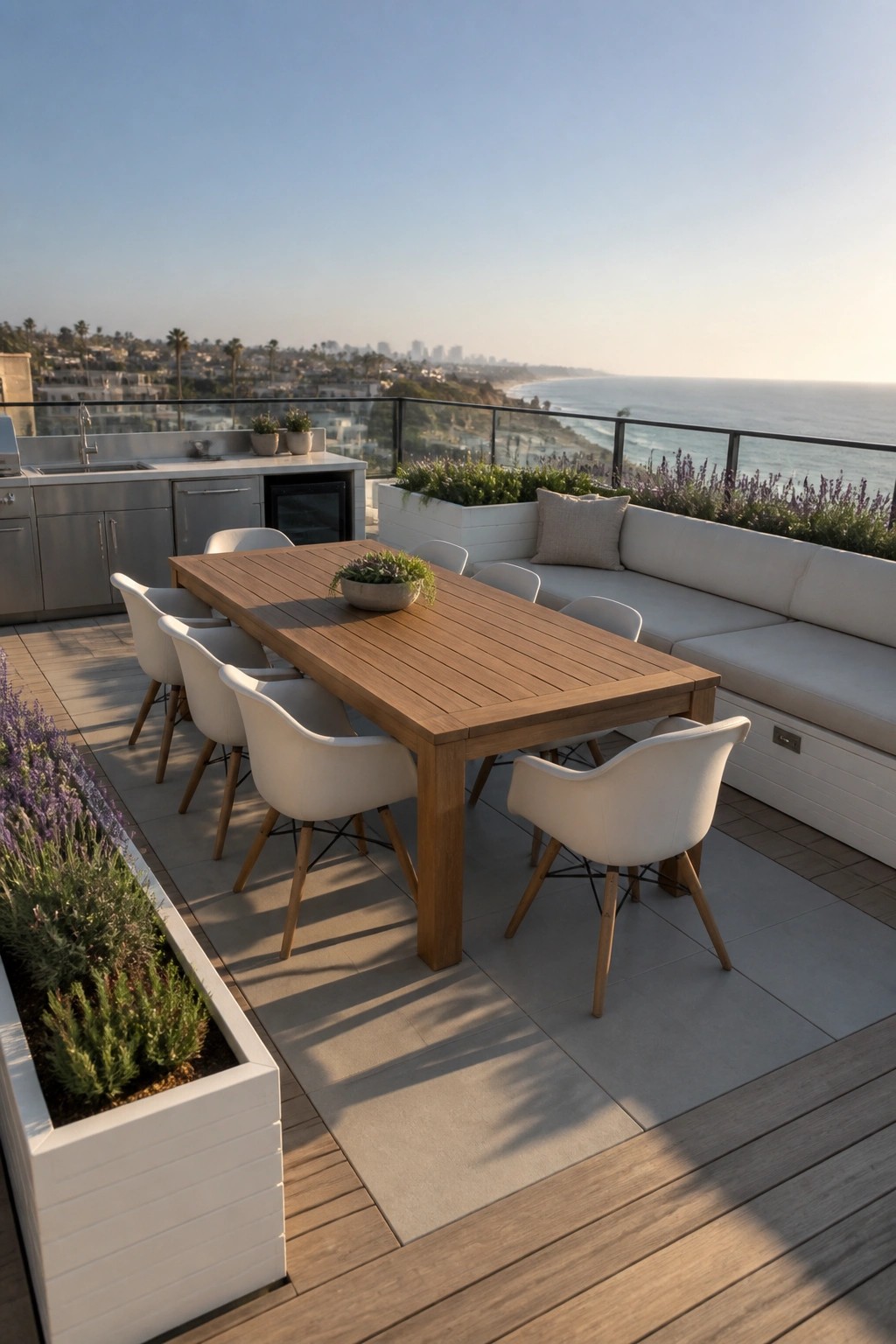
A long outdoor table feels more practical when you combine different seating types instead of using all the same chairs. One side can have a built-in bench that follows the edge of the deck, while the other side keeps a row of lighter chairs that move easily.
This works best on decks meant for regular meals, especially in coastal spots where space stays limited. The bench adds steady seating without taking up extra floor room, and the chairs let you adjust for different group sizes. Just make sure the bench height lines up with the table so everyone sits comfortably.
Built-In Bench Seating for Deck Dining Tables
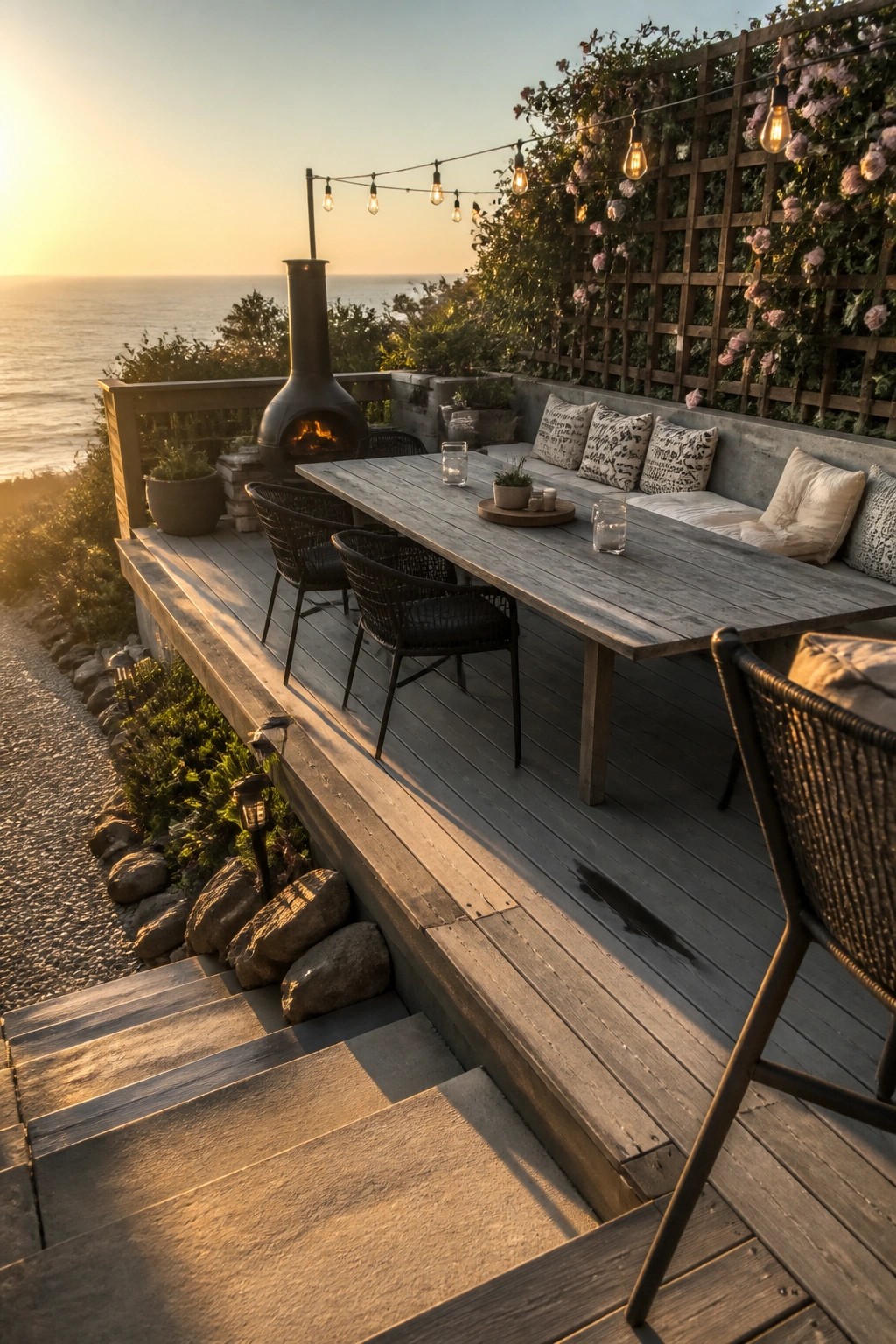
One practical choice on many coastal decks is running a built-in bench along the back edge of the dining area. This setup supports a long table without needing chairs on every side, which keeps the space open and easy to move around.
It works best on decks that already have some structure like a low wall or raised edge. Cushions make the bench comfortable for longer meals, and the design leaves room for a fireplace or extra seating nearby without feeling cramped.
Anchor Your Deck With a Long Dining Table
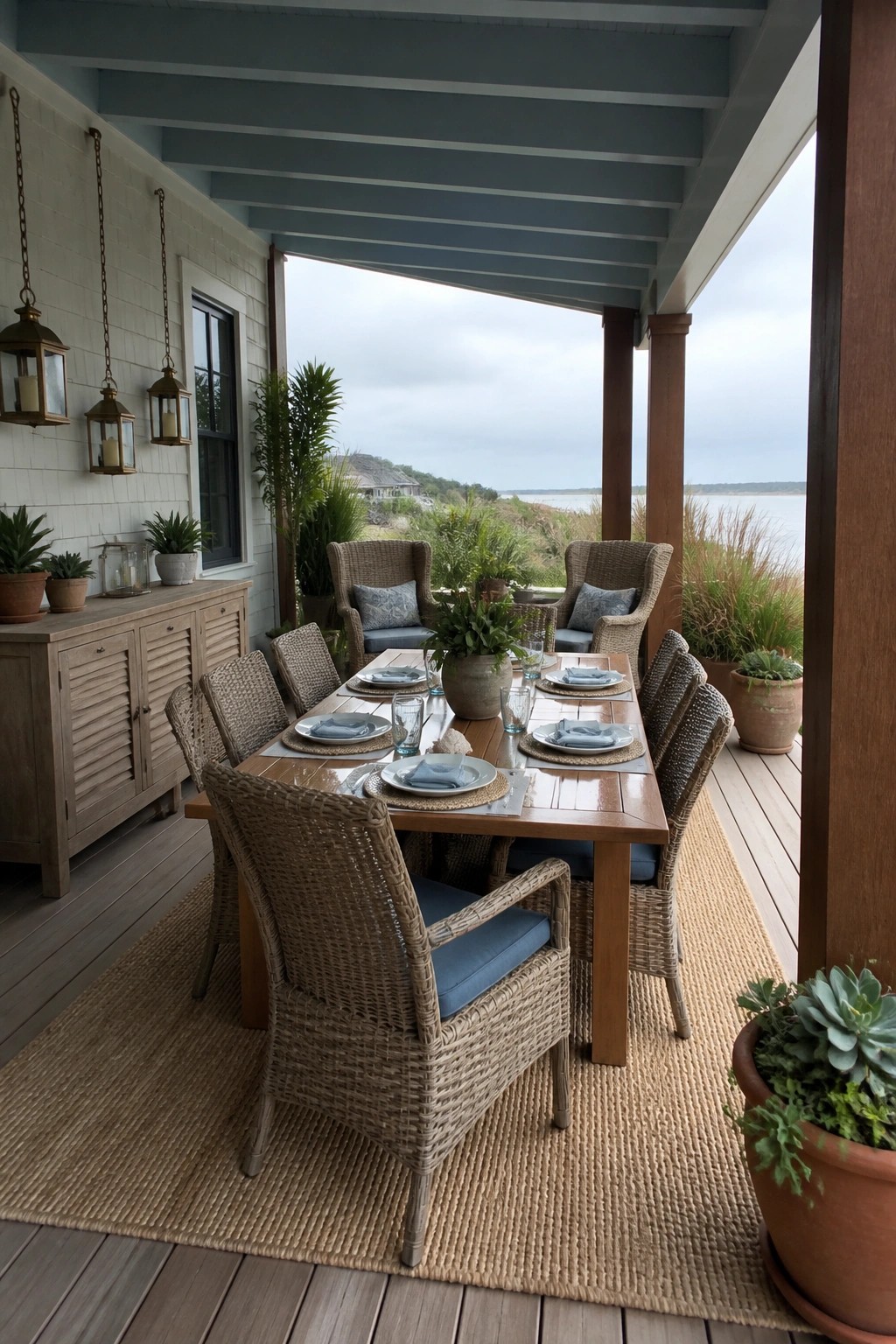
A long wooden table gives an outdoor deck a clear purpose. It turns the space into a place meant for sitting down and eating rather than just lounging.
This setup works best on a covered porch that already has some protection from the elements. Add a rug underneath to mark the dining zone and pair the table with sturdy woven chairs so the whole arrangement feels comfortable for longer meals.
Round Tables Fit Narrow Decks
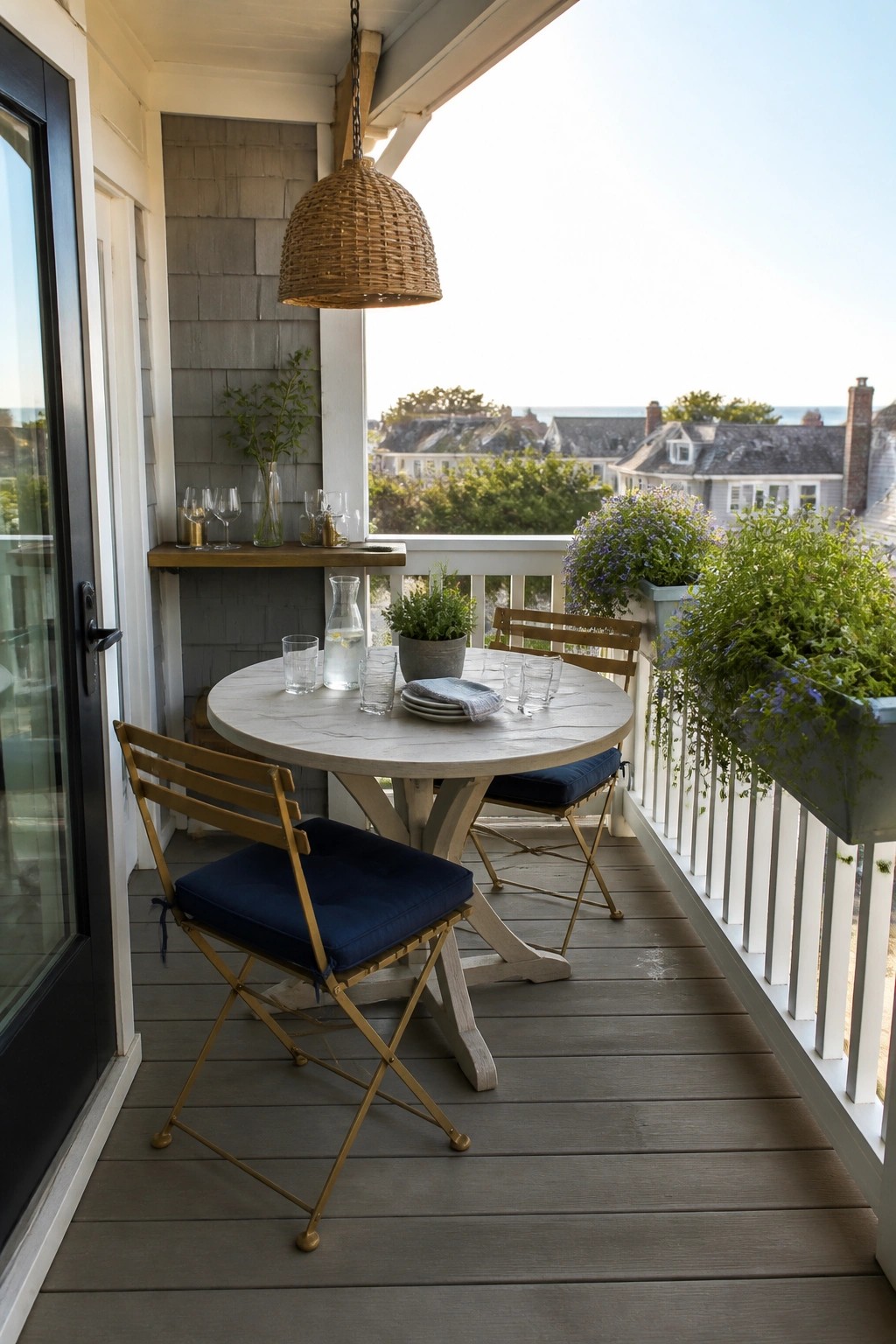
A round table gives you more room to move around on a narrow deck. The shape leaves open space on the sides so chairs can be pulled out without blocking the walkway or bumping into the railing.
This setup works best on smaller coastal decks where a long table would feel cramped. Folding chairs make it even easier since they can be stored away when the table is not in use.
Long Tables With Benches On The Deck
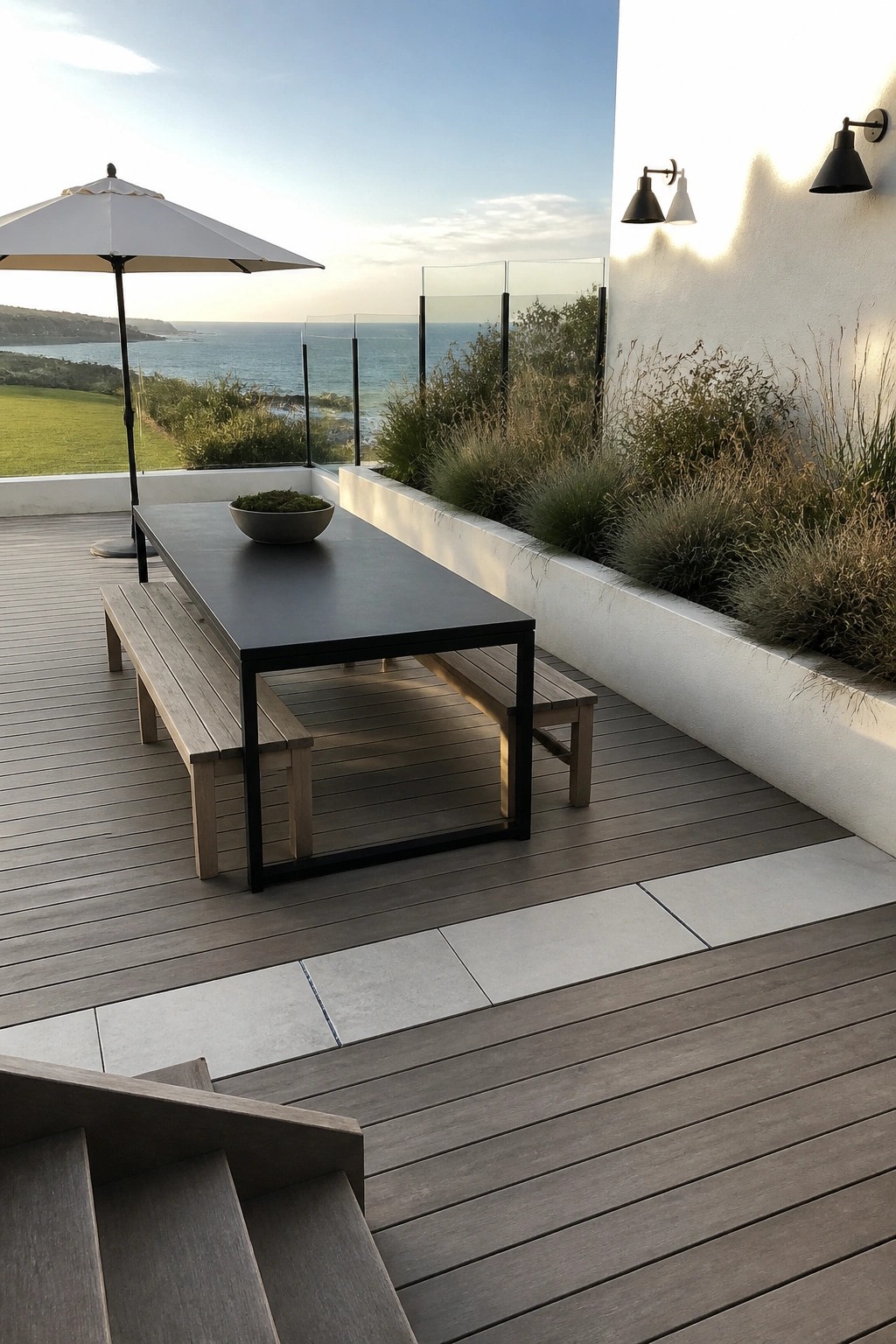
A long table with benches keeps the dining area simple and open on a deck. Benches let more people sit without adding extra chairs that take up space, and the whole setup stays practical for regular meals outside.
This works best on wider decks where you want the view to stay the main focus. It suits coastal homes that get steady use in good weather, since the benches are sturdy and the table can handle groups without feeling cramped.
Mix Chair Styles Around One Table
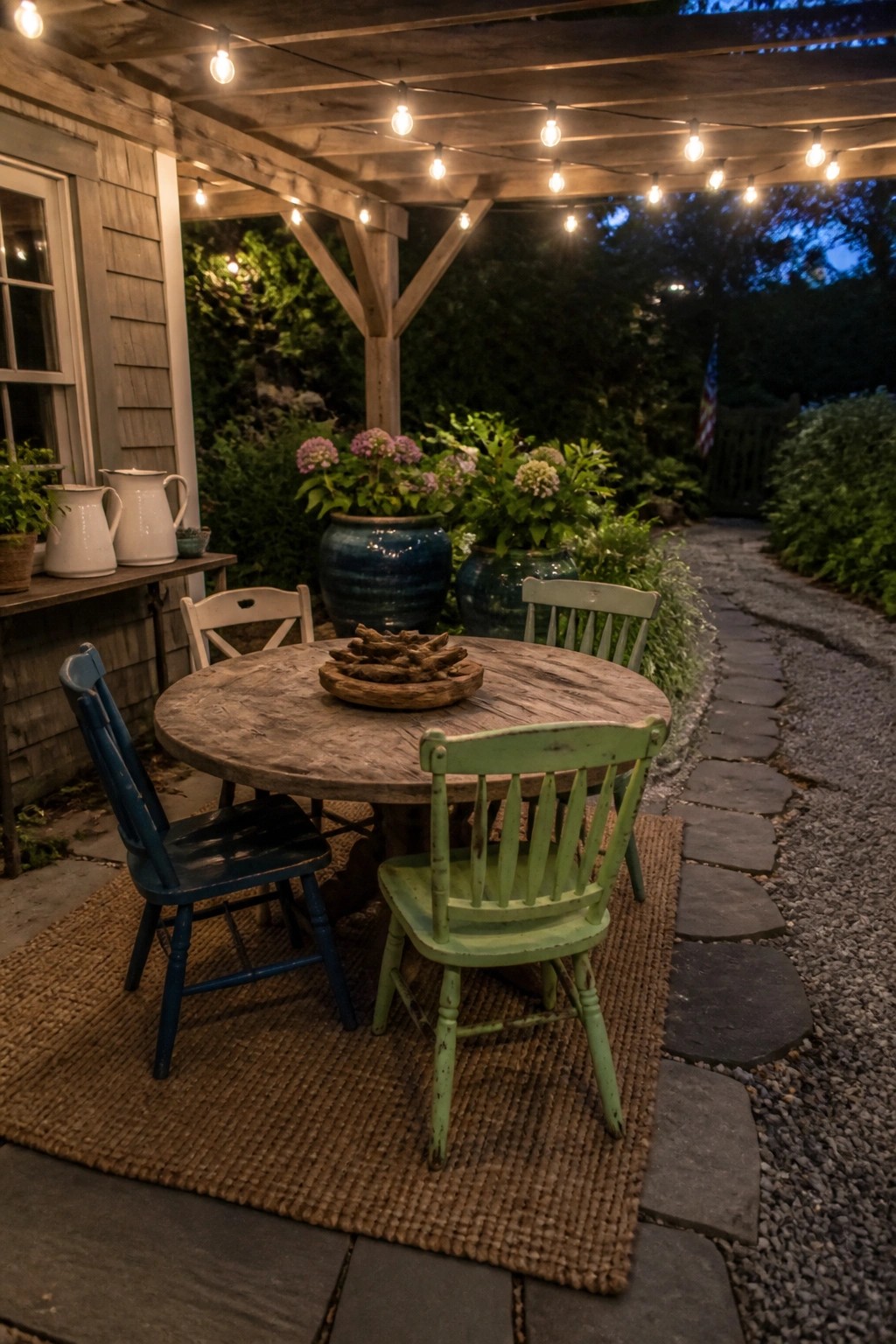
Many people find that pairing a round table with several different chairs creates a more relaxed dining area on the deck. The mix keeps things from feeling too matched or formal, which suits casual outdoor meals.
This approach works well on smaller coastal decks where you want seating for four or six without buying a full set. Look for sturdy outdoor chairs in similar heights and add a simple rug underneath so the space reads as one defined spot.
Add A Built-In Cooler To Your Outdoor Table
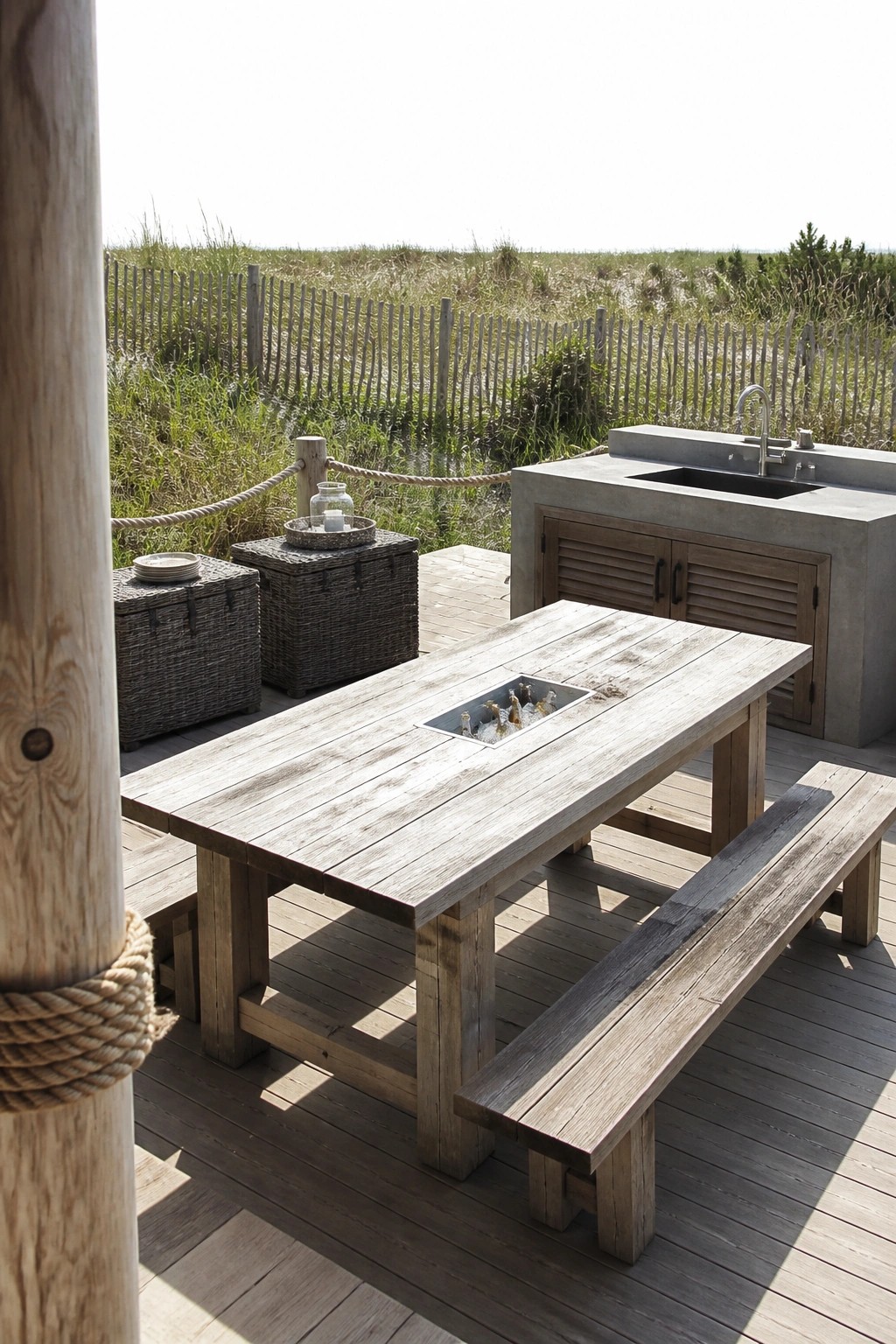
A long table with a center section for ice makes outdoor meals simpler on a deck. Guests can grab drinks without leaving the table, and the setup keeps everything in one spot instead of needing extra side tables or coolers nearby.
This works best on coastal decks where you entertain often and want a practical surface that handles weather. Choose a sealed insert so moisture does not soak into the wood, and keep the rest of the table simple so it stays easy to clean.
Cantilever Umbrellas Keep The Table Usable
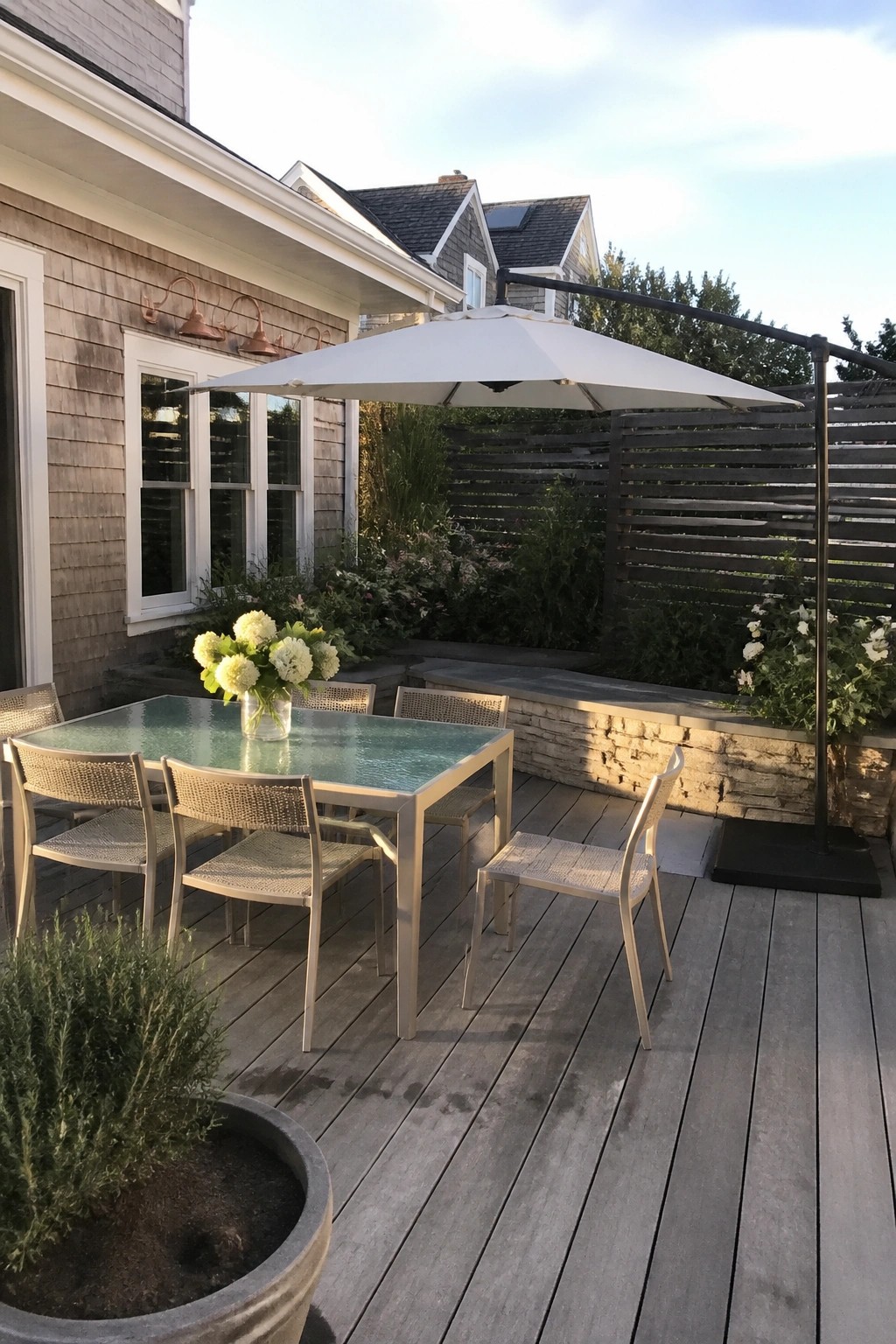
A cantilever umbrella gives shade without a pole running through the middle of the table. That small change makes meals easier because everyone can sit close without dodging a post or shifting around it.
This setup works best on decks that already have a clear dining zone. Mount the base off to one side so the arm can swing over the table when needed and tuck away when the sun moves.
Use a Pergola to Shade Your Deck Dining Table
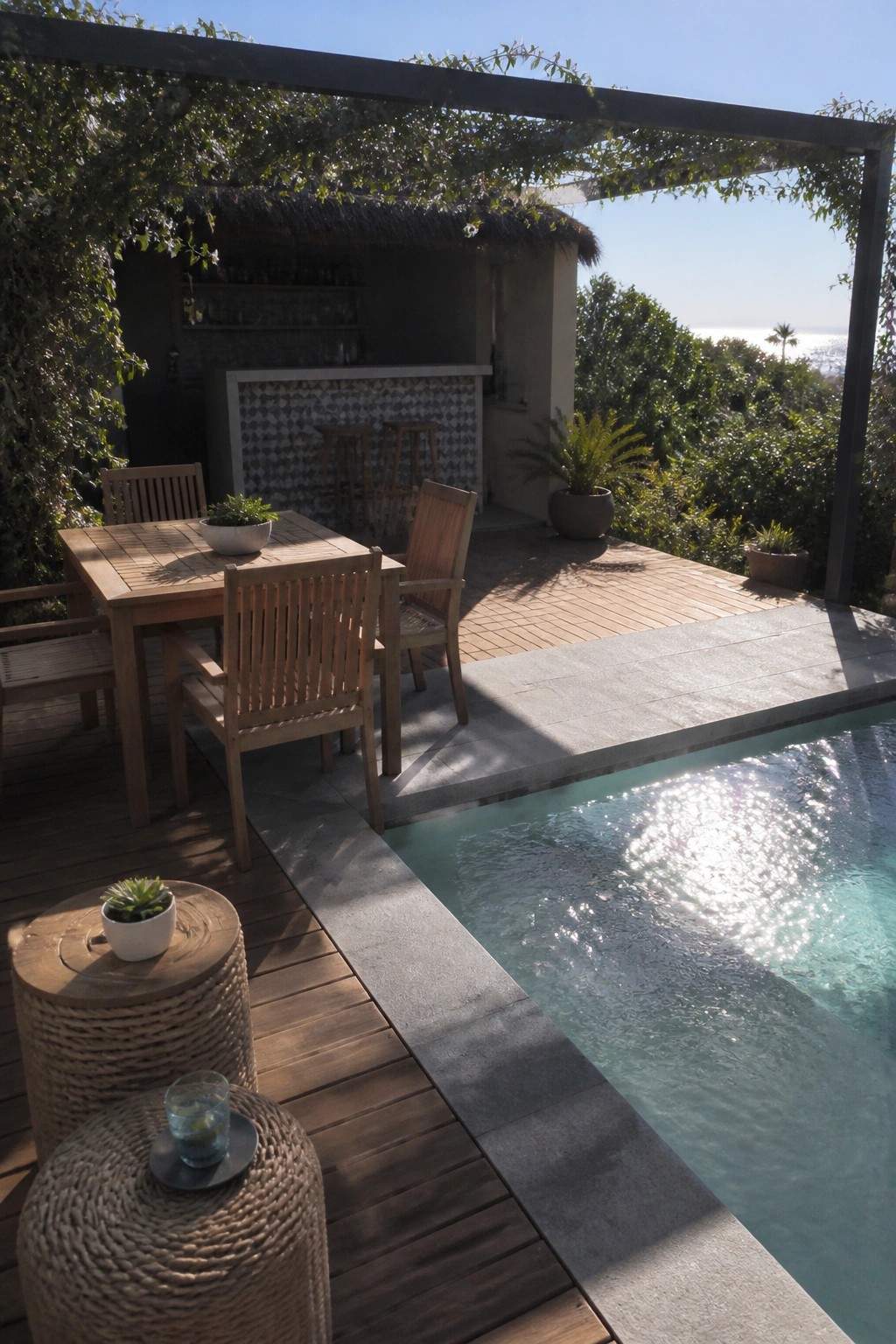
A pergola overhead makes a big difference when you want to eat outside without worrying about too much sun. It gives just enough cover while still letting in light and air, so the space feels open but usable even in the middle of the day. The wooden table and chairs below stay comfortable, and the whole dining area becomes the natural spot to gather.
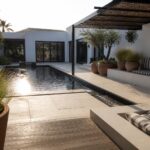
This setup works well on coastal decks where meals often stretch into the afternoon. Keep the pergola simple with a few vines or light fabric if you want more shade, and make sure the dining table sits close to a bar or serving counter so everything stays within reach. It suits homes that already have a pool or water view since the shade keeps people from moving indoors too quickly.
Place Your Deck Table Close to a Fire Pit
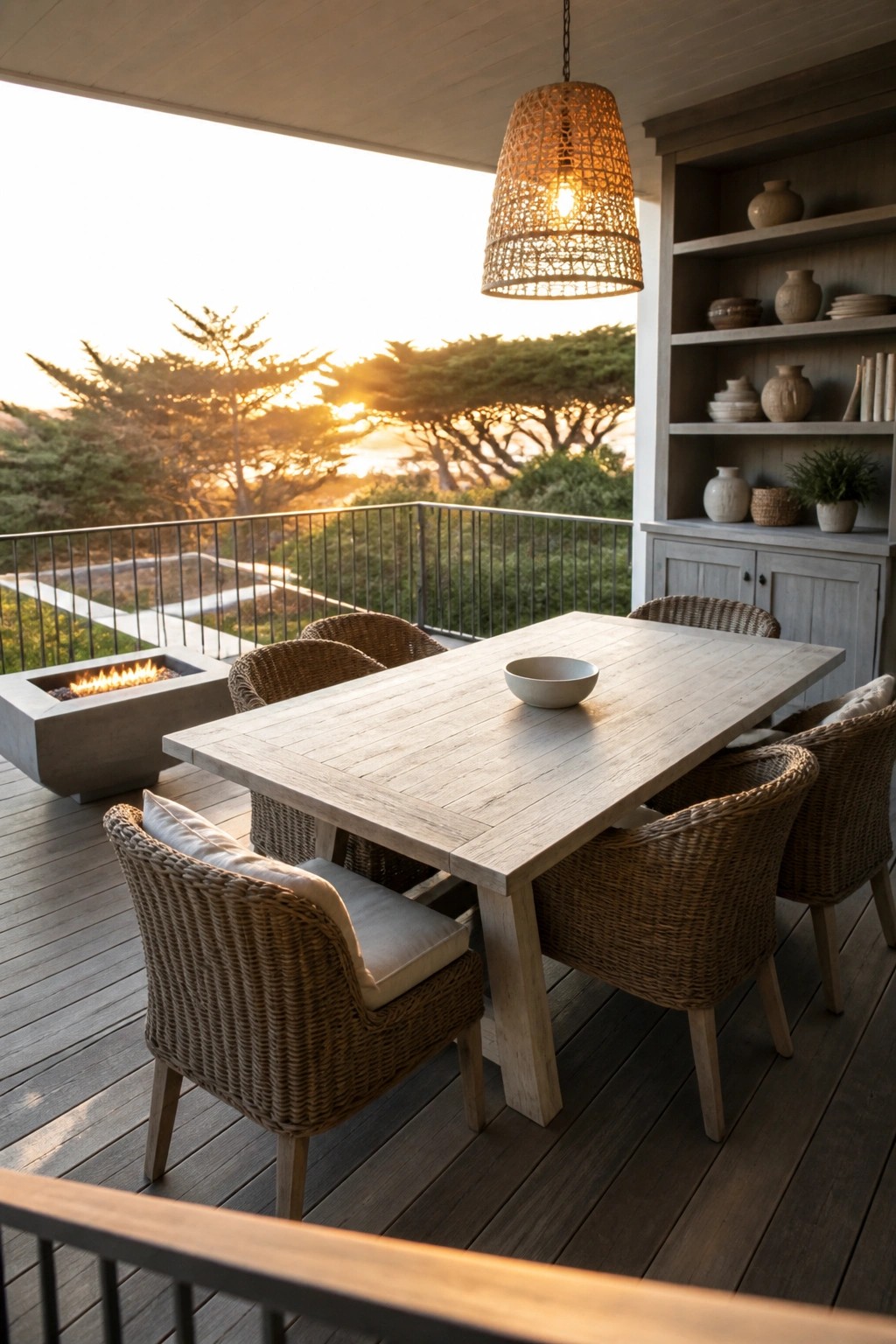
A fire pit placed right beside the dining table turns a regular deck meal into something that lasts longer into the evening. On coastal decks this setup works especially well because the fire adds warmth once the sun drops and keeps people comfortable without moving indoors. The simple wood table and woven chairs in this example show how little extra furniture is really needed.
This arrangement suits homes where evenings outside matter more than fancy decor. Keep the fire pit at a safe distance from the table legs and seating, and choose a model that is low enough not to block conversation. It works best on decks that already have good railings and some wind protection.
Bench Seating Along One Side Of The Table
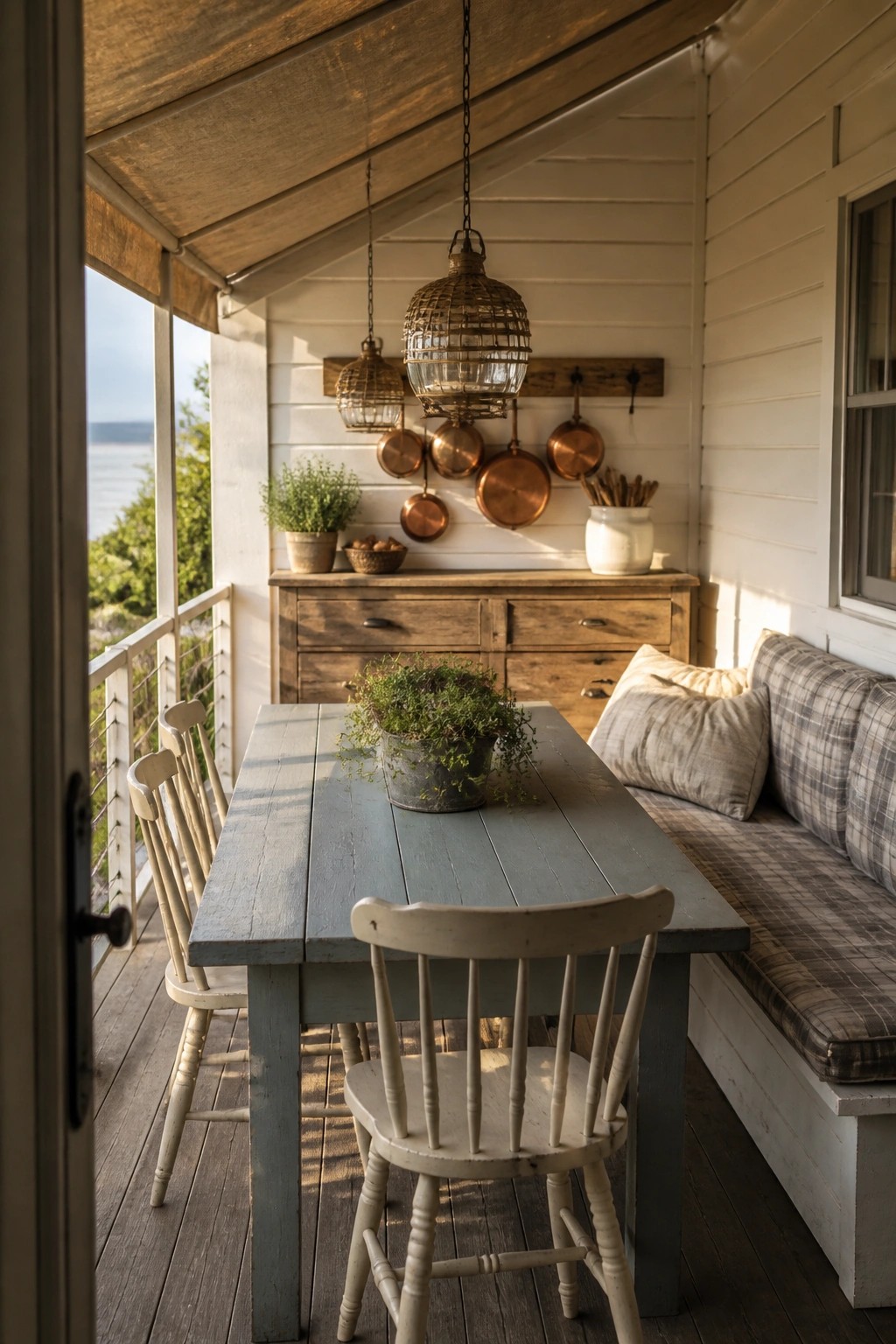
A bench on one side of the dining table opens up the space and lets you fit more people without crowding in extra chairs. It also keeps the setup simple and practical on a deck where you want room to move around.
This works best on a porch or deck that runs along the house wall. Keep the bench low and add a couple of cushions so it stays comfortable for meals that stretch into the evening.
Built-In Bench Seating For Deck Dining
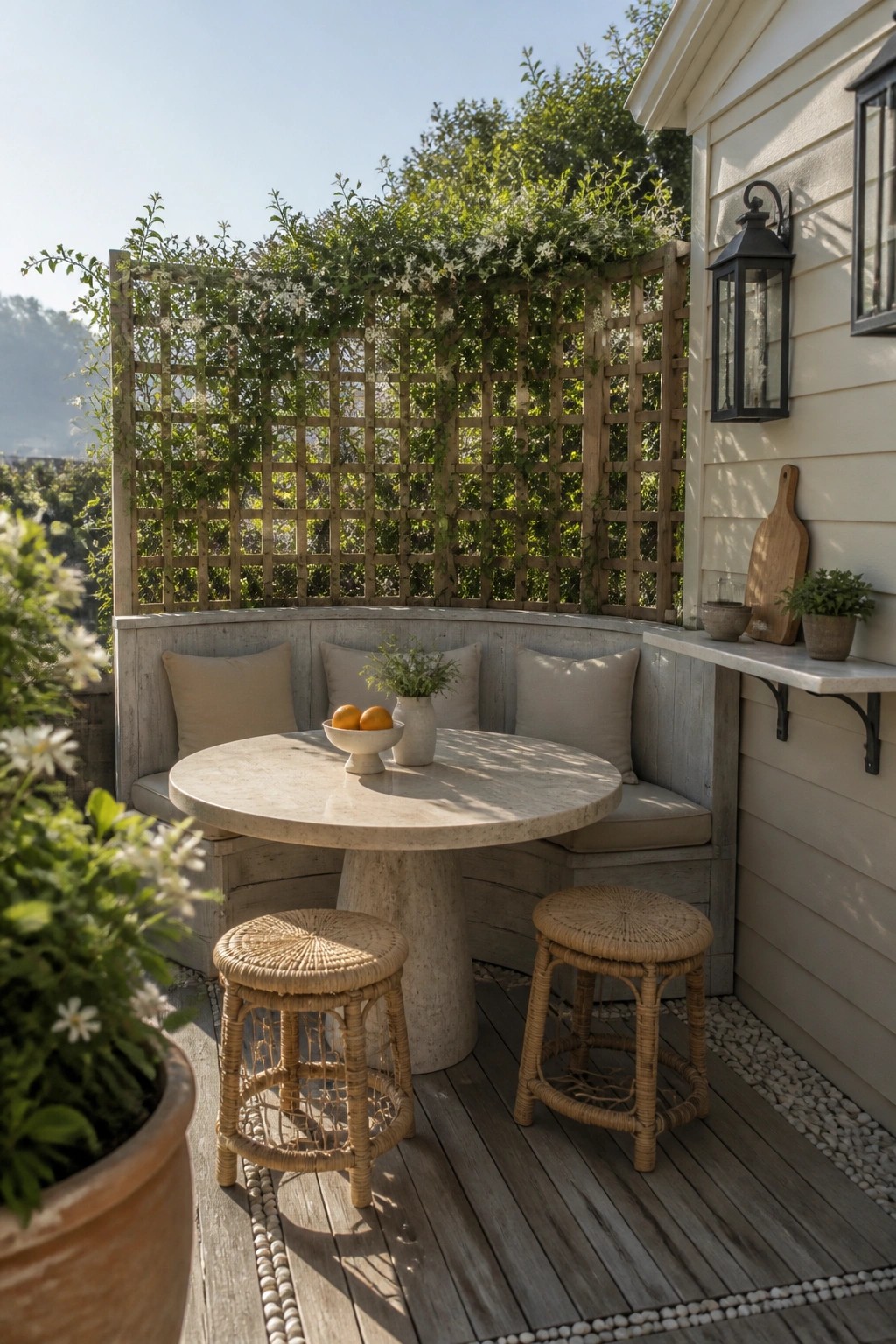
A built-in bench that curves around the table makes a deck feel more like a real dining room. It uses the space efficiently and gives people a comfortable spot to sit without crowding the area with loose chairs.
This layout works especially well on smaller decks or in corners where you want to keep things open. It suits homes near the coast or anywhere you eat outside regularly, and the bench can double as extra seating when guests come over.
Long Island Counters Make Deck Dining Practical
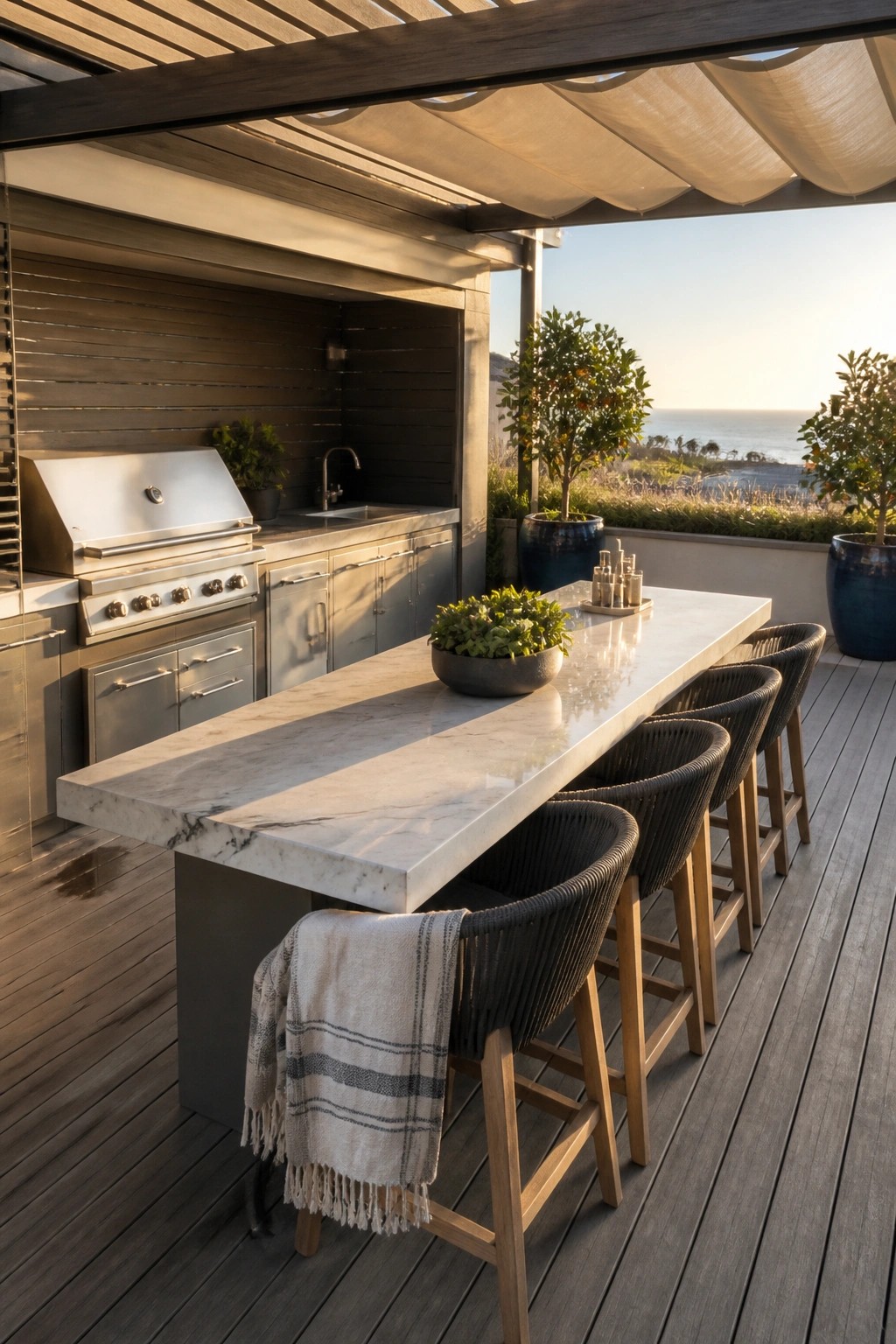
A long island counter gives an outdoor deck a clear spot for both food prep and seating without needing a separate table. It keeps the cooking area connected to where people gather, which works especially well when the space faces a view. The solid surface also handles spills and heavy use better than most portable options.
This setup suits homes that already have an outdoor kitchen or plan to add one. Place the island so stools fit along one side only, leaving the other side clear for the cook. Watch the width though, since anything too narrow starts to feel cramped once plates and drinks are set out.
A Large Wooden Table Centers Deck Dining
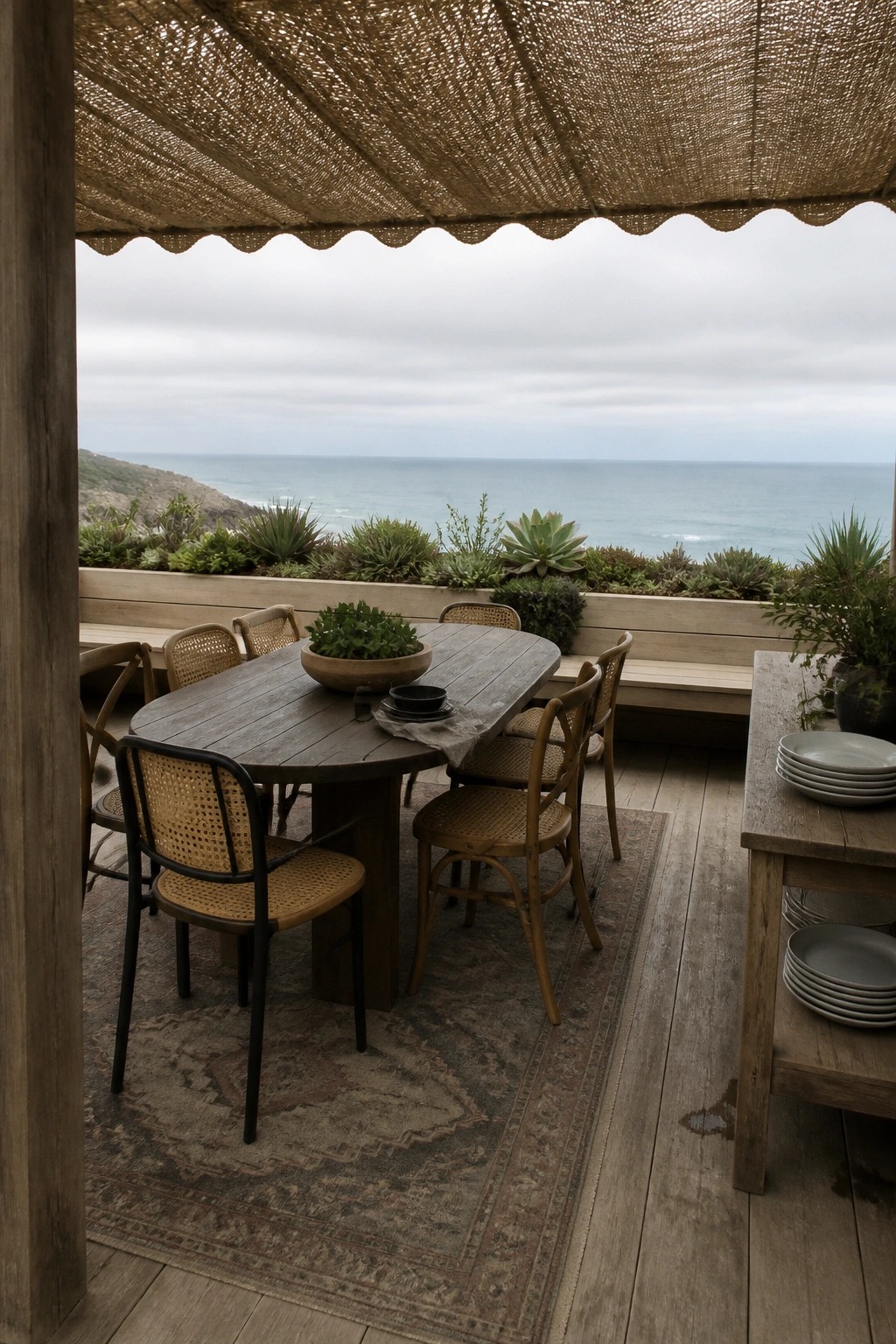
A big wooden table gives an outdoor deck a clear purpose. It becomes the spot where meals happen, and everything else can stay simple around it. The solid top and sturdy base hold up well in coastal air, and the size lets several people gather without feeling cramped.
Place the table where it gets some shade from a woven overhead cover or nearby plants. Add a rug underneath to define the area and make the chairs more comfortable on the deck boards. This setup works on most decks that face water or open views, as long as you leave enough space to pull chairs out easily.
Pergola Shade Over Deck Dining
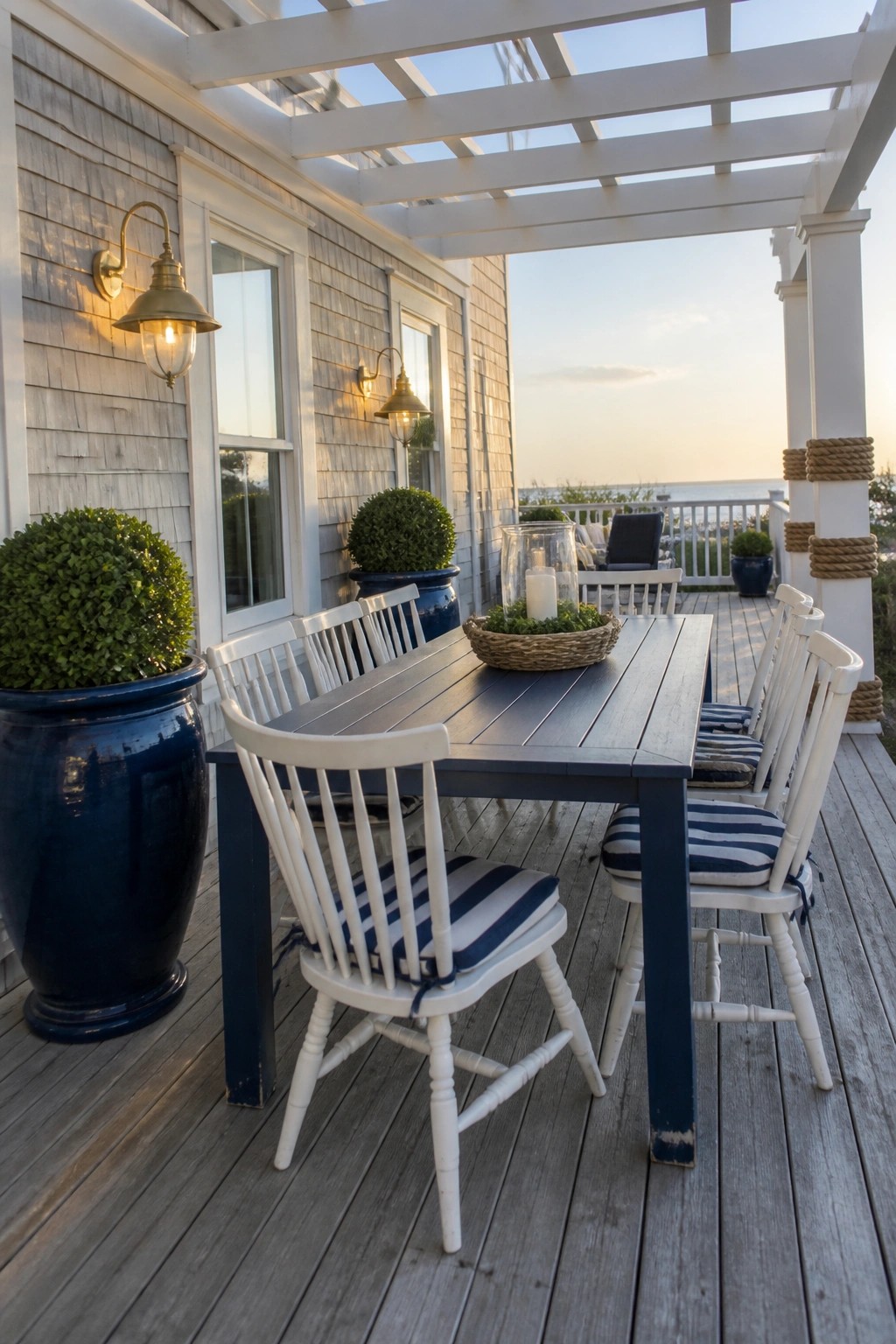
A pergola gives an outdoor dining table a clear sense of place on a deck. It adds structure without making the space feel enclosed, and it creates a bit of shade while still letting in light and air.
This setup works best on decks that already have good views or open space. Keep the pergola simple in color and scale so it fits with the house rather than competing with it.
Vertical Slats Define Deck Dining Areas
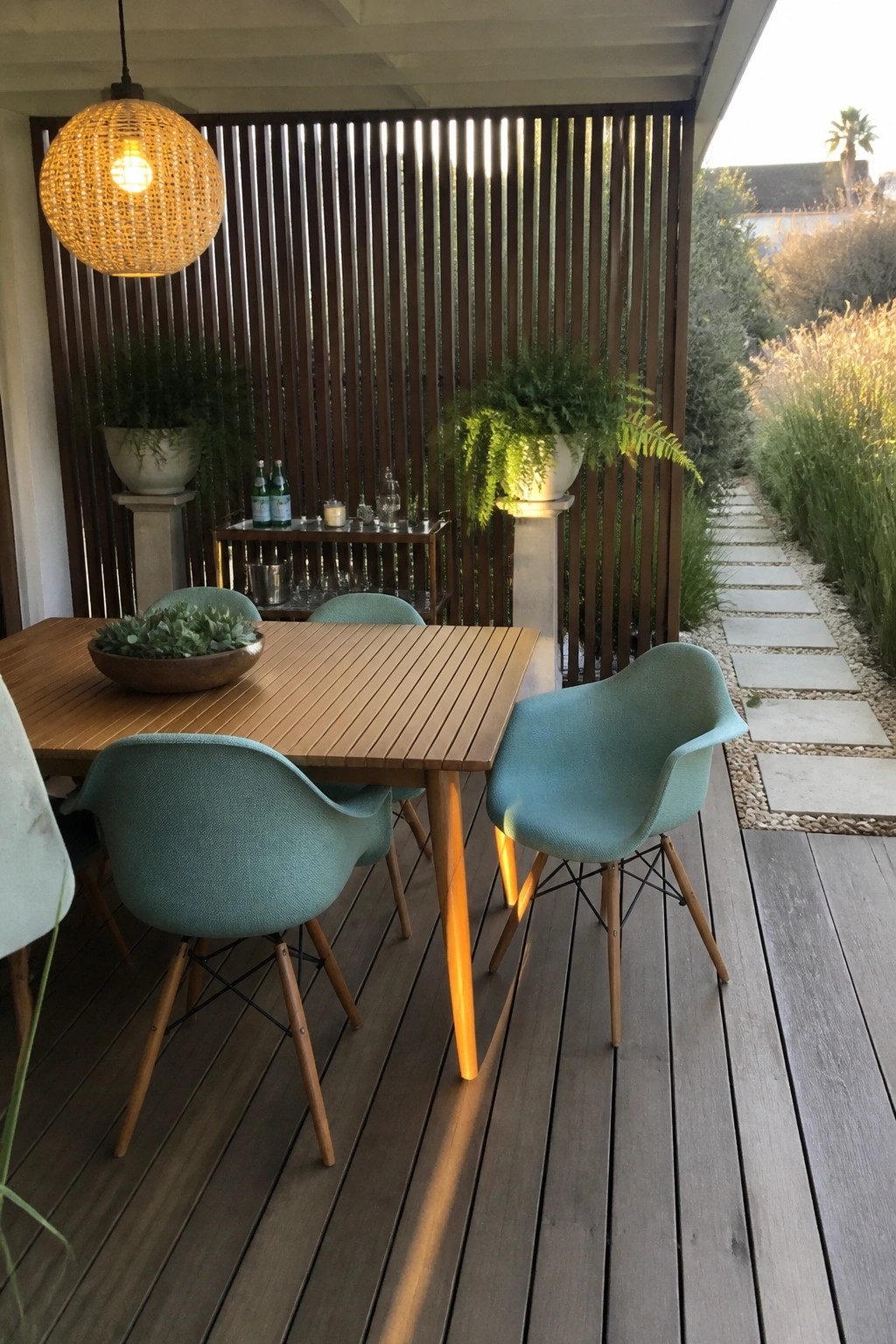
A vertical slat screen gives an outdoor dining spot a clear sense of place without making it feel boxed in. It blocks side views and creates a simple backdrop that helps the table and chairs read as one intentional zone rather than just furniture set on open decking.
This approach suits decks that run alongside a garden or pathway. Place the screen behind the main seating and keep the material consistent with the deck boards so the whole area feels connected rather than added on later.
Pairing Built-In Benches With Chairs On Outdoor Tables
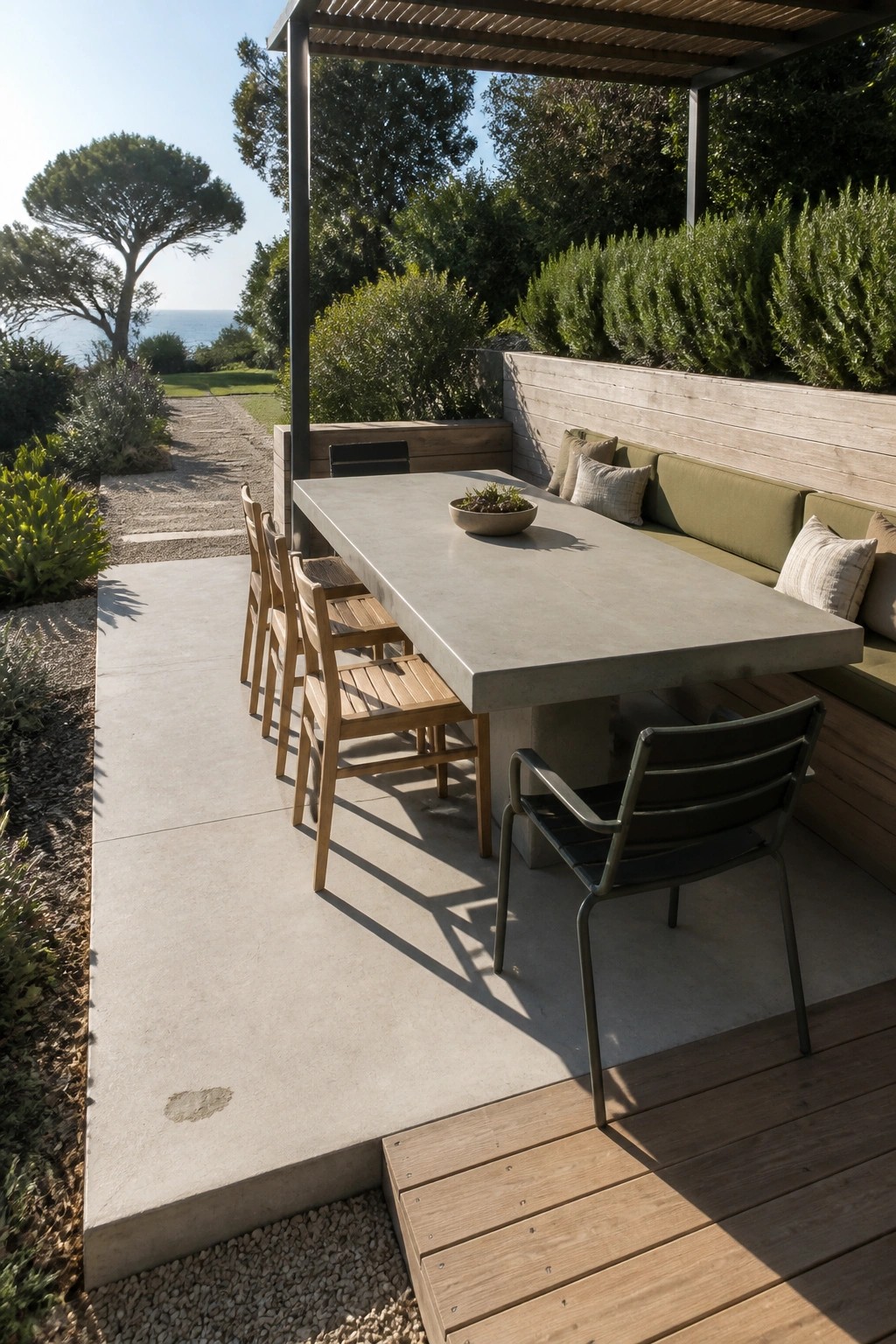
One simple way to stretch seating on a deck is to run a built-in bench along one side of the dining table while keeping regular chairs on the other. This keeps the area from feeling crowded and gives people room to shift around during a meal.
It suits coastal decks where space is tight but you still want room for a group. Match the bench height to the chairs and leave enough clearance on the ends so no one feels boxed in.
Round Tables Create Easy Outdoor Dining
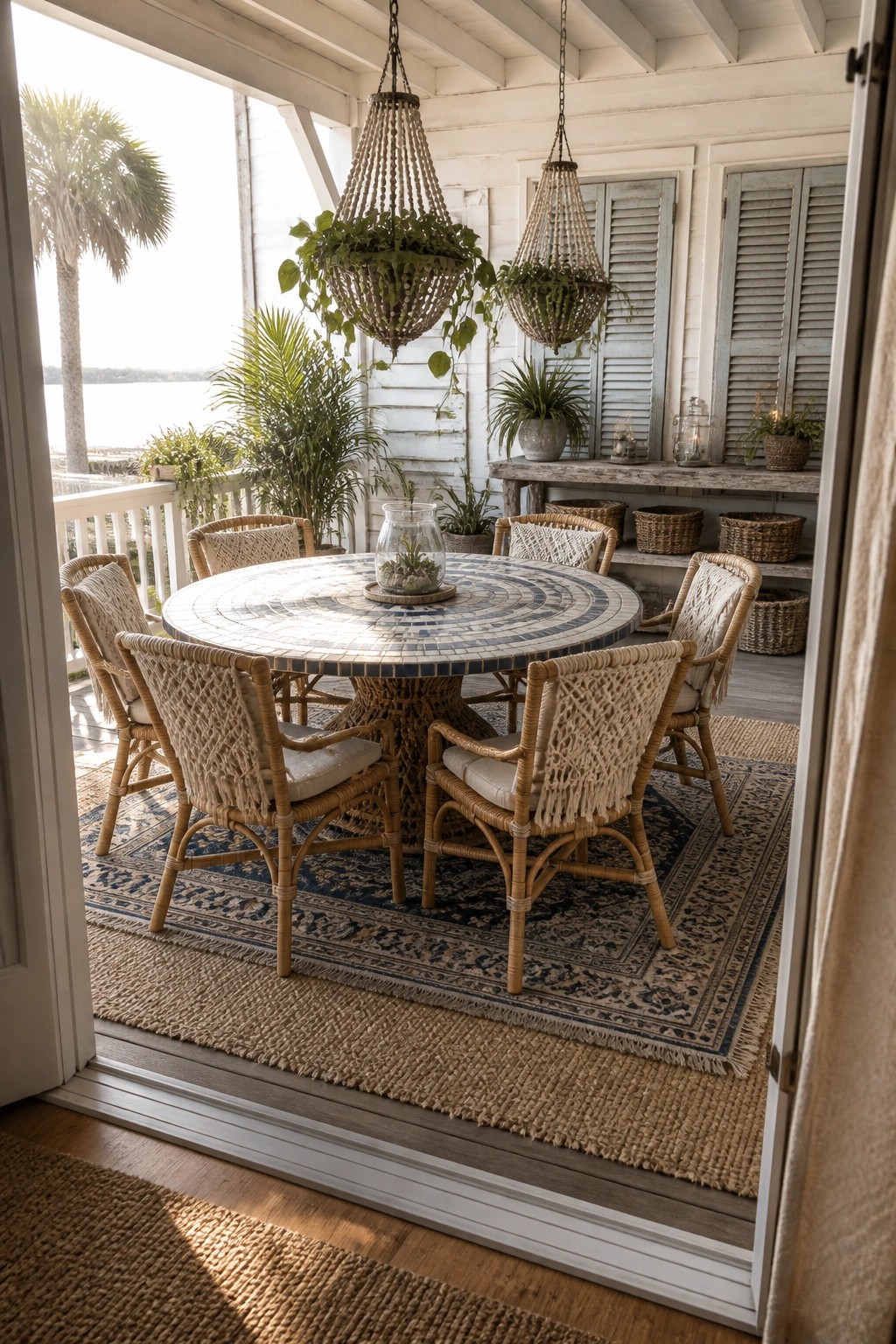
A round table makes it simple for people to talk and pass dishes without anyone feeling stuck at the end of a long rectangle. The shape also leaves more walking room around the edges, which helps on a deck or porch where space can feel tight once chairs are pulled out.
This works best on covered outdoor areas where you can add rugs underneath to soften the floor and mark the dining zone clearly. It suits homes near the coast that want seating that feels casual but still comfortable for longer meals.
Foldable Tables Keep Deck Dining Simple
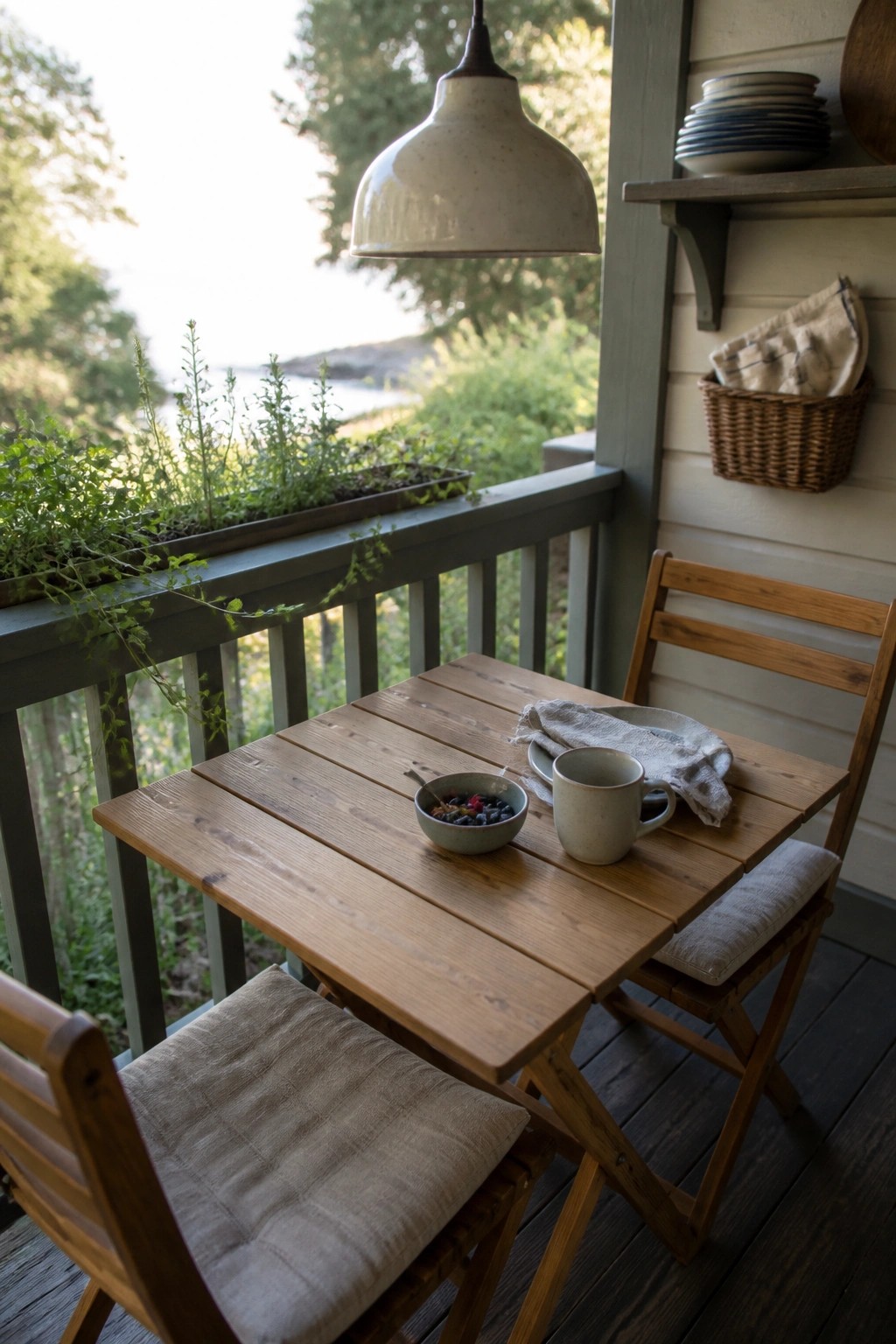
A small foldable table works well on a deck because it gives you a place to eat without taking over the whole space. You can set it up for breakfast or coffee and tuck it away when you want more room to move around.
This setup suits decks of any size, especially those with a view where you want the focus to stay on the surroundings. Just make sure the table and chairs are sturdy enough for regular outdoor use and easy to store during bad weather.
Long Tables Make Deck Dining Feel More Social
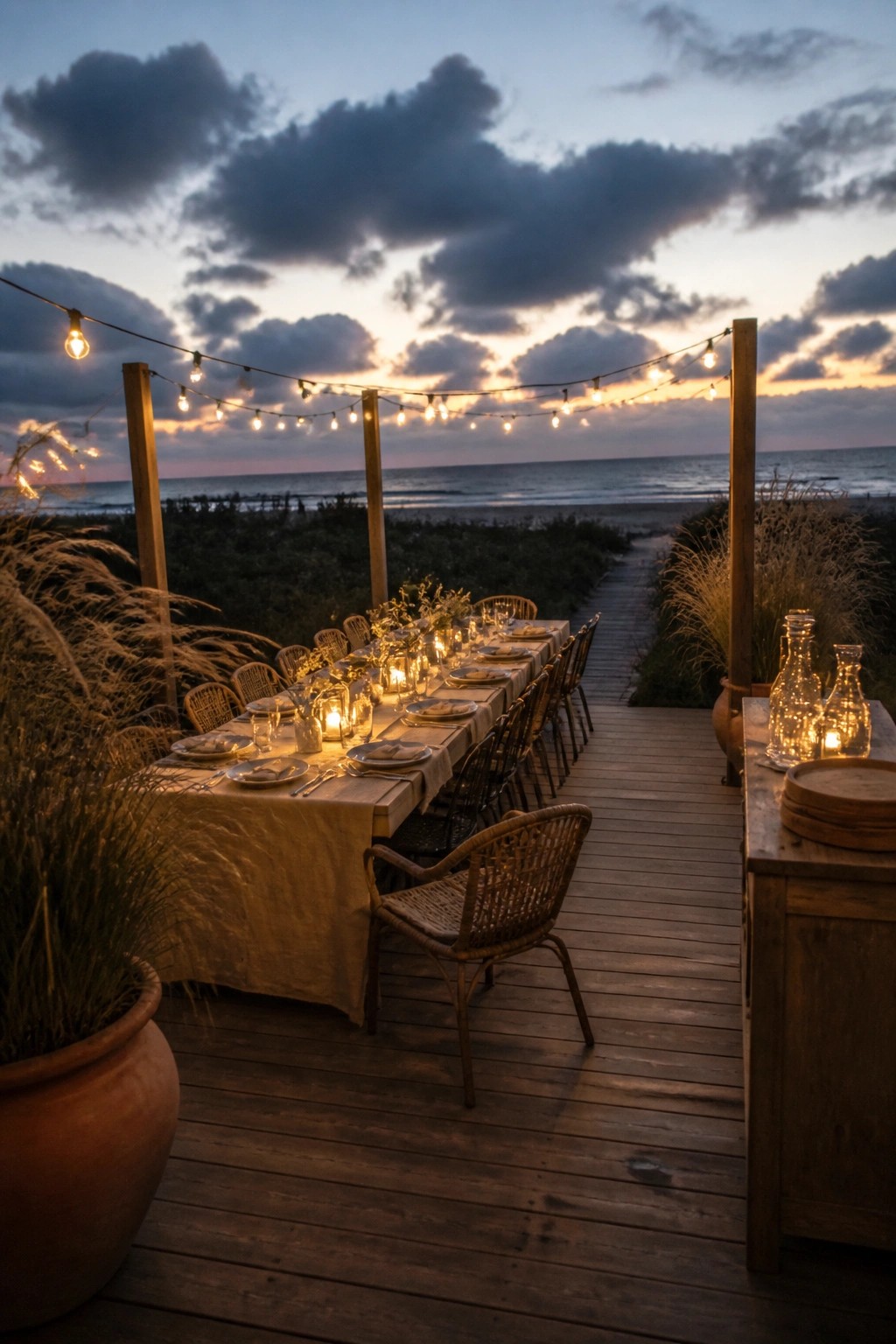
A long table on a deck lets a bigger group eat together without anyone feeling left out at the ends. It turns the space into the main spot for meals rather than just a place to grab a quick bite.
This setup works best on wider decks where you can still walk around both sides. Keep the lighting simple with a single string of bulbs overhead so the focus stays on the table and the view.
Frequently Asked Questions
Q: What table material stands up to salt air without constant fuss? A: Teak or cedar works well because the natural oils fight off moisture and corrosion. Seal it lightly once a year and wipe it down after storms. That keeps the surface ready for meals without turning gray too fast.
Q: How can I fit a real dining spot if the deck is narrow? A: Place a slim rectangular table against the longest rail so traffic flows on one side only. Bench seating on the wall side saves space over individual chairs. Keep the setup tight and you still get room to pull up extra stools for guests.
Q: What kind of lighting feels right for evening meals without glare? A: Hang warm string lights low along the edge of an overhead beam. They cast a soft pool over the table while leaving the rest of the deck dim. (nothing fancy needed) Add one small lantern in the center if you want extra glow for serving.
Q: Do I need special cushions for the chairs? A: Choose ones filled with quick-dry foam and covered in solution-dyed fabric. They handle sea spray and dry fast after rain so seats stay usable most days. Skip heavy padding that traps water and stays soggy.