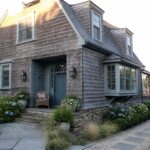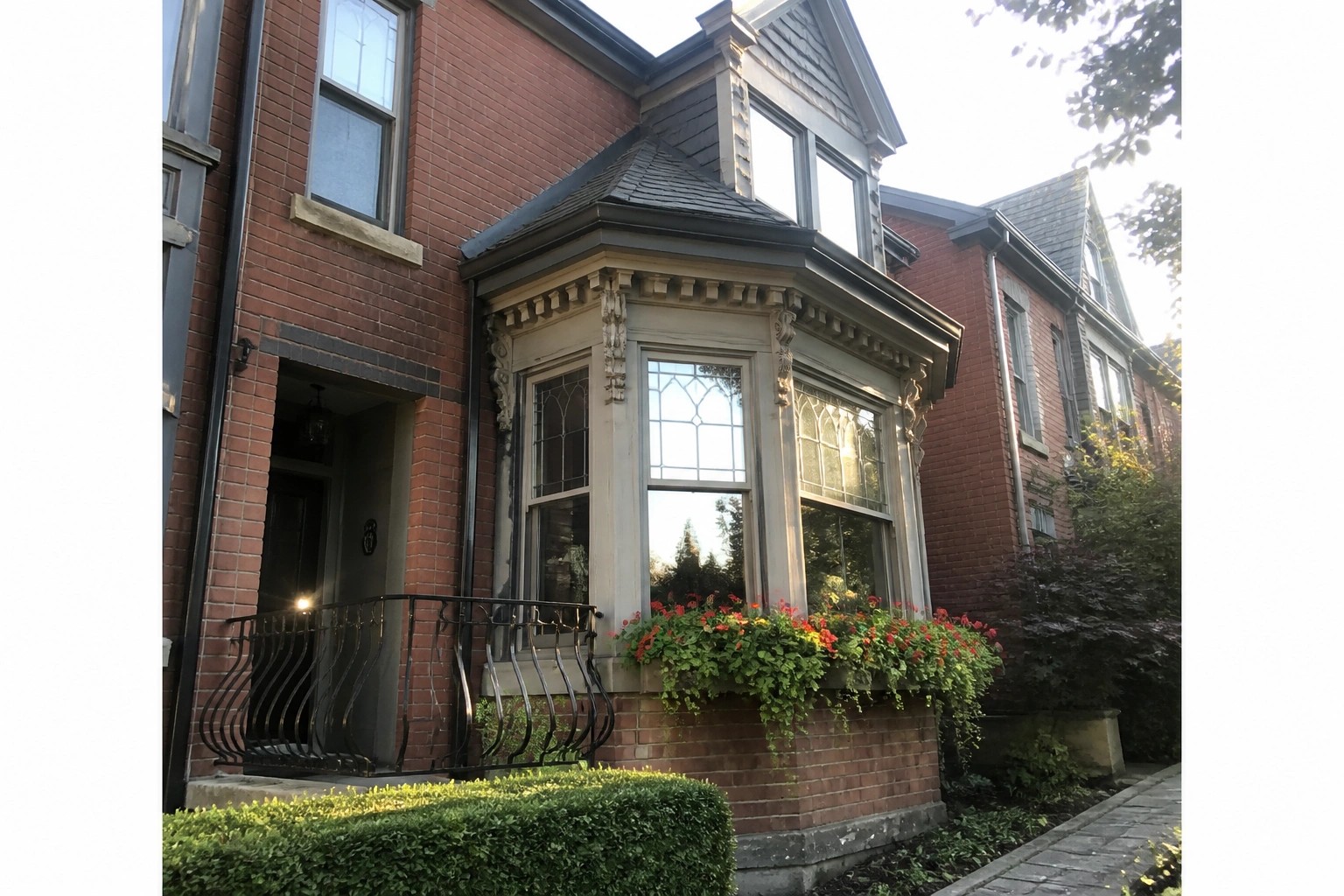
Victorian homes often gain their character from how the bay windows sit against the rest of the facade, and I have seen too many updates that throw off the balance with modern frames.
Walking down a street lined with these houses, the ones that keep the original depth and trim work tend to draw the eye without any extra effort.
Restoring or adding bay windows means thinking about the roof overhangs and siding so everything reads as one original structure rather than a later addition.
I usually start by checking old photos of the house before deciding on any changes to the window shape or glass divisions.
The right choices show up from the curb.
Window Boxes Add Seasonal Color to Bay Windows
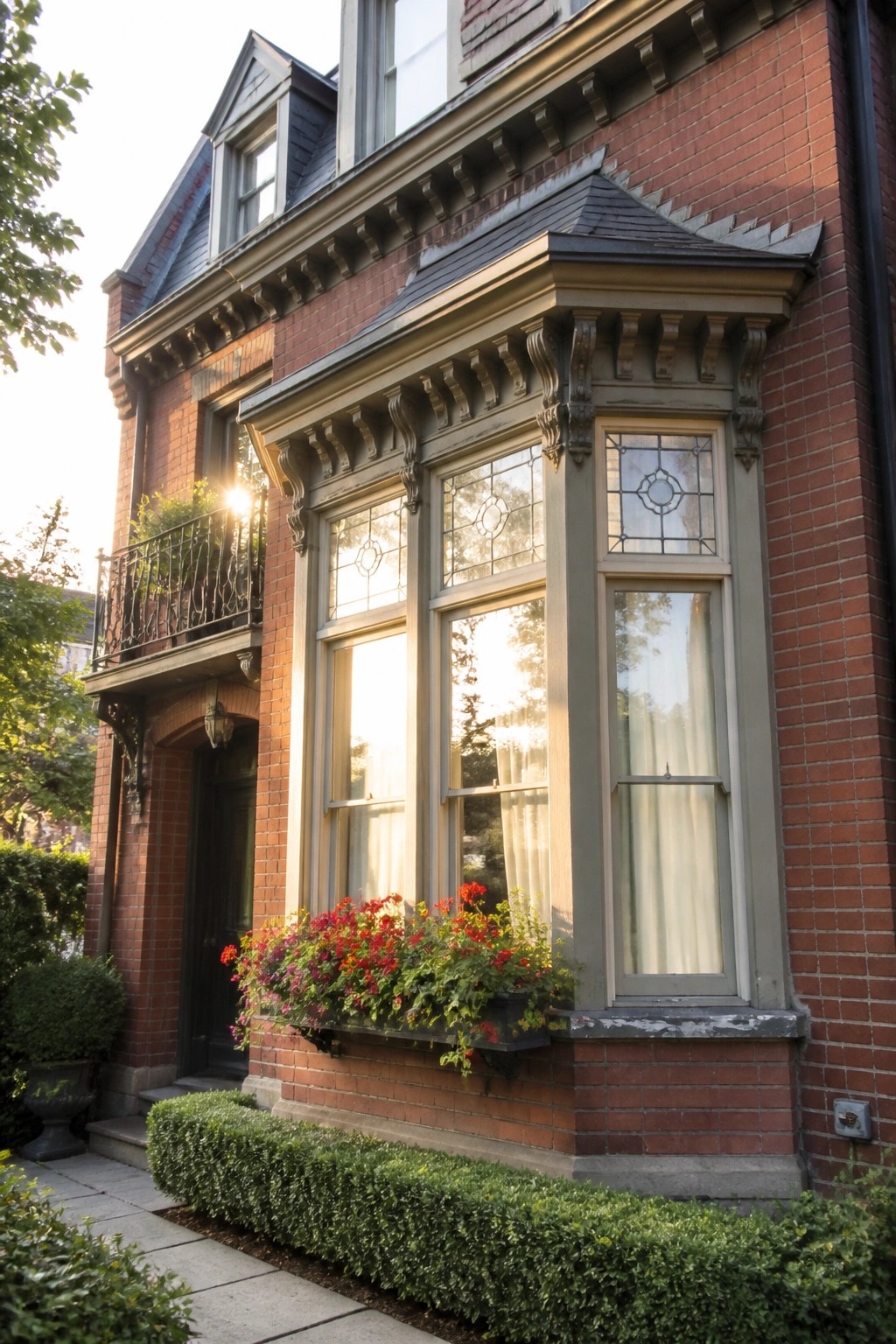
Window boxes sit nicely under bay windows because they bring color and softness right against the glass. They let the original shape of the window stay clear while giving the front a bit more life, especially on brick homes where the contrast feels natural.
Keep the box simple in color and size so it does not compete with the trim details. Use two or three plant types at most and swap them with the seasons to avoid a messy look.
Built-In Window Seats in Bay Windows
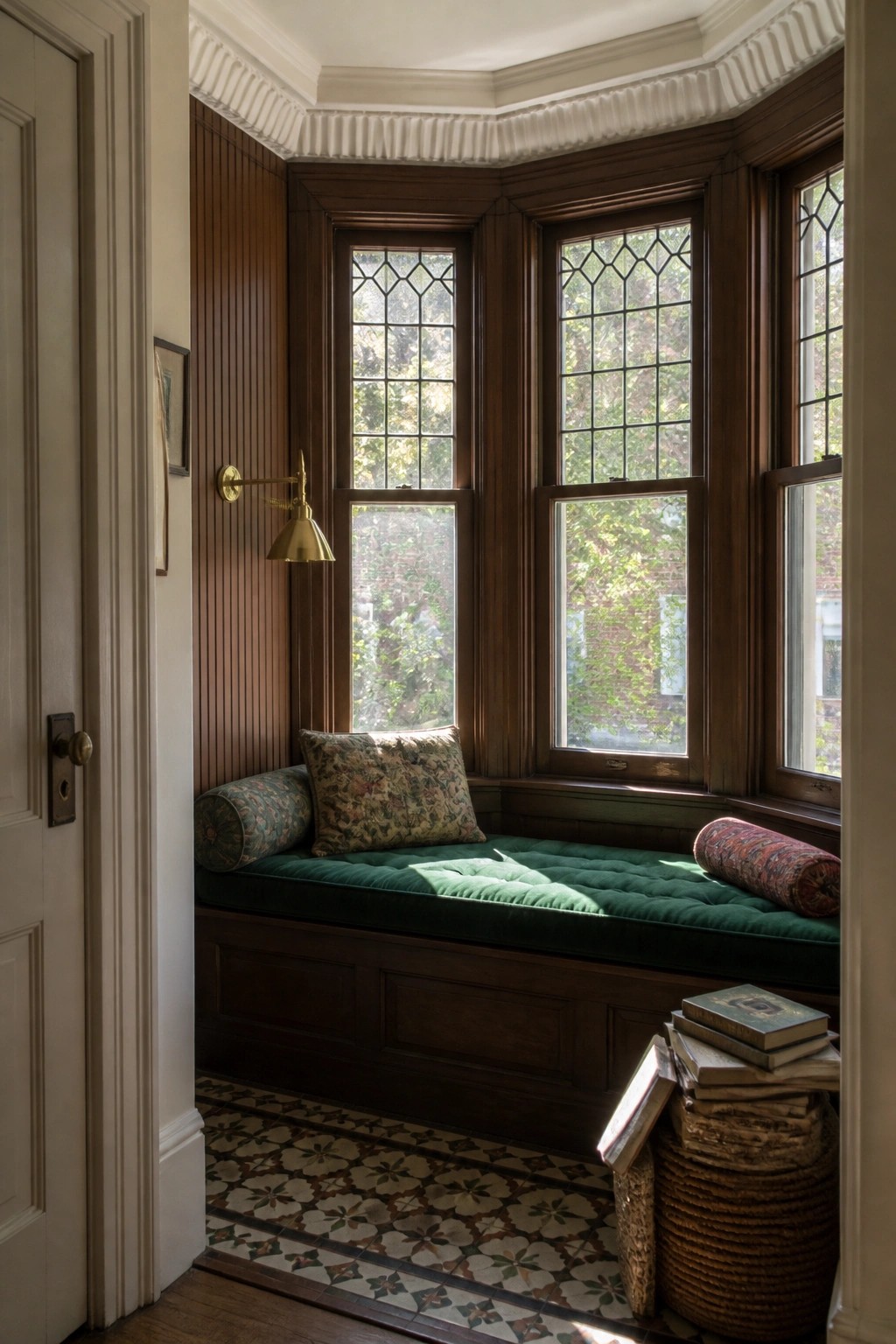
Bay windows in older homes often end up underused because the shape makes standard furniture awkward. A built-in seat solves that by turning the whole area into a simple place to sit while keeping the original window details front and center.
This approach works best in Victorian houses where the deep frames already suggest a nook. You can add a cushion on top and use the space underneath for storage, which keeps the room tidy without adding extra pieces that might crowd the view.
Built-In Seating For Bay Windows
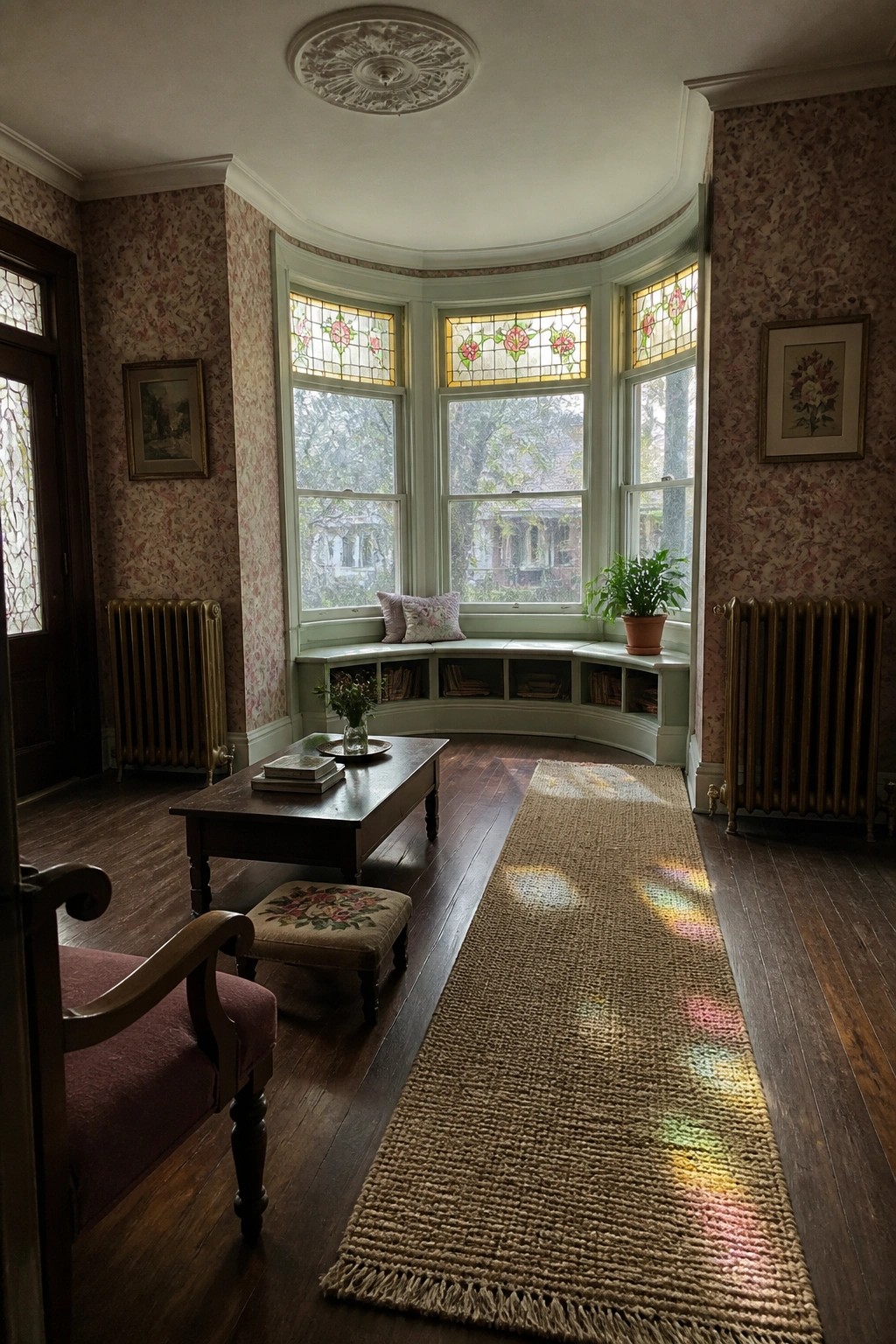
A built-in bench turns the curve of a bay window into real seating without crowding the room. The storage cubbies underneath keep books and blankets out of sight while the low profile leaves the window itself as the main feature.
This setup works best in older homes where the original trim and glass should stay visible. Keep the bench height even with the sill and use a simple cushion so the whole thing feels like it has always been there.
Built-In Shelves Around Bay Windows
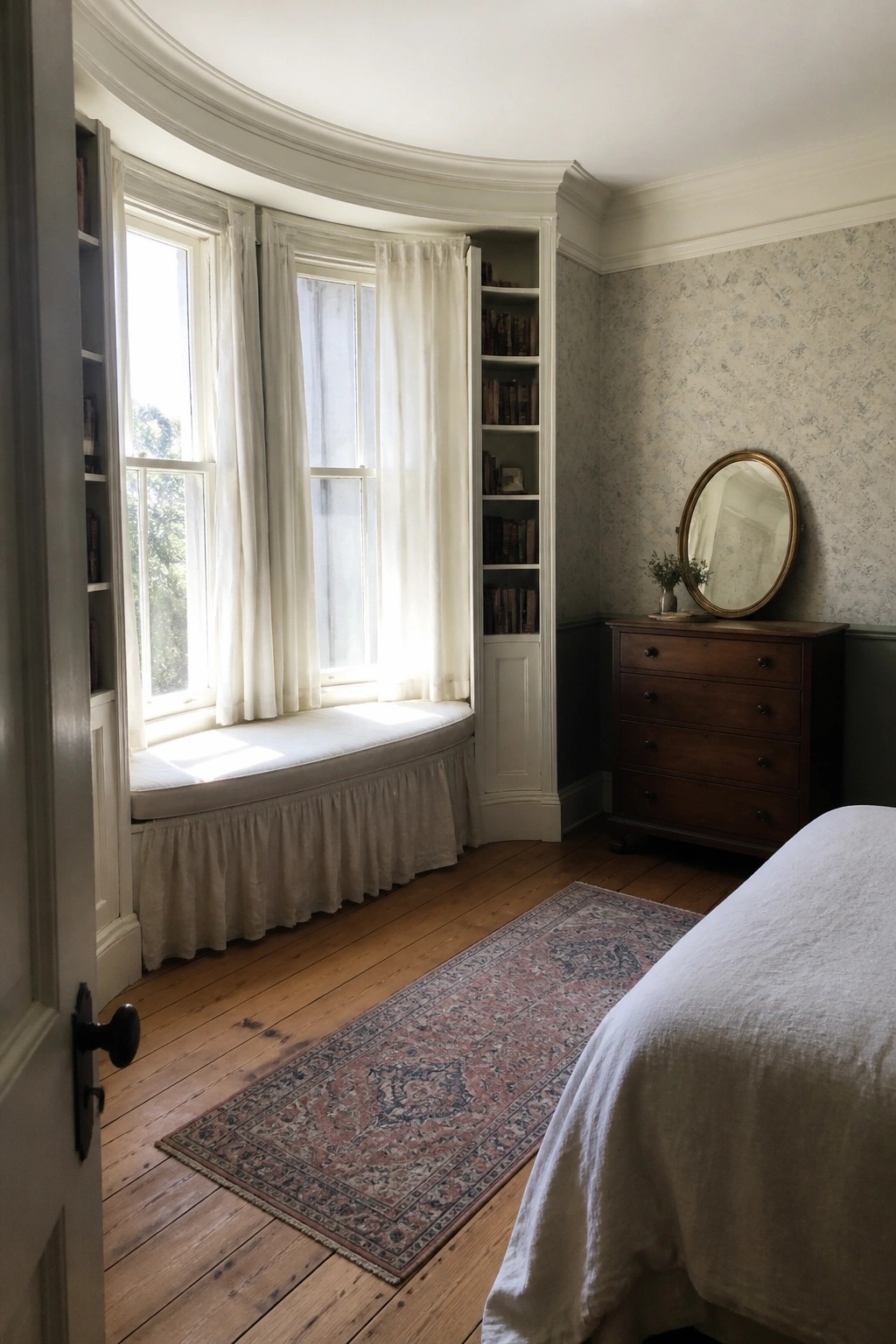
Adding built-in shelves on either side of a bay window keeps the focus on the light and the view while giving you useful storage. In older homes this approach feels natural because it works with the existing curves and trim instead of fighting them.
The shelves suit bedrooms or sitting areas where you need space for books but do not want to add freestanding furniture that crowds the room. Paint them the same color as the window trim so they read as part of the original architecture.
Built-In Seating Under Bay Windows
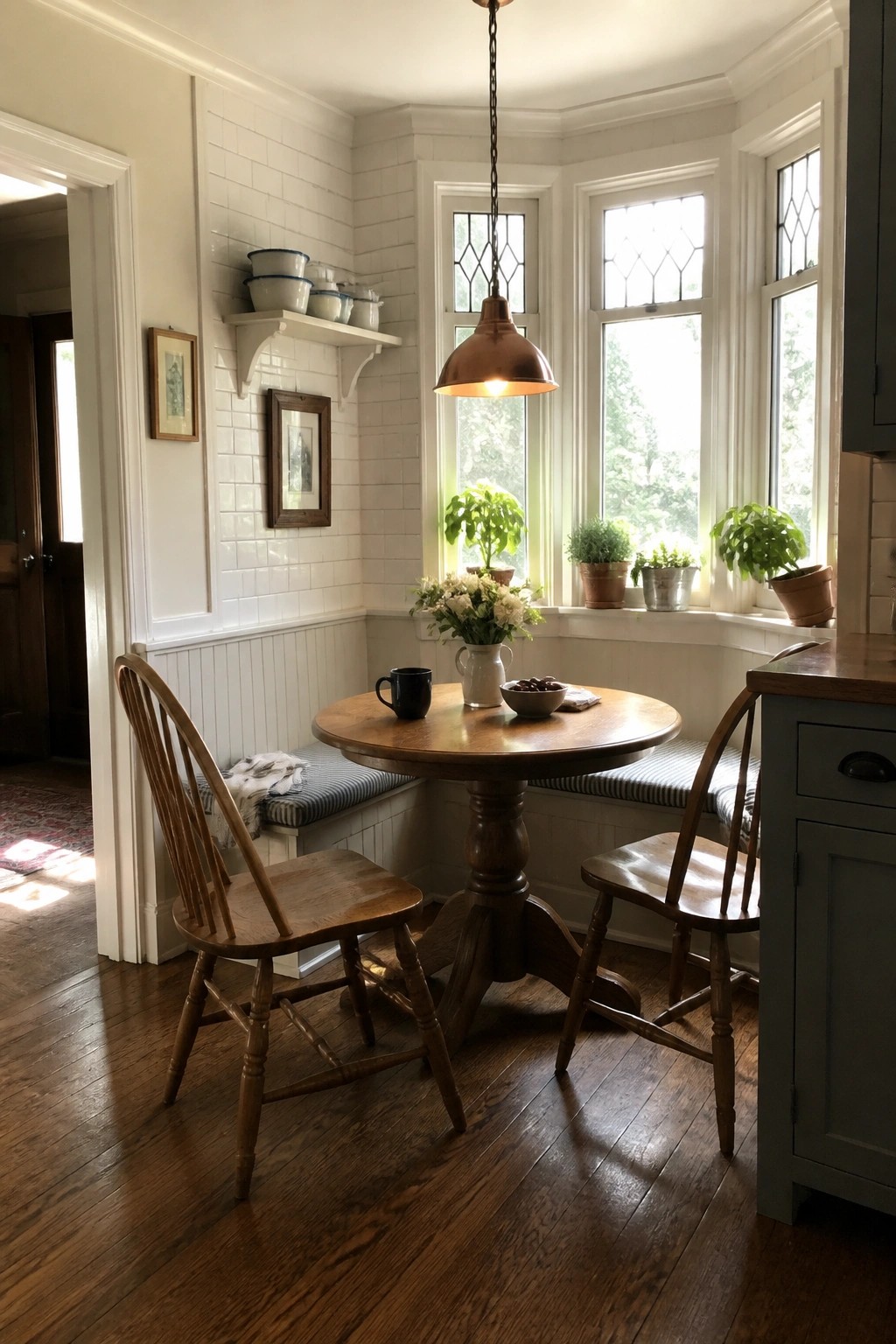
Bay windows often get the most attention when they stay open and useful instead of just looking pretty. A built-in bench right below them turns the whole area into a real spot for meals or morning coffee without blocking the light.
This setup works best in kitchens or small dining spaces where you need extra seating but want to keep things simple. Stick with plain cushions and a smaller table so the windows remain the main feature.
Curtains That Follow The Bay Window Shape
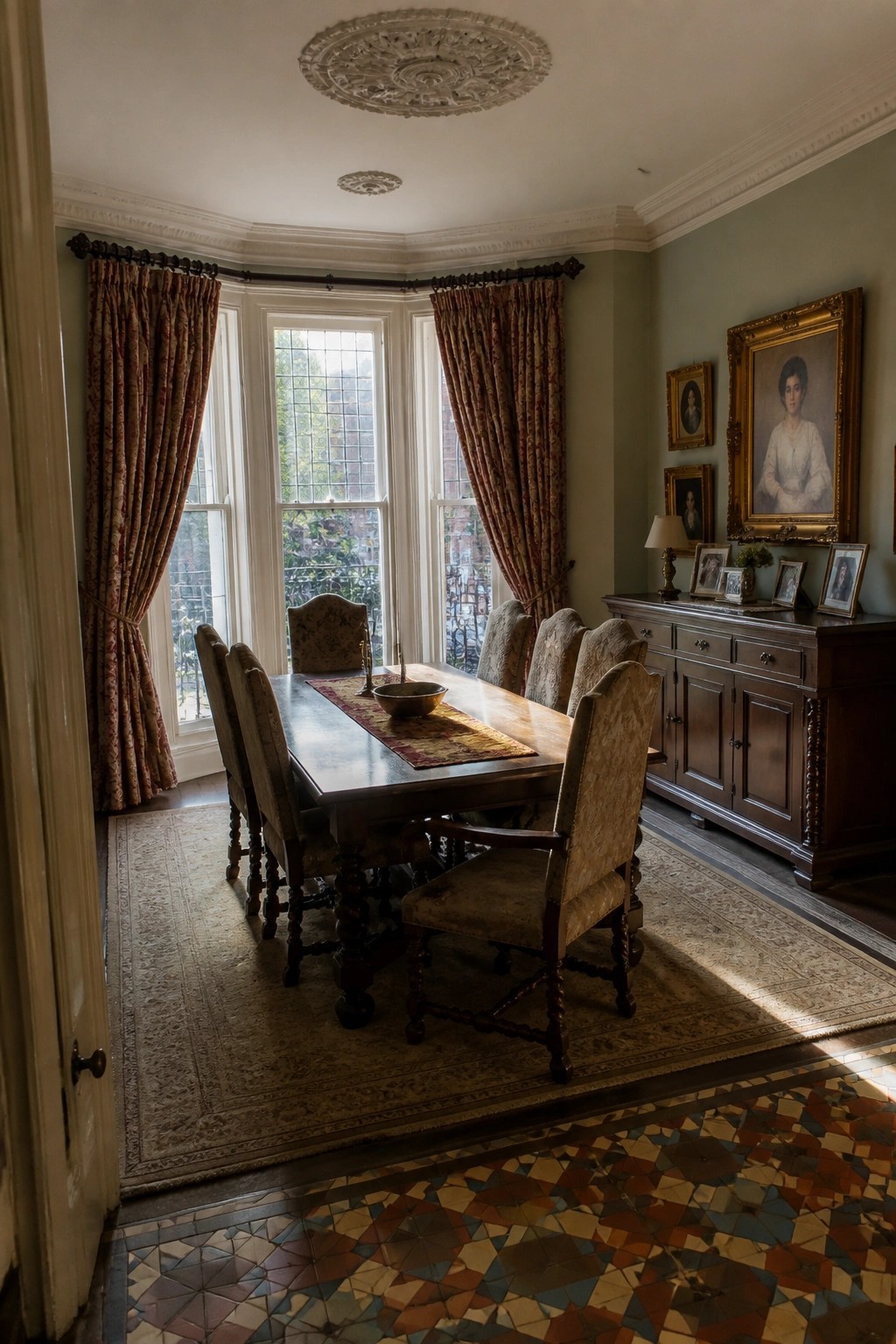
Hanging curtains on a rod that follows the curve of a bay window keeps the whole feature intact. Straight rods tend to fight the shape and make the window look chopped up, while a curved one lets the glass and trim do the work they were meant to do.
This approach suits older homes where the windows are the main character. Use a fabric with some pattern or weight so the curtains feel at home with the wood trim and furniture around them. Avoid anything too sheer if you want the same soft, enclosed feeling these rooms usually had.
Bay Windows That Respect the Original Lines
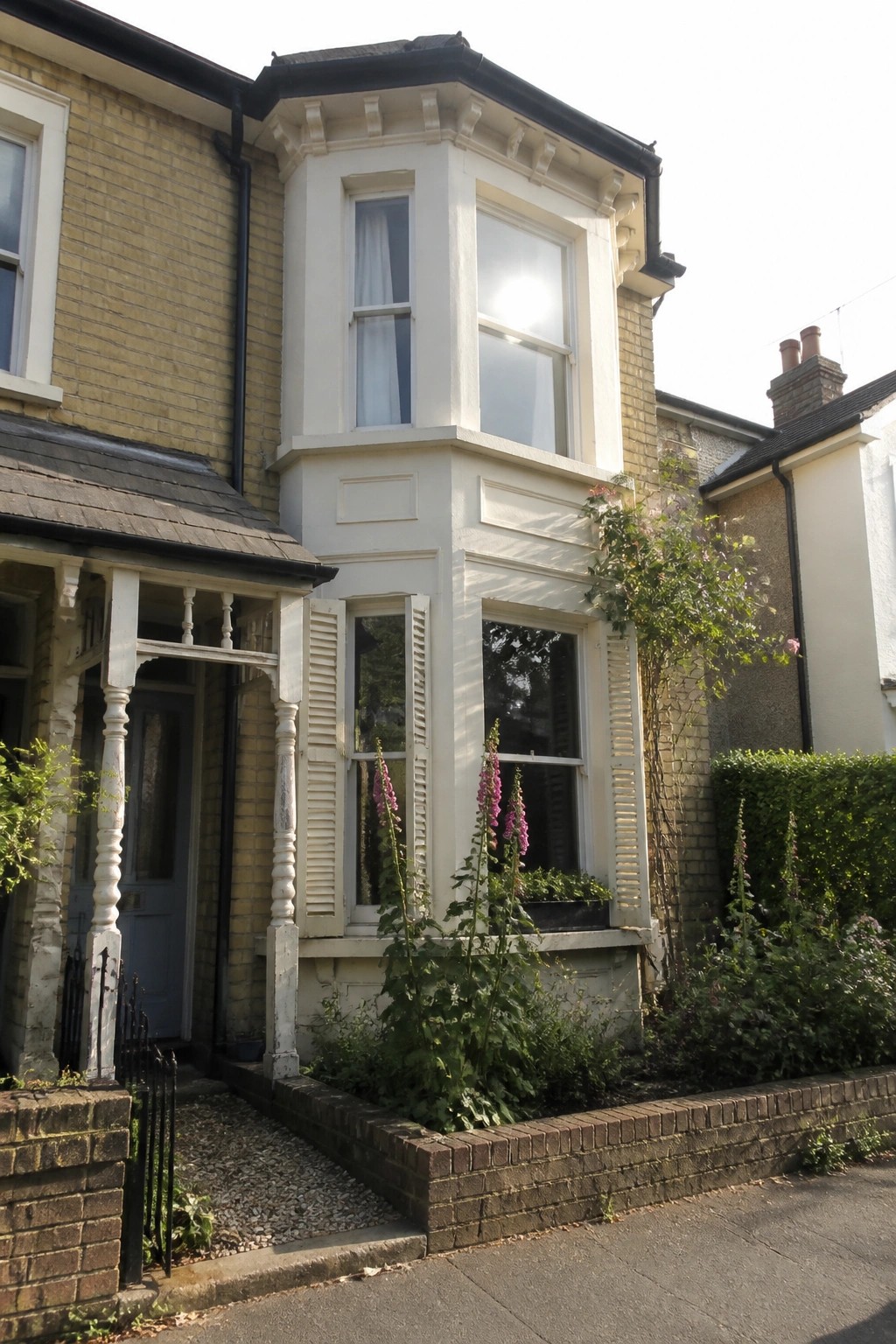
A bay window works best on a Victorian house when it follows the same proportions and trim details already on the facade. The way it steps forward adds light and a bit of shape without fighting the rest of the front.
This approach suits older brick or rendered homes that still have their original window surrounds and roof overhangs. Keep the frame simple and match the sill height to nearby windows so the addition feels like it has always been there.
Bay Window Benches With Built-In Storage
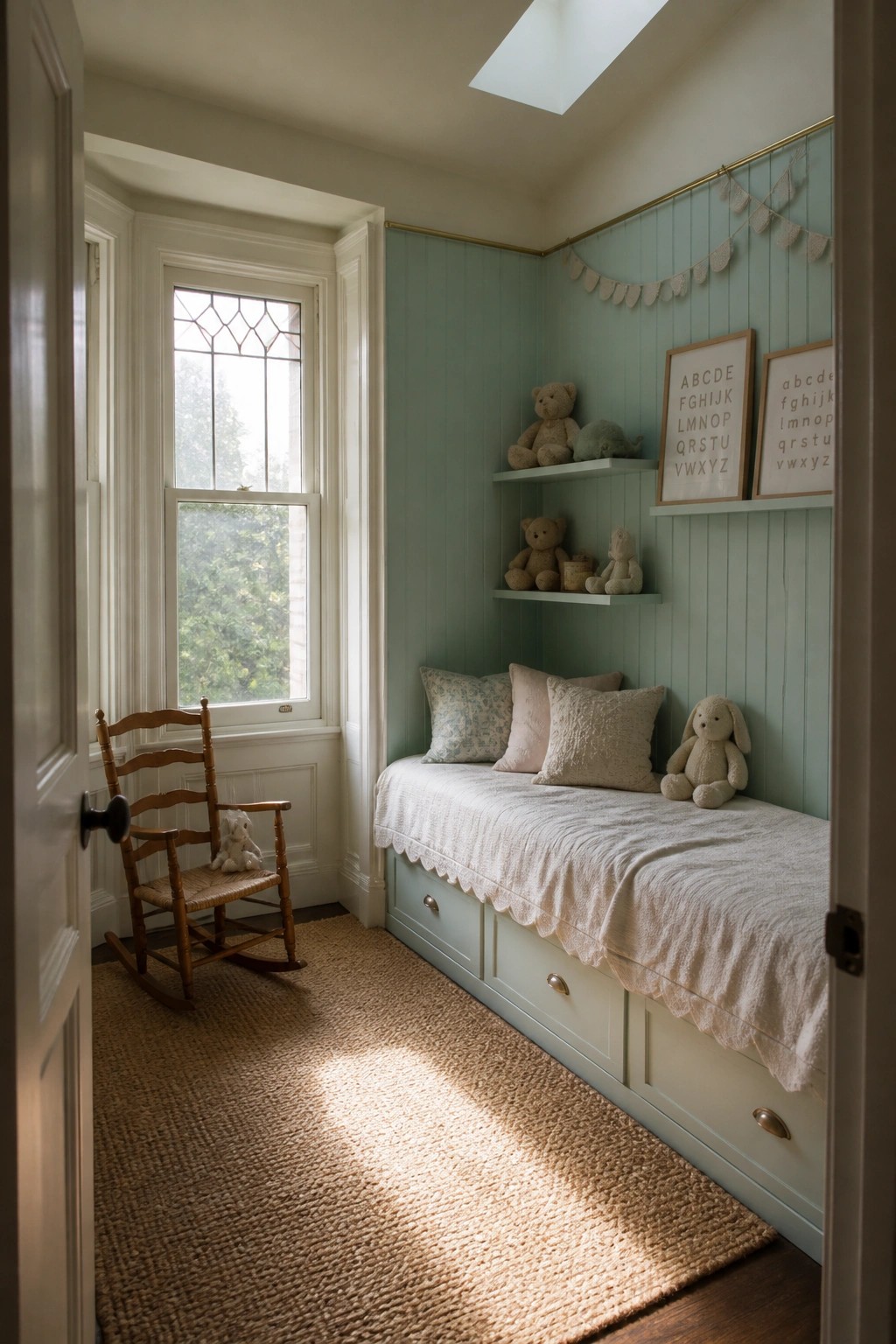
Many Victorian homes already have these deep window bays, and adding a bench across the bottom turns the space into something useful instead of just a spot for plants. The drawers underneath keep toys or blankets out of sight, which helps the room feel less cluttered while the window itself stays the main feature.
This works best in smaller bedrooms or reading corners where floor space is tight. Keep the bench color close to the trim so it feels like part of the original architecture rather than something added later.
Built-In Desks That Follow the Bay Window
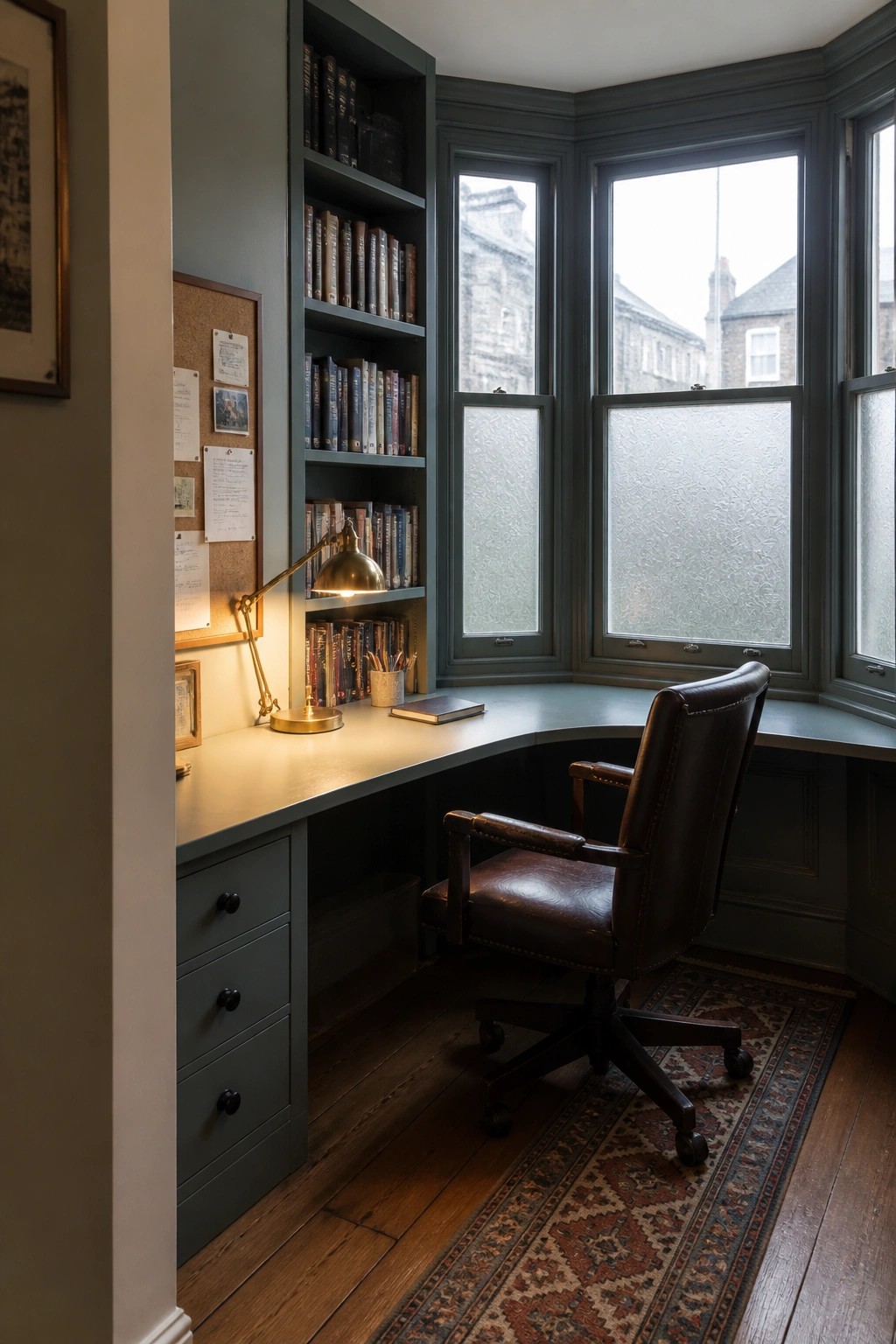
A desk built right into the curve of a bay window keeps the original architecture front and center while giving you a practical place to work. The shape makes good use of the extra space that bay windows create, and it avoids blocking the light or the view with bulky furniture pushed up against the glass.
This setup works best in older homes where you want to keep the window detail intact. Pair it with simple storage and a chair that does not compete with the woodwork, and leave the lower panes of the window untreated or lightly frosted so the room still feels open.
Copper Awnings Over Bay Windows

A copper awning over a bay window gives the glass some real protection from rain while leaving the original shape and details easy to see. It keeps water from running straight down the panes and helps the window hold up better over time without hiding its lines.
This works especially well on the side of the house that faces a small patio or garden path. The metal develops a soft patina that fits older homes, and it needs little upkeep once it is in place.
Preserving Arched Bay Windows in Bedrooms
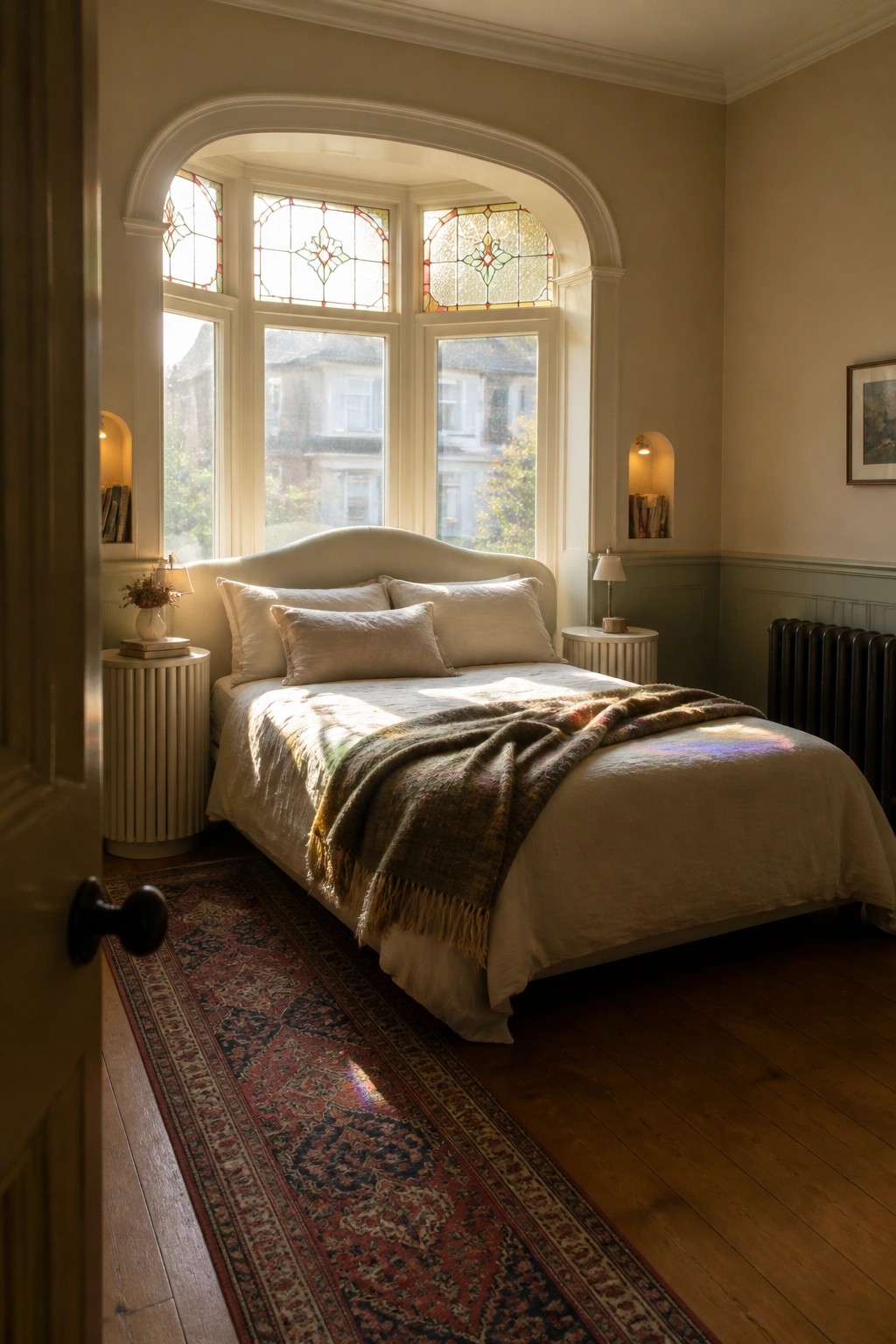
One strong idea here is keeping the original arched bay window as the main feature in the room. The stained glass adds color and history without needing much else around it.
This works best in older homes where the window structure is still solid. You can style the rest of the space simply so the window does the talking, and it helps the room feel connected to the home’s past.
Bay Windows Built Into Turret Forms
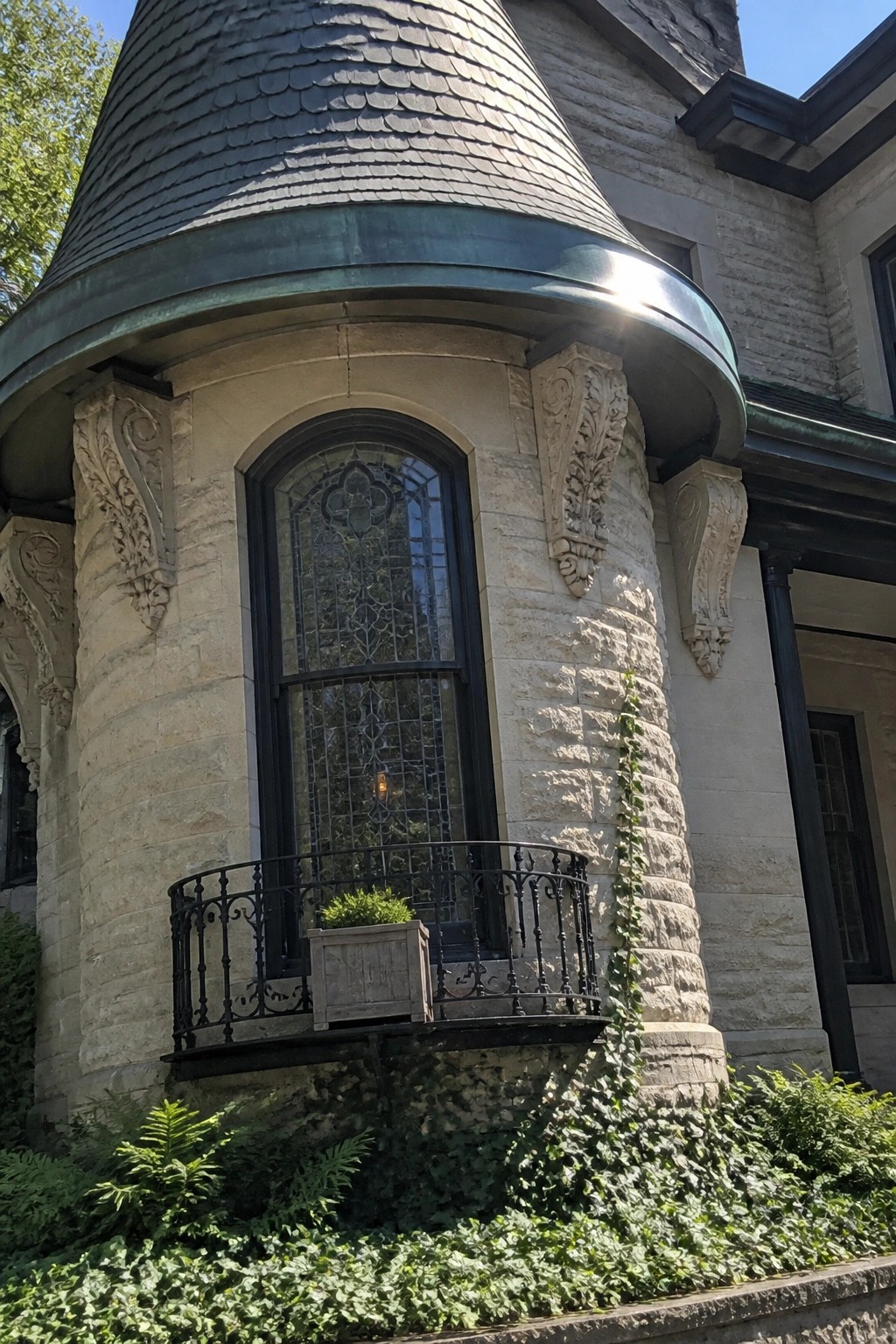
A rounded bay window set into a small turret adds depth to a stone facade without needing extra ornament. The shape lets light reach deeper into the room while the curve itself keeps the whole front from looking flat.
This works best on masonry homes where the window can sit flush with the existing stonework. Keep the trim and roof edge simple so the bay reads as part of the original structure rather than a later addition.
Built-In Benches Work Well in Bay Windows
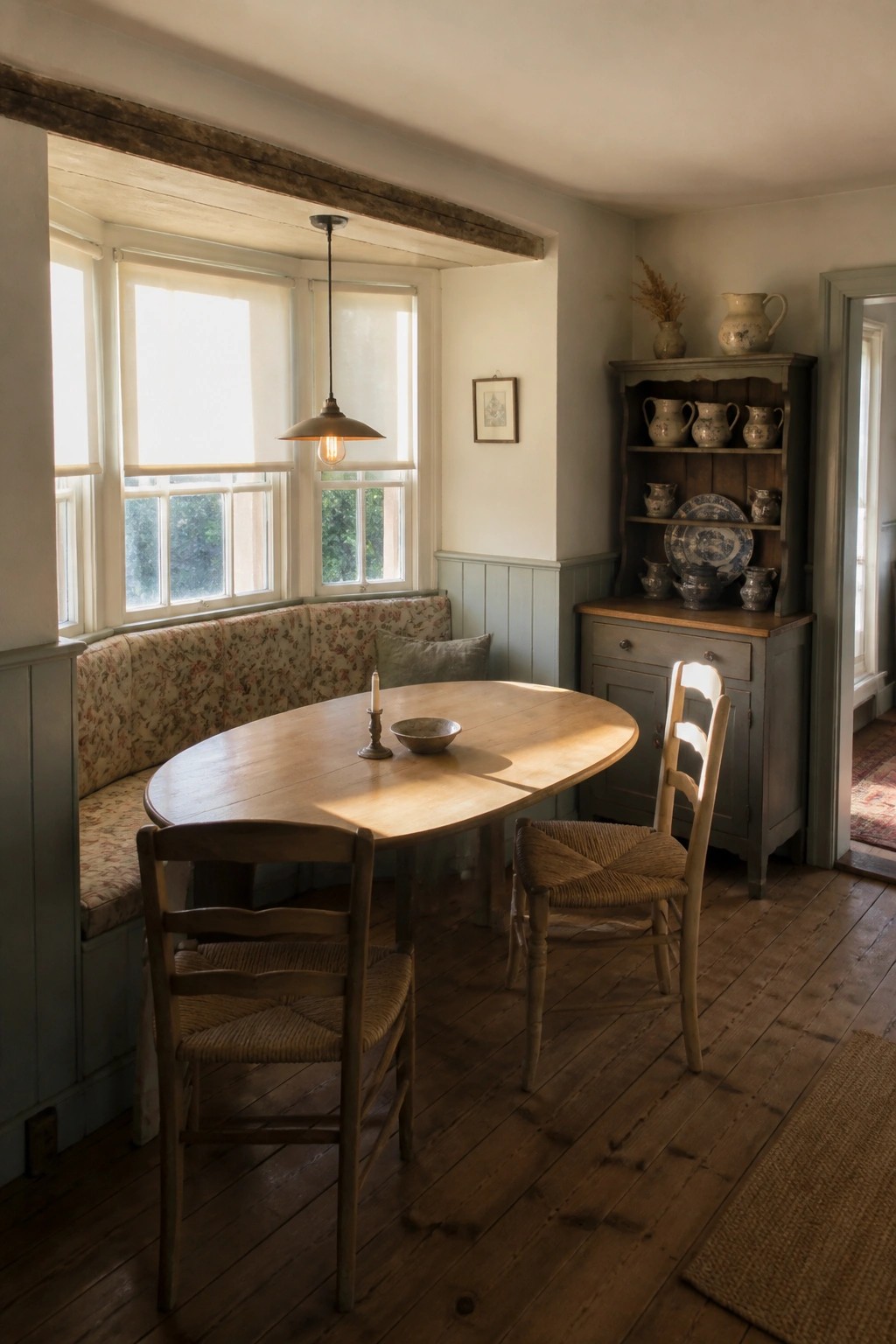
A built-in bench turns a bay window into useful seating without blocking the light or the view. In older homes it respects the original window shape while adding a spot that feels like part of the room rather than something added later.
This setup works best in dining areas or kitchens where you need extra seats but do not want to crowd the floor with chairs. Keep the bench height in line with regular dining chairs and pick a simple fabric that does not fight the window trim.
Symmetrical Bay Windows Around the Entry
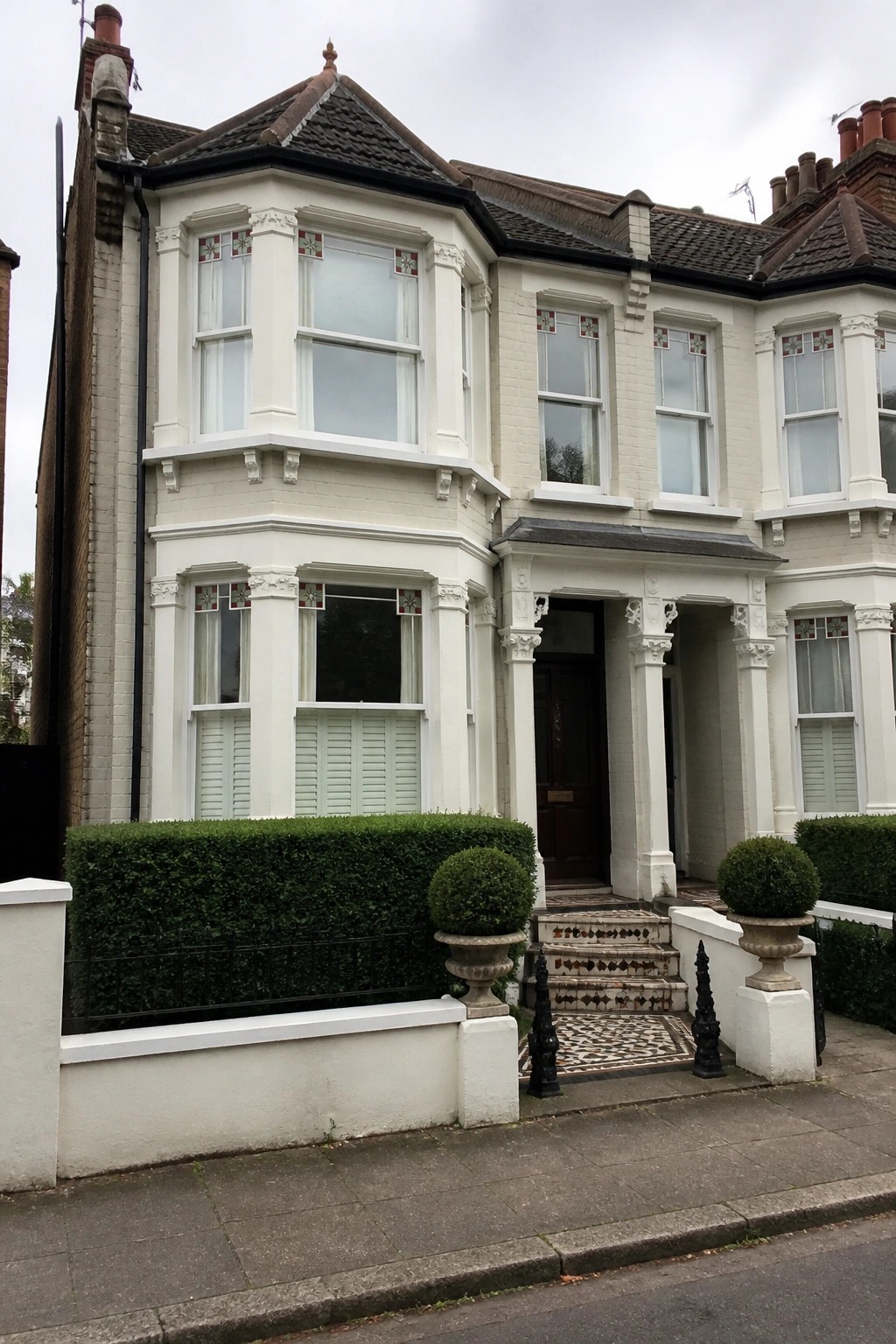
Many Victorian homes place matching bay windows on either side of the front door to create balance. This keeps the facade looking orderly and true to the original style while adding light and depth inside.
The approach suits painted brick or rendered houses with a central porch. Homeowners get the best result when the windows match the scale of the door and any existing trim rather than trying to stand out on their own.
Built In Seating For Bay Windows
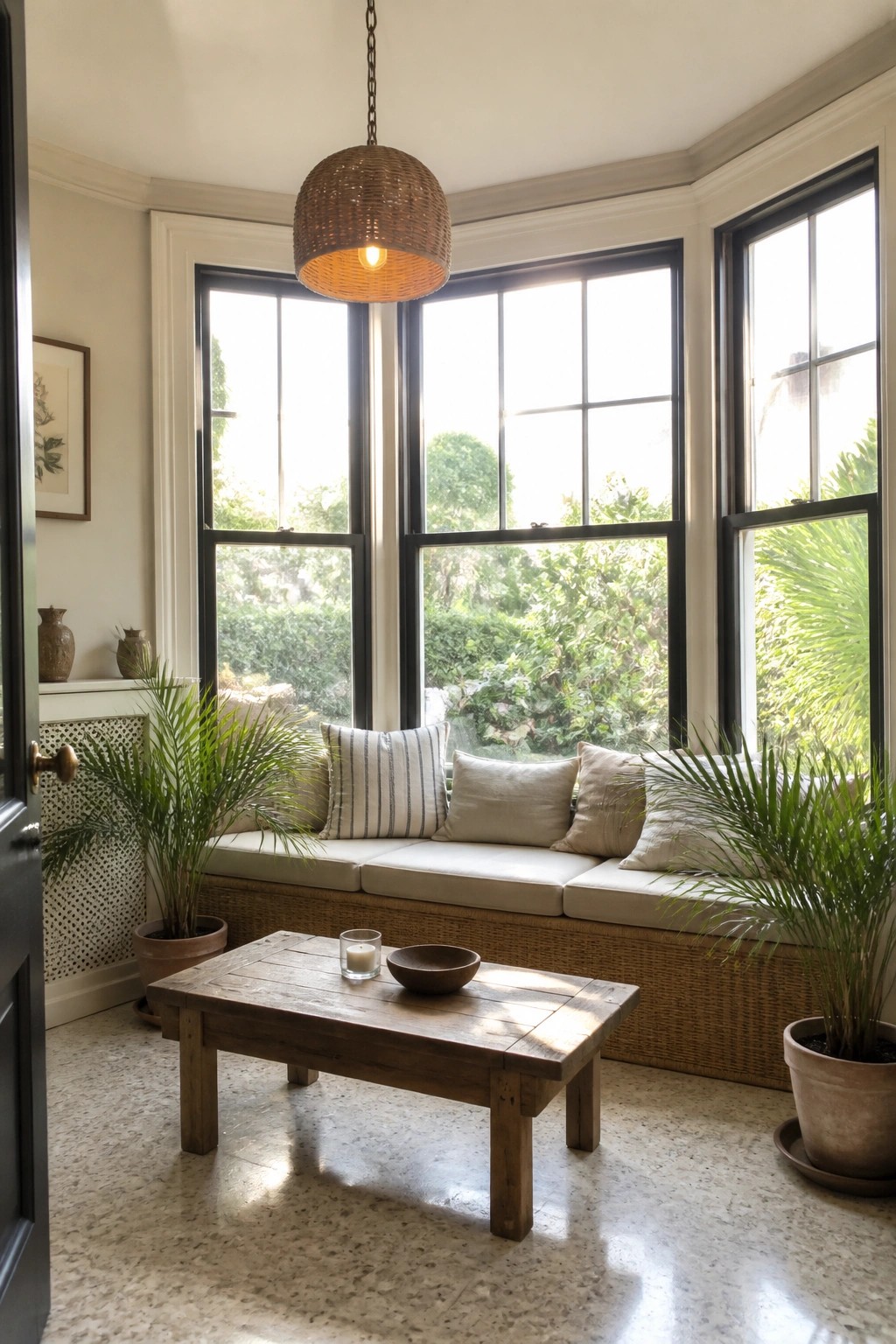
One way to keep a bay window useful in an older home is to add a simple built in bench along the base. It creates a place to sit without blocking the windows or changing how they look from inside or out.
This works best when the bench stays low and the cushions stay light so the original window trim and glass stay the main focus. It suits Victorian houses that still have their original bays because it adds function without fighting the architecture.
Built-In Shelving Around Bay Windows
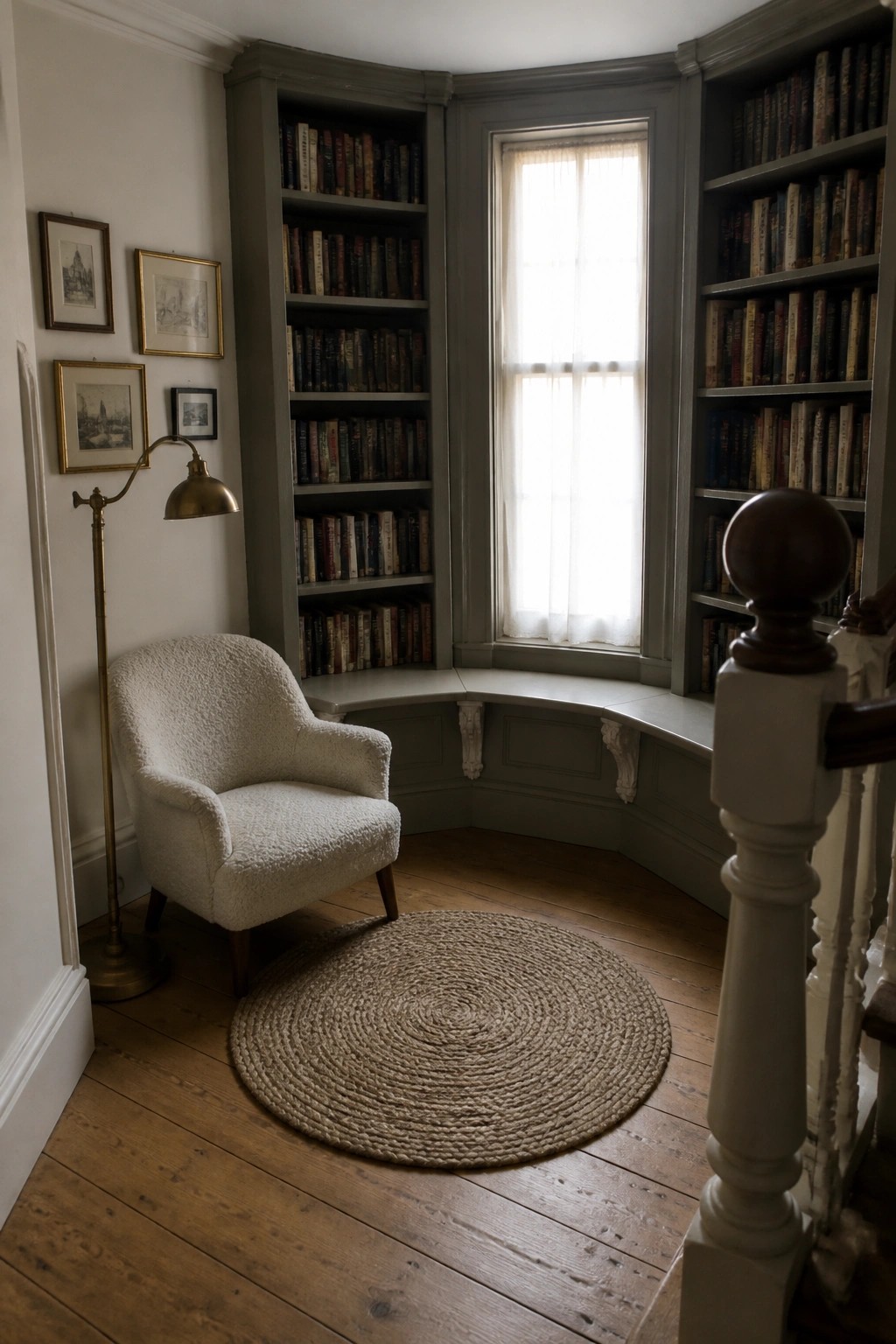
Built-in bookshelves that wrap around a bay window give you extra storage while keeping the window itself as the main feature. This setup works well in older homes because it adds function without covering up the original trim or changing how light comes in.
It suits Victorian houses that already have deep window bays and need more wall space for books. Keep the shelves the same color as the trim so they blend in, and leave room for a chair in front so the spot actually gets used.
Bay Windows in the Bathroom
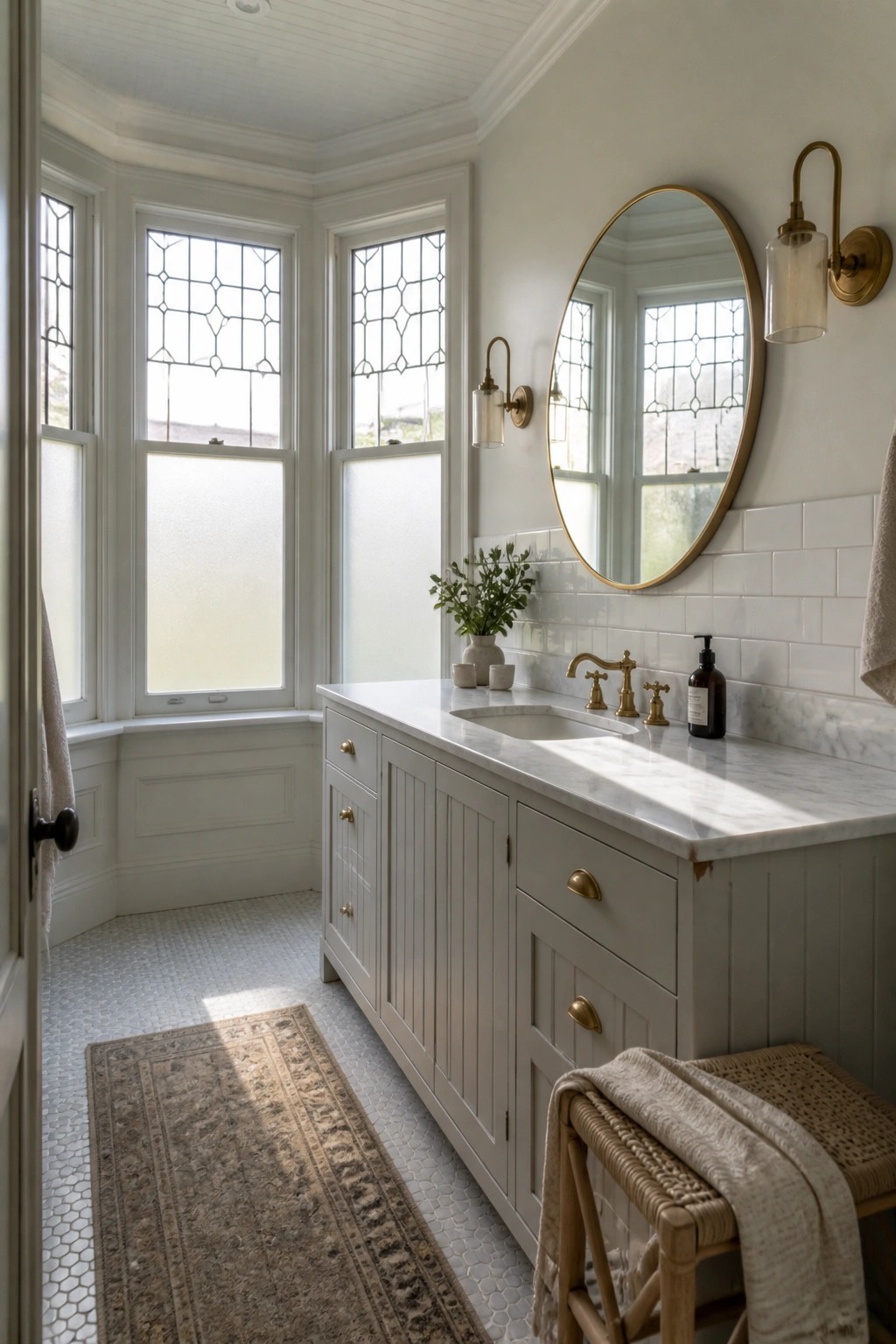
Bay windows can turn a bathroom into a much brighter space without losing the older home feel. The extra depth gives room for a vanity along the wall while the windows themselves stay the main feature. Leaded glass and frosted lower panes keep things private yet still let in plenty of light.
This setup works best in homes that already have bay windows on the upper floor. Keep the trim and hardware simple so the windows remain the focus. Avoid heavy curtains that block the shape or the view.
Dark Paint on Bay Windows
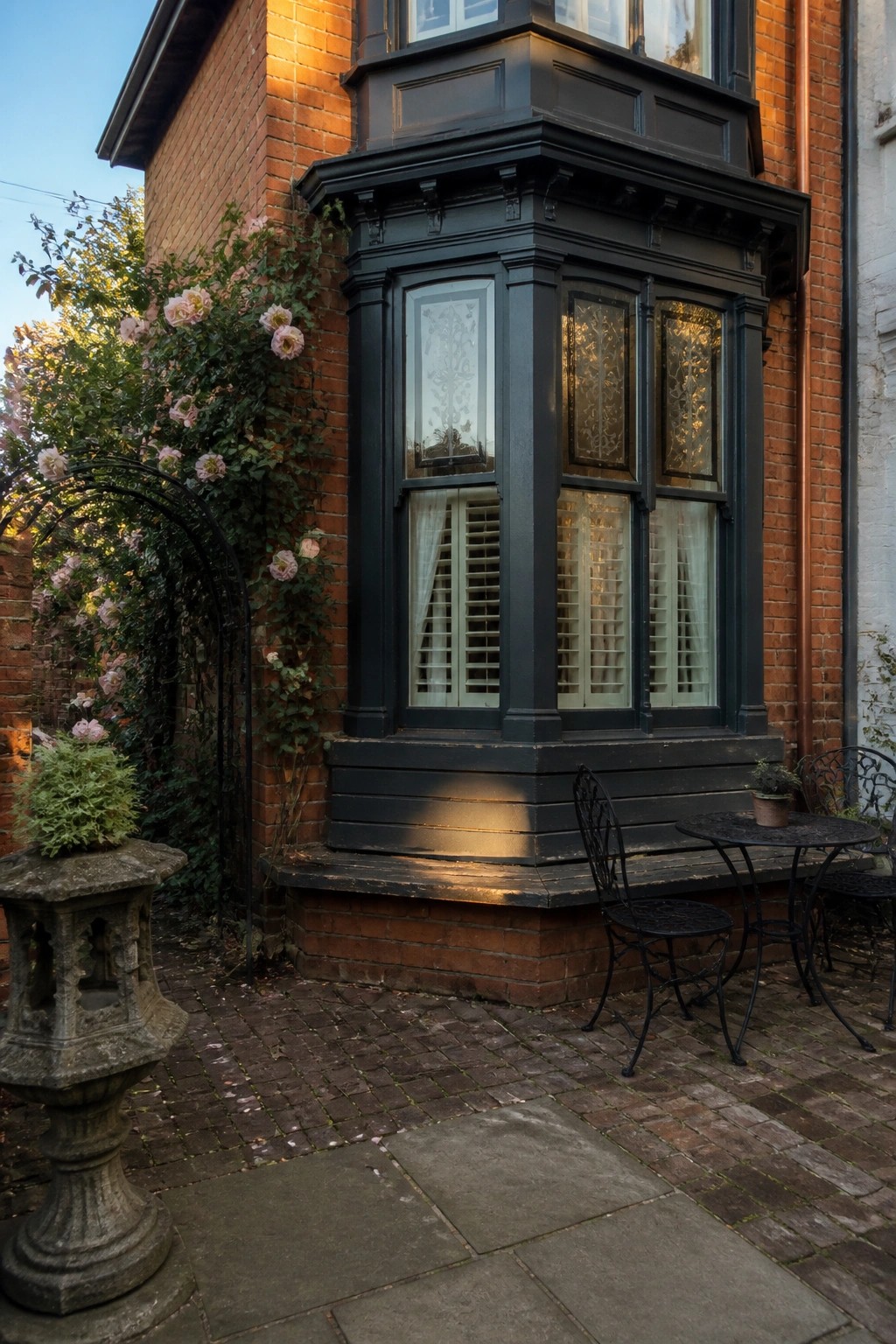
A dark finish on a bay window helps the shape and trim stand out against brick. It keeps the original lines clear without adding extra trim or decoration that might feel added on later.
This works best on older brick homes where the window already has good proportions. Stick with a matte or low-sheen black or deep charcoal so the details read clearly from the street. Keep the rest of the facade simple so the window stays the main feature.
Dressing Areas Built Around Bay Windows
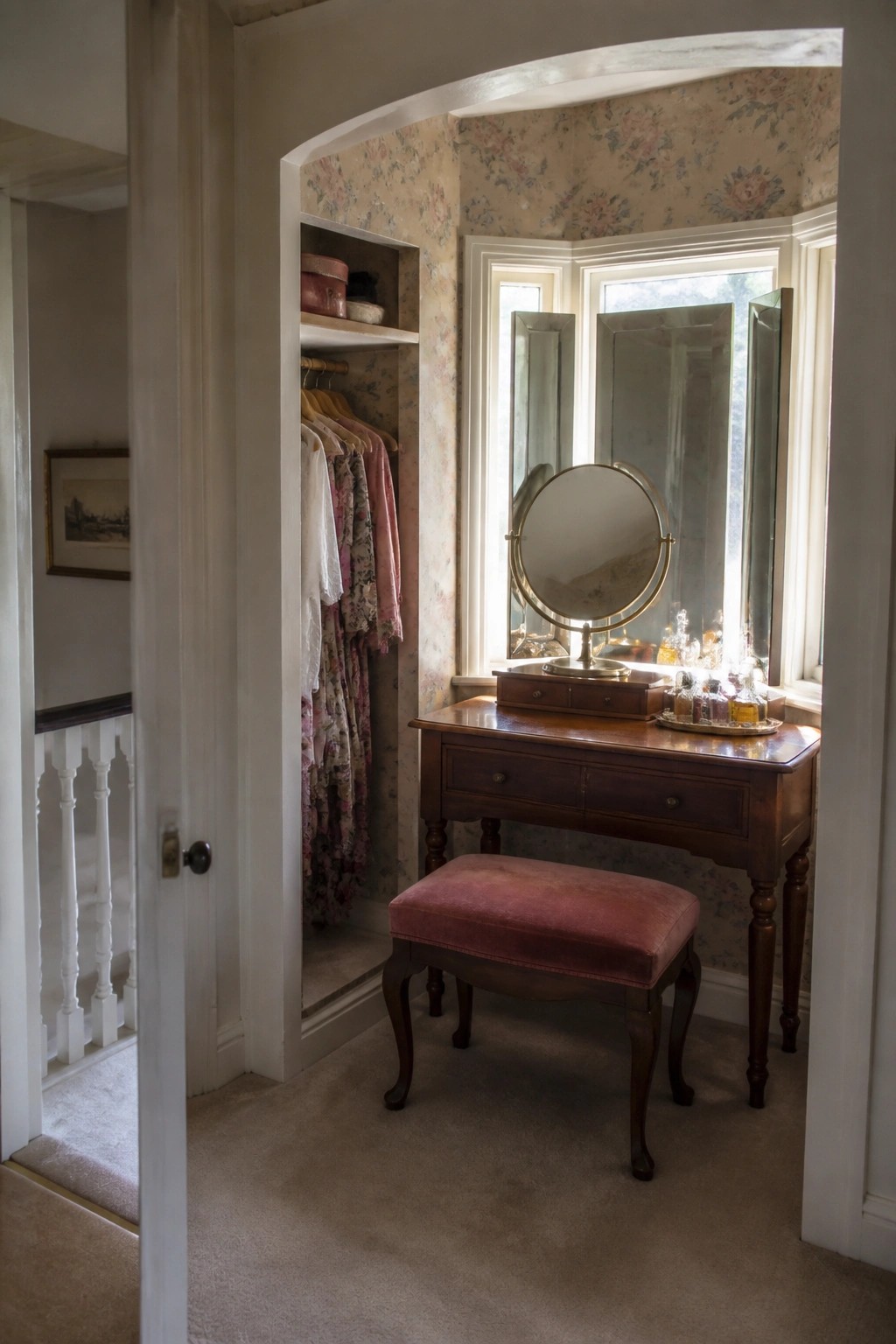
Many older homes gain a practical spot when a vanity sits right in front of a bay window. The extra daylight makes daily routines easier, and the window itself remains the clear focal point instead of getting covered up.
This setup suits bedrooms or small dressing rooms where you want the original trim and glass to stay visible. Choose a low table and simple mirror so the window shape and proportions keep their historic presence.
Bay Windows With Matching Details
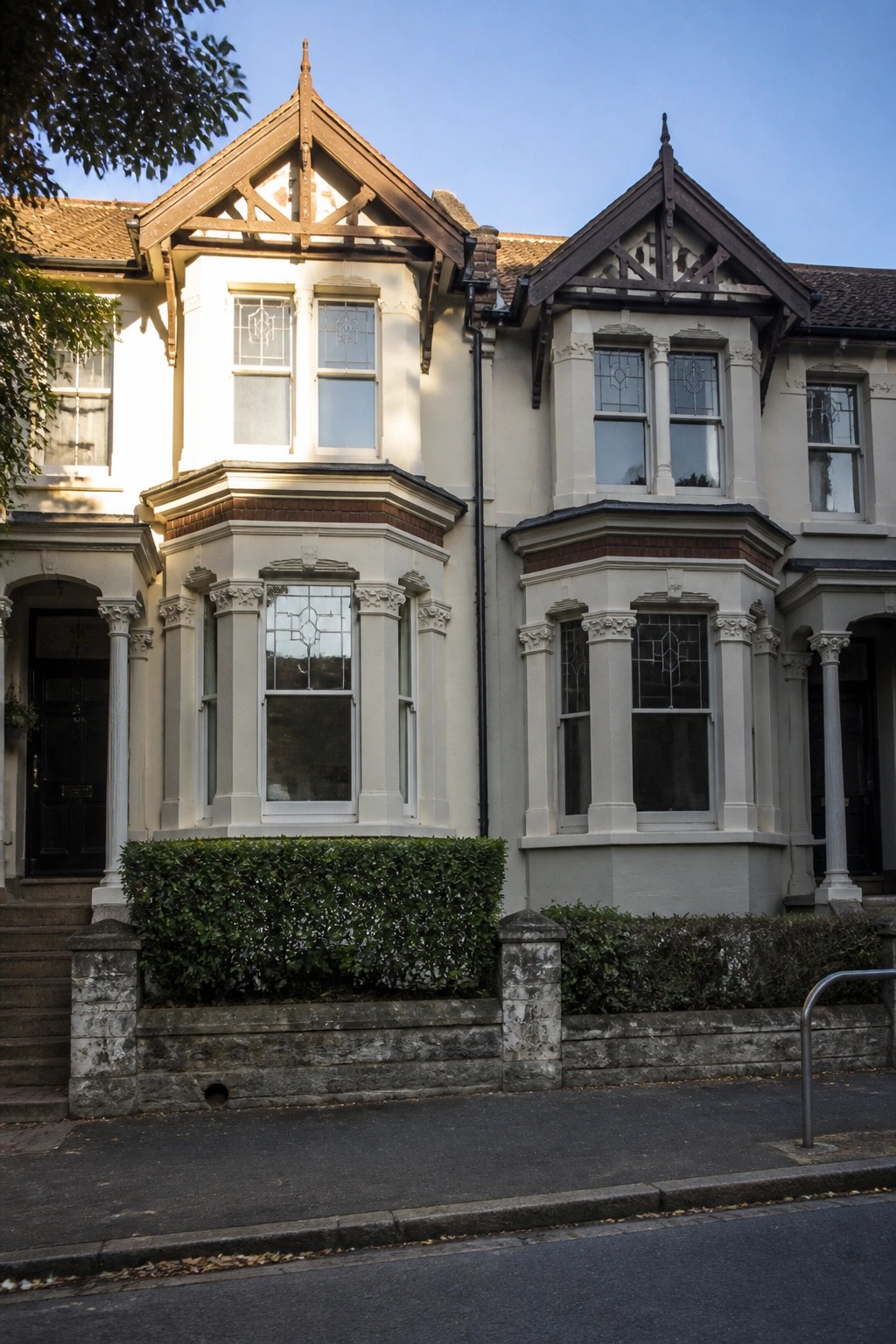
Bay windows help older homes gain light and floor space while keeping the original look. The ones here project out from the wall with their own small roofs and trim that lines up with the rest of the facade.
They suit homes that already have similar gables and woodwork. Match the glass pattern and any brick accents so the windows read as part of the original design rather than an add-on.
Leave Bay Windows Bare
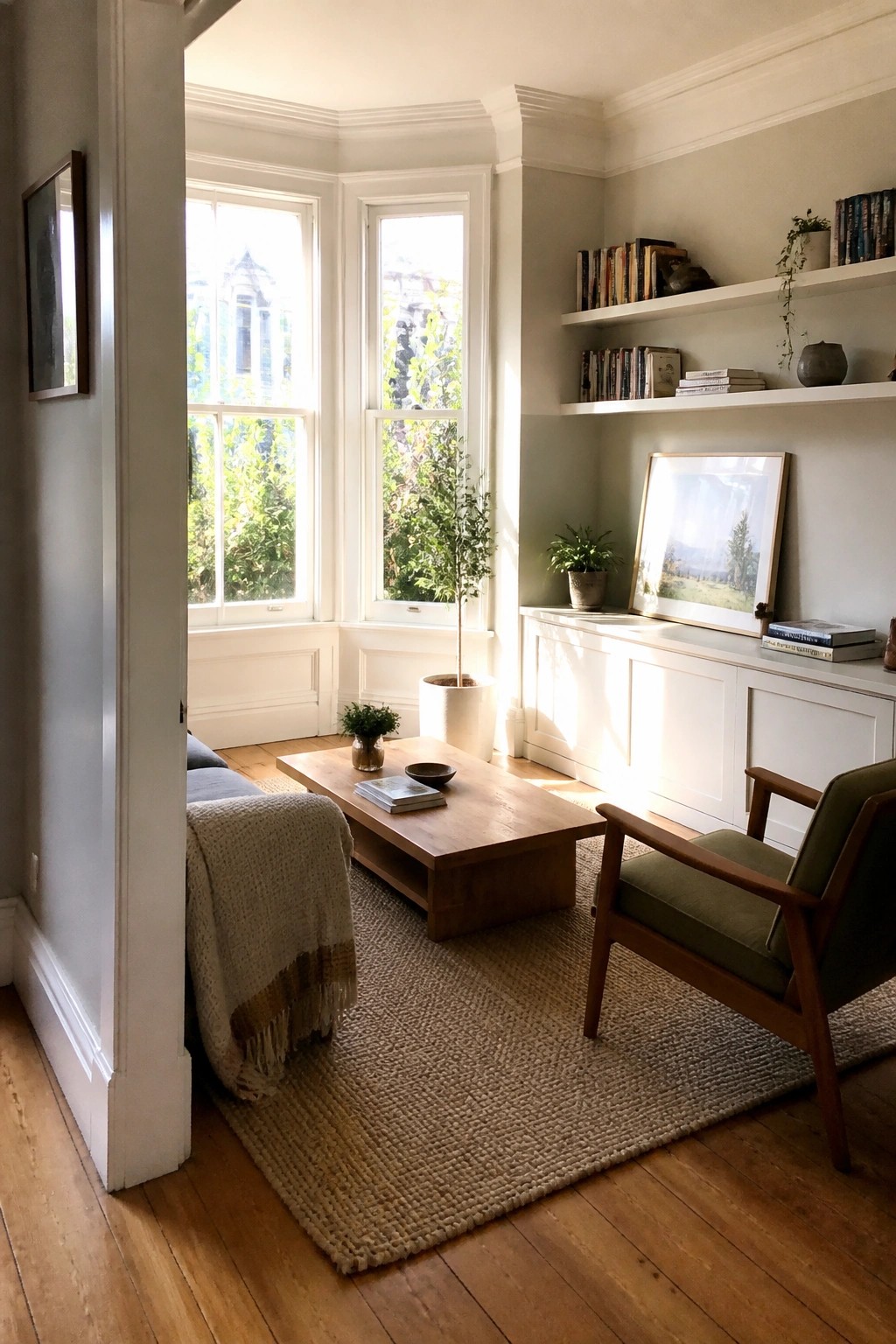
A bay window keeps its historic presence when you skip heavy curtains or blinds. The clean white trim and simple lines stand out more without anything competing for attention, and the room feels brighter and more open as a result.
This approach works best in living areas where privacy is not a big concern during the day. If you need some coverage at night, consider adding simple roller shades that stay hidden during daylight hours. The goal is to let the original window shape do the work rather than dressing it up.
Frequently Asked Questions
Q: How do I stop drafts from coming in around my old bay windows?
A: Start by checking the caulk around the edges every spring. If it looks cracked you can scrape it out and apply fresh caulk yourself. This keeps the cold air out without changing how the window looks from the street.
Q: Should I add curtains inside my Victorian bay window?
A: Light sheer panels work well because they let the light through while softening the view. Hang them close to the glass so they do not block the shape of the bay. Avoid heavy drapes that make the space feel smaller.
Q: What if one of the small panes gets cracked?
A: You can often replace just that single pane without touching the rest of the window. Take the measurements to a local glass shop and ask for the same thickness.