Victorian homes with their original stained glass often bring a certain depth to the interior spaces that newer windows rarely match.
The way the light filters through those colored panes can shift how a room feels throughout the day, sometimes warming up a north-facing parlor in ways paint alone cannot.
I have noticed in real homes that these windows tend to draw the eye first when you enter, so it helps to arrange furniture around that focal point rather than against it.
Details like this matter more than people expect.
Testing a few layout tweaks around the windows has shown me which setups let the light patterns enhance the space instead of getting blocked by heavy curtains or tall pieces.
Stained Glass Doors In The Entry
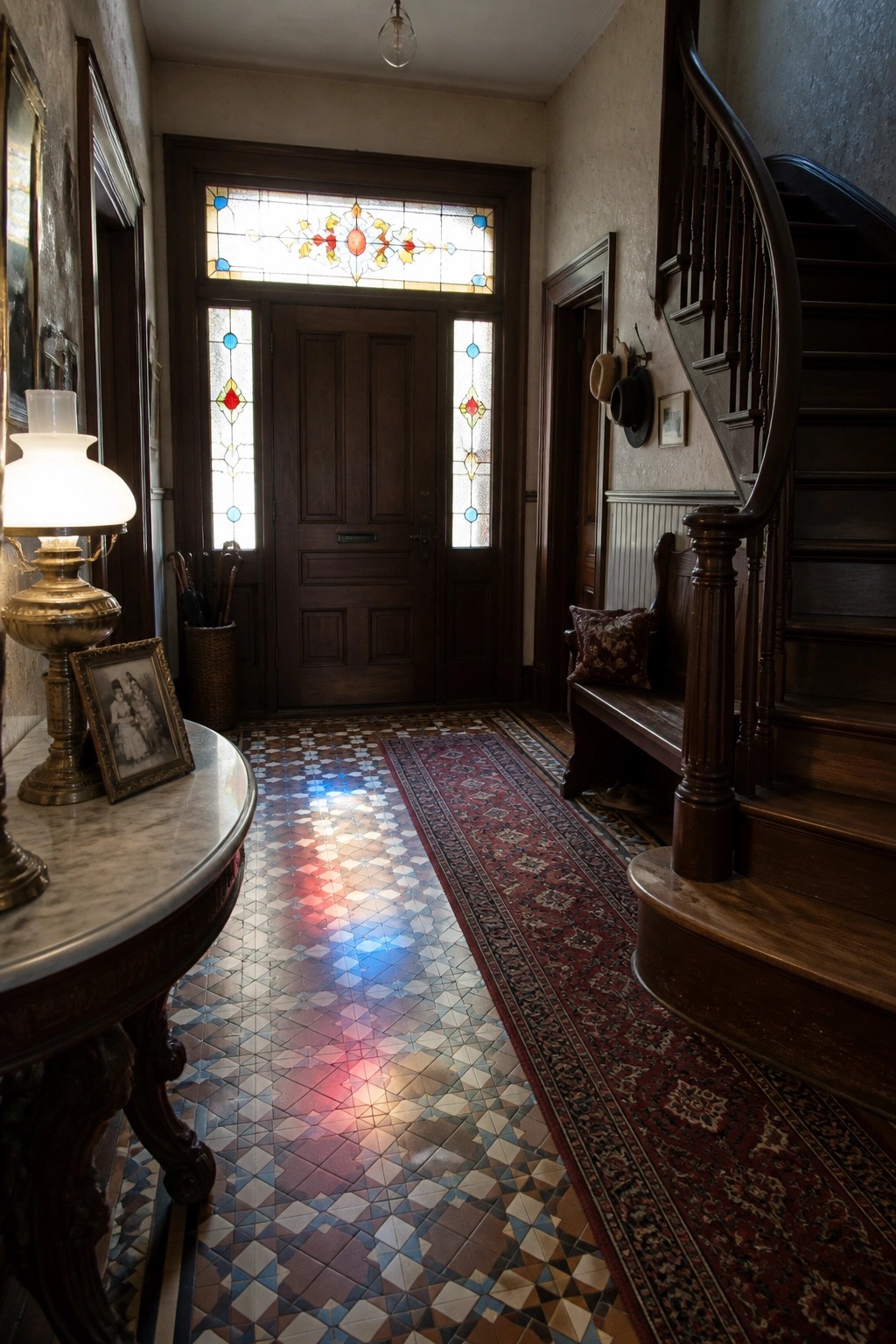
Many Victorian homes still have their original stained glass in the front door and the panel above it. The colored glass lets light through in soft patches that land on the floor and change as the day moves along.
This detail works best when the surrounding woodwork stays dark and simple. It gives the hall a bit of color without adding more furniture or brighter walls. Keep the glass clean and the frames in good repair so the light stays clear.
Stained Glass Windows In The Dining Room
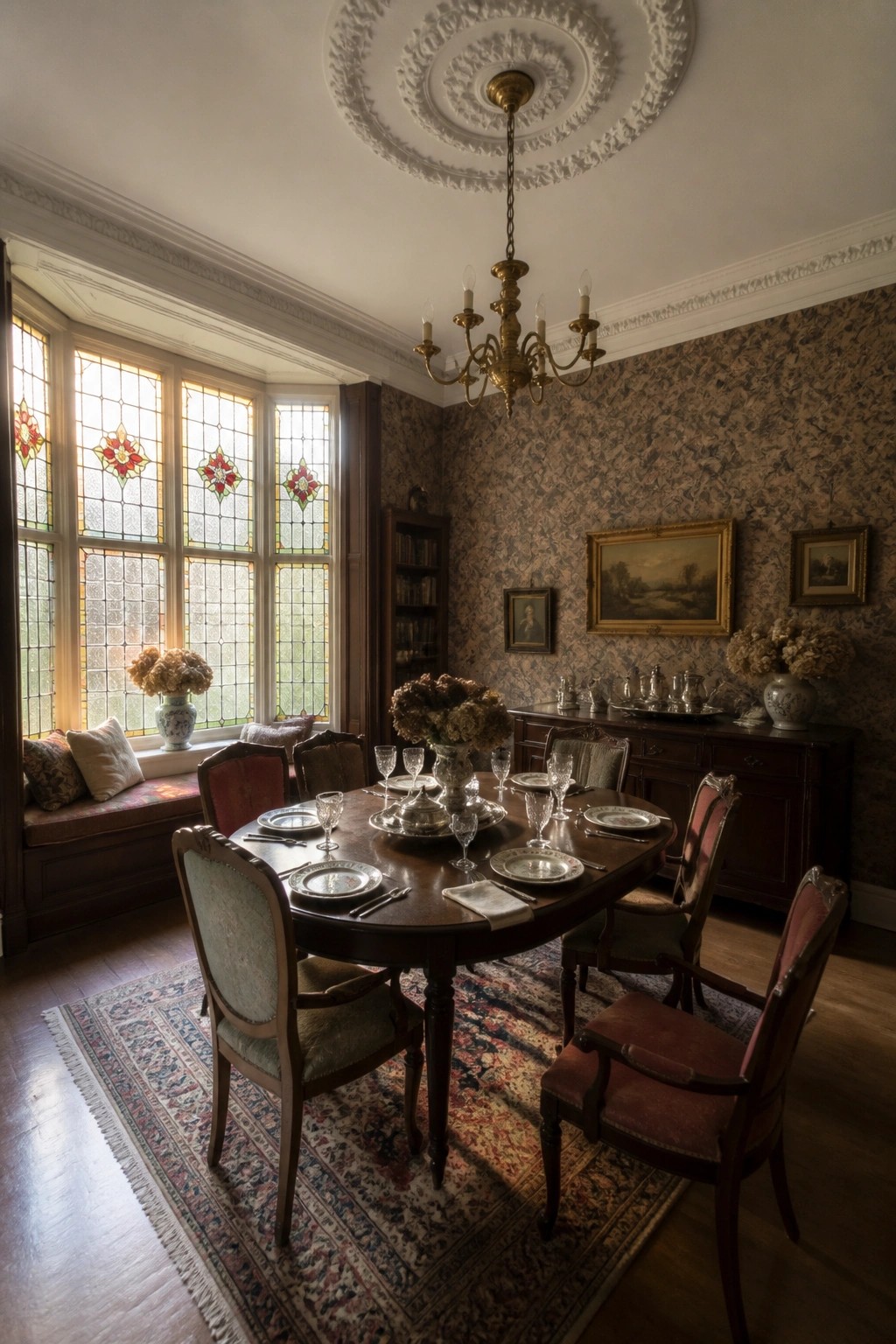
Original stained glass windows can turn an ordinary dining room into a brighter, more interesting space. The colored panes catch daylight and spread soft patterns across the table and floor, which keeps the room feeling lively even on overcast days.
This works best in homes that already have good natural light and a fairly simple furniture layout. Leave the rest of the room understated so the windows remain the main feature, and check how the glass colors shift the look of table linens or wood tones before committing to the setup.
Stained Glass Windows Add Color to Reading Rooms

Many Victorian homes still have their original stained glass windows, and they can do a lot to bring color into a space without any extra layers of decoration. Framing the window with built-in bookshelves helps it become the main feature while also giving the room a practical use.
This setup works best in homes that already have the windows in place, especially when the rest of the furnishings stay simple with dark wood and solid fabrics. It keeps the focus on the glass and avoids competing patterns or bright paint on the walls.
Stained Glass Skylights Over Stairs
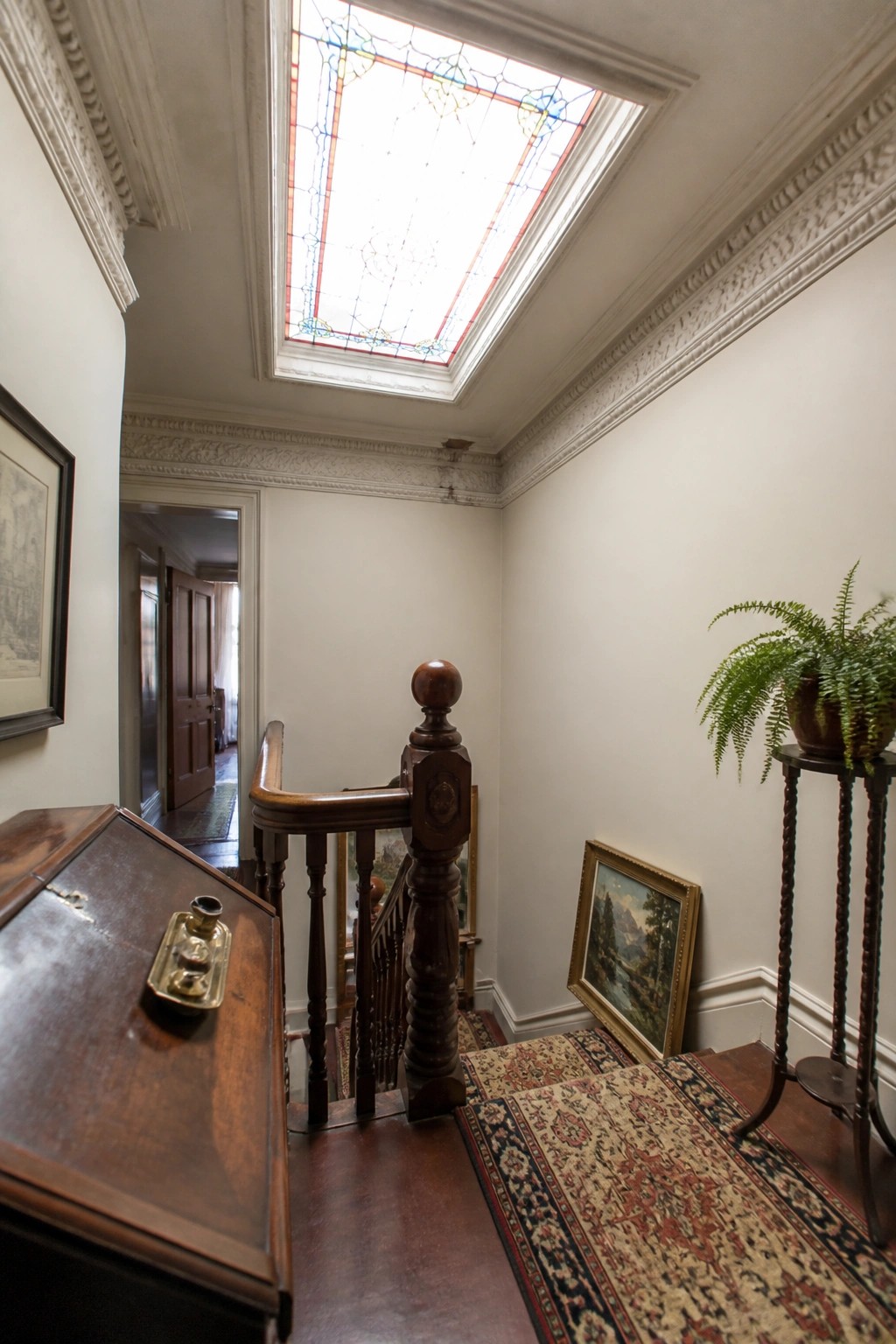
A stained glass skylight above a staircase brings in colored light that shifts through the day and keeps the space from feeling closed in. In Victorian homes this detail often sits right at the top of the stairs where it can reach both the upper and lower levels without needing extra fixtures.
It works best in homes that still have the original wood trim and railing, since the glass adds color while the wood gives it structure. If the skylight is in good shape, keep the surrounding area simple so the light pattern stays the main feature.
Stained Glass Windows Bring Color Into Bedrooms

Stained glass windows can fill a bedroom with soft colored light during the day. This works especially well in older homes where the windows are already part of the architecture.
Place the bed where it catches the morning sun through the glass. The effect feels warm and personal without adding extra decor.
Stained Glass Doors In The Study

Many Victorian homes still keep their original stained glass in rooms that get daily use. Placing it on a door into a study lets colored light reach the workspace without making the room feel too open or exposed.
This setup works best in homes that already have dark wood trim and built-ins. Keep the rest of the room simple so the glass remains the main point of interest rather than competing with other details.
Stained Glass Windows In A Breakfast Nook
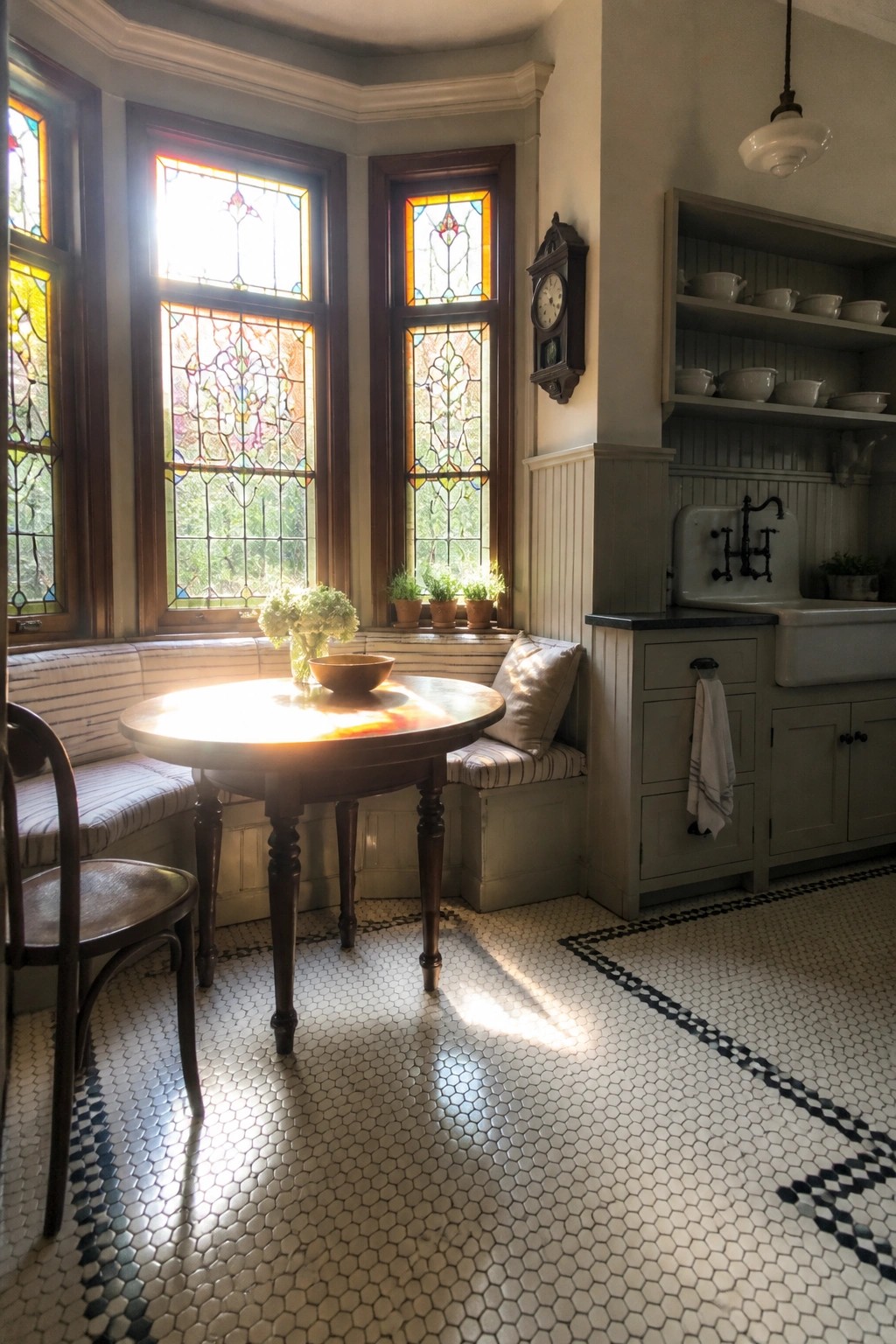
Original stained glass windows add quiet color to a simple eating area without any extra effort. The light shifts through the panels during the day and gives the space a gentle glow that feels tied to the age of the house.
This works well in Victorian homes where the windows are already in place. Keep the seating and table plain so the glass remains the main point of interest rather than competing with bold patterns or heavy colors.
Built-In Window Seats Under Stained Glass
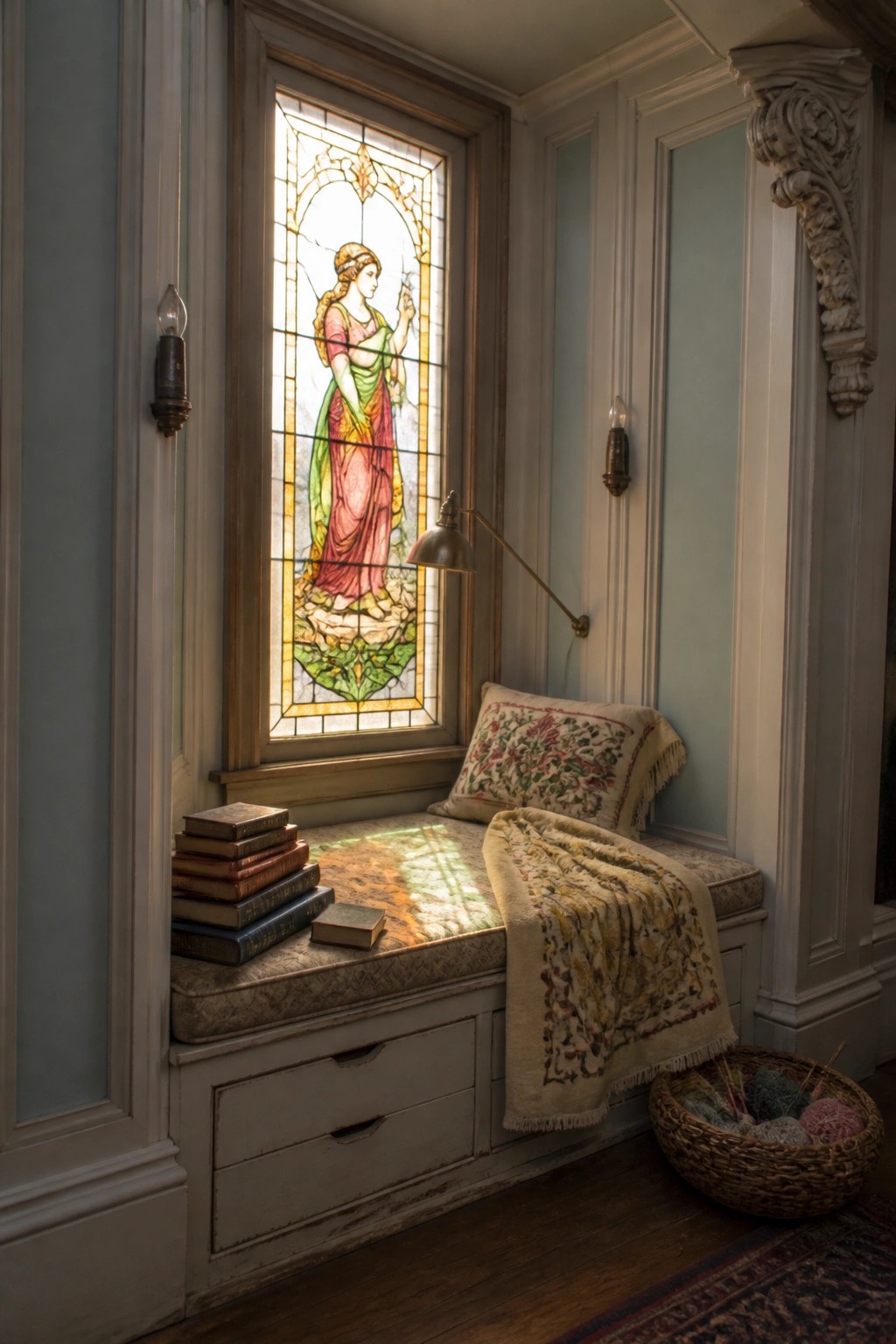
A built-in seat placed directly under a stained glass window turns the glass into part of the daily routine instead of something you only notice in passing. The bench adds a place to sit with a book while the storage drawers underneath keep the space from feeling cluttered.
This setup works best in older homes where the windows already have character. Keep the cushion and any throws in soft neutral tones so the glass remains the focus, and make sure the seat height lines up comfortably with the sill.
Letting Stained Glass Color A Music Corner

Placing a piano under an original stained glass window turns the instrument into a natural focal point. The colored light filters down during the day and softens the look of the dark wood without any extra effort.
This works best in Victorian rooms that already have tall windows and a bit of open floor space. Keep other furniture low so the glass stays visible and the light can reach the keys.
Stained Glass in a Nursery
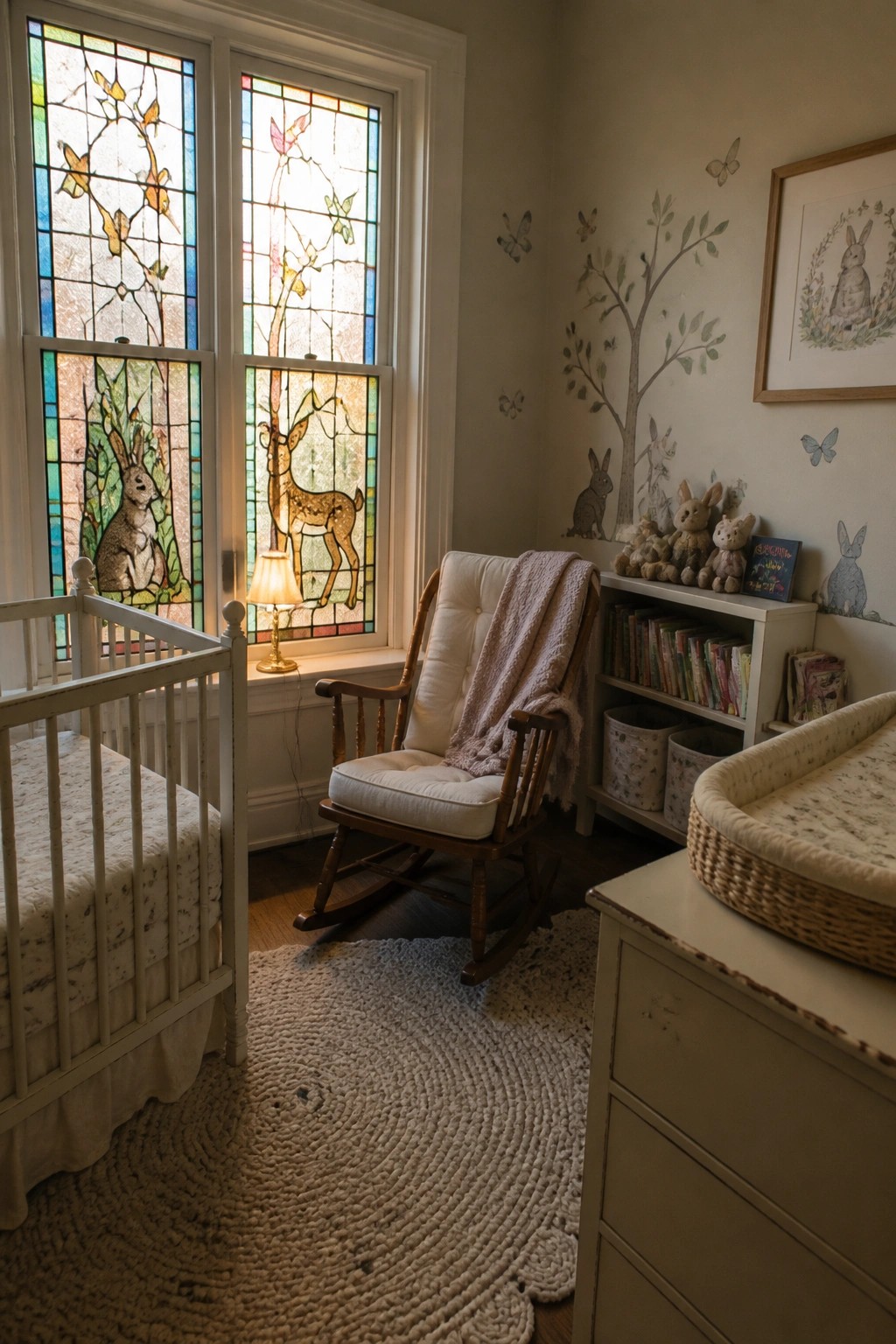
Original stained glass can turn a plain room into a quiet, colorful space without needing much else. The soft light that comes through the panels changes throughout the day and gives the walls a gentle wash of color that feels calm rather than busy. In a room meant for a baby, that steady shift in light often does more than any paint choice or extra decoration.
It works best in older homes where the windows are already in place. Keep the rest of the room simple so the glass stays the main feature. A few light-colored furnishings and a soft rug are usually enough to let the windows do the work without competing for attention.
Stained Glass Windows in the Bathroom
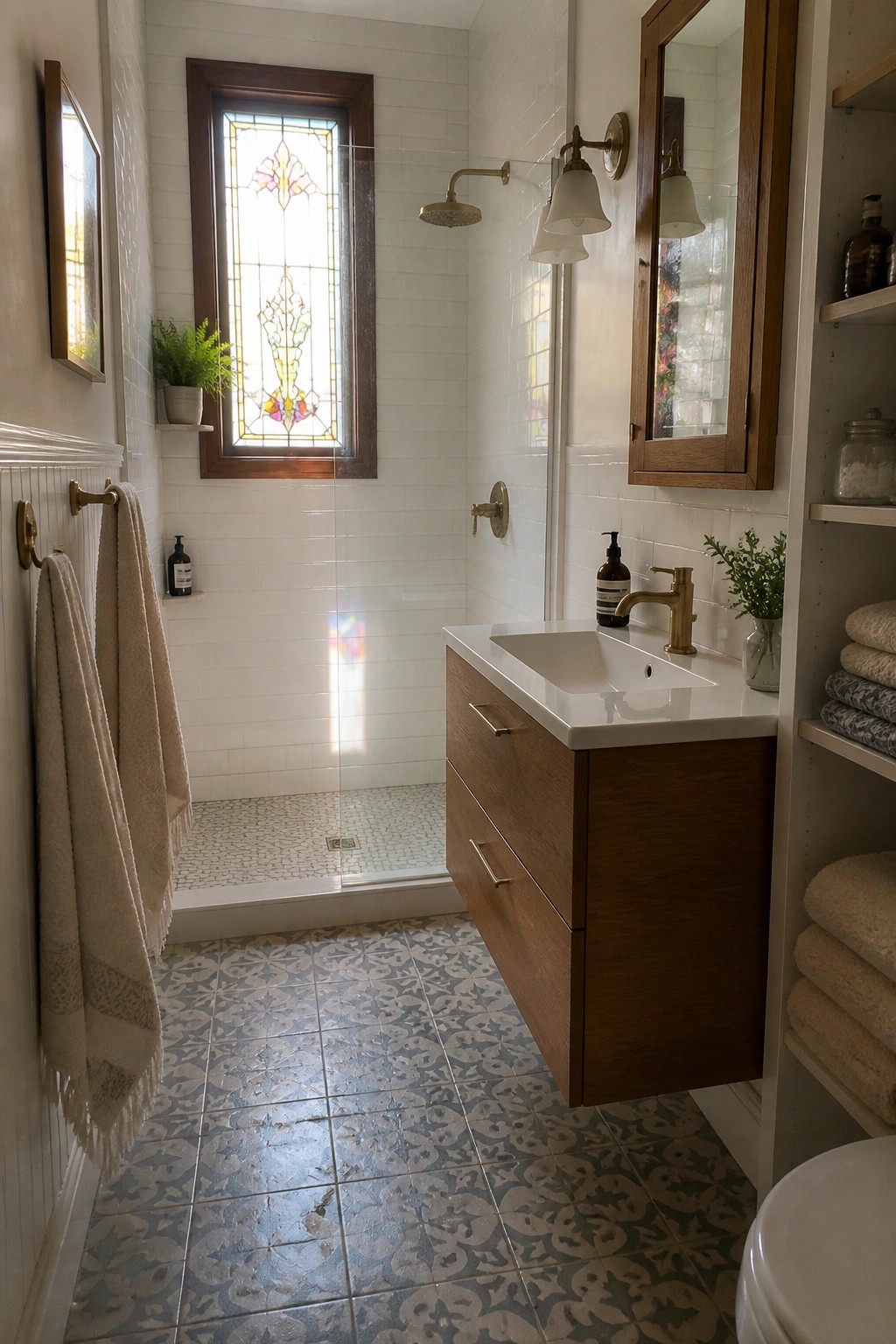
Many Victorian homes still have their original stained glass tucked into the bathroom. It lets in soft colored light while keeping the space private, which makes it a natural fit for a shower area.
This works best when the rest of the room stays simple so the window can stand out. Keep the tiles light and the fixtures plain, and the glass becomes the main feature without needing extra decoration.
Sewing Rooms With Stained Glass Windows

Many Victorian homes already have these windows in side rooms that get turned into work spaces. Setting up a sewing table directly under one lets the colored light fall across the fabric and makes the whole area feel brighter without needing much else.
This setup suits homes where the original glass is still intact and the room is used often. Keep the walls and furnishings light so the window remains the main point of interest rather than getting lost behind heavy curtains or crowded shelves.
Keeping Original Stained Glass in the Entry
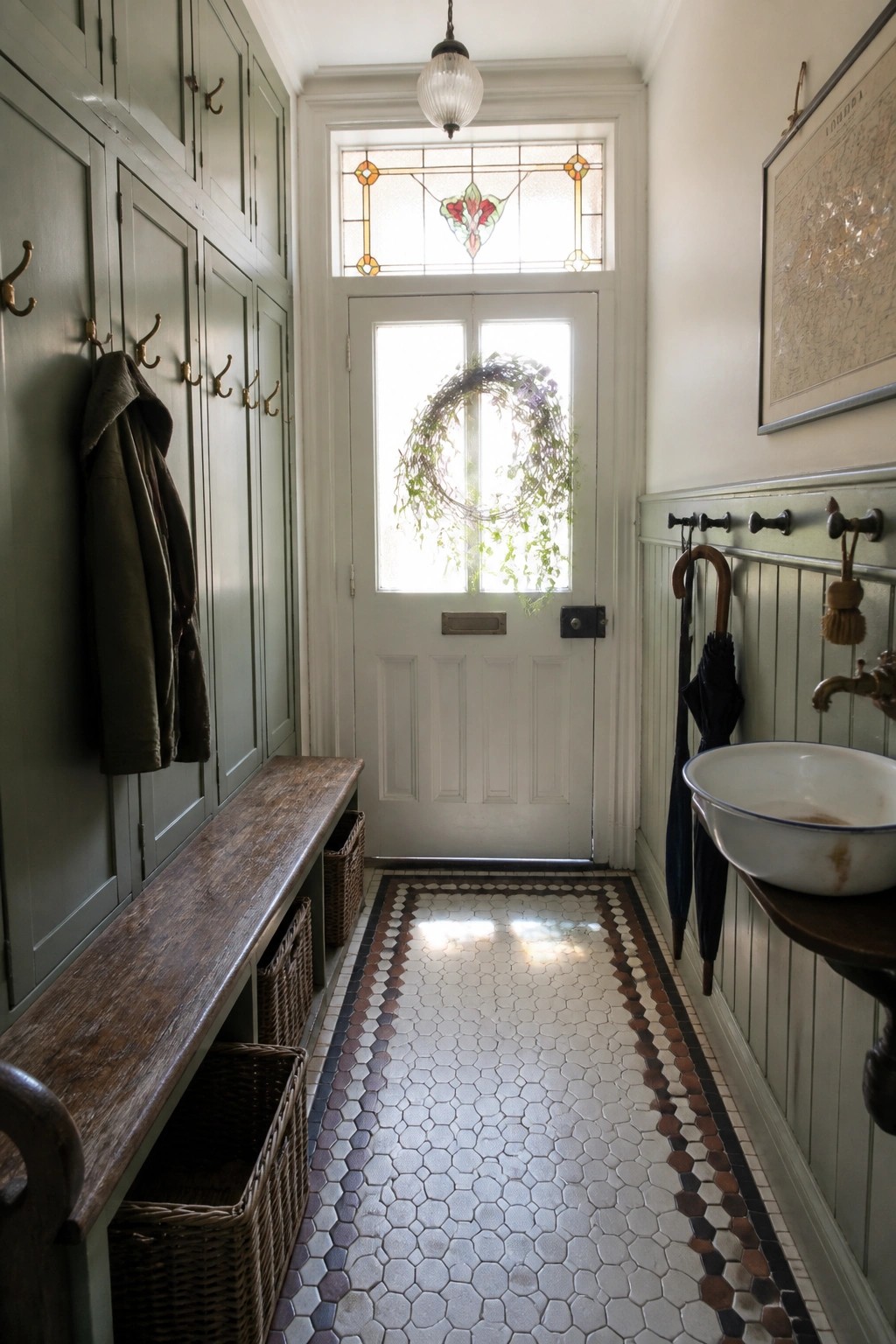
Original stained glass often gets replaced during updates, but keeping it above the door can give a hallway more character without any extra work. The light that comes through adds color and pattern that fits the age of the house and makes the space feel less plain.
This approach works best in narrow entries or older homes where the glass is still in good shape. It is worth repairing rather than removing if the rest of the trim and doors are original.
Built-In Shelves That Work With Stained Glass Windows

Built-in shelves around a bay window give the stained glass a clear purpose in the room. Instead of leaving the window on its own, the shelving turns the whole corner into a place for books and quiet sitting while still letting the colored glass show through.
This approach suits older homes where the windows are already a strong feature. Keep the shelves shallow and the colors neutral so the glass remains the main point rather than competing with the woodwork.
Letting Stained Glass Windows Add Color to Bedrooms

Original stained glass windows can bring soft color into a bedroom through natural light alone. The effect feels quiet but noticeable, especially when the rest of the room stays simple in tone and texture.
This approach works best in older homes where the windows are already in place. Keep nearby walls and furnishings light so the colored panes stay the focus without competing with other details.
Bay Window Seating Areas
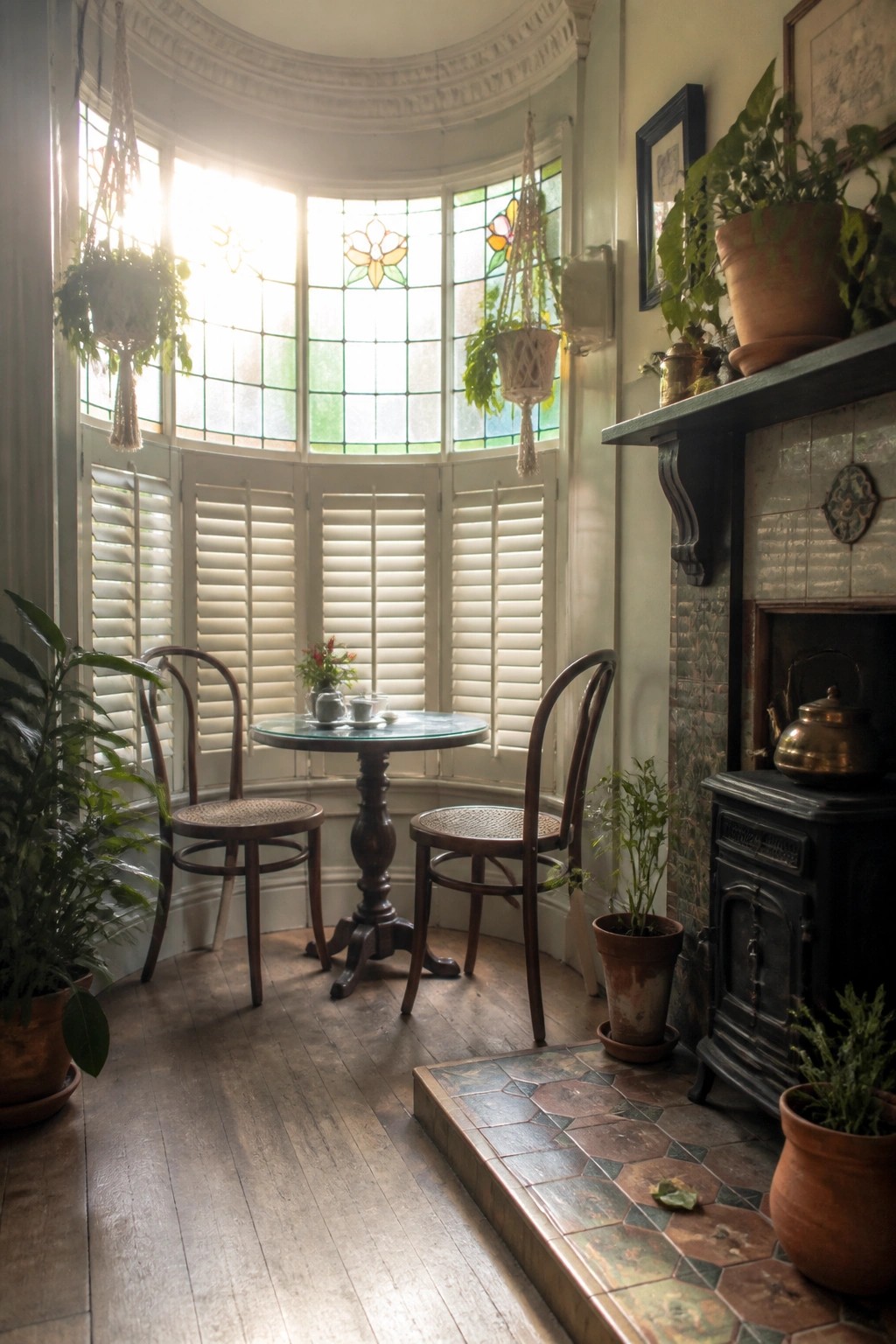
Placing a small table and chairs right in a bay window lets the stained glass become the main feature without much extra effort. The curved shape already creates a natural spot for two seats, and the lower shutters keep the space practical while still letting light through the colored glass above.
This works best in older homes where the window is already a strong architectural element. Keep the furniture light and low so the window stays visible, and avoid crowding the area with too many plants or decor. It suits Victorian interiors that need a quiet corner without changing the original structure.
Stained Glass Windows In The Kitchen

Many older homes keep their original stained glass right in the kitchen. The colored glass brings in soft light and a bit of pattern without making the space feel dark or closed in.
This approach works best when the window sits above a sink or main workspace. It adds interest while still letting in enough light for everyday tasks. Just check that the glass is secure and the frame is sound before leaving it in place.
Position a Table by the Stained Glass
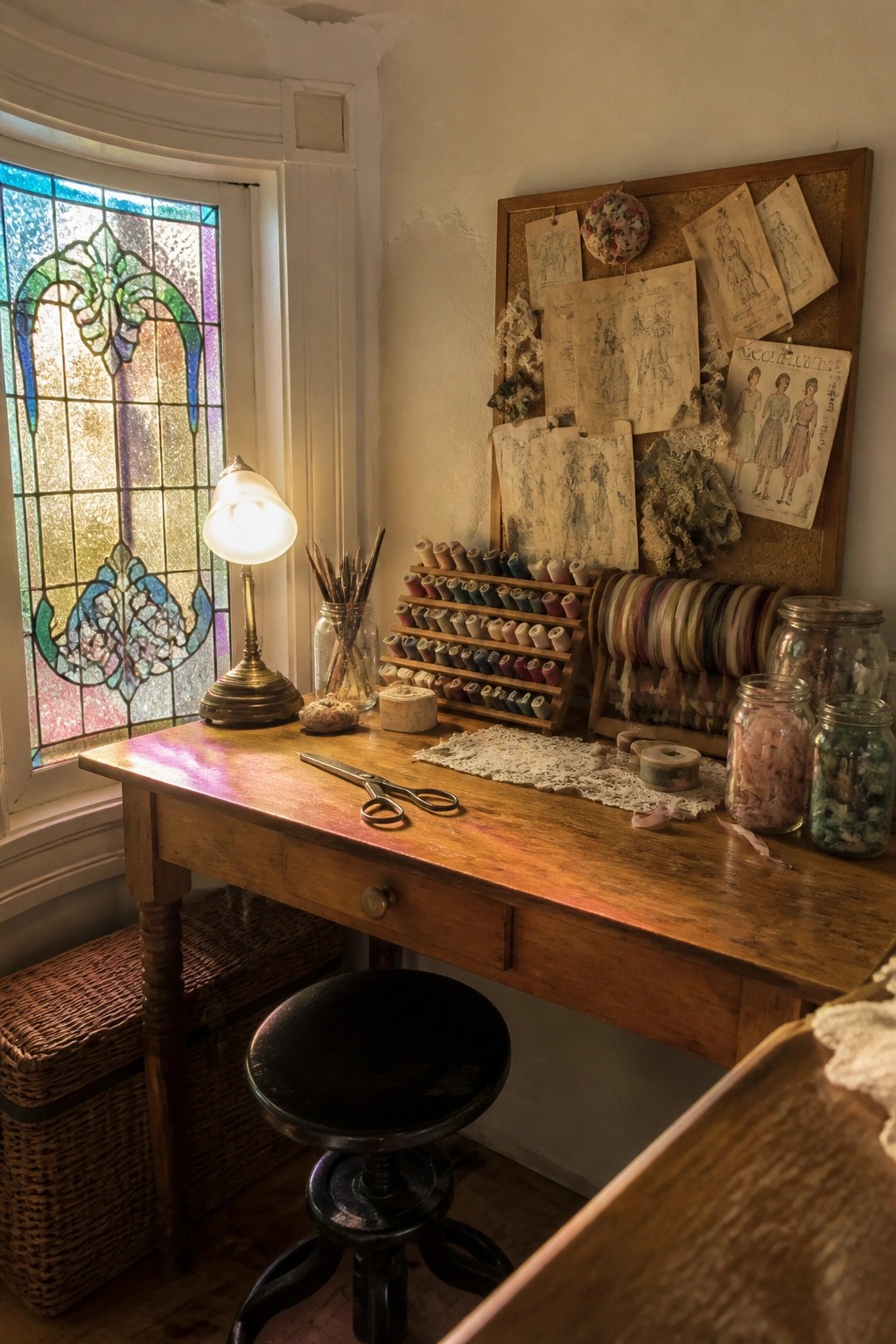
Many Victorian homes still have these windows in smaller rooms that get turned into work spaces. Setting a table right in front of the glass lets the colored light land directly on whatever you are making.
This works best in a room used for sewing, drawing, or other hands-on projects. Keep the surface low enough that the lower part of the window stays open and the light can reach your work without extra lamps during the day.
Window Seats Under Stained Glass

Placing a window seat right below an original stained glass window turns that feature into the main point of the room. The colored glass brings in soft light that changes through the day, and the seat gives you a simple place to sit and notice it without adding much else.
This setup works best in corners or smaller rooms where you want a quiet spot to read or rest. Keep the seat cushion low and the surrounding pieces simple so the window stays the focus instead of competing with heavier furniture.
Frequently Asked Questions
Q: How should I clean original stained glass to avoid damage?
A: Start with a soft brush to dust the surface gently. Follow up with a damp cloth and a drop of mild soap if spots remain. Rinse and dry right away so moisture does not sit on the lead.
Q: What if a few pieces are cracked?
A: A restorer can swap out only the broken sections. They match the color and pattern so the window keeps its original look. This approach saves money and preserves the rest of the glass.
Q: Where do people find Victorian homes with these windows still intact?
A: Look in older neighborhoods known for historic houses. Listings there often mention original details like stained glass. Preservation groups in the area can point you toward homes coming up for sale.