Victorian homes often rely on their front entries to set the tone for the whole facade, and double doors add a sense of balance that single doors rarely achieve.
The right placement under a porch roof or within a recessed frame helps the doors connect visually with the rest of the exterior rather than standing apart from it.
Details like hardware and trim decide whether that connection holds.
Materials also play a role, since wood expands and contracts differently than the surrounding siding over the seasons.
I usually check how the threshold meets the walkway before committing to any major change, because that small junction affects daily use more than most people expect.
Choose a Deep Color for the Double Doors

A deep green on these double doors gives the whole entry a grounded look that still feels welcoming. The color makes the panels and hardware stand out without needing extra decoration, and it holds up well against the red brick.
This approach works best on Victorian homes with similar masonry and trim. Keep the shade consistent across the door and any nearby shutters so the entrance reads as one strong focal point rather than a collection of separate pieces.
Double Doors That Center the Entry

Double doors give a Victorian entry a clear sense of balance. They sit right in the middle of the porch and make the front feel settled and complete instead of busy.
This works especially well on homes with a simple gable and a modest porch roof. Keep the doors a warm wood tone and let the surrounding trim stay light so the doorway stays the main focus.
Dark Double Doors on Stone Facades

A deep black finish on double doors gives a strong contrast against stone or masonry walls. That contrast helps the entry feel more defined and substantial without needing extra trim or decoration.
This approach works especially well on older homes where the stone already has texture and weight. Keep the surrounding hardware simple so the color does the main job, and test the shade in different light before committing.
Matching Urns Beside Double Doors

Large urns placed on either side of double doors give the entry a balanced look that feels right for Victorian homes. The symmetry draws attention straight to the doors without adding extra trim or detail.
This approach works best on houses with a simple portico or columns already in place. Keep the urns the same size and fill them with the same plants so the pairing stays clean and easy to maintain.
Double Doors with Oval Glass Panels

Double doors with oval glass inserts give a Victorian entry a solid but open feel. The glass lets light reach the porch without losing the weight of the wood doors, and the pattern keeps things interesting without going overboard.
This approach works best on homes that already have some trim detail around the door. Keep the hardware simple and let the glass do the work. It suits older houses where you want the entry to feel like the main feature rather than something added later.
Double Doors Under an Ornate Pediment
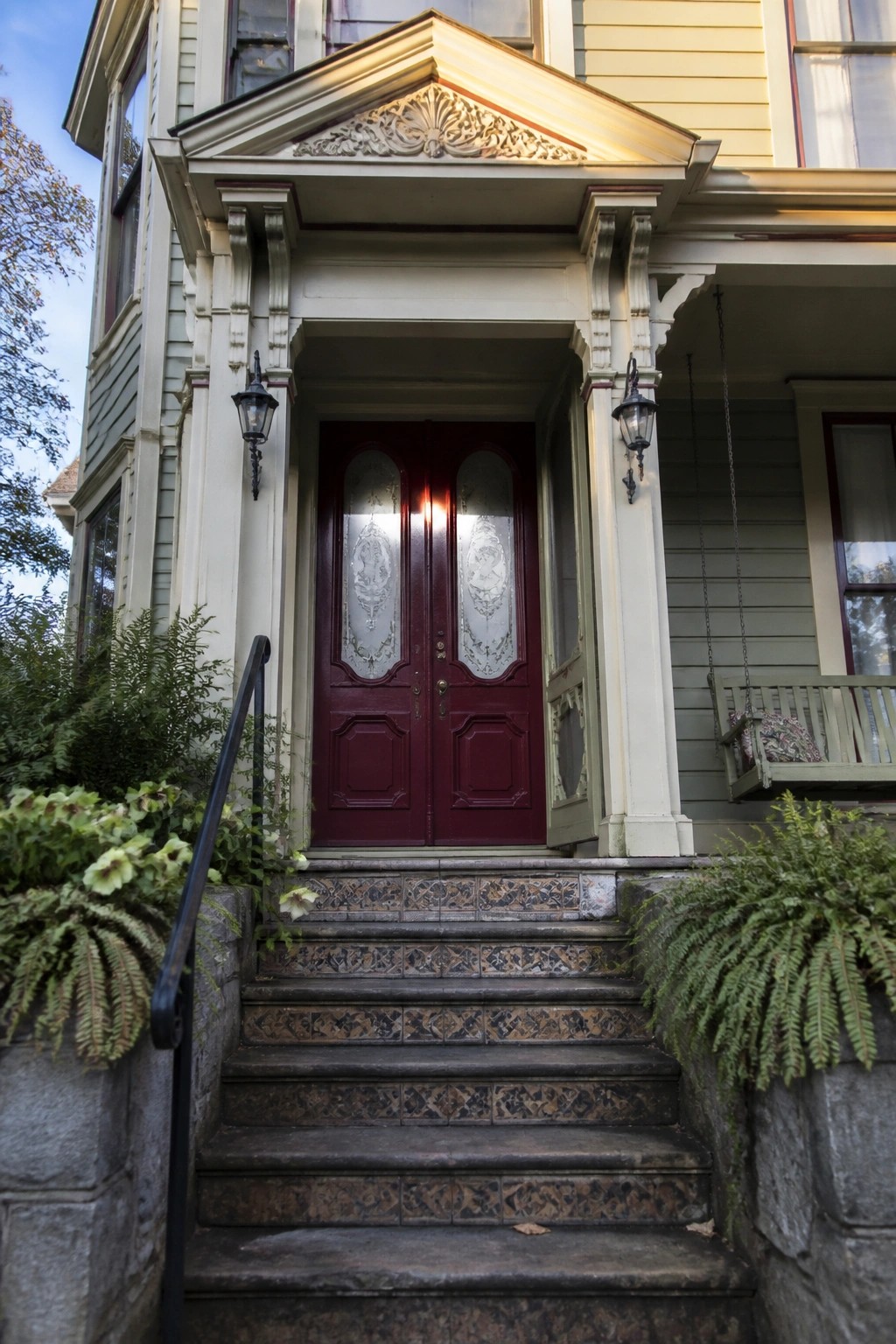
Many Victorian homes benefit from a strong central focus at the front door. Setting a pair of doors beneath a carved pediment gives the entry real weight and helps the whole facade feel balanced and intentional.
This setup works best on homes that already have some trim detail to build from. Choose doors in a deep color so they stand out against lighter siding, and keep the steps simple enough that the pediment remains the main feature. It suits two-story houses where the entry needs to feel grounded without extra clutter.
Frame Double Doors With Matching Lanterns

Many Victorian entries gain a lot from a simple pair of lanterns placed at the same height on either side of the doors. The light helps the double doors stand out after dark and keeps the whole front from feeling flat or lost in shadow.
This approach works best on brick or stone facades where the lanterns can sit against the wall without extra brackets. Stick to the same style and scale on both sides, and avoid anything too large that might crowd the doorway.
Double Doors in a Deep Color
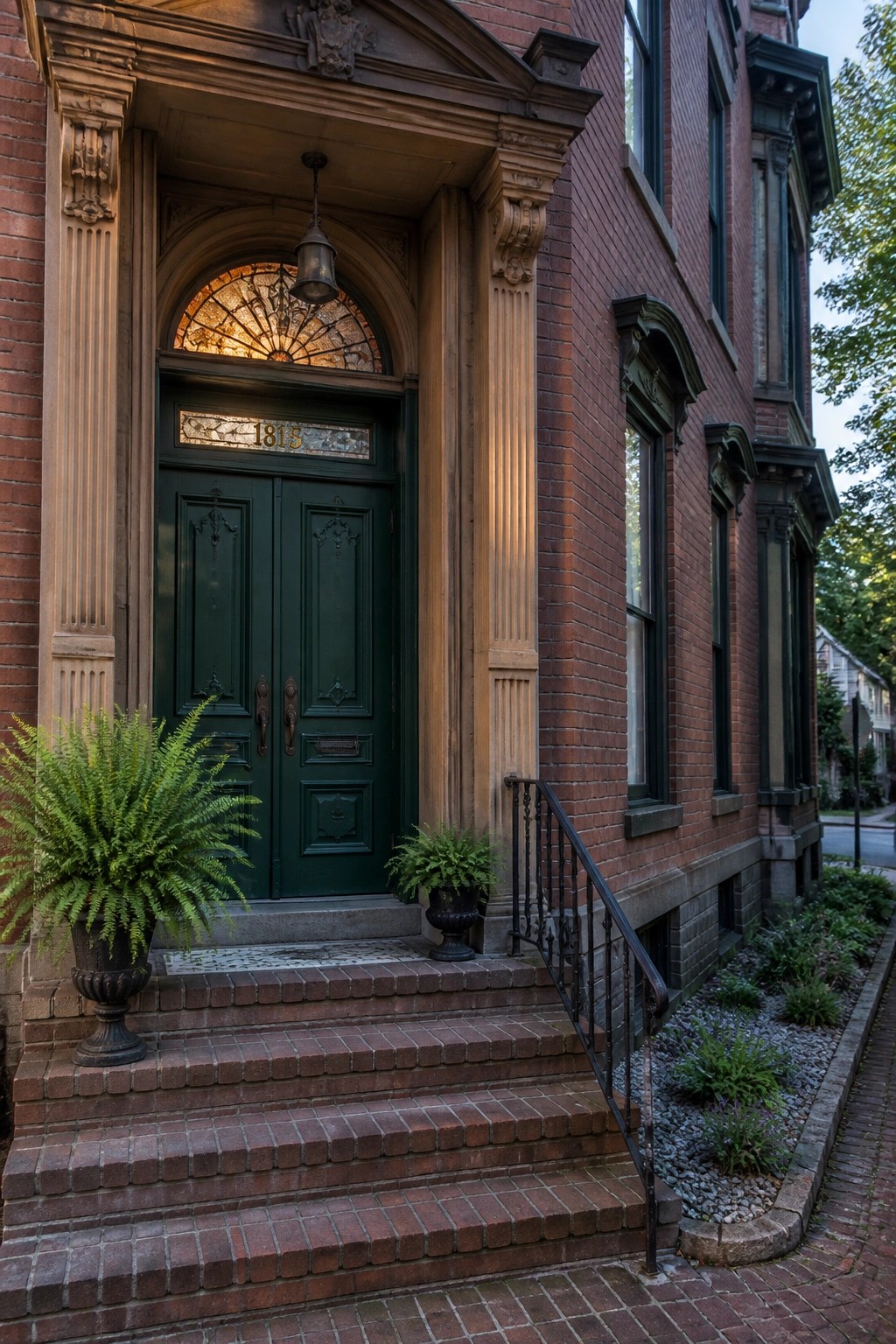
A deep green finish on double doors gives a Victorian entry real presence against red brick. It creates contrast without extra ornament and makes the whole front feel more grounded.
This works best on homes with straightforward masonry and clean lines. Keep the trim simple, use a satin or semi-gloss paint for durability, and let the color do the work rather than adding more details around the frame.
Double Doors With a Pediment Overhead
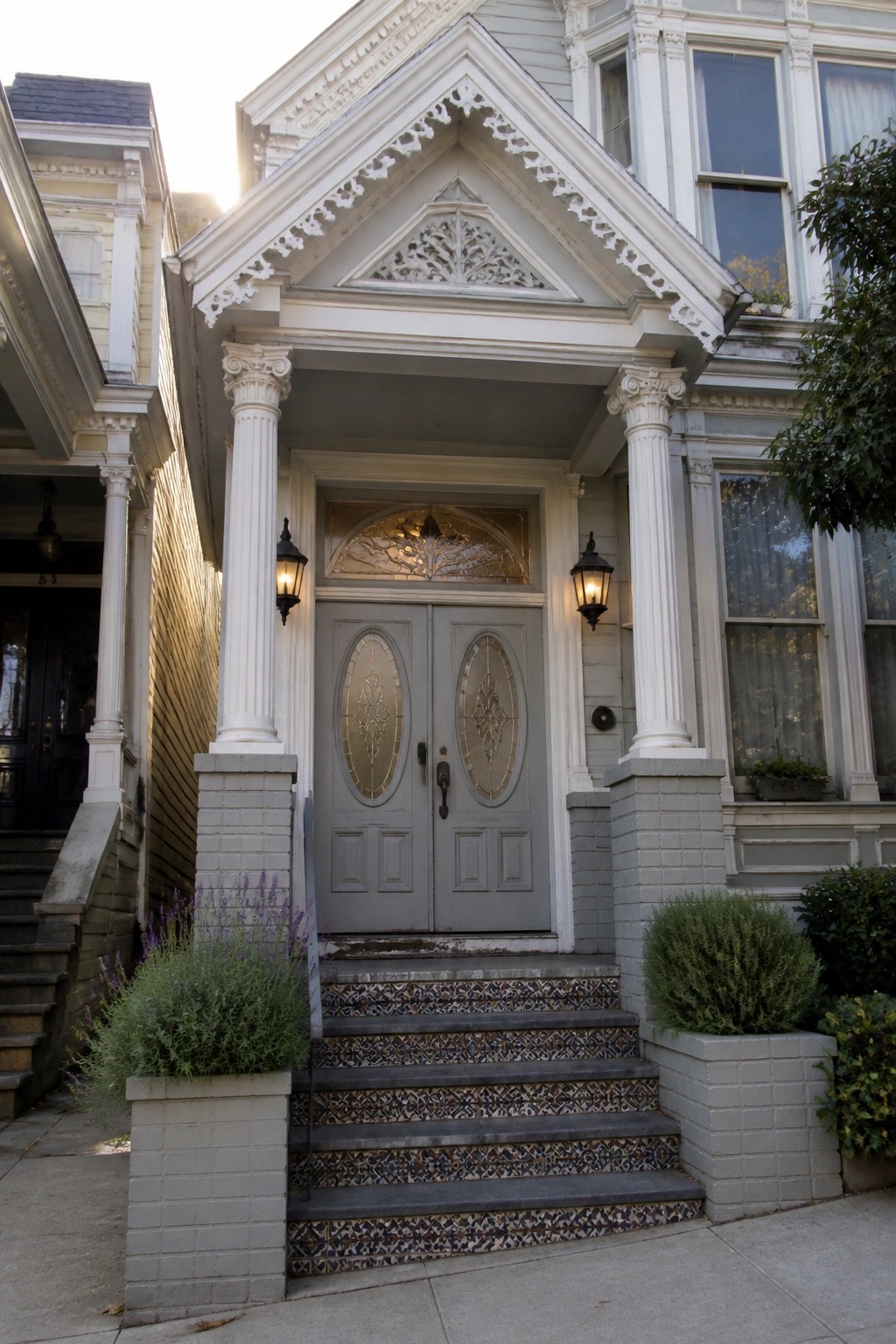
Many Victorian homes center the entry on a pair of doors instead of a single one. Setting those doors under a pediment and between columns gives the front a balanced, finished look that feels right for the style.
This approach works best on houses that already have some width at the entrance. Keep the doors simple in color so the trim and columns stand out, and let the steps add a bit of pattern if you want extra detail.
Bold Color on Double Doors

A deep red finish on double doors gives the whole entry a clear center point. The color stands out against lighter siding and trim, which keeps the look simple while still making the doors the main feature.
This approach works best on homes with a fairly plain porch structure. The doors carry the visual weight, so the surrounding details can stay minimal. Just match the hardware and any transom glass to the same style rather than adding more color layers.
Double Doors Centered Under an Arch

Many Victorian homes place a pair of doors right in the middle of the entry and frame them with a simple arch. This keeps the front looking balanced and draws the eye straight to the doors without extra fuss.
The look suits brick houses with some stone detail around the opening. Keep the doors dark and add a transom above them so light still reaches the inside even when the doors stay closed.
Hanging Planters Frame Double Doors
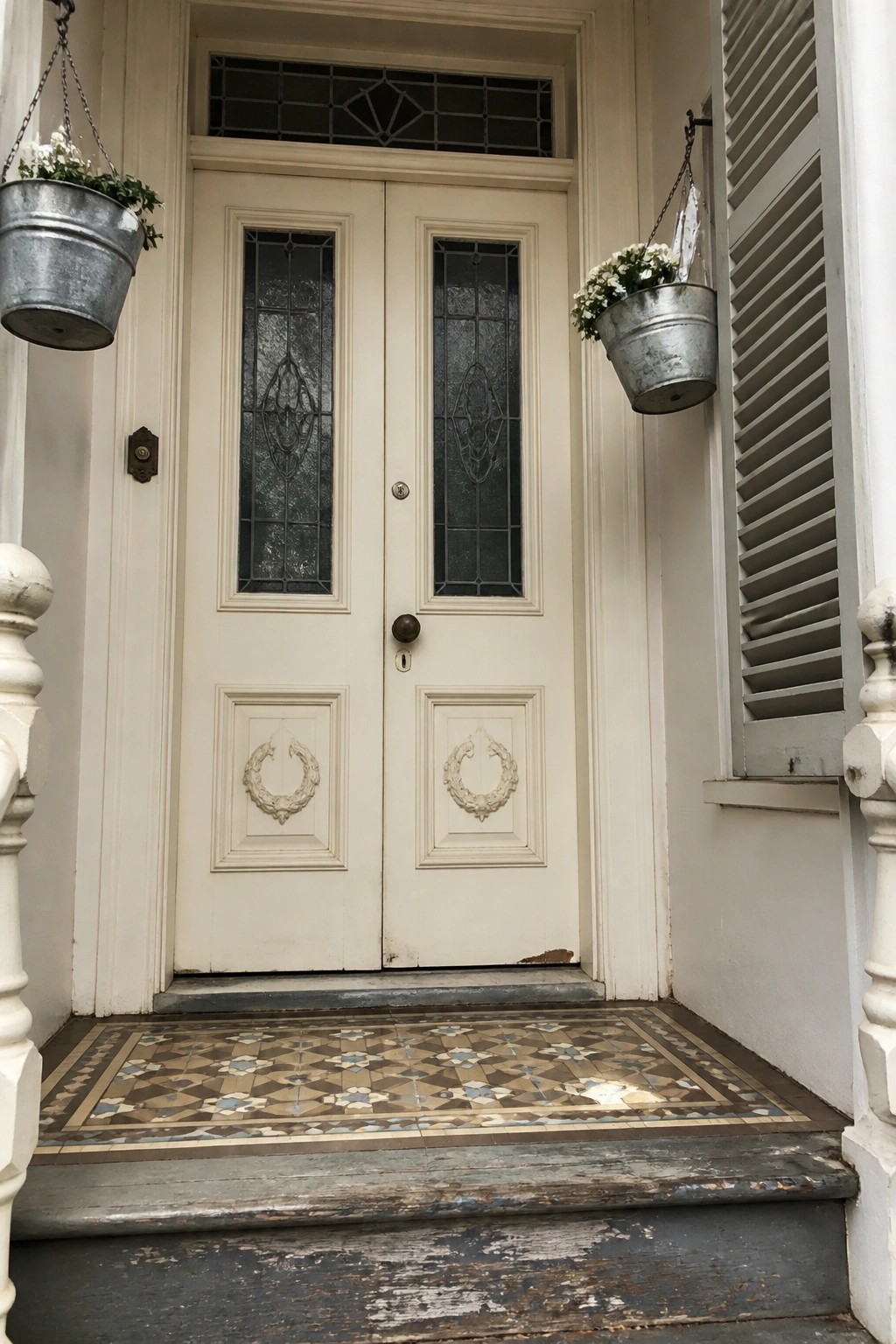
Many Victorian homes use hanging planters on either side of the double doors to add balance without taking up floor space. The buckets sit at a height that draws the eye upward and keeps the entry feeling open.
This works best on porches with limited width or where you want a bit of greenery that does not block the doors. Metal buckets on chains hold up well outdoors and can be swapped with different plants through the seasons.
White Columns Frame the Entry
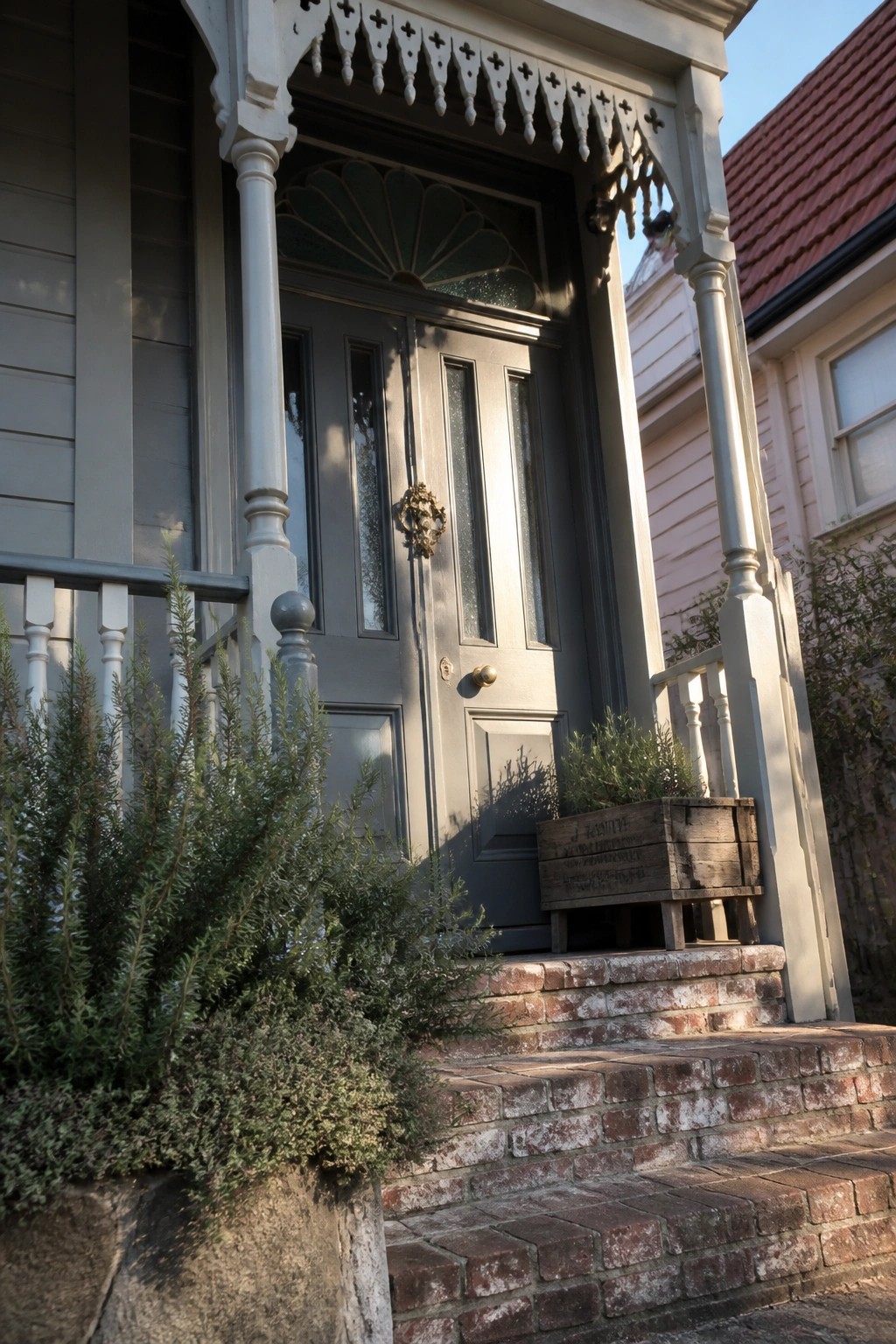
White columns and trim give the door a clear border that makes the whole entry feel more defined. The light paint stands out against the darker siding and door, so the porch reads as a separate space even from the street.
This works best on Victorian homes where the original woodwork is still in place or can be restored. Keep the columns simple in profile and match the scale to the height of the porch so the effect stays balanced rather than busy.
Gable a Porch Over Double Doors

A small gabled porch gives double doors a clear focal point without extra ornament. The roof shape adds height and shelter while keeping the look simple and balanced.
This approach works best on Victorian homes that already use similar roof forms. Hang lanterns on either side of the doors so the entry stays visible after dark, and let the doors themselves carry most of the color and detail.
Painting Double Doors a Bold Color

A warm color on double doors gives the whole front of the house a clearer focus. The yellow here stands out against the darker trim and makes the entry feel more open without needing extra details or fixtures.
This works best on older homes with a centered doorway and simple trim. Choose a color that holds up in direct sun and test a small patch first so it still looks right next to the existing paint.
Frame Double Doors With a Pointed Arch
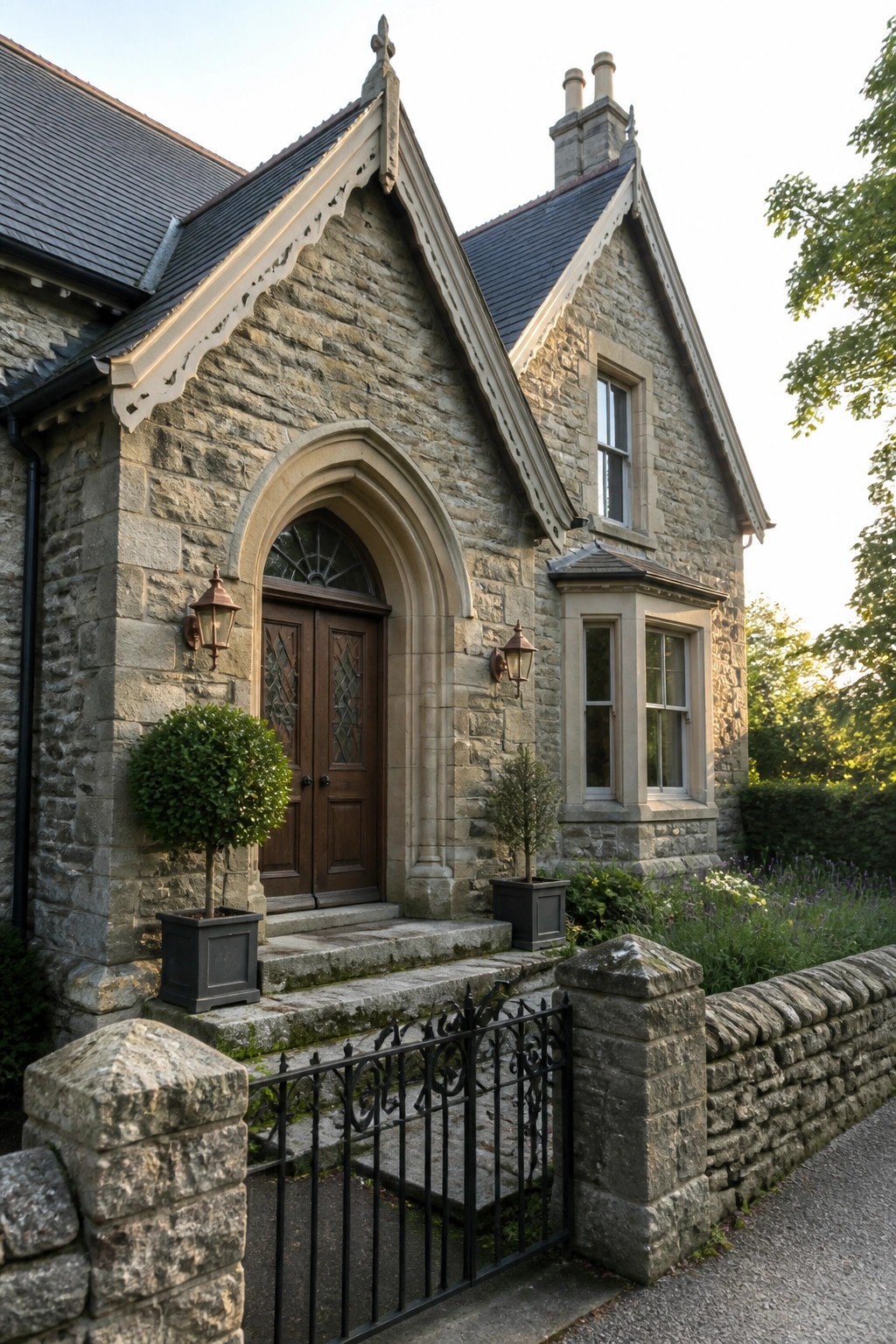
A pointed arch over double doors gives a Victorian entry real presence. It draws the eye straight to the doors and adds that classic shape without needing much else.
This works best on stone homes where the arch can be built right into the facade. Keep the doors simple and dark so the stone does the main work. Avoid adding too many extra details around it or the clean line gets lost.
Black Double Doors Against White Trim
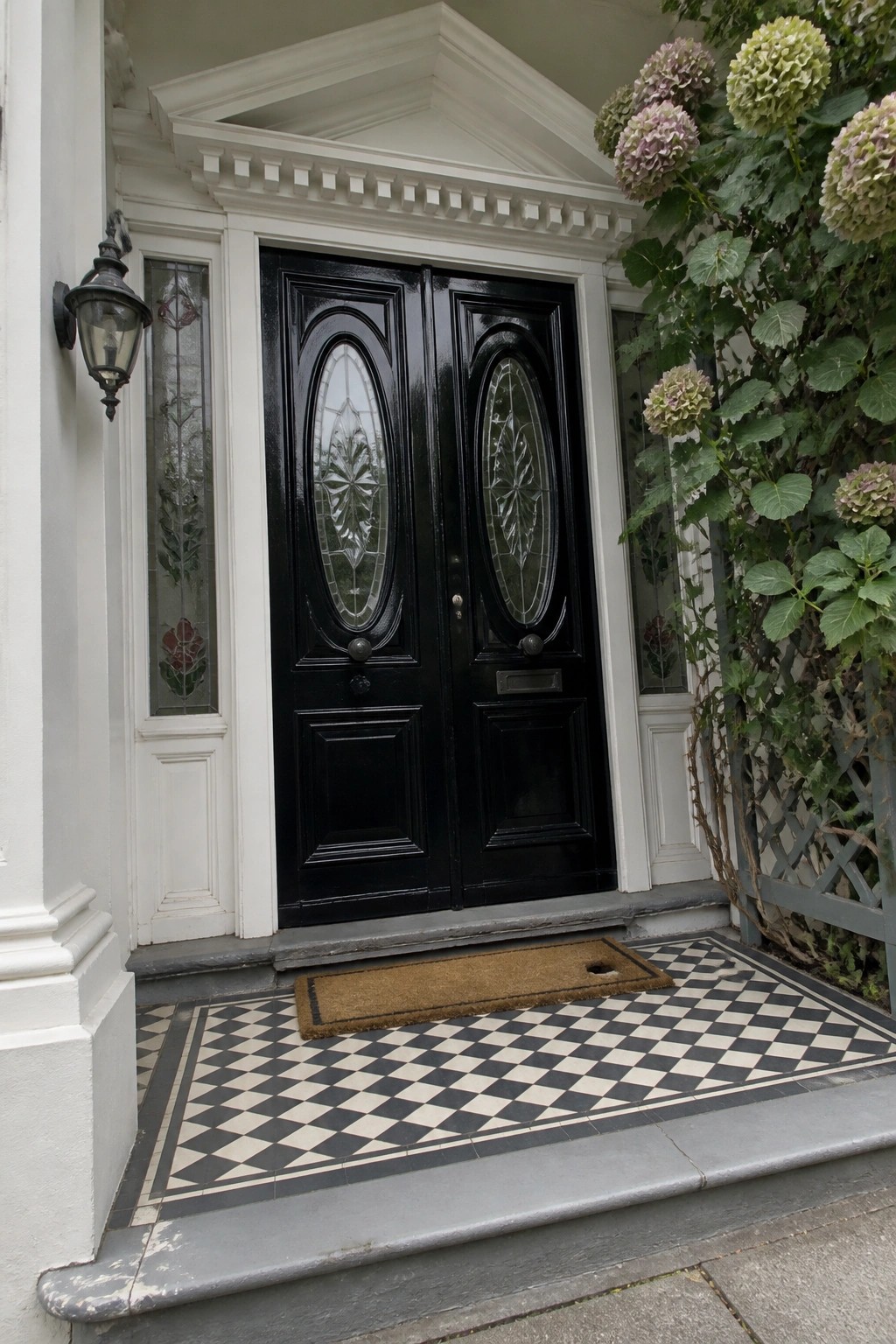
Many Victorian homes lean on black double doors to give the entry a clear focal point. The dark finish stands out sharply against white trim and siding, which keeps the whole front looking neat and balanced.
This approach suits homes with light colored facades and works best when the doors include some glass so light can pass through. Avoid it if your trim is already dark, since the contrast would disappear.
Using a Bold Color on Double Doors

Painting double doors a deep red gives the entry a clear focal point against stone walls. The color stands out right away and makes the whole front feel more welcoming without needing extra trim or details.
This works best on masonry homes where the doors can contrast with the gray tones. Choose a color with some warmth so it still reads well in shade, and keep hardware simple so the doors stay the main feature.
Frame Double Doors With Matching Lanterns

Many Victorian homes use a pair of lanterns to balance double doors and make the entry feel more intentional. The lanterns sit at the same height on each side, which keeps the whole doorway from looking lopsided.
This works best on brick or stone facades where the doors already have some trim or columns. Keep the lanterns simple in shape and finish so they support the doors instead of competing with them.
Painting Double Doors A Bold Color
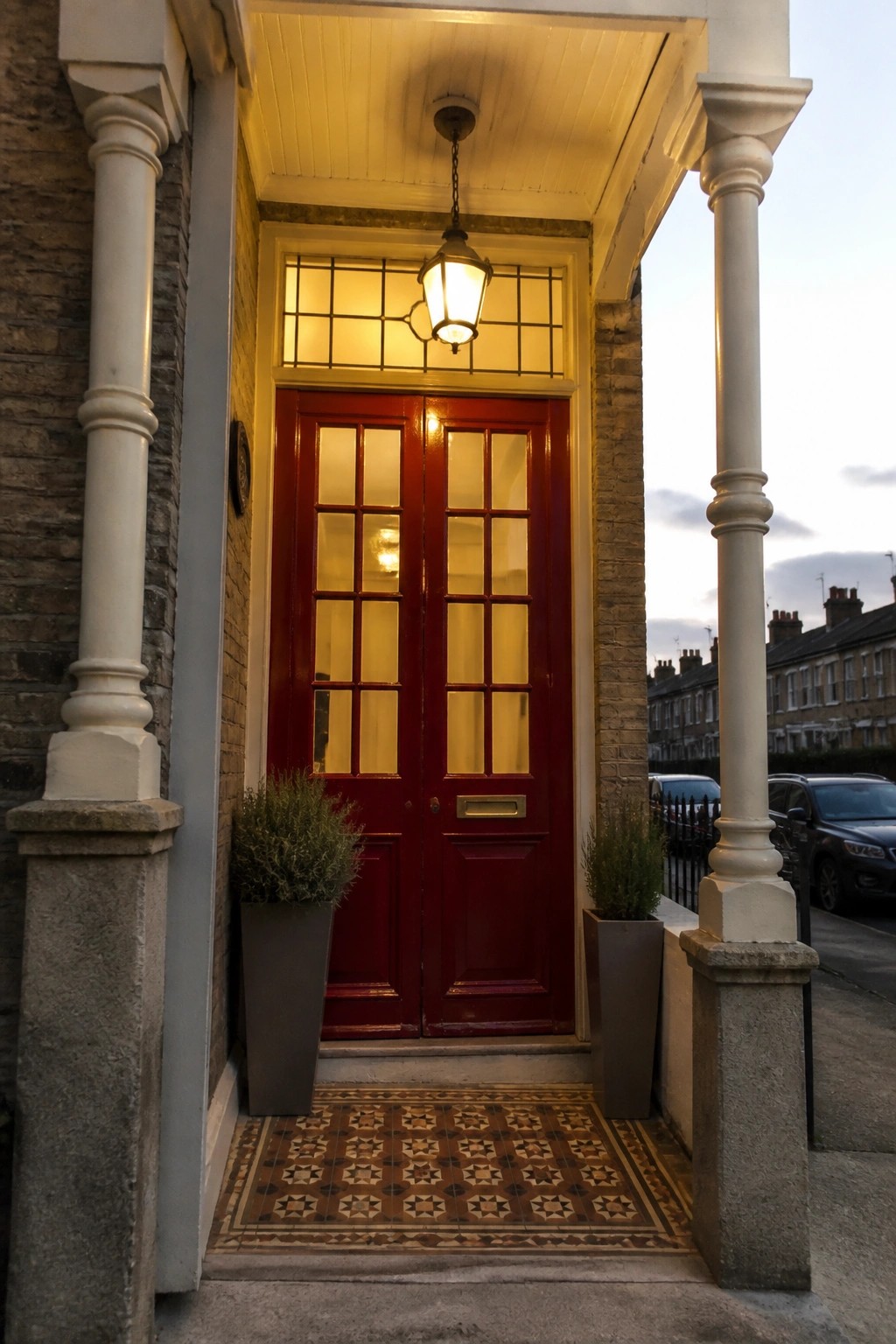
A strong color on double doors can turn a simple entry into the main feature of the front of the house. The red here stands out cleanly against the stone and brick, and it gives the whole porch a more finished look without needing extra trim or details.
This approach works best on Victorian homes that already have some architectural weight, like columns or a covered porch. Keep the surrounding elements fairly neutral so the doors stay the focus, and test the paint in different lights before committing.
Frame Double Doors With a Rose Arch

A rose-covered arch makes a simple but effective addition to a Victorian entry with double doors. It softens the brick and white trim while guiding visitors straight to the doors. The light color on the doors stands out more when framed this way.
This works best on homes that already have a clear path to the entrance. Keep the arch structure fairly light so it does not overpower the doors, and choose a rose variety that blooms over a long season.
Painting Double Doors and Trim the Same Color
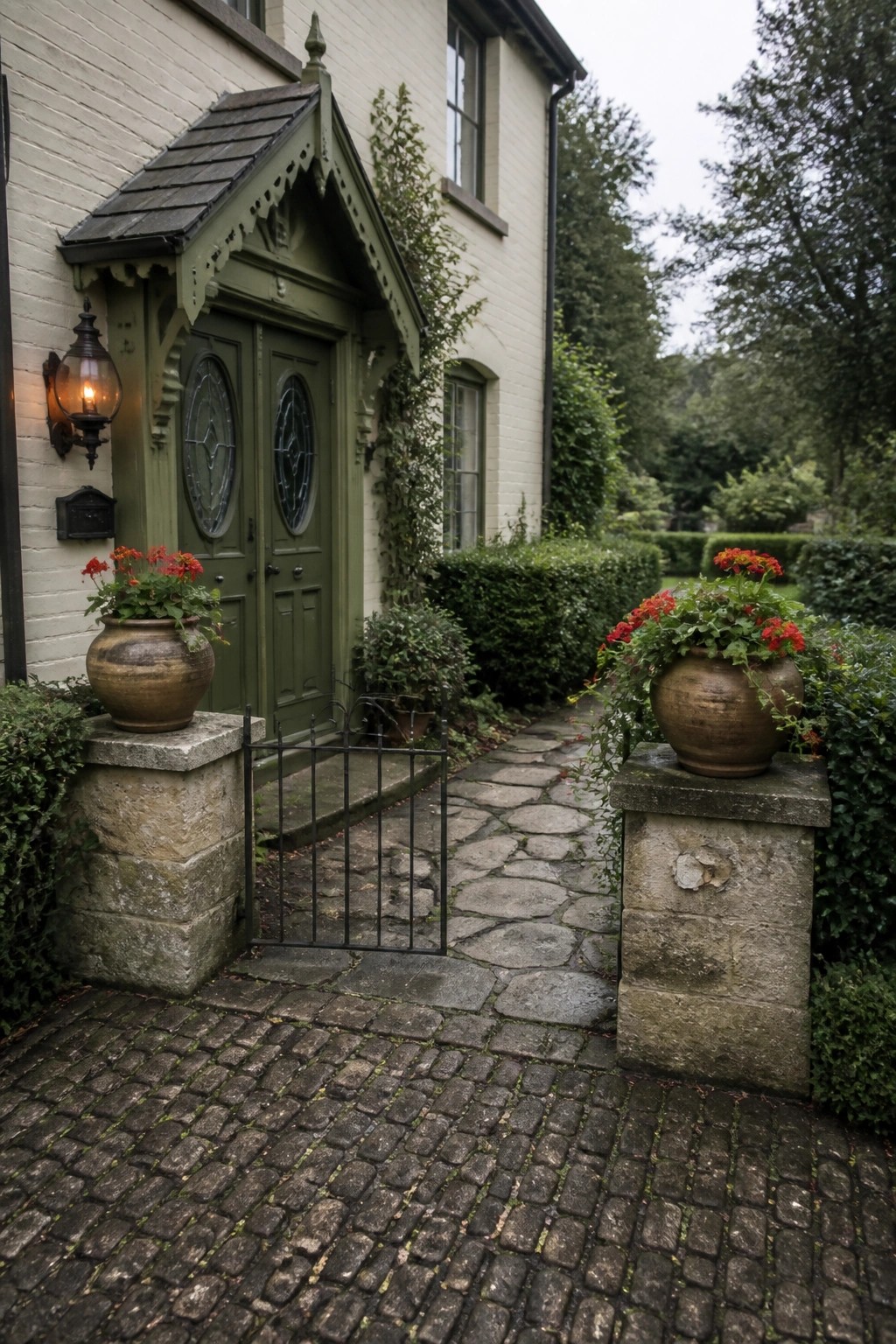
Many Victorian homes use the same paint color on the double doors and the small porch structure above them. This choice pulls the entry together and makes the doors the clear focal point against a lighter wall. The deep green here works especially well because it feels traditional without needing extra ornament.
The approach suits homes with modest porches or simple facades that still want a strong entry. Keep the color rich but not too dark if your house sits in shade most of the day, and test the shade on both wood and any metal hardware first.
Frequently Asked Questions
Q: My entryway feels small. Will double doors make it look even tighter?
A: Scale the doors to fit the space by choosing narrower panels. Add sidelights only if they don’t crowd the walls. This keeps the flow open and inviting.
Q: What finish works best if the doors face direct sun?
A: Go with a lighter stain to reflect heat. It also shows off the grain without darkening too fast. Repaint the edges every few seasons to block moisture.
Q: How do I match the doors to my existing hardware style?
A: Pick simple brass knobs and hinges with subtle Victorian curves. Test them against your current fixtures first.