When I step into a beach house living room the art on the walls tends to shape how the whole space feels once the light shifts and the furniture settles in.
Nautical pieces help most when they echo the faded tones and textures already in the room rather than competing with the view outside.
Over time I have noticed that a single large print can anchor a seating area better than several smaller ones scattered around.
Scale changes everything.
I usually test a few arrangements with tape on the wall first to see how they hold up once the room is actually in use.
Group Nautical Maps and Prints Together
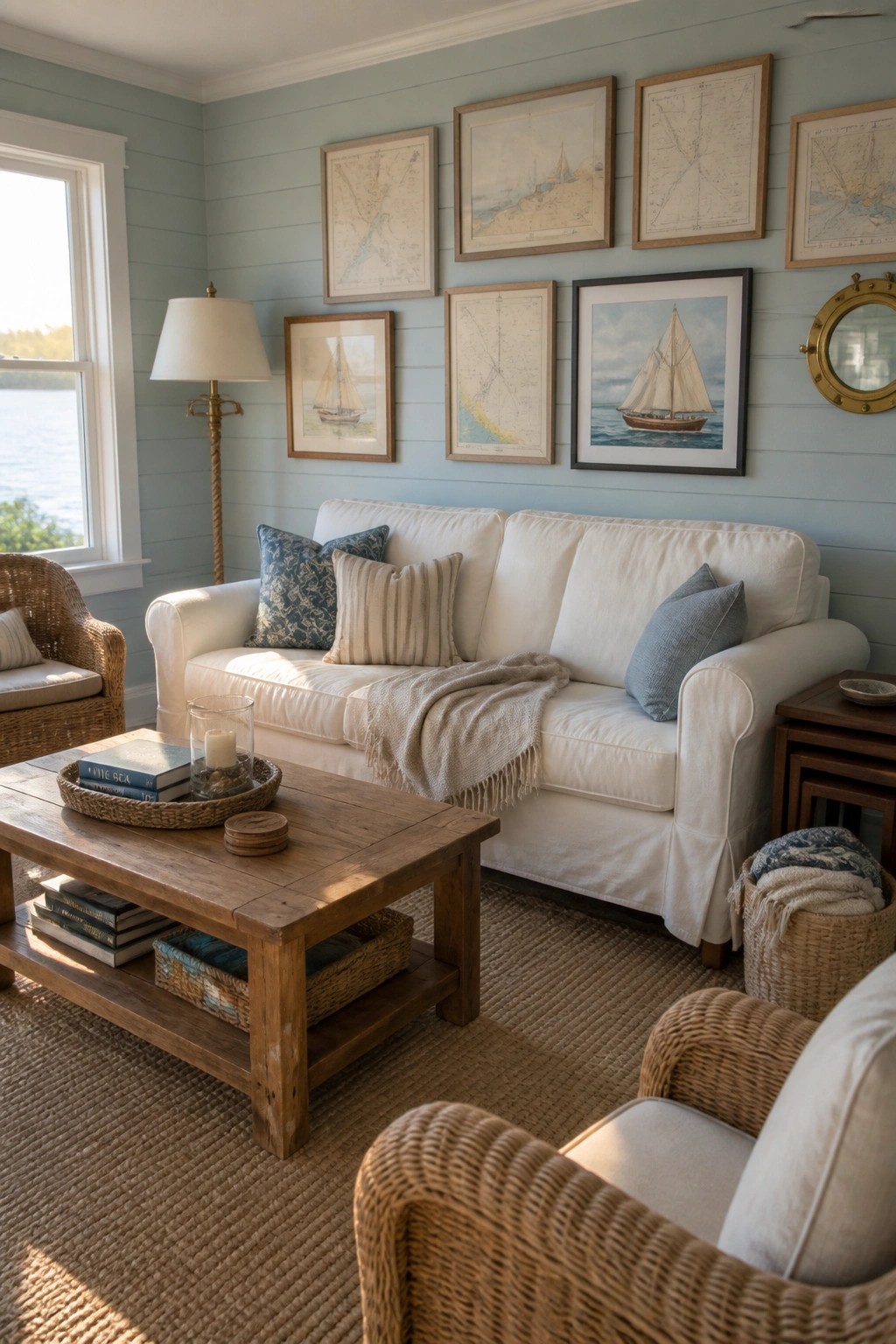
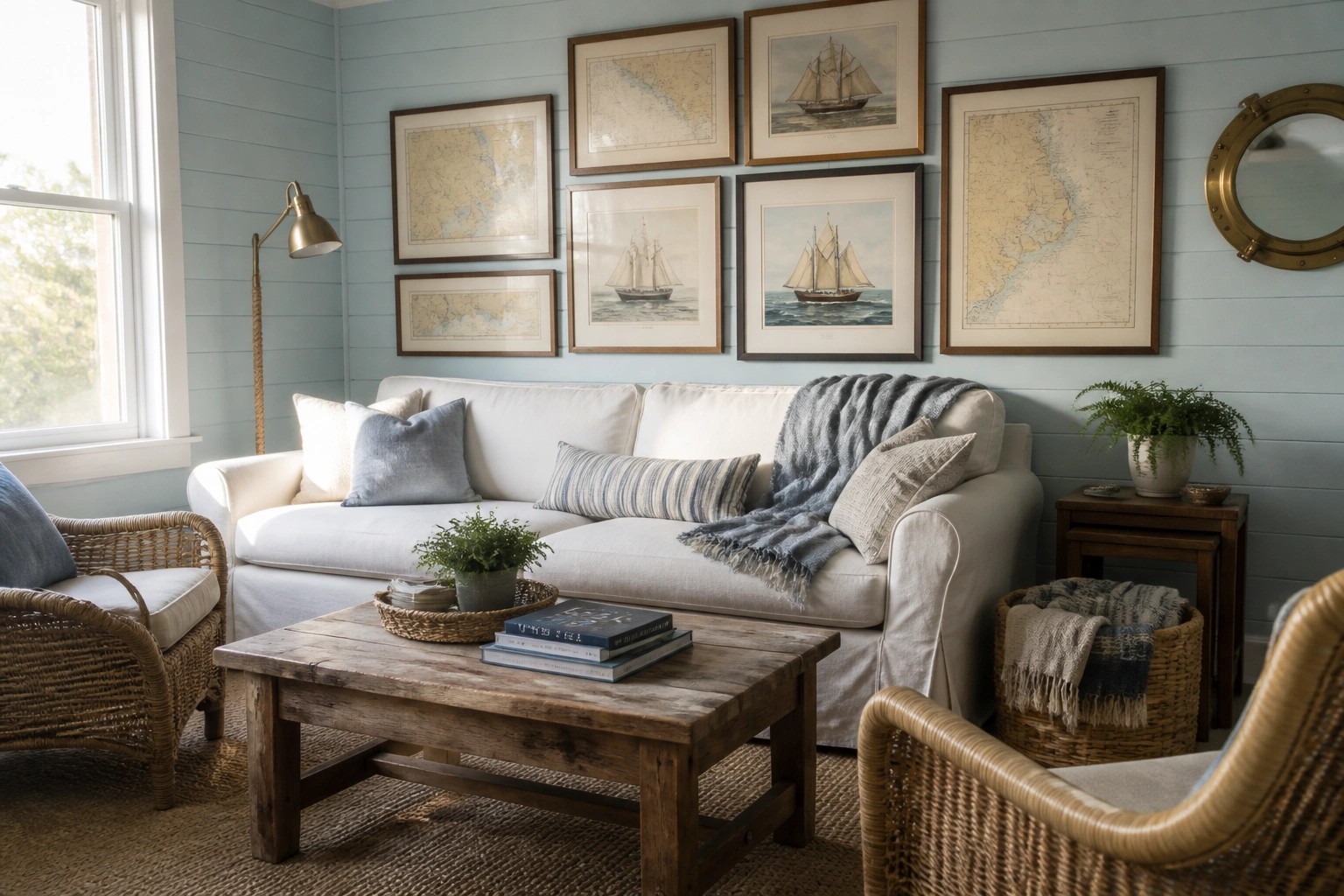
Filling a wall with nautical maps and sailboat prints gives a room a clear beach house direction without needing a lot of extra pieces. The matching subject matter pulls everything together even when the frames vary in size and style.
This works best in living rooms or sitting areas where the wall can stay mostly open. Start with a few larger maps in the middle and add smaller prints around them until the arrangement feels full but not crowded.
Let a Large Ocean Print Anchor the Bedroom

A big piece of nautical art above the bed gives the whole room a clear focal point without needing lots of extra pieces. In a beach house, it sets the tone right away and keeps the space feeling calm and connected to the water. The neutral bedding and simple walls let the art stand out instead of competing with too many patterns or colors.
This approach works best in rooms that already have a quiet palette. Keep the rest of the bedding and furniture fairly plain so the print has room to breathe. It suits smaller beach cottages especially well since one strong image can do more than a whole gallery wall.
Anchor a Bedroom With One Large Nautical Map

A single large nautical chart can do most of the work in a beach house bedroom. It sets a clear coastal tone and gives the room a finished look without filling every wall with smaller pieces.
Hang the map centered above the beds so it becomes the main point of interest. This approach works best in simple rooms with twin beds or a straightforward layout, and it leaves room for just a few supporting touches like striped bedding or a small model ship on a nearby dresser.
Nautical Prints Over Open Shelves

One easy way to add a coastal touch is to hang a small group of nautical prints above open kitchen shelves. The ship drawings and anchor motif give the wall a bit of character while the rest of the space stays fairly simple.
This approach works best in kitchens with white tile and wood shelves, since the art stands out without competing. It suits beach houses that want a light sea reference without turning the whole room into a theme. Keep the collection small so it feels collected rather than busy.
Built-In Shelving for Nautical Collections

Built-in shelving works well when you want to show off nautical pieces without making the room feel busy. It gives the collection a clear spot while keeping the rest of the space open and simple.
This setup suits dining rooms in beach houses where you already have some wall space next to a window or sideboard. Group similar items like plates or small objects together and leave a little breathing room so the display stays easy to look at.
Nautical Prints Over Entry Hooks

Many beach houses keep a row of hooks near the door for everyday coats and bags. Adding a small group of nautical prints above them gives the space a clear theme while keeping the area useful.
This setup works best in narrow entryways or mudrooms where you need storage but still want some decoration. Stick to matching frames and prints that share the same style so the wall stays simple rather than busy.
Nautical Prints in the Bathroom
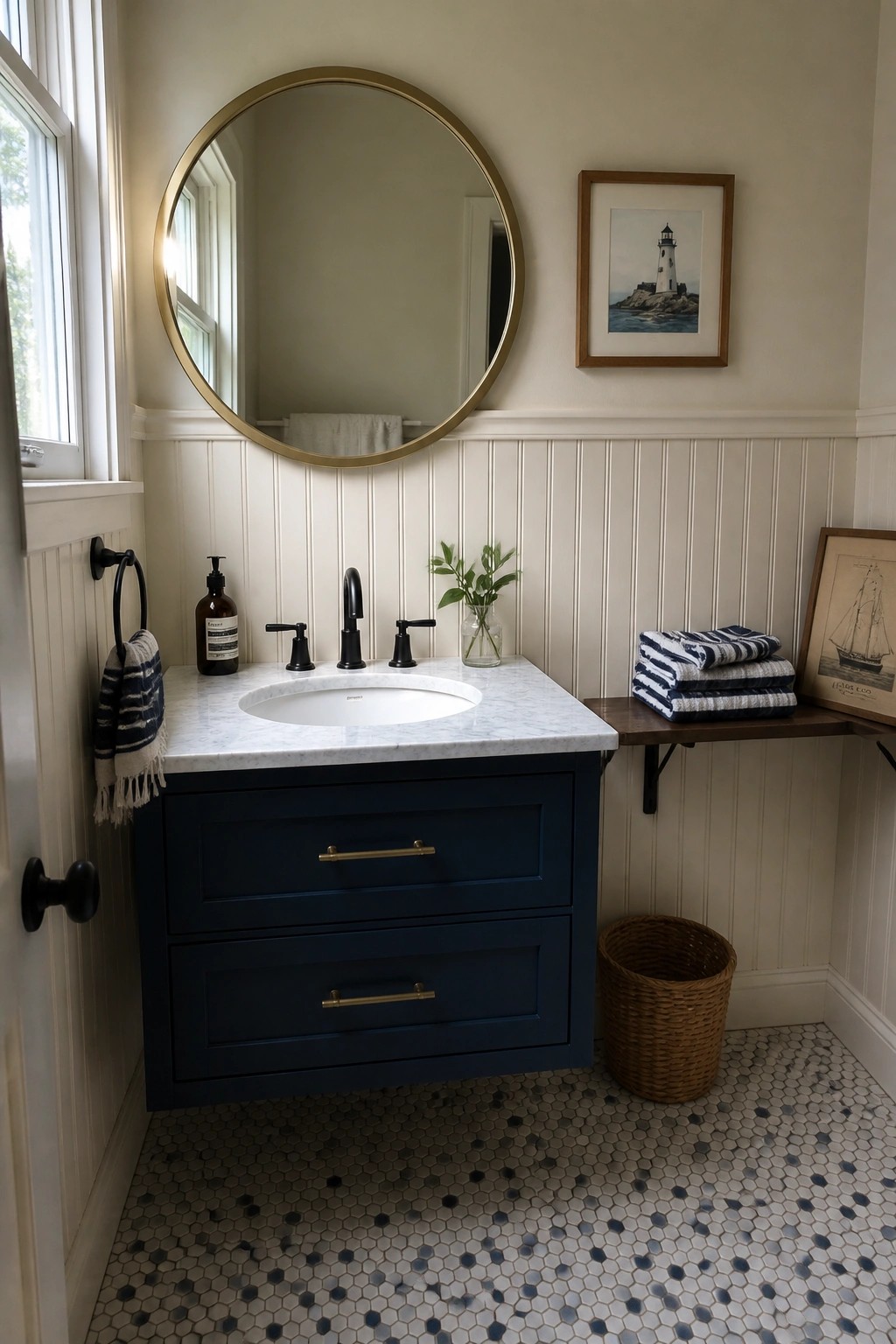
Nautical prints give a bathroom an easy beach house feel without much effort. Two small framed pieces, one showing a lighthouse and the other a ship, sit above the vanity and add just enough character to tie the room together. The simple frames and light subjects keep the look calm rather than busy.
This approach works best in smaller rooms where you want a hint of the coast but still need the space to feel open. Hang similar prints on beadboard or painted walls at eye level so they read as quiet accents rather than a full theme. Stick to one or two pieces so the art stays secondary to the rest of the room.
Gallery Walls With Nautical Charts

A large nautical chart can anchor a simple gallery wall in a home office. The mix of one big map with smaller ship prints keeps the look focused and gives the space a quiet purpose without adding clutter.
This setup works well in smaller rooms that double as workspaces. Keep the frames consistent and limit the number of pieces so the wall stays readable from across the room.
Soft Nautical Wallpaper in a Nursery
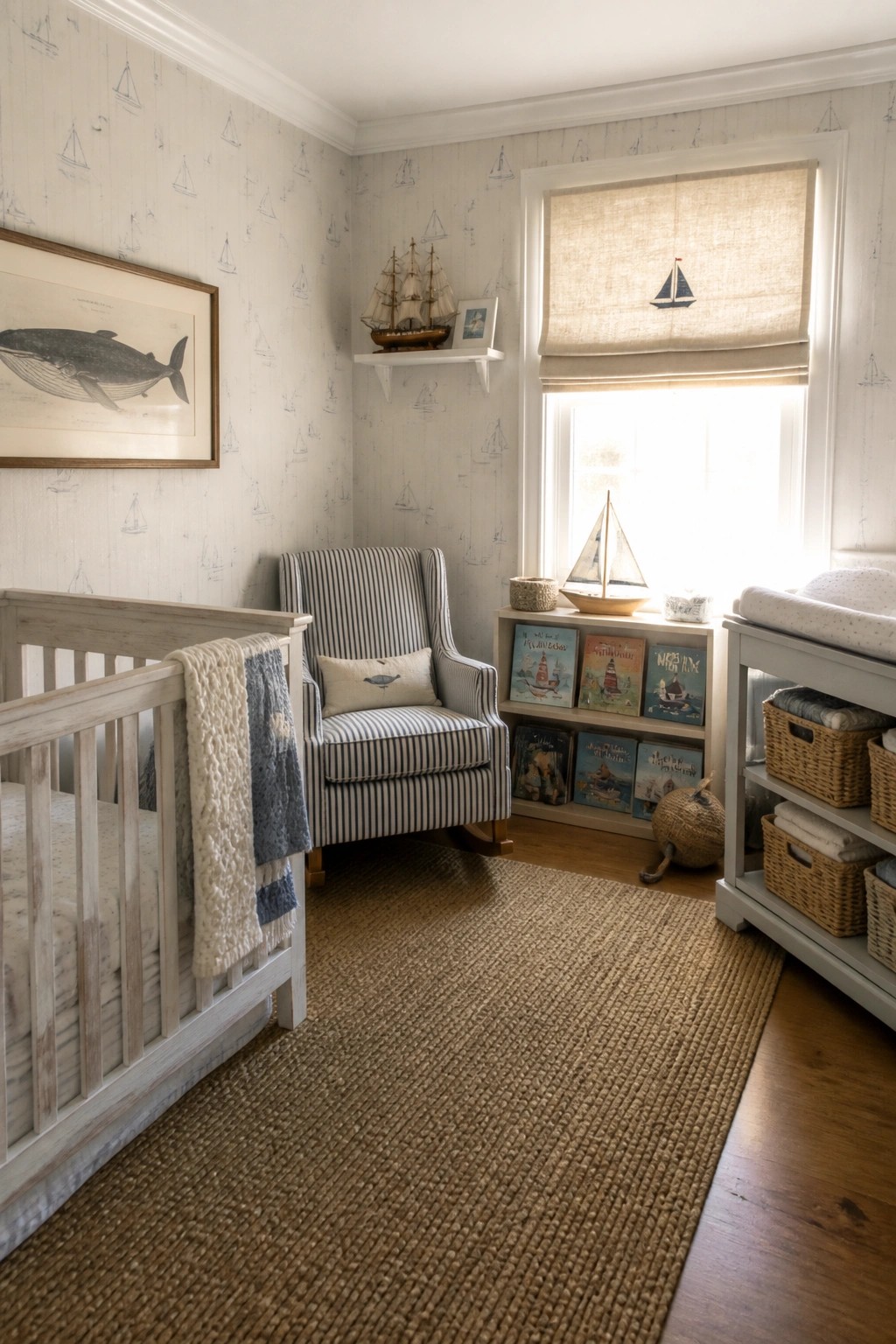
A light repeating pattern on the walls can set a gentle nautical tone in a child’s room without making it feel busy or too themed. The small sailboat print adds just enough interest while the pale background keeps the space calm and easy to build on.
This works best in rooms that already have simple furniture and natural light. Keep the rest of the decor light too, and add only a few pieces like a framed print or a couple of model boats so the pattern stays the main quiet detail.
Nautical Prints In The Laundry Room

A framed vintage-style sign can give a laundry room the same coastal feel as the rest of a beach house. It turns a plain utility space into something that feels connected to the rest of the home without adding much clutter or extra cost.
Place one larger piece above the machines or near a window where it can be seen from the doorway. This works best in smaller rooms that already have simple cabinetry and light walls. Keep the frame style simple so the print stays the main focus.
Large Nautical Charts Over Built-In Seating

One simple way to anchor a beach house corner is to hang a single large nautical chart above a built-in bench. The scale of the piece gives the spot weight and keeps the rest of the styling light.
This approach works best in smaller or oddly shaped rooms where you want one strong focal point instead of many small items. Keep the frame simple and the bench cushions in soft solids so the chart remains the main feature.
Hang Nautical Prints in a Gallery Wall

A gallery wall works especially well when the prints share a clear theme like boats and old charts. The mix of sizes and subjects keeps the arrangement from looking too stiff while still feeling connected. Dark frames help the lighter artwork stand out against a pale wall without needing extra color.
This approach suits a hallway or stair landing in a beach house where you want some visual interest but not a lot of furniture. Stick to similar frame styles and leave a bit of space between pieces so the wall does not feel crowded. It also gives you room to add or swap prints later without redoing the whole layout.
Blue Tile In The Shower

Light blue tile on the shower walls gives a bathroom that calm, water-inspired look many beach houses need. It feels fresh without trying too hard, and the color stays soft enough to work with simple white walls and wood accents.
This choice works well in smaller baths where you want the space to feel open and clean. Keep the rest of the room light so the tile can set the tone without competing with extra patterns or heavy decor.
Nautical Art Gives Bunk Rooms A Finished Look

Nautical prints work especially well in spaces with built-in bunks because they add interest without taking up floor room. A couple of framed ship images placed between the beds help tie the whole setup together and keep the theme consistent from top to bottom.
This approach suits beach houses or any home that needs a simple, kid-friendly look. Keep the prints small and similar in style, then add one or two matching pillows so the art feels like part of the bedding rather than something separate.
Nautical Prints in the Pantry

Small framed prints can give a pantry or utility space a light beach house feel without crowding the shelves. The fish illustration tucked between jars and baskets adds just enough character while the rest of the room stays practical and organized.
This works best in homes that already lean coastal, where you want the theme carried through every room. Keep the frames simple and the prints modest in size so they sit comfortably next to everyday items rather than competing with them.
Framing Tide Tables as Wall Art

One simple way to use nautical art in a beach house is to frame a large tide table or coastal chart and hang it where it can be seen every day. It gives the room a clear theme without adding clutter or extra pieces that might not fit the space.
This approach works especially well in a craft room or home office where the chart can serve as both decoration and reference. Pick a print sized to the wall and keep the surrounding surfaces fairly open so the art stays the main focus.
Frame Nautical Signal Flags Over a Mudroom Bench
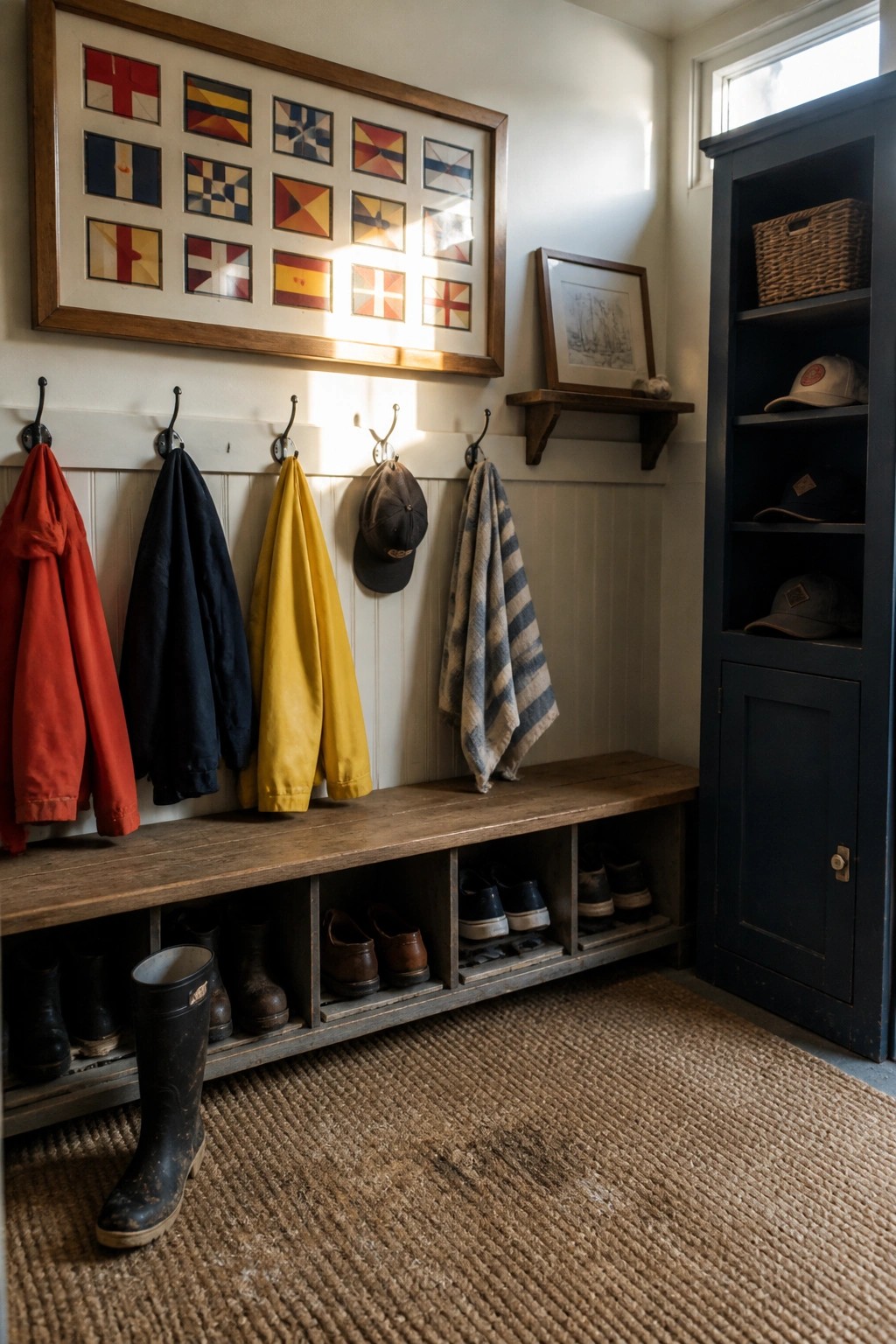
Many beach houses need a spot near the door for coats, boots, and bags, and a simple bench with hooks above it handles that job well. Adding a large framed set of signal flags turns the wall into something more interesting while keeping everything else straightforward.
This works best in homes that already have some wood tones and a casual feel. Keep the frame size big enough to cover the hooks so the flags become the main visual without competing with everyday items.
Open Shelving For A Compact Bar

Tucking a bar into a recessed spot with open wooden shelves keeps things practical in a smaller beach house. The shelves give you room to store and display glasses without needing a full room, and the setup stays easy to reach during gatherings.
A single nautical chart hung above the counter ties the area to the coastal setting without adding clutter. This works best in homes where you want light storage that feels built for everyday use rather than formal entertaining.
Using Nautical Art To Anchor A Room

A large piece of nautical art can pull a whole room together without much extra effort. In this setup the seascape painting sits right above the dresser and gives the space its main direction while everything else stays fairly simple.
This approach works best in beach houses where you want the coastal feel to come through clearly but not feel forced. Keep the frame size generous, hang it at eye level over a solid piece of furniture, and let the rest of the room stay quiet so the art stays the focus.
Frequently Asked Questions
Q: Where should I hang the main nautical piece in a small beach house living room?
A: Place it on the wall facing the main seating area so it draws the eye right when you walk in. Keep the piece at eye level and leave some empty space around it to avoid crowding the room.
Q: How do I mix a few different nautical prints without the wall feeling messy?
A: Group them by similar frame colors and hang them in a loose cluster rather than a perfect grid. Stick to three or four pieces total so the art stays the focus instead of turning into clutter.
Q: What if the art starts to fade from all the sunlight?
A: Rotate the pieces every few months so no single one takes the full hit. Move the brightest prints to shadier spots and let softer ones handle the direct light.