Many coastal interiors end up looking washed out because the neutrals stay too cool against the bright light.
Switching to warmer tones changes how the whole room settles into the day.
Texture makes the difference.
I like to see how the colors sit next to existing wood tones before painting an entire wall.
Small adjustments in the palette can shift whether a room feels like a place you want to stay in or just pass through.
Adding Warmth With Natural Wood in Neutral Rooms
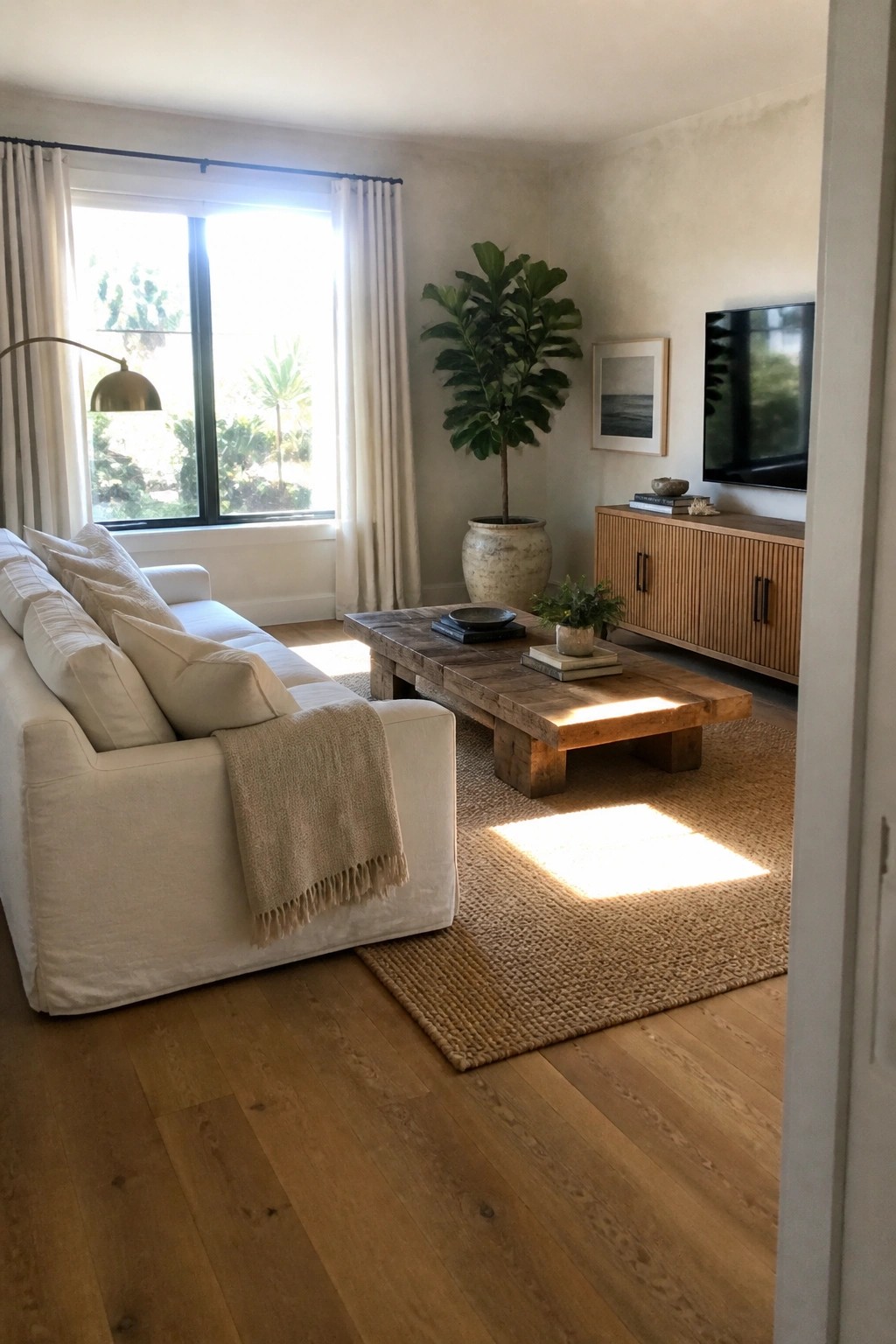
A low wooden coffee table paired with a large white sectional keeps the room from feeling too stark. The wood tones tie into the floors and bring a bit of weight that helps the neutral palette feel settled rather than empty.
This works best in coastal homes that get strong natural light. Keep the wood finish simple and let it contrast with lighter textiles so the space stays bright but still feels comfortable to use every day.
Using Warm Neutrals in Coastal Bedrooms

Many coastal bedrooms feel calmer when the whole space stays in one warm neutral range. The bedding, walls, rug, and wood tones all sit together without any sharp contrast, which keeps the room feeling soft and connected to the light outside.
This works especially well in smaller bedrooms or guest rooms where you want things to feel simple and easy to maintain. Choose linen or cotton fabrics and a few wood pieces to add texture while keeping the overall look quiet and restful.
Woven Stools In Neutral Kitchens
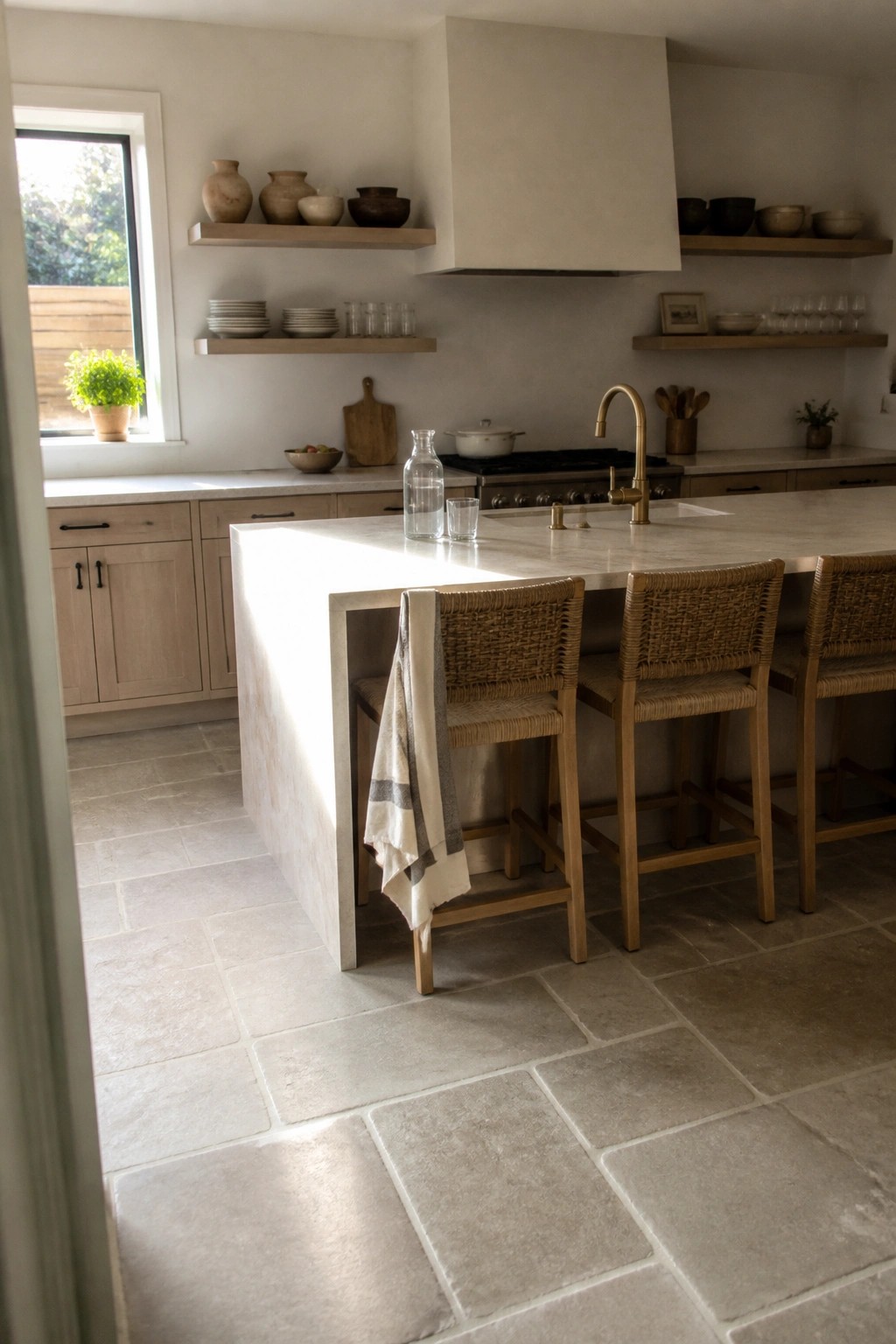
Woven bar stools add texture to a kitchen that stays mostly neutral. The natural fiber keeps the space from feeling too flat or cold while the light wood and stone surfaces stay in the same warm range.
This approach suits open kitchens that need seating without extra color or pattern. It works best when the wood tones on the stools match the cabinets so everything feels connected rather than scattered.
Warm Wood Vanities With Neutral Stone

Many bathrooms feel more inviting when the vanity uses light natural wood instead of painted cabinets. The wood adds subtle warmth that pairs easily with the soft beige tones on the counters and walls.
This approach suits homes that want a coastal look without going too pale or stark. Keep the surrounding tile and flooring in the same warm neutral range so the wood reads as part of the whole space rather than a separate accent.
Built-In Bench Seating For Dining Rooms

A built-in bench along one side of the dining table gives the room a relaxed layout that fits more people without crowding the space. It works especially well with a round table because the curved edge leaves room for movement on the open sides.
This setup suits homes that want casual seating without a full set of matching chairs. Keep the bench cushions in the same neutral tones as the other seats so the mix feels intentional rather than mismatched.
Warm Neutral Entries With Natural Textures

A small entry feels more settled when the palette stays in soft wood tones and off-white shades instead of crisp white or cool grays. The console and bench both pick up the same warm beige, which keeps the space from looking busy even with the patterned floor and a few hanging items.
This approach works best in homes that already lean coastal but need a bit more weight so the rooms do not feel too light. Stick to one or two wood finishes, add a linen pillow or two, and keep extra color to a minimum.
Warm Neutrals in a Nursery

Many people choose a warm neutral palette for a nursery because it keeps the room calm and flexible as the child grows. The light wood pieces and textured rug add just enough natural warmth without making the space feel busy or overly themed.
This works especially well in homes that already use soft coastal tones throughout. Keep the materials simple, stick to a few wood finishes, and let the neutrals do most of the work.
Built-In Desks That Blend Into The Room
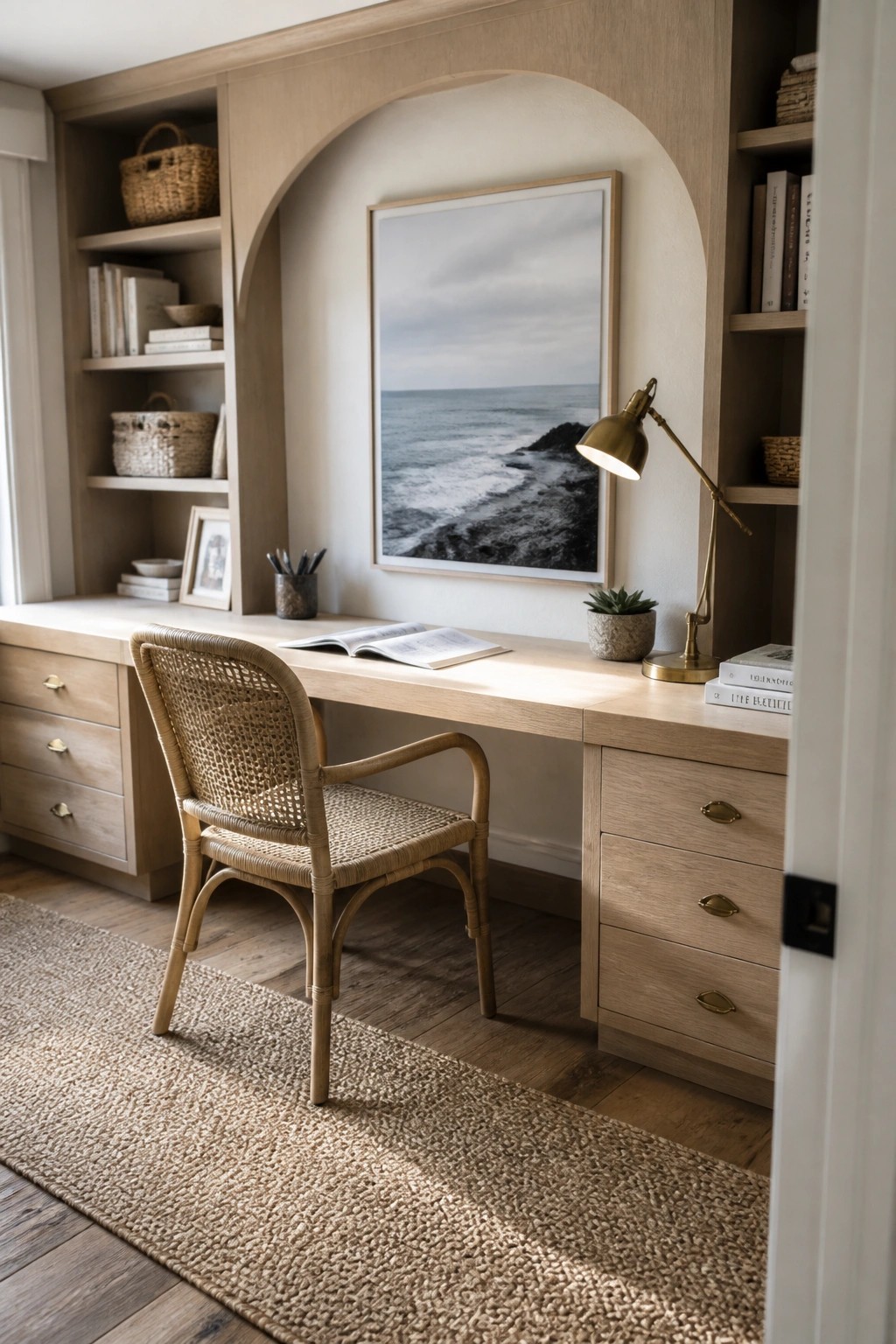
A built-in desk with matching shelves on both sides gives a workspace that feels permanent rather than added later. The light wood ties the whole area together and keeps the look calm instead of busy. It also adds storage without needing extra pieces of furniture.
This works best in homes that need a quiet spot but do not want a full office room. Keep the shelves from getting overcrowded and let the wood carry most of the warmth. It suits smaller or open spaces where everything needs to stay simple and connected.
Open Shelving Over Cabinetry For Everyday Access

Open shelving above lower cabinets gives you a place to keep towels and baskets within reach without making the room feel crowded. The soft green finish on the cabinetry keeps the whole setup feeling calm and tied to the rest of the house.
This works best in laundry rooms or utility spaces where you need frequent access to linens. Stick to a few warm neutral tones for the textiles and baskets so the shelves stay looking tidy instead of cluttered.
Built-In Window Seats For Everyday Comfort

A built-in window seat gives you a quiet spot to sit without taking up extra floor space. The cushion sits right over a storage base, so blankets and books stay tucked away while the seat itself becomes the main feature in the room.
This works best in homes with good natural light and a simple neutral palette. Use the same warm fabric on the cushion and pillows so the whole area feels connected, and keep the surrounding shelves light so the seat does not feel heavy.
Warm Neutrals In Coastal Bedrooms
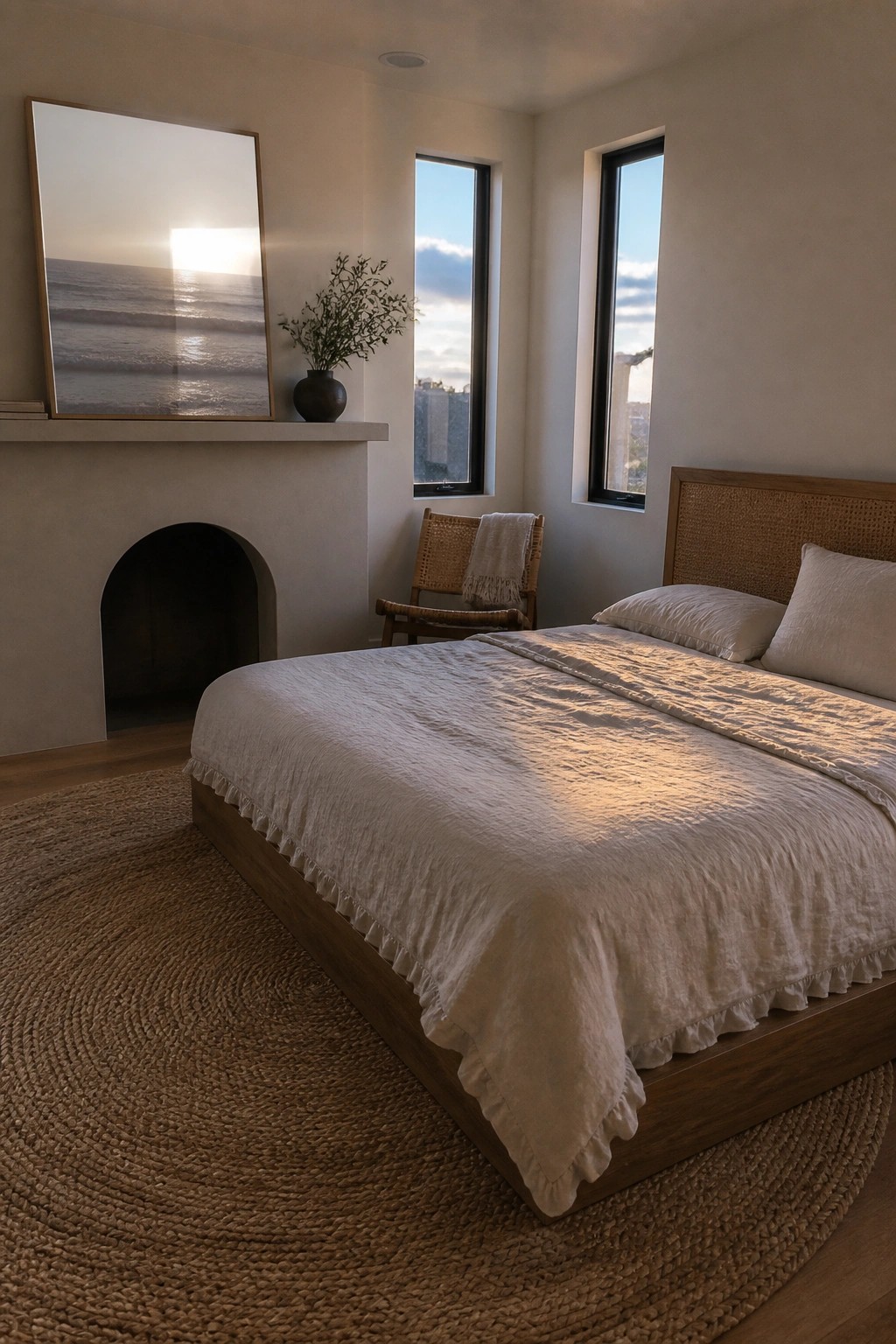
A warm neutral palette works well in coastal bedrooms because it avoids the chill that can come with cooler grays or stark whites. The mix of soft beige tones on the bedding and walls, paired with natural wood, keeps the space feeling calm and grounded even when the room gets strong daylight.
This approach suits homes near the coast that want a relaxed feel without looking too styled. Start with linen bedding and a simple wood bed frame, then layer in a textured rug and a few woven accents to add depth without clutter.
Floating Wood Vanities in Warm Neutral Bathrooms

A floating vanity in light wood gives a bathroom that clean coastal feel without making it look stark. The wood adds just enough warmth against the tile, and because nothing touches the floor, the space stays open and easy to clean.
This works best in smaller bathrooms where you want the room to feel bigger. Keep the wood tone soft and pair it with the same warm beige on both walls and floor so the whole palette stays calm and consistent.
Using Warm Neutrals For A Calm Living Room

A warm neutral palette keeps the main seating area feeling settled without much effort. When the sofa, walls, and larger textiles stay in the same soft range, the room reads as one piece instead of a mix of separate items.
This works best in homes that need light but still want some weight. Keep the biggest pieces in one tone family and let wood and woven textures add what is needed.
Built-In Seating For Casual Meals
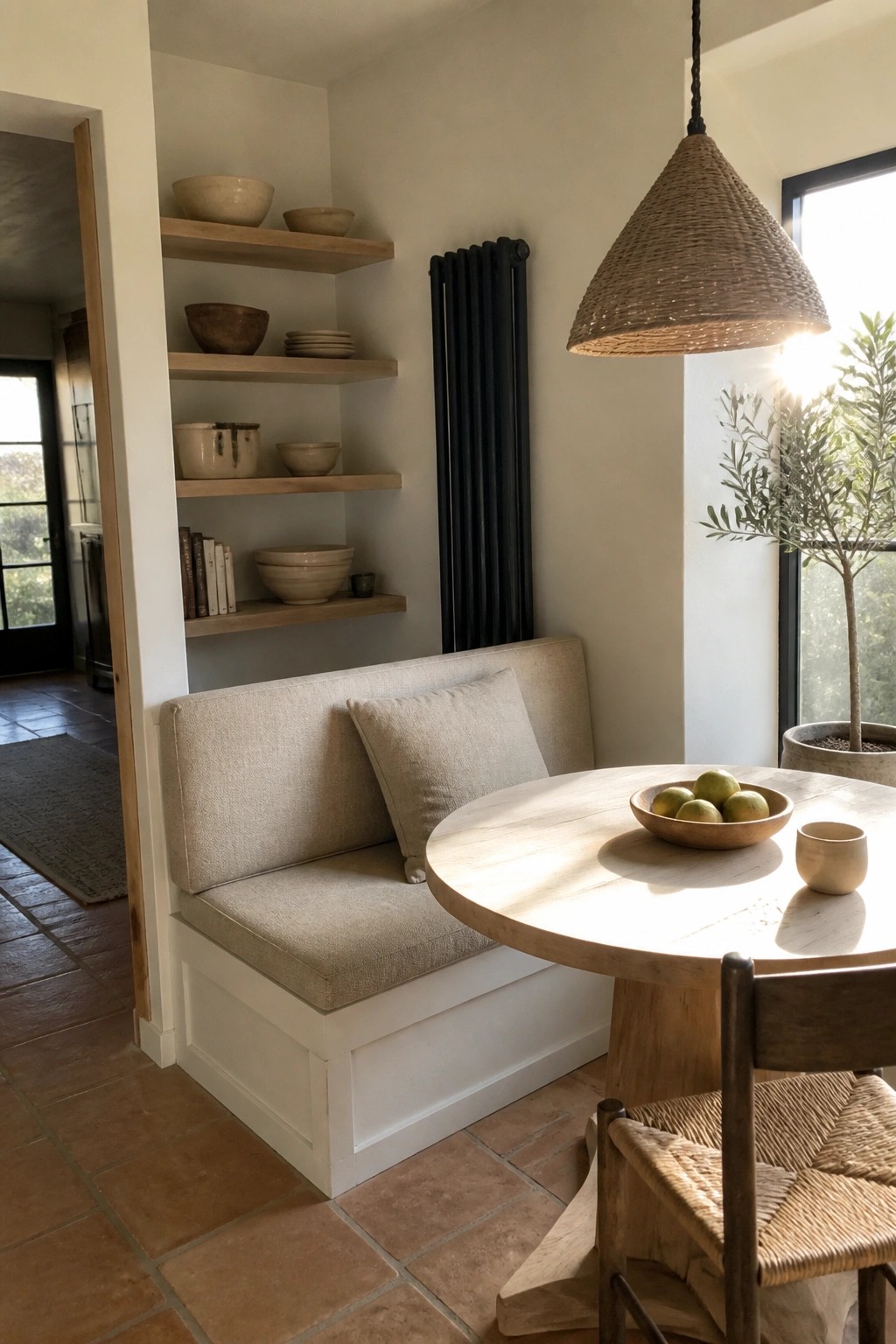
A built-in bench with a lift-up lid gives you seating and hidden storage in one move. It works especially well in smaller rooms where a full dining set would feel crowded. The light wood shelves above keep everyday dishes and bowls within reach without adding visual weight.
This setup suits coastal homes that want a relaxed feel without looking bare. Keep the cushions and walls in the same warm neutral range so the wood tones do most of the work. Avoid filling every shelf or the corner will start to feel busy.
Console Tables for Hallway Storage
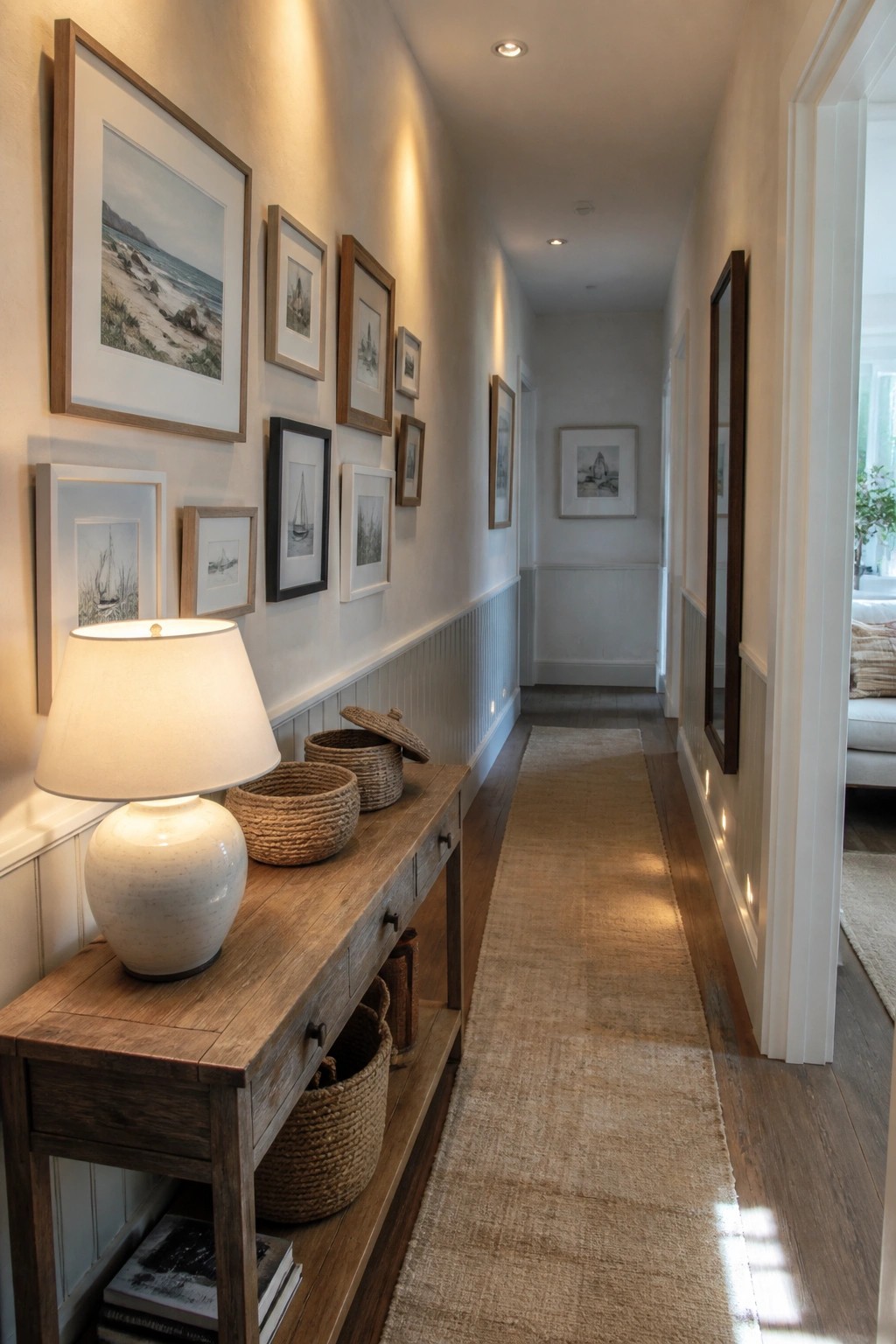
A console table gives a hallway a place to hold everyday items without crowding the walkway. The baskets tucked underneath and on top keep things organized while the wood surface adds a simple layer of warmth.
This setup works best in homes that already lean on neutral tones and natural textures. It suits narrow coastal hallways where you want storage but need the space to stay open and easy to walk through.
Built-In Shelving With Baskets
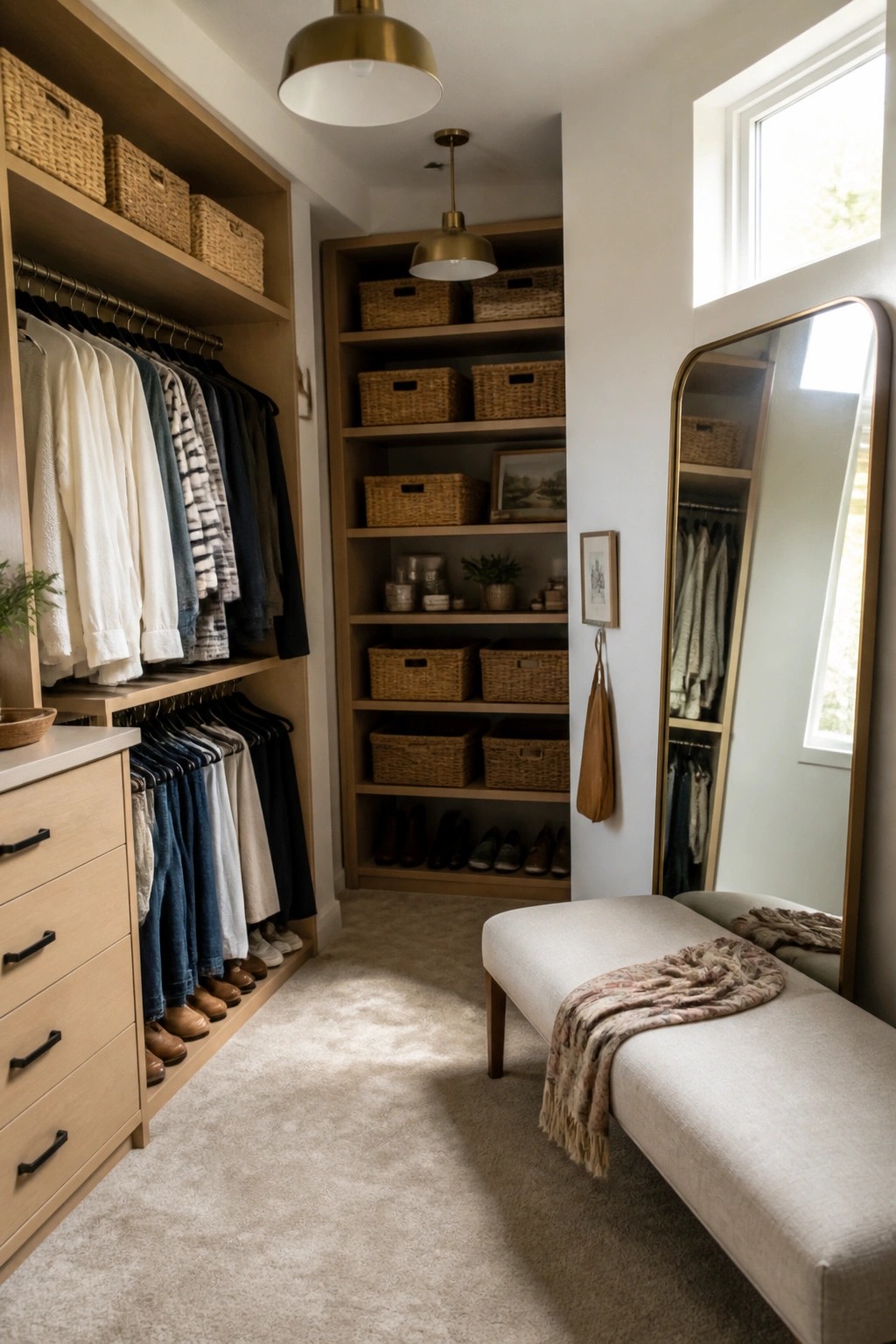
Open shelving in a closet works well when you add baskets to hold smaller items. It keeps everything visible and easy to reach while the baskets hide the mess and add a simple texture that fits a warm neutral palette.
This approach suits homes that want storage without feeling closed in. Match the wood tones to your floors and use the same basket style across the shelves so the space stays calm and practical to use every day.
Using a Mood Board Wall in a Neutral Workspace
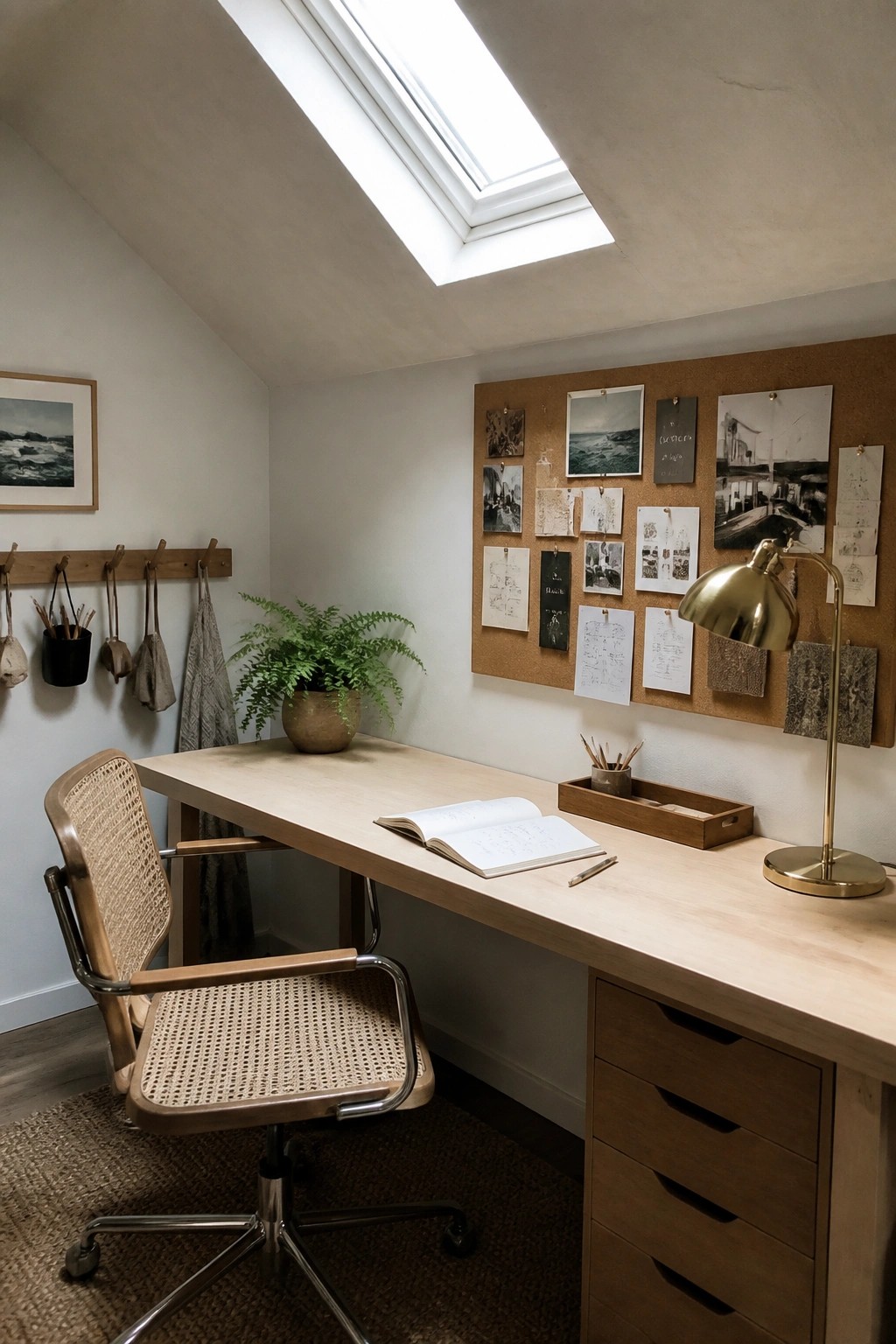
A mood board wall gives a workspace some personality without adding clutter or bold color. In this setup the corkboard sits right above the desk and holds a mix of photos, sketches, and notes that stay within the same soft, coastal palette as the rest of the room. The light wood desk and woven chair keep everything grounded and warm, so the pinned images feel like part of the space rather than something extra.
This approach works well in smaller rooms or under sloped ceilings where you want one focal point that can change over time. Keep the board fairly full but still balanced with plenty of white space, and stick to papers and images in similar tones so the overall look stays calm. It suits homes that lean coastal or modern without feeling overly styled.
Built-In Benches With Basket Storage

Many entryways collect clutter quickly from shoes, bags, and outerwear. A bench with open cubbies below lets you tuck things into baskets so the space stays usable without extra pieces of furniture.
This works best in smaller homes or coastal interiors where you want natural textures but still need daily function. The baskets keep items contained while the bench itself gives a spot to sit and remove shoes.
Terracotta Flooring In A Light Neutral Bath
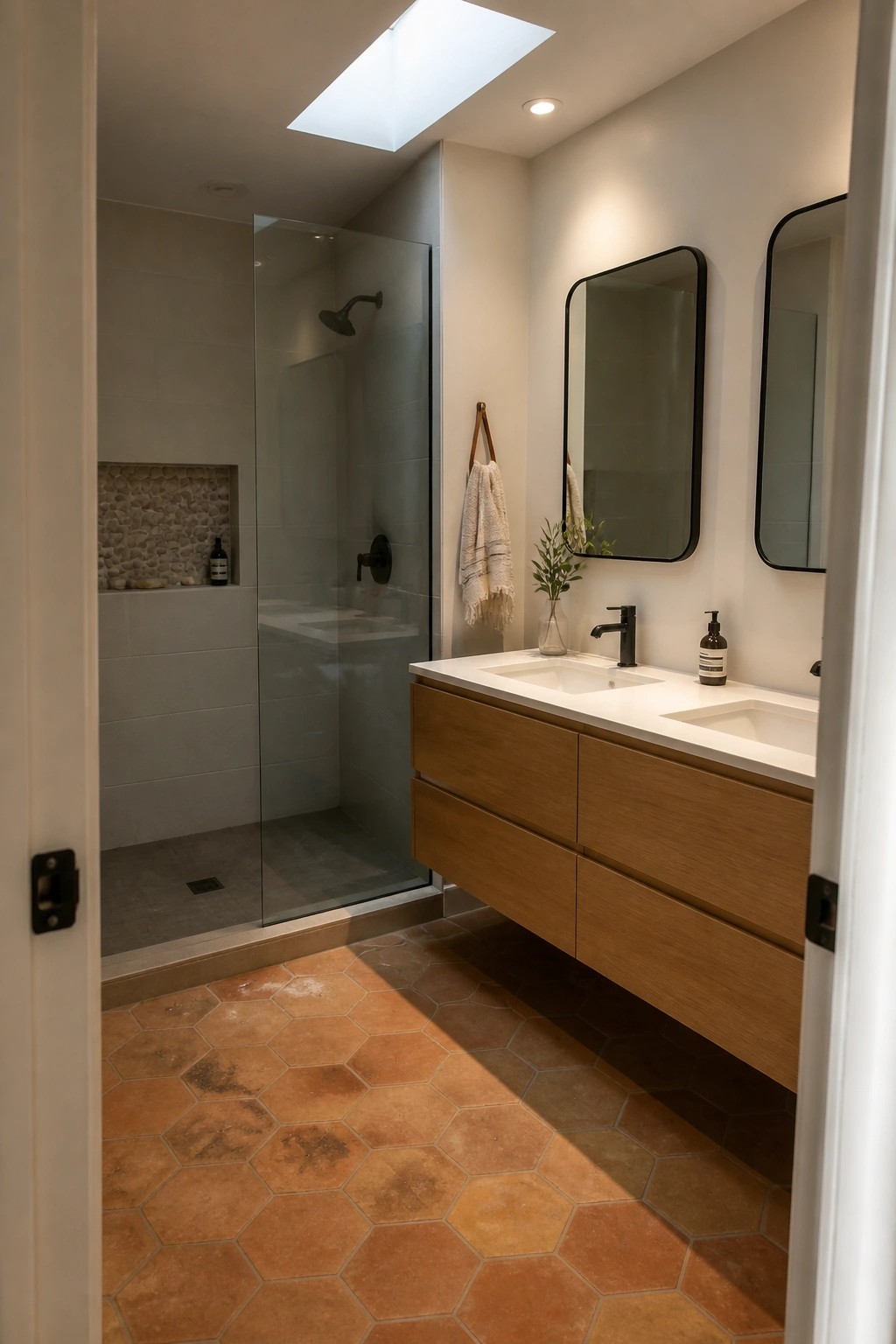
Terracotta tiles bring a natural warmth to a bathroom that keeps the space from feeling too cool or stark. The soft orange tones sit well against pale walls and white surfaces, which helps the room feel inviting even when the palette stays mostly neutral.
This works best in coastal homes that want a touch of color without losing the clean look. Pair the tiles with simple wood cabinetry and matte black fixtures so the floor carries the warmth while everything else stays understated.
Floating Vanities For Bedroom Corners
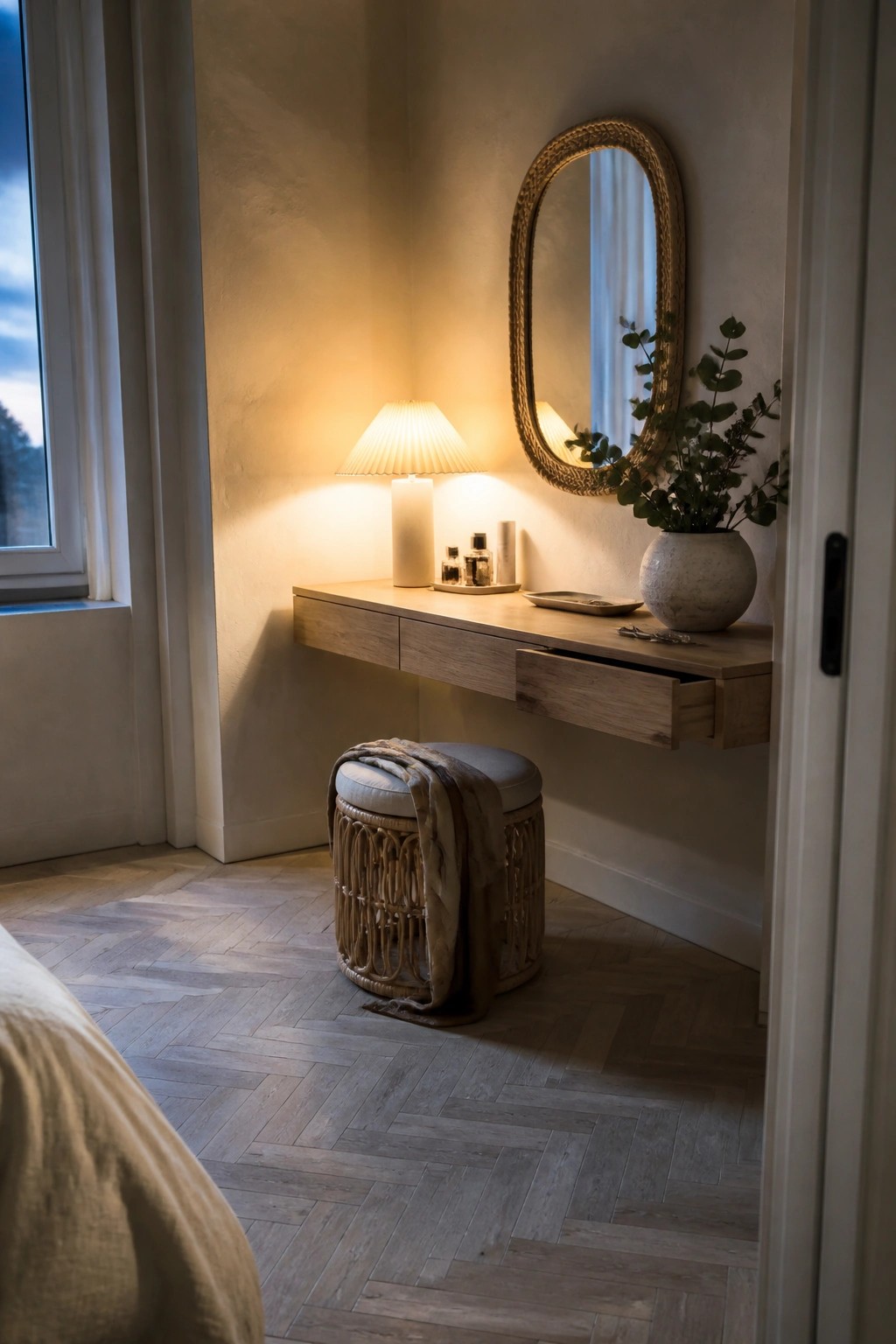
A floating vanity keeps the floor clear and gives a bedroom corner a calm, open feel. The light wood tone blends into a warm neutral palette while still providing a practical surface for daily use.
This works especially well in smaller rooms or guest spaces where bulky furniture would crowd the area. Tuck a low stool underneath and keep the top simple with just a lamp and a few small items so the look stays relaxed.
Warming Neutral Palettes With Natural Textures

Many coastal rooms can feel a bit stark when they rely only on white and pale tones. Bringing in warmer neutrals through materials like rattan seating and raw wood furniture adds a soft layer that still feels clean and current.
This works best in spaces with good daylight where the textures can show up without extra color. It suits homes that want a relaxed coastal feel without leaning too beachy or too formal.
Woven Baskets Add Practical Texture to Neutral Playrooms
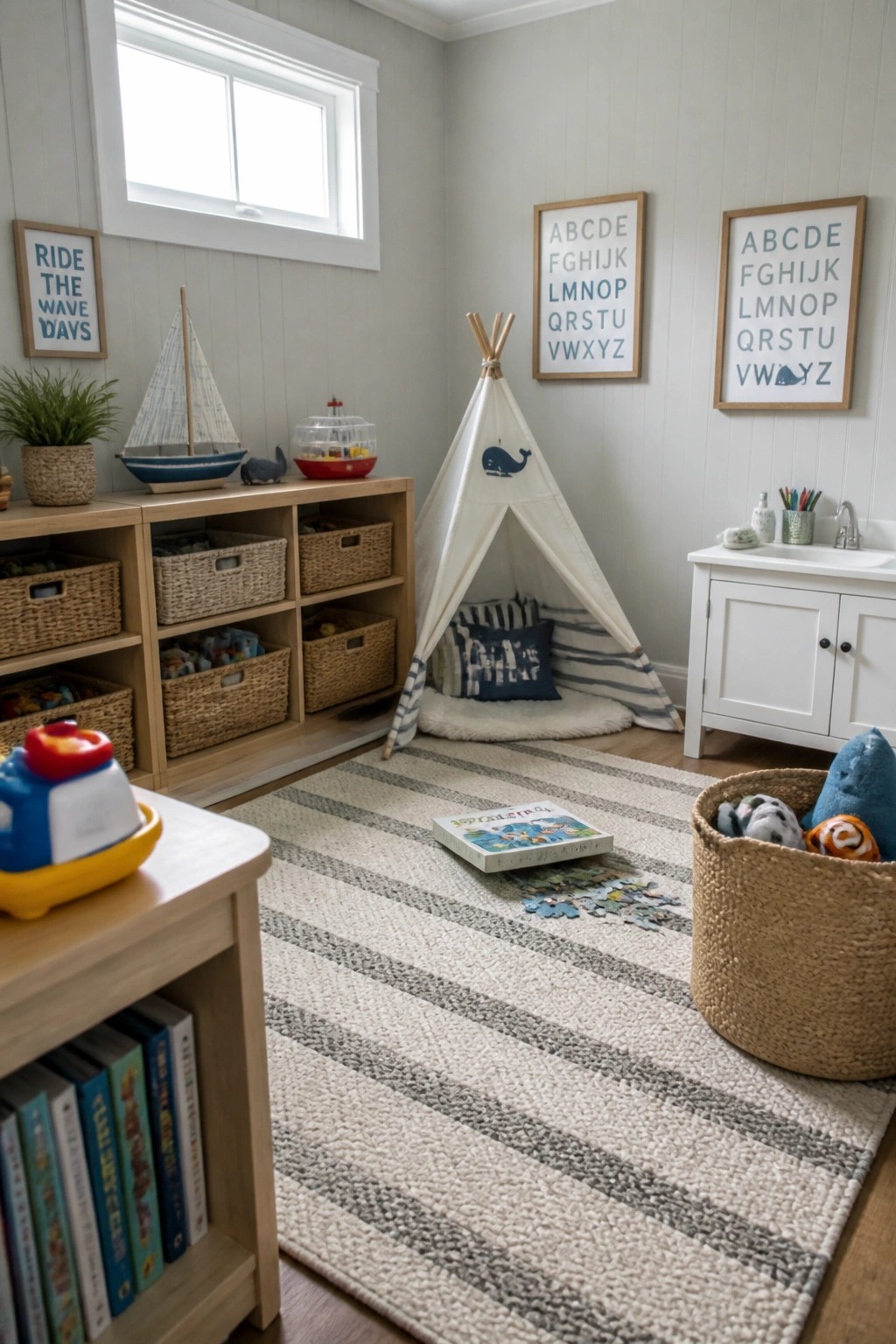
Many people reach for woven baskets when they want open storage that still feels warm. In a coastal room built around soft grays and wood tones, the baskets add natural texture without making the space feel busy or cold.
This setup works well in homes with kids because the baskets hide clutter while letting the calm palette stay in charge. They hold up to daily use and pair easily with simple wood shelves or cubbies.
Built-In Window Seats For Extra Storage

One idea that works in many coastal homes is adding a built-in bench under a window near the stairs. It turns an unused spot into a place to sit while also hiding blankets or shoes inside the base, and the simple wood and linen keep the whole area feeling light and calm.
This works best in homes where the stairs sit close to a window and you want to avoid adding more furniture. Keep the cushions in soft neutrals and match the wood tone to any nearby trim so the bench blends in rather than stands out.
Using Consistent Wood Tones Across Open Spaces

Many open homes lose their sense of calm when the kitchen and living areas feel like separate zones. Repeating the same light wood tone on the island, bar stools, floor, and mantel helps everything read as one connected space without extra effort.
This works best in coastal homes that need warmth but still want to stay bright. Pick one or two wood finishes and keep the rest of the palette soft and neutral so the wood does the linking work.
Frequently Asked Questions
Q: How do I pick the right shade of warm neutral for my walls? A: Look at the undertones first. A soft greige with hints of taupe often works best near the water. It shifts nicely with the changing light throughout the day.
Q: My sofa is modern but feels cold in this setup. How do I fix that? A: Drape a textured throw in a matching neutral over it. The fabric softens the edges right away.
Q: What about using this palette in a bathroom? A: Go for matte tiles in warm beige tones. They keep the modern lines while feeling inviting. Pair them with wood accents to bring in that coastal warmth.