When you step into a Victorian kitchen the freestanding cabinetry often creates a sense of openness that built in units rarely achieve on their own.
You can shift these pieces to suit how the room gets used each day which keeps the space practical over the years.
I keep thinking about how much easier it is to clean around standalone cabinets compared with ones that run wall to wall.
Flexibility wins out.
The examples in older homes prove that this approach still supports real cooking and storage needs without feeling outdated.
Freestanding Cabinets Add Flexible Storage

A tall freestanding cabinet gives a Victorian kitchen extra room for dishes and linens without needing custom built-ins. It can sit against one wall and still leave the rest of the space open for daily use.
This approach works best in older homes where the layout may not be perfectly square. Keep the cabinet simple in finish so it blends with existing woodwork and does not crowd the room.
Freestanding Cabinetry Keeps Storage Flexible

Freestanding cabinetry gives you room to adjust things as your kitchen use changes over time. It avoids the fixed look of built-ins and works naturally in older homes where the layout may not follow modern standards.
This setup suits Victorian kitchens best when you want practical storage without major construction. Choose simple white pieces with open upper shelves so everyday items stay within reach while the base cabinets hold the rest.
Freestanding Islands Offer Flexible Storage In Victorian Kitchens
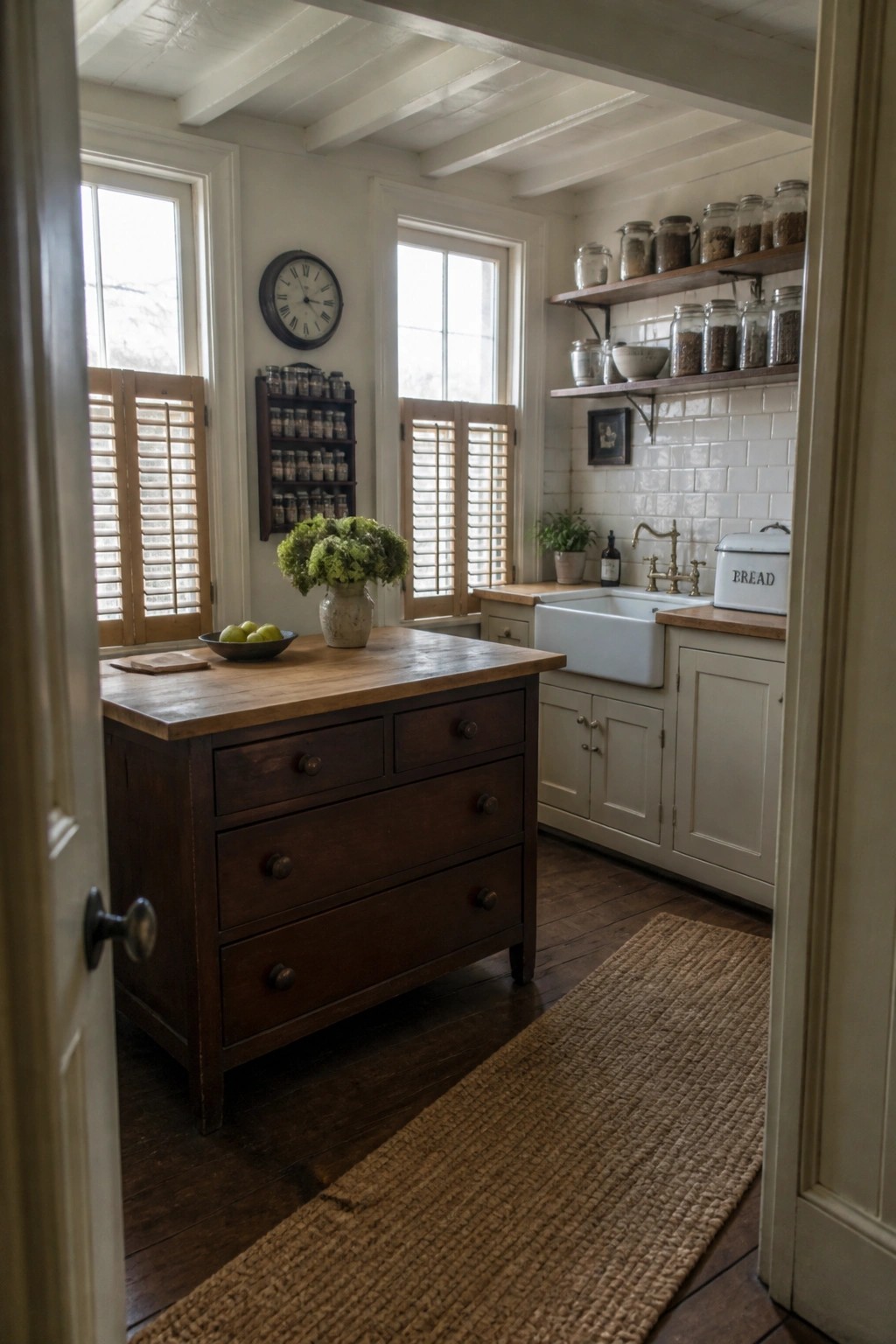
A freestanding island gives a Victorian kitchen extra workspace and drawer storage without locking everything into built-in cabinetry. The dark wood piece here sits apart from the walls, which keeps the room feeling open while still providing a solid spot for prep and everyday items.
This setup works best in homes that already have some original character and need one more practical surface. Choose a sturdy older cabinet with good drawer space, top it with a simple wood surface, and set it where people naturally walk through the room.
Freestanding Cabinetry For Everyday Storage
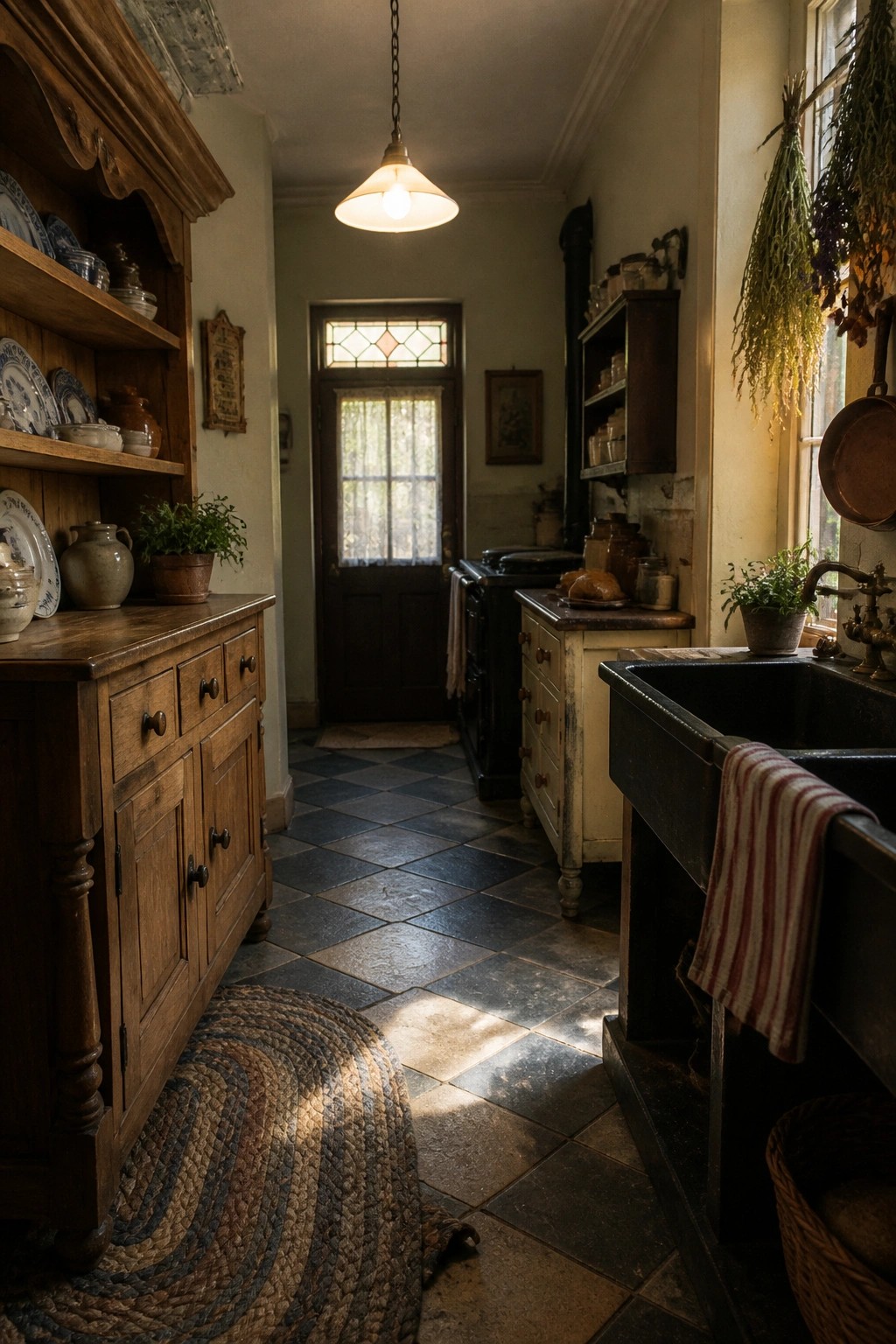
Freestanding pieces give a kitchen room to breathe. They can be shifted around when needed, and they often carry a bit of history that built-in cabinetry cannot match. In older homes this approach avoids fighting uneven walls or awkward corners.
Place them where daily use happens most, like near the sink or along a clear wall. They suit Victorian kitchens especially well because the style already mixes different woods and finishes without looking forced. Just keep the scale balanced so the room does not feel crowded.
Freestanding Wooden Islands For Kitchen Storage
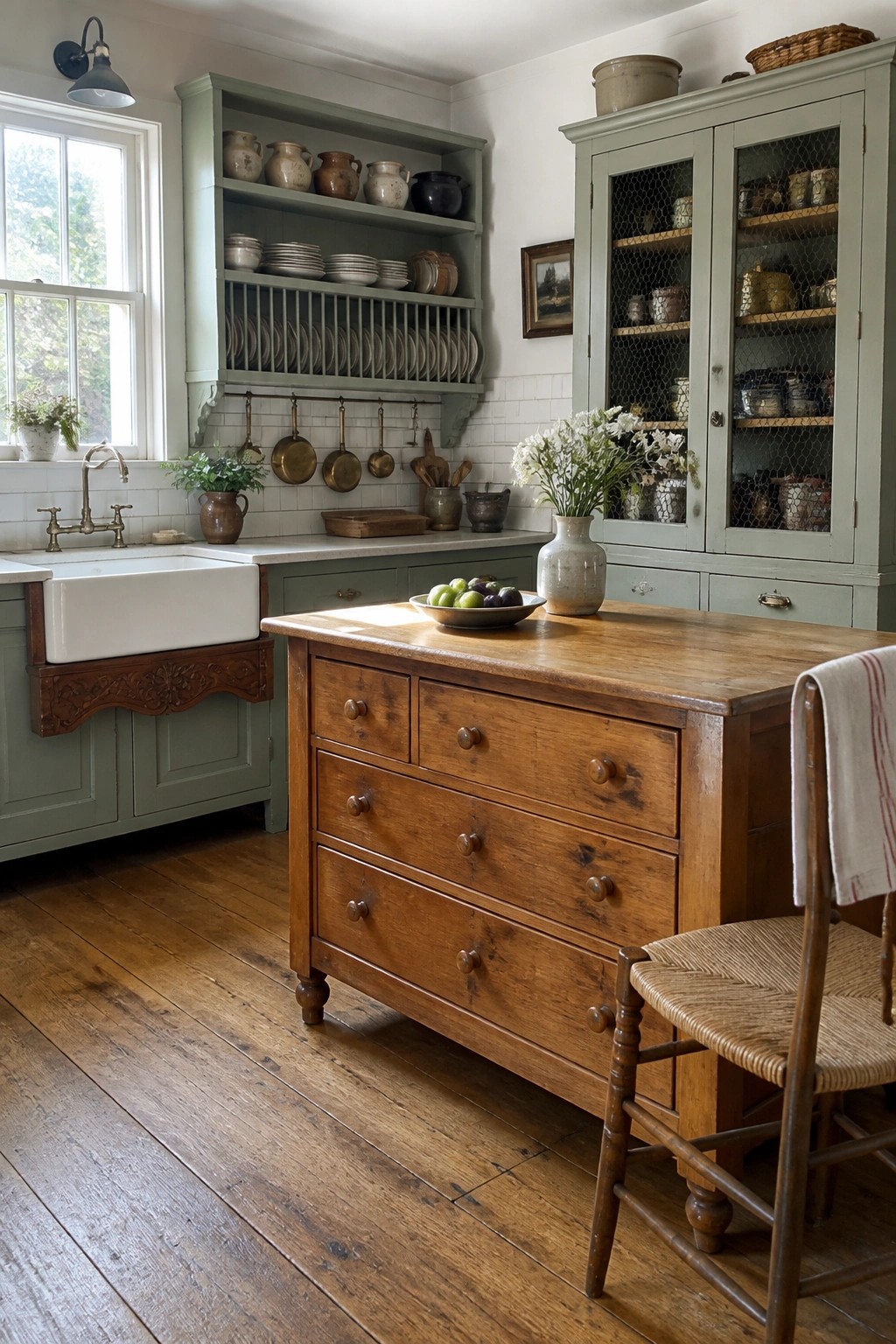
A freestanding wooden piece like a chest of drawers works well as the main island in a kitchen because it adds storage without locking the layout into place. It brings natural wood tones that contrast nicely with painted built-in cabinetry and gives the room a more collected feel over time.
This approach suits older homes where you want to keep original features intact while gaining extra workspace and drawers. Keep the piece simple in style and let it sit a little apart from the walls so it stays easy to move if needed later.
Freestanding Islands Work Well in Victorian Kitchens

A freestanding island gives a Victorian kitchen more flexibility than built-in cabinets alone. It can shift when needed and leaves the room feeling open rather than boxed in.
This approach suits older homes that already have some original cabinetry. Keep the island simple in wood and size it so it fits daily traffic without crowding the sink or dining area.
Freestanding Cabinetry Works Well In Victorian Kitchens
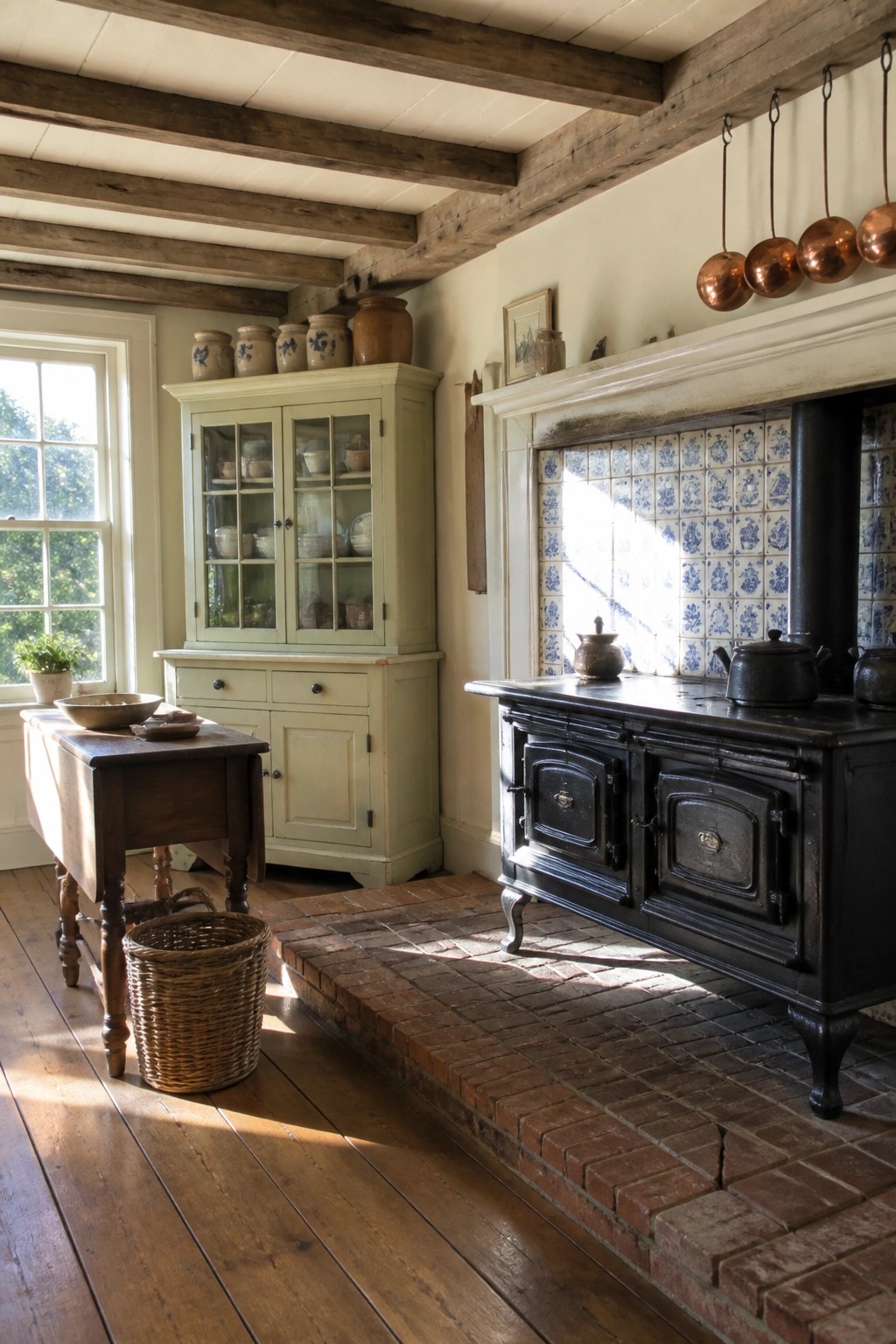
Many Victorian kitchens gain from storage that is not fixed in place. A painted freestanding piece can sit against a wall or move later if the layout changes, and it avoids the heavy built-in look that can feel too modern.
This works best in homes that still have original stoves or hearths. Keep the cabinet simple in color and scale so it does not compete with the main cooking area, and use it for dishes or linens that need to stay close at hand.
Freestanding Cabinets Add Storage And Character
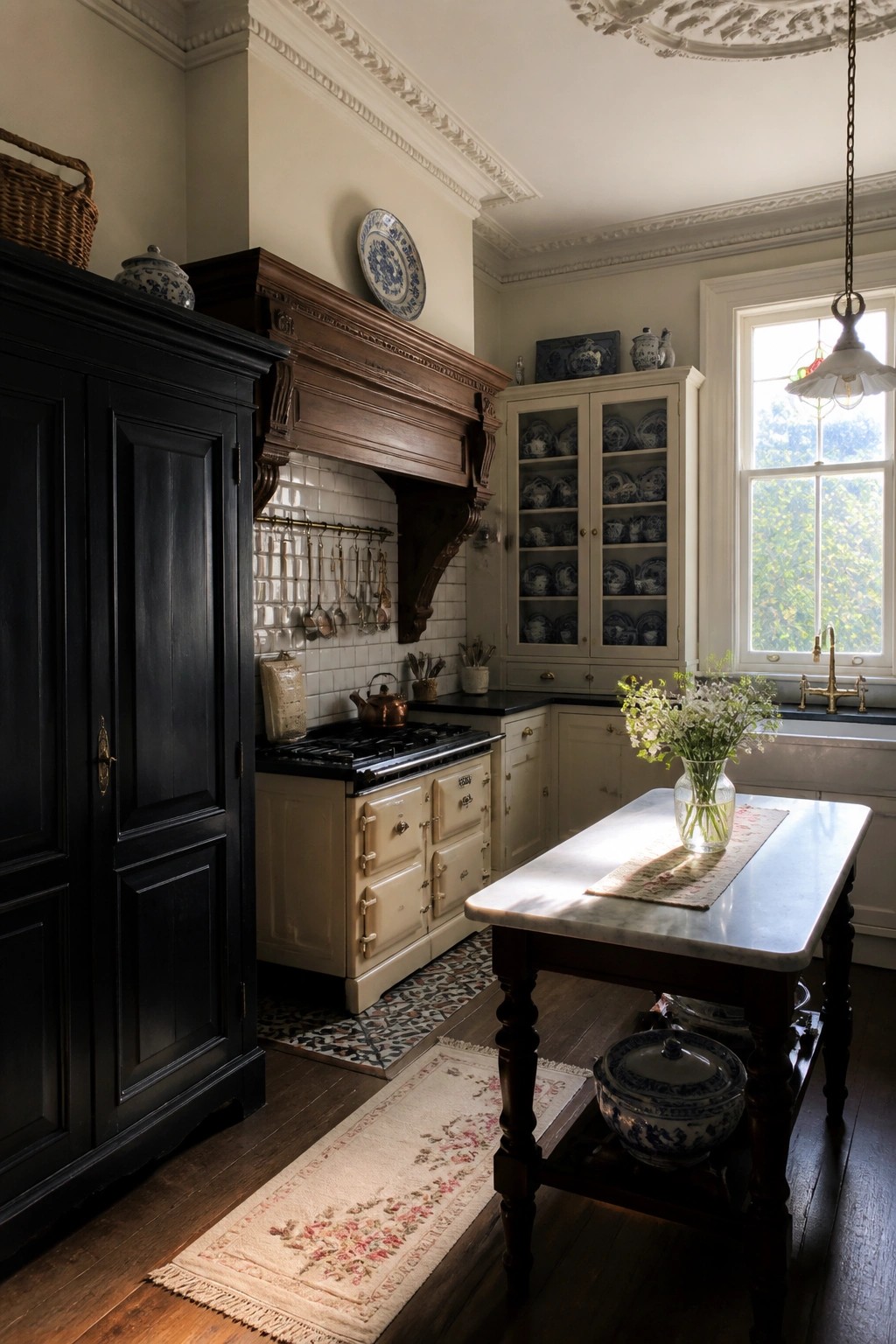
A freestanding cabinet gives a Victorian kitchen extra room for dishes and linens without forcing everything into fitted units. It also breaks up long runs of cabinetry and lets the space feel a little less planned.
Put one along a side wall or near the range where it can hold everyday items. Dark finishes stand out nicely against lighter cream cabinetry and keep the room from looking too matched. This approach suits older homes that already have a mix of pieces rather than a single built in system.
Freestanding Islands For Everyday Flexibility

A freestanding island gives you a movable work surface that fits the loose layout of many Victorian kitchens. It avoids the fixed feel of built-in cabinetry and lets you shift things around when needed.
Place one in the middle of the room if you have the floor space, and keep the size modest so traffic can move around it. A simple wooden top with drawers below works well for daily tasks without making the kitchen feel crowded.
Freestanding Cabinets Keep Kitchens Flexible

Freestanding cabinets give you storage without locking the layout in place. In older homes this matters because walls often run uneven and you may want to rearrange things later without cutting into plaster or tile.
The dark piece along the wall in this kitchen shows how a single tall dresser can hold dishes and linens while the rolling island adds a work surface that moves when you need more floor space. This setup suits narrow Victorian rooms where built-ins can feel too heavy.
Freestanding Cabinets Offer Practical Storage
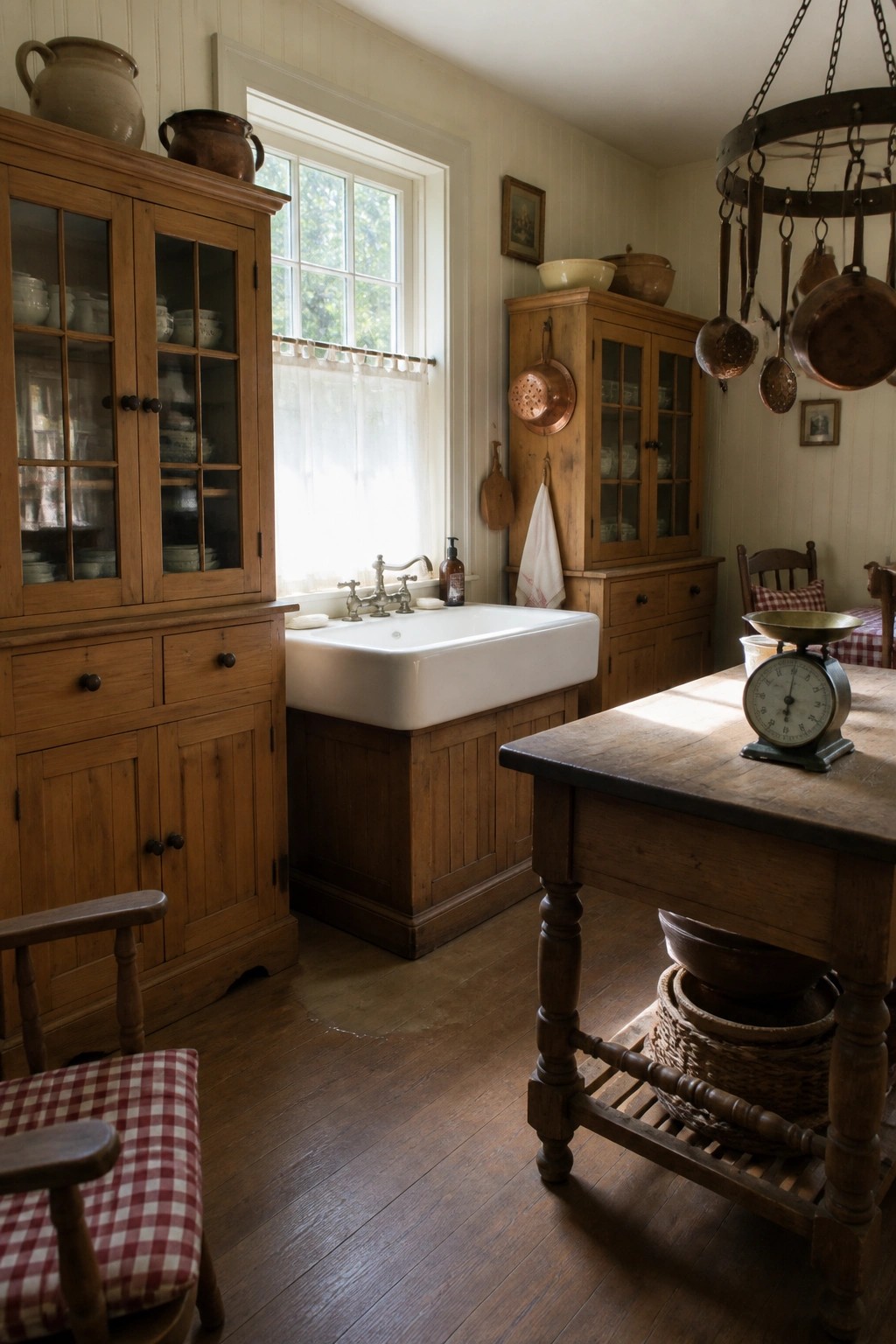
Freestanding cabinetry gives older kitchens room to breathe. You can shift pieces around when the layout stops working or when you bring in something new, and nothing feels locked into place forever.
This works best in homes where the walls are not perfectly straight or where you want to add storage without major construction. Keep the scale modest so the pieces do not crowd the main work areas.
Freestanding Tables Offer Flexible Workspace
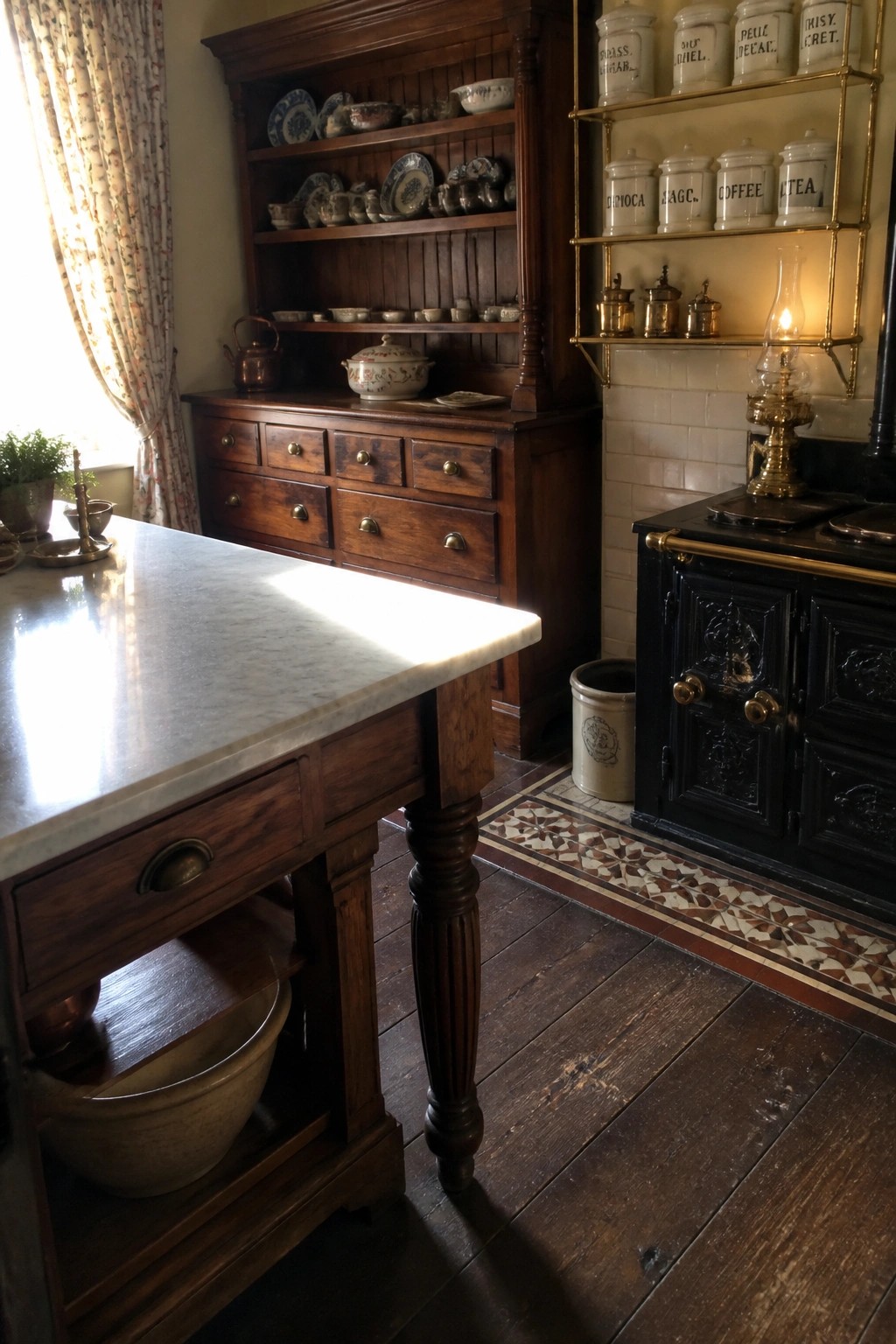
A freestanding table gives a Victorian kitchen extra workspace without locking the layout into place. The marble top handles food prep and cleanup while the open lower shelf keeps large bowls and pans within reach. This approach avoids the boxed-in feel that comes with fully built-in islands.
It works especially well in older homes where the original floor plan already includes a large hutch or dresser. Homeowners can shift the table later if they want to change traffic flow or add more seating. Just keep the scale modest so the piece does not crowd the room.
Freestanding Cabinetry In Victorian Kitchens

Freestanding cabinetry gives a Victorian kitchen room to breathe while keeping the classic look intact. A tall wooden piece next to painted lower cabinets adds storage without locking the layout in place for good.
This setup suits older homes where walls can be uneven and needs change over time. Keep the scale balanced by mixing one or two larger standalone pieces with built-in sections so the room still feels cohesive.
Freestanding Cabinets For Flexible Storage

Freestanding cabinets give a kitchen room to breathe while still offering plenty of storage. In older homes they fit the layout without needing major built-in work, and they can be moved later if the space changes.
They suit Victorian kitchens especially well because the style already mixes pieces rather than one continuous run of cabinetry. Place them along a side wall or near the cooking area so they feel part of the room instead of added on.
Freestanding Cabinetry Works Well In Victorian Kitchens
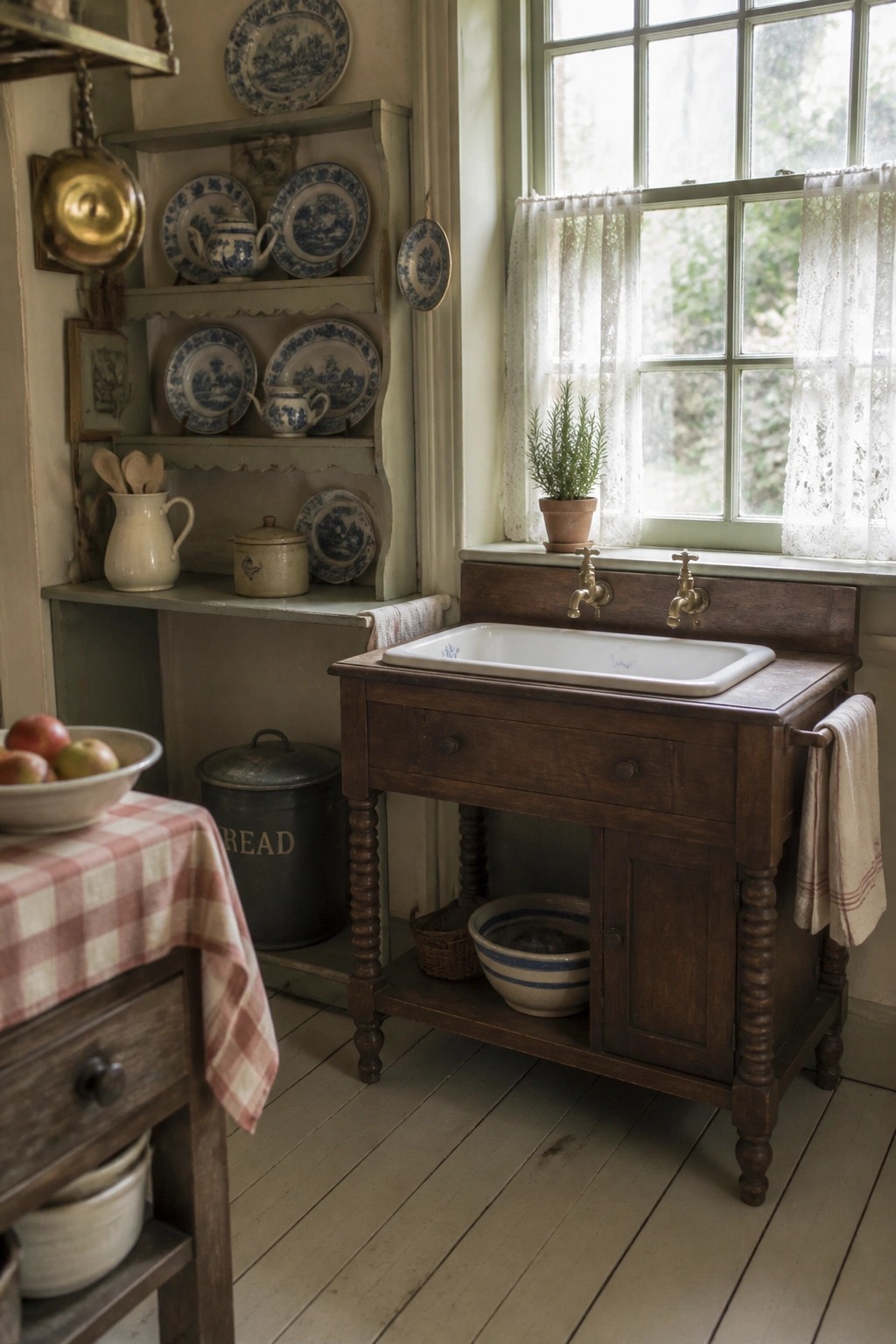
Freestanding pieces give older kitchens a practical edge without locking everything into place. The wooden sink cabinet here stands on turned legs with open space underneath, which keeps the room from feeling boxed in while still providing storage and a solid work surface.
This setup suits homes that want to preserve some of the original layout. It works especially well when paired with open shelves nearby so daily items stay within reach without needing extra wall cabinets.
Freestanding Islands Keep Victorian Kitchens Practical

A freestanding island gives you a movable work surface without locking the layout in place. It works especially well when the rest of the kitchen has fixed pieces like a stone sink and tall wall cabinets.
Place the island where daily tasks happen most, and leave clear space around it so the room stays easy to walk through. This setup suits older homes that need storage but still want room to rearrange later.
Freestanding Cabinetry Adds Practical Storage

Many older kitchens benefit from freestanding pieces because they let you adjust the layout over time. A tall dark wood cabinet can hold linens or pantry items while a lighter dresser style unit nearby keeps smaller dishes and tins within reach. This approach avoids the boxed in look that built in cabinetry often creates.
It works best in homes that already have some original woodwork or simple trim. Place the tallest piece against a plain wall so it does not block light from the windows. Keep the finish simple and let the hardware stay consistent across pieces so everything feels like it belongs together.
Freestanding Islands Keep Victorian Kitchens Flexible
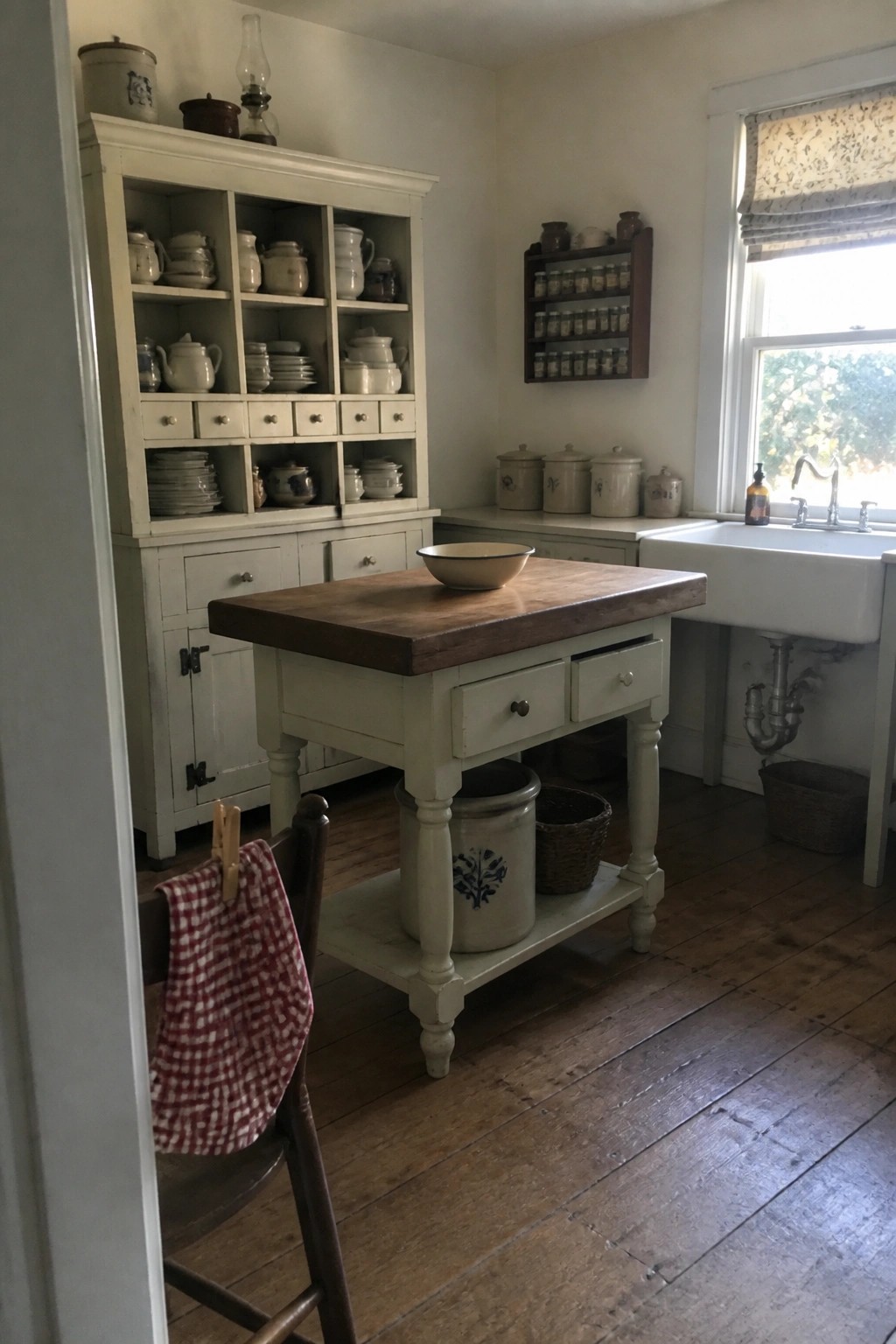
A freestanding island gives older kitchens a practical center point without locking the layout into place. It adds workspace and storage while leaving room to move around the main counters and sink.
This setup suits homes that still have their original floor plan. Keep the island simple with open lower shelves and a few drawers so it stays useful without crowding the space.
Freestanding Cabinetry Adds Versatile Storage
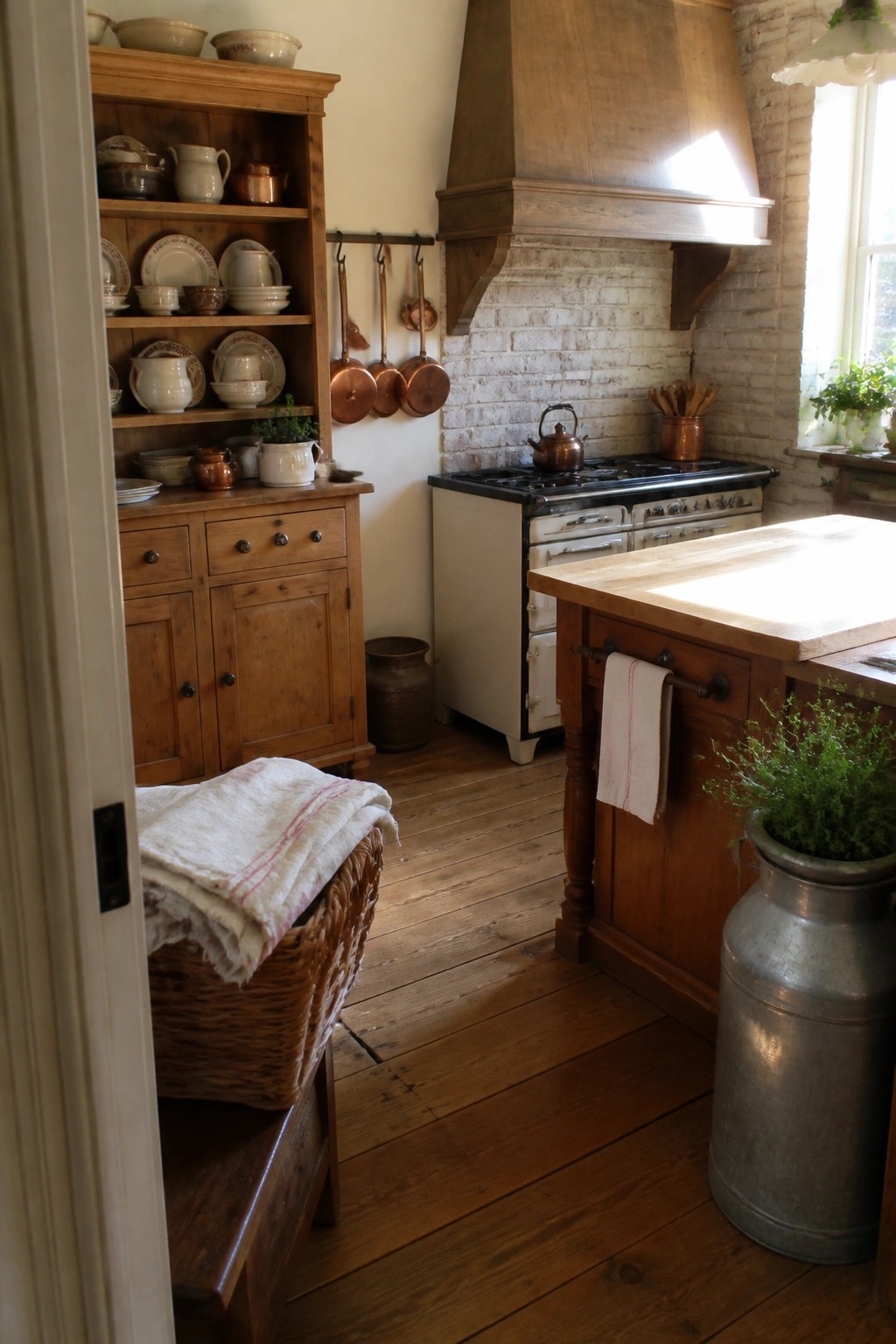
Many Victorian kitchens gain a lot from pieces that stand on their own rather than being fixed in place. A tall wooden hutch gives room for dishes and serving pieces while letting you shift things around later if the layout needs tweaking.
This works best in older homes where built-ins can feel too rigid. Set a similar piece along one wall to hold everyday items without blocking traffic between the stove and island.
Freestanding Tables Give Victorian Kitchens Room To Work
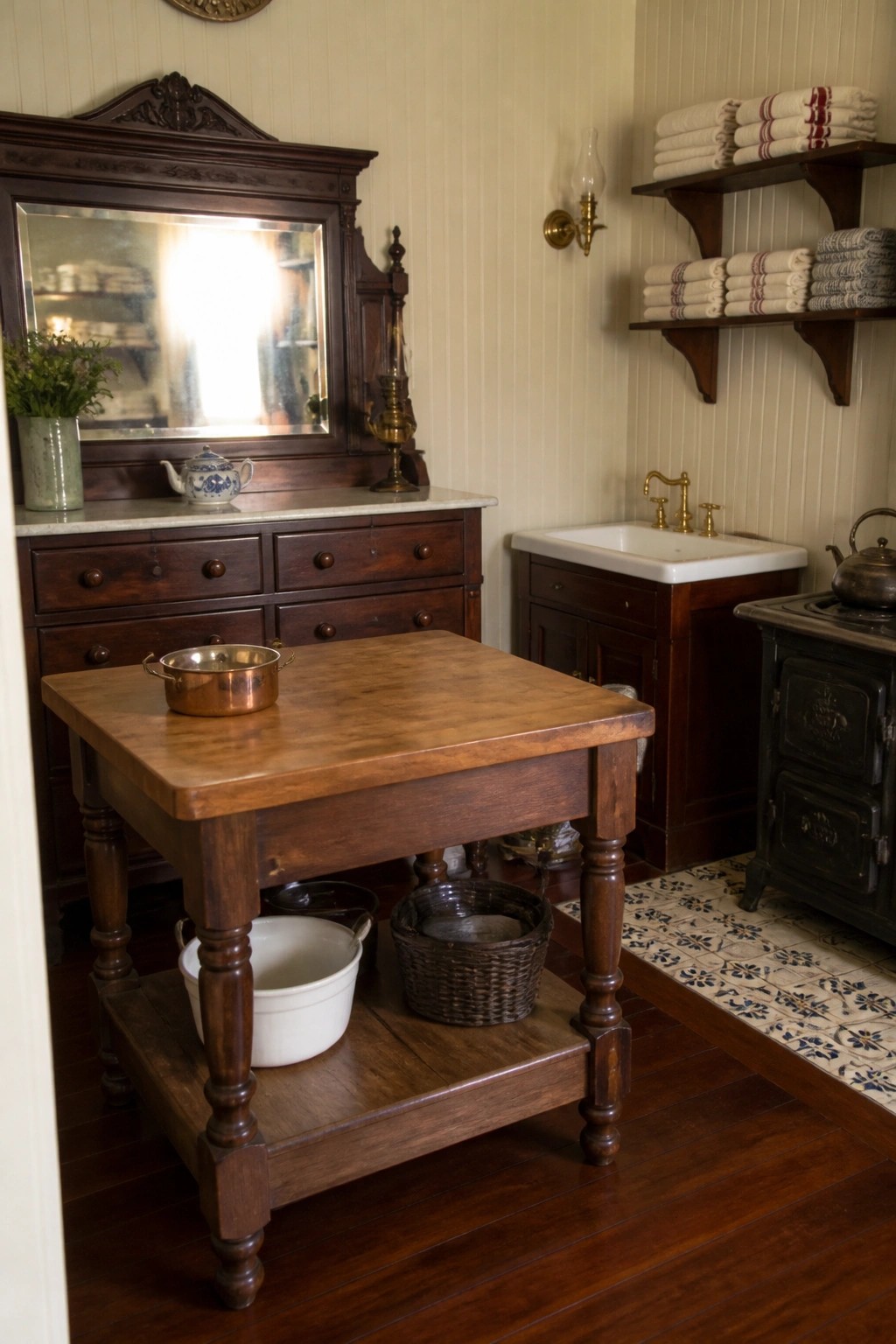
Many older kitchens were built around a few solid movable pieces instead of rows of fixed cabinets. A simple wooden table placed in the open space gives you a work surface that can be shifted when needed and still leaves the room feeling open.
This approach fits homes that want to keep the original layout while making daily tasks easier. Keep the table near the main sink and stove so everything stays within a few steps, and choose a piece with a lower shelf for extra storage underneath.
Freestanding Cabinetry Keeps Storage Flexible
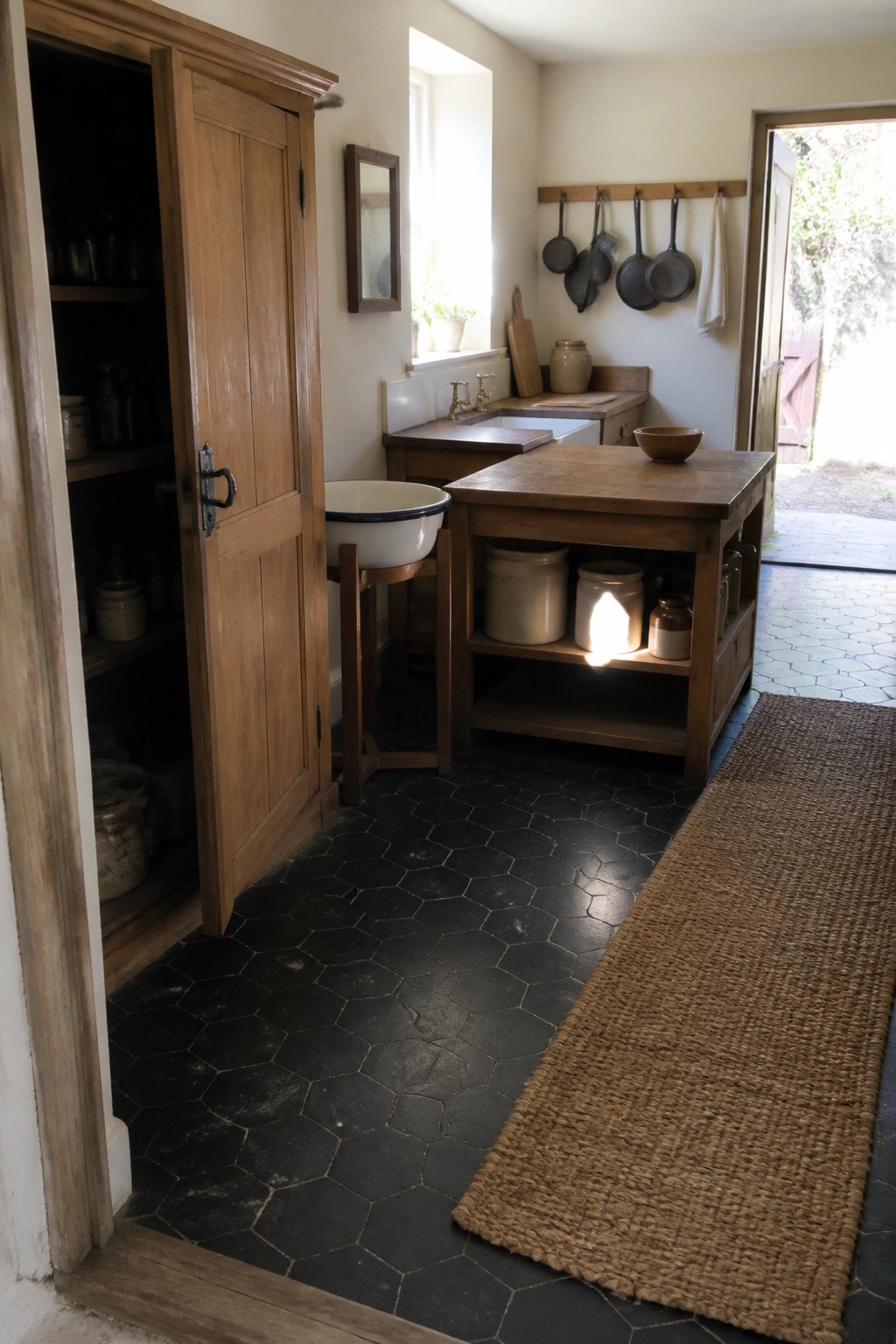
Freestanding pieces work especially well in older kitchens because they adapt to uneven floors and walls. They also let you move things around when your needs change, which built-ins rarely allow.
A tall cabinet near the entry can hold dry goods while a central table offers open lower shelves for pots and jars. This setup suits Victorian homes or any space where you want storage without committing to permanent carpentry.
Freestanding Cabinets For Flexible Storage
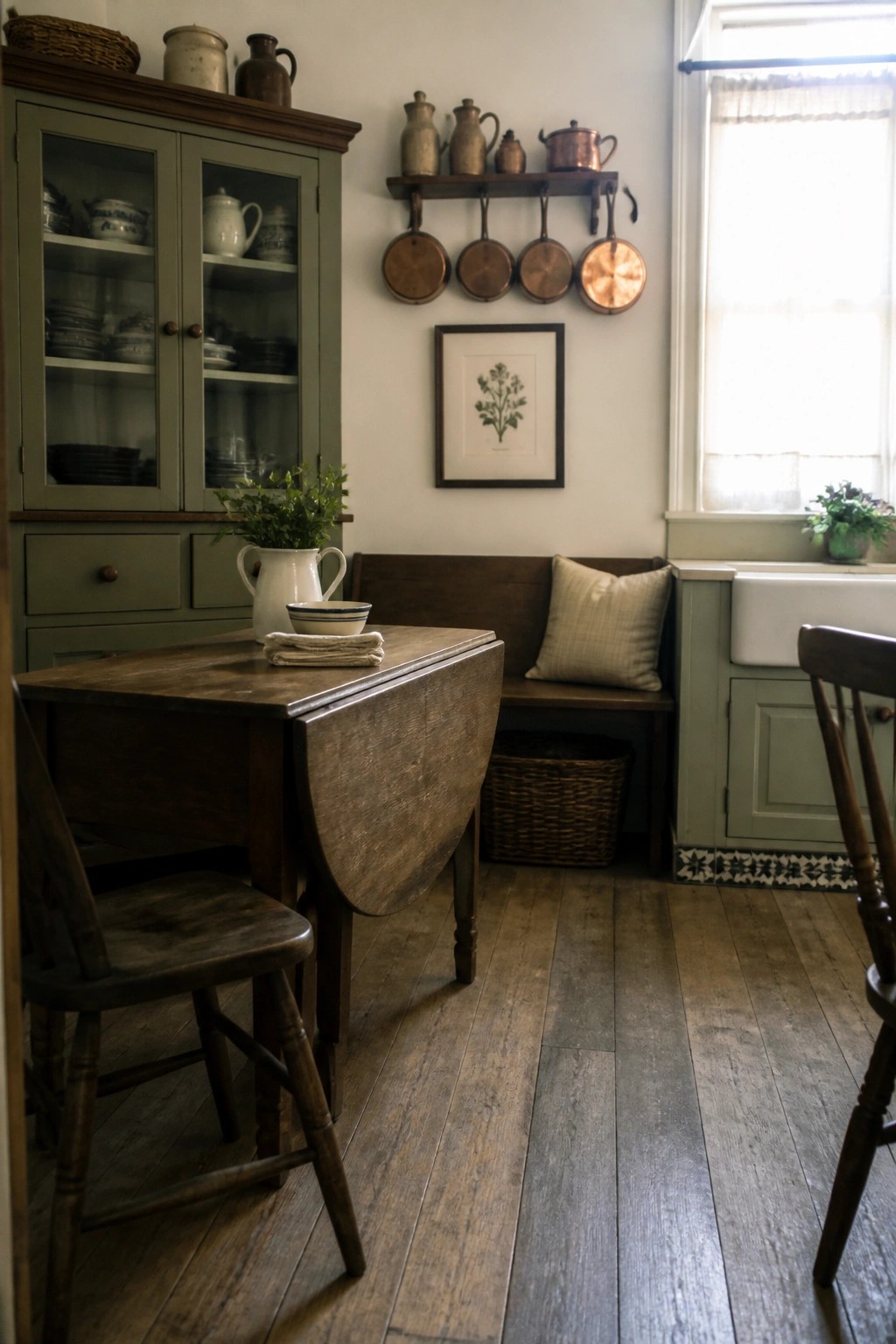
A freestanding cabinet gives you storage without locking the layout in place. You can shift it later if the room needs to change, which comes in handy in older homes that often get reworked over time.
It suits Victorian kitchens best when the piece stays simple and matches the wood tones already in the room. Keep the top clear except for a few everyday items so it still feels open rather than crowded.
Freestanding Cabinets Add Practical Storage
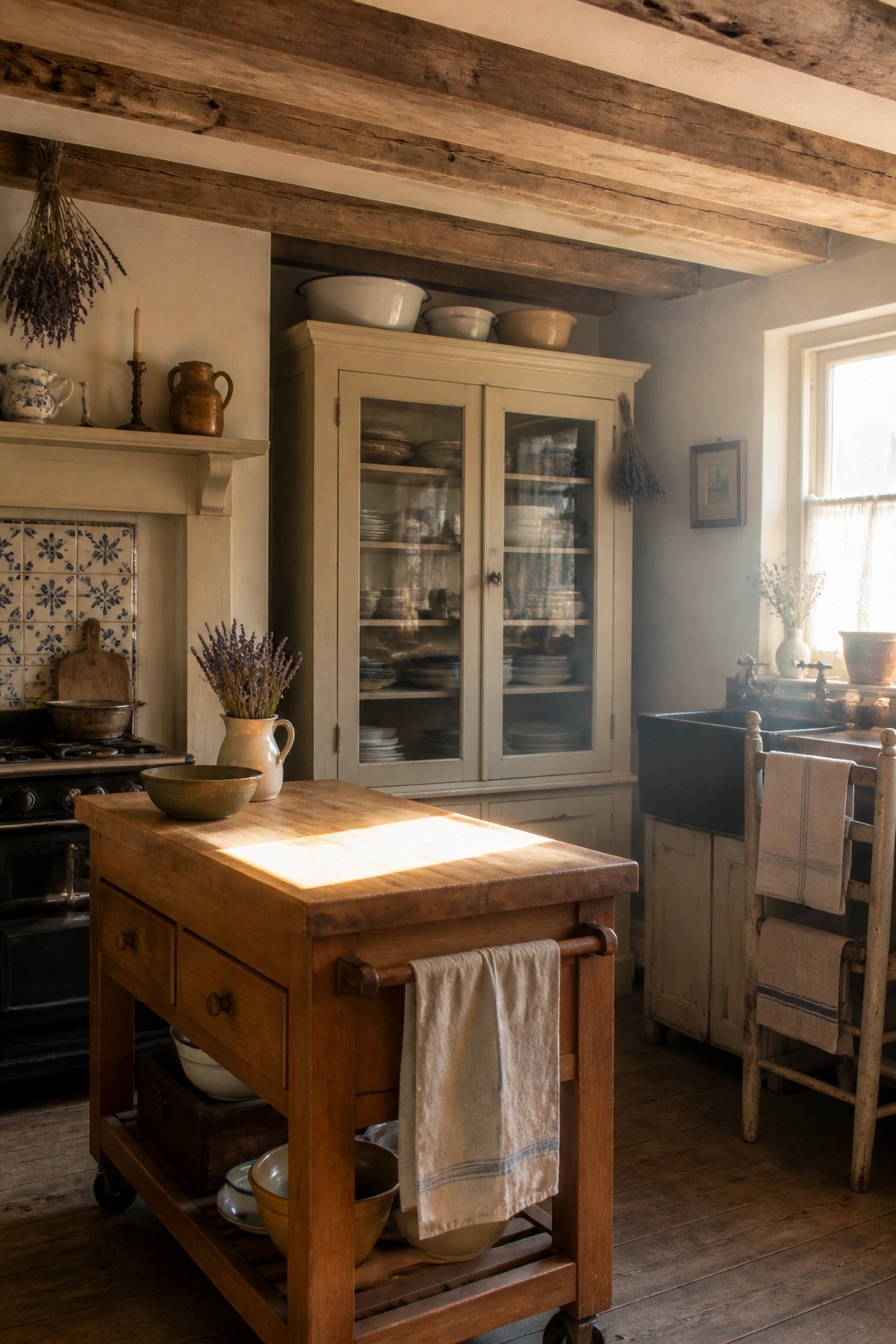
Many Victorian kitchens gain flexibility when a freestanding cabinet is added instead of filling every wall with built-ins. The piece can be moved later if needed and it keeps the room from feeling too planned out.
This works best in older homes where floor space allows for a tall unit with glass doors. Set it near the main work area so dishes stay visible and within easy reach without crowding the counters.
Freestanding Tables Add Flexibility In Older Kitchens

A freestanding table gives you a work surface that can shift if the room layout needs to change later. It avoids the fixed feel of built-in islands and works especially well in Victorian kitchens where the original floor plan often had more open space.
Paint the piece to match nearby cabinetry so everything feels connected, then use the lower shelf for everyday dishes or pots. This approach suits homes that want storage without crowding the floor plan or locking in one arrangement for good.
Frequently Asked Questions
Q: Where can I look for real Victorian freestanding cabinets without spending a fortune?
A: Check local salvage yards and estate sales first. Many pieces turn up there in good shape. You can refinish them to match your kitchen.
Q: How do freestanding cabinets handle everyday spills and wear?
A: Wipe them down with mild soap and water regularly. The wood holds up well if you avoid harsh cleaners. A quick coat of wax now and then keeps the finish nice.
Q: Can I add modern sinks and stoves around these old cabinets?
A: Plan the layout so plumbing and gas lines fit behind or beside the pieces. Many people tuck appliances into alcoves next to the freestanding units. It keeps the classic look while giving you current function.