I have noticed that bathrooms feel more comfortable when the main fixture is given enough room to breathe instead of being squeezed into a corner.
Victorian style often works well in these rooms because the curves of the tub balance out the straight lines of tile and fixtures.
Over the years I have tested a few layout ideas myself and found that adding a small table or shelf nearby turns the tub into a spot people actually want to linger in.
Scale changes everything.
Looking at examples like these helps me picture what might work in my own space without needing a full renovation.
Placing the Tub Under a Window

Many Victorian bathrooms feel more open when the clawfoot tub sits directly beneath a large window. The natural light emphasizes the shape of the tub and keeps the space from looking cramped even with all the period details around it.
This layout works best in rooms that already have tall windows. Keep the curtain simple so it can be pulled aside during the day and the tub remains the clear focal point.
Elevate the Tub on a Wood Platform
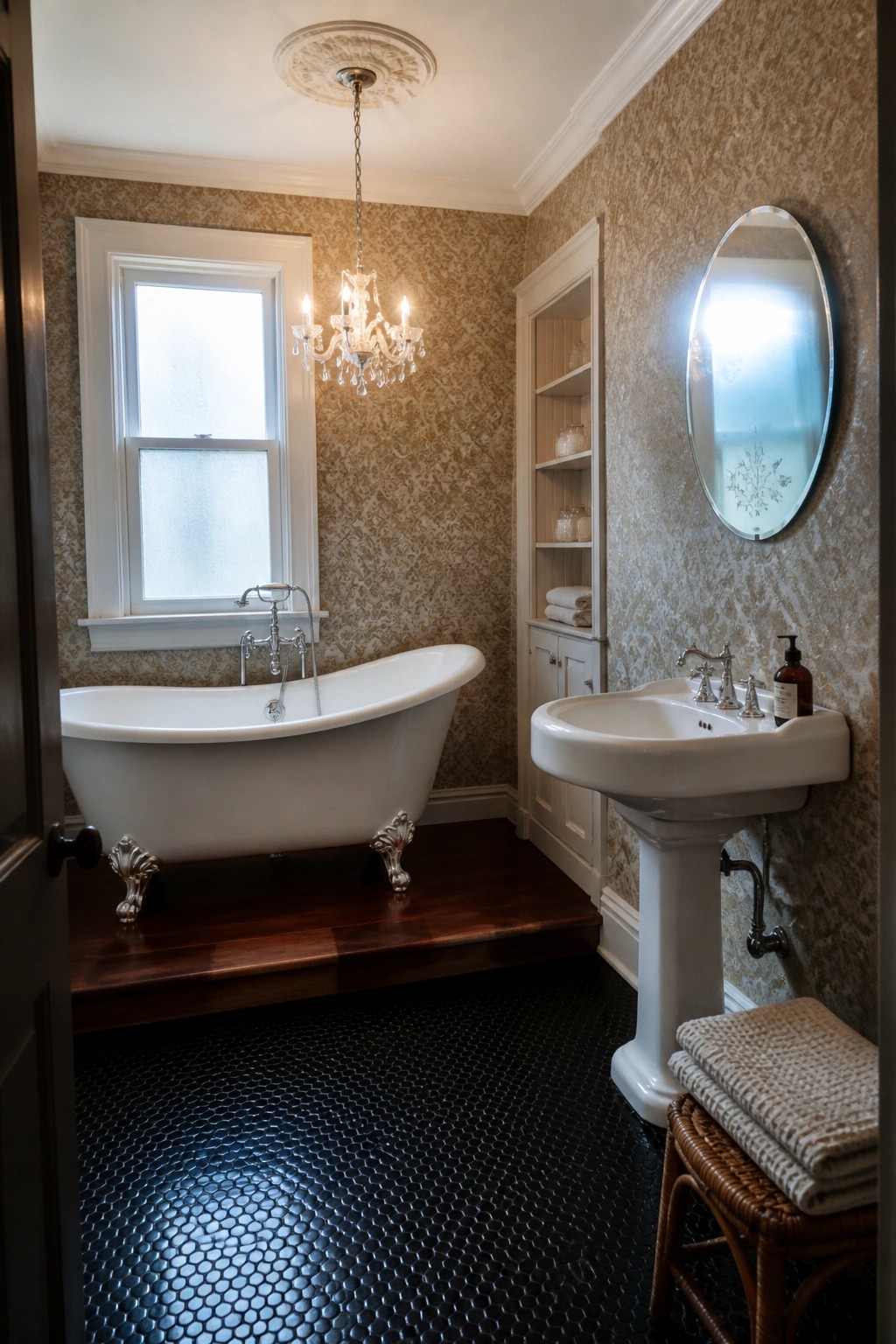
A raised wood platform gives the clawfoot tub its own clear spot in the room. It lifts the tub off the main floor and adds a warm surface that softens the look of cooler tile or dark finishes below.
This works best in bathrooms where the floor is busy or dark, since the platform creates a simple break and keeps the tub from feeling lost. Keep the height low so it is easy to step onto, and match the wood tone to any trim or cabinetry already in the space.
Add A Ladder Shelf For Bathroom Storage
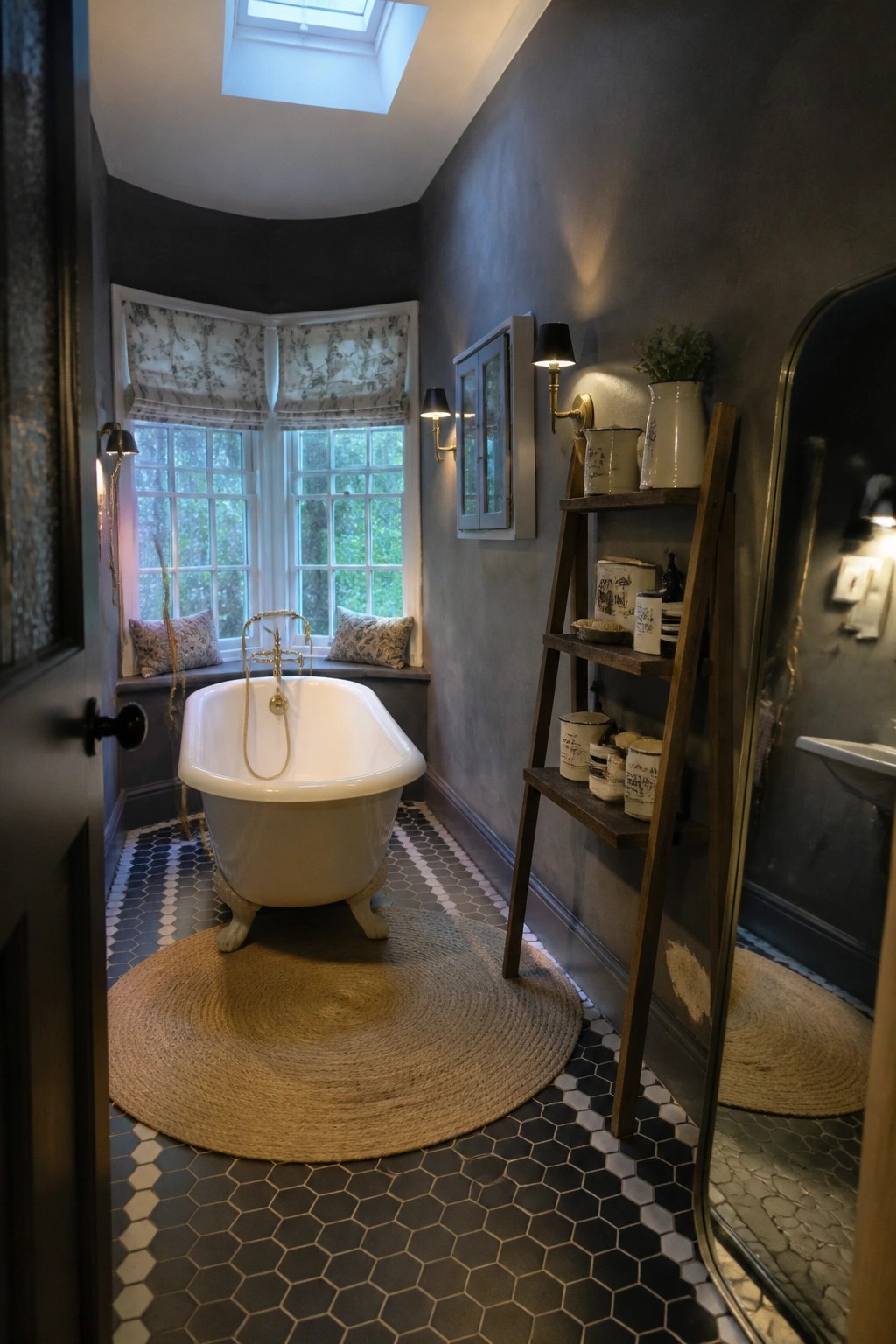
A ladder shelf gives you open storage without crowding a small bathroom. It works well with a clawfoot tub because it stays light and keeps the focus on the tub itself. The dark walls in this space make the wood stand out in a simple way.
Place the shelf along a side wall where you can reach towels and soap easily. It suits older homes that lack built-in cabinet space and keeps the room from feeling too closed in. Just avoid overloading the shelves so the look stays clean.
Using Subway Tile Around a Clawfoot Tub

White subway tile gives a clawfoot tub the clean backdrop it needs. The simple grid pattern keeps the room feeling open and lets the tub shape stay the main event instead of fighting with busy walls.
This works especially well in older homes that already have some wood trim or cabinetry. Keep the tile at wainscot height, add a wood vanity for warmth, and the whole space stays balanced without feeling overcrowded.
Let the Tub Set a Gentle Color Note

A soft colored clawfoot tub gives a Victorian bathroom an easy focal point without needing extra layers of decoration. The pale pink here sits nicely against the patterned wallpaper and the blue floor tiles, so the room feels balanced rather than busy.
This approach works best in smaller bathrooms where one clear color note can carry the whole space. Keep the walls and trim light, then let the tub and a few brass fixtures do the rest.
Dark Clawfoot Tubs Create Strong Contrast
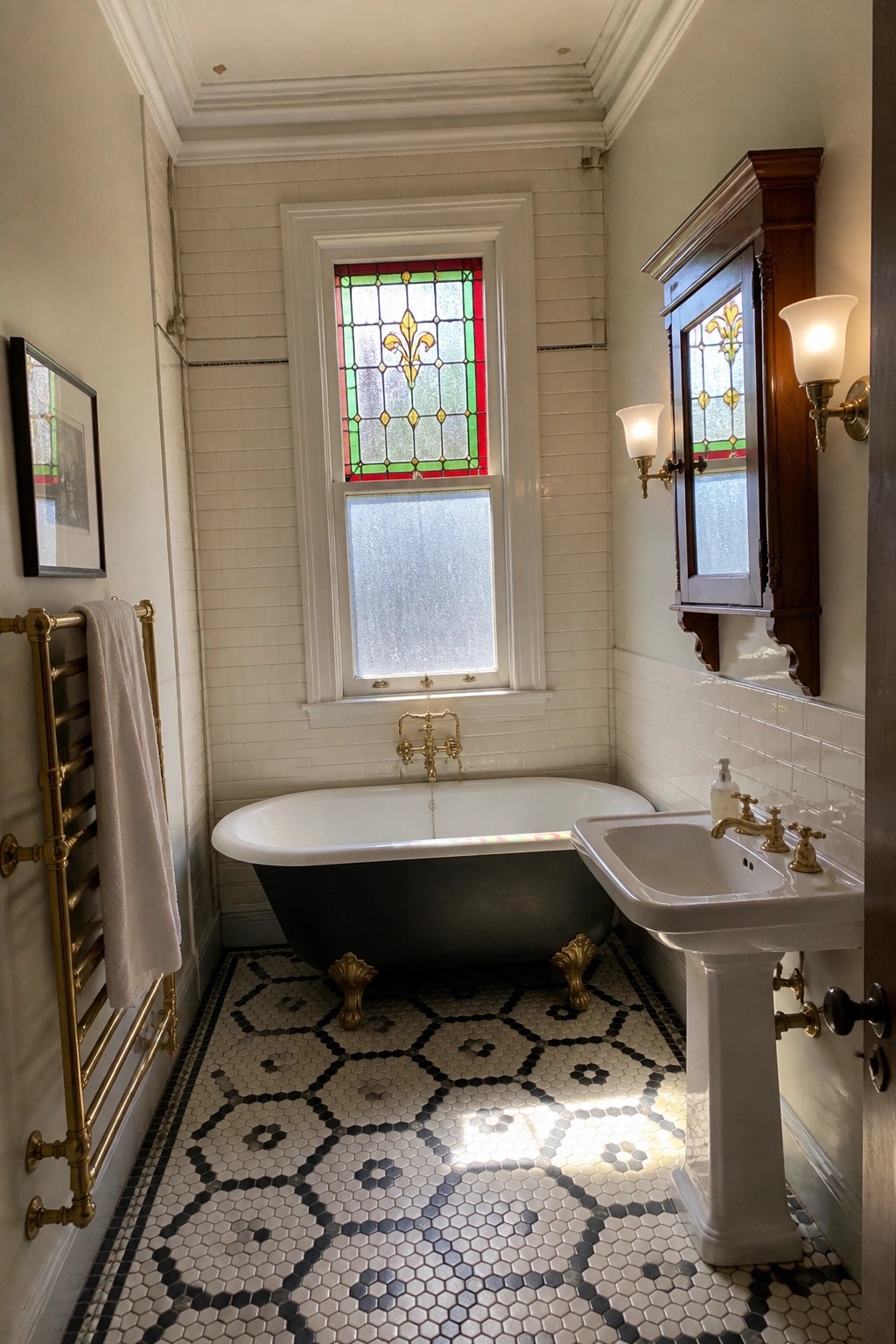
A black clawfoot tub stands out nicely against white subway tile walls. The dark finish pulls attention to the center of the room and keeps the space from feeling too plain even when the rest of the finishes stay simple.
This works well in smaller bathrooms that need one clear focal point. Keep the walls light, add a patterned floor if you want extra interest, and let the tub carry the design. Gold fixtures can tie the look together without adding much else.
Built-In Benches Add Useful Storage
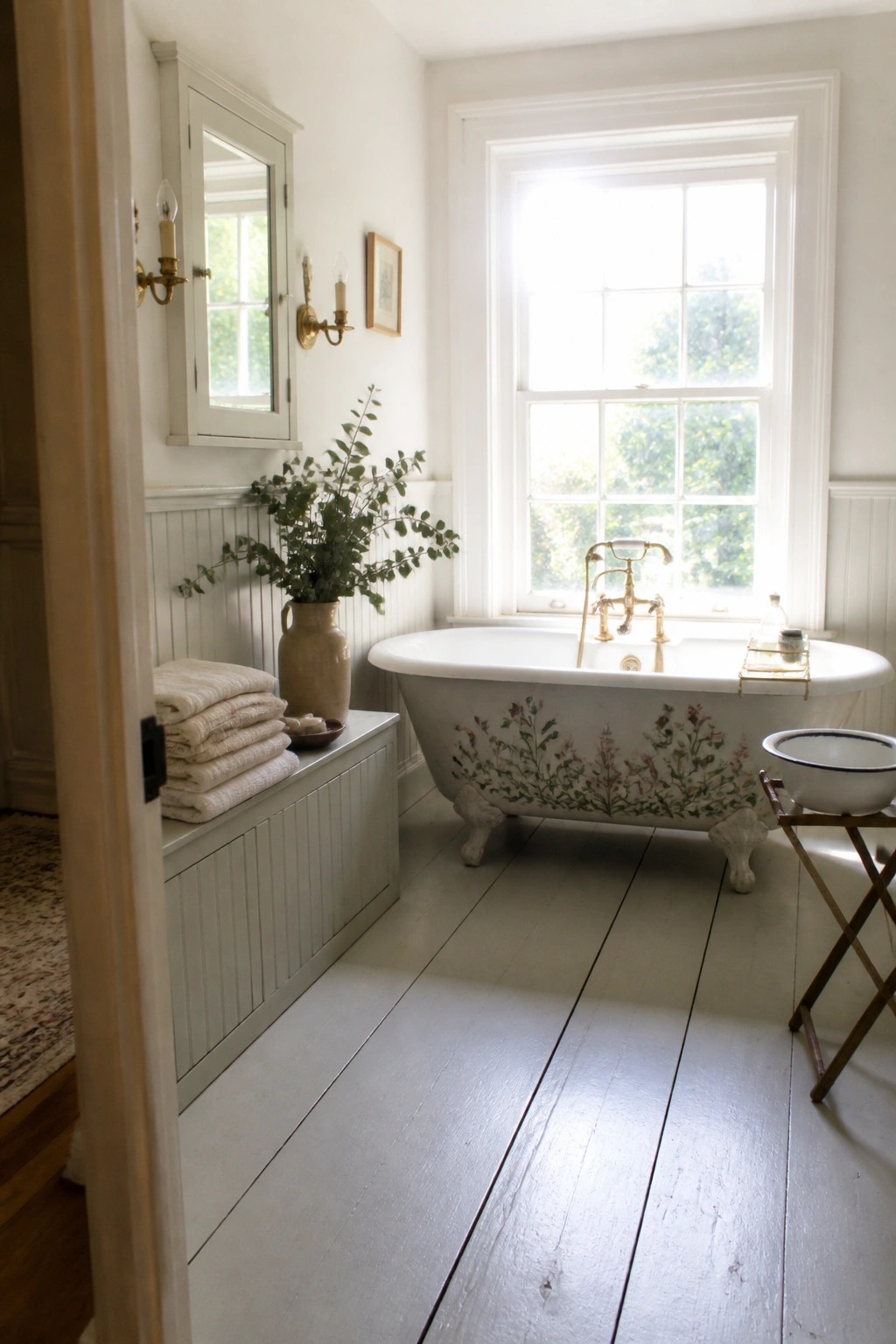
A built-in bench along one wall gives you a steady spot for towels and bath items while keeping the floor clear. It fits neatly into older bathrooms where freestanding pieces can start to crowd the space around the tub.
This works best in rooms with at least one long wall that can take the extra depth. Keep the bench height low so it stays out of the way of the tub and window trim, and match the paint to the rest of the trim for a clean look.
Dark Color Schemes In Victorian Bathrooms

Many people choose deep wall colors and dark wood cabinetry when building a bathroom around a clawfoot tub. The look makes the tub stand out while giving the whole room a settled, enclosed feeling that fits the style.
This approach works best in older homes or spaces that already have period trim and hardware. A lively floor pattern helps keep the room from feeling closed in.
Placing the Tub Under a Window

Putting the clawfoot tub right under a window gives the room a clear focal point without needing extra decoration. The light coming in highlights the curves of the tub and makes the whole space feel brighter and more open.
This approach works best in older homes where the windows are already tall or arched. Keep the walls a soft color and skip heavy window treatments so the tub stays the main feature.
Brick Floors With Clawfoot Tubs
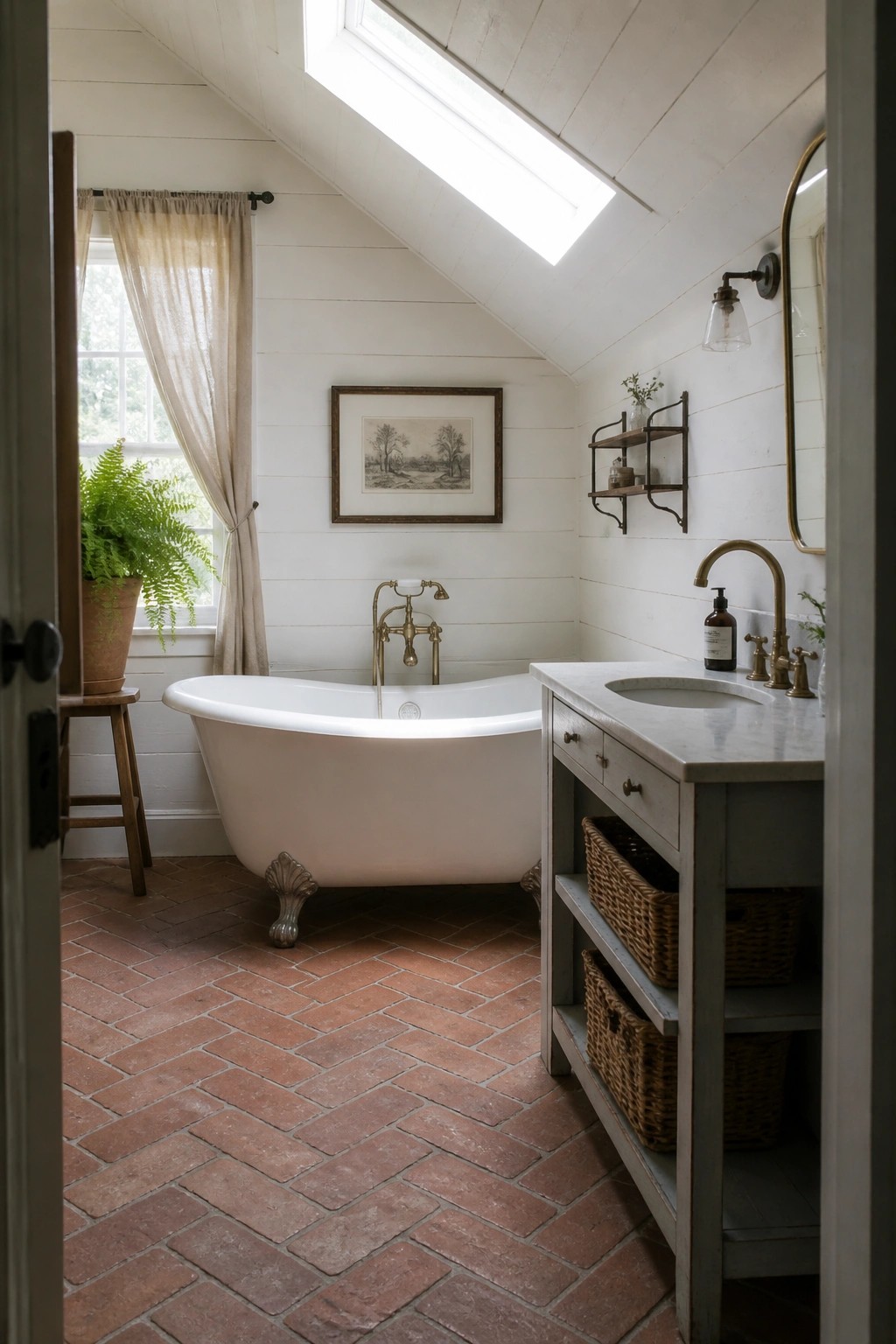
A brick floor brings a warm, textured base that lets a clawfoot tub stand out without feeling too stark. The material adds a practical, lived-in quality that softens the overall look of a Victorian bathroom.
This works especially well in older homes or rooms that already lean rustic. It keeps the space from feeling overly polished while still supporting the classic shape of the tub.
Patterned Tile With A Clawfoot Tub

A patterned floor gives a clawfoot tub something to sit on that feels finished and intentional. The tile adds color and rhythm underfoot while the tub stays the main piece, so the room does not need many extra decorations.
This works well in smaller bathrooms that already have some traditional trim or wainscoting. Stick to a single repeating pattern in soft tones and let the tub color stand out against it.
Open Shelving Adds Practical Storage
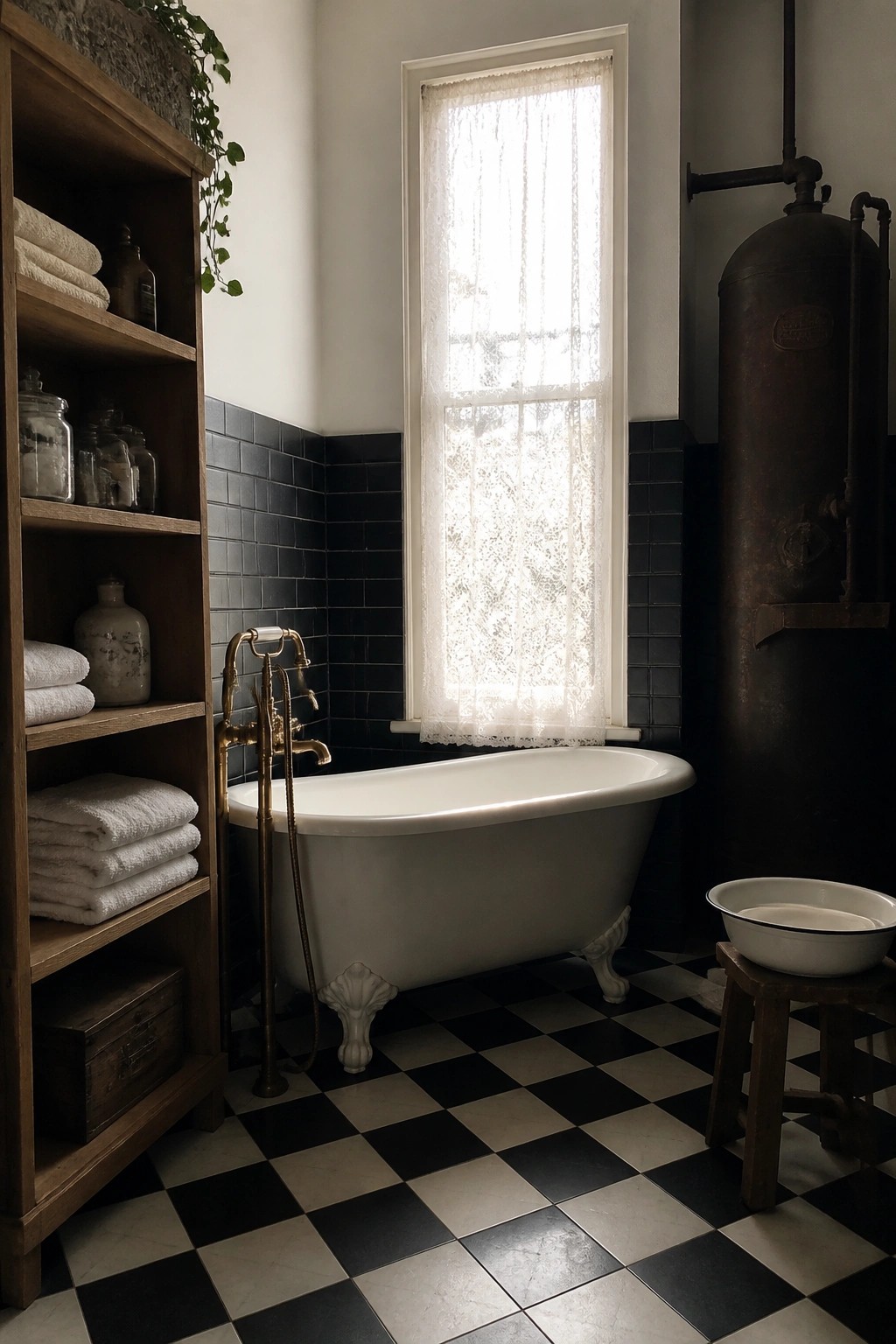
Open wooden shelves give a bathroom a simple way to hold towels and everyday items without taking up floor space. In rooms built around a clawfoot tub, this kind of shelving keeps things close at hand while the tub stays the main focus. The wood also adds a bit of warmth against cooler tile and fixtures.
This setup works best in older homes where wall space allows a tall unit without crowding the tub or walkway. Keep the shelves fairly open so the room still feels light, and use baskets or jars for smaller items if you want less clutter.
Place the Clawfoot Tub by a Window
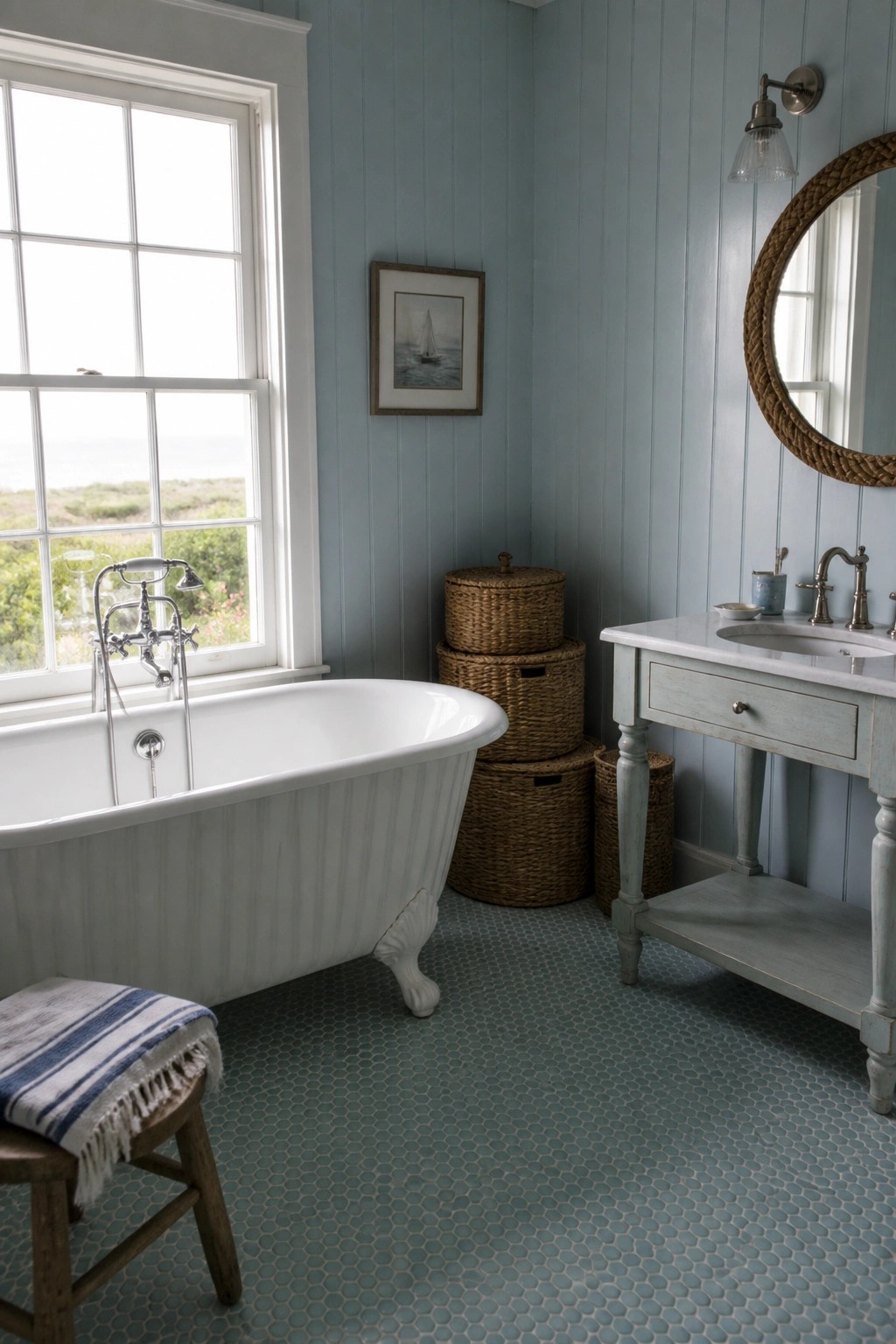
Putting the tub right next to a large window is a simple way to make a Victorian bathroom feel brighter and more open. The natural light softens the classic lines of the tub and helps the room feel less closed in.
This layout works best in homes where the window looks out on something pleasant. Keep the glass clear or use light sheers so the view stays part of the space, and make sure the floor and walls can handle a bit more moisture from the extra light and air.
Set The Clawfoot Tub Under A Window
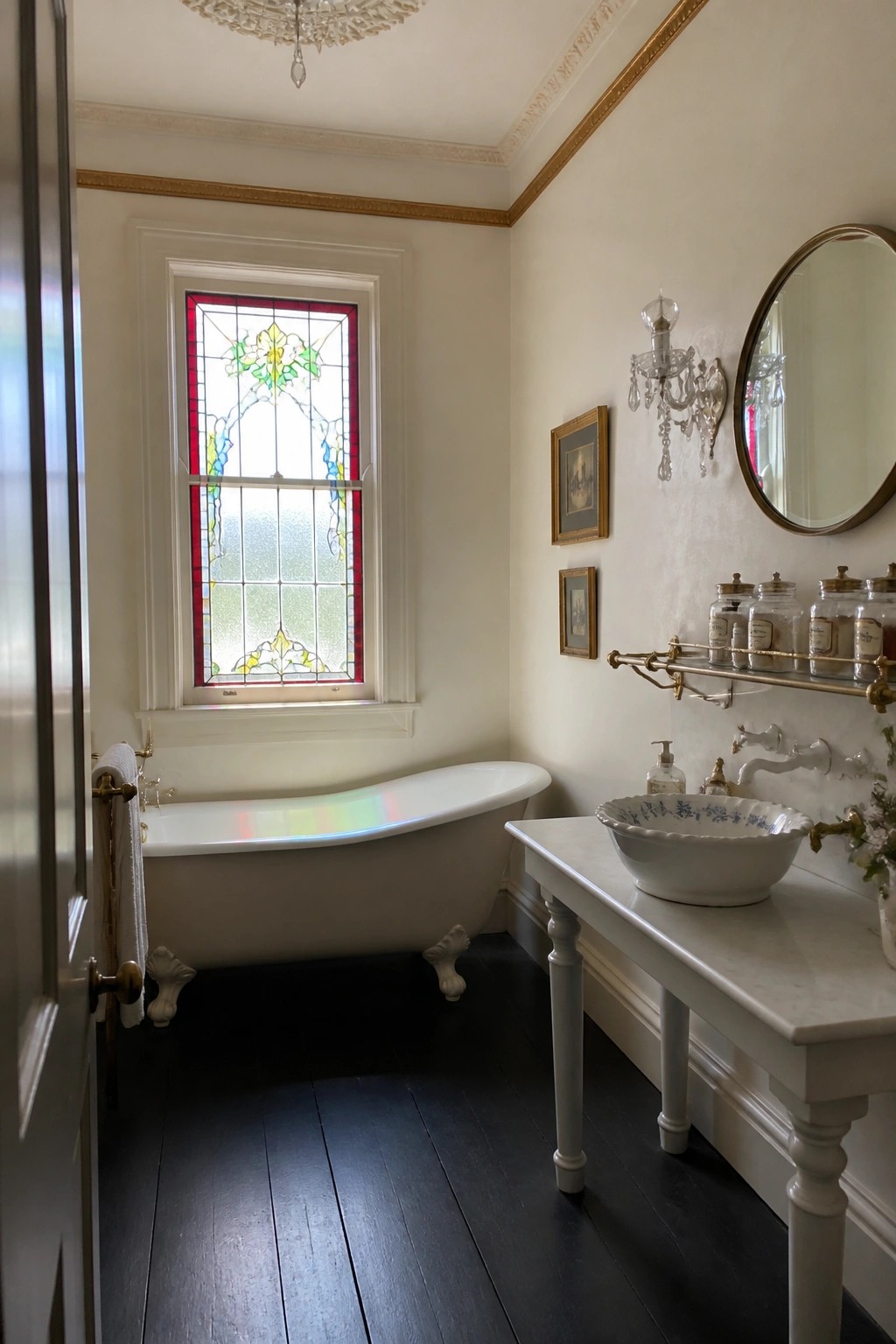
Many older bathrooms feel more balanced when the tub lines up with a window like this. The light hits the white surface and the dark floor makes the shape stand out without any extra styling.
This works best in rooms that already have good natural light and some period trim. Keep the window clear so the glass pattern can add color and keep the focus on the tub rather than competing details.
Dark Walls with a Clawfoot Tub
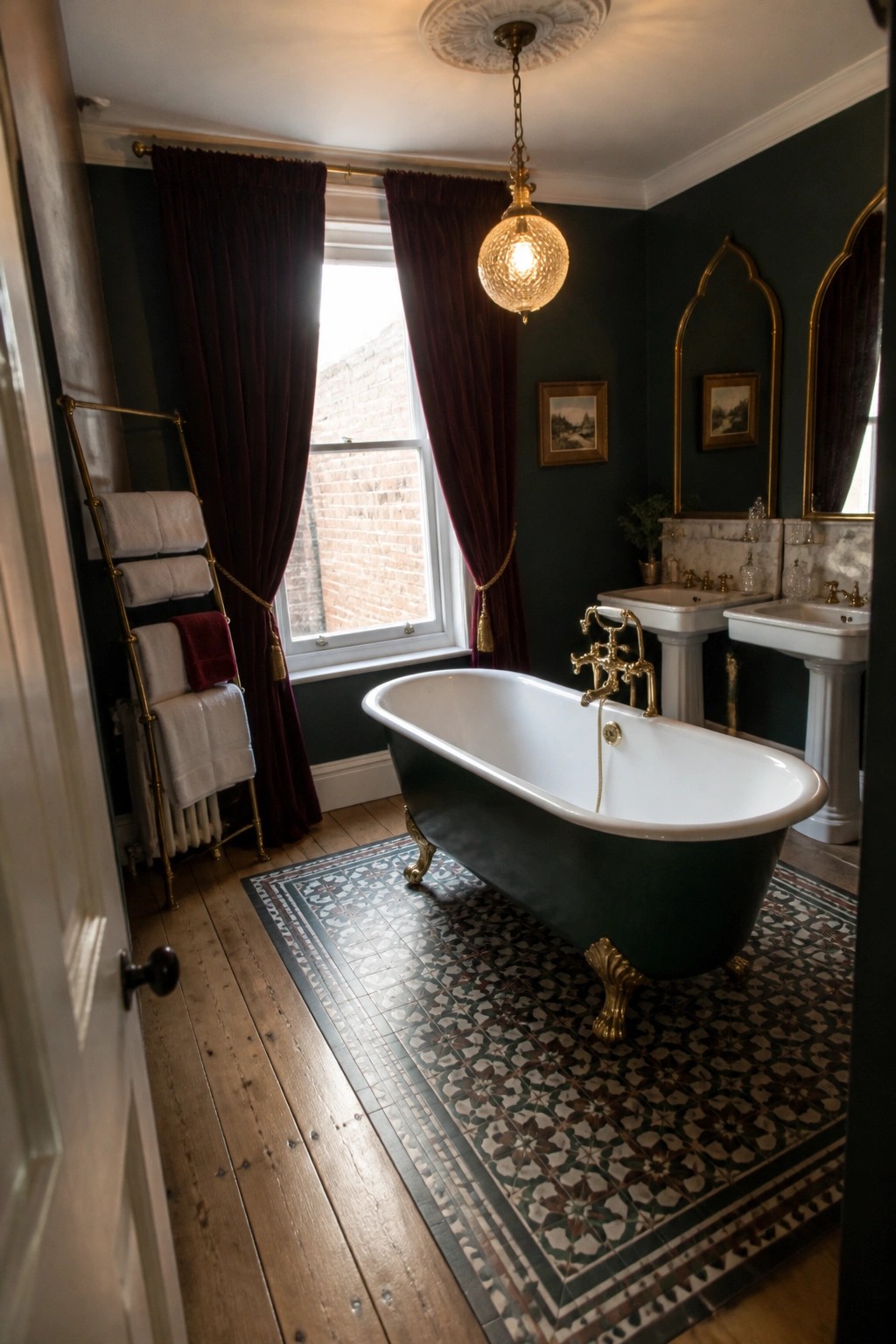
A deep wall color gives a clawfoot tub more presence in the room. The contrast makes the white interior stand out and keeps the space from feeling washed out, especially when the tub itself has a colored exterior.
This approach suits older homes that already have trim and higher ceilings. Keep the floor lighter or patterned so the dark walls do not close the room in too much.
Patterned Tile Floors With Clawfoot Tubs
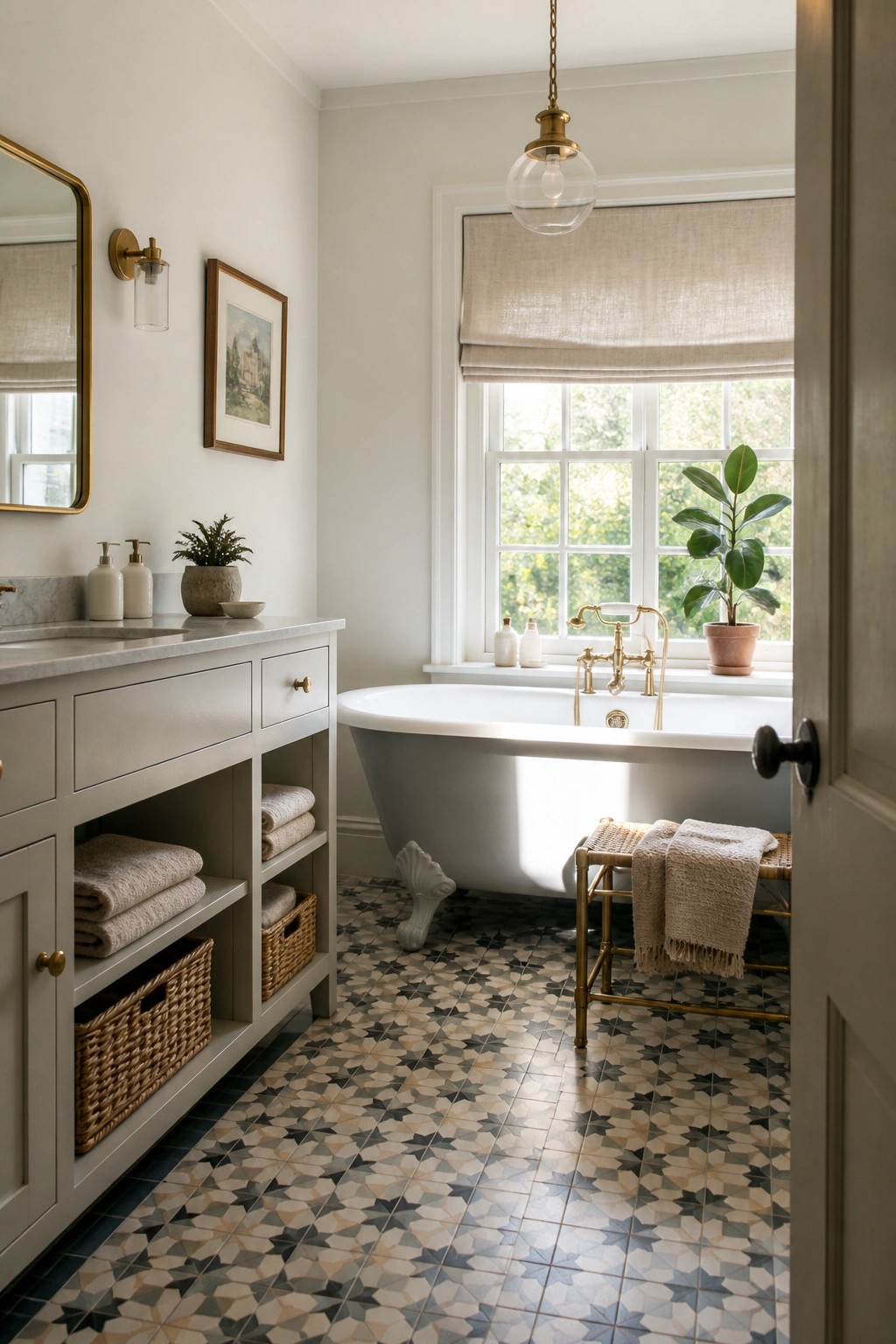
Patterned floors give a bathroom some life without competing with the tub itself. The star design here keeps the room from feeling too plain while the white tub stays the main event.
This works best in older homes where you want a little character underfoot. Stick with softer colors so the pattern stays in the background, and make sure the rest of the room stays fairly simple.
Placing The Tub Under A Window

Many bathrooms feel more balanced when the clawfoot tub sits right beneath a window. The light coming in draws attention to the tub and makes the whole room feel a bit bigger without adding extra fixtures.
This setup works best in older homes that already have tall windows or good natural light. Just check the glass for privacy and keep the sill clear so water does not collect there over time.
Dark Walls With A Checkered Floor

Dark walls paired with a bold floor pattern give a white clawfoot tub real presence in the room. The contrast keeps the space from feeling flat and helps the tub stand out as the main feature.
This works well in older bathrooms that already have decent natural light. It suits homes where you want to highlight the tub without adding much else to the walls or surfaces.
Set the Tub Beneath a Bay Window

Placing a clawfoot tub in front of a bay window gives the room a clear focal point and pulls in plenty of daylight. The setup feels natural in older homes where the windows already create a small alcove.
This works best when the rest of the space stays fairly simple. Keep the walls light and the floor plain so the tub and the view do most of the work.
Patterned Tile Floors With Clawfoot Tubs

A strong geometric floor gives the room a clear structure that lets the clawfoot tub remain the main focus. The black and white diamonds hold their own against the floral wallpaper without competing with the tub shape.
This approach works well in smaller Victorian bathrooms where you want some visual weight on the floor. Keep the walls and fixtures lighter so the pattern stays balanced and does not take over the space.
Frequently Asked Questions
Q: Where can I find a clawfoot tub that fits a real budget? A: Local salvage yards often have solid options that need only a fresh coat of enamel. Online listings from older homes turn up good finds too if you measure your space first. Refinishing keeps costs down while preserving that classic shape.
Q: What flooring works without clashing with the tub? A: Wide wood planks or soft patterned tile hold up to water and echo the period style. They create a warm base that lets the tub stand out. Steer clear of anything too polished that feels out of place.
Q: How do I handle plumbing for one of these tubs? A: Run supply lines along the floor or wall so the hardware stays visible and true to the look. A plumber used to older homes can make it work without major changes. Check pressure ahead of time to avoid slow fills.
Q: Can I add a modern faucet without breaking the feel? A: A simple chrome fixture blends right in and handles daily use better than old hardware. It adds convenience while the tub keeps the main charm.