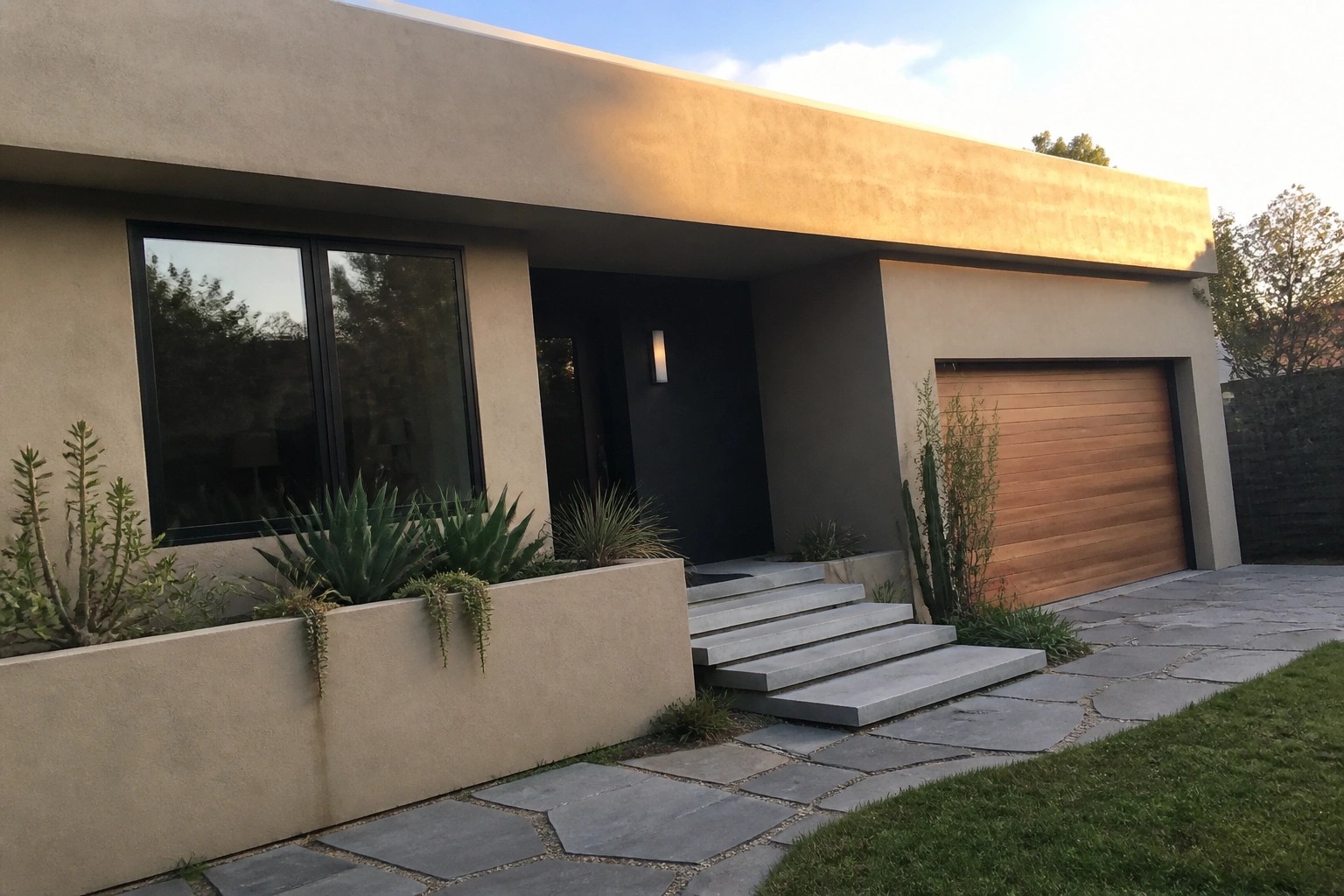
I often find that modern stucco homes with flat roofs succeed when the materials stay consistent across the front.
The way the roof meets the walls without much overhang changes how light and shadow play on the surface throughout the day.
Minimal trim helps the house read as a single form rather than a collection of parts.
Real life shows the difference.
I would test the stucco color against the actual roof material first if I were planning something similar.
Flat Roofs Help Stucco Stay Clean
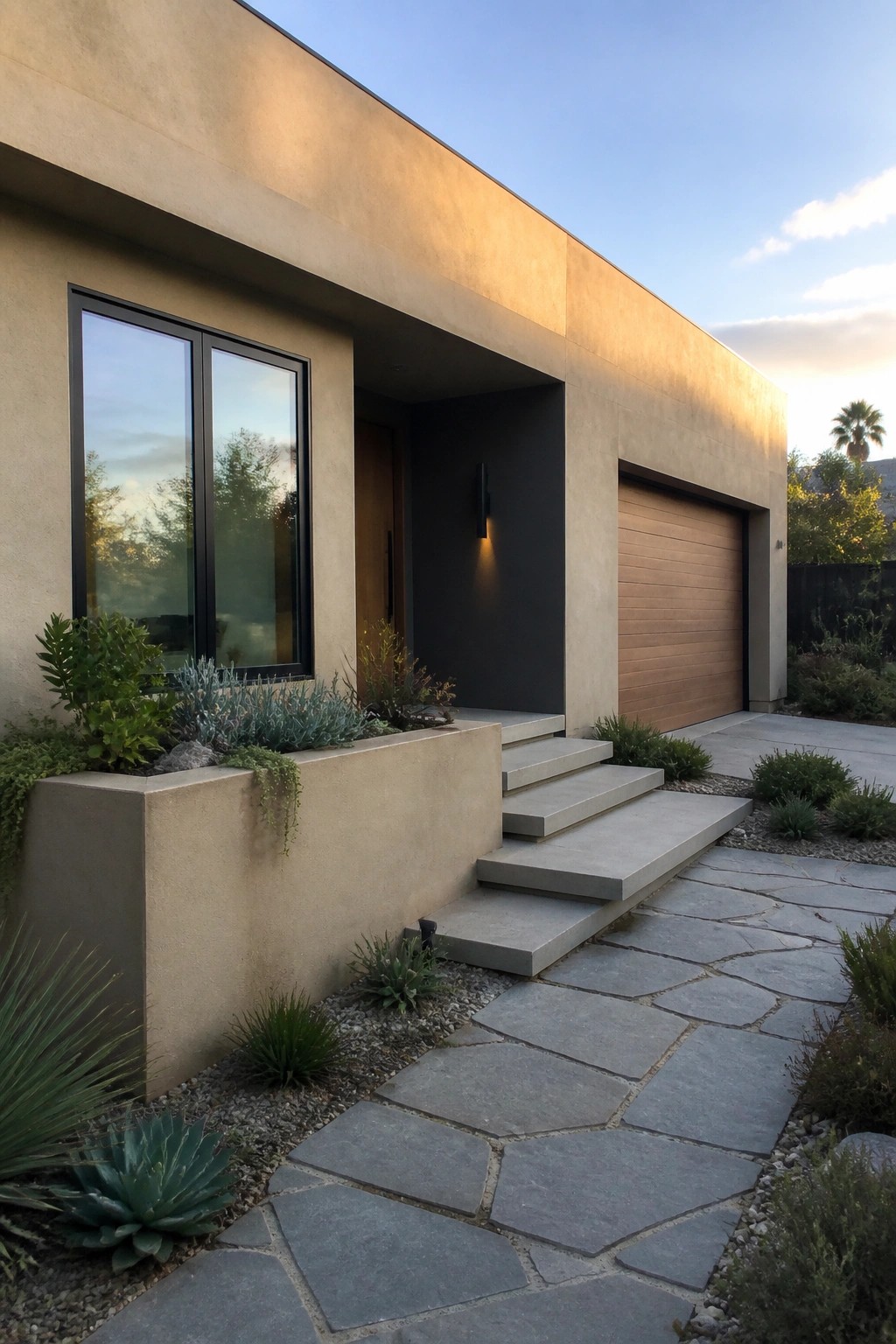
A flat roof removes the extra lines and overhangs that often make stucco houses look busy. Without a pitched roof or heavy trim, the walls stay smooth and the whole front reads simple and modern.
This works best on one-story homes or homes in dry climates where drainage is not an issue. Keep windows and doors few and large, and let the stucco run in long planes so the roof edge stays sharp.
Vertical Wood Slats on Stucco Exteriors

Many modern stucco homes stay simple with flat roofs and almost no trim. Adding a run of vertical wood slats on an upper level gives the wall some texture and breaks up the plain surface without adding fussy details.
This works best on homes that already keep everything else minimal. The wood adds warmth and a little privacy while the rest of the facade stays clean. It suits two-story houses where the upper floor needs a bit more character than just another blank wall.
Simple Entry Overhangs On Stucco Homes
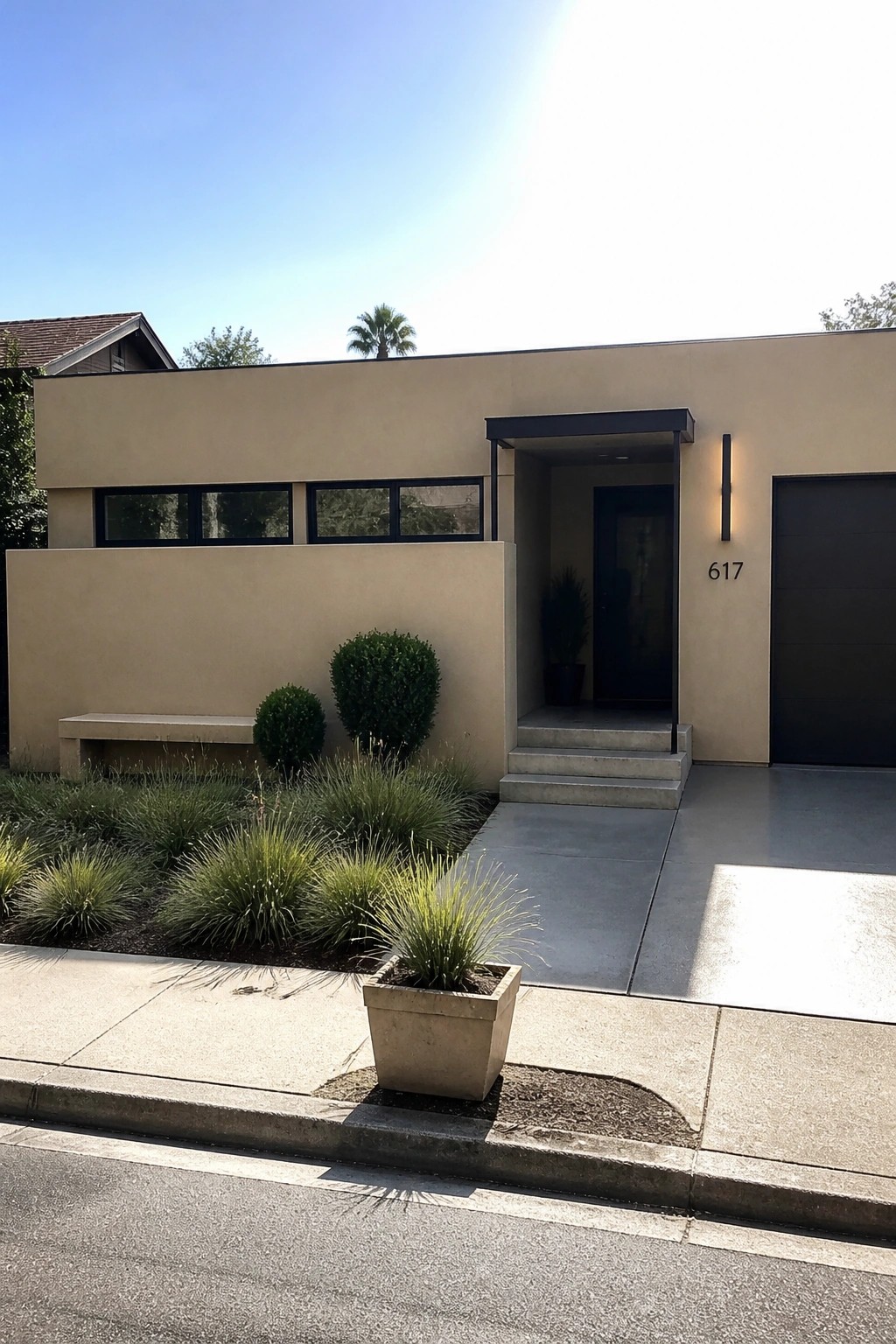
A small flat canopy over the door can give the entry just enough definition without adding trim or breaking the clean lines of a flat roof. It works because it keeps the overall look simple while still showing where the front door is.
This approach fits homes with horizontal stucco walls and dark doors. Place the canopy low and keep the rest of the facade free of extra detail so the entry stays understated but clear.
Use a Roof Overhang to Shade the Patio

A flat roof gives you a simple way to cover part of the patio without adding posts or beams. The overhang here keeps the dining table and grill area usable during the day and creates a clear edge between the house and the pool.
This works well on modern stucco homes because it keeps the lines straight and the trim minimal. Line up a long table along the house wall so the space feels connected to the indoors, and use the covered zone mainly for dining and cooking rather than just lounging.
Dark Stucco for a Simple Modern Exterior

Dark stucco gives a house a solid, grounded feel without relying on trim or extra details. The flat roof and smooth finish keep the lines clean so the shape of the house stands out on its own.
This look works well on smaller homes or those with simple footprints. It needs little upkeep and pairs easily with basic gravel or low planting around the base.
Covered Patios Under Flat Roof Overhangs
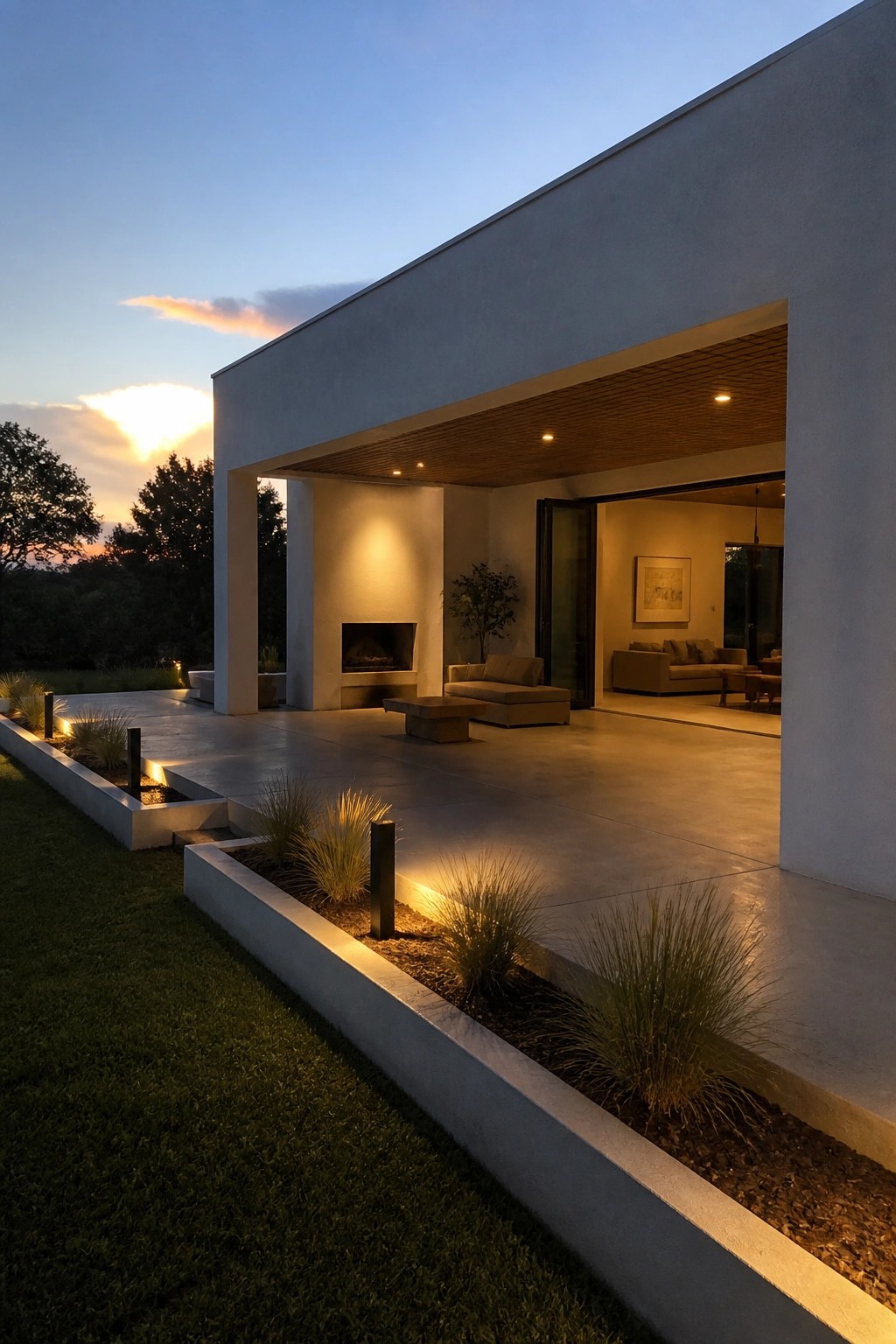
A flat roof overhang can turn a basic patio into a real extension of the house. The deep cover here creates a shaded zone that stays comfortable even when the sun is low, and it pairs well with the plain stucco walls and simple concrete floor.
This approach suits homes where you want outdoor space you can actually use most of the year. Keep the trim minimal so the roof line stays clean, add a built-in fireplace for cooler evenings, and let the planting beds along the edge do the rest of the work.
Wood Screens Add Texture to Stucco Facades

Many modern stucco homes keep trim to a minimum and rely on simple material changes for interest. A vertical wood screen works well here because it breaks up the flat wall without adding fussy details or moldings.
This approach suits homes with clean rooflines and works best on side elevations or along walkways. Keep the wood untreated or lightly sealed so it weathers naturally, and let plants grow through the slats if you want extra softness over time.
Flat Roofs And Minimal Trim
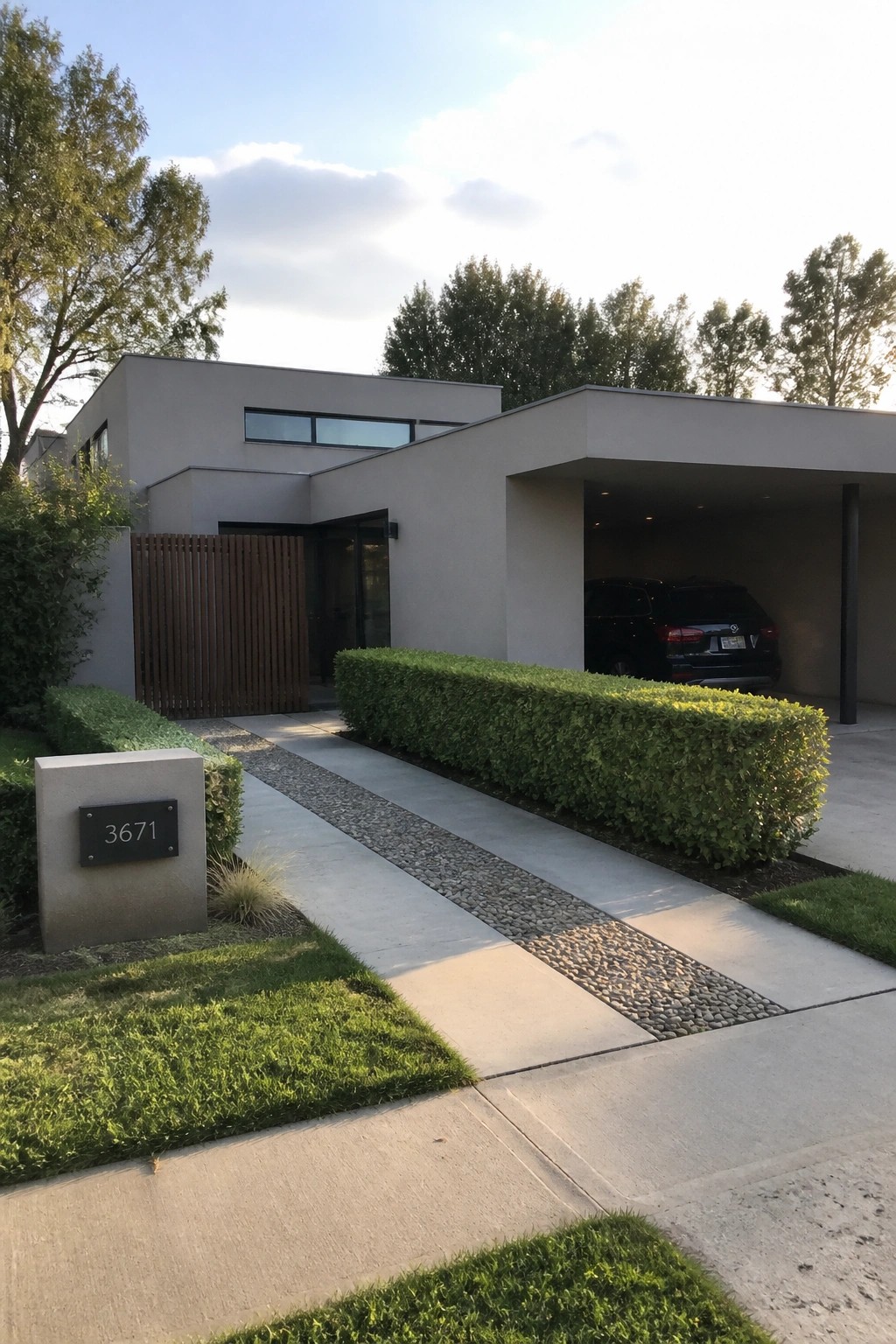
A flat roof paired with very little trim lets stucco read as one smooth surface. The result feels calm and simple, which is why this approach shows up often in modern houses that want to stay low key on the outside.
It works best on homes where the roofline stays straight across and the carport or garage opening sits flush with the wall. Skip extra moldings or heavy overhangs, and the whole front stays easy to keep clean.
Minimal Trim on Stucco Exteriors

A flat roof already gives a house a simple shape. Adding almost no trim around the windows and doors keeps that shape looking solid instead of busy. The black door and narrow sconces here show how little extra detail is needed once the roofline stays clean.
This approach works best on homes in dry climates where stucco holds up well. It suits anyone who wants the exterior to feel current without constant upkeep on moldings or overhangs. Just make sure the door and window frames are dark enough to stand out against the wall color.
Simple Entries With Wood Doors On Stucco
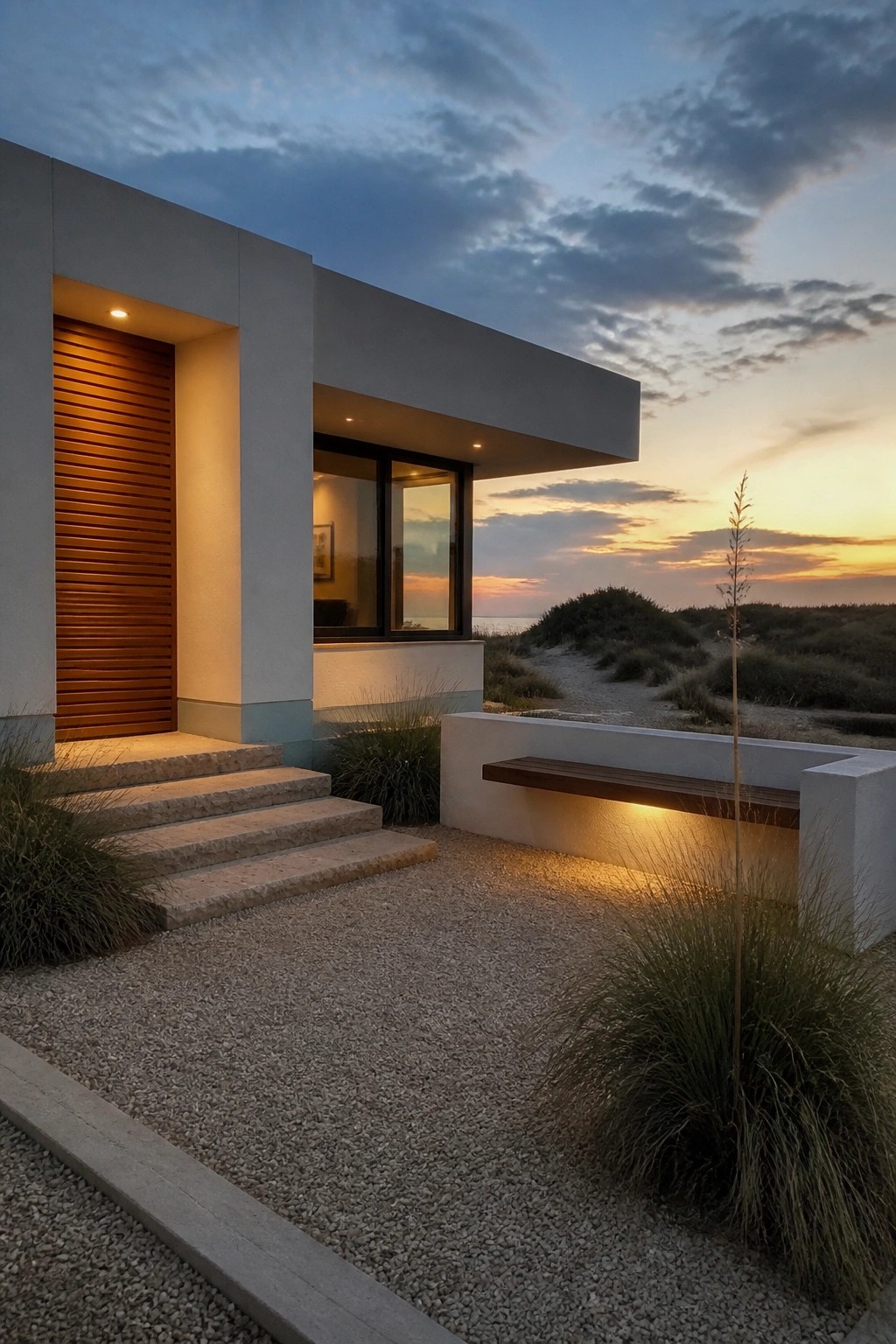
A flat roof and plain stucco walls work best when the entry stays quiet. The wood door and its slatted surround give the only real contrast, and that single move keeps the whole front from looking too plain or too busy.
This approach suits homes that already have clean lines and little overhang. Skip extra trim around the door and let the wood color do the work instead. It looks especially good on smaller lots or coastal sites where you want the house to sit lightly on the land.
Flat Roofs Keep Stucco Surfaces Clean
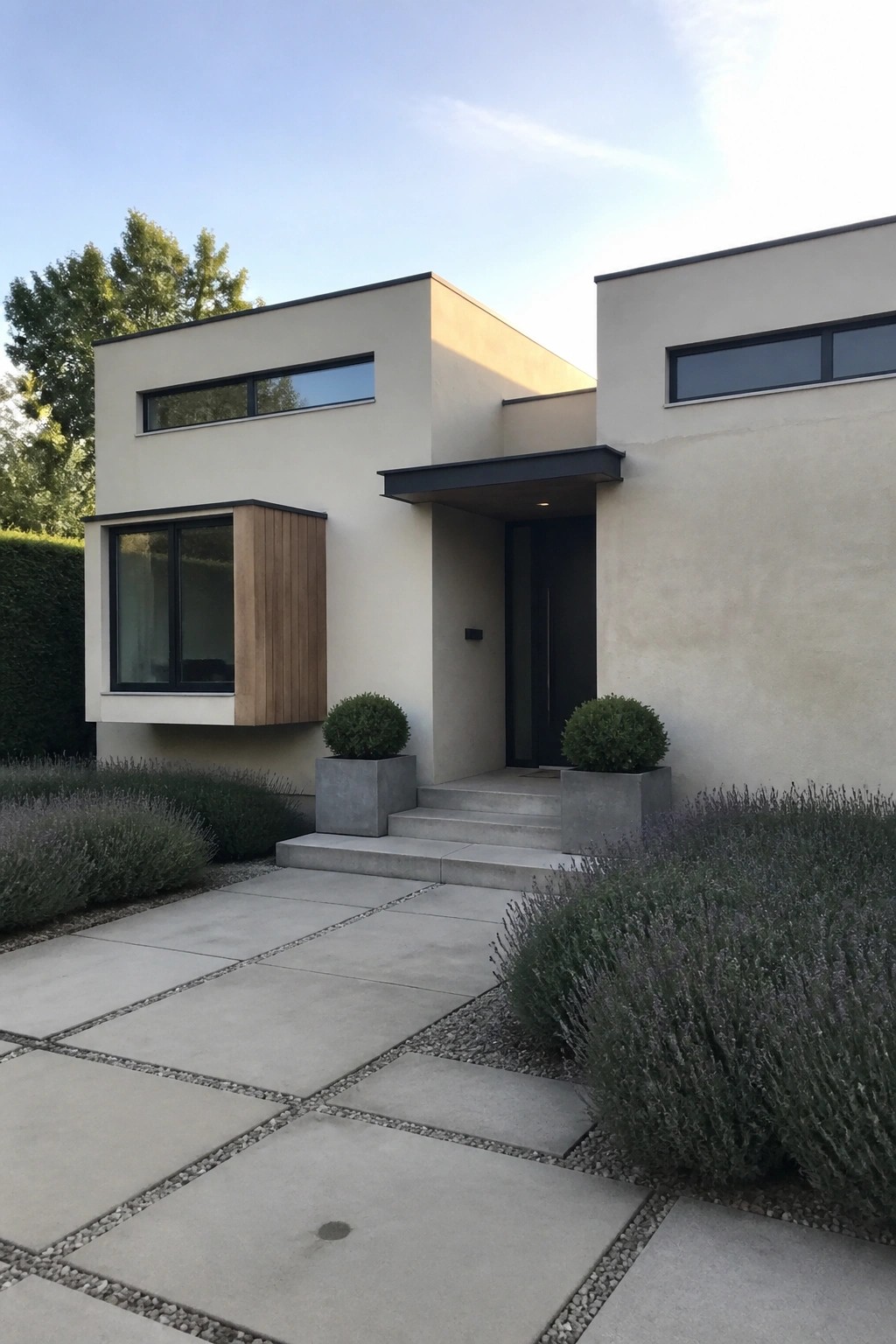
A flat roof works well with stucco because it removes the usual overhangs and edges that normally break up the walls. This lets the house read as simple stacked boxes with almost no extra lines or trim to interrupt the finish. The small dark canopy over the door is one of the only accents, and it stays low key on purpose.
This approach fits newer homes that want a modern shape without added decoration. It works best in dry climates where roof drainage is handled carefully, and it pairs easily with dark window frames for a bit of contrast.
Built-In Concrete Seating Around The Pool

Built-in concrete seating keeps the pool area simple and connected to the house. It creates a solid lounge zone that feels like part of the deck rather than something added later, which works especially well with flat roofs and minimal trim.
This layout suits homes that already use concrete or stucco throughout the yard. It holds up in sun and weather without much upkeep, though cushions help make the seats usable for longer periods.
Recessed Wood Entries On Stucco Homes
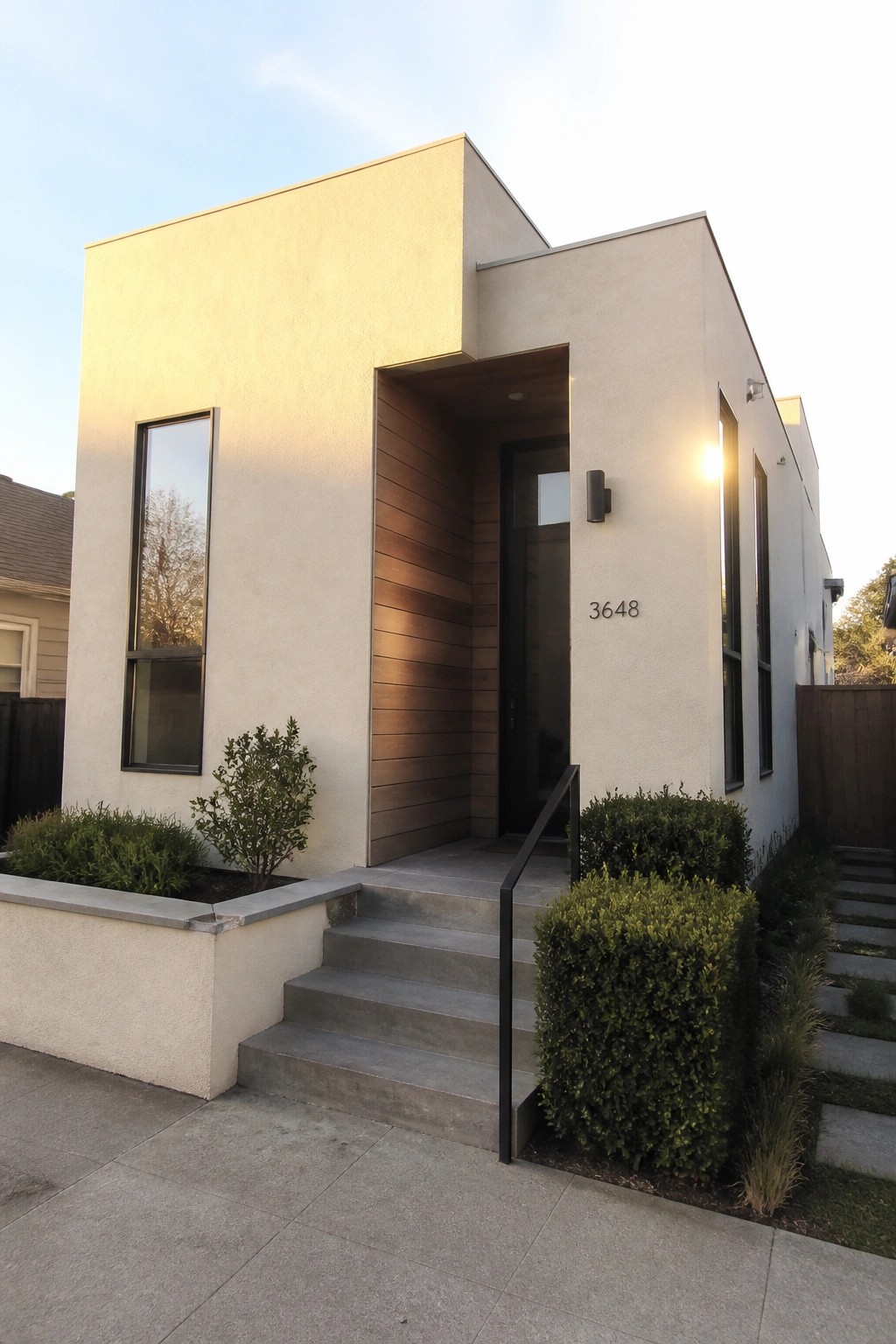
Many flat roof stucco homes stay simple by skipping trim and keeping the walls clean. A recessed entry with wood paneling gives the front door a natural place to stand out without adding layers of detail.
This works best on boxy modern homes where the roofline stays straight and low. The wood brings a bit of warmth right where people approach the house, and the recess itself helps shade the door without extra overhangs.
Mix Wood Siding With Stucco For Contrast

One simple way to give a flat roof stucco house more character is to cover part of the exterior in dark wood siding. The vertical grain breaks up the smooth surface and adds warmth without any extra trim or molding. It keeps the overall look clean while giving the eye something to rest on.
This approach works best when the wood is used on an upper level or a projecting section so it feels intentional rather than random. It suits homes in milder climates where the wood can age naturally. Make sure the transition between the two materials stays sharp and the wood is properly finished to avoid maintenance issues later.
Mark the Entry With a Simple Black Canopy
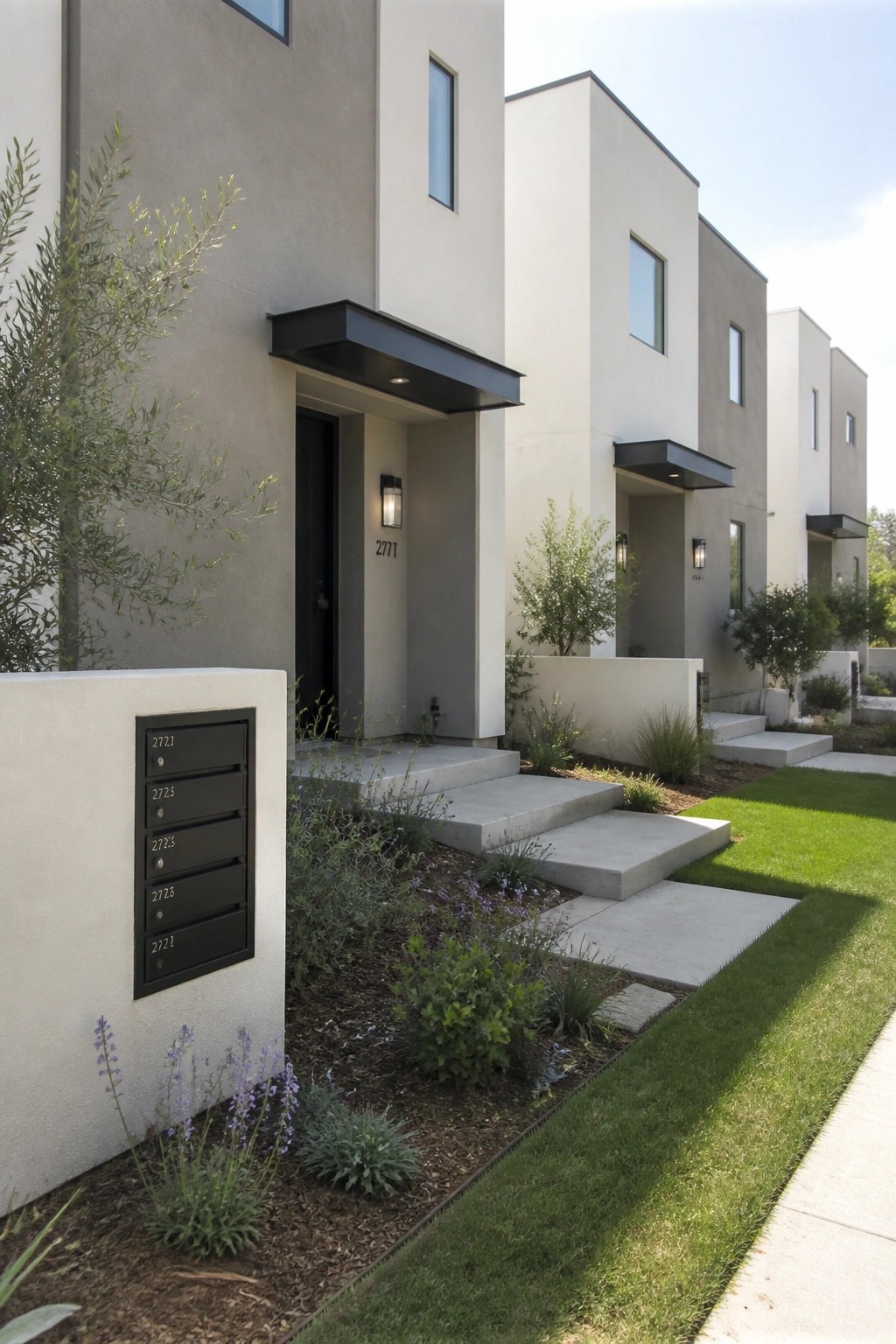
A flat black canopy over the door gives the entrance some weight without adding trim or extra layers. On a plain stucco wall it creates a clean break that feels deliberate rather than busy.
This approach works well on homes that already keep the roofline flat and the siding simple. It suits new builds or updates where the goal is low maintenance and a quiet modern look. Just make sure the canopy stays shallow so it does not compete with the wall.
Align the Pool With Open Living Walls

A long narrow pool set right against the house works well when the living area opens fully to the outside. The flat roof and plain stucco keep the lines simple, so the water surface feels like it continues the floor indoors. This setup avoids extra walls or steps that would break the flow between the rooms and the deck.
It suits homes where people want to move easily from seating inside to the water without crossing a wide patio. Keep the pool edge close to the doors and use the same paving material on both sides so the space reads as one level. Avoid cluttering the strip between the house and the water with furniture or planters.
Wood Slats on Stucco Exteriors

Vertical wood slats placed beside the entries give a plain stucco wall just enough texture and warmth. The move works well on flat roof homes because it adds contrast without extra trim or fussy details that would fight the clean lines.
Try this approach on the front of the house near doorways or side entries. It suits homes that already keep the roofline simple and the walls smooth, and it stays low maintenance as long as the wood is sealed properly.
Built-In Concrete Seating For Outdoor Kitchens
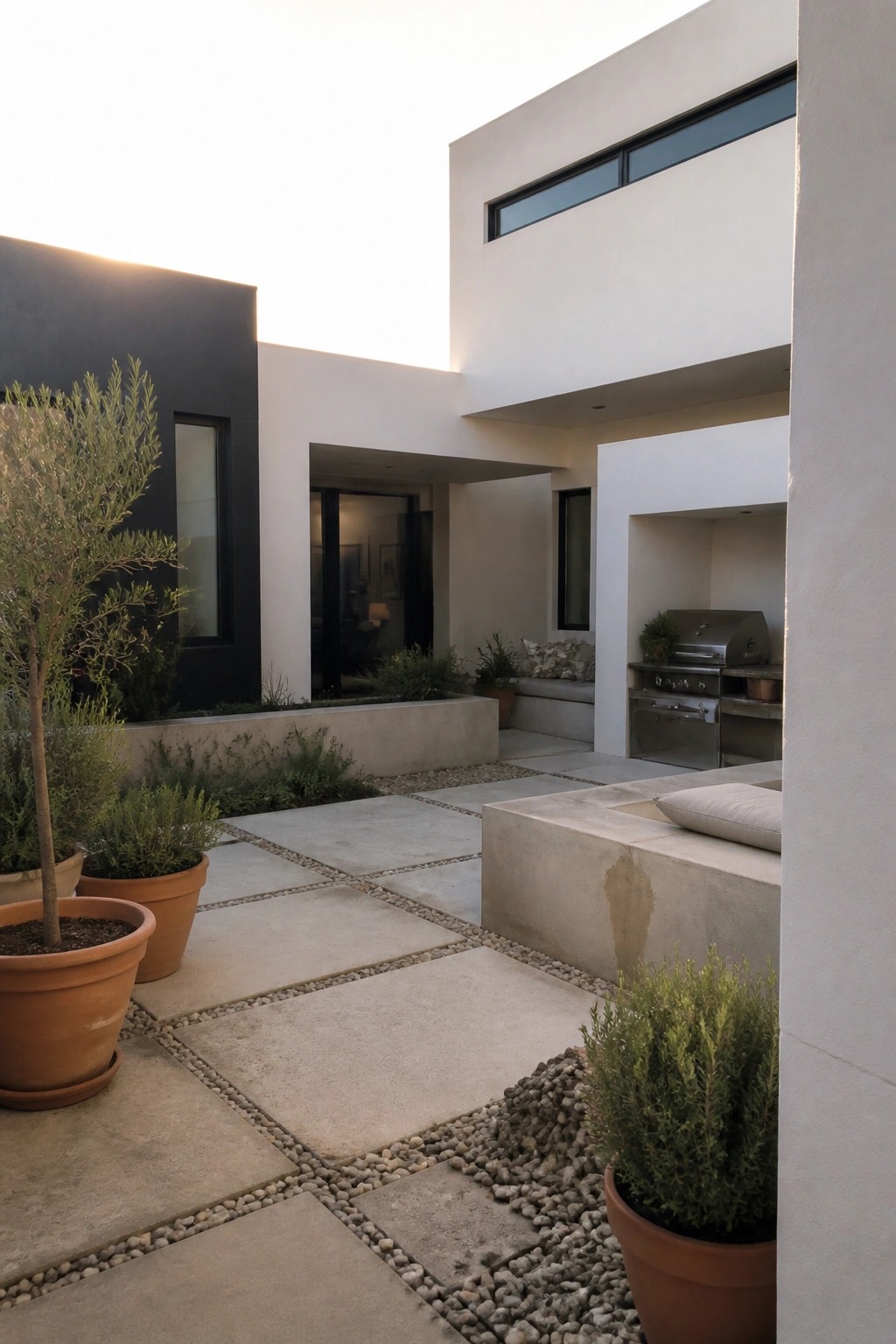
Many people like adding built-in concrete seating right next to an outdoor kitchen because it keeps everything in one spot and cuts down on extra furniture. The solid material holds up well outside and gives the space a clean, simple look that matches modern homes with flat roofs.
This works best on a paved courtyard where you can pour the benches as part of the patio itself. It suits smaller yards or homes that want low maintenance, though you should plan the height and depth so the seats feel comfortable for everyday use.
Minimal Trim Keeps Stucco Exteriors Clean

Many modern stucco homes look their best when the trim stays very limited. This approach lets the flat roofline and plain wall surfaces read as one simple shape instead of a collection of separate parts. The result feels calmer and more current than houses loaded with extra molding or heavy window frames.
This works especially well on single-story or low homes where you want the eye to stay on the overall form. Skip ornate details around openings and instead let the stucco meet the windows and roof edge directly. The same idea carries over to any added steps or planters, which should stay low and match the wall color so they do not break the clean lines.
Wood Accents On Stucco Walls
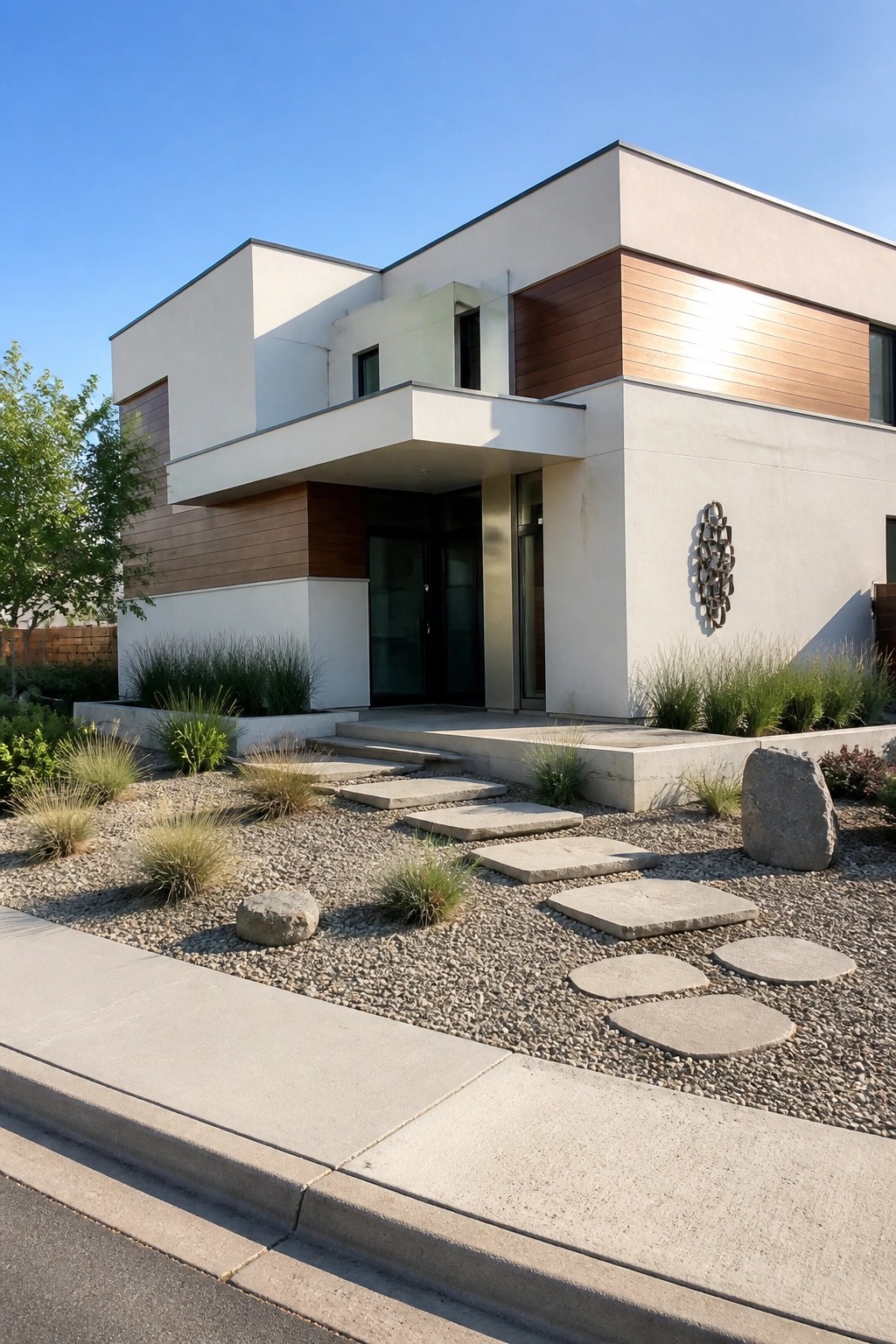
Many modern stucco homes add strips of wood siding to break up large wall areas. The contrast gives the surface some texture while still keeping the trim minimal and the lines clean.
This works best on homes with flat or low-pitched roofs where the walls stay simple. It adds just enough warmth without cluttering the facade or raising maintenance needs.
Frequently Asked Questions
Q: How do I protect the stucco from weather damage over the years?
A: Apply a good waterproof sealant once a year. Watch for any chips near the roofline and fix them fast. This prevents bigger issues from starting.
Q: What if I want to add some color without adding trim?
A: Paint the stucco in a single bold shade across the whole house. Keep the accents to the doors only. The flat roof stays clean and the minimal style holds.
Q: Do flat roofs need special insulation in these stucco homes?
A: Layer rigid foam boards under the roofing material. This cuts down on heat transfer without changing the exterior look.