I have always noticed that stucco homes gain much of their presence from the way the entry meets the street.
Arched openings tend to break up the flat surface and give the front a softer rhythm that holds up in different lighting.
Some details only reveal themselves once you stand in front of the house.
I would probably sketch a few arch proportions on paper first before choosing the final stucco texture.
Courtyard layouts also shape how the exterior reads by creating layers that you notice as you approach the door.
Arched Entries That Lead Into Courtyards
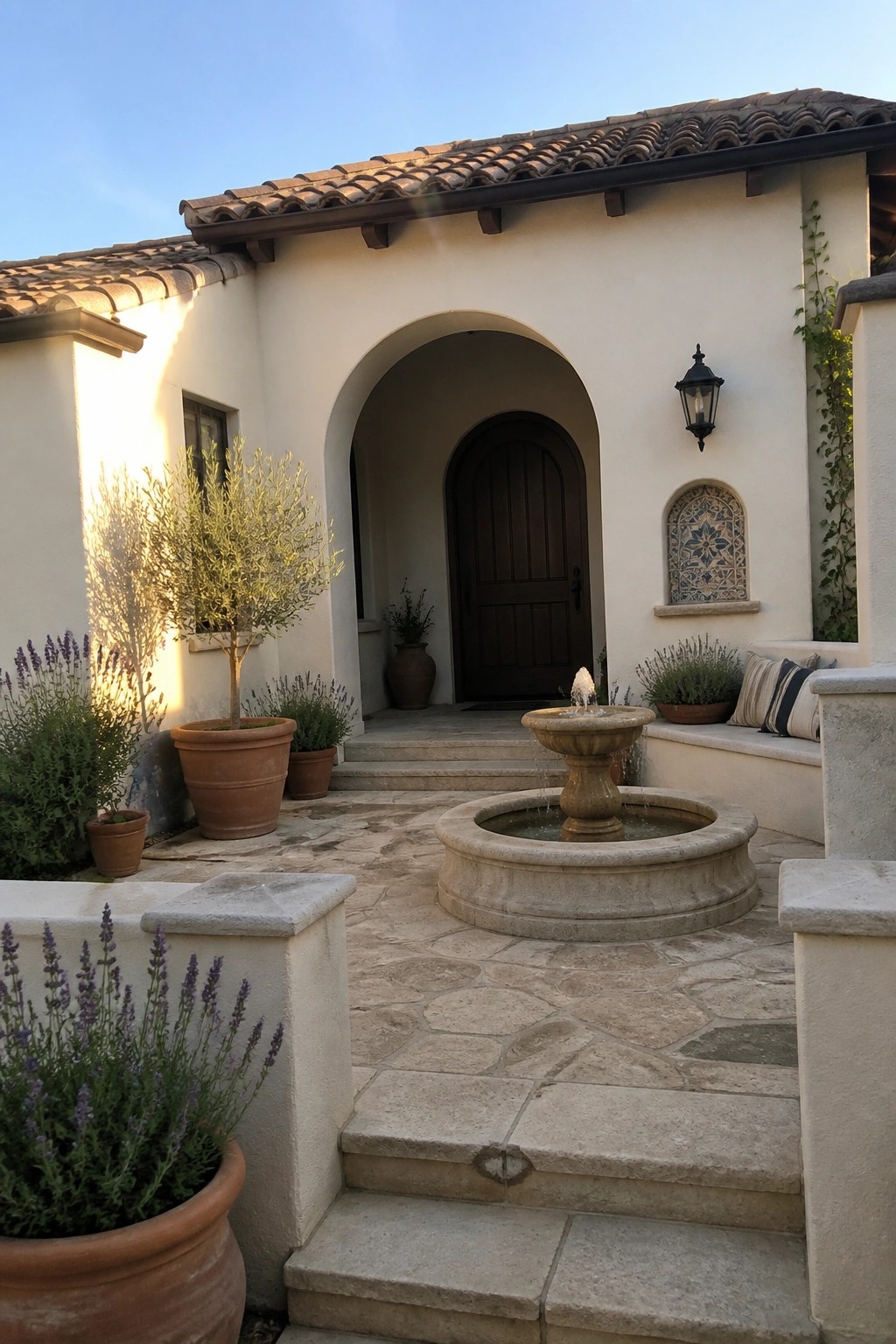
An arched entryway gives a stucco home a clear sense of arrival. It turns the space between the street and the front door into something more than just a walkway. The curve softens the lines of the house and creates a shaded spot that feels protected without closing anything off.
This layout works best on homes where the courtyard sits right at the entrance. Keep the arch simple, match the stucco color to the surrounding walls, and let the paving run straight through so the whole area reads as one connected space. Avoid making the arch too narrow or adding too many details around it.
Central Water Channels in Courtyard Plans

A long narrow pool running down the center of a courtyard gives the space a clear line and a calm feel. The water reflects light and sky, which softens the surrounding stucco and tile without needing extra decoration.
This layout works best on homes with simple arched openings because the straight water line echoes the architecture. Keep the pool narrow so walking paths stay usable on both sides, and choose a light tile border that matches the ground rather than contrasting with it.
Arched Entries That Open into Gravel Courtyards

An arched opening in a stucco wall makes a strong but simple transition into a courtyard. It frames the view ahead and gives the space a clear sense of arrival without needing extra ornament.
This layout works best on homes that want privacy and low upkeep at the same time. Gravel and wide stepping stones keep the ground practical, while the arch itself does the main work of defining the entry.
Built-In Seating Along Courtyard Walls
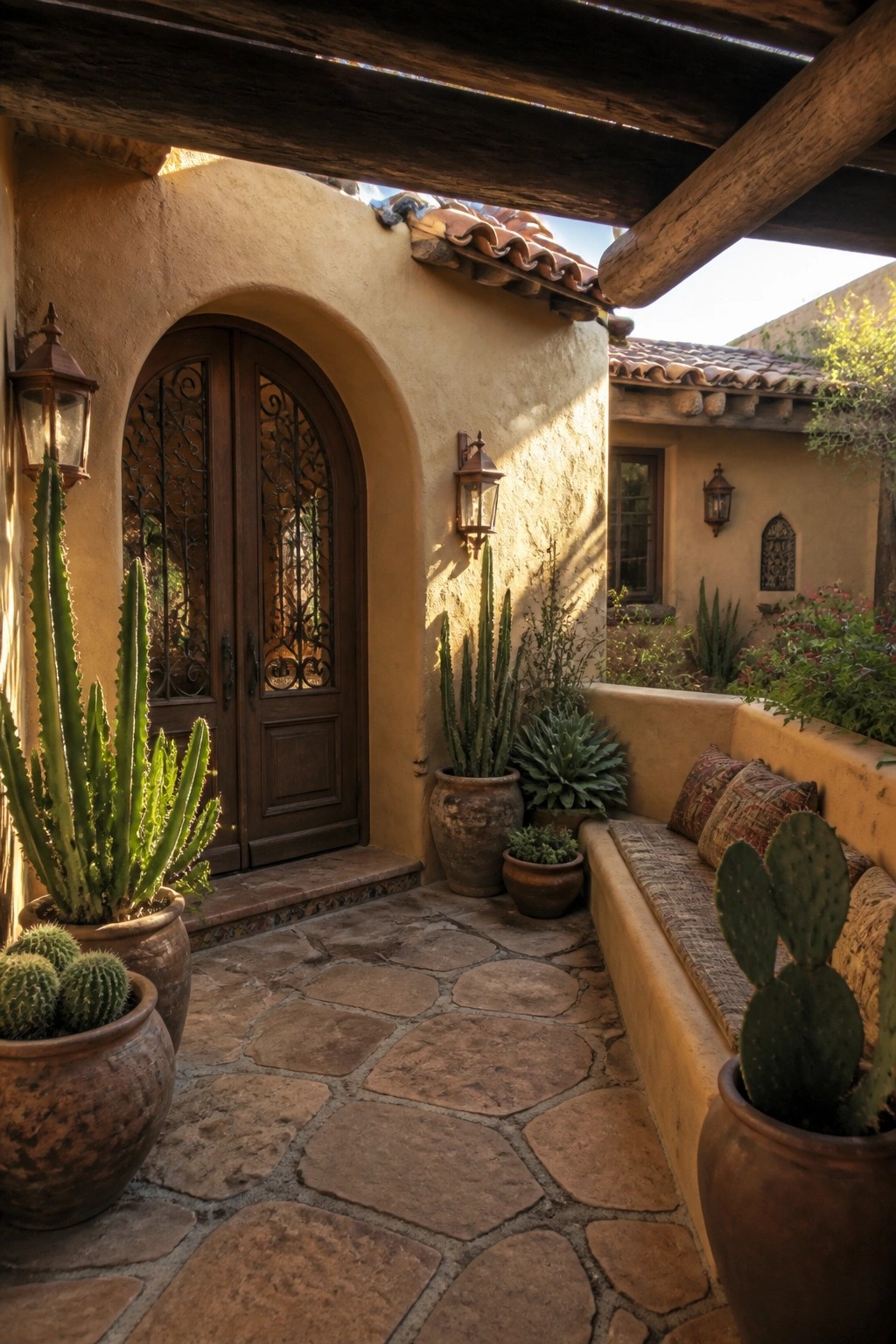
A built-in bench along the courtyard wall turns an open walkway into a place where people actually want to sit and spend time. It keeps the space from feeling empty while still leaving room for pots and plants to soften the edges.
This setup works best in smaller courtyards attached to stucco homes. Keep the bench low and simple, match the cushion fabric to the wall color, and add a few large pots nearby so the seating feels like part of the architecture rather than something added later.
Stone Arches at the Entry
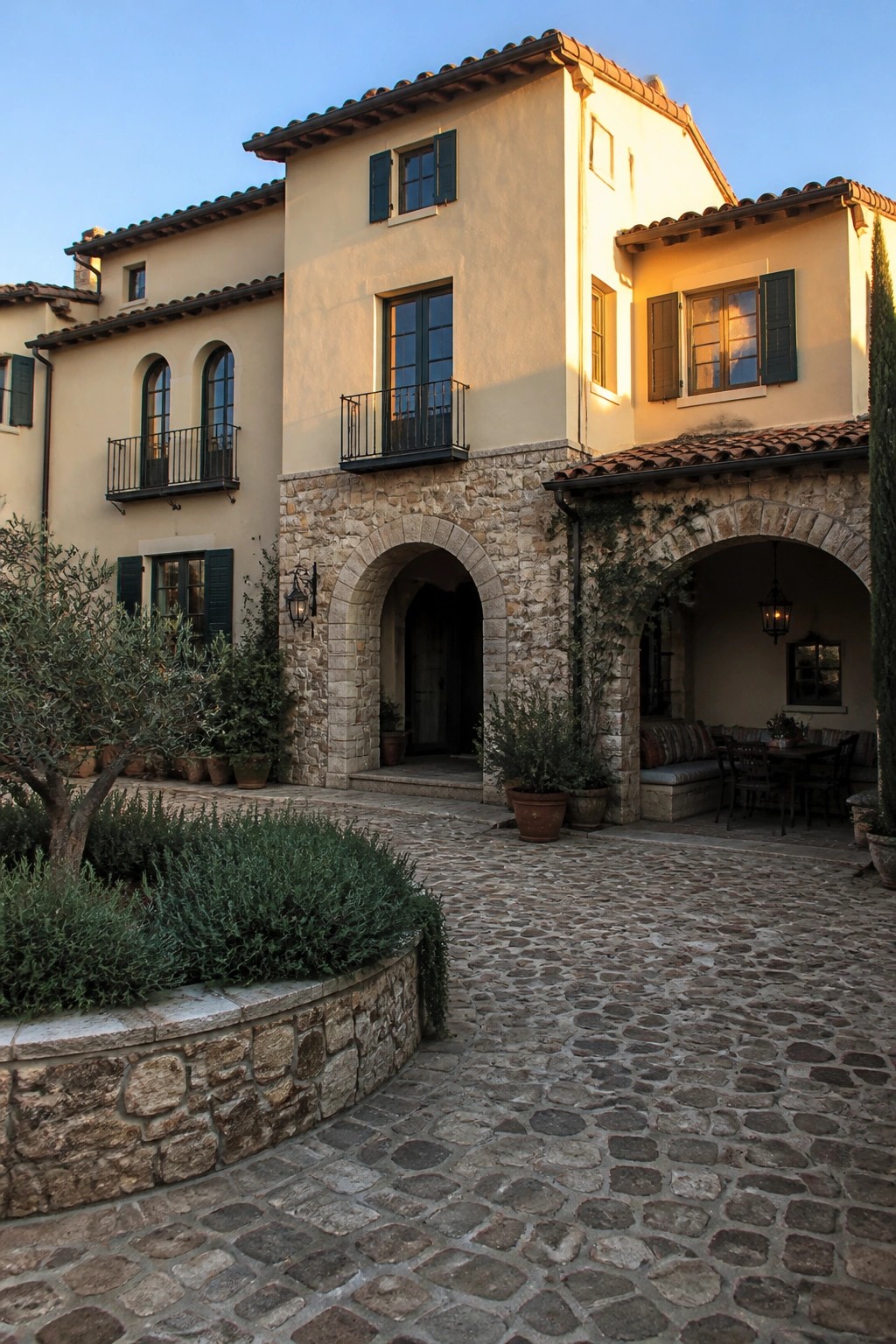
Stone arches give a stucco home a clear focal point at the front. The rough texture of the stone stands out against the smooth walls and makes the doorway feel more solid and permanent. This works especially well when the arch opens straight into a courtyard rather than stopping at a flat door.
It suits homes that already lean Mediterranean or Spanish in style. Keep the rest of the facade simple so the arch does the work, and make sure the courtyard paving flows naturally from the entry without adding too many extra details.
Courtyard Fountains That Add Daily Calm

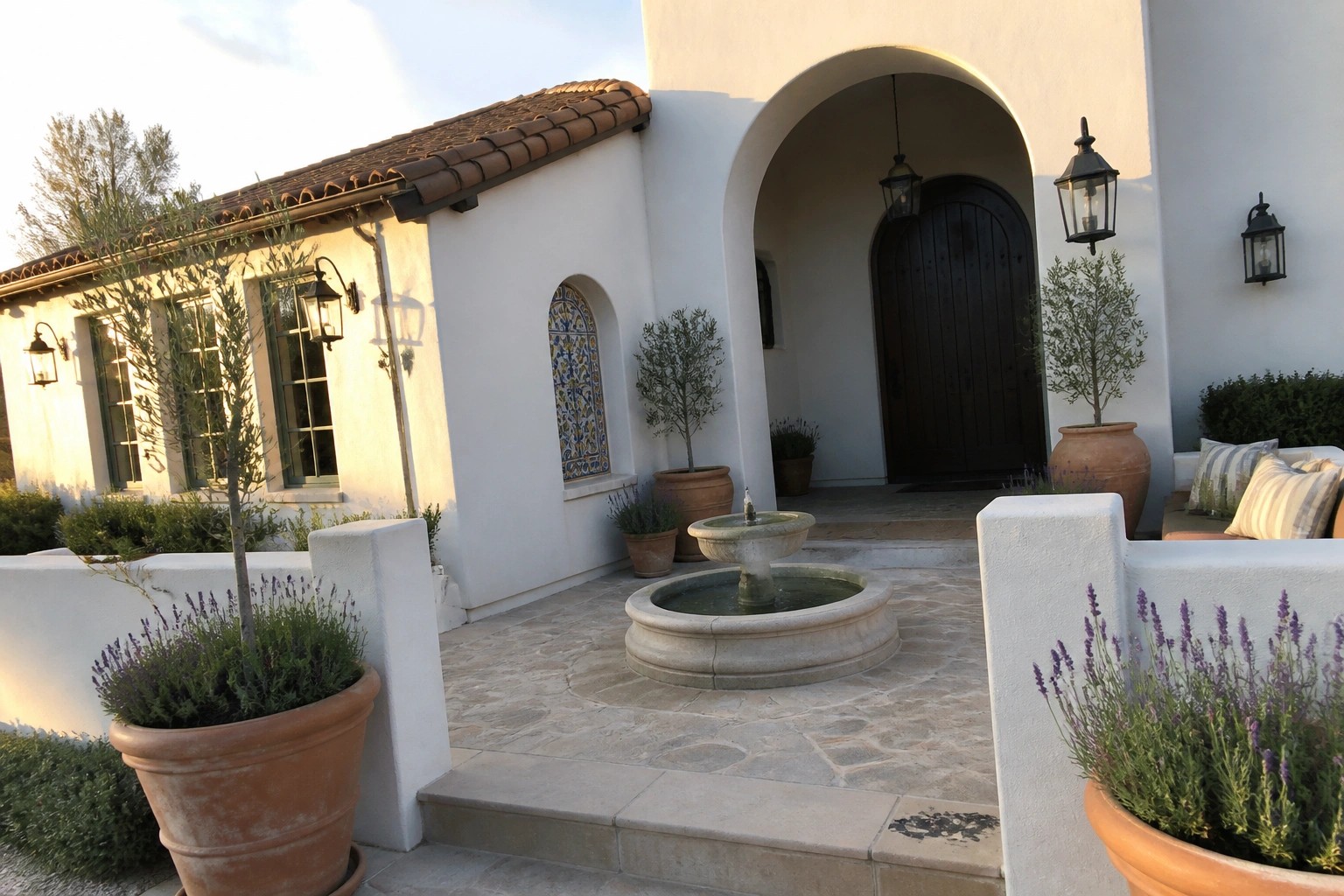
A small fountain in the middle of a courtyard gives the whole space a quiet center. It draws the eye, adds the sound of water, and helps the area feel cooler on warm days without needing much else around it.
This works best in homes with stucco walls and covered walkways where the fountain can sit in full view from several rooms. Keep the basin simple, use tile that matches the house details, and let a few plants soften the edges so the water stays the main point.
Arched Entries That Shape a Courtyard Patio
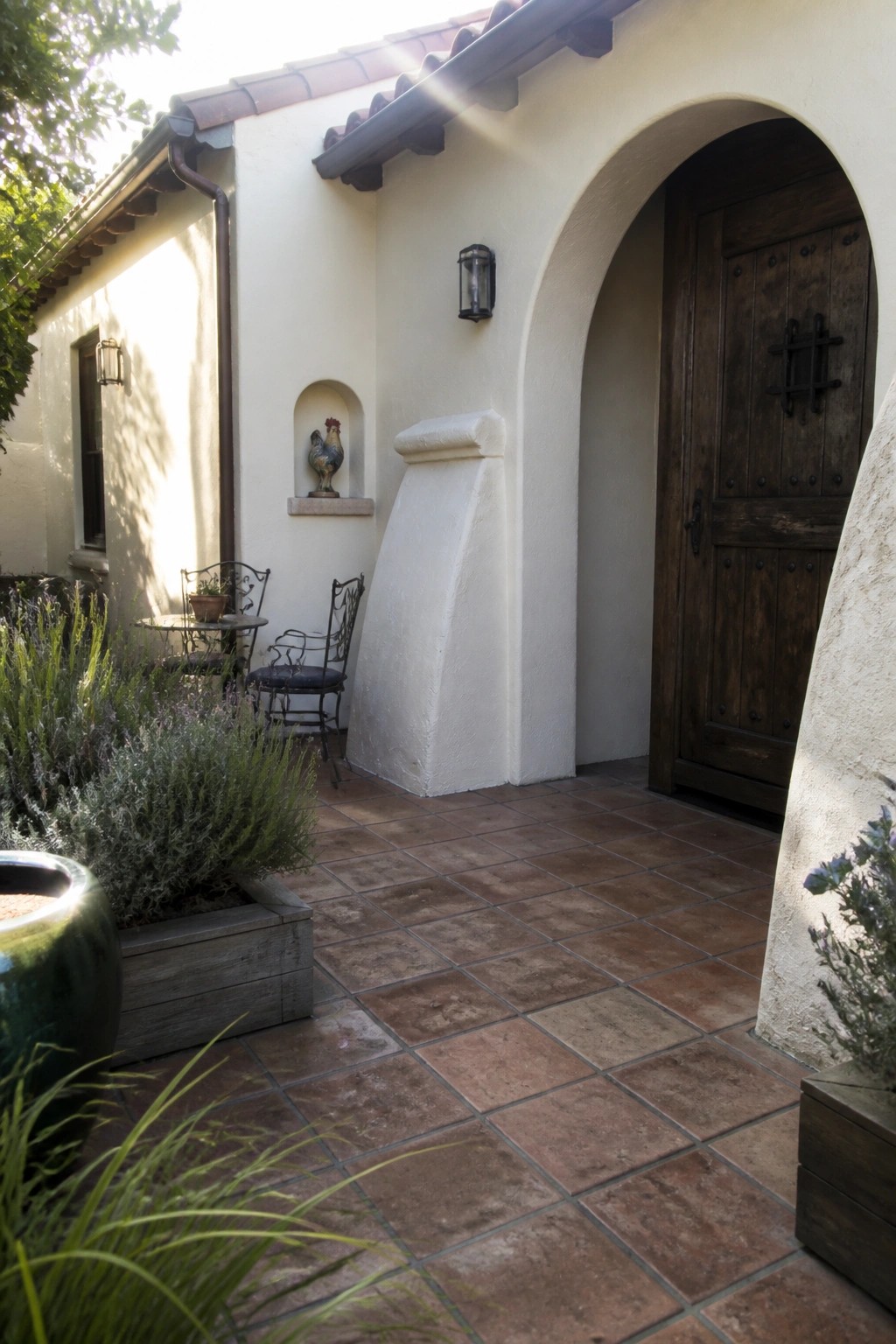
An arched doorway does a good job of marking where the house ends and the courtyard begins. It gives the patio a sense of arrival without needing walls or gates, and it works especially well with stucco because the curve softens the flat walls around it.
This setup suits homes that already have a simple outdoor floor like terracotta tile. Keep the planting low along the edges so the arch stays the main feature, and add just a couple of chairs so the space feels used rather than just for show.
Arched Entries That Open to Courtyards
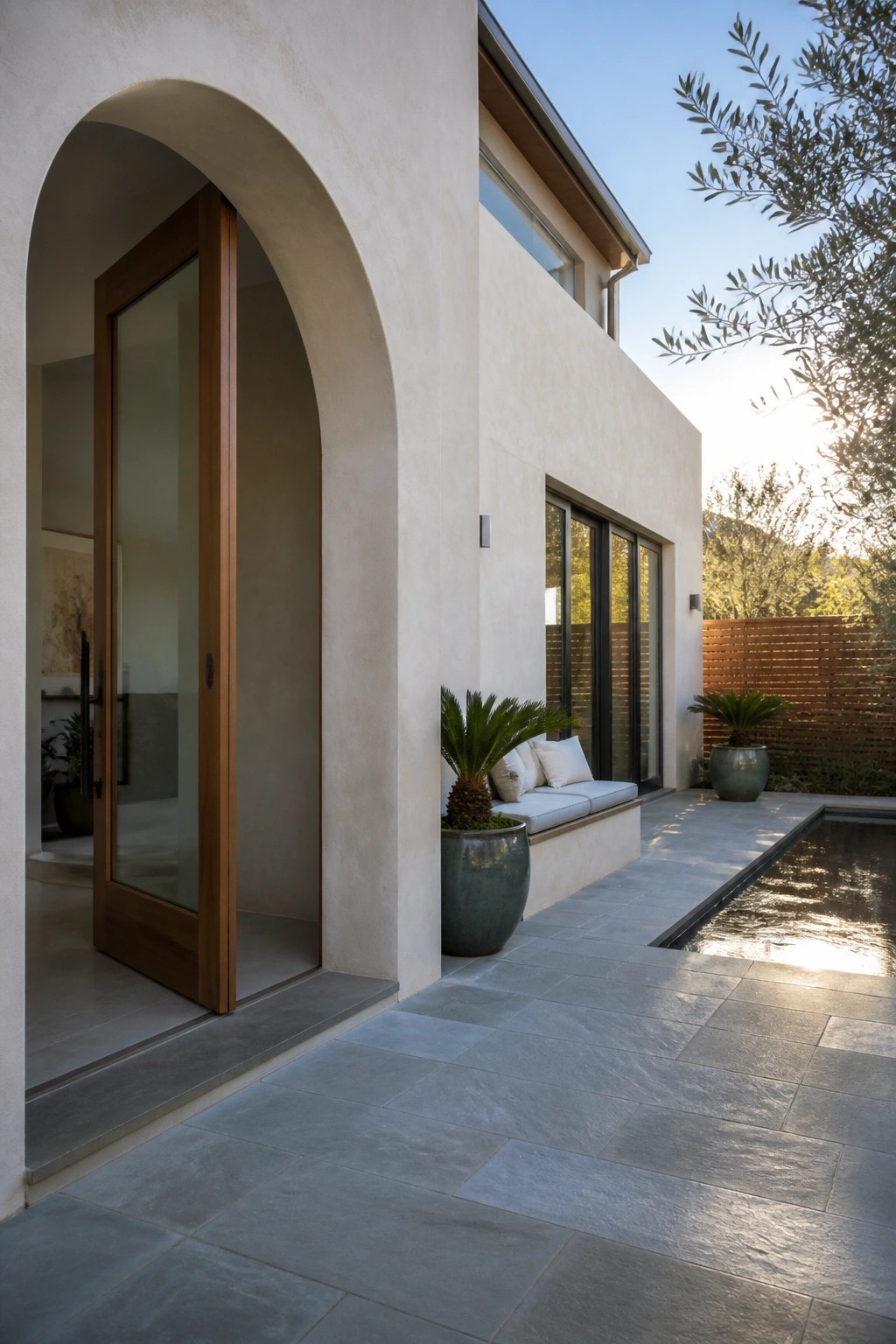
An arched entryway works well on stucco homes because it softens the wall mass and creates an easy step from inside to the courtyard. The curve draws the eye outward and makes the outdoor space feel like part of the house rather than a separate zone.
This layout suits single-story or two-story homes with a pool or seating area just beyond the door. Keep the arch wide, use a simple wood door, and let the stucco continue across the facade so the whole front stays calm and unified.
Arched Entries on Stucco Homes
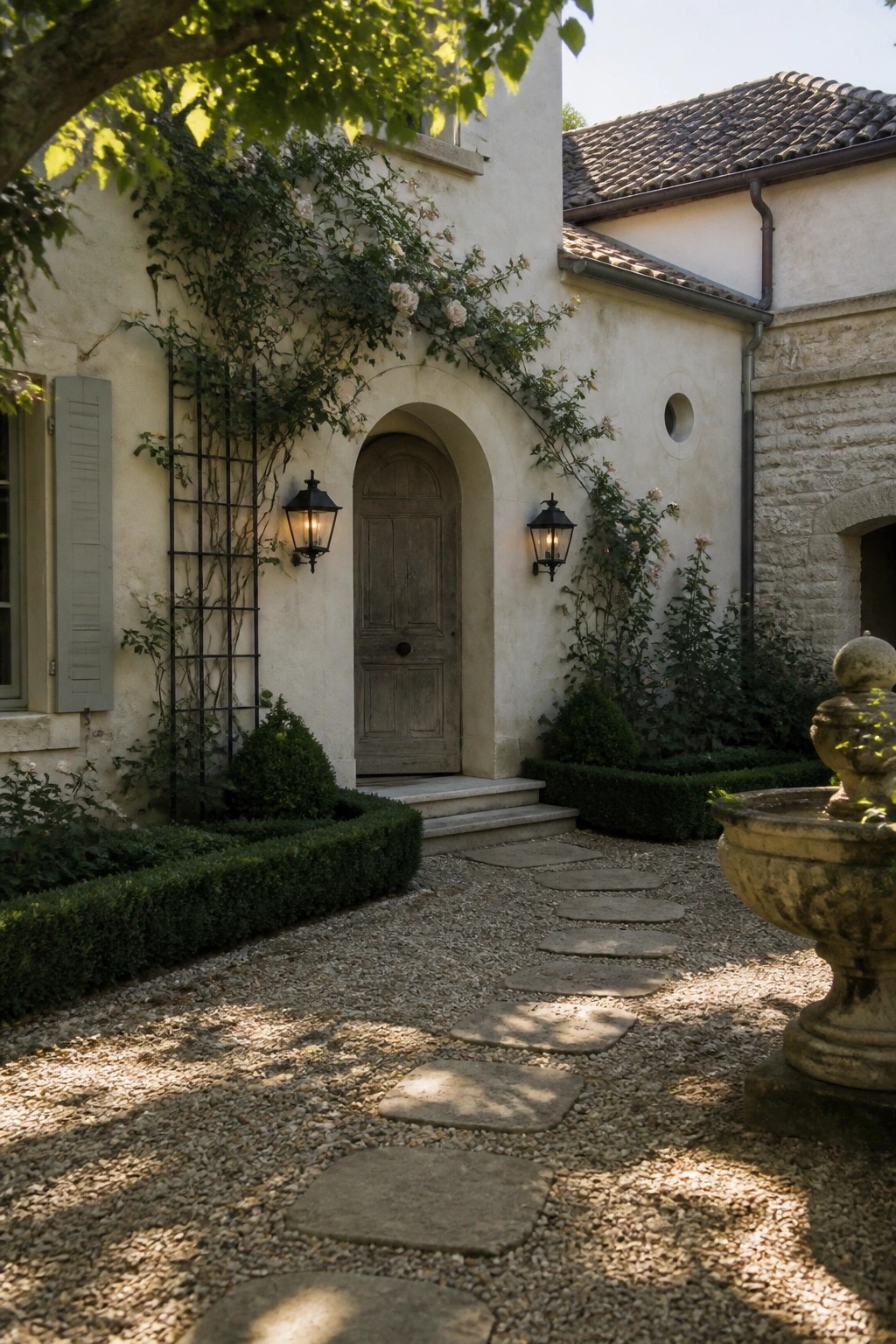
An arched entryway gives a stucco home a soft, welcoming feel that works especially well with courtyard plans. The curve breaks up the flat walls and creates a clear focal point without extra trim or decoration.
This approach suits homes where a gravel path or stepping stones lead to the door. Keep the arch simple, use a plain wooden door, and let a few vines grow up around the sides so the whole entry feels natural rather than formal.
Courtyard Plans Built Around a Central Fountain
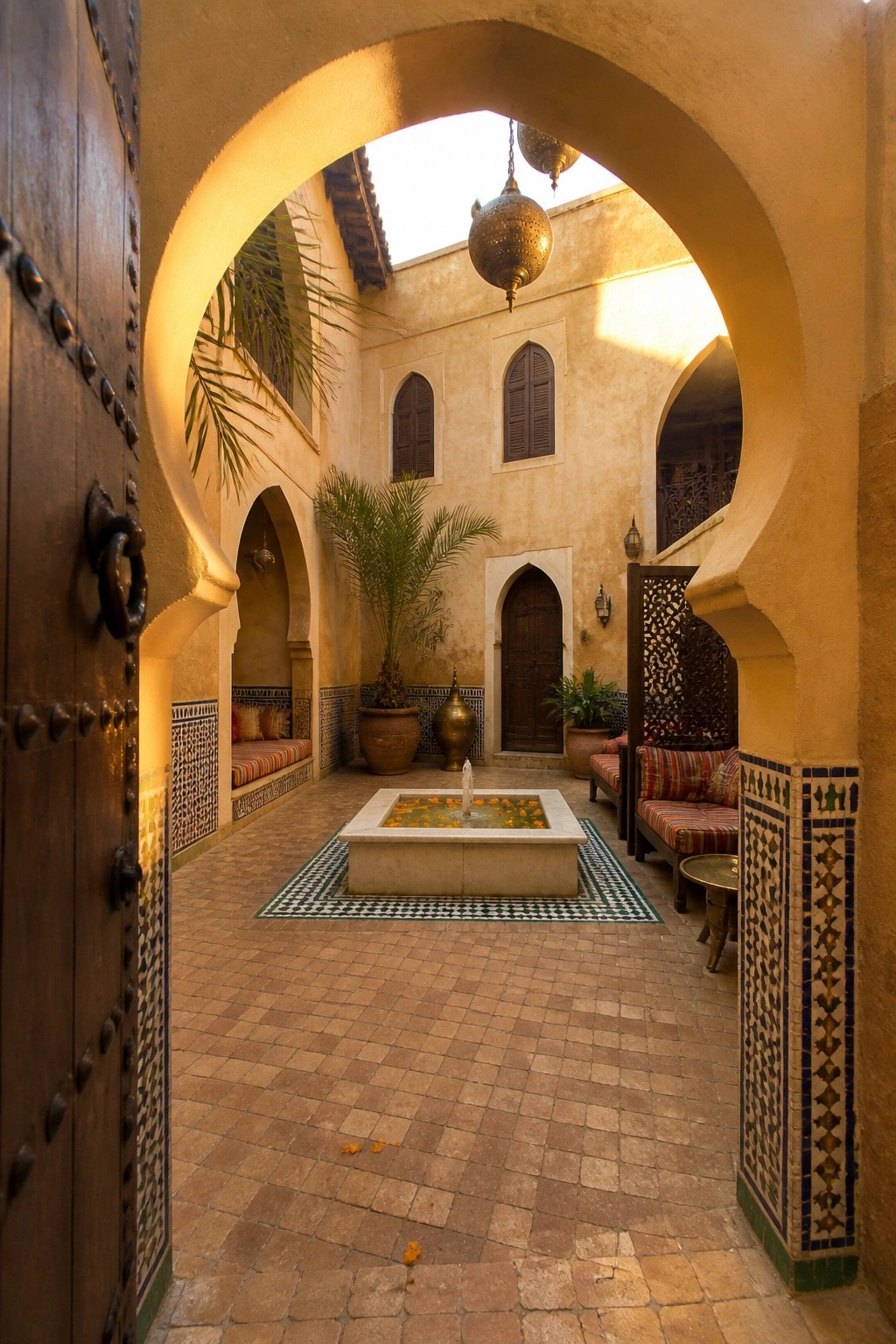
A small fountain set in the middle of a courtyard gives the space a clear center without taking up much room. The water adds movement and sound, which helps the area feel more like a place to spend time rather than just pass through.
This layout works best in homes with stucco walls and arched openings that already create an enclosed feel. Keep the surrounding paving simple so chairs and benches can sit close to the water, and make sure the fountain size matches the scale of the courtyard so it does not overwhelm the space.
Gravel Courtyards That Keep Things Simple
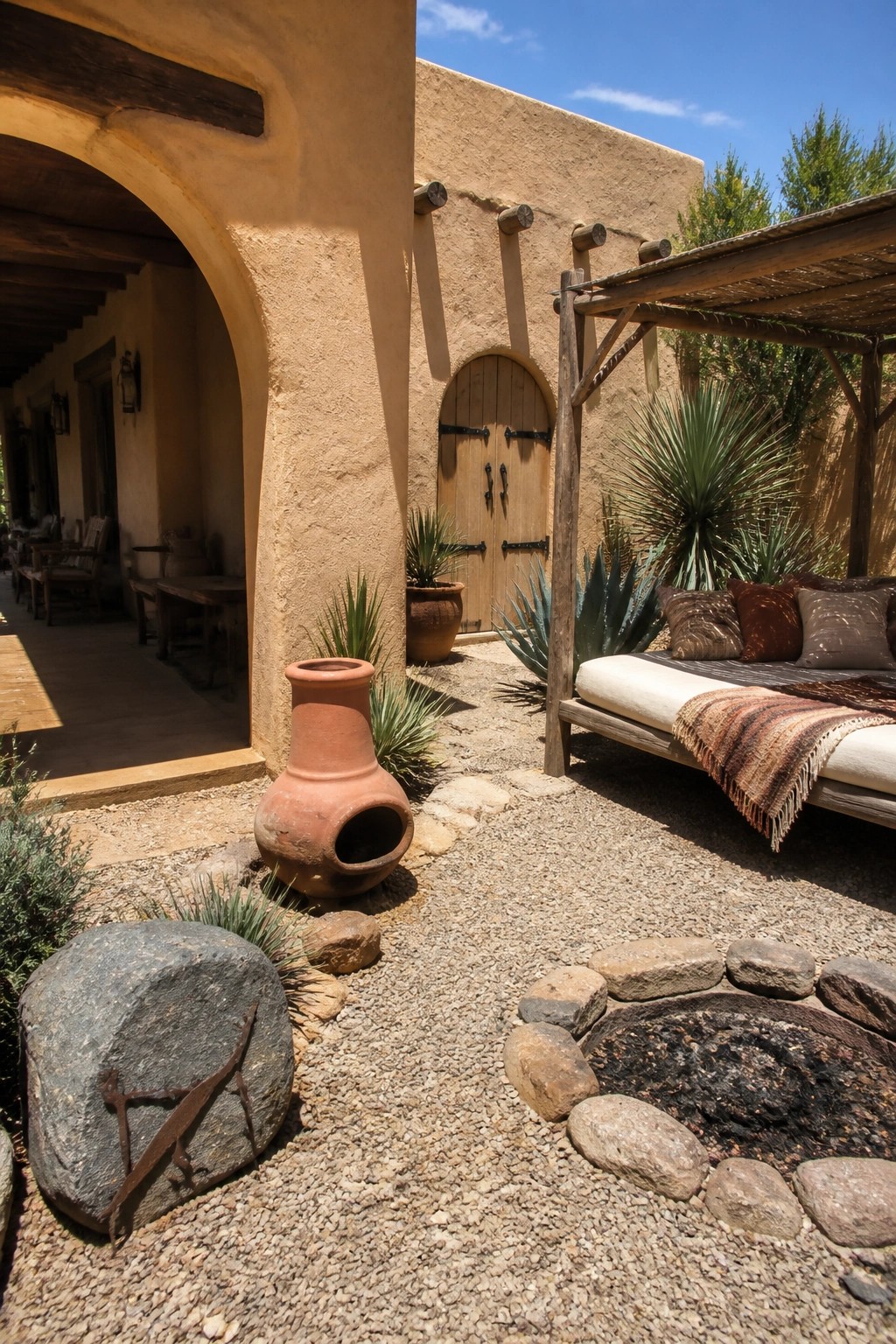
Gravel works well in a courtyard because it handles drainage and foot traffic without needing much care. It also gives the space a relaxed feel that fits stucco walls and wood details, letting you add a fire pit or seating without overthinking the layout.
This approach suits homes in dry climates where you want an outdoor area that stays usable most of the year. Keep the fire pit in the middle so people can gather around it, and add a shaded bench or daybed along one edge for comfort when the sun is high.
Bench Seating Along a Courtyard Water Channel
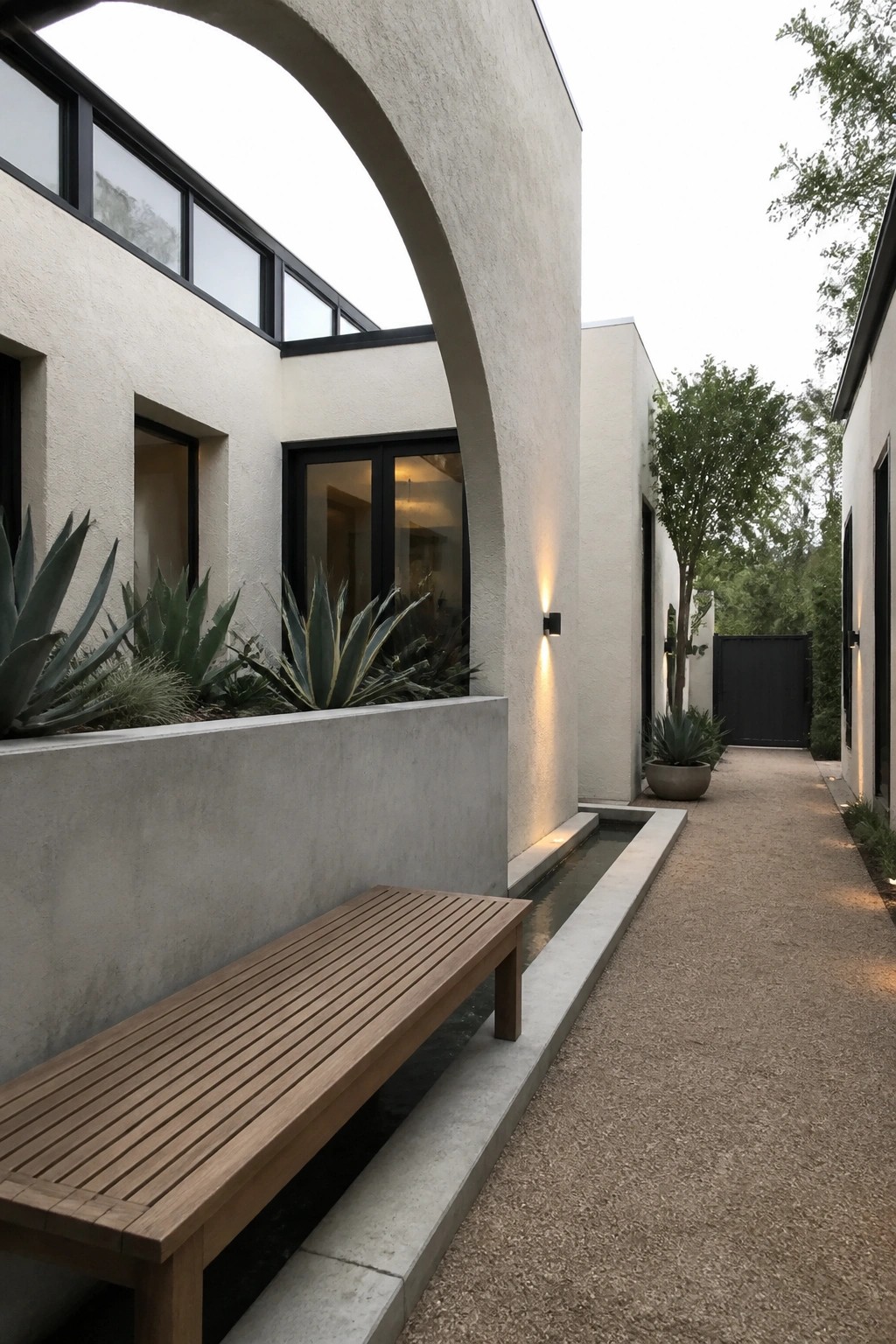
A narrow water channel running beside a bench gives a courtyard a quiet focal point without crowding the space. The steady sound of water helps the area feel more settled, especially in a stucco setting where hard surfaces can otherwise feel stark.
This setup works best in homes with enclosed outdoor rooms where the bench can sit low and simple against the channel edge. Keep plantings minimal so the water stays the main draw, and make sure the channel is narrow enough that it does not interfere with walking paths.
Arched Entries on Stucco Homes
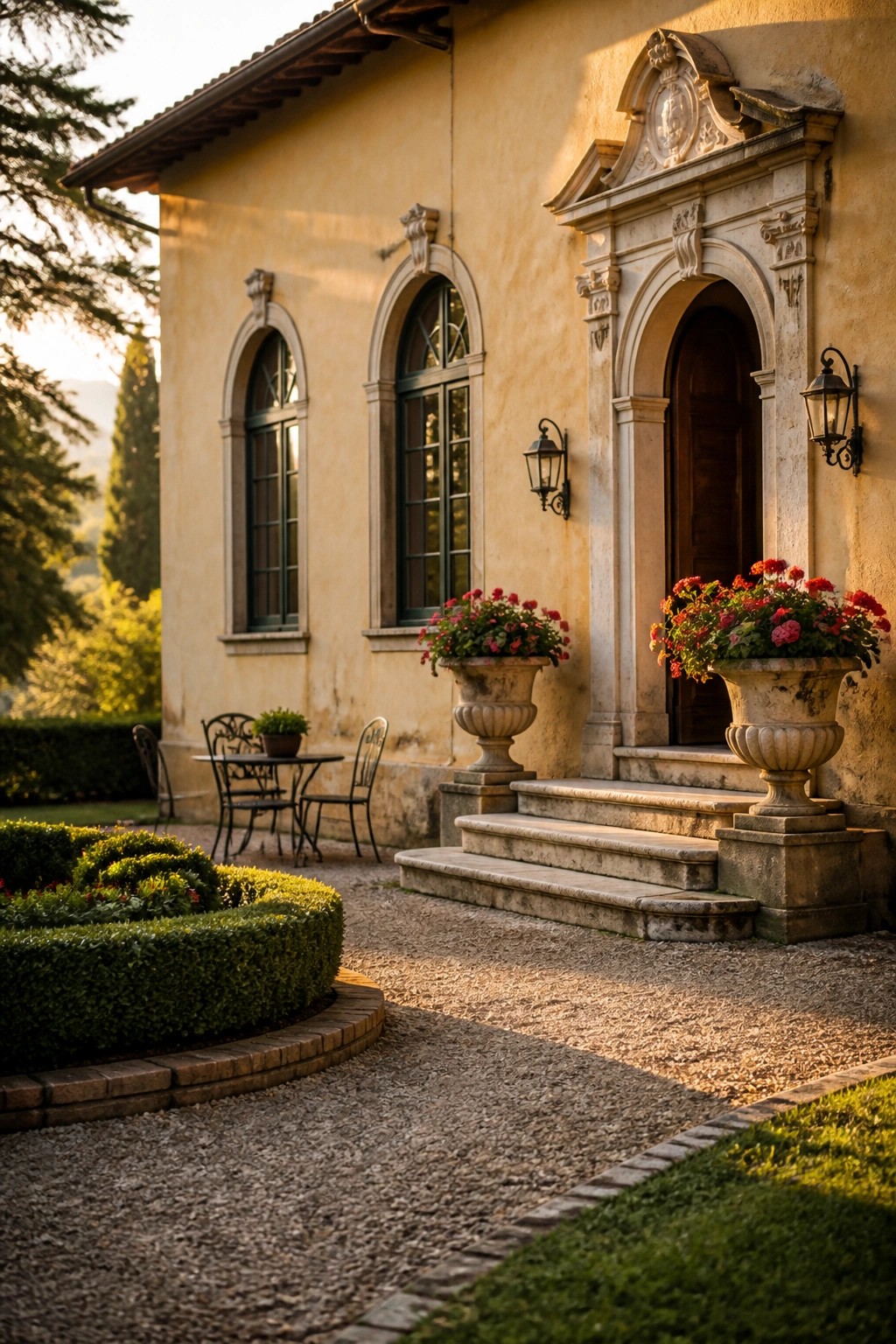
Stucco walls tend to look flat on their own. Adding an arched entry breaks up that surface and gives the front a softer, more finished shape. The stone surround around the door does most of the work here.
This detail suits homes with simple rooflines and modest size. Keep the arch in a light stone or concrete so it reads clearly against the stucco, and let a pair of large planters sit at the base of the steps.
Arched Entries for Courtyard Living
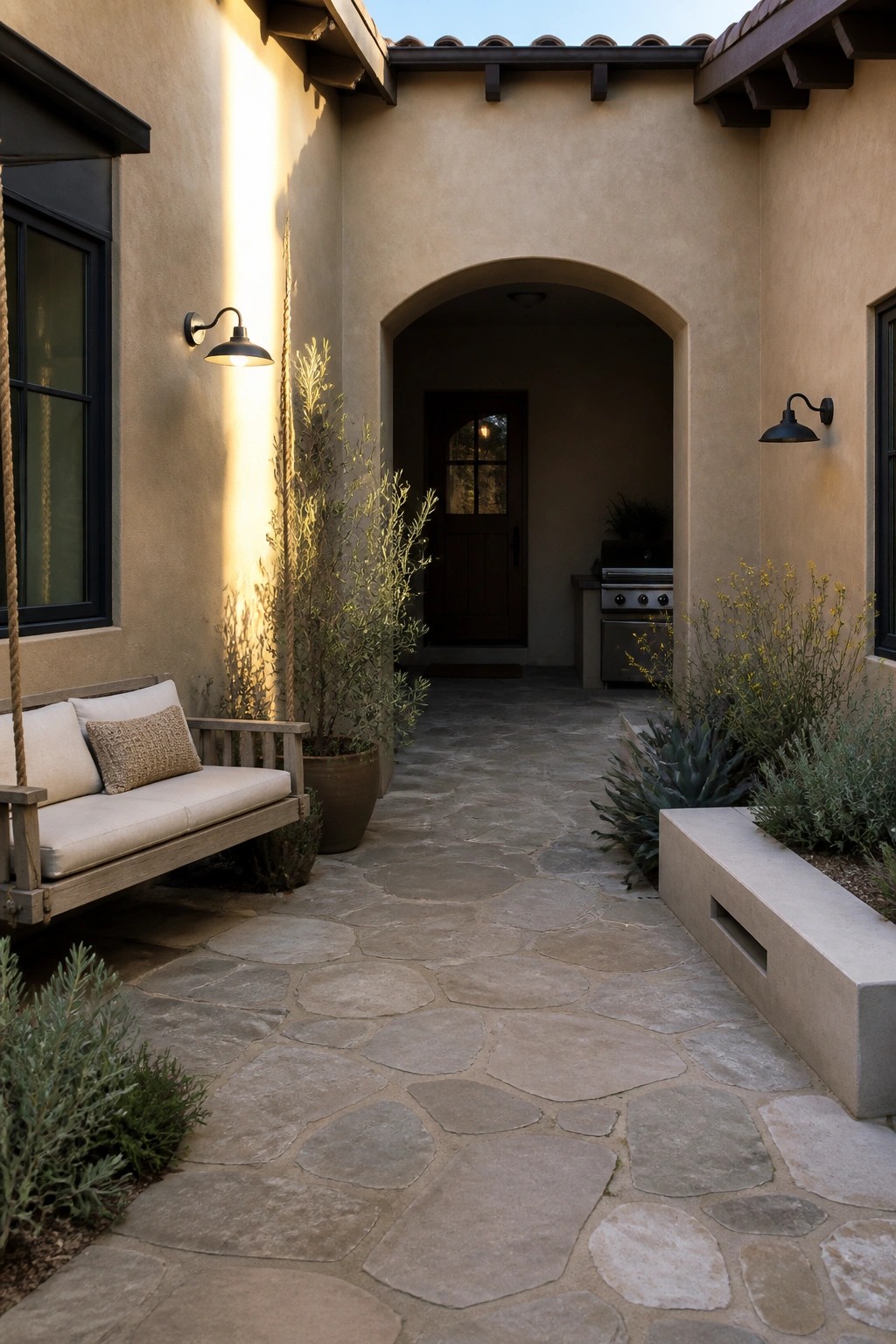
An arched passageway works well in a courtyard because it creates a clear transition from the path outside into a more private outdoor area. The curve softens the stucco walls and gives the space a settled feel without needing extra ornament. Many people like this setup because it turns a simple side yard or rear patio into something that feels like part of the main house.
This approach suits stucco homes that already have simple rooflines and dark trim. Keep the paving in a natural stone and add just a few potted plants near the arch so the opening stays open and usable. Avoid filling the space with too many separate seating zones or the sense of enclosure can disappear.
Arched Gateways For Courtyard Entries

An arched gateway set into a stucco wall gives a courtyard a clear sense of arrival without making the space feel closed in. The curve softens the look of the wall while still marking where the outdoor room begins.
Place a bench and a few large pots right inside the arch so the area feels usable from the first step in. This setup suits homes that want a simple, low-maintenance entry that still feels intentional and tied to the garden beyond the gate.
Small Pools In Private Courtyards
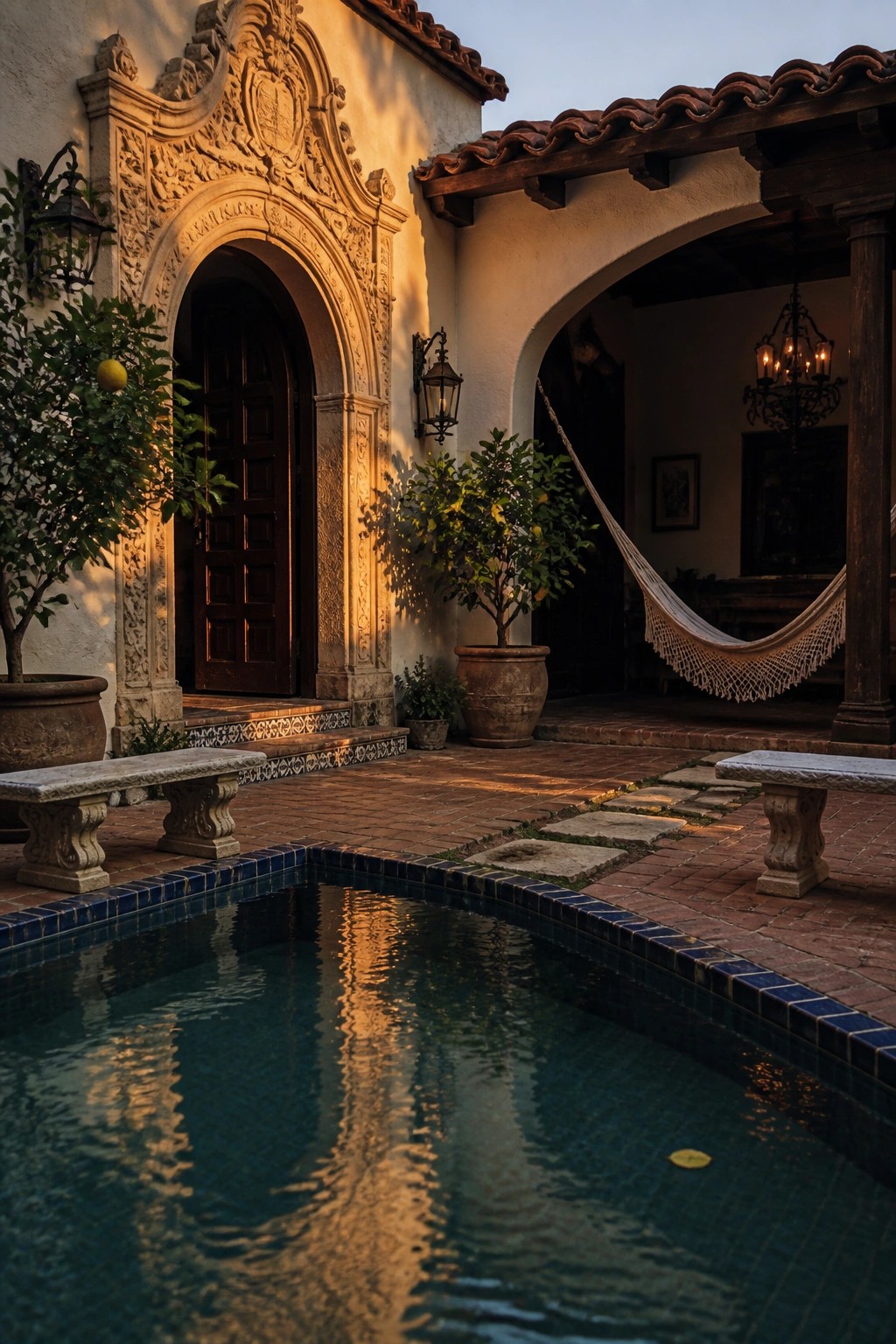
A small pool tucked into a courtyard gives the outdoor space a real purpose without taking over the whole area. It turns what might just be a paved spot into a place where you can cool off and spend time, especially when the house wraps around it with solid walls and an arched entry.
This setup works best on homes that already have an enclosed or semi-enclosed yard. Keep the planting simple with a few large pots so the pool stays the main feature, and make sure the paving around it stays clear for walking and seating.
Arched Entries That Lead Into Courtyards
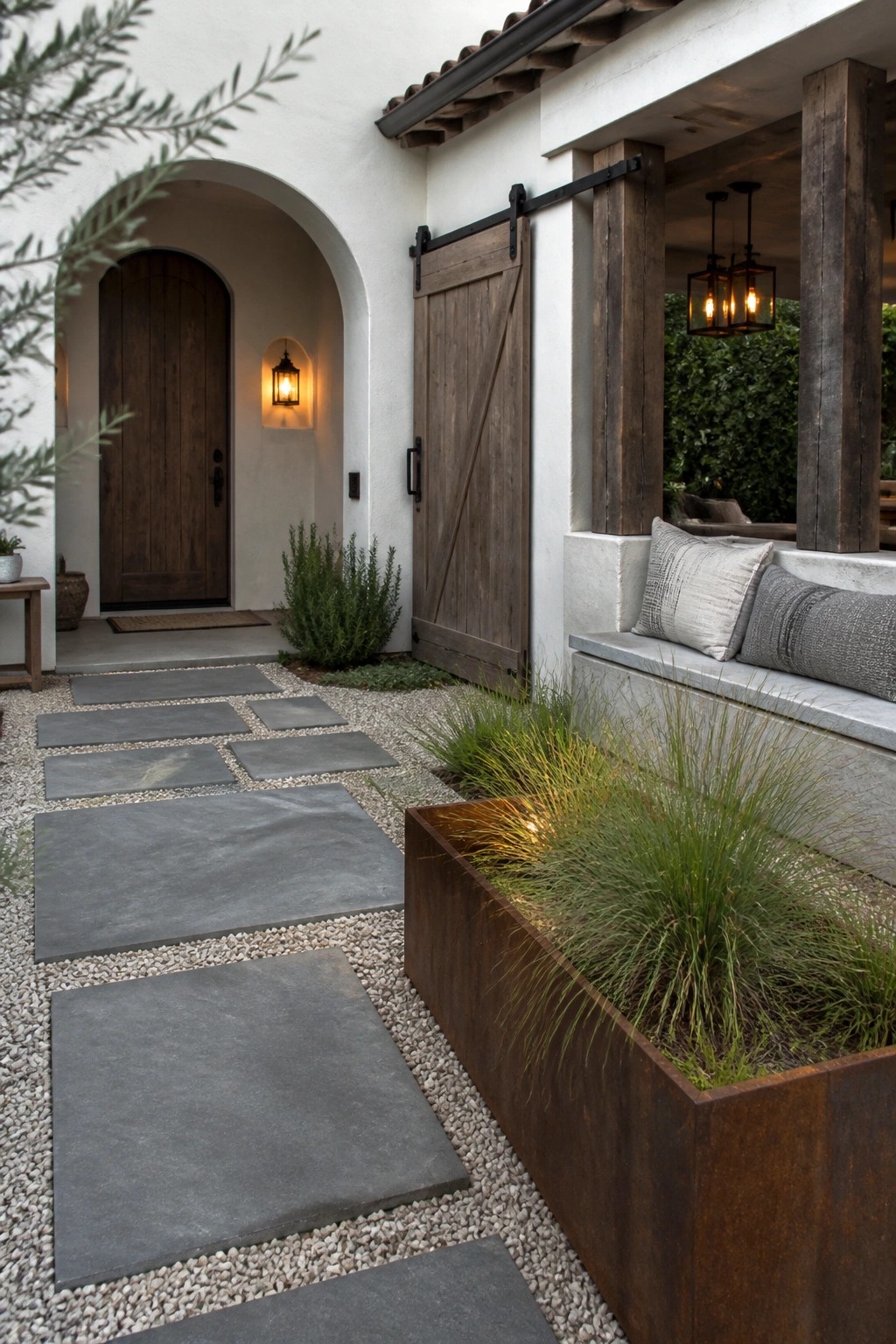
An arched entryway gives a stucco home a clear sense of arrival without needing a lot of extra trim or detail. In this setup the curve frames the door nicely and sets up an easy step into the courtyard area beyond it. The gravel and paver path keeps the approach simple and ties the entry to the rest of the outdoor space.
This works best on homes where the courtyard is meant to feel like an extension of the entry rather than a separate zone. Keep the planting low and the hardscape light so the arch stays the main focal point. Avoid crowding the sides with tall shrubs or heavy lighting that pulls attention away from the doorway itself.
Arched Entries for Stucco Homes
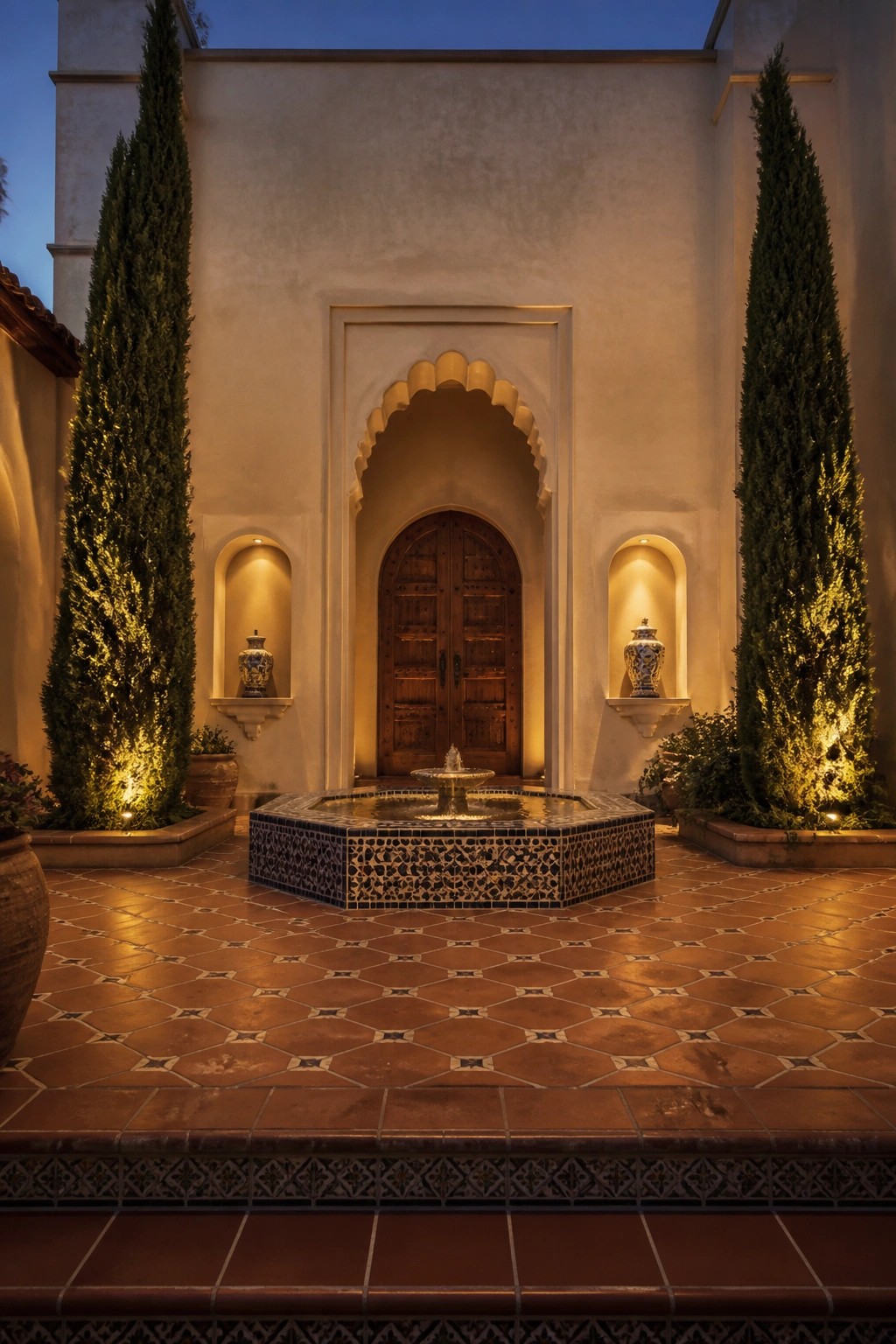
An arched entryway gives a stucco home a clear sense of arrival without much extra detail. The curve breaks up the flat wall planes and pairs naturally with the simple texture of the stucco.
This approach works best on homes that already have a small courtyard or paved area in front of the door. Keep the arch modest in scale, use a solid wood door underneath, and add just a couple of planted niches so the entry stays welcoming rather than overwhelming.
Arches That Add Depth to an Entry
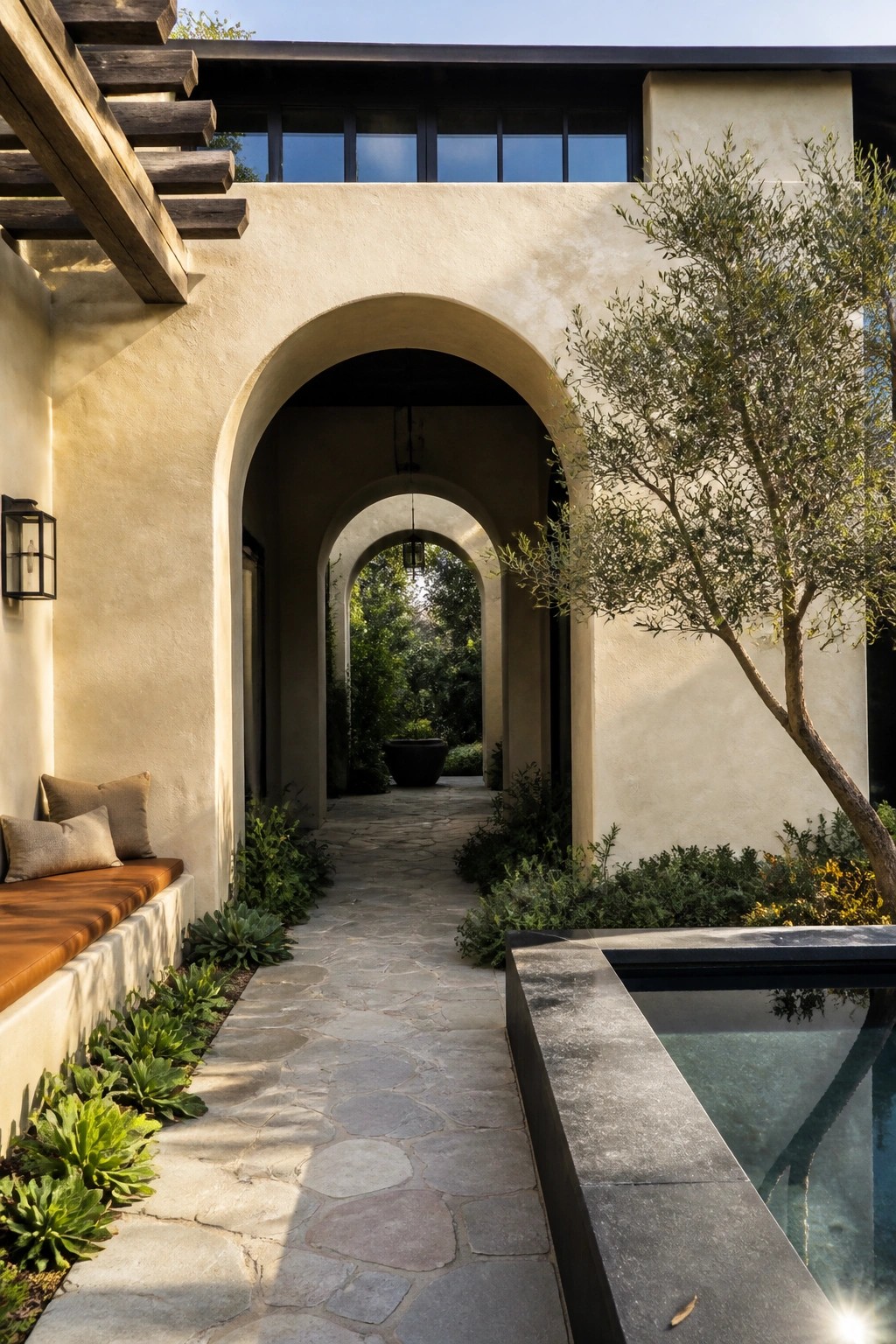
Stucco homes often feel flat without something to break up the wall. A series of arches changes that by pulling the eye inward and giving the front a clear sense of movement. The stone path underfoot helps too, since it ties the arches together and keeps the whole sequence grounded.
This setup works best on homes that already lean toward courtyard plans. Keep the arches evenly spaced and let low planting run along the base so the path feels like part of the house rather than just a walkway. Avoid crowding the sides or the arches lose their clean rhythm.
Arched Entries That Open Straight to a Courtyard

An arched entry in a stucco home does more than just mark the door. It creates a clear path from the street into a small courtyard, giving the whole front a settled, enclosed feel without needing tall walls.
This layout works best on homes where the courtyard sits right off the main door. Use the same stucco on the surrounding walls, add a few large pots near the steps, and keep the paving simple so the arch stays the main focus.
Arched Entries in Stucco Homes
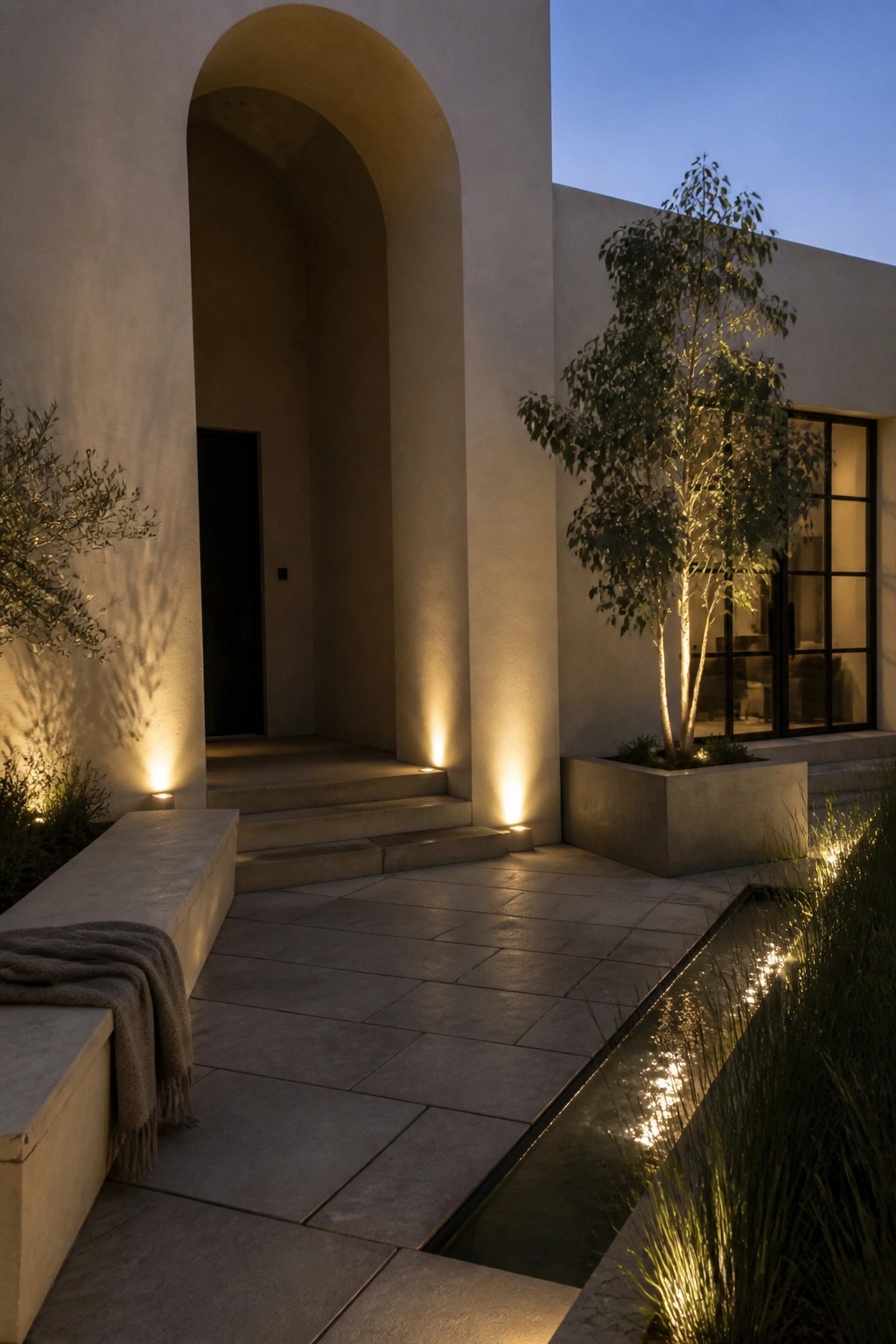
An arched entry gives a stucco home a clear focal point without needing extra trim or decoration. The curve softens the flat wall planes and makes the approach feel more settled. In courtyard plans it also helps mark the shift from the street side to the more private outdoor space.
This works best on homes with simple wall surfaces and minimal roof overhangs. Keep the arch wide enough for comfortable passage and add low lighting at the base so the shape reads at night. Avoid cluttering the sides with too many plants or objects that break the clean line of the opening.
Arches That Define A Courtyard
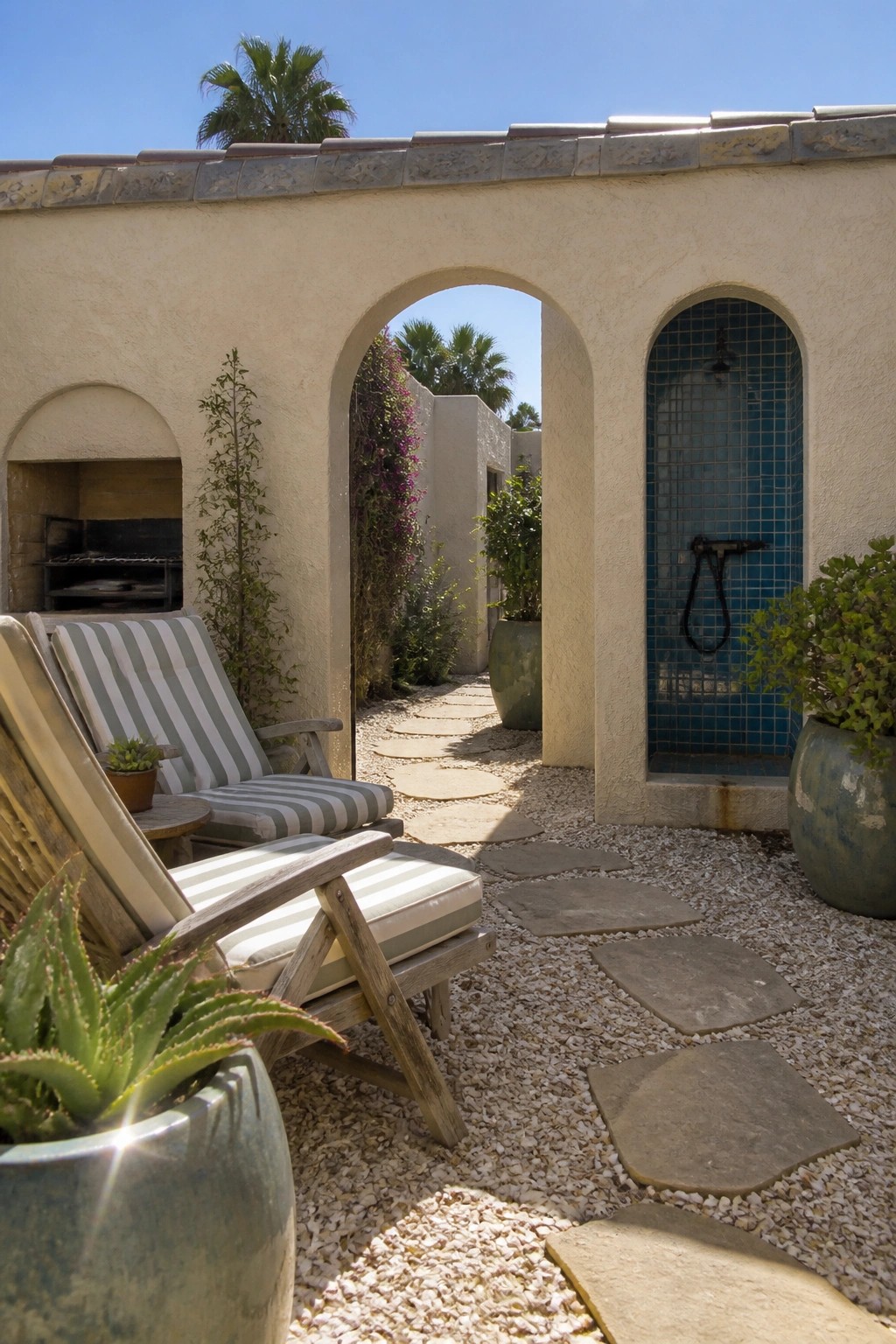
Stucco arches work well in a courtyard because they break up long walls without making the space feel closed in. They create natural frames between seating areas, paths, and smaller features like a shower or grill, so the whole layout feels connected but still private.
This approach suits homes with flat lots or side yards where you want an outdoor room that feels intentional. Keep the arches simple in shape and size so they match the stucco texture rather than compete with it.
Arched Entries That Open Onto Courtyards
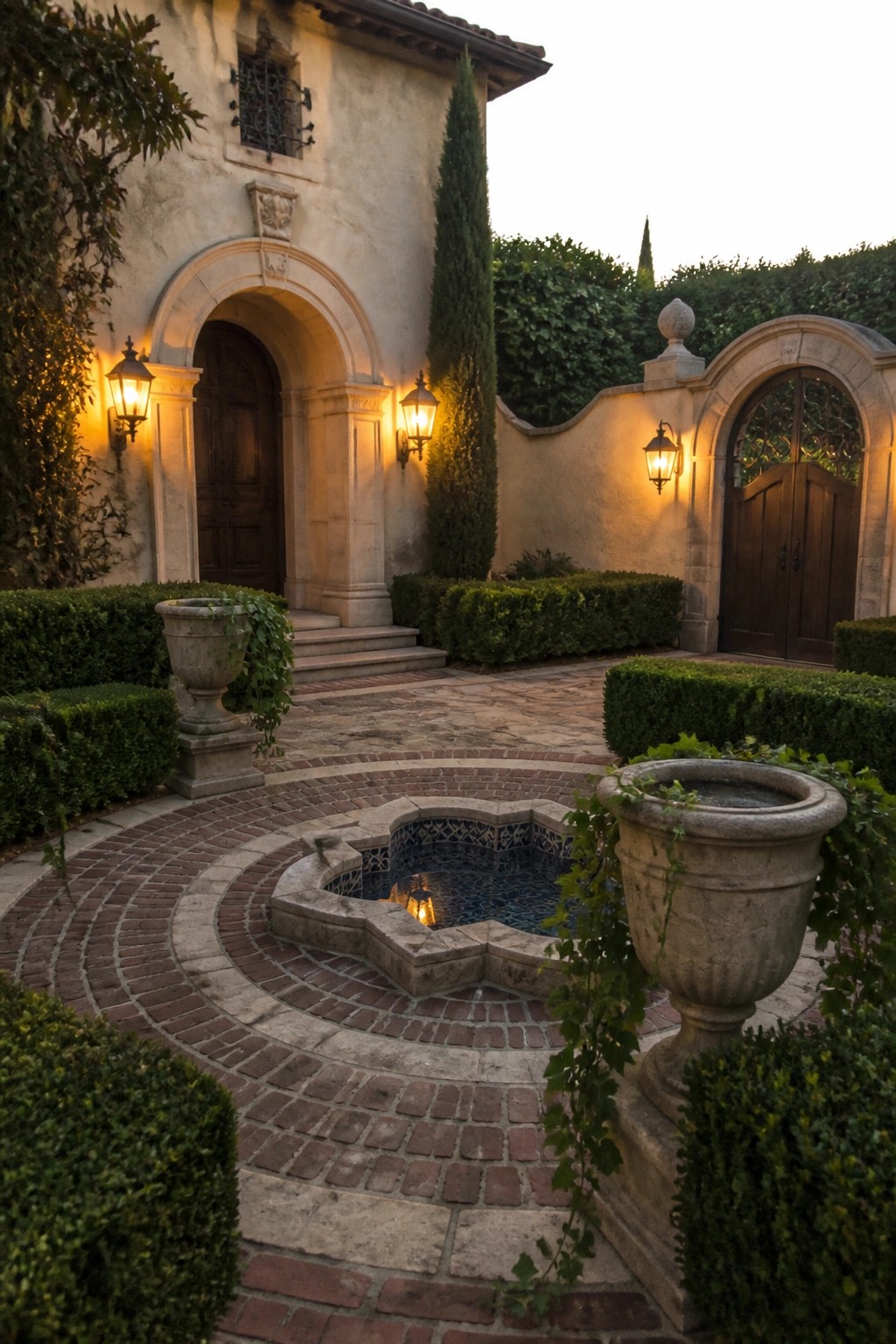
Stucco homes often gain a lot from placing an arched entry right at the edge of a small courtyard. The curve softens the wall line and makes the step from outside to inside feel more deliberate than a plain rectangular door would.
This layout suits homes where the front space can be partly enclosed by walls or hedges. Keep the paving simple, add one central water feature, and let the arches do the work of guiding people in without extra ornament.
Frequently Asked Questions
Q: How often should I clean the stucco around those entry arches?
A: A quick rinse with a garden hose every few months works well. Skip anything abrasive that could scratch the surface.
Q: Can a courtyard plan work if I have a narrow lot?
A: Scale the space down to a compact walled area with simple pavers. The arches still create that welcoming frame even when the yard feels tight.
Q: What plants suit a stucco courtyard best?
A: Pick hardy choices like rosemary or agave that handle sun and dry spells. They bring life to the space without constant upkeep.