When I look at a house from the street the porch sets the first impression long before I notice the windows or the roof.
Victorian details like turned posts and bracket work can restore a sense of proportion that many newer entries lack.
I always check how the materials will hold up to rain and sun because some finishes age better on real facades than they do in pictures.
Small swaps make the biggest difference.
Over the years I have learned to pick ideas that match the existing scale of the home instead of forcing in trends that feel out of place.
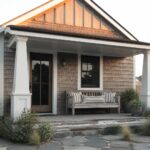
Add a Bench for Simple Seating

A bench turns a Victorian porch into a spot people actually use instead of just walking through. It gives a place to sit without crowding the entrance or needing a full set of furniture.
This works best on narrower porches where space is limited. Keep the bench color close to the door or trim so it blends in, and leave room on either side for easy movement.
Checkered Flooring on the Porch

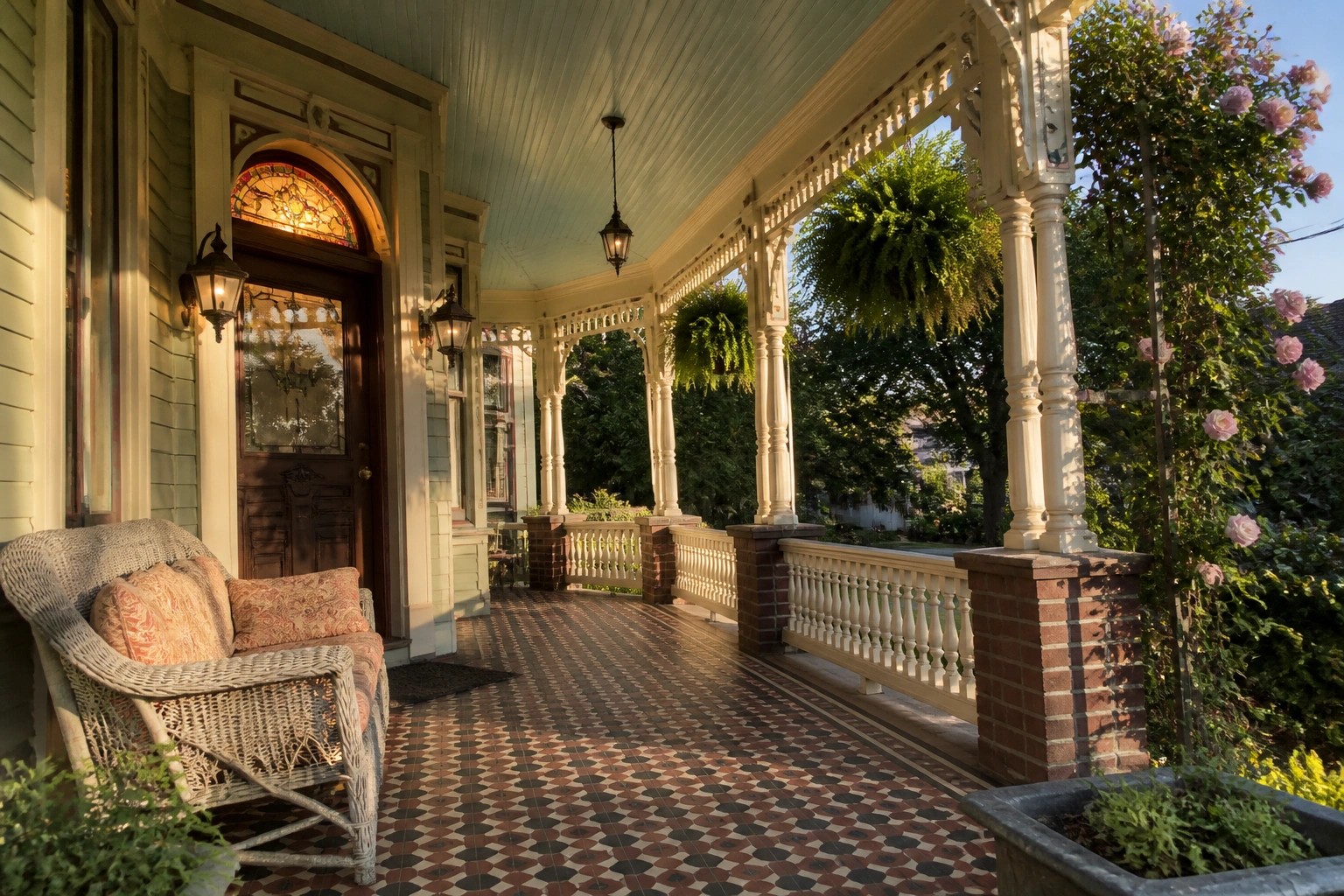
A checkered floor gives a Victorian porch clear structure and makes the front entry feel more finished. The pattern draws attention to the steps and landing without needing extra trim or furniture.
This works best on older homes where you want a simple way to add character. Use black and white tiles that can handle weather, and keep the rest of the porch fairly plain so the floor stays the main feature.
Drape Soft Throws Over Porch Chairs
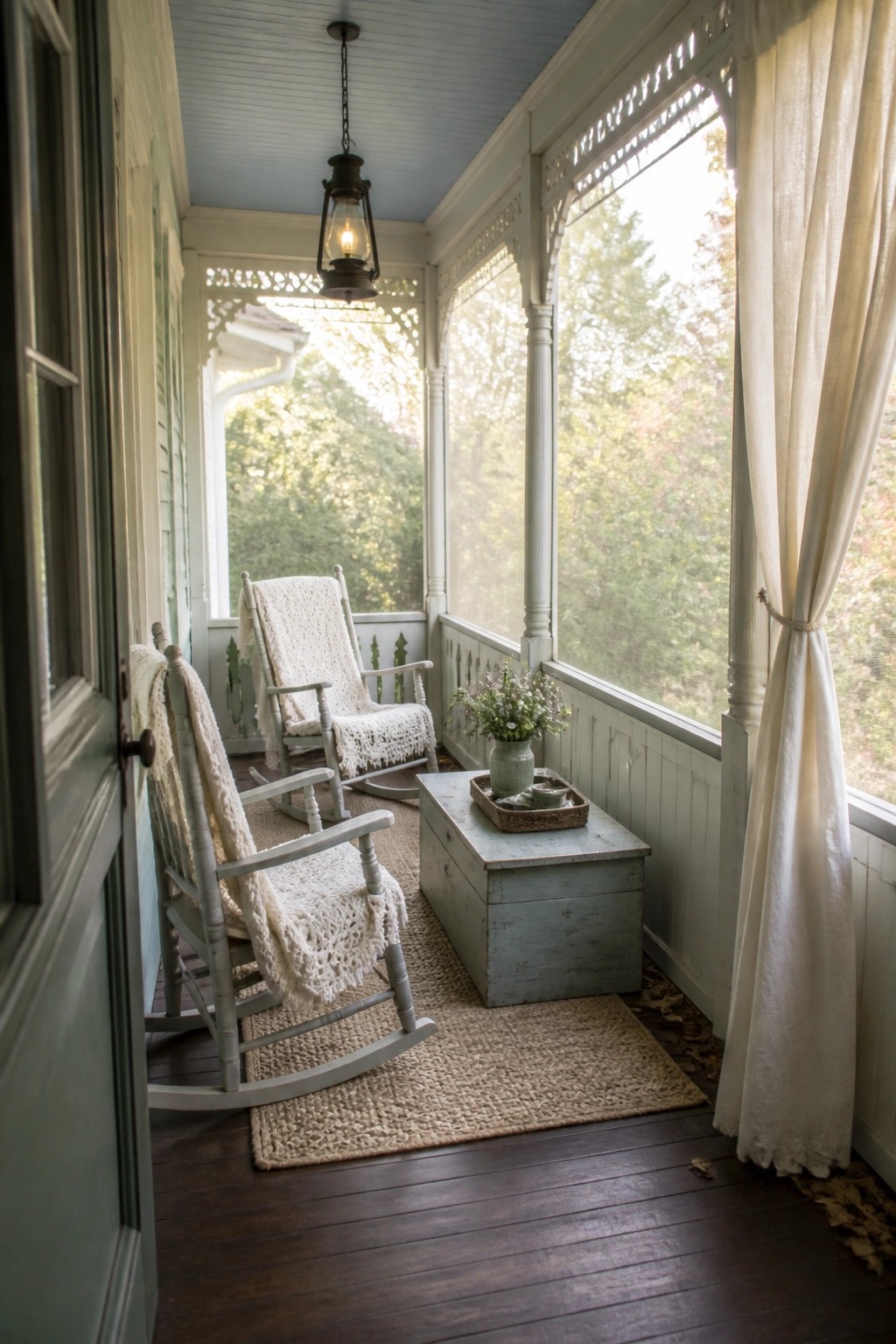
One simple way to make a classic porch feel more comfortable is to add soft throws over the seating. The extra layer of texture makes the chairs look inviting and ready for use without much effort.
This approach suits older homes with wooden rockers or benches, especially on shaded porches where the air can feel cool. Stick to neutral colors that match the trim and keep a couple of spare throws folded nearby for guests.
A Rocking Chair Brings Life to a Victorian Porch
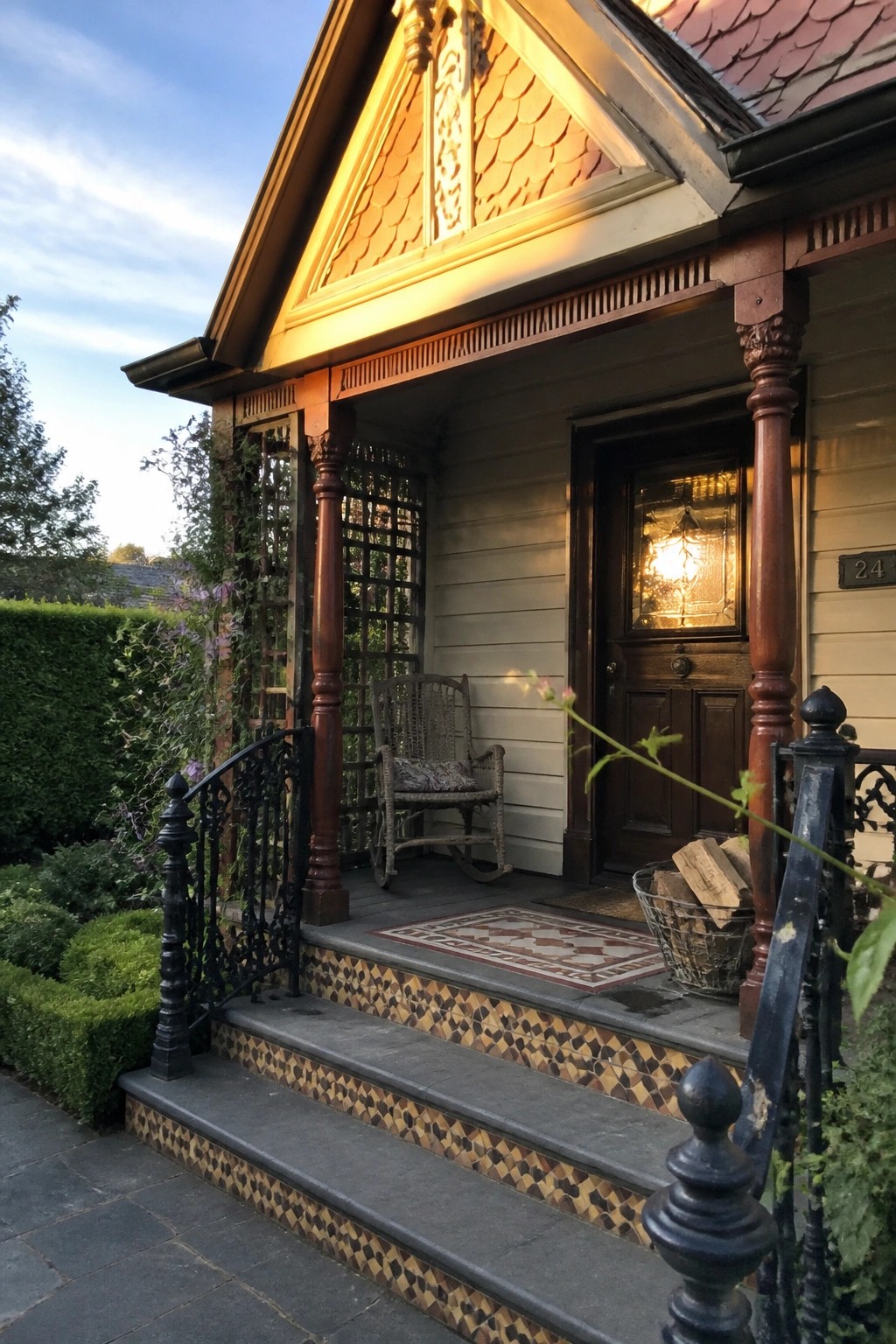
A rocking chair gives a Victorian porch that lived-in feeling without much fuss. It turns the space into a spot where someone might actually sit for a while instead of just passing through the entry.
This works best on porches that have a bit of depth and a solid floor. Keep the chair simple in wicker or painted wood and set it off to one side so the path to the door stays clear. The chair in the photo shows how well the style fits next to the turned posts and patterned tile.
Checkered Tiles for the Porch Floor

A black and white checkered tile floor gives the porch a crisp, traditional look that fits right in with Victorian homes. The pattern draws the eye straight to the entry and holds up well against weather and foot traffic.
This works best when the rest of the porch stays fairly simple. Use it on homes with white trim and a dark door, and keep nearby plantings low so the floor stays the main feature.
Swivel Chairs Add Flexibility To A Porch

Swivel chairs give a Victorian porch a practical edge because they let people shift direction without rearranging furniture. The striped cushions and simple metal frames keep the look light while still feeling comfortable for sitting outside for a while.
Place a pair near the front of the porch so they face both the entry and the yard. This setup works especially well on older homes with deep porches and wood floors, where the goal is everyday use rather than a stiff arrangement.
Define Your Porch with a Large Area Rug

A big patterned rug gives a porch floor more purpose. It turns plain deck boards into a spot that feels settled and ready for sitting, without needing built-ins or major changes.
This idea works best on older homes with wide porches. Pick a rug made for outdoor use, keep it a few inches from the edges so the wood still shows, and center it under your main seating piece.
Built-In Bench Seating Along The Porch

A built-in bench gives a porch real purpose without taking up extra floor space. It turns the area into a place to sit and linger instead of just a pass-through on the way to the door.
This approach suits older homes with covered entries that already have some depth. Keep the cushions simple and add a single overhead light so the bench stays usable after dark.
Patterned Tile on the Porch Floor

A patterned tile floor gives a Victorian porch a finished look that feels more complete than plain concrete or wood. The repeating design draws the eye right to the entry and adds some visual weight without needing extra furniture or decor. It holds up well in most climates too, as long as the tile is rated for outdoor use.
This approach works best on homes with a fairly traditional style where the porch sits close to the street. Keep the pattern in earth tones or muted colors so it ages gracefully and does not fight with the house paint. Just make sure the grout lines stay sealed, since that is the part that tends to wear first.
Hang A Porch Swing For Everyday Use

A hanging swing turns a Victorian porch into a place people actually sit instead of just pass through. It adds a simple, relaxed element that fits the style of older homes without needing much extra decoration.
Mount it from solid ceiling beams with heavy chains and leave enough clearance on all sides for a gentle swing. This setup works best on deeper porches where the swing can become the main seating spot rather than an afterthought.
Add a Patterned Rug to Your Porch
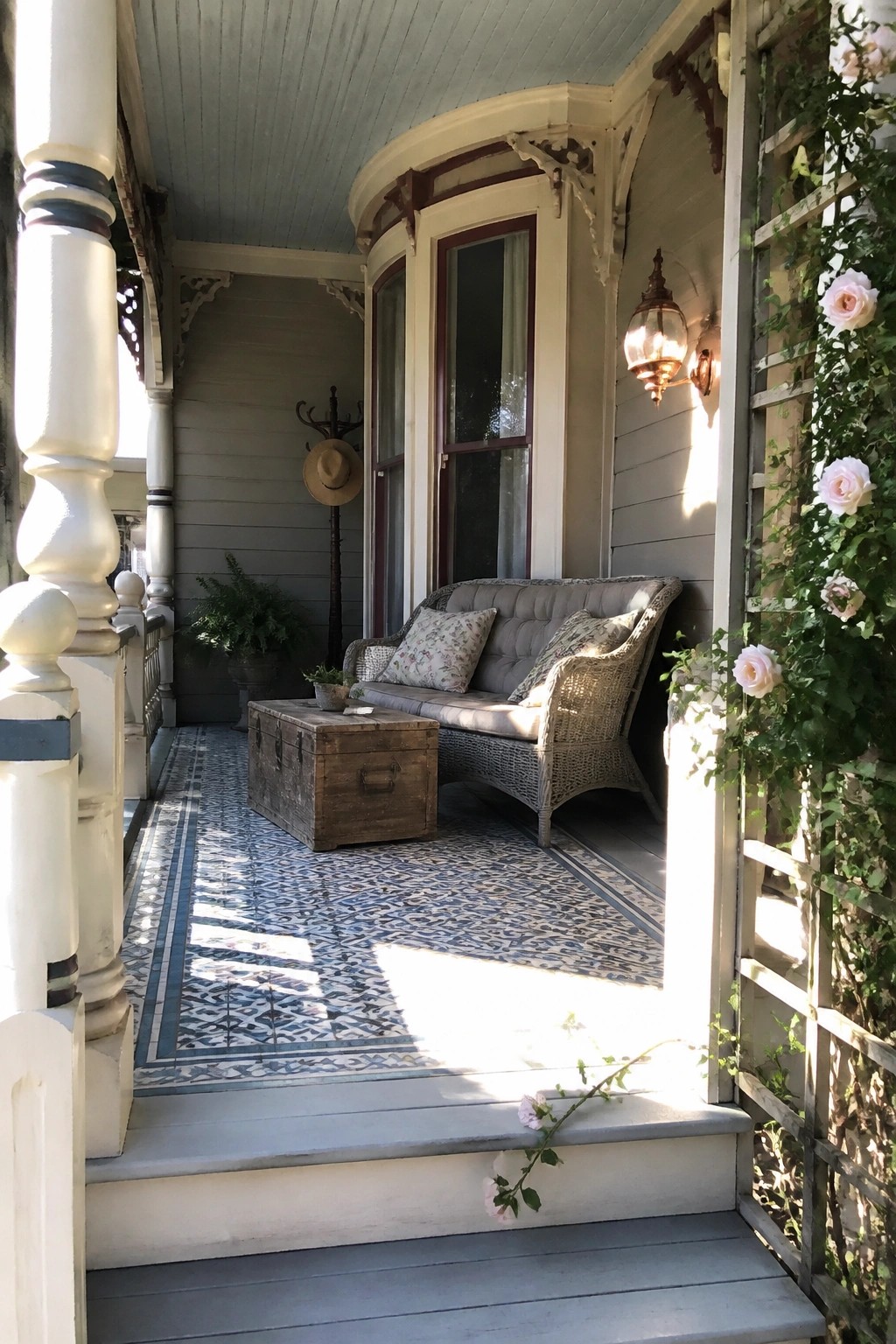
A large patterned rug can turn an open porch into a more finished and comfortable spot. It brings color and texture underfoot while helping the seating area feel like a real room instead of just boards and railings.
This works especially well on older homes where the porch floor may show wear. Choose a durable outdoor rug in a classic pattern and make sure it sits flat so it does not shift under chairs or foot traffic.
Add A Daybed For Relaxed Porch Seating

A daybed turns a porch into a place where someone can actually lie back and spend time instead of just passing through. The long, low shape fits the scale of many older porches and gives the space a settled, lived-in look without much extra furniture.
This setup works well on Victorian homes that already have deep porches and good railings. Keep the bedding simple so it can stay out through changing weather, and leave enough floor space around it for easy movement.
Add Curved Bench Seating
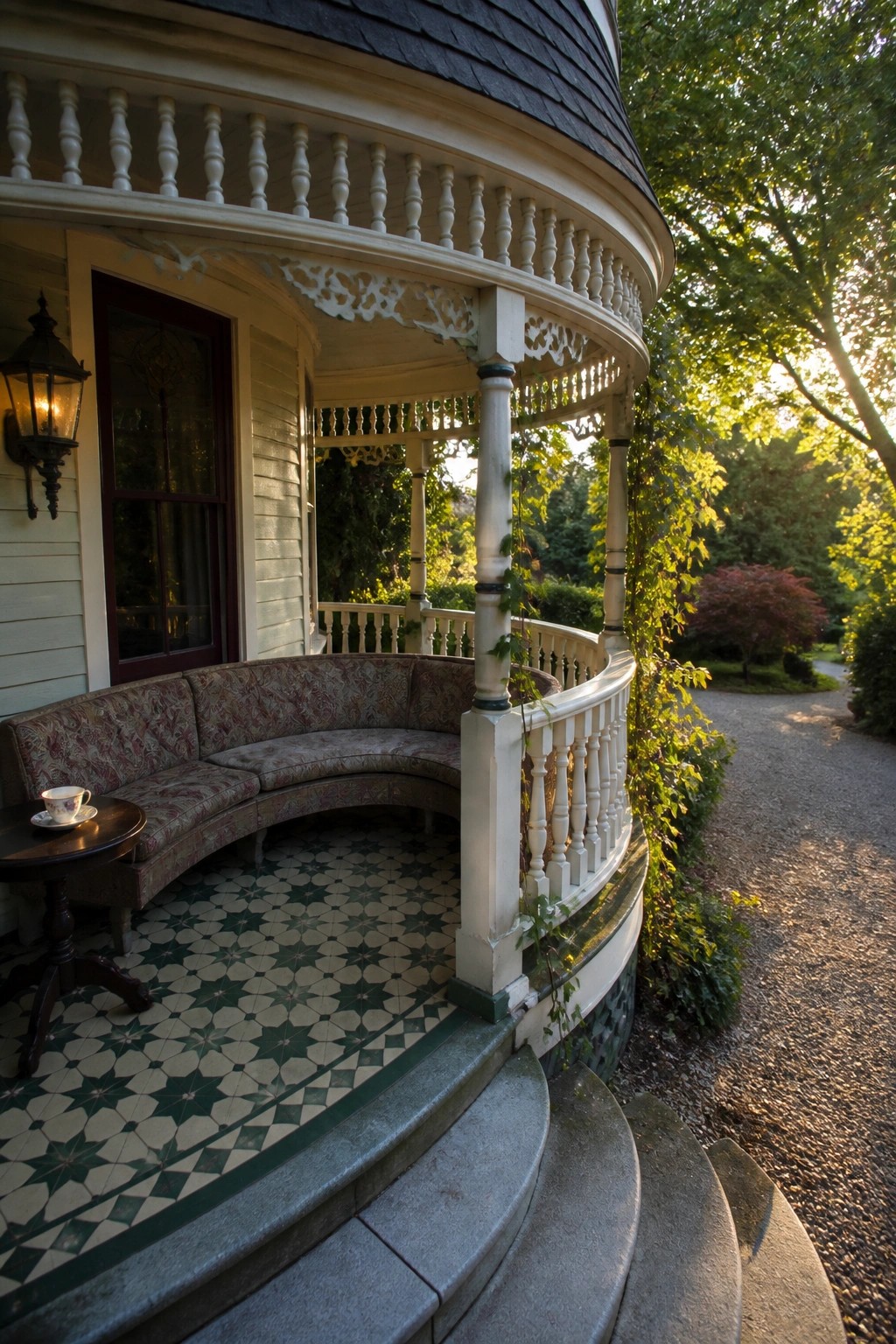
A curved bench follows the shape of a rounded porch and turns the space into usable seating without blocking the walkway. It works especially well on Victorian homes where the architecture already has soft lines and columns.
This setup suits older houses with wraparound porches or curved corners. Keep the cushions in a sturdy outdoor fabric and leave enough room for people to move past the bench comfortably.
Frame The Entry With Matching Urns
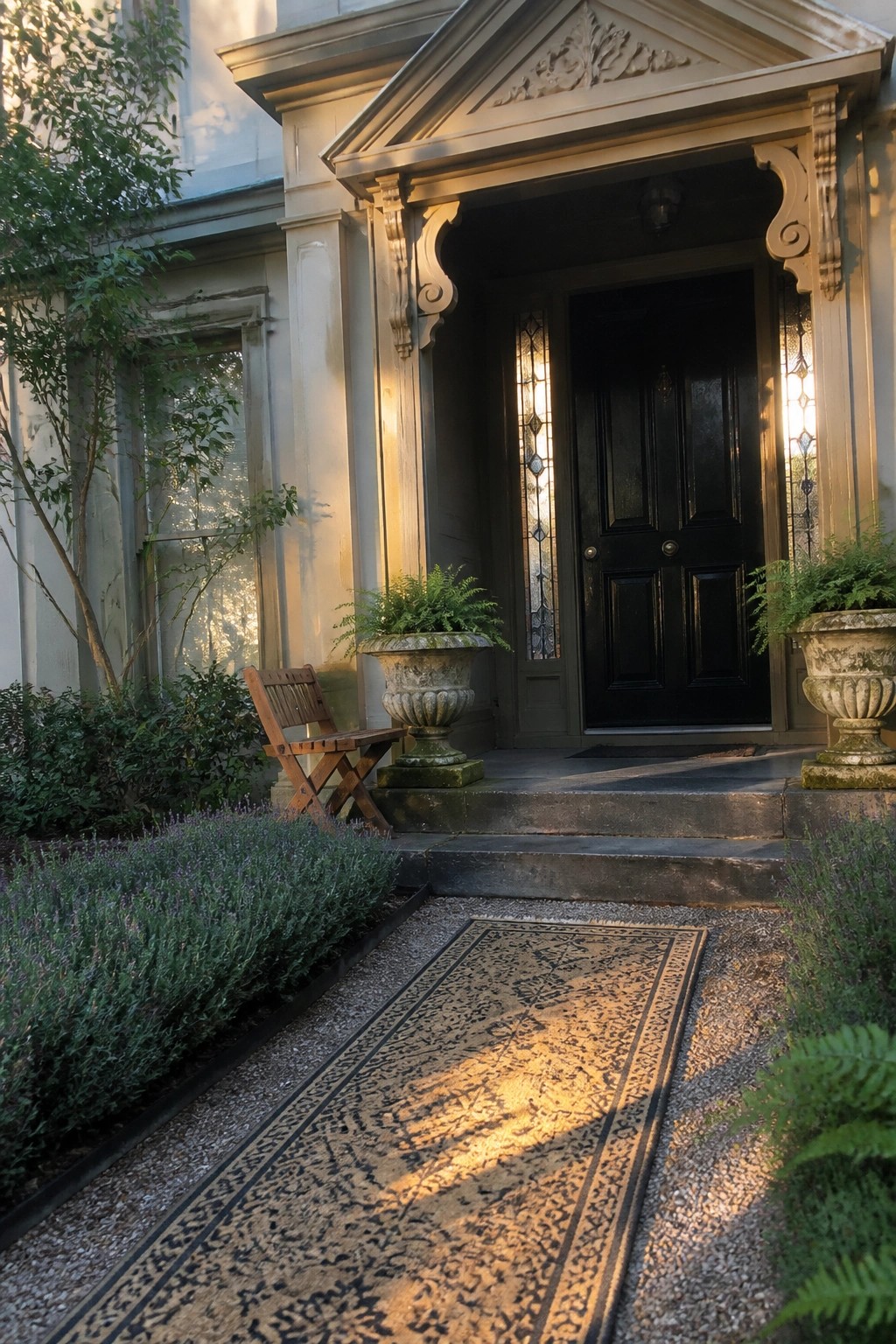
Large urns placed on either side of the door give a Victorian porch that balanced, finished look without much effort. They add height and greenery right where it counts, and they work especially well against a dark door and lighter trim.
Place one urn on each side of the top step or just off the door. Stick with the same size and shape for the strongest effect, and choose plants that stay full through the seasons. This setup suits older homes that already have some architectural detail around the entry.
Place a Round Table for Casual Porch Meals
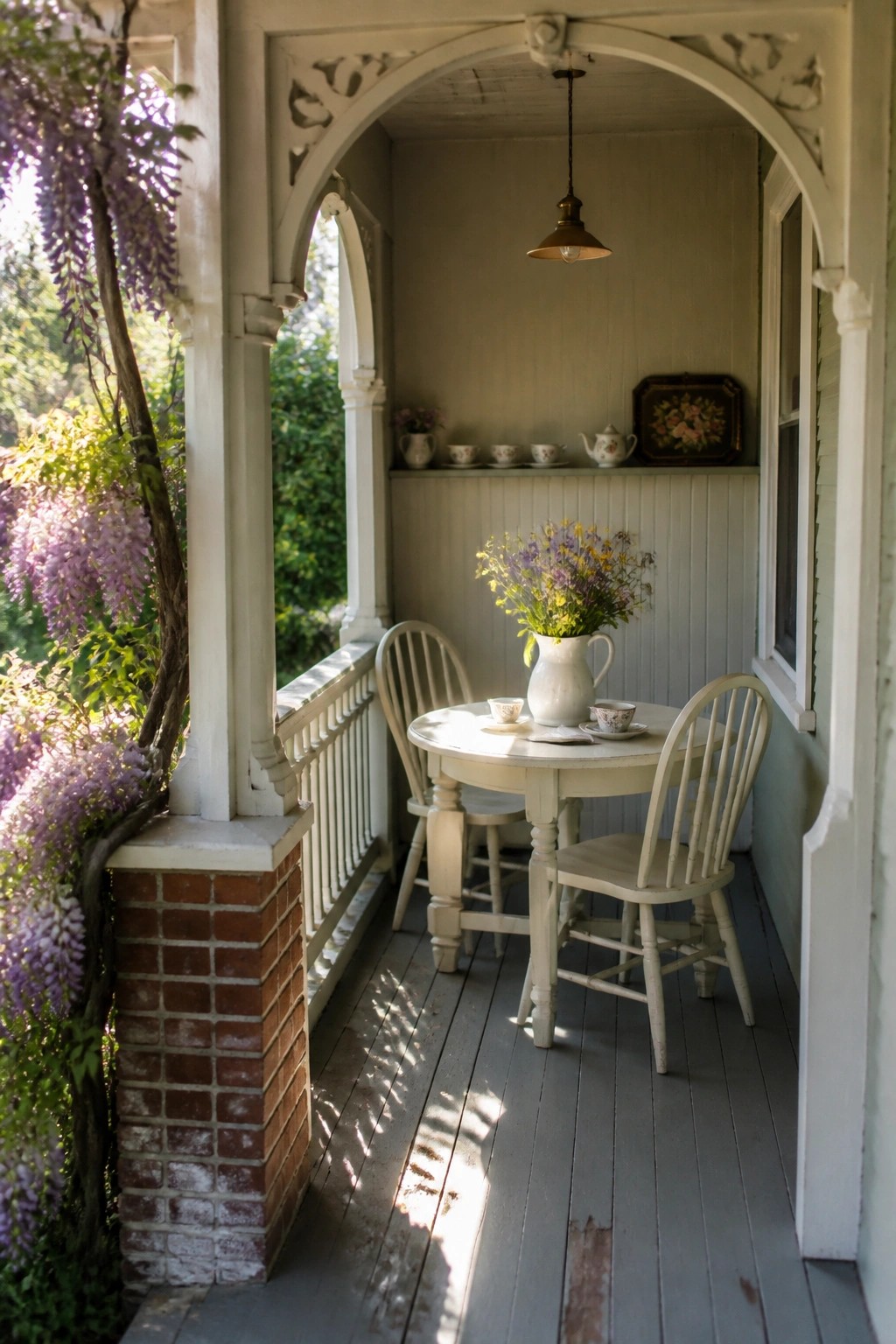
A round table keeps the seating area compact and easy to move around. It works especially well on porches where space is limited, since there are no sharp corners to bump into or block the walkway.
This style fits Victorian homes that already have trim and arches. Keep the table and chairs light in finish, and add only a few pieces so the porch still feels open for walking through or sitting with a book.
Frequently Asked Questions
Q: Can I add Victorian touches to a small porch? A: Focus on a narrow bench and a couple of potted plants with classic lines. Skip anything bulky that eats up walking space. This keeps things inviting and easy to move around.
Q: How do I choose colors for the porch floor and ceiling? A: Pick a soft gray for the floor to hide dirt. Paint the ceiling a pale blue like the sky for an open feel.
Q: Do these ideas work if I rent the house? A: Stick to removable pieces like cushions and lanterns. Ask your landlord before screwing anything in. You still get the look (and avoid any arguments) without permanent changes.