When setting up a coastal bedroom the canopy bed often becomes the piece that decides how the rest of the furniture fits around it.
I like to start with the fabric because lighter options keep the space from feeling closed in even on cloudy days.
The posts need room to breathe on both sides.
Most people notice right away if the bed blocks the path to a window or a closet door once everything is in place.
Trying the layout with temporary sheets first shows whether the final arrangement will feel practical or just look arranged.
Sheer Drapes Keep Canopy Beds Feeling Fresh

A canopy bed can easily feel too enclosed in a coastal bedroom. Light sheer panels solve that by letting air move through while still giving the bed a soft frame.
This approach works best in rooms with good natural light and simple furnishings. Pair the bed with neutral linens and one or two natural textures so the space stays relaxed instead of busy.
Canopy Beds With Sheer White Drapes
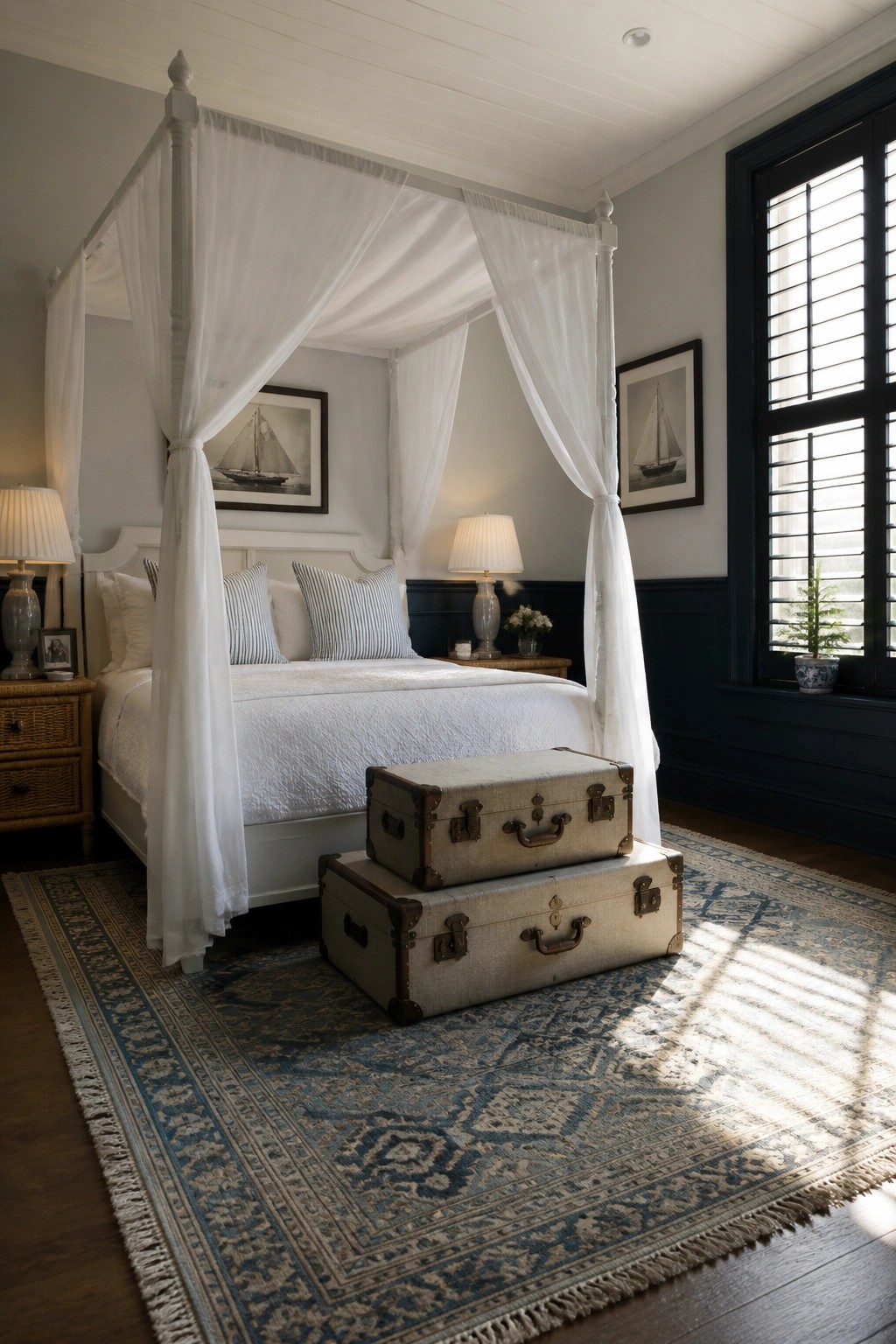
A canopy bed with sheer white drapes gives a coastal bedroom an easy, open feel. The light fabric softens the lines of the bed and lets the room breathe even when you add darker baseboards or wood furniture.
This setup works best in rooms where you want the bed to stay the main focus without crowding the space. Keep the bedding simple and layer in a few striped pillows or a soft rug to tie the look together.
Linen Canopies Over Canopy Beds
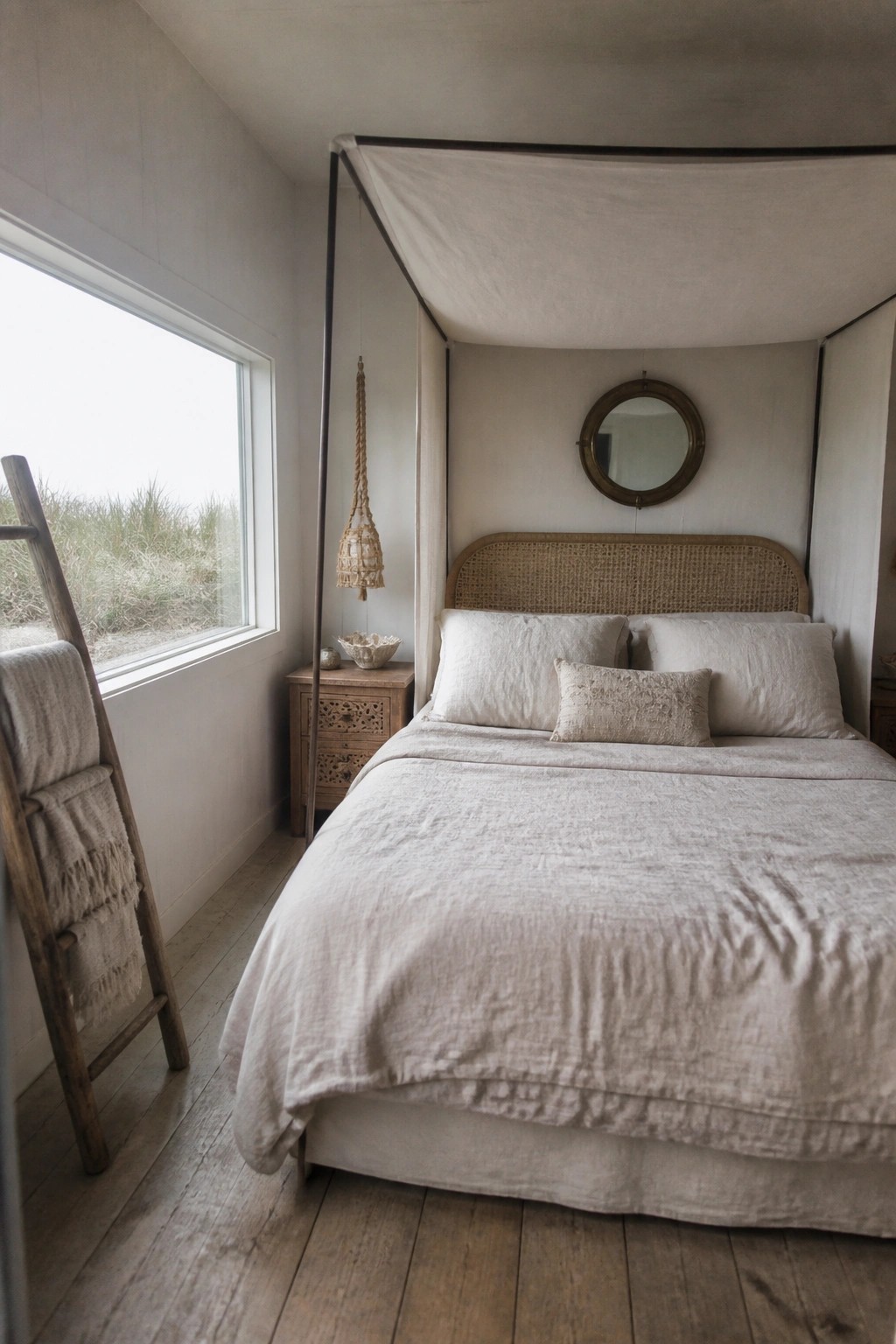
A light linen canopy keeps the bed from feeling boxed in while still giving it some presence. The fabric hangs loose so air moves through easily, which suits coastal rooms that already get plenty of breeze from open windows.
This approach works best in smaller bedrooms where you want the bed to anchor the space without crowding it. Keep the frame simple and skip extra curtains or valances so the whole setup stays relaxed and easy to maintain.
Wallpaper That Matches The View

A canopy bed already brings height and softness to a coastal bedroom. Adding wallpaper with a palm print behind it strengthens that connection when the same trees show up right outside the window.
This works best in rooms that face greenery or water. Keep the bedding and curtains light so the pattern reads as a quiet link rather than a bold statement.
Canopy Beds With Integrated Shelving

One way to make a canopy bed feel more useful is to extend the frame into the wall so it creates built-in shelves and niches. This gives you display space for a few books or simple objects without adding separate furniture that can crowd the room.
It works best in bedrooms that already have some wall depth or where you want the bed to feel anchored. The frame can help mark off the sleeping area while keeping the rest of the room open and light.
Layer a Macrame Canopy for Extra Texture
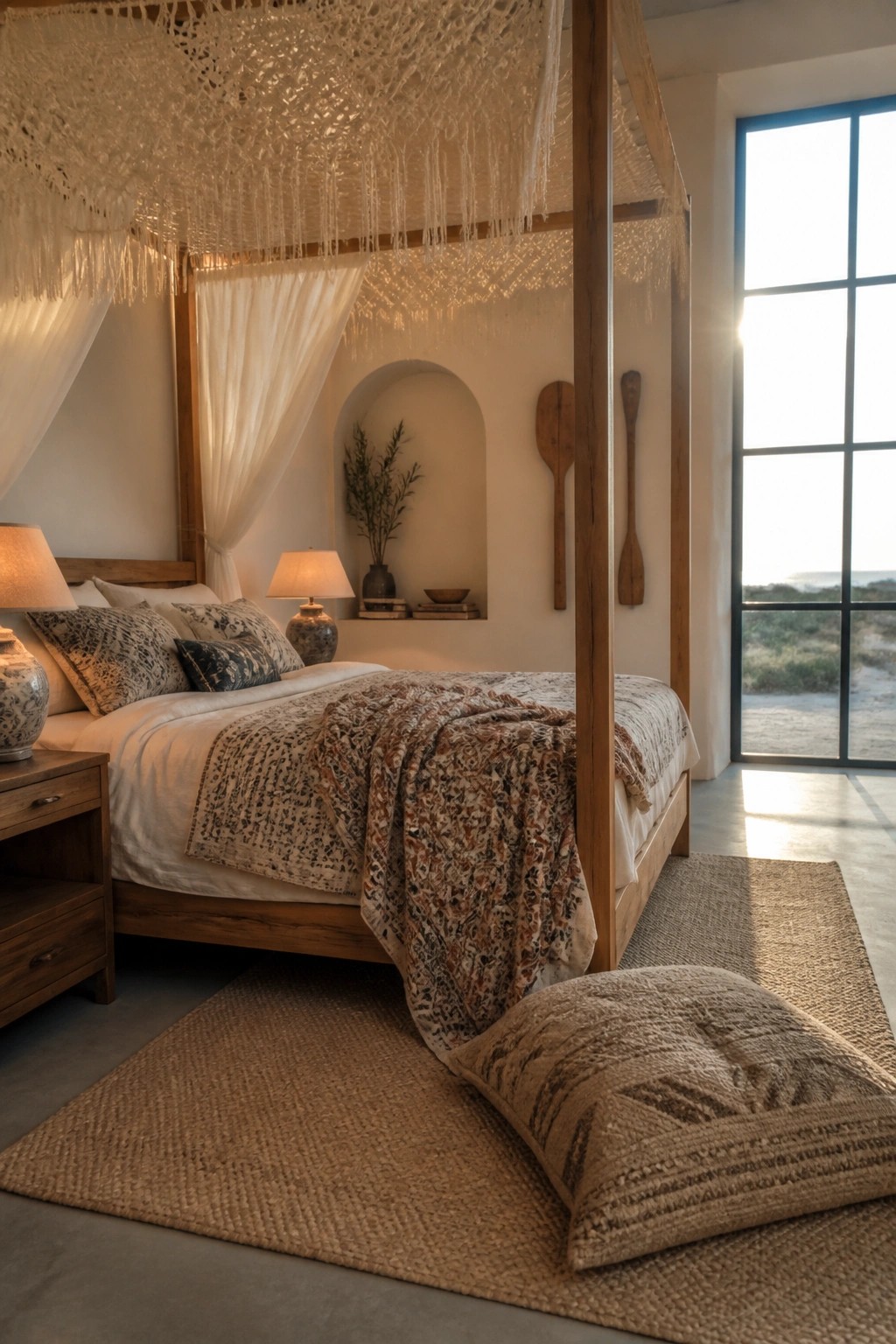
A macrame canopy gives a wooden four-poster bed a lighter, more relaxed feel without adding heavy fabric. The open weave lets light through while still creating a soft overhead layer that fits right into a coastal bedroom.
This works best when the rest of the room stays simple. Pair it with plain bedding and a few textured pieces like a jute rug so the canopy becomes the main detail instead of competing with everything else.
Rope Wrapped Posts On A Canopy Bed

A canopy bed can feel too heavy in a coastal room, but wrapping the posts in rope changes that. The texture keeps the frame light and natural while still giving the bed presence in the space.
This works best in bedrooms that already lean on wood tones and simple fabrics. Keep the rest of the room quiet so the posts read as the main detail rather than one more layer.
Canopy Beds With Rope Tied Curtains
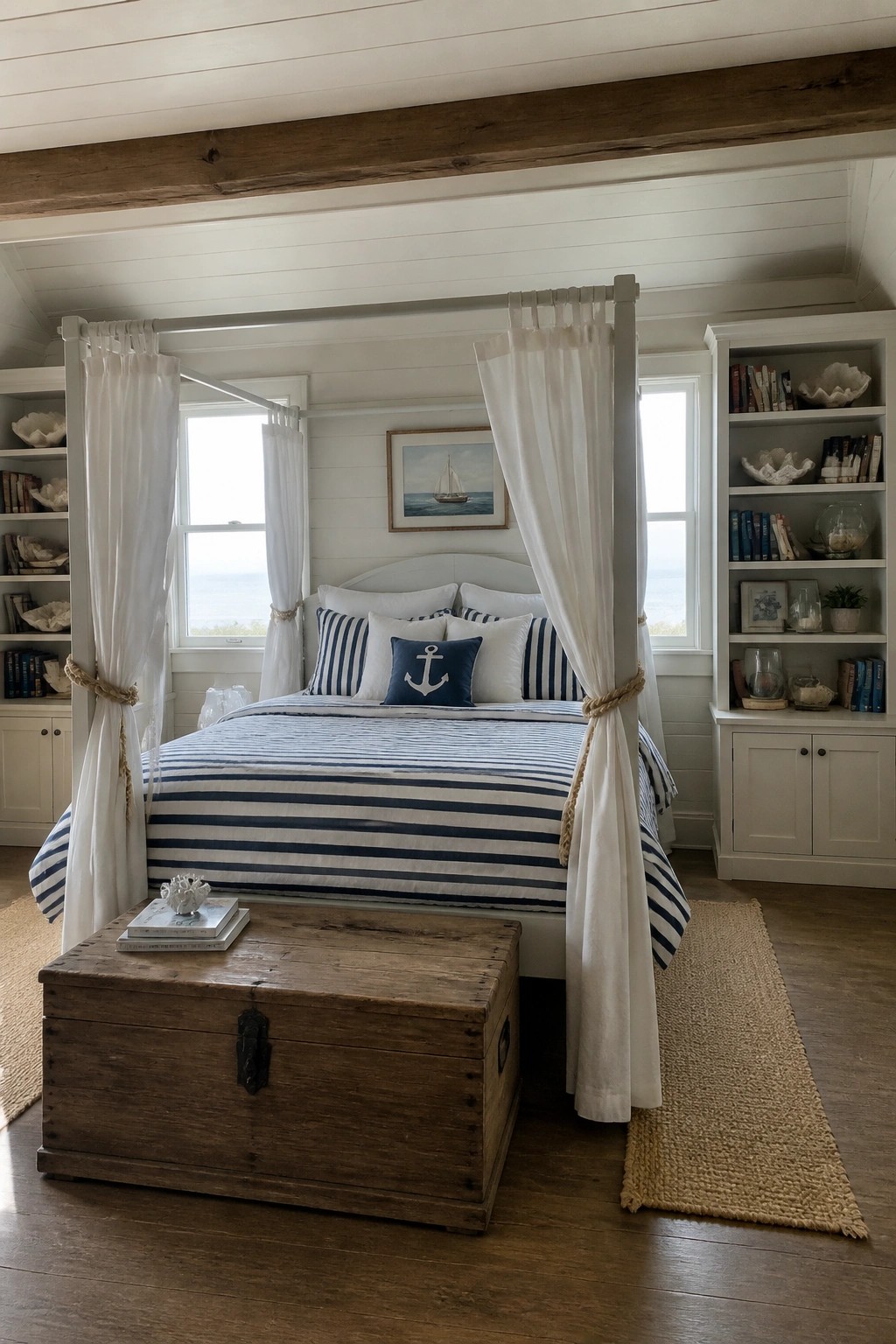
A canopy bed gains a relaxed coastal feel when the curtains are tied back with simple rope. The ties add a nautical note that feels casual rather than dressed up, and they keep the fabric from overwhelming the space.
This approach works well in bedrooms that already have light walls and striped bedding. It suits homes near the water or any room where you want the bed to feel airy and easy to maintain.
Light Drapery On Canopy Beds

A canopy bed can feel heavy in a coastal room if the fabric is too thick. Light drapery keeps the frame visible and lets air move through, which helps the whole space stay open and relaxed.
This approach works best in bedrooms with good natural light and simple color schemes. Stick with linen or cotton panels in off-white or pale tones, and hang them loose so they shift slightly with the breeze.
Keep the Canopy Light in Coastal Rooms
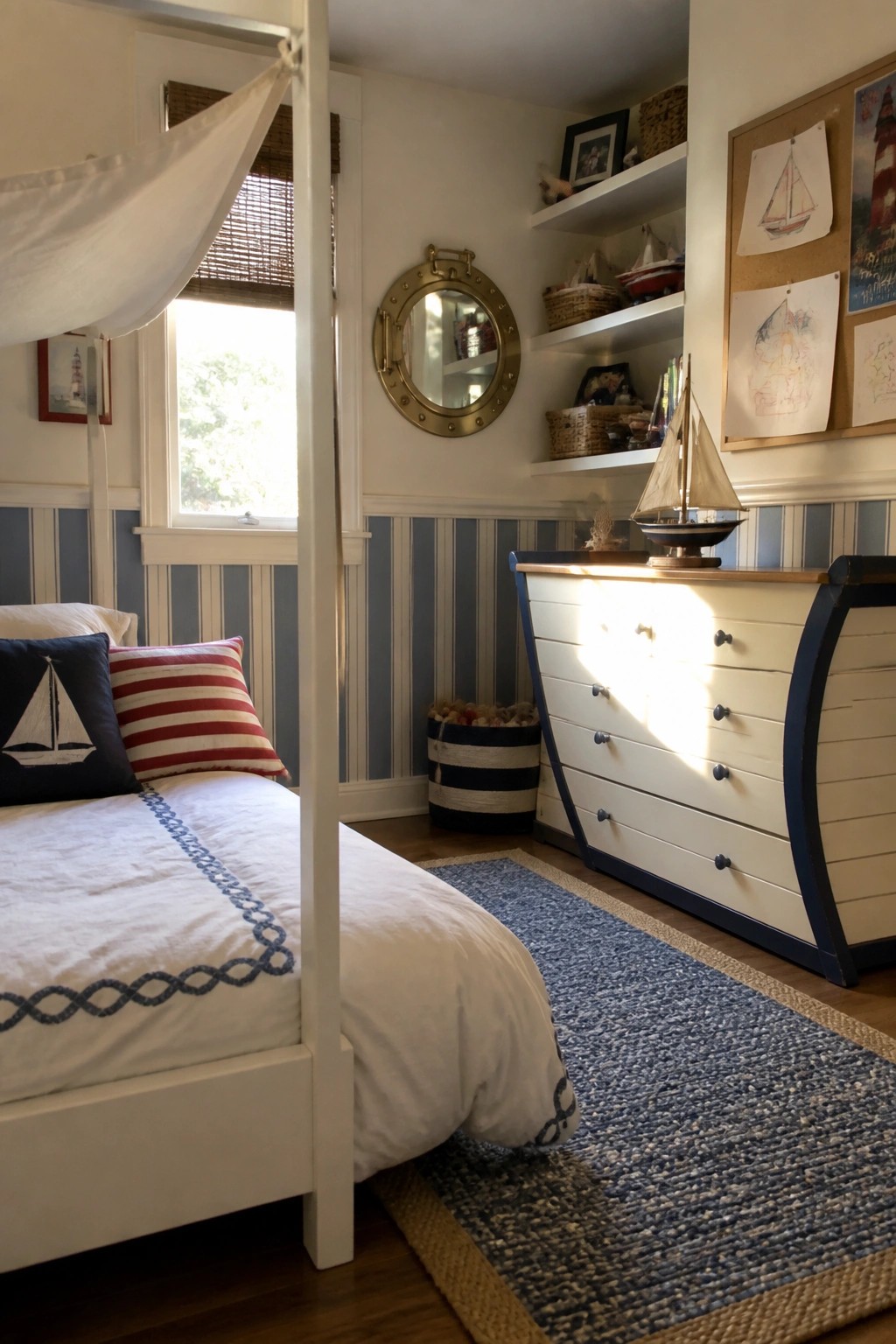
A canopy bed can feel heavy in a coastal setting, so the trick is to use very little fabric on the frame. In this room the white drapery stays loose and open, which lets the blue striped walls and nautical pieces show through without competing.
This approach works best in smaller bedrooms where you want the bed to anchor the space but still keep the overall look breezy. Skip heavy curtains and let the rest of the room, like a striped rug or simple pillows, carry the coastal details instead.
Sheer Drapes on Canopy Beds
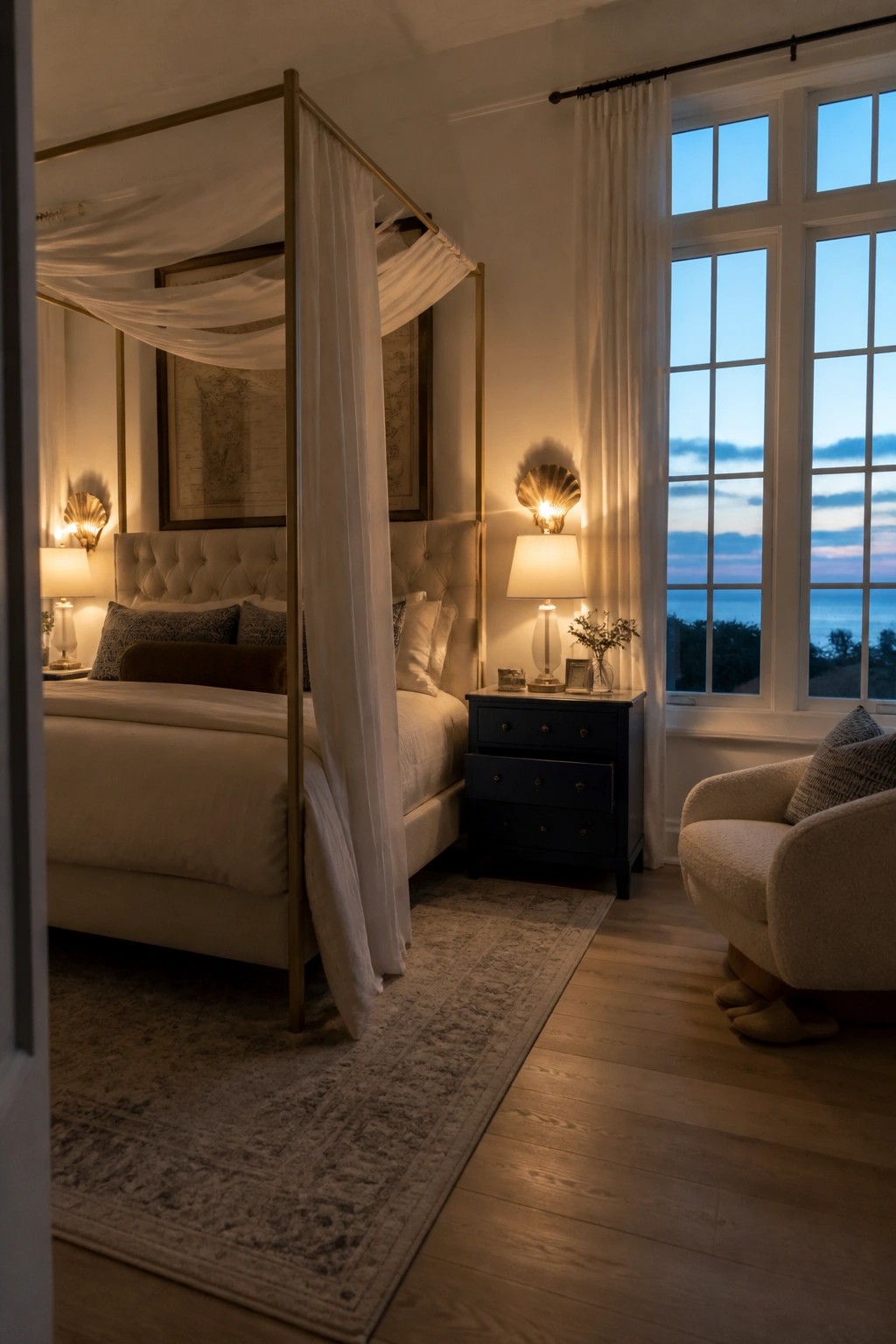
Many coastal bedrooms feel better when the canopy bed is dressed in light, sheer fabric instead of heavy curtains. The white drapes add softness and a bit of privacy while still letting the room stay bright and open to the view outside.
This approach works best in spaces that get good natural light and have a simple color scheme. Keep the fabric lightweight so it moves easily and does not overpower the bed frame or the rest of the room.
Wood Canopy Beds With Sheer Curtains
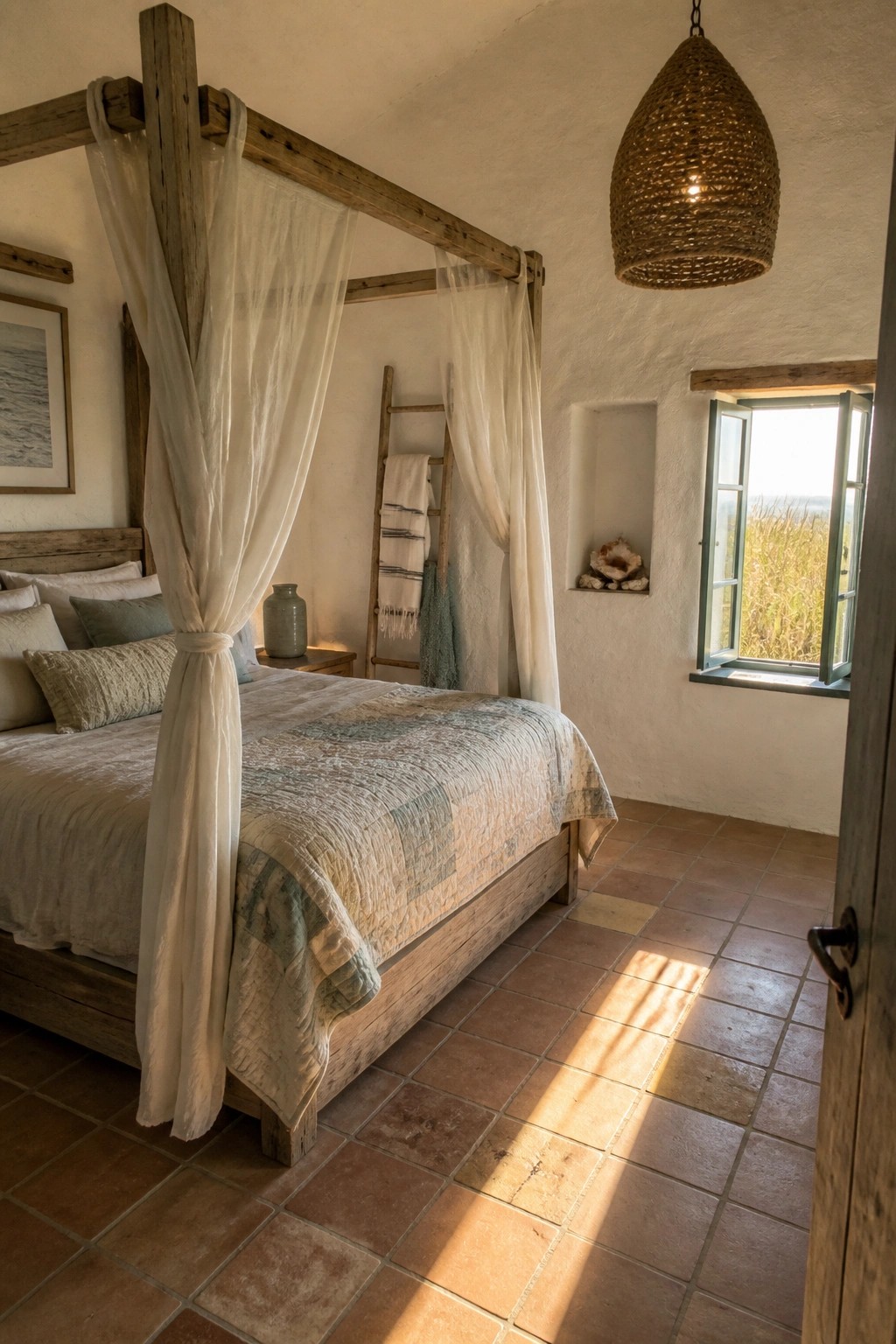
A wood canopy bed with light drapes works especially well in coastal bedrooms because it adds structure without making the room feel closed in. The natural wood keeps the look grounded, while the thin fabric lets air and light move through easily.
This setup fits best in smaller or medium rooms that get good natural light. Keep the rest of the space simple with pale walls and hard flooring so the bed stays the main feature instead of competing with too many other pieces.
Tying Back Canopy Curtains

One simple way to keep a canopy bed from feeling heavy is to gather the fabric and tie it loosely to the posts. The soft folds still frame the bed but let light and air move through the room more easily.
This approach works best in spaces that already have some texture like wood beams or a woven rug. Use lightweight fabric and avoid too many layers so the whole setup stays relaxed rather than formal.
Dark Walls Behind Canopy Beds

A dark wall color gives a canopy bed more presence in a coastal bedroom. It adds weight and keeps the look from feeling too light and scattered, especially when the bed frame is simple and the bedding stays neutral.
This approach works best in rooms with decent natural light and a few natural textures to balance the mood. Keep the rest of the space simple so the contrast stays intentional rather than heavy.
Keep the Canopy Curtains Light and Simple

A canopy bed can easily feel heavy in a coastal bedroom. Light white fabric that hangs loosely and ties back keeps the whole setup feeling open and easy to live with.
This works best in rooms that already have good natural light and a connection to the outdoors. Skip heavy or dark drapes and let the bed stay soft without crowding the space.
Sheer Curtains Over Canopy Beds

A canopy bed with sheer curtains keeps the look light and open while still giving the bed a clear shape. In coastal bedrooms this works well because the fabric moves with the air and does not block light from the windows.
It suits rooms that already have simple furniture and pale walls. Keep the bedding plain and add a natural rug underneath if the floor feels too bare.
Dark Canopy Beds Add Contrast to Coastal Bedrooms

A dark canopy bed gives a coastal bedroom a solid center point. The black frame stands out against white walls and bedding, which keeps the space from feeling too soft or washed out.
This works well in homes that want a bit of nautical character. Keep the rest of the room light with simple curtains on the frame and just a few striped or anchor accents so the bed remains the main feature.
Bamboo Frames For Coastal Canopy Beds

A bamboo canopy bed works well in coastal rooms because it brings in natural texture without adding weight. The light wood tone and simple lines keep the space feeling open and relaxed, especially when paired with soft white fabric and green accents.
This approach suits bedrooms that already have some color on the walls or natural light from large windows. Keep the bedding simple and let the frame do most of the work.
Simple White Drapes on Canopy Beds
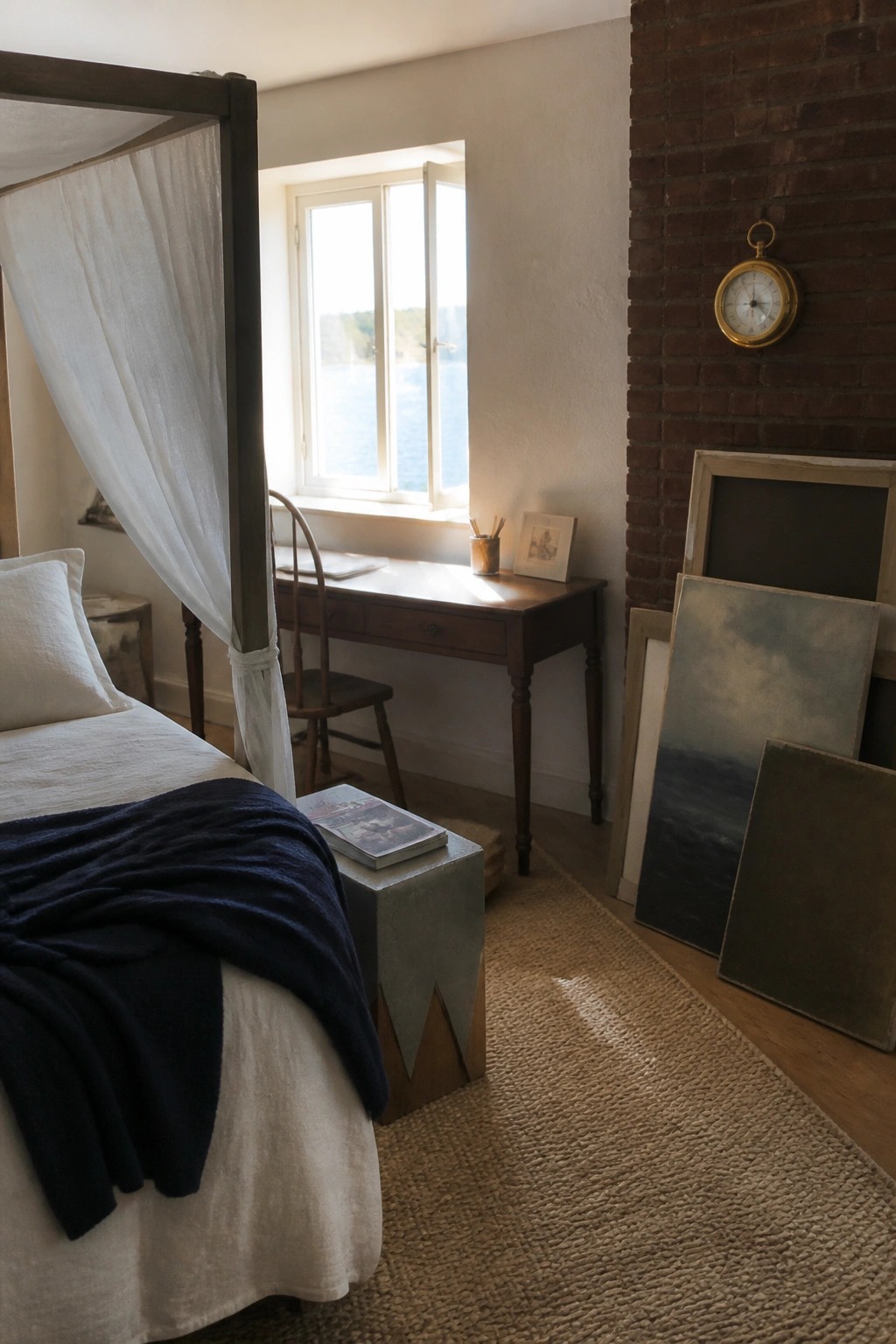
A canopy bed with light white drapes works well in coastal bedrooms because it adds softness without blocking light or views. The sheer fabric moves gently and keeps the whole space feeling open even when the bed takes up a good part of the room. This approach suits homes that already have strong natural light from windows facing water or open sky.
Place the bed so the window sits right beside or behind the canopy frame. Skip heavy fabrics and let the drapes stay loose and simple. It works best in smaller or medium rooms where you want the bed to feel like a focal point but not close the space in. Darker wood frames pair nicely with the white to add a bit of weight without making the room feel heavy.
Light Wood Canopy Beds For Coastal Rooms

A canopy bed in light wood gives a coastal bedroom enough structure to feel grounded while still keeping the space open. The simple frame works with soft linens and a pale rug to create a calm look that does not feel heavy or closed in.
This approach suits rooms with neutral walls and good natural light. Stick to whites, soft blues, and minimal accessories so the wood frame stays the main element rather than competing with too many colors or patterns.
Frequently Asked Questions
Q: What’s the best fabric for the canopy if I want that light coastal breeze feeling? A: Sheer linen or cotton voile works well because it lets air move freely around the bed. These materials also catch sunlight in a soft way that fits the whole room. Stick with whites or pale tones to keep everything feeling open.
Q: How do I add coastal details around the canopy without it looking too themed? A: Layer in natural textures like a jute rug under the bed and simple woven baskets nearby. These pieces nod to the shore while leaving the canopy as the main focus. A few striped pillows in muted colors finish the look without clutter.
Q: Will a canopy bed crowd a smaller coastal bedroom? A: Pick a slim metal or light wood frame that sits close to the ceiling. This draws the eye upward and makes the space feel taller instead of boxed in. Keep other furniture low and minimal to balance the height.