I often find that stucco colors shift once they are applied across a full facade and paired with actual wood elements like beams or trim.
The wood tones can either anchor the look or compete with it depending on the undertones in the stucco.
Samples help.
I have started checking how the pair reads against the roof and any stone details before making a final call.
This approach keeps the exterior from looking like it was assembled from separate ideas instead of one plan.
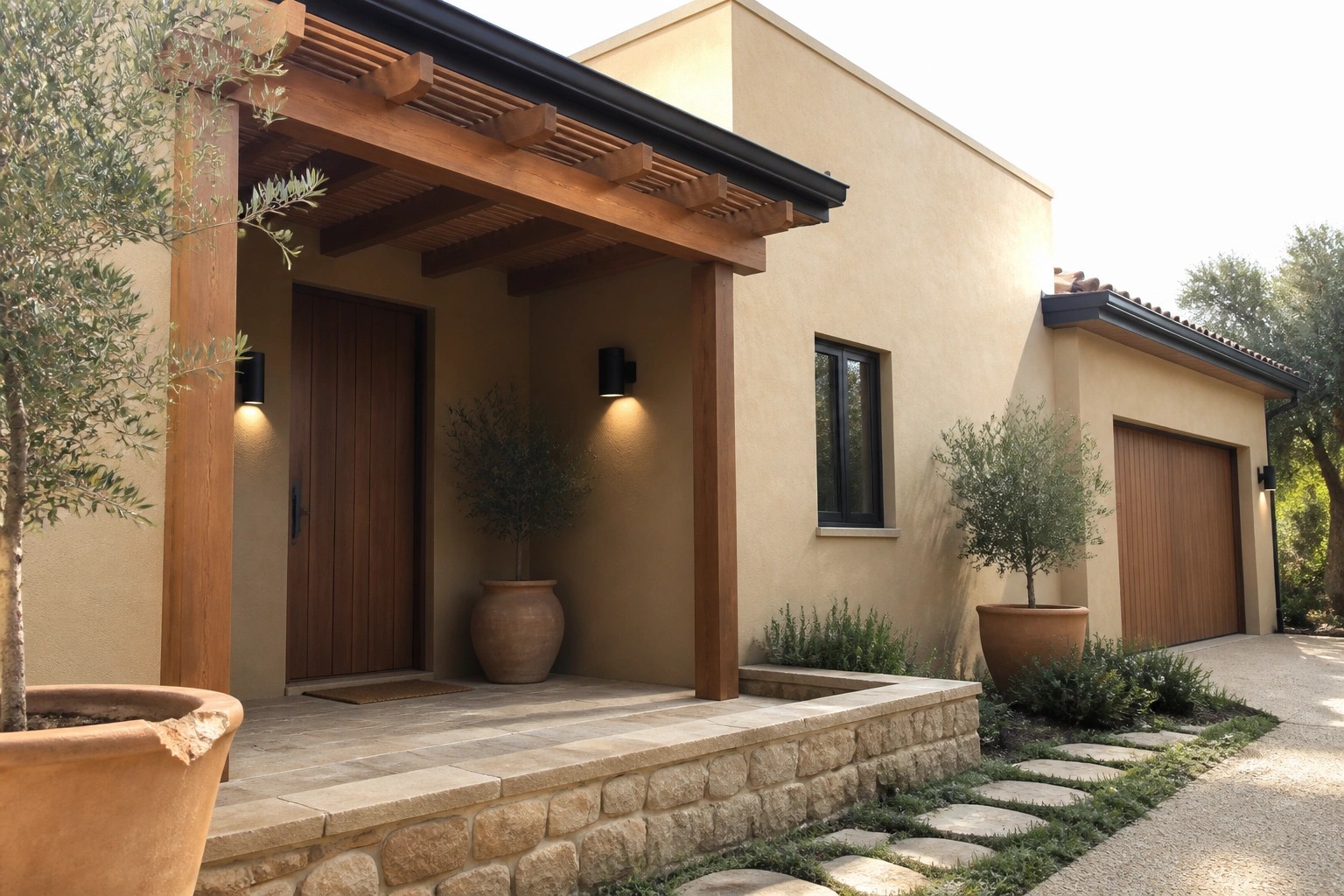
Stucco With Warm Wood Accents

A simple stucco color lets the wood elements do more of the work. Light warm beige walls make the natural wood door, pergola, and garage door feel more intentional without needing extra trim or color changes.
This mix works best on homes where the entry and roofline already have wood structure. Keep the wood tones close in color so the front stays calm, and let the stucco stay the quiet background.
Light Stucco with Warm Wood Accents

Light stucco gains a lot of character when it is paired with warm wood on the main structure. The wood softens the flat surface and gives the house a more grounded look without adding extra trim or color layers.
This approach works best on homes that already have a porch or overhang. Keep the wood tone in the medium range so it stands out against the stucco but does not fight with it. Avoid very dark or very pale woods, since both can throw the balance off.
Dark Stucco With Warm Wood Accents
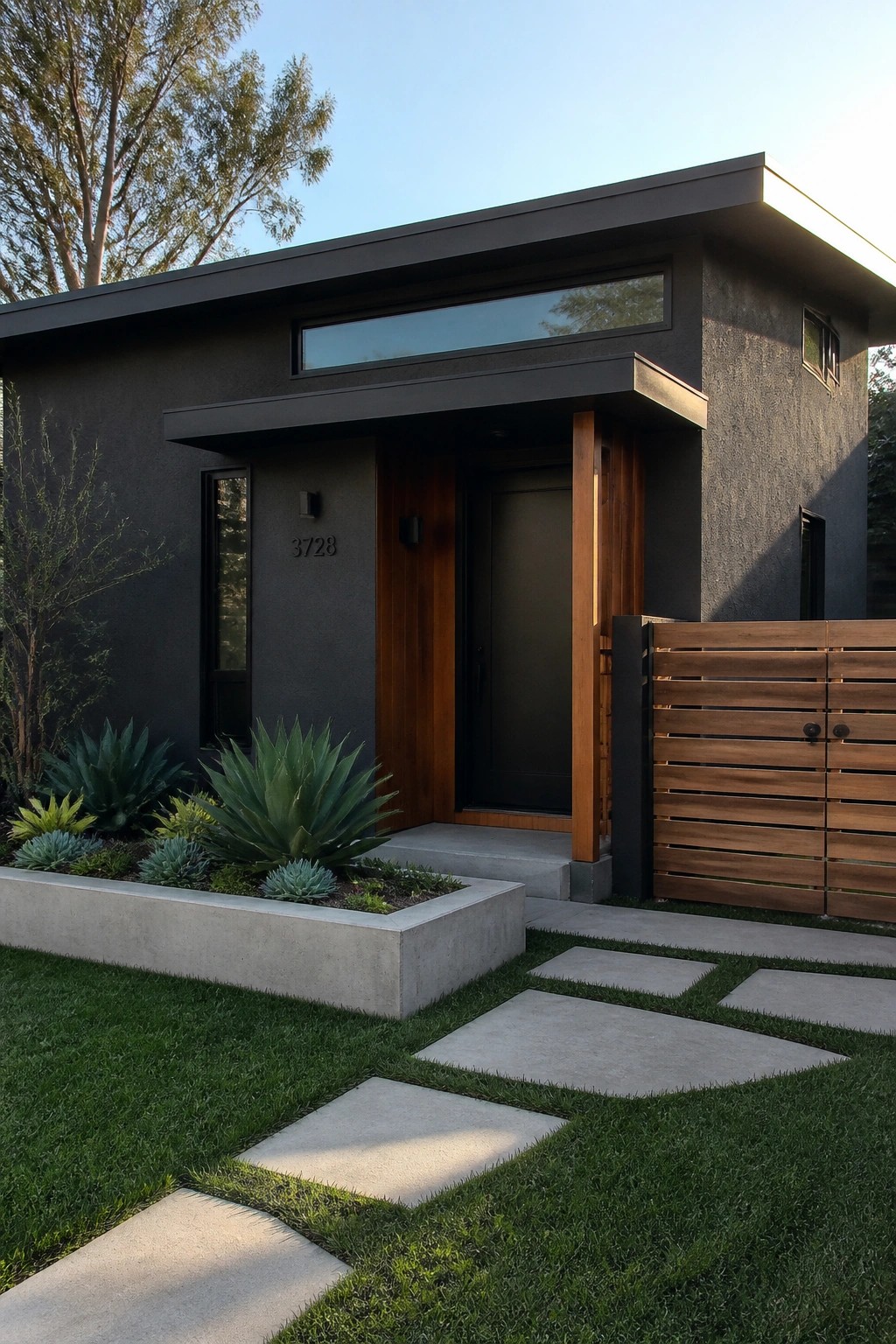
A deep stucco color paired with wood around the entry gives a house a solid feel that still reads as welcoming. The contrast keeps the dark tone from looking flat while the wood brings in some natural warmth right where people approach the door.
This works especially well on homes with simple shapes and clean lines. Keep the wood tone consistent on the door frame or accents, and let the stucco stay the main surface so the detail does not get lost.
Terracotta Stucco With Dark Wood Doors

Terracotta stucco creates a soft warm base that feels right at home in bright light. Adding a dark wood door gives the entry real weight and keeps the whole front from looking flat.
This works best on homes with simple lines and some stone or tile trim around the opening. Stick to one deep wood tone and avoid too many extra colors so the stucco and door stay the main focus.
Light Stucco With Natural Wood Accents

A pale stucco works best when it stays simple and lets other materials carry some warmth. Here the light wall color sits next to cedar shingles that have aged to a soft brown, and the mix keeps the house from feeling flat or too cool.
This combination suits smaller homes or cottages in mild climates. Use the wood mainly on the gable or roofline, keep trim light, and let the stucco cover the larger wall areas so the wood reads as an accent rather than an overload.
Light Stucco With Warm Wood Accents

Light stucco gives a house a clean, simple base that lets wood accents stand out without competing. The contrast works because the wood brings in natural color and texture that softens the modern lines while still keeping things straightforward.
This mix suits newer homes or remodels where the goal is a fresh look that does not feel cold. Use the wood on a few focused spots like a garage door or screen panels so the stucco remains the main surface. Too much wood can start to feel busy, so keep the placements simple and balanced.
Warm Wood Accents With Light Stucco

Many homes look better when the wood trim and doors are kept in a warm tone against the stucco. The contrast feels natural and helps the entry stand out without needing extra decoration.
This approach suits homes with simple rooflines and smaller windows. Match the wood on doors, brackets, and any nearby structures so the whole exterior reads as one calm combination rather than separate pieces.
Stucco Walls with Warm Wood Accents

Stucco takes on a softer look when you bring in warm wood elements like doors or built-in seating. The contrast keeps the walls from feeling too plain while the wood adds a natural touch that holds up well outside.
This works best on homes with patios or side courtyards where you want simple materials that age nicely. Stick to one or two wood pieces so the space stays open and easy to use.
Warm Wood Details With Light Stucco

Stucco works well as a main wall surface because it is durable and takes paint evenly. Adding wood in a warm tone on posts, beams, and the door gives the front a bit more depth and keeps the whole look from feeling flat.
This approach suits homes with a simple gable roof and a small covered entry. Keep the wood finish consistent across the main accents so the contrast stays clean rather than busy.
Warm Wood Details On Stucco Exteriors

Stucco can look a little plain on its own, so adding sections of warm wood gives the facade more depth and a friendlier feel. The wood breaks up the wall surface and adds a natural tone that works well with the softer stucco color.
This approach suits modern homes that still want some warmth. Use the wood around the entry or on vertical sections of the front, and keep the stucco in a light neutral so the wood stands out without overpowering the whole house.
Warm Stucco With Wood Accents

A soft tan stucco works well when the goal is to let wood trim feel like a real part of the house instead of just decoration. The warm tone keeps the wood from looking too heavy or stark against the walls.
This mix suits homes that already have exposed beams or half-timber details. Use it where you want the exterior to feel settled rather than brand new, and test the stucco sample next to the actual wood color before committing.
Warm Wood Garage Doors on Stucco Homes

Light stucco gains a lot of character when it is paired with a large wood garage door. The horizontal lines in the wood break up the flat wall surface and bring in natural warmth without needing extra trim or color changes.
This approach works especially well on newer homes that have clean rooflines and simple shapes. Keep the wood tone consistent on other elements like railings so the garage door feels like part of the overall design rather than an afterthought.
Terracotta Stucco And Wood Doors

Terracotta stucco gains a lot of warmth when it meets dark wood on the door and trim. The contrast keeps the wall color from feeling flat while the wood adds a natural texture that reads as solid and welcoming.
This approach works well on homes with a simple roofline and few other materials. Use it on the main door and any exposed beams, then keep the stucco finish fairly smooth so the wood stays the main accent.
Warm Wood Accents On Light Stucco

Light stucco looks better when it has some wood nearby to balance the flat surface. The wood adds just enough color and texture so the walls do not feel cold or empty.
This works best on homes with simple shapes and few trim details. Use it on the main door and garage if you want the entry to stand out without adding extra colors or materials.
Light Stucco With Warm Wood Accents

Light stucco paired with warm wood gives a house a clean but natural look that feels settled rather than stark. The wood adds depth without making the whole exterior feel heavy, and the stucco keeps things bright even when the wood tones lean golden. This mix works especially well on homes with simple rooflines and larger window openings.
It suits two-story houses in suburban or semi-rural settings where you want the front to feel welcoming but not overly formal. Keep the wood tones consistent on doors, porch ceilings, and trim rather than mixing too many shades. Avoid letting the stucco get too pale if your wood is on the darker side, since the contrast is what makes the combination read as fresh.
Wood Screening On Stucco Walls

A wood screen against plain stucco gives an outdoor seating area a simple backdrop that feels finished but not heavy. The horizontal lines add some texture and a bit of warmth while the stucco keeps everything light and low key.
This setup works well in narrow side yards or small courtyards where you want a place to sit without closing the space off completely. Use a natural wood tone and let the stucco stay a soft gray or warm off-white so the two materials play off each other without competing.
Stucco And Warm Wood Accents

Many homes use stucco as the main wall surface because it holds up well and takes paint evenly. Adding warm wood siding in a few key spots keeps the look from feeling flat and gives the house more depth without extra trim or details.
This approach works best on modern or mid century homes where the wood can run in clean horizontal bands. Keep the stucco in a light warm tone so the wood reads as an accent rather than competing with it.
Stucco With Warm Wood Accents

Many homes gain a warmer look when light stucco is paired with wood on the doors and windows. The contrast keeps the walls from feeling flat while still letting the house read as simple and clean.
This approach works best on smaller homes or cottages where the entry needs a bit more presence. Match the wood tone on the door, shutters, and any brackets or trim so the details feel intentional rather than scattered.
Warm Wood Doors With Light Stucco

A wooden door set into light stucco gives an outdoor entry a simple, grounded feel. The wood adds just enough warmth and texture without competing with the walls, and it works especially well when the space gets some overhead shade.
This pairing suits homes with covered side entries or small courtyards. Keep the wood tones natural and limit other accents so the stucco stays the main surface.
Combining Stucco with Warm Wood Accents

Light stucco works well when it is paired with natural wood because the wood adds just enough warmth without making the whole house feel busy. The vertical wood siding next to the plain wall keeps the look simple and modern while the wood door ties everything together.
This approach suits homes that want a clean exterior without going fully modern or fully traditional. It works best on smaller facades or entry areas where you want the wood to stand out rather than cover large walls. Keep the wood tone consistent and limit how much you use so the stucco stays the main surface.
Warm Wood Accents With Stucco Walls

Stucco takes on a softer look when paired with warm wood elements like benches or door frames. The wood brings in a natural texture that prevents the walls from feeling too flat or cold in an outdoor setting.
This works best on patios or poolside areas where you want built-in seating without adding extra furniture. Stick to simple wood tones and let the stucco stay light so the contrast feels easy and balanced.
Light Stucco with Warm Wood Accents

Light stucco takes on a softer look when it is paired with wood trim and a wood door. The contrast keeps the front from feeling flat while still staying simple.
This works best on homes that already have some traditional lines. Use the wood mainly around the entry and windows so it does not overwhelm the rest of the facade.
Frequently Asked Questions
Q: What if my current stucco leans cool and I want to add warm wood without a full repaint?
A: Layer in honey-toned cedar or redwood accents to shift the overall feel. The wood brings in enough warmth to balance cooler stucco tones and creates a fresh contrast right away.
Q: How do I keep the wood from fading next to the stucco over a few seasons?
A: Apply a clear UV-protectant finish to the wood every two years. This keeps the warm grain looking rich while the stucco stays steady.
Q: Will a light stucco and dark wood combo work on a smaller house?
A: Yes it will. The light stucco opens up the space and the dark wood adds definition without closing things in.
Q: Should I match the wood tone to my front door or let it stand out?
A: Let the wood stand out with a slightly deeper shade than the door. This draws the eye along the accents and gives the whole exterior more interest.