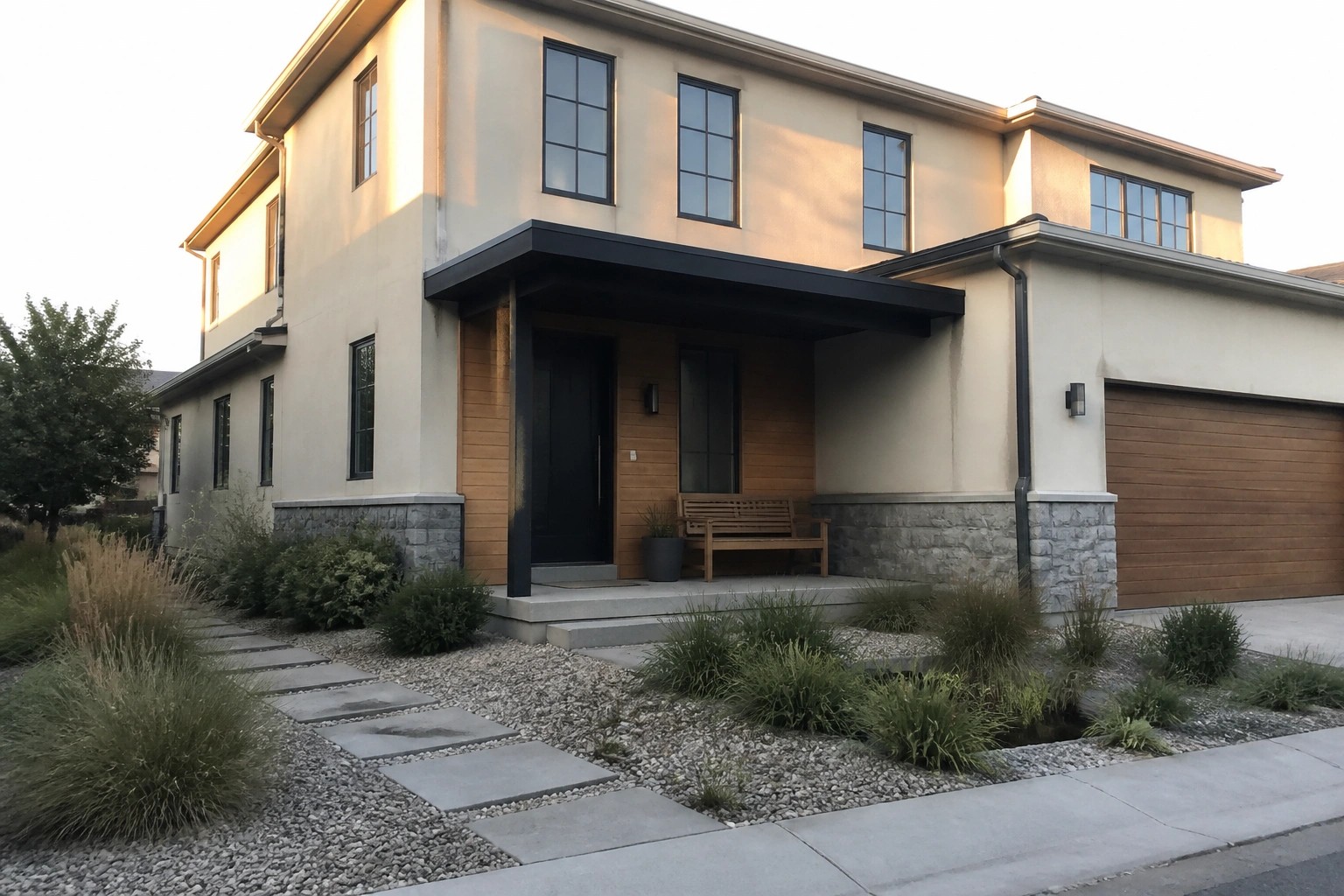
When I drive past homes that mix stone with stucco on the front, the first thing that stands out is how the textures catch the light and shift the whole shape of the house from the street.
The choice of where to place each material often decides whether the entry feels welcoming or just flat against the rest of the facade.
Some mixes just click better than others.
I have watched projects where the stone wraps only the lower half and the stucco takes over above, and that simple break usually keeps the rooflines from looking too heavy while still adding real depth.
Trying a small mockup of the materials side by side on site has helped me see which pairings will actually hold up once the full exterior is finished.
Mixing Stucco With Stone And Wood
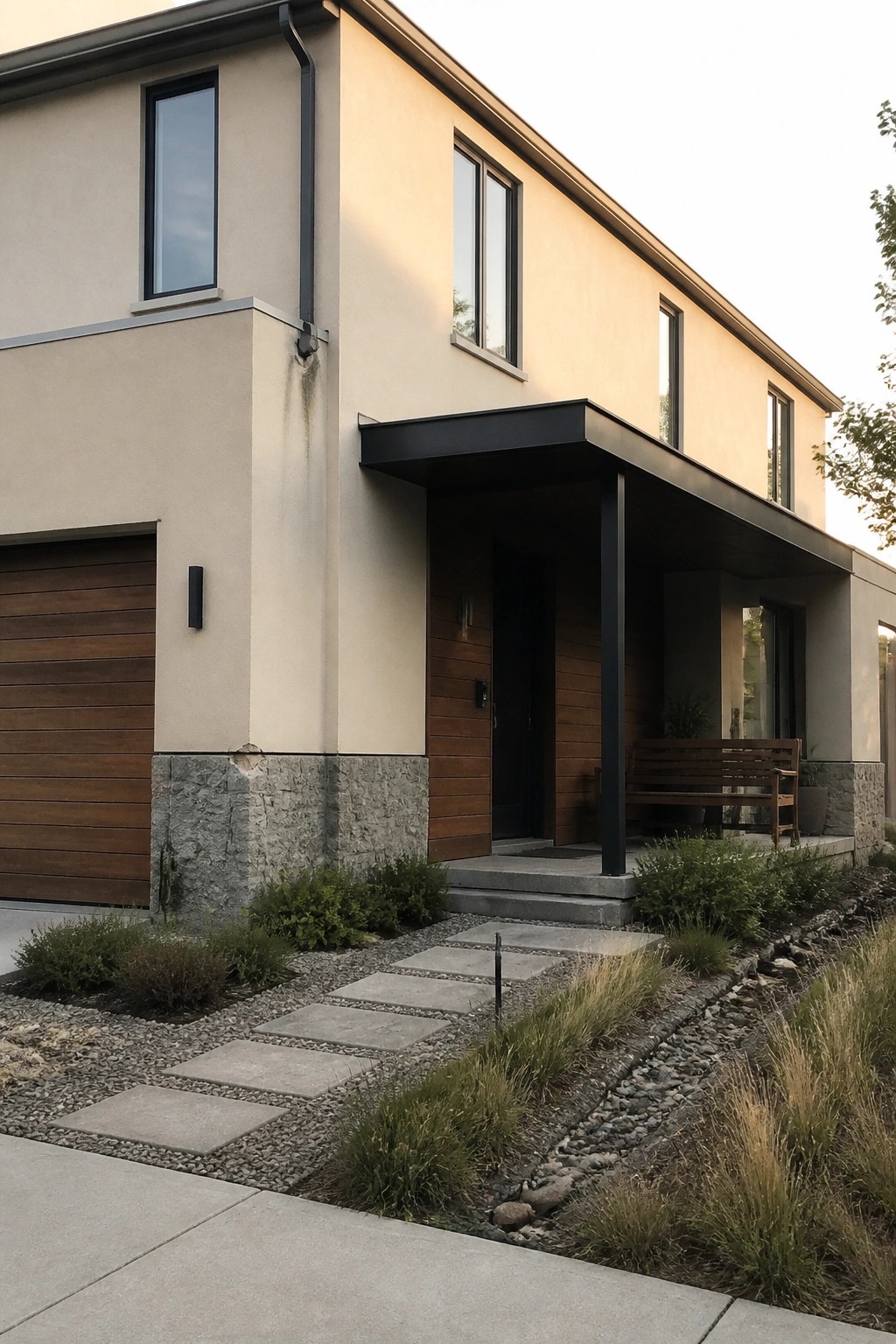
Many houses rely on stucco for the main walls because it stays simple and clean. Adding a low stone base and wood panels around the entry and garage gives the surface more texture without making the design busy.
This mix works best on homes with straight lines and few details. It keeps the look modern while adding enough contrast to make the front feel grounded and finished. Use it when you want materials to carry the interest rather than extra trim or color changes.
Mixing Stucco With Stone Accents
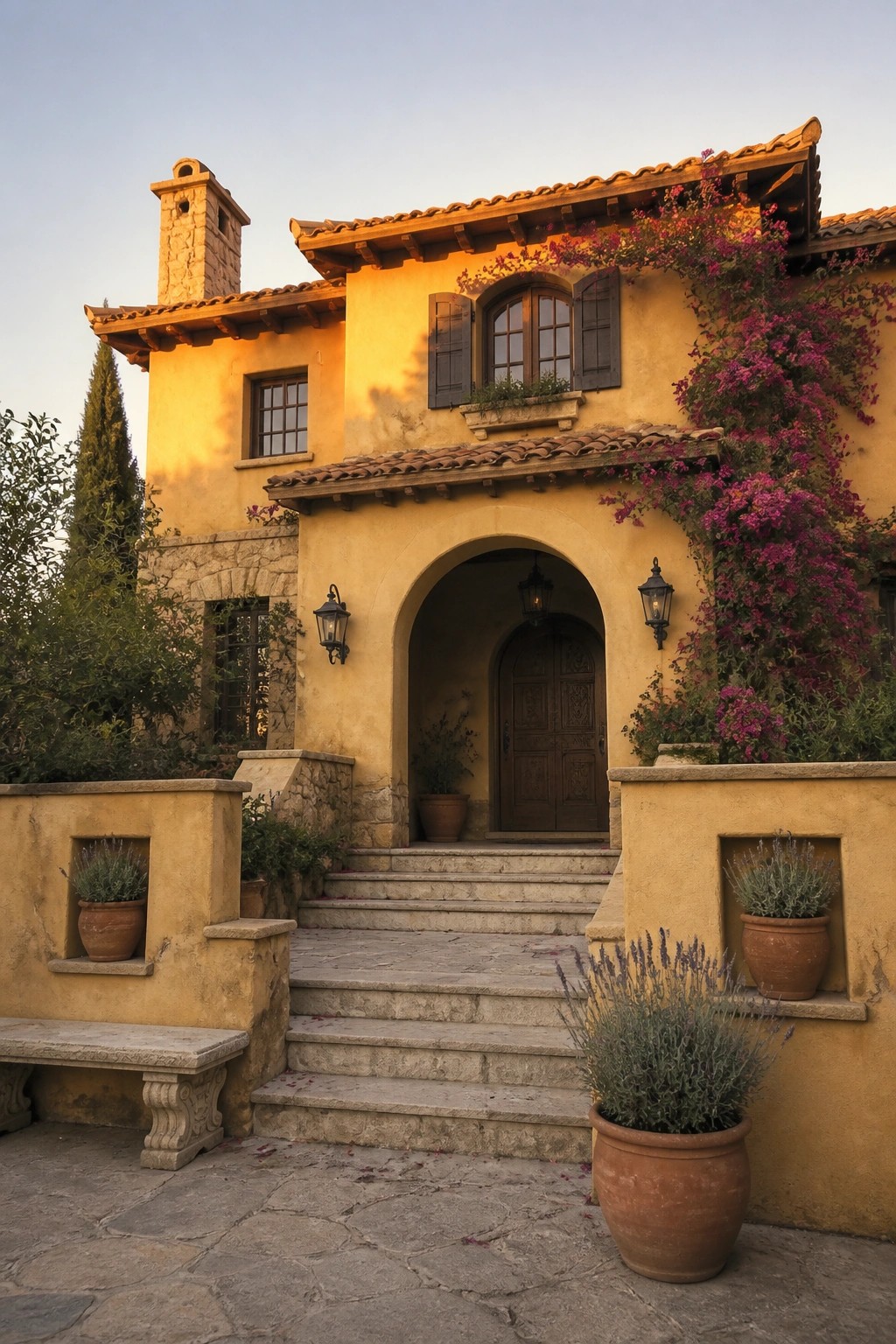
Stucco and stone work well together because the smooth plaster lets the rougher stone stand out without competing. A stone base or chimney gives the house weight and keeps the lighter stucco from feeling too plain.
This mix suits homes that already lean Mediterranean or Spanish in style. Keep the stone limited to key spots like the foundation, entry surround, or chimney so the contrast stays clear and the facade does not grow busy.
Mixing Stone And Stucco On The Facade
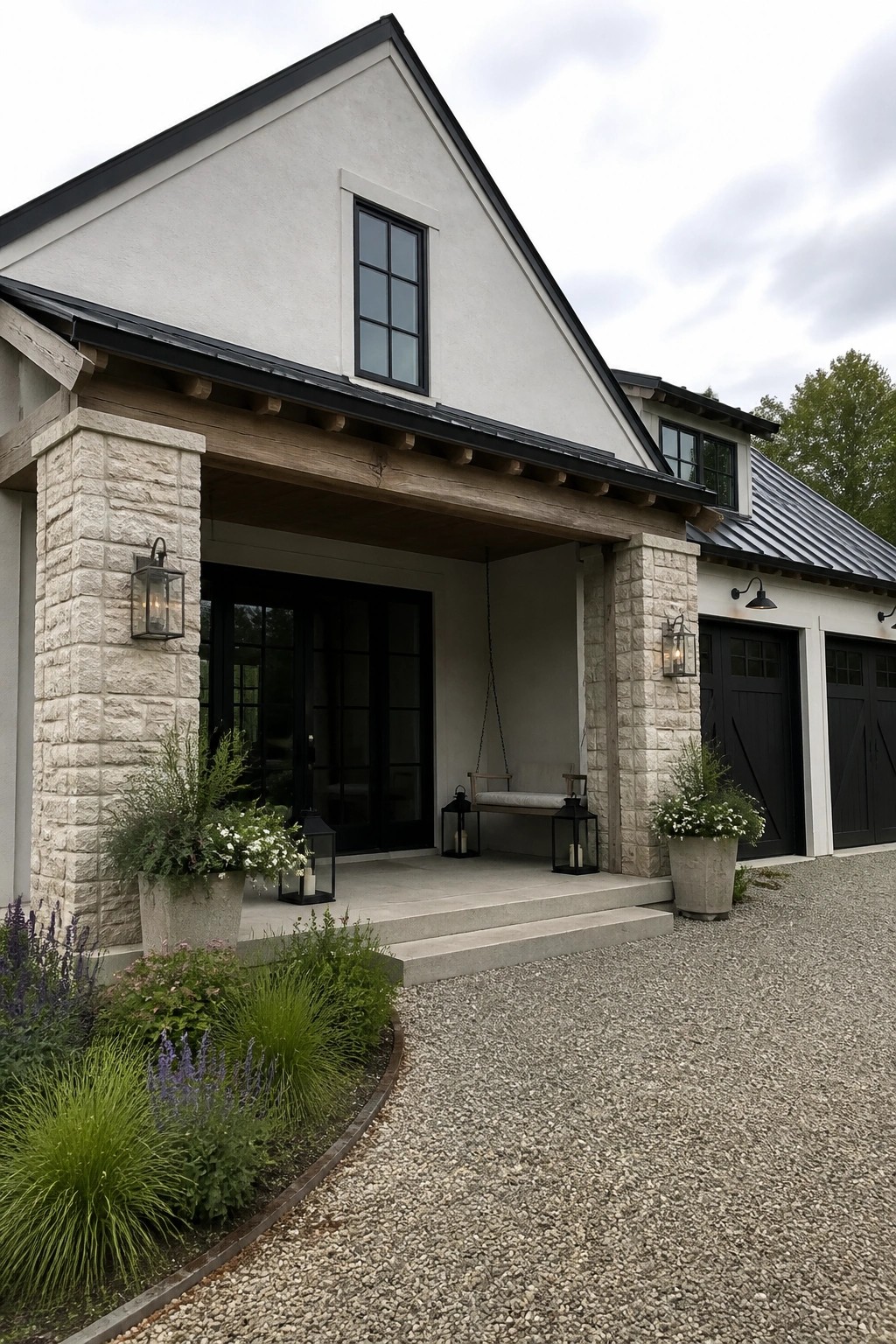
Stone and stucco work well together because they bring different textures without fighting for attention. The stone gives the base some weight and structure, while the stucco keeps the upper parts of the house looking lighter and simpler.
This mix suits homes that already have a straightforward roofline and a clear front entry. It works best when the stone is used in key spots like columns or the lower walls, and the stucco covers the rest. Dark trim and wood beams help tie the two materials together without adding extra color.
Combining Stone And Stucco On House Exteriors

Stone used at the base of columns and along low walls gives a stucco house more weight and presence. The contrast keeps the exterior from feeling flat while still letting the lighter stucco read as the main surface.
This approach suits older bungalow and craftsman homes best. Place the stone only where the house meets the ground or supports the porch, then carry the stucco across the rest of the facade so the materials stay balanced.
Mixing Stone And Stucco On The Facade
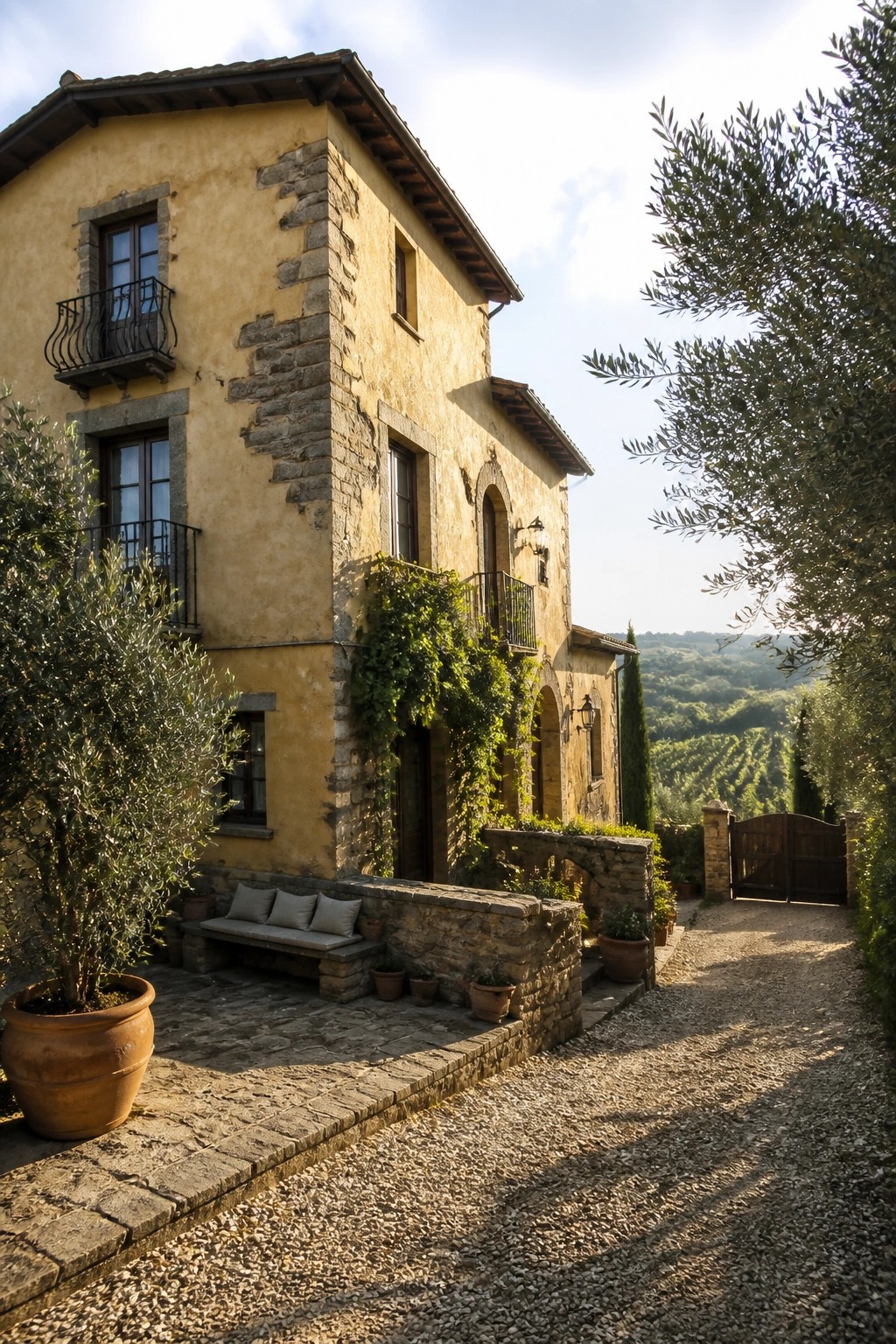
Stone and stucco together give a house more texture than either material would on its own. The stone breaks up the larger stucco areas and adds a sense of age and weight where it is needed most.
This approach works best on homes with simple rooflines and a few strong architectural details. Use the stone at corners, around openings, and along the base so the stucco remains the main surface rather than getting lost.
Stone Bands Break Up Dark Facades
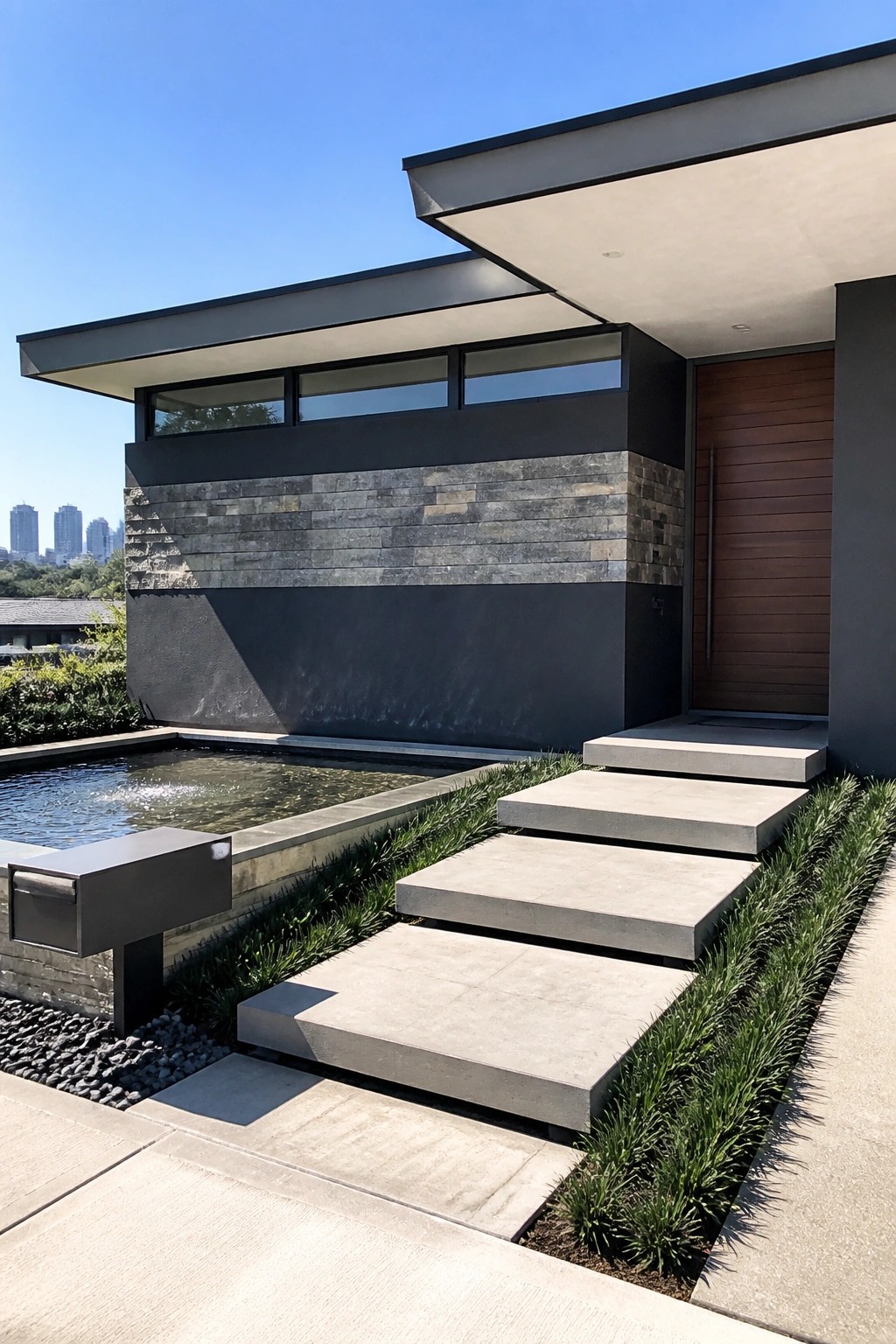
A horizontal strip of stacked stone can keep a dark exterior from feeling too heavy or flat. It adds texture without needing lots of extra color or trim. In this setup the stone sits right between two dark sections and gives the eye something to rest on.
This move works well on modern homes that use large dark panels or stucco. Keep the stone band narrow and let it run across the front for the cleanest look. It pairs especially well with simple concrete steps and minimal landscaping so the material change stays the main feature.
Stone Arches at the Entry

Many stucco homes gain a lot from a simple stone arch around the front door. The contrast between the smooth wall and the rough stones makes the entrance feel more solid and defined without needing extra trim or paint.
This approach suits houses with clay tile roofs and modest landscaping. Keep the arch width close to the door size so it frames the entry cleanly instead of overwhelming it.
Mixing Stone And Stucco On The Exterior

Stone along the base of a stucco house gives the whole structure a steadier look. It adds weight where it matters most and keeps the lighter material above from feeling like it floats.
This mix suits two-story homes with simple rooflines and front porches. Keep the stone low and let the stucco cover most of the upper walls so the contrast stays clean rather than busy.
Mixing Stone and Stucco on the Exterior
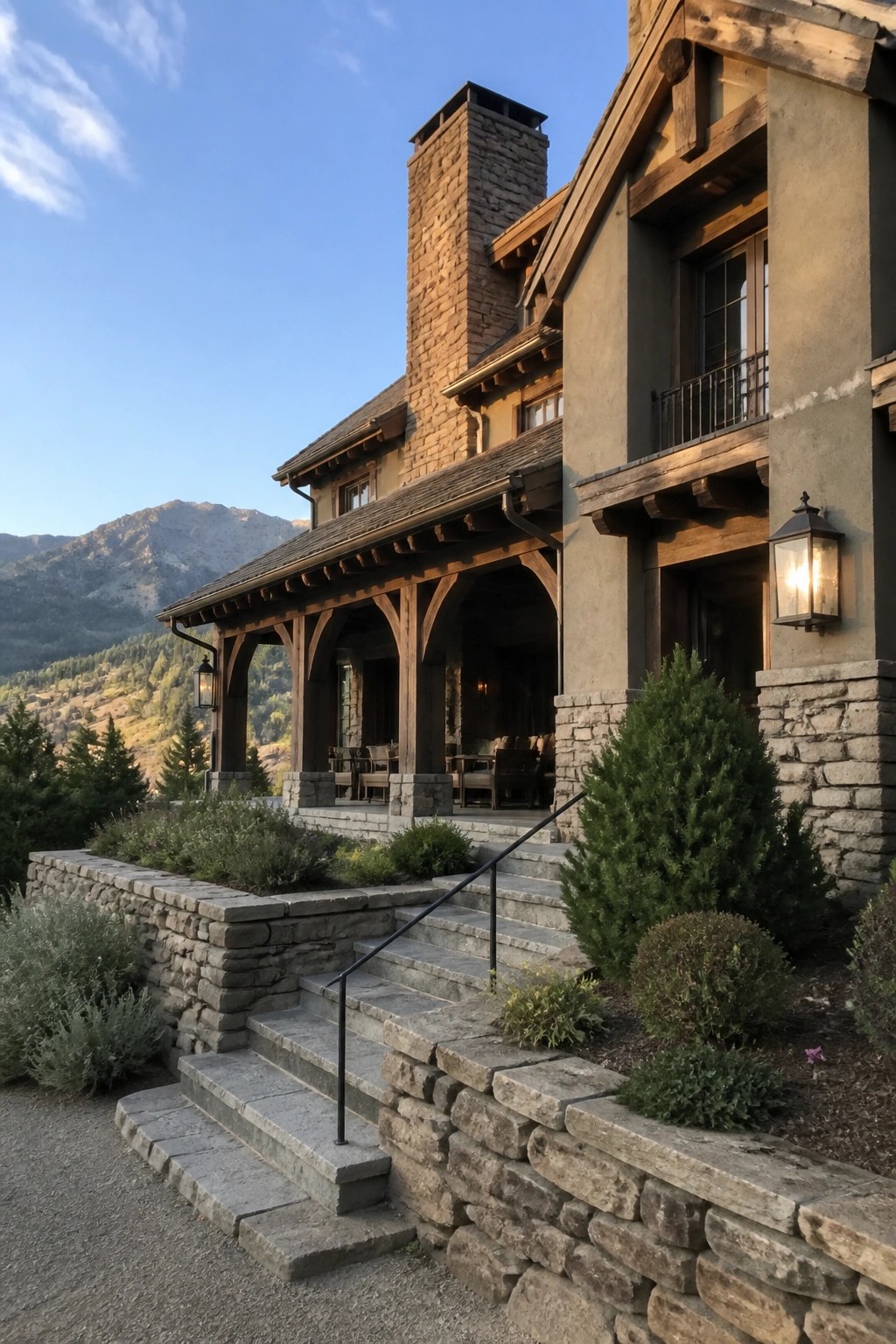
Stone and stucco make a strong pair because each one offsets the other. Stone gives weight and texture where it is needed most, such as around the base or on a chimney, while stucco keeps the rest of the wall surfaces clean and simple.
This mix suits larger homes that have varied rooflines or multiple wings. Limit the stone to key spots so it anchors the design without breaking up the stucco too much.
A Black Canopy Sharpens the Entry on Light Stone
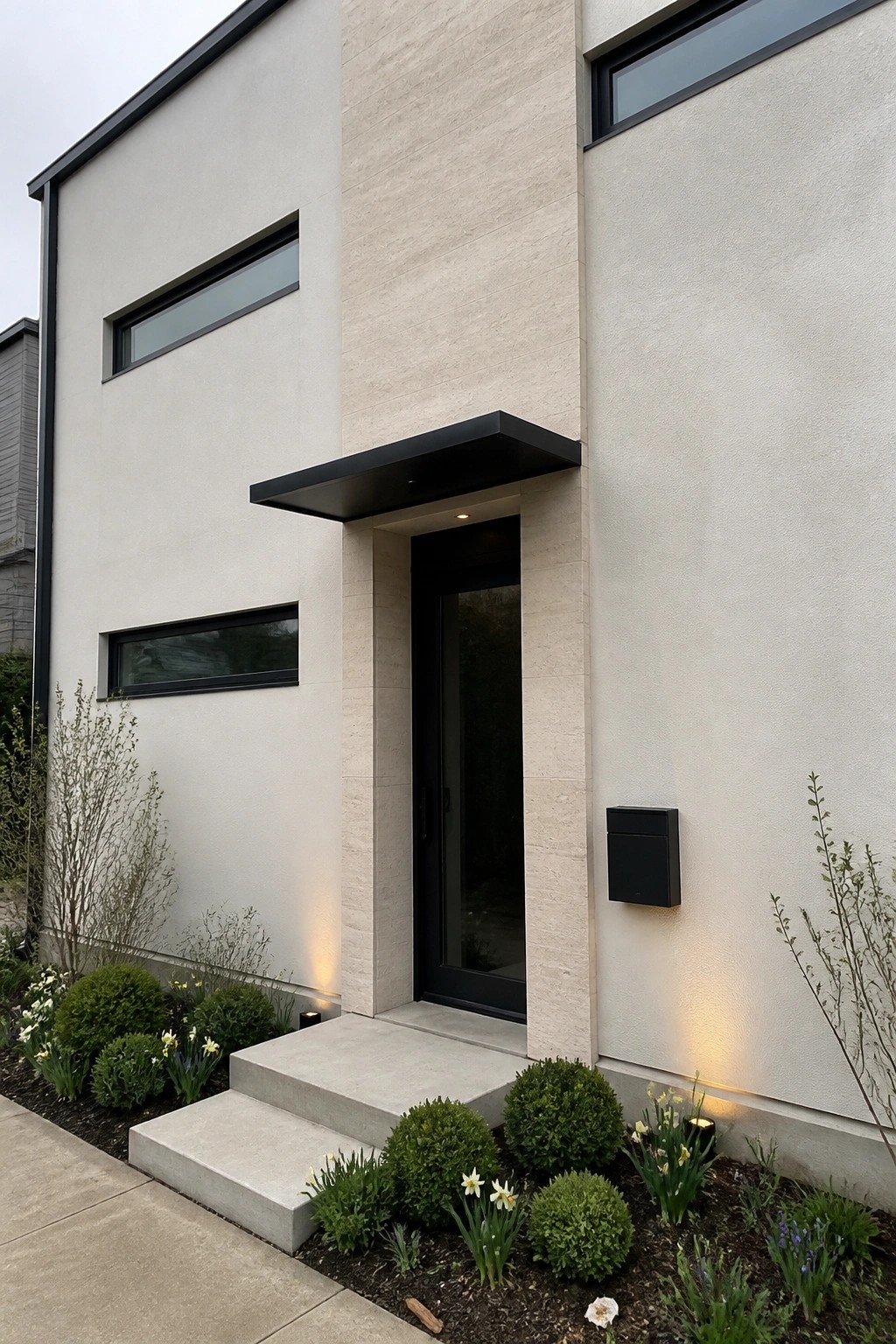
A slim black canopy right over the door gives the whole front a stronger sense of arrival. It breaks up the light wall just enough to pull attention to the entrance without adding trim or columns.
This works best on homes with smooth stucco or stone in pale shades. Keep the canopy narrow and flat so the material below stays the main feature.
Stone At The Base With Stucco Above
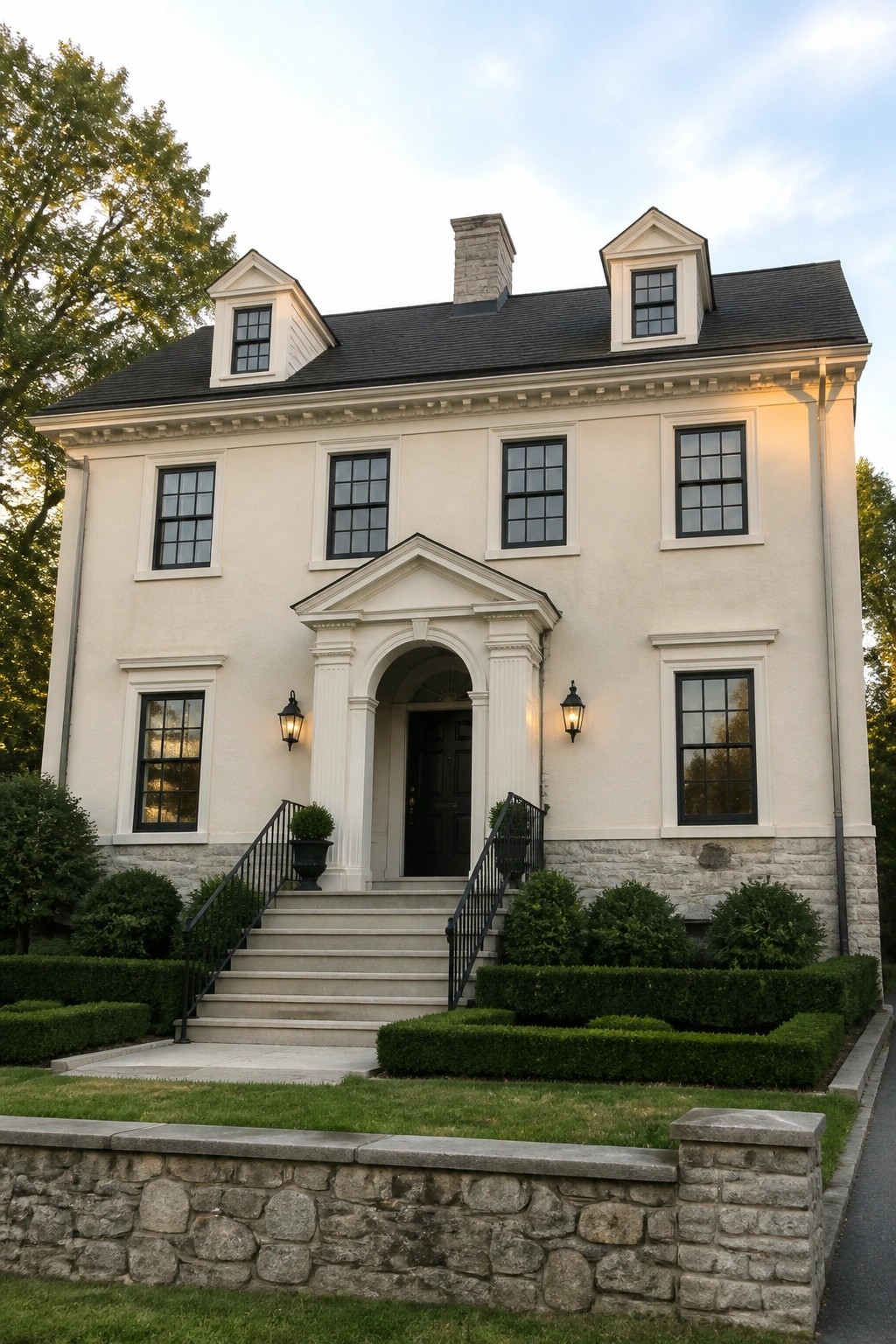
Many homes gain a steadier look when stone covers the bottom section and stucco takes over on the upper walls. The change in texture adds weight where it is needed most and keeps the facade from feeling too light.
This approach suits two-story houses that already have a simple roofline. Keep the stone height consistent with the porch or first-floor windows so the transition reads as part of the original design rather than an afterthought.
Mixing Stone And Stucco On The Facade
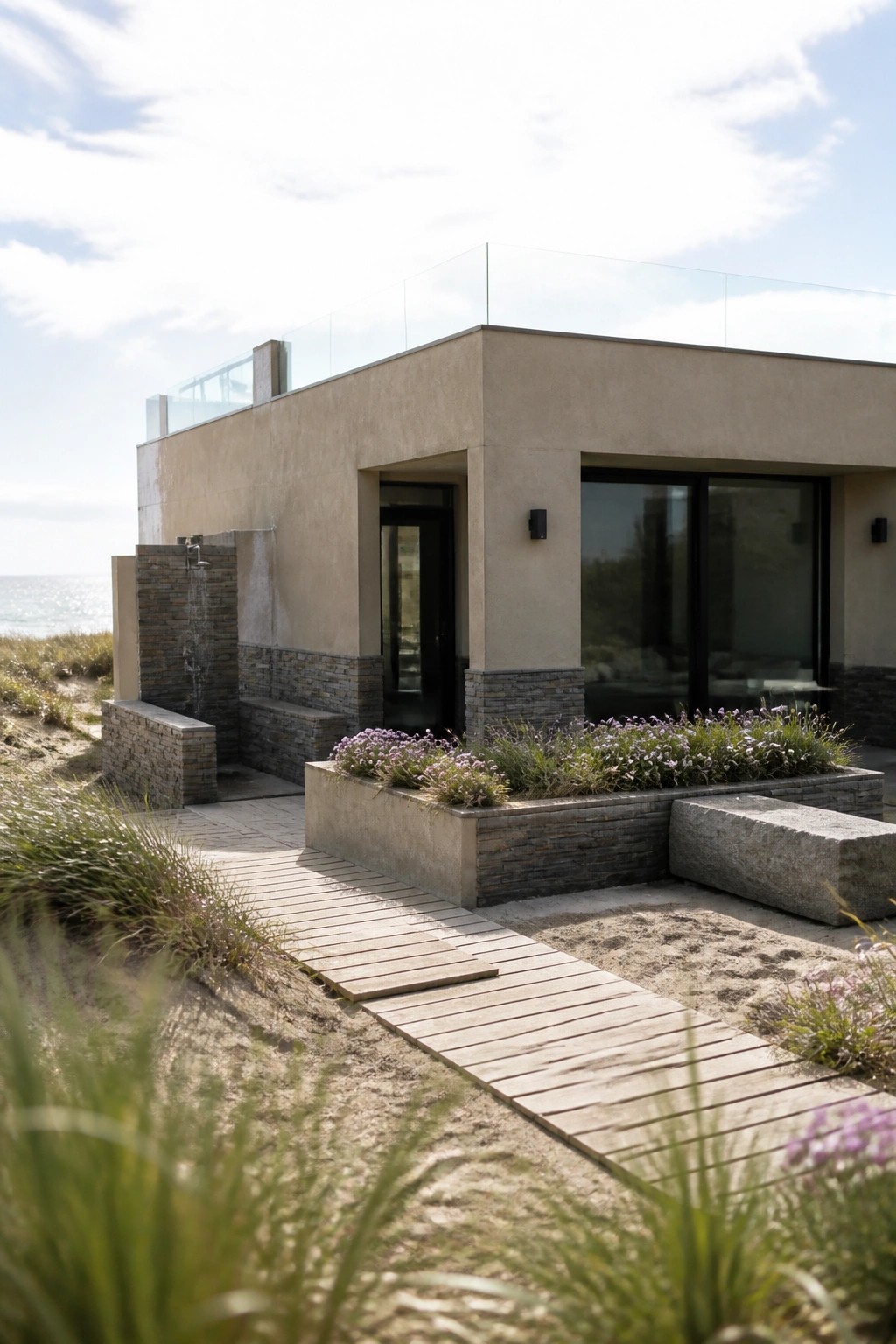
Many homes near the water use stucco for the main walls because it stays light and simple in bright sun. Adding stone along the base and around openings gives the house a bit more weight and helps it settle into the landscape without looking too plain.
This approach works well on homes that already have clean lines and larger windows. Keep the stone to the lower third or key spots like entries so the stucco still reads as the main surface. It tends to suit coastal or dry climates where both materials hold up and the contrast feels natural rather than forced.
Mix Stucco With Stone And Metal Accents
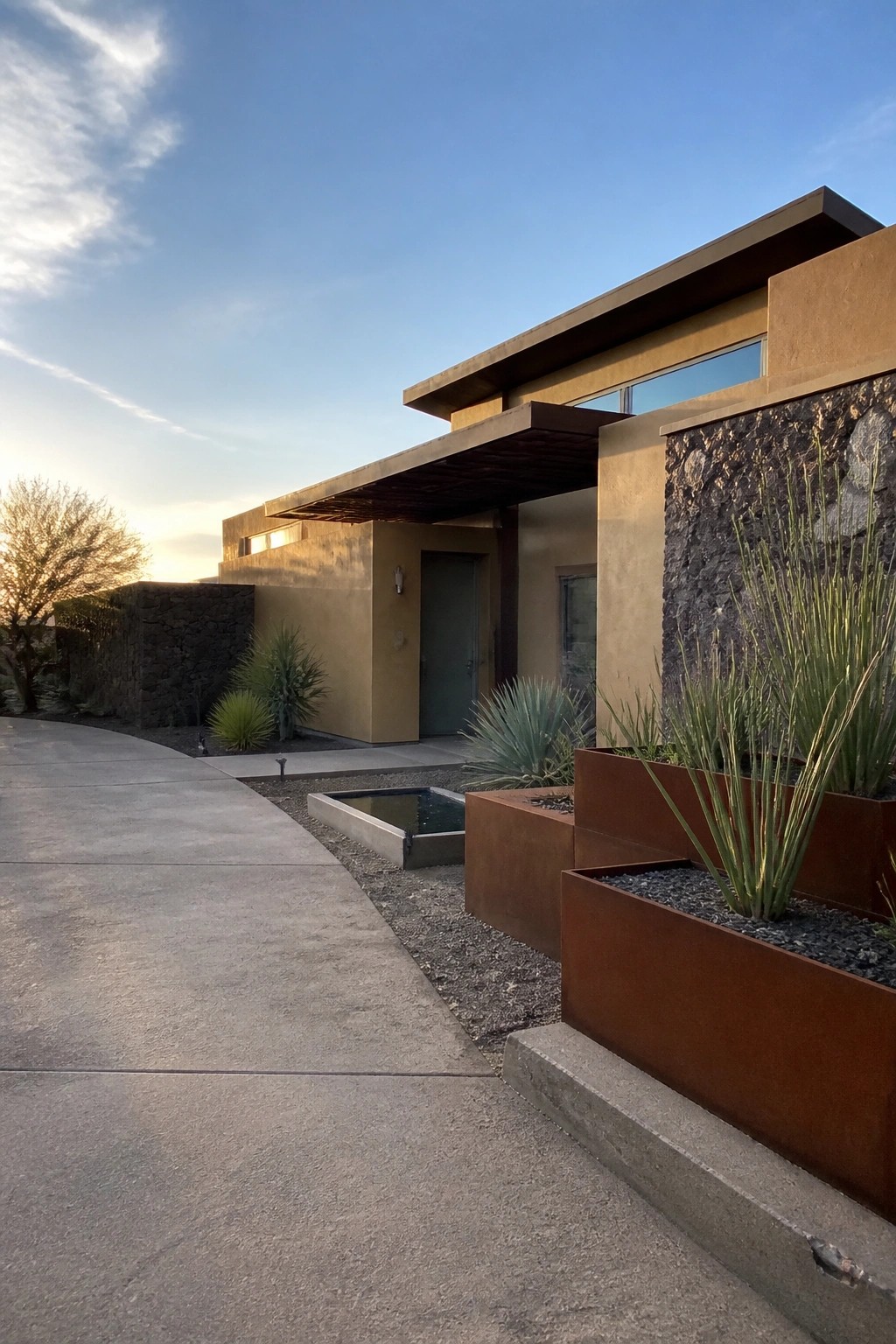
Mixing smooth stucco with sections of rough stone and metal accents gives an exterior more texture and depth without adding extra trim or color. The contrast between the flat wall surfaces and the heavier stone or rusted metal keeps the look simple but still interesting.
This combination works especially well on low, horizontal homes in dry regions. Use the stone in small blocks near entries or corners, and let metal show up in planters or simple roof details rather than spreading it across the whole facade.
Stone Base With Stucco Walls

A stone base paired with stucco walls gives a house a grounded look without making the whole exterior feel heavy. The lower section handles moisture and wear while the stucco keeps the upper walls light and simple to maintain. This mix works especially well on smaller homes or cottages where you want some texture but not a full stone facade.
It suits homes in regions with cold winters or damp ground, since the stone protects the most vulnerable part of the structure. Keep the stone height modest, around the first few feet, and match the stucco color to the stone for a quieter result. Too much contrast can make the house feel chopped in half.
Mixing Stucco With Dark Stone Panels
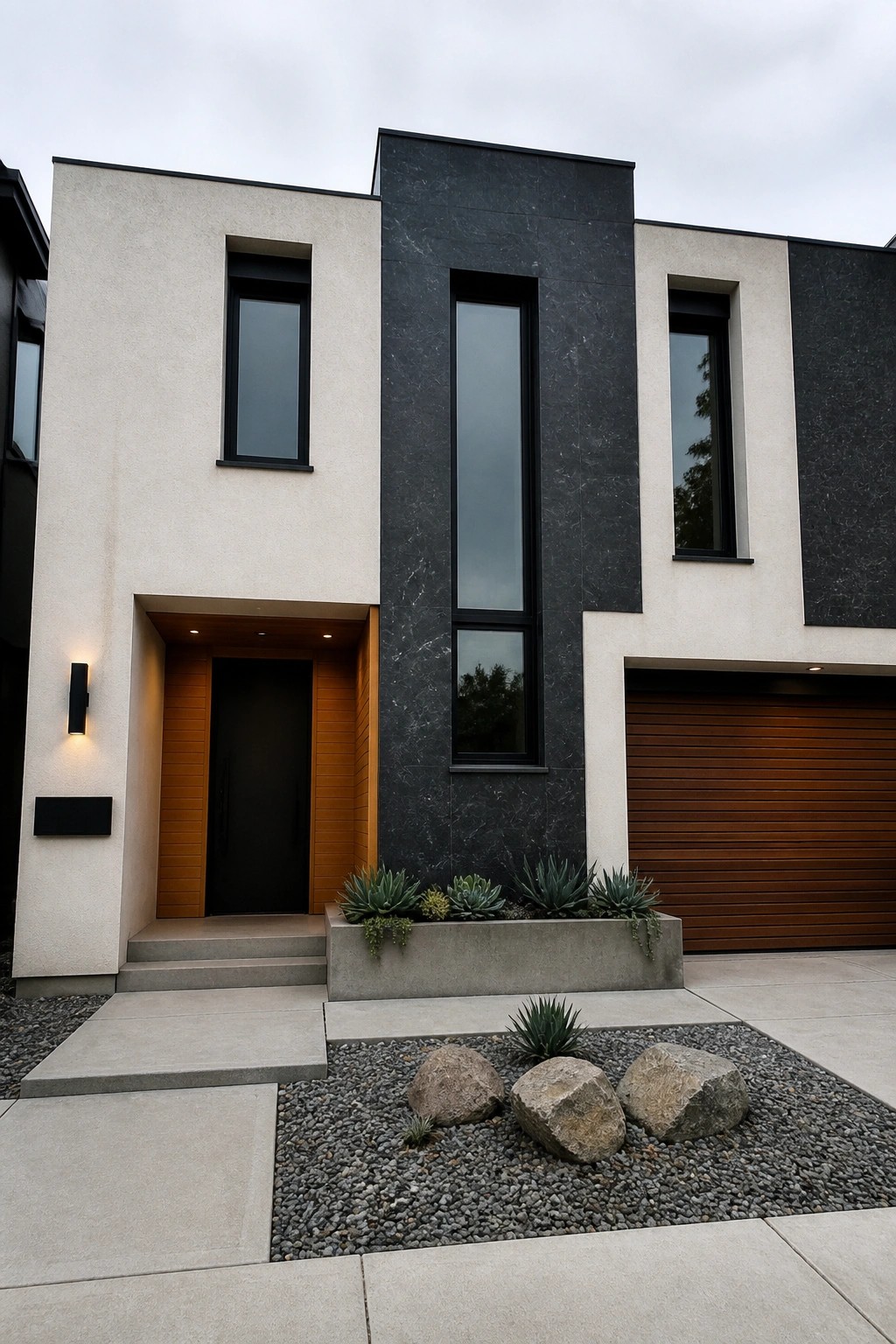
Many homes gain a cleaner look when stucco covers most of the walls and stone is used in tall, narrow sections. The contrast keeps the front from feeling flat while still letting the lighter material do most of the work.
This works best on houses with simple rooflines and few small details. Keep the stone in one or two vertical areas rather than spreading it everywhere, and match the stone tone to the window frames so the materials feel connected.
Mixing Stone And Stucco On The Facade
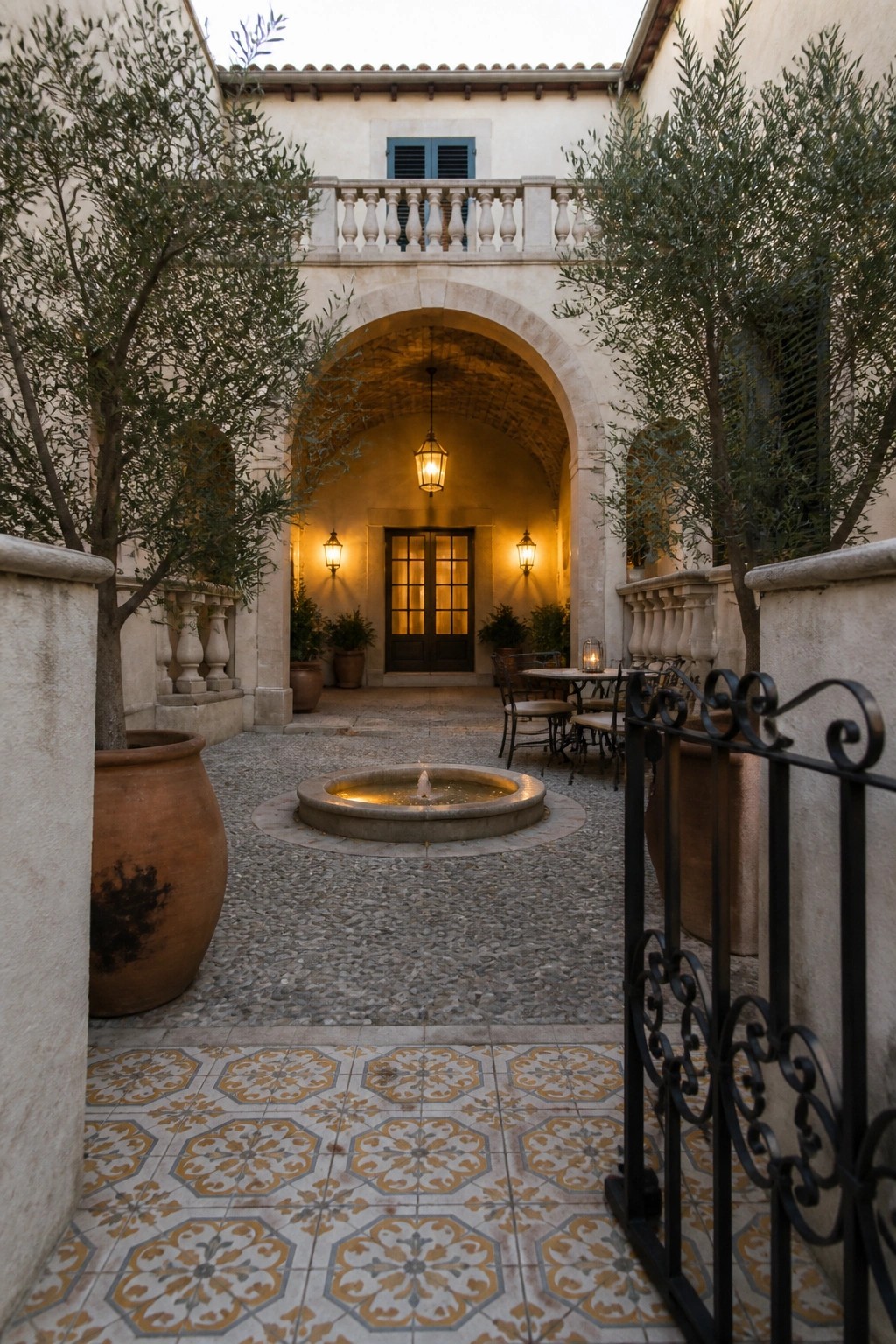
A stone arch set into stucco walls gives an exterior just enough contrast without looking busy. The rough texture of the stone breaks up the smooth surface and makes the entry feel more solid and permanent. Many older homes already use this mix, and it still reads as simple rather than fussy.
This approach works best on homes with a Mediterranean or Spanish influence, especially when the arch frames a door or courtyard. Keep the stone limited to key spots like the entry or window surrounds so the stucco stays the main surface. Too much stone can start to feel heavy on smaller houses.
Mixing Stone And Stucco On The Facade
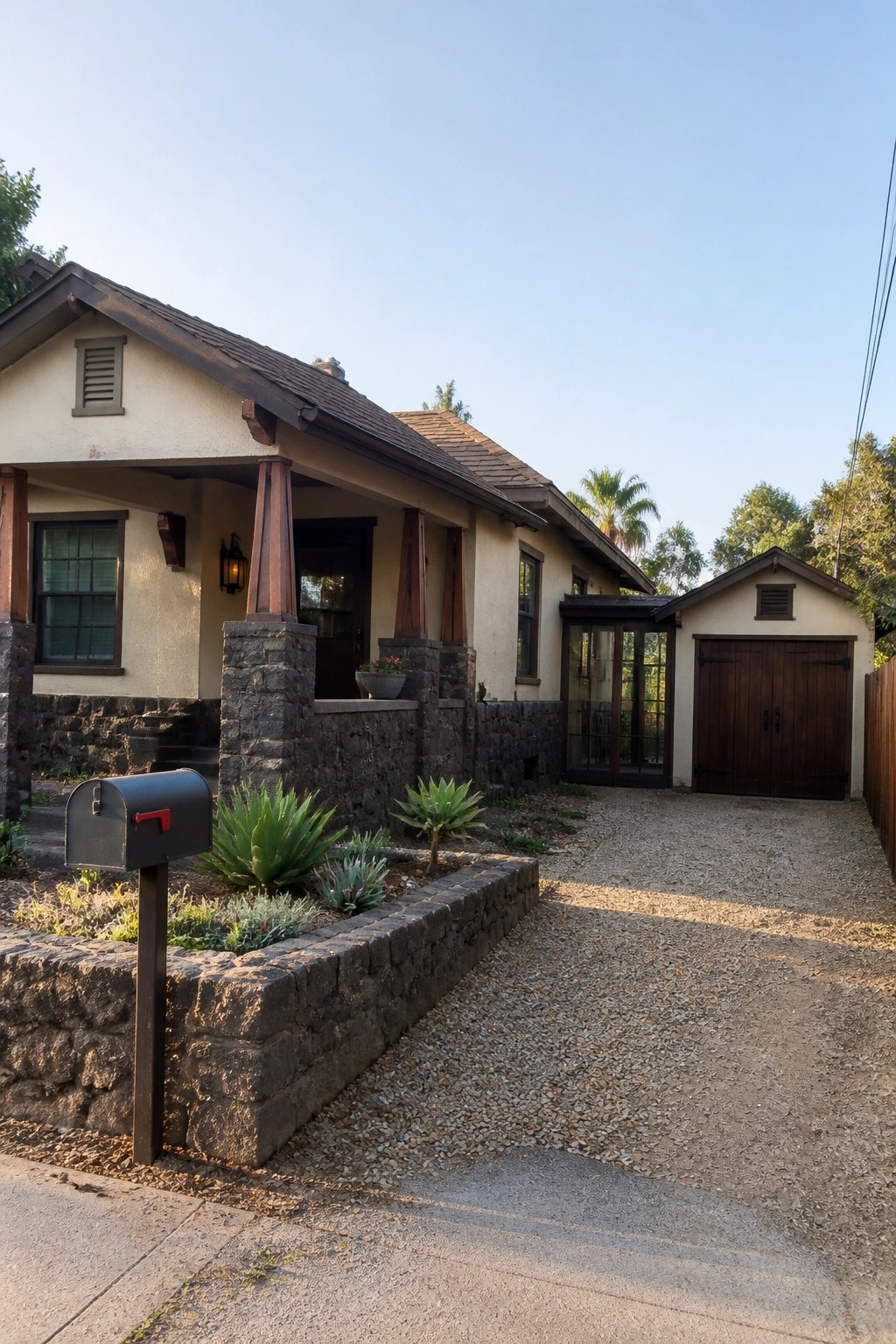
Stone and stucco pair naturally because the stone anchors the base while the stucco keeps the upper walls simple and light. This approach gives the house a solid feel without making it look bulky or overly formal.
It works best on single-story homes that already have some traditional details. Keep the stone low around the foundation and porch supports, then let the stucco run across the main surfaces. Match the tones so the two materials blend instead of competing.
Mixing Stone With Stucco
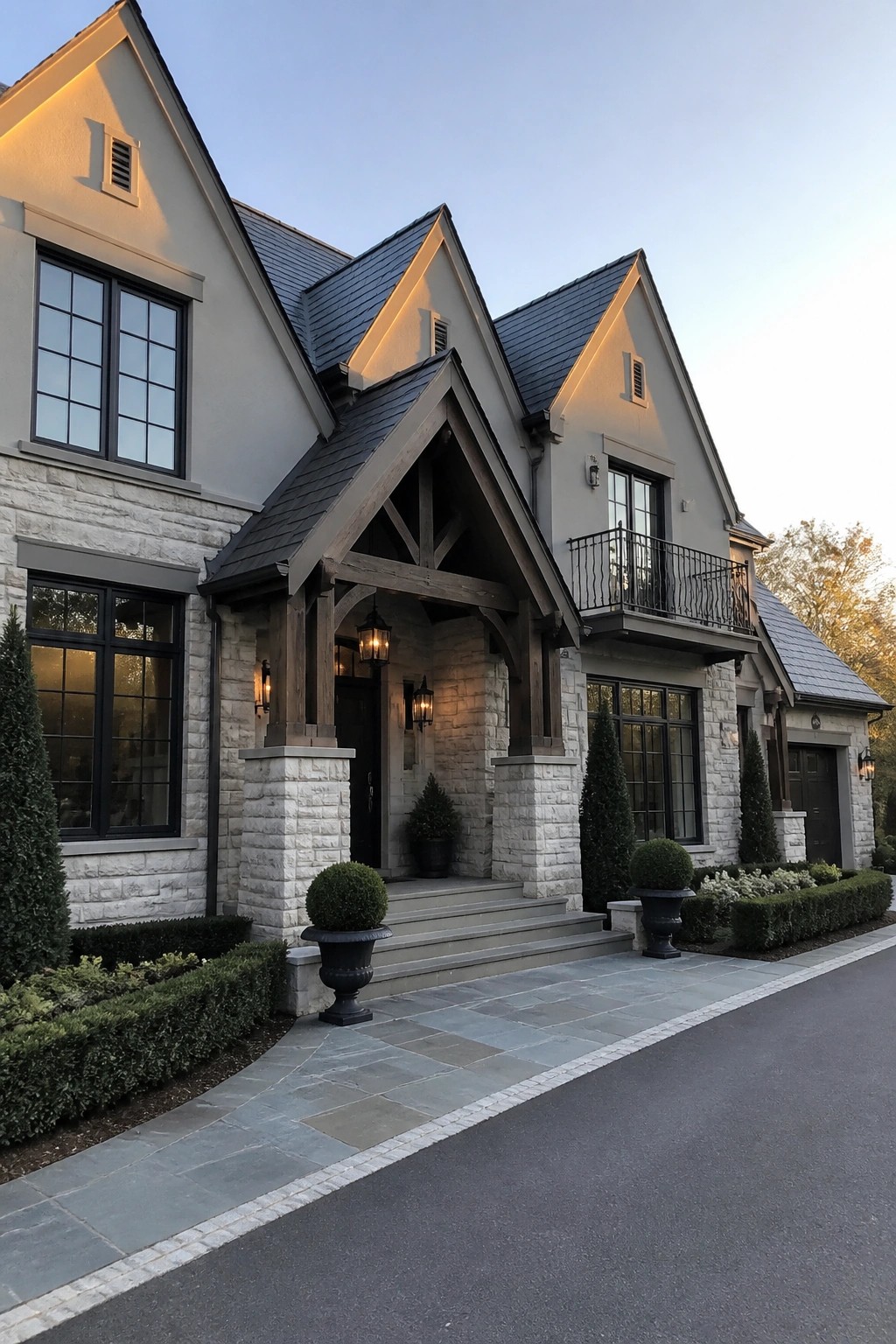
Many houses gain a quiet strength when stone covers the lower walls and stucco takes over above. The change in texture gives the facade weight at ground level without making the whole house feel heavy.
This mix works well on homes that already have a clear base and roofline. Keep the stone to the foundation, columns, and any entry surround so the stucco stays the main surface and the design stays simple.
Mixing Stone And Stucco On The Facade
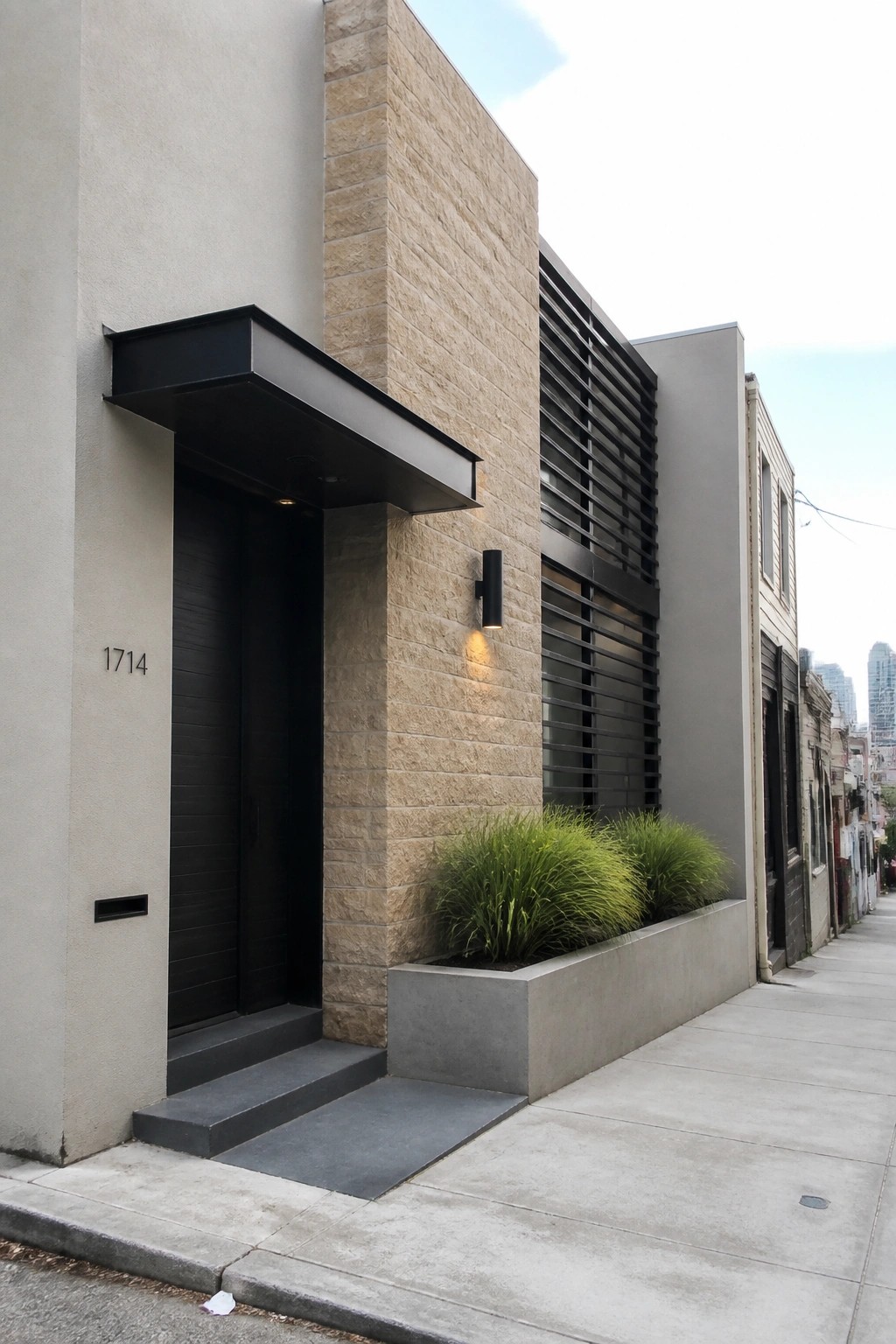
Many homes look more interesting when they combine rough stone with smooth stucco on the same wall. The stone adds weight and texture while the stucco keeps the surface clean and simple.
This mix works best on modern houses where you want contrast without a busy pattern. Limit the darker metal accents to the entry and windows so the two main materials stay the focus.
Mixing Stone and Stucco
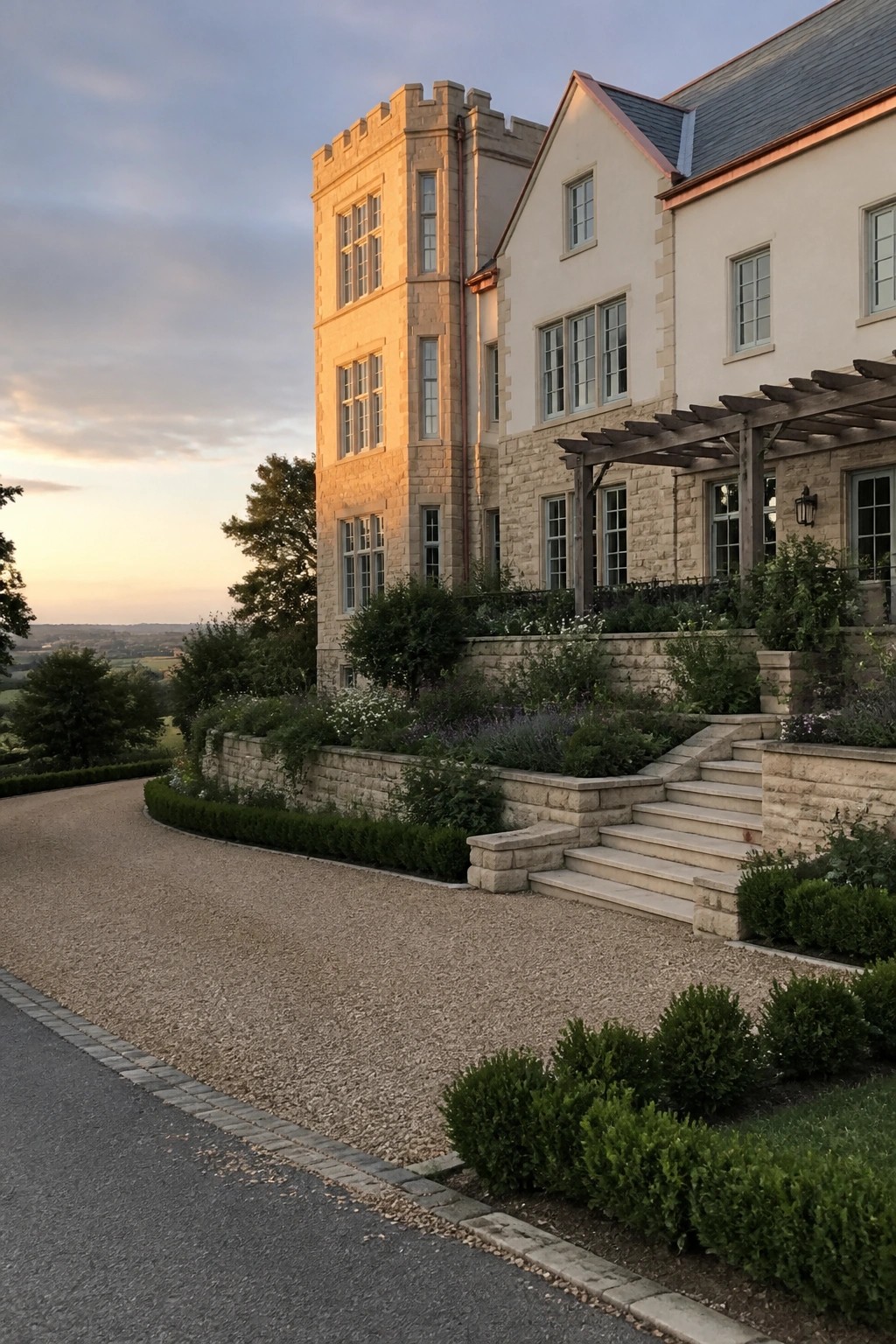
Many houses gain character when stone and stucco are placed next to each other. The stone brings weight and texture while the stucco keeps the overall look lighter and more open.
This mix works especially well on homes that have separate volumes or projections. Use the stone on a tower or lower section and let the stucco cover the main walls so each material has room to read clearly.
Stone Base With White Siding

A low stone foundation under white walls gives a house a solid base without making the whole exterior feel heavy. The mix keeps the look clean and simple, which works especially well on homes that sit near water or in open coastal areas.
This approach suits smaller cottages or any house where you want the lower part to handle weather while the upper walls stay bright. Use local stone if you can and keep the siding a true white so the two materials stay distinct.
Stone Accents On Stucco Exteriors

Stone and stucco work well together when the stone stays low and the stucco covers the larger wall areas. This keeps the house from looking flat while still feeling light overall. The stone gives a bit of weight at the base and around openings without taking over the whole surface.
This mix works best on single story homes or ranch styles where you want some texture but not a heavy all-stone look. Use it on the front and sides that face the main outdoor space so the materials carry through from the house to the patio areas.
Mixing Stone and Stucco at the Entry
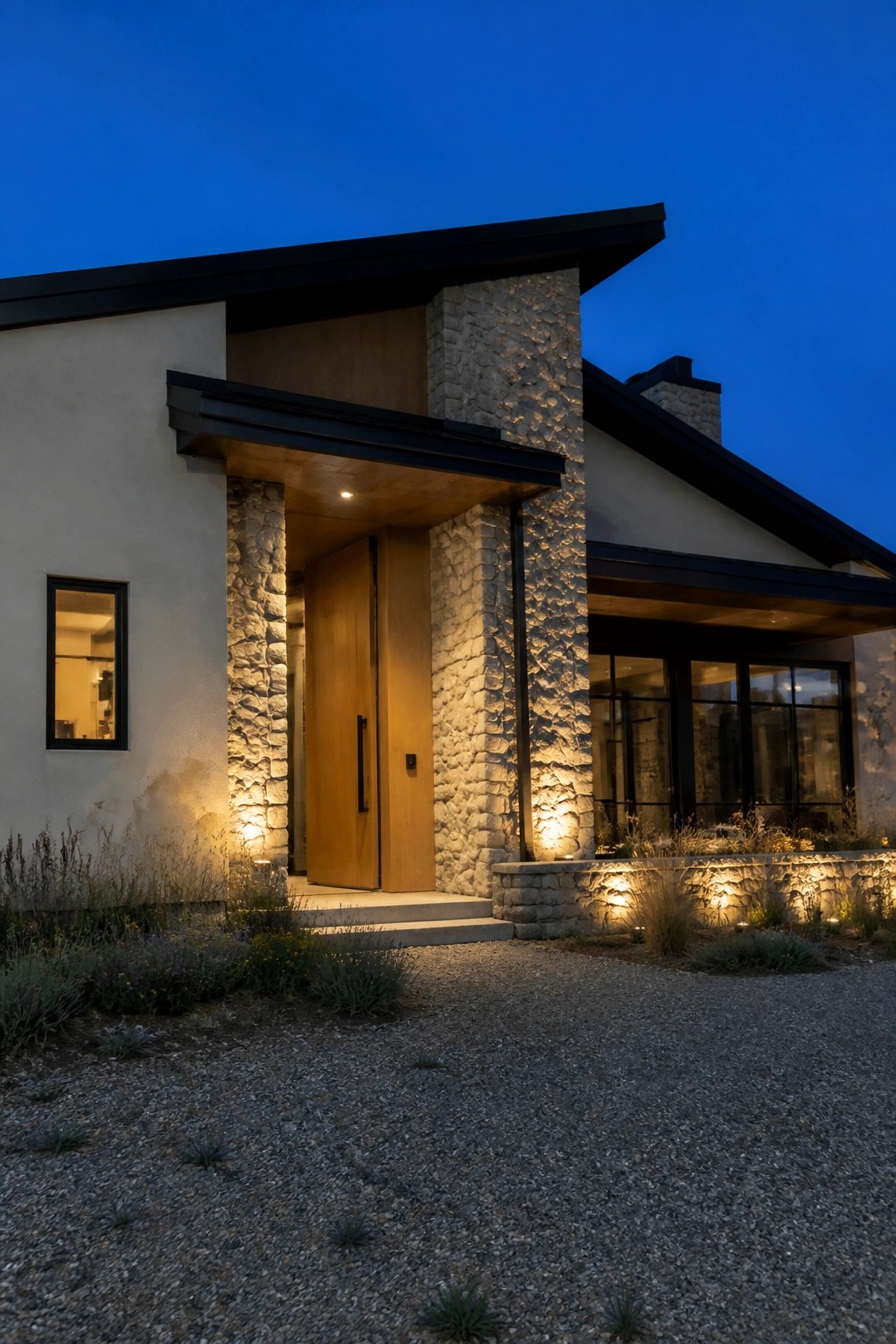
Many homes keep stucco as the main surface but bring in stone at the entry to give it more presence. The tall stone columns on either side of the door create a clear focal point and add texture without covering the whole facade.
This works best on houses with simple shapes and dark rooflines. Use the stone only where it frames the door or a main window, and keep the rest of the walls in stucco so the mix stays balanced and easy to maintain.
Frequently Asked Questions
Q: How do stone and stucco hold up in wet climates? A: Stone stands up fine but stucco needs good sealing to keep water out. Apply a fresh coat of sealer every couple of years. Watch the edges where the two materials meet.
Q: Does mixing stone with stucco push up the price a lot? A: Stone adds to the total but you can limit it to accents. Stucco covers the rest for less. Get bids from a few crews to know the real difference.
Q: Can I try this mix on just the front of my house? A: Sure start with the entry area. It gives that mixed look without changing everything. And match the stone size to what is already there.