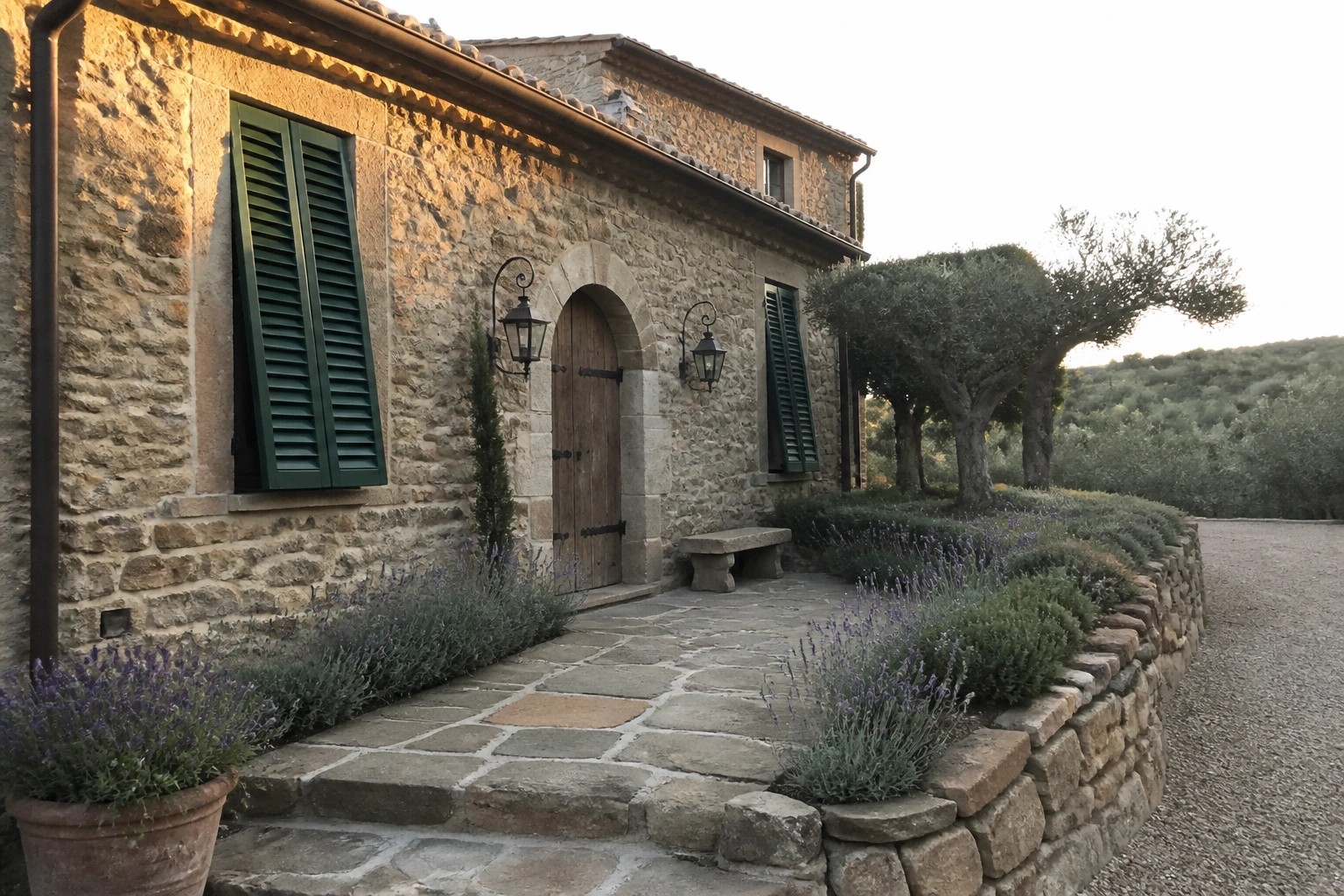
I’ve always noticed that fieldstone walls give a house a grounded look that paint or siding just can’t match on the outside.
When I drive past older homes, the way the stone catches the light and blends with the surrounding hills makes the whole facade feel more permanent somehow.
The details around the doors and windows matter more than people think.
Trying to imagine adding something similar to my own place, I wonder how the roofline would need to shift to keep everything balanced from the street.
Over time those choices seem to decide whether a home looks like it belongs there or just sits on the lot.
Fieldstone Walls Keep The Exterior Simple

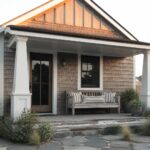
Fieldstone walls give a house a solid base that feels like it belongs in the landscape. The natural texture and color variations do most of the work without needing extra trim or ornament.
Keep the rest of the facade plain with wood doors and shutters in a single color. This approach works best on country homes where you want the walls to look lasting and low maintenance rather than decorated.
Outdoor Dining Built Around a Pizza Oven

Many homes add a pizza oven to the patio because it gives the whole area a clear purpose. The stone oven becomes the natural center point, and the dining table can sit right in front of it so cooking and eating happen in the same spot.
This setup works well on a level patio with enough room for a long table and chairs on both sides. Keep the oven against a solid wall so smoke vents properly and the space feels enclosed without needing extra structures.
Fieldstone Walls That Shape The Terraces
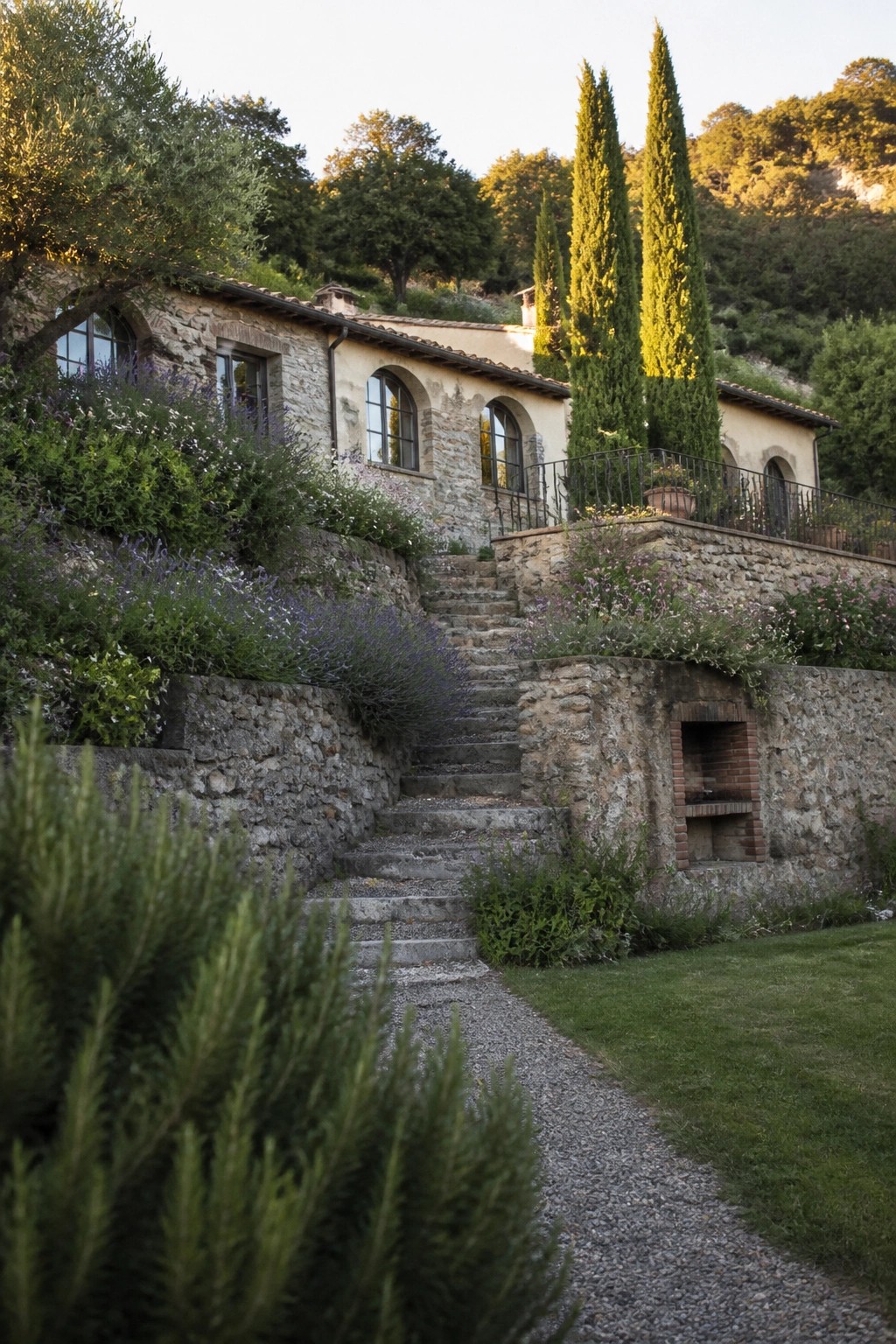
Fieldstone works well on sloped sites when the same material used for the house also forms the retaining walls. This approach keeps the whole structure grounded and avoids the look of separate additions tacked on later.
It suits homes with noticeable grade changes where you want the garden to feel connected rather than divided. Match the stone size and color as closely as possible and let the walls step down naturally with the slope.
Outdoor Fireplaces Built Into Stone Walls

A fireplace set into fieldstone makes an outdoor courtyard feel finished and usable in cooler months. The stone ties everything together without extra decoration and gives the space a clear center for seating.
This approach suits homes that already have thick masonry walls since the materials match right away. Keep surrounding furniture low and simple so the fireplace remains the main draw rather than competing with it.
Fieldstone Walls With a Simple Stone Path

Fieldstone walls give a house that settled, timeless look that works especially well in the country. When you run a stone path up to the front, the whole entry feels like it belongs to the land instead of sitting on top of it.
This approach suits homes that already have some age or character. Keep the path fairly narrow and let low plantings edge it so the stones remain the main feature instead of getting lost in too much greenery.
Fieldstone Benches Built Right Into The Patio
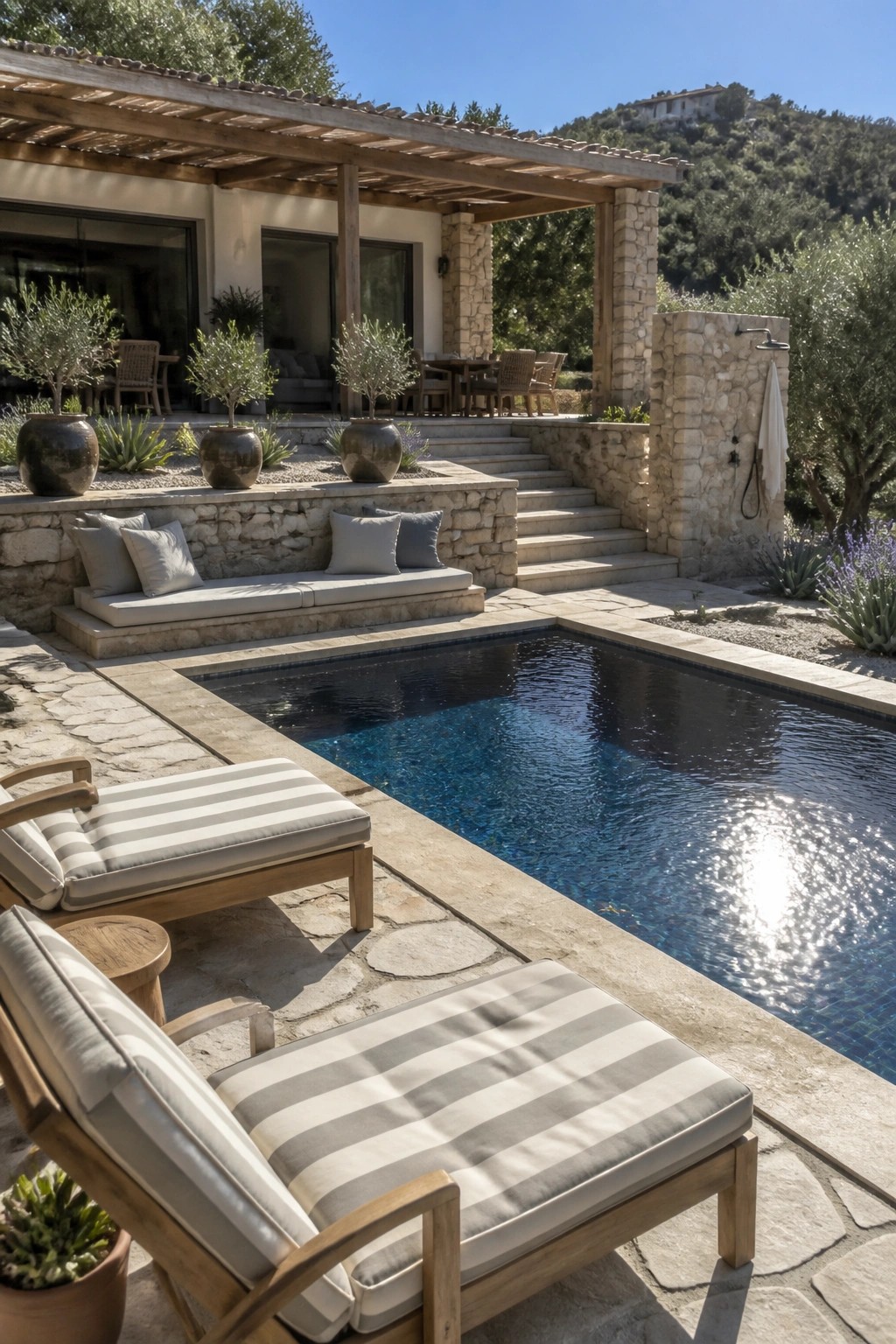
Many rustic homes use fieldstone to create seating that feels like a natural extension of the walls. This keeps the pool area simple and avoids adding separate furniture that can crowd the space or need constant upkeep.
The approach suits homes with plenty of sun and a casual outdoor lifestyle. Place the benches along the edge of a pool or terrace so they stay useful without getting in the way of foot traffic.
Fieldstone Walls Built to Last
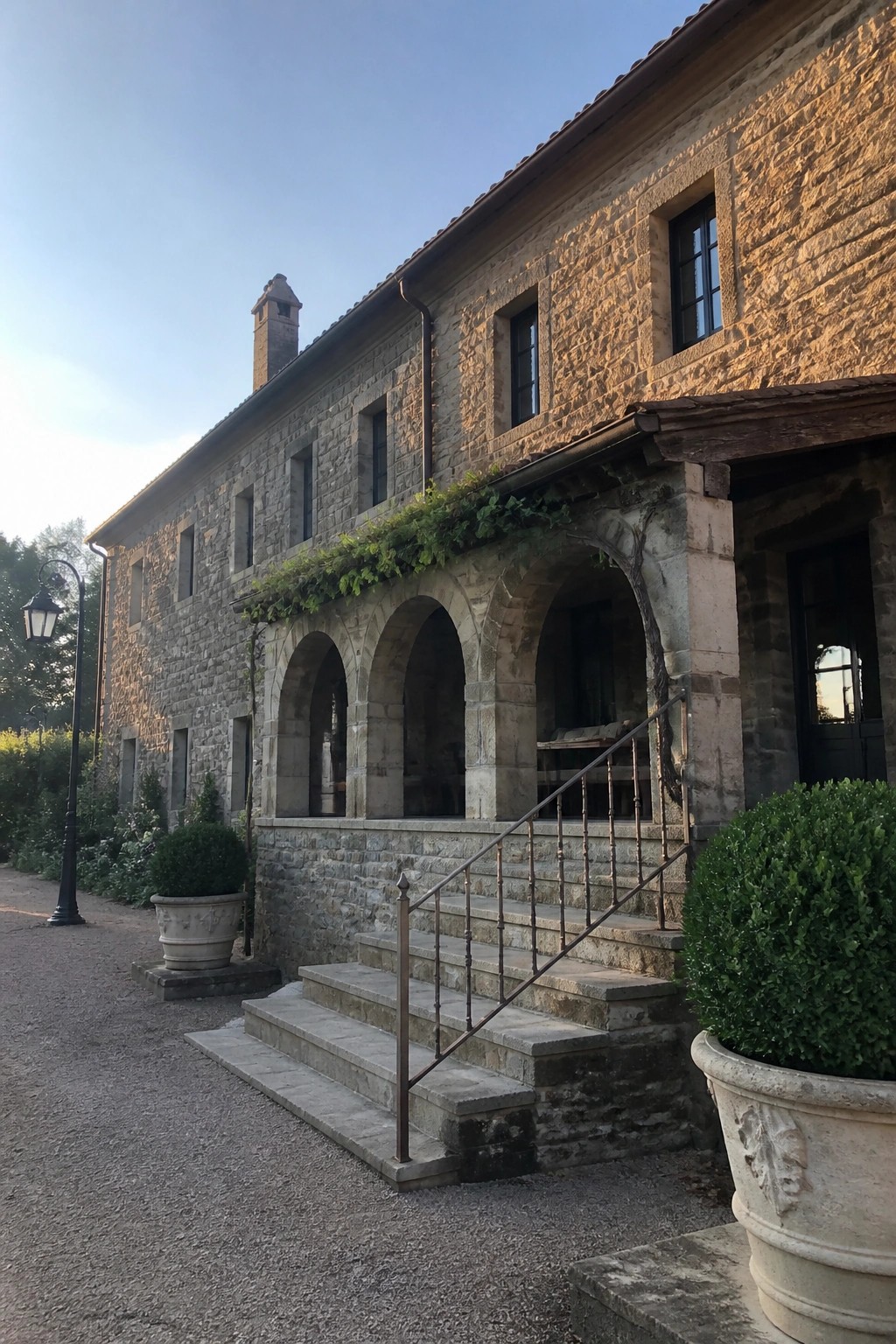
Fieldstone walls give a house real presence without needing much extra detail. The material holds up well in all kinds of weather and develops a nicer look over the years, which is why it fits country homes so well.
This approach works best when you keep the rest of the exterior simple. Let the stone do the work around the entry and main windows, and use basic plantings in large pots so the walls stay the focus.
Fieldstone Outdoor Cooking Areas

Building an outdoor cooking spot straight into fieldstone walls gives the space a settled, lasting feel. The stone ties the oven and counters directly to the house instead of leaving them as separate pieces that can look added on later.
This setup works best on homes that already use the same fieldstone on the exterior. Keep the brick arch and work surface simple so the cooking area stays functional without competing with the stone itself.
Fieldstone Walls Around a Gravel Courtyard
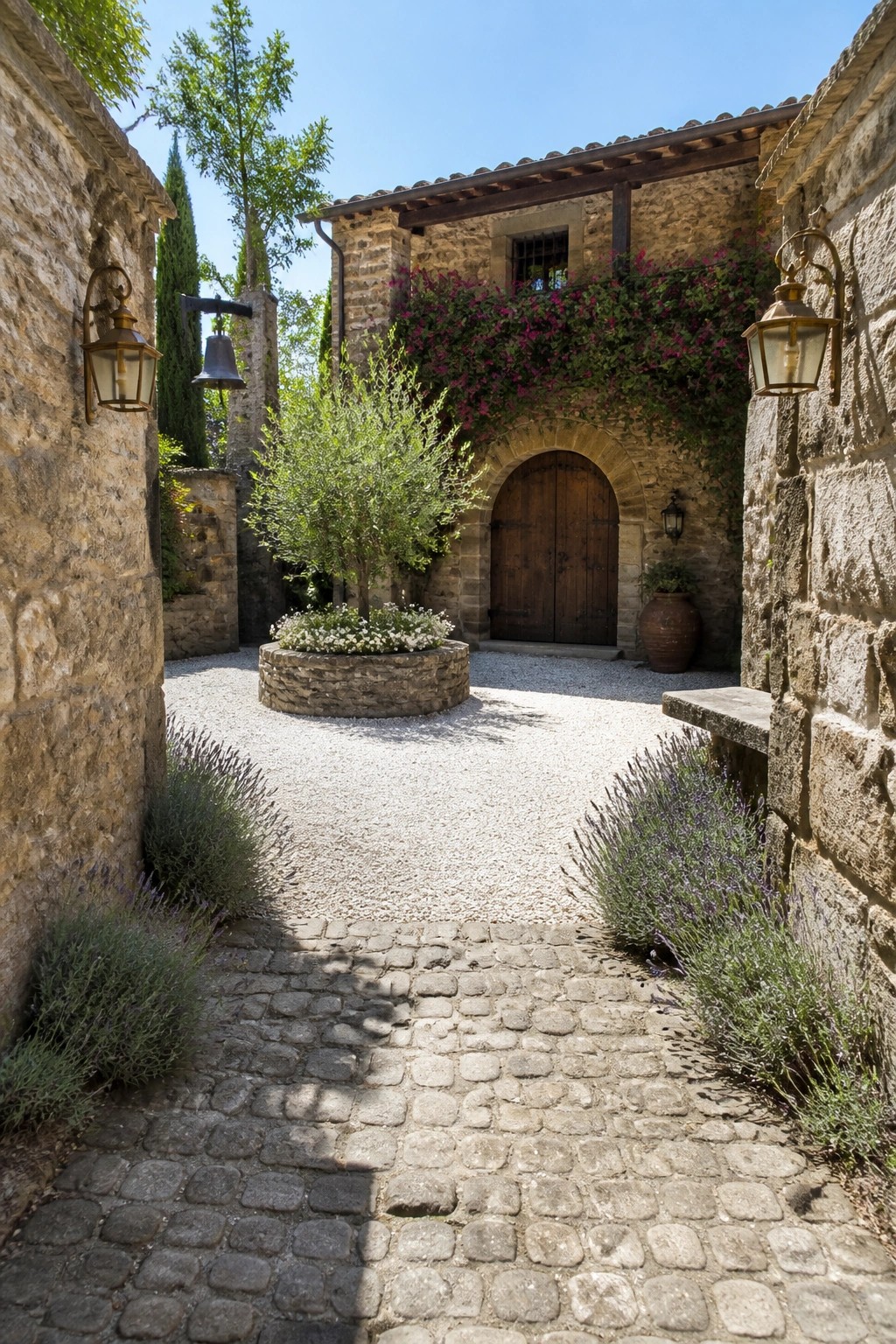
Fieldstone walls do a good job of turning a simple entry into a contained courtyard. The stone gives the space a solid, grounded look that matches the house itself and makes the whole approach feel more private.
Gravel works well here because it drains easily and needs little care, while the cobblestone path keeps the route clear. This kind of setup suits dry climates and older homes where you want the hard surfaces to age naturally with the stone.
Extend Fieldstone Into Covered Porches

Many Tuscan homes feel more connected when the fieldstone walls continue straight out onto a porch or loggia. The stone gives the outdoor space the same solid feel as the house itself and creates a natural shelter without needing extra structures.
This approach works best on homes with simple timber ceilings and deep overhangs. Keep seating low and use just a few wooden pieces so the walls remain the main feature.
Gravel Paths With Stepping Stones

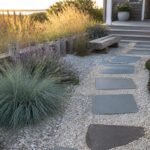
Gravel paths with stepping stones give a garden an easy, natural flow that suits rustic homes. The stones keep the surface practical while the gravel fills in around them and helps with drainage. Low stone walls along the sides tie everything together and echo the fieldstone used on the house.
This layout works best on homes where the garden sits right against the building. Space the stones so they feel comfortable underfoot and let the gravel settle over time. Avoid making the path too wide or perfectly straight, since the slight irregularity adds to the relaxed feel.
Fieldstone Walls at the Entry

Fieldstone walls work well on either side of a gate because they give the entrance real weight without needing anything fancy. They tie the whole front together and make the path feel more settled into the property.
This approach suits older style homes that already use natural materials. Keep the walls fairly low so they do not block the view, and let the gravel or planting do the rest of the work.
A Long Wooden Table On The Patio

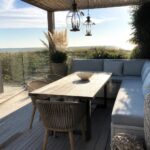
A long wooden table with benches makes the patio feel like an extension of the house. It gives a solid place to sit and eat without needing extra chairs or fancy setups.
This works best on homes with stone walls because the wood softens the look and holds up outside. Keep the table simple and place it near the door so it gets used often.
Build a Fountain Into the Patio Wall
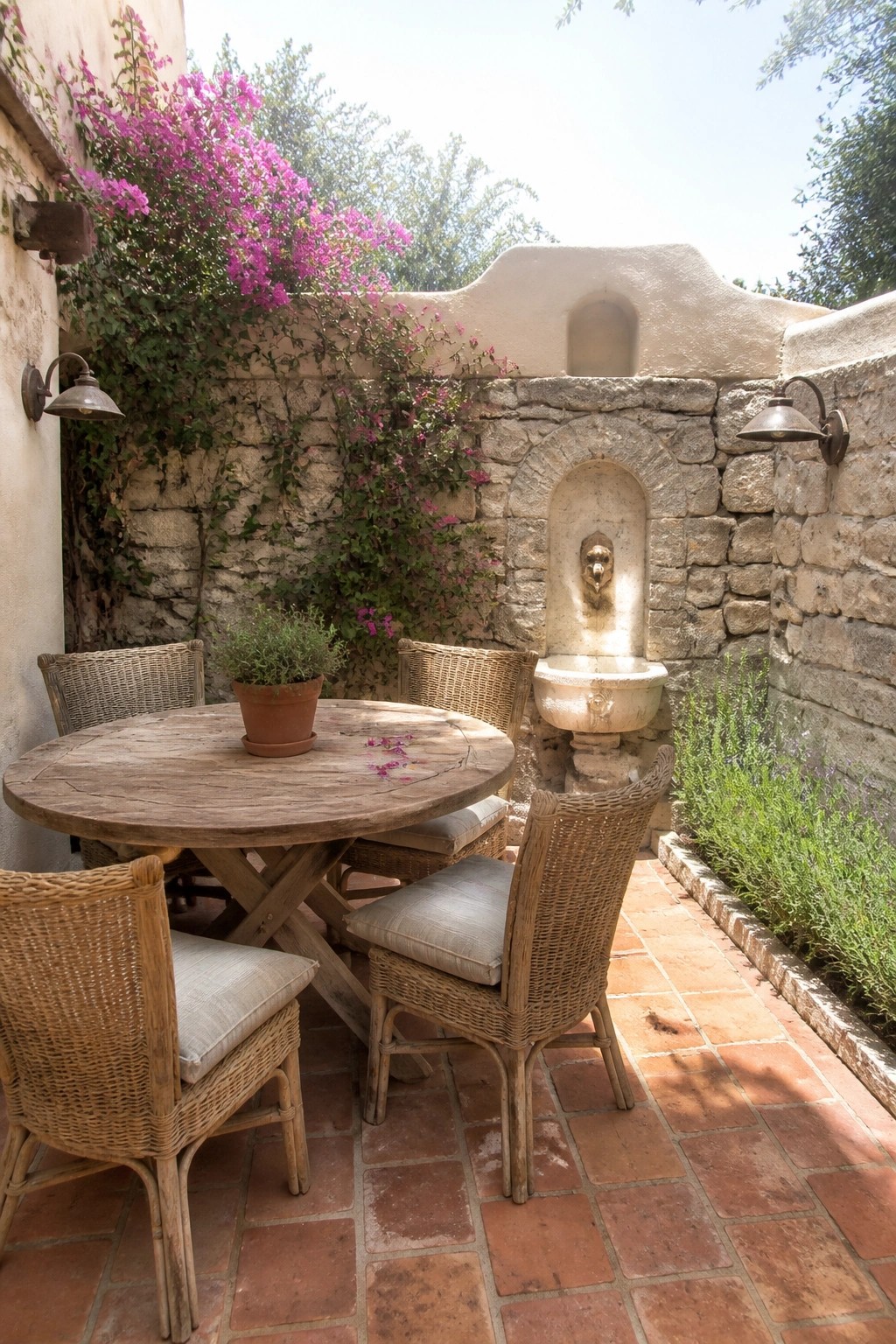
A wall fountain made from the same fieldstone as the surrounding walls gives an outdoor seating area a quiet focal point without crowding the floor. The water sound helps the space feel cooler and more settled, especially on warm days.
This setup works best on smaller patios or courtyards where you want something to look at from the table. Keep the rest of the wall fairly plain and use simple paving so the fountain stays the main feature.
Fieldstone Walls For A Unified Look
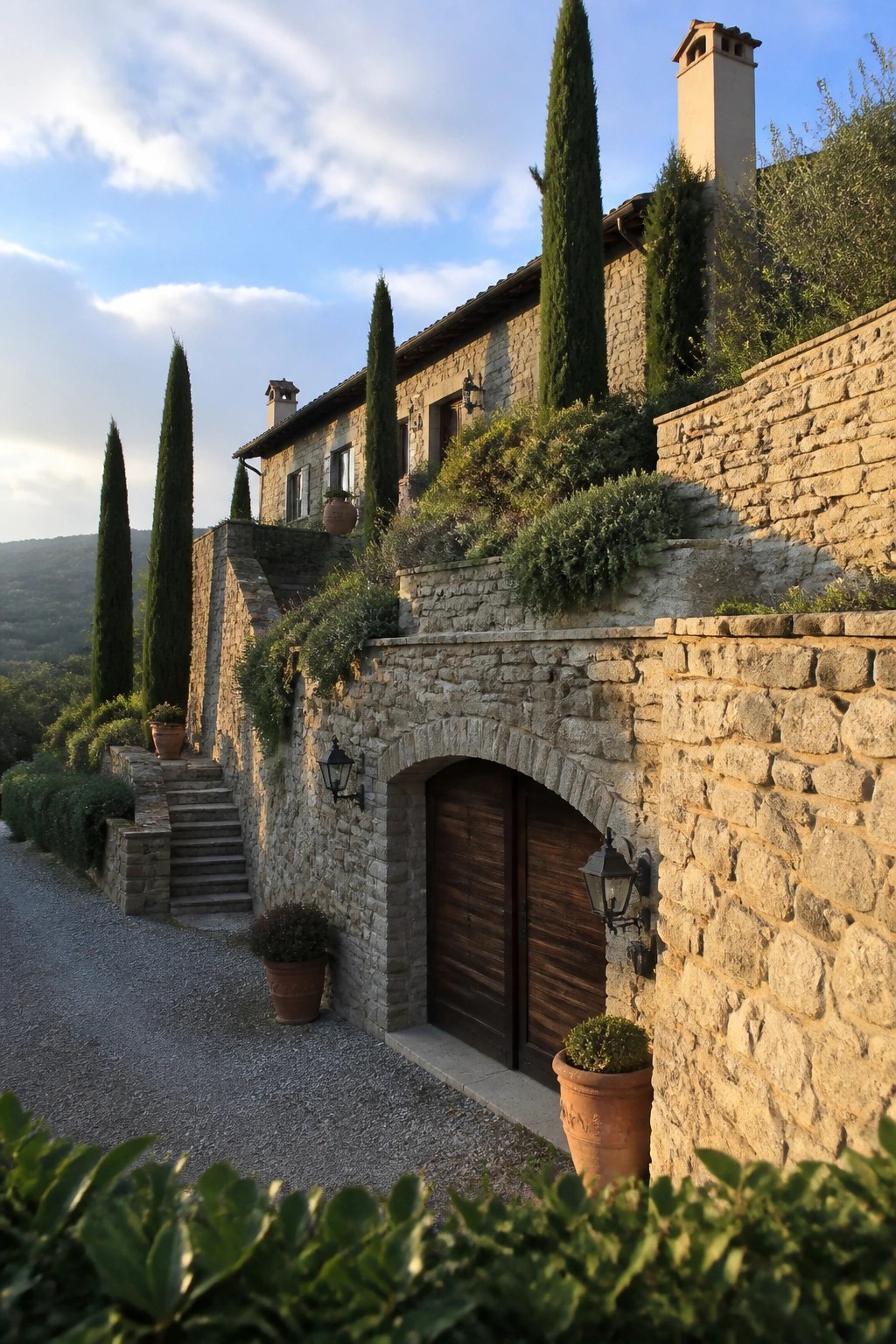
Fieldstone works best when you use the same material for the house walls and any supporting walls around the property. The result feels solid and settled instead of like separate pieces added over time.
This approach suits homes on gentle slopes or in rural settings where you want the building to look like it belongs to the land. Keep the stone texture consistent and avoid overly finished edges so the whole exterior stays simple and natural.
Stone Barbecues Built Into Fieldstone

Many rustic homes gain a lot from placing the main cooking area right into the stone wall itself. It keeps the barbecue sheltered, adds real cooking space without taking up floor area, and ties the whole patio back to the house materials so nothing feels added on later.
This setup works best on homes that already use fieldstone for walls or garden structures. Keep the surround simple, add a basic wood counter nearby for prep, and leave room for a table close enough that the cook stays part of the group. Avoid overbuilding the stonework or it can start to feel like a separate structure instead of part of the original wall.
Outdoor Seating Tucked Against Stone Walls
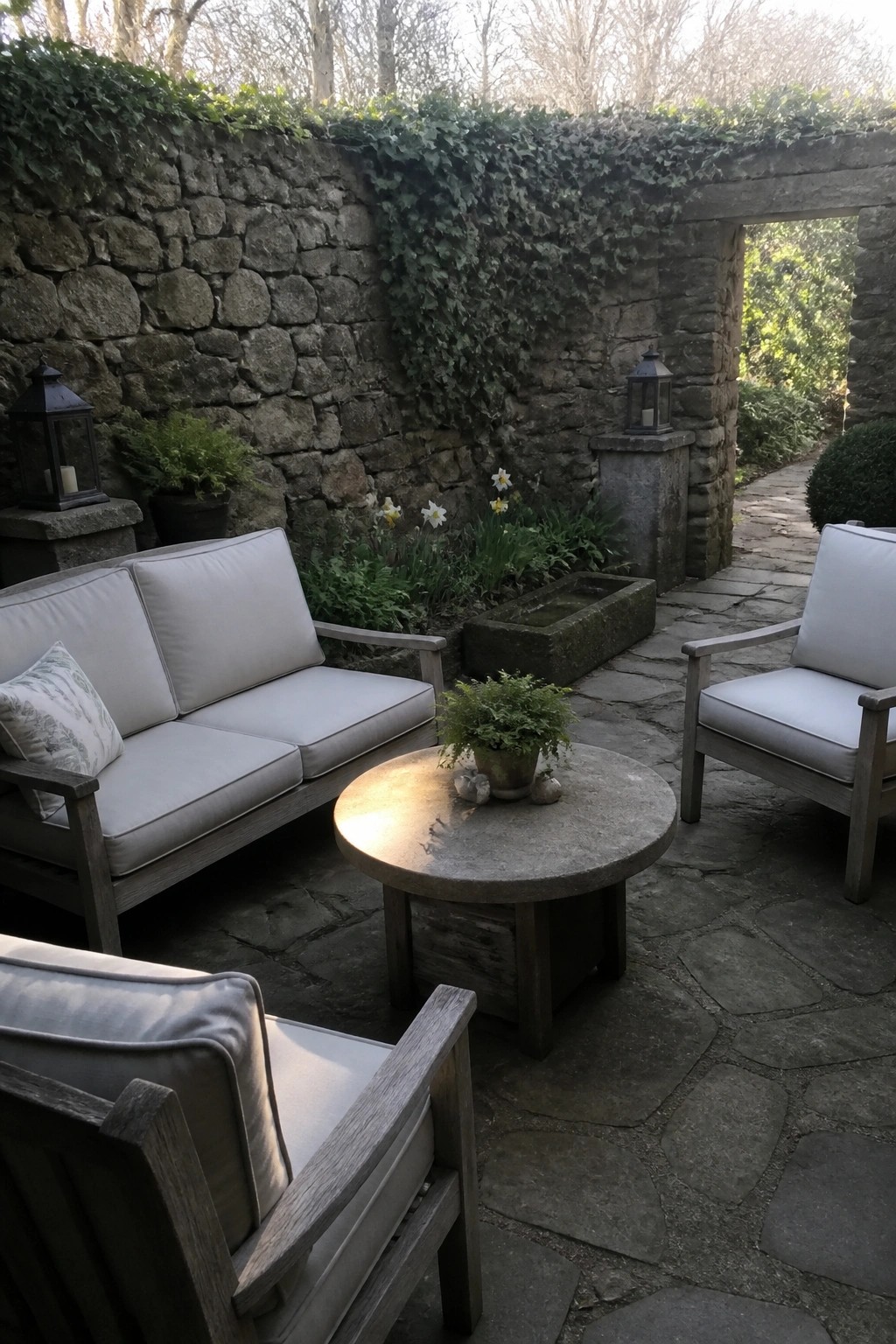
Fieldstone walls make a natural frame for outdoor seating. When you set a sofa and chairs right up against them, the space starts to feel like a real room instead of just furniture sitting in the open.
This setup works best on homes that already have courtyard walls or side yard enclosures. It keeps the layout simple, cuts down on the need for extra screens or hedges, and gives the seating a settled look that matches the age of the stone.
Fieldstone Walls For The Main Facade
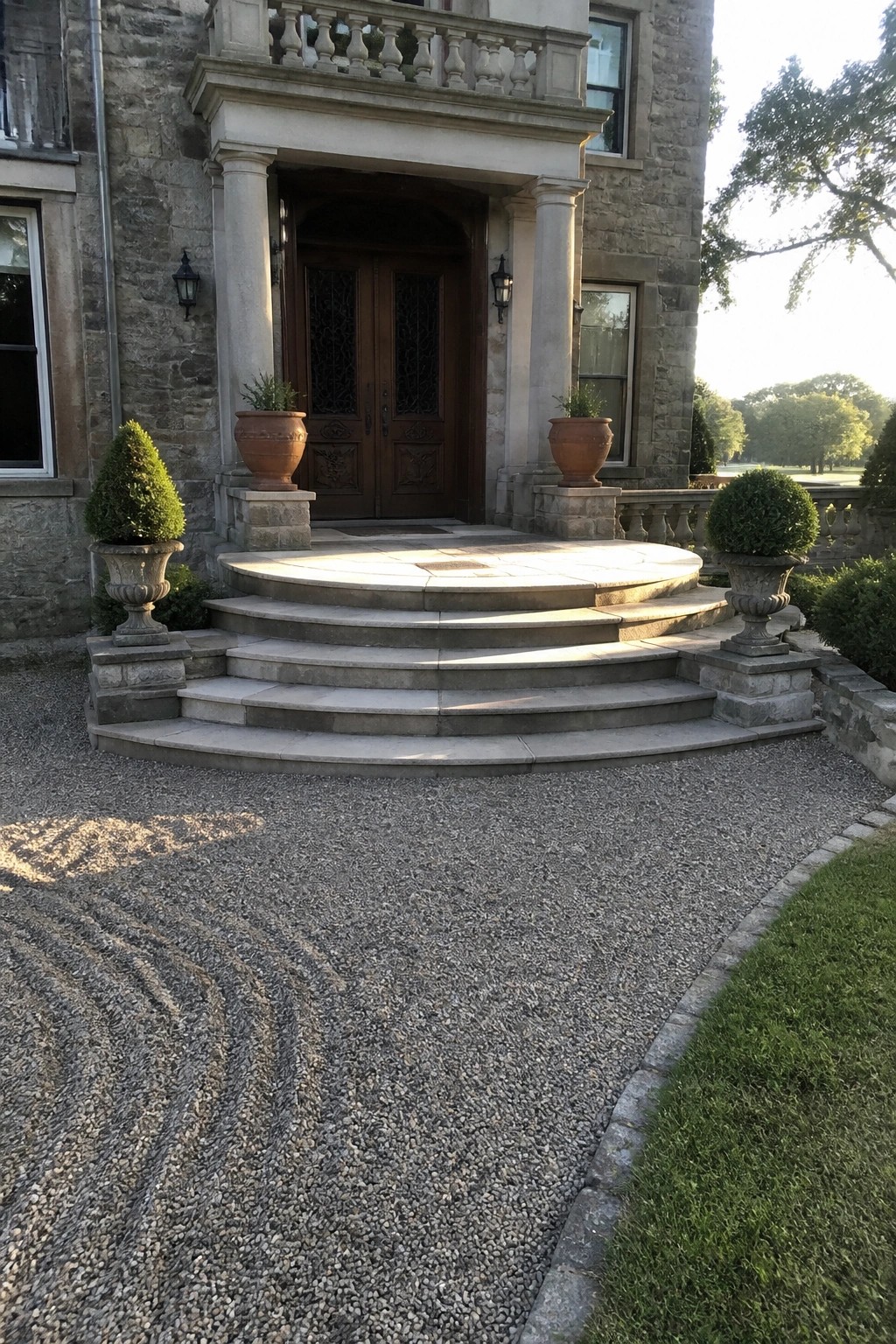
Fieldstone walls give a house real weight and age without any extra effort. They suit Tuscan country homes because the rough texture and natural color variations already do most of the work.
This approach works best on larger homes where the stone can run across the full front. Keep the trim simple and let the wood doors and stone columns provide the contrast.
Stone Troughs Make Good Planters In Gravel Gardens
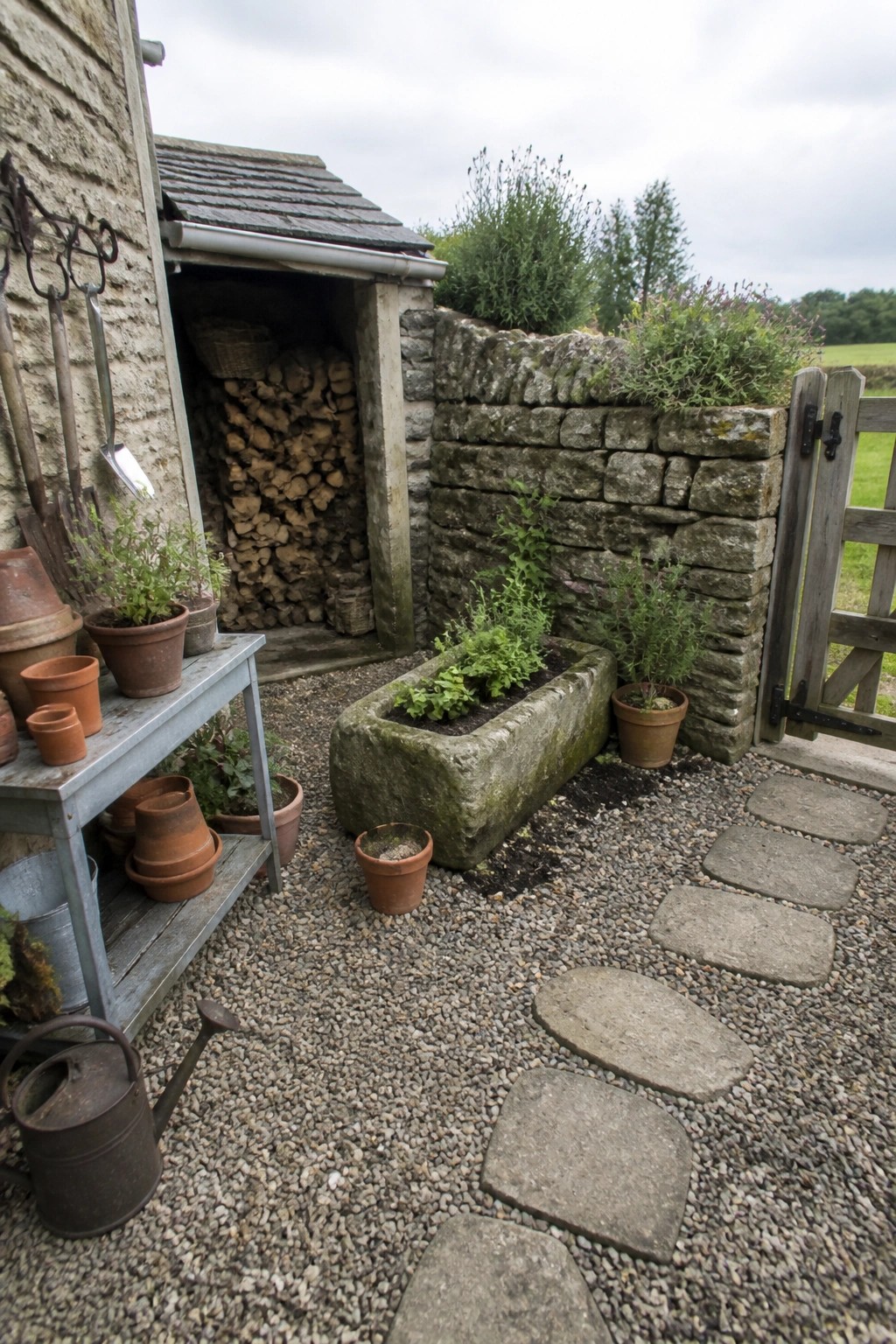
A big stone trough gives a gravel garden instant structure. It sits low but still reads as a solid centerpiece, and it keeps the planting neat without extra edging or borders.
This setup works best next to fieldstone walls where the same rough texture already shows up. It suits older homes that want simple planting without turning the whole yard into formal beds, and the gravel keeps things low maintenance once the paths and trough are in place.
Stone Walls That Define Outdoor Seating

Fieldstone walls do a good job of marking off a small seating area so it feels separate from the rest of the yard. They match the house walls and make the space feel like it belongs to the building instead of sitting out on its own.
Keep the walls low and run them along one or two sides of a bench or table. Use the same stone for steps or path edges if you can. This setup works best on homes that already have fieldstone on the exterior, and it helps the garden feel more structured without needing tall fences.
Frequently Asked Questions
Q: Where would someone even get fieldstone if they wanted walls like the ones in these homes? A: Check with local stone yards or quarries first since they often carry fieldstone pulled from nearby fields or old walls. Builders in the area can also connect you to sources that match the colors and textures shown in the article.
Q: How do the fieldstone walls hold up once the house is finished? A: They stand strong for decades if the mortar gets checked every few years and any loose spots get fixed early. A simple hose down once a season keeps moss from taking over in damp climates.
Q: What about keeping the inside comfortable when the walls are so thick and solid? A: The stone helps even out temperature swings once the house warms or cools. Adding insulation behind new drywall on the interior side gives modern comfort without changing the rustic look outside.