When I look at houses on my street, the area right around the front door always stands out first because it pulls together the stucco, trim, and door style into one clear spot.
Updating that section with new stucco can refresh the whole look if the texture and tone work with the existing roof and siding.
I learned that the hard way on my last place.
It helps to consider how the new surface meets the door frame and any steps or landing below it so nothing feels tacked on later.
A couple of the methods I have seen used lately seem practical enough to adapt for homes with similar entry setups.
Add An Arch Over The Entry Door
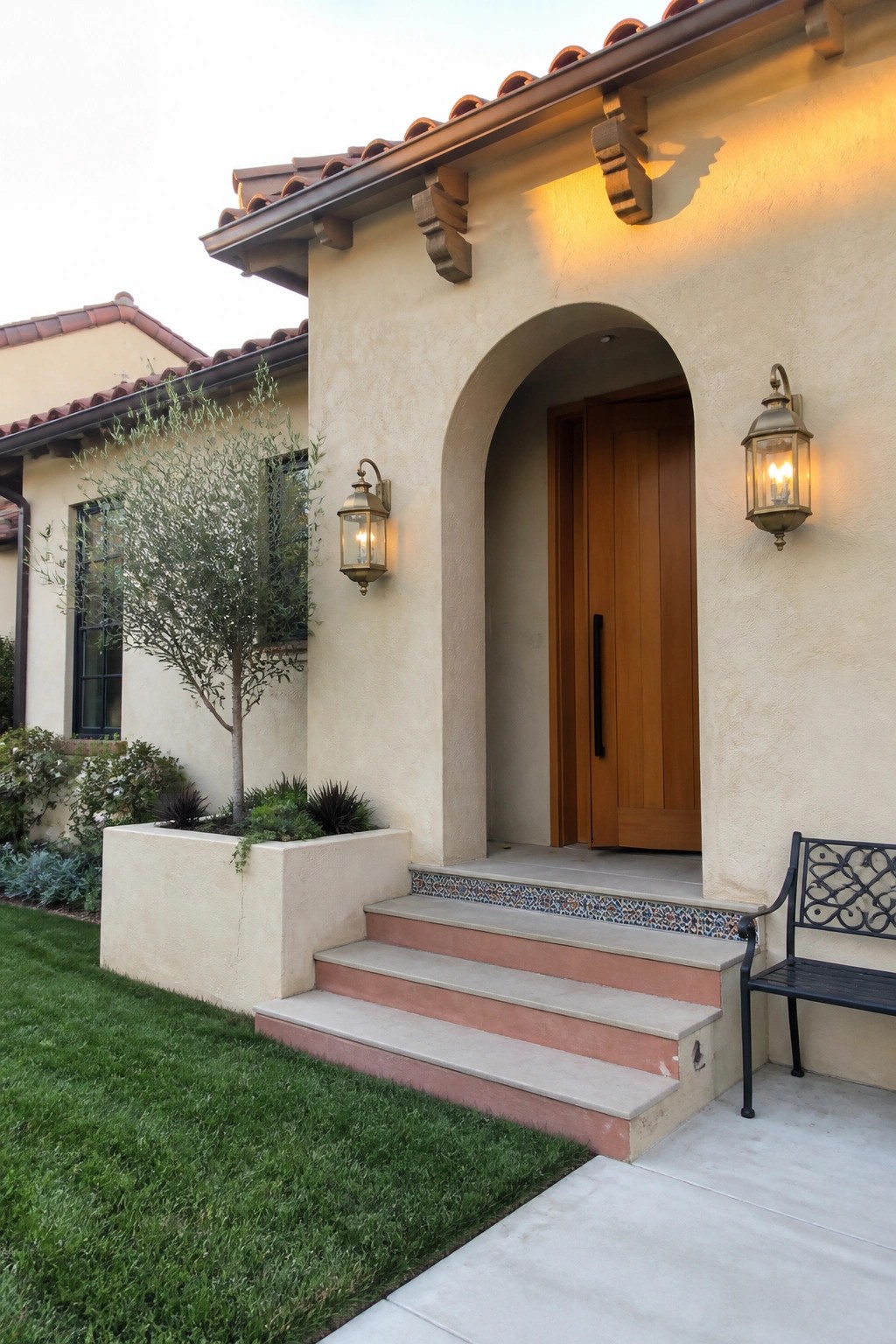
An arched opening around the front door gives a stucco home a little more character without needing a full remodel. The curve breaks up the flat wall and helps the door feel more like a focal point instead of just another part of the facade.
This idea works best on homes with simple rooflines and warm stucco tones. Keep the arch clean, use a solid wood door, and add a narrow band of tile on the steps if you want a touch of color without going overboard.
Dark Doors Against Light Stucco
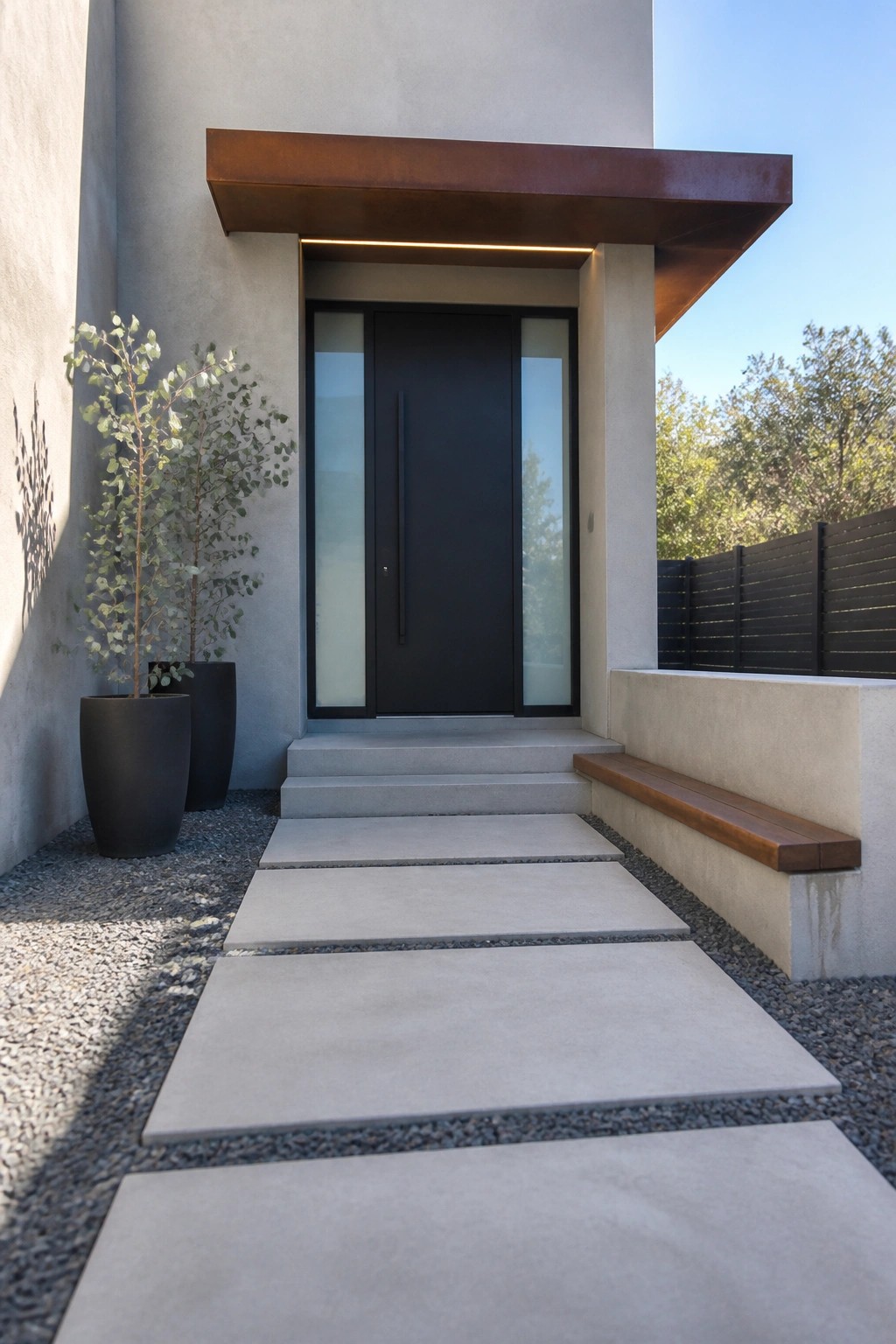
A dark front door gives stucco a clear focal point that feels modern without extra trim or ornament. The contrast keeps the look simple and sharp, especially on homes with fairly plain wall surfaces.
This works best on single-story or low-profile houses where the entry needs to stand out. Use a metal overhang above the door and add a strip of lighting underneath so the entrance stays easy to find after dark.
Tile Accents on the Entry Steps
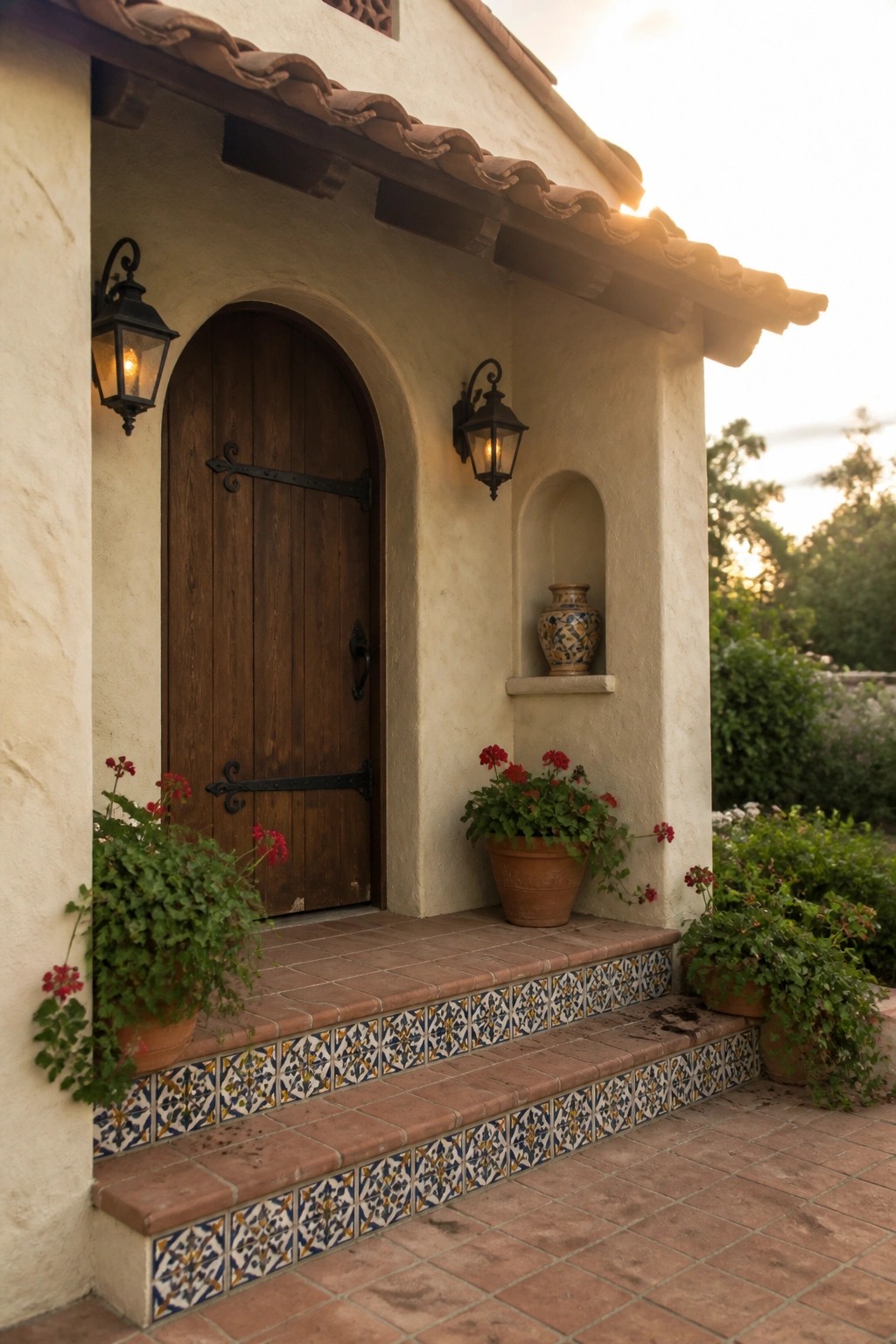
Many stucco homes end up with plain steps that make the whole front feel unfinished. A simple border of patterned tile along the edges adds color and breaks up the flat surfaces without changing the structure.
This approach works best on homes that already lean Mediterranean or Spanish in style. Match the tile colors to any existing lanterns or pottery so the entry feels pulled together rather than busy.
Stucco Columns with Stone Bases
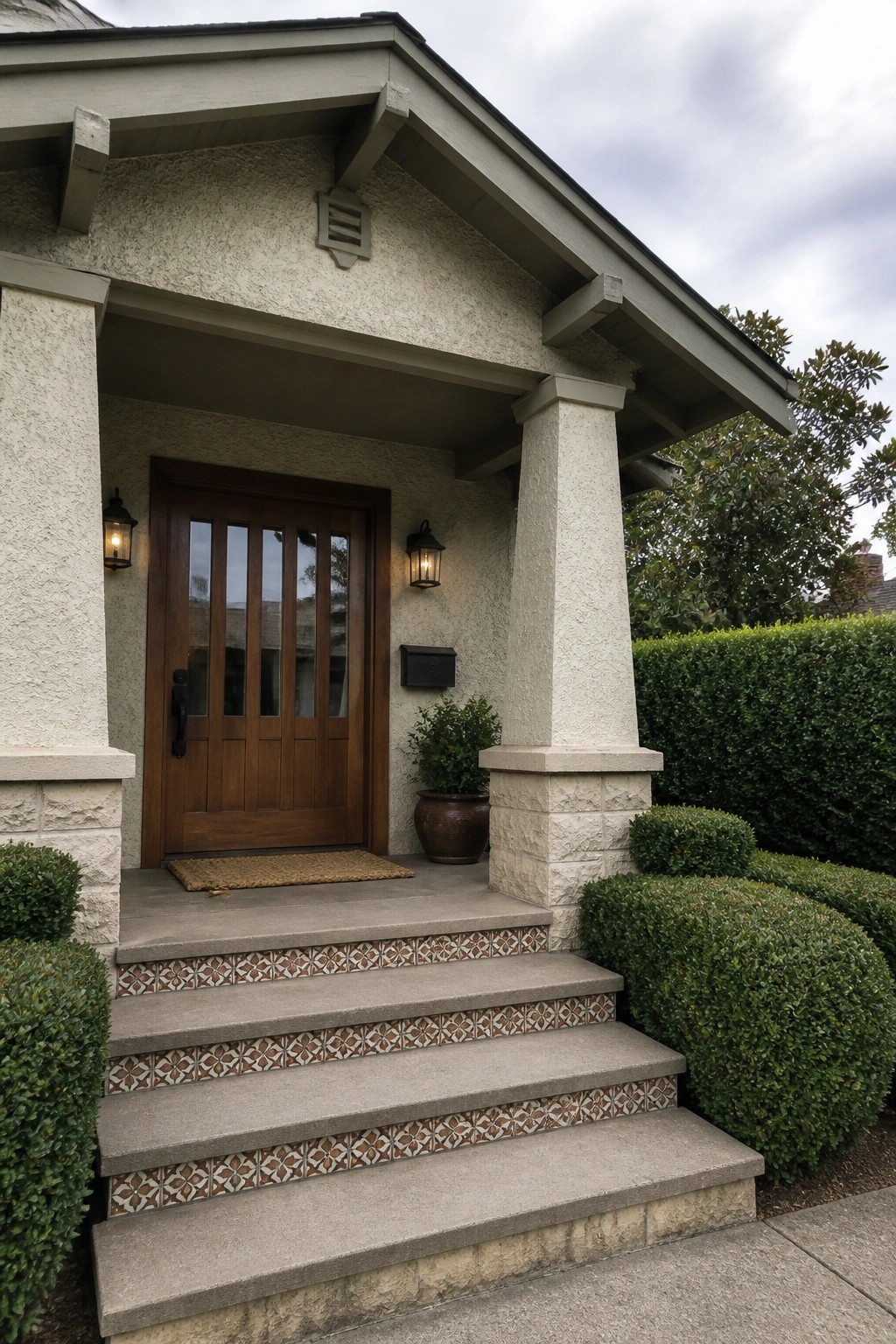
Stucco columns gain a lot of presence when they sit on stone bases. The mix keeps the entrance from looking too flat and gives the whole front a more finished, solid feel.
This approach works especially well on homes with a simple stucco exterior. Match the stone color to any existing trim or hardscape so the change feels like part of the original house rather than an add-on.
Add a Pergola Over the Front Entry
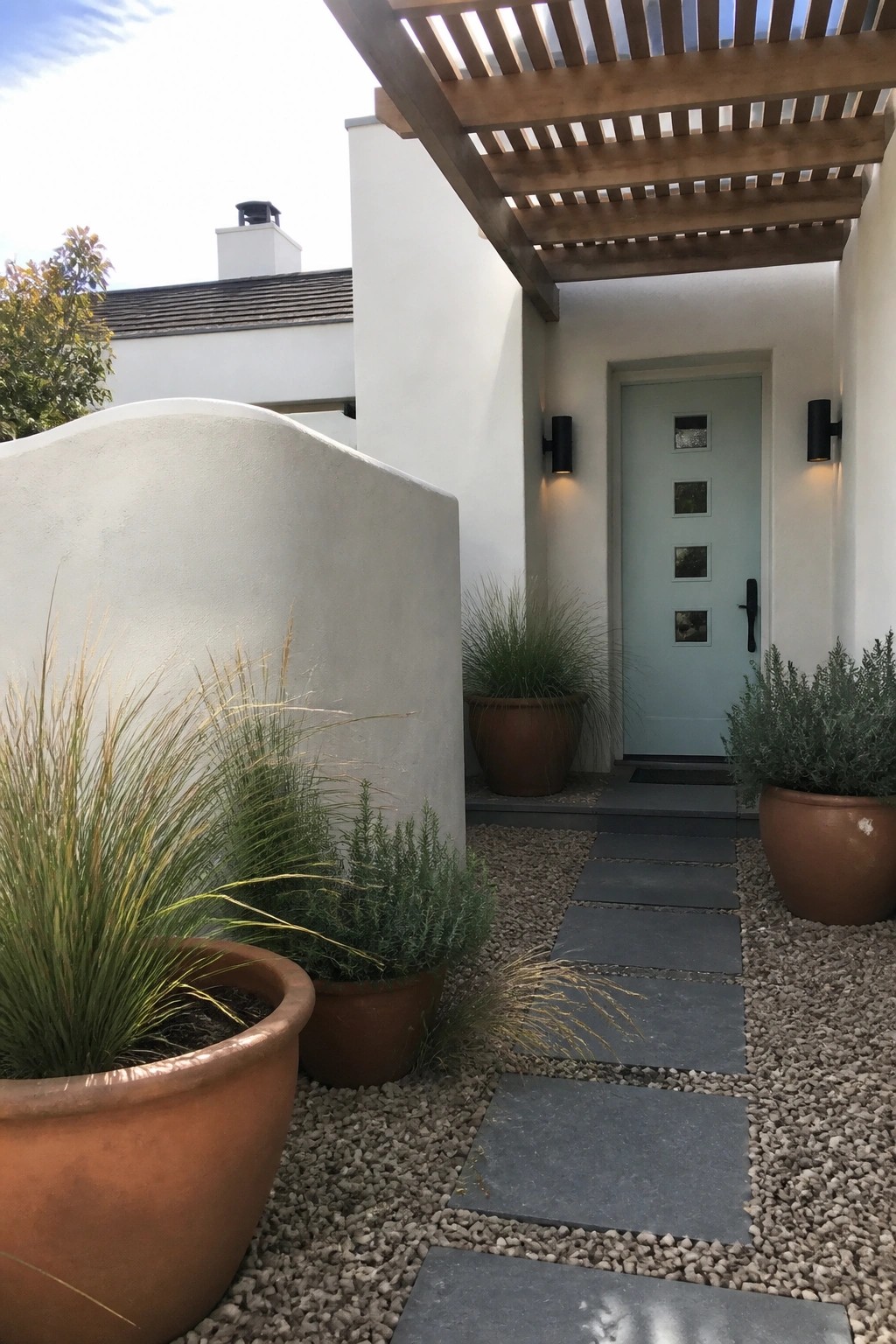
A pergola or slatted wood roof extension can give a stucco entry more presence without enclosing it. The open structure adds shade on sunny days and breaks up the flat wall plane above the door.
This approach suits homes with simple stucco surfaces and works best when the wood tone stays warm and natural. Keep the planting low and the path materials loose so the overhead detail stays the main focus.
Built-In Niches For Stucco Entries
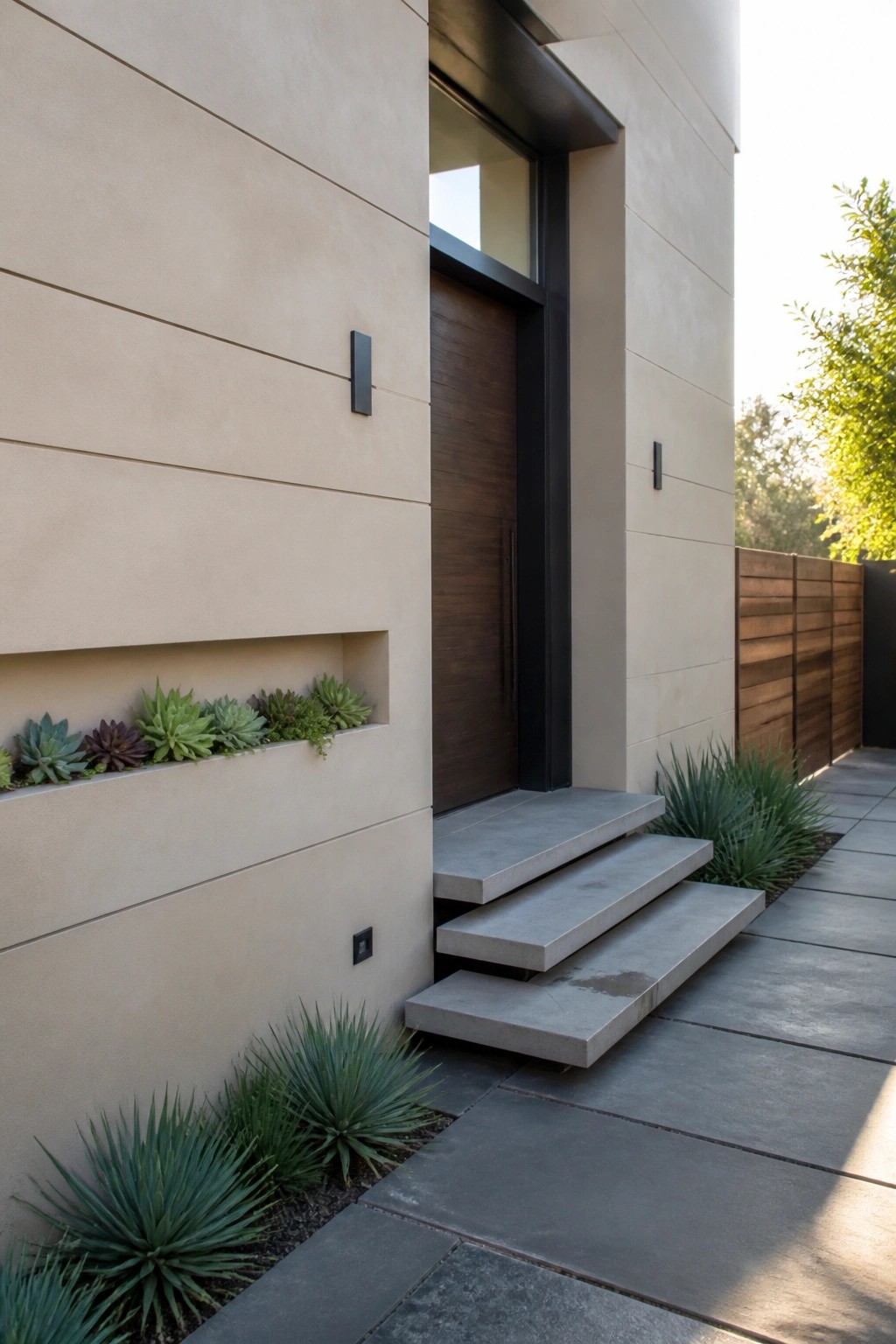
Adding a recessed niche to a stucco wall gives the entrance a quiet bit of interest without extra trim or trim pieces. The plants sit right in the wall so they do not crowd the walkway or steps.
This idea works best on homes with fairly flat stucco surfaces and simple door frames. Make sure the niche has good drainage and a slight slope so water does not sit inside the wall.
Stone Bases for Stucco Entries

Adding a short stone base along the bottom of stucco walls gives a front entrance more weight without changing the whole house. The contrast breaks up the flat surface and makes the doorway feel more solid.
This approach works on most stucco homes that need a simple update. Keep the stone low, around two feet high, and choose a color that sits well with the door and any existing trim.
Frame an Arched Entry in Black
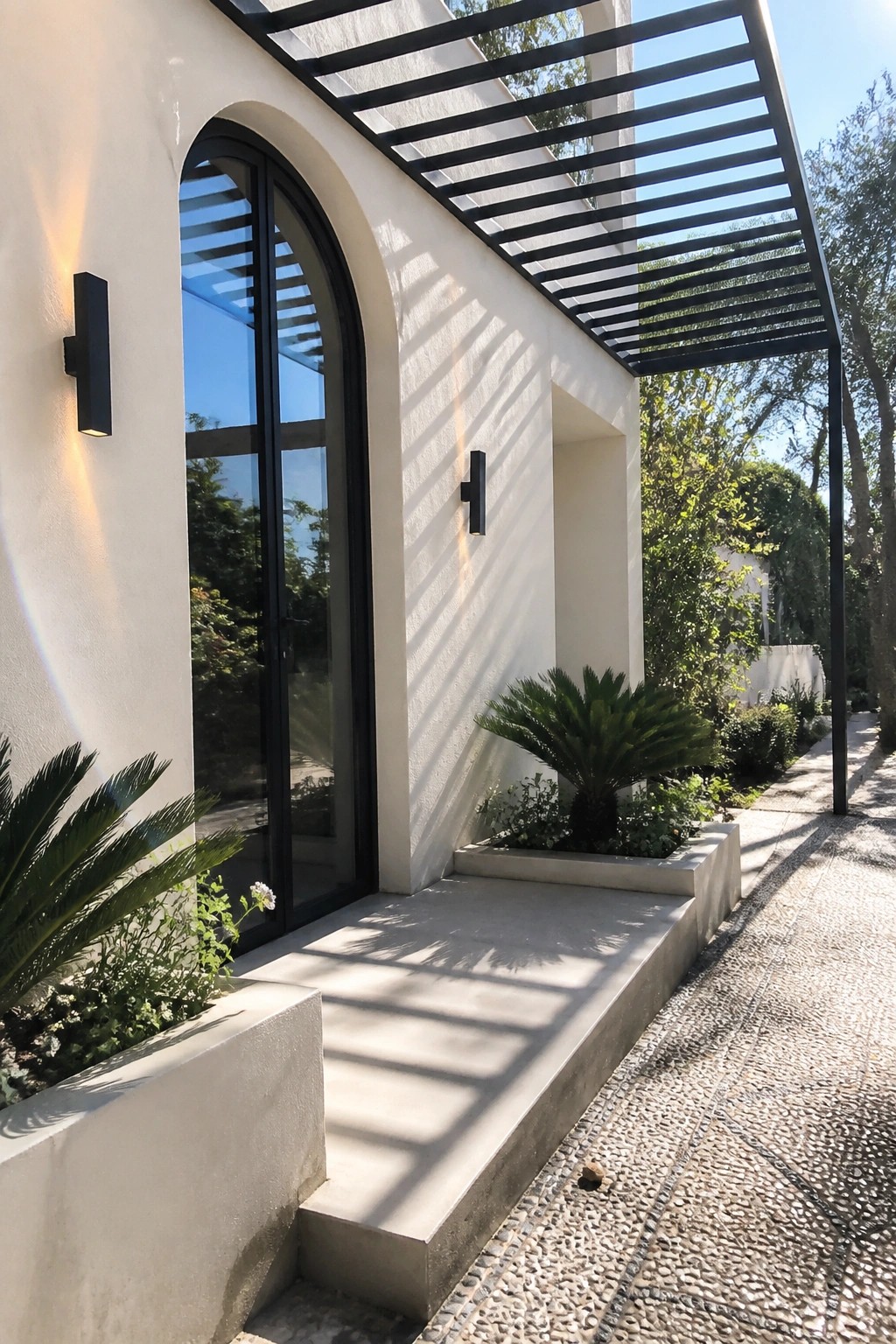
A black frame around an arched door stands out cleanly against plain stucco. The contrast gives the entrance a simple shape that feels finished without extra trim or decoration.
This approach works well on homes that already have smooth walls and few other details. Keep nearby elements like lighting and overhead structures in the same dark tone so the arch stays the main point.
Tile The Risers On Your Entry Steps
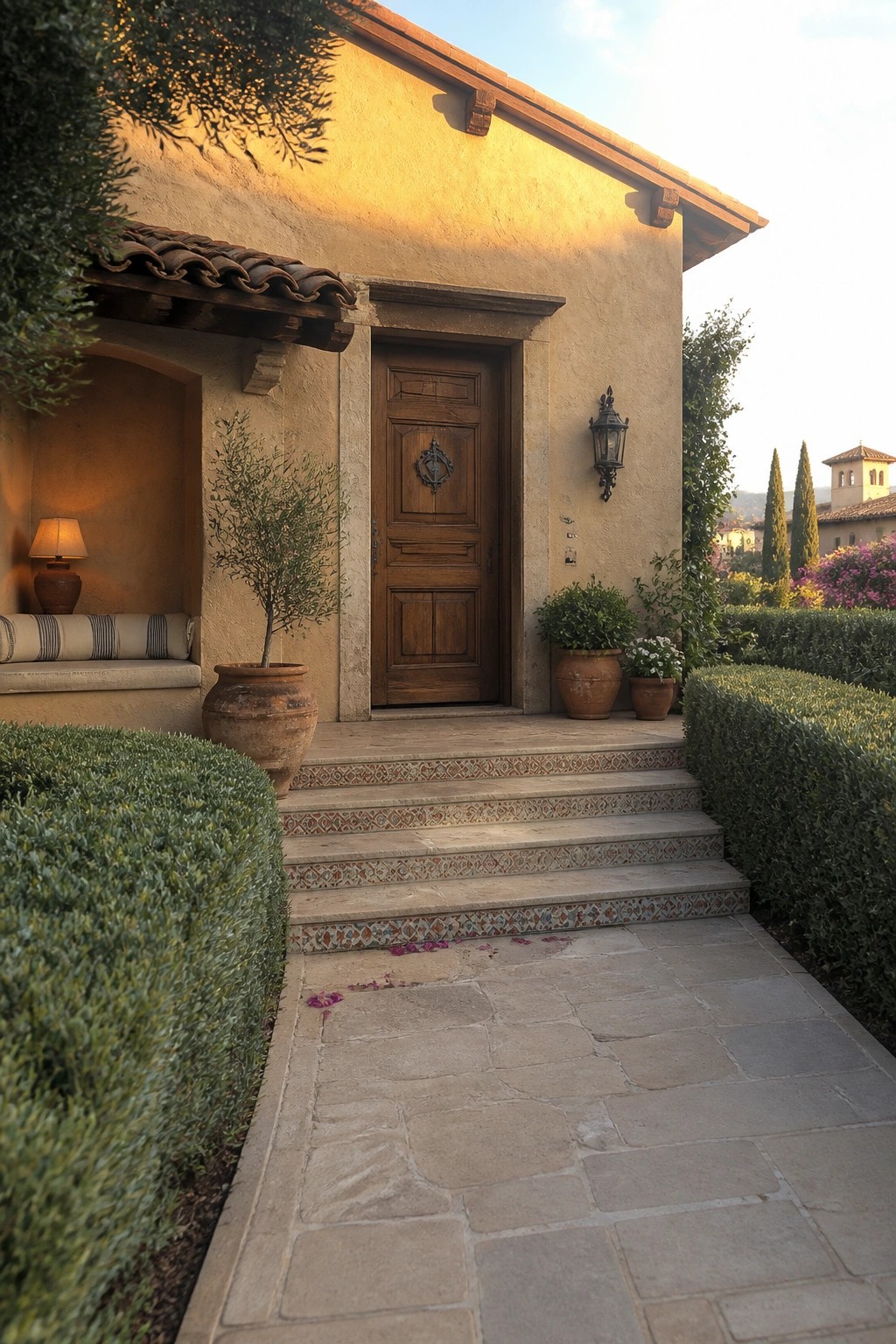
Many stucco homes look a little plain at the front door until you add a simple pattern underfoot. Running decorative tile across the stair risers gives the entrance a finished look without changing the walls or adding heavy trim.
This approach works best on homes with a Mediterranean or Spanish feel, where the tile can echo roof colors or nearby paving. Keep the tile modest in scale so it does not compete with the door itself.
Contrast Light Stucco With A Dark Wood Door
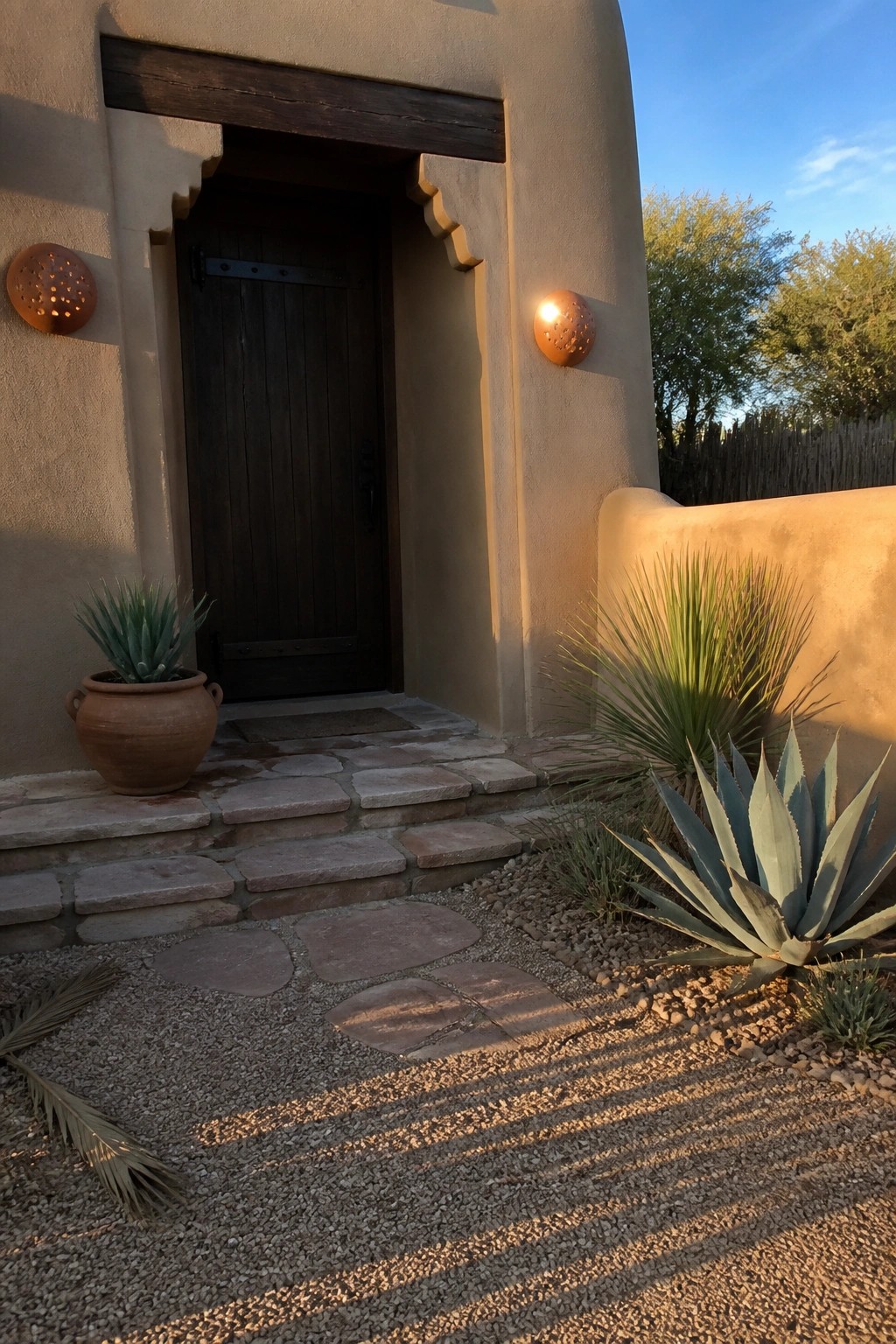
A dark wood door gives stucco walls something solid to play against. The light surface makes the wood color stand out, and the whole entrance feels more defined without extra trim or decoration.
This approach suits homes that already have clean stucco lines. Keep the hardware simple, add a pair of small sconces, and let the door do the rest. It works best when you avoid busy details around the opening.
Mix Wood Siding With Stucco at the Entry
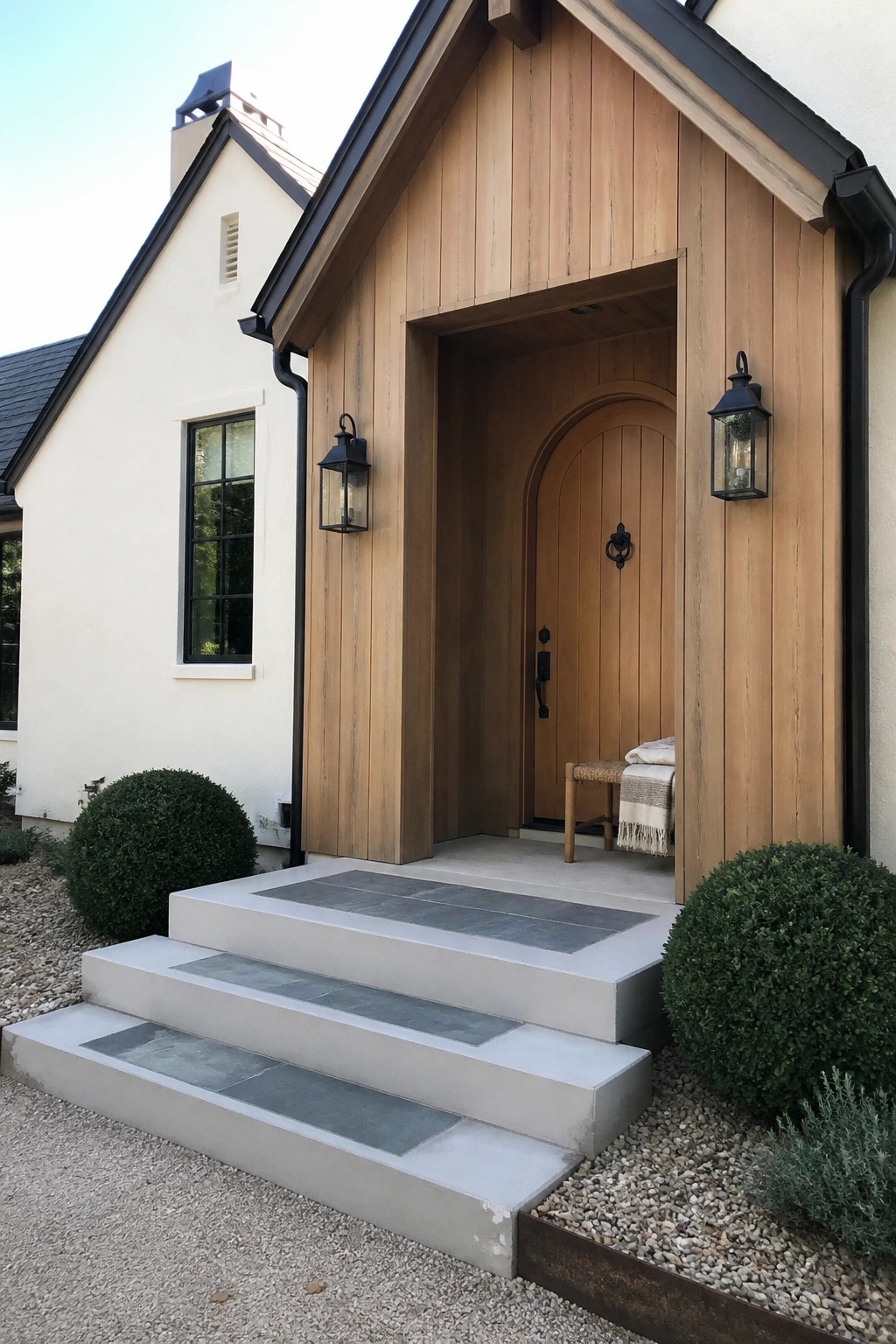
Many stucco homes look a little flat at the front door until wood gets added. The natural grain brings warmth and breaks up the plain wall surface in a simple way.
This approach works best on houses with a gable or small porch over the door. Keep the wood tone light and let it wrap the sides and top of the opening so the entry feels set apart from the rest of the stucco.
Add Patterned Tile to Entry Steps
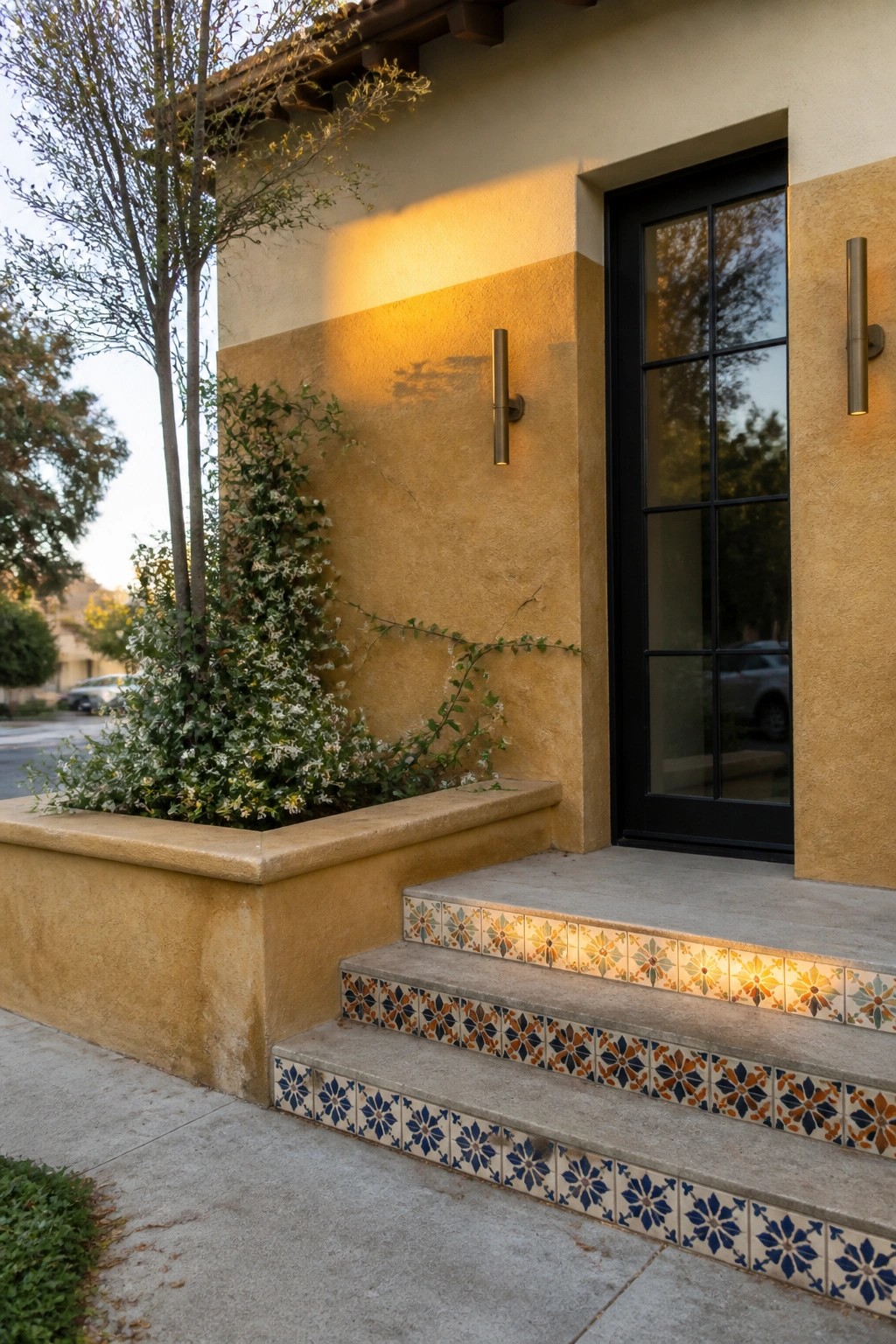
Many stucco homes have simple concrete steps that feel plain next to the textured walls. Adding a band of colorful patterned tile along the risers gives the entrance a finished look without much extra cost or construction.
This works especially well on homes with warm stucco tones, where the tile adds contrast and draws the eye toward the door. It suits older houses or newer builds that need a bit more character at ground level. Just keep the tile pattern from getting too busy if the rest of the facade stays simple.
Use a Dark Door Color Against Light Stucco
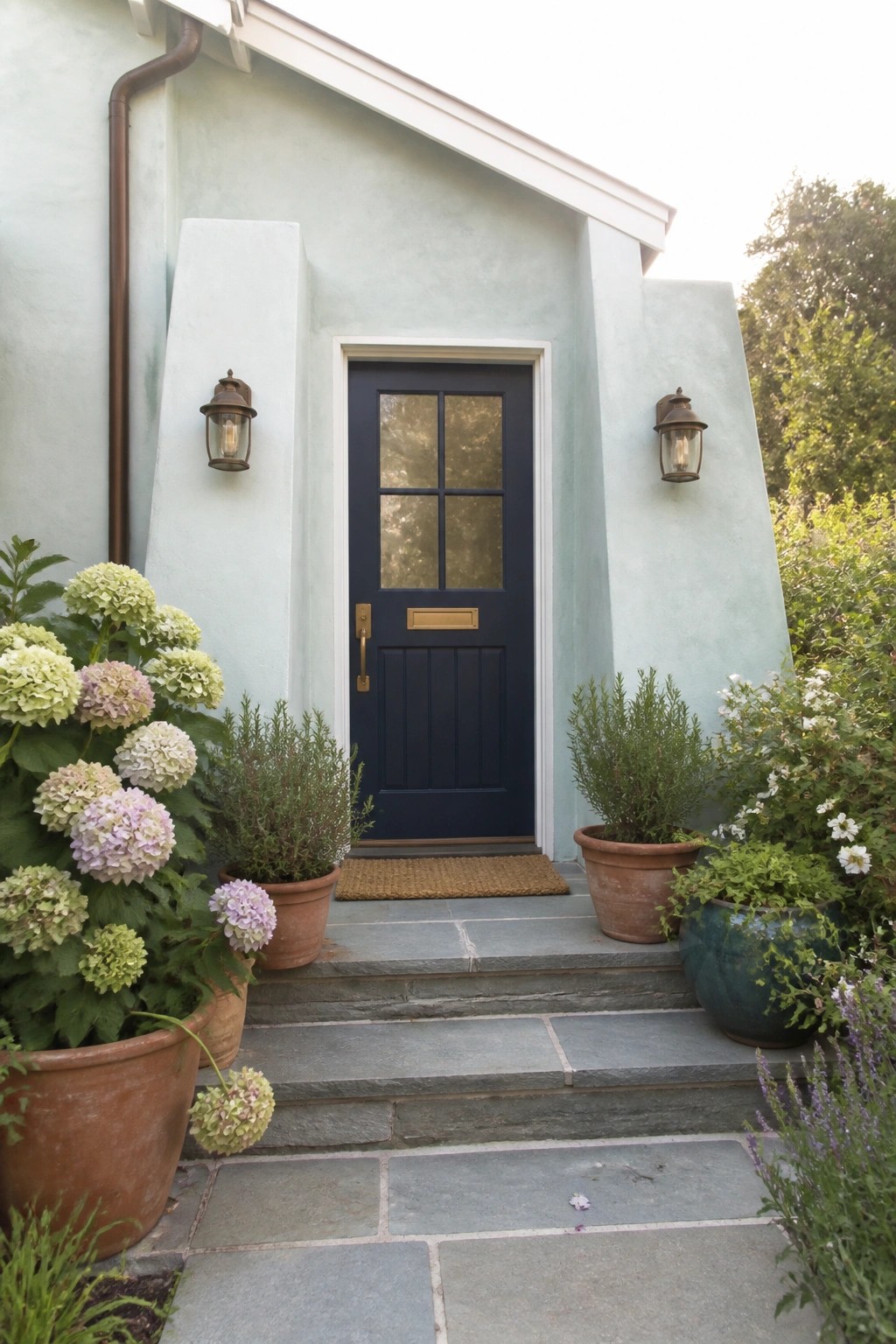
A dark door stands out nicely on light stucco because it gives the entrance a clear focal point without needing lots of extra trim or detail. The contrast makes the door feel more substantial and helps the whole front feel finished.
This works especially well on simple stucco homes where you want to add some weight to the entry. Keep the door color deep and matte, add a pair of wall lights for balance, and let a few pots handle the rest. It suits older homes and newer builds alike as long as the stucco stays pale.
Tiled Steps Add Color To Stucco Entries
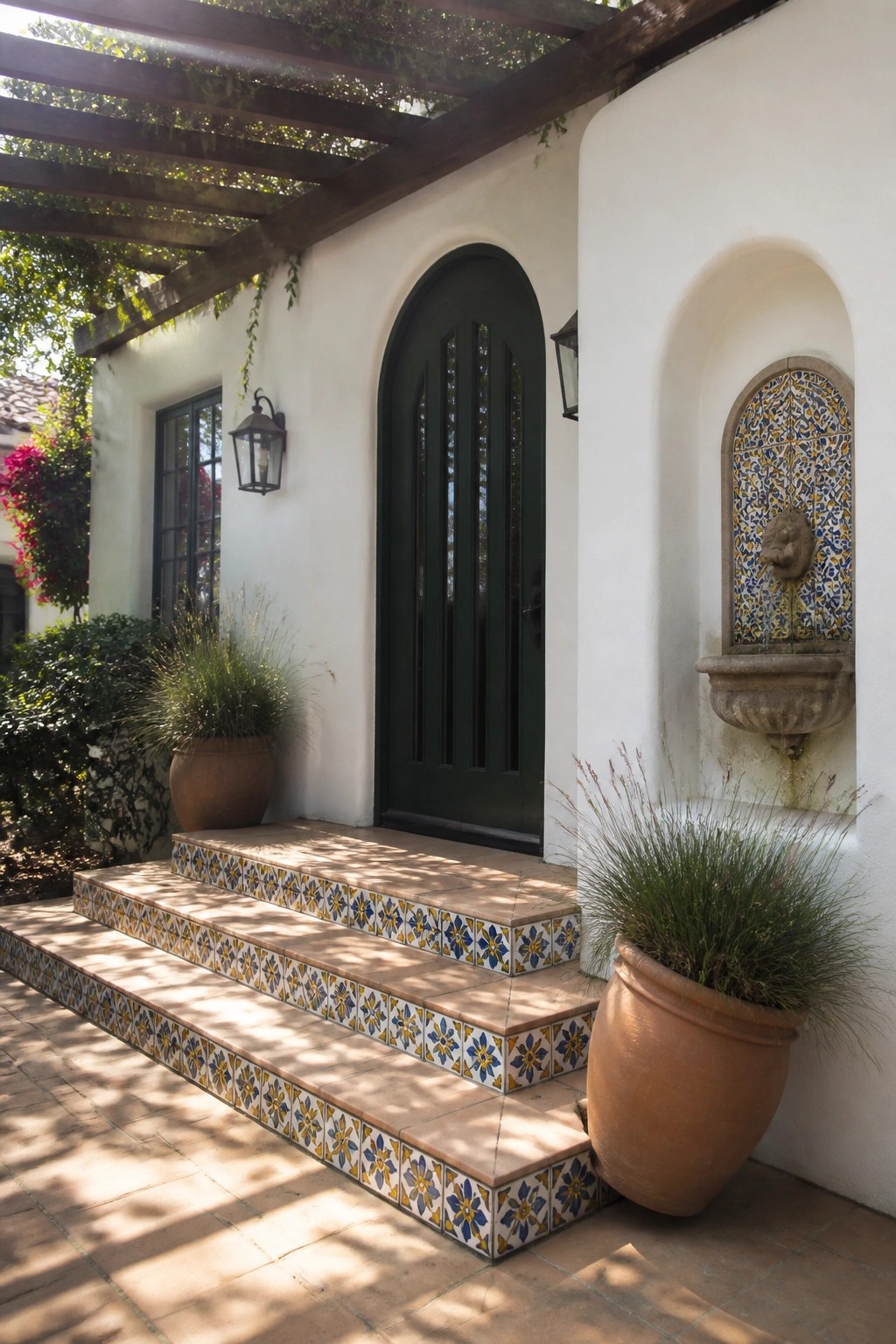
Colorful tile along the steps gives a plain stucco entry some needed contrast. It draws the eye downward and breaks up the white surface without any big structural work.
This approach suits homes with a Mediterranean or Spanish look. Keep the tile pattern consistent between the steps and any wall niches so the whole entry feels pulled together.
Metal Canopies For Stucco Entries
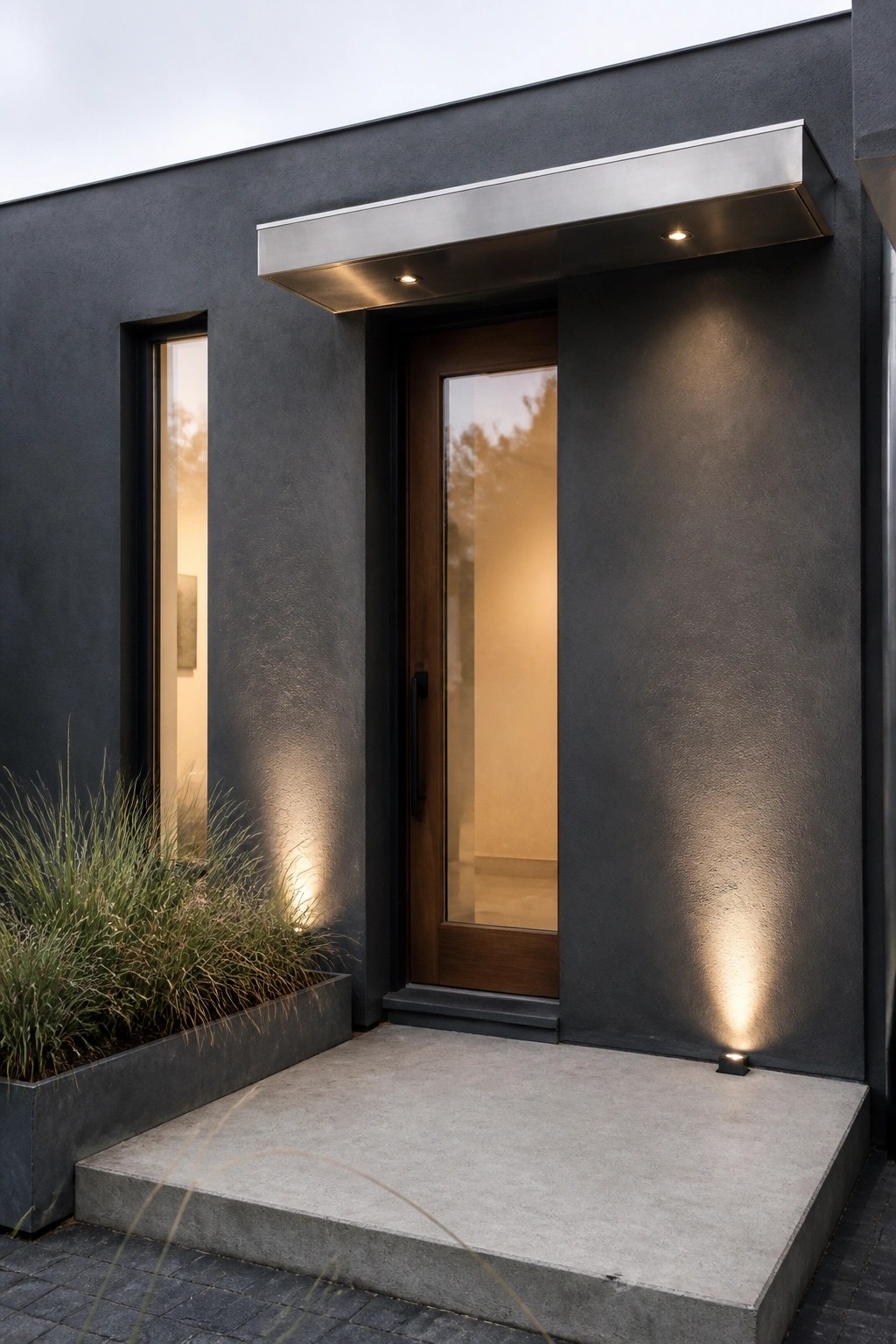
A metal canopy gives the entrance a clear, finished look on a stucco house. It adds structure without a full roof or porch, and the flat shape keeps things simple and modern.
This approach works best on homes with clean lines where you want a bit of contrast between materials. Place a couple of small recessed lights underneath so the door stays easy to find at night, and make sure the metal color does not fight with the stucco tone.
Curved Stucco Benches Along The Entry
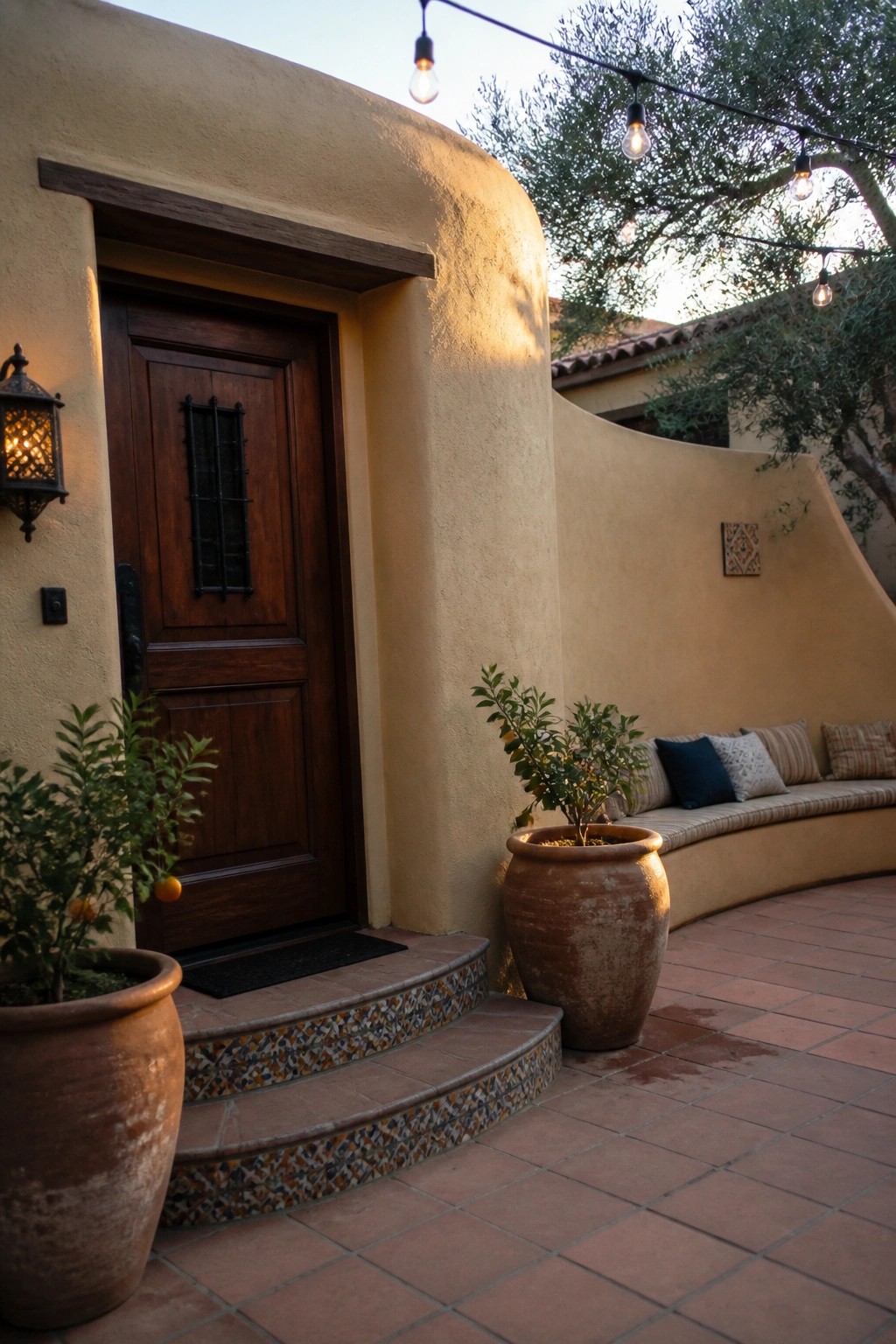
A curved stucco wall next to the front door can easily turn into a built-in bench. It gives people a place to sit while adding a soft shape that breaks up flat walls. The rounded form feels natural with stucco and helps the entry feel less like a straight path to the door.
This works best on homes with a little side space near the entrance. Keep the bench low and simple, then add a couple of large pots on the steps to balance the look. It suits older stucco houses or any style that already uses soft edges and warm materials. Just make sure the bench stays shallow so it does not block the walkway.
Add a Wood Canopy Over the Front Door
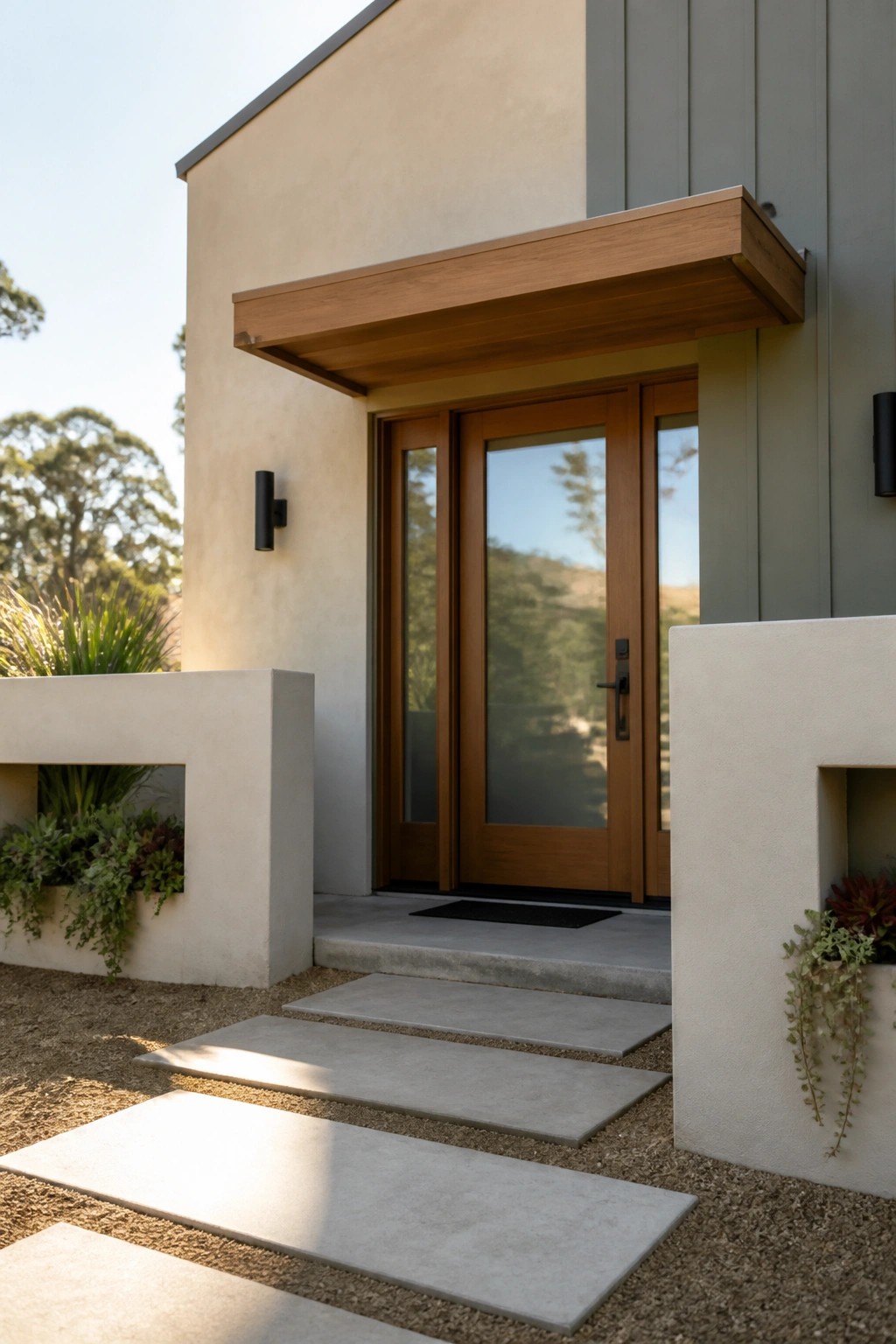
A wood canopy gives a stucco entrance more presence without needing lots of extra trim or decoration. It creates a clear focal point above the door and adds a bit of shelter from rain or sun at the same time.
This approach works best on simpler stucco homes that need one strong element to highlight the entry. Use a straightforward wood tone that contrasts with the wall color, and keep the rest of the facade fairly clean so the canopy stays the main feature.
Frame the Entry with Large Potted Plants
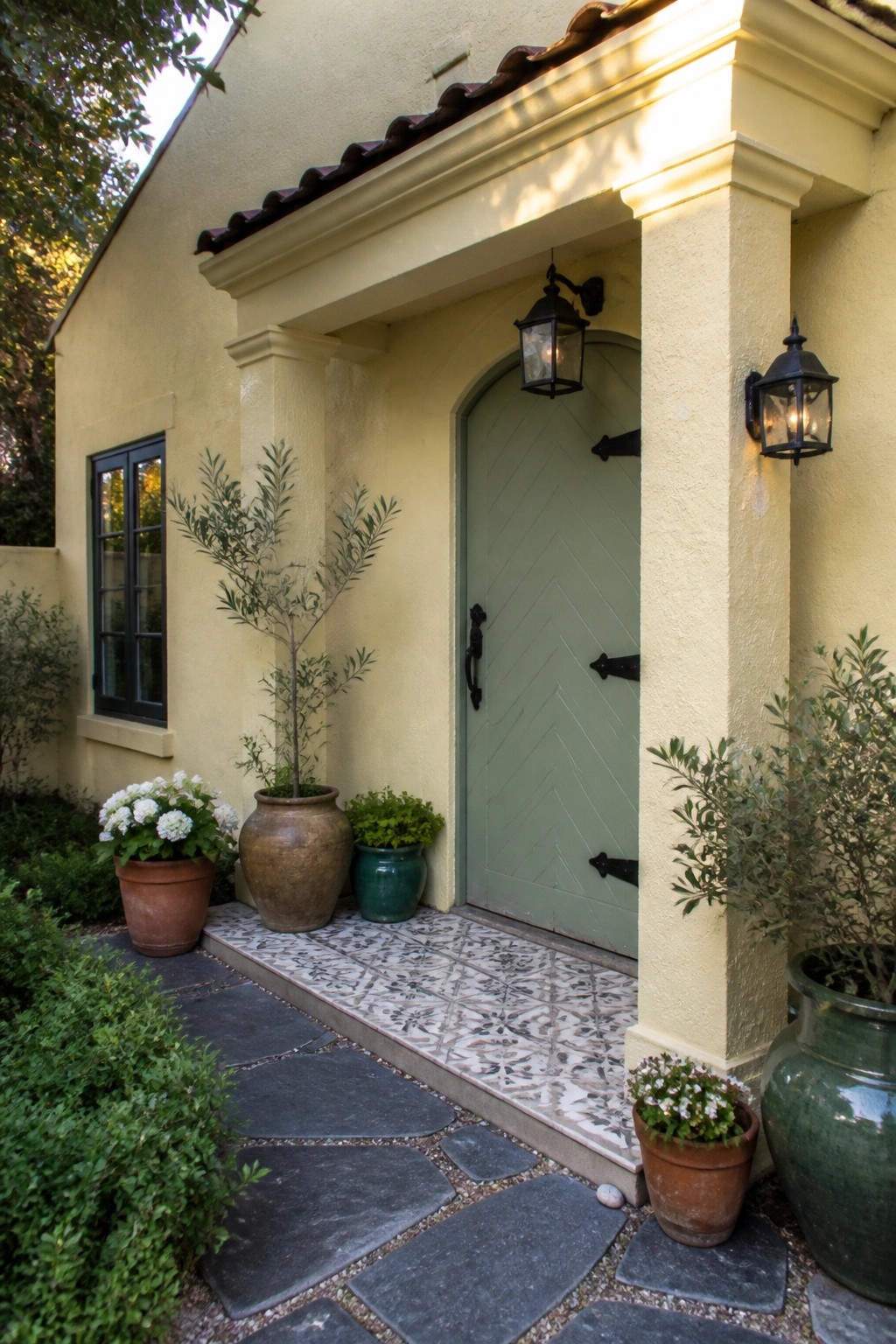
Stucco walls can feel a little plain next to an entry, especially on a smaller facade. A few oversized pots with trees or shrubs placed on either side of the door add height and break up the flat surface without any major construction.
This approach works well on homes where you want to keep changes simple or reversible. Choose containers that echo the door hardware or lanterns, and keep the plants trimmed so they do not block the path or window light. It also lets you swap things out when the seasons change.
Tile the Risers on Entry Steps
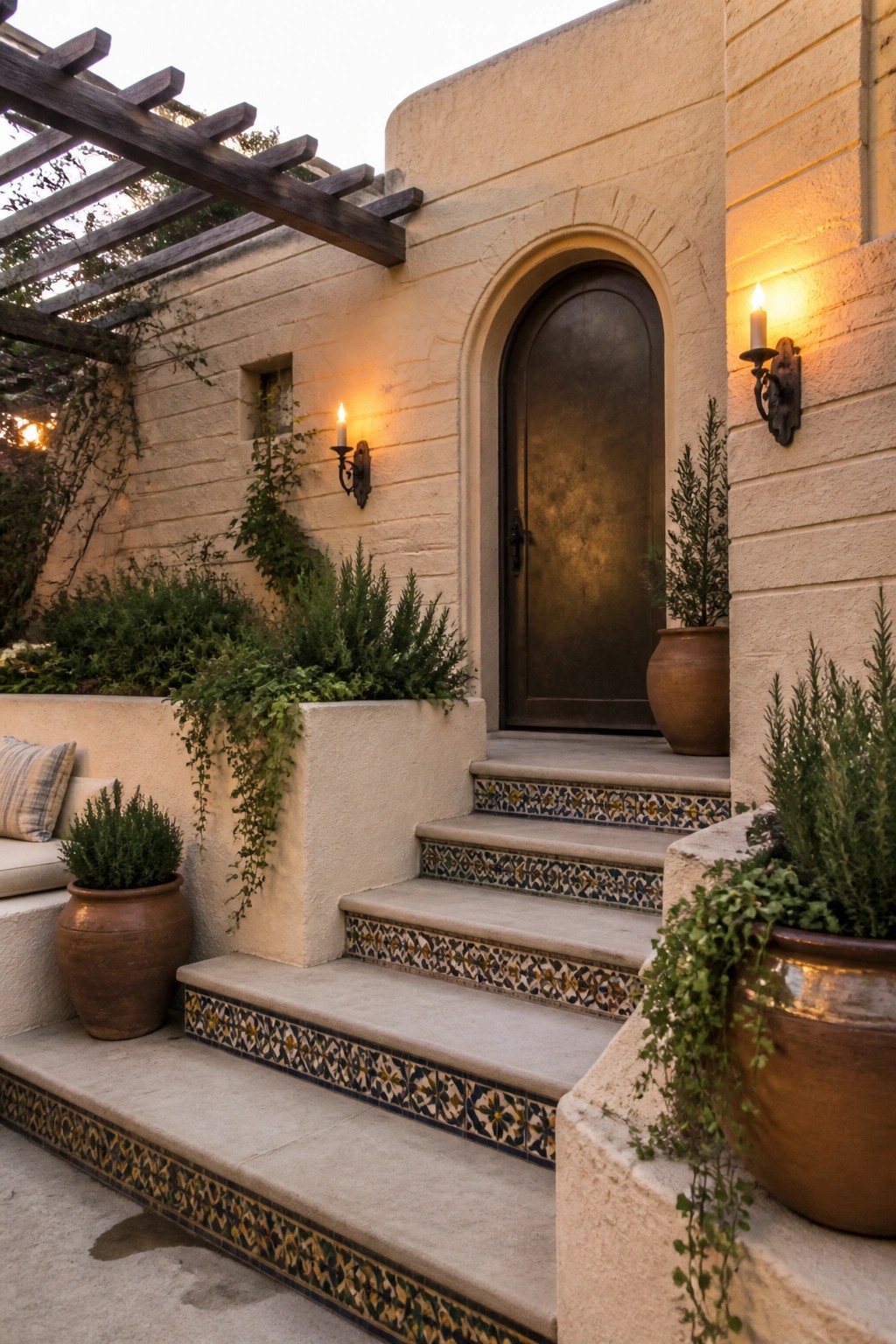
One simple way to add life to a stucco entry is to run patterned tile along the stair risers. The tile gives the steps a finished look and breaks up the plain surface without changing the overall structure of the house.
This approach works best on homes with straightforward stucco walls and a solid door. Keep the pattern modest so it reads as a detail rather than the main feature, and match the tile colors to any existing trim or hardware.
Add A Dark Metal Overhang Over The Entry

Stucco walls often need something to break up the flat surface around a front door. A simple dark metal overhang does that job by creating a strong horizontal line that draws attention straight to the entrance.
This approach works best on homes with clean stucco and minimal trim. Keep the overhang fairly shallow so it does not overwhelm the door, and match the finish to other metal details like light fixtures or window frames for a pulled-together look.
Frequently Asked Questions
Q: How do I stop water from seeping in where the stucco meets the door? A: Seal the edges with a good caulk made for masonry. Check the seal once a year and reapply if it starts to pull away.
Q: Should I paint the stucco or leave it natural if my entry door is dark wood? A: Leave the stucco its natural color. The contrast with the wood makes the entrance feel more inviting without extra work.
Q: Does stucco change how the door looks from inside the house? A: The inside view stays exactly as it was. Focus your changes on the outside where they show.