I have noticed that Victorian homes often succeed when the exterior details are kept simple enough to age gracefully rather than overwhelming the structure.
The real test comes inside, where classic moldings and high ceilings need layouts that let people move through the space without feeling cramped.
Details add up fast.
Some of the better approaches I have seen involve updating the facade materials in ways that respect the original lines while improving how the home sits on the lot.
Testing a couple of these changes in a real setting shows which ones actually make daily living easier instead of just looking good in photos.
Wrap-Around Porches That Boost Curb Appeal
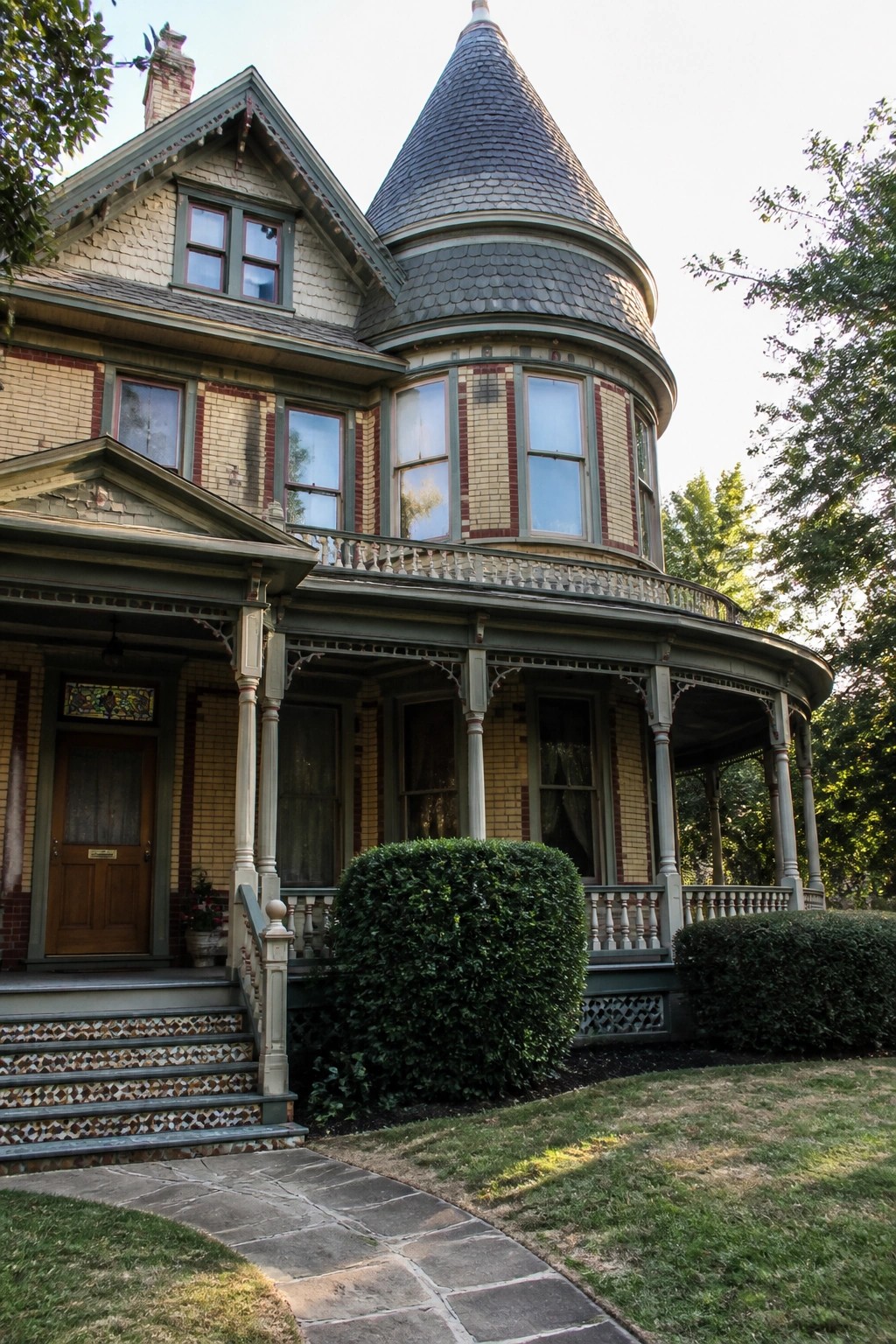
A wrap-around porch helps a Victorian house feel more open and approachable. It softens the tall lines of the facade and gives the front a place to sit that actually gets used.
This idea works well on homes that already have a rounded corner or turret. Let the porch follow that curve instead of fighting it, and keep the posts and rail simple so the architecture stays the focus.
Frame the Entry with an Arched Porch

An arched porch over the front door adds just enough detail to make a Victorian house feel special. It pulls the eye straight to the entrance and gives the facade a bit more presence without needing extra ornament everywhere.
This approach suits homes with a solid brick base and painted siding above. Keep the trim simple and the door color soft so the entry stays welcoming rather than fussy.
Define the Entry with a Patterned Pathway
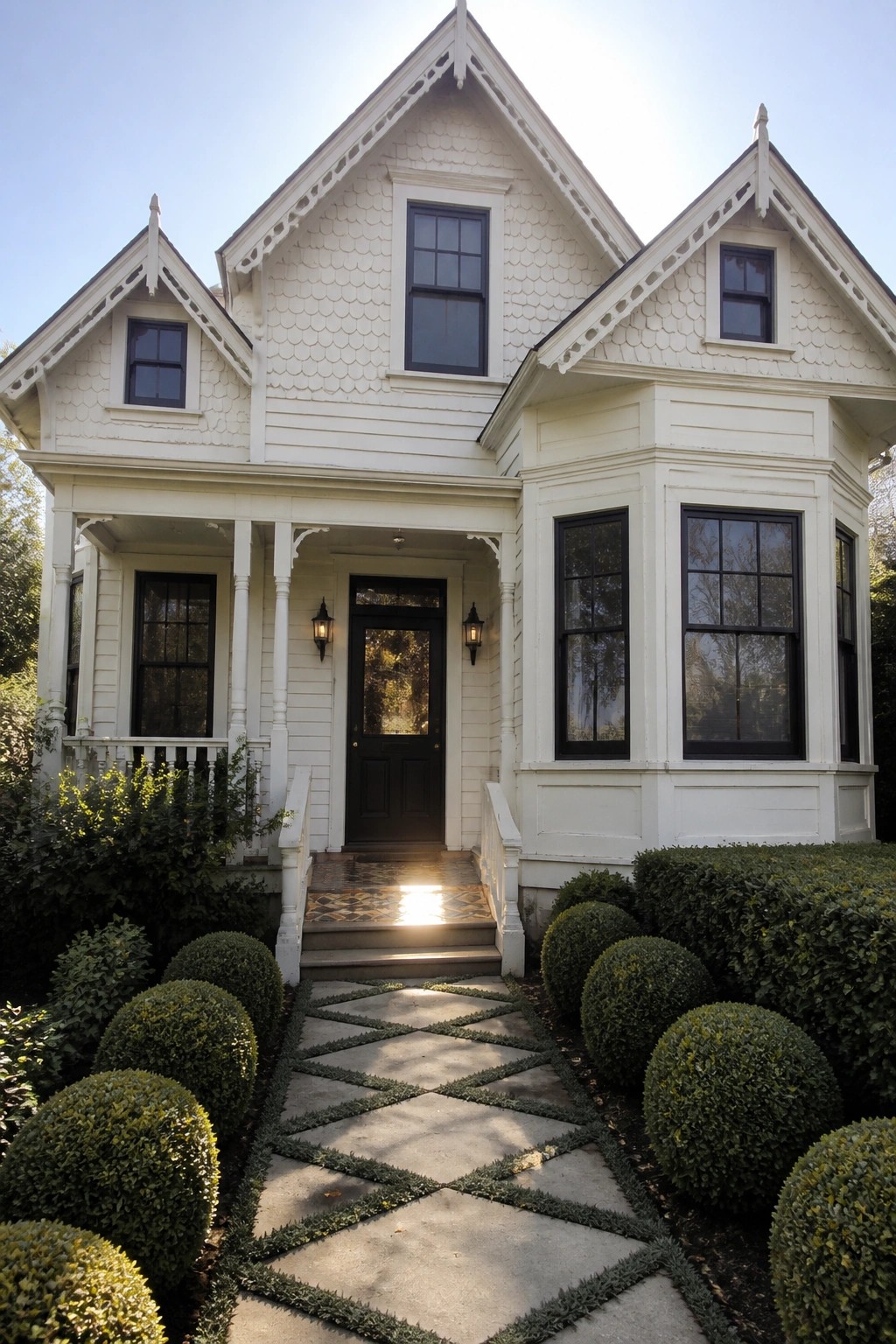
A strong front path helps a Victorian house feel more welcoming without changing the architecture itself. The grid layout with grass between the stones gives the entry a clear direction while keeping the approach simple and traditional.
This works especially well on homes that already have a centered porch and door. Use low, rounded shrubs along the edges to frame the walk without blocking windows or adding clutter.
Pergola Seating Along a Garden Path
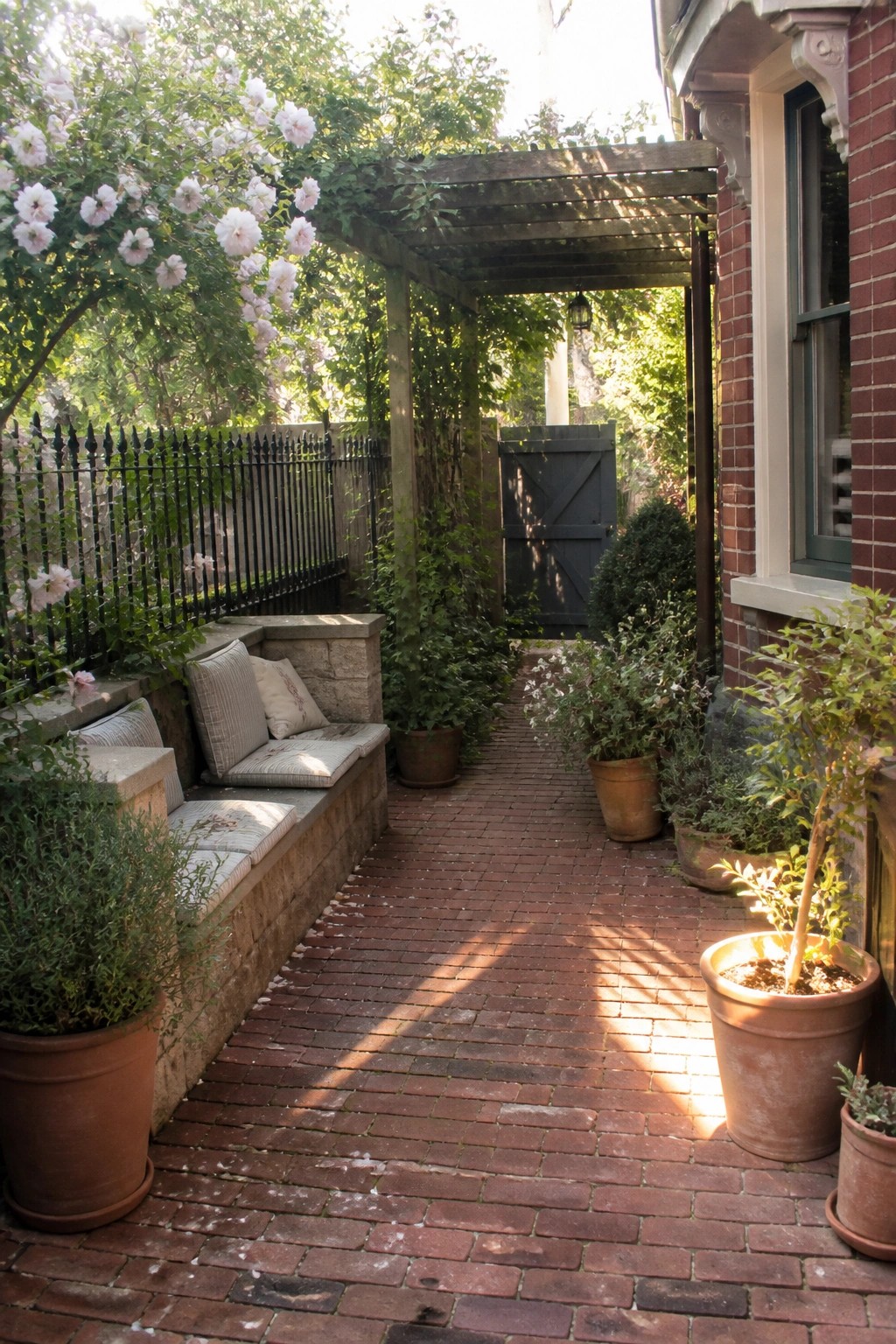
A pergola over a narrow path gives you a shaded spot to sit without needing a big deck or patio. The built-in bench along one side turns what could be just a walkway into a place where you actually stop and stay awhile. It works especially well in older homes where the garden sits right next to the house.
This setup suits Victorian houses because it adds structure without feeling too formal. Keep the bench simple with a few cushions and let vines grow up the posts for shade. Make sure the path stays wide enough for walking so the seating does not get in the way.
Furnish the Porch With Wicker Seating
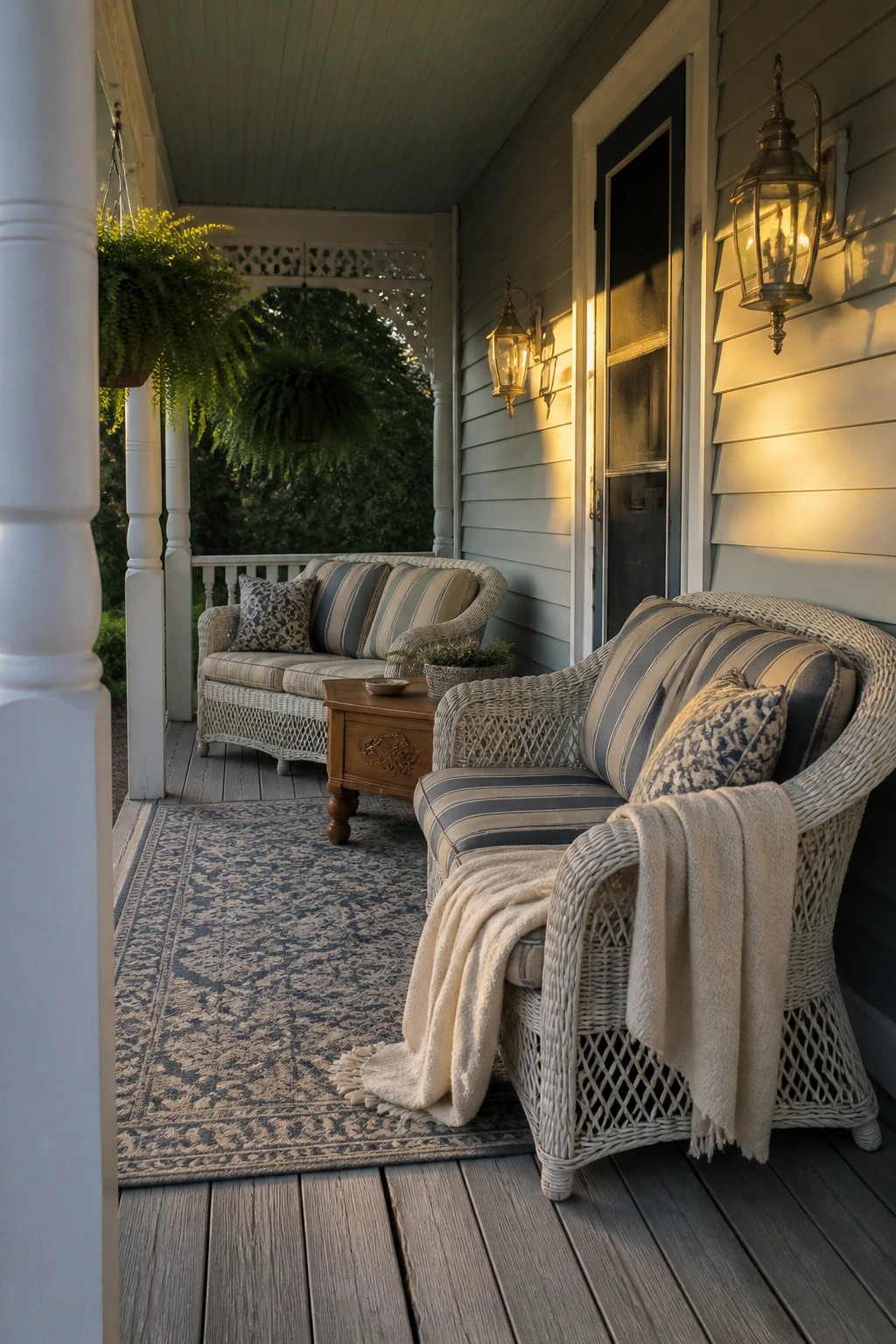
Wicker pieces hold up outdoors while still feeling relaxed enough for everyday use. On a Victorian porch they add texture that matches the age of the house without making the space feel stiff or formal.
Group a sofa and one or two chairs around a small table, then lay down a rug to mark the seating area. This works best on porches that get some shade and can be left furnished through the warmer months.
Curved Stone Paths in Front Yards
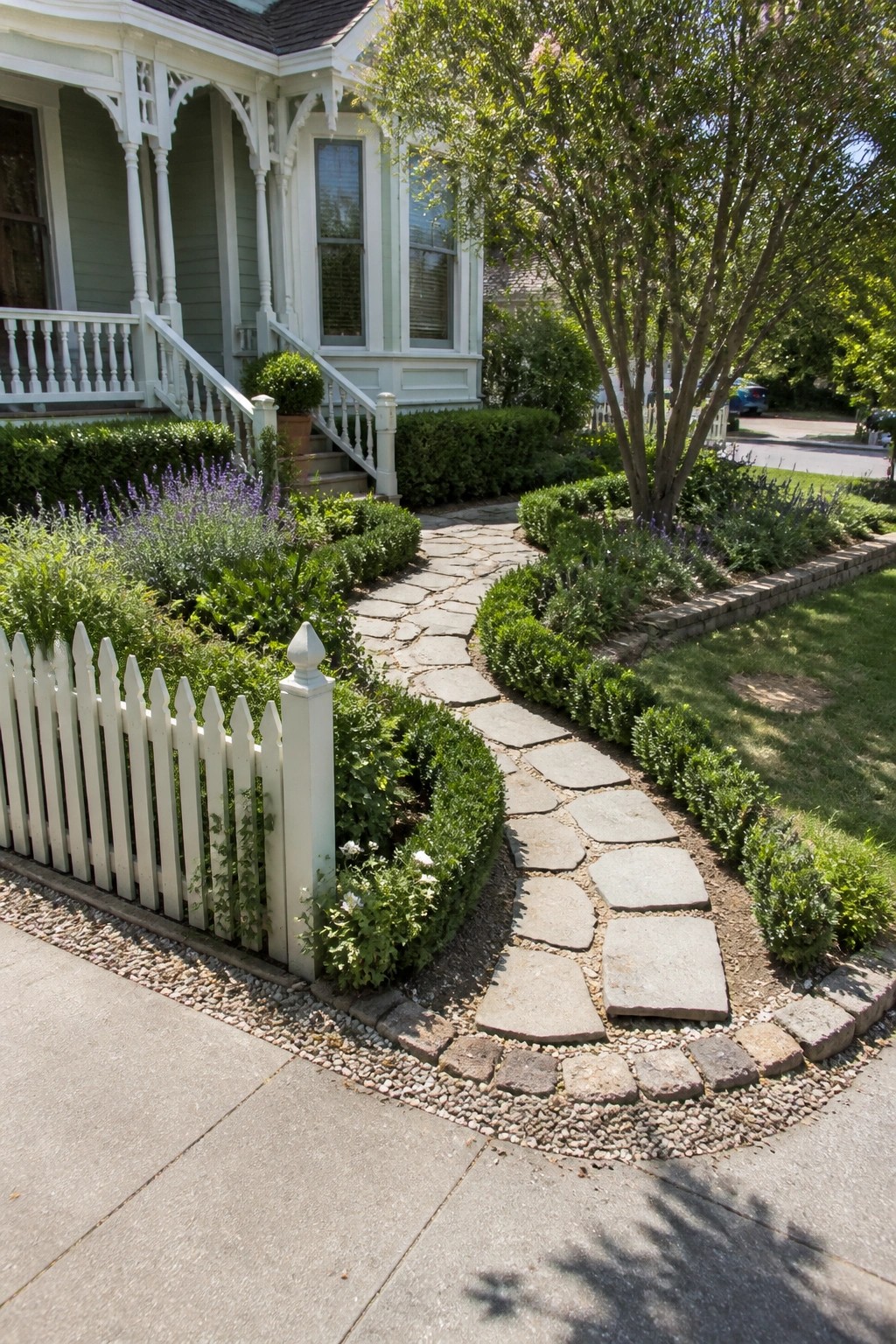
A curved stone path gives a Victorian house a softer approach without taking away from the architecture. The gentle bend lets the garden beds flow naturally around it and makes the walk to the door feel more welcoming than a straight line would.
This layout works best on homes with established trim and porch details. Use low edging to keep the beds tidy and choose a path width that feels comfortable for two people side by side.
Built-In Bench Seating On The Porch

A built-in bench turns a porch into a spot where people actually sit and stay awhile. It gives the space steady, permanent seating without crowding the floor with separate chairs or sofas.
This works best on older homes that already have a solid porch structure. Keep the cushions simple and add a few potted plants nearby for softness. It suits Victorian houses that need everyday function without losing their original character.
Red Brick Facades With Dark Details
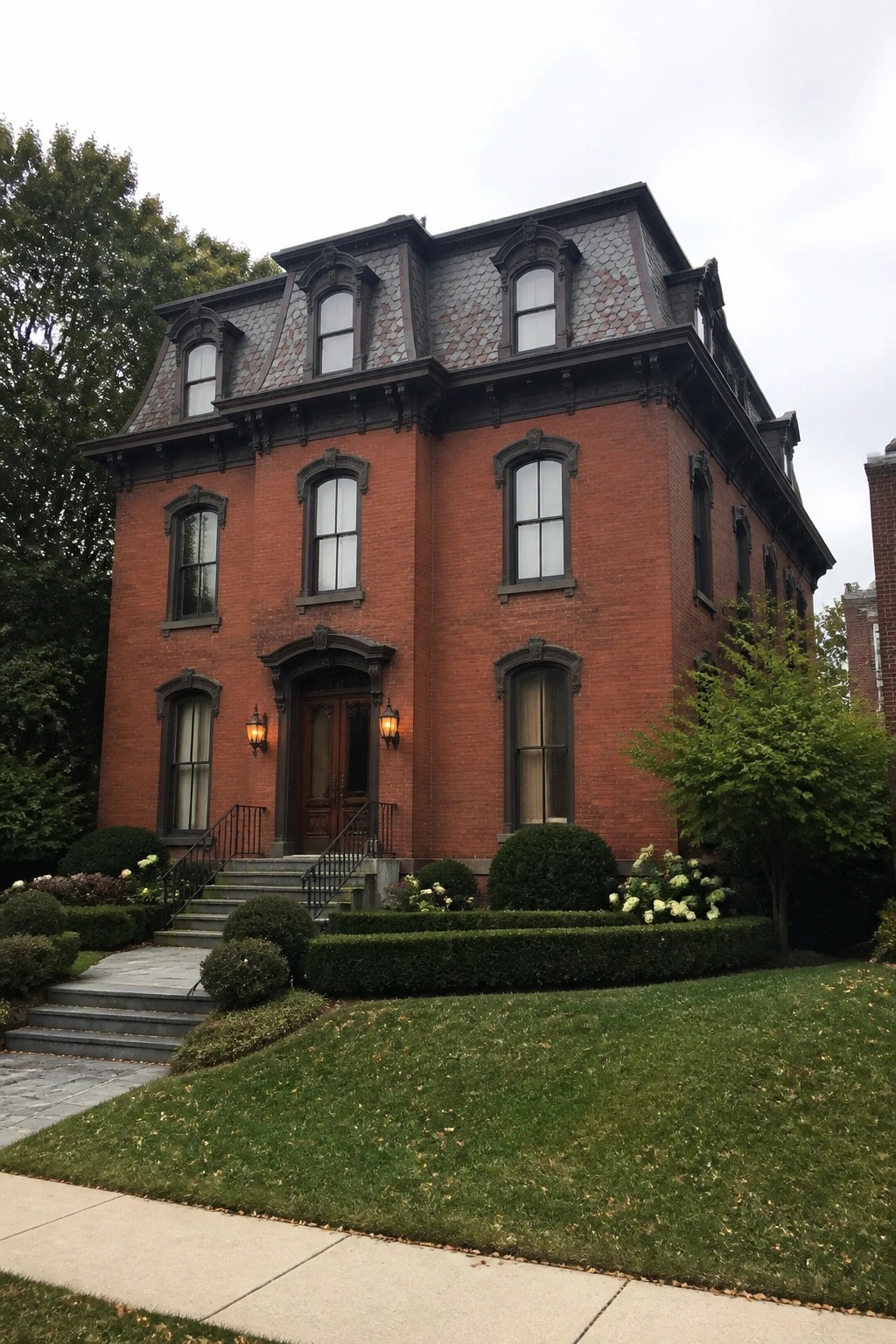
Red brick paired with dark trim gives a Victorian house real weight and presence without looking heavy. The contrast makes the windows and roofline stand out, and it holds up well over time on older homes.
This approach works best on two or three story houses where the brick can cover most of the facade. Keep the trim color deep and matte rather than glossy, and make sure the roof shingles stay in the same dark family so nothing fights for attention.
Outdoor Pizza Ovens On The Patio

An outdoor pizza oven gives a backyard patio a clear purpose. It turns the space into a spot for casual meals instead of just seating, and it works especially well when paired with simple overhead lighting so the area stays usable after dark.
This setup suits Victorian homes that already have some outdoor room to work with. Keep the oven near the house for easy access to the kitchen, and use basic string lights rather than anything too bright. The goal is steady use on weeknights, not just special occasions.
Built-In Bay Window Seating
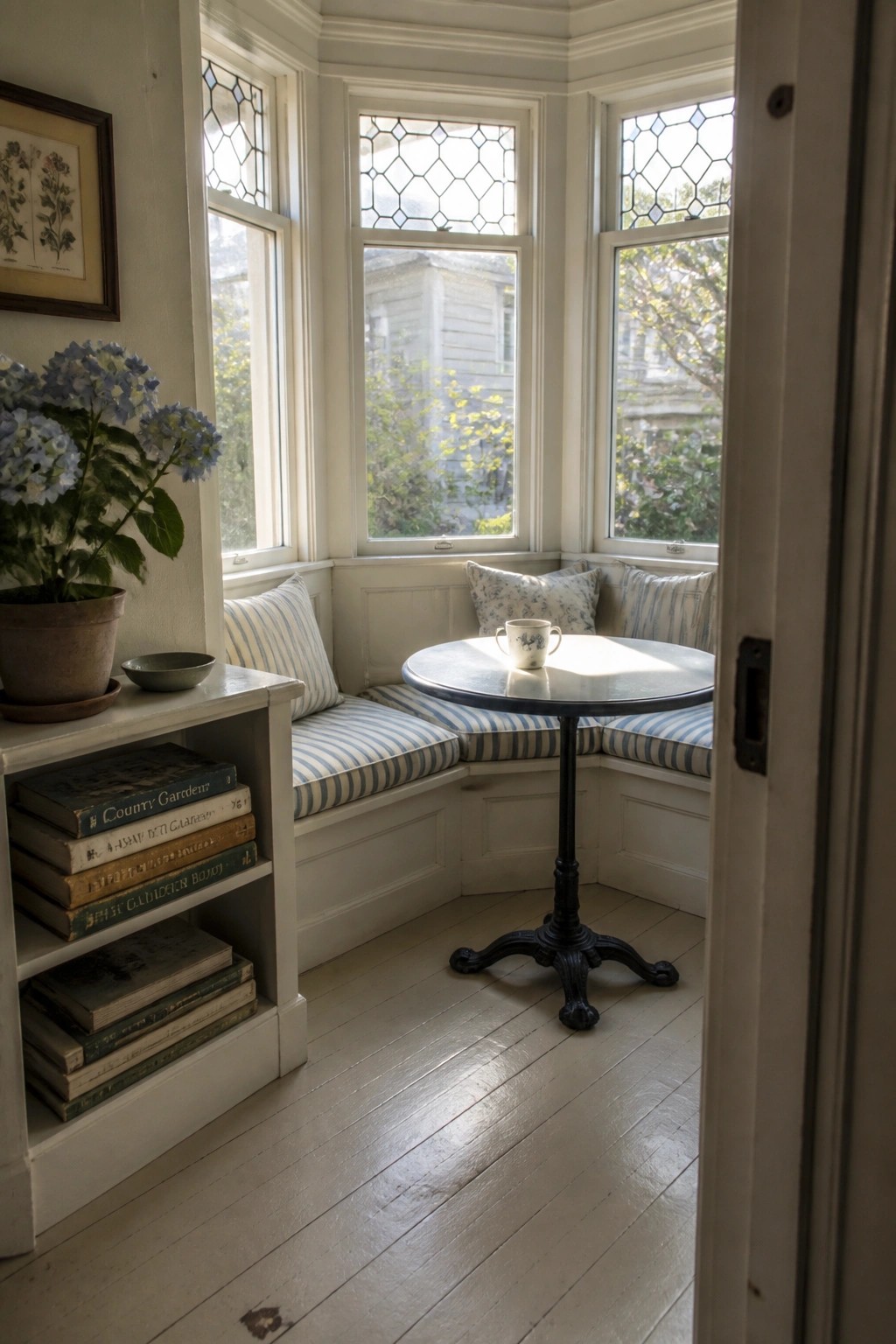
Bay windows in older homes often end up as wasted space unless you add seating that fits the shape. Built-in benches solve this by turning the area into a useful spot for sitting without crowding the room.
This approach works best in homes that already have deep window frames and trim details. Keep the cushions simple so the bench stays comfortable for daily use, and add open shelving on the side for books or small items that you reach often.
Patterned Tiles On Victorian Entry Steps
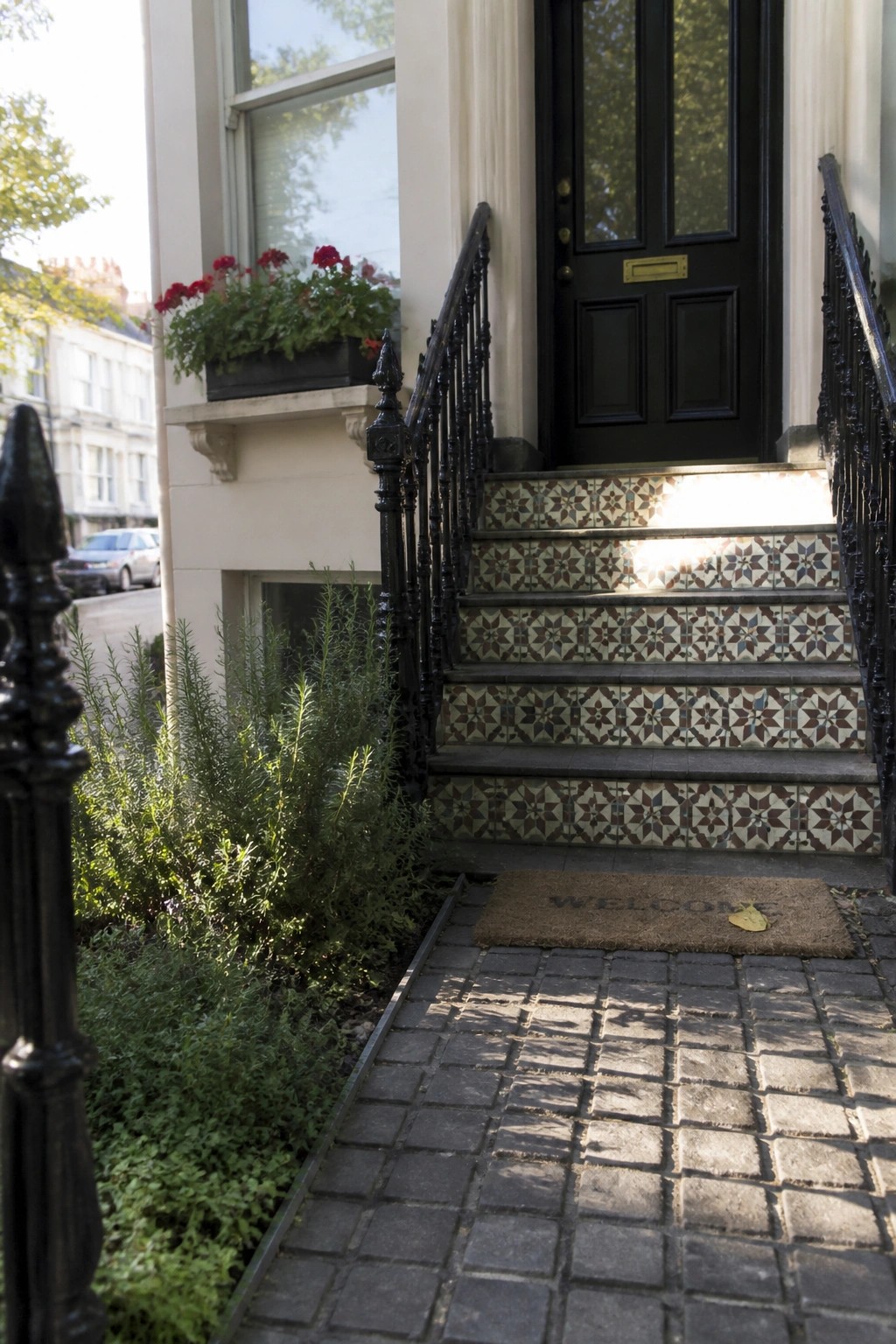
Patterned tiles on the front steps give a Victorian house a bit more character without needing big changes elsewhere. The repeating design draws the eye up toward the door and makes the entrance feel finished in a simple way.
This detail works best on homes where the rest of the facade stays fairly plain. Stick to softer colors that echo the brick or stone around it, and keep the pattern small enough that it does not overwhelm the walkway.
Gravel Paths With Lavender Borders
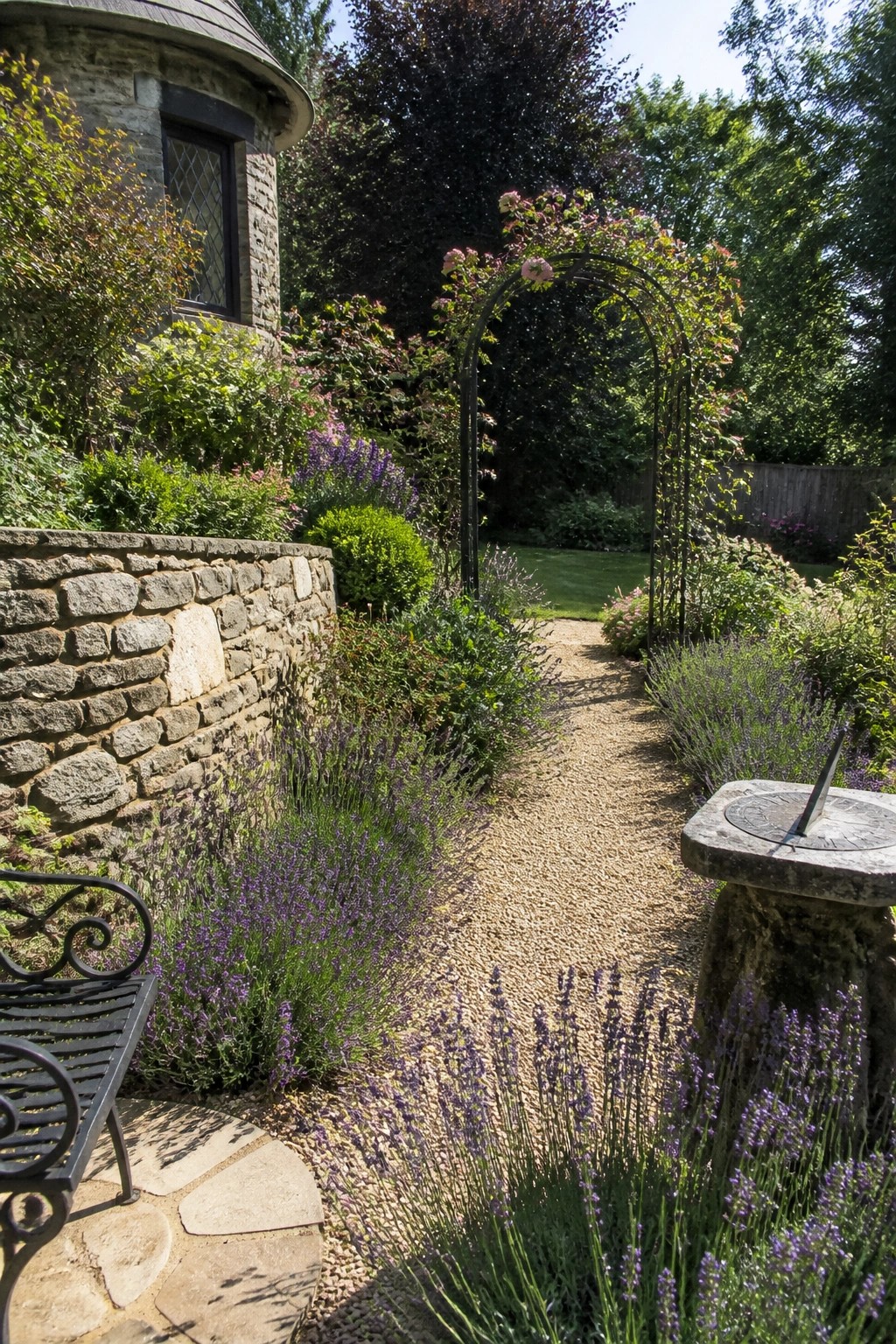
A gravel path edged with lavender gives a garden that classic structure without feeling stiff. The plants soften the edges while adding scent and color that changes with the seasons, and the loose gravel keeps things simple to walk on and easy to maintain over time.
This approach works especially well along the side of an older home or in a smaller garden where you want clear routes but still need room for planting. Keep the lavender fairly low and repeat it on both sides so the path feels intentional rather than accidental.
A Carved Front Door Sets the Entry
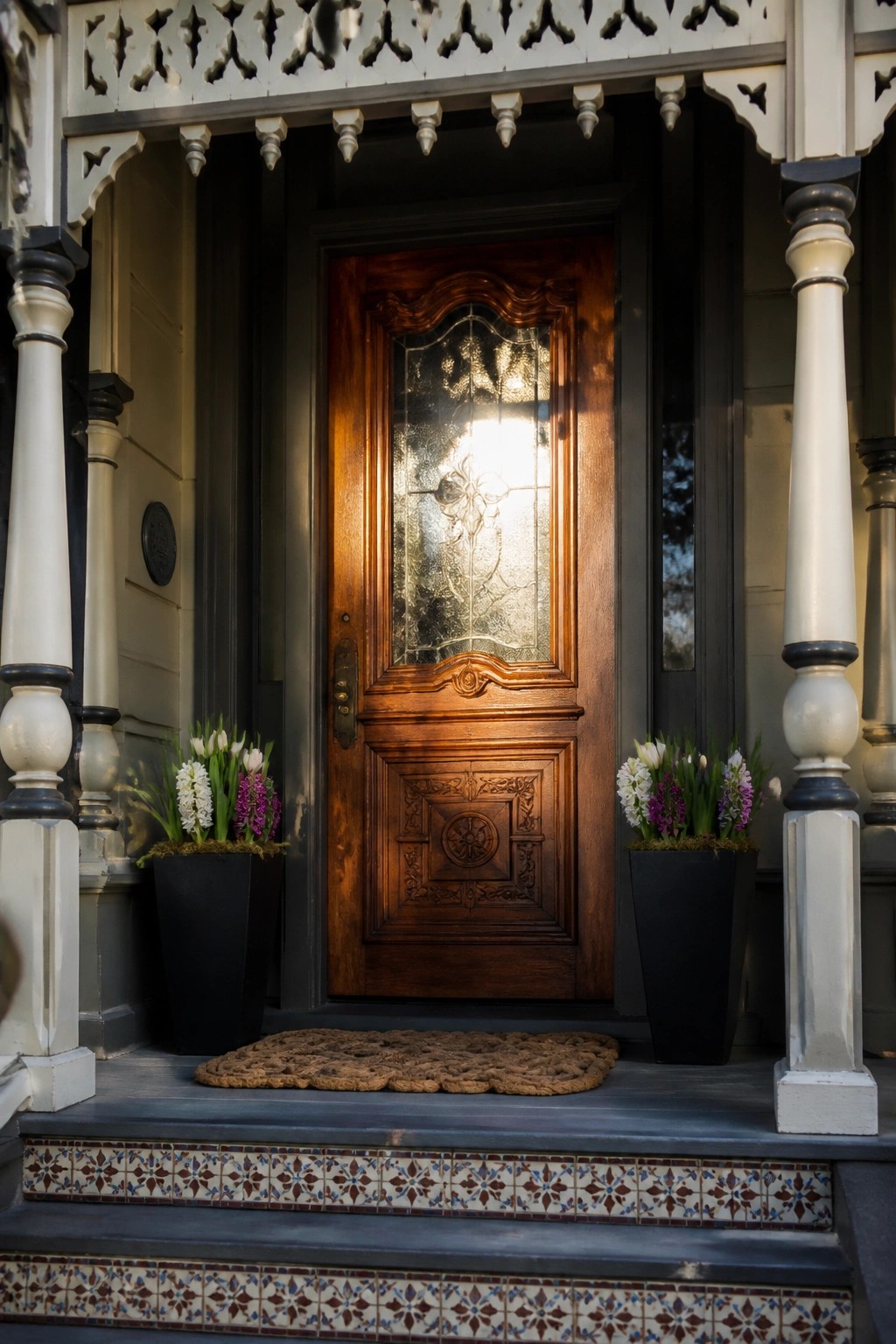
A carved wood door with a central panel and upper glass section gives a Victorian house a clear focal point right at the entrance. The details stand out without needing much else around them, and the wood tone adds warmth against the darker trim and siding.
This works best on homes that already have a porch or columns framing the door. Keep the surrounding area simple with matching planters on each side so the door remains the main feature rather than competing with other decorations.
Curved Stone Paths in the Garden

A curving stone path helps the garden feel more relaxed and guides people naturally through the plantings without forcing a straight line. It pairs well with layered shrubs and flowers that soften the edges and keep the whole area from looking too rigid.
This approach works best along the side or front of an older home where you want the landscape to feel connected rather than divided. Set the stones slightly uneven so they settle into the ground over time and let the surrounding plants grow close to the edges.
Add a Small Garden Seating Spot
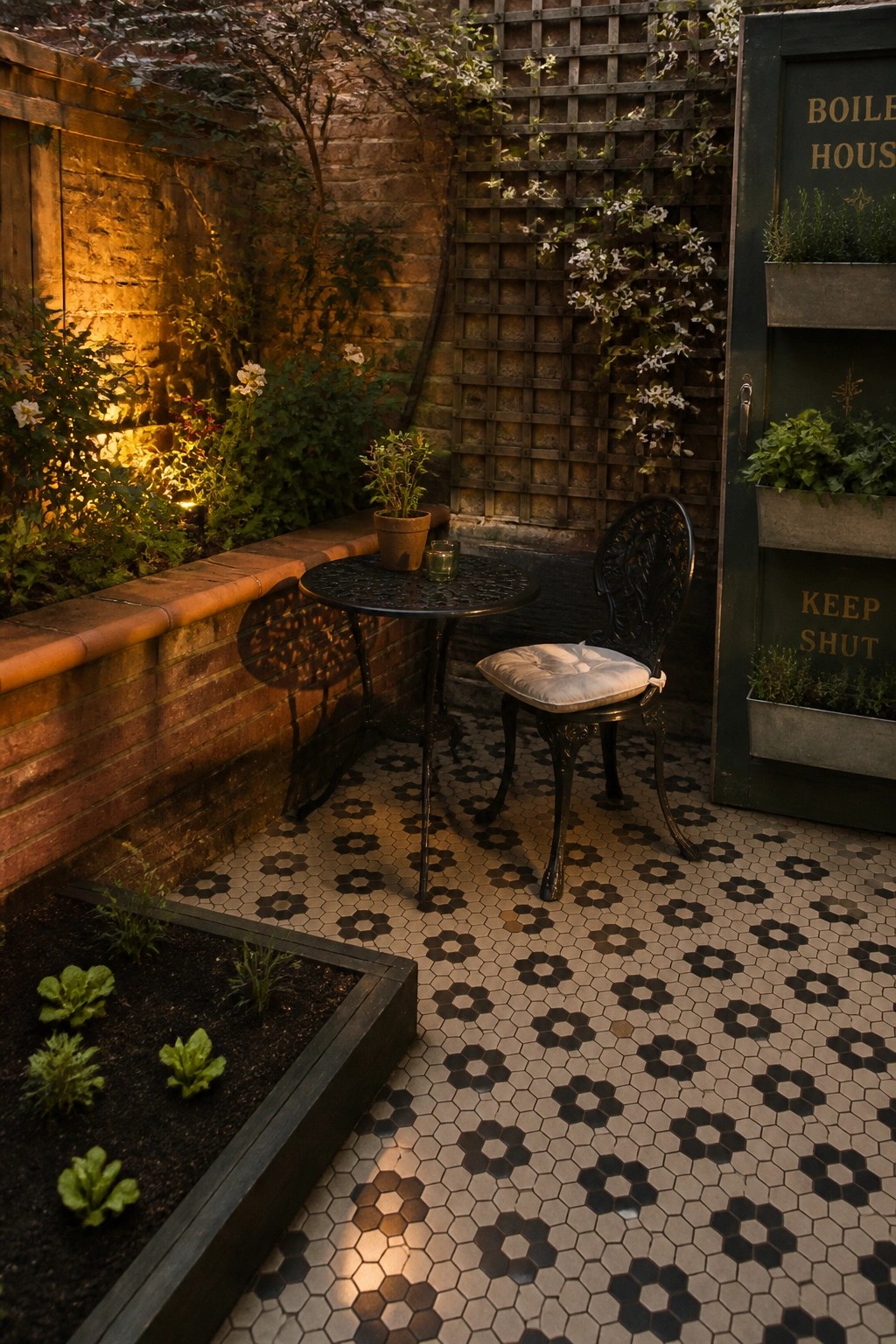
A compact table and chair tucked right against the planting gives you a place to sit without needing a full patio. It works especially well in Victorian gardens because the dark metal blends with brick walls and greenery instead of standing out.
Try this in a corner near a raised bed or along a side wall where space is limited. Keep the furniture simple and let the surrounding plants do most of the work so the spot feels like part of the garden rather than an added feature.
Corner Bay Windows On Brick Homes
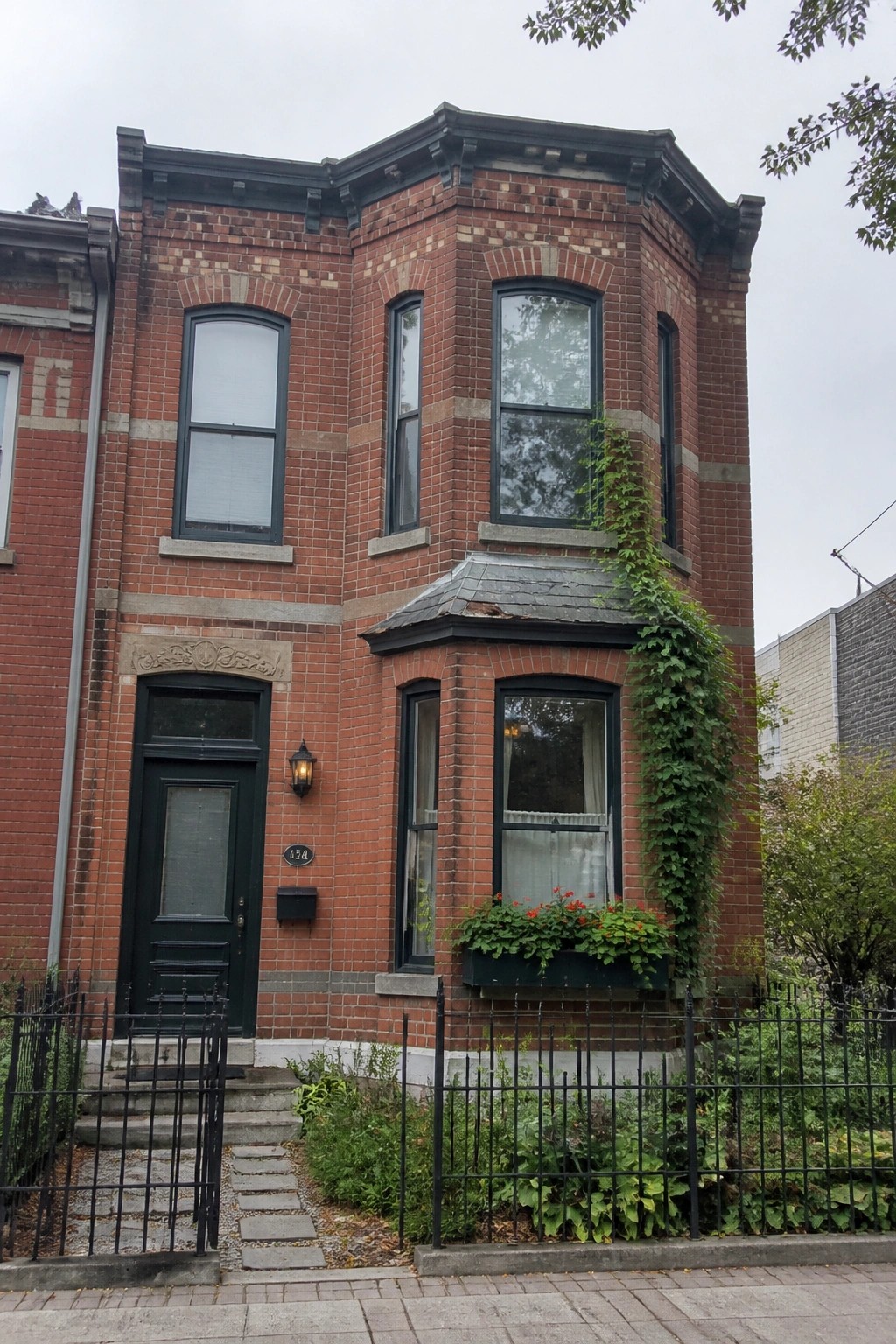
A corner bay window gives a brick Victorian house more shape and presence without needing extra ornament. It pulls light deep into the rooms and breaks up the flat wall plane in a way that feels natural to the style.
Place one where two rooms meet so both get the benefit. It suits narrow city lots especially well because it adds usable space without pushing the footprint outward.
Simple Seating On A Small Balcony
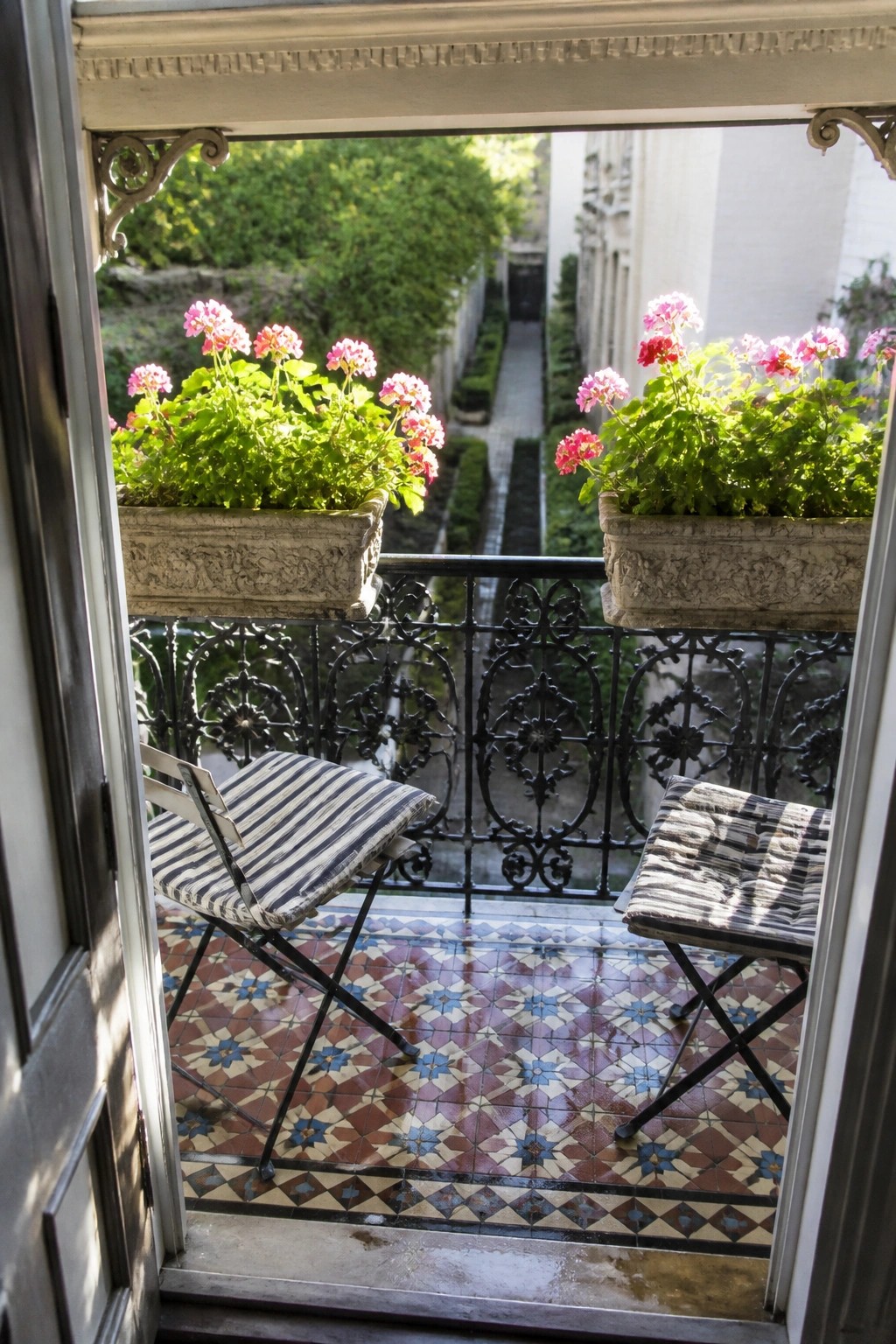
A couple of lightweight chairs and a pair of flower boxes can turn a narrow balcony into a usable spot without crowding it. The setup works because it keeps the floor clear and lets the railing carry most of the visual weight while still giving you a place to sit with a view.
This approach suits older homes with iron railings and limited outdoor space. Keep the chairs foldable or slim so they can be moved aside when needed, and choose planters that attach securely to the railing rather than taking up floor room.
Let a Picket Fence Frame the Front Yard

A simple wooden picket fence gives a Victorian house clear boundaries while still showing off the architecture. It keeps the front yard feeling open and adds that old-house character without any extra fuss.
This approach works well on modest lots where you want the house to stay the main focus. Keep the fence height low and the style plain so it supports the home rather than competing with it.
Black Front Doors for Victorian Entries
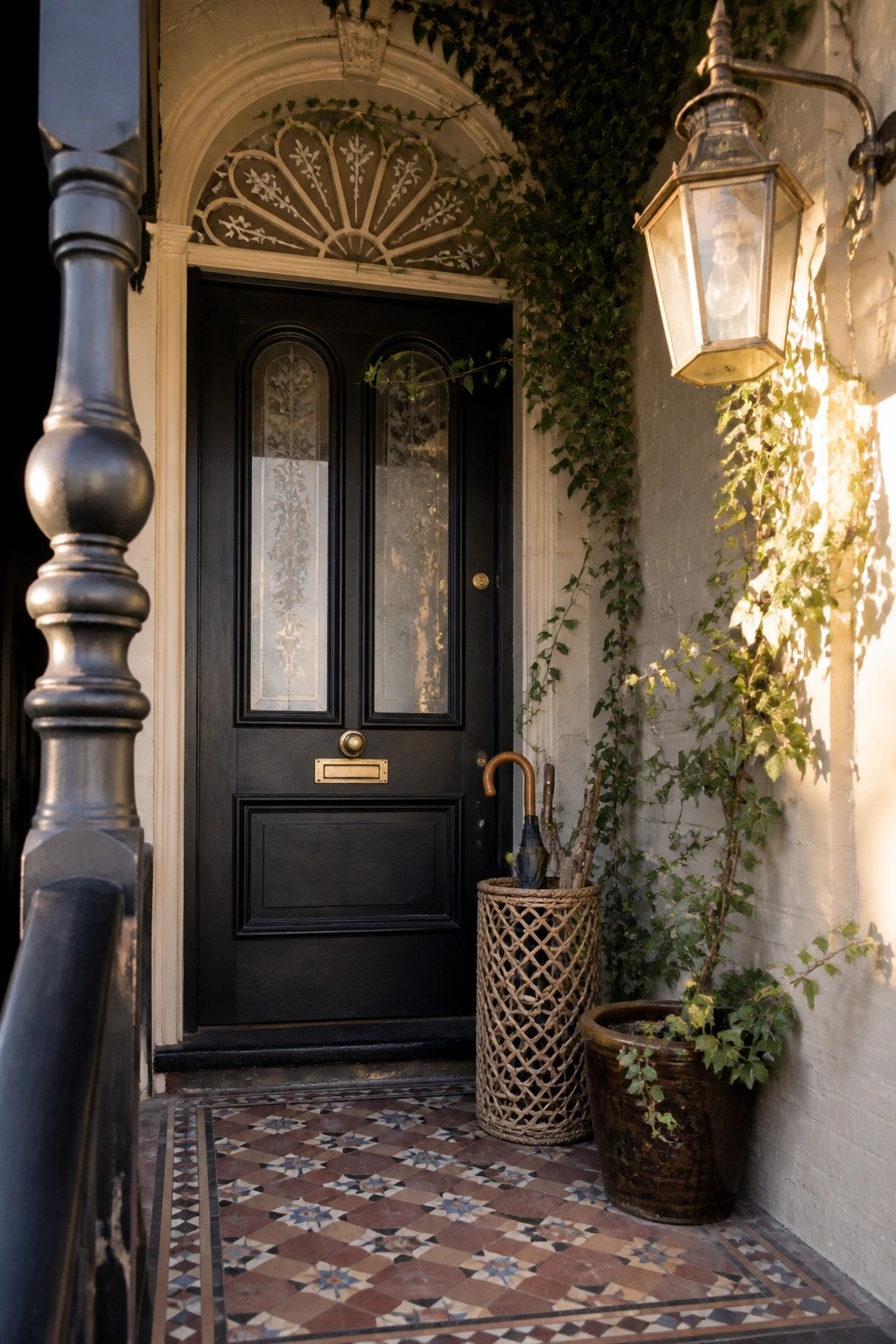
A black front door gives a Victorian house real weight at the entry. It stands out against lighter brick or painted walls and makes the surrounding trim and glass details read more clearly. The color also holds up well against changing light through the day.
This approach works best on homes that already have some architectural detail around the door. Keep the surrounding walls and trim lighter so the door stays the main focus. It suits both city terraces and detached houses, as long as the door itself has clean lines and the hardware stays simple.
Pergolas for Outdoor Seating
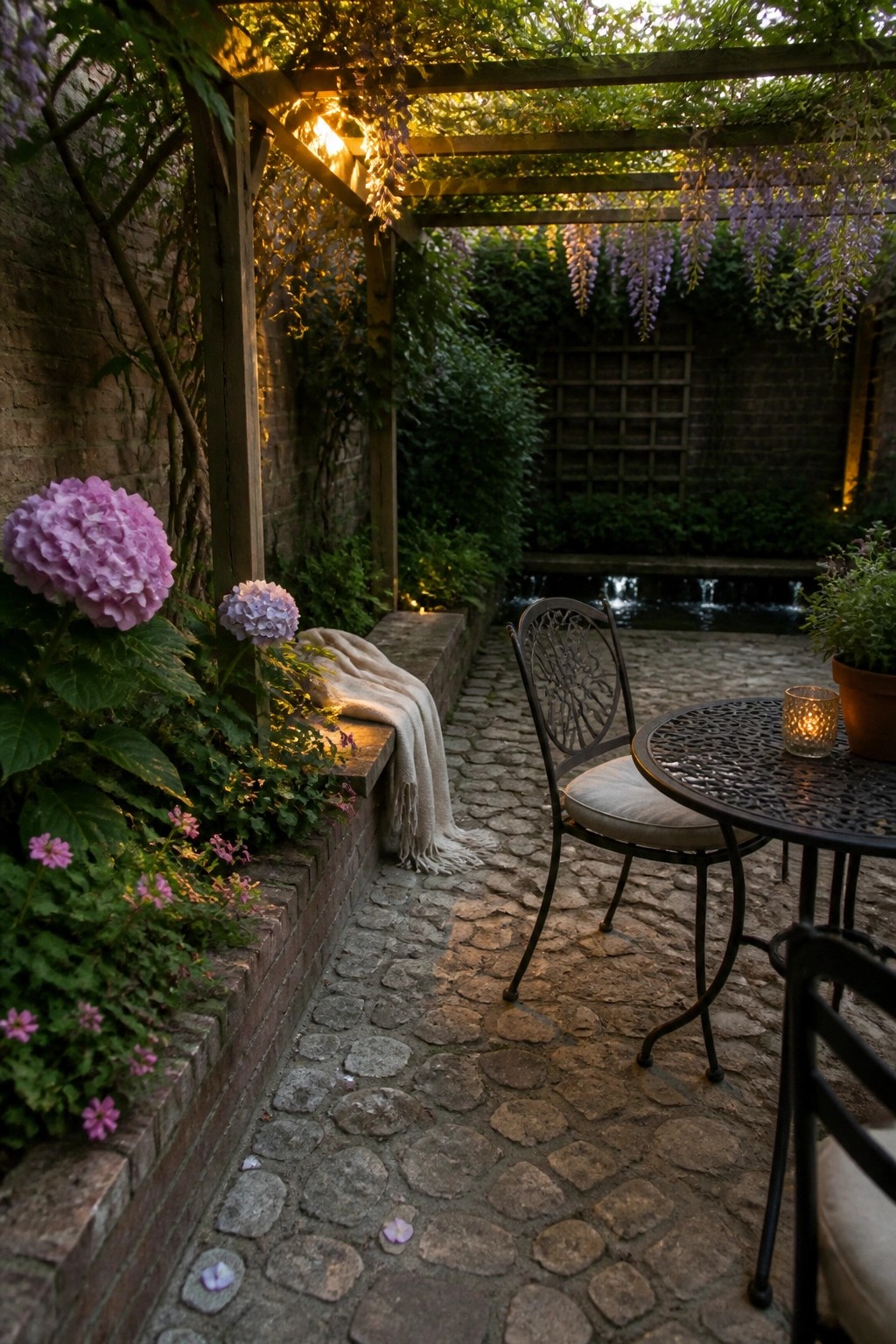
A pergola gives an outdoor space a clear sense of place without closing it in. Vines growing across the top add shade and soften the structure so it feels more like part of the garden than something added on later.
This works especially well along a path or beside a house wall where you want a spot to sit without building a full deck or room. Keep the furniture simple and let the planting do most of the work.
Frequently Asked Questions
Q: How can I update my kitchen while keeping that Victorian charm? A: Start with classic cabinetry and add open shelving for everyday items. Pick appliances that hide behind panels to blend in. This way your cooking space feels timeless yet works for daily meals.
Q: What colors work best if I want my Victorian house to feel cozy instead of formal? A: Go for deeper shades like forest green or warm burgundy on the walls. Layer in soft textiles and rugs to soften the look. But avoid stark whites that can make rooms feel chilly.
Q: Do I need to replace all my windows to get that authentic Victorian style? A: Keep your existing windows if they still function well. Add period-style trim or shutters outside to match the era. Many homes look elegant with just a few key updates rather than full replacements.