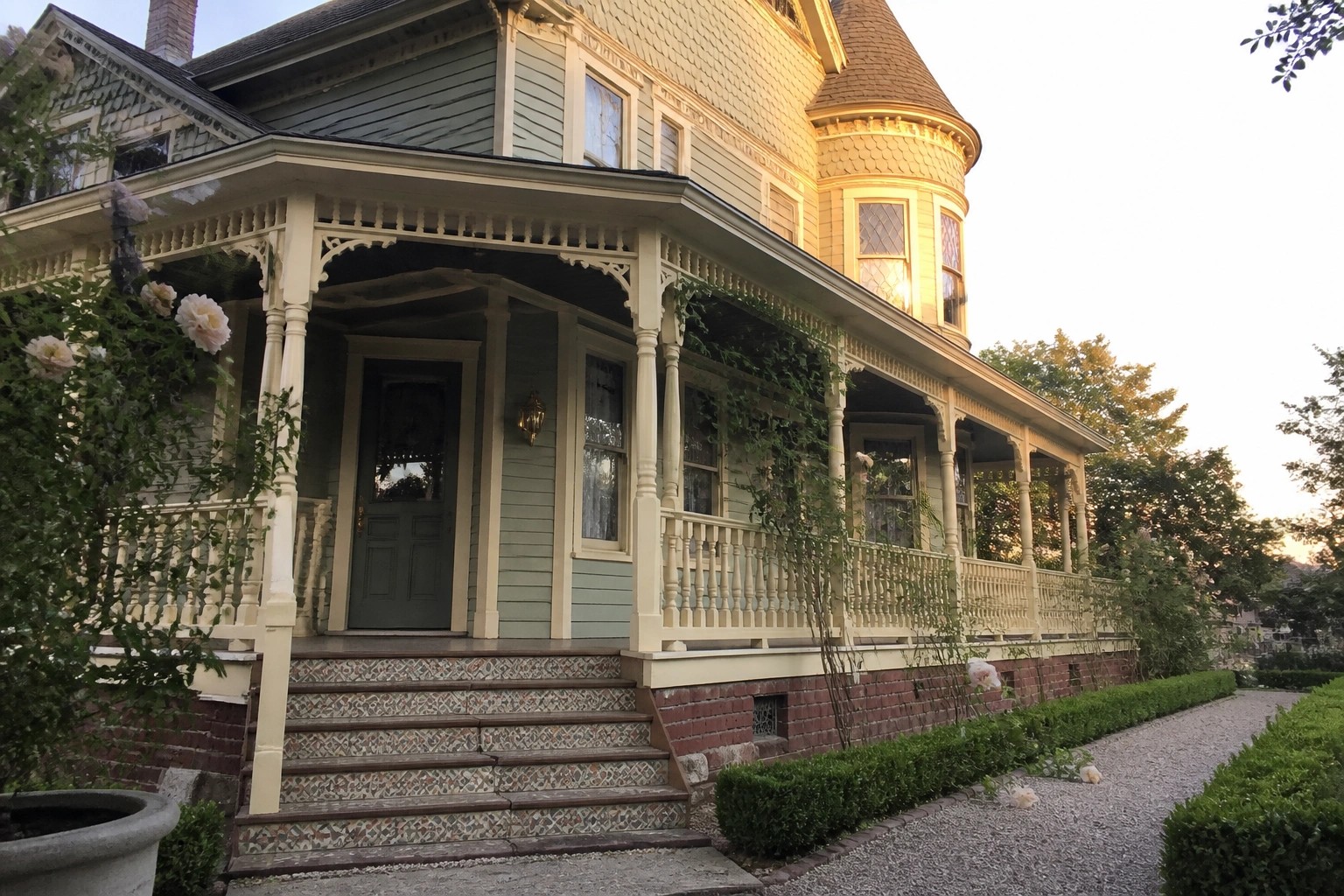
When I look at older homes on my street, the exteriors that hold up best are the ones where the rooflines and window placements feel balanced from the start.
Victorian facades often stand out because of their details, but those same details can overwhelm if they are not scaled right to the house itself.
Details add up fast.
The entryway and the way it connects to the porch usually sets the tone for everything else around it.
A couple of the ideas here struck me as practical enough to adapt if I ever tackle the front of my own home.
Wrap-Around Porch With White Trim
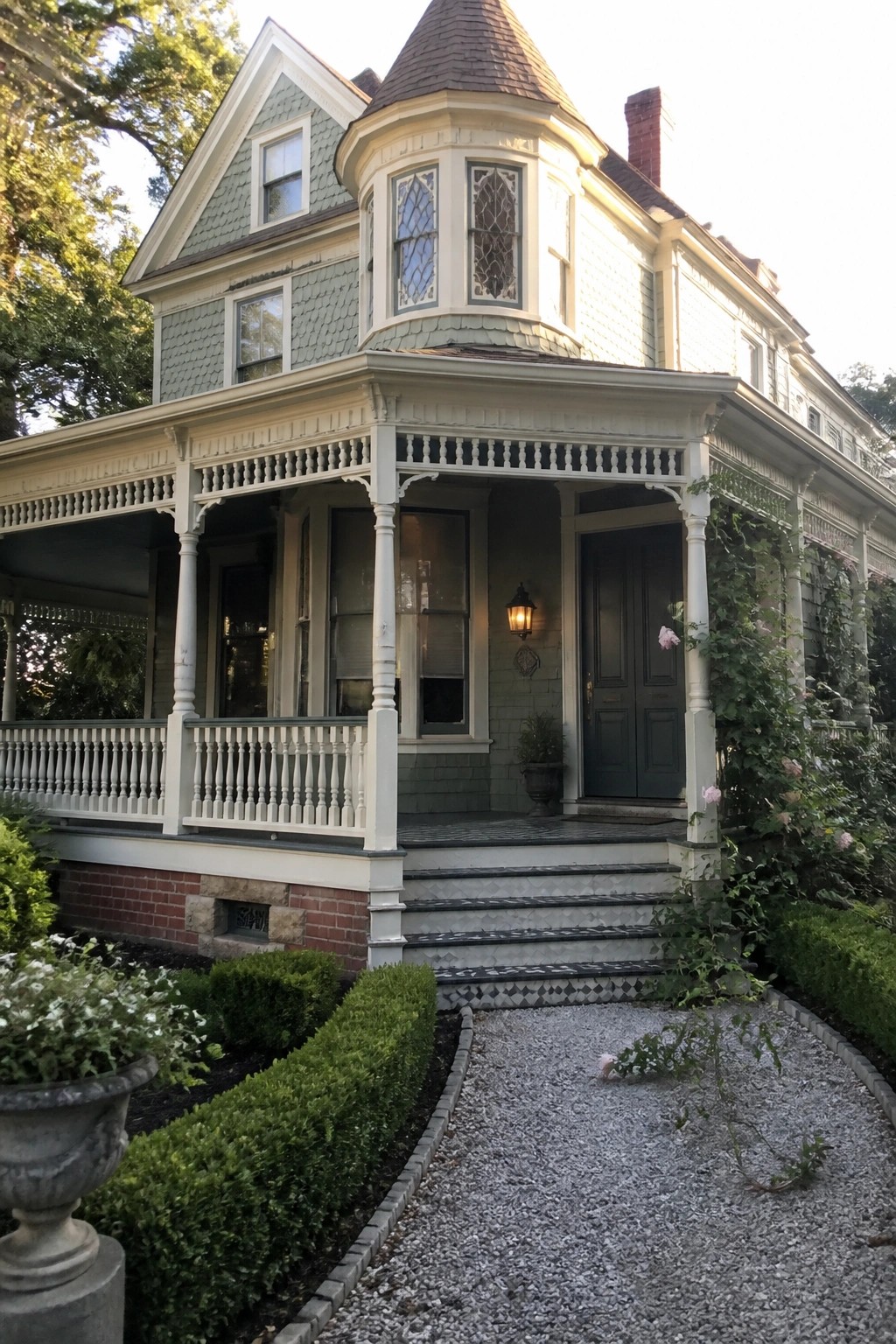
A wrap-around porch gives a Victorian house extra presence without needing major changes to the structure. The white railings and columns stand out against the siding and make the front feel more open and approachable. It turns the entry into a real focal point instead of just a door at the end of a path.
This works best on homes that already have some width to the facade. Keep the railing style simple and period-appropriate so it does not compete with other details like the turret or window shapes. The steps and path should lead straight to the center of the porch to keep the whole front balanced.
Painting the Front Door Dark

A dark front door gives a red brick house more presence without changing much else. The strong contrast pulls attention straight to the entry and makes the whole facade feel more finished.
This approach works best on Victorian homes with medium or bright brick tones. Keep the surrounding trim dark as well so the door reads as a deliberate choice rather than an afterthought.
Add a Turret for Vertical Interest

A turret gives a Victorian house a clear focal point that lifts the whole roofline and makes the facade feel taller. It works especially well when the rest of the house stays fairly simple, letting the round form and conical roof carry the character.
Place the turret near the entry or at a corner so it shows from the street. Match the siding and shingles to the main house so the addition feels built in rather than stuck on. Keep the scale modest on smaller lots so it does not crowd the rest of the roof.
Wrap-Around Porches Boost Curb Appeal
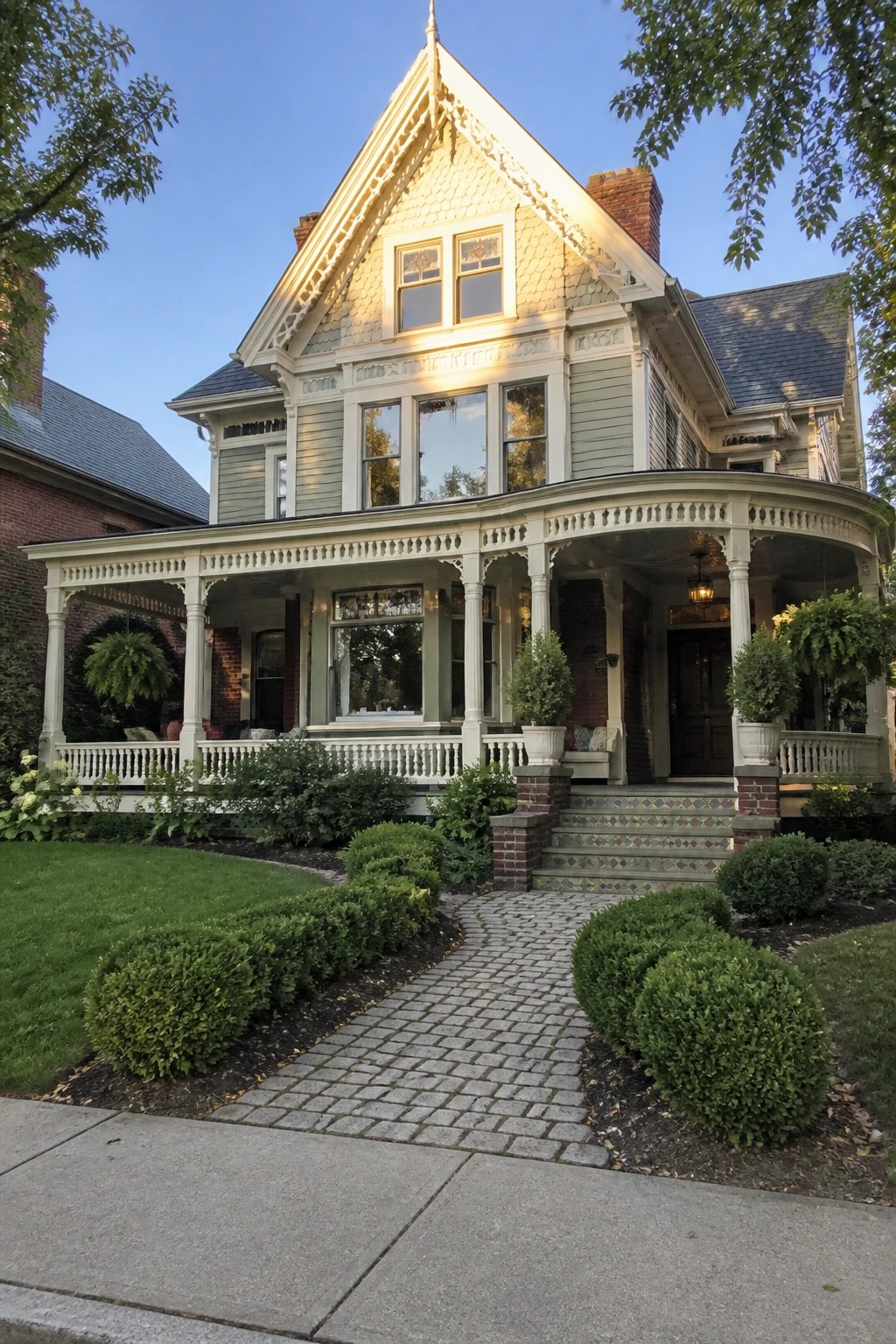
A wrap-around porch gives a Victorian house real presence from the street. It turns the front into a wide, open space that feels friendly and settled at the same time. The railings and columns add just enough detail without taking over.
This works best on homes that already have some width to the lot. Keep the porch trim simple and match the paint colors to the house so the whole thing reads as one piece. On smaller lots the same idea can still work if you scale the porch back and keep the railings lighter.
Painting Victorian Trim in Dark Shades

Many older Victorian homes gain a sharper look when the trim and bay windows get painted a deep black. The dark color pulls out all the carved details without needing extra decoration.
This approach works especially well on houses that still have their original woodwork. It suits neighborhoods where the goal is to keep the historic shape but give the front a cleaner, more current feel. Just keep the siding a lighter tone so the contrast stays clear.
Dark Paint On Victorian Exteriors

A deep dark color on the main walls gives a Victorian house real presence. It highlights the roofline and window shapes without needing lots of extra trim or details.
This approach works best on older homes where the architecture already has some character. Keep the front door in a lighter shade so the entry still feels open and easy to find.
Use Stone Steps at the Entry

A set of wide stone steps leading up to the front door gives a Victorian house real presence without needing extra ornament. The steps create a clear path that feels intentional and helps the entrance stand out against the brick walls and tall windows.
This approach works best on homes with a raised first floor or a sloped lot. Keep the railing simple and match the stone to any existing foundation so the whole front stays balanced. Avoid adding too many plants along the steps or the clean lines get lost
Add a Turret for Strong Curb Appeal

A turret gives a Victorian house a clear focal point that draws attention from the street right away. The rounded shape breaks up the flat front and adds height without making the whole house feel larger or more complicated.
This detail works best on homes that already have some width and a simple roofline. Pair the turret with lighter siding and darker trim so the curve stands out on its own.
Add a Traditional Porch with White Columns
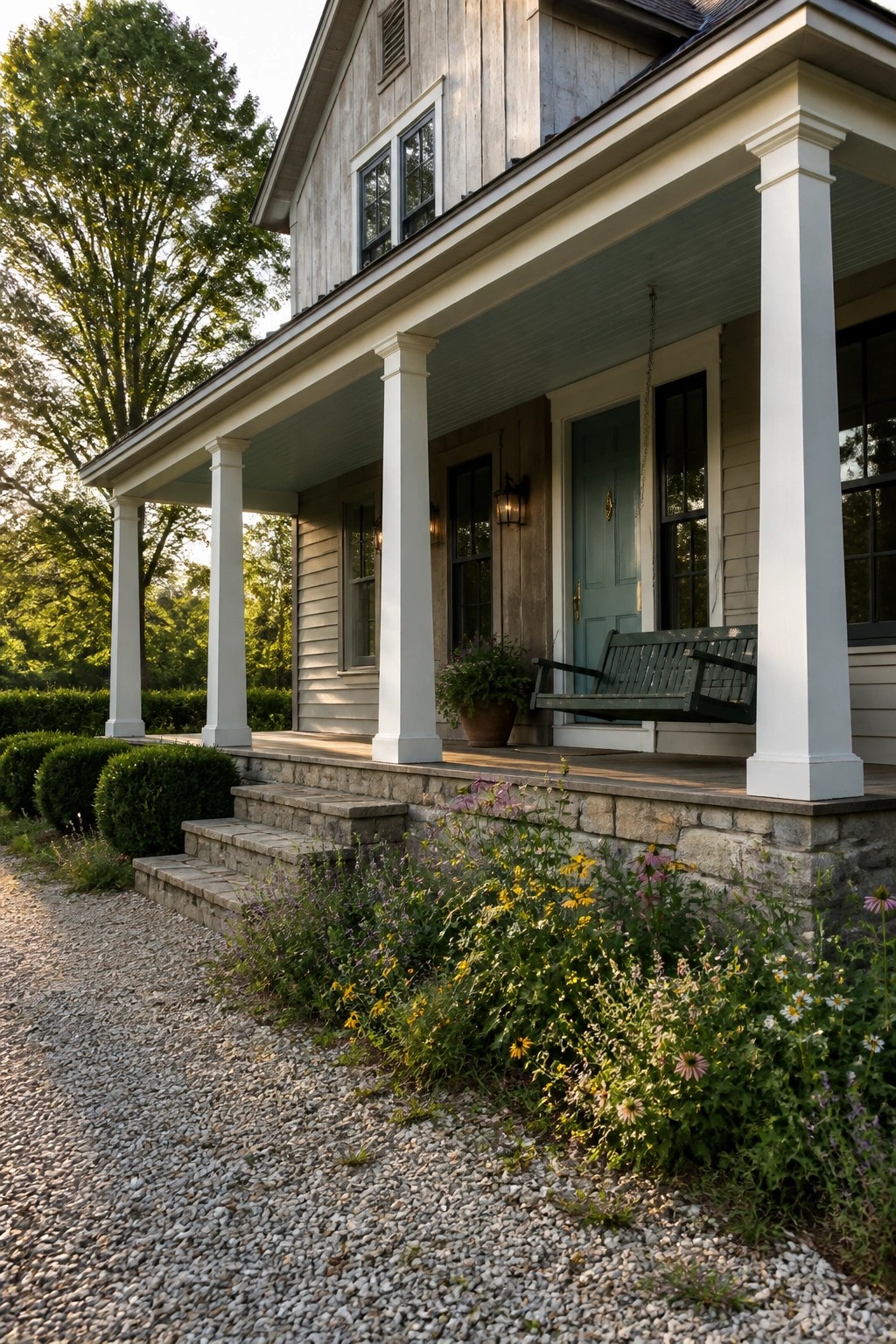
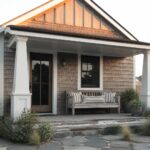
A covered porch held up by simple white columns gives a Victorian house that balanced, classic look many people want. It adds depth to the front without making the whole facade feel heavy, and it creates a clear place to pause before reaching the door.
This approach works best on homes with enough roof overhang to keep the space usable. Pair it with a painted door in a soft color and keep the plantings low so the columns stay visible from the street. Watch the scale though. Columns that are too thin can look spindly on a larger house.
Use Contrasting Trim to Define the Details

A strong trim color can bring out the shape and character of a Victorian house without adding anything new. The deep red against the pale siding here makes the windows, porch posts, and gable lines stand out clearly.
This works best on homes that already have good architectural detail. Keep the palette simple with just two main colors, test the trim shade on a small area first, and make sure the front door ties in so the whole front feels pulled together.
Use Contrasting Trim To Highlight Details
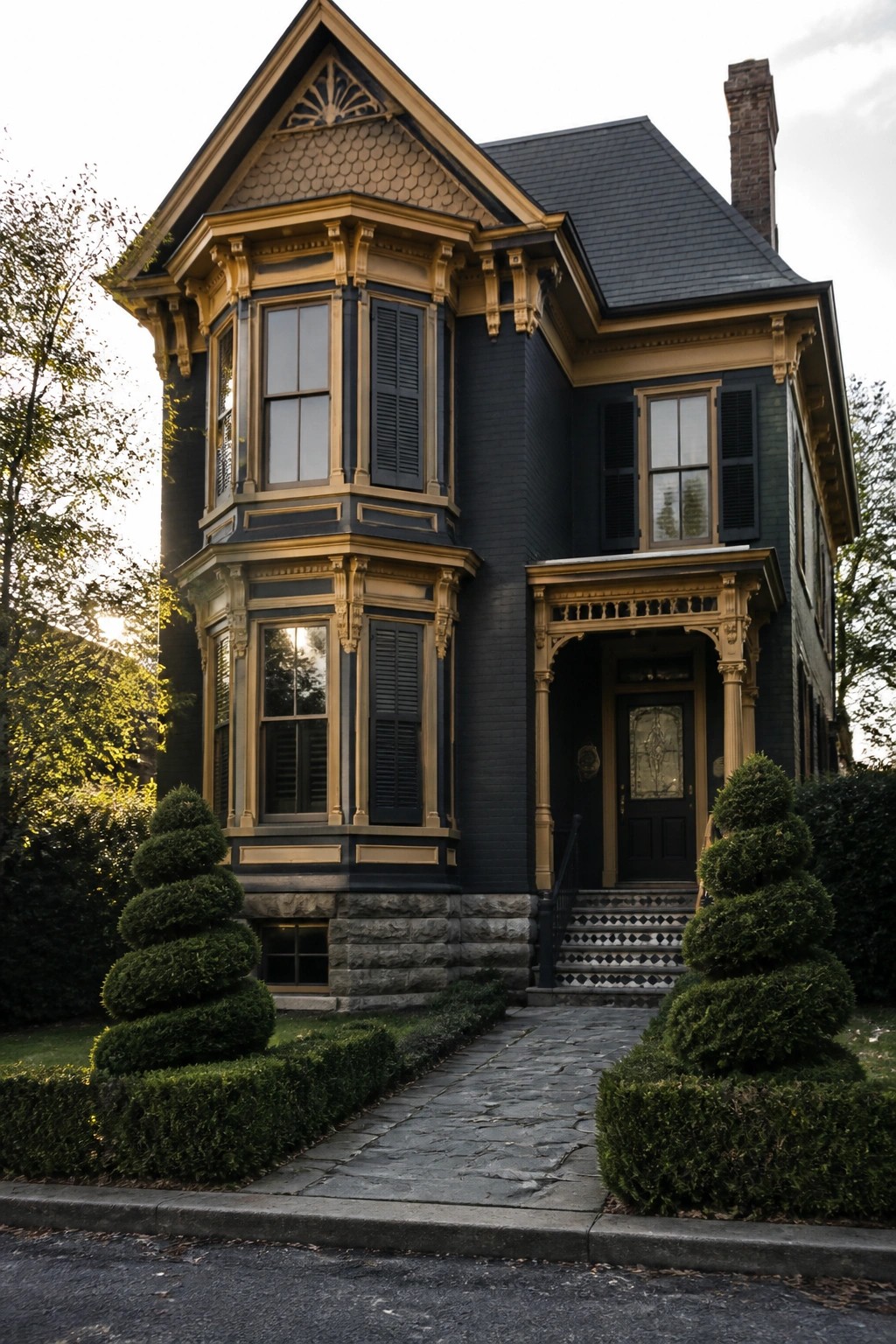
Victorian houses often have lots of small decorative pieces that can get lost if everything is painted the same color. A strong contrast between the main siding and the trim makes those pieces stand out without adding any new elements.
This approach works especially well on older homes with bay windows and turned porch posts. Keep the trim color light enough to catch the light and make sure the main body stays deep and solid so the details read clearly from the street.
White Trim Brings Out Victorian Details
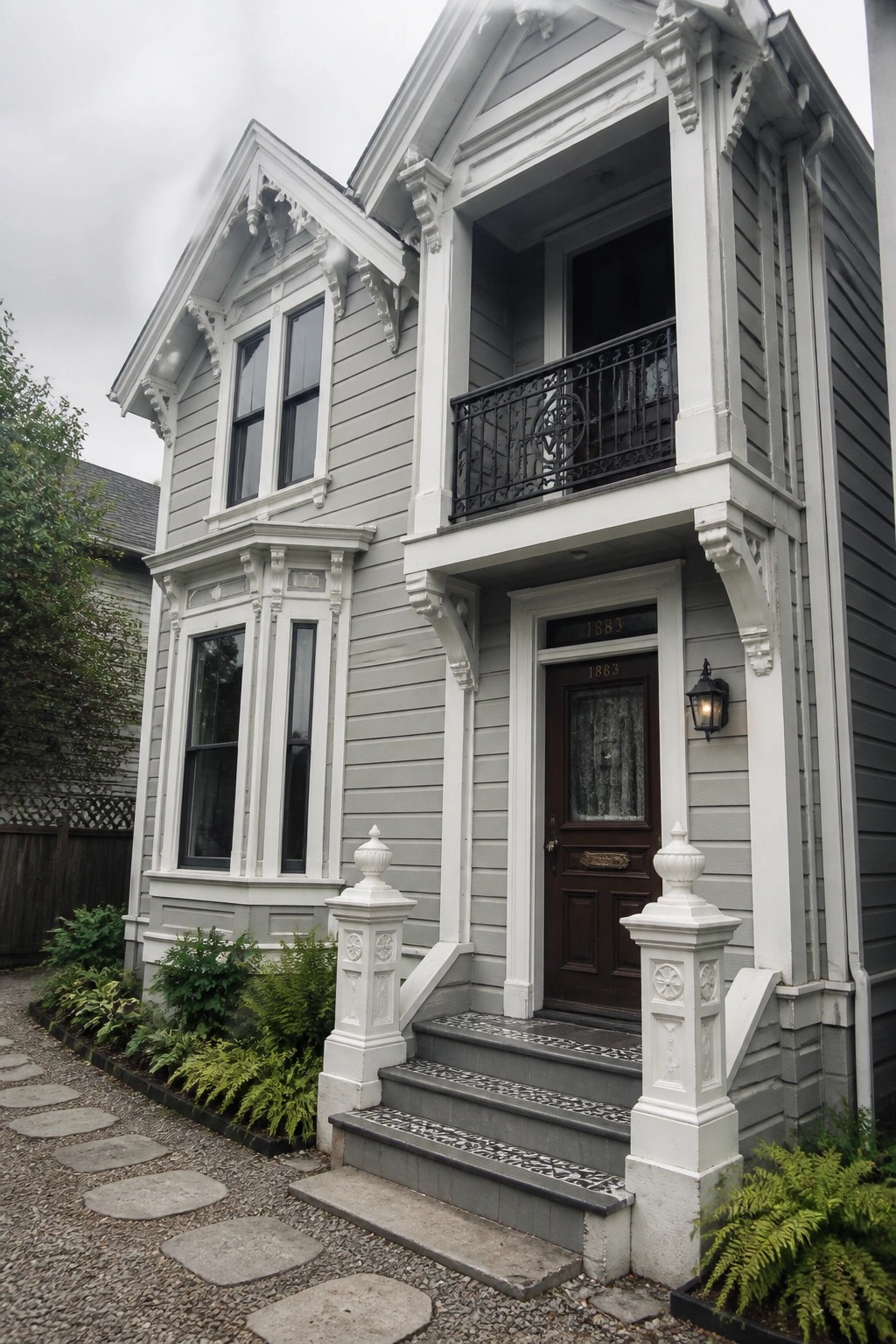
A soft gray siding color works especially well on Victorian homes because it lets the white trim do the real work. The crisp lines around windows, eaves, and brackets stand out clearly without the whole facade feeling busy or overdone.
This look suits older houses that already have plenty of ornamentation. Keep the siding shade muted and save the contrast for the trim so the original details remain the focus rather than competing with a bold wall color.
Mix Brick And Siding
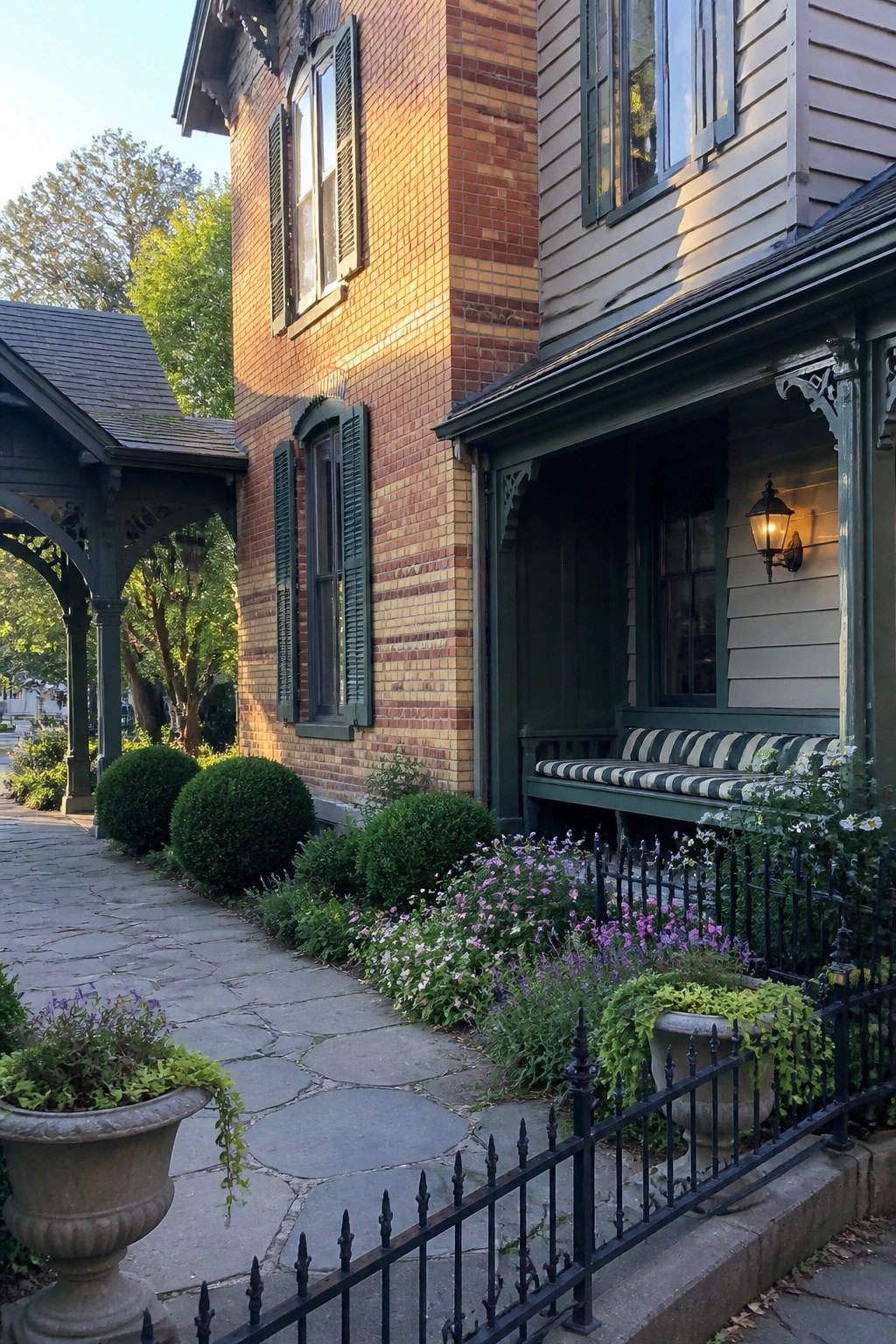
Many Victorian homes gain character by using brick on one section and siding on another. The change in texture breaks up the wall and keeps the whole front from looking flat or overly heavy.
This works best on homes where the brick stops at a natural corner or window line. Match the siding color to the mortar or pick a trim shade like deep green to pull the two materials together without extra effort.
Dark Paint With Light Trim
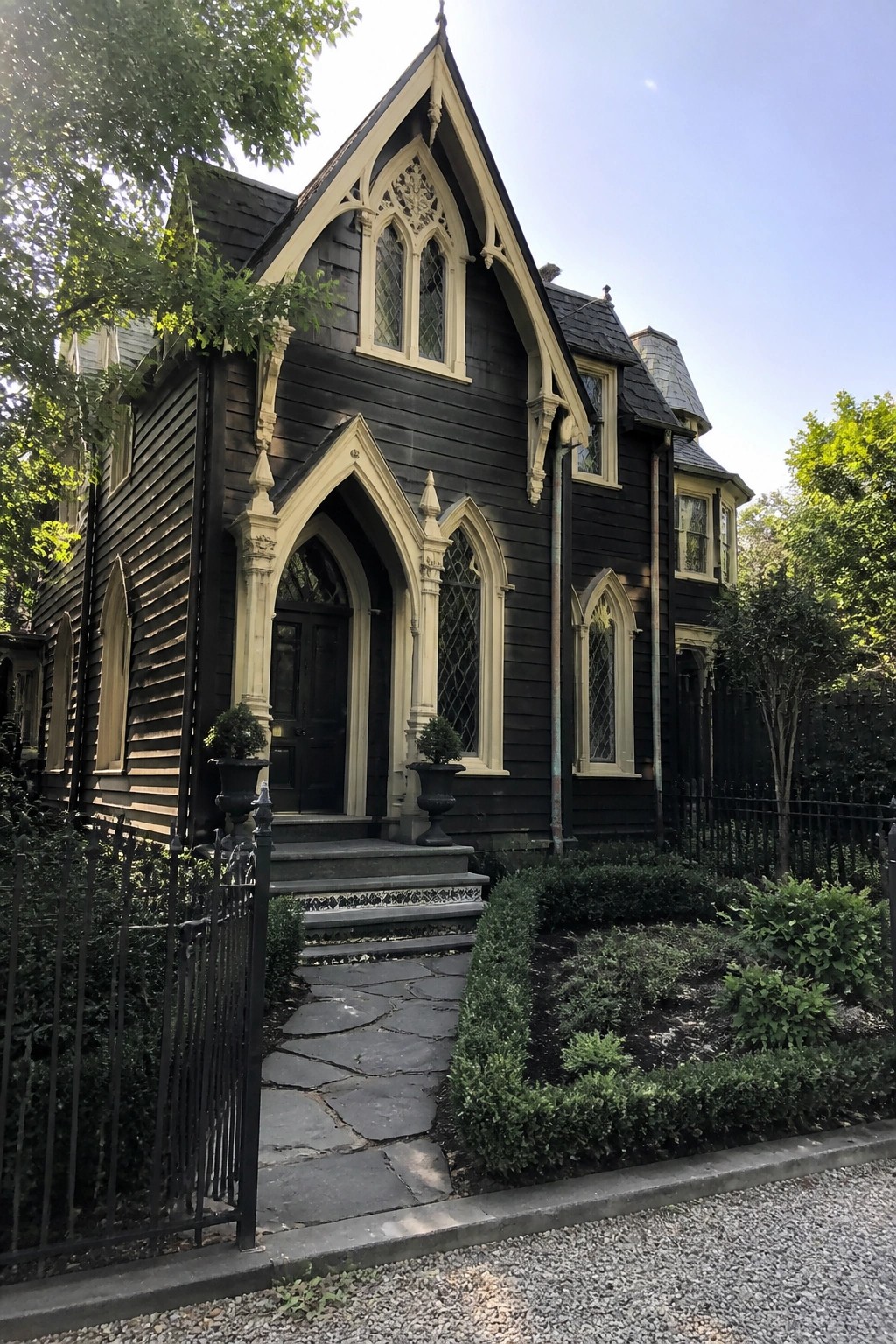
Many Victorian homes gain a lot of character when the main body is painted a deep dark shade. The black siding on this house makes the cream trim around the arches and windows stand out without any extra decoration.
This color choice works best on houses that already have strong architectural lines. It keeps the focus on the shape of the gables and windows rather than fighting them, and it tends to suit older homes that sit close to the street or under tree cover.
Add a Wrap-Around Porch
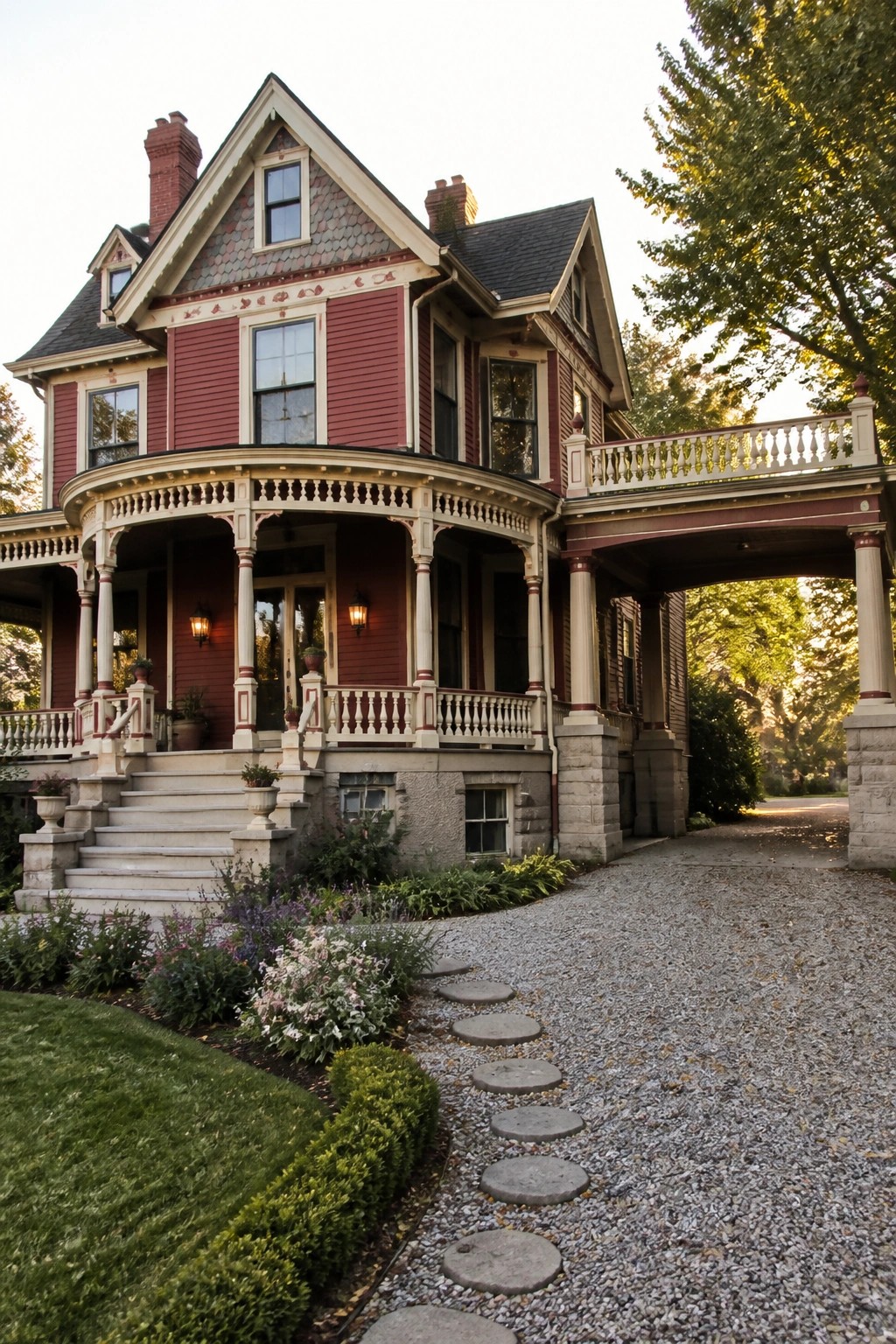
A wrap-around porch gives a Victorian house more presence without needing major structural changes. It softens the front, creates a clear entry point, and adds usable outdoor space right where people see it first. The columns and railings break up the wall plane so the house does not feel flat from the street.
This approach works best on homes that already have some width to the facade. Keep the porch depth consistent and match the railing style to the rest of the trim. On narrower lots the same idea can be scaled back to just the front and one side so it still reads as intentional rather than cramped.
Add an Arched Entry to Draw Attention

An arched porch over the front door gives a Victorian house a clear focal point. It breaks up the flat facade and makes the entry feel more important than the rest of the siding and trim.
This approach works best on homes that already have some decorative detail around the windows or roofline. Match the arch trim color to the rest of the house so it blends in rather than competing with the other woodwork.
Stone Paths That Complement Victorian Homes
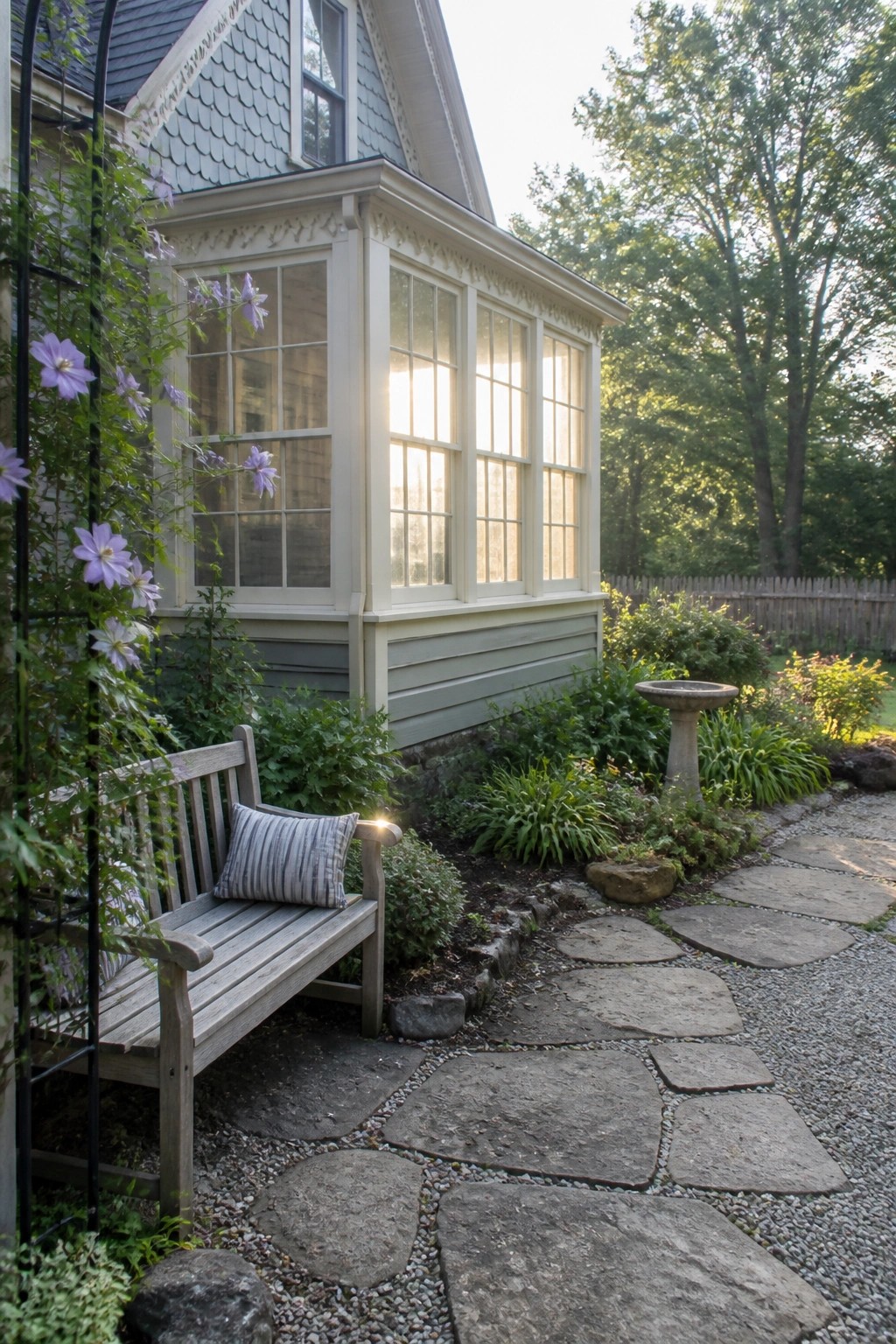
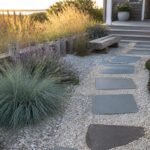
A stone path made from large irregular slabs gives Victorian homes a grounded feel that balances their ornate details. It leads the eye along the foundation and makes the whole exterior look more settled in its setting.
Lay the path along the side of the house where a bench and simple trellis already sit. This works best on older homes with room for planting on either side and keeps the look practical since gravel between the stones handles drainage without much upkeep.
Add Terracotta Details To Brick Exteriors

Many Victorian homes use terracotta bands and panels to break up solid brick walls. These accents highlight windows and entries while keeping the overall look grounded in period style.
This works best on homes with similar dark brick tones. Try it on a restored house or a new build that needs more character. Stick to one or two colors so the details do not compete with each other.
Frequently Asked Questions
Q: What paint colors work best on a Victorian house without looking too bold? A: Pick soft pastels or muted tones that highlight the trim details. Test samples on a small section first to see how light changes them throughout the day. Stick to two or three shades max for the main body, accents, and trim.
Q: Can I add a wraparound porch if my house lacks one? A: Check local building codes before starting any major addition. A simple front porch with matching railings often fits the style better than forcing a full wrap. Match the woodwork to existing details for a natural look.
Q: How often should I repaint the exterior to keep it looking fresh? A: Plan on a fresh coat every five to seven years depending on weather exposure. Focus on scraping and priming any peeling spots early to avoid bigger repairs later.
Q: Does landscaping really make a difference with these exterior ideas? A: Plant low shrubs and flowers that complement the house’s base color. Avoid tall trees that block the facade view from the street. Simple beds along the foundation pull the whole look together.