In Victorian homes the placement of stained glass often determines how light moves through a room and whether the colors stay balanced with the woodwork and furnishings around them.
I have found that pieces set higher up near ceilings tend to spread color more evenly without making a space feel darker during the day.
Many people notice first how the glass affects the mood near main seating areas rather than in hallways or entry points.
Small tests in my own rooms have shown me it is worth checking the light direction before committing to any larger installation.
Seeing how these interiors actually function day to day gives clearer ideas on what might translate without overwhelming the rest of the layout.
Stained Glass Doors in the Entry
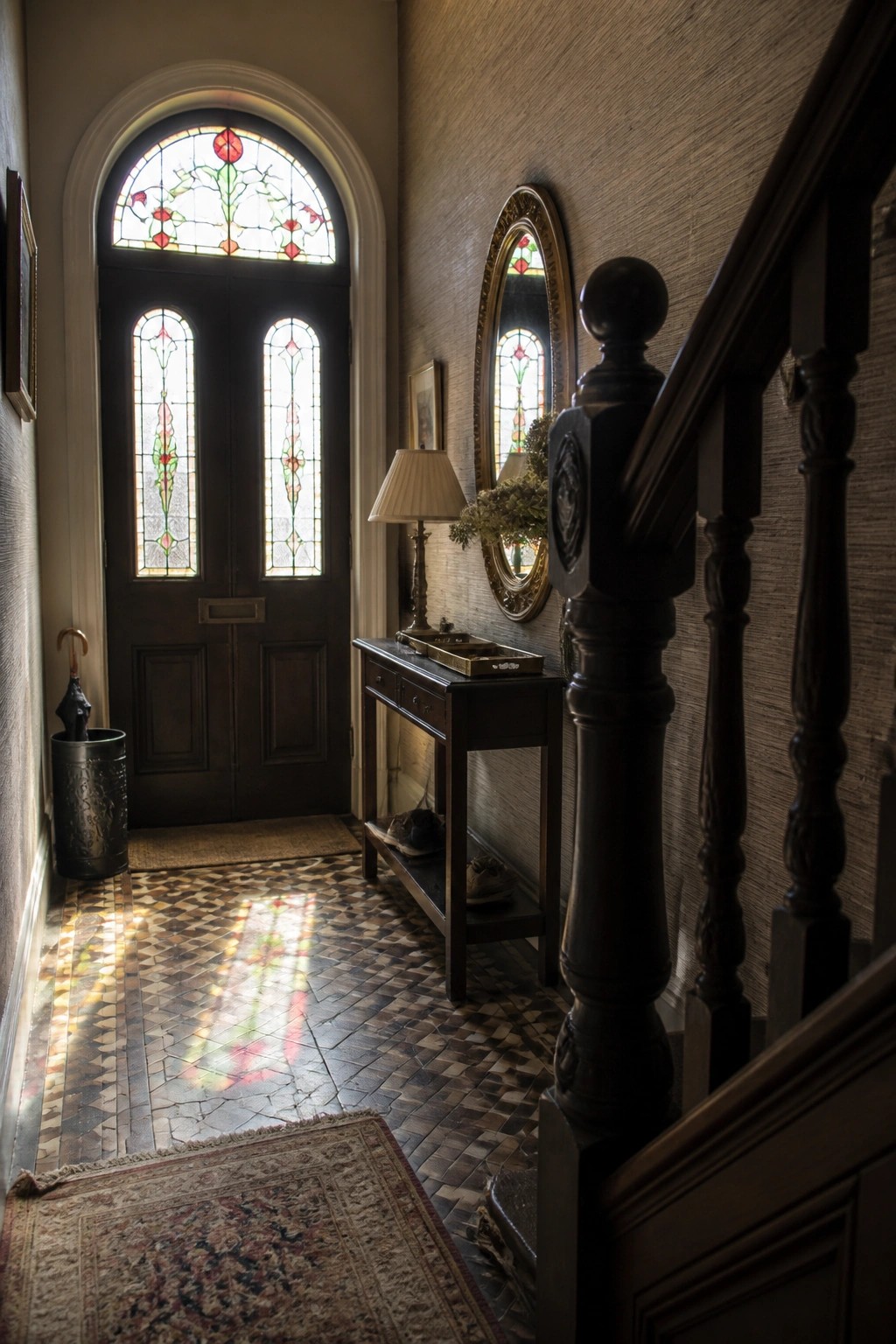
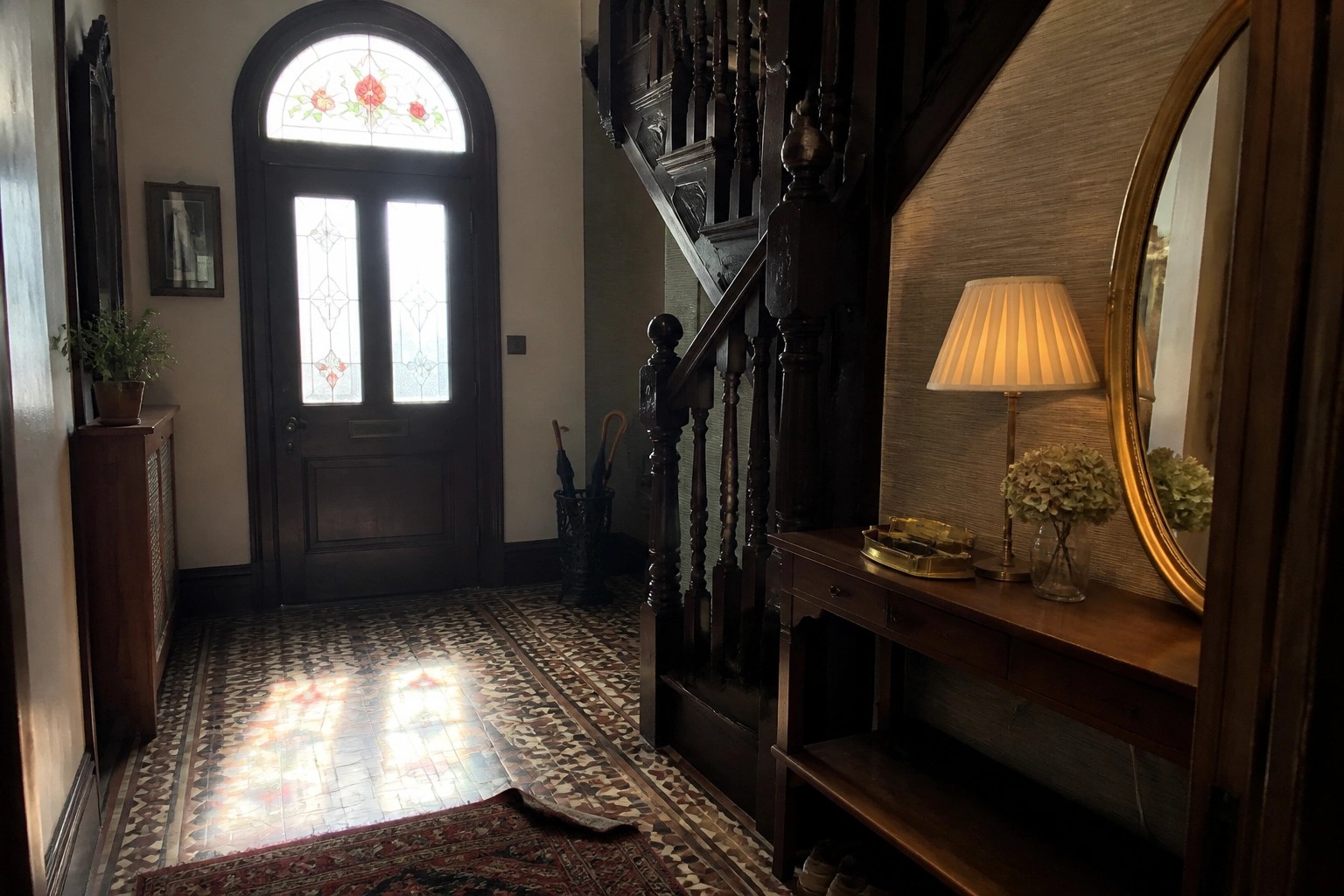
A stained glass door adds color and pattern right where people first step inside. The light shifts across the floor as the day changes, and the design keeps the space from feeling plain or dark.
This approach suits older homes that already have wood trim and classic details. Keep the walls and floor simple so the door stays the main focus, and make sure the glass pattern fits the scale of the entry.
Stained Glass Windows in the Sitting Room
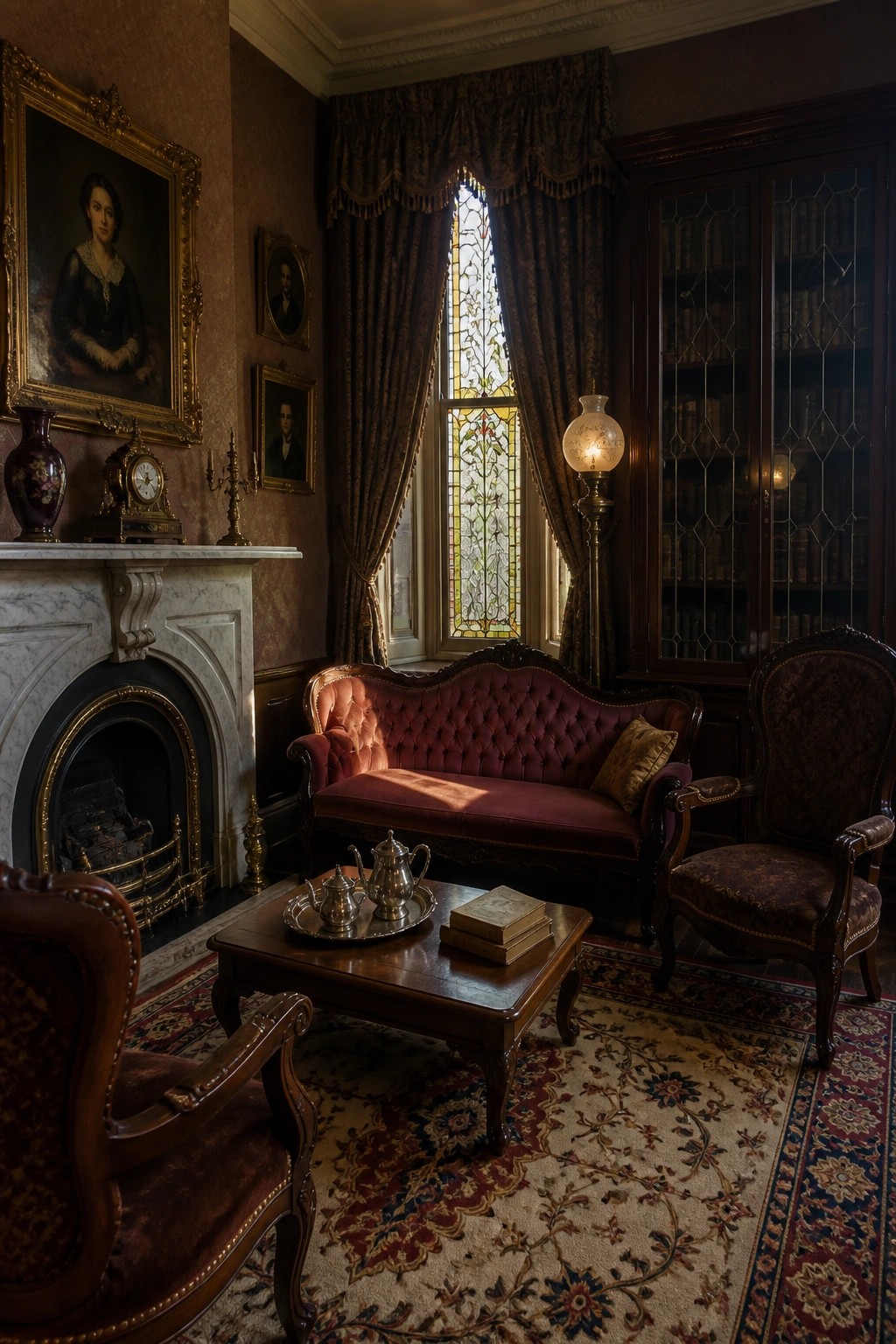
Stained glass works especially well in Victorian rooms that need more light without losing their dark, layered feel. A tall window like this one catches the sun and throws soft color across the furniture and floor, which keeps the space from feeling heavy even with all the wood and fabric.
It suits homes that already have deep tones and classic trim. Position the window where it gets steady daylight, and pair it with simple side curtains so the glass stays visible instead of getting buried behind layers of drapery.
Built-In Cabinets With Stained Glass
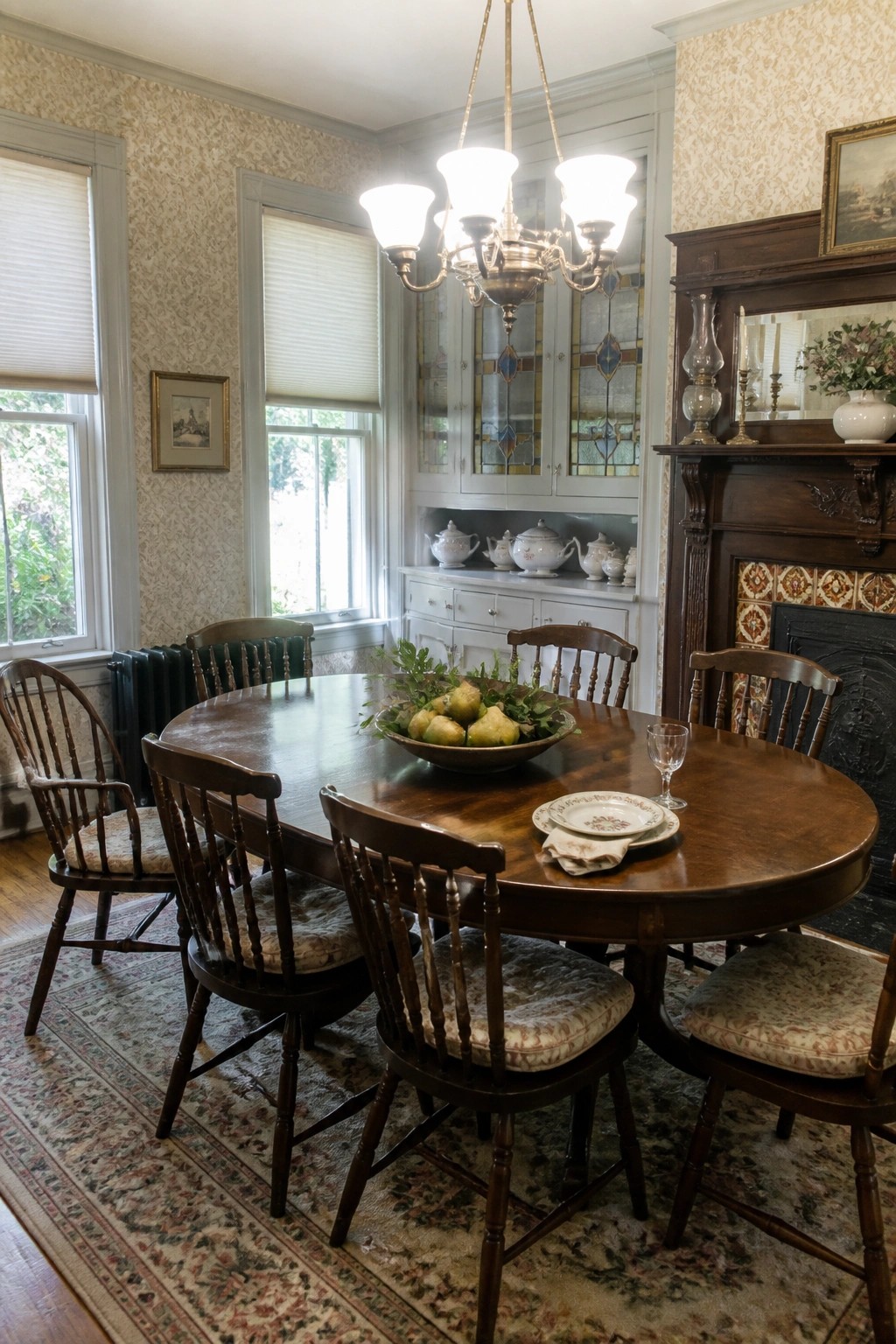
Built-in cabinets with stained glass panels give a Victorian dining room extra storage while letting light move through the space. The colored glass adds interest without needing more windows or bold wall colors.
This approach works best in homes that already have dark wood trim and classic furniture. Keep the cabinet style simple and match the glass pattern to the rest of the room so it feels like part of the original design.
Adding Stained Glass to the Bedroom
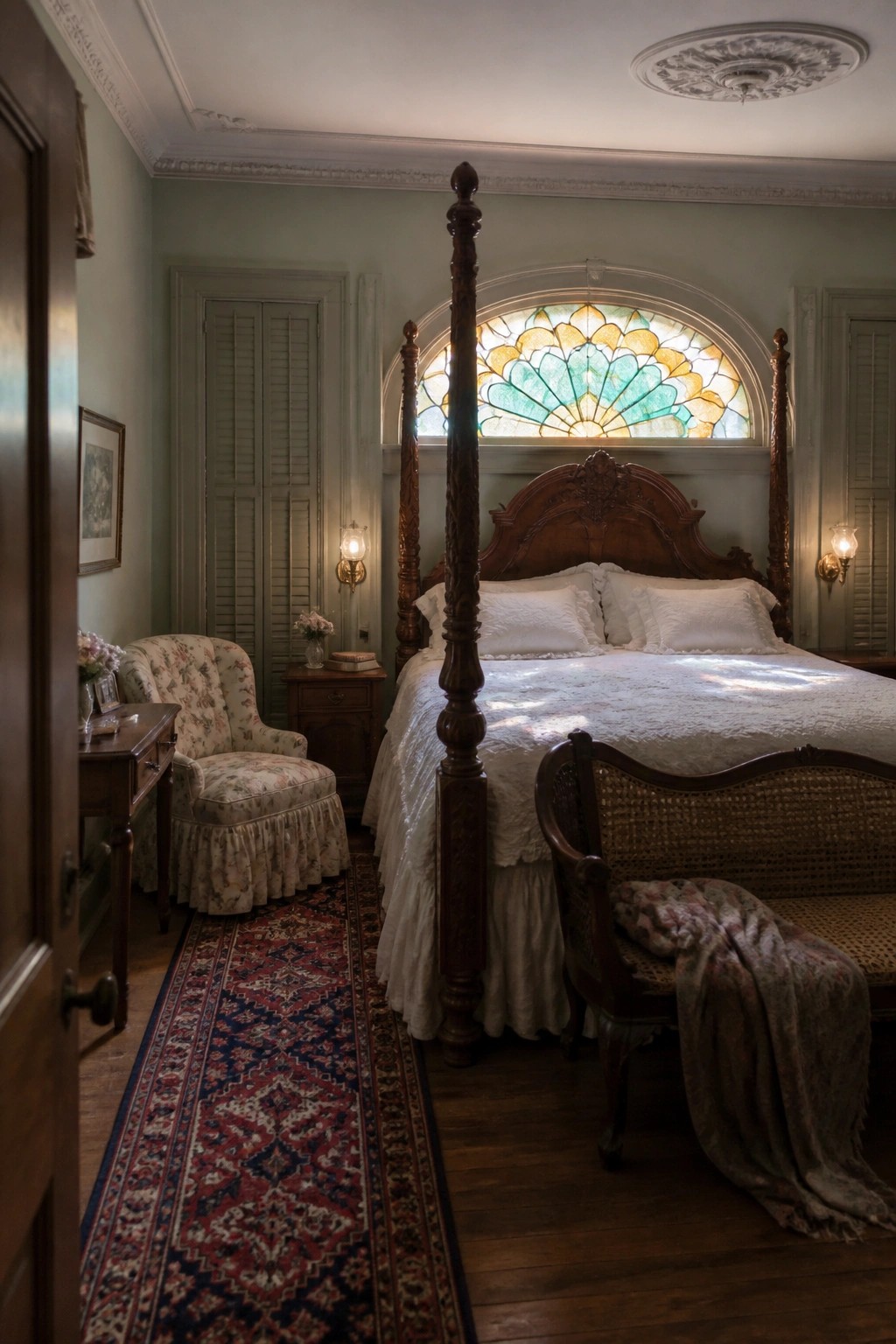
A stained glass window placed over the bed brings soft colored light into the room without needing much else. It works especially well in older homes where the window can sit in an existing arched opening and catch morning sun.
This detail suits Victorian style homes that already have dark wood furniture and layered textiles. Keep the rest of the room simple so the glass stays the main point of interest rather than competing with too many patterns.
Stained Glass Doors In A Hallway
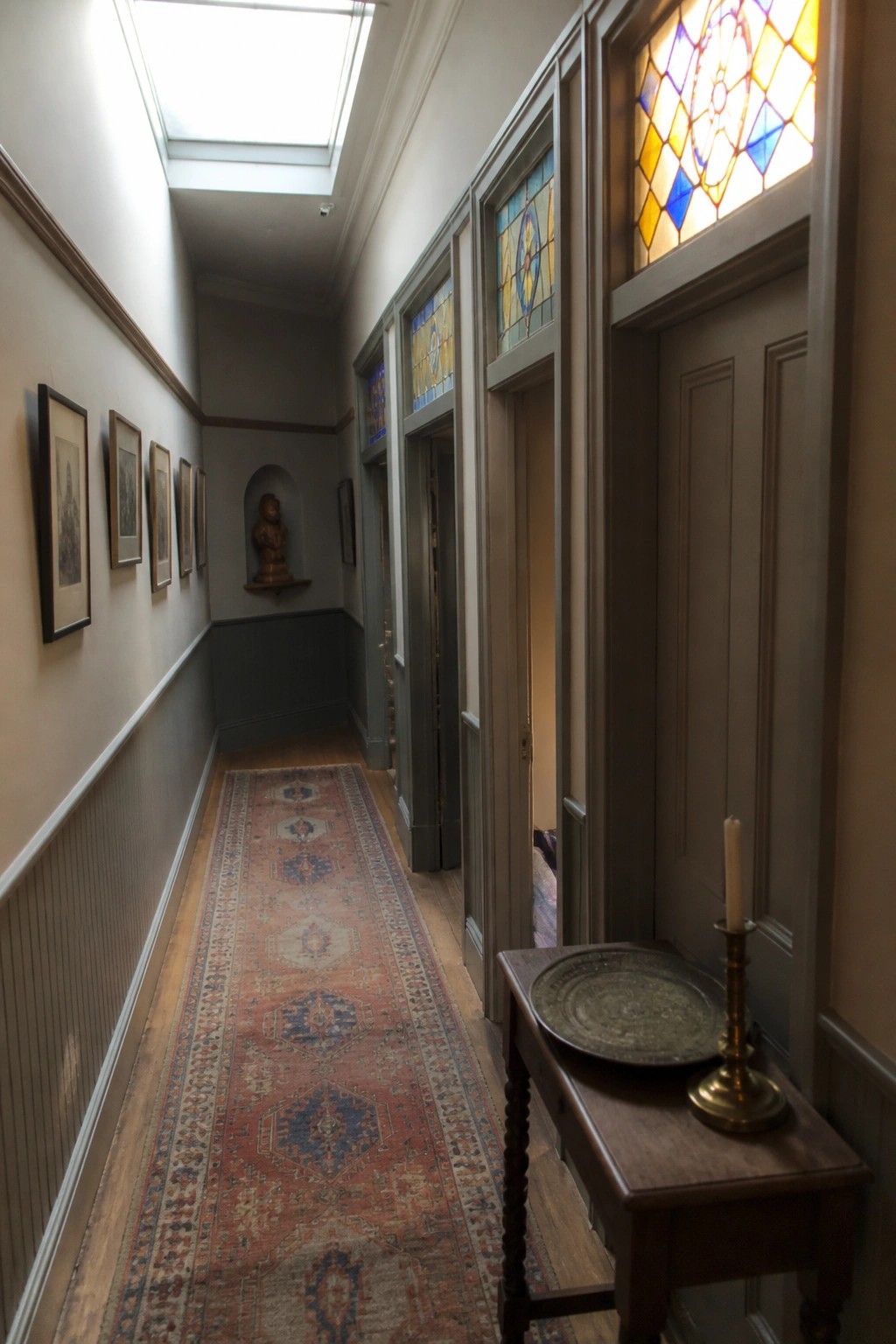
Stained glass adds color and interest to a hallway without making the space feel closed in. Placing it in the upper panels of doors lets light move between rooms while keeping a bit of separation. The effect feels right at home in Victorian interiors where the original trim and proportions are still in place.
This works best in homes that already have similar woodwork and a fairly narrow layout. Stick with simpler patterns so the glass does not overwhelm the rest of the hall. A single runner down the center helps tie the doors together visually.
Stained Glass Cabinet Doors
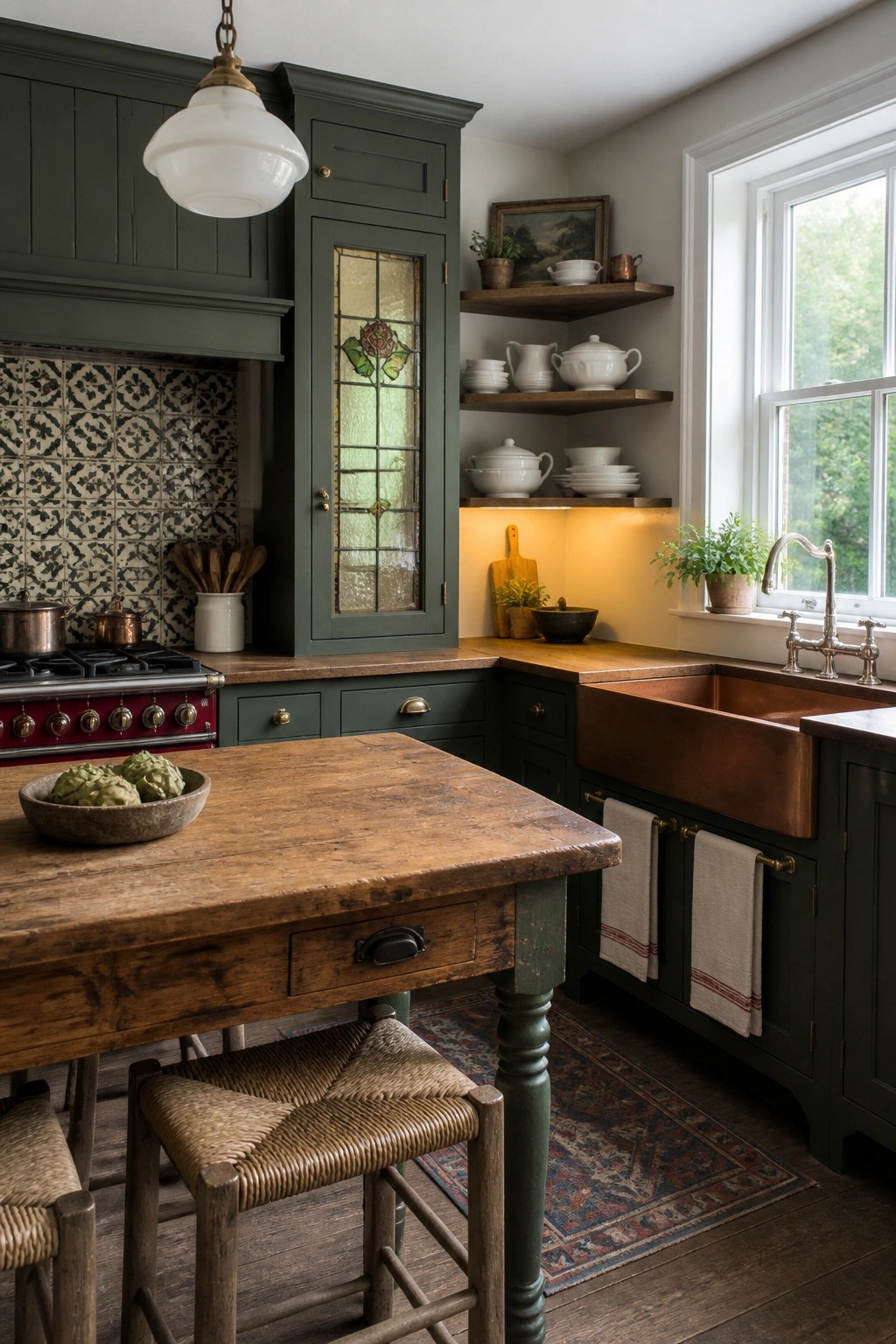
Stained glass panels set into cabinet doors bring a quiet Victorian touch to a kitchen without needing heavy ornament elsewhere. The colored glass catches light and adds a bit of pattern that feels period appropriate while still working with simpler painted cabinetry.
This approach suits homes that want authentic Victorian details in everyday spaces. Keep the surrounding finishes calm so the glass stays the focal point, and use it on a few doors rather than every cabinet to avoid a busy look.
Stained Glass Windows in the Bathroom
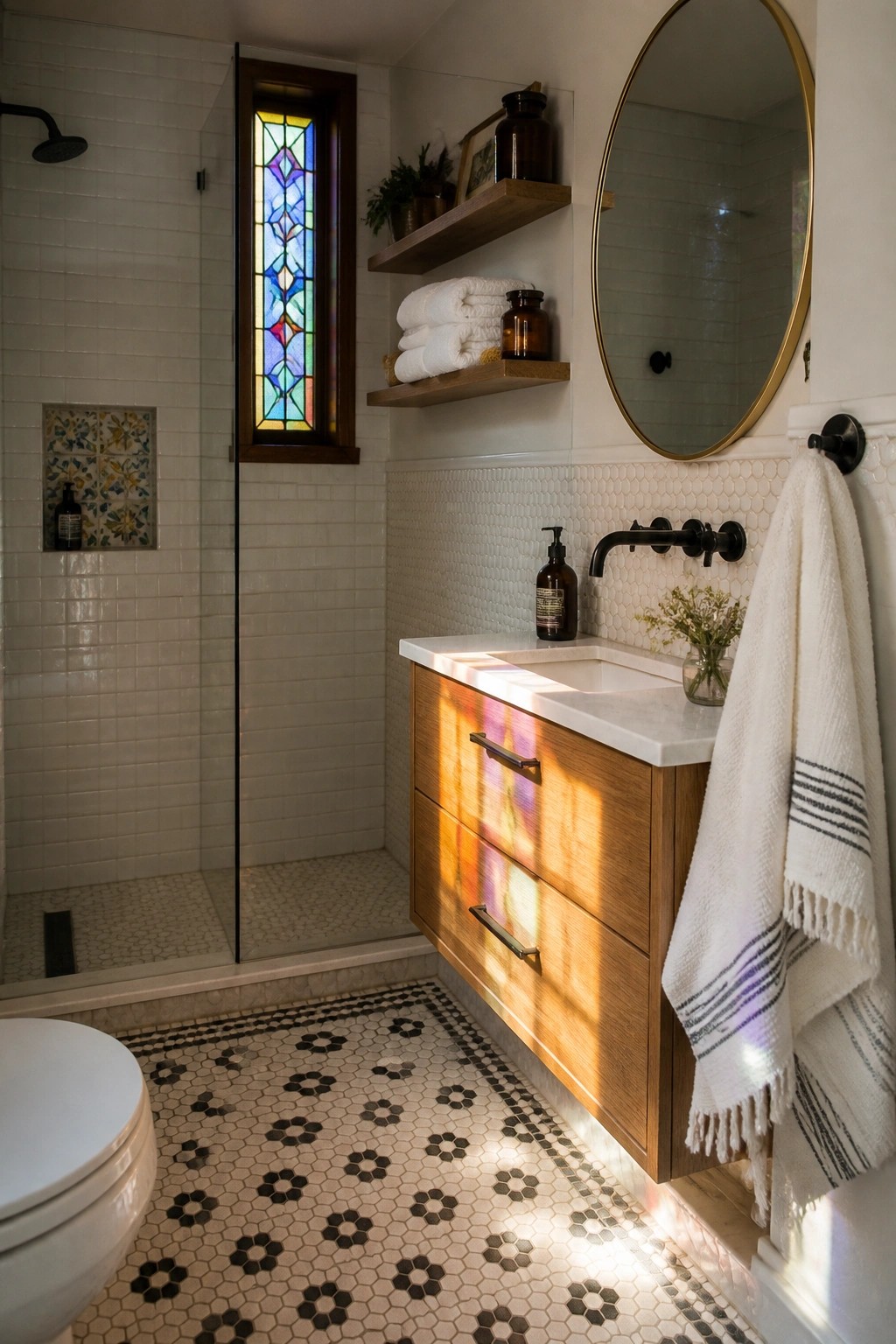
Placing a stained glass window in the shower area gives a Victorian bathroom real period character without much extra effort. The colored glass catches the light and turns it into soft patches of color across the tile and floor.
This works especially well in smaller baths where you want one strong detail rather than lots of decoration. Keep the surrounding tile simple and light so the window stays the focus.
Stained Glass in a Study
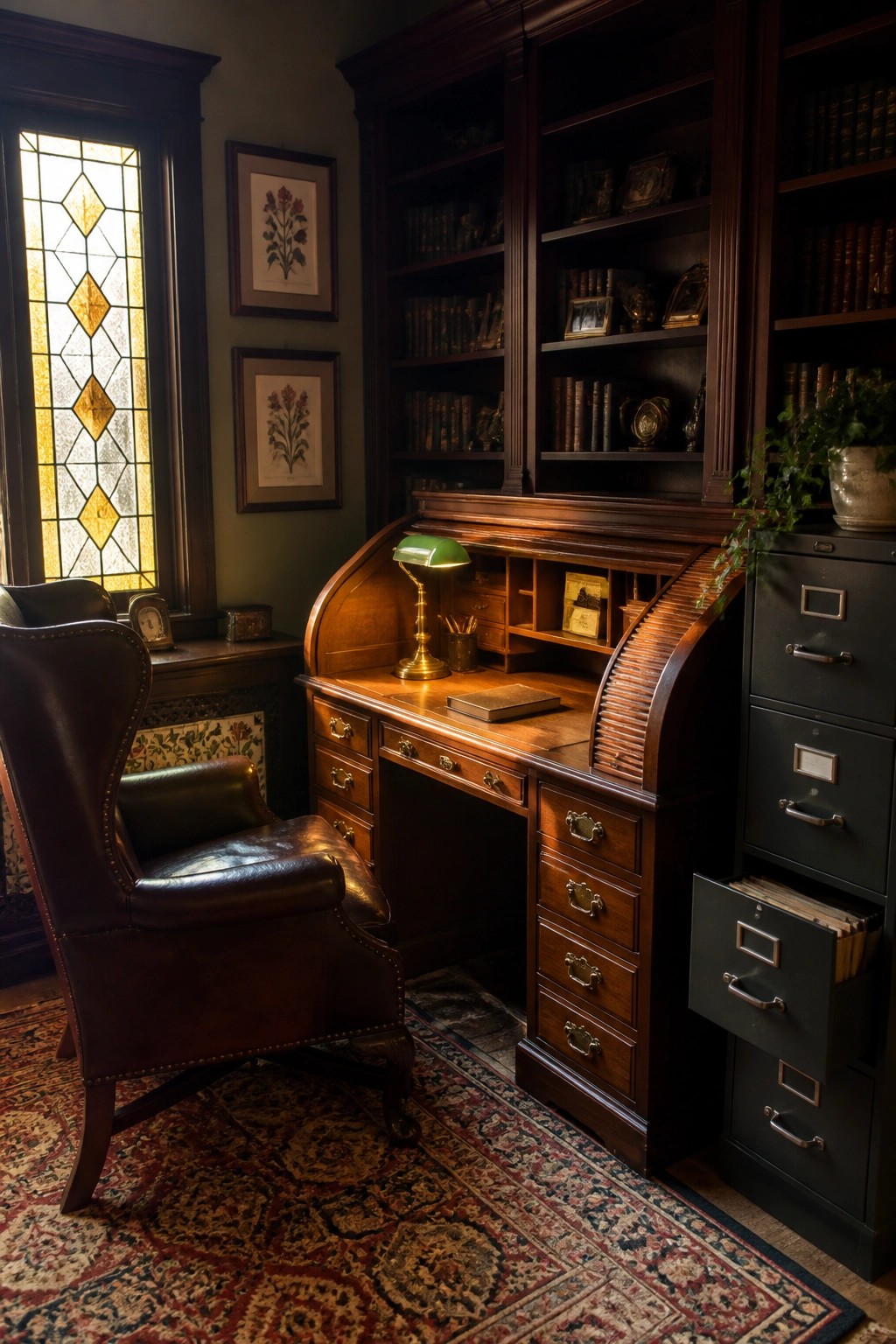
A stained glass window brings real period character to a study without needing much else. It adds color and pattern while still letting light through, which keeps the room from feeling too heavy even with all the dark wood and books around.
This works best in homes that already have some Victorian trim or woodwork. Pair it with a simple desk setup and built-in shelves so the window stays the main feature rather than competing with too many other details.
Stained Glass Windows That Cast Colorful Light

A round stained glass window can turn ordinary daylight into soft patches of color that move across the floor. This approach adds interest to a room without extra layers of decoration, and it feels especially at home in Victorian interiors where light plays an important role.
The effect works best when the window faces south or west and the light lands on a pale rug or floor. It suits nurseries and quiet bedrooms where you want a gentle shift in mood as the sun moves. Keep the surrounding walls light so the colors stay visible rather than getting lost.
Window Seats Under Stained Glass
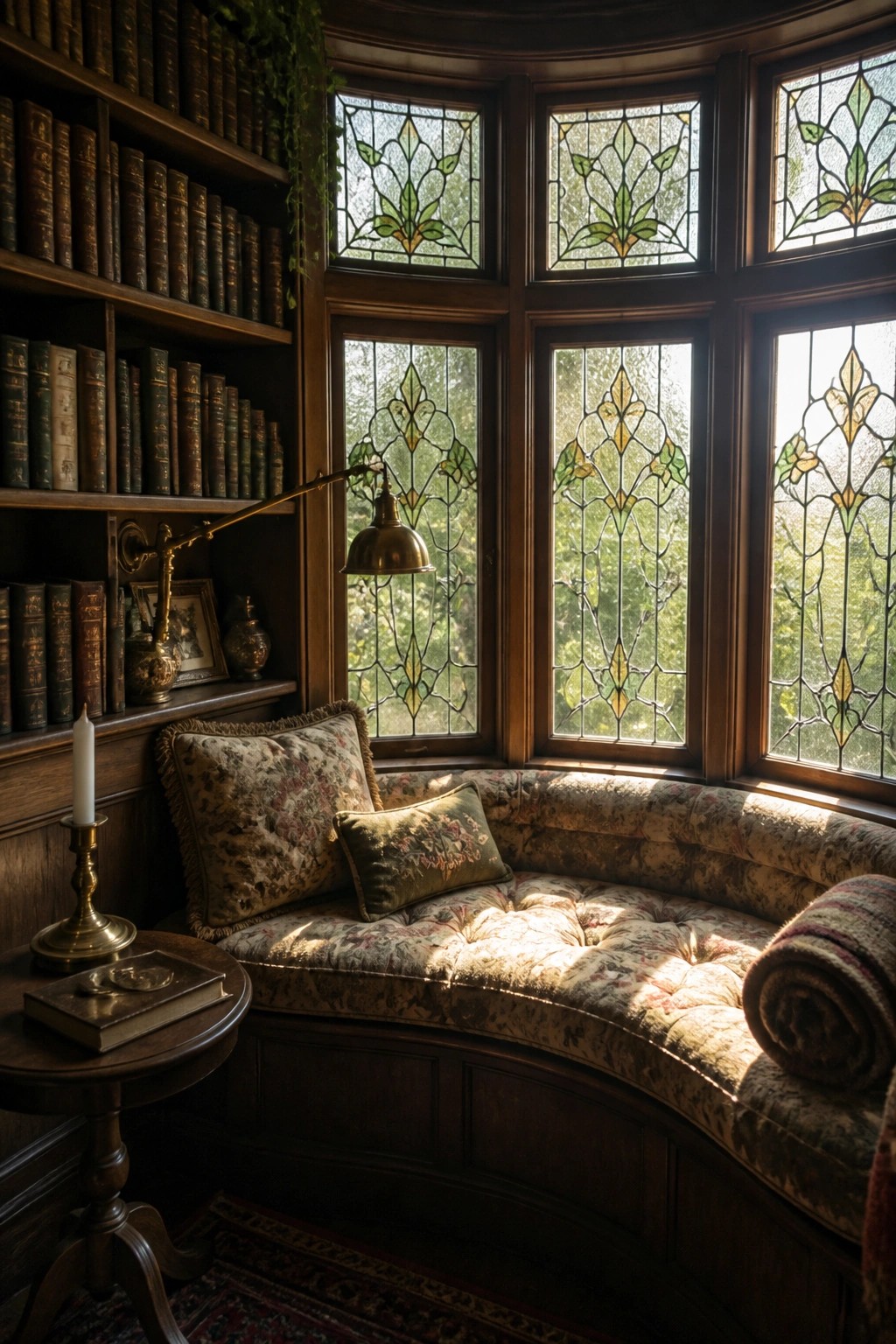
A window seat built right into a bay or curved wall lets the stained glass become the main feature without any extra effort. It turns the area into a usable spot for sitting while keeping the focus on the colored light and patterns in the glass.
This setup works best in older homes that already have interesting window shapes or deep sills. It suits smaller rooms where you need both seating and storage, and it pairs well with nearby bookshelves if you want a quiet corner for reading. Choose fabric that can handle sun exposure so the cushions last.
Stained Glass Skylights In Dressing Rooms
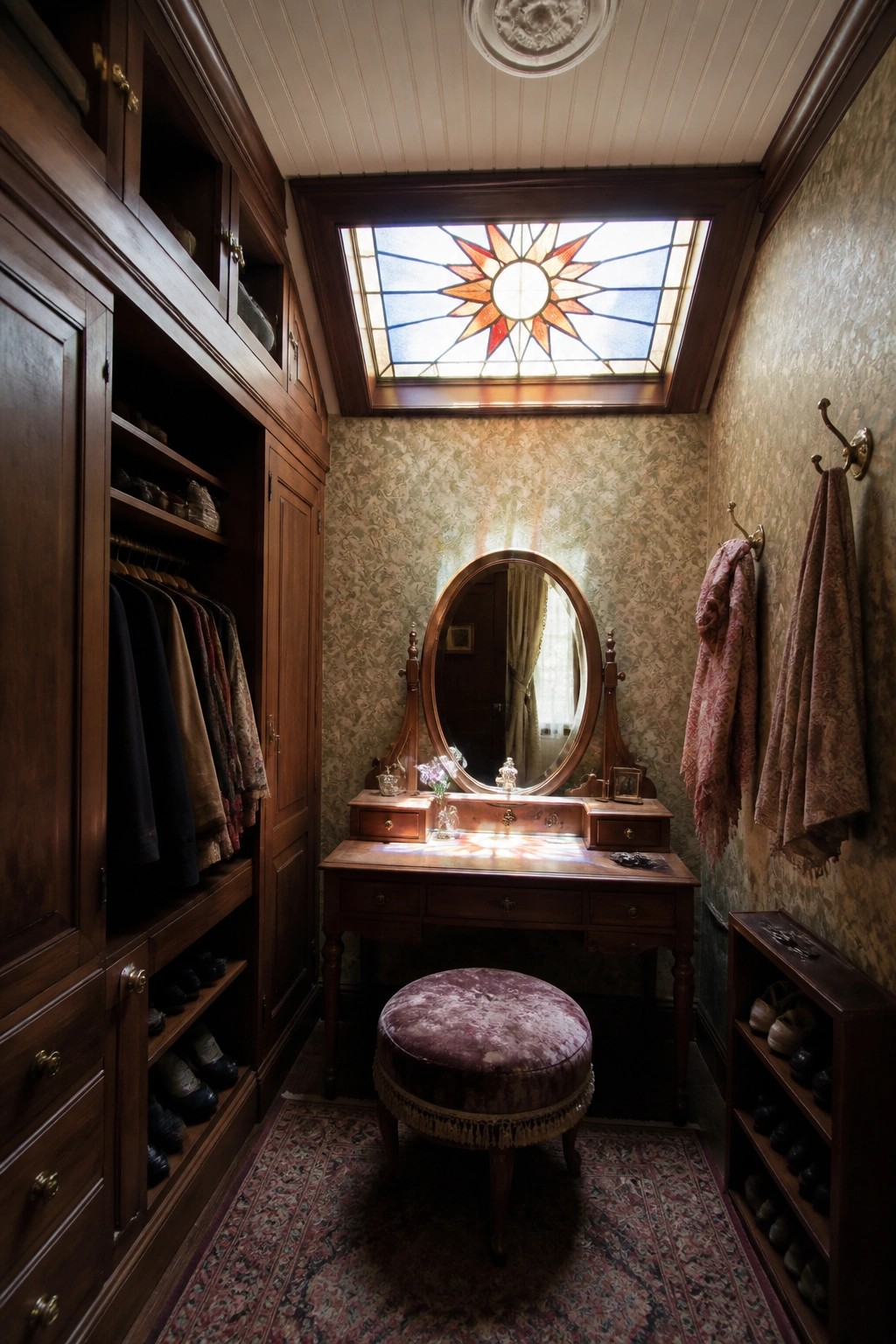
Stained glass skylights work well in small dressing rooms because they bring in light and color from above without taking up any wall space. In a narrow layout like this one, the glass turns what could feel like a dark closet into a brighter spot that still feels private.
Place the skylight directly over the main work area such as a vanity or bench. Dark wood built-ins help balance the extra light so the room does not feel too bright or modern. This approach suits older homes that already have some period trim and want one more authentic detail without major changes.
Stained Glass in the Laundry Room
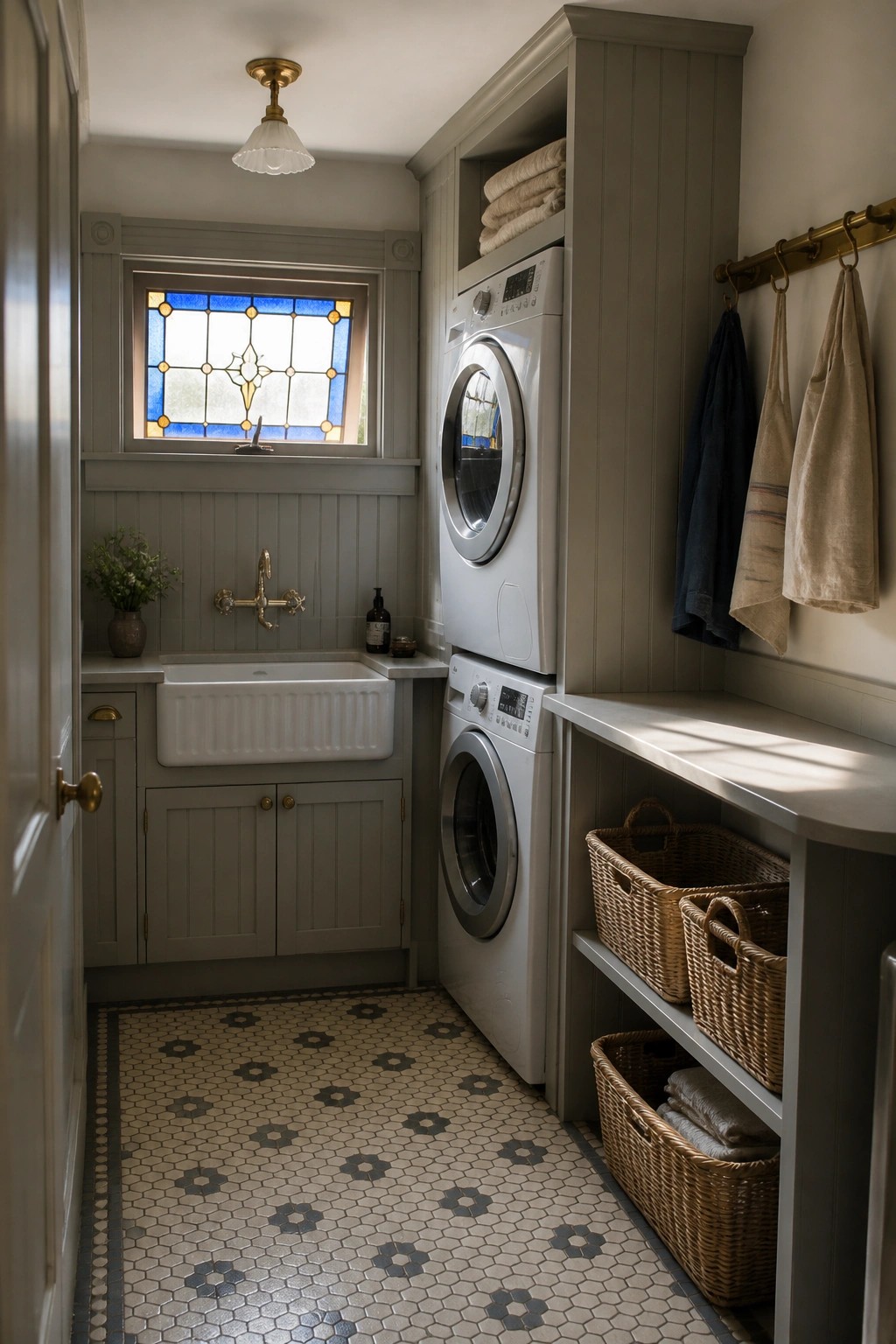
Many Victorian homes placed stained glass in rooms that get daily use rather than just the main living areas. A window like this over the sink brings in colored light and keeps the space from feeling purely functional.
This works best in older homes that already carry other period details through the house. It adds interest with very little extra styling, and it suits smaller utility rooms where you want light but still some separation from the outside.
Stained Glass in Music Rooms
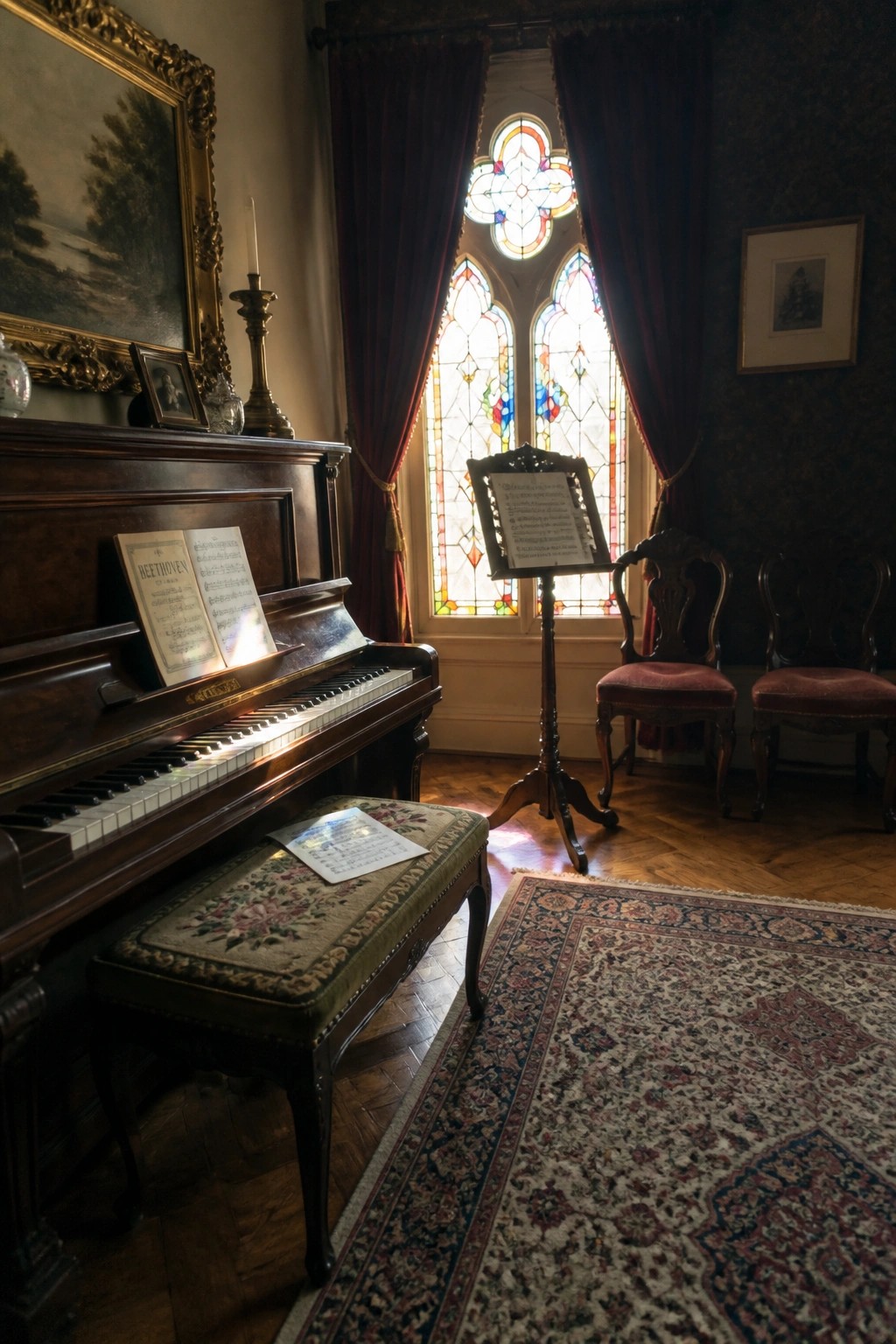
Many Victorian homes set the piano directly in front of a stained glass window so the colored light falls across the keys and music stand. This simple placement turns practice time into something more pleasant without needing extra lamps or decorations.
It works best in smaller parlors where the window can stay uncovered during the day. Use heavier side curtains to control light when needed, but let the glass remain the main source of color in the room.
Stained Glass In The Bath

Stained glass brings real Victorian character into a bathroom without needing a lot of extra space. It filters light in a way that feels warm and period correct, especially in smaller rooms where plain glass can look too stark.
This works best in homes that already have some original trim or tile. Keep the rest of the surfaces simple so the glass stays the focus, and make sure the design has enough color to show up when the light hits it.
Stained Glass Above a Window Seat

Placing stained glass right over a built-in bench gives the room soft color and a quiet focal point at the same time. The bench turns the window into a place to sit rather than just a source of light, which keeps the whole corner feeling useful instead of purely decorative.
This setup works best in dining rooms or breakfast areas where people already gather near the windows. It suits older homes that still have their original trim and woodwork, and it needs very little else on the surrounding walls to feel complete.
Stained Glass In A Sewing Room

A stained glass window can turn an ordinary workroom into something special. The colored glass filters light in a way that feels soft and warm, which makes long hours at the sewing table much more pleasant without needing extra lamps during the day.
This setup works best in a smaller room that already has good natural light. Keep the walls light and the storage simple so the window remains the main feature, and place the work table where the light lands directly on it.
Stained Glass Windows for Gentle Morning Light
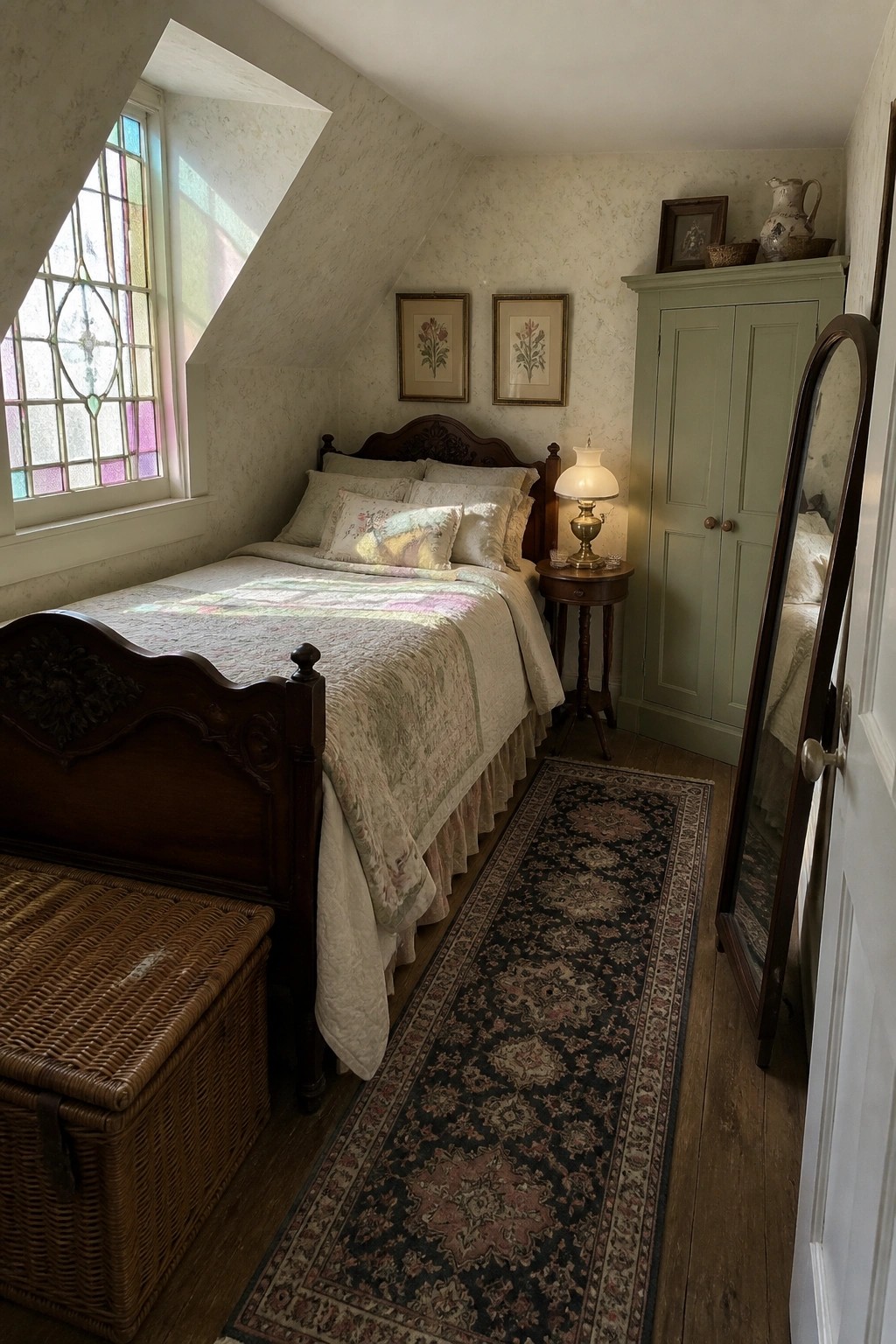
Many older bedrooms feel warmer when a stained glass window sits where morning sun can reach it. The colored glass turns plain daylight into soft patches that drift across the bed and floor, giving the space a quiet, lived-in look without extra decoration.
This approach suits smaller or attic rooms best, where you want the light itself to do the work. Pair it with simple bedding and darker wood furniture so the colors stand out but do not overwhelm the space.
Stained Glass Doors in Service Spaces
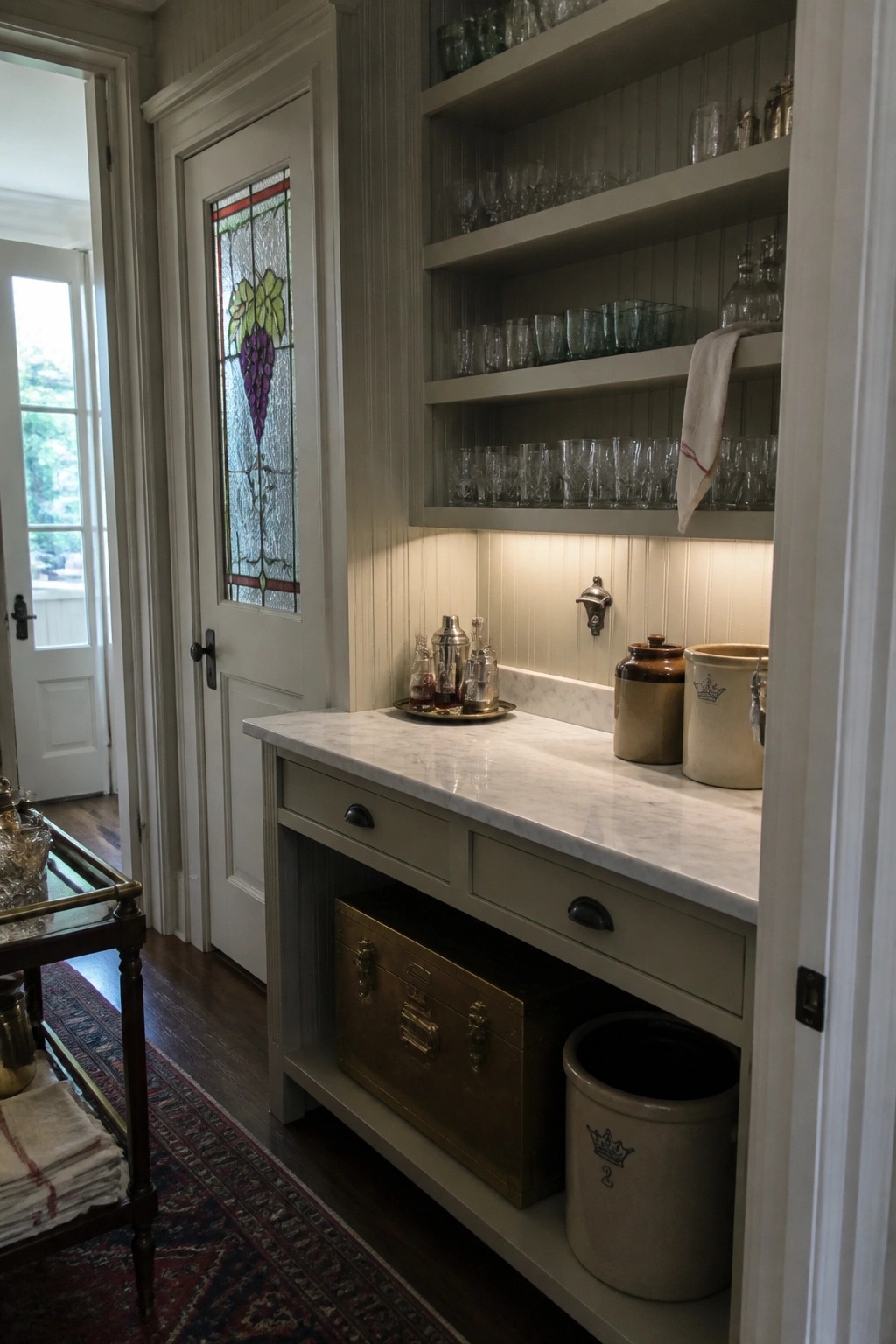
Stained glass doors work especially well in areas like butlers pantries because they let light through without making the space feel closed off. The grape motif on this door adds a bit of color and period detail that fits the rest of the room without needing extra decoration.
This approach suits older homes that already have trim and built-ins. Keep the glass design simple so it does not compete with the shelves or counter surfaces. Avoid busy patterns if the pantry already holds a lot of glassware and dishes.
Stained Glass Over A Desk

Stained glass works well in a small study because it adds color through the light itself instead of extra objects on the walls. Placing the desk right under the window lets the colored light fall across the floor and onto the rug during the day.
This approach suits Victorian homes or any older house with similar windows. Keep the surrounding furniture simple with wood tones and open shelving so the window remains the main point of interest without competing elements.
Stained Glass For Added Color

Stained glass works especially well in rooms that already get strong natural light. The colored panes turn plain sunlight into soft patches of blue and green that move across the floor as the day goes on. It adds interest without needing extra paint or fabric.
This approach suits older homes where the original doors or windows can be kept in place. Place the glass where it faces south or west so the color shows up most of the day, and keep nearby surfaces simple so the light remains the main feature.
Stained Glass Doors in Functional Mudrooms
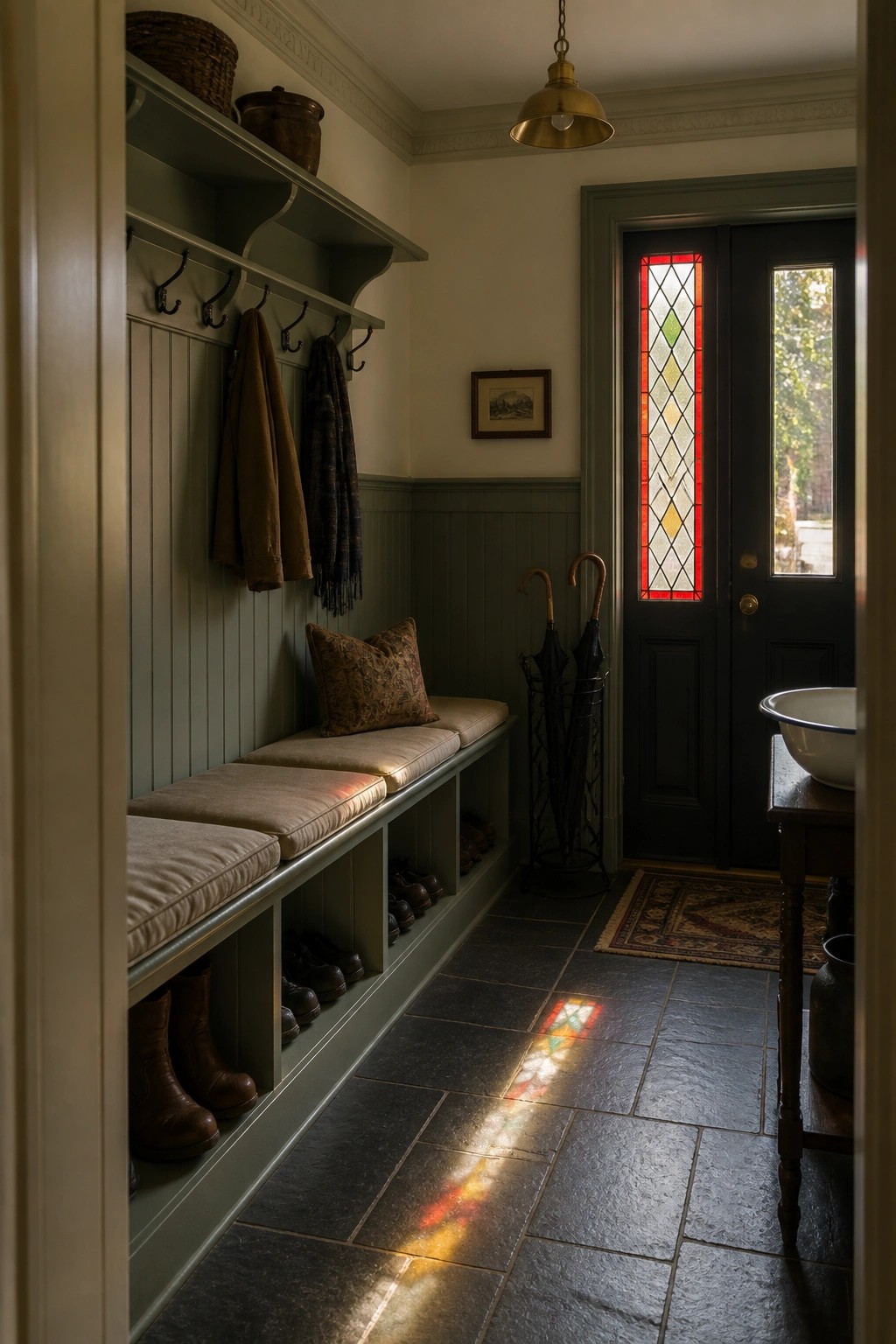
Many older homes place stained glass in the entry door so that color and light reach the practical spots near the front. It turns a simple storage area into something more welcoming without adding extra decoration.
This approach works best in Victorian houses that already have built-in benches and hooks. Keep the rest of the space simple with painted wood and basic flooring so the glass remains the main point of interest.
Stained Glass In A Walk In Closet
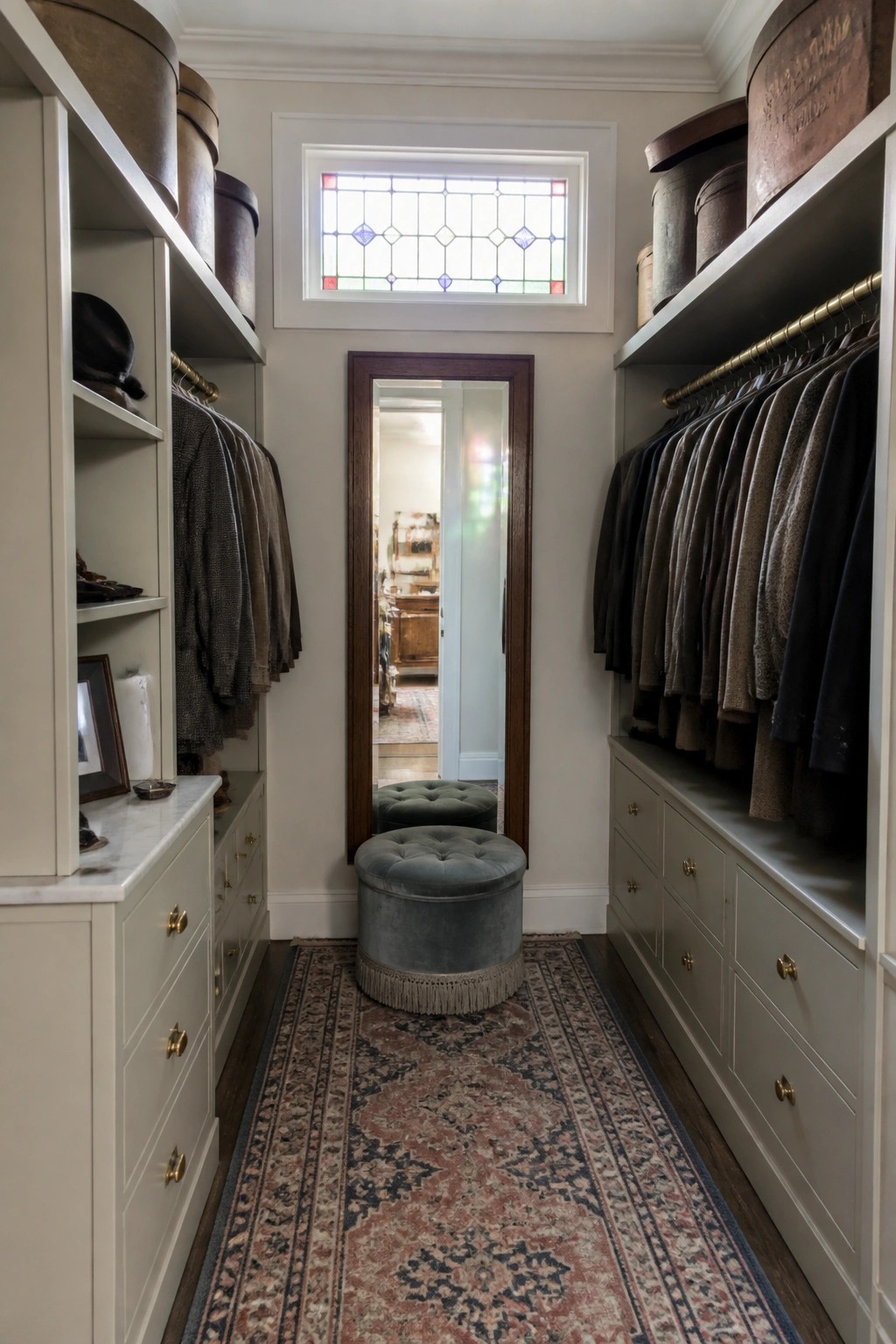
Placing a stained glass window in a closet brings colored light into a space that often feels closed off. It adds a Victorian touch without needing extra decoration, and the window lets in daylight while keeping the room private.
This works best in larger closets that already have some natural light access. Keep the surrounding storage simple so the window stays the main feature, and check how the colored light lands on the clothes and surfaces during the day.
Stained Glass Skylights in Work Spaces
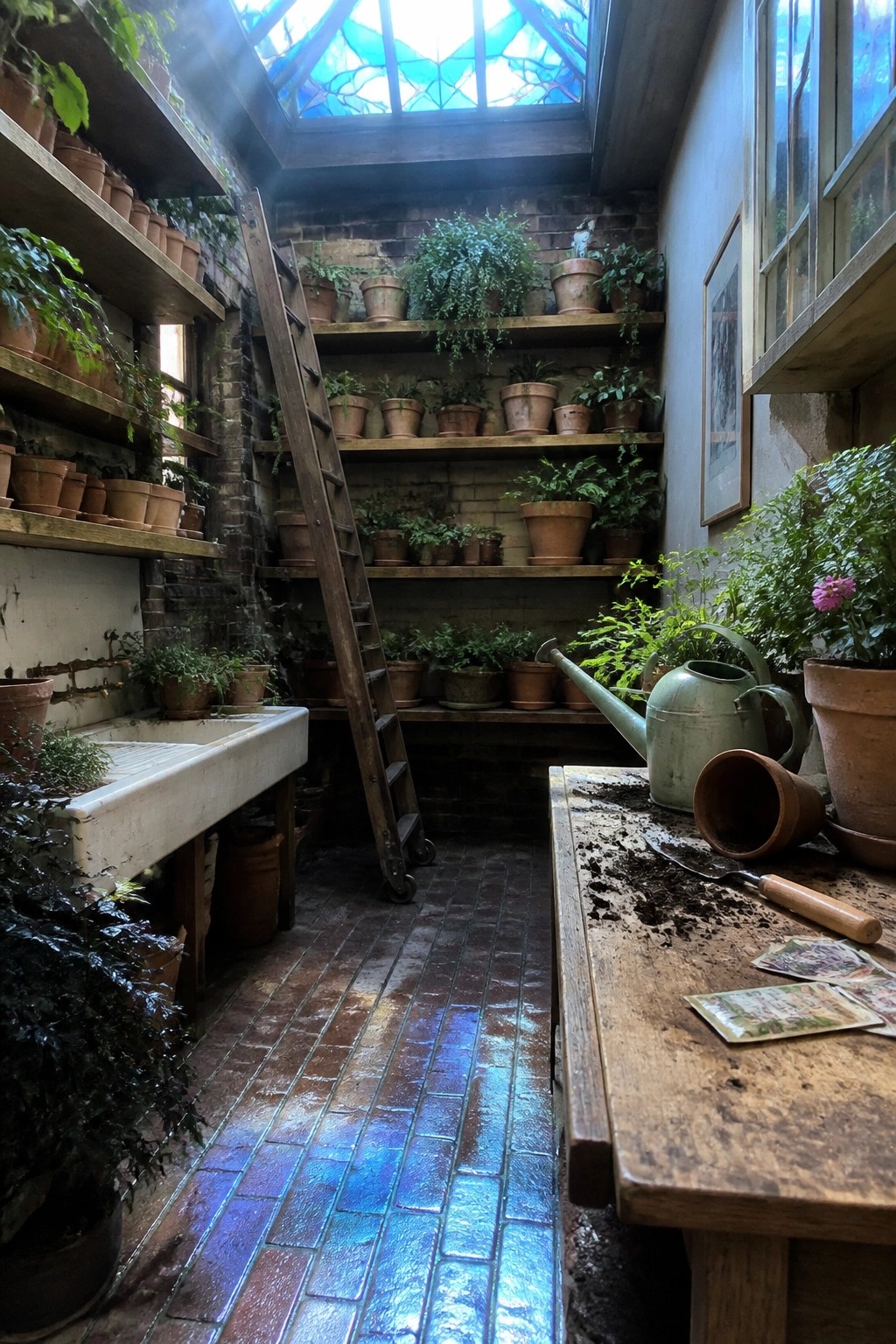
A stained glass skylight can turn a plain utility room into something brighter and more interesting without adding side windows. It brings in strong natural light from above while keeping the walls free for storage and work surfaces.
This approach suits older homes that already have some period details and need extra light in tucked-away rooms like potting areas or small conservatories. Keep the glass simple in pattern so the light stays usable rather than overly dimmed.
Built-In Shelves Next To Stained Glass

Many older homes added arched alcoves filled with shelves to turn a plain corner into a useful reading spot. The stained glass nearby brings in soft color that changes with the light and makes the whole area feel warmer without extra effort.
This works best in smaller rooms where you need both storage and seating. Keep the sofa or chair low and simple so the windows stay the focus, and use the lower cabinets for things you reach for often.
Frequently Asked Questions
Q: How do you clean stained glass windows without scratching the old leading? A: Wipe them gently with a soft cloth and a bit of mild dish soap mixed in warm water. Skip any abrasive pads or strong cleaners that could cloud the glass or loosen the joints.
Q: What if my windows are smaller than standard Victorian panels? A: Have a local glazier cut a reproduction to fit the exact opening. This keeps the pattern authentic while making sure it seals properly against drafts.
Q: Does stained glass cut down on natural light too much? A: It tints the light that comes through but still lets plenty in during the day. Place panels higher up or in transoms so the room stays bright without losing the color effect.