I have always noticed that the way trim wraps around windows and eaves changes how the whole front of a house reads from the sidewalk. When I walk past older homes the layers of detail often stand out more than the paint color or roof shape. Some choices only make sense once you see them in daylight. I would probably try a couple of trim profiles on a single window first before deciding on the rest of the facade. That step usually shows whether the scale feels right or ends up looking too heavy once it is all in place.
Ornate Trim Brings Victorian Details Forward

Many Victorian homes use layers of trim to add depth without changing the overall shape of the house. The trim around windows, gables, and porch edges turns flat surfaces into something more interesting while keeping the classic proportions intact.
This works best on homes that already have varied rooflines or a porch structure. Match the scale of the trim to the size of the facade so the details enhance the house instead of crowding it.
Choose a Contrasting Color for the Trim
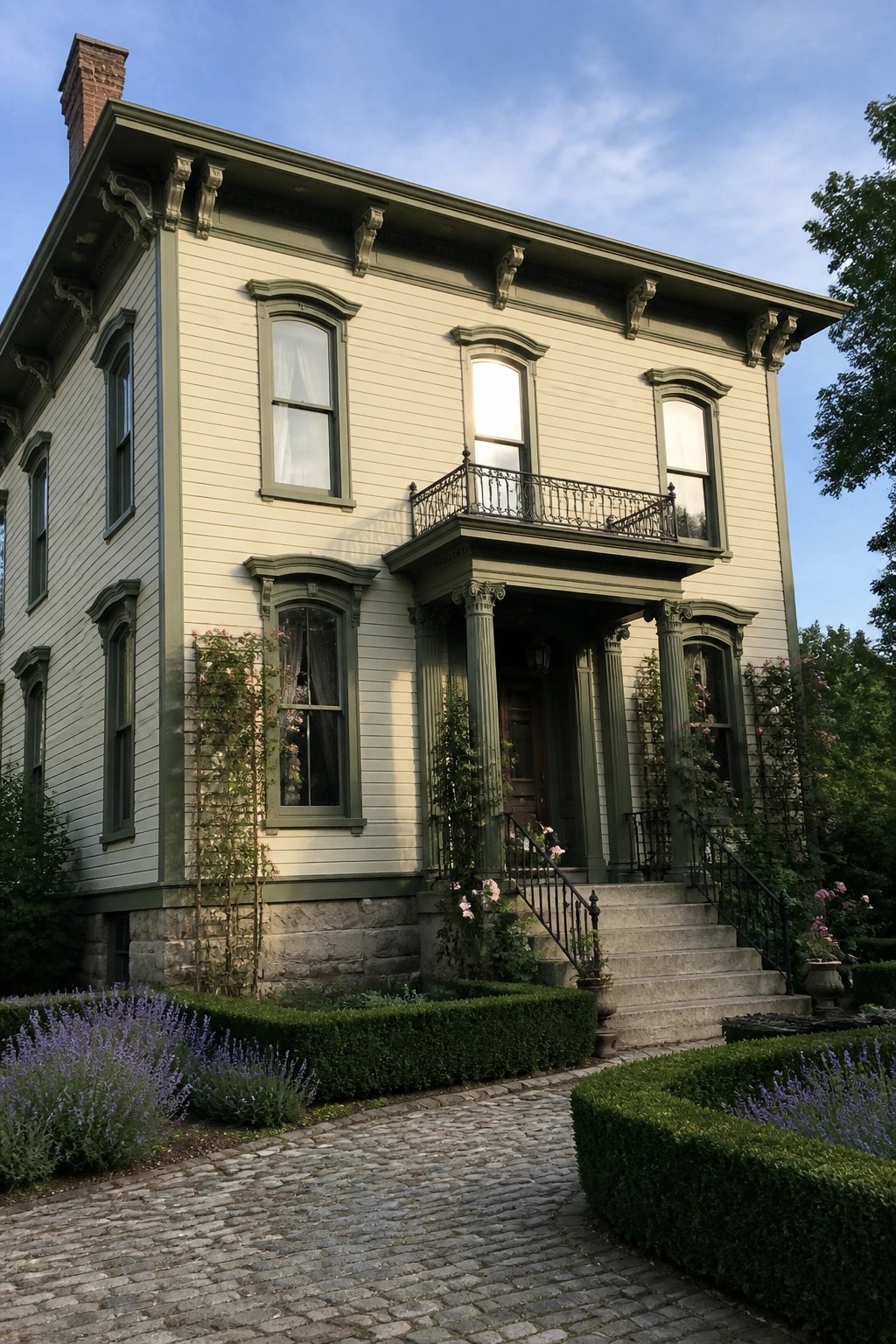
Painting the trim a different shade from the main siding is one of the simplest ways to bring out the details on an older house. On this home the green stands out cleanly against the lighter walls, so every bracket, window frame, and porch column reads clearly instead of blending together.
This works best on houses that already have carved or layered woodwork. Keep the contrast strong but not too bright, and test the colors on a small section first so the trim does not overpower the rest of the facade.
Ornate Trim Highlights Victorian Architecture
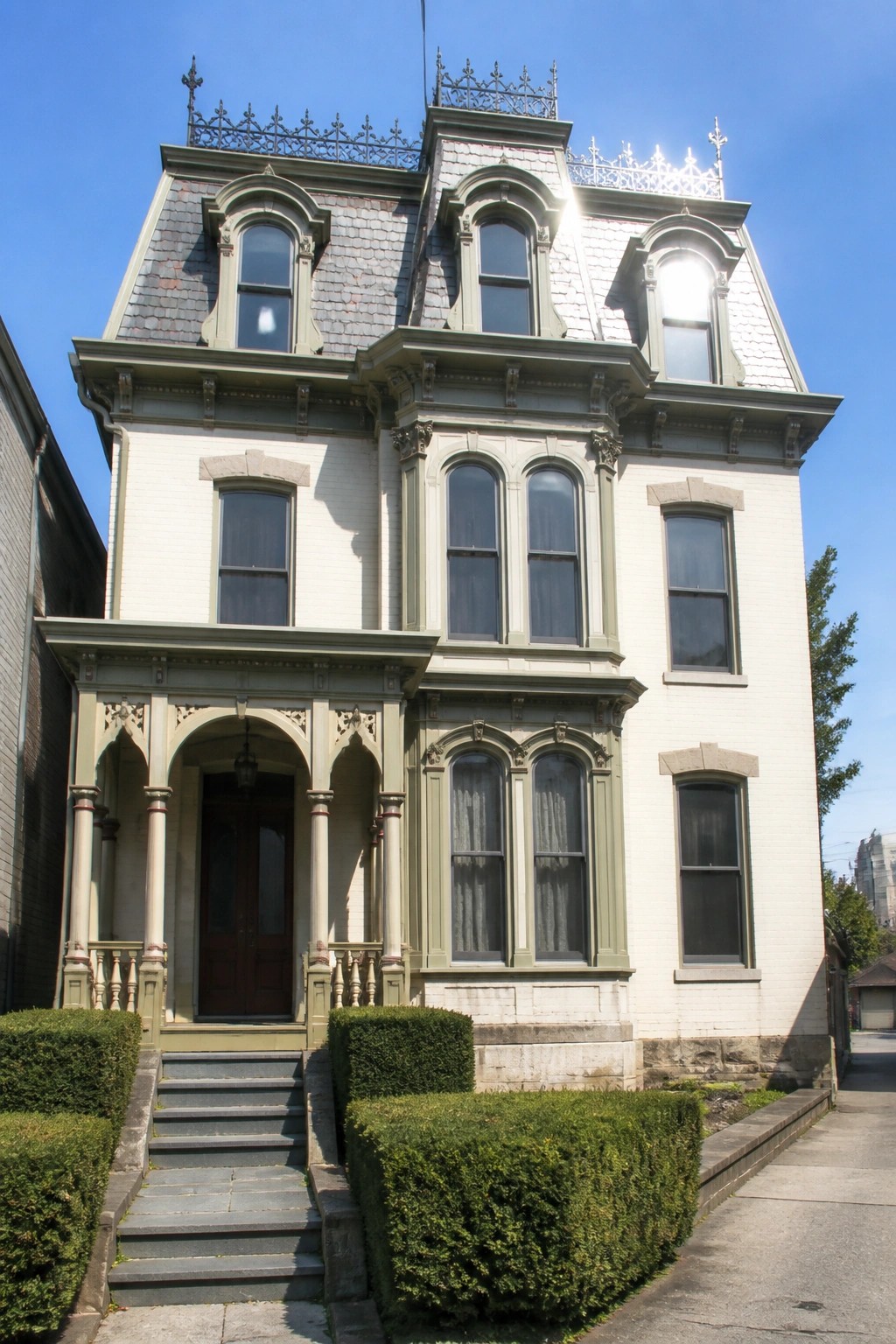
Ornate trim is what gives many Victorian homes their distinctive look. The brackets, window surrounds, and porch details create layers of interest that stand out even on a simple color scheme.
This approach works best on homes in older neighborhoods or during restorations where the goal is to keep the original character. It helps the facade feel complete, though the details do need occasional maintenance to stay crisp.
Ornate Trim Sets Victorian Exteriors Apart
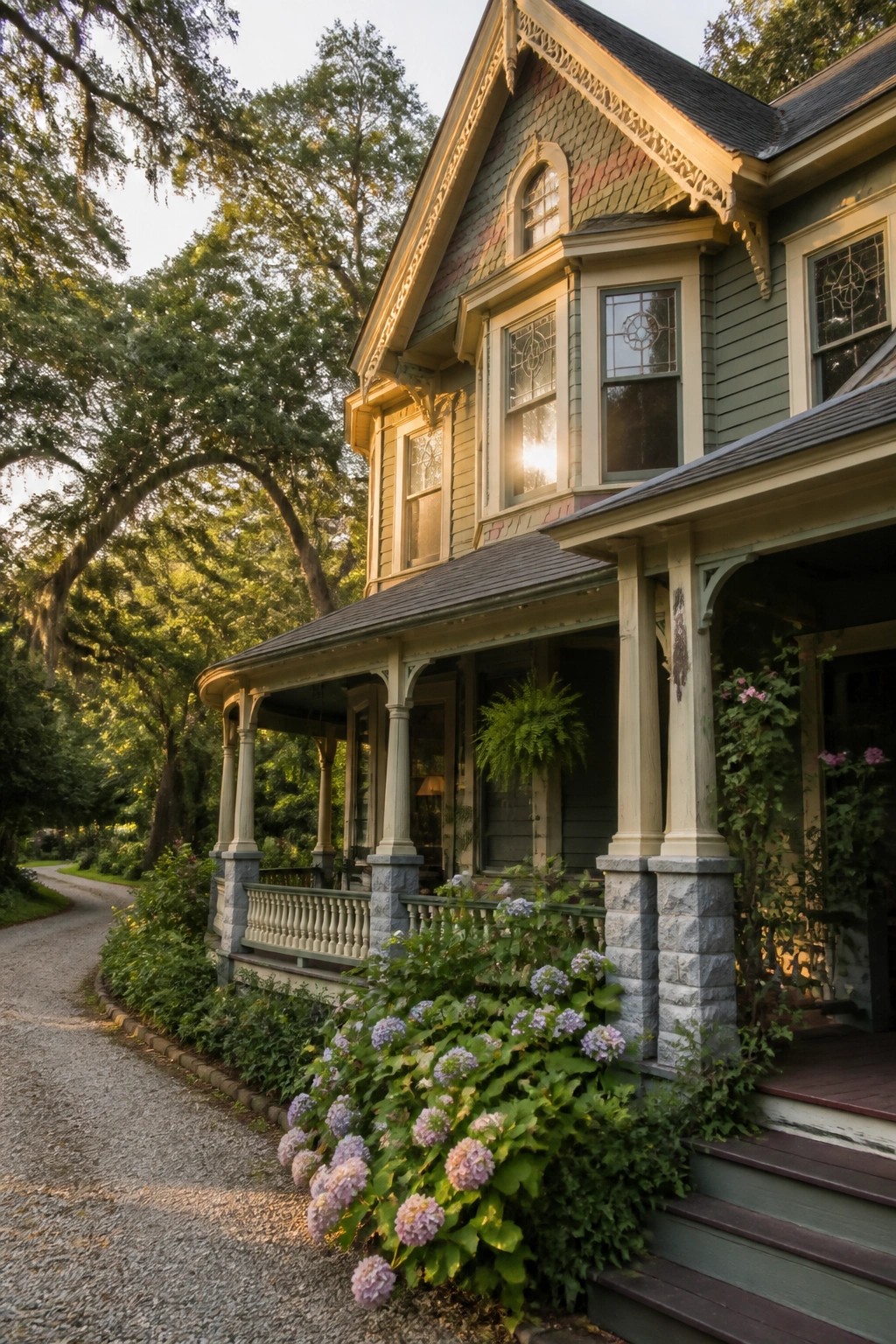
Ornate trim gives Victorian houses their distinctive look by adding layers of detail along rooflines, windows, and porches. It draws attention to the shape of the house without relying on bright colors or major structural changes.
This works best on homes that already have some age and character, especially in older neighborhoods. Keep the trim painted in a contrasting shade so the patterns stay visible, and check it yearly for peeling or rot before it spreads.
Ornate Trim Highlights Windows And Doors
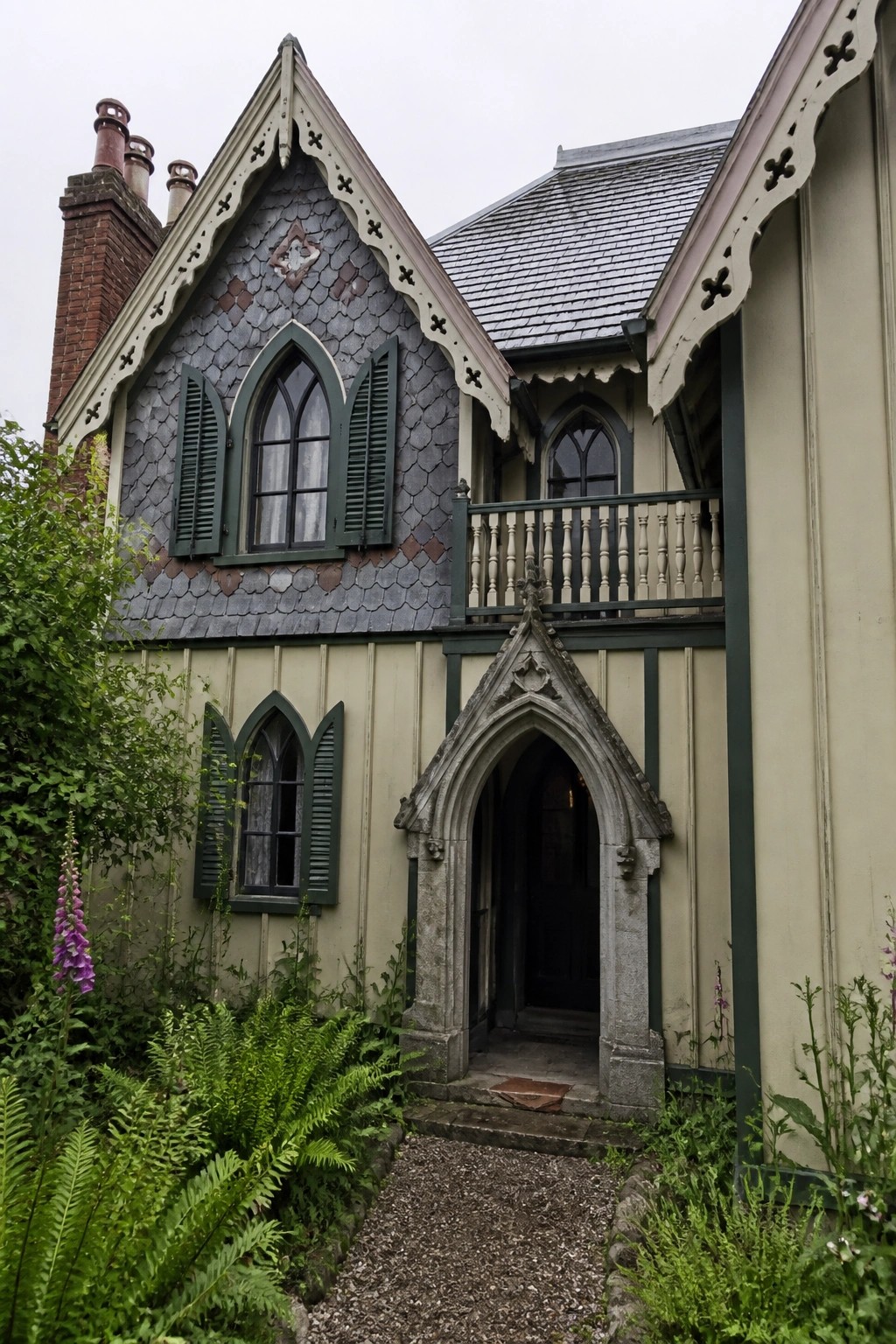
Victorian homes often gain their character from the way trim outlines every opening. The pointed stone arch at the entry and the matching window shapes keep the details consistent across the facade.
This works best on houses with steep rooflines where the trim can echo the gable angles. Stick to one or two accent colors so the details read clearly instead of competing with the siding.
Ornate Trim That Frames The Doorway
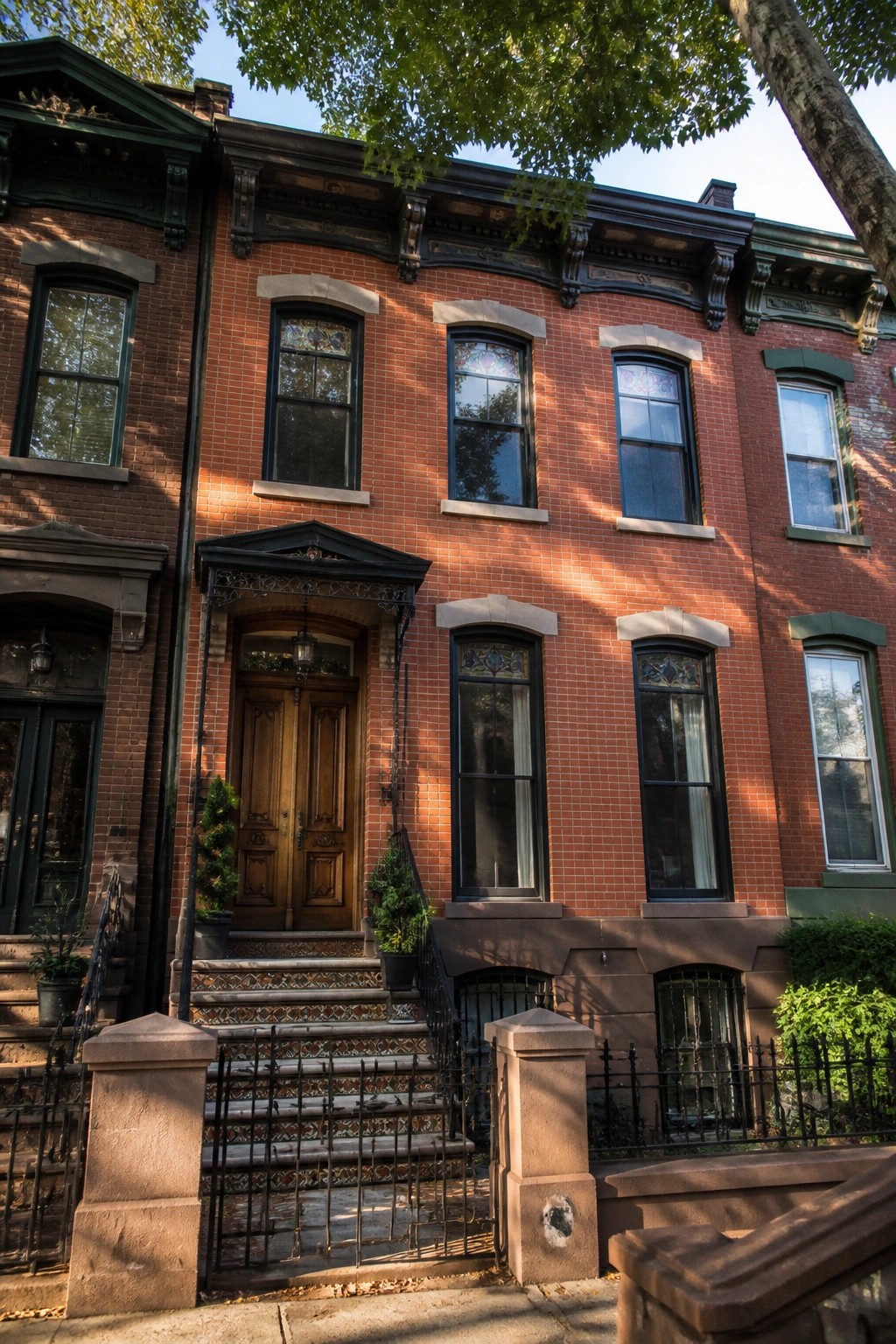
Ornate trim stands out most when it draws attention to the main entrance instead of spreading evenly across the whole facade. On this house the carved woodwork above the door creates a clear focal point that makes the entry feel more substantial than the rest of the brick surface.
This approach works best on homes that already have some architectural detail to build on. Keep the trim color slightly darker than the surrounding brick so the shapes read clearly from the street, and limit the heaviest carving to the door surround and maybe one or two key windows.
Using Ornate Trim To Define The Exterior

Ornate trim works well on Victorian homes because it gives the facade a clear structure without relying on bold colors or added features. The white detailing around the porch and gable draws attention to the roofline and entry while keeping the rest of the siding simple.
This approach suits older homes with existing porches and steep roofs. Stick to a single light trim color against a darker body shade, and limit the most detailed work to the front where it shows from the street.
White Trim That Outlines Key Lines
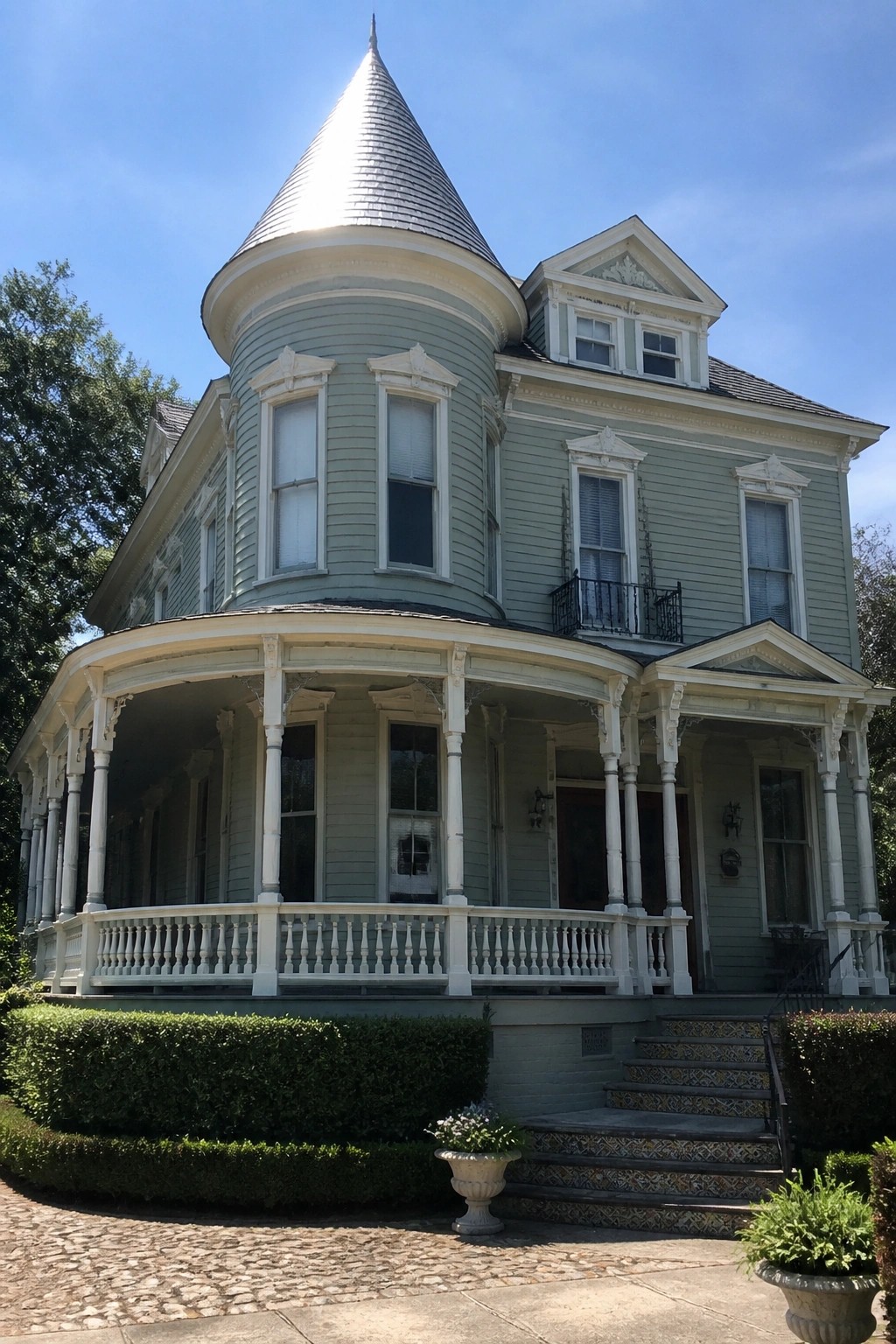
White trim stands out nicely against the soft green siding on this house. It follows the curve of the turret and runs along the porch, making the rounded shapes and turned posts easier to notice right away.
This works best on Victorian homes that already have strong architectural lines. Keep the trim color light so it frames the windows, railings, and roof edges without competing with the siding.
Ornate Trim Framing Bay Windows
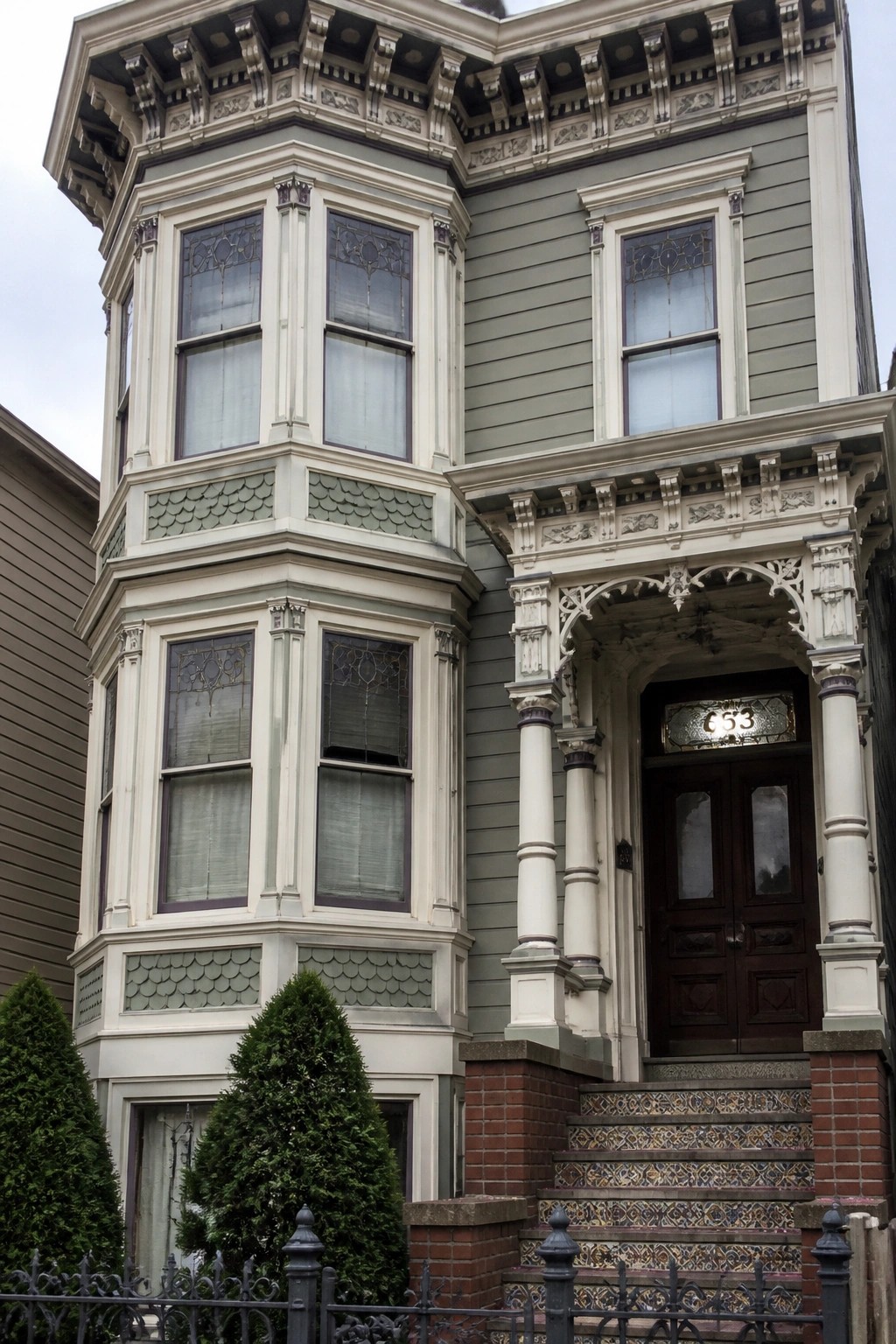
Ornate trim around a bay window gives a Victorian house its classic depth and presence. The layered details catch light and shadow, making the window stand out without needing extra color or size.
This works especially well on homes with projecting bays that already break up the facade. Use a light trim color against darker siding and keep the same trim style consistent around nearby windows and the entry so the whole front feels pulled together.
Ornate Trim Defines the Entry

Ornate trim in the gable works well because it draws the eye straight to the front door without needing extra color or bold paint. The carved detail sits right above the porch columns and gives the whole facade a finished look that feels true to Victorian style.
This approach suits homes that already have a clear roof peak over the entry. Keep the trim in the same color family as the house so it reads as part of the architecture rather than an add-on. Scale matters most, since trim that is too large can overpower a smaller porch.
Ornate Trim Around Windows And Doors

Victorian homes often rely on ornate trim to give the facade its character. The carved details around each window and the main entry help the house feel more finished and true to its period style.
This works best on homes that already have some existing woodwork to match. Restoring or adding similar trim can bring back the original look without major structural changes.
Contrast Trim Color to Highlight Details
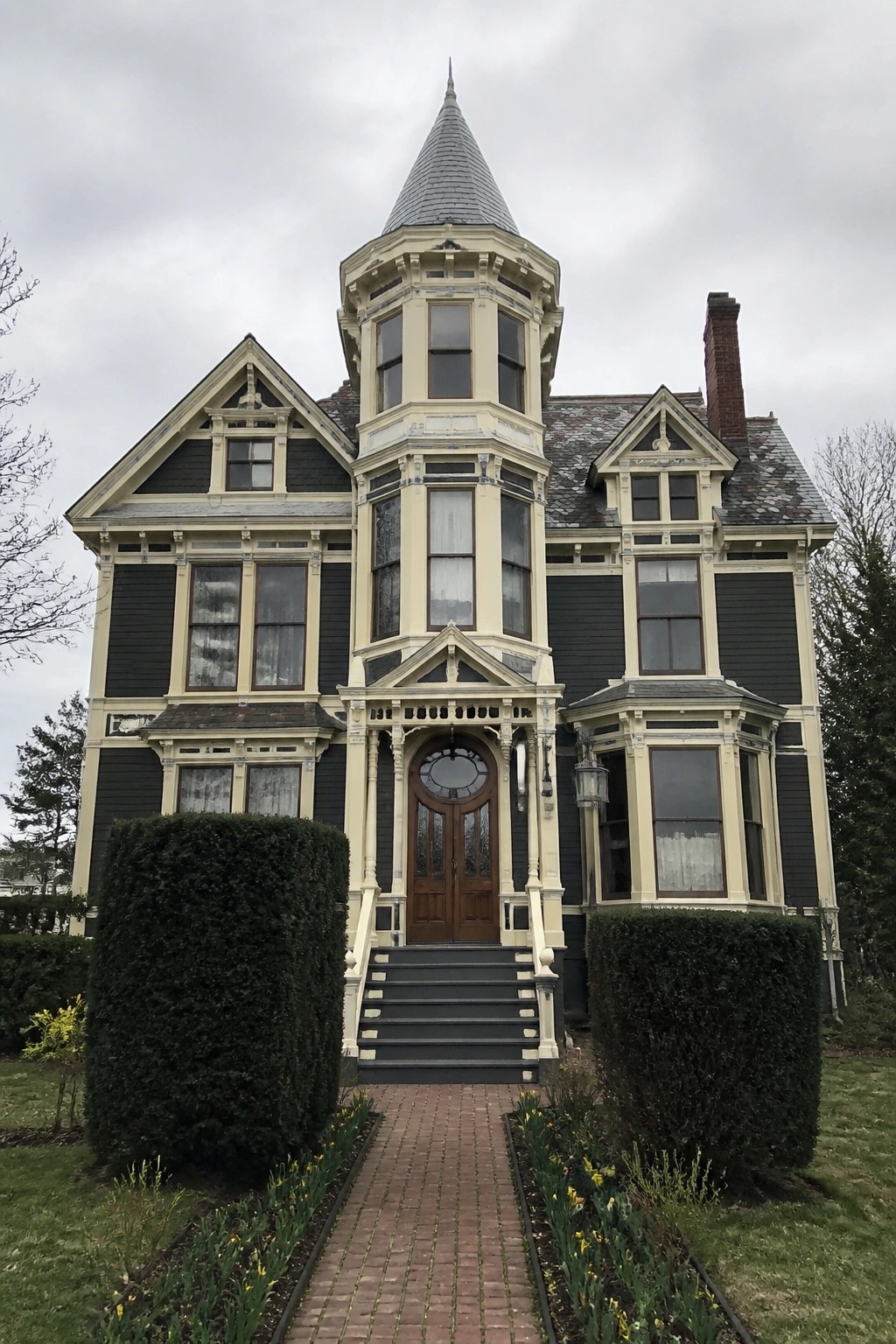
Painting the trim a much lighter shade than the main siding is one of the simplest ways to make ornate Victorian details stand out. The light color catches the eye and separates all the carved brackets, window frames, and roofline pieces so they do not blend into the background.
This approach works best on homes with strong architectural shapes and multiple layers of trim. Keep the siding dark and limit the trim color to two or three related light tones so the house stays cohesive instead of busy.
Paint Trim In A Contrasting Color
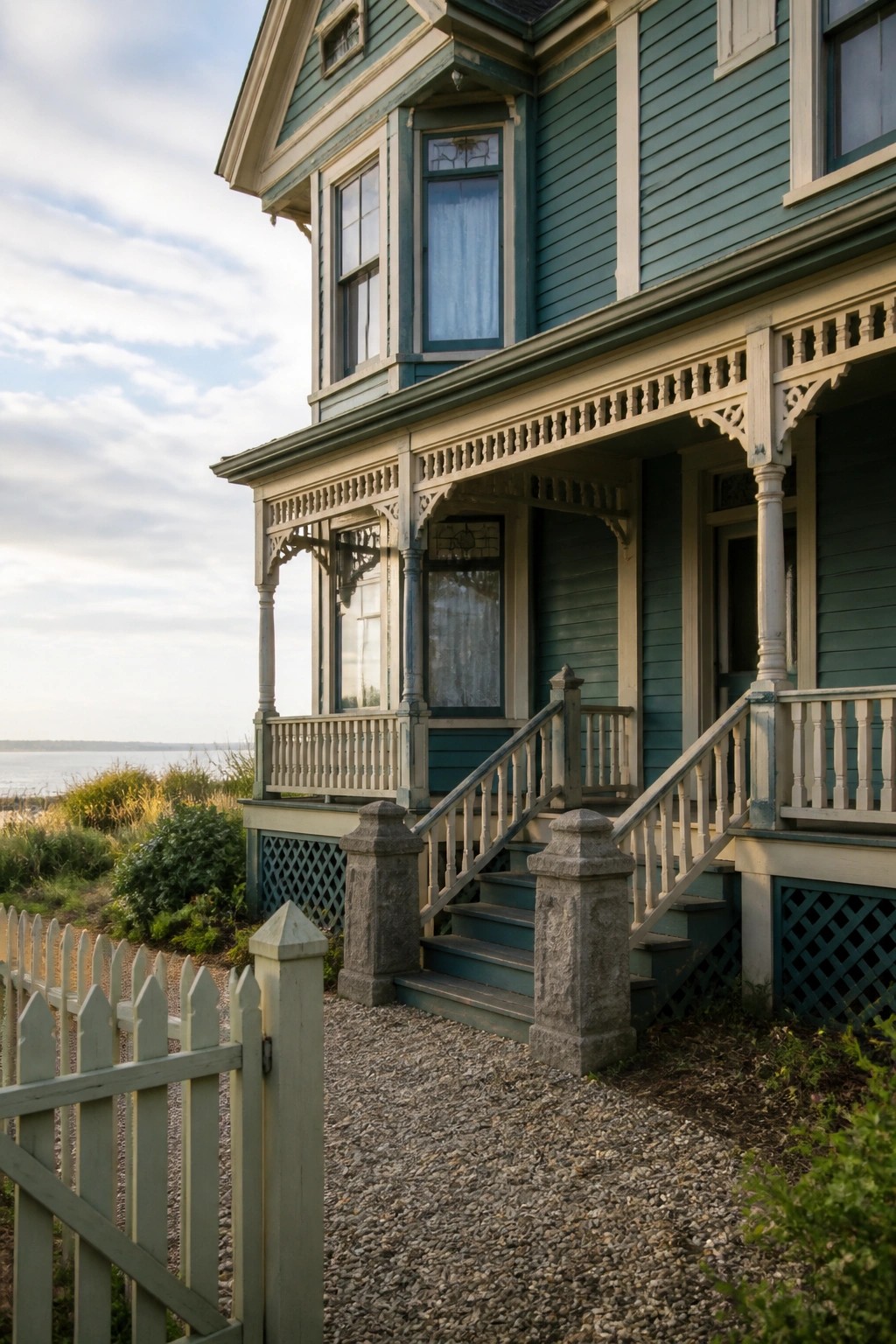
Victorian houses often rely on their wood trim to carry the character. Painting that trim a lighter shade than the main siding makes the brackets, railings, and cutouts read clearly from the street.
This works best on homes that already have strong architectural details. Limit yourself to two or three colors so the trim stands out without turning the facade into a jumble of competing shades.
Ornate Trim That Defines the Facade

The heavy cornice and repeating decorative details across the top of these homes give the whole row its clear Victorian identity. The trim pulls the separate entrances together and makes the facade feel finished even when the paint is kept simple.
This works well on attached homes or narrow lots where you want the architecture to carry the look. Match the trim color to the main siding or go one shade lighter so the details stay sharp without overwhelming the rest of the exterior.
Ornate Trim Highlights the Entry

Many Victorian homes gain their character from the trim work around the porch and door. Light colored detailing against a softer wall shade makes the entry feel more defined and gives the facade a finished look without extra color.
This approach works best on houses where the body color stays simple. Keep the trim crisp and let the carved patterns show clearly, especially around the porch posts and gable.
Ornate Trim Defines Victorian Exteriors

Ornate trim gives a Victorian house its real character. The carved details around windows, gables, and porch posts add layers that catch light and break up the facade without needing bright paint.
This works best on homes that already have strong shapes like bays or wide porches. Keep the main body color quiet so the trim stays the main feature instead of competing with it.
Frequently Asked Questions
Q: How often do I need to check the trim for damage?
A: Walk around the house every spring and fall. Look for cracks where water can get in and cause rot.
Q: Can I use vinyl trim instead of wood to cut down on upkeep?
A: Vinyl works for simple shapes but it will not hold the fine details Victorian trim needs. Stick with wood or a composite that carves well if you want the real look.
Q: What color choices make the trim pop without clashing with the siding?
A: Pick two or three shades from the same paint strip. Use the darkest on the most detailed pieces so shadows show them off.