In many homes the staircase connects not just levels but also the daily rhythms of the rooms around it.
I often notice that the railing choice can make a narrow stair feel more open or more confined depending on how much visual weight it carries.
Iron changes the feel more than most people expect.
It lets the eye travel while still providing the support people expect when moving through the house.
A few of these railing styles could translate well if you are planning changes to your own stairs.
Curved Stairs With Wrought Iron Railings
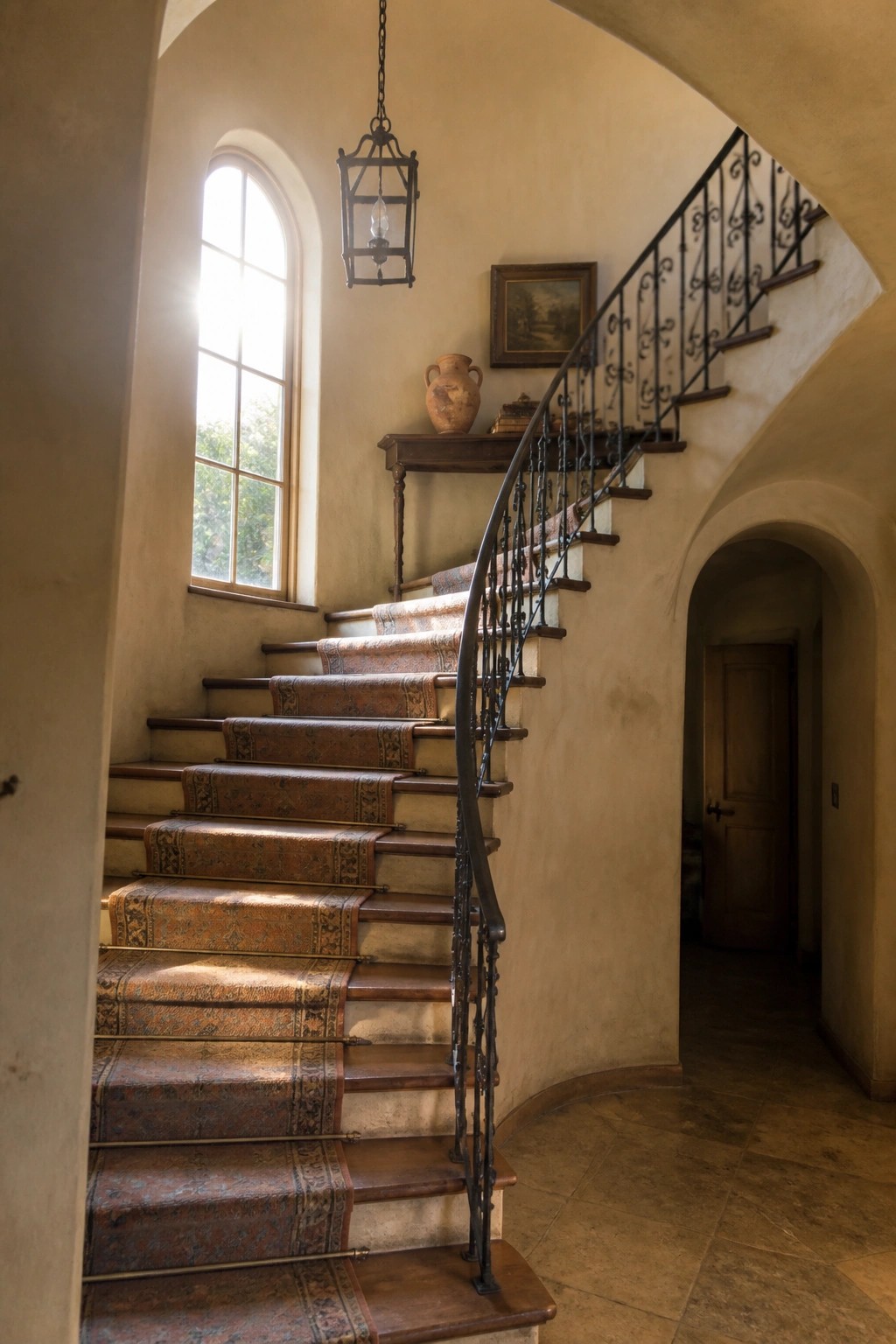
A curved staircase often needs a railing that can follow the line without closing off the space. Wrought iron does this well because it stays open and keeps the steps feeling light even when the turn is tight.
This setup works best in homes that already lean on warm wood and soft stone. Use a simple iron pattern so the wood treads and runner stay the main focus instead of competing with heavy detail.
Wrought Iron Railings On Tuscan Stairs
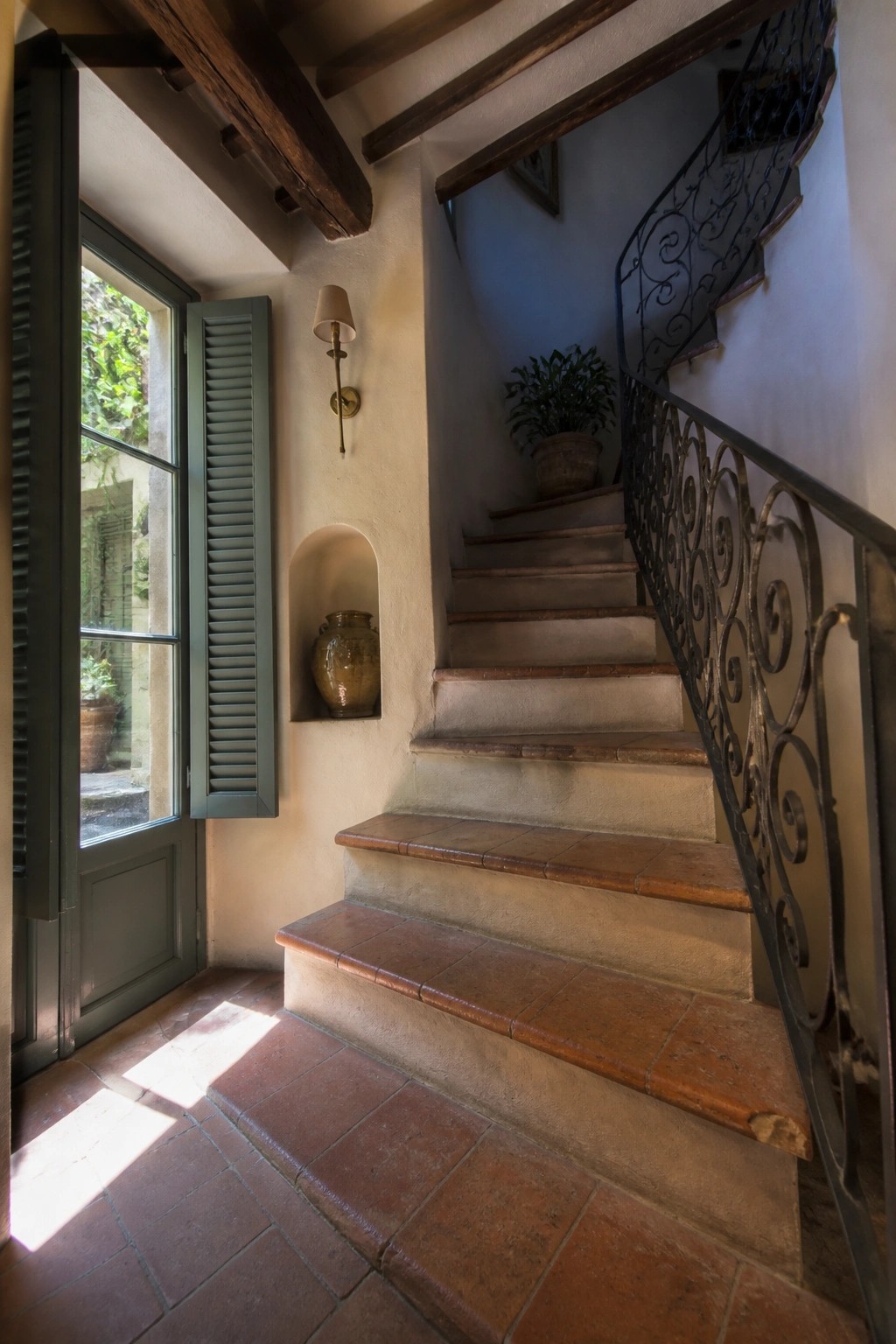
Wrought iron railings bring a simple kind of detail to staircases in Tuscan style homes. The dark metal curves stand out against plain plaster walls and keep the look grounded next to warm terracotta tiles.
This approach works best in homes that already have rustic finishes like exposed beams or tile floors. It adds interest without crowding the space, though the railing should stay fairly open so light still moves through the stairwell.
Built-In Bookshelves Along the Staircase
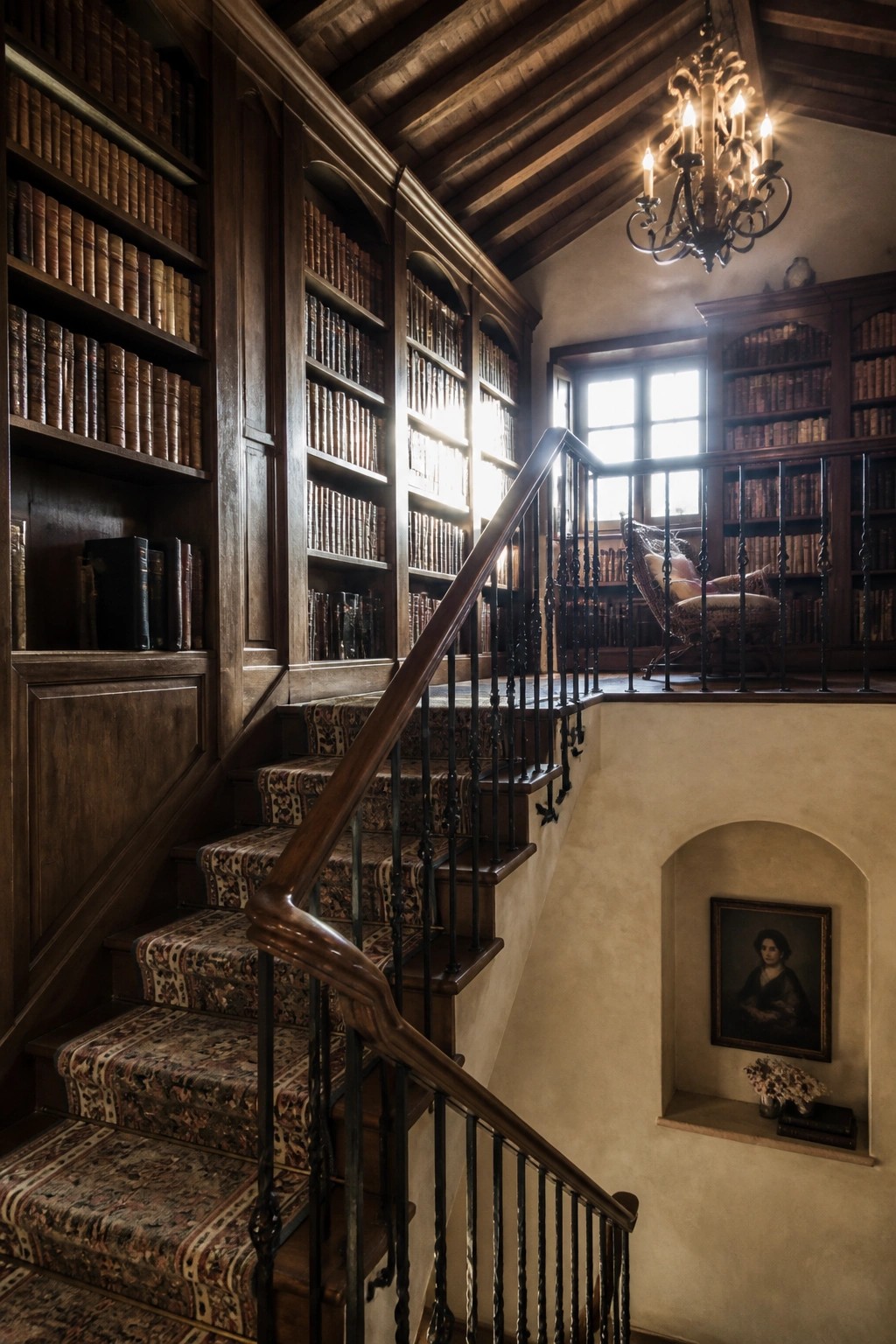
One simple way to make a staircase more practical is to run built-in bookshelves up the walls beside it. This turns the stairwell into extra storage without taking up floor space elsewhere in the room.
It works best in homes with high ceilings where the shelves can go all the way up. The dark wood and wrought iron railing help keep the space from feeling too closed in while still giving plenty of room for books.
Wrought Iron Railings On Stone Stairs
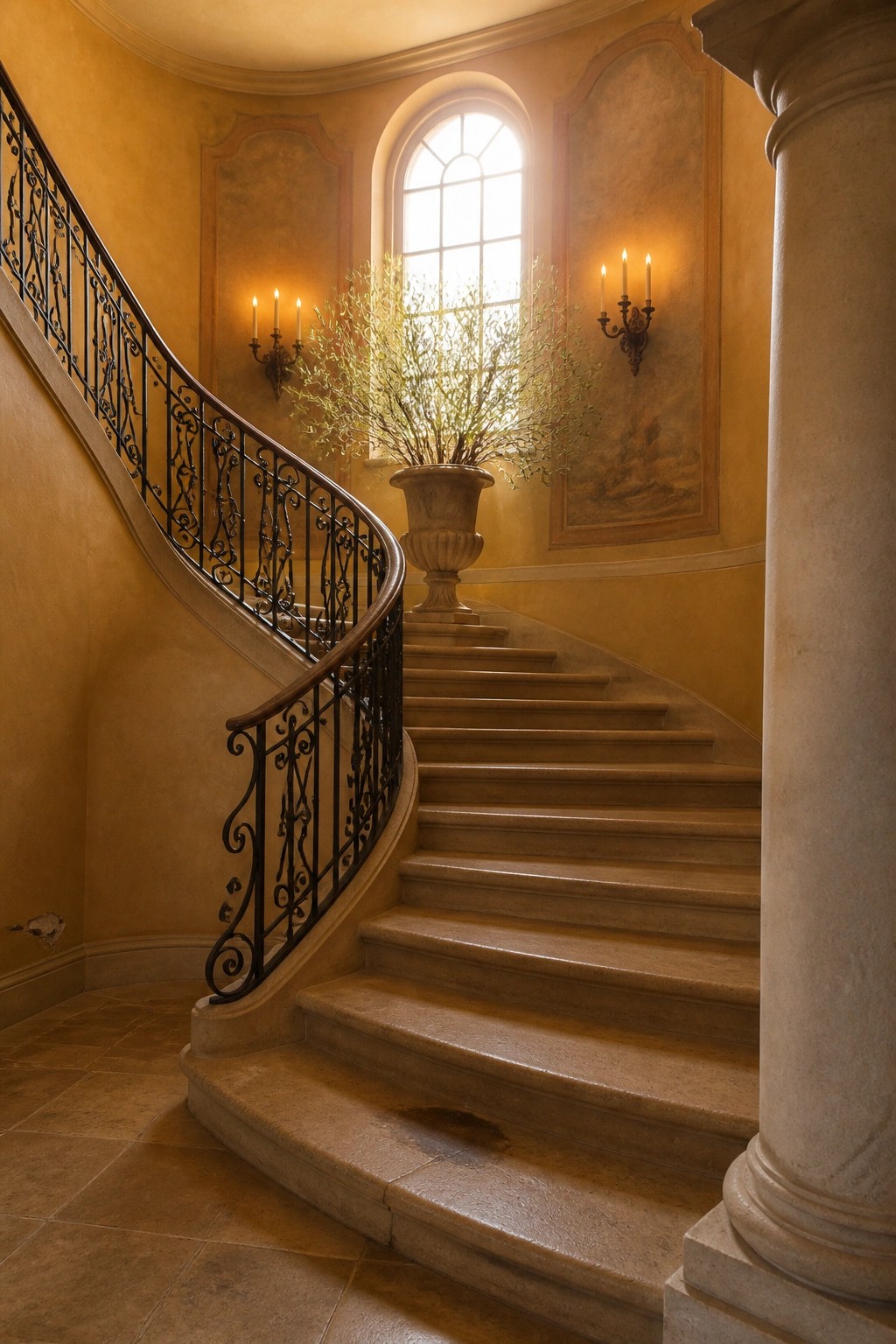
Wrought iron railings pair well with stone stairs in a Tuscan interior. The dark metal gives the light stone some contrast and keeps the staircase from feeling too heavy.
This setup works best in homes with warm wall colors and simple finishes. It suits entry stairs or main hallways where you want a bit of detail without adding much clutter.
Wrought Iron Railings on Tuscan Stairs

Wrought iron railings give a Tuscan staircase a clean outline without blocking light or making the space feel tight. The dark metal works especially well against pale walls and helps the stairs read as a clear feature rather than just a path between floors.
This choice suits homes that already use simple textures like tile and wood. A runner on the steps adds comfort and keeps the metal from feeling too hard underfoot.
Wrought Iron Railings on Stone Steps

Stone stairs already feel solid and lasting in a Tuscan house. A simple wrought iron railing keeps that strength without making the stairs feel boxed in or dark.
This setup works best in homes where light needs to move between levels and where the staircase sits near living areas. Stick to a basic scroll or straight bar pattern so the iron stays in the background rather than becoming the main feature.
Wrought Iron Railings With Wood Steps

A black wrought iron railing gives a staircase nice definition while still feeling light. It pairs well with wooden treads and plain walls because the contrast keeps things interesting without looking heavy.
This works best in homes that lean toward Tuscan or Mediterranean styles. Stick with a simple pattern so the railing does not overwhelm the rest of the stair.
Wrought Iron Railings With Stone Steps

Wrought iron railings pair naturally with stone steps in a Tuscan staircase. The dark metal gives the light stone some weight and keeps the whole run from feeling too plain or modern.
This works best in older homes or new builds that lean traditional. Keep the iron simple with some curves so it does not overpower the space, and let the stone stay a little rough.
Wrought Iron Railings With Terracotta Stairs
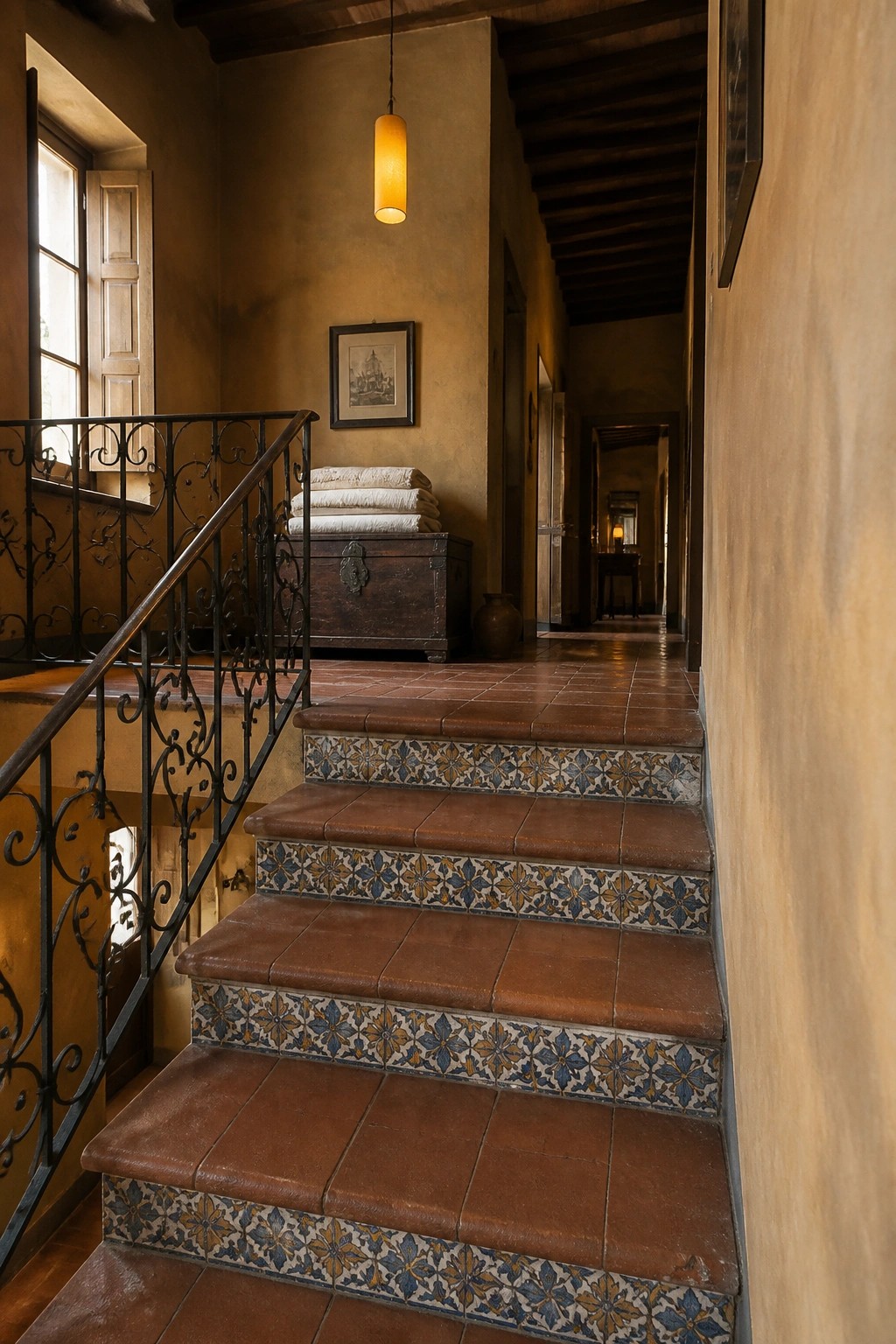
Wrought iron railings pair well with terracotta stairs because the dark metal stands out against the warm tile without competing with it. The simple curves in the railing keep the look traditional while still letting the staircase feel open and easy to use.
This approach suits homes with an older Tuscan or Mediterranean style where you want the stairs to blend into the rest of the house. Stick with a fairly open pattern on the railing so the space stays light and the tile details remain visible.
Wrought Iron Railings On Wooden Stairs

Wrought iron railings give wooden staircases a clear Tuscan feel without much extra work. The dark metal adds shape and contrast that plain wood alone does not provide, especially when the walls stay in soft neutral tones.
This works best in homes that already use warm wood and simple plaster finishes. Keep any other details minimal so the railing stays the focus and does not compete with too many extras.
Wrought Iron Railings With Wood And Stone

Wrought iron railings work especially well when they sit next to wood treads and stone walls. The dark metal gives the stairs a clear edge while still letting light move through the space, which keeps the whole area from feeling heavy.
This mix suits older homes or any space already using natural materials. Stick with simple iron patterns so the wood and stone stay the main focus.
Grape Details On Wrought Iron Railings
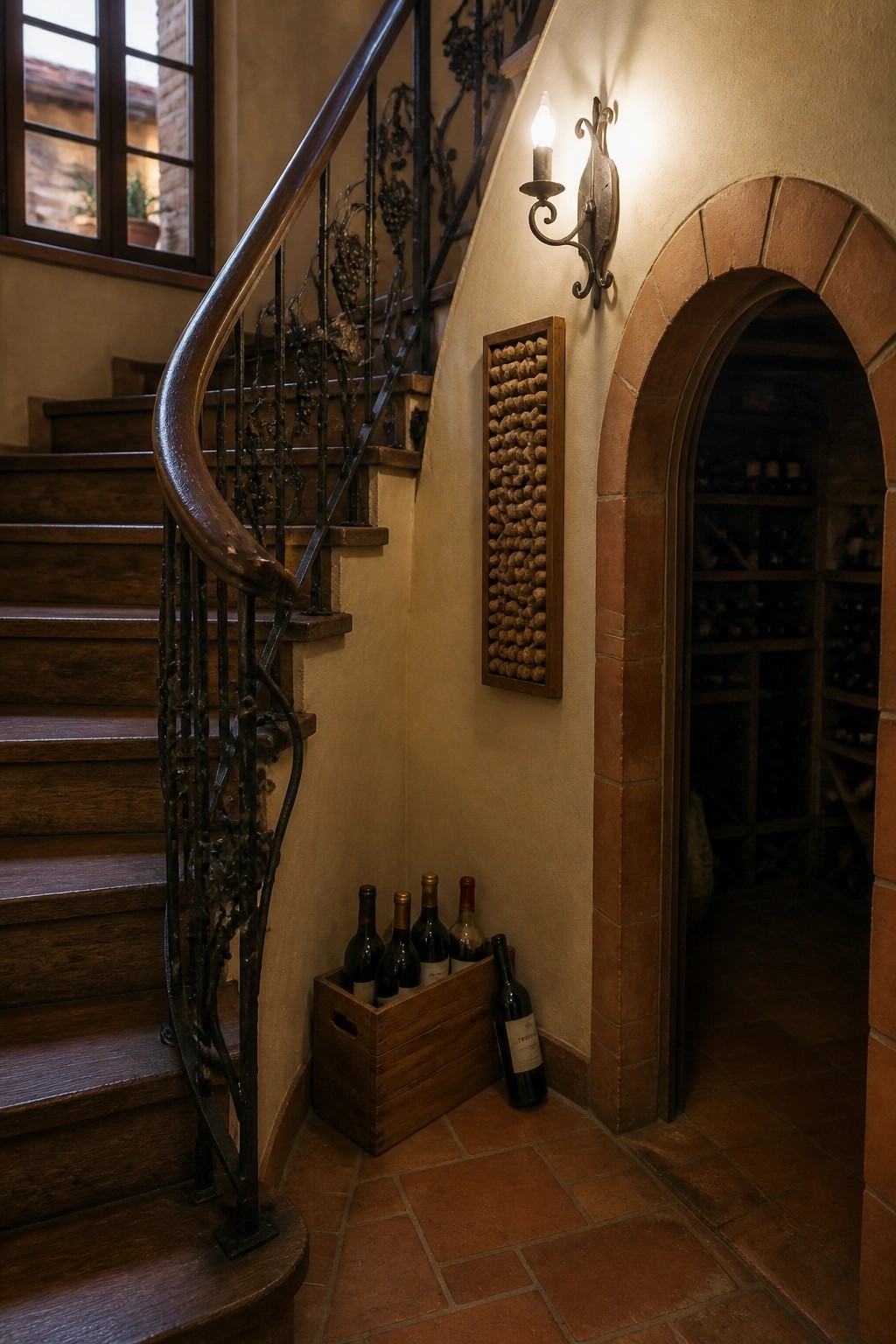
Wrought iron railings with grape clusters give a staircase a direct link to a nearby wine cellar. The metalwork picks up the theme without needing extra decoration or color changes. This approach works especially well in homes that already store wine near the stairs.
Try it when the cellar sits right under or beside the staircase. Keep the rest of the railing simple so the grape shapes stay noticeable. It suits older homes or new builds that lean into Tuscan materials like tile and plaster.
Wrought Iron Railings On Wood Stairs
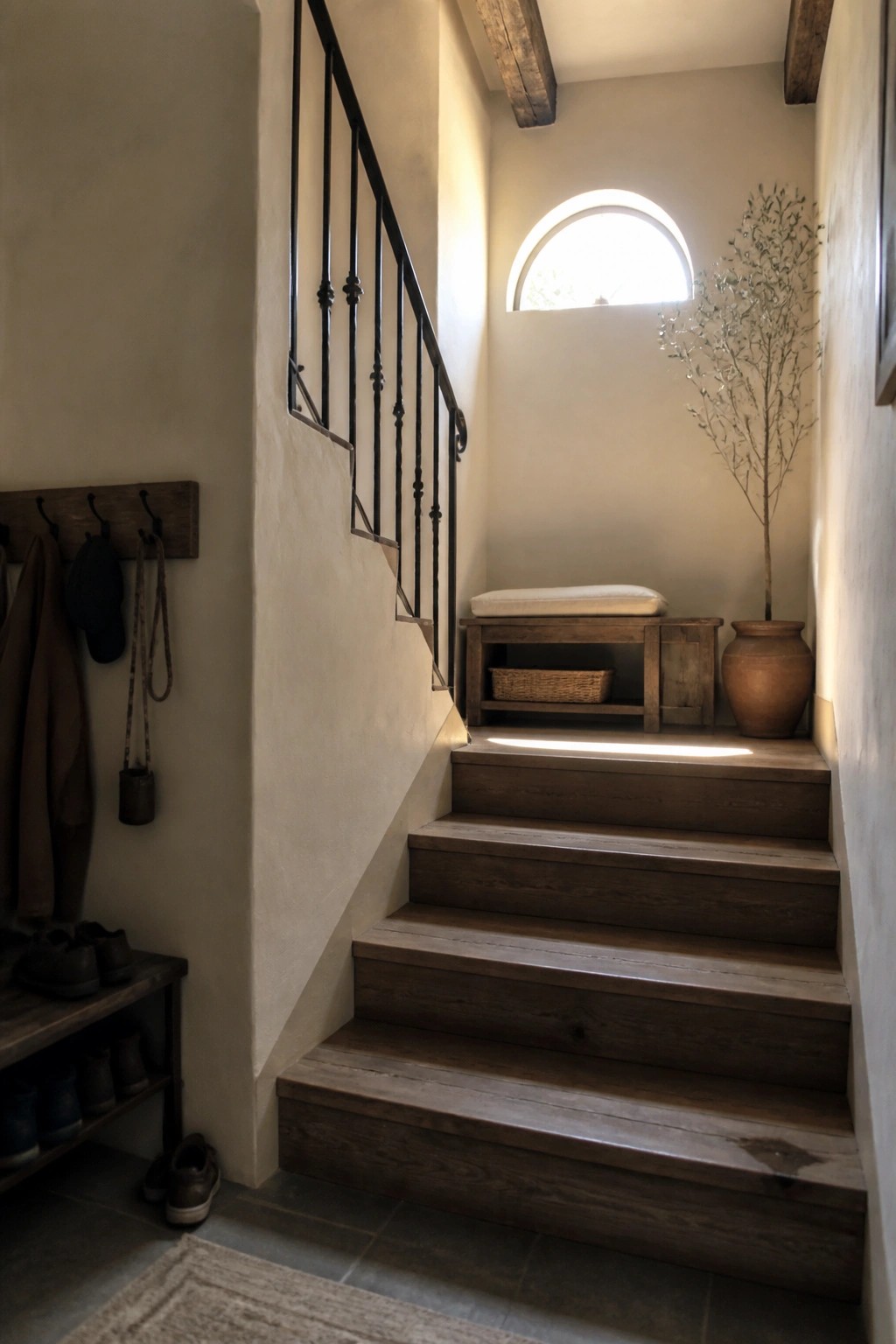
Wrought iron railings give a staircase that classic Tuscan touch without making the space feel heavy. The dark iron shows up well against light walls and natural wood, which keeps the whole run looking open and balanced even in a smaller stairwell.
This works best in homes that already lean toward warm neutrals and simple materials. Try it where you want a bit of detail but still need the stairs to feel practical day to day.
Add a Runner on Stone Steps

A runner brings some softness and pattern to stairs made of stone or marble. It keeps the steps from feeling too hard underfoot while the iron railing still stands out as the main detail.
This works best in homes that lean toward classic or Tuscan styles. Choose a traditional pattern, secure the runner well on each tread, and let the railing remain the stronger visual element.
Wrought Iron Railings That Let Light Through

Wrought iron railings work well on Tuscan staircases because they stay open instead of blocking the view or the light. In smaller landings or narrow stairwells this keeps the space from feeling closed off even when the walls are thick and the windows are modest.
The style fits homes with terracotta floors and warm plaster walls. Keep the pattern simple with just a few details so the railing adds character without taking over the look of the stairs.
Stone Treads With Wrought Iron Railings
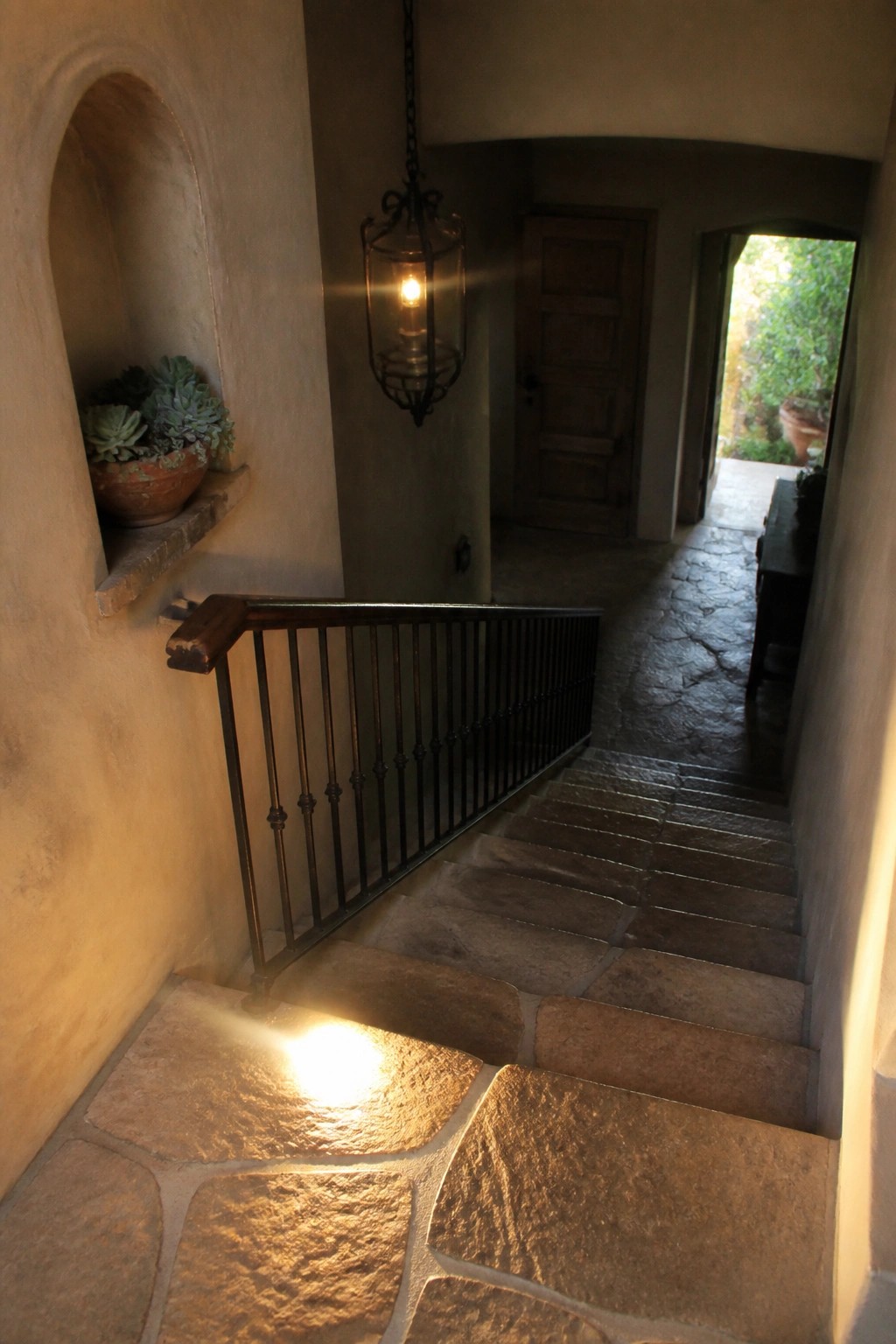
Stone treads paired with a simple wrought iron railing give a staircase real weight and character. The rough texture of the steps plays off the dark metal in a way that feels sturdy and lasting rather than overly finished.
This combination works best in homes that already lean on natural materials like plaster or wood. It holds up well to daily use and keeps the stairs from feeling light or temporary.
Wrought Iron Railings On Curved Stairs
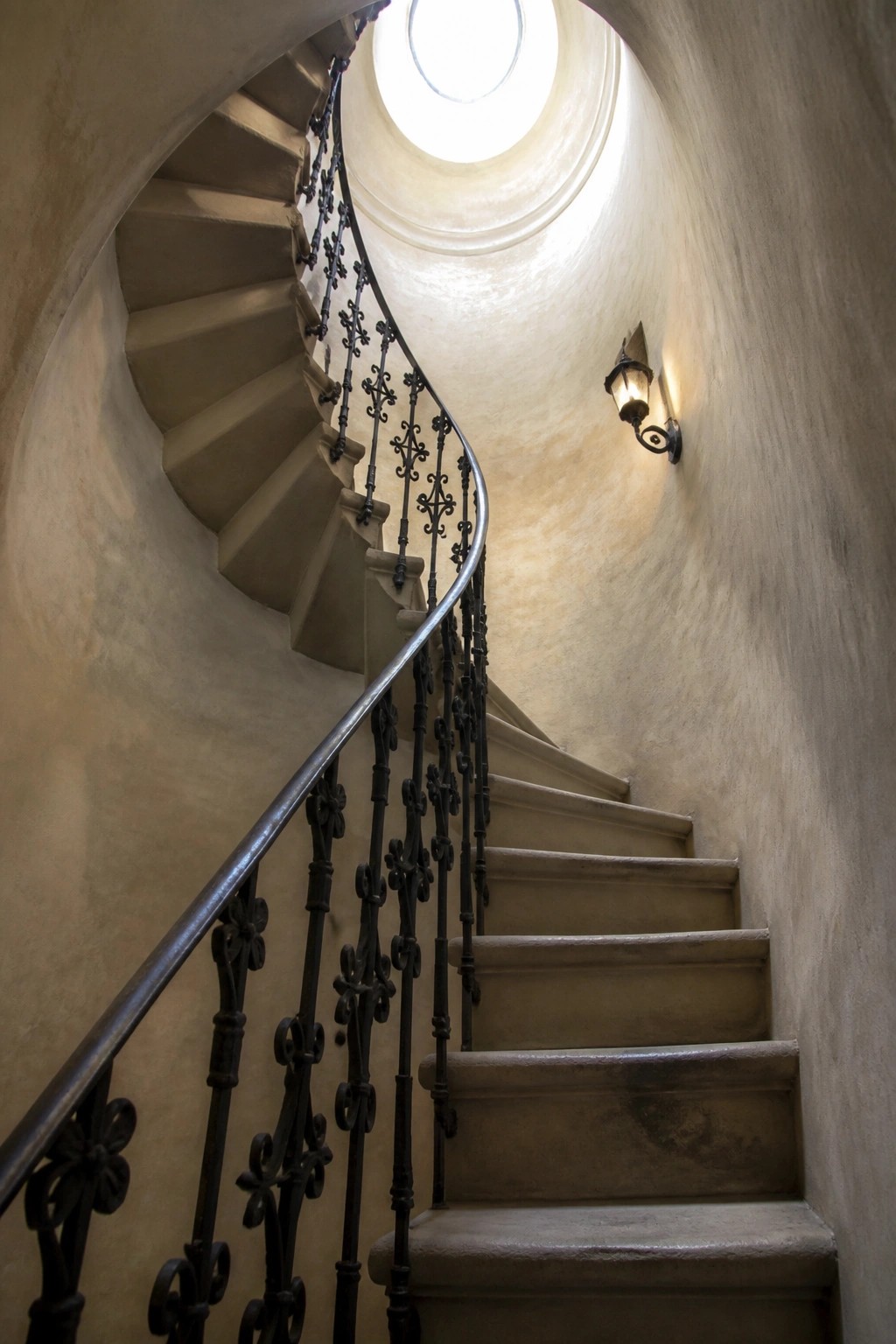
Wrought iron railings give a curved staircase the right amount of detail without making the space feel heavy. The open pattern lets light move through the stairwell while still providing a clear boundary that feels solid under hand.
This approach works best in homes with plaster walls and simple finishes. Keep the iron design moderate so the stair does not crowd the room or block the view from one level to the next.
Mixing Wrought Iron Railings With Wood Stairs

Wrought iron railings give a staircase some visual weight without blocking light or the view ahead. The open scrollwork keeps the steps from feeling boxed in, which works especially well when the stairs lead straight toward an outdoor space.
This approach fits homes with Tuscan or Mediterranean details, where the dark metal can echo stone or brick outside. It works best on stairs that are fairly open already, since the railing adds pattern rather than solid structure.
Wrought Iron Railings On Stone Stairs
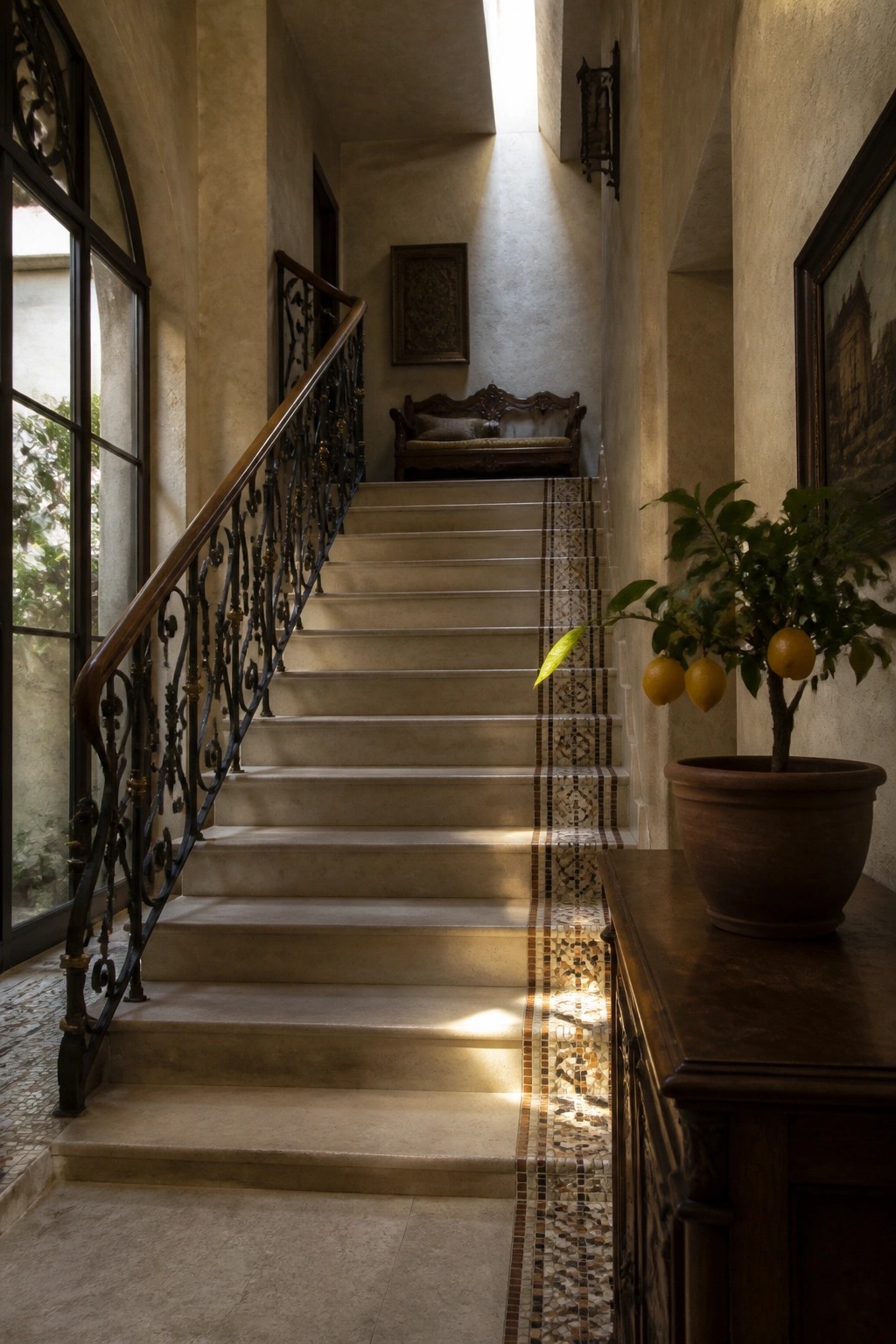
Wrought iron railings pair well with stone stairs because the dark metal stands out against the pale steps. This contrast keeps the staircase from feeling too plain while still looking grounded in a Tuscan setting.
The look works best in homes that already use warm stone and simple plaster walls. Stick with an open iron pattern so the stairs do not feel closed in, and match the handrail to any nearby wood trim for a quiet connection.
Natural Runners On Stone Stairs
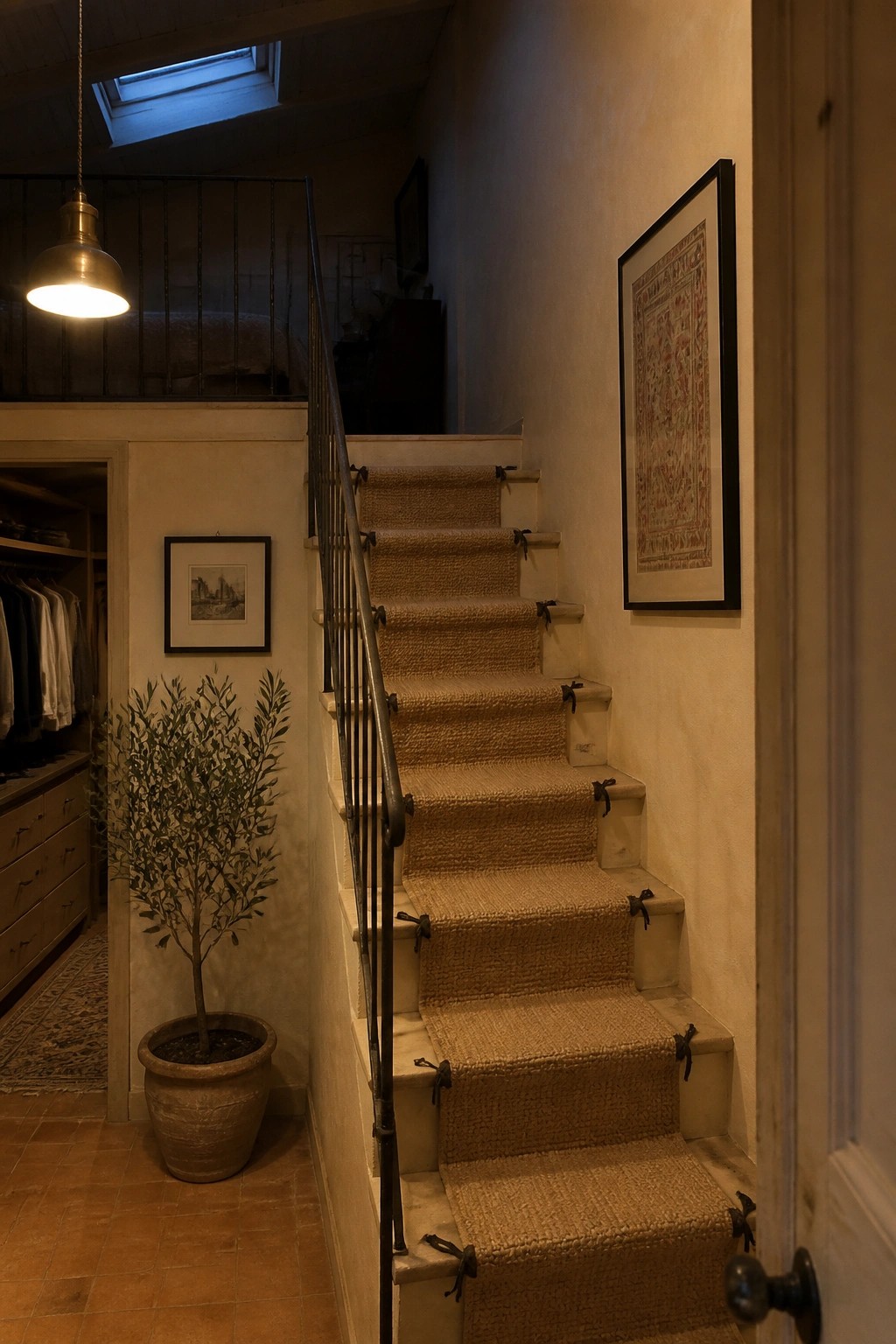
Many Tuscan homes use stone stairs because they last and fit the style, but they can feel cold underfoot. Adding a simple woven runner changes that without hiding the material underneath.
This approach works best in homes that already have terracotta floors or warm plaster walls. The runner softens each step and pairs cleanly with a basic wrought iron railing, which keeps the overall look balanced rather than heavy.
Frequently Asked Questions
Q: Can I install wrought iron railings on stairs that already have wood treads?
A: Yes you can. Weld the iron directly to metal brackets set into the wood or concrete. This keeps the structure solid without major changes to your existing steps.
Q: How often do these railings need cleaning to stay looking good?
A: Wipe them down with a damp cloth every couple of months. A light coat of protective spray once a year blocks dust buildup and minor corrosion. Skip harsh cleaners that strip the finish.
Q: What if my staircase turns a corner and needs a matching railing section?
A: Measure the full run first so the iron flows continuously around the bend. Fabricators can bend the bars to fit without awkward joints. This keeps the Tuscan feel intact from top to bottom.