I’ve always noticed that a covered outdoor area only feels like part of the house when the roof and posts create real shade and a sense of shelter.
In practice many patios look fine on a sunny day but stay empty once the weather turns or the light gets harsh.
Usability comes first.
Looking at these Tuscan setups I keep coming back to how the loggia sits against the house and how that connection affects daily use rather than just the view from inside.
A couple of the proportions and material choices here are details I would measure out for myself before starting any similar build.
Long Tables Work Well Under Covered Loggias

A long wooden table placed under a covered loggia gives you room for bigger groups without needing to move inside when the weather shifts. Pairing it with a fireplace at one end keeps the space comfortable on cooler nights and turns the whole area into a spot people actually use.
This works best on homes that already have some architectural cover overhead. Keep the table simple and solid so it can handle daily use, and choose seating that stays comfortable even when the air cools.
Adding a Daybed to Your Loggia

A daybed gives a covered loggia an easy way to handle lounging without needing much extra space. It turns the area into a spot where people can stretch out, read, or rest during the day while staying protected from sun or light rain. The simple frame and loose pillows keep the look light and practical.
This works best on homes with thick walls and open arches like many Tuscan styles. Pair it with a low table and a couple of chairs so the space can shift between sitting and lying down. Keep the bedding in light colors that hold up to outdoor use and can be swapped out when needed.
Adding A Working Kitchen To A Covered Loggia
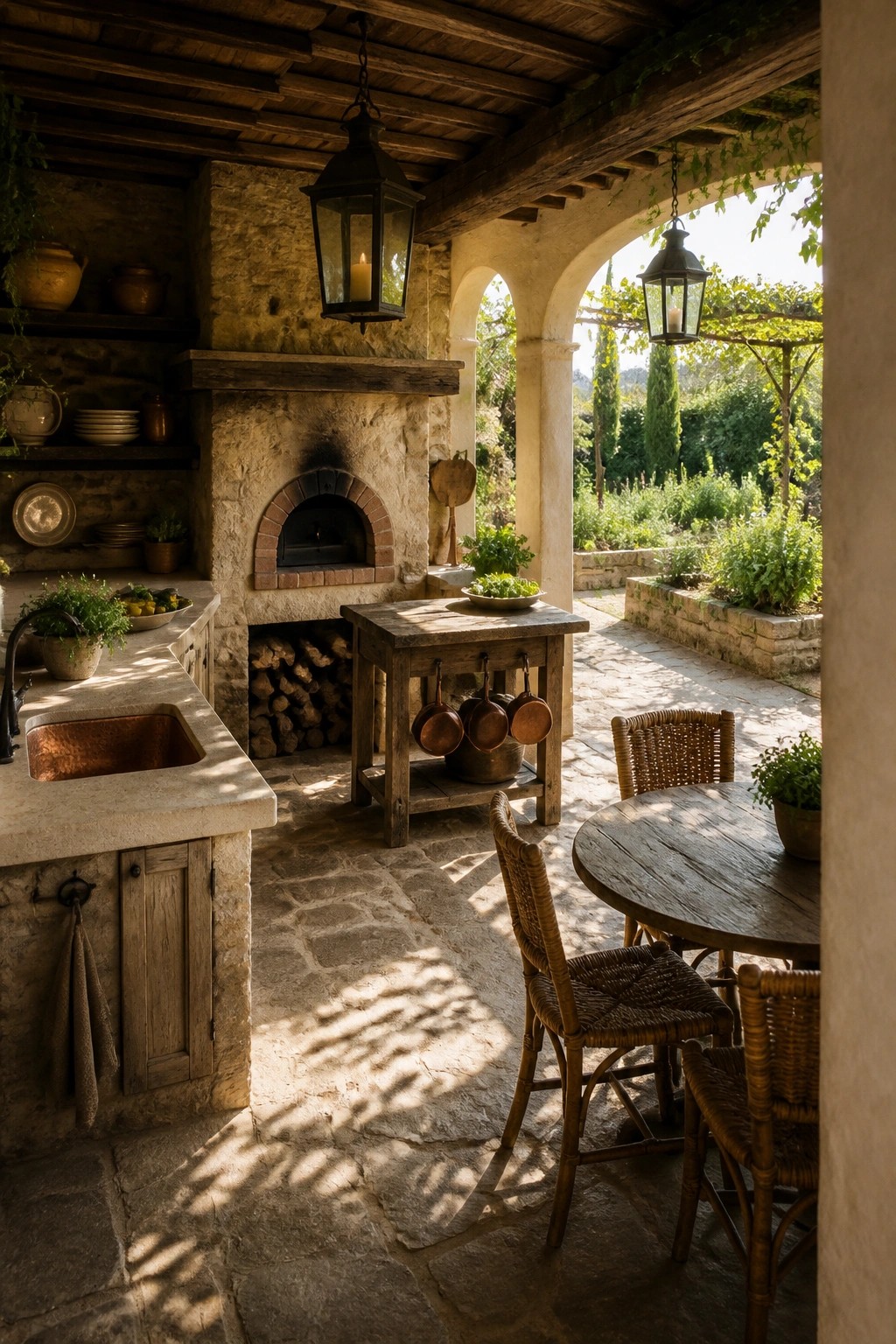
Fitting a full kitchen into a covered loggia turns the space into a place where you can actually cook and eat without constant trips inside. The stone base and overhead beams keep everything sheltered while still feeling open to the garden.
This layout suits homes that already have a loggia or deep porch and get regular use in mild weather. Keep the sink and counters along one wall so the dining table stays clear and the walkway stays open.
Covered Loggias That Open To The Pool

Placing lounge chairs inside a covered loggia next to the pool gives you shade without losing the connection to the water. The open arches keep the space bright and let you watch the pool while staying out of direct sun.
This works best on homes with a simple stucco exterior and stone paving that continues from the loggia out to the pool deck. Match the floor material so the two areas feel like one space rather than separate rooms.
Long Tables Work Well Under Covered Loggias

A long table under a covered loggia gives you a place to gather without worrying about sun or light rain. The shelter keeps the space usable through more of the day while the open sides keep the view and fresh air.
This works best on homes that already have some roof structure along the back or side. It suits warmer climates where people eat outside often. Keep the table simple and sturdy so it can stay out year round without much fuss.
Anchor Your Loggia With A Fireplace

A fireplace gives the covered loggia a clear center and makes the space usable on cooler evenings. It turns the area into something closer to an extra room instead of just a place to sit when the weather is perfect.
This works best on homes where the loggia sits along a solid wall. Keep the seating low and simple across from the hearth so the fire stays the main draw. Use the same plaster and wood tones inside and out so the indoor and outdoor areas feel connected.
Built-In Niches Keep Outdoor Kitchens Practical

Stone counters with open niches underneath give you a place to stash firewood and cutting boards right where you need them. This setup cuts down on trips back inside and keeps the work surface clear during cooking. The rough texture of the stone also holds up to weather better than cabinets would in an open-air space.
This approach suits covered loggias on homes with a rustic Tuscan feel. It works best when the niches stay shallow enough to reach easily and when you limit what goes in them to items that can handle some dust and temperature swings.
Built-In Seating Makes A Loggia Feel More Livable

A long bench built right into the wall gives a covered loggia a simple, settled look without crowding the space. It turns the area into a spot where people actually sit and stay awhile instead of just passing through. The cushions add comfort while the structure itself keeps everything neat and low-maintenance.
This approach works best on homes with deep overhangs or stone columns that already create shade. It suits older or Mediterranean-style houses where you want the outdoor area to feel like an extension of the indoors. Use sturdy fabric on the cushions and keep the table low so the whole setup stays relaxed and easy to use.
Built-In Bar Counters For Outdoor Spaces

A bar counter built into the loggia gives the space a clear purpose for drinks and casual hosting. Guests can stand or sit at the stools while everything stays within reach, and the counter itself helps define the edge of the seating area without needing extra furniture.
This setup works well on terraces that already have a roof overhead and solid flooring. Stone or masonry counters hold up best in the weather, and the height should match standard bar stools so people actually use them instead of treating the counter as decoration only.
Adding a Fountain to Your Loggia

A small fountain adds movement and a cooling sound that makes a covered loggia feel more comfortable on warm days. It also gives the space a clear focal point without needing a lot of extra furniture or decoration.
This works best in areas that already have stone or terracotta underfoot, since the tile on the fountain can echo those materials. Keep the rest of the seating simple so the water feature stays the main point of interest.
Using a Rug to Define Seating in a Covered Loggia

A rug helps turn an open covered space into something that feels more like a furnished room. It pulls the chairs and table into one clear group and keeps the arrangement from drifting across the tile floor. In this case the natural fiber rug sits right under the seating, which makes the whole spot read as intentional rather than scattered.
This approach works best in loggias that already have good shade and solid flooring. Keep the rug simple and durable so it can handle outdoor use without looking out of place. Position it so all the main furniture legs rest on it, then add just a few pieces like low tables or lamps to finish the zone.
Creating an Outdoor Kitchen Under a Covered Loggia

A covered loggia makes an outdoor kitchen feel more permanent and usable through different seasons. The roof and columns give the cooking area real structure so it does not just look like a grill shoved against the house wall.
Put the seating and fire pit just outside the sheltered zone so the cook stays comfortable while guests can still gather around the flames. This works best on homes with a pool or flat backyard where you want one main spot for both cooking and relaxing instead of scattering pieces around the yard.
Covered Loggias Built for Everyday Meals

A round wooden table placed right in the middle of a covered loggia gives the space a purpose without needing much else. It turns what could be just a walkway into a spot where people actually sit down for coffee or a meal, and the roof overhead keeps things comfortable even when the sun is strong.
This setup works well on homes with a bit of overhang or a simple beam structure. Keep the furniture plain and sturdy so it can stay out year round, and leave enough room around the table for chairs to pull back easily. It suits older style houses that already have textured walls and stone floors, since the wood tones blend right in without extra decoration.
Built-In Seating Along The Walls

One simple way to make a covered loggia feel usable every day is to add built-in seating right along the outer walls. This keeps the floor clear and turns the whole edge of the space into a place where people can sit, lean, or stretch out without crowding the middle.
The approach works best on terraces that already have low solid walls, since the cushions can rest directly on them. It suits homes with steady sun and open views, and it needs very little extra furniture beyond a central table to hold drinks or food.
Built-In Benches Keep Covered Spaces Comfortable

A built-in bench along one wall gives you seating that stays put and fits the space without extra furniture to move around. It makes the loggia feel more like part of the house instead of a separate area you only use sometimes.
This works best in homes with stucco walls and brick or tile floors. Keep cushions simple in neutral tones and add a light throw for cooler nights. The bench can run the full length of the wall so more than one person can sit comfortably at a time.
Covered Loggias With a View of the Courtyard
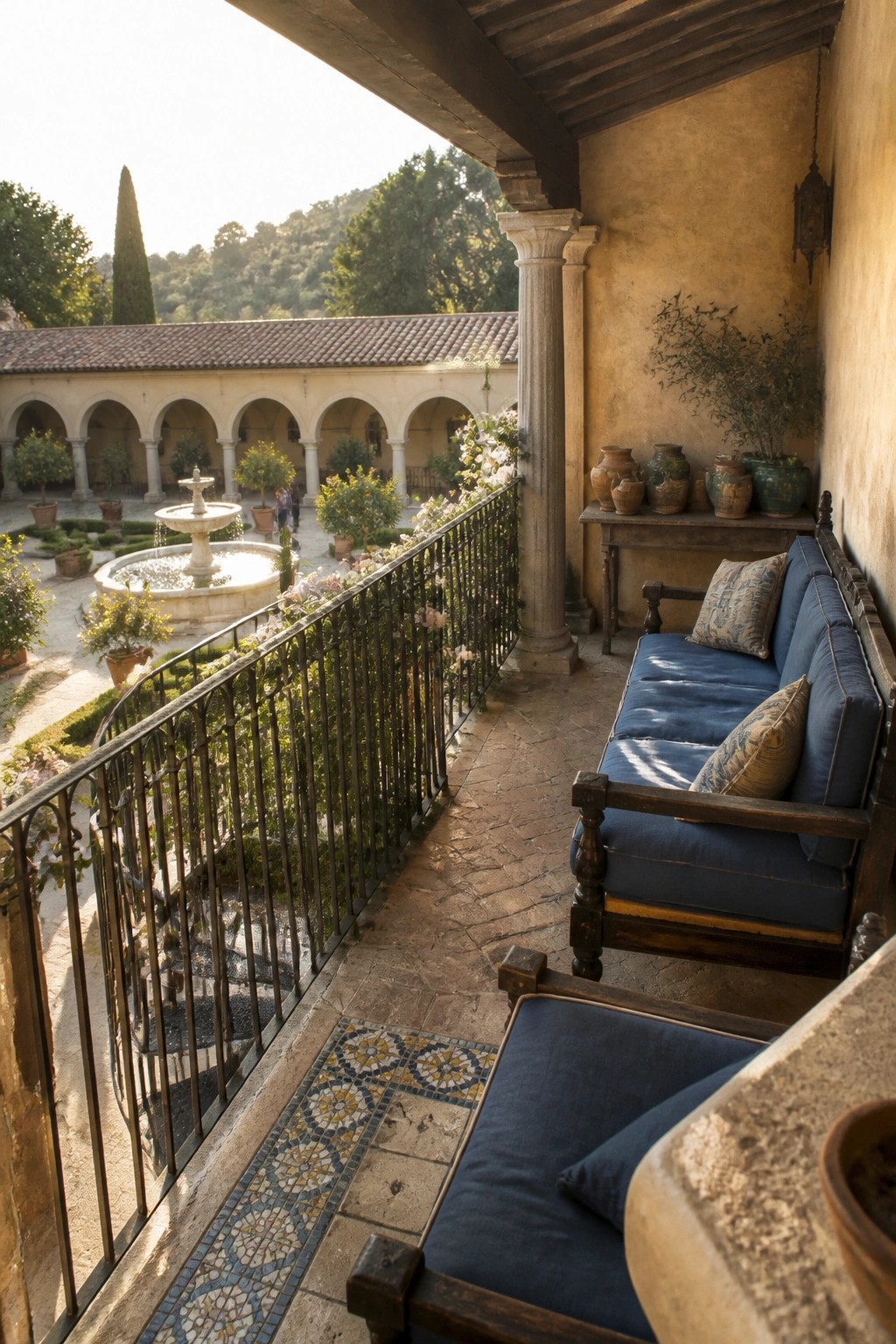
A covered loggia with seating gives you a shady place to sit while looking out over a lower courtyard. The open railing keeps the view clear, so the garden and fountain feel close even when you are up one level.
This layout works best on homes with an existing upper floor or a slight slope. Use simple wood furniture that can stay outside and avoid blocking the edge with too many plants.
Center Your Outdoor Kitchen Around a Wood-Fired Oven

A wood-fired oven built into the back wall gives the whole loggia a clear purpose. It turns the space into a place where you actually cook instead of just sitting outside. The stone structure holds heat well and stays useful even on cooler evenings.
This setup works best when you leave a solid work table right in front of the oven so you can shape dough or pull food out without extra steps. It suits homes with mild nights and enough roof cover to keep the oven dry. Just make sure the flue has good draw so smoke does not linger under the ceiling.
Center a Fire Pit in the Covered Loggia

A fire pit placed at the center of the patio turns the covered space into a natural spot for people to gather. It gives the area a clear purpose and keeps everyone oriented around one shared feature instead of spreading out.
This works especially well on homes where evenings can turn cool but the climate stays mild overall. Use simple seating in different materials around the edges so the fire pit remains easy to reach and the whole layout stays practical for daily use.
A Covered Loggia Creates Useful Shade
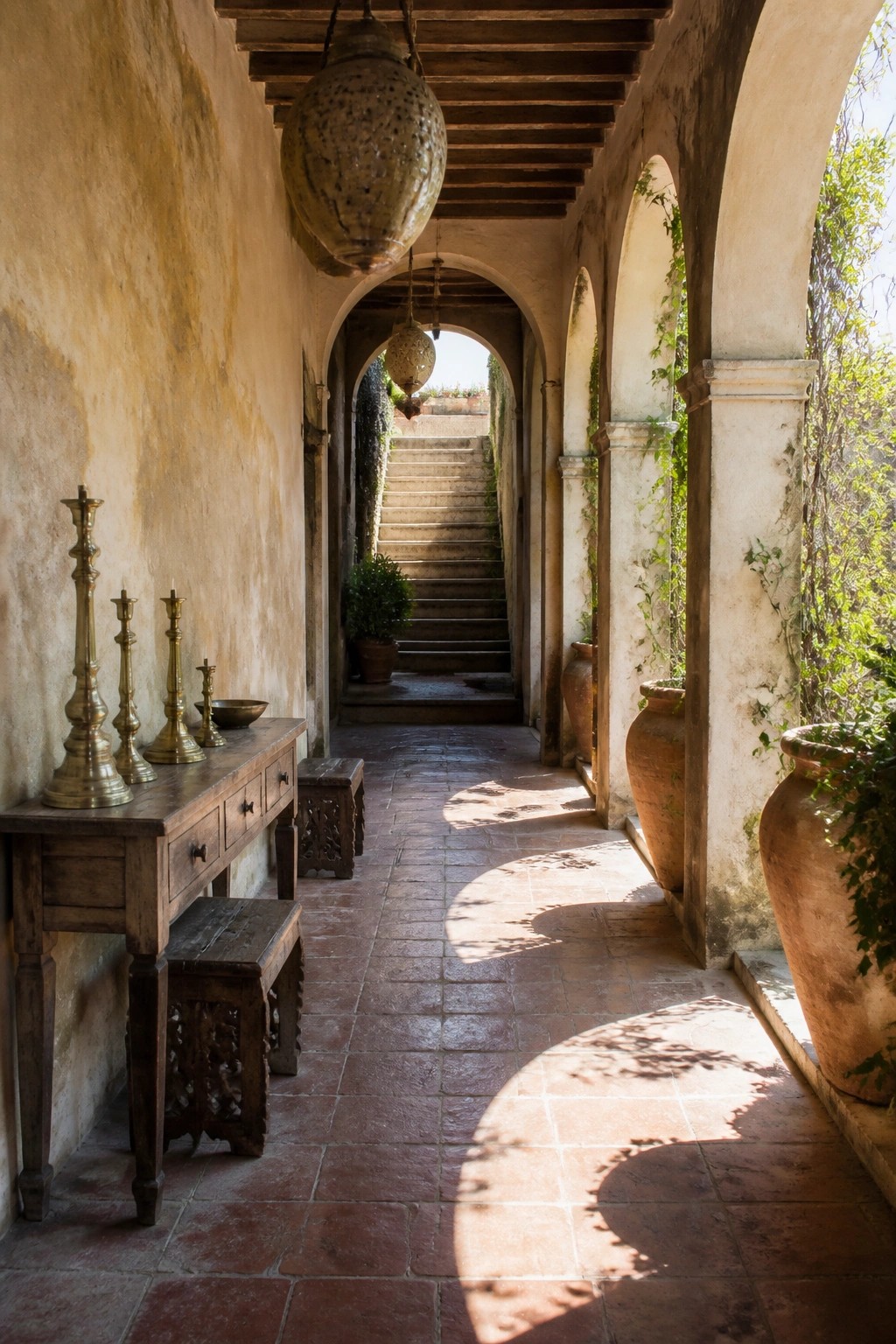
A covered loggia with open arches gives you a shaded walkway that still feels tied to the garden. It turns a simple side passage into a spot where you can actually spend time without worrying about harsh sun or quick changes in weather.
Place a few sturdy wooden pieces along one wall and keep the floor in terracotta tile for an easy surface that holds up outdoors. This layout works best on homes with warm, sunny climates and helps make the space feel like an extension of the house rather than just a corridor.
Frequently Asked Questions
Q: How do they keep the loggia cool when the sun beats down outside? A: Position ceiling fans overhead to move air across the seating area on hot afternoons. Choose light-colored fabrics for cushions so they do not trap heat the way dark ones do.
Q: What flooring holds up best under a covered Tuscan loggia? A: Terracotta tiles work great because they handle foot traffic and add warmth to the space. Seal them once a year to protect against spills and moisture from outside.
Q: How do I add privacy to the loggia without losing the open feel? A: Hang lightweight linen curtains on the sides that you can tie back during the day. They filter light nicely and move with the breeze.