I have found that exterior colors on Victorian homes need to balance the details of the trim with the main body so the whole front reads as one complete picture from the street.
It is easy to pick shades that seem historic in a store but then they do not sit well with the roof or the entry once they are on the house.
Testing matters more than it seems.
I usually end up repainting a small section of the facade first because that shows how the colors will actually age with the materials.
The right choices can highlight the shape of the windows and gables without making the house stand out in the wrong way.
Bold Trim Colors Highlight Victorian Details

Many Victorian homes gain character when the trim gets painted in several shades rather than just one. The contrast pulls out brackets, columns, and rooflines that would otherwise blend into the siding.
This works best on houses that already have plenty of wood detail. Limit yourself to two or three accent colors so the effect stays clear instead of scattered.
Red Brick With Olive Green Trim

Red brick already gives a house plenty of presence, so many owners add olive green trim to bring out the details without going overboard. The green softens the red and makes the bay window and entry stand out in a simple way.
This combination works best on brick Victorians that still have their original woodwork. Keep the palette to the main wall color, one trim shade, and maybe a wood door so the look stays balanced rather than busy.
Soft Purple Siding with Mint Green Trim

This color pairing keeps a Victorian house feeling calm while still showing off its shape and details. The muted purple sits nicely against the lighter green trim and helps the whole facade read as one thoughtful scheme rather than a collection of separate parts.
It suits older homes that already have strong rooflines or porches, especially near the coast where light can wash colors out. Stick with the same two shades across most surfaces and let the trim do the work of defining windows and edges.
Deep Blue Siding With Light Trim
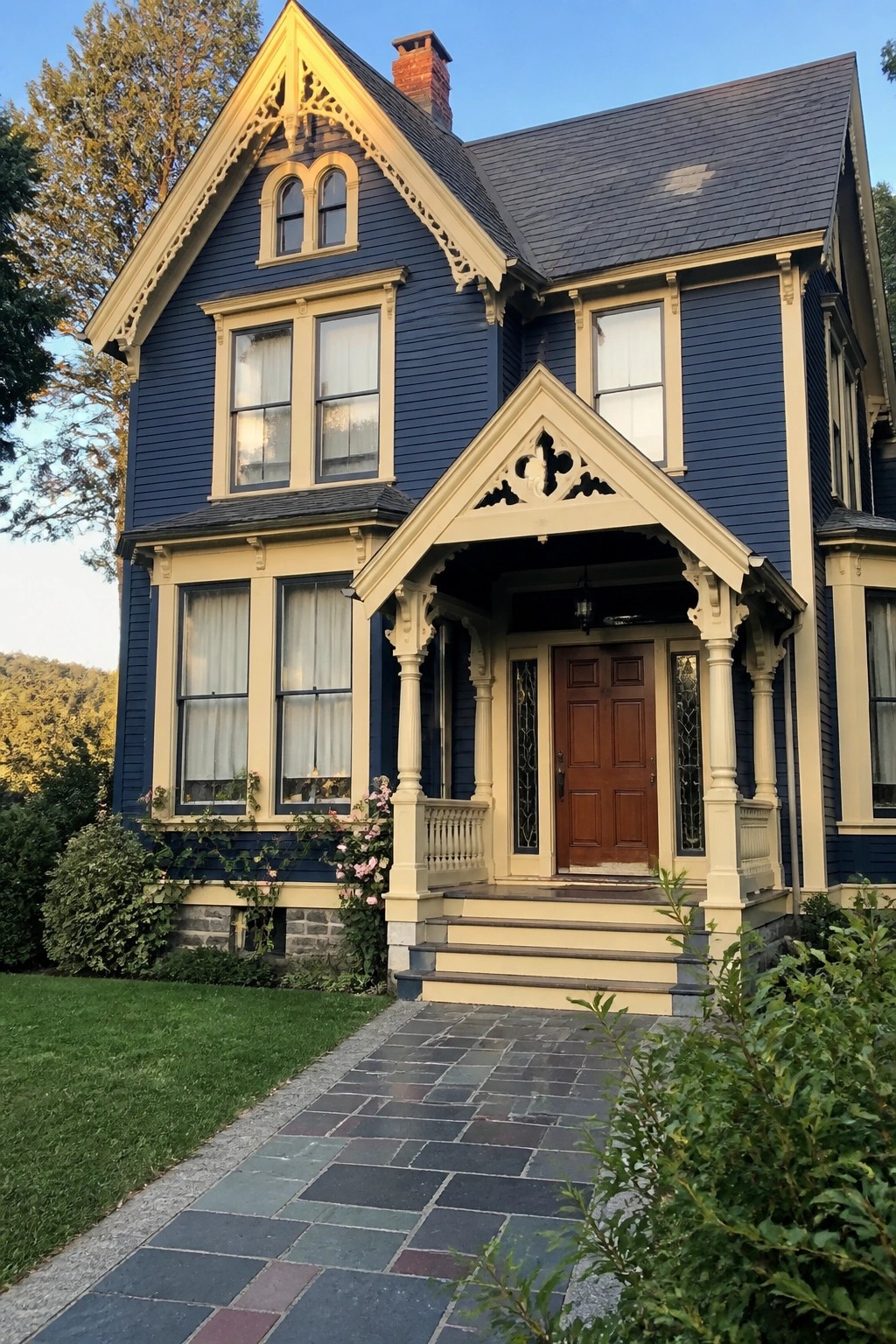
A deep blue on the main walls of a Victorian house makes the trim and details stand out in a simple way. The contrast keeps the look bold but still balanced, especially on houses that already have plenty of woodwork around the windows and porch.
This approach works best on homes with clear architectural lines where you want the color to do most of the work. Use a light cream or pale yellow on the trim, and keep the number of colors to two so the blue stays the main focus.
Using Several Colors on Victorian Trim

Many older Victorian homes gain a lot from painting the trim in more than one color. The different posts, brackets, and moldings stand out better when they are not all the same shade as the main siding. This keeps the details visible and gives the house more depth without needing extra decoration.
It works best on houses that already have clear woodwork to highlight. Choose one soft main color for the body, then two or three related tones for the trim layers. A brighter door color can finish the scheme. Test the paints on a small board first, since outdoor light changes how the colors appear from the street.
Soft Pastel With Dark Trim Highlights Victorian Details

A soft pastel body color paired with dark trim gives Victorian homes a clean look that still shows off their details. The lighter shade keeps the facade from feeling heavy while the deeper trim defines every edge and molding.
This color move works best on houses with bay windows or layered trim work. Use a warm light tone on the main walls and reserve the darker shade for frames, cornices, and accents so the architecture reads clearly from the street.
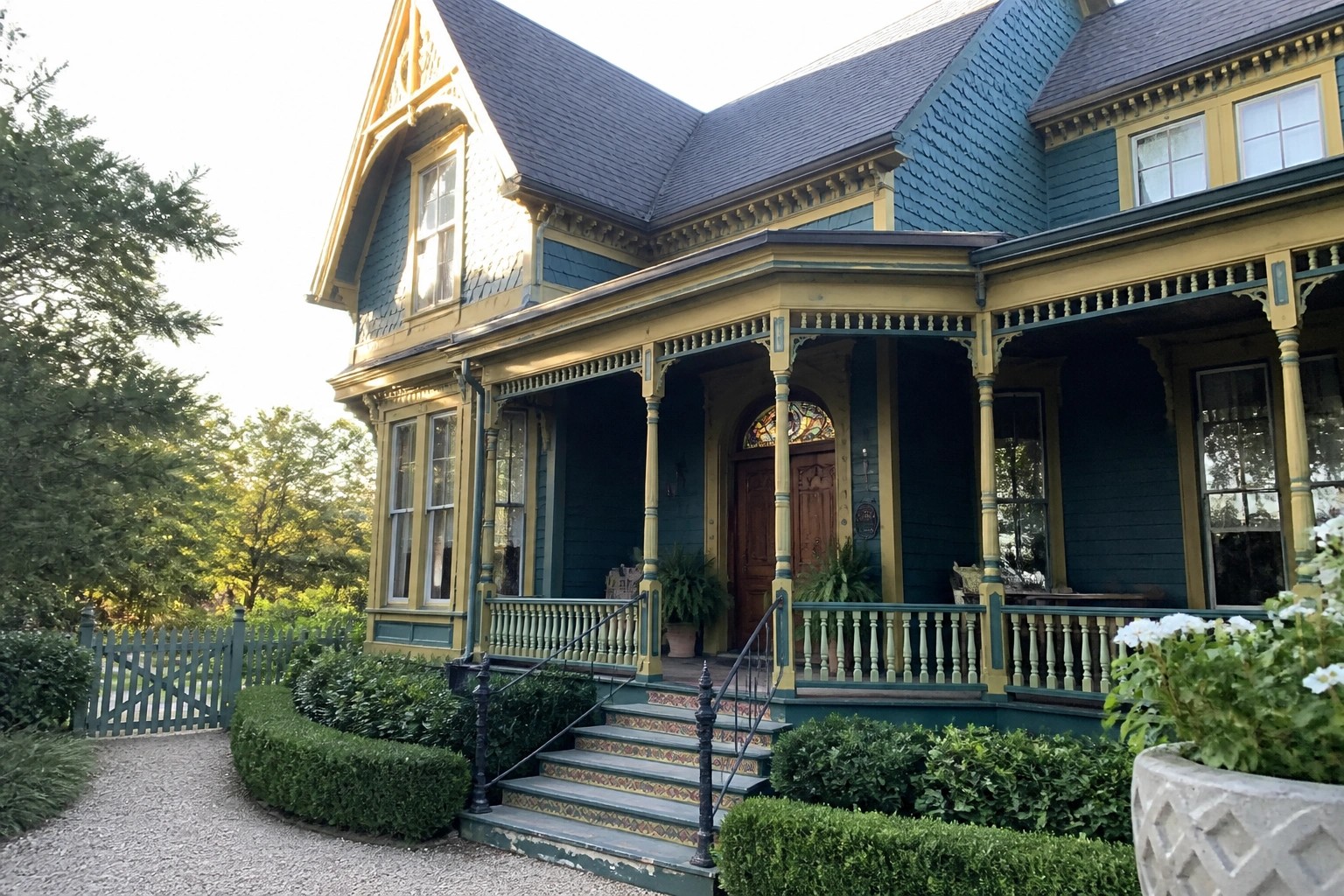
Green Siding With Yellow Trim

Many older Victorian homes gain character when the main siding stays muted and the trim takes on a stronger color. The soft green body here lets the yellow stand out on the windows, door, and porch posts.
This color move suits homes with plenty of trim details and works best in neighborhoods where historic colors are welcomed. Stick to a gray-green for the walls and a warm yellow for the accents so the contrast feels intentional rather than loud.
Dark Paint with Contrasting Trim

A dark base color on a Victorian house makes the trim and details stand out without needing lots of extra decoration. The strong contrast keeps the look bold but still tied to the home’s original style.
This approach works well on houses that already have plenty of molding and window framing. Use a deep shade on the siding and a lighter or brighter tone on the trim, and always test the pair on the actual walls before committing.
Deep Blue Siding on Victorian Homes

A deep blue exterior gives a Victorian house weight and character without needing extra ornamentation. The color shows off the trim work and rooflines in a way that lighter shades often miss.
It works best on homes with clear architectural details like porches and turrets. Keep the trim in a slightly darker tone and use a softer shade on the windows so the blue stays the main focus.
Use Warm Yellow With Deep Teal Trim

Many older homes gain a lot from a soft yellow on the main walls. The color feels bright without turning harsh, and it helps the house stand out on the street while still looking like it belongs to its period.
Pairing that yellow with a deep teal on the trim and porch posts sharpens the details. The contrast makes brackets, window frames, and railings easier to read, and the combination suits two-story Victorians that already have plenty of woodwork to highlight.
Dark Siding With Contrasting Trim On Victorian Homes

A deep main color like this purple works because it gives the house weight while the lighter trim color lifts the details so they read clearly from the street. The contrast keeps the look bold without turning messy, especially on homes that already have lots of window frames and cornices to highlight.
This pairing suits older Victorians that need a bit of extra definition. Stick to colors that sit far enough apart on the wheel so the trim does not fade into the siding. Test both shades on a small patch first since morning and afternoon light can shift how they sit together.
Deep Red Trim For Victorian Porches

A strong red-brown on the trim and porch posts gives a Victorian house real presence without overpowering the rest of the exterior. The color picks up on the architectural details like brackets and railings, so they stand out more clearly against the softer siding color behind them.
This approach works best on homes with similar age and detail level, where you want the entry to feel welcoming but still true to the period. Keep the siding in a muted tone so the red does not compete too much, and test the paint in different lights before committing to the full job.
Yellow Siding With Green Trim

A bright yellow exterior paired with deep green trim gives a Victorian house plenty of personality without feeling overwhelming. The contrast makes the brackets, porch posts, and window frames stand out clearly against the main color.
This approach works especially well on homes with lots of architectural detail. Stick to historic color palettes and test samples in different lights before committing.
Muted Green Facades With Cream Trim

A soft green works well on Victorian homes because it adds color without feeling loud. The shade sits back nicely against the cream trim and lets a darker door carry more of the contrast.
This approach suits row houses or homes with busy trim work. Keep the main color calm and save the bolder tones for the door or shutters so the whole front stays balanced.
Painting Trim In Contrasting Colors

Many Victorian homes gain character when the trim receives its own color instead of matching the siding. The separate shade draws attention to brackets, columns, and window frames without adding new materials.
This approach suits houses that already have strong wood details. Limit the palette to two or three tones that sit well together, and test samples on a small area before committing to the full exterior.
Coral Siding With Turquoise Trim

Coral siding paired with turquoise trim gives a Victorian house a clear, cheerful look that still respects its age. The contrast pulls attention to the porch columns and window frames without needing extra decoration.
This works best on homes that already have strong architectural details like turned posts or brackets. Keep the coral on the main walls and use the turquoise on the trim so the colors stay balanced. Test the shades in full sun first, since bright light can make them shift.
Bright Trim on a Darker Body Color

Many Victorian homes look their best when the trim stands out against the main siding color. A lighter or warmer shade on the trim draws attention to the windows, corners, and decorative brackets without overwhelming the whole house. This approach keeps the look classic while adding just enough color to feel lively.
It works especially well on homes with lots of architectural detail. Stick to two or three colors total, and test the trim shade on a small section first so it does not clash with the roof or front door. Gray siding with a golden yellow trim is one combination that tends to age well in most neighborhoods.
Deep Blue Exteriors On Victorian Homes

A deep blue paint job gives a Victorian house real presence without needing extra ornament. The color holds up well against older trim details and makes the whole facade feel more solid and intentional. Many older homes already have the right proportions for this kind of strong shade.
It works best on houses with clean lines and some architectural detail to catch the light. Keep the trim and accents in a lighter or metallic tone so the blue stays the main feature instead of turning the house too dark overall. Test the color on a large section first since it shifts with the weather and time of day.
Use Contrasting Trim To Define The Architecture

A muted siding color lets the trim do the talking on a Victorian home. The reddish brown on the posts and window frames stands out cleanly against the gray, which keeps the whole facade from looking flat or too busy.
This approach works best on homes with lots of wood detail. Stick to one strong accent color for the trim and keep the siding soft so the shape of the house stays easy to read.
Soft Blue Siding On Victorian Homes

A soft blue body color helps a Victorian house feel light without losing its historic shape. The color lets the architectural details show through instead of competing with them.
White trim sharpens the edges and makes the windows stand out. A deeper door color then gives the entry a clear focal point. This approach suits homes that already have strong trim work and a traditional street presence.
Pick a Main Color and Add Contrasting Trim

A single strong house color can look flat on its own. Pairing it with a darker or brighter trim color brings out the windows, porch posts, and roofline so the details read clearly from the street.
This works best on older homes that already have lots of trim and brackets. Keep the main siding in a mid-tone like soft peach or salmon, then use teal or deep green on the trim so the shapes stand out without fighting each other. Test the two colors side by side in daylight before committing.
Soft Blue Gray for Victorian Exteriors

A soft blue gray works well on Victorian homes because it shows off the trim and rooflines without feeling too bright. The color gives the house a calm look that still reads as colorful from the street. Many older homes benefit from this kind of muted tone since it keeps the focus on the architecture rather than the paint itself.
This shade suits homes with porches and glass additions because it blends the main structure with the details. Use it on the siding and keep the trim light so the whole exterior stays balanced. Watch how the color changes in different light before committing to it.
Layered Greens With Cream Trim On Victorian Homes

Many older Victorians look their best when painted in several shades of green instead of one flat color. The darker tone on the main body makes the lighter trim pop and helps the bay windows and decorative brackets stand out without extra ornament.
This approach works well on homes with lots of architectural detail because the color changes follow the existing lines. It suits neighborhoods where you want the house to feel historic rather than brand new. Keep the darkest green on the lower level and let the trim stay a soft cream so the whole facade stays balanced.
Dark Siding With Light Trim

Many Victorian homes gain a strong presence when the main body is painted a deep shade. The contrast makes the trim details stand out clearly and gives the whole facade more definition without extra ornament.
This works best on houses that already have plenty of woodwork around the windows and eaves. Stick with one bold accent color on the door and keep the trim in a lighter tone so the look stays balanced rather than busy.
Frequently Asked Questions
Q: Which colors hold up best in harsh weather? A: Choose shades with built-in fade resistance. Brush on two coats and check the south side every couple years for touchups.
Q: Do I need special paint for the intricate details on Victorian homes? A: Regular latex exterior paint does the job on those details. Prime first and work slowly with a brush to get into every nook.
Q: How can I make sure the colors stay true to the era? A: Study photos of local Victorians from the same period. Limit yourself to a main body color plus two accents.