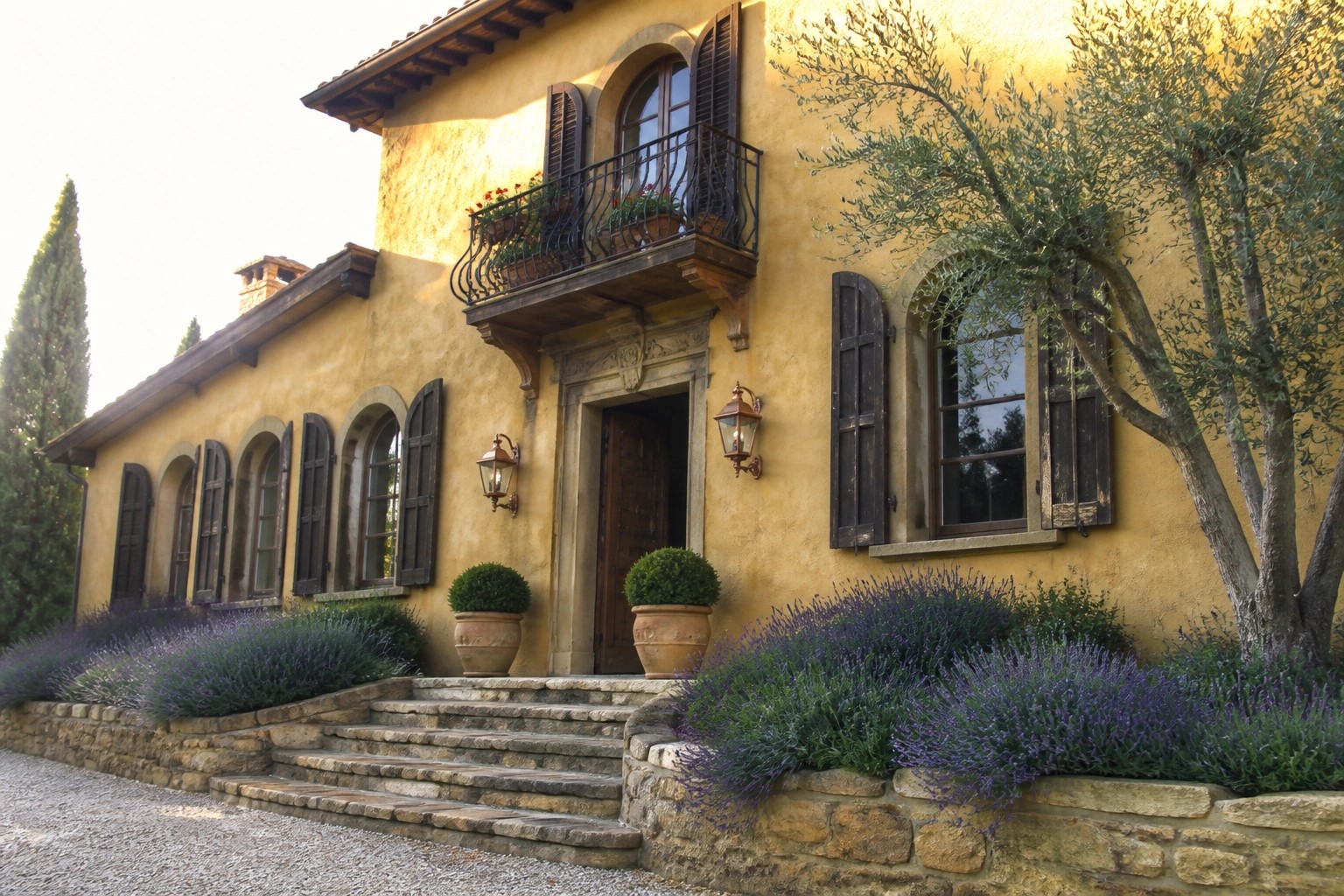
I have always paid close attention to how shutters change the feel of a Tuscan facade because they can either blend in or create a strong focal point.
The timber ones in particular seem to bring out the texture of the surrounding materials in a way that painted versions sometimes miss.
In practice I find that the proportions matter more than people expect since oversized shutters can throw off the balance of the whole front.
A few of these examples make me want to sketch out similar window treatments for a future project even if the scale is different.
Proportions matter most.
Timber Shutters That Shape the Facade
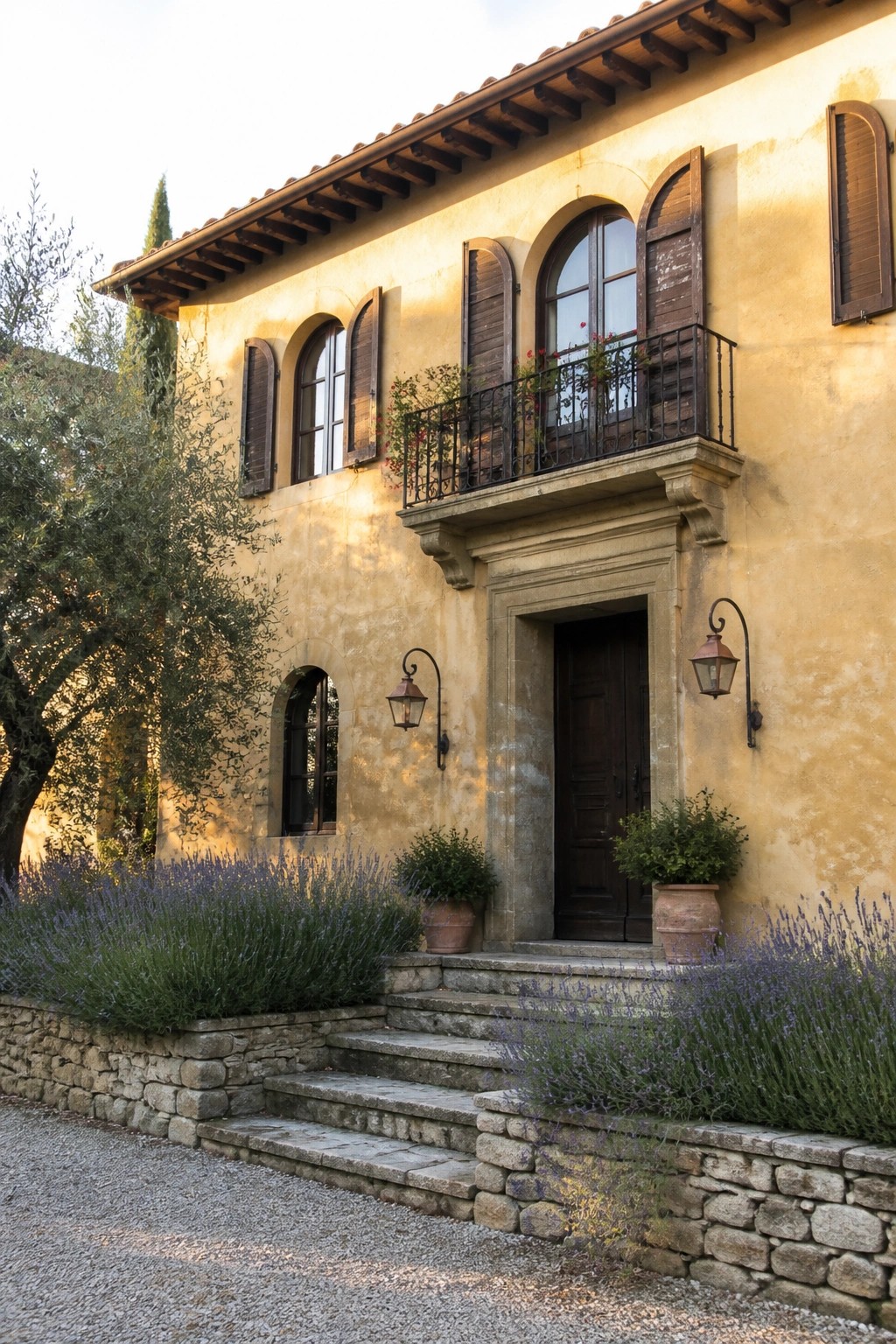
Wooden shutters bring a lot of presence to a Tuscan exterior. They give the windows weight and help the whole front feel more finished without adding extra trim or ornament.
They work best on homes with simple stucco walls and stone accents. Match the shutter color to the wood doors and keep the shape consistent with the window arches so the look stays balanced rather than busy.
Timber Shutters Frame the Windows
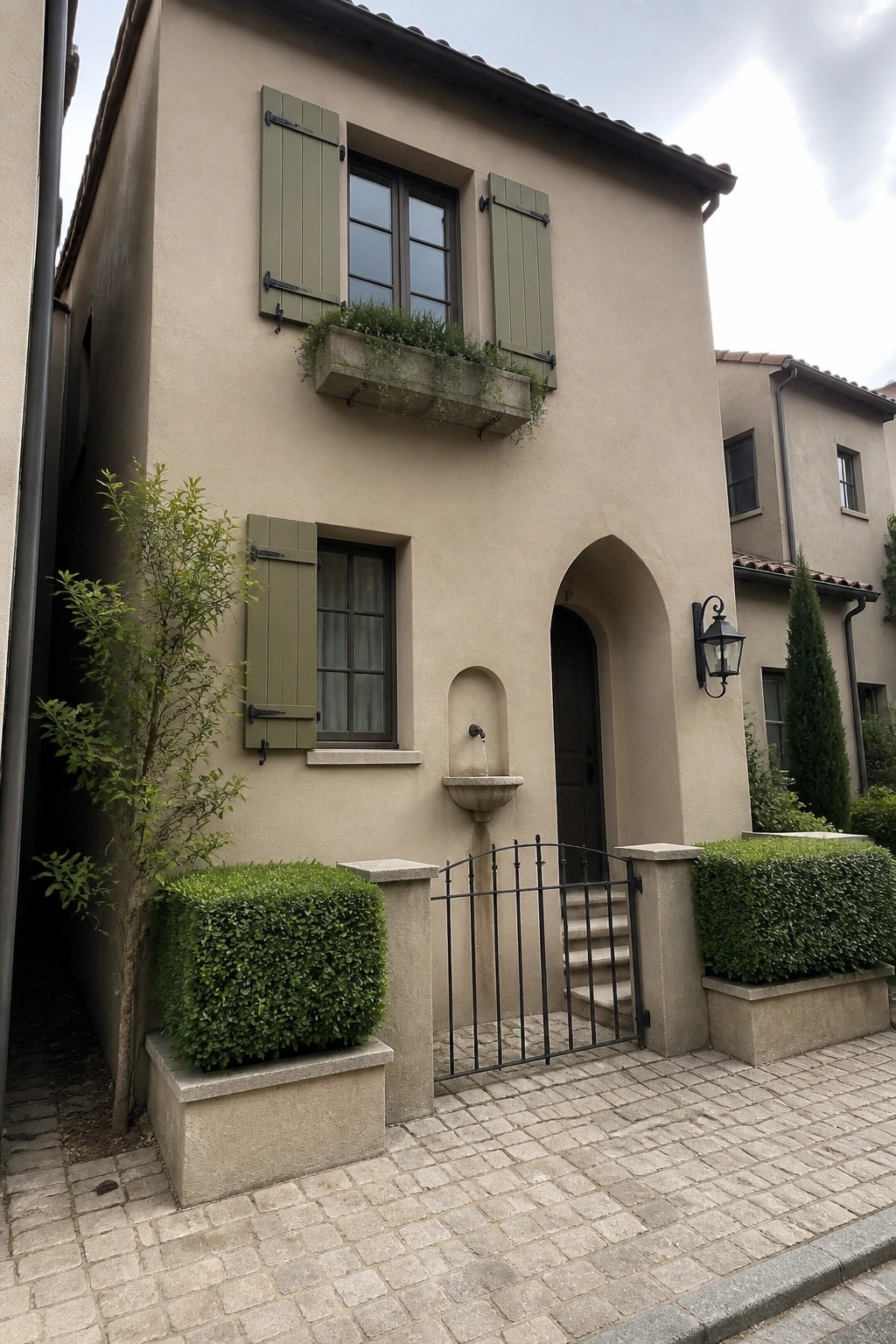
Timber shutters stand out on simple stucco walls because they give the windows a clear border and add just enough contrast. The green color works especially well against the warm beige tone and keeps the whole front from looking flat.
They suit Tuscan style homes that already have a few strong architectural lines like an arched doorway. Match the shutters across the main windows so the facade feels pulled together rather than busy.
Timber Shutters Beside the Door

Timber shutters placed next to an entry door give the front of a house a settled, finished feel. They break up a plain wall and add a layer of texture that works especially well with stucco or plaster surfaces.
This approach suits homes in warmer regions where the shutters can stay open most of the year. Keep the wood tone close to the door and choose a simple louver style so the look stays balanced rather than busy.
Centering a Courtyard on a Stone Fountain
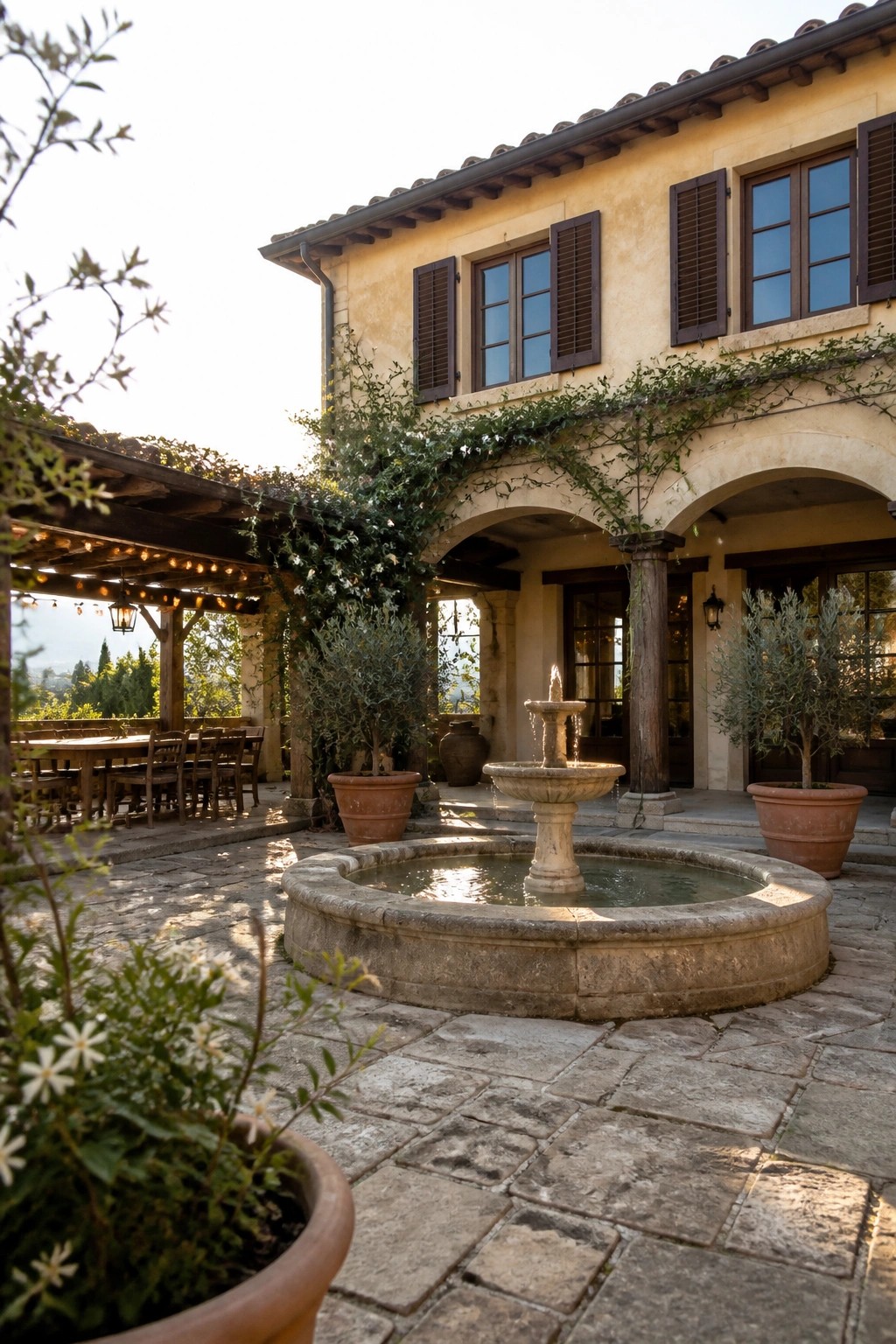
A stone fountain gives a courtyard a clear center point that everything else can work around. It keeps the space from feeling scattered and gives people a natural spot to gather near, whether they are walking through or sitting nearby.
This works best on homes with at least a modest open area in front or to the side. Use a simple basin style in the same stone tone as the paving, then add just a few large pots around the edge so the fountain stays the main feature.
Soft Green Shutters on Stucco Walls
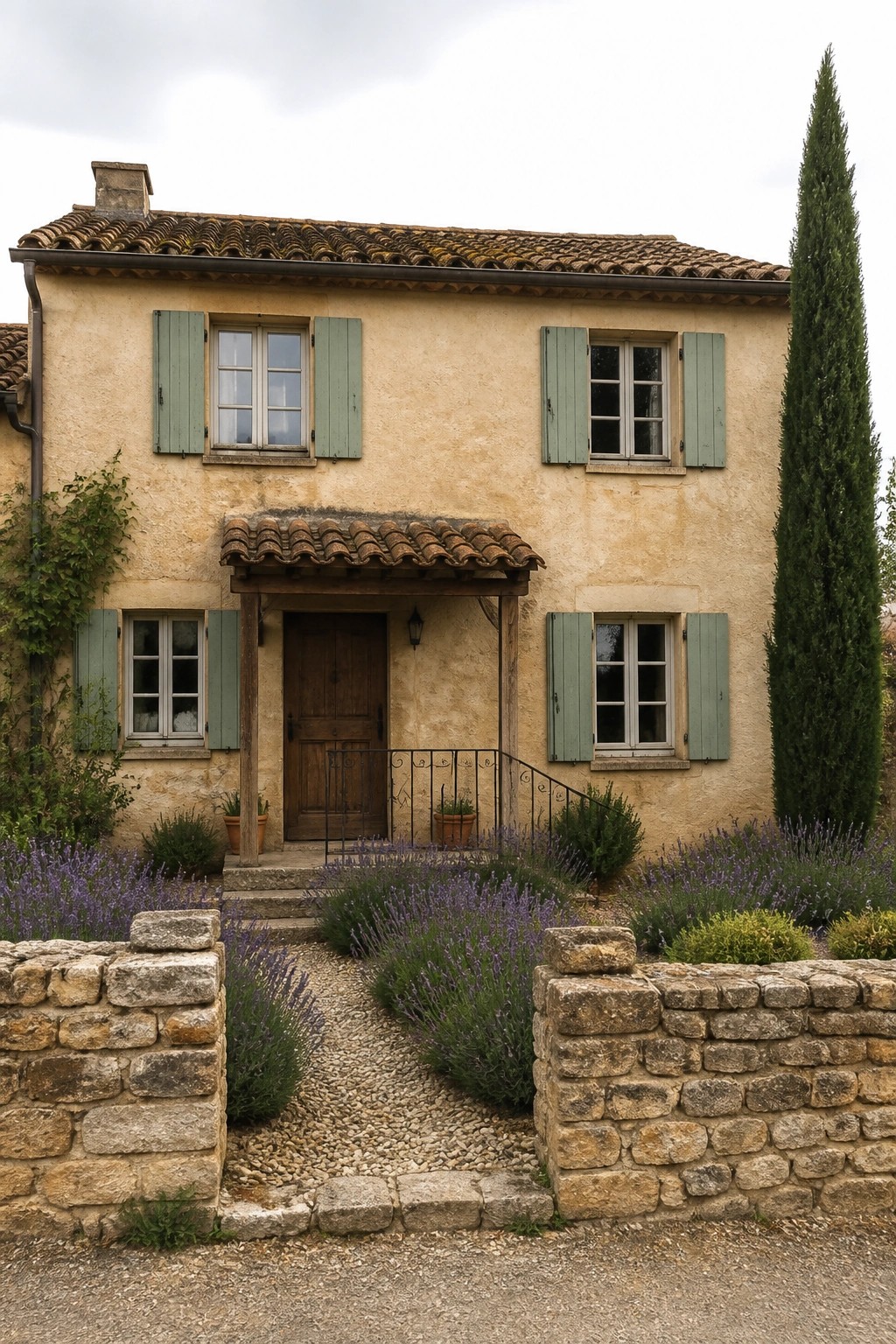
Many Tuscan homes use shutters to give the windows a finished look without adding too much detail. The soft green tone here works because it picks up on the natural surroundings and keeps the pale walls from feeling flat.
This approach suits homes with simple facades where you want a bit of color that still feels relaxed. Choose a muted shade so the shutters blend in as the house ages rather than standing out too sharply.
Built-In Benches For Outdoor Living Areas
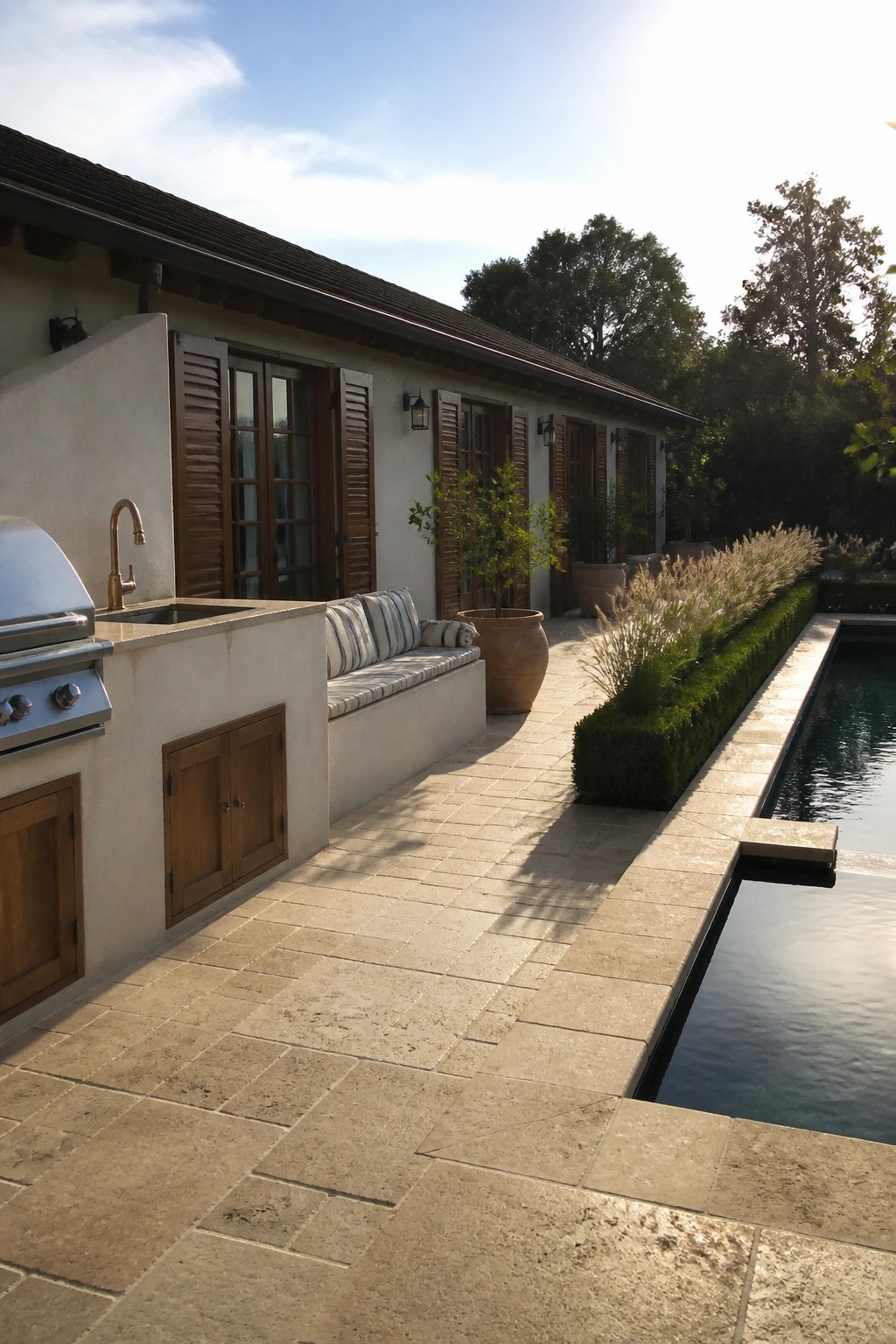
A built-in bench running along the house wall gives you seating without crowding the patio. It keeps the space open while still feeling like part of the main living area. Stone paving underneath helps tie everything together and makes cleaning simple.
This works best on homes with a fairly flat back wall and enough room for a pool or garden just beyond. Keep the cushions durable and add storage underneath if you need it. Avoid making the bench too deep or it starts to feel like a barrier rather than a seat.
Timber Shutters On Arched Windows
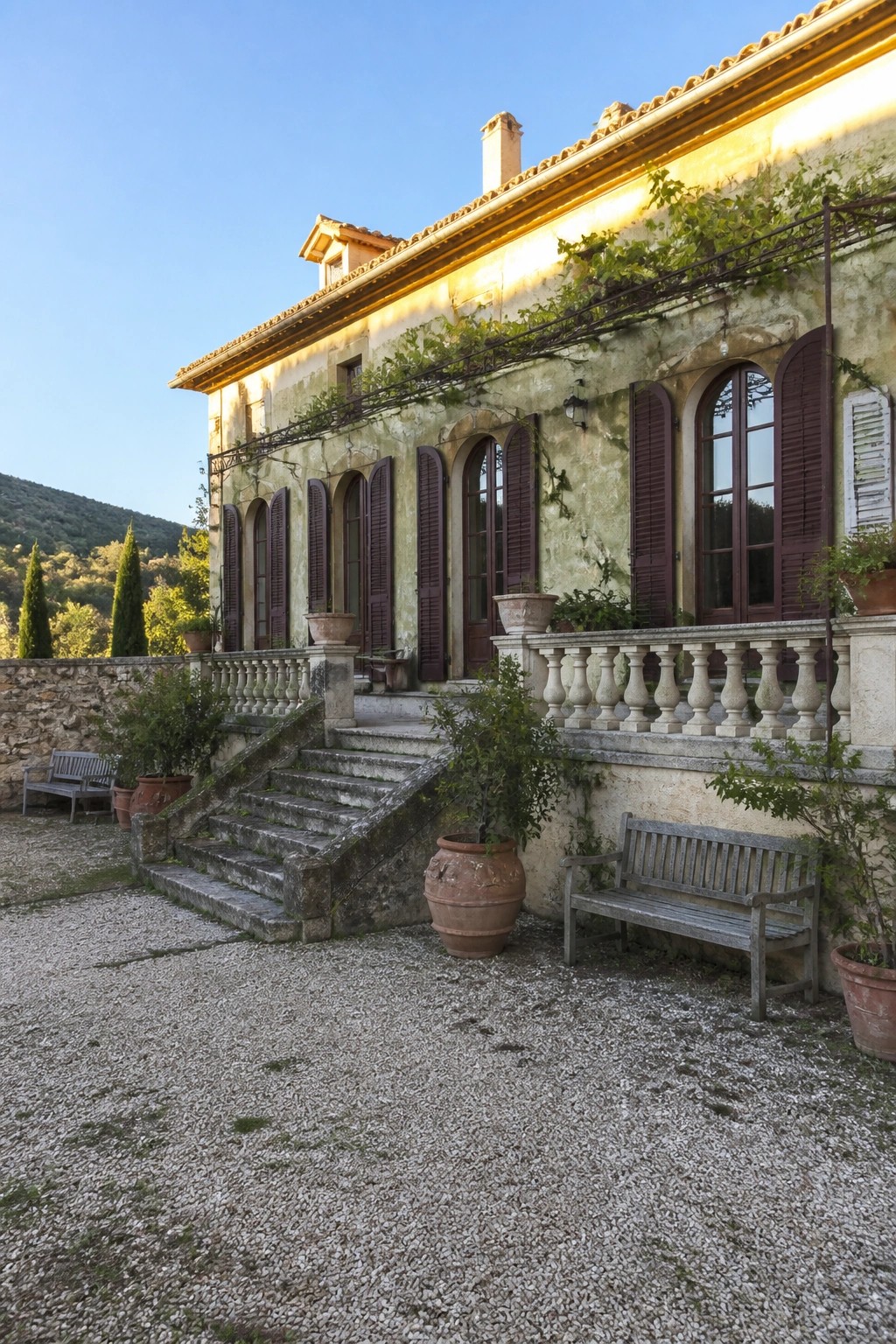
Many Tuscan homes rely on dark timber shutters to give the windows real presence on the facade. The shutters add contrast against the light stucco and help the whole front feel more finished without extra trim or decoration.
They suit homes with simple walls and older architecture where you want a practical detail that also ages well. Stick with a deep brown tone and make sure the shutters match the scale of the windows so they do not look too small or too heavy.
Timber Shutters Around Outdoor Seating
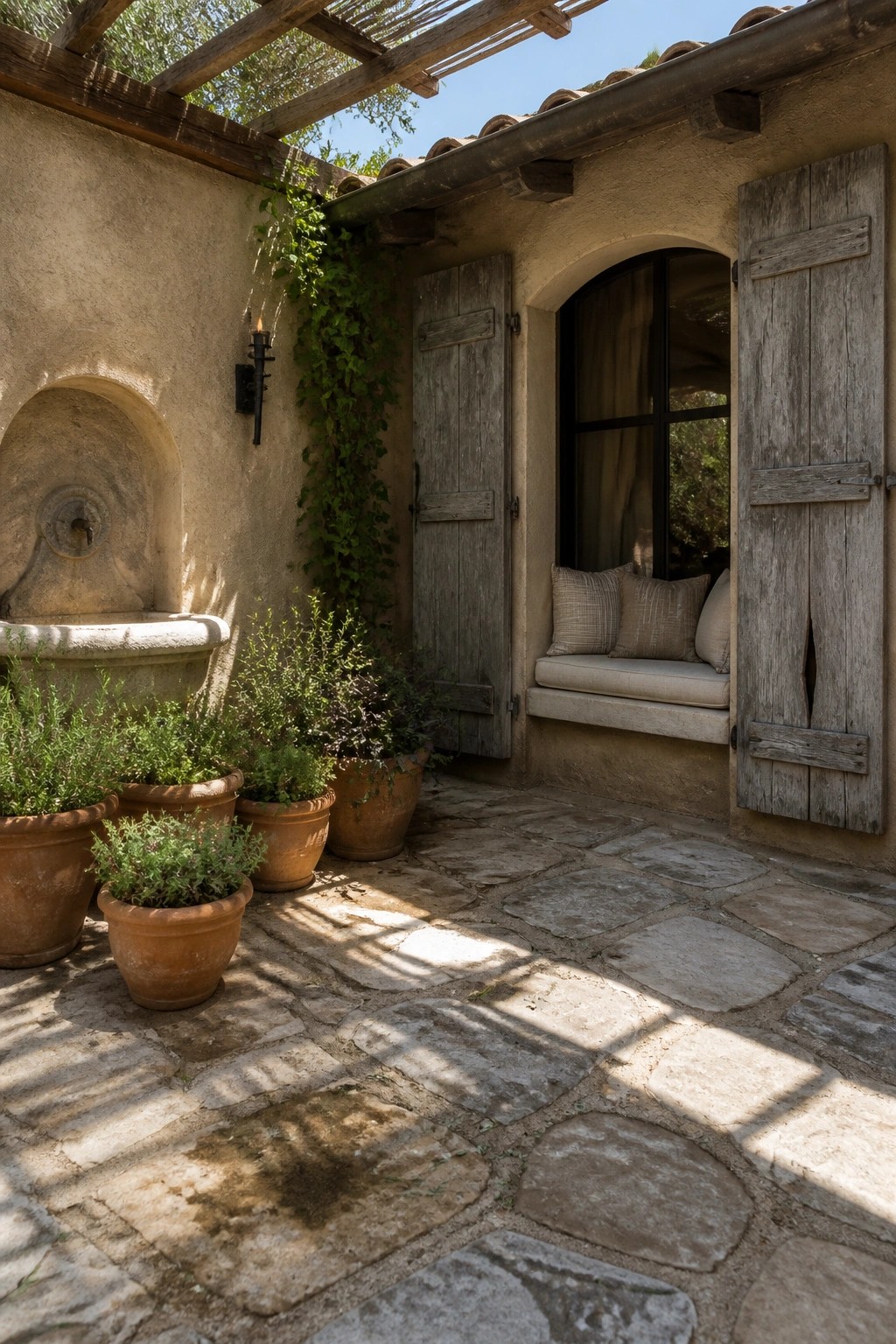
Timber shutters work well on exterior walls when you want to add some enclosure without losing the open feel of a courtyard. They give the space a bit of structure and let you control light and privacy depending on the time of day.
This approach suits homes with thick stone walls and simple rooflines. Place the shutters on windows or doors right next to a built-in bench so the seating feels tucked in rather than exposed. Keep the wood weathered so it blends with the rest of the materials instead of standing out.
Timber Shutters On Stone Facades
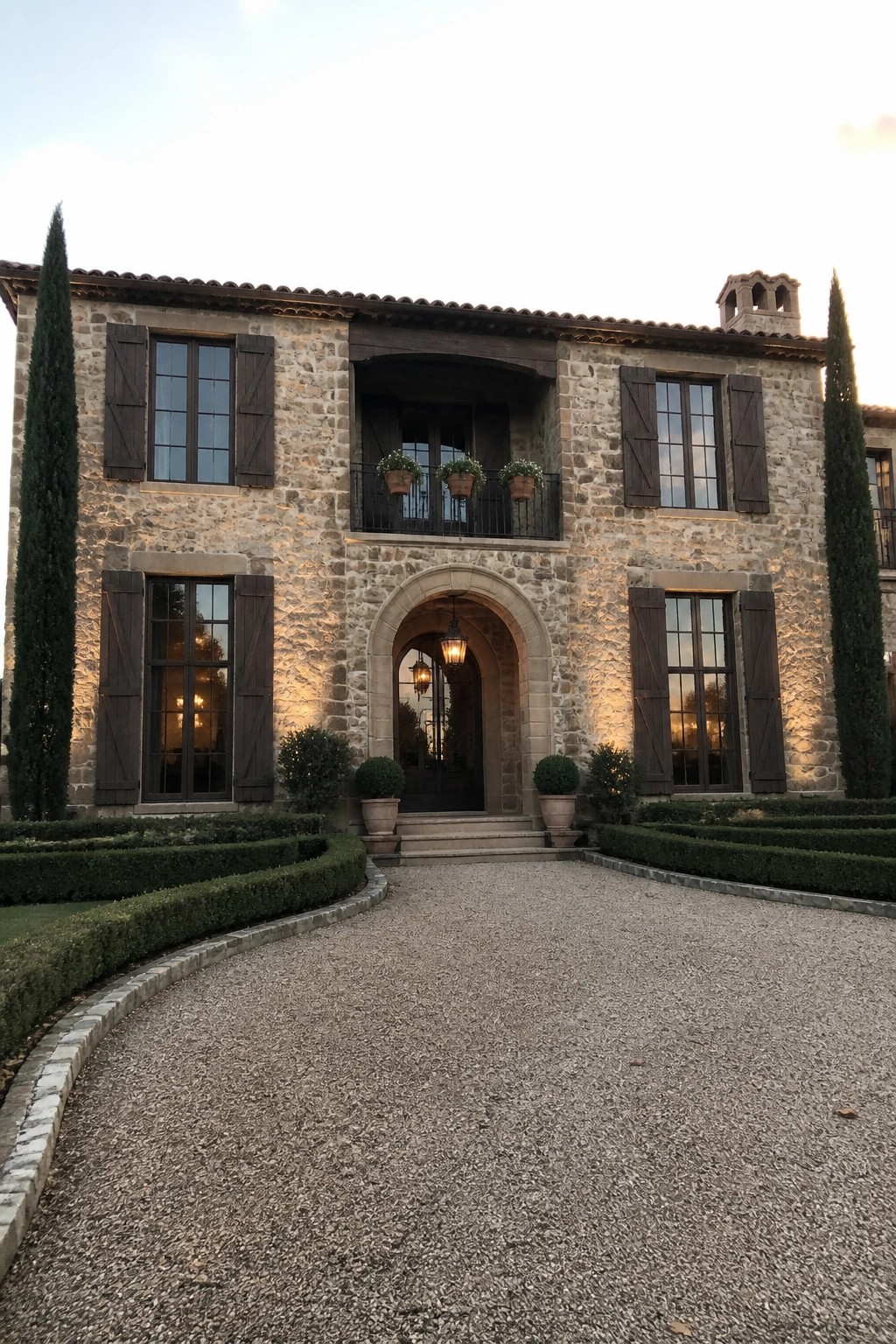
Timber shutters stand out on a stone house because they break up the solid look of the walls and give each window a clear frame. The dark wood against the lighter stone creates contrast without needing extra trim or details. This approach works especially well on Tuscan-style homes where the goal is a simple, grounded appearance.
The shutters suit larger homes with evenly spaced windows and a central entry. Keep the wood tone deep so it holds up against the natural stone, and make sure the shutters are sized to match the window proportions. Avoid thin or overly decorative versions that can look out of place on a heavy facade.
Dark Timber Shutters Against Warm Stucco
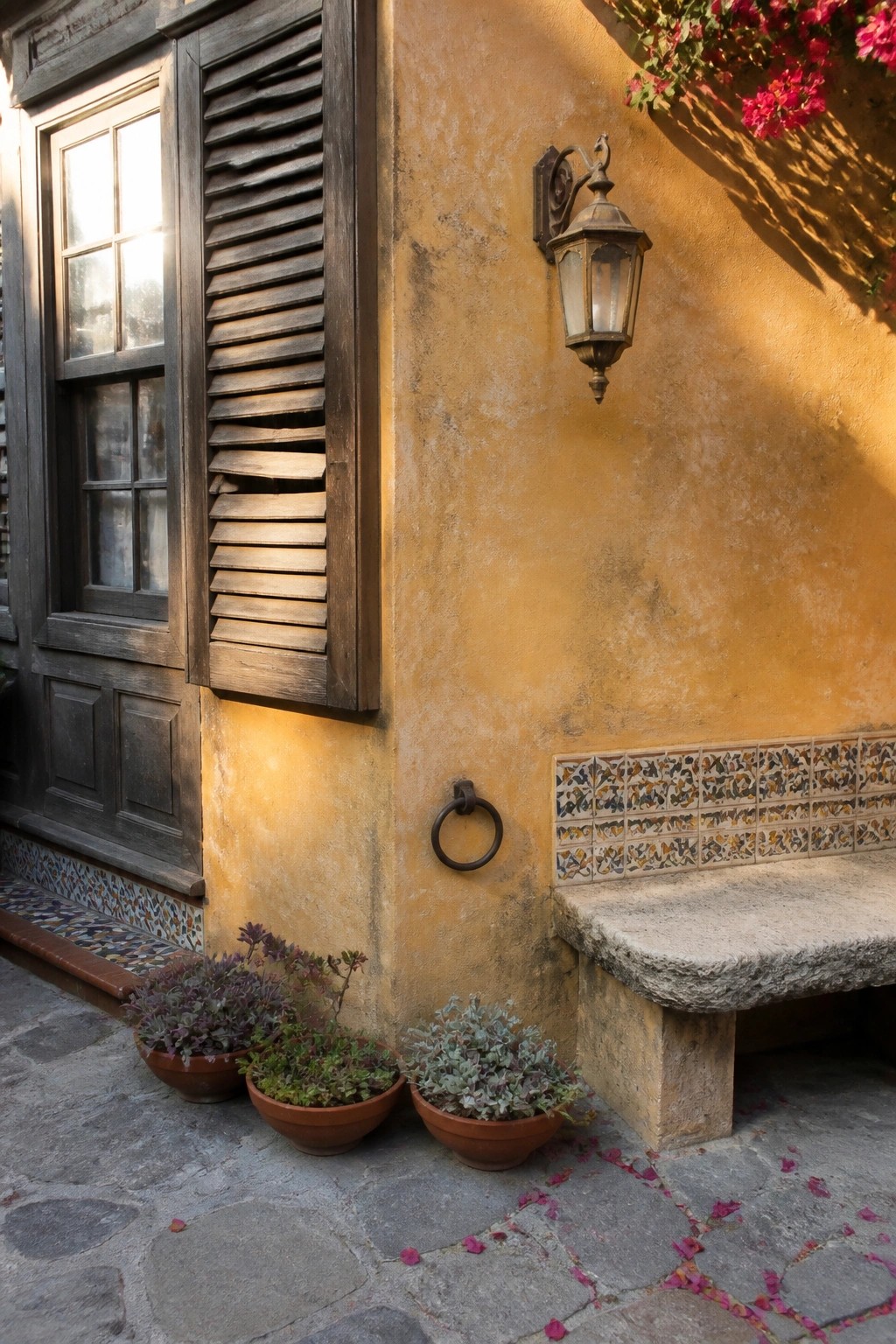
Many Tuscan homes rely on dark timber shutters to give the facade a clear focal point. The deep wood tone stands out nicely against the soft yellow stucco and helps the window feel more substantial.
This approach suits older or simply built homes that need a bit more character. Keep the shutters a matte dark brown or black, and let the wall color do the rest of the work.
Built-In Stone Seating For Patios
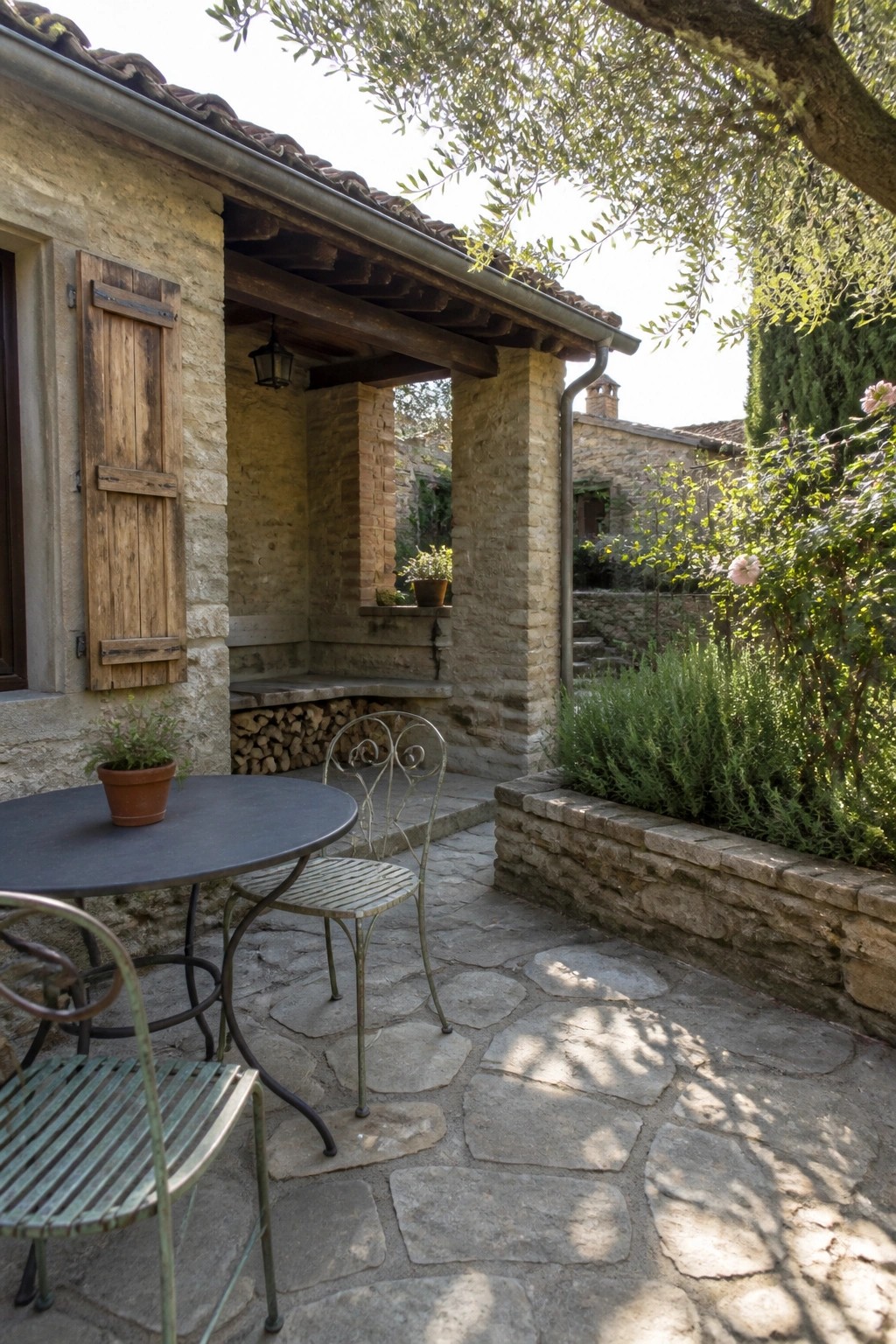
Stone walls can do more than hold up a roof. When you run a bench right along the base of the covered area, the patio starts to feel like part of the house instead of something tacked on later. The same material carries through, so the space reads as one piece rather than separate zones.
This works best on homes that already use thick stone or stucco. Keep the bench low and wide enough for cushions, then add a simple table and a couple of lightweight chairs. It gives you extra seating without crowding the floor and holds up well in all kinds of weather.
Timber Shutters That Open to the Patio
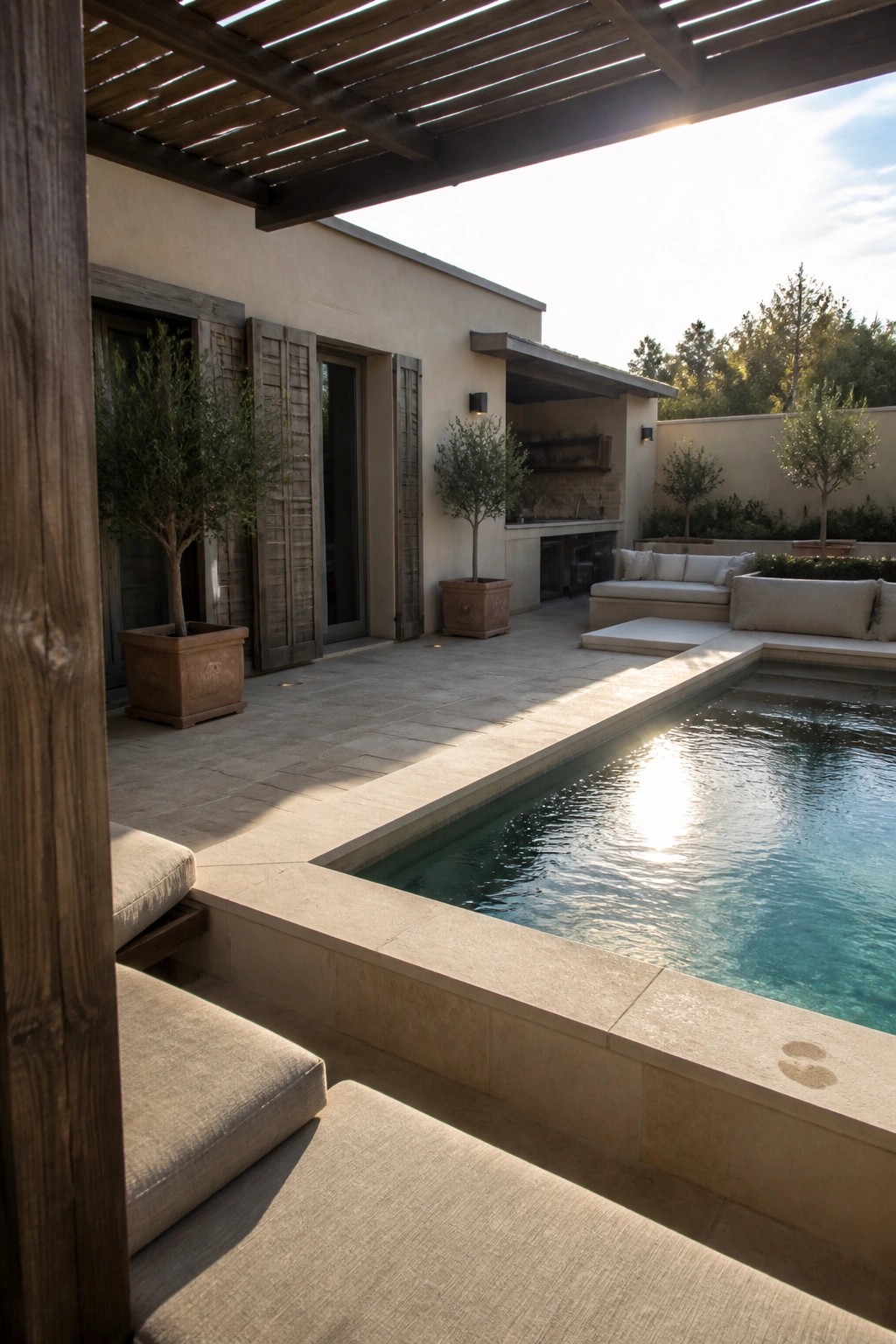
Timber shutters on exterior doors give a simple way to control light and privacy while keeping the connection to an outdoor space. They suit homes where the patio sits right outside the main living areas and help the whole setup feel more cohesive.
This approach works best on houses with a pool or seating zone nearby. The shutters can stay open most of the day and close when more shade or privacy is needed without changing the overall look.
Timber Shutters On Stone Facades
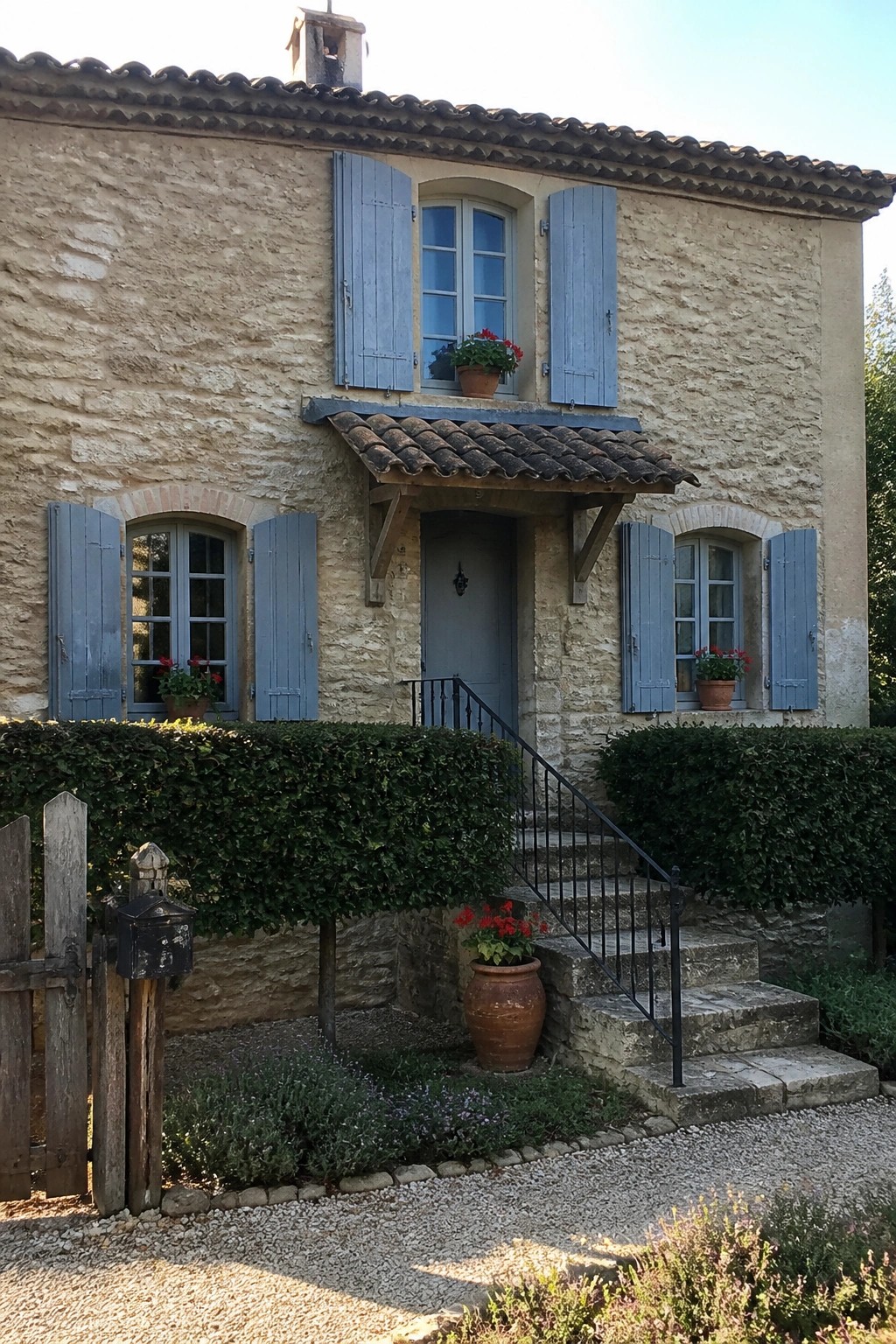
Timber shutters bring a simple structure to stone house exteriors. The wood softens the heavy look of the stone while giving each window a clear frame that feels balanced and finished.
They work best on homes that already have some age or texture in the walls. Keep the shutters in a muted color so they sit quietly against the stone rather than compete with it.
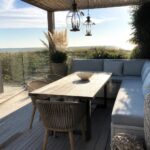
Add a Pergola to Shade a Terrace
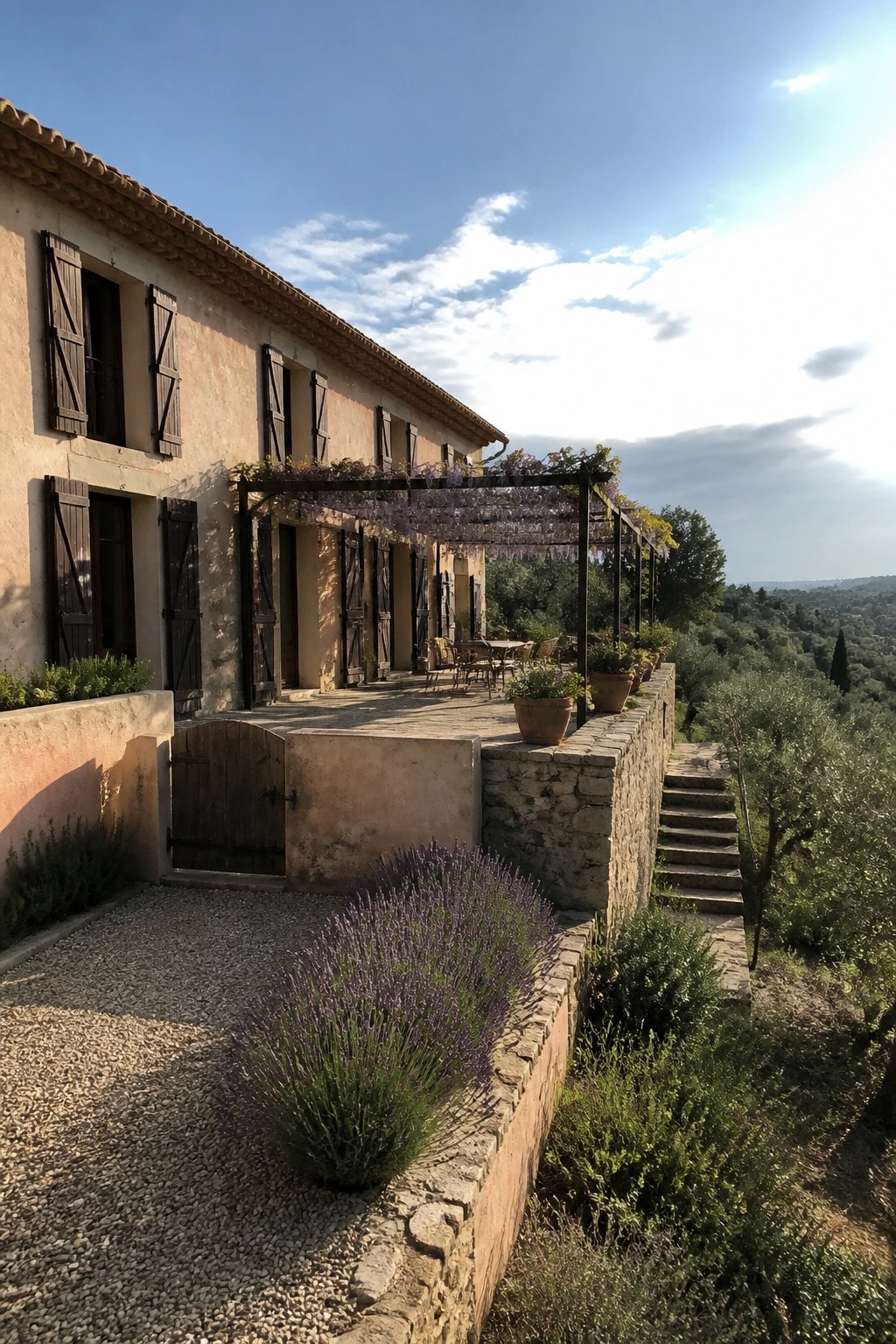
A pergola over part of the terrace gives the space real structure and makes it comfortable to use during the day. The posts and cross beams create a clear boundary without closing the area in, and vines can fill in over the seasons to add more shade.
Place a dining table and chairs in the covered section so meals can happen outside even when the sun is strong. This setup suits homes with a long side or back wall where you want to extend the living space without building a full roof.
String Lights Over A Courtyard Patio

String lights work well for turning a simple courtyard into a space you can actually use after dark. They cast a gentle glow that keeps the area from feeling too dark while still letting the surroundings stay calm and quiet.
Run them along a pergola edge or stretch them from the house to a nearby post. This setup suits homes with modest outdoor areas where you want easy evening dining without installing heavy fixtures.
Green Timber Shutters on Stucco

Many older Tuscan homes use timber shutters in a soft green to bring a bit of life to plain stucco walls. The color stands out without fighting the rest of the building and gives the windows a finished look that feels natural in this setting.
They work best on simple facades where the shutters can be the main accent. Keep the shade muted so it ages well and matches the ironwork or stone details already on the house.
Timber Shutters on Stone Facades
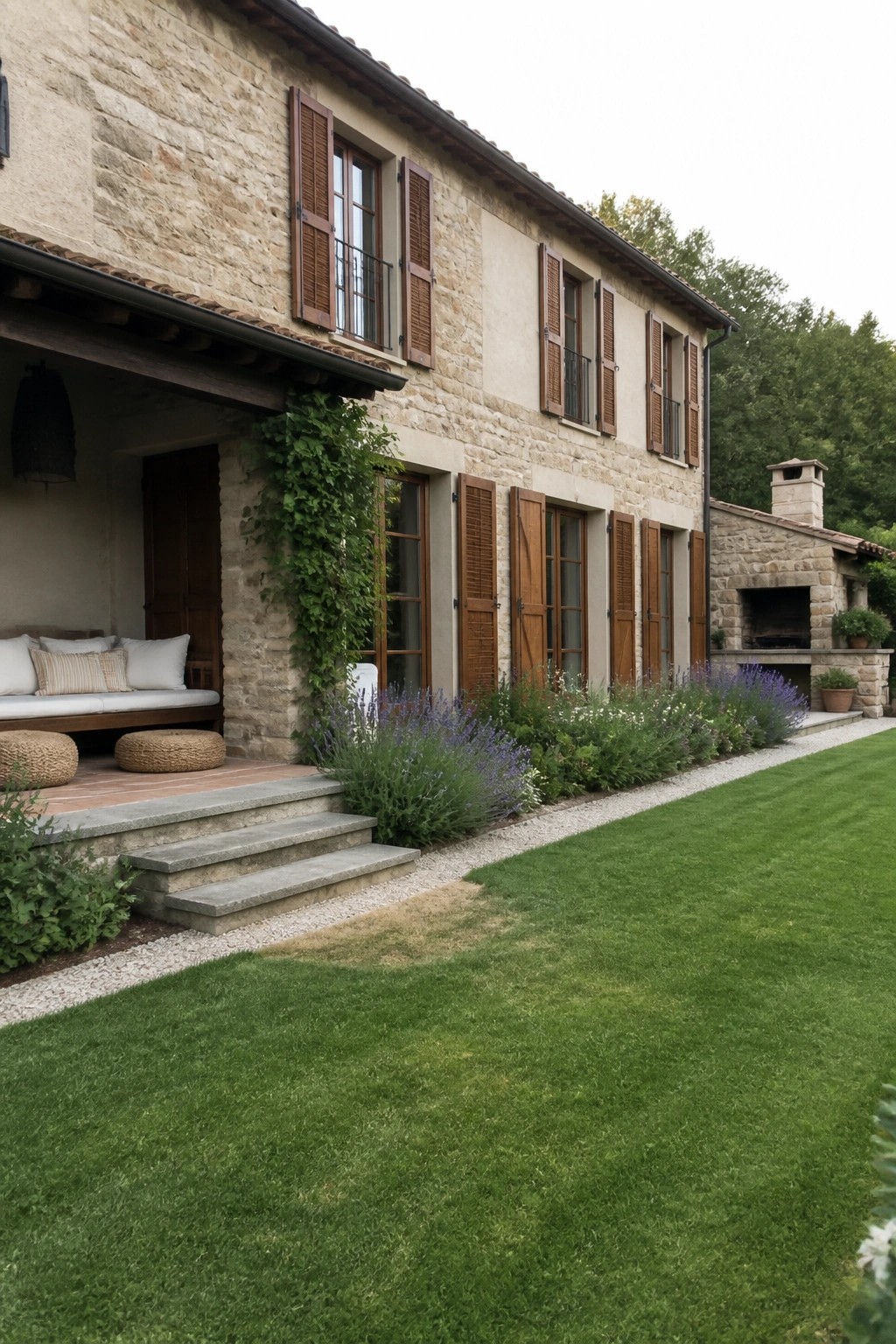
Timber shutters give a stone house a finished look that plain windows rarely manage on their own. The wood softens the heavy texture of the stone and adds the kind of warmth that makes the front feel lived in rather than just solid.
They work best on homes that already lean toward a Tuscan or Mediterranean style. Choose shutters in a simple brown tone and size them so they sit comfortably beside each window without crowding the wall space around them.
Timber Shutters Against Stone Facades
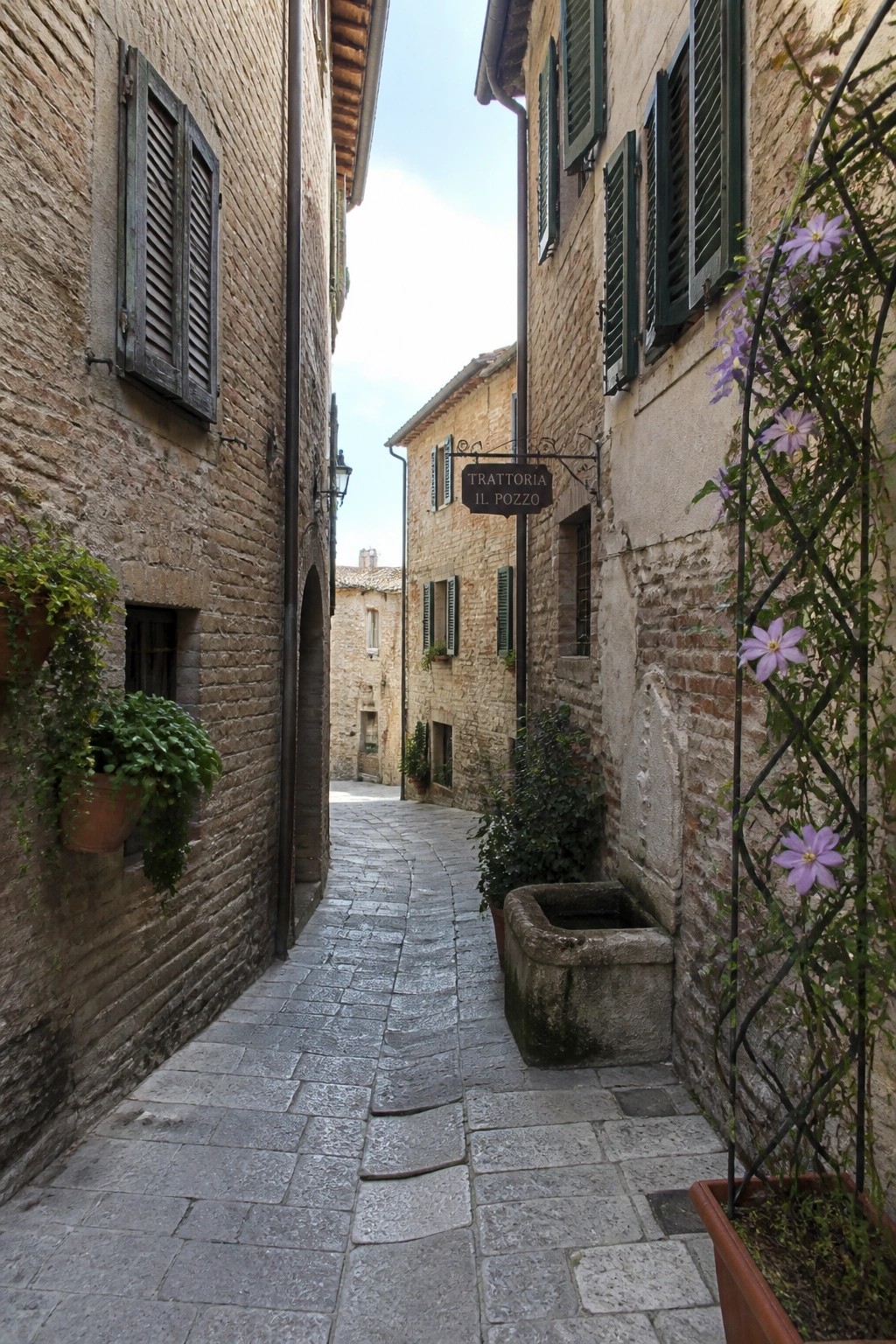
Timber shutters bring a simple but effective contrast to stone and brick exteriors. The painted wood softens the hard surface and gives the windows a clear frame without adding much extra detail. On older homes this combination feels natural because the shutters pick up on the same earthy tones already present in the walls.
This approach works best on compact buildings where the windows sit close together. Choose a muted green or brown so the shutters blend rather than stand out too sharply. Make sure the wood is sealed well if the house faces strong sun or rain.
Using a Pergola for Natural Poolside Shade
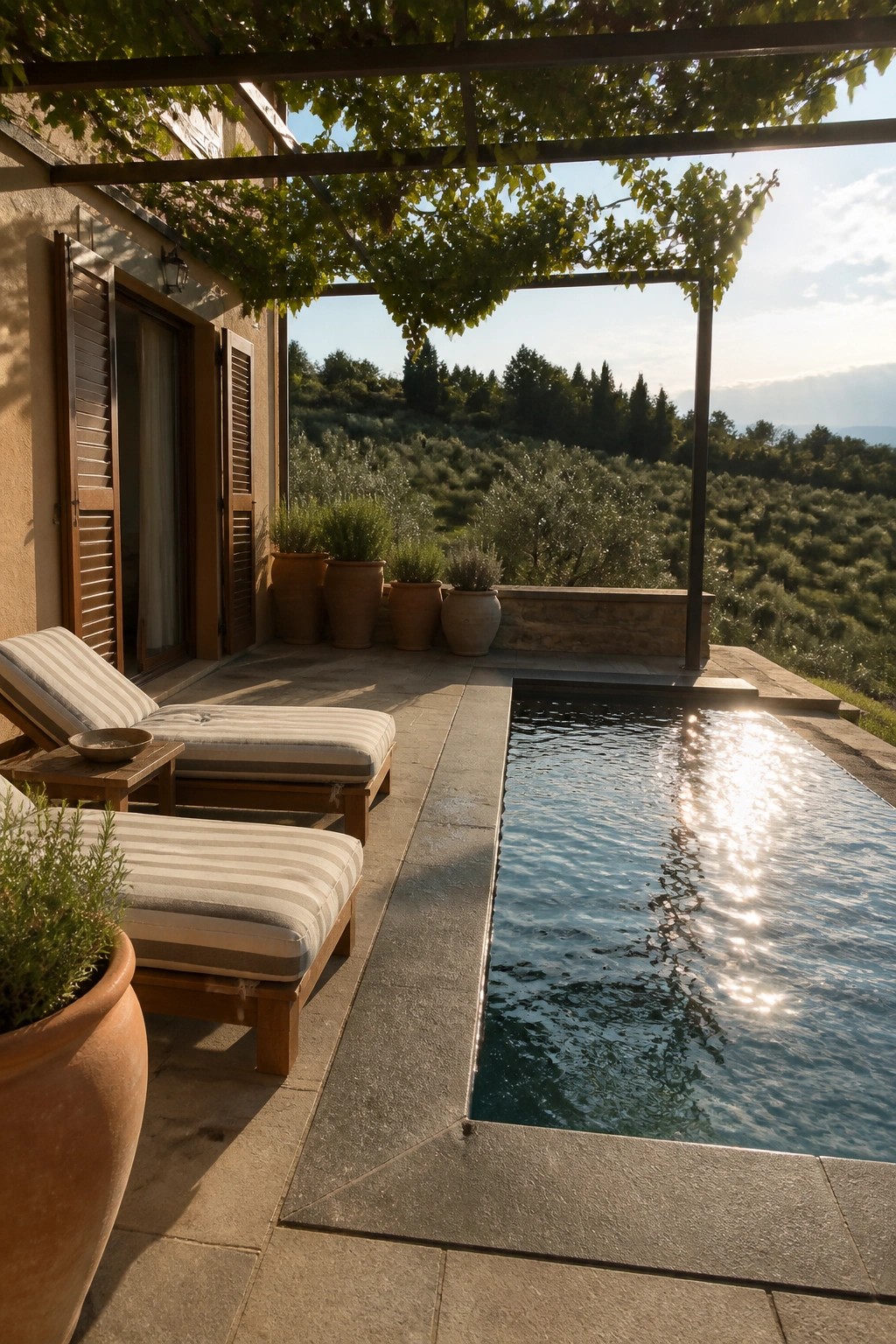
A pergola covered in vines gives steady shade right over the pool deck without making the space feel closed in. The structure ties the house to the water and lets people sit outside even when the sun is high.
This approach works best on homes with a simple roof extension or open terrace. Keep the vines trimmed so light still reaches the water, and use low outdoor furniture that can stay in place year round.
Timber Shutters On Dormer Windows
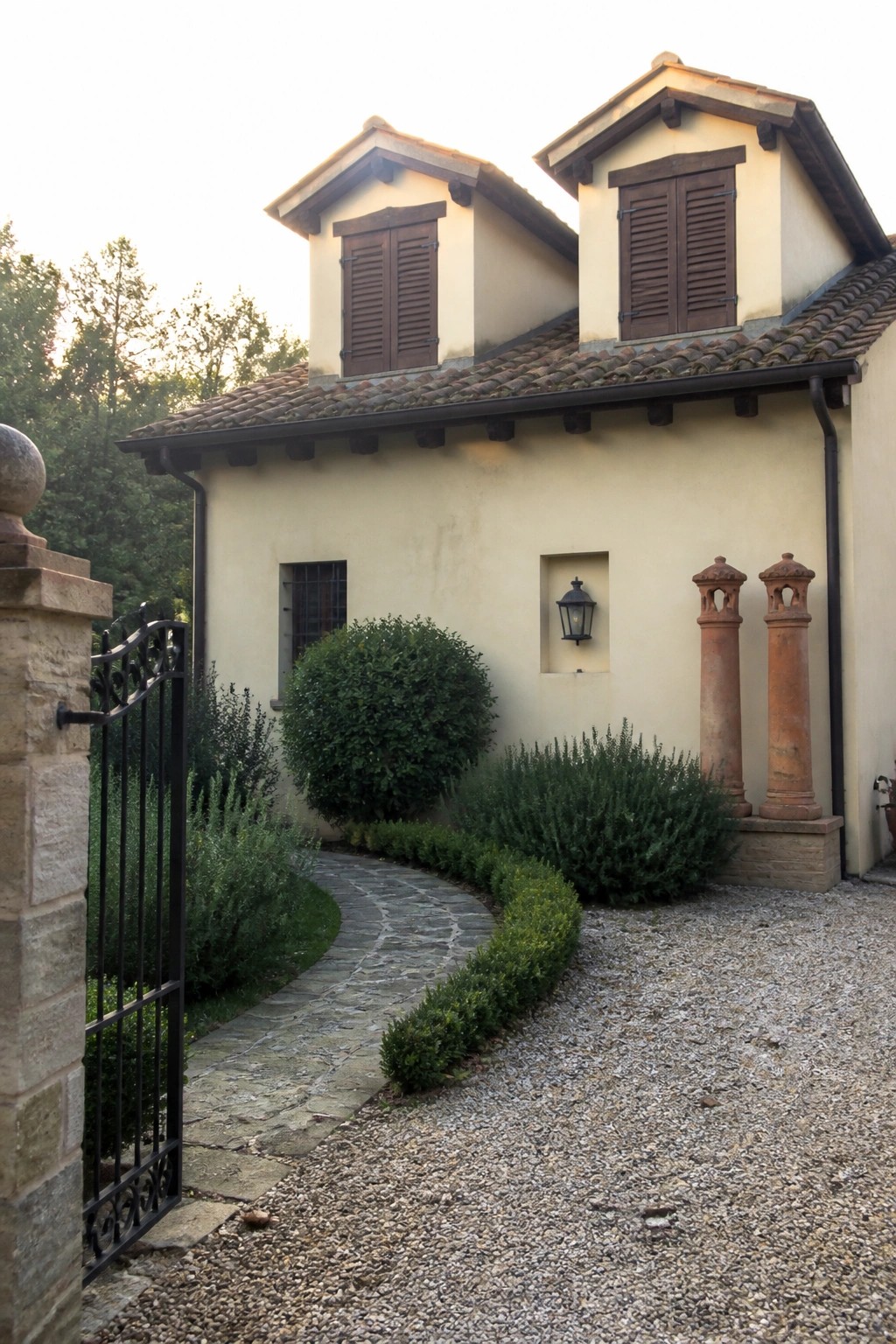
Timber shutters give the upper part of a house a settled, finished look that plain windows often lack. In this case the dark wood stands out against the light stucco and helps the small dormers feel intentional rather than like afterthoughts.
They work best on homes with simple wall surfaces and tiled roofs, where the shutters can supply the main contrast. Keep the wood tone warm and the hardware simple so the shutters read as part of the architecture instead of added decoration.
Wooden Shutters Around an Outdoor Kitchen
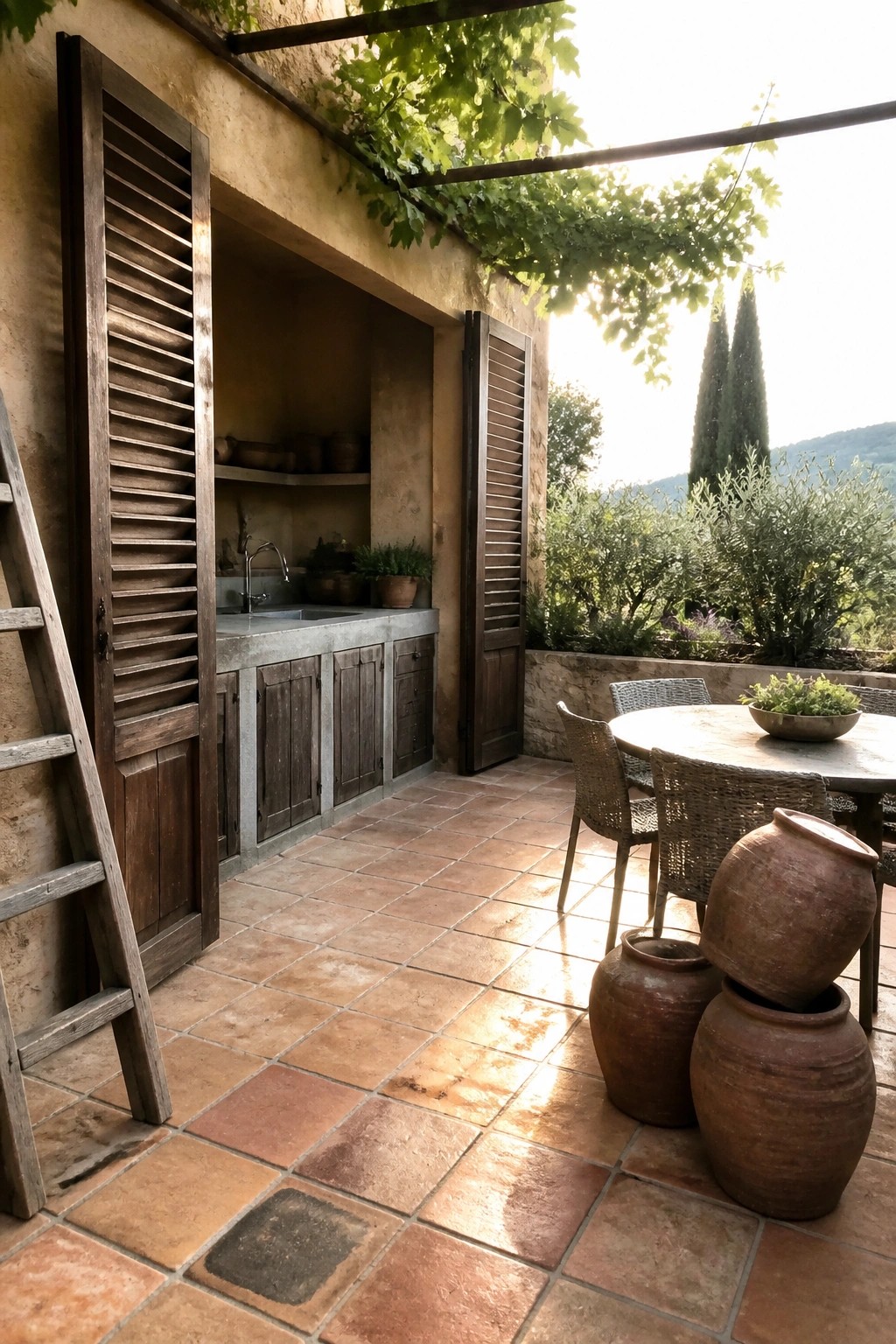
Wooden shutters work well on an outdoor kitchen because they let you close off the space when it is not in use and open it up when you want to cook. The louvered style gives some shade and keeps leaves and dust out while still letting air move through. Many people like how the shutters tie the cooking area into the rest of a Tuscan style home without needing extra walls.
This setup suits homes with a covered terrace or patio that already has stone or tile floors. Place the shutters on the sides and front of the alcove so they can swing fully open on good days. Make sure the wood is treated for weather and that the hinges are sturdy enough to handle daily use.
Timber Shutters That Suit Stucco Facades

Timber shutters add a simple layer of contrast to a stucco exterior. They keep the windows from looking flat and give the whole front a more finished, traditional feel without adding much extra detail.
This approach works well on homes with a central arch or evenly spaced windows. Choose a dark wood tone that stands out against the wall color, and keep the shutter style consistent across the facade so the look stays balanced.
Frequently Asked Questions
Q: Which timber type keeps its shape best in changing weather? A: Oak works well because it expands and contracts slowly. Treat it with a natural oil finish right after hanging the shutters. Check the fit every few months at first to catch any shifts early.
Q: Can timber shutters help cut down on summer heat inside? A: Yes they block direct sun when closed during the day. Open them in the evening to let breezes through like the Tuscan homes do. This simple habit lowers cooling needs without fancy gear.
Q: How do I hang shutters on stucco walls without damage? A: Use masonry anchors for exterior use. Place them at the top and bottom corners only.