I have noticed that a courtyard only feels complete when the main feature draws people in and gives them a reason to linger.
Placing a stone fountain at the center often helps define the seating areas around it so everything stays within reach.
Some setups look impressive from above but then turn out hard to maintain or awkward to walk around once you are actually using the space.
I keep coming back to how the material choices affect both the look after a few seasons and the way the water sounds on a quiet evening.
The right scale makes all the difference.
Center the Courtyard on a Stone Fountain

A stone fountain gives a courtyard an easy focal point that everything else can work around. The water adds movement and a bit of sound, which helps the space feel more settled without needing a lot of extra decoration.
This layout works best in homes that already lean toward warmer, older styles. Keep the surrounding seating low and simple so the fountain stays the main feature, and leave enough open paving around it for people to walk through comfortably.
Center The Courtyard On A Stone Fountain
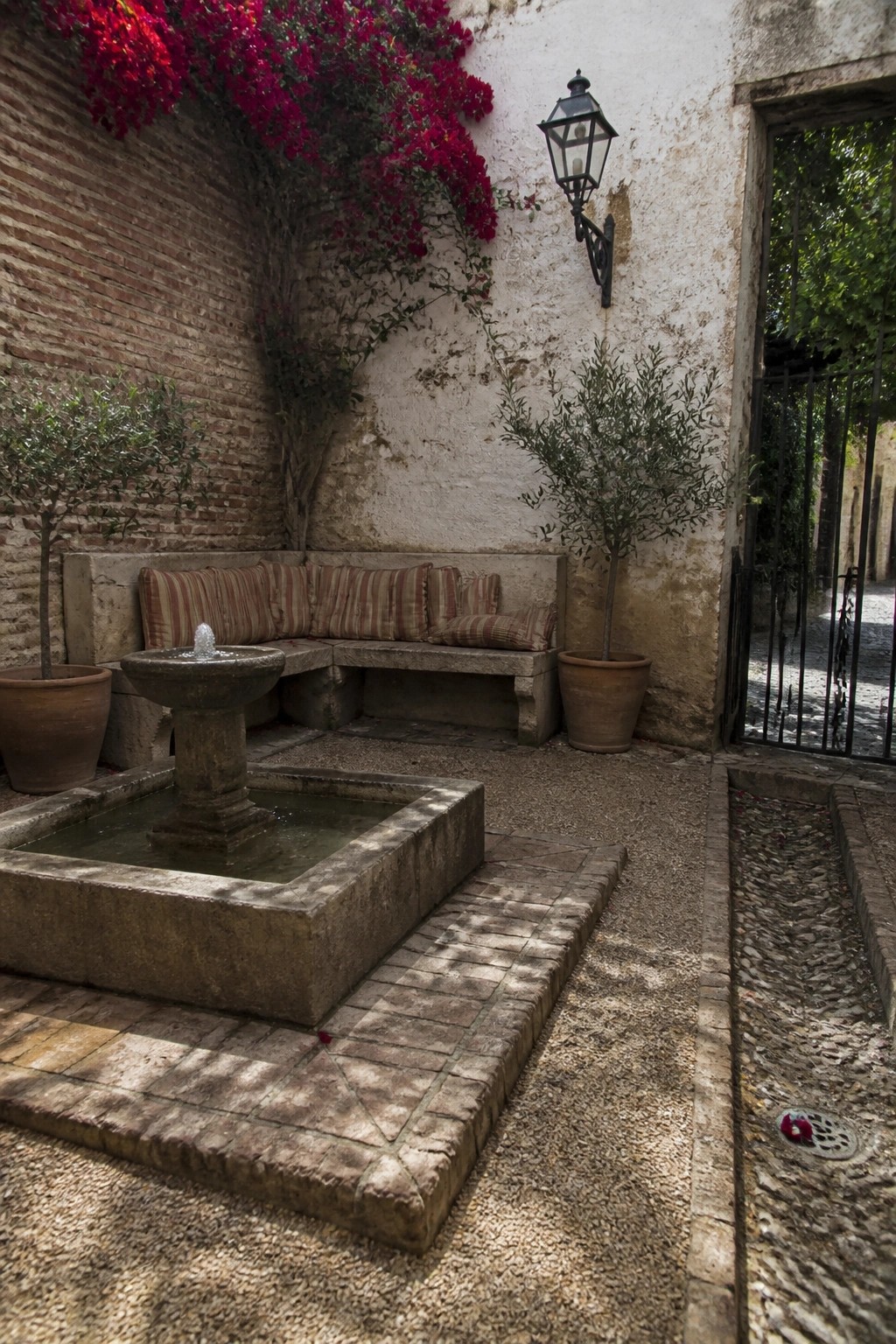
A stone fountain placed right in the middle gives a small courtyard a clear focus without crowding the space. The water sound stays gentle, and the basin shape keeps everything grounded so the seating feels like it belongs around it.
This works best in compact outdoor areas where you want one main feature instead of lots of separate pieces. It suits older homes or simple builds where the paving can slope slightly for drainage and the bench stays low so the fountain stays visible from every seat.
Center the Courtyard on a Stone Fountain

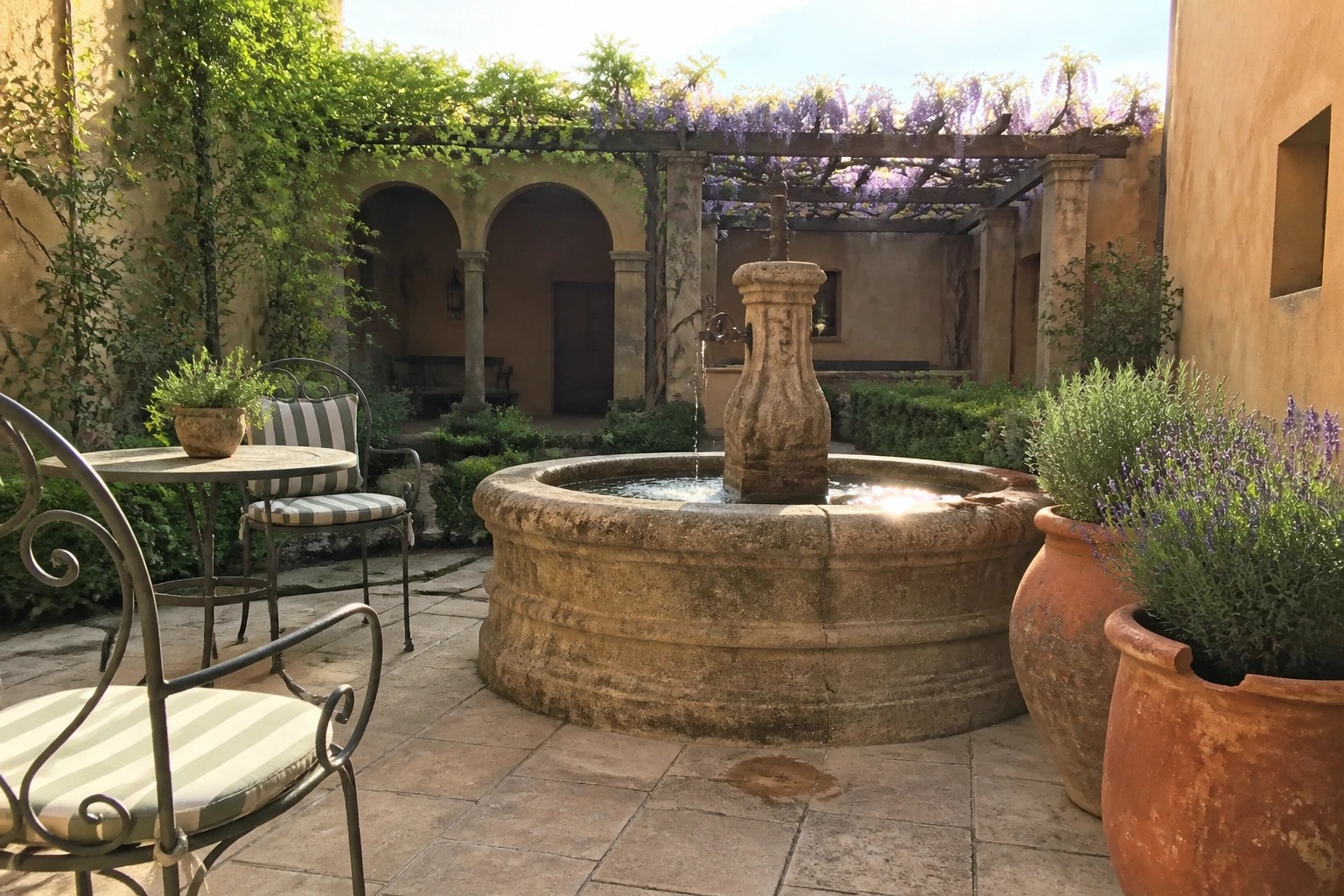
A stone fountain in the middle gives the whole space a clear sense of order. Everything else, from the seating to the paths, can work around it without feeling scattered. In a Tuscan courtyard this approach keeps the layout simple and grounded.
It works best on a flat open area where the fountain can be seen from the main windows or doors. Keep the surrounding paving even and leave enough room for tables and chairs so people can sit close without crowding the water. Tall evergreens on the edges help frame the view and add a bit of privacy.
Stone Fountains as Courtyard Centers

A large stone fountain works well as the main point in a courtyard because it gives the whole space something to gather around. The basin shape and simple material keep the look grounded without needing extra decoration.
This setup suits older homes or places with stone walls where you can add built-in seating that follows the curve of the paving. It helps the area feel used rather than just decorative, though the fountain does need regular cleaning to stay clear.
Central Fountains For Outdoor Courtyards
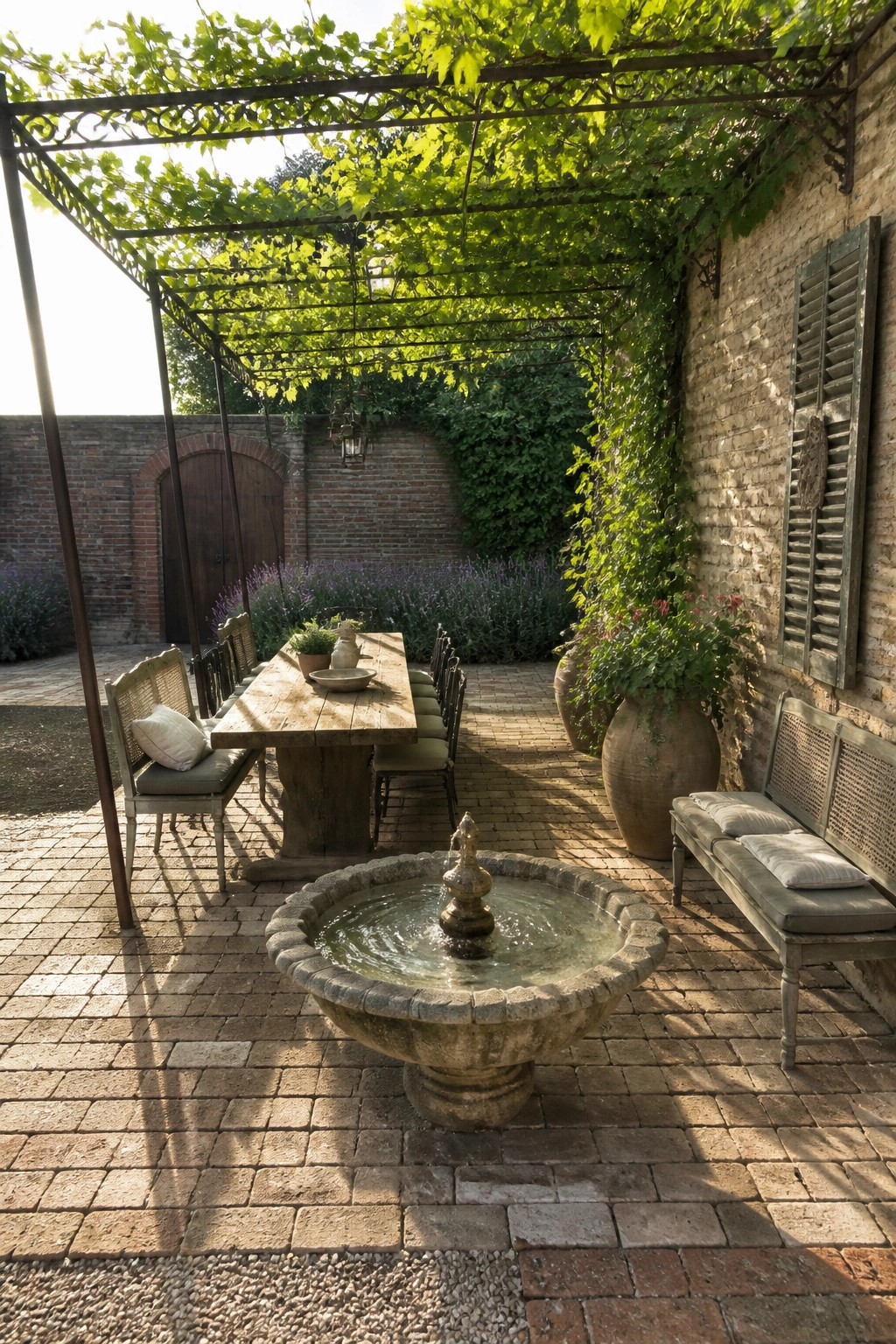
A stone fountain placed at the center gives a courtyard a clear sense of order. Everything else can sit around it without feeling scattered. The water adds movement and sound that makes the space feel used rather than just decorative.
This approach works best in square or rectangular layouts where paths can circle the fountain. Keep surrounding seating low and simple so the fountain stays the main draw. It suits homes with brick or stucco walls and older architecture that already leans classic.
Anchor the Courtyard With a Wall Fountain
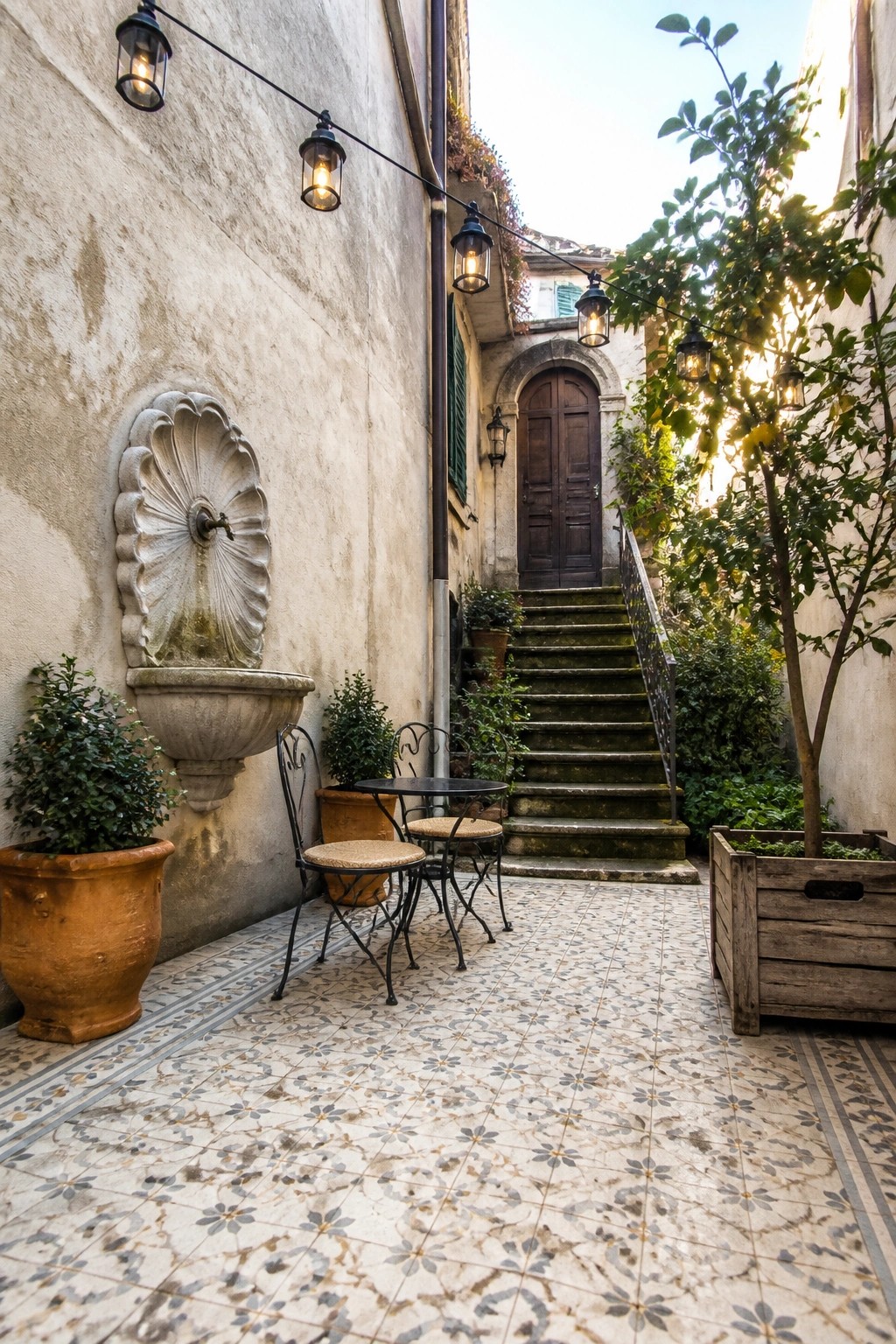
A wall fountain gives a small courtyard a clear center without crowding the floor. It turns one plain wall into the main feature and leaves room for simple seating right in front of it.
This works best in narrow side yards or enclosed patios where a freestanding fountain would block movement. Keep the table and chairs close so the sound of water stays part of the seating area, and match the basin style to the surrounding stone or stucco.
Center the Courtyard on a Stone Fountain

A central stone fountain gives the whole courtyard a clear starting point. It pulls the paving, seating, and plantings into one simple layout instead of leaving the space feel scattered. The basin and surrounding stonework also add weight so the area reads as finished even with fairly plain surroundings.
This works best on homes that already have an open side yard or back area large enough for a paved circle. Keep the surrounding hedges low and clipped so the fountain stays the main view, and make sure the basin size matches the scale of the house rather than trying to fill every corner.
Center the Fountain in the Courtyard
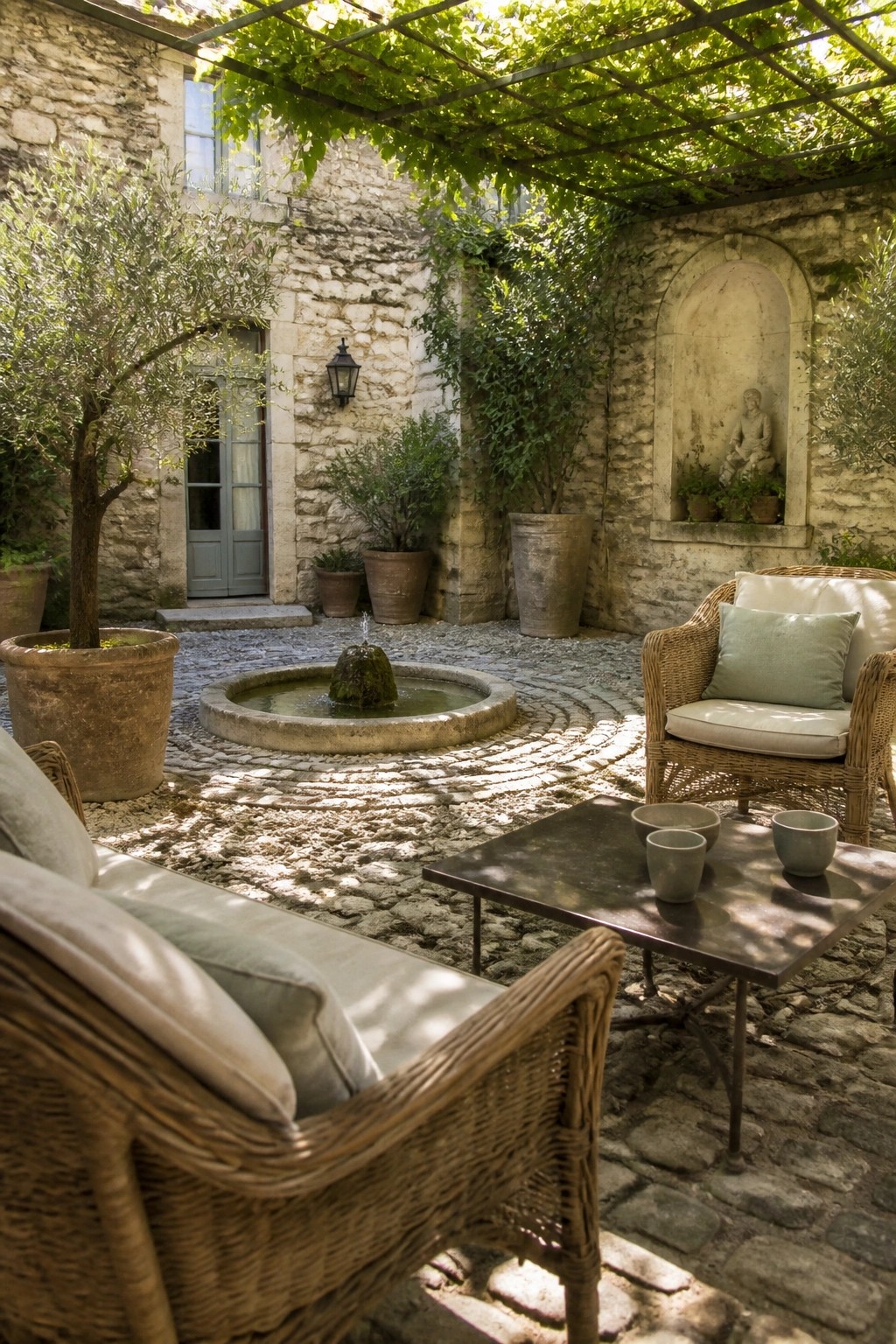
Placing a stone fountain right in the middle gives the whole space a clear focus. The seating then naturally gathers around it, which keeps the area feeling balanced without needing extra decoration.
This works especially well in smaller or enclosed courtyards on older homes. Keep the paving simple like cobblestone and use low chairs so nothing blocks the view of the water from any seat.
Stone Fountains That Edge the Patio

A long stone fountain placed along the side of a patio gives the space a clear edge without needing a wall or fence. The water adds movement and sound, which helps the area feel more like a finished courtyard instead of just an open slab next to the house. It works especially well when the fountain runs parallel to the main seating or cooking zone.
This setup suits homes with a Mediterranean or Tuscan style where the goal is simple materials and a relaxed feel. Keep the fountain low so it does not block views or conversation, and let the overflow spill into a smaller basin at one end. Pair it with basic paving and a narrow strip of planting behind it to keep maintenance low.
Centering the Courtyard on a Stone Fountain
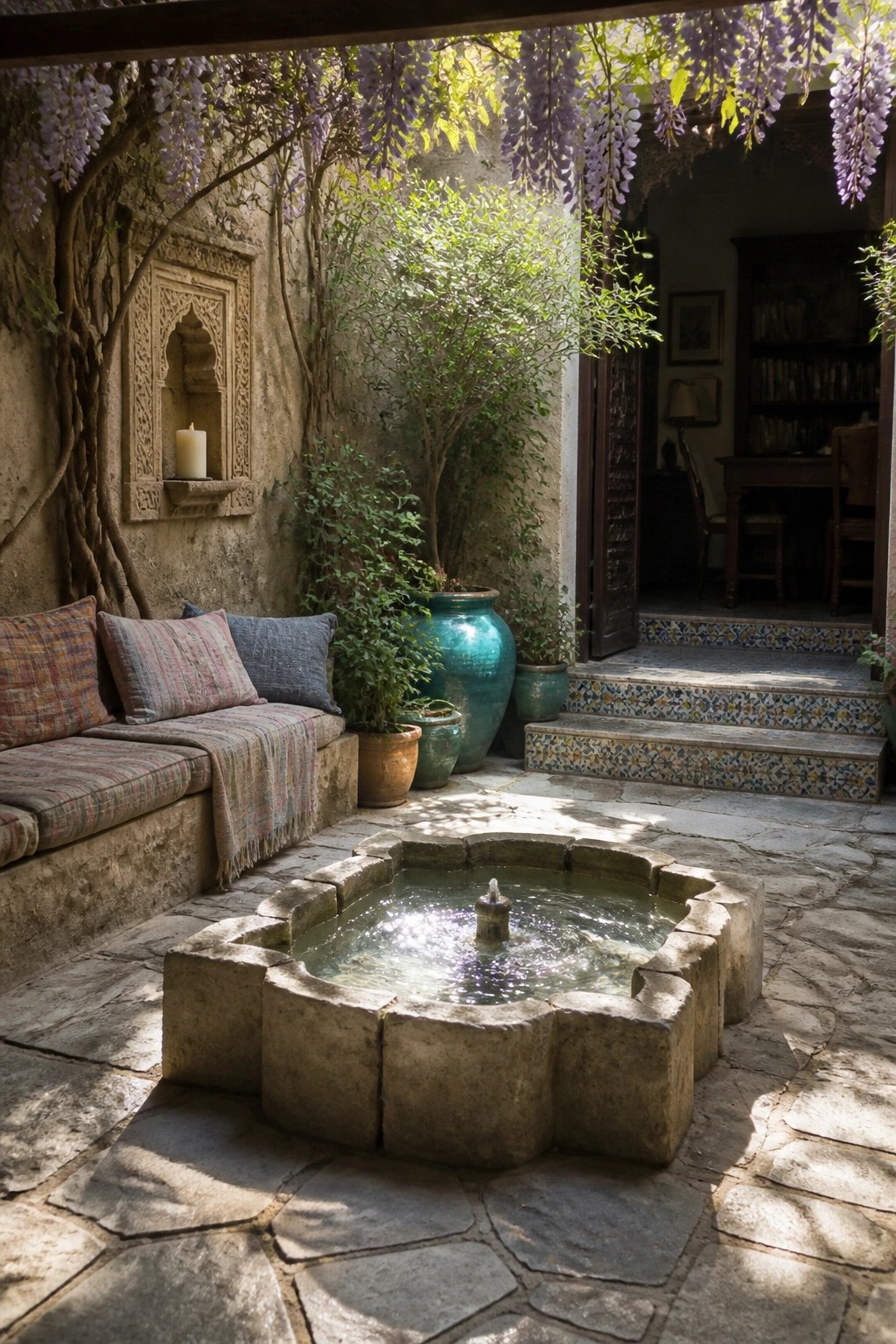
A stone fountain placed right in the middle of the paving gives the courtyard a clear center without any extra effort. The low profile and simple shape keep the focus on the water itself while the surrounding stone surfaces tie everything together.
This works best in smaller outdoor spaces where you want one main spot for sitting and relaxing. Keep the surrounding paving even and add a built-in bench along one wall so the fountain stays the main point rather than competing with furniture.
Center the Courtyard on a Stone Fountain

A stone fountain placed right in the middle gives a courtyard a clear focal point without needing much else. The water sound and simple shape draw the eye and make the whole space feel settled.
This approach works best in open areas where you can walk or sit around the edges. Keep surrounding plants low and paths simple so the fountain stays the main feature rather than competing with other elements.
Stone Fountains Work Best as the Center

A stone fountain placed right in the middle gives a courtyard its main point of interest right away. The water sound and simple shape pull the rest of the space together, so you do not need many other big features to make it feel finished.
This setup suits small to medium paved courtyards where you want to keep things open. Add a few large pots with flowers or herbs around the edges and one or two plain chairs, then stop there. Too many extra pieces can crowd the view of the fountain itself.
Build Terraces Around a Stone Fountain
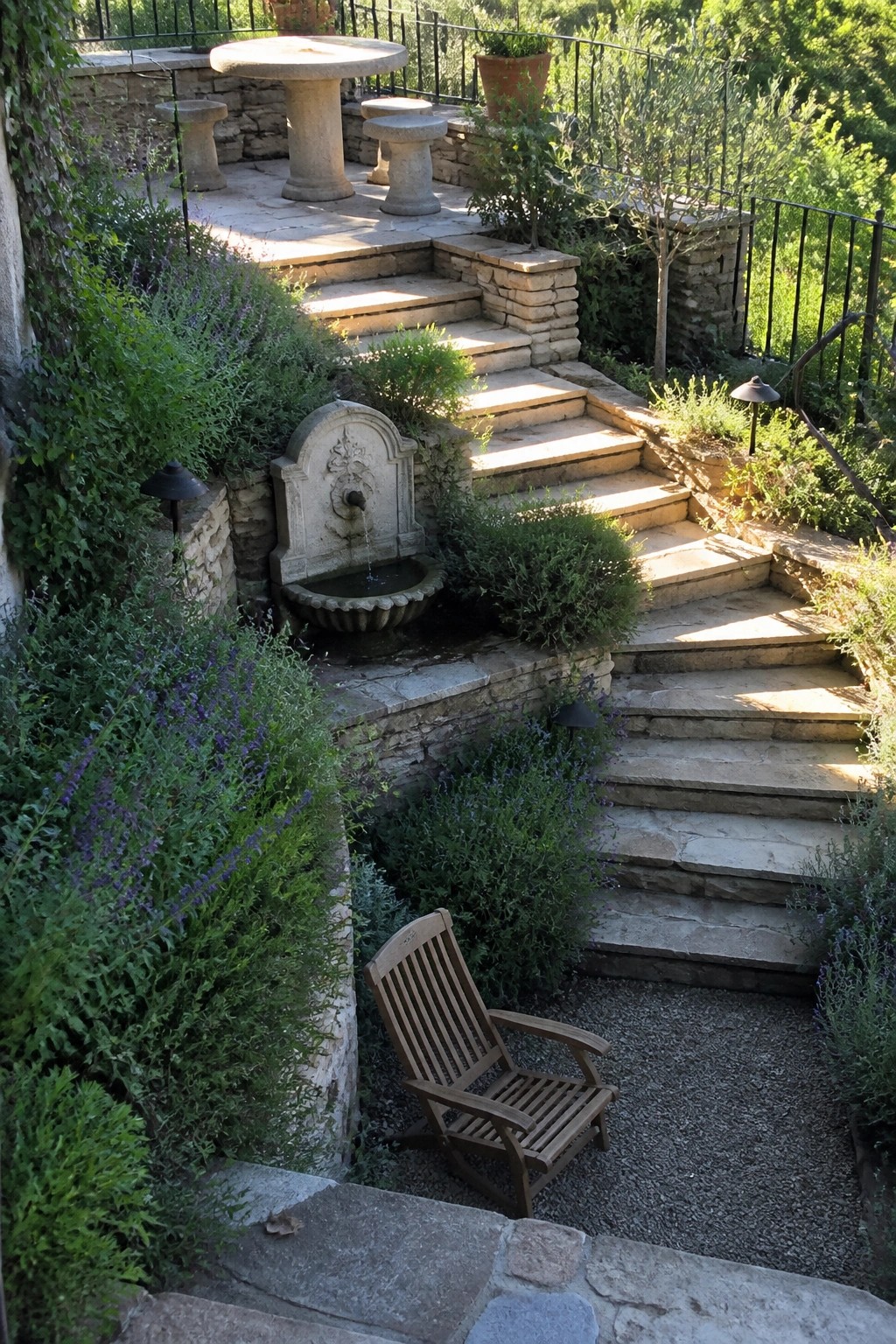
A stone fountain often works best when the ground around it is shaped into terraces rather than left flat. Steps and low walls let the water feature sit at a natural height while still keeping the space easy to walk through and use.
This setup suits homes on gentle slopes where you want both a focal point and room to move between levels. Keep the planting loose around the edges so the stone stays visible, and make sure the steps are wide enough for seating or just pausing on the way up or down.
Center the Courtyard on a Stone Fountain

A stone fountain set in the middle of the courtyard gives the space a clear starting point. Everything else, from the paving pattern to the seating and pots, can work around that one spot without feeling scattered.
This layout suits smaller enclosed areas where you want a simple, traditional look. Keep the surrounding surfaces and plantings low key so the fountain stays the main feature and the whole space feels balanced.
Center a Stone Fountain in the Courtyard
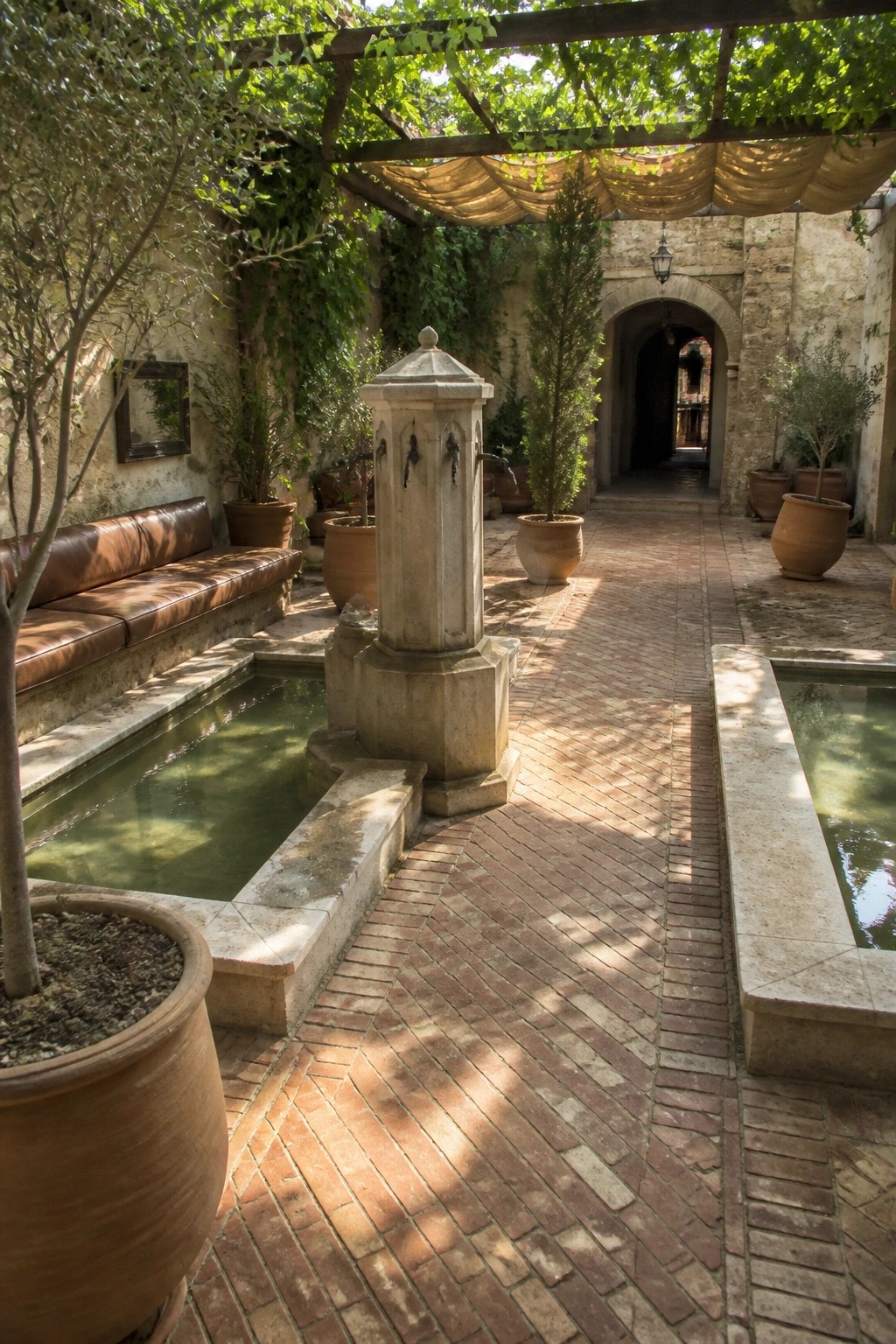
A stone fountain gives a Tuscan courtyard a clear center without needing much else. The water sound helps the space feel cooler and more settled, especially on warm days.
This setup works best with simple brick paving that leads toward the fountain and a few large pots placed around the edges. Keep the surrounding walls plain so the fountain stays the main point of interest.
Center a Small Courtyard Around a Wall Fountain
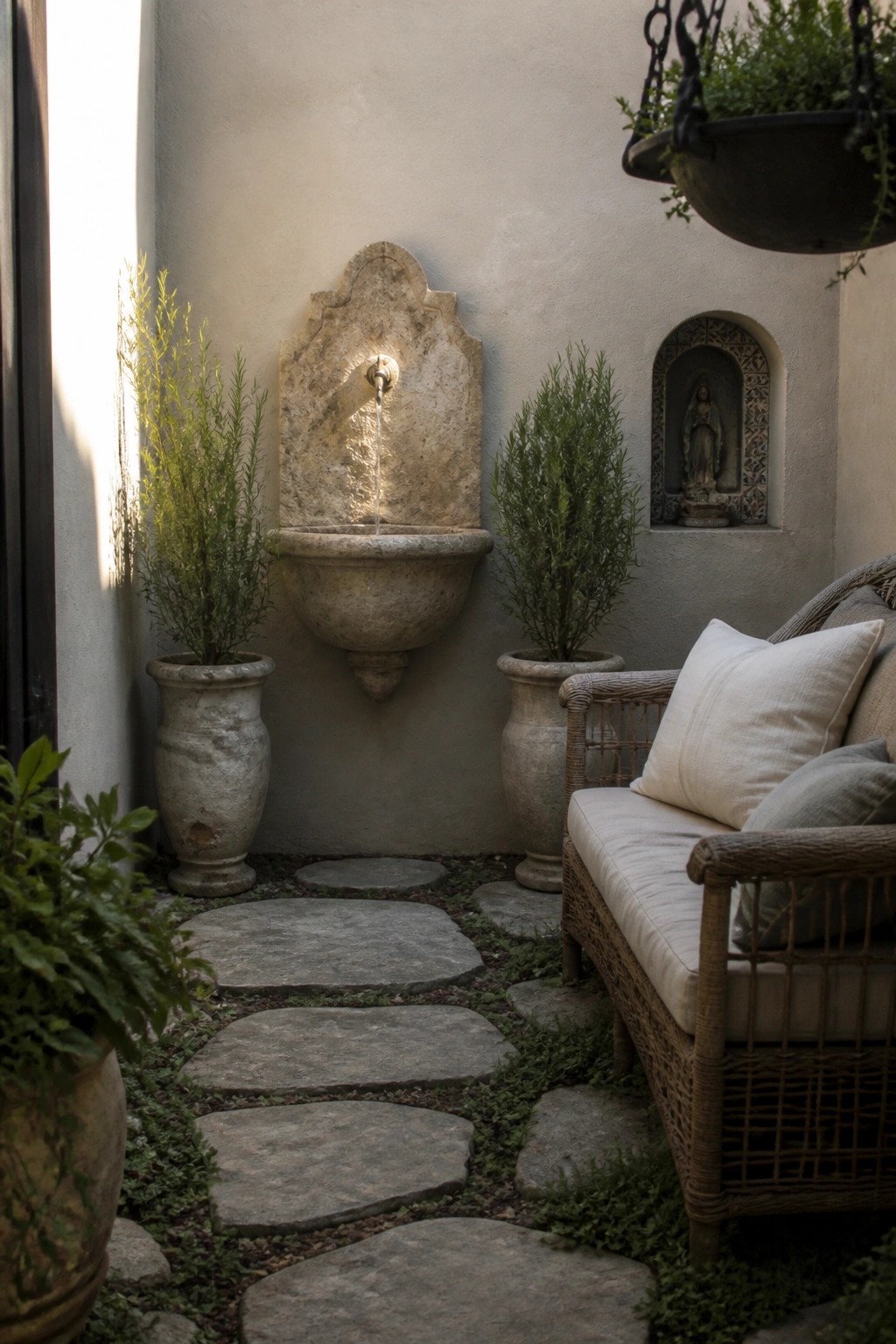
A wall fountain gives a courtyard a clear center without crowding the floor. It works well in tight spaces because the water feature sits against the wall and leaves room for a simple path and a few chairs.
This approach suits older homes or new builds that need a quiet outdoor spot. Keep the surrounding walls plain, use pots for plants, and let the fountain do the main work of pulling the space together.
Anchor the Courtyard With a Central Fountain
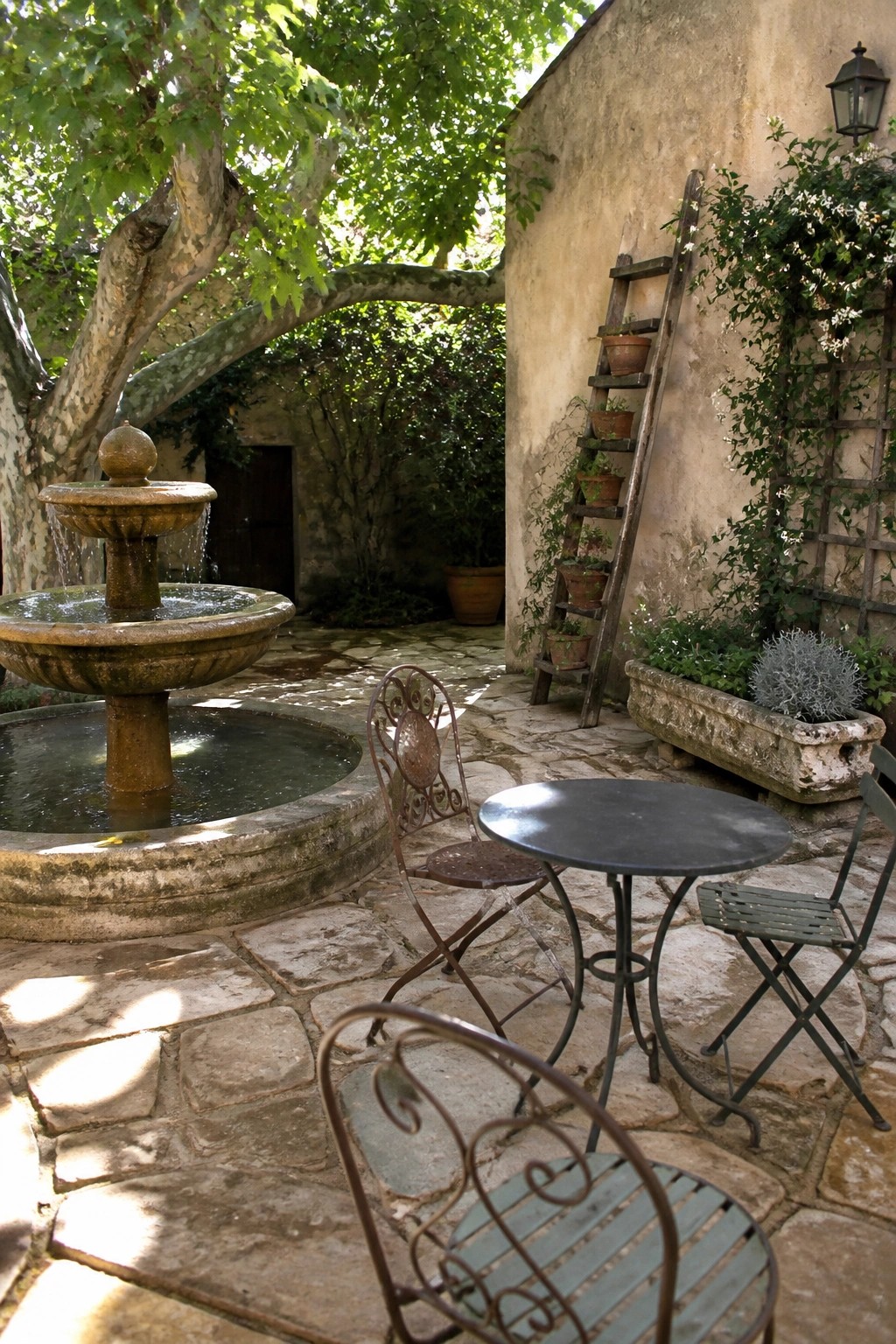
A stone fountain works best when it sits at the middle of the patio rather than off to one side. It gives the space a clear focus and turns a few chairs and a table into an actual place to sit instead of just an open patch of stone.
This setup suits small or medium courtyards on older homes where you want one strong feature instead of lots of separate pieces. Keep the surrounding furniture simple and low so the fountain stays the main point.
Stone Fountains That Stay Simple
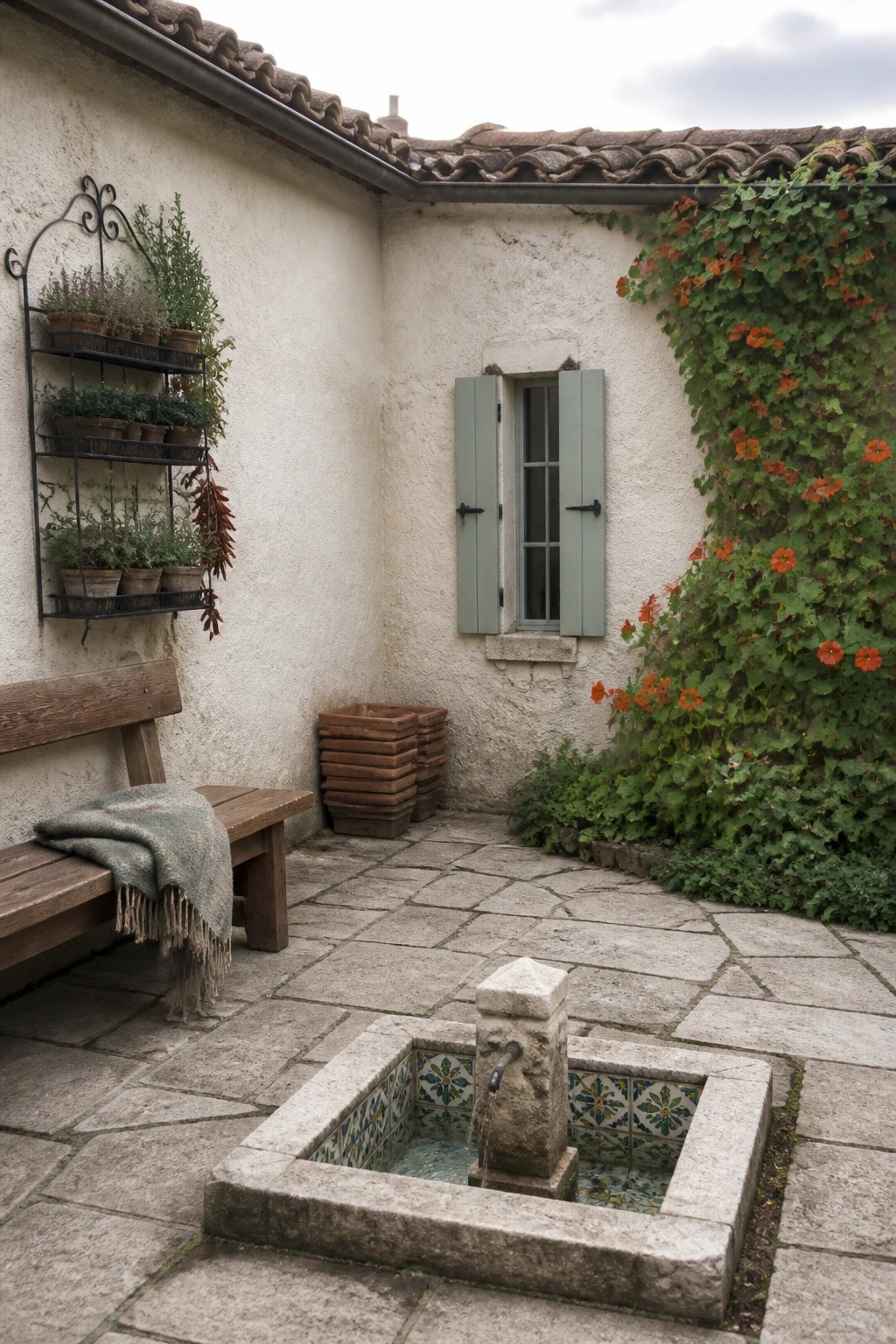
A small stone fountain often works better than a large one in a courtyard because it does not compete with the rest of the space. It gives people a single quiet spot to focus on while the surrounding walls and paving stay plain.
This approach suits compact paved areas that already have a bench or two along the edges. Keep the plantings light so the fountain remains the main feature instead of getting lost among too many pots or vines.
Center Your Courtyard on a Stone Fountain

A stone fountain works well as the main feature in a Tuscan courtyard because it gives the space a clear center without needing extra structures. The basin shape and aged texture help it blend with brick and tile while the sound of water makes the area feel more settled.
This approach fits homes that already have open outdoor floors and simple planting. Keep nearby seating low and add only a few potted plants so the fountain stays the main point instead of getting lost among other elements.
Stone Fountains as Courtyard Centerpieces
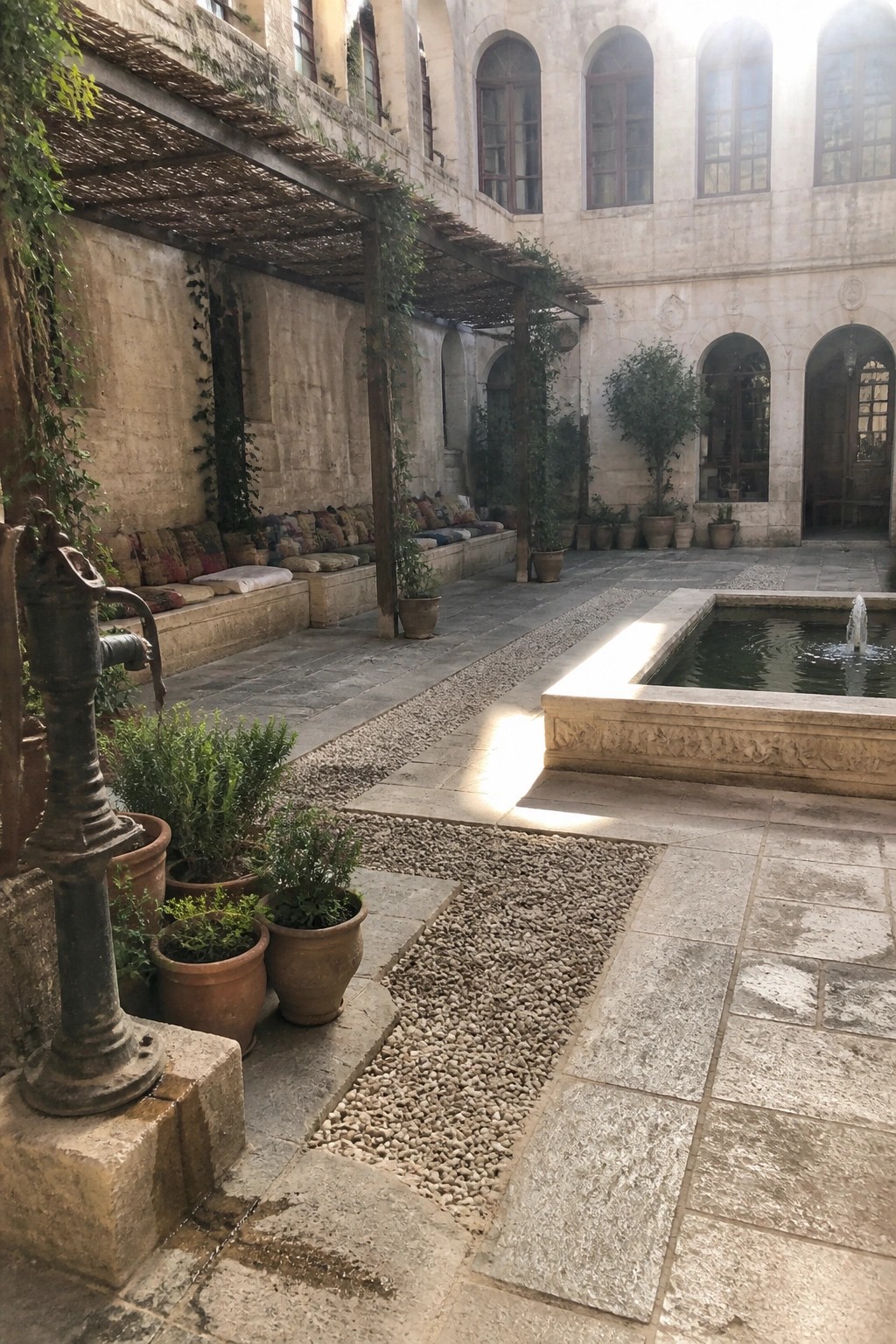
A stone fountain placed at the center gives a courtyard a natural gathering spot. It breaks up the open paving and creates a quiet point that everything else can work around without extra walls or dividers.
This approach suits enclosed spaces with stone or gravel underfoot. Keep the paving straightforward and use pots for planting so the layout stays flexible. It works best on homes that already have older stone walls or want that simple Mediterranean feel.
Center the Courtyard on a Stone Fountain
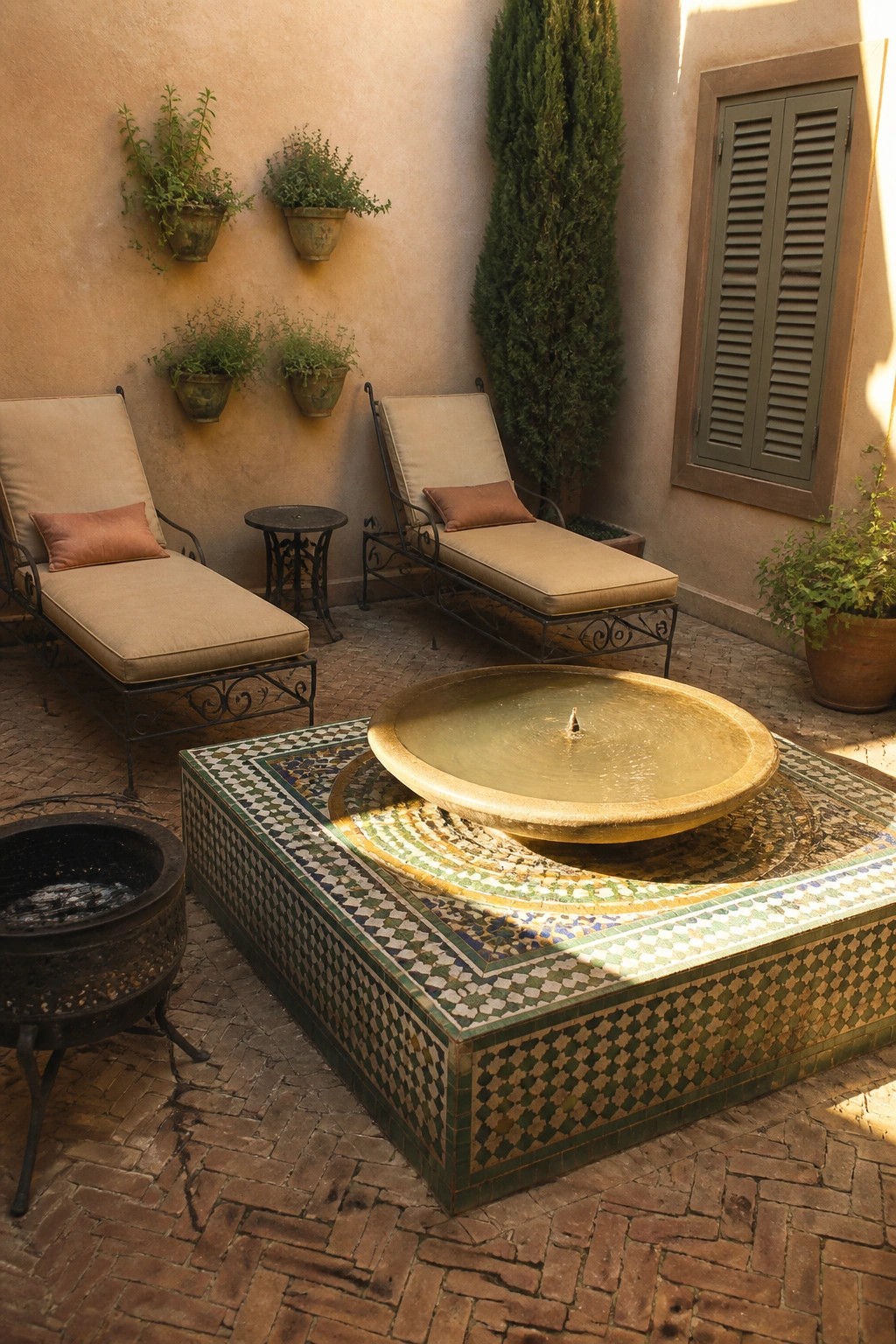
A big fountain in the middle gives the whole space a clear purpose. It draws people in and makes the seating feel like it belongs together instead of scattered around the edges. The tiled surround and brick paving help the fountain sit solidly in place without looking like an afterthought.
This setup works best in smaller or medium courtyards where you want one strong focal point. Keep the chairs close enough to enjoy the sound of the water but leave room to walk around the base. It suits homes with simple stucco walls and warm paving materials.
Stone Fountains Center the Space
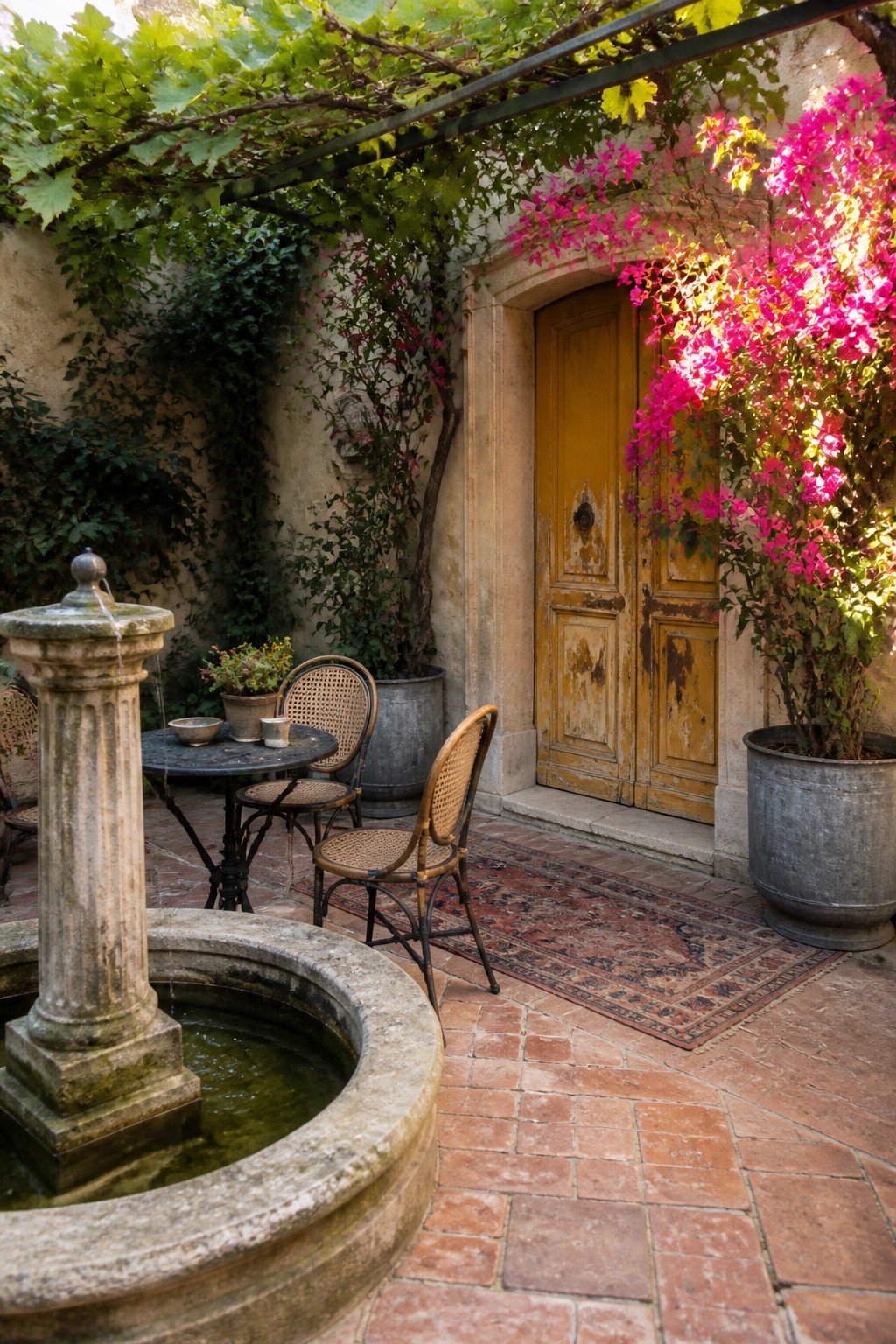
A stone fountain gives a courtyard a clear center without extra effort. Seating can stay light and simple when the fountain handles the main focus.
This setup works well on brick or stone paving with some climbing plants nearby. Keep the overall space open so the fountain stays easy to walk around and does not get crowded by too many pots or chairs.
Frame the Fountain with Built-In Seating

A stone fountain works best when the seating is built to face it from more than one side. This layout turns the fountain into the natural center of the space instead of leaving it off to the side where it gets ignored.
It suits older homes or new builds that want a simple Tuscan feel without adding too many separate pieces. Keep the bench height low and the cushions neutral so the stone remains the main feature.
Set the Fountain in a Bed of Pebbles
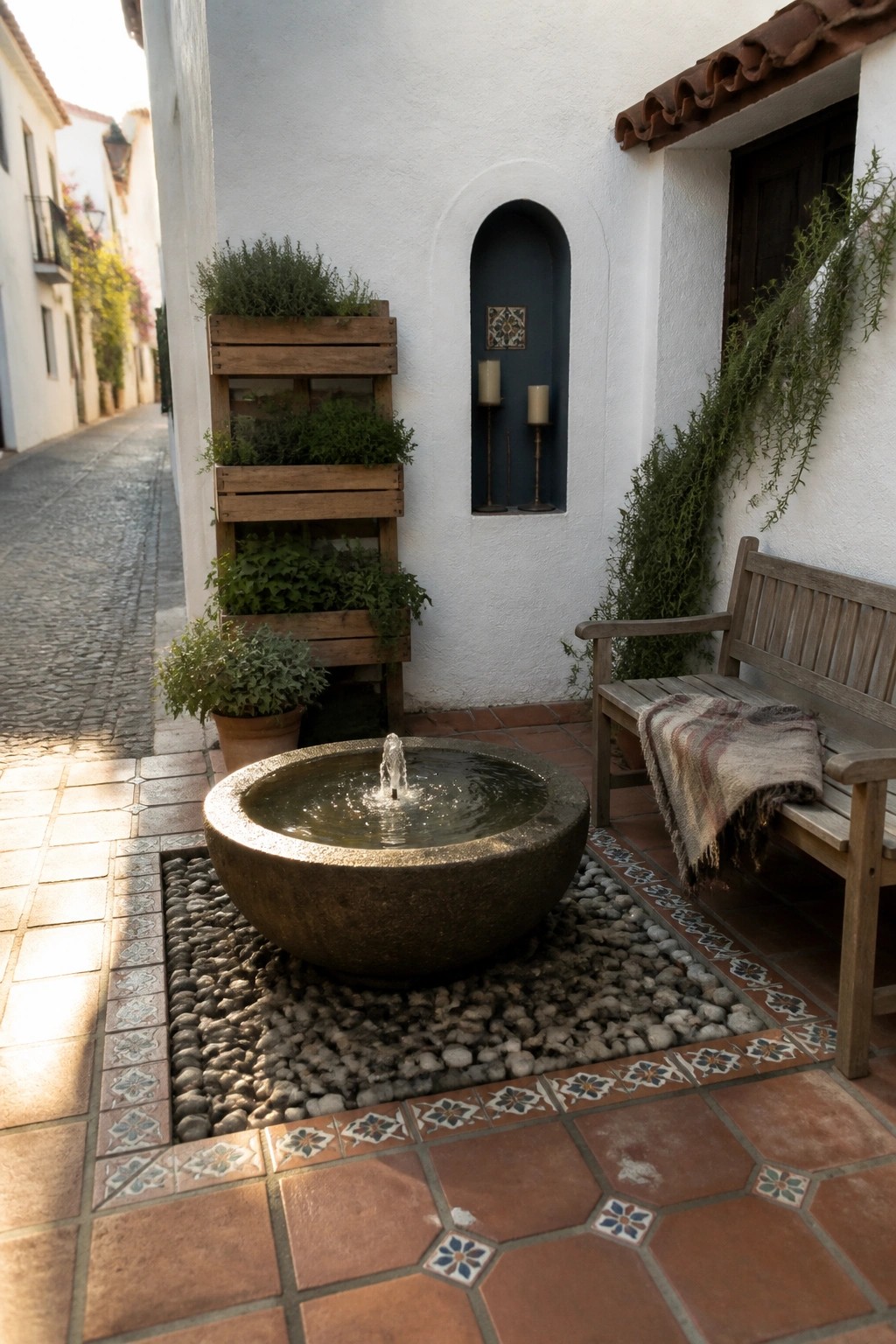
A pebble bed around the base of the fountain lets it settle into the tiled floor instead of sitting on top of it. The loose stones create a simple edge that feels natural and keeps water from splashing across the whole patio.
This works best in smaller courtyards with terracotta tiles where you want one clear focal point. It keeps the layout open and easy to clean while still giving the fountain a finished look.
Frequently Asked Questions
Q: How do I keep algae from taking over the fountain water in summer?
A: Change the water every week or two and add a small pump to keep it moving. This simple flow stops most buildup before it starts. Skip harsh chemicals if you have plants nearby.
Q: What size fountain works in a courtyard that is not very big?
A: Pick a basin no wider than your table so the space still feels open. A single spout on a low stone base gives the same classic look without crowding the area. Test the scale with a bucket first.
Q: Do I need special stone or will regular garden stone hold up?
A: Use local limestone or sandstone that matches the color of your walls. These age naturally and blend right in with the rest of the courtyard. Avoid anything polished since it fights the Tuscan feel.