When I walk past shipping container homes, the first thing I notice is how the choice of wood or steel on the facade changes the way the whole structure meets the ground.
Glass sections can either tie those materials together or leave the exterior looking unbalanced, depending on how they are placed along the walls.
I have found that some combinations hold up better once you see them in person rather than in drawings.
The right mix often comes down to how the entry and roofline read from the street, not just the materials themselves.
Testing a few of these material pairings on a simple model helps me decide what might actually work on a real site.
Wood Slats Soften Steel Container Homes
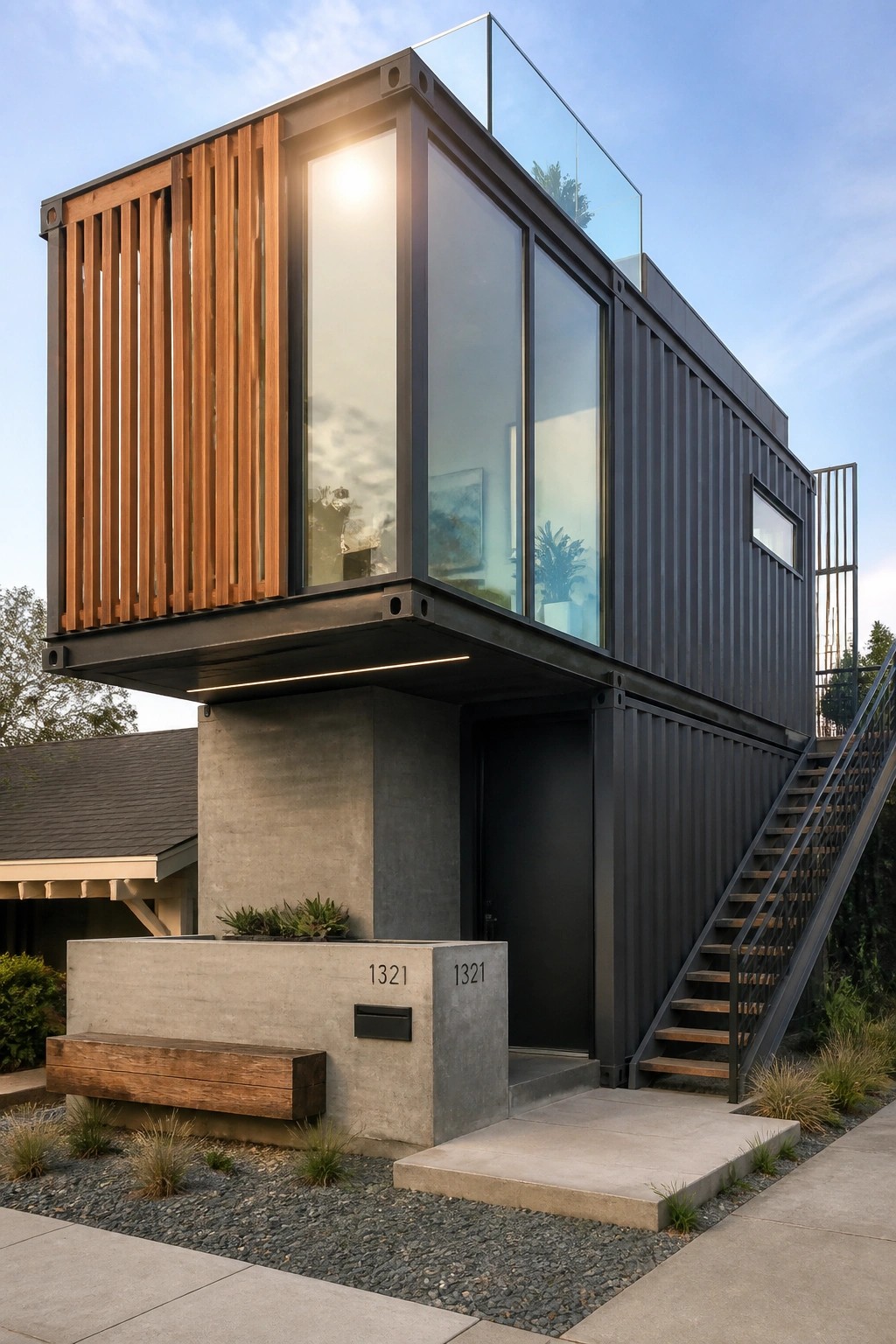
Vertical wood slats give steel containers a warmer look without covering up the industrial feel. In this setup the slats run along one side of the upper level and break the long metal surface into something less flat. The contrast keeps the home from feeling too cold while still reading as a container build.
This approach works best on homes that sit close to the street or in neighborhoods where a full metal look might feel stark. Place the wood where it gets good light so the grain shows, and keep the rest of the facade simple with glass or dark steel. It is an easy way to add texture without adding much cost or changing the overall structure.
Creating a Fire Pit Patio Between Container Units
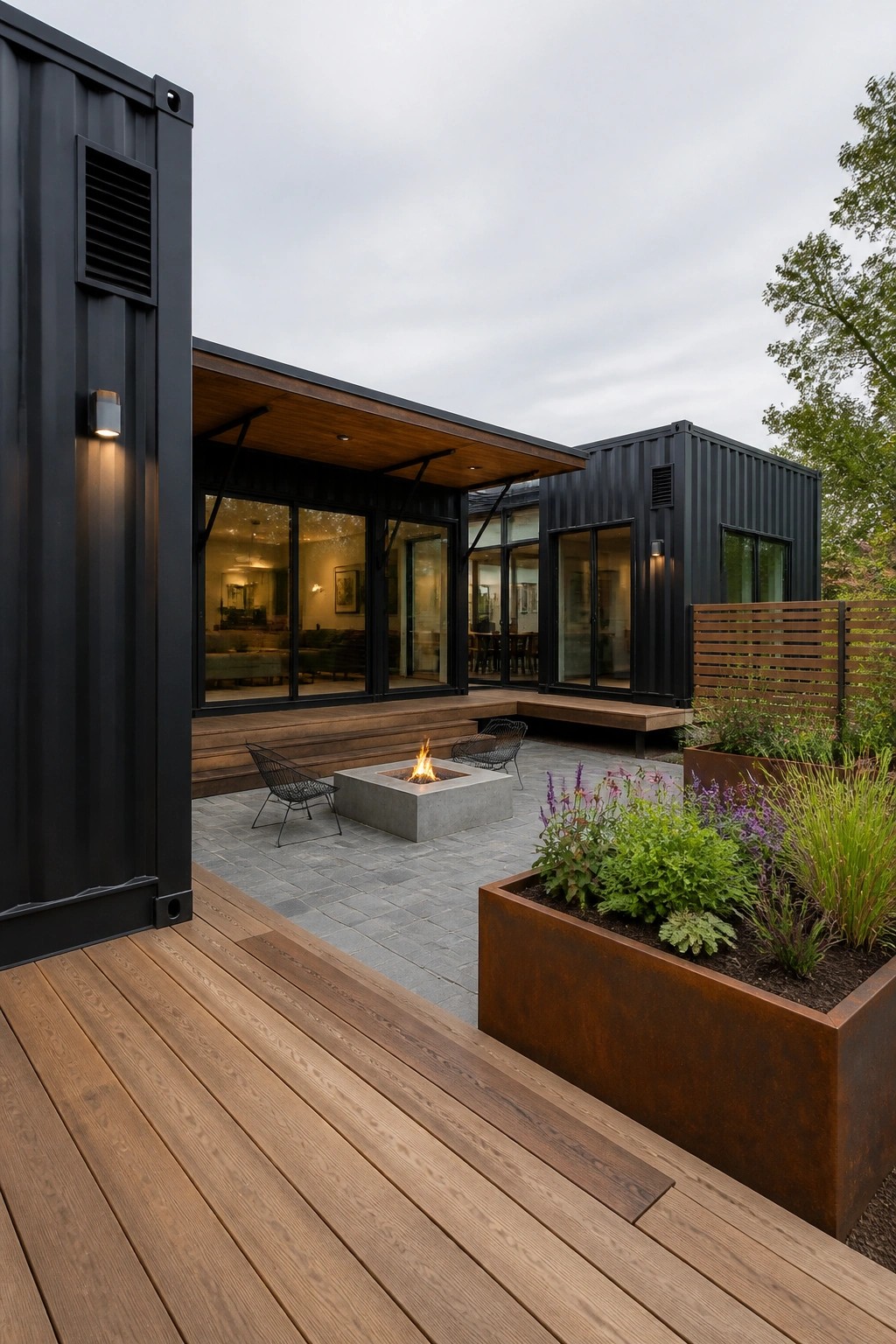
A fire pit works well as the main anchor in an outdoor space formed by shipping container homes. It turns the paved area between the units into a spot people actually use for sitting and gathering instead of just walking through. The concrete pit here sits low and simple so it does not compete with the steel walls or the wood decking that leads out from the house.
This layout suits homes with two or more containers placed to form a partial courtyard. Keep the surrounding paving flat and the seating light so the fire pit stays the focus. Watch the distance from doors and windows if you want to avoid smoke drifting inside.
Mixing Wood Siding With Steel Containers
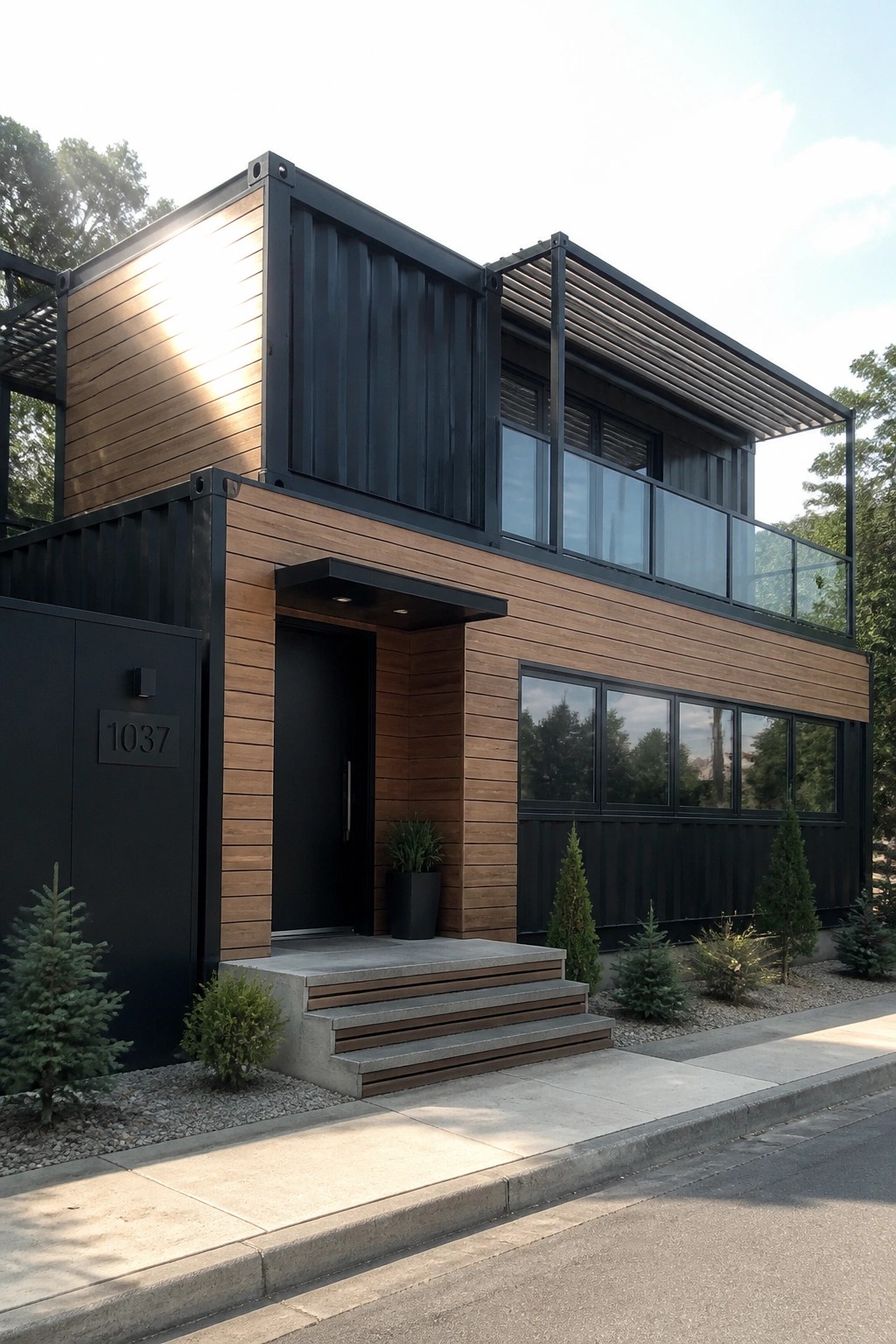
Many shipping container homes stay too stark when they rely only on the metal boxes. Adding horizontal wood siding across parts of the facade breaks up the industrial feel and gives the house a warmer, more settled look without losing the modern edge.
This works best on homes where the steel stays visible in key spots like corners or upper levels. Keep the wood in clean horizontal runs and let it meet the black steel at sharp lines so the contrast stays crisp rather than busy.
Wood Decking Around Shipping Container Pools

Many shipping container homes use a wood deck right next to the pool to create a place for sitting and walking that feels more comfortable than bare concrete or steel. The wood adds warmth and makes the whole outdoor area easier to use on hot days.
This setup works best when the containers stay dark and simple. Keep the deck boards straight and the furniture low so the space stays open and practical. It fits homes in sunny climates where people want to spend time outside without adding a lot of extra structures.
Wood Accents on Shipping Container Exteriors
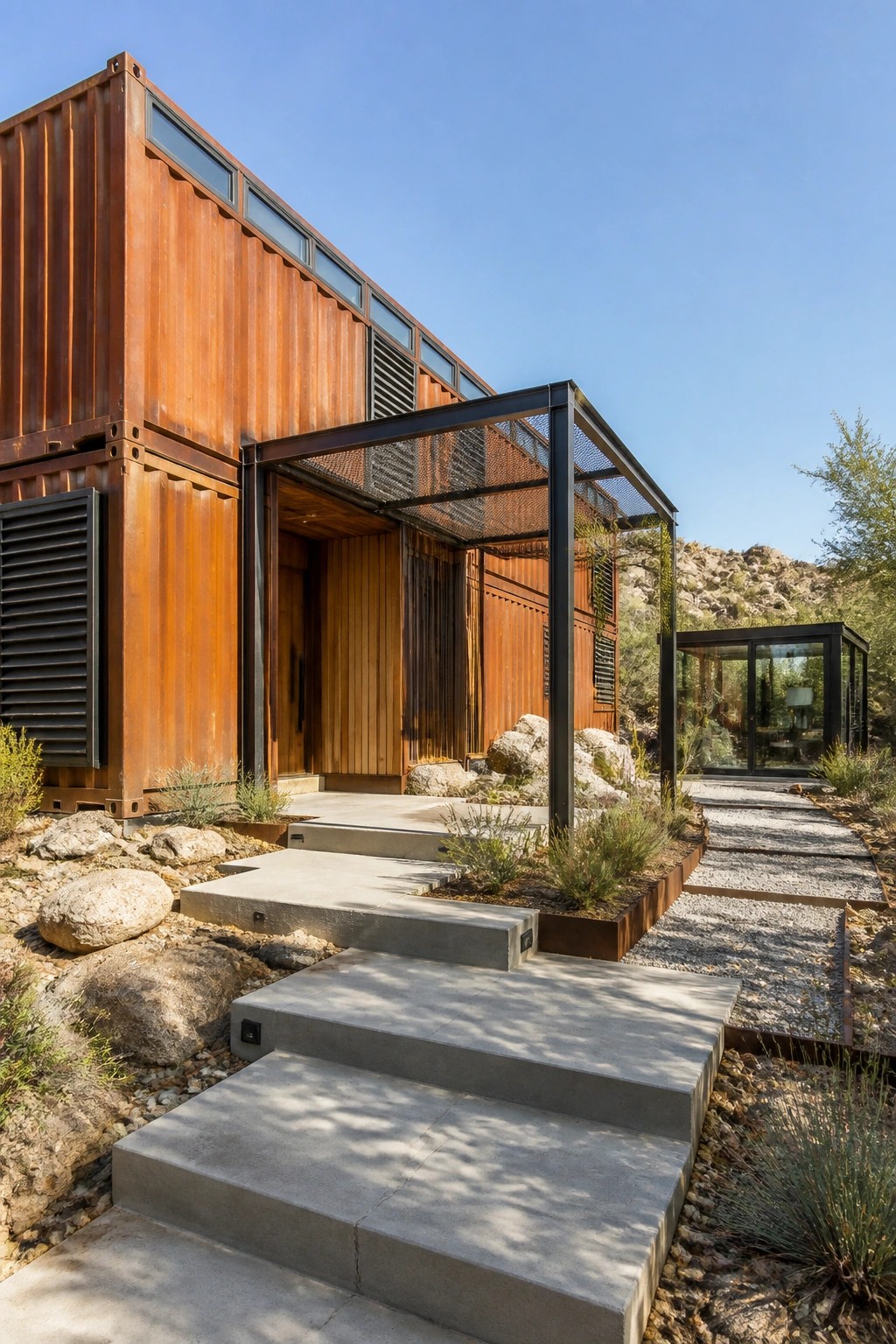
One simple way to make a shipping container home feel more welcoming is to add wood around the entry. The contrast between the rusted steel and the warmer wood tones softens the industrial look without hiding the container structure.
This approach works best on homes where the entry gets some foot traffic or sits in full view. Keep the wood section fairly contained so it reads as an accent rather than a full facade change, and choose a finish that can handle sun and weather.
External Steel Stairs Keep Things Simple
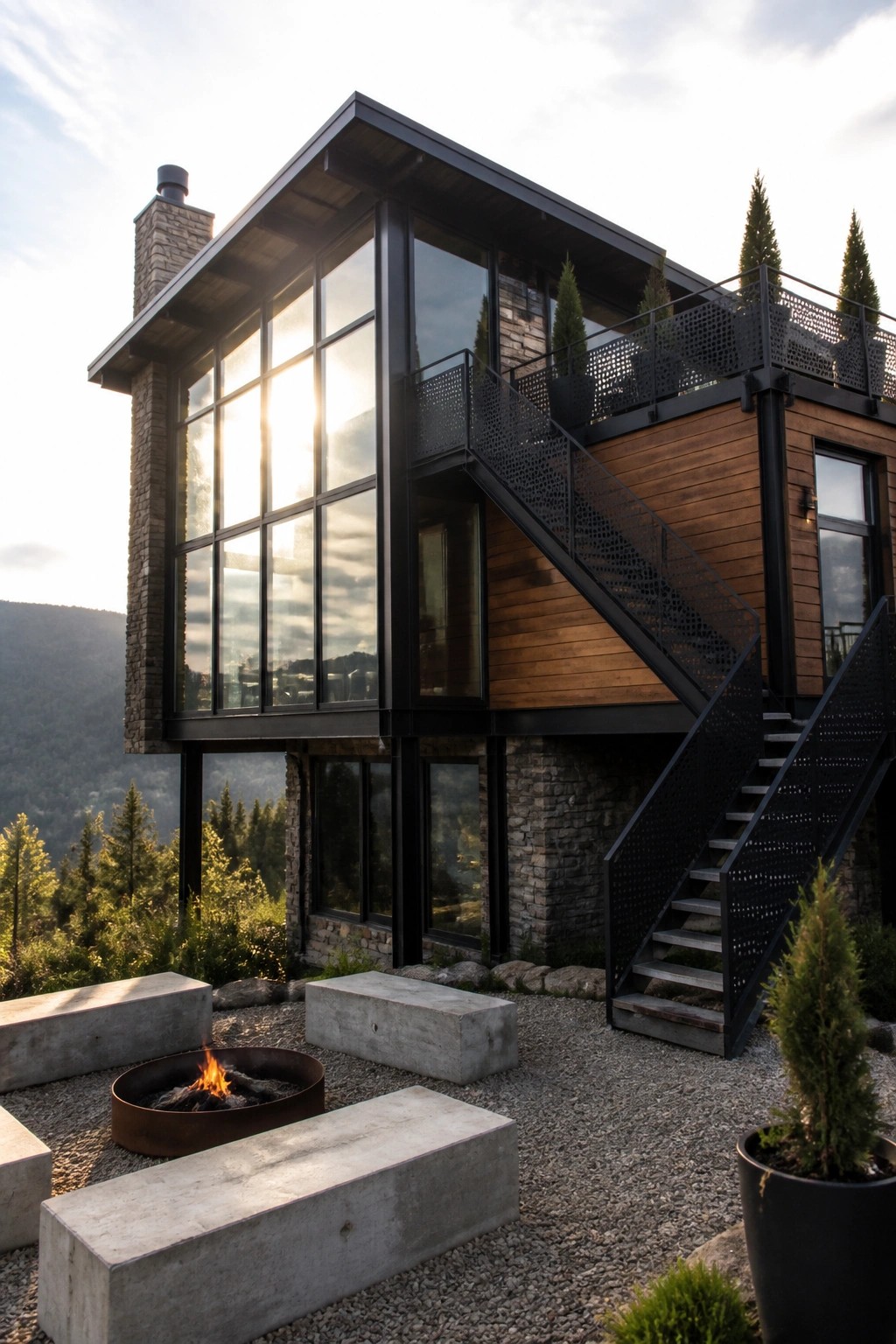
An external staircase in black steel gives a shipping container home clear access to the upper level without cutting into the living space inside. The open design also lets light reach the windows below and keeps the whole structure feeling lighter. Many people like this approach because it matches the industrial roots of container building while adding a strong visual line.
This setup works best on homes with a bit of slope or on lots where you want separate outdoor zones. Keep the railing open so it does not block views, and match the steel tone to any other metal details on the house. It suits modern designs that already use wood and glass, but it can feel heavy if the stairs are too wide or too close to the main windows.
Mixing Wood And Steel On Container Homes
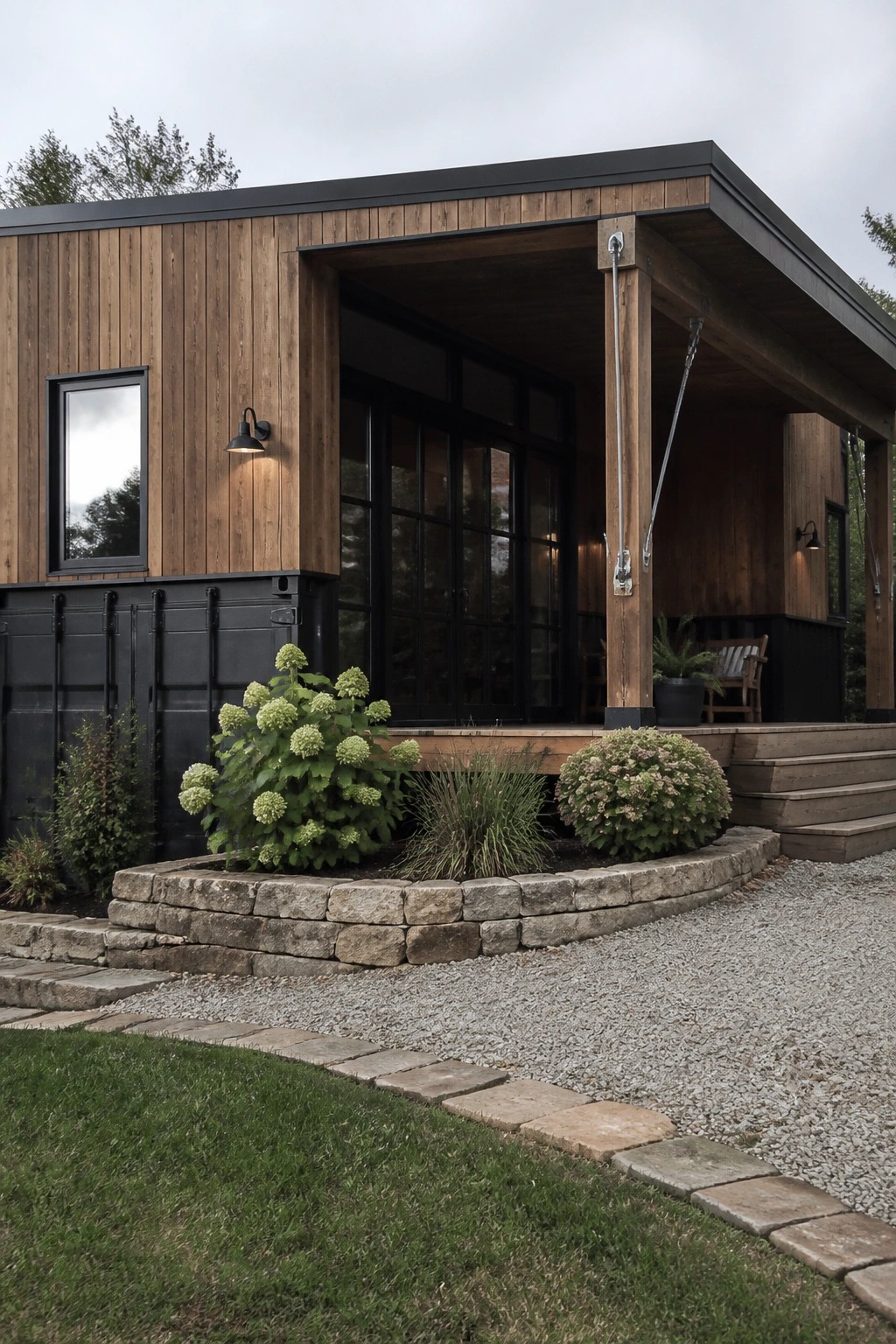
Many shipping container homes start with plain steel walls that can feel too cold or industrial on their own. Adding wood siding over parts of the exterior softens the look while still showing off the container structure underneath.
This works best on homes that sit in natural settings where you want the building to blend in more. Keep the steel visible on the lower sections and use the wood higher up so the materials play off each other without competing. Make sure both are sealed well against weather from the start.
Adding An Outdoor Kitchen To The Deck
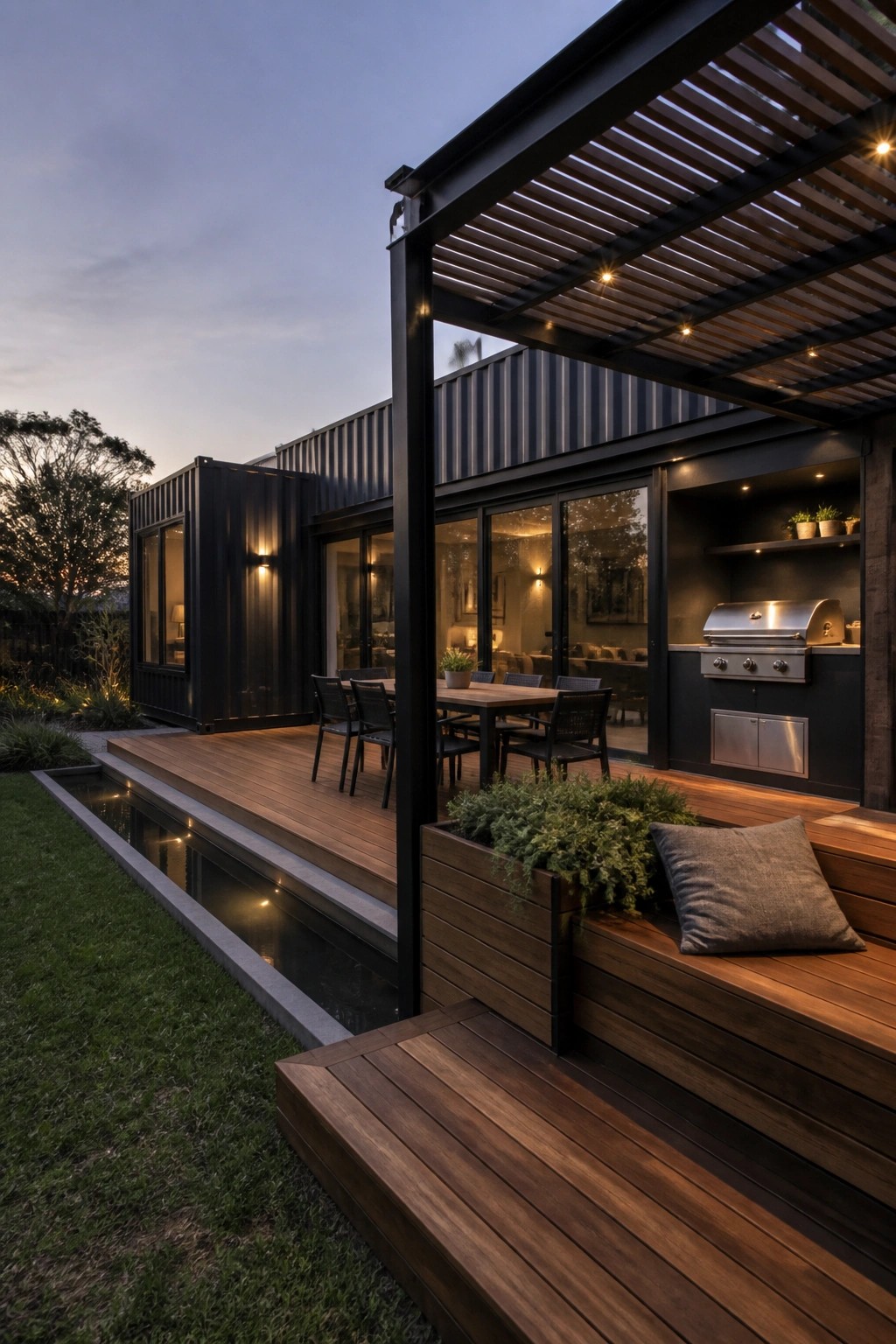
One of the simplest ways to make a shipping container home feel more livable is to build a deck right off the side and add an outdoor kitchen. It turns the container into a base for real everyday use instead of just a box with windows. The wood decking helps soften the steel look while giving you a flat surface for cooking and sitting.
This setup works best on smaller lots where you want the house and yard to connect without needing a big addition. Keep the pergola low so the space feels contained, and place the grill where smoke can clear easily. Just make sure the deck framing is solid enough to handle the weight of the built-ins.
Vertical Wood Slats on Shipping Container Walls
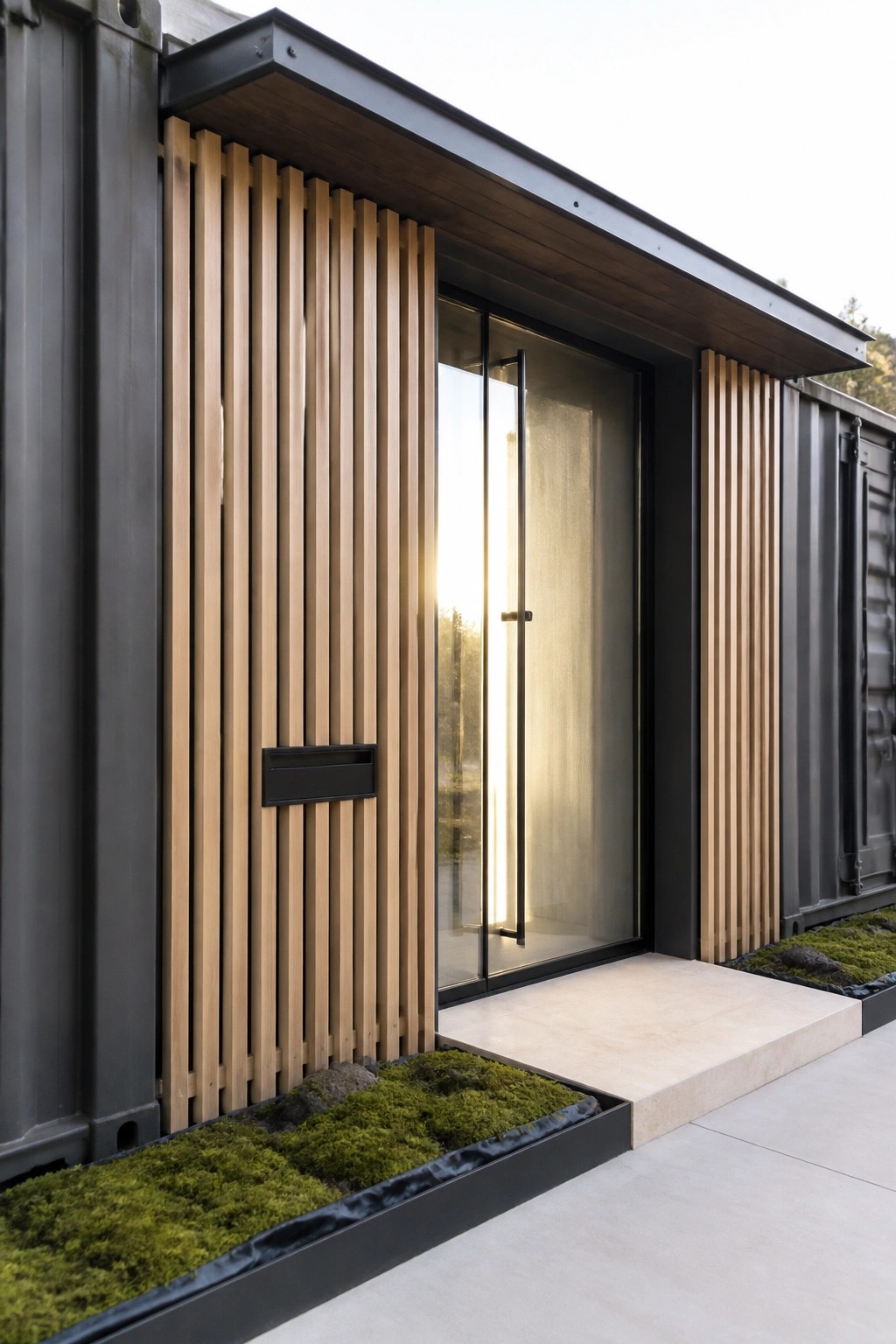
Many people start with plain steel containers and then look for ways to soften the industrial feel. Vertical wood slats give the facade some texture and warmth while still letting the container shape show through.
This works especially well around the entry, where the wood can frame a glass door without adding extra bulk. It suits homes that want a modern look but also need a bit of natural material to balance the steel. Treat the wood for outdoor use and keep the spacing even so the pattern stays clean.
Mixing Wood With Steel On Container Facades
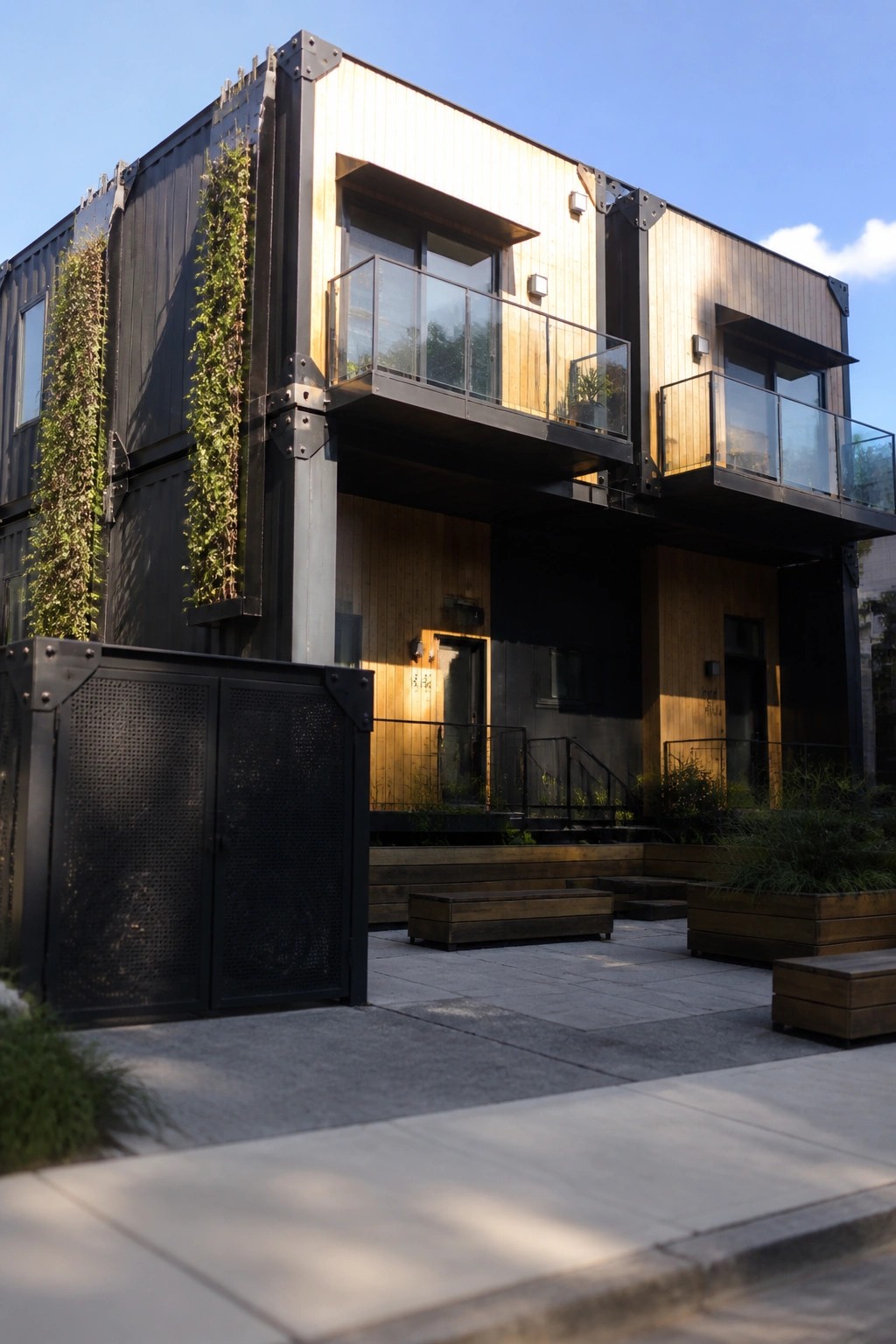
Many shipping container homes lean heavily on the raw steel look, but adding wood cladding next to it changes the feel without hiding the structure. The wood brings warmth and makes the whole exterior read as more residential while the steel still shows through in the beams and corners.
This approach works best on homes that sit close to the street or in neighborhoods where pure industrial finishes can feel too stark. Keep the wood tones light against dark steel so the contrast stays clear, and let the materials meet at clean lines rather than trying to blend them.
Use Shipping Containers to Shape a Private Courtyard

Many shipping container homes already have the structure needed to create a closed-off outdoor space. Placing the containers around a central area gives you walls on multiple sides right away, which helps turn the yard into a more usable room instead of an open stretch of ground.
This setup works well when you want a pool and seating area that feels separate from the street or neighbors. Keep the containers dark so they recede a bit, then add simple overhead beams and plants to bring in shade and some softness without overcomplicating the design.
Wood Accents Balance Dark Steel Exteriors
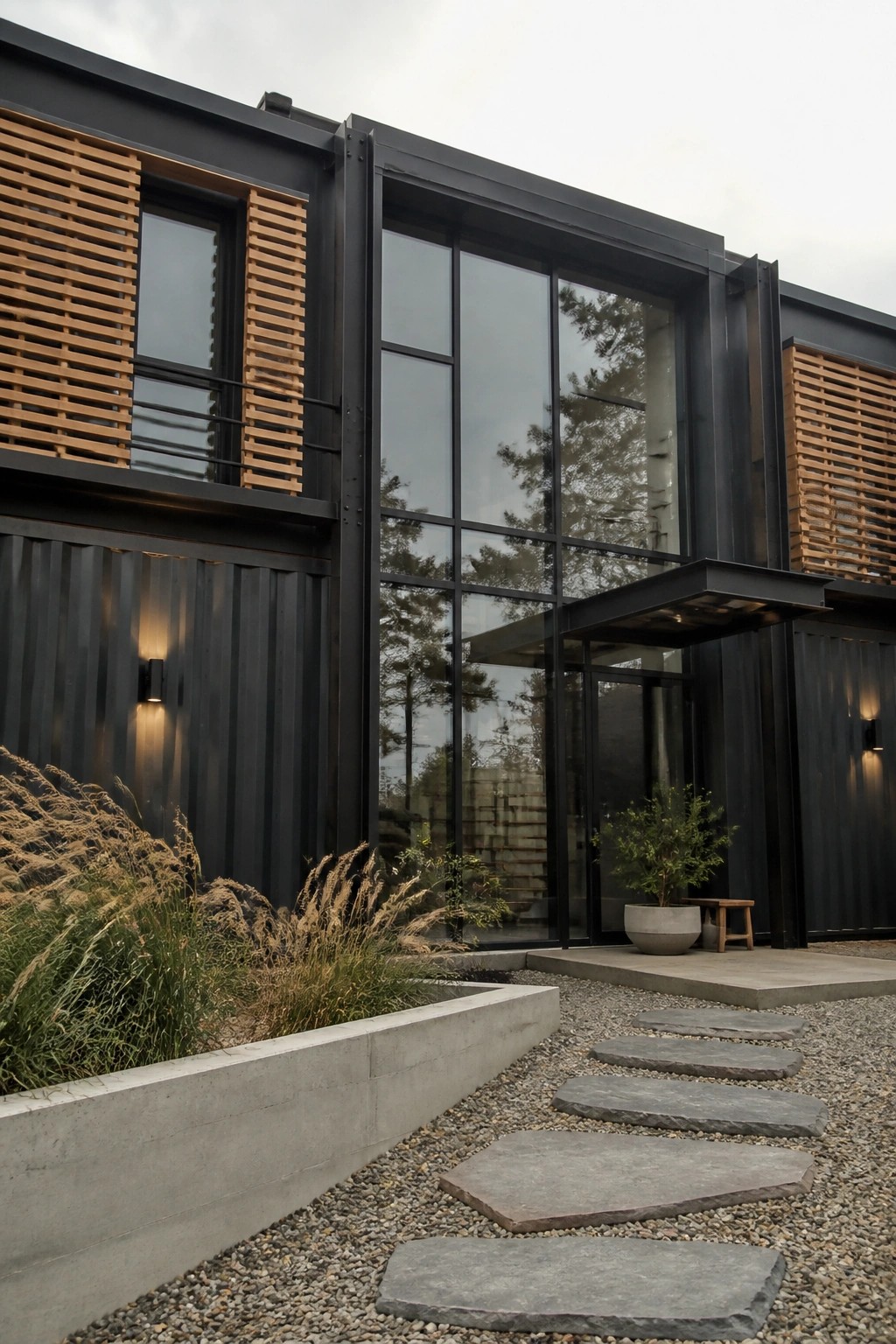
Many shipping container homes can feel a bit stark when the metal is left on its own. Adding wood slats or screens over parts of the black steel softens the look and gives the facade more texture without changing the overall industrial feel.
This approach works best on taller sections or around windows where the wood can break up the solid metal planes. It suits homes that want to keep a modern edge while still feeling grounded in their surroundings.
Wooden Shutters Warm Up Steel Container Walls

Wood shutters are one of the easiest ways to take the edge off a plain shipping container exterior. They add texture and a natural tone that makes the white steel feel less industrial without hiding the structure itself. In this case the horizontal louvers sit neatly on the upper level and give the facade a simple rhythm.
They work well on homes that want a bit of warmth while still reading as modern. Place them over windows that need shade or privacy, and keep the rest of the exterior clean so the wood stands out. Just make sure the shutters are sealed properly if your climate gets a lot of sun or rain.
Adding a Narrow Water Feature to Your Patio

A long, thin reflecting pool can turn a basic outdoor space into something that feels more settled and interesting. It gives the eye a place to rest and creates soft reflections from lights without needing a lot of extra width or fancy planting.
This works especially well next to shipping container homes where the yard is often long and narrow. Keep the pool simple, run it parallel to the main seating area, and add basic string lights overhead so the water still shows up after dark. Just make sure the edges are easy to clean and the depth stays shallow for safety.
Cantilevered Steel Frames For Extra Space
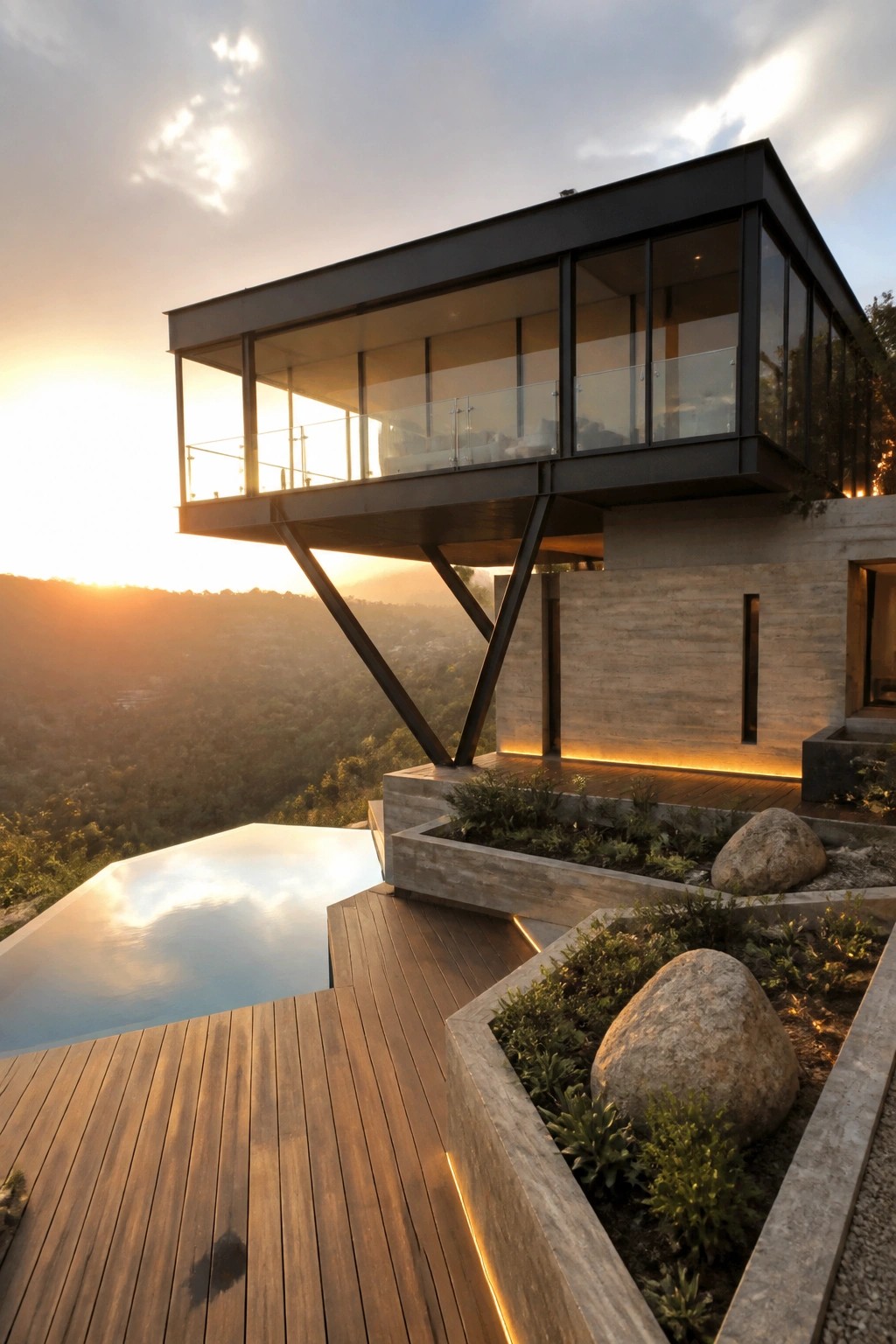
A cantilevered upper level supported by angled steel beams gives a shipping container home more presence without needing a bigger footprint. The structure feels lighter because the living area extends outward, and the steel keeps everything stable while letting you add large glass sections for views.
This approach works best on sloped lots where you want to push living space over the edge without extra foundation work. Keep the steel dark so it contrasts with wood decking and concrete walls, and make sure the supports are placed so they do not block the main outdoor areas below.
Vertical Wood Planters on Steel Container Walls
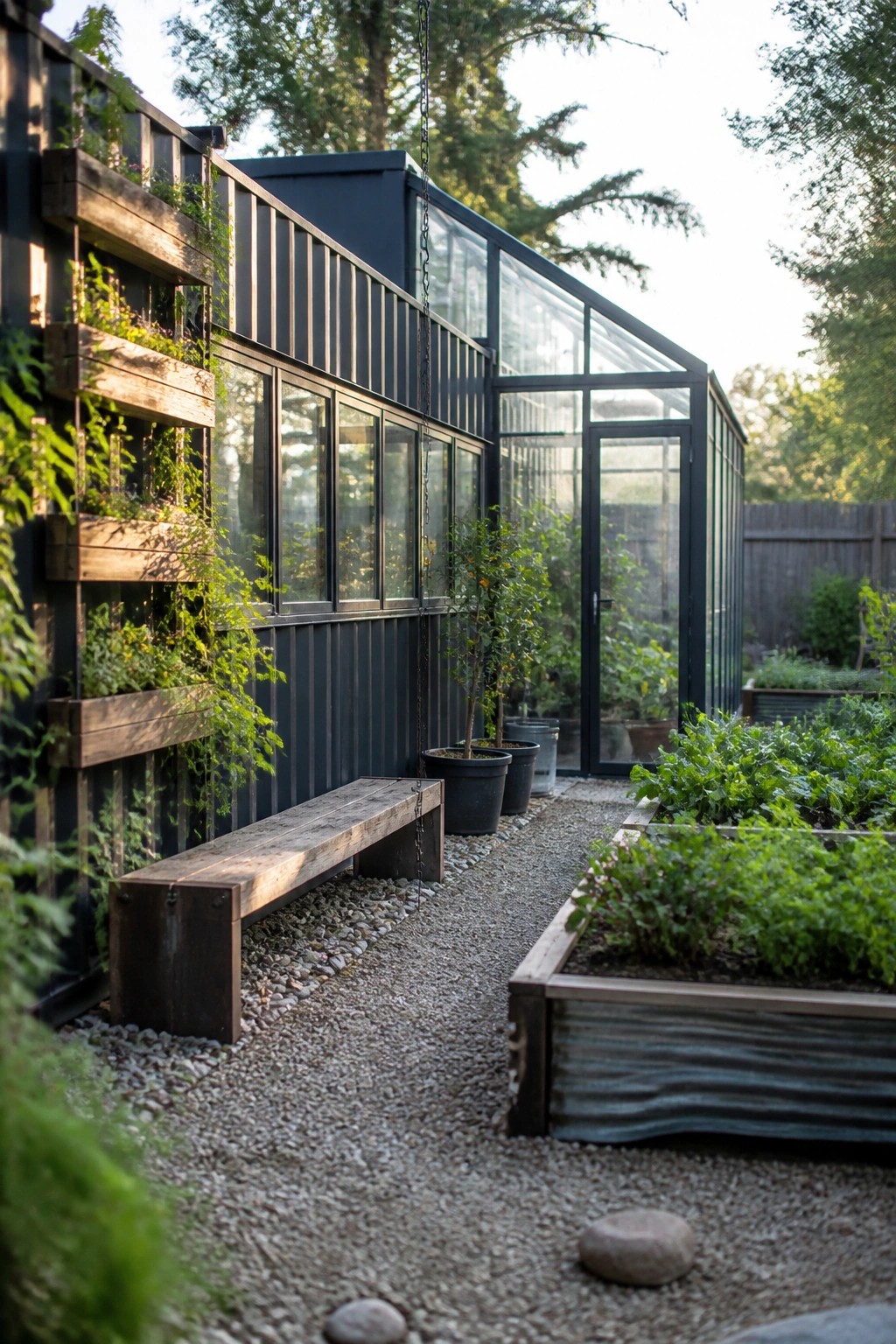
Mounting wooden planters in a stacked vertical layout on the side of a shipping container gives you extra growing space without crowding the ground. The wood softens the look of the steel while the plants add color and texture right where the building meets the garden.
This approach works best on homes with narrow side yards or limited planting room. Secure the planters well and add drainage so moisture does not sit against the container. It keeps the exterior practical while turning a plain wall into a productive garden feature.
Wood Details On Steel Container Exteriors
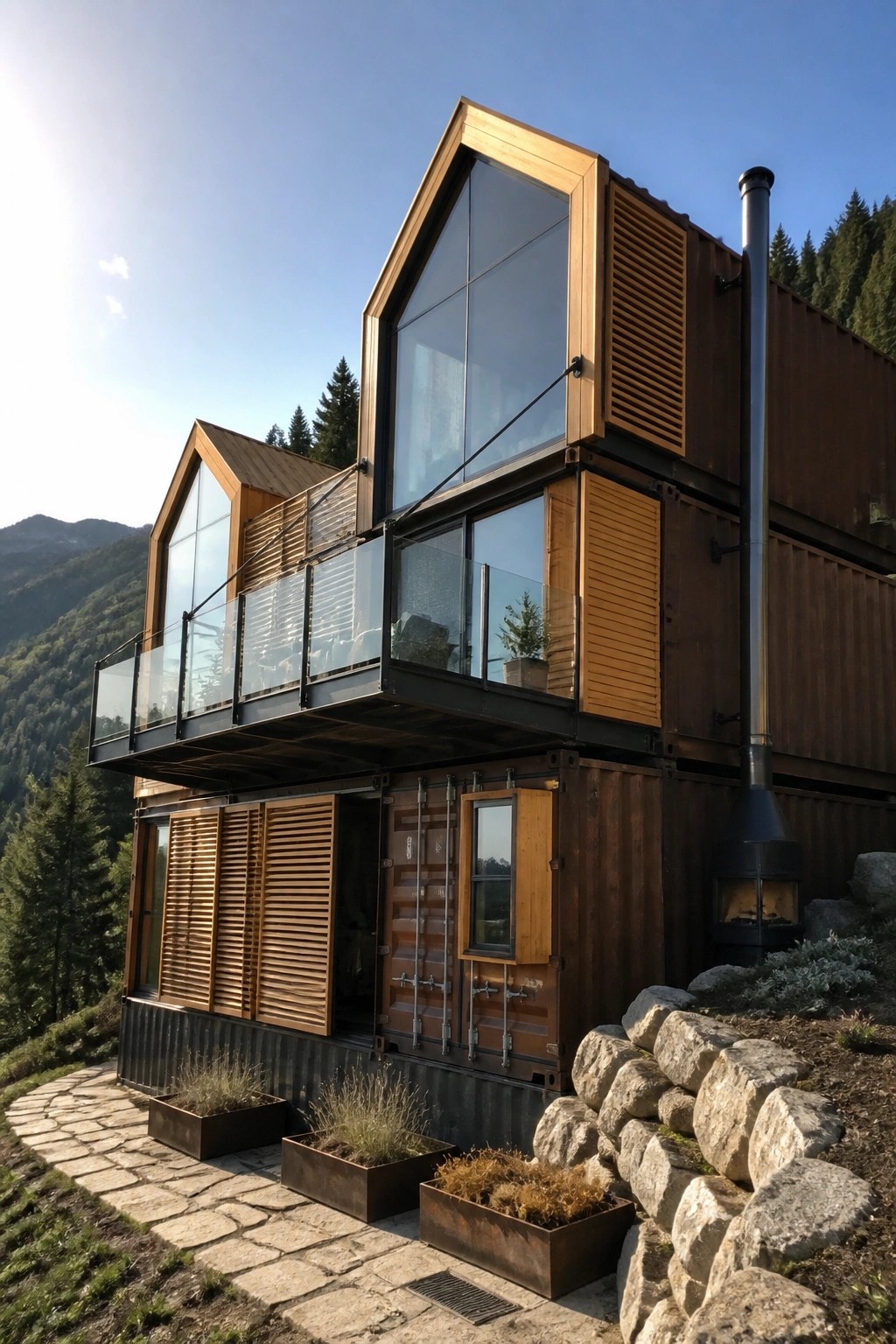
Mixing wood with the steel boxes gives the whole exterior a warmer feel without losing the industrial edge. The wood softens the raw metal and helps the house sit better in a natural setting. Large wood frames around the glass also break up the flat container surfaces so the house does not look too boxy.
This approach works well on homes that sit among trees or on slopes. Keep the wood tones simple and let the steel stay visible in bigger sections. Too much wood can hide the container character people usually want to keep.
Mixing Steel and Wood on Container Exteriors
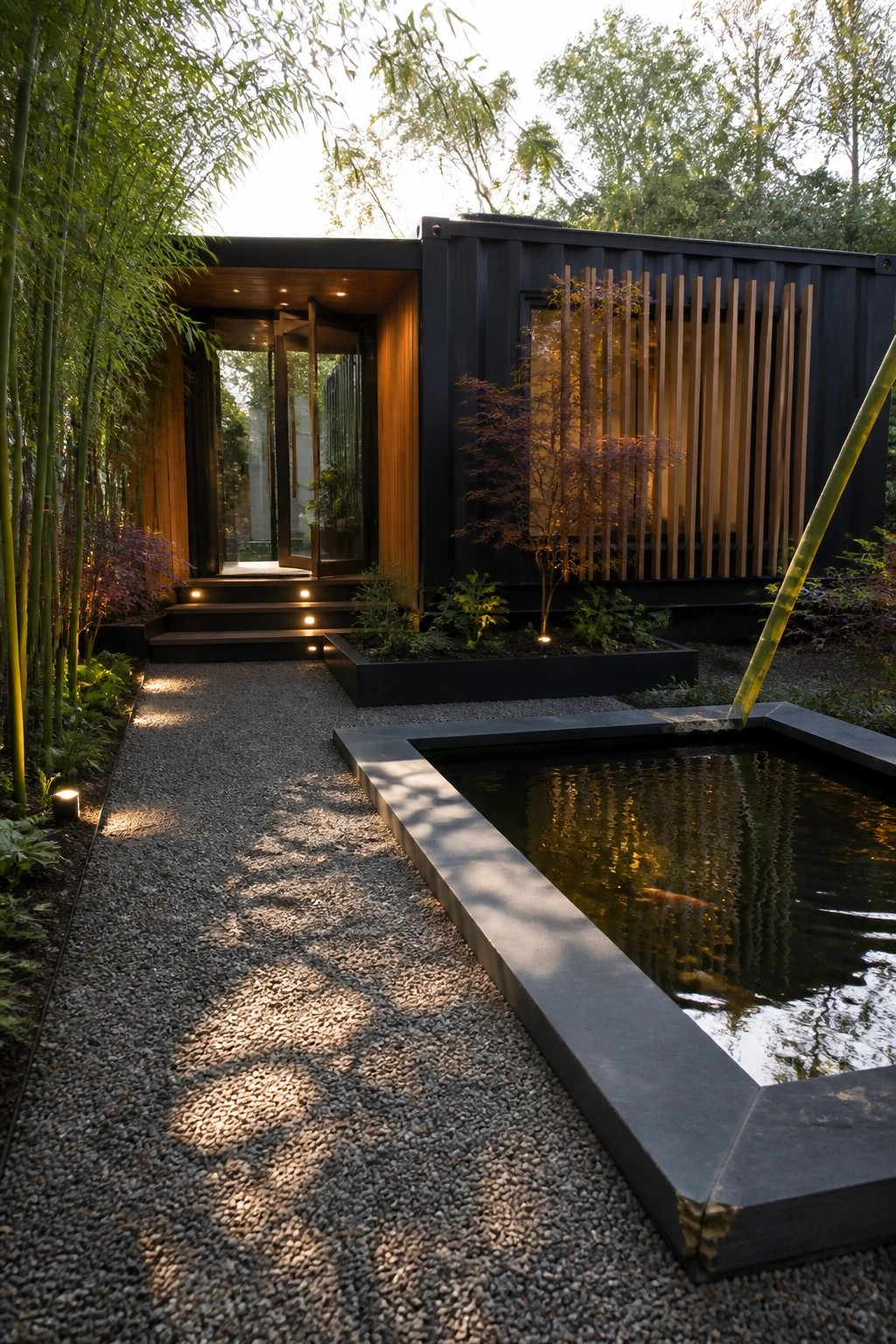
Many shipping container homes lean on the raw steel look, but adding wood slats gives the facade more interest without covering it up. The vertical lines break the flat surface and add warmth that pairs well with the dark metal.
This approach works best on homes where you want a simple modern feel without going fully industrial. Keep the wood limited to one or two sections, such as around windows, and let the rest of the steel stay exposed.
Wood Decks Help Anchor Container Homes

A simple wood deck can make a black shipping container feel less like an industrial box and more like a finished house. The deck gives the structure a base, creates a level entry, and softens the sharp edges of the steel with a warmer material right where people step up.
This approach works best on sloped lots or when you want a small outdoor spot without building a full porch. Keep the deck low and straightforward so it supports the container rather than competing with it. Planters along the edge can help tie everything into the landscape over time.
Let The Steel Frame Show
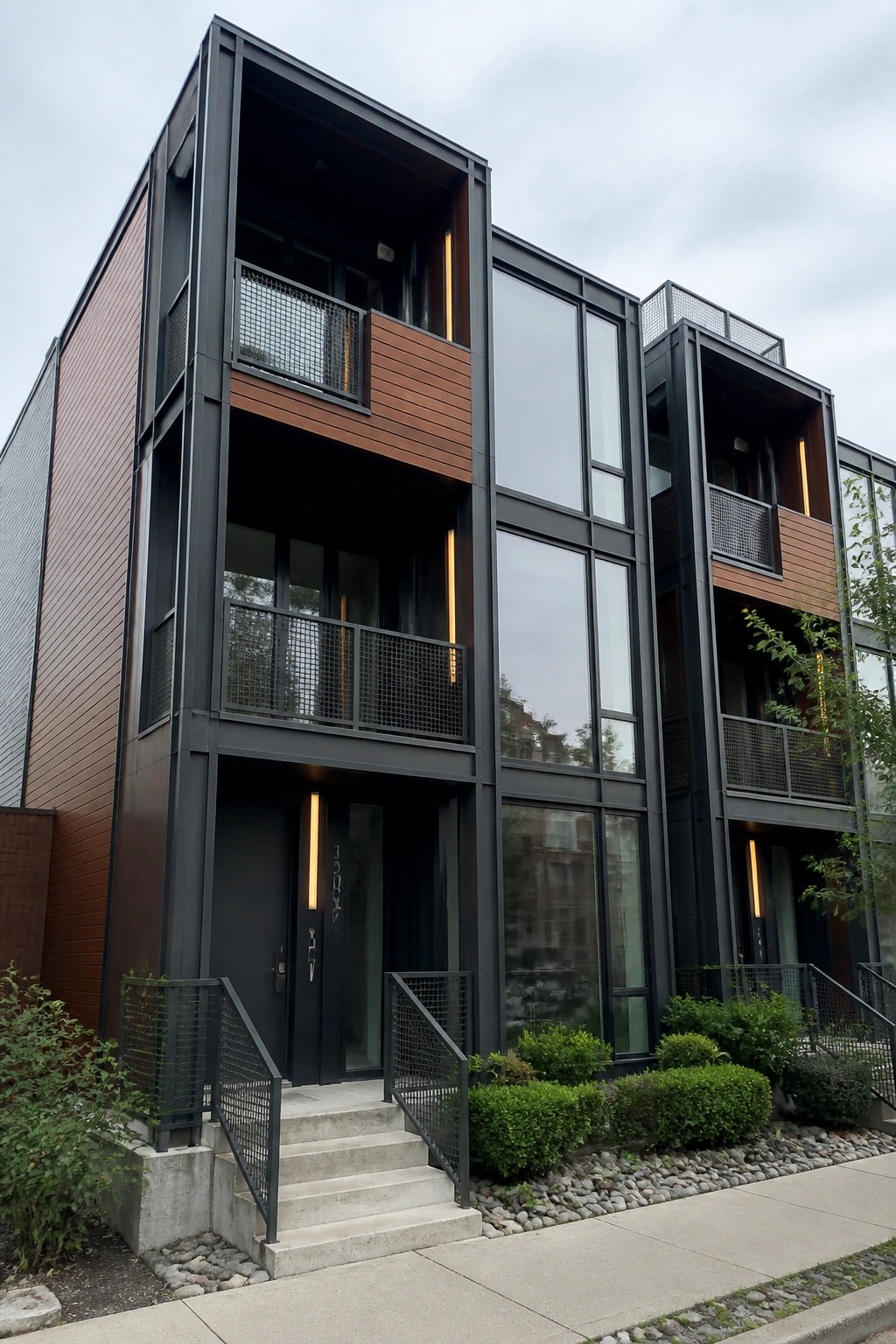
Many shipping container homes look better when the steel structure stays visible instead of getting covered up. The dark frame gives the whole exterior a clear shape, while wood panels and large glass sections fill in the spaces between. This mix keeps the building from feeling too heavy or too cold.
This approach works well on homes that sit close to the street or on narrow lots where you want the building to read as modern without extra decoration. Keep the steel color consistent and let the wood warm up just a few sections so the contrast stays simple.
Using Edge Lighting On Outdoor Decks
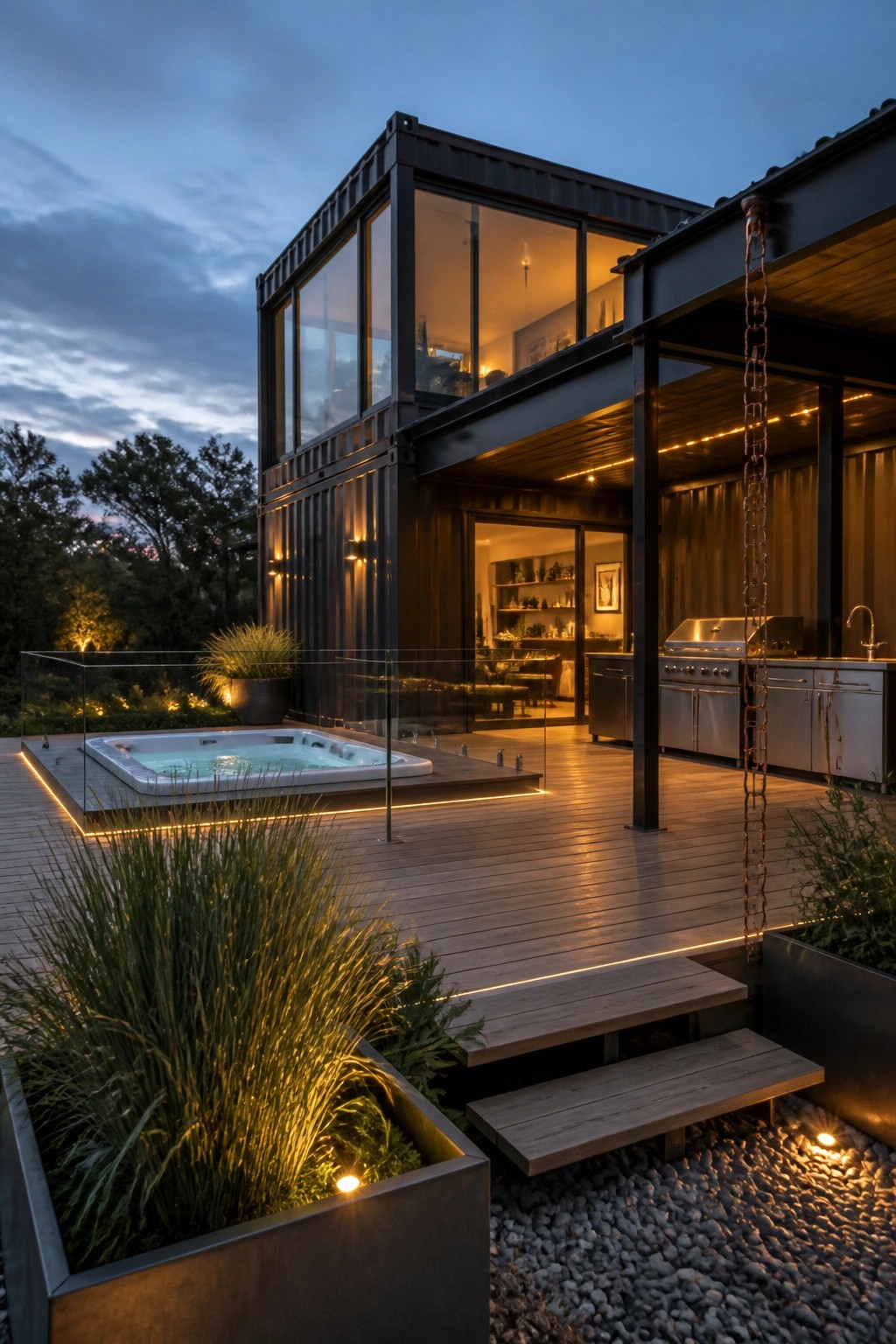
Edge lighting along a deck can turn a plain wood surface into something that feels more finished and easier to use once the sun goes down. It marks the boundaries clearly, shows where steps begin, and keeps the whole area from going dark too quickly. Many people like how it highlights the main spots without needing tall lamps that get in the way.
This works well on container homes where the deck sits right next to the steel walls. Run low LED strips under the edge of the boards and around raised platforms like a hot tub area. It stays simple to install on new builds and helps the space feel open while still safe to walk through at night.
Add a Slatted Overhang for Shade
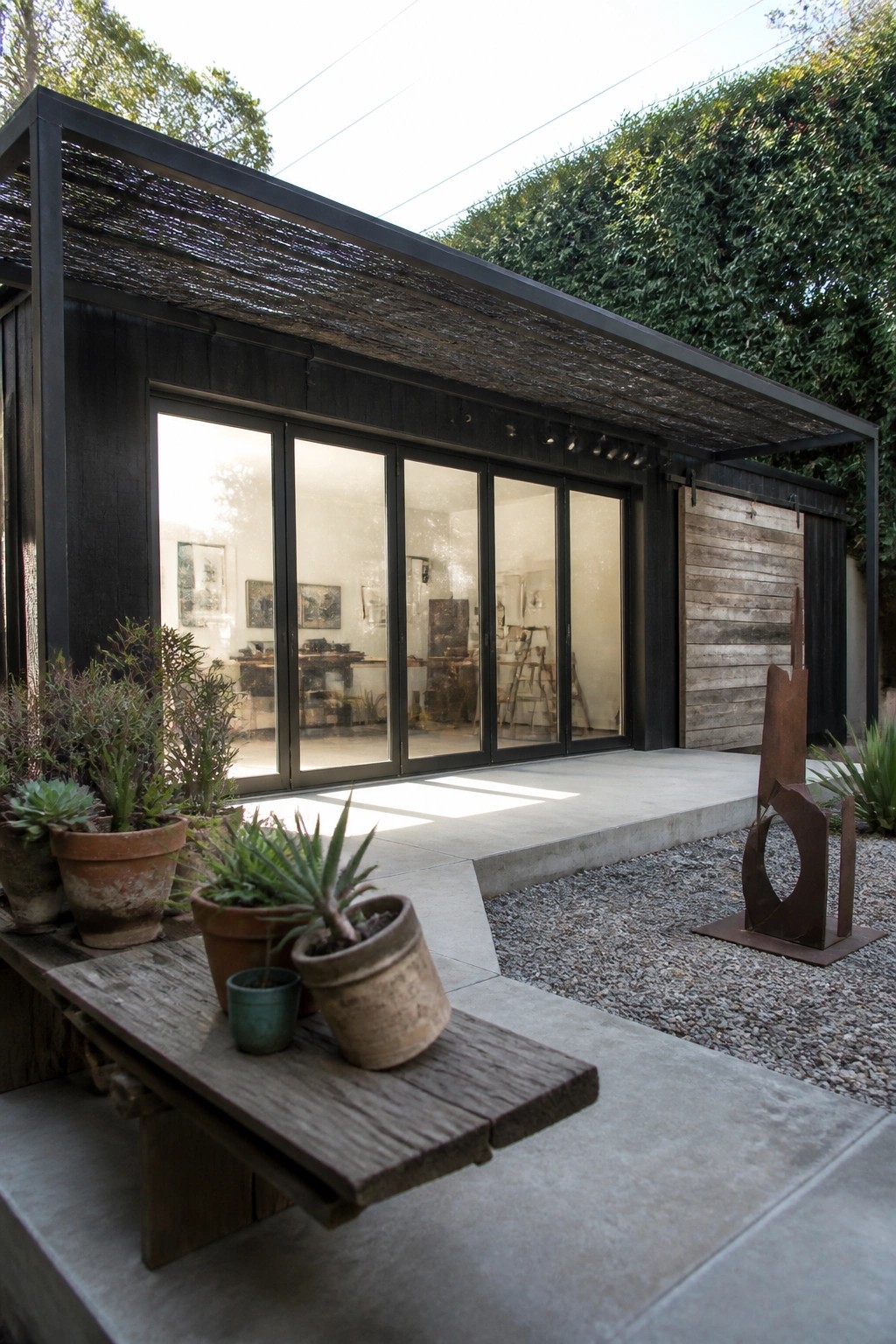
A simple steel frame with a natural slatted roof overhead gives large glass doors some real protection from the sun. The slats cut the glare without blocking all the light, so the space inside stays cooler while the covered edge outside becomes usable even on bright days.
This works especially well on smaller homes or studios with big windows facing south or west. Keep the frame dark to match the steel siding and let the natural material add a bit of texture that softens the whole look.
Wood Decking Expands Outdoor Space

A wood deck gives a shipping container home an easy way to add real living space outside. The planks create a flat surface that feels tied to the rooms behind the glass, and the material softens the steel frame without fighting it.
This setup works well on sloped lots or sites with views because the deck can cantilever out and make the most of the land. Use simple planters along the edge to keep the area open while still defining the space.
Frequently Asked Questions
Q: How do I keep wood panels from fading fast when they sit next to steel and glass?
A: Pick cedar or redwood that already resists sun damage. Apply a clear UV sealant once a year and recheck the edges where wood meets steel. That single step keeps the color even without extra coats.
Q: Will big glass sections leak where they join the metal container?
A: Use rubber gaskets made for metal and glass contact. Press them in place before you bolt the panels down and check the seal after the first hard rain. This stops water from creeping inside without any fancy flashing.
Q: Can I attach wood directly to the steel frame myself?
A: Drill pilot holes first so the screws go in clean. Use stainless steel fasteners that won’t react with the container walls. Work from the bottom up and the panels stay straight without warping later.